The right preparation can turn an interview into an opportunity to showcase your expertise. This guide to Ability to Read and Understand Shipping Labels and Documents interview questions is your ultimate resource, providing key insights and tips to help you ace your responses and stand out as a top candidate.
Questions Asked in Ability to Read and Understand Shipping Labels and Documents Interview
Q 1. What are the key components of a standard shipping label?
A standard shipping label is like a passport for your package, providing all the necessary information for its journey. Key components include:
- Recipient’s Address: Complete and accurate address, including name, street address, city, state/province, postal code, and country.
- Sender’s Address: Your return address, including name and full address.
- Tracking Number: A unique alphanumeric code allowing you to monitor the package’s location.
- Weight and Dimensions: Indicates package size and weight for shipping cost calculations and handling.
- Shipping Carrier Information: The name and logo of the carrier (e.g., FedEx, UPS, USPS).
- Service Type: Specifies the shipping method (e.g., express, ground, overnight).
- Special Instructions (if any): Notes like “fragile,” “handle with care,” or delivery instructions.
Think of it as a concise summary of everything the carrier needs to know to deliver your package safely and efficiently.
Q 2. Explain the significance of the tracking number on a shipping label.
The tracking number is the lifeline of your shipment. It’s a unique identifier assigned to each package, allowing you (and the carrier) to track its progress from origin to destination. Think of it as a digital fingerprint for your package. You can input this number into the carrier’s website or app to see real-time updates on location, status (e.g., ‘In Transit’, ‘Out for Delivery’), and estimated delivery time. Without it, locating a lost or delayed package would be nearly impossible.
For example, a tracking number might look like this: 1Z999AA10123456789. The format varies slightly depending on the carrier.
Q 3. How do you identify the recipient’s address on a shipping label?
The recipient’s address is typically prominently displayed at the top of the label, usually in a clearly designated area. It’s crucial to verify this information before shipping, as incorrect addresses can lead to delays or non-delivery. Look for a section clearly labeled ‘To:’ or ‘Recipient:’ and ensure it contains all necessary elements: Name, Street Address, City, State/Province, Postal Code, and Country. Often it’s formatted in a structured way to assist automated sorting systems.
For example: To: John Doe, 123 Main Street, Anytown, CA 91234, USA
Q 4. What information does the weight and dimensions section of a shipping label provide?
The weight and dimensions section provides vital information for calculating shipping costs and ensuring proper handling. Weight is usually in pounds or kilograms, and dimensions are typically listed as length x width x height (in inches or centimeters). This data helps determine the size of the box and the appropriate shipping method. Overestimating or underestimating these values can lead to inaccurate shipping costs or damage during transit. For example, packages exceeding certain size or weight limits may require special handling or additional fees.
For example: Weight: 5 lbs, Dimensions: 12x10x8 in
Q 5. What are the different types of shipping labels and how do they differ?
There’s a variety of shipping labels, each designed for different purposes. Key types include:
- Standard Shipping Labels: The most common type, used for general packages.
- Hazardous Materials Labels: Used for packages containing dangerous goods; these require special handling and labeling according to stringent regulations.
- International Shipping Labels: Include additional information such as customs declarations and country-specific requirements.
- Return Labels: Pre-printed labels for customers to return items to the sender.
- Third-Party Logistics (3PL) Labels: Used by companies that outsource their logistics operations; often contain unique identifiers and barcodes for 3PL tracking systems.
The key difference lies in the level of detail and regulatory compliance required for specific shipping scenarios. For instance, hazardous materials labels will include UN numbers and hazard symbols, while international labels will include customs declarations and possibly multiple languages.
Q 6. How do you interpret hazardous materials labels?
Interpreting hazardous materials labels requires careful attention to detail and understanding of international regulations. These labels typically include:
- UN Number: A four-digit code identifying the hazardous material.
- Hazard Class: Categorizes the type of hazard (e.g., flammable, explosive, corrosive).
- Hazard Symbols: Pictograms representing the specific hazards.
- Supplemental Information: May include additional details on proper handling and emergency response.
Incorrect labeling of hazardous materials can lead to serious consequences, including fines, injuries, and environmental damage. It is imperative to consult the appropriate regulations and guidelines before shipping such items.
Q 7. How do you identify the shipping carrier from a shipping label?
Identifying the shipping carrier is usually straightforward. The carrier’s logo is typically prominently displayed on the label, along with their tracking number format (which differs by carrier). For example, you’ll see the UPS logo for UPS shipments, the FedEx logo for FedEx shipments, and so forth. The tracking number format itself can also be a clue. You can also refer to the address label which typically contains the name of the carrier in addition to the logo.
Additionally, the barcode on the label might contain encoded information that helps identify the carrier in automated systems. However, visual identification via logo is the most common and reliable method.
Q 8. What are the potential consequences of incorrectly interpreting shipping labels?
Misinterpreting shipping labels can have serious consequences, ranging from minor delays to significant financial losses and legal issues. Imagine a label with an incorrect address – the package could be lost, delayed indefinitely, or delivered to the wrong recipient, leading to customer dissatisfaction and potential product damage. Further, incorrect weight or classification can lead to incorrect shipping charges, impacting profitability. In regulated industries, incorrect labeling can violate safety or import/export regulations, resulting in hefty fines or even legal action. For example, mislabeling hazardous materials could lead to serious safety incidents during transport and handling.
- Delayed or Lost Shipments: A simple typo in the address could mean weeks of delay or permanent loss.
- Financial Penalties: Incorrect classification of goods can lead to underestimated shipping costs or fines from regulatory bodies.
- Legal Ramifications: Incorrect labeling of hazardous materials can result in severe legal penalties and safety risks.
- Reputational Damage: Consistent errors in handling shipping labels damage a company’s reputation and credibility.
Q 9. How do you handle damaged or incomplete shipping labels?
Damaged or incomplete shipping labels require immediate and careful attention. My first step is to assess the extent of the damage. Is the address legible? Are crucial details like the tracking number still visible? If significant portions are missing or unreadable, I try to locate alternative documentation like packing slips or the original order information. If I cannot confirm the destination or contents, I follow established company protocols. This might involve contacting the sender, the recipient, or the carrier for clarification. In cases where the damage is too extensive and no other information is available, the package might unfortunately be deemed undeliverable.
For example, if a label is partially torn but the address and tracking number are still clear, I’ll proceed with caution, double-checking the details against the shipment manifest. However, if the tracking number is illegible, I need to leverage other sources to identify the package’s recipient.
Q 10. Explain the process of verifying the accuracy of information on a shipping label against the corresponding documentation.
Verifying the accuracy of shipping labels against accompanying documents is crucial for error prevention. I meticulously compare the information on the label—the recipient’s name and address, the shipper’s details, the weight, dimensions, and the contents description (if available)—against the details on the packing slip, commercial invoice, and other related documents. This cross-referencing ensures consistency and identifies discrepancies early on. I pay particular attention to any differences in the number of packages, weights, and items listed.
For instance, if the shipping label indicates 2 packages, but the packing slip shows only 1, I investigate the discrepancy before proceeding. This might involve physically checking the contents or contacting the sender to clarify the situation. Software can also be used to automate part of this process by comparing data fields.
Q 11. What is a bill of lading and what key information does it contain?
A bill of lading (B/L) is a crucial document in international trade acting as a receipt, a contract, and a document of title. It represents the agreement between the shipper (exporter) and the carrier (shipping company) outlining the terms of the shipment. Key information a B/L includes:
- Shipper and Consignee details: The names and addresses of the sender and receiver.
- Description of Goods: The type, quantity, and condition of the shipped goods.
- Marks and Numbers: Unique identifiers for the packages.
- Port of Loading and Discharge: The origin and destination ports.
- Freight Charges: The costs associated with the shipment.
- Date of Issue: The date the B/L is created.
- Carrier Information: The details of the shipping company.
- Tracking Number: For monitoring the shipment’s progress.
Q 12. How do you reconcile discrepancies between a shipping label and other shipping documents?
Reconciling discrepancies between a shipping label and other documents requires a systematic approach. First, I carefully document all discrepancies, noting the differences between the label and each document. Then, I prioritize the discrepancies by severity – a wrong address is more critical than a minor weight difference. I investigate each discrepancy by cross-referencing with all available documents, the sender, and the carrier if necessary. The goal is to find the source of the error—was it a mistake in data entry, a packaging issue, or a problem with the label printer? Once the source is identified, the appropriate corrective action can be taken, such as updating the label, issuing a corrected invoice, or notifying the recipient of a potential delay.
For example, if the weight on the label differs from the weight on the packing slip, I might weigh the package myself. If my weight matches the packing slip, I’ll update the label with the correct weight and inform the carrier.
Q 13. What are the common abbreviations and acronyms used in shipping labels and documents?
Shipping labels and documents utilize numerous abbreviations and acronyms. Understanding these is essential for efficient processing. Here are some common ones:
- B/L: Bill of Lading
- BOL: Bill of Lading
- AWB: Air Waybill
- CN: Commercial Invoice
- DO: Delivery Order
- FOB: Free on Board (Indicates responsibility for shipping costs)
- CIF: Cost, Insurance, and Freight (Indicates included costs)
- kg: Kilogram
- lbs: Pounds
- CBM: Cubic Meter
Always refer to a standard glossary or consult with colleagues if unfamiliar with an abbreviation.
Q 14. Describe your experience with different types of shipping documents (e.g., packing slips, commercial invoices).
Throughout my career, I’ve extensively worked with various shipping documents. Packing slips provide detailed lists of the items included in a shipment, often with item numbers, descriptions, and quantities. They are crucial for verifying that the contents match the shipping label. Commercial invoices provide an itemized list of goods shipped, along with their values, for customs and accounting purposes. They are essential for international shipments and often include information on tariffs and taxes. I’ve also handled certificates of origin, which verify the country of origin of goods, essential for compliance with import regulations. Pro Forma invoices act as a preliminary invoice, providing an estimate of the final cost before the actual shipment. I’m familiar with handling these documents in both paper and digital formats and understand their importance in ensuring smooth and compliant shipping processes.
Experience with these diverse documents allows me to efficiently handle various shipping scenarios and quickly identify potential discrepancies or inconsistencies in information.
Q 15. How do you handle situations where shipping labels are illegible or damaged?
Dealing with illegible or damaged shipping labels requires a systematic approach prioritizing safety and accuracy. First, I would assess the level of damage. If only partially obscured, I’d attempt to decipher the crucial information – the recipient’s address, tracking number, and contents description. I’d use magnifying glasses or high-resolution scanners to enhance readability. If crucial information is missing or impossible to decipher, I’d immediately contact the shipper to obtain a replacement label or clarification. Clear communication is key; documenting all attempts and findings is crucial for traceability and potential claims. For severe damage, I would also photograph the label as evidence. This entire process is documented, adhering to company protocol and ensuring compliance.
For example, imagine a water-damaged label where the address is partially smudged. I’d carefully examine the remaining legible parts, trying to identify the street name, city, state, and zip code. If any doubt exists, I would contact the shipper immediately to confirm the address, ideally through email and phone, documenting the whole conversation.
Career Expert Tips:
- Ace those interviews! Prepare effectively by reviewing the Top 50 Most Common Interview Questions on ResumeGemini.
- Navigate your job search with confidence! Explore a wide range of Career Tips on ResumeGemini. Learn about common challenges and recommendations to overcome them.
- Craft the perfect resume! Master the Art of Resume Writing with ResumeGemini’s guide. Showcase your unique qualifications and achievements effectively.
- Don’t miss out on holiday savings! Build your dream resume with ResumeGemini’s ATS optimized templates.
Q 16. How familiar are you with international shipping documentation requirements?
My familiarity with international shipping documentation is extensive. I understand the diverse requirements across different countries and regions, including customs declarations (CN22/CN23), commercial invoices, packing lists, certificates of origin, and any other special documentation specific to the goods being shipped (e.g., health certificates for food items). I am adept at identifying the necessary documents for a specific shipment based on its nature, origin, and destination. I also understand the implications of incorrect or incomplete documentation, including potential delays, fines, and rejection of the shipment. My experience encompasses a wide range of international shipping regulations and compliance protocols.
For instance, shipping electronics to the EU requires compliance with the RoHS directive, and documentation proving this compliance is needed. Similarly, exporting textiles to certain countries might need specific certificates to ensure adherence to material standards and labeling laws. Navigating these regulations effectively forms a core part of my expertise.
Q 17. What are the key differences between domestic and international shipping labels?
Domestic and international shipping labels differ significantly in their required information and format. Domestic labels typically require the sender’s and recipient’s addresses, the weight, and tracking information. International shipping labels demand much more detail. They must include customs declarations (either CN22 or CN23 forms depending on value and weight), comprehensive descriptions of the contents, country of origin, and the HS (Harmonized System) code for the goods. The HS code is a critical element, categorizing goods for customs assessment of duties and taxes. International labels also often incorporate additional information for export control purposes, depending on the nature of the goods being shipped.
Think of it like this: a domestic label is like a simple postcard, sufficient for local delivery. An international label is more akin to a detailed passport for your goods, requiring much more information for smooth cross-border travel.
Q 18. How do you determine the appropriate shipping method based on the contents and destination?
Choosing the right shipping method involves analyzing multiple factors: the contents’ fragility, dimensions, and weight, the recipient’s location, urgency of delivery, and cost considerations. For example, fragile items might require specialized packaging and air freight for quicker, safer delivery, whereas heavier, less sensitive items might be suitable for ground shipping. The distance and required speed influence whether express delivery, standard ground, or sea freight is the most appropriate. Cost analysis plays a crucial role; comparing prices from different carriers and methods will help optimize shipping costs without compromising delivery times or the safety of the goods. Understanding carrier services and their respective strengths is essential for this process.
Imagine shipping a delicate piece of art across the country. Express air freight with appropriate insurance and specialized packaging would be the best option. However, shipping bulk, non-perishable goods across the same distance might favor a cost-effective ground service.
Q 19. How do you identify and interpret customs declarations on shipping documents?
Customs declarations are integral parts of international shipping documents. They provide customs authorities with essential information about the goods being shipped, including descriptions, quantity, value, weight, origin, and HS codes. I identify and interpret this information to ensure compliance with customs regulations in the destination country. Incorrect or incomplete declarations can lead to significant delays, fines, or even the rejection of the shipment. I focus on accuracy, verifying every detail before the shipment departs. Understanding the nuances of each country’s customs requirements is crucial for this task.
For instance, a CN22 form’s accuracy is vital. An incorrect value declared could result in higher taxes than expected for the recipient or trigger an audit. Understanding tariff codes and accurately listing products to match these codes is paramount.
Q 20. How do you ensure compliance with regulations related to shipping hazardous materials?
Shipping hazardous materials demands strict adherence to stringent regulations, varying by country and carrier. I am thoroughly familiar with these regulations, including the proper classification of hazardous materials using the UN/DOT system, and the required documentation, labeling, and packaging. This includes ensuring the use of appropriate UN-certified packaging, proper labeling in accordance with regulations, and providing the necessary shipping papers including Safety Data Sheets (SDS). Failure to comply can result in serious consequences including fines, legal repercussions, and environmental damage. Thorough training and up-to-date knowledge are crucial for ensuring safety and legal compliance.
For example, shipping lithium batteries requires specific packaging and labeling, adhering to IATA regulations for air freight or DOT regulations for ground shipments. Mislabeling or improper packaging could lead to dangerous incidents during transit.
Q 21. Explain your process for verifying the accuracy of shipping information before a shipment leaves the facility.
My verification process is thorough and multi-step. Before a shipment leaves our facility, I systematically verify the accuracy of all shipping information against the original order, comparing addresses, weights, dimensions, and contents descriptions. I ensure the correct labels are affixed, that all necessary documentation is included (packing list, commercial invoice, customs forms, etc.), and that the contents are properly packaged and secured. I cross-reference information with the tracking system to ensure complete and accurate data entry. This step helps prevent errors and minimizes potential delays and losses. If discrepancies are identified, I would correct them immediately, documenting each step taken. The aim is to ensure a seamless and efficient shipping process.
Think of it like a pilot performing a pre-flight check; every detail is verified before takeoff to ensure a safe and successful journey.
Q 22. Describe your experience with different shipping software or systems.
Throughout my career, I’ve gained extensive experience with a variety of shipping software and systems. This includes both large-scale Enterprise Resource Planning (ERP) systems like SAP and Oracle, as well as smaller, specialized shipping platforms such as ShipStation and Shopify Shipping. My proficiency extends beyond simply using these systems; I understand their underlying logic and can troubleshoot issues effectively. For example, in a previous role, we migrated from a legacy system to a cloud-based solution. I played a key role in data migration, ensuring accuracy and minimizing disruption to operations. I also have experience integrating shipping software with warehouse management systems (WMS) to streamline the entire order fulfillment process. This integration allows for automated label generation, tracking updates, and inventory management, significantly improving efficiency.
- SAP: Experienced in configuring and utilizing shipping modules for complex order processing and logistics management.
- ShipStation: Proficient in managing multiple carrier accounts, automating shipping label creation, and integrating with e-commerce platforms.
- Shopify Shipping: Skilled in utilizing Shopify’s built-in shipping features for streamlined order fulfillment and cost optimization.
Q 23. How do you prioritize tasks when handling multiple shipments with varying deadlines?
Prioritizing tasks when juggling multiple shipments with varying deadlines requires a structured approach. I typically employ a method combining urgency and importance. I start by creating a prioritized list, considering factors like delivery deadlines, shipment value, and potential consequences of delays. For instance, I’d prioritize time-sensitive, high-value shipments requiring expedited shipping over standard deliveries. I use a visual management tool – a Kanban board or a spreadsheet with color-coding – to track progress and easily identify any bottlenecks. This allows me to proactively manage resources and allocate my time effectively. This ensures that even with a high volume of shipments, all deadlines are met, and potential risks are mitigated.
Q 24. How do you handle a situation where a shipment is missing or delayed?
When a shipment goes missing or is delayed, my immediate response involves a systematic investigation. I begin by verifying the tracking information and confirming the accuracy of the shipping label and associated documentation. Next, I contact the carrier to initiate a trace or investigation. I document all communication and steps taken, keeping the client informed throughout the process. Depending on the carrier’s response, I might need to file a claim or explore alternative solutions, such as expedited reshipment. A recent example involved a delayed international shipment. By diligently tracking the package and communicating with the carrier, I successfully located the package and ensured timely delivery. Transparency and proactive communication with the client are crucial in these situations to maintain trust and manage expectations.
Q 25. How do you utilize tracking information to monitor shipments?
Tracking information is essential for effective shipment monitoring. I utilize various methods, including carrier websites, integrated tracking dashboards within shipping software, and dedicated tracking apps. I regularly check tracking updates to identify any potential delays or issues. For instance, I might set up email or SMS alerts for significant tracking events, such as shipment departure, arrival at a hub, or delivery attempts. This proactive monitoring helps me to quickly address any problems and take corrective actions, preventing delays and ensuring timely delivery. Analyzing historical tracking data also allows me to identify patterns and improve overall shipping efficiency by identifying potentially problematic carriers or routes.
Q 26. Describe a time you had to troubleshoot a shipping issue due to inaccurate or incomplete documentation.
In one instance, an international shipment was delayed due to an incomplete address on the shipping label. The label only included the street address, omitting the apartment number and zip code. This resulted in the package being held at the carrier’s facility. I immediately contacted the client to obtain the correct address details, and then worked with the carrier to correct the information and expedite the delivery. The key to resolving this issue was methodical problem-solving: verifying the information on hand, identifying the missing piece of data, and swiftly taking corrective action while communicating the steps to the client. This experience highlighted the critical importance of double-checking all documentation for accuracy before shipping.
Q 27. How do you ensure data accuracy in shipping and receiving processes?
Data accuracy is paramount in shipping and receiving. I use several strategies to ensure this: First, I implement rigorous data entry procedures, including double-checking all information before generating shipping labels. Second, I leverage technology, such as barcode scanning and automated data entry systems, to minimize manual data entry errors. Third, I regularly review and reconcile data from various sources, such as shipping software, warehouse management systems, and client order information, to identify any discrepancies. Finally, I use data validation rules and checks within shipping software to prevent incorrect data from being entered in the first place. This multi-pronged approach ensures data integrity throughout the entire shipping process.
Q 28. What strategies do you use to improve efficiency in handling shipping labels and documents?
Improving efficiency in handling shipping labels and documents requires a combination of strategies. I optimize processes by automating tasks wherever possible, such as using software to automatically generate labels and tracking numbers. I also employ organizational techniques, such as using standardized labeling systems, well-defined filing systems, and implementing electronic document management. Regularly reviewing and optimizing workflows, including identifying and eliminating bottlenecks, is crucial. For instance, I might analyze data to identify which carriers offer the best combination of cost and reliability for specific shipping routes. Continuously seeking ways to improve processes allows for streamlined operations and reduced errors, ultimately leading to increased efficiency and improved customer satisfaction.
Key Topics to Learn for Ability to Read and Understand Shipping Labels and Documents Interview
- Understanding Key Label Components: Learn to identify and interpret crucial information like shipper and receiver addresses, tracking numbers, weight, dimensions, hazardous materials indicators, and delivery instructions.
- Interpreting Different Label Formats: Familiarize yourself with various label types (e.g., UPS, FedEx, USPS) and their unique formatting conventions. Practice identifying inconsistencies and potential errors.
- Decoding Shipping Documents: Understand the purpose and information contained within various shipping documents like packing slips, bills of lading, commercial invoices, and customs forms. Practice extracting relevant data efficiently.
- Identifying Potential Problems: Develop the ability to spot potential issues on labels and documents, such as missing information, conflicting data, or discrepancies that could lead to delays or delivery problems.
- Applying Knowledge to Real-World Scenarios: Practice using your knowledge to solve hypothetical problems, such as tracing a package with incomplete information or resolving a delivery issue based on the available documentation.
- Understanding Shipping Regulations: Gain a basic understanding of relevant shipping regulations and how they affect label and document requirements. This includes understanding hazardous materials regulations and international shipping protocols.
- Using Technology for Shipping Management: Familiarize yourself with common shipping software and online tracking tools used to manage and interpret shipping information.
Next Steps
Mastering the ability to read and understand shipping labels and documents is crucial for success in many logistics and supply chain roles. This skill demonstrates attention to detail, problem-solving abilities, and a commitment to accuracy – all highly valued by employers. To significantly boost your job prospects, create an ATS-friendly resume that effectively highlights these skills. ResumeGemini is a trusted resource that can help you build a professional and impactful resume tailored to your experience. We provide examples of resumes tailored to showcasing expertise in reading and understanding shipping labels and documents to help you get started.
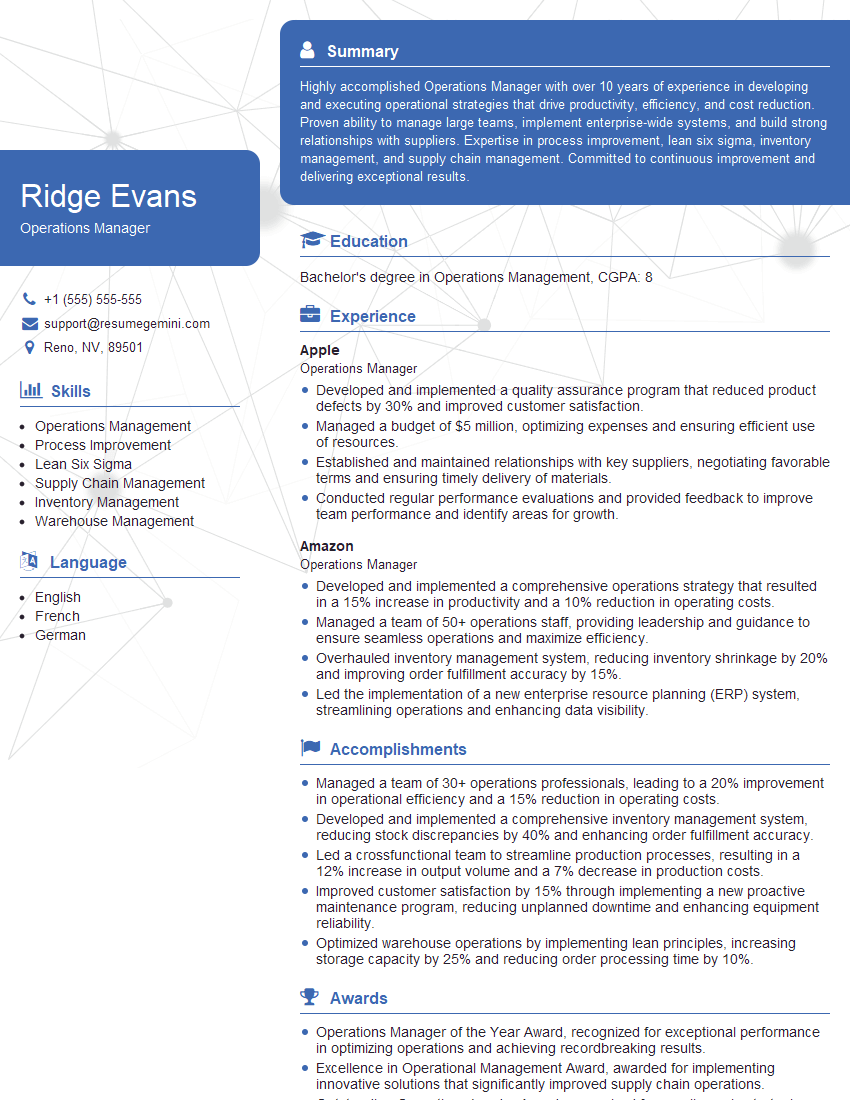
Operations Manager Resume Sample
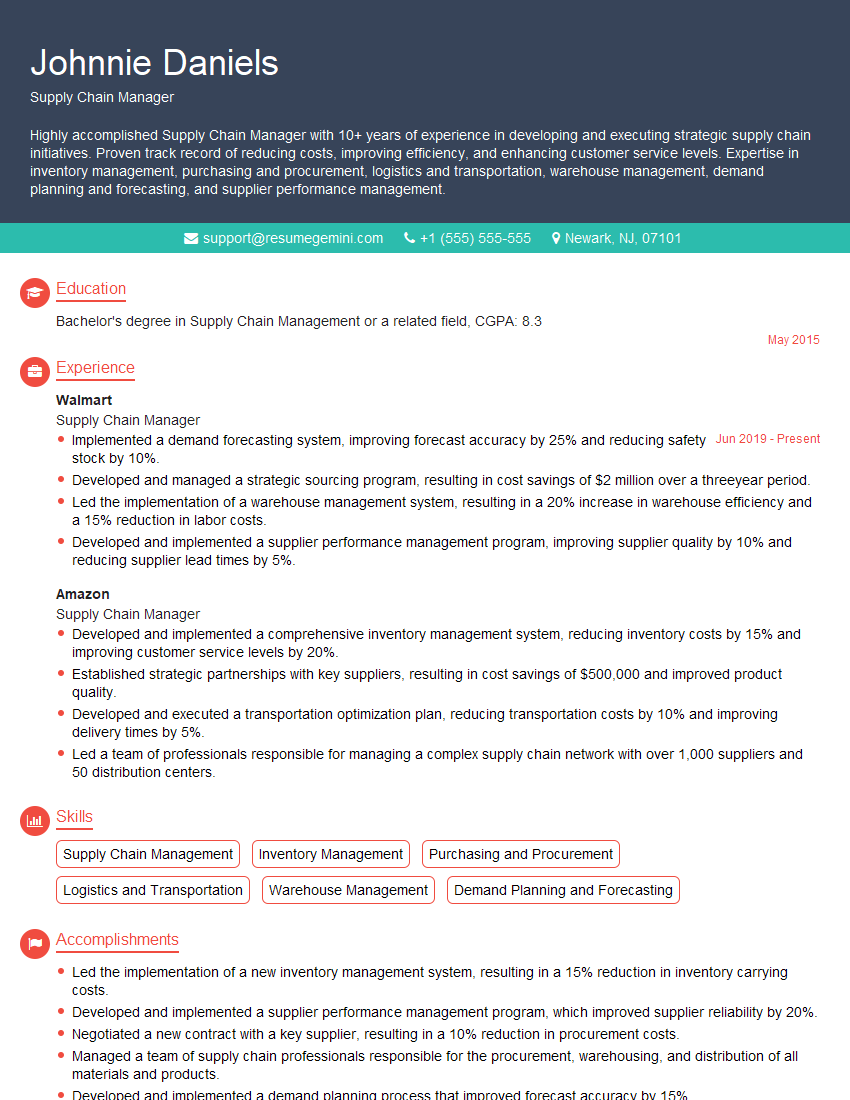
Supply Chain Manager Resume Sample

Logistics Manager Resume Sample

Warehouse Manager Resume Sample
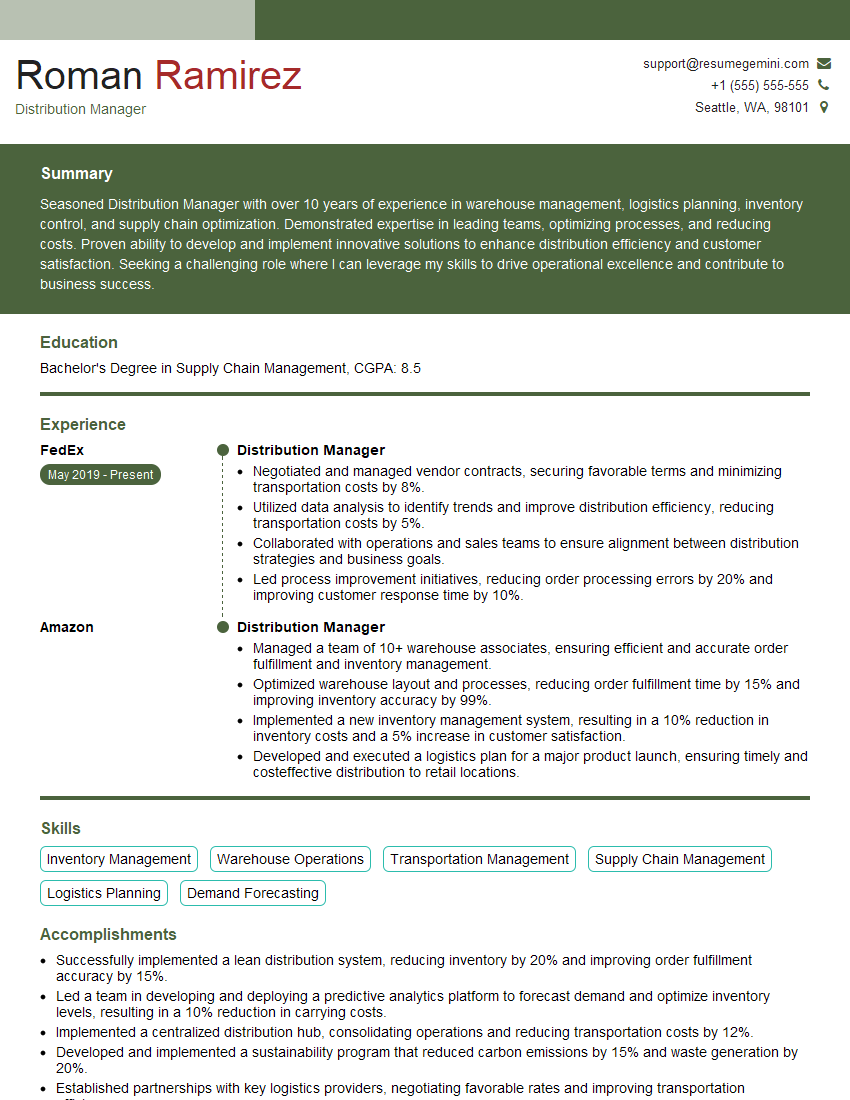
Distribution Manager Resume Sample
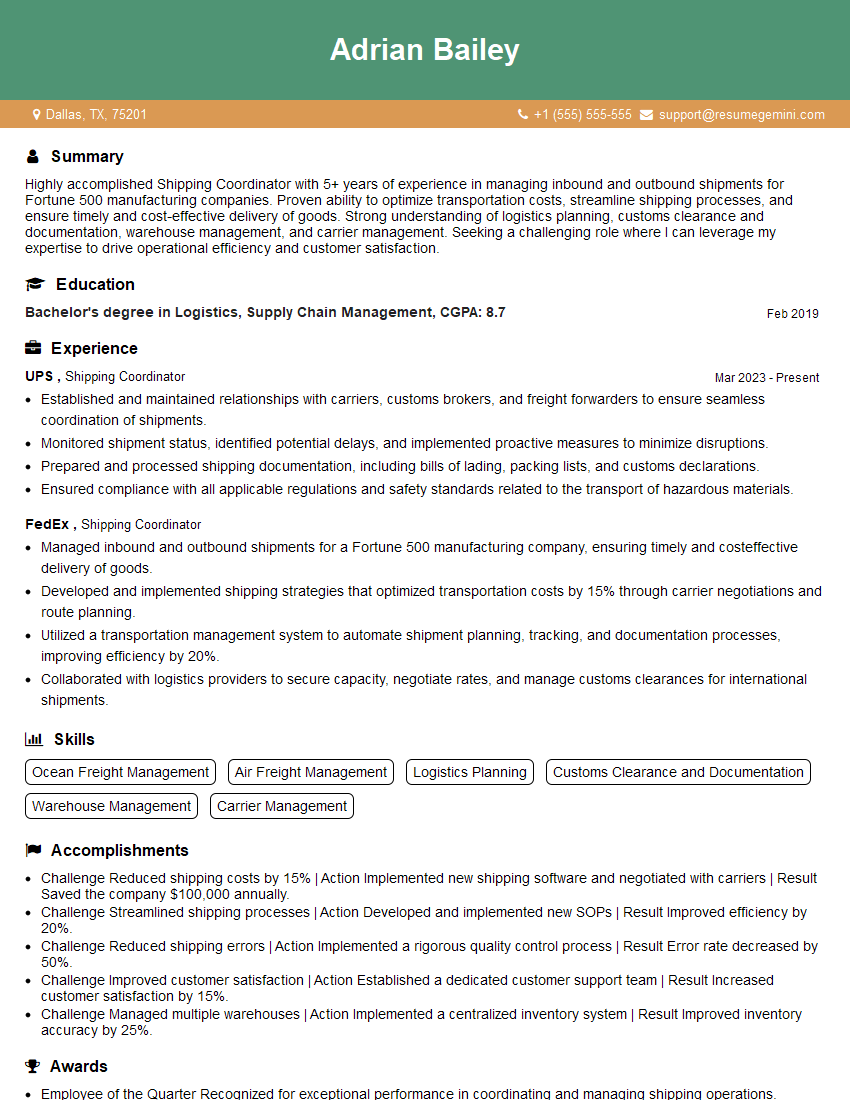
Shipping Coordinator Resume Sample
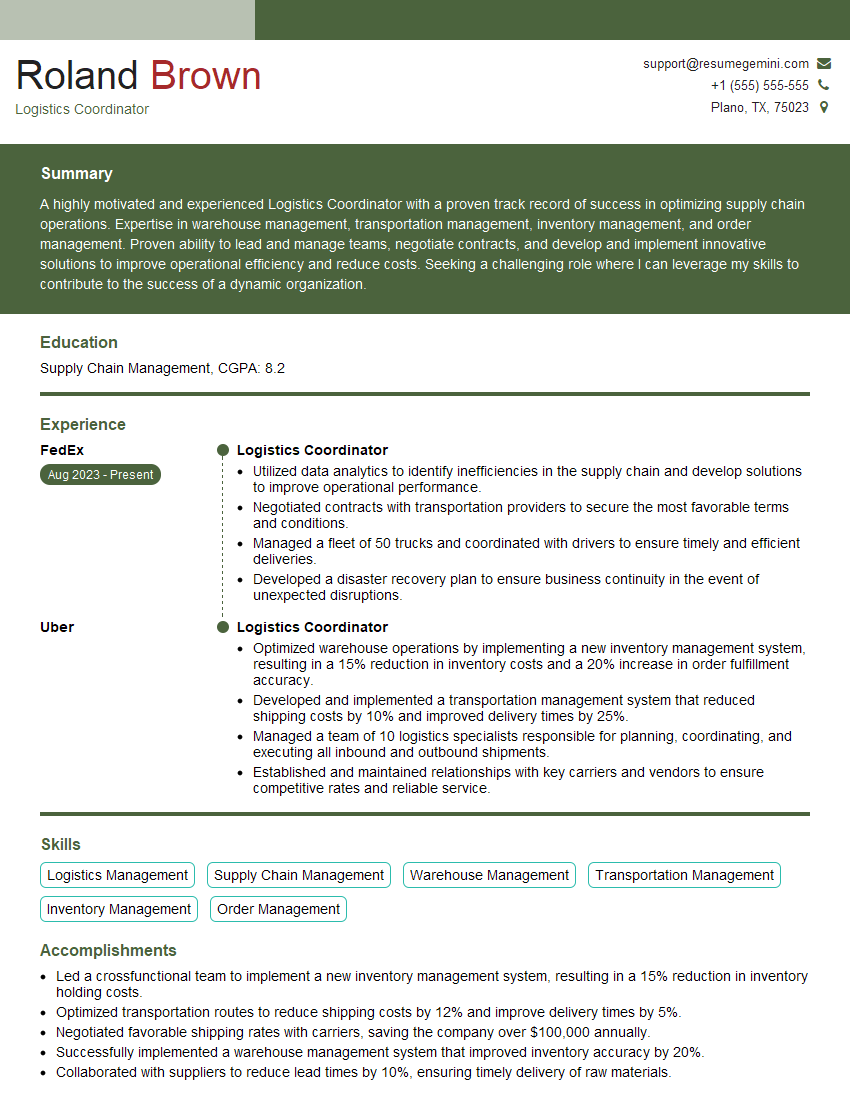
Logistics Coordinator Resume Sample
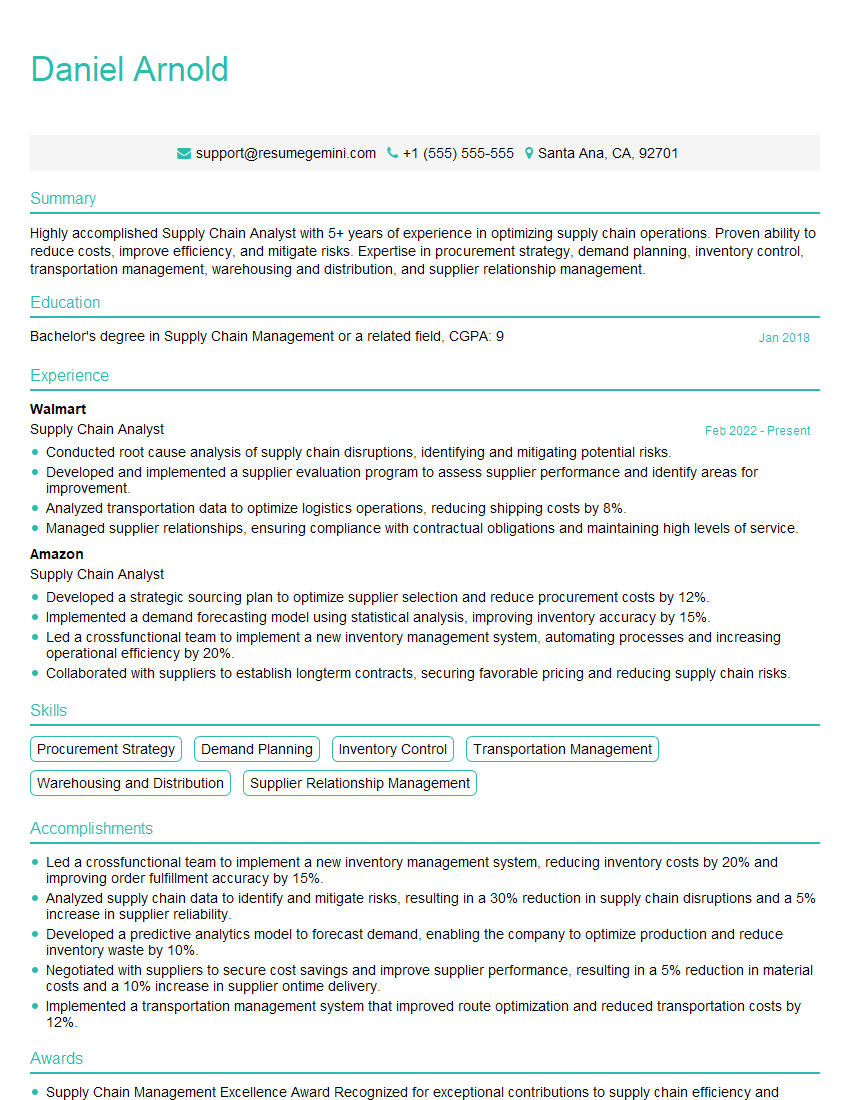
Supply Chain Analyst Resume Sample
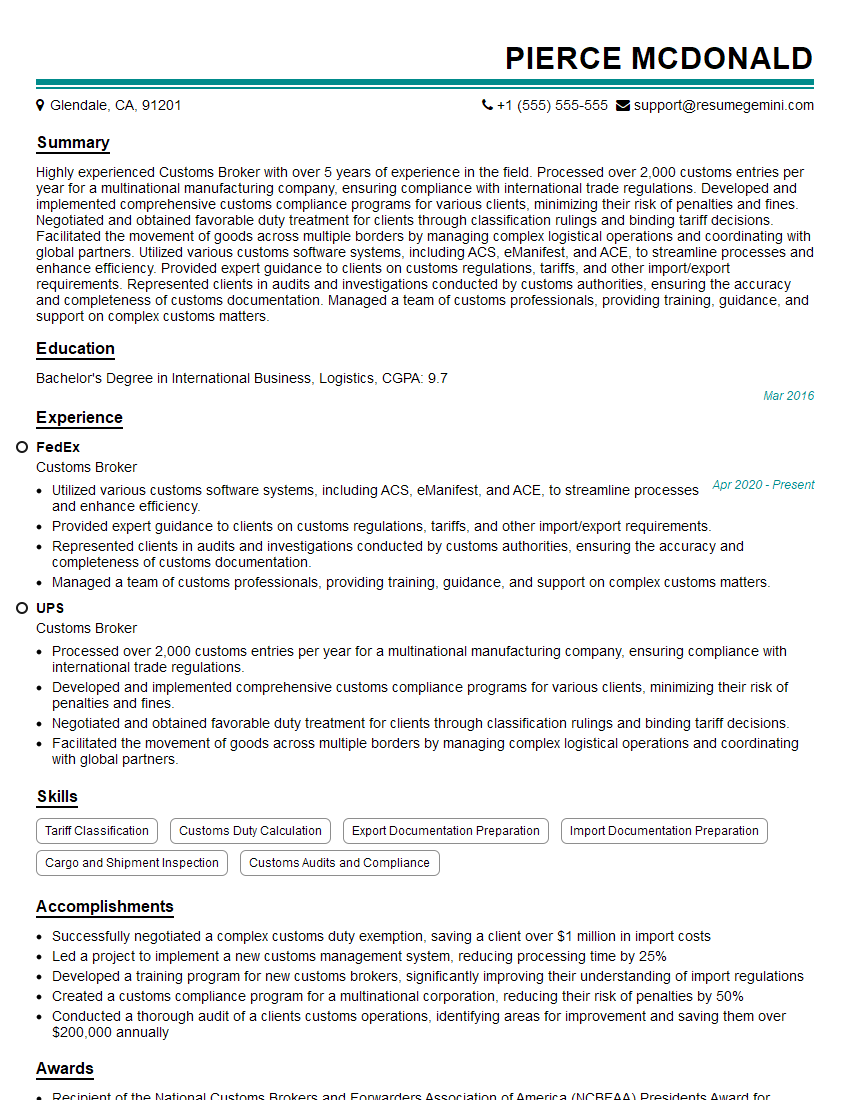
Customs Broker Resume Sample
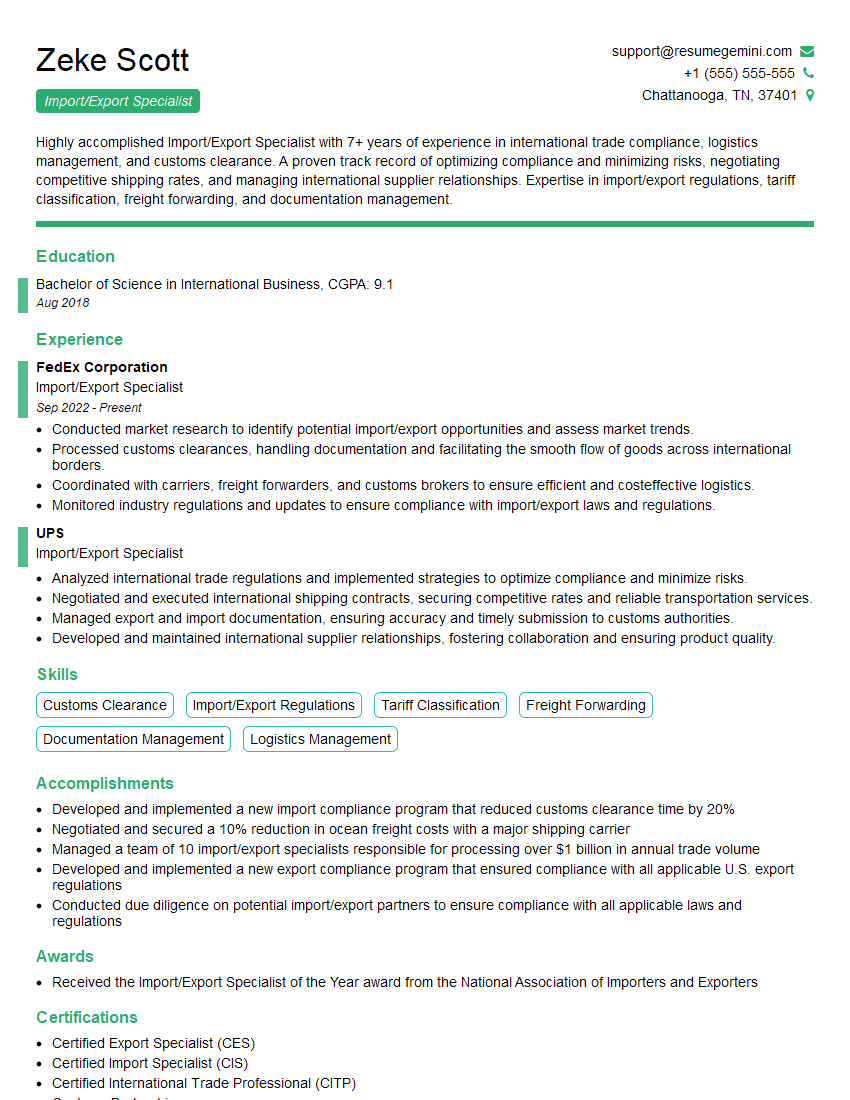
Import/Export Specialist Resume Sample
Transportation Planner Resume Sample
Freight Forwarder Resume Sample

Inventory Control Specialist Resume Sample

Order Fulfillment Specialist Resume Sample
Receiving Clerk Resume Sample

Shipping and Receiving Clerk Resume Sample
Shipping and Receiving Supervisor Resume Sample
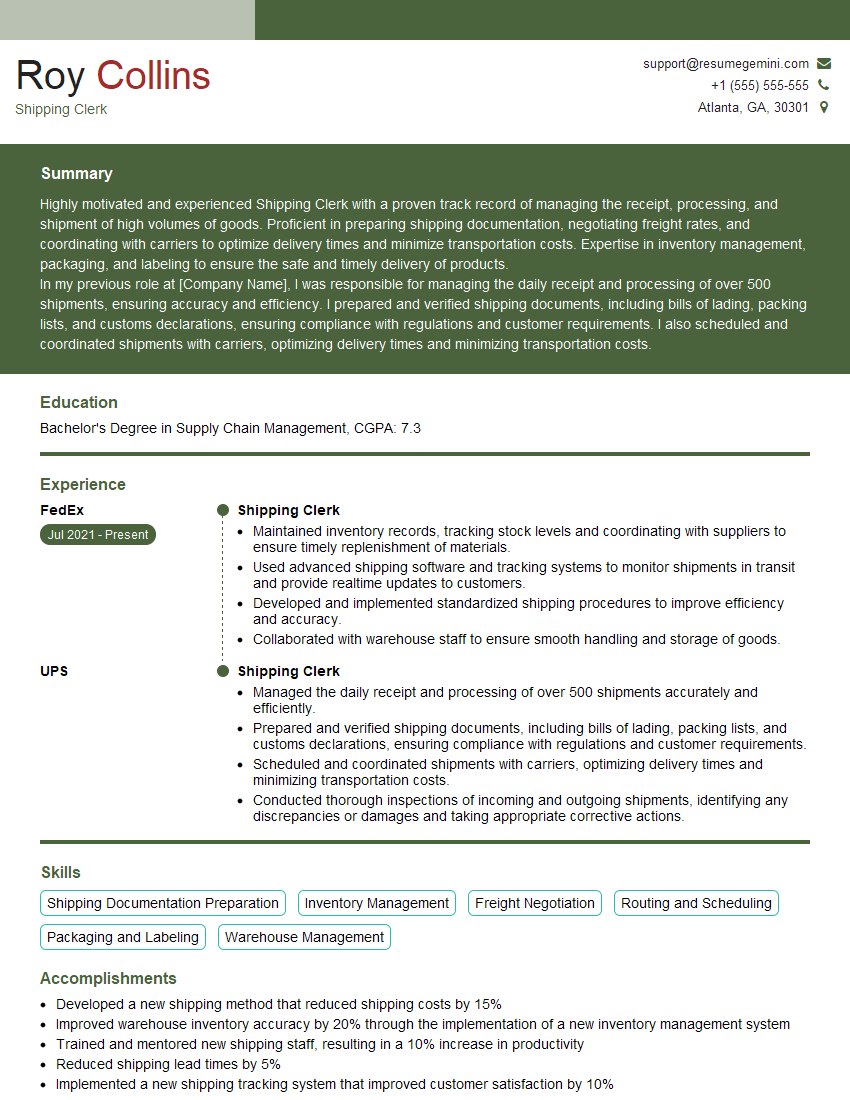
Shipping Clerk Resume Sample
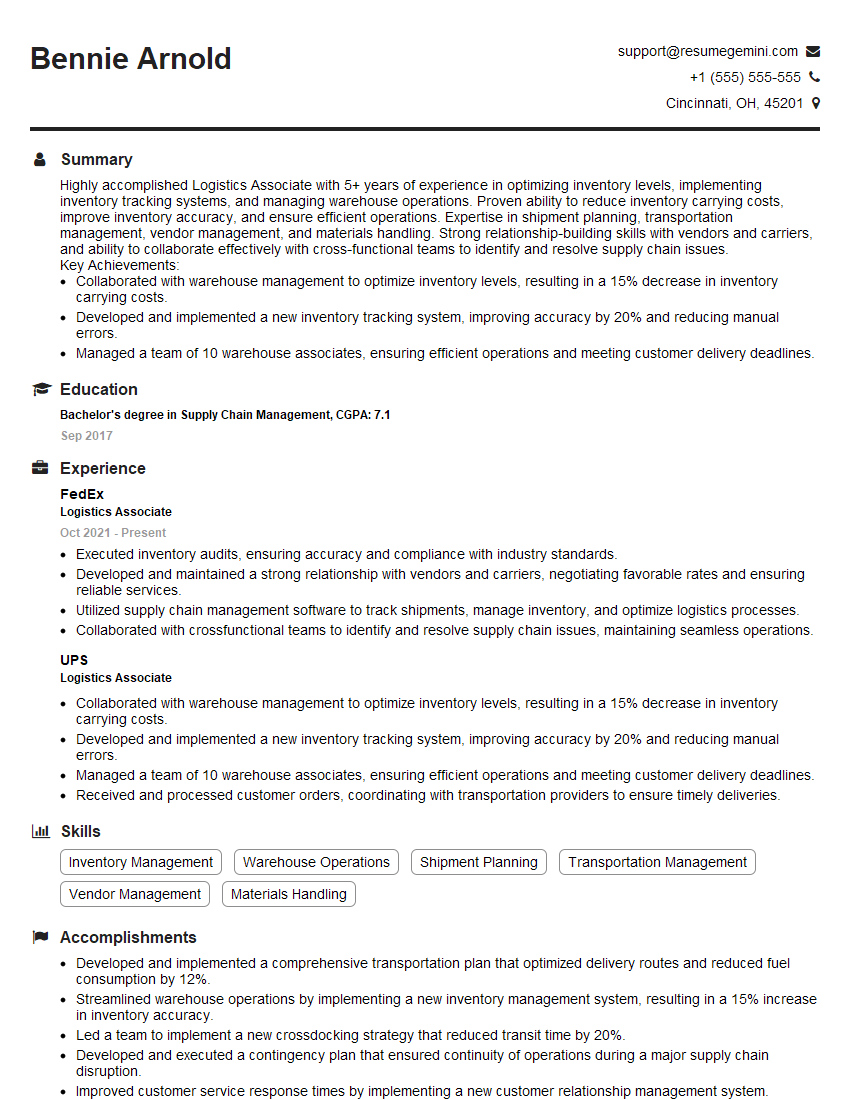
Logistics Associate Resume Sample
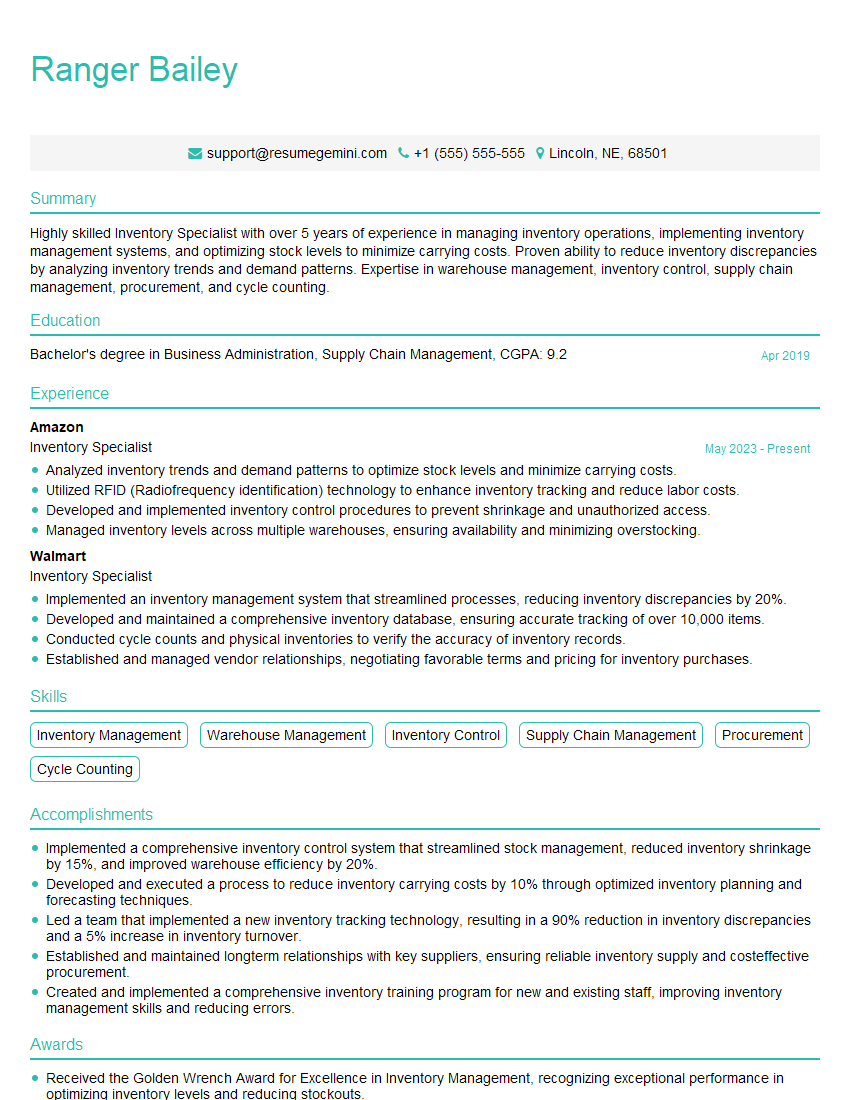
Inventory Specialist Resume Sample
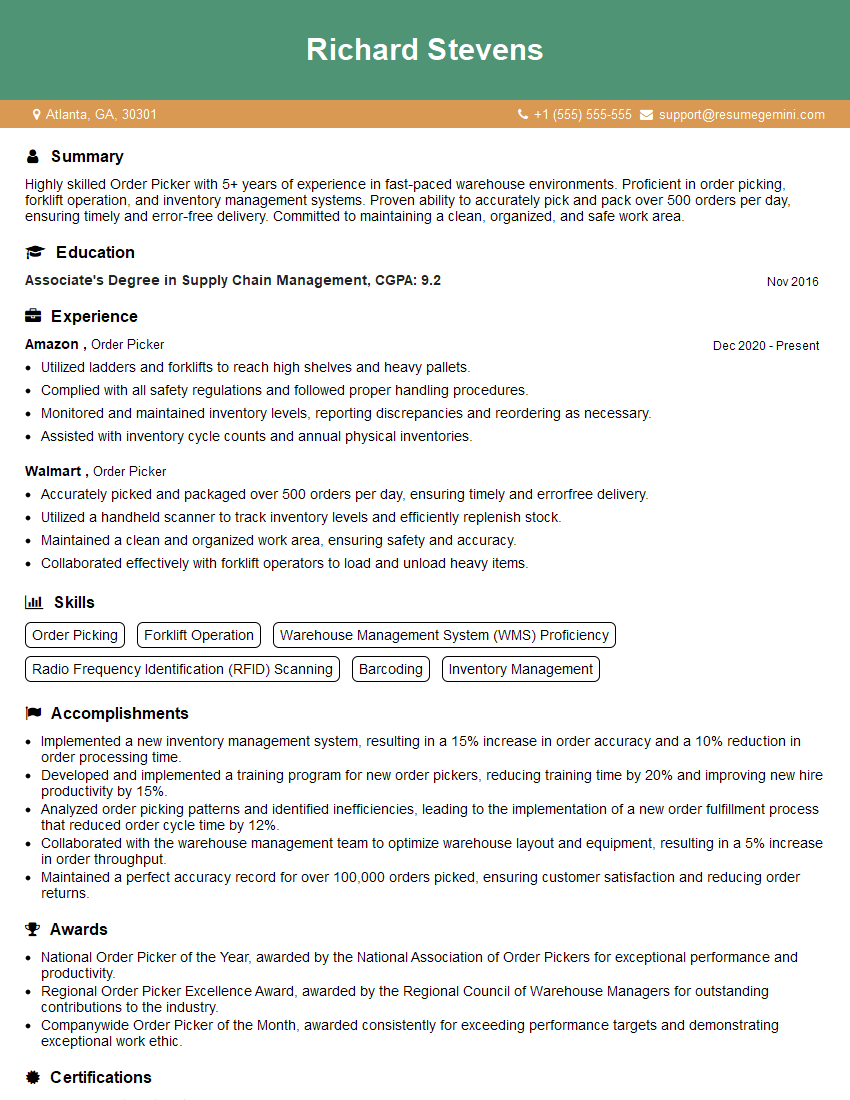
Order Picker Resume Sample

Packer Resume Sample
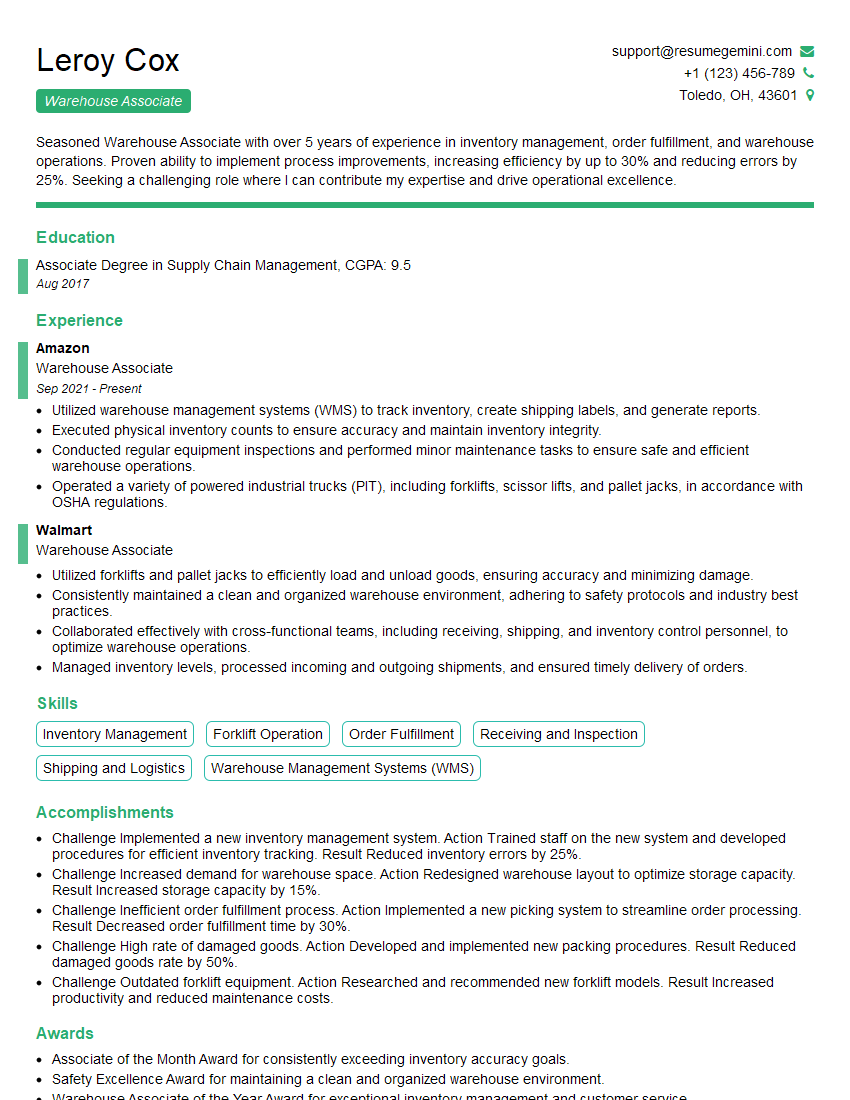
Warehouse Associate Resume Sample
- Operations Manager
- Supply Chain Manager
- Logistics Manager
- Warehouse Manager
- Distribution Manager
- Shipping Coordinator
- Logistics Coordinator
- Supply Chain Analyst
- Customs Broker
- Import/Export Specialist
- Transportation Planner
- Freight Forwarder
- Inventory Control Specialist
- Order Fulfillment Specialist
- Receiving Clerk
- Shipping and Receiving Clerk
- Shipping and Receiving Supervisor
- Shipping Clerk
- Logistics Associate
- Inventory Specialist
- Order Picker
- Packer
- Warehouse Associate
Explore more articles
Users Rating of Our Blogs
Share Your Experience
We value your feedback! Please rate our content and share your thoughts (optional).
What Readers Say About Our Blog
Really detailed insights and content, thank you for writing this detailed article.
IT gave me an insight and words to use and be able to think of examples