The right preparation can turn an interview into an opportunity to showcase your expertise. This guide to Acetylene Torch Maintenance interview questions is your ultimate resource, providing key insights and tips to help you ace your responses and stand out as a top candidate.
Questions Asked in Acetylene Torch Maintenance Interview
Q 1. What are the safety precautions for handling acetylene cylinders?
Acetylene cylinders are incredibly powerful and pose significant risks if mishandled. Safety always comes first. Think of them like pressurized time bombs – respect is key. Here’s what you need to know:
- Secure Storage: Always store acetylene cylinders in an upright position, secured with chains or straps to prevent them from tipping over. They should be stored in a well-ventilated area, away from heat sources, sparks, and open flames. Think of a dedicated, cool, dry storage space.
- Cylinder Caps: Never handle a cylinder without its protective cap in place unless it’s connected to the regulator. The cap protects the valve from damage.
- Proper Handling: Use a hand truck or cylinder cart to move them; never roll or drag them. Rolling can damage the valve and potentially cause a leak.
- Ventilation: Acetylene is heavier than air, so ensure adequate ventilation in the work area to prevent accumulation and the potential for asphyxiation or explosion.
- No Oil or Grease: Never use oil or grease on valves or fittings. Acetylene can react violently with these substances.
- Proper Training: Always receive proper training on handling, connecting, and disconnecting acetylene cylinders before attempting to use them. Improper handling can lead to serious injury or death.
Q 2. Describe the process of lighting an acetylene torch safely.
Lighting an acetylene torch is a precise procedure that requires careful attention to safety. Imagine a controlled explosion – that’s essentially what you’re creating. Here’s the step-by-step process:
- Check Connections: Ensure all connections between the cylinders, regulators, and hoses are tight and free of leaks. Use a leak detection solution to verify this.
- Open Cylinder Valves Slowly: Open the acetylene cylinder valve slowly, listening for any unusual hissing sounds that may indicate a leak. Only open the valve a small amount at first.
- Adjust Regulators: Adjust the acetylene and oxygen regulators to the appropriate pressures specified for the job. This varies widely depending on the metal and application.
- Strike a Lighter: Hold the lighter away from the torch tip to strike it. This prevents damaging the tip or causing an uncontrolled ignition.
- Ignite the Acetylene: Turn on the acetylene first, then carefully bring the lighted lighter to the tip of the torch to ignite the gas. Keep the lighter away from your body and maintain a safe distance.
- Adjust Oxygen: Once the acetylene is lit, slowly introduce oxygen to adjust the flame to the desired size and quality.
Remember: never point the torch at yourself or anyone else during the lighting process.
Q 3. How do you adjust the flame of an acetylene torch for different applications?
The acetylene torch flame can be adjusted to create different types of flames, each ideal for specific welding or cutting applications. Think of it like adjusting your cooking flame – you need a different heat for searing versus simmering.
- Neutral Flame: This flame is characterized by a clearly defined inner cone and an outer feather. It’s used for general welding and brazing applications and provides a good balance of heat and penetration.
- Carburizing Flame: This flame has a long, luminous inner cone, indicating an excess of acetylene. It’s used for applications requiring more carbon addition in the weld, like hardfacing.
- Oxidizing Flame: This flame has a short, stubby inner cone due to an excess of oxygen. It’s faster for cutting thicker materials but also more prone to oxidizing the weld metal. It’s mainly used in cutting applications.
To adjust the flame, control the flow of both the acetylene and oxygen gases using the regulators. More acetylene produces a larger inner cone, while more oxygen produces a shorter, bluer flame.
Q 4. What are the signs of a faulty acetylene regulator?
A faulty regulator can lead to inconsistent flame performance, safety hazards, or damage to equipment. It’s a critical component; don’t overlook regular inspections. Signs of a problem include:
- Leaks: Listen for hissing sounds or use a leak detection solution to check for leaks around the regulator connections.
- Inconsistent Pressure: The gauge may fluctuate wildly, indicating a problem with the internal diaphragm or valve.
- Inaccurate Gauges: If the gauges consistently read higher or lower than the actual pressure, the regulator may need recalibration or replacement.
- Frozen Regulator: Although rare, freezing may occur if moisture is introduced to the regulator during use in cold conditions.
- Damaged or Bent Components: Physical damage to the body of the regulator is a major cause of malfunction and must be addressed immediately.
If any of these are detected, shut off the gas immediately and have the regulator inspected or replaced by a qualified technician.
Q 5. How do you troubleshoot a clogged acetylene torch tip?
A clogged torch tip severely restricts gas flow, leading to a weak flame or an inability to light the torch. It’s like trying to sip through a clogged straw. Here’s how to fix it:
- Turn Off Gases: Always turn off both the acetylene and oxygen before attempting any cleaning.
- Remove the Tip: Carefully remove the torch tip using the appropriate wrench, paying attention not to cross-thread or damage the tip.
- Clean the Tip: Use a tip cleaner or a small, fine wire brush to remove any debris or buildup from the inside and outside of the tip’s orifices. Avoid using anything abrasive that could scratch or enlarge the tip openings.
- Inspect for Damage: Inspect the tip for any cracks, bends, or other damage. Damaged tips must be replaced.
- Reinstall the Tip: Carefully reinstall the torch tip, ensuring it is firmly tightened.
- Test the Flame: Turn the gases back on and check the flame for proper operation. If the problem persists, the tip may need to be replaced.
Q 6. Explain the difference between a carburizing and an oxidizing flame.
The difference between a carburizing and an oxidizing flame lies in the proportion of acetylene to oxygen. Think of it as a recipe: too much of one ingredient alters the final product.
- Carburizing Flame: This flame has an excess of acetylene. The extra acetylene adds carbon to the weld metal, making it harder and stronger. It’s characterized by a long, soft, feathery inner cone. This is often used when dealing with high-carbon steel.
- Oxidizing Flame: This flame has an excess of oxygen. The extra oxygen can oxidize (burn) the weld metal, making it brittle and weakening it. It’s characterized by a short, sharp inner cone. The excessive oxygen is used primarily for cutting metal.
The choice between these flames depends entirely on the specific application and the desired properties of the weld.
Q 7. What are the common causes of flashback in an acetylene torch?
Flashback is a dangerous condition where the flame travels back into the hose or regulator, potentially causing an explosion or fire. It’s like a dangerous backfire in an engine. Common causes include:
- Incorrect Mixture: A mixture with too much oxygen can cause a flashback. Oxygen supports combustion; too much is like adding fuel to a fire.
- Clogged Tip: A clogged tip increases the pressure in the hose, increasing the likelihood of flashback.
- Backpressure: Excessive backpressure, such as from a clogged workpiece or improper welding technique, can cause flashback.
- Damaged Hoses: Cracks or holes in the hoses can ignite the gases and cause flashback.
- Improper Regulator Adjustment: Incorrectly set pressure regulators can disrupt the gas flow and cause flashback.
- Lack of Flashback Arrestors: Flashback arrestors are safety devices that prevent flames from traveling back into the hoses. Using a torch without them is exceptionally risky.
Regular maintenance and safety checks are crucial to prevent flashback incidents. Always prioritize safety and use appropriate safety equipment.
Q 8. How do you prevent flashback in an acetylene torch?
Flashback in an acetylene torch is a dangerous event where the flame travels back into the hose and equipment, potentially causing an explosion. Preventing flashback requires careful attention to several factors. The primary preventative measure is the use of a flashback arrester, a device installed in both the oxygen and acetylene lines. This device contains a series of fine mesh screens or other restrictive elements that interrupt the flame propagation. Think of it as a tiny firebreak within the gas lines.
Beyond the arrester, proper torch adjustment is crucial. Too much back pressure from a clogged tip, or improperly mixed gases can increase the risk. Regular inspection of hoses for cracks or damage also minimizes risk. Finally, never force a torch tip onto the hose; ensure proper connections. Remember, even with all safety precautions, periodic maintenance and replacement of the flashback arrestor is critical.
Q 9. What are the proper procedures for shutting down an acetylene torch?
Shutting down an acetylene torch safely is a two-step process that ensures the prevention of accidents. First, always turn off the acetylene gas first, followed by the oxygen. This order is crucial because even a small amount of oxygen can continue to ignite the acetylene if the order is reversed. Think of it like extinguishing a campfire: you remove the fuel (acetylene) before the oxidizer (oxygen). Second, after shutting off both gases, allow the torch to completely cool before handling or storing it. This prevents accidental burns and damage to the equipment.
Q 10. How do you identify and address leaks in an acetylene system?
Identifying and addressing leaks in an acetylene system requires a methodical approach. A soapy water solution is the most effective leak detection method. Simply apply the solution to all connections, fittings, and hoses. Bubbles forming indicate a leak. The size of the bubbles will correlate to the severity of the leak. For smaller leaks, tightening the connection may suffice; however, for larger leaks, replacement of the affected component is necessary. Remember that acetylene is flammable and potentially explosive, so never use a flame to check for leaks. If you detect a significant leak, immediately ventilate the area and contact a qualified gas technician.
Q 11. What are the different types of acetylene torch tips and their applications?
Acetylene torch tips come in various sizes and designs, each suited for a specific application. The size of the tip determines the flame size and the intensity of the heat, thus impacting the welding or cutting capability.
- Small tips are suitable for fine detailed work and smaller metal pieces.
- Medium tips are versatile and commonly used for general-purpose welding and brazing.
- Large tips are used for heavy-duty cutting and welding thick materials.
Q 12. How do you maintain the torch tip to ensure optimal performance?
Maintaining the torch tip is vital for optimal performance and safety. Regular cleaning is crucial. Carbon buildup on the tip restricts gas flow, leading to an uneven flame and potentially causing flashbacks. Clean the tip using a tip cleaner or a wire brush, being careful not to damage the orifice. Inspect the tip for any damage or wear. A worn or damaged tip should be replaced immediately. Proper storage of the tip, away from potential damage, is equally important. Consistent cleaning and timely replacement of worn tips ensures you get the most efficient and safest possible performance from your acetylene torch.
Q 13. What are the safety procedures for handling used acetylene cylinders?
Safety procedures for handling used acetylene cylinders are paramount due to their high-pressure and flammable nature. Always ensure the cylinder valve is closed tightly. Never drop or damage the cylinder. Use a designated cylinder cart or trolley to move them, and never allow them to roll or fall. Always keep them upright. Store them away from heat and sources of ignition. When transporting cylinders, always use protective caps to prevent damage to the valves. Proper handling is key for safety and prevents costly accidents.
Q 14. Describe the proper way to store acetylene cylinders.
Proper storage of acetylene cylinders involves several key considerations. They should always be stored upright and secured to prevent them from tipping over. The storage area must be well-ventilated, away from any ignition sources such as sparks, flames, or extreme heat. Cylinders should be stored in a cool, dry location. They must be away from incompatible materials, and protected from physical damage. Never store them in direct sunlight or near flammable materials. Keep the storage area clean and organized. Following these guidelines will prevent accidents and ensure the longevity of the cylinders.
Q 15. What are the different types of regulators used with acetylene torches?
Acetylene regulators are crucial for safely controlling the flow of acetylene gas from the cylinder to the torch. They reduce the high-pressure gas in the cylinder to a lower, usable pressure. There are two main types:
- Single-stage regulators: These regulators reduce the cylinder pressure to a working pressure in a single step. They are simpler and less expensive, often sufficient for smaller applications.
- Two-stage regulators: These regulators perform the pressure reduction in two stages, offering better pressure stability and control, especially important for precise welding and cutting operations requiring consistent gas flow. The first stage reduces the high cylinder pressure to an intermediate pressure, while the second stage reduces it further to the desired working pressure.
The choice depends on the application; larger projects or those demanding consistent flame size usually benefit from the increased precision of a two-stage regulator.
Career Expert Tips:
- Ace those interviews! Prepare effectively by reviewing the Top 50 Most Common Interview Questions on ResumeGemini.
- Navigate your job search with confidence! Explore a wide range of Career Tips on ResumeGemini. Learn about common challenges and recommendations to overcome them.
- Craft the perfect resume! Master the Art of Resume Writing with ResumeGemini’s guide. Showcase your unique qualifications and achievements effectively.
- Don’t miss out on holiday savings! Build your dream resume with ResumeGemini’s ATS optimized templates.
Q 16. How do you check the pressure gauges on an acetylene regulator?
Checking the pressure gauges on an acetylene regulator is a vital safety check before and during operation. Always follow these steps:
- Cylinder Pressure Gauge: This gauge displays the pressure of the acetylene inside the cylinder. It typically shows pressure in pounds per square inch (psi). Note that this pressure will decrease as you use the acetylene. A full cylinder will show a high pressure (the exact value varies based on cylinder size), while an empty one will read close to zero.
- Working Pressure Gauge: This gauge indicates the pressure of the acetylene being delivered to the torch. It should be adjusted to the appropriate pressure for your application; you will find the recommended settings in your torch’s instruction manual or reference charts. Remember that too high a working pressure increases the risk of blowback and overheating, while too low means insufficient flow for cutting or welding.
- Visual Inspection: Carefully inspect the gauges for any signs of damage, such as cracks in the glass or loose needles. Damaged gauges need immediate replacement.
Always remember to compare gauge readings against the expected values based on your cylinder and application. Any significant deviations should be investigated before proceeding.
Q 17. What are the signs of a damaged acetylene hose?
A damaged acetylene hose is a serious safety hazard. Never use a damaged hose. Look for the following:
- Visible Cracks or Cuts: These compromises the hose’s structural integrity and can lead to leaks.
- Excessive Wear and Tear: Regular wear from bending and abrasion can weaken the hose, leading to cracks or punctures.
- Kinks or Bends: Sharp bends restrict gas flow and can weaken the hose material.
- Porosity: Tiny holes in the hose material are a sign of deterioration and allow gas to escape.
- Burning or Scorching: Any burns on the hose indicate exposure to excessive heat and potential damage to the hose’s inner lining.
If you find any of these signs, immediately replace the hose. Never attempt to repair a damaged hose; the cost of a new hose is far less than the potential consequences of a leak.
Q 18. How do you perform routine maintenance on an acetylene torch?
Routine maintenance on an acetylene torch is crucial for safety and optimal performance. This involves:
- Regular Cleaning: After each use, clean the torch tip and nozzle with a wire brush to remove any slag, spatter, or debris which can obstruct gas flow and cause uneven flames. This simple step dramatically improves the torch’s longevity and performance.
- Tip Inspection: Regularly inspect the torch tip for cracks, damage, or excessive wear. A damaged tip needs replacing immediately. Worn tips produce irregular flames and can lead to poor welds.
- Hose Inspection: Before each use, inspect the acetylene hose for damage (as detailed in question 3).
- Regulator Check: Before each use, check the regulator gauges (as explained in question 2).
- Storage: Store the torch and its accessories in a clean, dry, and secure location away from heat and flammable materials. This prevents damage and corrosion, keeping your equipment reliable.
Following these steps, even after small projects, keeps your torch performing at its best and dramatically reduces your risk of accidents.
Q 19. What are the potential hazards associated with acetylene gas?
Acetylene gas presents several potential hazards:
- Flammability: Acetylene is highly flammable and can ignite easily. Even small leaks can pose a significant fire risk.
- Explosive Potential: Under certain conditions, especially under high pressure, acetylene can decompose explosively. This is a serious danger, hence the need for safety measures like flashback arrestors.
- Toxicity: While not as acutely toxic as some other gases, prolonged exposure to acetylene can cause headaches, dizziness, and other health issues.
- Asphyxiation: In confined spaces, the accumulation of acetylene can displace oxygen, leading to asphyxiation.
Understanding these hazards and taking appropriate precautions is critical when working with acetylene.
Q 20. How do you respond to a fire involving acetylene gas?
Responding to a fire involving acetylene gas requires immediate and decisive action:
- Evacuate the Area: First and foremost, ensure everyone is evacuated to a safe distance. This is the highest priority.
- Turn Off the Gas Supply: If it is safe to do so, immediately shut off the acetylene cylinder valve to stop the flow of gas. If not, focus on other actions.
- Use a Fire Extinguisher: Use a suitable fire extinguisher (CO2 or dry chemical are generally recommended) to extinguish the fire. Aim at the base of the flames. Never attempt to fight a large or rapidly spreading fire alone.
- Call Emergency Services: Immediately call emergency services (911 or your local equivalent) to report the fire and request assistance.
- Prevent Re-Ignition: Once the fire is out, ensure that the area is adequately ventilated to prevent the build-up of flammable gases and any potential re-ignition.
Remember, safety is paramount. If you are unsure about any aspect of firefighting, prioritize evacuation and call for professional help immediately.
Q 21. What is the purpose of flashback arrestors?
Flashback arrestors are safety devices installed in acetylene lines to prevent flashbacks. A flashback occurs when a flame propagates back into the acetylene hose or regulator, potentially causing a catastrophic explosion.
Flashback arrestors work by creating a physical barrier that interrupts the flame propagation. They typically consist of a series of fine screens or other flame-arresting elements that quench the flame before it can travel back through the system. They are crucial for preventing serious accidents and protecting users.
Regularly inspect flashback arrestors for damage or clogging; replace them if necessary. A blocked or faulty arrestor provides no protection and might even worsen the situation.
Q 22. How do you inspect flashback arrestors?
Inspecting flashback arrestors is crucial for safety. A flashback arrestor prevents the dangerously rapid backflow of a burning flame into the acetylene cylinder. This backflow can cause an explosion. Inspection involves a visual check for any damage, such as dents, cracks, or corrosion on the arrestor’s body. You should also ensure there’s no blockage or debris in the arrestor’s ports. A simple visual inspection is usually sufficient, but if you suspect damage or malfunction, the arrestor should be replaced immediately. Don’t try to repair a flashback arrestor; replace it with a new one from a reputable supplier. Think of it like a safety valve on a pressure cooker – vital for preventing catastrophic failure.
Example: During a routine inspection, I noticed a small dent on an arrestor. Although seemingly minor, it signaled a potential weakness, and I replaced the arrestor to eliminate any risk.
Q 23. What are the common causes of acetylene torch malfunctions?
Acetylene torch malfunctions stem from several sources. Common causes include clogged tips, leaking hoses or fittings, improper gas pressure regulation, and problems with the flashback arrestors (as discussed above). Low gas pressure can result in a weak flame, while excessive pressure might lead to uncontrolled burning or even a blowback. Damaged hoses, often caused by wear and tear or accidental punctures, can lead to gas leaks – a significant safety hazard. Finally, incorrect gas mixture ratios, too much oxygen compared to acetylene, will yield a very hot, oxidizing flame potentially damaging the work piece. Regular maintenance and inspections prevent these issues.
- Clogged Tips: Regular cleaning is essential.
- Leaking Hoses/Fittings: Check for cracks, wear, and proper connections.
- Pressure Regulation: Verify gauges and regulators are functioning correctly.
- Flashback Arrestors: Inspect regularly as previously described.
- Gas Mixture: Follow the appropriate gas ratios for the material being welded.
Q 24. How do you perform pre-use inspection of an acetylene torch setup?
A pre-use inspection is non-negotiable for safety and efficient operation. Before you even light the torch, you should systematically check the entire setup. This involves examining the acetylene and oxygen cylinders for damage or leaks. Then verify that the pressure gauges on the regulators read zero before opening any cylinder valves. Open the cylinder valves slowly to avoid pressure surges. Next, inspect all hoses and connections for leaks using a soapy water solution (any bubbles indicate leaks). Finally, check the torch tip for cleanliness and ensure that the gas flows freely. A hissing sound indicates a leak; a quick visual check of the torch body and all the connections is advisable.
- Cylinder Inspection: Check for damage, leaks, and proper valve closure.
- Regulator Check: Confirm zero pressure before opening valves.
- Hose and Connection Inspection: Use soapy water to check for leaks.
- Torch Tip Inspection: Verify cleanliness and free gas flow.
Example: Once, during a pre-use check, I found a small leak in a hose. Replacing the hose prevented a potential accident and ensured the work proceeded safely.
Q 25. What are the different types of welding metals you can use with acetylene?
Acetylene welding is versatile, but the choice of welding metal depends greatly on its melting point and properties needed in the final product. Commonly welded metals include mild steel, low-carbon steel, and various alloys of steel (such as stainless steel). It can also be used for brazing metals like brass, copper and bronze, although this is typically considered braze-welding because it uses a filler rod and the base metal doesn’t melt to the same extent as with fusion welding. The choice of filler metal is crucial and must be compatible with the base metal.
- Mild Steel: The most common application.
- Low-Carbon Steel: Similar to mild steel, offers good weldability.
- Stainless Steel: Requires specialized techniques and filler materials.
- Brass, Copper, Bronze: Typically braze-welding.
Q 26. How does the flame temperature vary with the gas mixture?
The flame temperature in oxy-fuel gas welding is highly sensitive to the gas mixture ratio. A neutral flame, with a balanced mixture of acetylene and oxygen, produces the highest temperature, typically around 3000°C to 3300°C (5432°F to 5972°F). A carburizing flame, which has an excess of acetylene, is cooler and produces a reducing atmosphere. An oxidizing flame, with an excess of oxygen, is also hotter than a neutral flame and is characterized by a shorter inner cone, but this flame is extremely aggressive and should be avoided unless you have a specific need to quickly oxidize the weld area. A reducing flame reduces the oxidation of the base metal, so it is usually preferred.
The ideal flame for most applications is the neutral flame because it offers the best balance of temperature and weld penetration.
Q 27. Explain the principles of oxy-fuel gas welding.
Oxy-fuel gas welding, often called oxyacetylene welding when using acetylene, relies on the intense heat generated by burning a mixture of fuel gas (acetylene in this case) and oxygen to melt the base metal and a filler metal to create a weld joint. The process involves precisely controlling the flame to melt both the base and filler metals, allowing them to fuse together and solidify into a strong, continuous joint. The filler metal is added to the weld pool, allowing precise control over the weld bead’s size and shape. The operator needs considerable skill to manage the flame and filler metal, ensuring complete fusion and preventing defects.
Think of it like melting two pieces of chocolate together with a very hot lighter; the heat melts both pieces, and they fuse as they cool.
The process includes several crucial steps:
- Preparation: Cleaning and prepping the base metals for welding
- Flame Adjustment: Achieving the correct neutral flame.
- Welding: Melting base and filler metals, and controlling the weld pool.
- Cooling: Allowing the weld to cool slowly to prevent cracking.
Key Topics to Learn for Acetylene Torch Maintenance Interview
- Acetylene Cylinder Handling and Safety: Understanding proper handling procedures, safety regulations, and potential hazards associated with acetylene cylinders. This includes knowing how to identify and address leaks.
- Torch Components and Functionality: Detailed knowledge of the various components of an acetylene torch (e.g., tip, hose, regulator) and their individual functions. Be prepared to explain how they work together.
- Gas Mixture and Combustion: Understanding the principles of acetylene combustion, the ideal gas mixture ratios for different applications, and the impact of improper mixtures on flame quality and safety.
- Troubleshooting and Repair: Practical experience in identifying and resolving common issues such as clogged tips, leaks in the system, and regulator malfunctions. Be ready to describe your troubleshooting methodology.
- Preventive Maintenance: Knowledge of routine maintenance procedures, including cleaning, inspection, and lubrication to ensure optimal performance and longevity of the torch. This also includes knowing when to replace parts.
- Safety Regulations and Compliance: Familiarity with relevant safety standards and regulations pertaining to acetylene torch use and maintenance in your industry or region.
- Different Torch Types and Applications: Understanding the various types of acetylene torches and their suitability for specific applications (e.g., welding, brazing, cutting).
Next Steps
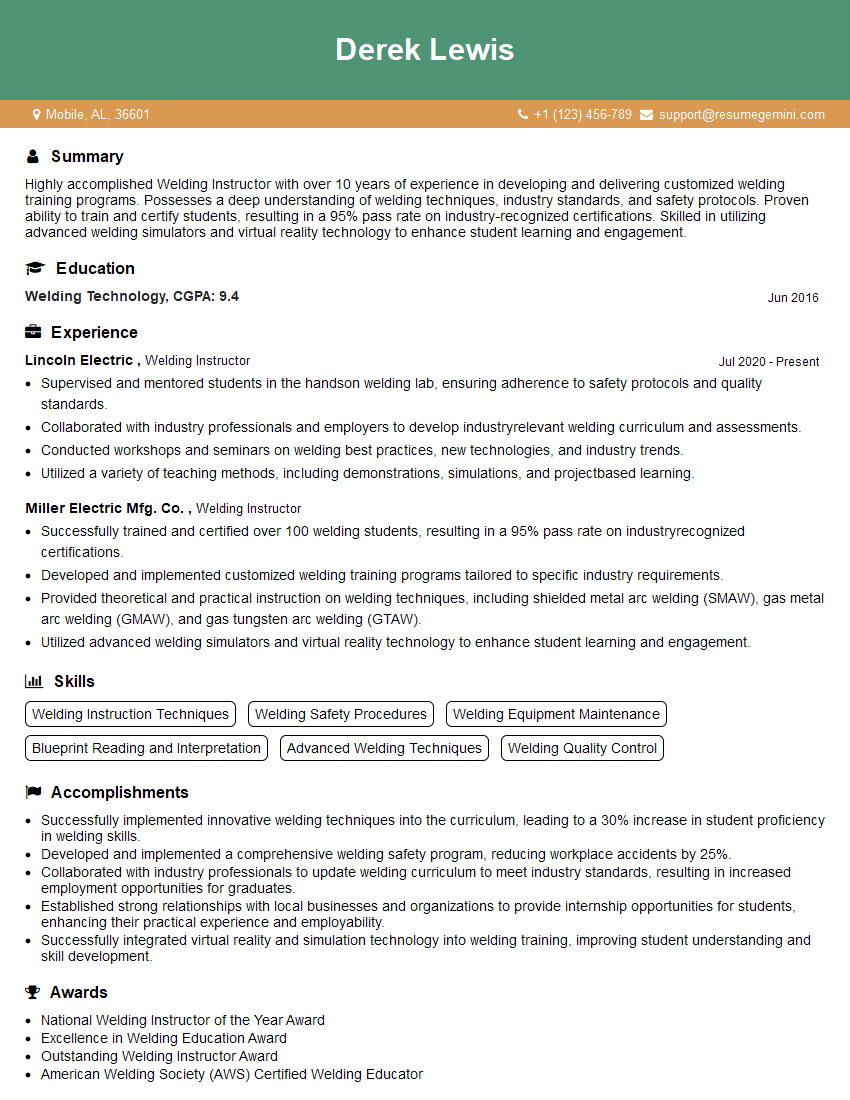
Mastering Acetylene Torch Maintenance is crucial for a successful and rewarding career in many industries. Proficiency in this area demonstrates a commitment to safety, efficiency, and technical expertise, making you a highly valuable asset to any team. To significantly boost your job prospects, create a compelling and ATS-friendly resume that highlights your skills and experience. ResumeGemini is a trusted resource to help you craft a professional resume that showcases your qualifications effectively. We provide examples of resumes tailored to Acetylene Torch Maintenance to help you get started.
Explore more articles
Users Rating of Our Blogs
Share Your Experience
We value your feedback! Please rate our content and share your thoughts (optional).
What Readers Say About Our Blog
Really detailed insights and content, thank you for writing this detailed article.
IT gave me an insight and words to use and be able to think of examples