Feeling uncertain about what to expect in your upcoming interview? We’ve got you covered! This blog highlights the most important Acetylene Welding interview questions and provides actionable advice to help you stand out as the ideal candidate. Let’s pave the way for your success.
Questions Asked in Acetylene Welding Interview
Q 1. Describe the process of setting up an acetylene welding torch.
Setting up an acetylene welding torch involves a precise sequence of steps to ensure safe and efficient operation. Think of it like preparing a finely tuned instrument before playing a symphony – each step is crucial for a harmonious outcome.
- Connecting the Cylinders: First, securely connect the acetylene and oxygen cylinders to their respective regulators. Make sure the regulators are properly tightened to prevent leaks. Remember, acetylene requires a specific type of regulator designed to handle its unique properties.
- Adjusting Regulators: Carefully adjust the pressure on each regulator to the appropriate levels for the specific welding job. These pressures are dictated by the metal thickness and type. The acetylene pressure is generally lower than the oxygen pressure. Always refer to the manufacturer’s instructions for safe pressure ranges.
- Connecting the Hoses: Attach the hoses to the regulators and the torch. Ensure all connections are leak-free by using a soapy water solution – bubbles indicate leaks that need immediate attention.
- Lighting the Torch: Turn on the acetylene first, then open the oxygen valve slowly, adjusting the oxygen flow until a neutral flame is achieved – you will see a sharply defined inner cone in the flame. It’s key to follow this order to prevent flashbacks, which is a dangerous phenomenon where the flame travels back into the hose.
- Flame Adjustment: Fine-tune the flame by adjusting both acetylene and oxygen valves until the desired flame type (neutral, oxidizing, or carburizing) is obtained, depending on your metal and welding application.
Remember to always follow manufacturer’s safety instructions. A poorly set up torch can lead to unsafe conditions and poor welding quality. Practice makes perfect – regular practice will give you a feel for the perfect setup for different situations.
Q 2. Explain the difference between a neutral, oxidizing, and carburizing flame.
The type of flame in acetylene welding dramatically impacts the quality and strength of the weld. Think of it as cooking: different flames are suitable for different tasks.
- Neutral Flame: This is the ideal flame for most welding applications. It has a clearly defined inner cone, surrounded by a slightly larger, pale blue outer cone. The inner cone represents a perfect balance of acetylene and oxygen, ensuring complete combustion. The weld produced is strong and free of defects. This is commonly used for general purpose welding.
- Oxidizing Flame: This flame has an excessively long inner cone and a shorter outer cone, indicating an excess of oxygen. It creates a harsh, brittle weld that can easily crack. It is rarely used, except in specific situations like cutting some metals.
- Carburizing Flame: This flame has a short inner cone and a long outer cone with a feathery appearance, indicating an excess of acetylene. It produces a weaker weld prone to porosity (small holes), often used for some brazing and hardfacing operations.
The flame’s appearance is a direct reflection of the gas mixture – proper observation is key to achieving high-quality welds.
Q 3. How do you adjust the flame for different welding applications?
Adjusting the flame is crucial for optimal welding. The type of flame needed varies depending on the metal being welded, its thickness, and the desired weld characteristics. The adjustment is done by altering the flow of acetylene and oxygen.
- For thinner metals: A smaller, neutral flame is generally used to prevent burning through the material. You’d adjust the valves to reduce both the acetylene and oxygen flow.
- For thicker metals: A larger, more powerful neutral flame provides sufficient heat penetration to weld effectively, meaning you would increase both the acetylene and oxygen flow.
- Specific applications: For instance, when brazing, a carburizing flame is sometimes preferred to aid in the flow of brazing filler metal, requiring an increase in acetylene relative to oxygen.
It’s vital to adjust the flame iteratively. Start with a neutral flame, monitor the weld pool and adjust slightly until achieving the desired results. Practice is essential to develop the intuition to rapidly identify and correct adjustments.
Q 4. What safety precautions are essential when using acetylene?
Acetylene is a highly flammable gas, demanding rigorous safety precautions. Negligence can lead to severe consequences, even death.
- Proper Ventilation: Always work in a well-ventilated area to prevent the buildup of flammable gases and hazardous fumes.
- Protective Gear: Always wear appropriate personal protective equipment (PPE), including welding goggles or a helmet with a shade appropriate for the intensity of the weld, gloves, heavy clothing that covers exposed skin, and safety shoes.
- Cylinder Storage: Store acetylene cylinders upright and secured to prevent them from falling over. Store them away from ignition sources such as sparks or open flames.
- Leak Detection: Regularly check for leaks using a soapy water solution. Never use a flame to detect leaks.
- Fire Extinguisher: Keep a suitable fire extinguisher nearby and know how to use it. It should be rated for Class B and Class C fires.
- No Smoking: Strictly prohibit smoking in the welding area.
Safety is paramount and should never be compromised. Treat acetylene with the respect it deserves – it’s a powerful tool, but one that must be handled responsibly.
Q 5. What are the potential hazards associated with acetylene welding?
Acetylene welding poses several potential hazards.
- Burns: Contact with the hot metal, flame, or sparks can cause severe burns. These include flash burns from the intense light.
- Fire and Explosion: Acetylene is highly flammable and can ignite easily, leading to fires or explosions if not handled carefully.
- Eye and Respiratory Hazards: Intense UV light from the welding arc can damage eyes. The fumes and gases produced during welding can irritate the eyes, skin, and lungs. Proper respiratory protection (such as an appropriate respirator) is essential.
- Toxicity: Some materials welded release toxic fumes that can be extremely harmful. Metal fumes are a primary concern.
- Flashbacks: This is a dangerous situation where the flame travels back into the torch or hoses, potentially causing explosions or serious injury.
Understanding these hazards is crucial for mitigating risk and ensuring a safe welding environment. This requires careful planning and consistent adherence to safety protocols.
Q 6. How do you identify different types of metal suitable for acetylene welding?
Identifying suitable metals for acetylene welding involves understanding their melting points and weldability. Not all metals are easily weldable with acetylene.
- Mild Steel: This is the most common material welded with acetylene due to its ease of welding and good weldability. It is commonly used in construction and general fabrication.
- Low-Carbon Steel: Similar to mild steel, but with slightly different properties that can lead to differences in weld quality. Proper flame adjustments are needed for optimum results.
- Cast Iron: While weldable, it requires preheating and specific techniques because of its composition. Improper welding techniques can lead to cracking.
- Stainless Steel: Often weldable, but requires specific filler metals and techniques due to its corrosion-resistant properties. Preheating is frequently necessary.
- Aluminum and Other Non-ferrous Metals: While possible, these materials are more challenging to weld with acetylene than steel. Specialized techniques and fluxes are often needed.
Identifying the metal and using the correct filler metal and welding techniques are essential for good quality and safe welding. When in doubt, consult a relevant material data sheet to verify its weldability with acetylene.
Q 7. Explain the importance of preheating certain metals before welding.
Preheating certain metals before welding is crucial to prevent cracking and ensure a high-quality weld. Think of it as preparing dough for baking – the right temperature is vital for success.
Metals with high carbon content (like some cast iron and high-carbon steels) have a higher tendency to cool rapidly and crack after welding. Preheating reduces the temperature difference between the weld pool and the surrounding metal, creating a slower cooling rate. This slower cooling prevents the formation of internal stresses that lead to cracking.
Preheating temperature varies depending on the metal’s thickness and composition. This temperature is usually specified in the welding procedures or metal specifications. Using a thermometer to carefully monitor the preheating temperature is critical to prevent overheating and potential safety issues.
Example: Cast iron welding may need preheating to 300-500°F (150-260°C) to minimize cracking. The preheating temperature should be maintained throughout the welding process.
Failing to preheat these types of metals often results in cracked or brittle welds, requiring rework or even scrapping the entire workpiece.
Q 8. Describe the proper techniques for joining different thicknesses of metal.
Joining metals of different thicknesses with acetylene welding requires a nuanced approach to ensure proper fusion and avoid defects. The key is to manage the heat input to prevent burning through the thinner metal while ensuring complete penetration in the thicker one.
For instance, when welding a thin sheet to a thick plate, you’d start by preheating the thicker section to reduce the temperature differential during welding. This minimizes warping and cracking. Then, use a smaller welding tip with a lower gas flow rate to concentrate the heat on the joint. Multiple passes might be needed to build up the weld. Think of it like carefully building a layered cake – you can’t rush the process.
Conversely, when joining two thick sections, a larger tip and higher gas flow rate may be necessary to achieve sufficient penetration. However, constant monitoring is crucial to avoid overheating and burning. Using a wider, slower welding bead can help distribute the heat more evenly across a greater area. It’s like working a large field with a wider plough rather than a narrow one.
In both cases, proper joint preparation (e.g., edge beveling for thicker sections) is paramount to promote uniform heat distribution and penetration.
Q 9. How do you control the heat input during acetylene welding?
Controlling heat input during acetylene welding is crucial for producing high-quality welds. The heat input is directly related to the flame size, the travel speed, and the preheat temperature of the base metal. Think of it as controlling the intensity of a cooking flame – too much, and you burn your food; too little, and it’s undercooked.
We achieve this control primarily through adjusting the oxygen and acetylene gas flow rates, which directly impact the flame size and temperature. A neutral flame (the ideal for most welding) is characterized by a distinct inner cone and a feathered outer flame. Adjusting the acetylene-to-oxygen ratio affects the flame’s character and heat.
Travel speed is another crucial factor. A slower travel speed increases heat input, allowing for deeper penetration but increasing the risk of burn-through. Conversely, a faster travel speed decreases heat input, leading to shallower penetration but reducing the likelihood of defects. The balance depends on the metal thickness and welding conditions. Finally, preheating the metal for thicker pieces reduces the thermal shock, leading to better control and reducing the risk of cracking.
Q 10. Explain the concept of weld penetration and how to achieve optimal penetration.
Weld penetration refers to the depth to which the weld metal fuses with the base metal. Optimal penetration ensures a strong, leak-proof joint. Insufficient penetration leads to weak welds, while excessive penetration can cause burn-through.
Achieving optimal penetration involves several factors:
- Proper joint design: Beveling the edges of the base metal for thicker sections allows for better heat distribution and deeper penetration. Think of it like creating a channel for the weld metal to flow into.
- Correct flame adjustment: A neutral flame provides the best balance of heat and penetration. A carburizing flame (excess acetylene) can weaken the weld, while an oxidizing flame (excess oxygen) can cause porosity.
- Appropriate travel speed: A slower, steady travel speed promotes greater heat input, leading to better penetration, but too slow can cause burn-through.
- Filler metal selection: The filler metal should be compatible with the base metal to ensure proper fusion and penetration.
- Proper cleaning: Removing dirt, grease, paint, and rust from the base metal is critical for ensuring proper weld penetration.
By carefully adjusting these parameters, welders can achieve the optimal penetration required for the specific application.
Q 11. What are the common weld defects associated with acetylene welding, and how are they prevented?
Common weld defects in acetylene welding include:
- Porosity: Small holes or voids within the weld caused by trapped gases. Prevented by using a clean neutral flame and ensuring the base metal is clean and free of contaminants.
- Incomplete penetration: Weld metal doesn’t fully fuse with the base metal. Prevented by proper joint design, correct flame size, and appropriate travel speed.
- Undercutting: Erosion of the base metal at the edges of the weld. Prevented by using the correct welding technique and avoiding excessive heat input.
- Cracking: Breaks in the weld caused by rapid cooling or stresses in the metal. Prevented by proper preheating for thicker sections, slow cooling, and selection of appropriate filler metal.
- Spatter: Small droplets of weld metal scattered around the weld bead. Can be minimized by using proper welding technique and maintaining a stable arc.
Preventing these defects often relies on proper preparation, technique, and monitoring the process. Regular checks during welding are crucial for early defect detection.
Q 12. How do you inspect a weld for defects after completion?
After completion, weld inspection involves visual examination and sometimes more advanced methods.
Visual inspection involves looking for any obvious defects like cracks, porosity, undercutting, or lack of fusion. This is often complemented by using a magnifying glass for closer inspection of smaller details. This is the first line of defense in quality control.
Further inspection methods may include:
- Dye penetrant testing: A liquid dye is applied to the surface to reveal surface cracks.
- Magnetic particle inspection: Used to detect surface and near-surface cracks in ferromagnetic materials.
- Radiographic testing (X-ray): Used to detect internal defects like porosity and lack of fusion. This is more advanced and is generally employed in high-stakes projects.
The choice of inspection method depends on the criticality of the weld and the potential consequences of failure. Documentation of all inspections is essential for traceability and quality assurance.
Q 13. Describe your experience with different types of filler metals used in acetylene welding.
My experience encompasses a wide range of filler metals used in acetylene welding, tailored to specific base metal types and applications. Selecting the right filler metal is crucial to ensuring proper fusion, mechanical properties, and corrosion resistance of the final weld.
I’ve worked extensively with:
- Mild steel filler rods: The most common type, suitable for general purpose welding of mild steel. Different grades offer varying strength and ductility.
- Stainless steel filler rods: Used for welding stainless steel components, offering excellent corrosion resistance. The choice depends on the specific grade of stainless steel being welded.
- Aluminum filler rods: Used for welding aluminum alloys, requiring specific techniques and fluxes to manage oxidation.
- Cast iron filler rods: Used for repairing cast iron components, requiring careful control of the heat input to avoid cracking.
Experience helps determine the appropriate filler metal based on the requirements for the final weld. The strength, ductility, and corrosion resistance of the filler metal must align perfectly with the project.
Q 14. Explain the process of cleaning and preparing the base metal for acetylene welding.
Cleaning and preparing the base metal is the foundation of a successful acetylene weld. Improper preparation can lead to poor fusion, porosity, and other defects. Think of it as laying a solid foundation for a house – you can’t build a sturdy structure without it.
The process generally involves:
- Removing surface contaminants: This includes removing rust, scale, paint, grease, oil, and other surface impurities using wire brushes, grinding wheels, or other appropriate tools. Thorough cleaning is vital for ensuring proper fusion.
- Edge preparation: For thicker materials, beveling the edges of the base metal creates a wider weld area, facilitating better penetration and reducing stress concentration. This is especially vital for structural welds.
- Fitting and alignment: The parts to be welded must be properly aligned and fitted before welding. Imperfect alignment can lead to weak joints. A good fit is crucial for proper penetration and a strong weld.
After the cleaning and preparation, the joint should be free of any contaminants and ready for welding, maximizing the chances of a high-quality weld.
Q 15. How do you maintain and care for acetylene welding equipment?
Maintaining acetylene welding equipment is crucial for safety and optimal performance. It involves regular inspections and cleaning of all components. Think of it like servicing a car – regular maintenance prevents bigger problems down the line.
- Cylinders: Regularly inspect acetylene and oxygen cylinders for damage, leaks (using soapy water), and ensure they’re properly secured and stored upright. Never use damaged cylinders.
- Regulators: Check regulators for damage and ensure the pressure gauges are accurate. Clean any debris from the regulator connections. Regularly lubricate the regulator moving parts as recommended by the manufacturer.
- Torches: Inspect the torch body, hoses, and tips for cracks, leaks, or damage. Clean the tips regularly to remove carbon buildup, ensuring a clean and consistent flame. Replace worn or damaged parts immediately.
- Hoses: Regularly check hoses for cracks, kinks, or wear. Replace damaged hoses immediately. Always use the correct hose type and size for your equipment.
- Safety Equipment: Ensure that all safety equipment, including welding goggles, gloves, and protective clothing, is in good condition and properly used. Regularly inspect and replace as needed.
Proper maintenance not only extends the life of your equipment but also significantly reduces the risk of accidents and ensures high-quality welds.
Career Expert Tips:
- Ace those interviews! Prepare effectively by reviewing the Top 50 Most Common Interview Questions on ResumeGemini.
- Navigate your job search with confidence! Explore a wide range of Career Tips on ResumeGemini. Learn about common challenges and recommendations to overcome them.
- Craft the perfect resume! Master the Art of Resume Writing with ResumeGemini’s guide. Showcase your unique qualifications and achievements effectively.
- Don’t miss out on holiday savings! Build your dream resume with ResumeGemini’s ATS optimized templates.
Q 16. Describe your troubleshooting experience with acetylene welding equipment.
Troubleshooting acetylene welding equipment often involves systematic problem-solving. For example, if you’re experiencing a weak or unstable flame, you should follow a logical process.
- Check Gas Supply: Ensure both oxygen and acetylene cylinders have sufficient pressure. Check the regulator settings to make sure they are correct for the application. Inspect for leaks using soapy water.
- Inspect the Torch: Examine the torch tip for clogging. A clogged tip will result in a weak or unstable flame. Clean it using a tip cleaner or replace it if necessary. Check for cracks or damage in the torch body and hoses.
- Check for Leaks: Look for leaks in the hoses, connections, or regulators using a leak detector or soapy water. Repair or replace any leaking components immediately.
- Flame Adjustment: If the flame is still unstable, adjust the oxygen and acetylene valves to achieve the desired neutral flame. Remember, a neutral flame is crucial for effective welding.
- Consider the Workpiece: Sometimes, problems aren’t with the equipment but the workpiece itself. Is the metal too thick? Is the surface clean? These factors can influence welding success.
I’ve encountered various issues, from simple clogged tips to more complex regulator malfunctions. By following a methodical approach, I’ve successfully identified and resolved these issues, ensuring minimal downtime and maintaining a safe working environment.
Q 17. What are the limitations of acetylene welding compared to other welding processes?
While acetylene welding is versatile and relatively inexpensive, it does have limitations compared to other processes like MIG or TIG welding.
- Lower Weld Speed: Acetylene welding is generally slower than other processes, increasing production time and labor costs.
- Heat Affected Zone (HAZ): Acetylene welding creates a larger HAZ, which can result in distortion and reduced material strength in certain applications. Think of it as a larger area being heated and potentially weakened around the weld.
- Porosity: Improper technique or impurities can lead to porosity (holes) in the weld, reducing its strength and integrity.
- Limited Material Compatibility: Acetylene welding is less suitable for high-strength alloys and certain metals compared to other processes like TIG welding.
- Safety Concerns: Acetylene is a flammable gas, requiring careful handling and adherence to strict safety regulations. The risk of fire or explosion is always present if safety protocols are not followed.
The choice of welding process depends heavily on the specific application. For applications requiring high speed, precision, or welding of specific materials, other processes might be more suitable. Acetylene welding remains valuable, particularly for its portability and ease of use in some contexts.
Q 18. Explain the principles of heat transfer in acetylene welding.
Heat transfer in acetylene welding is primarily through conduction, convection, and radiation. Imagine a candle flame – it uses all three!
- Conduction: Heat transfers directly from the flame to the workpiece through contact. The heat flows from the hotter flame to the cooler metal.
- Convection: The heated gases from the flame move and transfer heat to the surrounding air and then to the workpiece. Think of heat rising from a radiator.
- Radiation: Heat is emitted from the flame as infrared radiation, which directly heats the surface of the workpiece. This is like feeling the warmth of the sun.
The efficiency of heat transfer depends on factors such as flame size, distance from the workpiece, and the material’s thermal properties. The combination of these three methods ensures the workpiece is heated to the melting point, allowing for fusion and creating a strong weld.
Q 19. What are some common applications of acetylene welding in various industries?
Acetylene welding finds applications across various industries. Its versatility and relatively low cost makes it an attractive choice for certain tasks.
- Construction: Used for joining pipes, structural steel elements, and other components.
- Automotive Repair: Excellent for bodywork repairs and fabrication work.
- Manufacturing: Employed in the creation of various metal components, especially in smaller-scale or specialized projects.
- Plumbing: Commonly used for joining pipes, particularly for smaller-diameter pipes.
- Art and Sculpture: Used for creating artistic metal pieces and joining elements in sculptures.
In each application, careful selection of equipment and appropriate techniques is crucial to ensure the safety and quality of the weld.
Q 20. Describe your experience with different welding positions (e.g., flat, vertical, overhead).
Experience with different welding positions is essential for efficient and high-quality welding. Each position presents unique challenges.
- Flat Position: This is the easiest position; gravity helps to keep the molten metal in place. It’s the most common position for beginners.
- Vertical Position: Welding upwards (vertical up) requires careful control of the puddle to prevent it from running down. Welding downwards (vertical down) is slightly easier but still requires control.
- Overhead Position: This is the most challenging position, requiring significant skill and precision to prevent the molten metal from dripping. Good control of the torch angle and speed is crucial.
My experience encompasses all three positions. I’ve developed techniques to manage the challenges of each position, resulting in consistently high-quality welds, regardless of the orientation of the workpiece.
Q 21. How do you determine the proper gas pressure for different welding applications?
Determining the proper gas pressure for acetylene welding is crucial for achieving a good weld. The required pressure depends on the thickness of the metal being welded and the type of material.
Generally, you’ll use a lower pressure for thinner materials and a higher pressure for thicker materials. The manufacturer’s instructions for your specific torch and the material’s properties should guide your decision. You’ll also need to observe the flame – a properly adjusted neutral flame will indicate correct pressure settings.
Often, a pre-weld test on a scrap piece of the same material is done to optimize the pressure settings. This ensures a quality weld without unnecessary waste of materials. This experimental approach allows for fine-tuning of the parameters for optimal results.
It’s important to remember that inaccurate pressure settings can lead to poor welds, inefficient use of gases, and even safety hazards. Precise pressure regulation is a skill developed through practice and experience.
Q 22. What is the role of flux in acetylene welding?
Flux in acetylene welding plays a crucial role in cleaning the metal surfaces being joined and preventing oxidation. Think of it like a cleaning agent and protective shield all in one. It removes surface contaminants like oxides and other impurities that could weaken the weld. This is especially important because acetylene welding generates high temperatures, which readily oxidize the base metals. The flux melts along with the filler metal, creating a protective atmosphere around the weld pool that prevents oxygen and nitrogen from entering and compromising the weld’s integrity. Without flux, the resulting weld would be brittle and prone to cracking.
Different fluxes are used depending on the base metal. For instance, a zinc chloride-based flux might be used for steel welding, while other specialized fluxes are employed for different alloys like brass or bronze. The choice of flux is paramount for ensuring a strong and durable weld.
Q 23. Explain the importance of proper ventilation in an acetylene welding environment.
Proper ventilation in acetylene welding is absolutely critical for safety. Acetylene welding produces various harmful gases and fumes, including carbon monoxide (CO), which is odorless and deadly. Other fumes can cause respiratory irritation and long-term health problems. Inadequate ventilation can lead to these gases accumulating in the workspace, creating a dangerous and potentially lethal environment. That’s why it is essential to ensure sufficient airflow, either through natural ventilation (open windows and doors) or using mechanical ventilation systems like exhaust fans. In enclosed spaces or when dealing with large-scale welding operations, mechanical ventilation is absolutely necessary. The goal is to continuously dilute and remove harmful gases, maintaining a safe and healthy working environment.
I always remember a time on a job site where ventilation was poor. Even with proper safety equipment, we felt the effects of the fumes, highlighting the critical importance of adequate ventilation. It is non-negotiable when it comes to safety.
Q 24. How do you handle and dispose of acetylene cylinders safely?
Handling and disposing of acetylene cylinders requires strict adherence to safety protocols. Firstly, cylinders must always be stored upright and secured to prevent them from tipping over or falling. They should be stored in a well-ventilated area, away from heat sources, sparks, flames, and incompatible materials. Never expose them to direct sunlight or extreme temperatures. Cylinders should always be transported with protective caps in place to prevent damage to the valves. When moving cylinders, use a hand truck specifically designed for this purpose – never roll them along the floor.
Once the cylinder is empty, it needs to be properly disposed of. Empty acetylene cylinders should never be discarded. They must be returned to the supplier for refilling or disposal according to their guidelines. It’s crucial to follow the supplier’s instructions and local regulations for proper disposal to avoid potential hazards.
Q 25. Describe your experience with different types of joints used in acetylene welding.
My experience encompasses a wide range of joints used in acetylene welding. These include:
- Butt joints: Where two pieces of metal are joined end-to-end. This is a common joint but requires precise preparation to ensure a strong weld.
- Lap joints: Where one piece of metal overlaps another. This is a simple joint suitable for less demanding applications.
- Tee joints: Joining two pieces of metal at a 90-degree angle. This requires careful manipulation of the torch and filler metal.
- Corner joints: Joining two pieces of metal at a corner. Similar to tee joints, this needs precise technique.
- Edge joints: Joining the edges of two overlapping pieces of metal. This is often used for thinner materials.
The choice of joint depends largely on the application and the materials involved. Each requires specific welding techniques to achieve a strong, leak-proof connection. For example, a butt joint on a pressure vessel needs a vastly different approach and more stringent quality control than a lap joint on a decorative piece.
Q 26. What are the different types of acetylene torches and their applications?
Several types of acetylene torches are available, each suited to specific applications:
- Neutral flame torches: These produce a balanced flame with equal oxygen and acetylene, suitable for most general welding tasks. This is my go-to for most applications.
- Carburizing flame torches: These have an excess of acetylene, resulting in a larger, softer flame, often used for brazing and welding high carbon steel. The increased carbon content helps in the brazing process.
- Oxidizing flame torches: These have an excess of oxygen, resulting in a shorter, hotter flame which is ideal for cutting and welding certain metals. However, the oxidizing nature requires careful control to avoid damaging the base metal.
The selection of the appropriate torch type depends heavily on the materials being welded and the type of welding needed – brazing, cutting or joining.
Q 27. Explain how you would address a flashback in an acetylene torch.
A flashback in an acetylene torch is a serious hazard, where the flame travels back into the torch and hose. It’s usually caused by improper adjustment of the torch, a blocked tip, or a faulty hose. The first step in addressing a flashback is to immediately shut off both the acetylene and oxygen valves, starting with the acetylene valve. This is crucial to prevent any further escalation or injury. Next, carefully inspect the torch and hose for any damage. Any signs of damage, such as melting or charring, necessitate replacing the affected components before resuming work. The torch tip should be thoroughly checked for blockage; a small blockage can cause a flashback. Finally, after all checks and repairs, I always perform a thorough leak test before resuming operations to make sure the flashback won’t reoccur.
Q 28. Describe your experience with safety procedures and regulations in acetylene welding.
Safety is paramount in acetylene welding, and my experience involves comprehensive knowledge of all safety procedures and regulations. This includes proper use of personal protective equipment (PPE), such as welding helmets with appropriate shade filters, welding gloves, and flame-resistant clothing. I’m familiar with fire safety protocols – maintaining a fire extinguisher nearby and understanding how to use it properly. I always ensure that the workspace is clear of flammable materials. Furthermore, I’m aware of and comply with all relevant local, national, and international safety standards and regulations concerning acetylene welding. Regular safety inspections and training are critical, and I’ve participated in numerous sessions to maintain my knowledge and skills regarding the safety aspects of acetylene welding. This isn’t just theoretical knowledge; it is ingrained in my practice through countless hours of experience.
Key Topics to Learn for Acetylene Welding Interview
- Acetylene Gas Properties and Handling: Understanding the characteristics of acetylene, its storage, and safety precautions crucial for responsible operation.
- Equipment Setup and Operation: Mastering the setup of the welding torch, regulator, and oxygen supply; practical experience with different types of tips and their applications.
- Flame Adjustment and Control: Understanding the different flame types (neutral, carburizing, oxidizing) and their impact on weld quality; practical skills in adjusting the flame for optimal performance.
- Welding Techniques: Proficiency in various welding techniques like bead welding, fillet welding, and butt welding; understanding the impact of travel speed, angle, and filler metal on weld quality.
- Joint Preparation and Design: Knowledge of appropriate joint designs for different applications; practical experience in preparing materials for welding (cleaning, beveling).
- Weld Inspection and Quality Control: Understanding common weld defects and their causes; practical skills in visually inspecting welds for quality assurance.
- Safety Procedures and Regulations: Familiarity with relevant safety regulations, personal protective equipment (PPE), and emergency procedures for acetylene welding.
- Materials Compatibility and Selection: Understanding the properties of various metals and their weldability; ability to select appropriate filler materials and techniques for different base metals.
- Troubleshooting and Problem Solving: Ability to diagnose and resolve common welding problems, such as poor penetration, porosity, or excessive spatter.
- Applications of Acetylene Welding: Understanding the various applications of acetylene welding in different industries, such as fabrication, repair, and maintenance.
Next Steps
Mastering acetylene welding opens doors to diverse and rewarding career opportunities in various sectors. A strong understanding of the theoretical concepts and practical applications of this skill is highly valued by employers. To significantly boost your job prospects, creating an ATS-friendly resume is crucial. This ensures your application gets noticed by applicant tracking systems used by most companies. We highly recommend using ResumeGemini to build a professional and impactful resume. ResumeGemini provides a streamlined experience and offers examples of resumes tailored to the Acetylene Welding field, ensuring your qualifications are presented effectively to prospective employers.
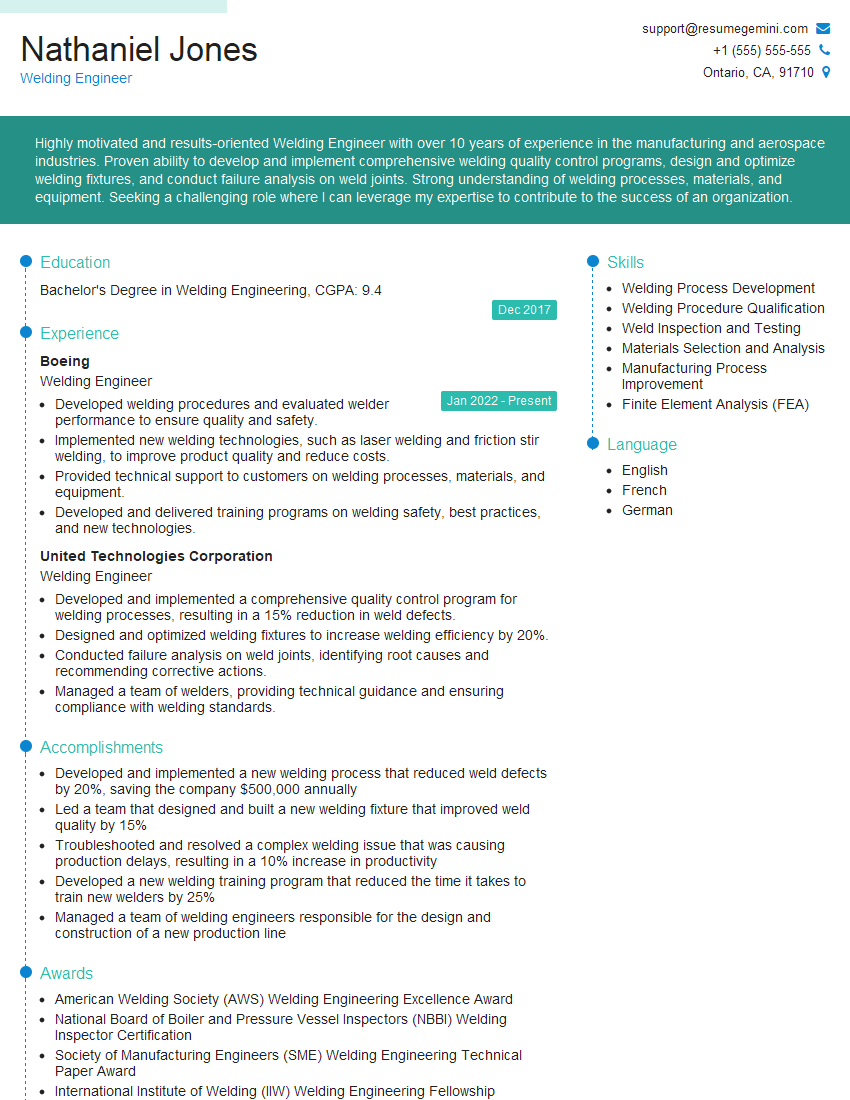
Welding Engineer Resume Sample
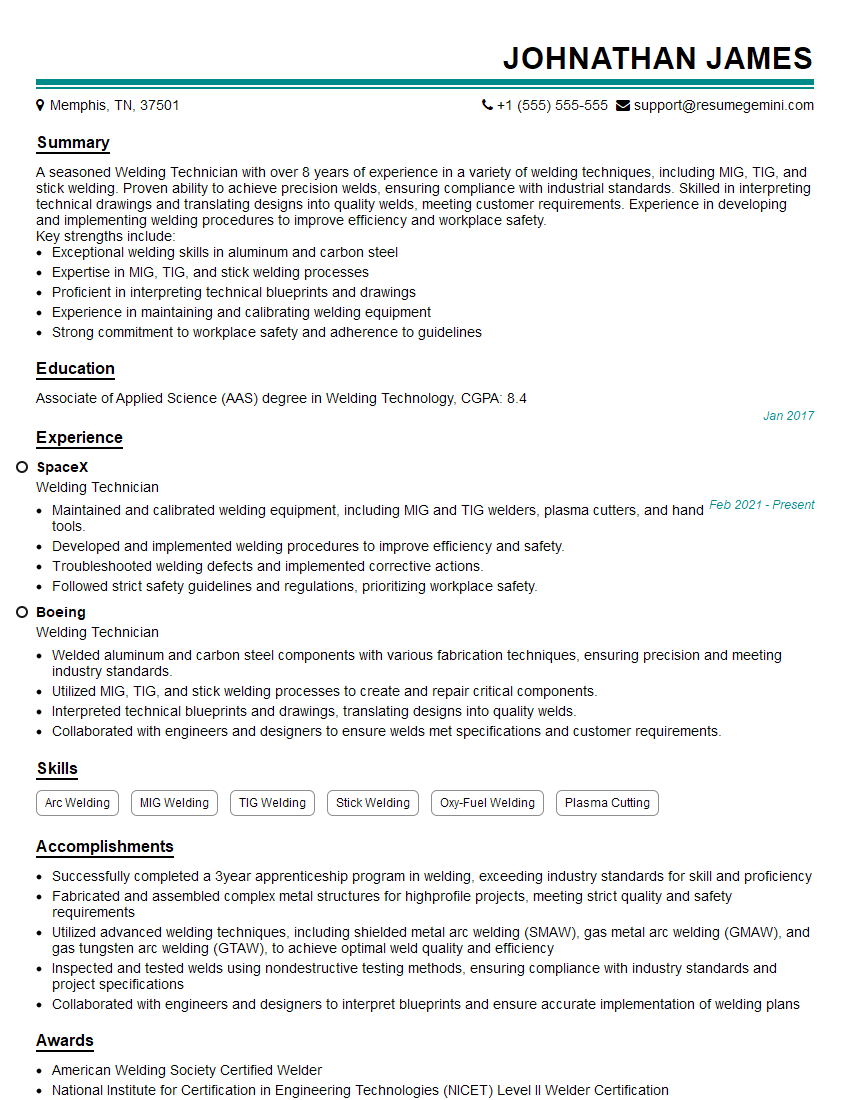
Welding Technician Resume Sample
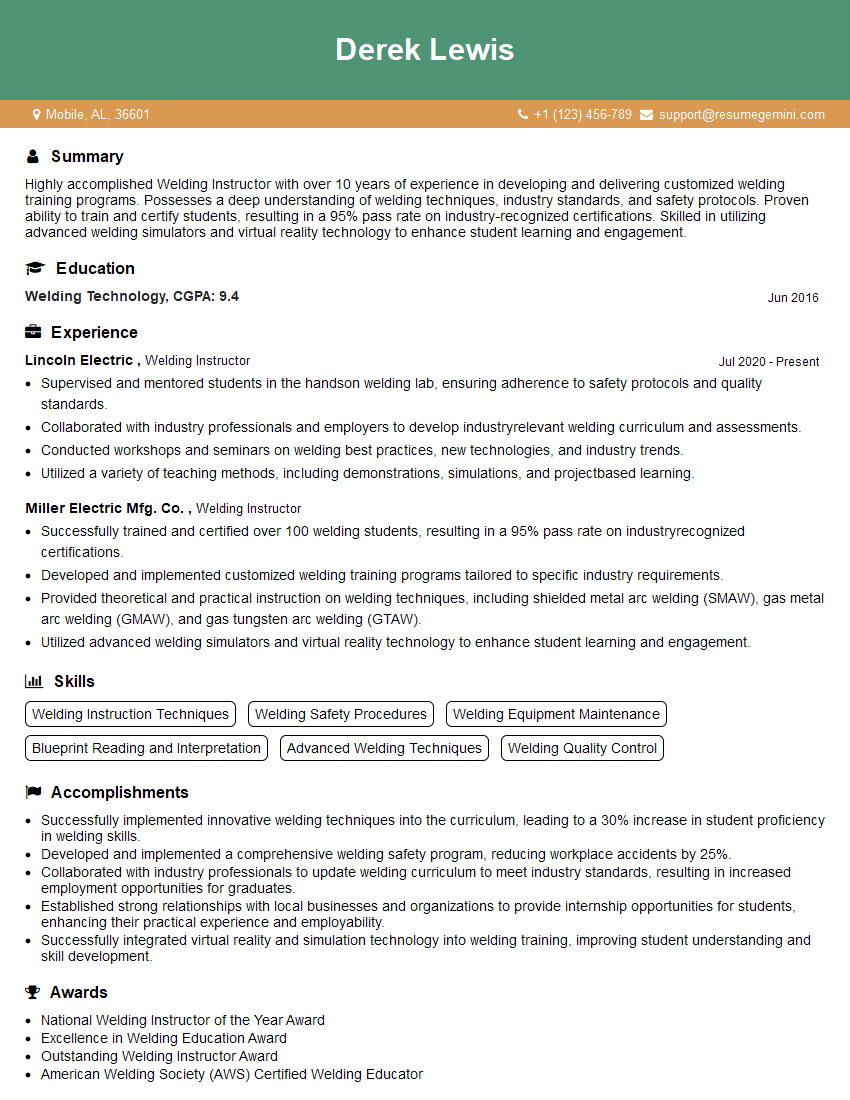
Welding Instructor Resume Sample
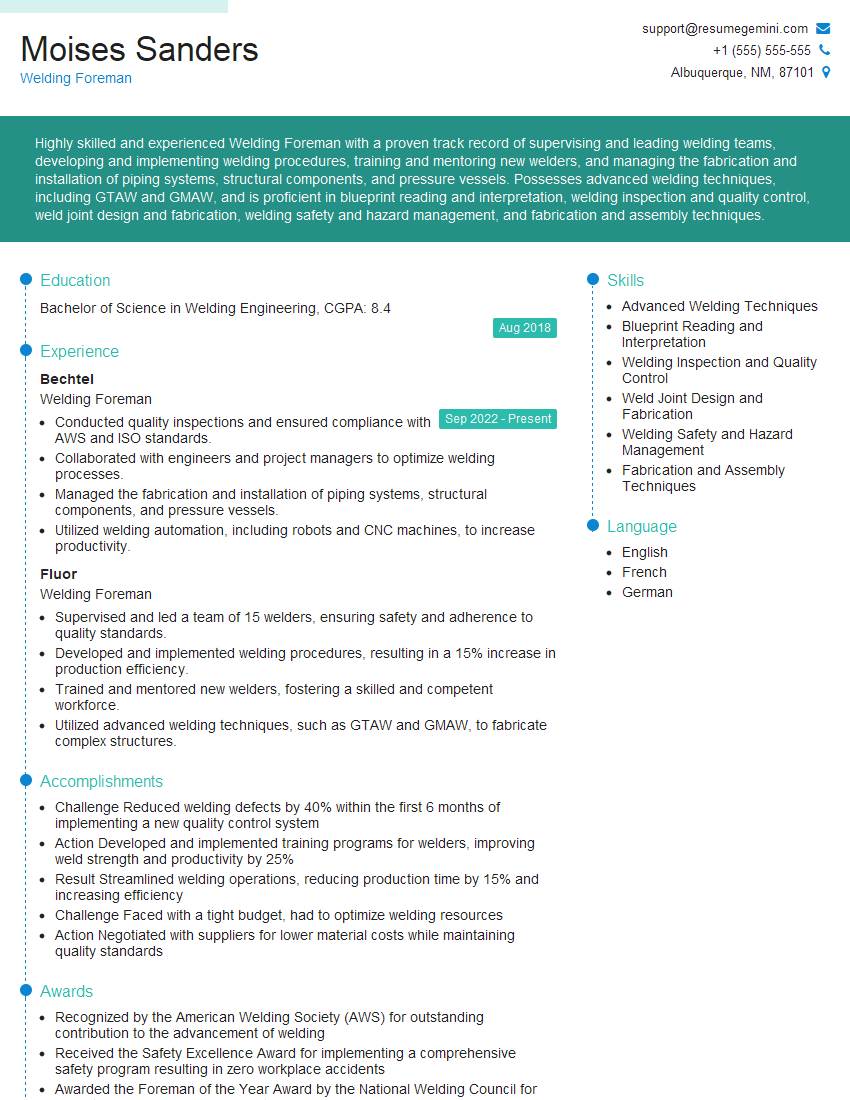
Welding Foreman Resume Sample
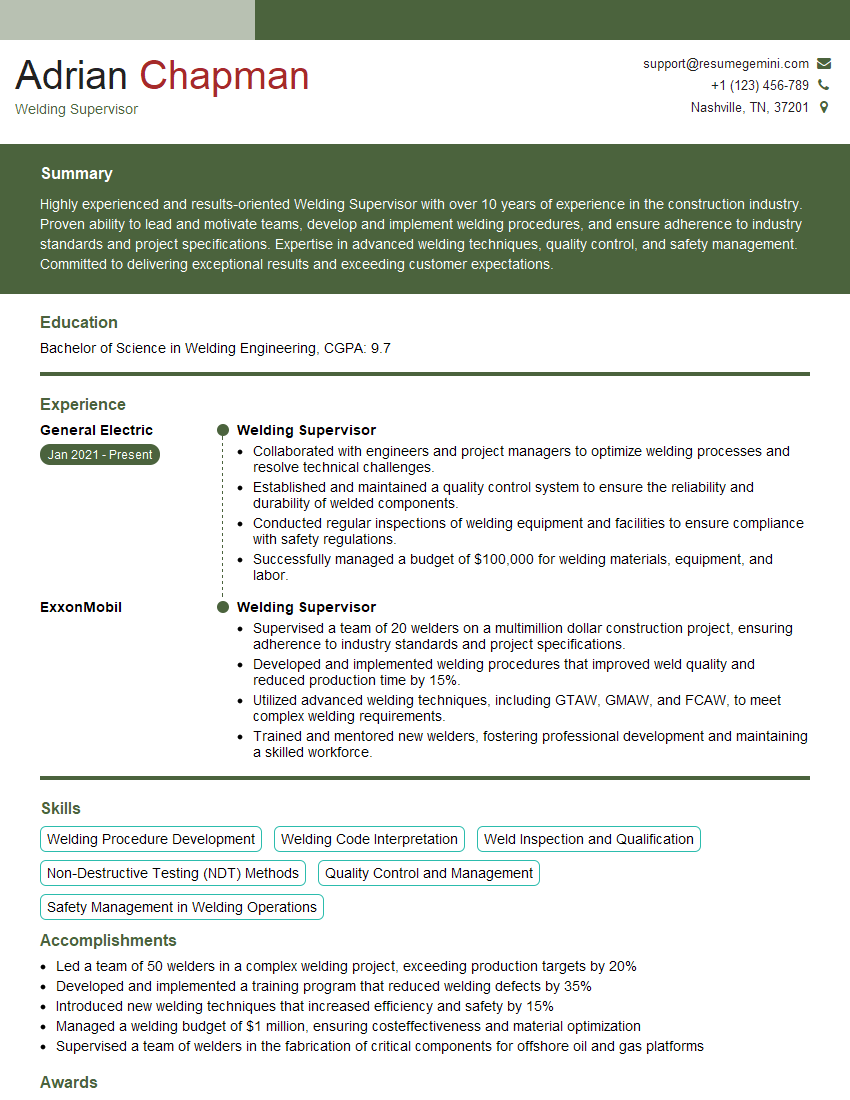
Welding Supervisor Resume Sample
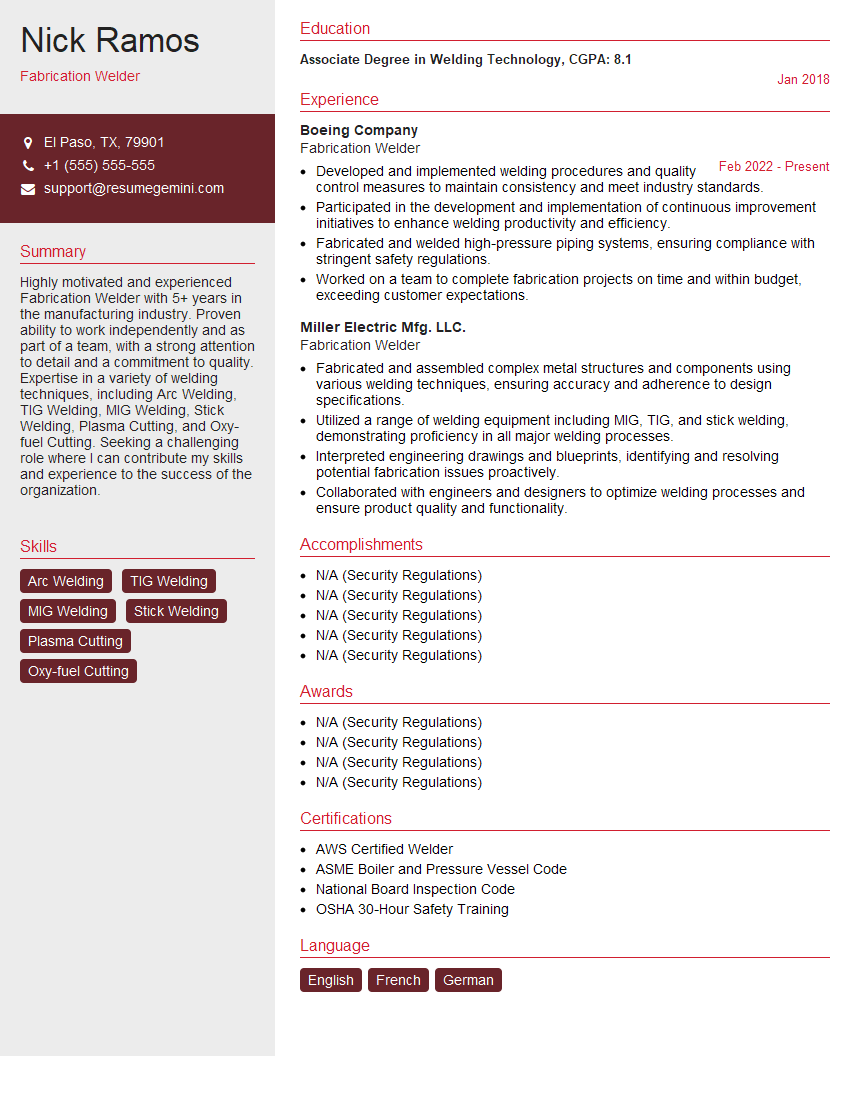
Fabrication Welder Resume Sample
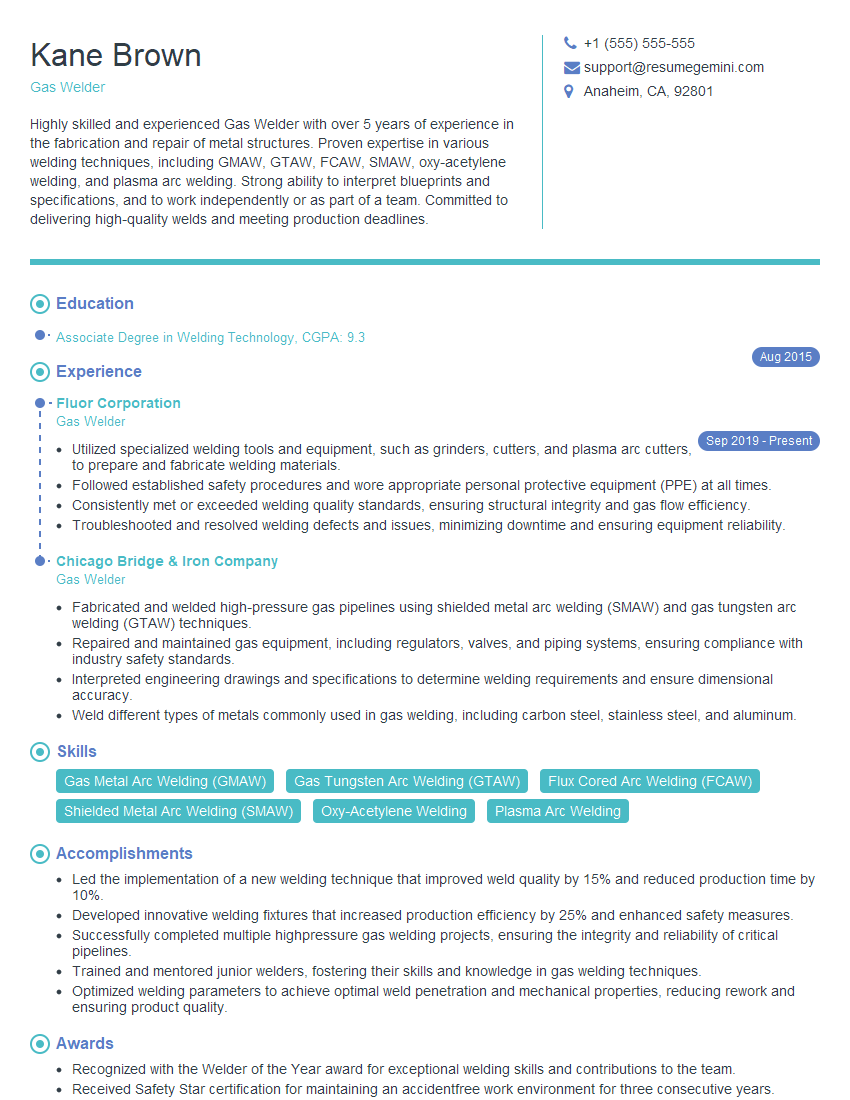
Gas Welder Resume Sample
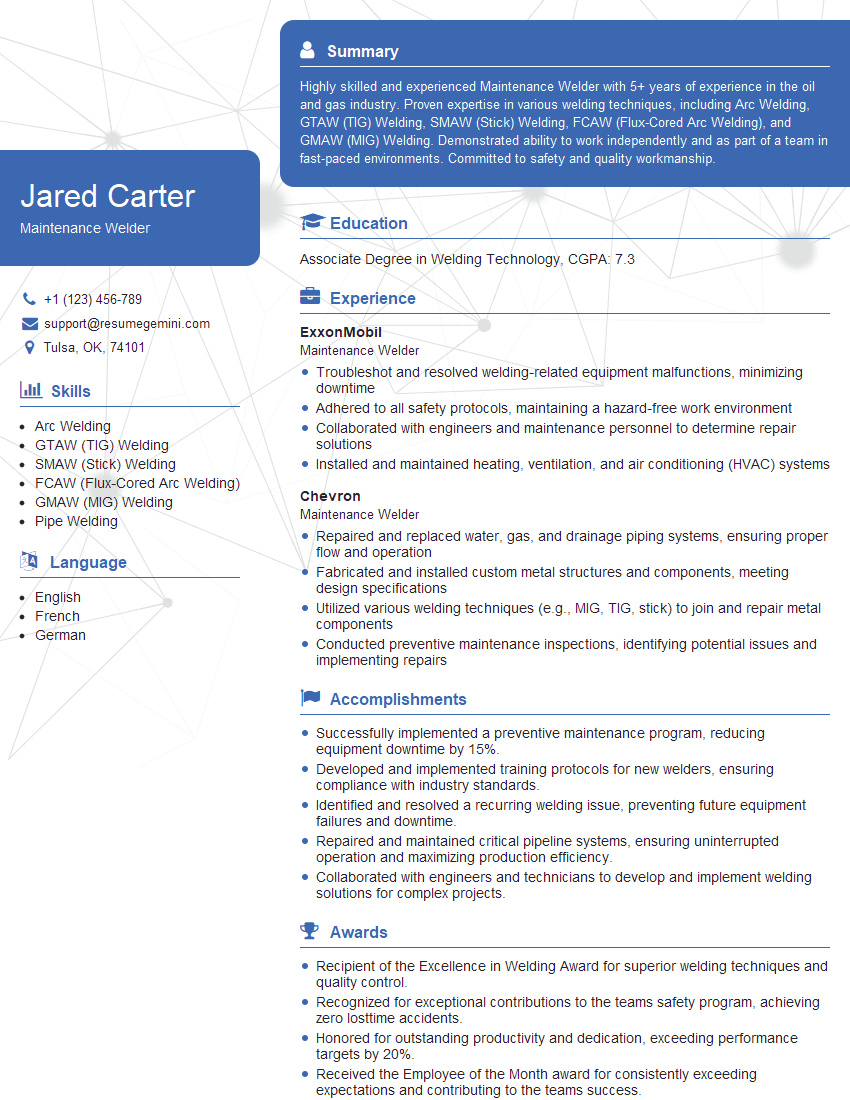
Maintenance Welder Resume Sample
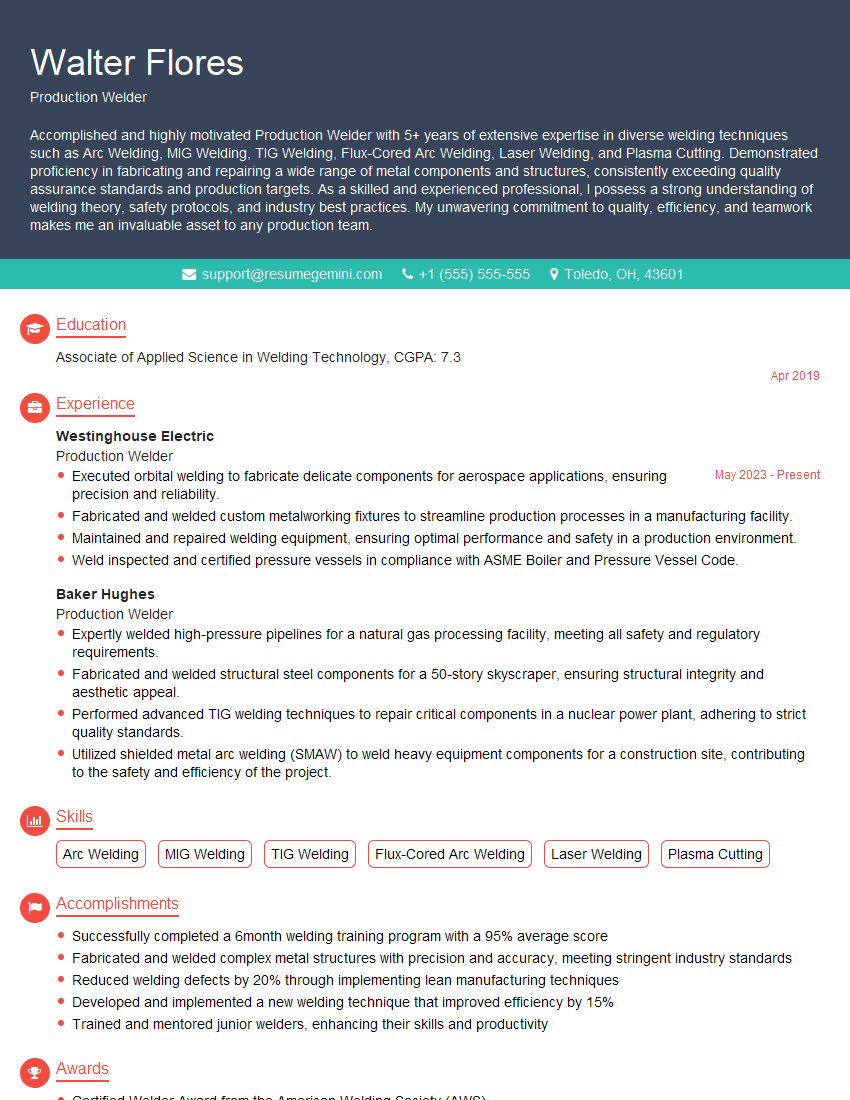
Production Welder Resume Sample
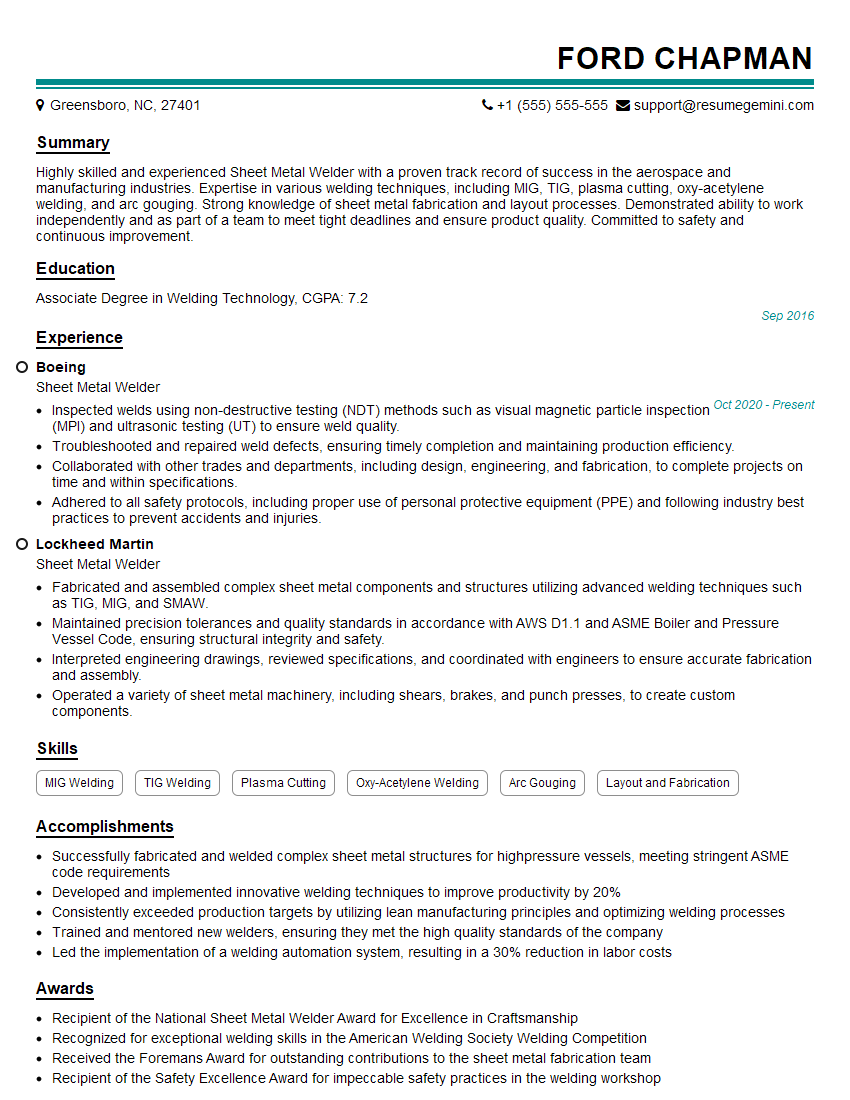
Sheet Metal Welder Resume Sample
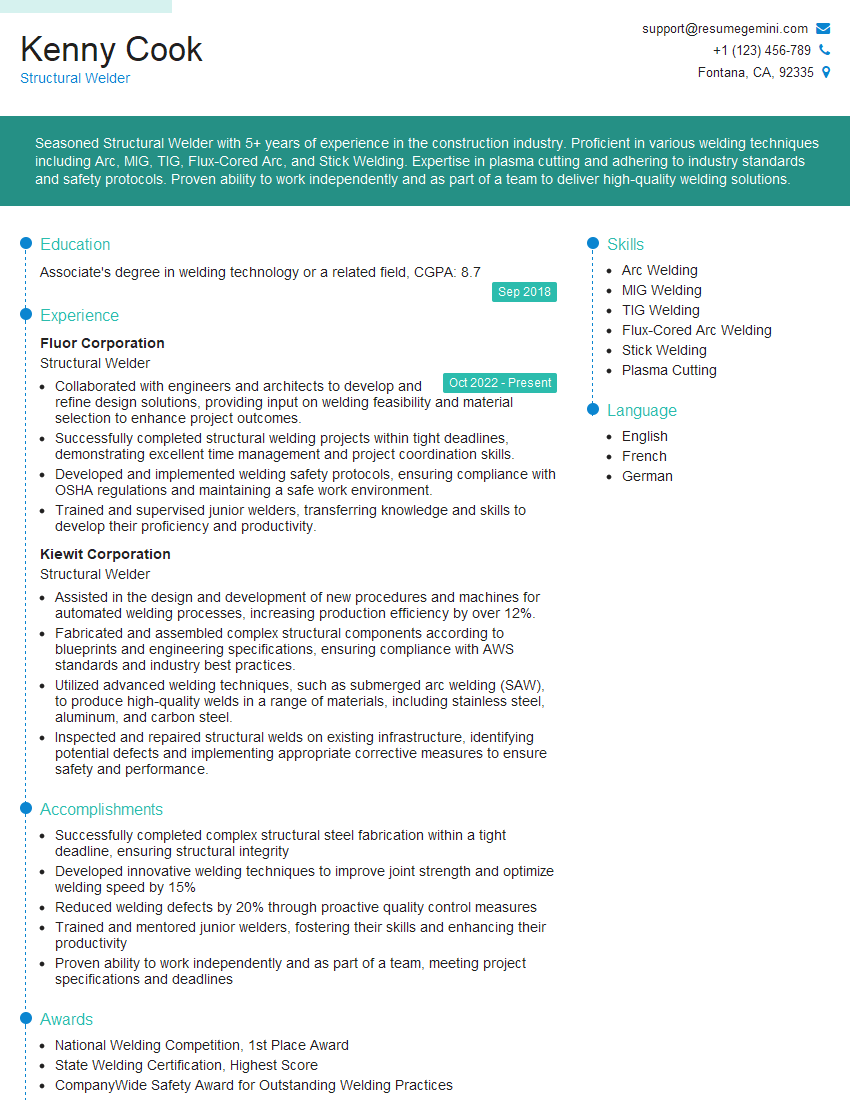
Structural Welder Resume Sample
Explore more articles
Users Rating of Our Blogs
Share Your Experience
We value your feedback! Please rate our content and share your thoughts (optional).
What Readers Say About Our Blog
Really detailed insights and content, thank you for writing this detailed article.
IT gave me an insight and words to use and be able to think of examples