Are you ready to stand out in your next interview? Understanding and preparing for Aerial Photography Analysis interview questions is a game-changer. In this blog, we’ve compiled key questions and expert advice to help you showcase your skills with confidence and precision. Let’s get started on your journey to acing the interview.
Questions Asked in Aerial Photography Analysis Interview
Q 1. Explain the difference between orthorectification and georeferencing.
Both georeferencing and orthorectification are crucial steps in processing aerial imagery to create map-like products, but they achieve this in different ways. Think of it like taking a photo of a crooked building – georeferencing aligns it to a map, while orthorectification straightens it out.
Georeferencing is the process of assigning geographic coordinates (latitude and longitude) to the aerial image. This links the image to a known coordinate system, such as UTM or WGS84, allowing it to be displayed and analyzed within a geographic information system (GIS). It essentially places the image on the map, but it doesn’t correct for geometric distortions caused by terrain relief, camera tilt, or lens distortion. Imagine roughly pinning a slightly skewed photograph onto a map – it’s in the right general location but not perfectly aligned.
Orthorectification goes a step further. It corrects for these geometric distortions, creating an orthophoto – a geographically accurate image where all points are represented at the correct scale and position. It eliminates the effects of terrain relief, making measurements directly from the image accurate. Think of it as digitally straightening the photo of the building *before* pinning it to the map, resulting in a perfectly aligned and distortion-free image.
In short: Georeferencing is about location, while orthorectification is about accuracy and geometric correction.
Q 2. Describe your experience with various aerial image formats (e.g., TIFF, GeoTIFF).
My experience encompasses a wide range of aerial image formats, each with its own strengths and weaknesses. I’m highly proficient in working with TIFF and GeoTIFF files.
TIFF (Tagged Image File Format) is a versatile, widely used format capable of storing both raster and vector data. It’s a lossless format, meaning no image quality is lost during compression, which is crucial for high-resolution aerial imagery. However, TIFF files can be quite large.
GeoTIFF extends the TIFF format by embedding geospatial metadata directly within the file. This metadata includes information about the image’s projection, coordinate system, and geographic extent. This significantly streamlines the georeferencing process, as the geographic information is readily available and doesn’t require separate referencing files. It’s the preferred format for GIS applications due to its self-contained nature and efficiency.
I have also worked with other formats like JPEG and MrSID, but TIFF and GeoTIFF remain my go-to choices for aerial photography due to their superior quality, geospatial capabilities, and industry standard adoption.
Q 3. What software packages are you proficient in for processing aerial imagery (e.g., ArcGIS, QGIS, Pix4D)?
My software proficiency includes a comprehensive suite of tools tailored for processing aerial imagery. I’m expert in ArcGIS and QGIS, both powerful GIS platforms offering extensive image processing capabilities. I use them for tasks ranging from georeferencing and orthorectification to image analysis and classification.
Beyond GIS software, I have extensive experience with Pix4D, a leading photogrammetry software. Pix4D excels at creating high-resolution 3D models and orthomosaics from overlapping aerial photographs. It simplifies the workflow, automating many of the processing steps, and is especially valuable for projects involving large datasets.
Additionally, I’m familiar with other software packages like ENVI and ERDAS Imagine, offering specialized tools for remote sensing analysis, but my core competencies lie within the previously mentioned software due to their versatility and ease of integration with other GIS workflows.
Q 4. How do you identify and correct geometric distortions in aerial photographs?
Geometric distortions in aerial photographs arise from various factors including camera lens distortion, aircraft attitude (tilt and roll), terrain relief, and earth curvature. Correcting these distortions is critical for accurate analysis.
My approach involves a multi-step process:
- Identifying Distortions: I visually inspect the imagery, looking for inconsistencies in scale and straight lines that appear curved. Software tools can also help quantify distortions.
- Ground Control Points (GCPs): Precisely located points on the ground, identifiable in both the aerial imagery and a reference dataset (e.g., a map or high-accuracy GPS coordinates), are essential for geometric correction. The more GCPs, the better the accuracy.
- Orthorectification Software: I utilize software like ArcGIS, QGIS, or Pix4D to perform the orthorectification. These programs use the GCPs to mathematically model and correct the geometric distortions.
- Quality Assessment: After orthorectification, I meticulously check the corrected image to ensure the distortions are minimized and the positional accuracy is within acceptable limits. This often involves comparing the orthophoto to the reference data and measuring root mean square error (RMSE).
For example, in a recent project involving a mountainous region, the terrain relief caused significant distortions. By strategically placing a large number of GCPs across the varying elevations, I successfully corrected the image, ensuring accurate measurements of areas and distances.
Q 5. Explain the concept of ground control points (GCPs) and their importance in aerial photography.
Ground Control Points (GCPs) are the cornerstones of accurate georeferencing and orthorectification in aerial photography. They are precisely located points on the ground whose coordinates are known with high accuracy (e.g., from GPS surveys, topographic maps, or existing geospatial data).
Importance: GCPs provide the reference points needed to mathematically transform the aerial images from their raw, distorted state to a georeferenced and orthorectified state. They bridge the gap between the image coordinates and real-world geographic coordinates. Without GCPs, it’s impossible to accurately align and correct the aerial images. Imagine trying to assemble a jigsaw puzzle without knowing where any of the pieces go – GCPs are our reference points to guide the process.
Practical Application: In a recent project mapping a construction site, I used GCPs surveyed with a high-precision GPS device. These points, marked with easily identifiable features on the ground (e.g., painted targets), were then located in the aerial imagery. This allowed the software to accurately model the geometric distortions and create a highly accurate orthophoto, critical for precise area calculations and construction planning.
Q 6. Describe your experience with different types of sensors used in aerial photography (e.g., multispectral, hyperspectral).
My experience includes working with a variety of aerial sensors, each offering unique spectral capabilities. This significantly impacts the type of analysis possible.
Multispectral Sensors: These sensors capture images in multiple bands of the electromagnetic spectrum, typically visible and near-infrared (NIR). This allows for vegetation analysis, identifying healthy versus stressed vegetation, generating NDVI (Normalized Difference Vegetation Index) maps, and detecting changes over time. For example, I used multispectral data to monitor forest health after a wildfire.
Hyperspectral Sensors: These are far more advanced, capturing hundreds of very narrow spectral bands. This provides incredibly detailed spectral information, enabling precise material identification. Applications include mineral exploration, precision agriculture, and environmental monitoring. In a recent project, hyperspectral data helped differentiate various types of soil based on their spectral signatures.
Beyond these, I’m also familiar with LiDAR (Light Detection and Ranging) sensors, which use laser pulses to measure distances, creating incredibly detailed 3D models of the terrain. This allows for extremely accurate elevation data extraction and is often used in conjunction with multispectral or hyperspectral imagery.
Q 7. How do you perform image classification and what techniques are you familiar with?
Image classification is the process of assigning thematic categories (e.g., forest, water, urban areas) to pixels in an aerial image. It transforms raw pixel data into meaningful information.
I employ several techniques, including:
- Supervised Classification: This involves training the classification algorithm using labeled samples (training data) where the category of each pixel is known. The algorithm then uses this training data to classify the rest of the image.
- Unsupervised Classification: This technique doesn’t require training data. The algorithm groups pixels based on their spectral similarity, automatically creating classes. This is useful when labeled data is scarce.
- Object-Based Image Analysis (OBIA): Instead of classifying individual pixels, OBIA works with image objects (segments) formed by grouping spatially connected pixels with similar spectral characteristics. This approach often leads to improved accuracy and reduced salt-and-pepper effects.
The choice of technique depends on the project’s objectives, data availability, and desired accuracy. For example, in a recent project mapping land cover, I used a supervised classification approach, training the classifier on a set of representative samples and achieving high accuracy. In contrast, in an exploratory study of an unknown area, I employed unsupervised classification to discover patterns and potential land cover types.
Q 8. What are the challenges of working with high-resolution aerial imagery?
High-resolution aerial imagery, while offering incredible detail, presents unique challenges. The sheer volume of data is a major hurdle. A single image can contain gigabytes of information, leading to significant storage and processing demands. This large size also impacts processing times for tasks like orthorectification and feature extraction. Furthermore, the increased detail can also mean more noise and artifacts to deal with. Imagine trying to find a specific car in a massive, highly detailed image of a city – it’s a needle in a haystack problem. Another challenge is the computational power required for advanced analyses like object detection and classification using deep learning techniques. These processes can be extremely computationally intensive, requiring specialized hardware and software.
For example, working with images from a very high-resolution sensor might reveal minute details, but those details can be irrelevant or even obstructive to the overall analysis, increasing processing time without adding significant value. Efficient data handling and pre-processing become crucial to overcome these challenges.
Q 9. How do you handle large datasets of aerial photography?
Managing large aerial photography datasets requires a multi-pronged approach. First, efficient storage is critical. Cloud-based storage solutions, like AWS S3 or Azure Blob Storage, are ideal for handling petabytes of data. These solutions offer scalability and cost-effectiveness. Next, we need efficient data organization. A well-structured file naming convention is crucial, using metadata to organize images based on date, location, and sensor parameters. This allows for easy retrieval and analysis. Then, processing utilizes tools built for large datasets. We often employ parallel processing techniques and distributed computing frameworks such as Apache Spark to process these massive images efficiently. This allows us to break down large tasks into smaller, manageable parts that can be processed concurrently, significantly reducing overall processing time.
For example, instead of processing a terabyte-sized dataset on a single machine, we might split it across multiple cloud computing instances, accelerating the processing by orders of magnitude. Finally, data visualization tools are important to manage the information and find areas of interest faster.
Q 10. Explain your understanding of digital elevation models (DEMs) and their applications.
A Digital Elevation Model (DEM) is a 3D representation of the Earth’s surface, showing elevation values for each point within a defined area. It’s essentially a digital terrain map. DEMs are created from various data sources, including LiDAR, stereo aerial photography, and radar. They are incredibly versatile. In applications, DEMs are crucial for various tasks such as hydrological modeling (predicting floodplains), creating topographic maps, calculating slope and aspect for environmental studies, planning infrastructure projects (roads, pipelines), and even generating realistic 3D visualizations for gaming and virtual reality.
For instance, in a flood risk assessment, a DEM allows us to accurately model water flow paths and determine areas prone to inundation. Similarly, in construction, a DEM is vital for planning road alignments and optimizing earthworks.
Q 11. Describe your experience with LiDAR data processing and analysis.
My experience with LiDAR data processing and analysis is extensive. I’m proficient in using software such as LAStools and PDAL for data pre-processing, including filtering, noise removal, and classification. I regularly perform tasks like point cloud registration, georeferencing, and ground filtering to extract meaningful information from the point cloud. Furthermore, I have experience generating DEMs and other terrain products from LiDAR data. I’m also experienced with advanced processing techniques, like object detection and segmentation within point clouds, for applications such as urban planning and forestry management.
For example, I’ve used LiDAR data to create highly accurate elevation models for a large-scale infrastructure project, allowing engineers to design optimal routes and minimize environmental impact. Another project involved classifying LiDAR points to identify individual trees in a forest, providing crucial information for forest management and conservation efforts.
Q 12. How do you assess the accuracy and quality of aerial imagery?
Assessing the accuracy and quality of aerial imagery involves a multi-step process. Geometric accuracy is evaluated using ground control points (GCPs). These are points with known coordinates on the ground that are identifiable in the imagery. By comparing the measured coordinates of these points in the imagery to their known coordinates, we can determine the geometric accuracy. Radiometric accuracy, referring to the fidelity of color and brightness, is assessed through analysis of image histograms and comparison with reference data, if available. The presence of artifacts like cloud cover, shadows, or sensor noise is visually inspected and quantified. Also, we evaluate image resolution and assess the level of detail for the intended application.
For instance, a root mean square error (RMSE) calculation based on GCPs helps quantify the geometric accuracy. A low RMSE value indicates high accuracy. Visual inspection might reveal areas affected by atmospheric haze, reducing image clarity and impacting analysis.
Q 13. What are the common sources of error in aerial photography and how do you mitigate them?
Several factors can introduce errors in aerial photography. Geometric distortions arise from lens imperfections, atmospheric refraction, and aircraft attitude changes during acquisition. Radiometric errors can result from variations in sensor response, atmospheric scattering, and shadows. External factors, such as weather conditions (cloud cover, haze), can significantly reduce image quality. We mitigate these errors through various methods. Geometric distortions are corrected through orthorectification, using GCPs and DEMs. Radiometric errors are reduced through atmospheric correction techniques and careful sensor calibration. Cloud cover and other weather-related issues often require re-acquisition of data or careful masking in post-processing.
For example, rigorous camera modeling in orthorectification software addresses lens distortions. Atmospheric correction algorithms account for scattering and absorption of light by the atmosphere to improve radiometric accuracy. We need careful planning before the data acquisition stage to mitigate most of these errors as much as possible.
Q 14. How do you interpret aerial photographs to identify specific features or objects?
Interpreting aerial photographs to identify specific features or objects requires a combination of skills and tools. Firstly, it requires knowledge of image interpretation techniques such as tone, texture, pattern, shape, size, and association. For example, identifying a particular type of vegetation requires understanding its typical spectral signature and the appearance it presents in different wavelengths. Secondly, advanced tools like image classification algorithms and object detection models based on deep learning techniques can automate the identification process. These tools are trained to recognize specific features, such as buildings, roads, or trees, by analyzing their visual characteristics within the aerial images. We also use visual interpretation to aid in this process.
For example, a trained interpreter can distinguish between different types of crops based on their appearance in near-infrared imagery. Similarly, an automated object detection model might be used to identify and count vehicles in a parking lot, offering more objective counts than manual counting.
Q 15. Describe your experience using aerial photography for environmental monitoring.
My experience with aerial photography for environmental monitoring is extensive. I’ve used it to track deforestation, monitor the health of crops, and assess the impact of natural disasters. For instance, in one project, we used high-resolution imagery to map the spread of invasive plant species in a national park. By comparing images taken over several years, we could pinpoint the rate of expansion and identify areas requiring immediate intervention. Another project involved using multispectral imagery to assess the health of a large agricultural field. Differences in vegetation indices allowed us to identify areas experiencing nutrient deficiencies or water stress, enabling farmers to apply targeted treatments and improve yields.
The key is selecting the right sensor and analysis techniques. For example, near-infrared (NIR) bands are particularly useful for identifying stressed vegetation because healthy plants reflect more NIR light. We often use Normalized Difference Vegetation Index (NDVI) calculations (NDVI = (NIR - Red) / (NIR + Red)) to quantify vegetation health across the entire area.
Career Expert Tips:
- Ace those interviews! Prepare effectively by reviewing the Top 50 Most Common Interview Questions on ResumeGemini.
- Navigate your job search with confidence! Explore a wide range of Career Tips on ResumeGemini. Learn about common challenges and recommendations to overcome them.
- Craft the perfect resume! Master the Art of Resume Writing with ResumeGemini’s guide. Showcase your unique qualifications and achievements effectively.
- Don’t miss out on holiday savings! Build your dream resume with ResumeGemini’s ATS optimized templates.
Q 16. Explain your experience using aerial photography for infrastructure inspection.
In infrastructure inspection, aerial photography provides a safe and efficient way to assess large areas. I’ve used it to inspect bridges, pipelines, power lines, and roads. For example, I was involved in a project where we used drones equipped with high-resolution cameras to inspect a large bridge for structural damage. The images revealed small cracks in the concrete that were otherwise difficult to detect from ground level. This allowed for timely repairs and prevented potential safety hazards. Similarly, we’ve used thermal imaging from aerial platforms to detect heat signatures indicating potential insulation issues or electrical faults in power lines, enabling proactive maintenance.
The advantage here lies in the bird’s-eye view, which allows for comprehensive assessment of the entire structure. Software tools are then used to analyze the images in detail, often generating orthomosaics (geometrically corrected images) for precise measurements and 3D models for further analysis.
Q 17. How do you create 3D models from aerial imagery?
Creating 3D models from aerial imagery involves a process called photogrammetry. This technique uses multiple overlapping images to generate a 3D point cloud, which then forms the basis for the 3D model. The process generally involves these steps:
- Image Acquisition: Capturing many overlapping images from various angles using drones or aircraft.
- Image Processing: Using specialized software (e.g., Agisoft Metashape, Pix4D) to process the images. This involves aligning the images, identifying common features, and generating a dense point cloud.
- Mesh Generation: Creating a 3D surface mesh from the point cloud. This mesh represents the shape of the object or area.
- Texture Mapping: Applying the original images as textures onto the mesh, creating a realistic 3D model with color and detail.
- Model Refinement: Cleaning up the model, removing artifacts, and potentially adding additional details.
Think of it like solving a giant jigsaw puzzle—each image is a piece, and the software figures out how they all fit together to create the 3D representation.
Q 18. What is your experience with mosaicking aerial images?
Mosaicking aerial images is the process of stitching together multiple overlapping images to create a single, seamless image of a larger area. This is crucial because individual images typically only cover a small portion of the area of interest. I have extensive experience in this, using software like ENVI or ArcGIS. The process involves geometric correction (to account for camera distortions and terrain variations), image registration (aligning the images based on overlapping features), and blending the images to create a visually consistent mosaic. The result is a high-resolution, geographically accurate representation of the area.
Accurate mosaicking is essential for creating maps, orthomosaics, and providing a comprehensive view of the area, avoiding seams and distortions which can create inaccurate interpretations.
Q 19. Describe your workflow for processing a typical aerial photography project.
My workflow for a typical aerial photography project is as follows:
- Project Planning: Defining project objectives, selecting appropriate sensors and platforms based on spatial and spectral resolution requirements, and planning flight paths.
- Data Acquisition: Flying the chosen platform (drone or aircraft) and acquiring the aerial imagery, adhering strictly to safety regulations and best practices.
- Data Preprocessing: This includes steps like georeferencing (assigning geographic coordinates to the images), radiometric calibration (correcting for sensor variations), and atmospheric correction (removing the effects of the atmosphere).
- Image Processing: This can involve orthorectification (removing geometric distortions), mosaicking, creating 3D models (photogrammetry), and performing various analyses (e.g., NDVI calculations, object detection).
- Data Analysis and Interpretation: Extracting meaningful information from the processed data, creating maps, reports, and presentations.
- Deliverables: Providing clients with the final products (e.g., orthomosaics, 3D models, reports).
Throughout the process, quality control is paramount. Regular checks and validations are performed at each step to ensure accuracy and reliability.
Q 20. How do you ensure the confidentiality and security of aerial imagery data?
Confidentiality and security of aerial imagery data are paramount. We employ several strategies to ensure this:
- Data Encryption: Encrypting data both during transmission and storage using strong encryption algorithms.
- Access Control: Implementing strict access control measures, limiting access to authorized personnel only, and using role-based access control systems.
- Secure Storage: Storing data on secure servers with appropriate backup and disaster recovery plans. This often involves cloud-based solutions with robust security features.
- Data Anonymization: Removing or obscuring personally identifiable information (PII) from the imagery whenever possible.
- Compliance with Regulations: Adhering to all relevant data privacy regulations and guidelines (e.g., GDPR, CCPA).
We maintain detailed records of data access and any modifications made to the data. This rigorous approach guarantees the integrity and confidentiality of our clients’ data.
Q 21. What is your understanding of different aerial platform types (e.g., airplanes, drones, satellites)?
My understanding of aerial platforms is comprehensive. Each has its strengths and weaknesses:
- Airplanes: Ideal for large-scale projects covering extensive areas. They offer high altitude capabilities, providing broader coverage, but are more expensive and less maneuverable than drones.
- Drones (UAVs): Cost-effective and versatile, ideal for smaller-scale projects requiring high resolution and detailed imagery. They are highly maneuverable but have limitations in flight time and range.
- Satellites: Provide global coverage and are suitable for large-scale, long-term monitoring. However, they often have lower spatial resolution than aircraft or drones, resulting in less detail.
The choice of platform depends heavily on project requirements. Factors such as budget, area coverage, required resolution, and accessibility influence the decision. For example, a national-scale forest monitoring project would likely involve satellites, while a detailed inspection of a bridge would be best suited for drones.
Q 22. How do atmospheric conditions affect aerial image quality?
Atmospheric conditions significantly impact aerial image quality. Think of it like taking a photo on a hazy versus a clear day – the haze obscures detail. Factors like haze, fog, and clouds scatter and absorb light, reducing image contrast and sharpness. Furthermore, atmospheric aerosols (tiny particles in the air) can cause scattering, leading to a phenomenon called atmospheric refraction, which distorts the image.
- Haze: Reduces contrast and clarity, making it difficult to distinguish details on the ground.
- Fog: Severely limits visibility, making aerial photography often impossible.
- Clouds: Obstruct the view of the ground, creating shadows and preventing data acquisition in covered areas.
- Aerosols: Can lead to blurring and color distortions, especially in shorter wavelengths (blue).
To mitigate these effects, professionals consider atmospheric conditions when planning flights, often using meteorological data to select optimal weather windows. Post-processing techniques, such as atmospheric correction algorithms, can help partially compensate for these effects, but complete correction is not always possible.
Q 23. How do you deal with cloud cover in aerial imagery?
Cloud cover presents a major challenge in aerial imagery. It’s like trying to see a puzzle piece that’s hidden under a blanket! The solution involves a multi-pronged approach:
- Planning and Timing: Utilizing weather forecasts and satellite imagery to select days with minimal cloud cover is crucial. This often involves flexibility and the ability to reschedule flights.
- Multi-temporal Imagery: Acquiring images over time increases the chances of capturing cloud-free views of the target area. This allows for the piecing together of clear images to create a complete picture.
- Image Fusion Techniques: Combining multiple images acquired under different conditions (e.g., using near-infrared and visible light) can help fill in gaps caused by clouds. Advanced algorithms can blend clear areas from several images to create a complete image.
- Cloud Removal Algorithms: Sophisticated software packages employ algorithms designed to detect and remove clouds from imagery using various methods like inpainting or substituting with surrounding areas. However, the accuracy depends on the cloud cover density and image quality.
The best strategy often involves a combination of these techniques, adapting to the specific challenges of each project.
Q 24. What are the ethical considerations when using aerial photography?
Ethical considerations in aerial photography are paramount. It’s crucial to respect privacy, safety, and legal regulations. Think of it as wielding a powerful tool – responsibility is key.
- Privacy: Obtaining necessary permissions or adhering to privacy laws is essential, particularly when imaging private property or individuals. This often requires careful planning and consideration of applicable regulations.
- Safety: Ensuring the safety of the aircraft and personnel during data acquisition is a top priority. Adhering to flight regulations and safety protocols is non-negotiable.
- Misuse of Data: Using aerial photography for purposes like surveillance or harassment is unethical and possibly illegal. It’s important to use the data responsibly and for intended purposes only.
- Data Security: Protecting the data obtained through aerial photography from unauthorized access and misuse is vital. This often means secure storage and transmission protocols.
- Transparency: Being transparent about data acquisition and usage with relevant stakeholders fosters trust and ensures responsible application of the technology.
A strong ethical framework ensures responsible and lawful use of aerial photography.
Q 25. Explain your experience with image enhancement techniques.
My experience encompasses a wide range of image enhancement techniques. These are critical for maximizing the information we can extract from raw aerial imagery. It’s like polishing a gemstone to reveal its true beauty.
- Geometric Correction: Correcting for distortions introduced by camera lens and aircraft movement using techniques like orthorectification. This ensures accurate measurements and map generation.
- Radiometric Correction: Correcting for variations in illumination due to atmospheric effects and sensor variations. This involves techniques such as histogram equalization and atmospheric correction algorithms.
- Noise Reduction: Employing techniques such as median filtering and wavelet transforms to reduce noise and improve image clarity.
- Sharpening Filters: Applying filters to enhance the edges and details in the image, improving visual perception and feature extraction.
- Color Balancing and Enhancement: Adjusting color saturation and hue to improve the visual appearance and interpretability of the images.
I’m proficient in using software such as ENVI, ArcGIS, and Pix4D, which provide a comprehensive suite of tools for image enhancement and analysis.
Q 26. How do you communicate your findings from aerial photography analysis to non-technical audiences?
Communicating complex findings from aerial photography analysis to non-technical audiences requires careful consideration. It’s about translating technical jargon into a language everyone understands. Think of it as storytelling with data.
- Visualizations: Maps, charts, and infographics are highly effective in communicating spatial information and trends. These are easier to understand than tables of numbers.
- Simple Language: Avoid technical jargon and use clear, concise language that everyone can understand.
- Analogies and Examples: Relating findings to everyday experiences helps non-technical audiences grasp complex concepts more easily.
- Interactive Presentations: Interactive maps and presentations can enhance engagement and understanding.
- Storytelling Approach: Framing the analysis within a narrative context helps audience engagement.
Ultimately, the goal is to make the information accessible and relevant to the audience, ensuring they understand the implications of the analysis.
Q 27. Describe a challenging project involving aerial photography analysis and how you overcame the challenges.
One challenging project involved assessing the impact of a recent wildfire on a large, mountainous region. The terrain was extremely rugged, leading to significant variations in illumination and shadowing within the aerial imagery. Additionally, dense smoke plumes persisted for several weeks after the fire, obscuring large portions of the area.
To overcome these challenges, we implemented a multi-faceted strategy:
- Multispectral Imagery: We utilized multispectral data to penetrate smoke and identify burned areas more accurately. Near-infrared bands proved particularly useful in identifying burned vegetation.
- Advanced Atmospheric Correction: We applied advanced atmospheric correction techniques to mitigate the impact of smoke and variations in illumination due to the terrain.
- Image Mosaicking and Stitching: We used advanced image processing techniques to stitch together multiple images acquired during different flights to create a complete and consistent overview of the affected area.
- 3D Modeling: We created a 3D model of the terrain to better understand the spatial distribution of the damage and its relationship with the topography.
This integrated approach enabled us to generate high-quality maps showing the extent of the fire damage, which was essential for resource allocation and post-fire management efforts. It highlighted the value of a flexible and adaptive approach to complex projects.
Q 28. What are your future goals in the field of aerial photography analysis?
My future goals in aerial photography analysis focus on leveraging advancements in technology to improve accuracy, efficiency, and the scope of applications. I’m particularly interested in:
- AI and Machine Learning: Integrating AI and machine learning techniques for automated feature extraction and analysis, such as identifying specific tree species or detecting infrastructure damage.
- Hyperspectral Imaging: Exploring the use of hyperspectral imagery for more detailed and precise analysis of environmental conditions and materials.
- Drone Technology: Further developing the integration of drone technology for cost-effective and precise data acquisition in challenging environments.
- Data Fusion: Combining aerial photography with other data sources (e.g., LiDAR, satellite imagery) to create more comprehensive and accurate models.
I aim to contribute to the development and application of these technologies to address real-world challenges and to advance the field of aerial photography analysis.
Key Topics to Learn for Aerial Photography Analysis Interview
- Image Acquisition and Sensors: Understanding different sensor types (e.g., RGB, multispectral, hyperspectral), their capabilities, and limitations in relation to various applications.
- Photogrammetry and 3D Modeling: Practical experience with software for creating 3D models and orthomosaics from aerial imagery, including understanding of scale, accuracy, and georeferencing.
- Image Processing and Enhancement: Techniques for improving image quality, such as radiometric and geometric correction, noise reduction, and atmospheric correction. Understanding the impact of these processes on analysis.
- Data Analysis and Interpretation: Methods for extracting meaningful information from aerial imagery, including object detection, classification, and change detection. Experience with relevant software (e.g., ArcGIS, QGIS) is valuable.
- Specific Applications: Understanding the application of aerial photography analysis in your target field (e.g., agriculture, urban planning, environmental monitoring). Be prepared to discuss specific case studies or projects.
- Data Quality and Accuracy Assessment: Knowing how to evaluate the accuracy and reliability of aerial imagery and derived products. Understanding error sources and mitigation strategies.
- Software Proficiency: Demonstrating familiarity with industry-standard software for image processing, analysis, and 3D modeling (mention specific software you’re proficient in).
- Problem-Solving and Analytical Skills: Be prepared to discuss your approach to complex problems involving data analysis and interpretation of aerial imagery. Showcase your ability to troubleshoot and find solutions.
Next Steps
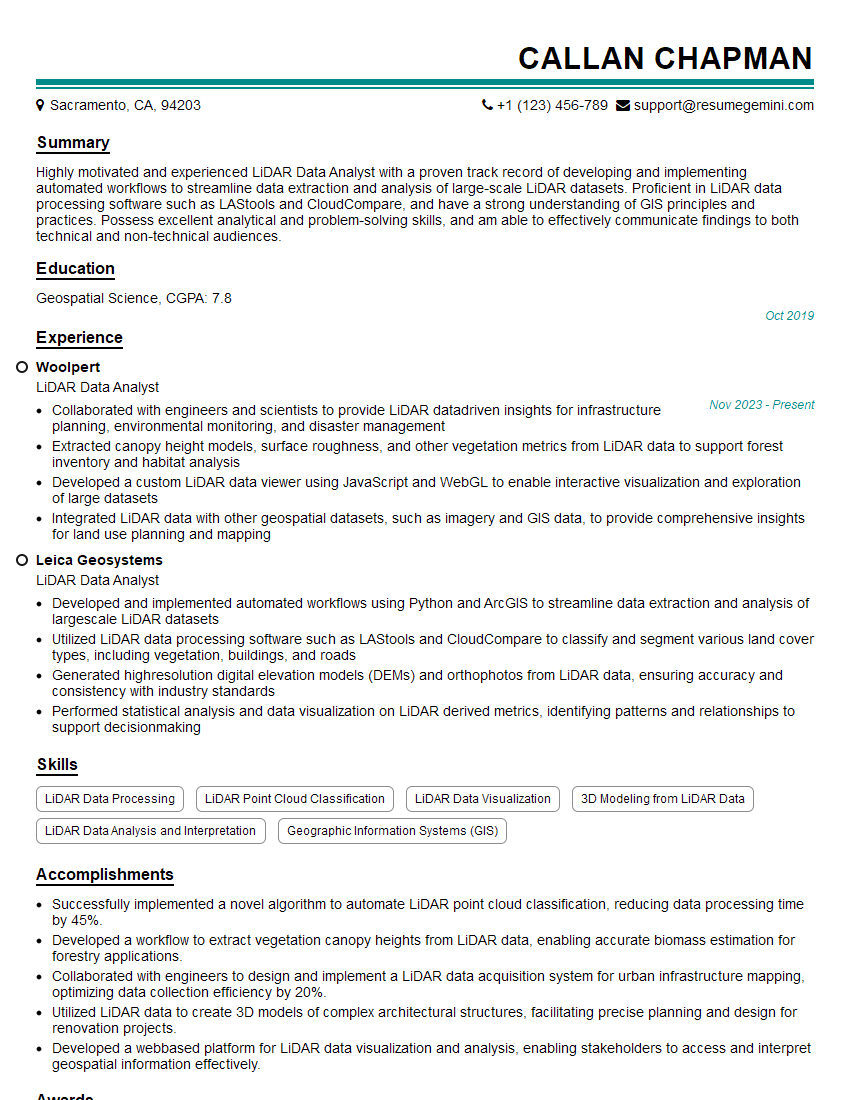
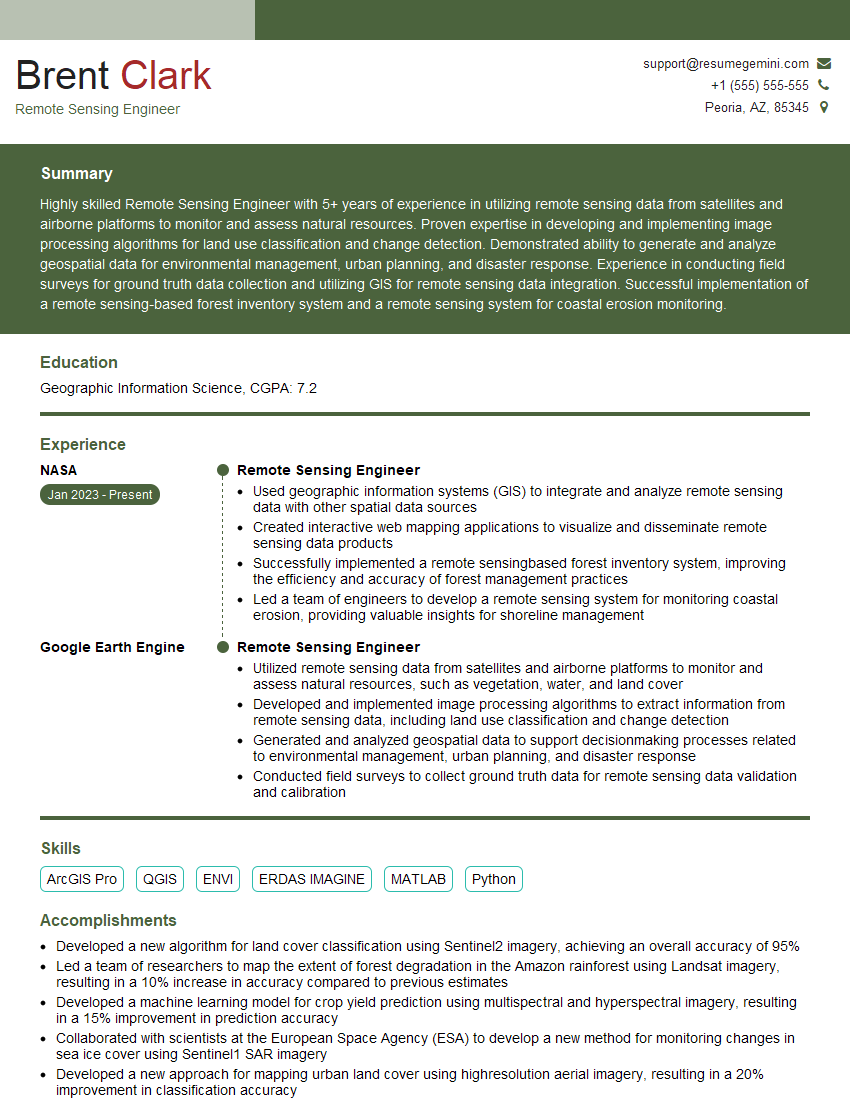
Mastering Aerial Photography Analysis opens doors to exciting and impactful career opportunities in diverse fields. To maximize your job prospects, creating a strong, ATS-friendly resume is crucial. ResumeGemini is a trusted resource that can help you build a professional resume tailored to highlight your skills and experience. Take advantage of their tools and resources to create a compelling application. Examples of resumes tailored to Aerial Photography Analysis are available to guide you.
Explore more articles
Users Rating of Our Blogs
Share Your Experience
We value your feedback! Please rate our content and share your thoughts (optional).
What Readers Say About Our Blog
Really detailed insights and content, thank you for writing this detailed article.
IT gave me an insight and words to use and be able to think of examples