Preparation is the key to success in any interview. In this post, we’ll explore crucial Aerospace Industry Standards and Practices interview questions and equip you with strategies to craft impactful answers. Whether you’re a beginner or a pro, these tips will elevate your preparation.
Questions Asked in Aerospace Industry Standards and Practices Interview
Q 1. Explain your understanding of AS9100D requirements.
AS9100D is the international standard for quality management systems in the aerospace industry. It builds upon ISO 9001 but adds specific requirements tailored to the unique demands of aerospace manufacturing and service provision. Think of it as ISO 9001 on steroids, specifically designed for the high-stakes world of airplanes and spacecraft. It focuses on safety, reliability, and traceability throughout the entire supply chain.
- Focus on Risk Management: AS9100D emphasizes proactive risk management to prevent defects and ensure product safety. This is crucial in aerospace, where even minor failures can have catastrophic consequences.
- Improved Traceability: Stringent traceability requirements allow for precise tracking of materials and processes, facilitating rapid identification of the root cause of any issues.
- Supply Chain Management: The standard extends requirements to the entire supply chain, ensuring that all suppliers adhere to the same high standards of quality and safety.
- Continuous Improvement: AS9100D promotes a culture of continuous improvement, encouraging organizations to constantly seek ways to enhance their processes and performance.
For example, a company producing aircraft fasteners would need to demonstrate rigorous control over material sourcing, manufacturing processes, testing procedures, and record-keeping to meet AS9100D requirements. Any deviation from these standards would be considered a non-conformity and needs to be addressed through corrective and preventative action.
Q 2. Describe the importance of FAR Part 25 in aircraft certification.
FAR Part 25, or Federal Aviation Regulations Part 25, is the cornerstone of airworthiness certification for large airplanes. It’s essentially the rulebook that dictates the design, construction, testing, and operational standards that an aircraft must meet before it can legally fly passengers or cargo. Imagine it as the ultimate checklist for ensuring safety in the sky.
- Airworthiness Standards: FAR Part 25 covers a wide range of aspects, from structural integrity and systems reliability to flight controls and emergency procedures.
- Certification Process: It lays out a rigorous certification process, involving design reviews, testing, and inspections, to verify compliance with these standards.
- Safety Requirements: The regulations emphasize the need for robust safety mechanisms to mitigate risks and ensure passenger safety in the event of malfunctions or emergencies.
- Continuous Monitoring: Even after certification, ongoing compliance and monitoring are required to maintain airworthiness.
A manufacturer seeking to certify a new aircraft must meticulously demonstrate compliance with each requirement of FAR Part 25. Failure to meet these stringent standards can result in significant delays, added costs, and ultimately, prevent the aircraft from ever entering service.
Q 3. How would you handle a non-conformity discovered during a quality audit?
Discovering a non-conformity during a quality audit is a serious matter, demanding a structured and thorough response. My approach would follow a well-defined process focusing on containment, correction, and prevention:
- Immediate Containment: First, I’d immediately isolate the non-conforming product or process to prevent further defects or propagation of the problem. This might involve halting production, quarantining affected parts, or issuing a temporary hold on a particular process.
- Root Cause Analysis (RCA): Next, I would launch a thorough root cause analysis to identify the underlying reasons for the non-conformity. This might involve using techniques like the 5 Whys, fishbone diagrams, or fault tree analysis. The goal is not just to fix the immediate problem, but to understand and address its root cause.
- Corrective Action: Once the root cause is identified, I’d implement corrective actions to fix the problem. This might involve retraining personnel, modifying equipment, or revising procedures. Crucially, I’d ensure that corrective actions are effective and verified.
- Preventive Action: Finally, to avoid recurrence, I’d implement preventative actions to prevent the same non-conformity from happening again. This could include changes to processes, improved training, or the implementation of new quality control measures.
- Documentation: Every step of this process, from the initial discovery to the verification of corrective and preventative actions, would be meticulously documented and reviewed. This documentation provides a trail for future audits and helps to demonstrate continuous improvement.
For instance, if a non-conformity involved incorrect calibration of a critical testing instrument, my approach would include immediate removal of the instrument from service, a thorough investigation to determine the cause of the calibration error, retraining of personnel responsible, recalibration of the instrument, and possibly implementing a more rigorous calibration schedule to prevent similar errors in the future.
Q 4. What are the key differences between AS9100 and ISO 9001?
While both AS9100 and ISO 9001 are quality management system standards, AS9100 is specifically tailored for the aerospace industry, adding requirements that go beyond those found in ISO 9001. Think of ISO 9001 as a general framework, and AS9100 as a specialized version for a high-risk industry.
- Industry-Specific Requirements: AS9100 incorporates requirements specific to the aerospace industry, such as those related to safety, reliability, and traceability. ISO 9001, being more general, lacks these specialized aspects.
- Emphasis on Risk Management: AS9100 places a stronger emphasis on risk management and mitigation, reflecting the higher safety criticality of aerospace products. This is a key difference from the general risk management approach in ISO 9001.
- Supply Chain Management: AS9100 extends its requirements further down the supply chain, ensuring that all suppliers meet stringent quality standards. ISO 9001 has less stringent requirements in this area.
- Auditing and Certification: AS9100 audits are typically more stringent and involve more in-depth review of processes and documentation compared to ISO 9001 audits.
In essence, AS9100 builds upon the foundation of ISO 9001, adding a layer of aerospace-specific requirements necessary to meet the demanding safety and reliability standards of the industry. A company certified to AS9100 automatically satisfies many requirements of ISO 9001, but not the other way around.
Q 5. Explain your experience with Failure Mode and Effects Analysis (FMEA).
Failure Mode and Effects Analysis (FMEA) is a proactive risk assessment technique used to identify potential failures in a system and assess their severity, likelihood, and detectability. It’s a crucial tool for preventing failures before they occur, especially in industries like aerospace where failures can have significant consequences.
My experience with FMEA involves conducting both design FMEAs (DFMEAs) during the product development phase and process FMEAs (PFMEAs) to analyze manufacturing and operational processes. I’m proficient in using FMEA worksheets to document potential failure modes, their effects, severity, occurrence, detection, risk priority number (RPN), and recommended actions.
For example, in a recent project involving the design of a new aircraft component, I led a DFMEA team. We systematically identified potential failure modes, such as material fatigue or improper assembly. For each mode, we determined its severity, probability of occurrence, and the effectiveness of our current detection methods. This resulted in a prioritized list of potential failures, allowing us to focus our resources on the most critical risks. Based on the RPN, we implemented design changes and strengthened testing protocols to mitigate those risks. This proactive approach significantly reduced the potential for costly field failures.
Q 6. Describe your understanding of root cause analysis techniques.
Root cause analysis (RCA) techniques are crucial for identifying the underlying causes of problems, not just the symptoms. Understanding the root cause is essential for implementing effective corrective and preventative actions. Several techniques are used in the aerospace industry, each with its strengths and weaknesses:
- 5 Whys: This simple yet effective technique involves repeatedly asking “why” until the root cause is uncovered. It’s particularly useful for straightforward problems.
- Fishbone Diagram (Ishikawa Diagram): This visual tool helps to systematically brainstorm potential causes categorized by categories like people, methods, materials, machines, environment, and measurement. It’s great for understanding complex problems with multiple contributing factors.
- Fault Tree Analysis (FTA): FTA uses a top-down approach to break down a problem into its contributing events. This is particularly useful for analyzing complex systems with many interdependent components.
- Pareto Analysis: This technique identifies the vital few causes that contribute to the majority of the problems. It’s helpful for prioritizing corrective actions.
The choice of technique depends on the complexity of the problem and the available information. Often, a combination of techniques is used to obtain a comprehensive understanding of the root cause. In practice, I find that a thorough investigation combining the 5 Whys and a fishbone diagram often provides an excellent starting point, complemented by data analysis when available. A strong RCA ensures that any implemented solution addresses the core issue rather than just masking the symptoms.
Q 7. How do you ensure compliance with regulatory requirements?
Ensuring compliance with regulatory requirements is paramount in the aerospace industry. My approach involves a multi-faceted strategy focusing on proactive measures and ongoing monitoring:
- Understanding Requirements: The first step is to thoroughly understand all applicable regulations, standards, and industry best practices. This requires careful review of documents like FARs, AS9100, and other relevant specifications.
- Implementation and Documentation: Once requirements are understood, I ensure that all processes and procedures are designed and implemented to meet these requirements. Thorough documentation is crucial, providing clear evidence of compliance during audits.
- Regular Audits and Inspections: I advocate for regular internal audits and inspections to identify any deviations from requirements. These audits should follow a planned schedule and cover all relevant aspects of the organization’s operations.
- Corrective and Preventive Actions: Any non-conformities identified during audits or inspections are addressed immediately through a robust corrective and preventative action process (CAPA). This ensures that problems are not only fixed but also prevented from recurring.
- Training and Awareness: Comprehensive training programs are essential to ensure that all personnel understand and adhere to regulatory requirements. Regular training updates and awareness programs are necessary to keep up with changes in regulations.
- Continuous Improvement: Compliance is not a one-time event; it’s an ongoing process. I promote a culture of continuous improvement to constantly seek ways to enhance compliance and prevent potential issues.
For example, maintaining a robust configuration management system is critical for demonstrating compliance with regulatory requirements for design and manufacturing changes. Regular reviews and audits of this system ensure continued compliance and help trace the history of any changes made to a product or process throughout its lifecycle.
Q 8. How familiar are you with the process of obtaining a Certificate of Airworthiness?
Obtaining a Certificate of Airworthiness (CoA) is a crucial step in certifying an aircraft as airworthy and safe for flight. It’s a rigorous process overseen by aviation authorities like the FAA (in the US) or EASA (in Europe), ensuring the aircraft meets all applicable regulations and standards. The process generally involves several key stages:
- Design Approval: The aircraft design must be thoroughly reviewed and approved, demonstrating compliance with airworthiness standards throughout the design phase. This includes detailed analysis of structural integrity, systems functionality, and overall safety.
- Manufacturing Compliance: The manufacturing process needs to adhere strictly to the approved design and quality control procedures. This involves meticulous documentation, inspections, and testing at various stages of production.
- Flight Testing: A series of rigorous flight tests are conducted to verify the aircraft’s performance, handling qualities, and systems operation in real-world conditions. This data is then analyzed to confirm compliance with performance standards.
- Inspection and Approval: After successful flight testing and documentation review, a thorough inspection is carried out by the aviation authority. This verifies all aspects of the aircraft’s design, manufacturing, and testing meet the required standards.
- Issuance of the CoA: Upon successful completion of all stages, the aviation authority issues the Certificate of Airworthiness, officially certifying the aircraft for operation.
For example, I’ve been involved in projects where we meticulously tracked every change to the design, ensuring traceability throughout the manufacturing process, directly contributing to a smooth and efficient CoA acquisition. A minor oversight in documentation could lead to significant delays or even rejection.
Q 9. Explain your experience with Configuration Management.
Configuration Management (CM) is the systematic approach to identifying, controlling, and accounting for changes throughout the lifecycle of an aerospace product. It’s essential for maintaining the integrity and traceability of the design and ensuring that all stakeholders work with the same, up-to-date information. My experience encompasses using CM systems to manage changes to design documents, software, and hardware components. This includes:
- Baseline Management: Establishing and managing formal baselines (e.g., the initial design, a release version) against which changes are measured. This provides a clear record of the product’s evolution.
- Change Control: Implementing a formal process for proposing, reviewing, approving, and implementing changes, including the documentation of the rationale behind each change and its impact assessment.
- Version Control: Using version control systems (like Git) to manage different versions of design documents and software code, allowing for easy tracking and rollback if necessary.
- Configuration Identification: Identifying and defining all the elements of a product’s configuration, including hardware, software, and documentation. This ensures a complete and consistent view of the product.
In a past project involving a UAV design, our robust CM system prevented a costly error by immediately flagging a conflict between a newly implemented software module and the existing hardware design. Early identification of this conflict, thanks to CM, saved significant time and resources.
Q 10. Describe your understanding of design verification and validation processes.
Design Verification and Validation (V&V) are critical processes to ensure that a design meets its intended requirements and performs as expected. Verification focuses on confirming that the product is built according to the design specifications, while validation focuses on demonstrating that the product meets the user’s needs and intended use.
- Verification: This involves various methods like inspections, reviews, analyses, and tests to check if the design meets its specifications. For example, we might perform finite element analysis (FEA) to verify the structural integrity of a component.
- Validation: This involves demonstrating that the finished product performs as intended under real-world operating conditions. This might involve environmental testing (e.g., thermal cycling, vibration testing) and functional testing of the system.
A crucial aspect of V&V is creating a comprehensive test plan that covers all critical requirements. In one project, we used a V-model development process, which clearly linked each test activity to a corresponding design requirement. This approach enhanced the efficiency and effectiveness of the V&V process and helped build confidence in the product’s safety and reliability.
Q 11. What are your experiences with different types of testing (e.g., functional, environmental)?
My experience encompasses a wide range of testing methodologies, crucial for ensuring aerospace products meet stringent safety and performance standards. These include:
- Functional Testing: This assesses whether the product performs its intended functions correctly. For example, testing the functionality of a flight control system involves assessing its response to various inputs and maneuvers.
- Environmental Testing: This evaluates the product’s ability to withstand various environmental conditions, such as extreme temperatures, humidity, vibration, and shock. This is crucial for ensuring reliability in harsh aerospace environments.
- Structural Testing: This involves testing the strength and integrity of the structure, often using destructive methods to determine the failure points and ensure the design meets safety margins.
- Software Testing: This includes various types of testing such as unit testing, integration testing, and system testing to ensure the software functions correctly and reliably.
During a project involving a satellite component, we conducted extensive thermal vacuum testing to simulate the extreme temperature fluctuations and vacuum conditions experienced in space. These tests identified a minor weakness in a thermal control system, which was rectified before launch, preventing a potential mission failure.
Q 12. How do you manage risks associated with aerospace projects?
Risk management in aerospace projects is paramount, given the high stakes involved. We employ a structured approach using tools like Failure Mode and Effects Analysis (FMEA) and Fault Tree Analysis (FTA) to identify potential risks. These methodologies allow us to:
- Identify potential risks: This involves brainstorming potential hazards and failures throughout the project lifecycle.
- Assess risk probability and severity: Quantifying the likelihood of each risk occurring and the potential impact if it does.
- Develop mitigation strategies: Designing strategies to reduce the probability and severity of risks, such as redundancy, design changes, or improved testing procedures.
- Monitor and control risks: Regularly reviewing and updating the risk assessment as the project progresses.
For instance, in a past project, FMEA identified a potential risk of fuel leak in a high-altitude aircraft. This risk was mitigated by incorporating redundant fuel lines and advanced leak detection systems. This proactive approach ensured the safety of the aircraft.
Q 13. Describe your knowledge of material selection and testing in aerospace applications.
Material selection and testing are critical for ensuring the performance, reliability, and safety of aerospace components. The choice of material depends on factors like strength-to-weight ratio, corrosion resistance, thermal properties, and cost. Common materials include aluminum alloys, titanium alloys, composites (carbon fiber reinforced polymers), and various high-performance steels.
- Material Properties: We use established standards and databases to determine material properties such as tensile strength, yield strength, fatigue strength, creep resistance, and fracture toughness.
- Testing Methods: A wide range of tests are conducted, including tensile tests, fatigue tests, impact tests, creep tests, and corrosion tests to verify material properties and ensure they meet the design requirements.
- Non-Destructive Testing (NDT): Techniques such as ultrasonic testing, radiographic testing, and eddy current testing are employed to detect flaws and imperfections in materials without causing damage.
In a recent project, we carefully selected a specific grade of titanium alloy for a critical structural component due to its superior strength-to-weight ratio and excellent corrosion resistance. Rigorous testing ensured the material’s properties met our stringent requirements.
Q 14. How do you ensure traceability throughout the manufacturing process?
Ensuring traceability throughout the manufacturing process is crucial for quality control and accountability in aerospace. This involves maintaining a clear and auditable trail of all activities, materials, and components used in the production process. This is achieved through:
- Unique Identification: Each component and material is uniquely identified using serial numbers, barcodes, or other tracking methods.
- Detailed Documentation: Meticulous record-keeping is vital, documenting every step of the process, including material sourcing, processing, assembly, and testing.
- Data Management Systems: Utilizing enterprise resource planning (ERP) systems or specialized manufacturing execution systems (MES) to capture and manage data throughout the entire supply chain.
- Digital Thread: Establishing a digital thread, which links digital information (designs, specifications, test results) with physical components and their production history, providing complete transparency and traceability.
For example, in a project involving the manufacture of aircraft engine components, we implemented a robust tracking system using barcodes to follow the journey of each component from raw material to final assembly. This ensured complete traceability and simplified any potential investigations.
Q 15. Explain your understanding of aerospace safety regulations and reporting requirements.
Aerospace safety regulations and reporting requirements are paramount, prioritizing the safety of passengers, crew, and the public. They are multifaceted, governed by national and international bodies like the FAA (Federal Aviation Administration) in the US, EASA (European Union Aviation Safety Agency) in Europe, and ICAO (International Civil Aviation Organization) globally. These regulations dictate stringent design, manufacturing, maintenance, and operational standards.
Reporting requirements are equally crucial. Any incident, malfunction, or deviation from approved procedures must be meticulously documented and reported through established channels. This includes near-misses, as well as actual accidents. The reporting process usually involves internal investigations, followed by notification to the relevant regulatory authority. The goal is proactive identification of systemic issues to prevent future occurrences. For example, a minor software glitch discovered during testing needs to be reported, allowing for its rectification before it causes a major in-flight problem. The severity of the event determines the urgency and depth of the required report. A detailed investigation and corrective action plan are typically mandated for major incidents.
Failure to adhere to these regulations can result in severe penalties, including hefty fines, grounding of aircraft, and even criminal charges in cases of negligence or willful misconduct. The entire process emphasizes a culture of safety and transparency.
Career Expert Tips:
- Ace those interviews! Prepare effectively by reviewing the Top 50 Most Common Interview Questions on ResumeGemini.
- Navigate your job search with confidence! Explore a wide range of Career Tips on ResumeGemini. Learn about common challenges and recommendations to overcome them.
- Craft the perfect resume! Master the Art of Resume Writing with ResumeGemini’s guide. Showcase your unique qualifications and achievements effectively.
- Don’t miss out on holiday savings! Build your dream resume with ResumeGemini’s ATS optimized templates.
Q 16. How familiar are you with different types of aerospace manufacturing processes?
My familiarity with aerospace manufacturing processes spans a wide range, encompassing traditional techniques and cutting-edge advancements. I’m proficient in understanding and applying methods such as:
- Machining: From milling and turning to advanced techniques like electro-discharge machining (EDM) and laser cutting, used to create precision parts from metals and composites.
- Casting and Forging: These techniques are vital for creating complex shapes with high strength-to-weight ratios, particularly in engine components.
- Welding and Joining: Various welding processes, including fusion welding (e.g., TIG, MIG) and brazing are crucial for assembling parts, with specific techniques employed for different materials and applications.
- Composite Manufacturing: This includes autoclave curing, resin transfer molding (RTM), and other methods for creating lightweight and high-strength components from carbon fiber, fiberglass, and other materials. Understanding fiber orientation and layup processes is critical.
- Additive Manufacturing (3D Printing): This innovative technique allows for rapid prototyping and the creation of complex geometries that would be difficult or impossible to achieve using traditional methods. The use of metal powders and polymers in aerospace is growing.
I also understand the importance of Non-Destructive Testing (NDT) methods, such as X-ray inspection, ultrasonic testing, and dye penetrant inspection, throughout the manufacturing process to ensure the integrity of components.
Q 17. What is your experience with supplier quality management?
Supplier Quality Management (SQM) is a cornerstone of successful aerospace manufacturing. It involves establishing and maintaining robust systems to ensure that all materials and parts sourced from external suppliers meet stringent quality standards. This goes beyond simple inspection; it requires a deep understanding of the supplier’s capabilities, processes, and quality management systems.
My experience includes developing and implementing SQM programs, conducting supplier audits and assessments to verify compliance with specifications, and working collaboratively with suppliers to address and resolve quality issues. This often includes providing technical assistance and guidance to suppliers to help them improve their processes and achieve consistent quality. A key aspect is establishing a clear communication channel and developing strong working relationships with key suppliers. A critical element is the use of documented agreements detailing required quality standards and reporting procedures, often supplemented by robust quality metrics and continuous monitoring of performance.
For instance, I’ve worked on projects where we utilized statistical process control (SPC) charts to track supplier performance and proactively identify potential problems before they impact our production. A robust SQM system helps mitigate risks, reduces costs associated with rework and scrap, and ultimately ensures the safety and reliability of the final product.
Q 18. Describe your experience with Corrective and Preventive Actions (CAPA).
Corrective and Preventive Actions (CAPA) are crucial for continuous improvement in the aerospace industry. CAPA is a systematic process for identifying the root cause of a problem, implementing corrective actions to address the immediate issue, and preventive actions to prevent recurrence. It’s not just about fixing a problem; it’s about learning from it and preventing similar issues in the future.
My experience encompasses leading CAPA investigations, utilizing various root cause analysis (RCA) tools such as the 5 Whys, Fishbone diagrams, and Fault Tree Analysis. I have a proven track record of developing and implementing effective corrective and preventive actions, ensuring that these actions are documented, verified, and validated. Following a thorough investigation, we would implement solutions, which might involve process improvements, changes to design specifications, or additional training for personnel. Following the implementation, verification ensures the solution works as intended, while validation confirms the solution solves the root cause and prevents recurrence.
For example, during a project, we experienced a recurring issue with a particular component. Using a 5 Whys analysis, we uncovered a flaw in the supplier’s manufacturing process. The corrective action was to work with the supplier to improve their process, and the preventive action was to implement a more rigorous incoming inspection process. This systematic approach not only resolved the immediate problem but also prevented similar issues from arising in the future.
Q 19. Explain your understanding of the lifecycle of an aerospace product.
The lifecycle of an aerospace product is a complex and lengthy process, typically spanning decades from initial concept to final disposal. It can be broadly categorized into several key phases:
- Concept and Design: This involves market research, feasibility studies, preliminary design, detailed design, and rigorous testing and simulation.
- Development and Testing: This stage includes building prototypes, conducting extensive testing (environmental, structural, functional), and validating the design against specified requirements.
- Manufacturing and Production: This involves mass production, quality control, and supply chain management. This phase also involves careful consideration of materials selection and manufacturing processes.
- Operation and Maintenance: This phase spans the operational life of the aircraft or component, encompassing scheduled maintenance, repairs, and modifications.
- Disposal and Recycling: This final phase focuses on environmentally responsible dismantling and recycling of components, minimizing waste and environmental impact.
Each phase is governed by strict regulations and standards, ensuring safety and airworthiness. Traceability throughout the lifecycle is crucial for maintenance and regulatory compliance. For instance, meticulous record-keeping and documentation throughout the manufacturing and operational phases are critical to ensure the continued airworthiness of the product.
Q 20. How familiar are you with aerospace industry best practices for documentation?
Aerospace industry best practices for documentation are extremely rigorous, emphasizing accuracy, completeness, and traceability. This is essential for safety, regulatory compliance, and maintenance throughout the product lifecycle. Documentation is not merely a record-keeping exercise; it’s a vital component of the entire system.
My experience includes working with various documentation standards, including AS9100 (for quality management systems), and various industry-specific standards for design documentation, manufacturing process documentation, maintenance manuals, and parts traceability. This often involves utilizing electronic documentation management systems (EDMS) to manage and control documents, ensuring version control and preventing the use of obsolete information. The level of detail and specificity in aerospace documentation is unparalleled; everything needs to be clearly defined, unambiguous, and readily accessible. For example, a simple fastener requires detailed specifications, including material, dimensions, tolerances, and even the applicable standards it must meet.
Properly documented processes ensure that work is performed consistently and correctly, reducing errors and improving safety. In case of an incident or malfunction, comprehensive documentation becomes invaluable in determining the root cause and implementing corrective actions.
Q 21. Describe your experience with auditing processes.
My experience with auditing processes encompasses both internal and external audits, covering various aspects of aerospace manufacturing and quality management systems. I’m familiar with auditing against standards such as AS9100, ISO 9001, and other industry-specific requirements.
I have led and participated in audits, meticulously reviewing documentation, observing processes, interviewing personnel, and verifying compliance with applicable standards. I understand the importance of objectivity, impartiality, and a thorough approach in conducting audits. This includes identifying non-conformances, documenting findings, and working with auditees to develop corrective action plans. I have a deep understanding of audit methodologies and report writing. A good auditor not only finds issues but also provides constructive feedback to help the auditee improve their processes.
During an audit, for example, I may review manufacturing records to verify that processes are being followed correctly and that non-conforming materials are appropriately handled. This includes verifying calibration records for measuring equipment and confirming that all personnel are properly trained. The goal is not to simply find fault, but to identify areas for improvement and help the organization enhance its quality management system.
Q 22. Explain your experience with statistical process control (SPC).
Statistical Process Control (SPC) is a powerful methodology used to monitor and control manufacturing processes by identifying and reducing variability. It relies heavily on data analysis to ensure consistent output that meets pre-defined quality standards. In the aerospace industry, where safety is paramount, SPC is crucial for maintaining the reliability and performance of aircraft components.
My experience with SPC involves implementing control charts, such as X-bar and R charts, and C and U charts for attribute data, to monitor critical dimensions and defects during the manufacturing process of aircraft parts. For example, I was involved in a project where we monitored the diameter of a crucial engine component. By using X-bar and R charts, we identified a subtle shift in the mean diameter before it led to significant deviations outside the tolerance limits. This early detection prevented potential failures and costly rework. We also employed capability analysis (Cp, Cpk) to assess the process’s ability to consistently meet specifications. This allowed us to identify areas for improvement and reduce process variation, ultimately enhancing product quality and reducing scrap.
Furthermore, I’m proficient in using statistical software packages like Minitab to analyze large datasets, identify patterns, and generate meaningful reports. My experience extends to training manufacturing personnel on SPC principles and techniques, ensuring a shared understanding and active participation in process improvement initiatives.
Q 23. How do you ensure data integrity within an aerospace project?
Data integrity is absolutely paramount in aerospace projects. A single error can have catastrophic consequences. Ensuring data integrity requires a multi-faceted approach encompassing strict procedures and rigorous checks at every stage.
- Version Control: Using systems like Git or similar tools allows for tracking changes, collaboration, and rollback capabilities, providing an auditable trail of all modifications. This is essential for ensuring that only approved revisions are used in production.
- Data Validation and Verification: This involves implementing checks at each data entry point and during data processing. Checks might range from simple range checks to complex algorithms, ensuring that the data conforms to defined standards and is logically consistent.
- Access Control: Restricting access to data based on roles and responsibilities, coupled with robust authentication procedures, limits the potential for unauthorized modification or deletion.
- Data Backup and Recovery: Regular, automated backups to secure locations are crucial in case of hardware failure or data corruption. A robust disaster recovery plan is also a necessity.
- Documentation: Maintaining meticulous records of data sources, transformations, and analysis methodologies is essential for traceability and auditability. Detailed documentation allows for easy verification and validation.
In practice, this means that within an aerospace project, every data point, from material specifications to test results, needs to be carefully documented, validated, and stored securely. Failure to maintain data integrity not only risks project failure but also compromises safety and potentially leads to significant legal and financial repercussions.
Q 24. Explain your understanding of human factors in aerospace design and operations.
Human factors engineering in aerospace design and operations focuses on optimizing the interaction between humans and the aerospace system to enhance safety, efficiency, and performance. It considers physical, cognitive, and organizational aspects of human behavior.
My understanding encompasses several key areas: Human-machine interface (HMI) design involves creating intuitive and user-friendly interfaces that minimize error and maximize efficiency. This includes ergonomic considerations like the placement of controls and displays, as well as the use of clear and unambiguous visual cues. Work environment considerations involve designing workspaces that minimize fatigue and stress, promoting alertness and minimizing the risk of errors. Crew resource management (CRM) training plays a significant role in improving teamwork and communication skills within flight crews, reducing human error associated with coordination issues. Situational awareness design focuses on creating systems and processes that support pilots and crew members in maintaining a comprehensive understanding of their environment. This might include features like enhanced warning systems or better integration of sensor data.
For example, I’ve been involved in evaluating the usability of a new flight management system, conducting human-in-the-loop simulations to assess operator performance and identify potential design flaws. The goal is to create a system that is both highly functional and easy and intuitive for pilots to use, minimizing the potential for human error in critical situations.
Q 25. Describe your experience with working with different industry stakeholders.
Collaborating with diverse stakeholders is essential in aerospace projects. I’ve worked extensively with engineers, manufacturing personnel, regulatory bodies (like the FAA and EASA), suppliers, and clients. Effective communication and relationship building are key to successful project delivery.
My approach involves establishing clear communication channels, holding regular meetings to discuss progress and address challenges, and proactively seeking input from all stakeholders. I’m adept at adapting my communication style to meet the needs of the individual and understand their priorities. For instance, when working with regulatory bodies, concise, precise communication, supported by rigorous documentation, is paramount. When working with manufacturing teams, a more hands-on approach, focused on problem-solving and process improvement, is often more effective.
Successfully navigating conflicting priorities requires effective negotiation and compromise. I’ve often used a collaborative problem-solving approach, facilitating discussions that bring together different perspectives to find mutually acceptable solutions. Ultimately, the goal is always to maintain a shared understanding of project goals and to build strong, collaborative relationships that foster trust and mutual respect.
Q 26. What are your experiences with implementing continuous improvement strategies?
Implementing continuous improvement strategies, such as Lean and Six Sigma methodologies, is crucial in the aerospace industry. It’s about consistently seeking ways to enhance efficiency, reduce costs, and improve product quality.
My experience includes leading Kaizen events to identify and eliminate waste in manufacturing processes. These events involve engaging the entire team to brainstorm solutions to process inefficiencies. We use tools like Value Stream Mapping to visualize the workflow and identify bottlenecks. Data-driven decision making is central to our continuous improvement efforts, using metrics to track progress and demonstrate the impact of implemented changes. I’ve also used DMAIC (Define, Measure, Analyze, Improve, Control) methodology for tackling specific quality problems, leading to significant reductions in defects and improved process capability.
For example, in one project, we implemented a Lean approach to reduce the lead time for assembling a specific aircraft component. Through value stream mapping, we identified several non-value-added steps. By streamlining the process and eliminating unnecessary steps, we reduced the lead time by 30%, which resulted in significant cost savings and an improvement in overall project schedule adherence.
Q 27. How do you stay up-to-date with the latest aerospace standards and regulations?
Staying current with aerospace standards and regulations requires a proactive and multifaceted approach. The industry is constantly evolving, driven by technological advancements and safety concerns.
- Industry Associations: Active participation in professional organizations like SAE International and AIAA provides access to the latest industry insights, publications, and networking opportunities.
- Regulatory Websites: Regularly reviewing updates from the FAA, EASA, and other relevant regulatory bodies is essential for staying abreast of changes in regulations and compliance requirements.
- Conferences and Workshops: Attending industry conferences and workshops allows for direct interaction with experts and provides exposure to the latest research and best practices.
- Publications and Journals: Staying up-to-date on the latest research and best practices through publications and journals like the Journal of Aircraft and the AIAA Journal.
- Training Courses: Regular participation in training courses and seminars focused on specific aerospace standards and regulations ensures that knowledge remains current and relevant.
This ongoing effort ensures compliance, enhances professional competence, and contributes to safer and more efficient aerospace operations. It’s a continuous learning process—not a one-time event.
Q 28. Describe a time you had to resolve a conflict regarding aerospace standards.
In one project, a disagreement arose regarding the interpretation of a specific aerospace standard related to material selection for a critical component. One team favored a more expensive but arguably safer material, while another advocated for a less costly alternative that still met the minimum standard requirements.
To resolve the conflict, I initiated a collaborative process. We first convened a meeting involving all relevant stakeholders, including engineers, materials scientists, and project management. I facilitated a structured discussion, focusing on clearly defining the criteria for material selection, including safety, cost, and performance. We then carefully analyzed the available data, reviewing test results and relevant sections of the standard. This led to a more thorough understanding of each material’s properties and associated risks.
Through this collaborative process, we achieved a consensus on the optimal material selection, balancing safety considerations with cost-effectiveness. The key was transparency, clear communication, and a data-driven approach to decision-making. This experience reinforced the importance of clear communication, collaborative problem-solving, and a meticulous approach to interpreting and applying standards in aerospace engineering.
Key Topics to Learn for Aerospace Industry Standards and Practices Interview
- Safety Regulations and Compliance: Understanding key regulations like FAA regulations (FARs), EASA regulations, and industry best practices concerning safety and risk management. This includes knowledge of reporting procedures and accident investigation methodologies.
- Design and Manufacturing Standards: Familiarity with industry standards like AS9100 (quality management systems), AS9145 (cleaning and packaging), and relevant materials specifications. Practical application involves understanding how these standards translate into real-world design decisions and manufacturing processes.
- Quality Assurance and Control: Deep understanding of quality control processes, inspection methods, and non-conformance reporting. Practical application would include experience in implementing and managing quality systems, conducting audits, and identifying areas for improvement.
- Testing and Certification: Knowledge of various testing procedures (e.g., environmental testing, structural testing) and certification processes for aerospace components and systems. Understanding how different types of testing prove compliance with industry standards.
- Maintenance, Repair, and Overhaul (MRO): Familiarity with MRO processes, including scheduling, maintenance documentation, and regulatory compliance. Practical application includes experience with maintaining aircraft or components according to specific standards and procedures.
- Supply Chain Management: Understanding the complexities of aerospace supply chains, including traceability, risk management, and collaboration among various stakeholders. This includes considerations for ethical sourcing and sustainability.
- Human Factors and Ergonomics: Knowledge of how human factors principles impact the design, operation, and maintenance of aerospace systems. This involves understanding human limitations and creating systems that are user-friendly and safe.
Next Steps
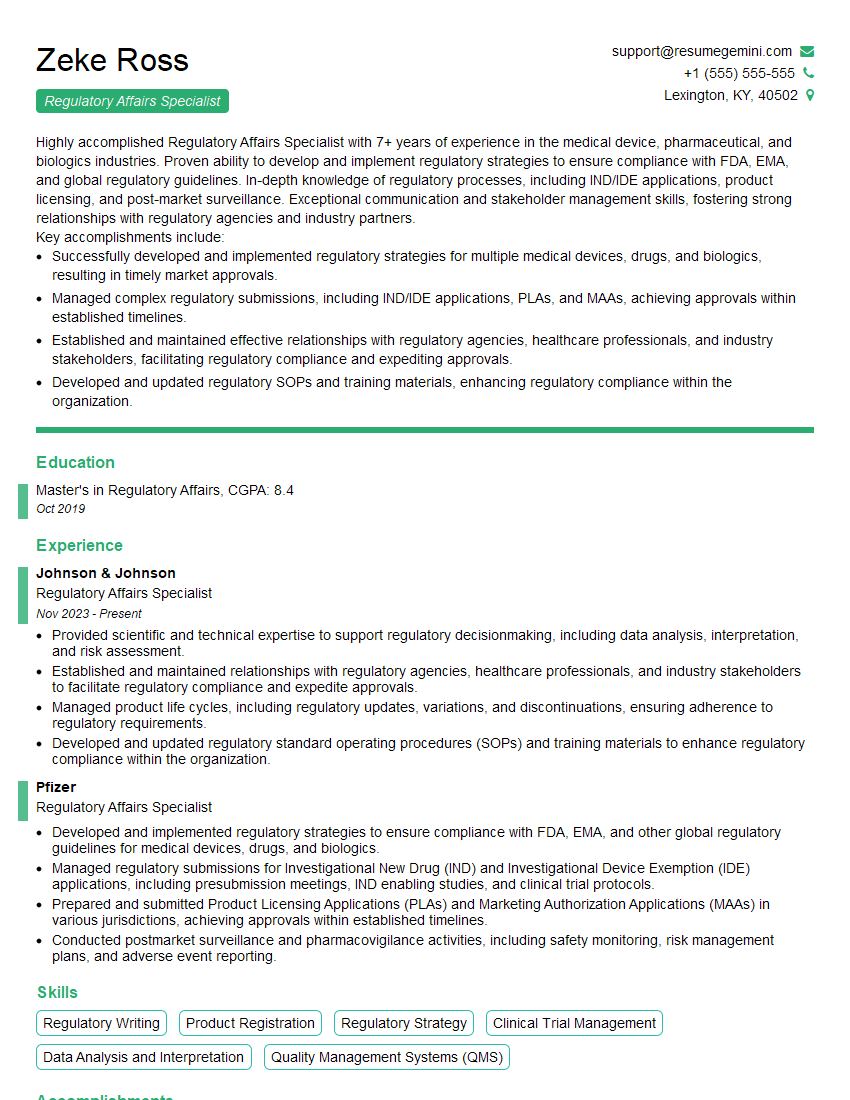
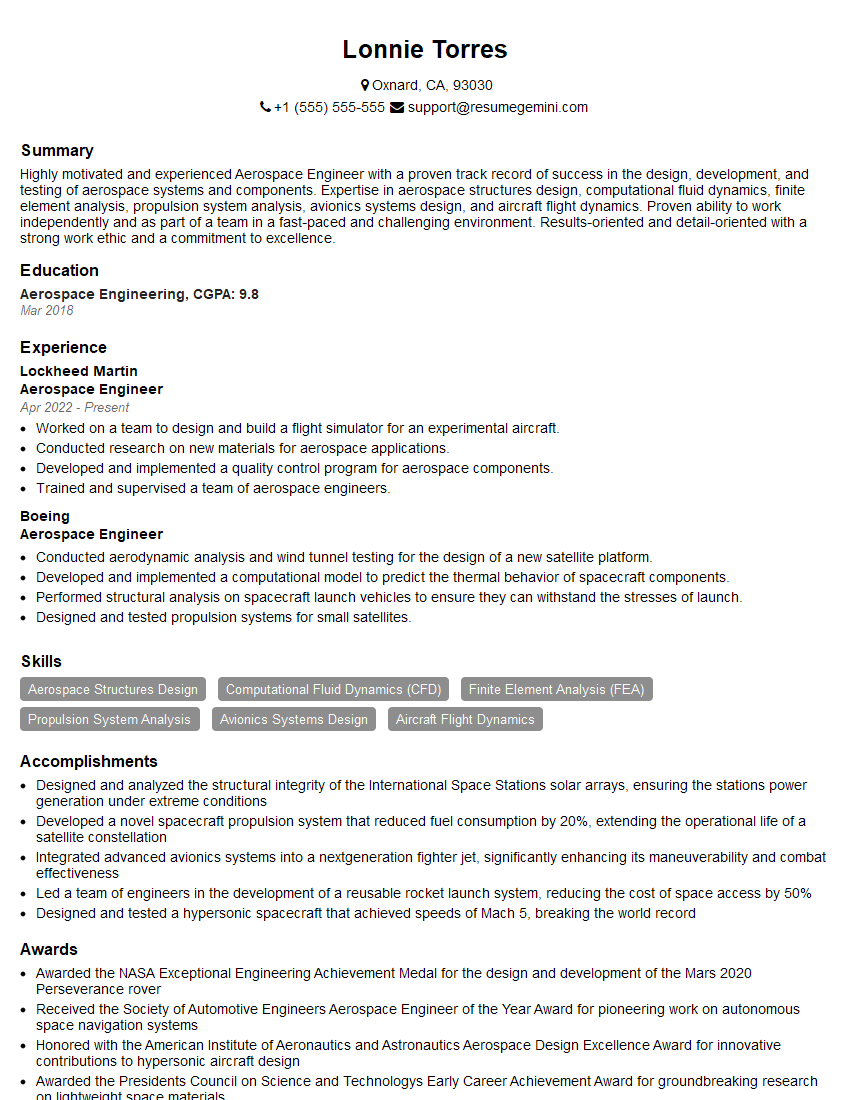
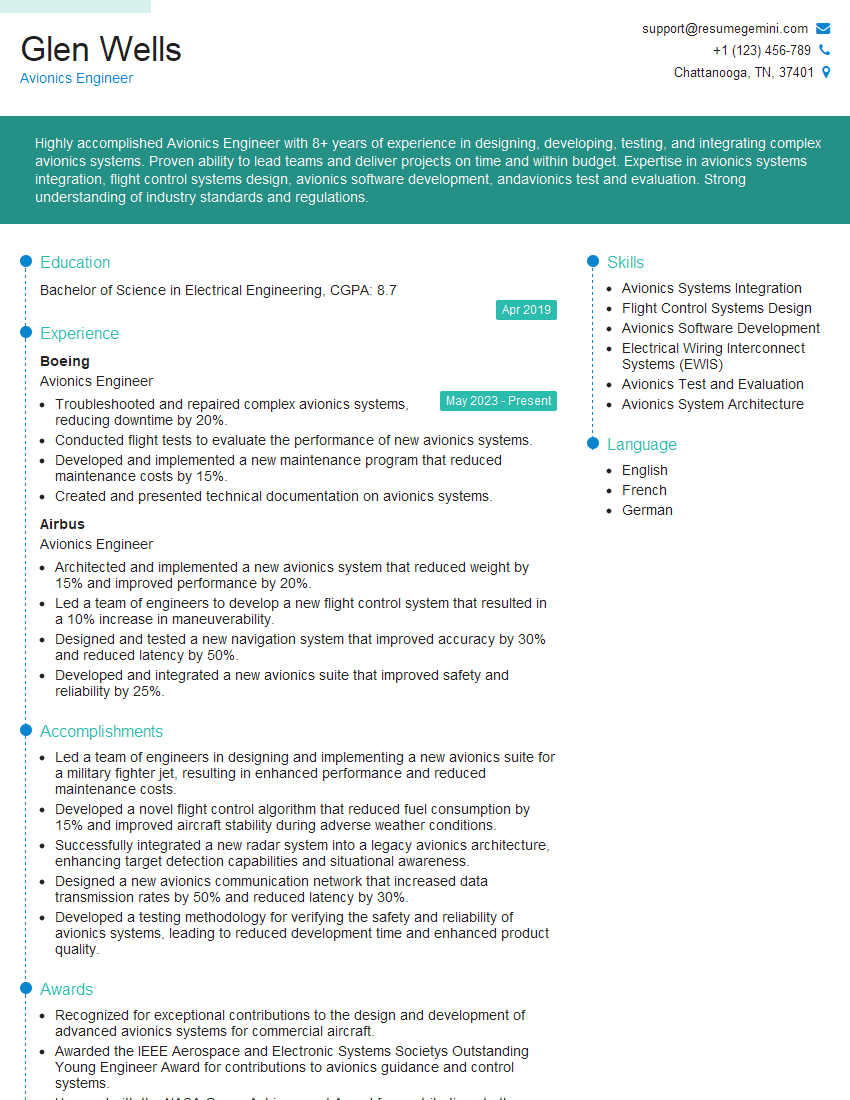
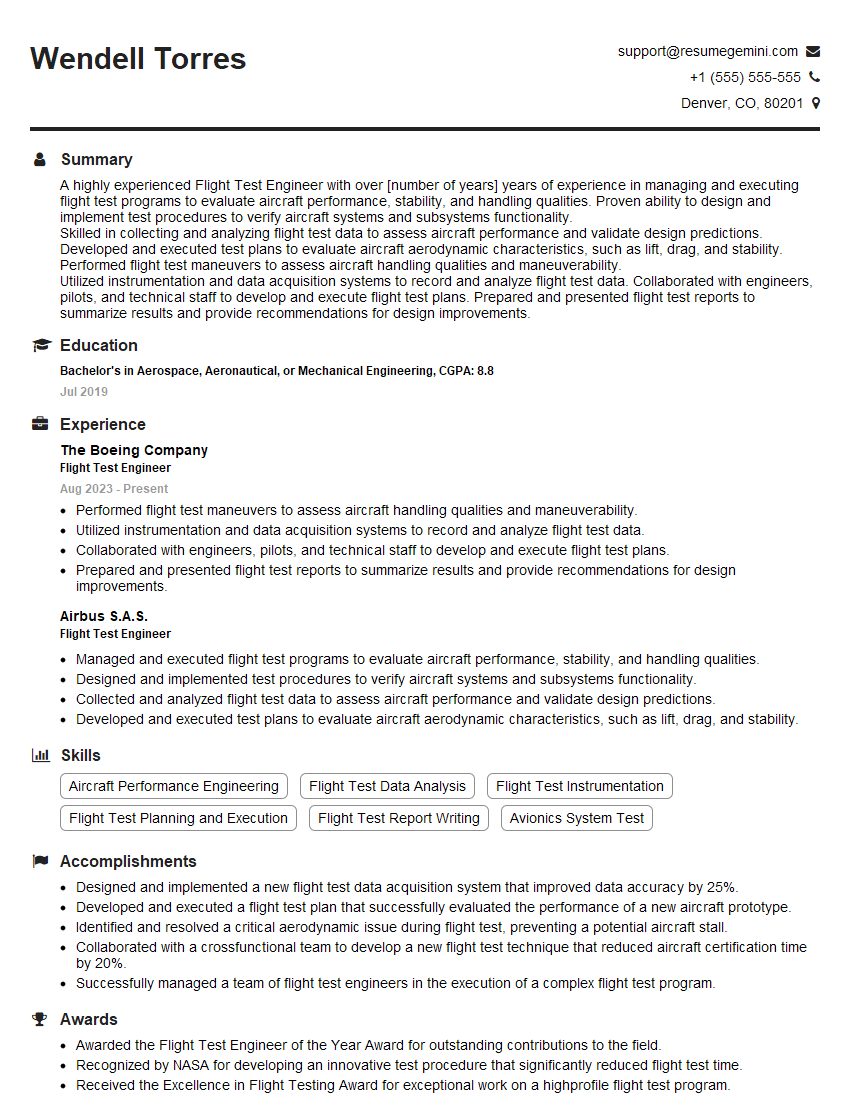
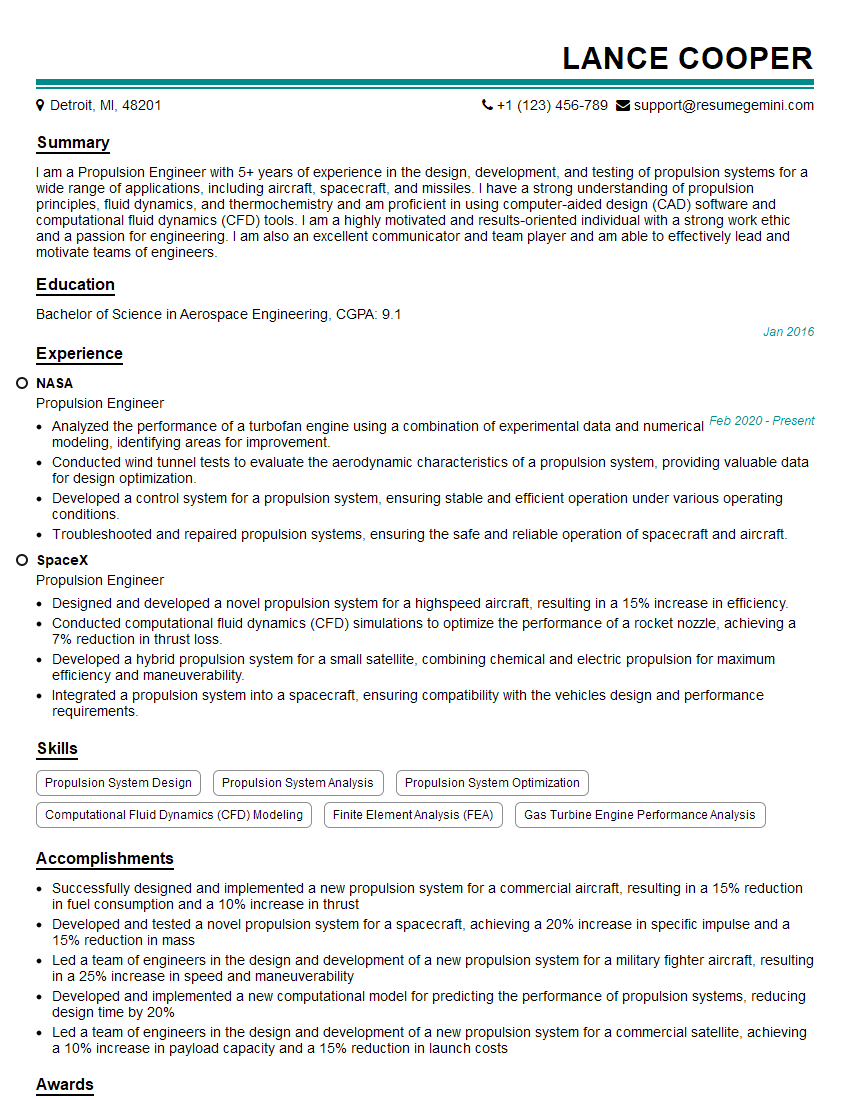
Mastering Aerospace Industry Standards and Practices is crucial for career advancement in this highly regulated and safety-critical field. Demonstrating a strong understanding of these standards sets you apart from other candidates and positions you for success in increasingly challenging roles. To significantly boost your job prospects, create a resume that is both ATS-friendly and highlights your relevant skills and experiences. ResumeGemini can be a valuable resource in this process, providing tools and examples to help you craft a compelling and effective resume tailored specifically to the aerospace industry. Examples of resumes tailored to Aerospace Industry Standards and Practices are available to guide you.
Explore more articles
Users Rating of Our Blogs
Share Your Experience
We value your feedback! Please rate our content and share your thoughts (optional).
What Readers Say About Our Blog
Really detailed insights and content, thank you for writing this detailed article.
IT gave me an insight and words to use and be able to think of examples