Interviews are more than just a Q&A session—they’re a chance to prove your worth. This blog dives into essential Air Conditioner Installation and Repair interview questions and expert tips to help you align your answers with what hiring managers are looking for. Start preparing to shine!
Questions Asked in Air Conditioner Installation and Repair Interview
Q 1. What are the different types of refrigerants used in air conditioning systems?
Refrigerants are the heart of any air conditioning system, responsible for absorbing heat from the indoor space and releasing it outdoors. Over the years, several types have been used, each with its own properties and environmental impact. Older systems often used chlorofluorocarbons (CFCs) like R-12, but these are now largely phased out due to their ozone-depleting potential. Hydrochlorofluorocarbons (HCFCs) like R-22 were introduced as a transitional solution, but they also contribute to global warming. Today, the industry is moving towards environmentally friendly refrigerants.
- Hydrofluoroolefins (HFOs): These are considered low-global-warming-potential (GWP) refrigerants and are becoming increasingly popular. R-1234yf and R-1234ze are examples. They offer excellent efficiency and are a safer alternative.
- Hydrofluorocarbons (HFCs): While better than CFCs and HCFCs, HFCs still have a GWP. R-410A is a common HFC blend used in many modern systems.
- Natural Refrigerants: These include ammonia (R-717), carbon dioxide (R-744), and propane (R-290). They have very low or zero GWP, but they require specialized handling and safety precautions.
Choosing the right refrigerant depends on factors like system efficiency, environmental regulations, and safety considerations. The selection process involves careful consideration and adherence to industry best practices.
Q 2. Explain the principles of refrigeration cycle.
The refrigeration cycle is a fascinating process that involves four key stages: Think of it like a heat-pumping machine moving heat from one place (your home) to another (outside).
- Evaporator: The refrigerant, in its low-pressure, low-temperature state, absorbs heat from the indoor air as it evaporates. This is why you feel the cool air blowing from your vents. Imagine a cold sponge absorbing water – the sponge is the refrigerant, and the water is the heat.
- Compressor: The compressor increases the pressure and temperature of the refrigerant gas. This is like squeezing the sponge to make it release the absorbed water (heat).
- Condenser: The high-pressure, high-temperature refrigerant releases heat to the outside air as it condenses into a liquid. This is why the outdoor unit gets hot. Think of the squeezed sponge now releasing its water (heat) into the air.
- Expansion Valve (or metering device): This valve reduces the pressure of the refrigerant, causing it to become cold again, restarting the cycle. It’s like opening a valve to release the now-dry sponge, preparing it to absorb water (heat) once more.
This continuous cycle efficiently transfers heat from inside to outside, cooling your home effectively. Understanding these stages is crucial for effective troubleshooting.
Q 3. How do you troubleshoot a malfunctioning compressor?
Troubleshooting a malfunctioning compressor requires a systematic approach. A non-functional compressor is a serious issue, often requiring professional assistance.
- Safety First: Always disconnect the power to the unit before starting any troubleshooting.
- Check Power Supply: Ensure the compressor is receiving power. Check the breaker box and wiring.
- Listen for Sounds: A non-starting compressor might have a seized motor (you’ll hear nothing), or a failing motor (you might hear unusual noises like grinding or clicking).
- Check for Overheating: A compressor might shut down due to overheating. Feel the compressor casing – is it excessively hot? If so, there might be a refrigerant issue or airflow obstruction.
- Measure Voltage and Current: Using a multimeter, check the voltage at the compressor terminals and compare it to the rated voltage. Also measure the current draw. Deviations from the rated values indicate problems.
- Check Start Capacitor (if applicable): The start capacitor helps the motor initially start. A faulty capacitor will prevent the compressor from turning on. A multimeter test can diagnose a bad capacitor.
- Check Refrigerant Levels: Low refrigerant can lead to compressor overheating and failure. A proper refrigerant level check is needed.
- Check for Refrigerant Leaks: Leaks can severely damage the compressor and the entire system. Leak detection techniques should be employed.
If you are not qualified, call a professional. Compressor repairs often necessitate specialized tools and knowledge.
Q 4. Describe the process of installing a split system air conditioner.
Installing a split system air conditioner involves precise steps to ensure efficiency and safety. It’s a job best left to qualified professionals.
- Planning & Measurements: Precise measurements of the indoor and outdoor unit locations are crucial for proper refrigerant line sizing and installation.
- Outdoor Unit Installation: This involves creating a stable and level base. Ensure proper ventilation around the unit and secure it against strong winds.
- Indoor Unit Installation: The indoor unit is mounted securely on the wall or ceiling, ensuring proper drainage and airflow. Electrical connections are made carefully, observing safety regulations.
- Refrigerant Line Installation: This is a critical step, requiring precision and the proper tools. Copper tubing is used to connect the indoor and outdoor units. The lines are evacuated to remove any air and moisture before the refrigerant is charged.
- Electrical Connections: The electrical connections are made according to the manufacturer’s specifications and local electrical codes. Testing with a multimeter confirms the correct voltage and current.
- Refrigerant Charging: Using specialized equipment, the system is charged with the correct amount of refrigerant. Proper charging is essential for efficient operation.
- Vacuum Test: Before charging refrigerant, a vacuum test is performed to ensure the system is leak-free.
- System Testing and Commissioning: After installation, the system undergoes a thorough test to check for proper cooling, airflow, and refrigerant pressure.
Incorrect installation can severely affect efficiency and safety, leading to breakdowns and even refrigerant leaks. Always follow the manufacturer’s instructions and best practices.
Q 5. What safety precautions do you take when working with refrigerants?
Working with refrigerants requires strict adherence to safety protocols to avoid health hazards and environmental damage. These are not substances to be taken lightly.
- Personal Protective Equipment (PPE): Always wear appropriate PPE, including safety glasses, gloves, and respiratory protection, to prevent exposure to refrigerant fumes.
- Proper Ventilation: Ensure adequate ventilation in the work area to prevent the accumulation of refrigerant gases. This can minimize inhalation risks.
- Leak Detection and Repair: Use approved leak detection methods and promptly repair any leaks. Refrigerant leaks need to be handled quickly and appropriately to prevent damage and potential environmental pollution.
- Disposal of Refrigerants: Follow all local and national regulations for the proper disposal of refrigerants. Never release refrigerants into the atmosphere.
- Training and Certification: Receive proper training and certification before handling refrigerants. This ensures that you are working safely and legally.
- Understanding Safety Data Sheets (SDS): Always consult the SDS for the specific refrigerant being handled. The SDS provides crucial information about handling, safety, and first-aid procedures.
Working with refrigerants without proper training and safety precautions can lead to serious injury, environmental damage, and legal issues.
Q 6. How do you diagnose a refrigerant leak?
Diagnosing a refrigerant leak requires a methodical approach. Small leaks can be hard to detect; early identification prevents larger, more costly repairs.
- Visual Inspection: Carefully inspect all refrigerant lines, connections, and components for visible signs of leaks, such as oil stains or frost.
- Electronic Leak Detectors: These detectors use sensors to identify refrigerant leaks even in small amounts. They are a key tool for fast and accurate leak detection.
- Pressure Testing: This involves pressurizing the system with nitrogen gas and observing for pressure drops, indicating a leak. This should be done by a qualified technician.
- Dye Tracing: A fluorescent dye is injected into the system, and a UV light is used to locate leaks. This method is very effective in finding even small leaks.
- Soap Bubble Test: Applying a soap solution to joints and connections can reveal bubbles if there is a leak. Simple but often effective for quick checks.
Locating the source of a leak is crucial for a permanent repair. Once located, proper repair techniques need to be used.
Q 7. Explain the different types of air conditioning systems (e.g., split, packaged, central).
Air conditioning systems come in various types, each with its unique design and application.
- Split Systems: These systems consist of an indoor unit (evaporator) and an outdoor unit (condenser/compressor), connected by refrigerant lines. They are very common in residential and smaller commercial settings. Easy to install and maintain.
- Packaged Systems: These are self-contained units that house all the components in a single cabinet, usually installed outdoors. Common in smaller commercial applications.
- Central Air Conditioning Systems: These systems use a central air handler and an outdoor unit, distributing cooled air through a network of ductwork throughout the building. They are suitable for large buildings and homes.
- Window Units: These are simple, self-contained units installed in windows. Suitable for single rooms, but not as energy-efficient as other systems.
- Ductless Mini-Splits: This system combines the benefits of both central and split systems. It consists of multiple indoor units connected to a single outdoor unit, offering zone control.
Choosing the right system depends on factors like building size, budget, energy efficiency requirements, and the desired level of comfort and control.
Q 8. How do you test the airflow in an air conditioning system?
Testing airflow in an air conditioning system is crucial for ensuring efficient cooling and identifying potential problems. We use several methods. First, we visually inspect the air registers and vents for obstructions like furniture or debris that could restrict airflow. Then, we measure the airflow using an anemometer, a device that measures air speed. This is done at the supply and return registers. Comparing these measurements tells us if the airflow is balanced across the system. A significant difference indicates potential issues in the ductwork, a restricted filter, or even a malfunctioning blower motor. Low airflow often translates to poor cooling performance and increased energy consumption. For example, if the supply airflow is significantly lower than the return airflow, it suggests a blockage somewhere in the system. We then systematically check the ductwork for leaks, kinks, or restrictions. Lastly, we check the static pressure. High static pressure is a sign of restricted airflow.
Q 9. What tools and equipment are essential for air conditioning installation and repair?
Essential tools and equipment for AC installation and repair are diverse and range from basic hand tools to specialized equipment. Basic tools include screwdrivers (Phillips and flathead), wrenches, pliers, a level, and a measuring tape. More specialized tools include: vacuum pumps (for evacuating refrigerant lines), manifold gauges (for measuring refrigerant pressure and temperature), refrigerant recovery cylinders (to safely handle refrigerant), leak detectors (electronic or soapy water), a wire stripper/crimper, and various sizes of tubing cutters and flaring tools for working with refrigerant lines. Power tools like drills, reciprocating saws, and sheet metal shears are also essential for certain installations. Safety equipment is crucial: safety glasses, gloves, and appropriate respiratory protection when working with refrigerants. Advanced diagnostics require specialized tools like digital multimeters for electrical testing, and possibly thermal imaging cameras to detect heat leaks or refrigerant issues.
Q 10. How do you calculate the BTU requirements for a specific space?
Calculating BTU (British Thermal Unit) requirements for a space isn’t just a guess; it’s a critical step to ensure the AC unit provides adequate cooling. We consider several factors: the square footage of the room, ceiling height, the number of windows and their orientation, the climate (outdoor temperature and humidity), the number of occupants, and the presence of heat-generating appliances (computers, ovens, etc.). There are online calculators and industry-standard formulas available which consider all these variables. For instance, a rule of thumb is around 20 BTU per square foot for milder climates, but this value goes up substantially in hotter, more humid regions and must be adjusted accordingly. Using a detailed load calculation helps in selecting the right BTU capacity and avoids purchasing an oversized or undersized unit; oversized units cycle too frequently leading to poor dehumidification, while undersized units struggle to cool the space effectively.
Q 11. Describe your experience with different types of HVAC controls.
My experience with HVAC controls spans various technologies, from basic thermostats to sophisticated smart home systems. I’m familiar with mechanical thermostats (simple on/off controls), programmable thermostats (allowing customized scheduling), and smart thermostats (Wi-Fi enabled, providing remote access, learning capabilities, and energy-saving features). I’ve also worked with advanced control systems that integrate multiple HVAC zones, allowing for individual temperature control in different areas of a building. These systems often involve complex wiring diagrams and require specialized programming skills. For example, recently I worked on an installation where we integrated a smart thermostat with the home’s automation system, allowing the AC to interact with other appliances, optimizing energy consumption based on occupancy and external conditions. Understanding these different systems is crucial for troubleshooting and ensuring optimal performance.
Q 12. How do you handle emergency calls and repairs?
Emergency calls and repairs require immediate attention and a systematic approach. I prioritize safety first; if a gas leak is suspected, the situation is immediately addressed with caution. Upon arrival, I quickly assess the situation, determining the problem’s urgency and nature. For example, a complete system shutdown requires rapid action, while a minor issue can sometimes wait for a scheduled repair. I then proceed with a diagnostic check, taking measurements as appropriate. The primary goal is to restore functionality as quickly and safely as possible, while also identifying the underlying cause of the issue to prevent future recurrences. Transparency with the customer is key; I always communicate the situation, potential solutions, and the timeline for repair.
Q 13. Explain the process of charging an air conditioning system with refrigerant.
Charging an air conditioning system with refrigerant is a precise process requiring careful attention to safety and regulations. First, the system is evacuated using a vacuum pump to remove any air or moisture. This prevents contamination and ensures optimal system performance. Then, using manifold gauges, I carefully measure the refrigerant pressure and temperature. The refrigerant is added slowly, constantly monitoring pressure and temperature readings until the desired charge is reached, following the manufacturer’s specifications. Improper charging can lead to system damage, reduced efficiency, and environmental harm. The process requires precise handling of refrigerant, including following all safety precautions and complying with local environmental regulations. Overcharging can severely damage the compressor, and undercharging will render the unit inefficient. It’s a delicate balance that requires expertise and experience.
Q 14. What are the common causes of air conditioning system failure?
Air conditioning system failures stem from various causes, and diagnosing them requires careful observation and testing. Common issues include: refrigerant leaks (resulting in insufficient cooling), compressor failure (a major component that circulates the refrigerant), clogged air filters (restricting airflow), frozen evaporator coils (indicating potential airflow problems or refrigerant issues), electrical problems (such as faulty capacitors or wiring), and blower motor failures. Additionally, problems with the ductwork, such as leaks or blockages, can significantly impact performance. Regular maintenance, including filter changes and inspections, can significantly reduce the likelihood of these failures. Proper preventative maintenance is a valuable investment that extends system longevity and saves money in the long run.
Q 15. How do you maintain and clean air conditioning systems?
Maintaining and cleaning air conditioning systems is crucial for efficiency, longevity, and preventing health issues. It’s a multi-step process focusing on both the indoor and outdoor units.
Indoor Unit Cleaning: This involves regularly changing air filters (ideally every 1-3 months, depending on usage and filter type). A clogged filter restricts airflow, reducing cooling capacity and potentially damaging the system. Beyond filter changes, I recommend professional cleaning at least once a year to remove dust and debris from the evaporator coil and fan. This often involves using specialized cleaning solutions and tools to ensure thorough cleaning without harming the delicate components.
Outdoor Unit Cleaning: The condenser unit, located outside, needs regular cleaning as well. Leaves, debris, and overgrown vegetation can restrict airflow, leading to overheating and reduced efficiency. I advise using a garden hose to gently rinse away any accumulated debris. Always disconnect the power before cleaning to avoid electrical shocks.
Coil Cleaning: The evaporator and condenser coils are critical heat exchangers. Dirt buildup on these coils significantly impacts efficiency. Professional cleaning involves using specialized coil cleaning brushes and solutions to remove the buildup. This is where a professional’s expertise in identifying coil types and using appropriate cleaning methods is paramount to avoiding damage.
System Inspection: Beyond cleaning, routine inspections are crucial. I check for refrigerant leaks, loose connections, and signs of wear and tear on components. Early detection of problems prevents costly repairs down the line. For example, a small refrigerant leak might go unnoticed until it becomes a significant problem, costing much more to repair.
Career Expert Tips:
- Ace those interviews! Prepare effectively by reviewing the Top 50 Most Common Interview Questions on ResumeGemini.
- Navigate your job search with confidence! Explore a wide range of Career Tips on ResumeGemini. Learn about common challenges and recommendations to overcome them.
- Craft the perfect resume! Master the Art of Resume Writing with ResumeGemini’s guide. Showcase your unique qualifications and achievements effectively.
- Don’t miss out on holiday savings! Build your dream resume with ResumeGemini’s ATS optimized templates.
Q 16. Describe your experience with ductwork installation and repair.
My experience with ductwork encompasses both installation and repair. I’ve worked on various projects, from new construction installations to retrofits in existing buildings. Proper ductwork installation is critical for efficient air distribution. Improperly sized or sealed ducts lead to significant energy loss and uneven cooling or heating.
Installation: I’m proficient in calculating duct sizes based on load calculations, ensuring proper airflow throughout the system. I use various materials including galvanized steel, flexible ductwork, and fiberglass ductboard, selecting the most appropriate material for each application. Secure sealing is a key element in preventing air leaks and ensuring proper pressure. I use mastic sealant and metal tape for robust seals.
Repair: Repair work often involves identifying and sealing leaks, replacing damaged sections of ductwork, or rectifying improperly installed sections. Leak detection sometimes involves using specialized tools like smoke generators to pinpoint the source of leaks. Repairing damaged sections requires careful measurements and precise cutting to ensure a seamless fit.
Example: I recently worked on a project where the ductwork in an older home was severely deteriorated. By carefully inspecting the entire system, I identified several significant leaks and sections of collapsed ductwork. I replaced the damaged sections using high-quality materials and ensured all connections were properly sealed. This improved the system’s efficiency dramatically and ensured even air distribution.
Q 17. How do you identify and resolve electrical issues in an air conditioning system?
Identifying and resolving electrical issues in an air conditioning system requires a thorough understanding of electrical safety and HVAC systems. Safety is always paramount.
Troubleshooting: I start by visually inspecting wiring for loose connections, damaged insulation, or signs of overheating. I use a multimeter to check voltage, amperage, and continuity. I’ll also check the circuit breakers and fuses to ensure they’re functioning correctly.
Common Issues: Common electrical problems include faulty capacitors, tripped breakers, shorted wires, and issues with the control board. A faulty capacitor can prevent the compressor from starting; a tripped breaker might indicate an overload. A shorted wire can lead to a fire hazard, so careful inspection is necessary.
Example: I once responded to a call where the air conditioner wouldn’t start. After a visual inspection, I found a loose connection at the compressor. After securely reconnecting the wire, the unit started working again. In another instance, a shorted wire in the control box was identified using a multimeter and promptly replaced, preventing a potentially dangerous situation.
Safety Precautions: Working with electricity requires extreme caution. I always ensure the power is disconnected before working on any electrical component. I use appropriate personal protective equipment (PPE), including insulated tools and gloves.
Q 18. What is your experience with different types of condensers and evaporators?
I have extensive experience with various types of condensers and evaporators, understanding their unique characteristics and applications. The choice of condenser and evaporator depends on factors such as the system’s capacity, refrigerant used, and environmental conditions.
Condensers: I’ve worked with air-cooled condensers (most common in residential applications), water-cooled condensers (used in larger systems), and evaporative condensers (used in areas with limited water resources). Each type has its own advantages and disadvantages regarding efficiency, maintenance requirements, and environmental impact. For example, air-cooled condensers are relatively simple to maintain but can be less efficient in hot climates.
Evaporators: I’ve worked with various evaporator coil designs, including those with different fin spacing and materials. The fin spacing affects the airflow and heat transfer efficiency. The choice of material impacts durability and corrosion resistance. Proper selection and maintenance of evaporators are critical for achieving the best cooling performance.
Example: In a recent project, a customer wanted to improve the efficiency of their existing system. We replaced their older air-cooled condenser with a newer, higher-efficiency model with improved fan design and refrigerant. This resulted in a noticeable increase in cooling capacity and a reduction in energy consumption.
Q 19. How do you interpret wiring diagrams for HVAC systems?
Interpreting wiring diagrams is fundamental to diagnosing and repairing HVAC systems. These diagrams show the electrical connections between different components and provide valuable information for troubleshooting.
Understanding Symbols: I’m proficient in understanding the standard symbols used in HVAC wiring diagrams, which represent components like compressors, fans, capacitors, and thermostats. Each symbol has a specific meaning and understanding these symbols is crucial for tracing the electrical paths.
Tracing Circuits: I can trace the electrical circuits shown in the diagrams to identify the path of electricity from the power source to various components. This helps in pinpointing the location of a fault. For example, if the compressor isn’t running, I can trace the circuit to see if the power is reaching it.
Troubleshooting: Wiring diagrams are invaluable during troubleshooting. If a component is malfunctioning, I use the diagram to check its connections and voltage to determine the cause of the problem.
Example: I recently encountered a situation where a blower motor wasn’t functioning. Using the wiring diagram, I quickly identified a broken wire in the circuit. Replacing the wire resolved the problem. The diagram ensured a speedy and accurate repair.
Q 20. What is your experience with programmable thermostats?
I have extensive experience installing and programming programmable thermostats. These thermostats offer greater control over the HVAC system, allowing for energy savings and customized comfort settings.
Installation: I’m familiar with various thermostat models and their installation procedures. This includes wiring connections, calibration, and programming. It’s important to ensure the thermostat is correctly wired to avoid system malfunctions.
Programming: I’m skilled in programming thermostats to meet customer preferences, setting schedules for different days and times. This includes setting temperature ranges, adjusting fan speeds, and utilizing advanced features such as geolocation and smart home integration.
Troubleshooting: Sometimes, programmable thermostats malfunction or display error codes. I’m experienced in diagnosing these issues and can often resolve them without replacing the thermostat. Understanding the codes and how they relate to the system’s operation is crucial here.
Example: I helped a client install a smart thermostat which allowed them to remotely control their AC system through their smartphone. We programmed it to automatically adjust temperatures based on their daily routines, resulting in considerable energy savings and greater comfort.
Q 21. How do you handle customer complaints and concerns?
Handling customer complaints and concerns is a crucial aspect of my job. I approach each situation with empathy and professionalism.
Active Listening: I begin by actively listening to the customer’s concerns, allowing them to fully explain the issue. I use open-ended questions to encourage clear communication. It’s important to understand their perspective completely before offering solutions.
Problem Diagnosis: Once I understand the issue, I proceed to diagnose the problem. This may involve inspecting the system, checking for errors, or discussing their usage patterns. It’s vital to explain my assessment clearly and transparently to build trust.
Solution Implementation: I present the customer with the possible solutions and their associated costs. I explain the pros and cons of each option. If needed, I’ll suggest temporary solutions to alleviate discomfort while awaiting repairs or replacements.
Follow-up: After resolving the issue, I follow up with the customer to ensure their satisfaction. Addressing concerns promptly and respectfully is essential for building a strong customer relationship.
Example: A customer once complained about uneven cooling in their home. After a thorough inspection, I discovered a ductwork leak. I explained the problem clearly, gave a detailed cost estimate, and scheduled the repair promptly. The client appreciated my professionalism and the quality of the work.
Q 22. What is your understanding of EPA regulations regarding refrigerants?
The Environmental Protection Agency (EPA) sets strict regulations on the handling and disposal of refrigerants, primarily due to their impact on the ozone layer and global warming. These regulations are crucial for protecting the environment and public health. My understanding encompasses several key areas:
- Section 608 Certification: Technicians must be EPA-certified to handle refrigerants, demonstrating proficiency in proper handling, recovery, and recycling practices. This certification is essential for legal operation and ensures environmentally responsible work.
- Refrigerant Recovery and Recycling: The EPA mandates the recovery and recycling of refrigerants whenever an appliance is serviced or disposed of. This prevents the release of harmful refrigerants into the atmosphere. We use specialized equipment to recover refrigerant, ensuring minimal environmental impact. For example, during an AC unit repair, any refrigerant removed is captured and processed for reuse or reclamation.
- Prohibited Refrigerants: The EPA has phased out the use of ozone-depleting substances like CFCs and HCFCs, replacing them with more environmentally friendly options like HFCs and now increasingly, hydrofluoroolefins (HFOs) and natural refrigerants. Understanding which refrigerants are permitted and their proper handling is critical.
- Leak Repair and Prevention: Regulations emphasize leak detection and repair to minimize refrigerant emissions. Regular inspections and prompt repairs are mandatory to stay compliant. For instance, I always use leak detection equipment during system checks, and if a leak is found, I repair it promptly and document the process.
Staying updated on EPA regulations is a continuous process, as requirements evolve. I regularly attend industry training and seminars to maintain my compliance and best practices.
Q 23. Describe your experience with different types of air filters and their importance.
Air filters are the unsung heroes of air conditioning systems, significantly impacting efficiency and indoor air quality. I’ve worked with various filter types, each offering unique advantages and disadvantages:
- Fiberglass Filters: These are the most common and least expensive. They’re effective at trapping larger particles, but they’re less efficient at filtering smaller allergens and pollutants. Think of them as a basic sieve.
- Pleated Filters: These offer greater surface area than fiberglass filters, resulting in better filtration and a longer lifespan. They are better at capturing smaller particles, making them a good balance between cost and performance.
- HEPA Filters (High-Efficiency Particulate Air): HEPA filters are the gold standard, trapping up to 99.97% of particles 0.3 microns or larger. They’re excellent for people with allergies or respiratory sensitivities. However, they’re more expensive and may restrict airflow if the system isn’t properly sized.
- Electrostatic Filters: These filters use an electrical charge to attract and trap dust and allergens, offering high efficiency. They are often washable, reducing replacement costs.
The importance of air filters cannot be overstated. They protect the internal components of the AC unit from dust and debris, extending the lifespan and improving efficiency. More importantly, they improve indoor air quality by removing allergens, pollutants, and other irritants, contributing to a healthier home environment. I always advise homeowners on the best filter type for their needs and budget, along with the recommended replacement schedule.
Q 24. How do you troubleshoot a system with low airflow?
Low airflow in an air conditioning system is a common problem with multiple potential causes. My troubleshooting approach is systematic and methodical:
- Check the Air Filter: A clogged air filter is the most frequent culprit. Replacing or cleaning it often resolves the issue immediately.
- Inspect the Blower Motor: A faulty blower motor or its capacitor can significantly reduce airflow. I’ll check the motor’s operation and voltage, and replace components as necessary.
- Examine the Evaporator Coil: A dirty or frozen evaporator coil restricts airflow. Cleaning the coil and addressing any icing issues are crucial steps.
- Verify Ductwork Integrity: Leaky or restricted ductwork dramatically reduces airflow. I’ll inspect the duct system for leaks, blockages, or improper sizing. Poorly sealed ductwork can account for a significant percentage of lost airflow.
- Assess the Outdoor Unit: Ensure the outdoor unit is clean and free of debris that could impede airflow. Also, verify that the fan is operating correctly.
- Check for Refrigerant Leaks: Low refrigerant levels can cause restricted airflow and reduced cooling. I would use leak detection equipment to identify any leaks and perform the necessary repairs.
By systematically addressing these potential problems, I can efficiently identify the root cause of low airflow and implement the appropriate solution. I always document my findings and explain them clearly to the homeowner.
Q 25. Explain the process of evacuating an air conditioning system.
Evacuating an air conditioning system is a critical step before charging it with refrigerant. This process removes air, moisture, and other non-condensables that can significantly reduce the system’s efficiency and cause damage. It’s a precise procedure requiring specialized equipment and knowledge.
- Connect Vacuum Pump: I connect a high-capacity vacuum pump to the system’s service ports, ensuring a tight seal to prevent leaks.
- Evacuate to Deep Vacuum: The system is evacuated to a deep vacuum, typically below 500 microns, for a sufficient duration (usually at least 30-45 minutes for smaller systems; longer for larger systems). This removes virtually all non-condensables.
- Monitor Vacuum Gauge: I closely monitor the vacuum gauge throughout the process, ensuring that the vacuum level remains steady. A leak would be indicated by a rise in pressure.
- Close Service Valves: Once the desired vacuum is achieved, I close the service valves on the system, trapping the vacuum inside.
Proper evacuation is essential for optimal system performance and longevity. Failure to evacuate properly can result in reduced cooling capacity, increased energy consumption, and premature component failure. The procedure requires careful attention to detail and the use of appropriate safety precautions. Improper evacuation can also lead to compressor damage due to contamination. The specific vacuum time can also vary based on system size and complexity. I always ensure the system is thoroughly evacuated before charging it with refrigerant.
Q 26. How do you determine the proper size for an air conditioning unit?
Determining the proper size for an air conditioning unit is crucial for optimal performance and energy efficiency. An oversized unit will cycle on and off too frequently, failing to dehumidify properly and resulting in higher energy costs. An undersized unit will struggle to cool the space adequately, leaving you uncomfortable.
I use Manual J load calculations to determine the correct unit size. This involves a detailed assessment of several factors:
- Square Footage: The total area of the space to be cooled.
- Climate Zone: The local climate significantly impacts cooling needs.
- Insulation Levels: Well-insulated homes require smaller units.
- Window Size and Type: Larger windows and poor window insulation increase cooling load.
- Number of People and Appliances: People and appliances generate heat, impacting cooling demand.
- Orientation of the House: The sun’s exposure affects cooling requirements.
Using Manual J calculations, I can accurately determine the required BTU (British Thermal Unit) rating for the air conditioning unit. This ensures the selected unit effectively cools the space while maximizing energy efficiency. Software programs are often used to facilitate these calculations and ensure accuracy. Failing to accurately size the unit can lead to substantial wasted energy or poor cooling performance.
Q 27. Describe your experience with heat pumps.
Heat pumps are incredibly efficient systems that can both heat and cool a home, making them an environmentally friendly and cost-effective option. My experience with heat pumps spans several aspects:
- Installation: Proper installation is paramount for optimal performance. This includes careful sizing, refrigerant charging, and connecting the indoor and outdoor units. I pay close attention to the refrigerant lineset to ensure proper insulation and minimize heat loss.
- Maintenance: Regular maintenance is key to ensuring the efficiency and longevity of a heat pump. This includes cleaning coils, checking refrigerant levels, and inspecting electrical components. This preventative maintenance significantly reduces the chances of breakdowns.
- Troubleshooting: I am proficient in diagnosing and resolving various heat pump issues. These can range from low airflow to refrigerant leaks to malfunctioning components. Understanding the complexities of the system’s reversing valve is critical for diagnosis.
- Different Types: I’m familiar with various heat pump types, including air-source, geothermal, and water-source, each with its unique characteristics and installation requirements. Geothermal systems, for instance, require specialized drilling and expertise.
Heat pumps are becoming increasingly popular, and I believe their energy efficiency and versatility make them a superior choice in many climates. I’m committed to staying current with the latest technology and best practices for installation and maintenance.
Q 28. What are some common problems associated with older air conditioning systems?
Older air conditioning systems frequently encounter several common problems due to age, wear, and tear, and outdated technology. Some frequently encountered issues include:
- Refrigerant Leaks: Older systems often have deteriorated seals and components, leading to refrigerant leaks and reduced cooling capacity. Refrigerant leaks in older systems using R-22 can be particularly costly, as this refrigerant is increasingly expensive and being phased out.
- Compressor Failure: The compressor is the heart of the system, and it is prone to failure over time due to wear and tear. Replacing a compressor in an older system can be a significant expense.
- Electrical Issues: Age and fluctuating power can cause electrical problems, such as burnt-out capacitors or malfunctioning motors. These issues can cause significant damage if left unaddressed.
- Wear and Tear on Internal Components: Parts like the blower motor, evaporator coil, and condenser coil degrade over time, reducing efficiency and performance. Regular preventative maintenance is crucial to mitigating this deterioration.
- Lack of Efficiency: Older systems often lack the energy-saving features found in newer models, leading to higher energy bills.
Addressing these issues promptly is crucial to prevent further damage and costly repairs. Sometimes, the cost of repairing an older system exceeds the cost of replacing it with a more efficient, modern unit. A thorough inspection can assist in determining the most cost-effective approach.
Key Topics to Learn for Air Conditioner Installation and Repair Interview
- Refrigerant Handling and Safety: Understanding different refrigerants, proper handling procedures, leak detection techniques, and safety regulations (EPA certifications). Practical application: Explaining the process of identifying and addressing a refrigerant leak.
- Electrical Systems and Wiring: Knowledge of electrical schematics, wiring diagrams, voltage measurements, and safety precautions related to electrical work on AC units. Practical application: Troubleshooting electrical problems in an AC system, such as a malfunctioning compressor.
- Compressor Operation and Maintenance: Understanding compressor types, function, troubleshooting common compressor issues, and preventative maintenance. Practical application: Diagnosing a compressor failure and explaining the repair or replacement process.
- Airflow and Ductwork: Knowledge of airflow dynamics, ductwork design, installation, and troubleshooting air restrictions. Practical application: Identifying and resolving issues affecting airflow, such as duct leaks or restricted vents.
- Troubleshooting and Diagnostics: Utilizing diagnostic tools and techniques to identify malfunctions in different AC components. Practical application: Describing the systematic approach used to diagnose a problem in a malfunctioning air conditioner.
- Installation Procedures: Understanding proper installation techniques for various AC units, including brazing, vacuuming, and refrigerant charging. Practical application: Explaining the step-by-step process of installing a split system air conditioner.
- Customer Service and Communication: Effectively communicating technical information to non-technical customers, building rapport, and handling customer concerns professionally. Practical application: Describing a situation where you successfully resolved a customer complaint.
Next Steps
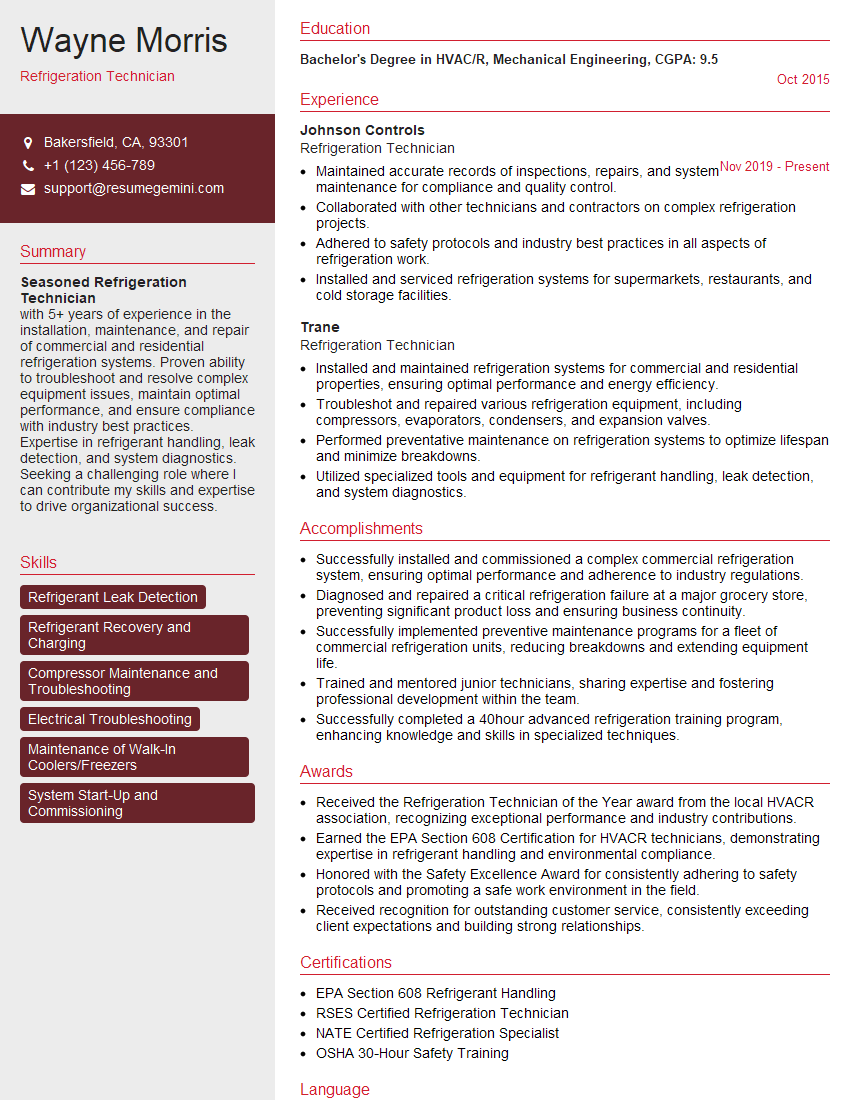
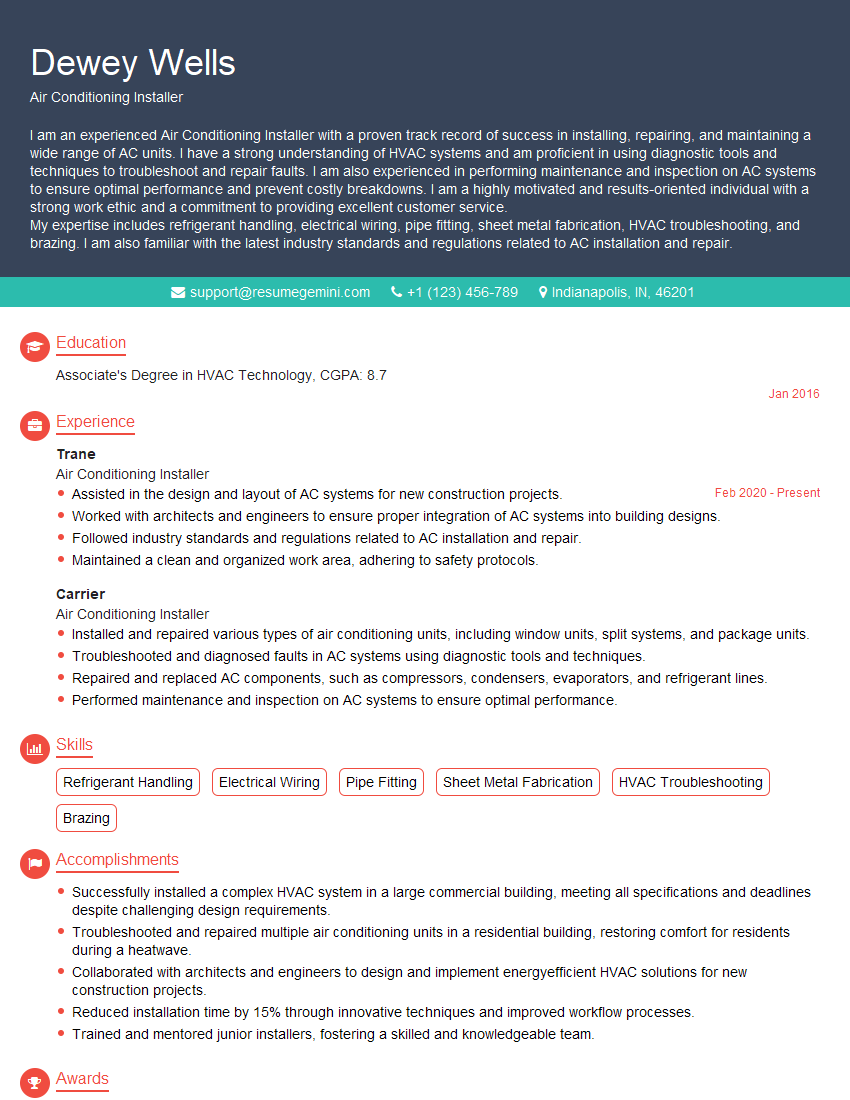
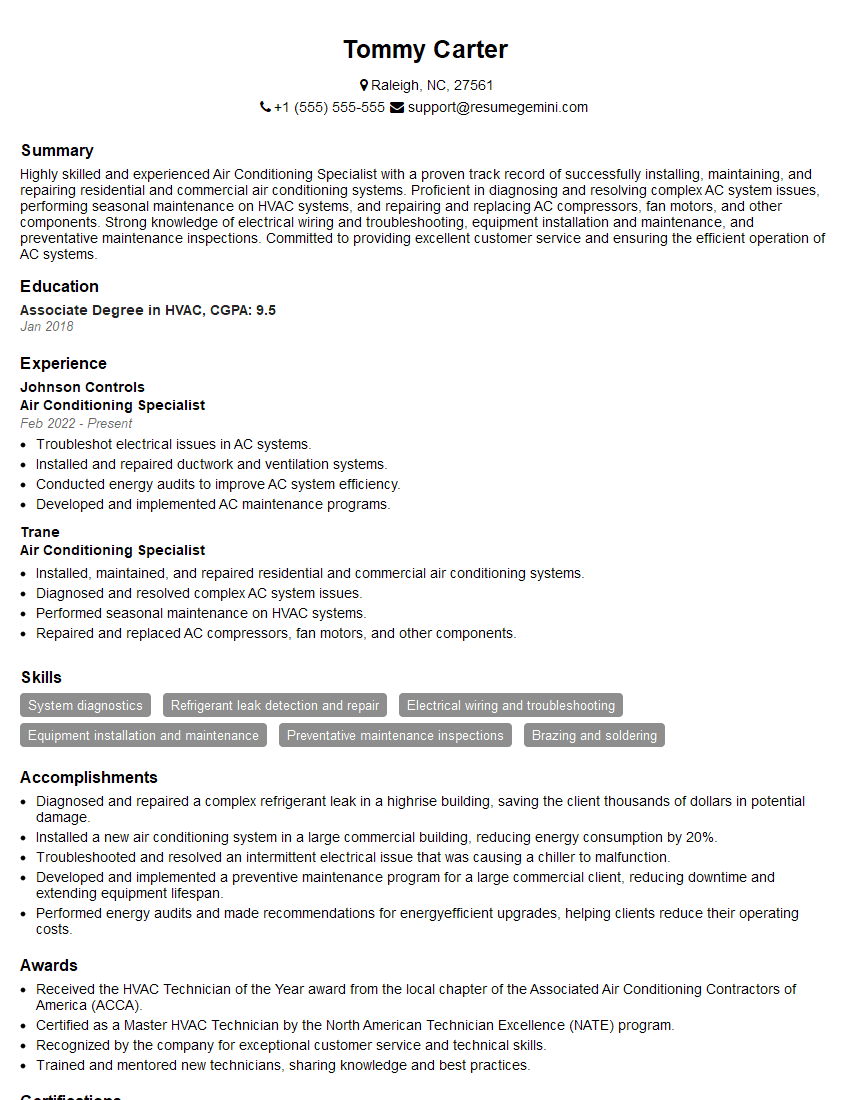
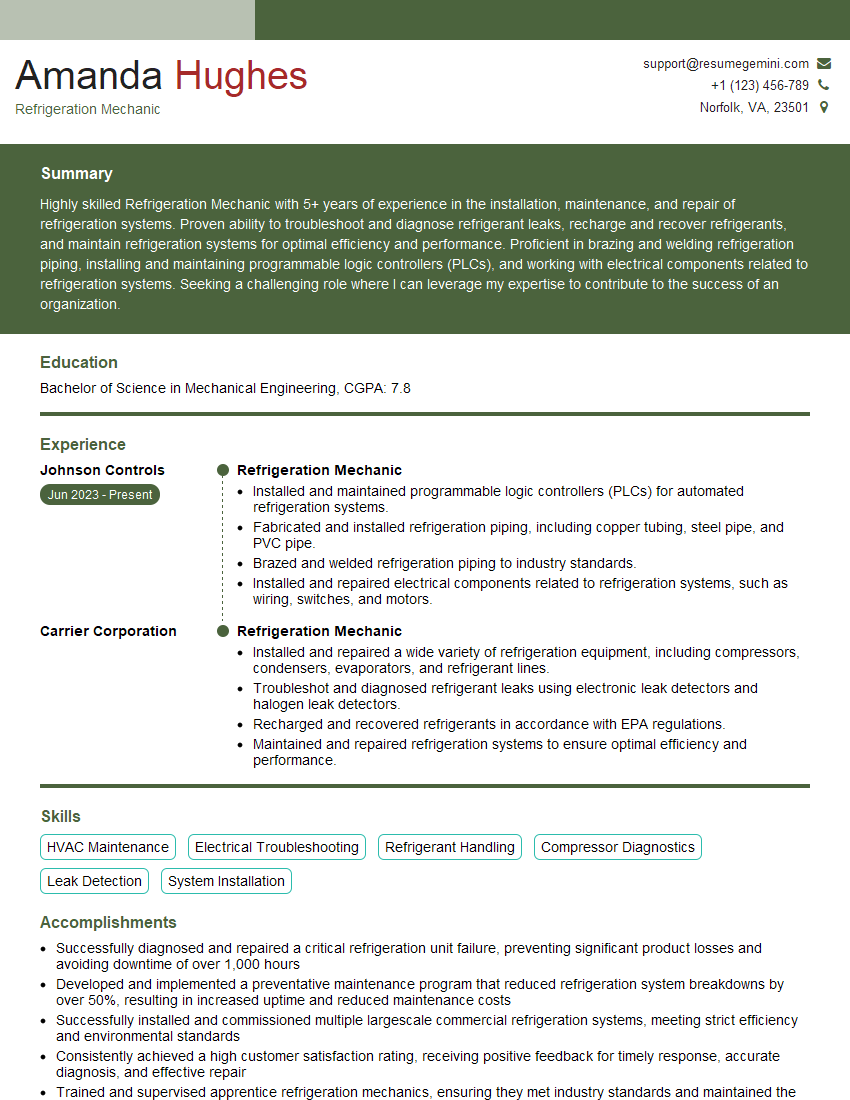
Mastering Air Conditioner Installation and Repair opens doors to a rewarding and consistently in-demand career. This specialized skillset allows for diverse job opportunities and excellent earning potential. To maximize your chances of landing your dream role, creating a strong, ATS-friendly resume is crucial. ResumeGemini is a trusted resource that can help you build a professional and impactful resume tailored to the specifics of this field. Examples of resumes designed for Air Conditioner Installation and Repair professionals are available to guide you through the process. Investing time in crafting a compelling resume will significantly increase your interview prospects.
Explore more articles
Users Rating of Our Blogs
Share Your Experience
We value your feedback! Please rate our content and share your thoughts (optional).
What Readers Say About Our Blog
Really detailed insights and content, thank you for writing this detailed article.
IT gave me an insight and words to use and be able to think of examples