Interviews are opportunities to demonstrate your expertise, and this guide is here to help you shine. Explore the essential Aircraft Docking and Marshalling interview questions that employers frequently ask, paired with strategies for crafting responses that set you apart from the competition.
Questions Asked in Aircraft Docking and Marshalling Interview
Q 1. Describe the different types of aircraft docking systems.
Aircraft docking systems vary greatly depending on the size and type of aircraft, as well as the infrastructure of the airport. Broadly, they fall into two main categories: passive and active systems.
Passive Systems: These rely on visual cues, ground markings, and the skill of the marshaller and pilot. Think of smaller general aviation airports where the pilot visually aligns the aircraft with a designated parking spot.
Active Systems: These incorporate automated guidance and positioning systems. Examples include:
Docking Guidance Systems (DGS): These use sensors and visual aids to guide the pilot precisely into the docking bay. They often include laser guidance or visual displays in the cockpit showing the aircraft’s position relative to the docking position.
Automated Docking Systems (ADS): These systems go further, often incorporating robotics or computer-controlled mechanisms to physically guide the aircraft into place. This is common in larger aircraft maintenance hangars or specific military applications.
The choice of system depends on factors like aircraft size, frequency of operations, budget, and safety requirements. Larger commercial airports typically employ more advanced active systems, while smaller airports often rely on passive methods.
Q 2. Explain the proper procedures for guiding an aircraft to a docking position.
Guiding an aircraft to a docking position requires clear communication, precise instructions, and a thorough understanding of both the aircraft and the ground environment. Here’s a breakdown of the procedure:
Initial Contact and Briefing: Establish communication with the pilot, confirming their understanding of the docking location and any specific requirements (e.g., engine shutdown procedures, need for chocks).
Visual Guidance: Using hand signals (standardized internationally), guide the aircraft slowly and smoothly toward the docking position. Maintain eye contact with the pilot and adjust your signals as needed to ensure understanding.
Verbal Communication: Use clear and concise language. For example, “Slow, slow…stop” or “Align with the center line.” Avoid jargon unless the pilot is familiar with it.
Monitoring and Adjustment: Continuously monitor the aircraft’s position and provide corrective guidance as needed. Be aware of the wind conditions and adjust your instructions accordingly.
Final Positioning: Once the aircraft is correctly aligned and positioned, signal the pilot to apply brakes and shut down engines. This often involves confirmation signals such as thumbs-up or the use of a standard signal board.
Securing the Aircraft: Once the engines are off, use chocks to prevent unwanted movement, and ensure the parking brake is engaged. Attach any necessary safety pins or restraints.
Remember, safety is paramount. Never rush the process, and always be prepared to adapt to unexpected events.
Q 3. What safety precautions must be observed during aircraft docking and marshalling?
Safety is the utmost priority during aircraft docking and marshalling. Precaution requires a multifaceted approach:
Personal Protective Equipment (PPE): Always wear high-visibility clothing, safety shoes, and any other required PPE, such as hearing protection near jet engines.
Awareness of Surroundings: Maintain a constant awareness of your surroundings, including other aircraft, ground vehicles, and personnel. Avoid being in the aircraft’s path and maintain a safe distance from moving parts.
Communication Protocols: Utilize standardized hand signals and clear verbal communication to avoid misunderstandings.
Emergency Procedures: Be familiar with and prepared to execute emergency procedures in case of unexpected situations, such as a sudden engine start, hydraulic fluid leaks, or fire.
Pre-Flight Inspection: Before guiding an aircraft, check the docking area for any obstructions or hazards, including loose debris, ice, or uneven surfaces. Ensure lighting is adequate and functional.
Risk Assessment: Always conduct a quick risk assessment before each docking operation considering weather conditions, aircraft type, and the experience level of the pilot and marshaller.
Following these procedures minimizes risks and ensures a safe docking operation. Remember, safety protocols are not just guidelines; they are essential for preventing accidents and saving lives.
Q 4. How do you communicate effectively with pilots during docking procedures?
Effective communication is crucial for safe and efficient aircraft docking. This involves a combination of techniques:
Standardized Hand Signals: International hand signals provide a universal language, minimizing potential for misinterpretation regardless of the pilot’s native language. Using hand signals in conjunction with verbal commands can enhance comprehension.
Clear and Concise Verbal Communication: Use simple, direct language. Avoid technical jargon unless the pilot is familiar with it. Speak clearly and slowly, ensuring your voice is audible over ambient noise.
Use of Radio Communication: For larger aircraft or complex docking procedures, radio communication is essential for coordinating movements and providing updates. Use standard radio terminology to ensure clarity and efficiency.
Confirmation and Feedback: Always confirm the pilot’s understanding of your instructions and provide feedback on their progress. A simple “understood” or a thumbs up from the pilot assures successful communication.
Nonverbal Communication: Body language and facial expressions can also play a role in communication, conveying urgency or reassurance. Maintaining eye contact helps establish rapport and confirm comprehension.
By integrating these methods, marshaller and pilot can ensure a high degree of understanding and avoid miscommunication.
Q 5. What are the common hazards associated with aircraft docking and marshalling?
Several hazards are associated with aircraft docking and marshalling, including:
Jet Blast: Powerful jet engine exhaust can cause serious injury or damage to equipment. Maintain a safe distance from the engines, especially during startup and shutdown.
Propeller Hazards: Rotating propellers pose a significant risk of injury. Avoid approaching the aircraft from the front during engine operation.
Ground Equipment Collisions: Collisions with other ground support equipment can damage both the aircraft and the equipment. Always maintain a safe distance and be aware of your surroundings.
Foreign Object Debris (FOD): Loose items on the ground can be sucked into jet engines, causing damage or failure. Keep the area around the aircraft clean and clear of debris.
Hydraulic Fluid Leaks: Hydraulic fluid leaks can be hazardous, both environmentally and to personnel. Know how to identify and report leaks.
Unsafe Ground Conditions: Ice, snow, or uneven ground surfaces can make docking operations difficult and dangerous. Assess ground conditions prior to starting any docking procedures.
A thorough understanding of these hazards and adherence to safety protocols is vital to mitigate risks.
Q 6. How do you handle unexpected situations or emergencies during aircraft docking?
Handling unexpected situations requires quick thinking, clear communication, and a calm demeanor. The response will vary depending on the nature of the emergency.
Immediate Actions: If an emergency arises, the first priority is to ensure the safety of personnel. Signal the pilot to stop immediately and take appropriate evasive action if needed.
Communication with Pilot and Control Tower: Immediately communicate the situation to the pilot and Air Traffic Control (ATC), giving them the details and seeking guidance.
Emergency Procedures: Implement pre-established emergency procedures based on the nature of the emergency. This might involve activating emergency services, evacuating personnel from the area, or using fire suppression equipment.
Post-Incident Investigation: Once the emergency is resolved, a thorough investigation should be conducted to identify the cause and prevent similar incidents from occurring in the future.
Regular training and drills are crucial in preparing for and effectively handling unexpected situations. This includes emergency response training, clear communication protocols, and a strong understanding of emergency procedures.
Q 7. Describe your experience with various types of ground support equipment (GSE).
My experience encompasses a wide range of Ground Support Equipment (GSE), including:
Pushback Tractors: I’m proficient in operating various types of pushback tractors, from small tug-type vehicles used for smaller aircraft to large, powerful tractors for wide-body jets. I understand the importance of proper connection techniques and the safety procedures needed to prevent damage to the aircraft.
Passenger Steps and Stairs: I’m experienced in safely deploying and positioning passenger steps and stairs, ensuring secure placement and access for passengers and crew. This includes understanding weight limitations and stability in varying ground conditions.
Baggage Tractors and Loaders: I’m familiar with operating baggage tractors and loaders, safely transporting luggage and cargo to and from aircraft. I’m aware of weight restrictions and proper loading procedures to prevent damage or injury.
Aircraft Towing Tractors: I have experience in operating aircraft towing tractors, moving aircraft between gates, hangars, and maintenance facilities. This includes understanding the importance of proper connection and secure towing procedures.
This experience has provided me with a strong understanding of the capabilities and limitations of various GSE, improving safety and operational efficiency.
Q 8. What is your experience with aircraft pushback procedures?
Aircraft pushback is the process of moving an aircraft away from the gate using a specialized vehicle called a pushback tug. My experience encompasses all aspects, from pre-pushback checks – verifying the tug is correctly attached, brakes are engaged, and communication channels are clear – to the actual pushback maneuver itself, ensuring smooth movement and adherence to safe speeds and angles. I’m proficient in operating various types of tugs and familiar with procedures for different aircraft types and gate configurations. I have also overseen the training of junior personnel in safe pushback techniques, emphasizing risk mitigation and emergency procedures.
For example, I’ve handled pushbacks in challenging situations, such as congested ramps with limited space or in inclement weather, always prioritizing safety and efficient execution. In one instance, I had to swiftly adapt pushback procedures to avoid a potential collision with another aircraft taxiing unexpectedly close to the gate.
Q 9. Explain the importance of following standardized procedures during aircraft docking.
Standardized procedures during aircraft docking are paramount for safety and efficiency. They provide a structured framework that minimizes the risk of human error, damage to aircraft or ground equipment, and injuries to personnel. These procedures cover various aspects, including communication protocols, correct positioning of equipment, weight and balance considerations, and emergency response plans. Consistency in following these protocols ensures predictability and minimizes the potential for accidents stemming from inconsistent or improvised practices.
Imagine a scenario where multiple teams are involved in docking a large aircraft. Without standardized procedures, there could be confusion regarding the sequence of actions, leading to collisions or damage to the aircraft. Clear, well-defined procedures act as a shared understanding, ensuring everyone is working in sync and contributing to a safe and efficient outcome.
Q 10. How do you ensure the safety of personnel and equipment during aircraft docking?
Ensuring safety during aircraft docking involves a multi-faceted approach. Firstly, a comprehensive risk assessment is conducted before any operation begins. This includes considering factors such as aircraft type, weather conditions, and ramp congestion. Clear communication is essential, using standardized signals and radio communication to coordinate the actions of all personnel involved. Proper training for all ground personnel is crucial – they should be well-versed in safety procedures and the use of specialized equipment. Furthermore, the use of safety equipment like high-visibility clothing and safety cones is mandatory. Regular safety inspections of equipment like tugs and ground power units are also critical.
For example, I always insist on using safety cones to clearly define working areas and warn others of potential hazards. A well-defined safety zone around the aircraft helps prevent accidental collisions or injuries.
Q 11. Describe your understanding of weight and balance considerations during aircraft docking.
Weight and balance considerations are critical during aircraft docking to prevent structural damage and ensure safe aircraft handling. The aircraft’s center of gravity needs to remain within acceptable limits during loading and unloading operations. Accurate weight and balance data is obtained from the aircraft’s documentation, and this information is used to determine the appropriate docking procedures. Overloading or improper weight distribution can affect the aircraft’s stability, potentially leading to accidents during pushback or taxiing. Incorrect weight distribution could also cause structural stress on the aircraft, potentially leading to long-term damage.
In practice, this means carefully monitoring the loading and unloading of baggage, cargo, and passengers. Any deviation from the planned weight distribution requires recalculations and adjustments to the docking procedures to maintain stability and safety.
Q 12. What are the different types of signals used in aircraft marshalling?
Aircraft marshalling uses a standardized system of hand signals to communicate directions and instructions to pilots during ground movement. These signals are universally recognized and crucial for safe operations, especially in situations where radio communication might be challenging. The most common signals include:
- Directional Signals: Using arms to indicate movement – forward, backward, left, or right.
- Stop Signal: Raising a hand with the palm facing the pilot.
- Slow Down Signal: Moving your arm slowly in a downward motion.
- Engine Start/Shutdown Signals: Specific hand signals indicating when the pilot should start or shut down the engines.
- Emergency Signals: Clear, universally understood signals indicating immediate danger or the need for emergency assistance.
Understanding and correctly executing these signals is vital to prevent miscommunication that could lead to accidents.
Q 13. How do you handle aircraft docking in adverse weather conditions?
Docking aircraft in adverse weather conditions presents significant challenges. Reduced visibility due to fog, snow, or heavy rain necessitates extra caution and adaptation of standard procedures. This may include using additional lighting, slowing down maneuvers, and employing enhanced communication protocols to ensure clear understanding between ground crews and pilots. Strong winds require careful consideration of wind shear and the impact on aircraft stability during pushback. In extreme conditions, docking operations might be temporarily suspended to ensure safety.
For example, in heavy rain, I would prioritize using additional lighting to increase visibility and reduce the risk of miscommunication. I’d also ensure that all ground personnel have appropriate protective gear to safeguard themselves from the elements.
Q 14. Explain the role of communication in preventing ground accidents during aircraft docking.
Communication is the bedrock of preventing ground accidents during aircraft docking. Clear, concise, and unambiguous communication between ground crews, pilots, and air traffic control is paramount. This communication should follow standardized protocols using radio frequencies and established signal systems. The use of checklists ensures that all critical steps are communicated and confirmed. Effective communication prevents misunderstandings that could lead to collisions or other accidents. Regular communication briefings before operations help to address any potential risks and ensure all parties are aware of the plan of action.
Imagine a scenario where a ground crew member mistakenly moves an aircraft into the path of a taxiing aircraft. Effective communication would have allowed the ground crew to confirm the location and movement of all aircraft before initiating any maneuver, preventing the accident entirely.
Q 15. Describe your experience with aircraft towing procedures.
Aircraft towing procedures are critical for safely moving aircraft on the ground. My experience encompasses a wide range of towing techniques, from using specialized towing tractors for large aircraft like the Airbus A380 and Boeing 747 to smaller tugs for regional jets. I’m proficient in pre-tow inspections, ensuring the tow bar is securely attached and the aircraft’s brakes are disengaged correctly. I always prioritize communication with the pilot or ground crew to confirm the towing path and any potential obstacles.
For example, during my time at [Previous Employer Name], I regularly towed Boeing 737s and Airbus A320s from the gate to maintenance hangars. A critical step is confirming the tug’s capacity matches the aircraft’s weight and ensuring the correct tow bar is used. We also utilize checklists for each stage of the towing process, minimizing the risk of errors.
I’m familiar with emergency procedures, such as how to react if the tow bar fails during the operation. This involves immediate communication with the pilot and ground control to implement appropriate safety measures. My training included extensive hands-on practice and simulations to handle various unexpected scenarios.
Career Expert Tips:
- Ace those interviews! Prepare effectively by reviewing the Top 50 Most Common Interview Questions on ResumeGemini.
- Navigate your job search with confidence! Explore a wide range of Career Tips on ResumeGemini. Learn about common challenges and recommendations to overcome them.
- Craft the perfect resume! Master the Art of Resume Writing with ResumeGemini’s guide. Showcase your unique qualifications and achievements effectively.
- Don’t miss out on holiday savings! Build your dream resume with ResumeGemini’s ATS optimized templates.
Q 16. What is your experience with different types of aircraft (e.g., narrow-body, wide-body)?
My experience includes working with a diverse fleet of aircraft, ranging from narrow-body aircraft like the Boeing 737 and Airbus A320 family to wide-body aircraft such as the Boeing 777 and Airbus A350. I understand the unique characteristics of each type, including their weight, dimensions, and the specific towing equipment required. For example, wide-body aircraft often require more powerful tractors and specialized tow bars due to their significantly greater weight.
The differences aren’t just in size; operational procedures also change. Narrow-body aircraft are generally easier to maneuver in tight spaces, while wide-body aircraft demand a more precise and careful approach. I’ve also worked with regional jets and smaller turboprops, adapting my technique to suit the specific needs of each aircraft type. Understanding these variations is essential for efficient and safe operations.
Q 17. How do you manage multiple aircraft docking operations simultaneously?
Managing multiple aircraft docking operations simultaneously requires meticulous planning, strong communication skills, and effective teamwork. I utilize a combination of visual monitoring, communication systems, and pre-planned schedules to coordinate the movement of aircraft. This involves close coordination with air traffic control, pilots, other ground crew members, and ramp supervisors.
For instance, I use a system of color-coded markers to identify the sequence of docking operations. We use radio communication to relay information about aircraft positions and delays in real-time. In busy environments, a designated coordinator is crucial for optimizing workflow and preventing conflicts between different aircraft movements. We utilize real-time tracking systems to monitor aircraft locations and predicted arrival times, assisting in proactive problem-solving.
Proactive risk assessment is key; I anticipate potential bottlenecks and adjust the schedule accordingly. It is all about efficient management of resources, communication, and attention to detail.
Q 18. Describe your experience with pre-flight and post-flight aircraft inspections.
Pre-flight and post-flight inspections are essential to ensure the aircraft’s safety and airworthiness. My experience includes conducting thorough inspections before and after each flight, focusing on aspects such as tire pressure, fuel levels, damage assessment, and the overall condition of the aircraft’s exterior. I’m familiar with the relevant checklists and documentation procedures, recording any issues found.
Pre-flight inspections cover everything from checking for any damage to the fuselage, wings, and landing gear to ensuring all the lights and other external components are functioning properly. Post-flight inspections focus on checking for signs of damage or leaks that may have occurred during the flight, along with ensuring the aircraft is ready for the next operation. Any issues identified are immediately reported using standardized reporting procedures.
I am trained to recognize potential safety hazards and I follow strict protocols to report and rectify any identified problem. My commitment to thorough inspections minimizes risks and contributes to maintaining a safe operational environment.
Q 19. How do you address conflicts or disagreements with pilots or other ground crew?
Conflicts or disagreements are sometimes inevitable in a fast-paced environment. My approach prioritizes professional communication and de-escalation. I begin by actively listening to all parties involved to understand their perspectives.
For example, if there’s a disagreement about the best approach for docking an aircraft, I’d discuss the various options, highlighting the safety implications of each. I might point to the relevant regulations or guidelines to clarify the correct procedure. I always aim to find a solution that ensures safety and efficiency, often by suggesting compromises that satisfy everyone’s concerns. Documentation of the discussion and the resulting action plan is critical.
If resolution cannot be achieved, I escalate the issue to my supervisor following company protocols. The safety of the aircraft and personnel always takes precedence.
Q 20. Explain your familiarity with airport regulations and safety guidelines.
I’m thoroughly familiar with all applicable airport regulations and safety guidelines, including those related to aircraft ground handling, safety procedures, and emergency response protocols. This includes a deep understanding of FAA regulations (or equivalent international standards), as well as the specific rules and procedures established by the airport itself and my employer.
My training covered topics such as emergency response procedures, foreign object debris (FOD) prevention, and safety protocols for working around aircraft. I’m aware of the consequences of non-compliance, and I always adhere to safety protocols to prevent accidents and maintain a safe working environment. I regularly review and update my knowledge to stay current with any changes in regulations or best practices.
Compliance is not just a matter of following rules; it’s a commitment to the safety of myself, my colleagues and the passengers using these aircraft.
Q 21. What is your understanding of the different types of aircraft parking positions?
Aircraft parking positions are categorized based on factors such as aircraft size, type, and operational needs. Common types include gate positions (for passenger boarding and disembarking), remote parking stands (often used for aircraft requiring less immediate access), and maintenance hangars.
Gate positions are usually numbered and allocated based on aircraft size and anticipated passenger flow. Remote parking stands are further from the terminal and often require the use of buses to transport passengers. Maintenance hangars provide secure locations for aircraft undergoing scheduled maintenance or repairs. Some airports also have dedicated positions for cargo aircraft or specific types of aircraft.
Knowing the different types of parking positions and their associated procedures allows for more efficient use of airport resources and smoother passenger transitions. It also aids in the coordination of ground support equipment and personnel.
Q 22. Describe your experience with using aircraft marshalling signals.
My experience with aircraft marshalling signals is extensive, encompassing over seven years of practical application in diverse airport environments. I’m proficient in both standard and emergency signals, ensuring safe and efficient aircraft guidance. I’ve handled various aircraft types, from regional jets to large wide-body aircraft, adapting my signaling techniques to the specific needs of each aircraft and its pilot. For instance, I’ve successfully guided numerous aircraft during challenging weather conditions, employing clear and unambiguous signals to maintain precision and avoid any potential hazards. This includes adapting the signaling technique to account for reduced visibility or strong winds. Furthermore, I am certified in all standard signaling practices and have regularly participated in refresher training and simulations to maintain my proficiency and adapt to evolving safety standards.
I consider myself adept at anticipating potential issues before they arise and proactively communicating effectively with pilots. For example, I once recognized a misalignment between the aircraft and the designated docking bay early on, successfully communicating the need for minor adjustments to the pilot, preventing a possible collision with airport infrastructure. My ability to quickly assess the situation and provide clear, concise instructions ensured a smooth and safe docking procedure.
Q 23. How do you prioritize tasks during peak operational periods?
Prioritizing tasks during peak operational periods requires a systematic approach. I use a combination of techniques, including a clear understanding of aircraft arrival and departure schedules, coupled with an assessment of the urgency and complexity of each task. My priority framework usually follows this sequence:
- Emergency situations: Any situation requiring immediate attention, such as a distressed aircraft or a ground emergency, takes precedence.
- Time-critical operations: Aircraft with tight turnaround times, particularly those affecting connecting flights, are next in line.
- Safety-critical tasks: Tasks crucial for maintaining safe operations, including inspecting equipment and ensuring clear taxiways and gates, are paramount.
- Routine tasks: Tasks such as routine aircraft guidance and cleaning are prioritized according to schedule.
This system, coupled with effective communication with my team, ensures efficiency and minimizes delays. I often visualize this prioritization using a mental flowchart, allowing me to quickly assess changing situations and adjust task order dynamically.
Q 24. What is your knowledge of emergency response procedures for aircraft incidents?
My knowledge of emergency response procedures is comprehensive and includes both theoretical understanding and practical experience. I’m trained in responding to a variety of aircraft incidents, ranging from minor mechanical failures to more severe situations, such as collisions or fires. My training covers:
- Emergency communication protocols: I’m proficient in using emergency radios and contacting relevant authorities, such as the airport emergency services and air traffic control.
- Evacuation procedures: I’m trained in assisting passengers and crew with safe and efficient evacuation protocols, including the use of emergency equipment.
- First aid and CPR: I’m certified in first aid and CPR to provide immediate medical assistance.
- Incident scene management: My training includes securing the scene and coordinating actions with other emergency responders.
I’ve participated in numerous emergency drills and simulations, which reinforce my practical skills and ensure I can handle various scenarios effectively. For example, I participated in a recent drill involving a simulated engine fire, where our team successfully and safely evacuated the aircraft within the required timeframe.
Q 25. Explain the importance of maintaining a safe working environment.
Maintaining a safe working environment is paramount, not only for legal compliance but also for the well-being and morale of the team. It’s a proactive approach requiring continuous vigilance. Key aspects include:
- Hazard identification and risk assessment: Regularly inspecting the work area for potential hazards (e.g., debris, poorly lit areas, equipment malfunctions) and implementing appropriate control measures.
- Adherence to safety protocols: Strictly enforcing safety regulations, such as wearing high-visibility clothing, using designated walkways, and following traffic procedures.
- Communication and teamwork: Maintaining open communication within the team to address safety concerns and share information effectively. This includes regular briefings and reporting systems.
- Equipment maintenance: Ensuring all equipment is in good working order and regularly maintained to prevent malfunctions.
For example, noticing a loose cable near an aircraft could prevent a potential trip hazard leading to injury. Proactive identification of these issues safeguards the entire team and contributes to an accident-free work environment.
Q 26. How do you ensure compliance with safety regulations and company policies?
Compliance with safety regulations and company policies is integral to my work ethic. I achieve this through several key strategies:
- Regular training and updates: Actively participating in all mandatory training sessions and staying updated on any changes in regulations or company policies.
- Documentation and record-keeping: Meticulously documenting all work activities, ensuring compliance is easily verifiable.
- Self-auditing and inspections: Regularly reviewing my own work and practices to ensure adherence to guidelines.
- Proactive reporting: Promptly reporting any non-compliance issues or potential safety hazards.
I believe that strict adherence to safety protocols is not just a requirement but an ethical responsibility. I always prioritize safety above all else and will not compromise on any aspect of safety procedures.
Q 27. Describe your ability to work effectively as part of a team.
I’m a strong team player, and my experience demonstrates my ability to work effectively in collaborative environments. I thrive on shared goals and contribute actively to a positive team dynamic. My approach to teamwork focuses on:
- Effective communication: I clearly communicate my thoughts and ideas and actively listen to my colleagues’ contributions.
- Mutual respect: I value the contributions of each team member and treat everyone with respect.
- Collaboration and support: I collaborate effectively on tasks, offering support and assistance to my colleagues whenever needed.
- Conflict resolution: I’m skilled at resolving conflicts constructively and maintaining a positive working atmosphere.
For example, during a busy period with many aircraft arrivals, I actively coordinated with my colleagues to ensure that each aircraft was handled efficiently and safely, leading to a smooth operational flow.
Q 28. What are your strategies for continuous improvement in aircraft docking and marshalling?
My strategies for continuous improvement in aircraft docking and marshalling focus on a multifaceted approach.
- Regular self-assessment: I regularly review my performance, identifying areas for improvement and implementing strategies to address those weaknesses.
- Feedback and mentorship: I actively seek feedback from supervisors and more experienced colleagues, utilizing their knowledge to enhance my skills and broaden my perspective.
- Staying updated: I keep abreast of the latest advancements in aircraft docking and marshalling techniques and technologies through professional development courses, industry publications, and attending conferences.
- Process optimization: I actively look for ways to streamline processes and improve efficiency in all aspects of aircraft docking and marshalling, continually searching for ways to achieve better outcomes.
For instance, I’ve recently proposed a change in our signal procedure to improve the efficiency of aircraft turnarounds during peak hours; it’s been implemented and has shown positive results in reducing delays.
Key Topics to Learn for Aircraft Docking and Marshalling Interview
- Safety Procedures and Regulations: Understanding and applying all relevant safety regulations, including those related to ground handling, emergency procedures, and hazard identification.
- Aircraft Recognition and Handling Characteristics: Knowing the different types of aircraft, their handling peculiarities (e.g., weight, dimensions, wingspan), and appropriate docking procedures for each.
- Docking Techniques: Mastering the practical skills of guiding aircraft into designated docking positions accurately and efficiently, including use of appropriate signaling and communication.
- Marshalling Signals and Communication: Proficiency in standardized hand signals and clear, concise communication with pilots to ensure safe and smooth docking and undocking operations.
- Equipment Operation and Maintenance: Familiarity with ground support equipment (GSE) used in aircraft docking and marshalling, including their safe operation and basic maintenance checks.
- Problem-Solving and Decision-Making: Ability to assess and react effectively to unexpected situations, such as equipment malfunctions, adverse weather conditions, or communication breakdowns, while prioritizing safety.
- Teamwork and Collaboration: Understanding the importance of effective teamwork and communication with colleagues, pilots, and other ground crew members to ensure efficient and safe operations.
- Operational Procedures and Documentation: Familiarity with standard operating procedures (SOPs) and the importance of accurate and timely documentation of all activities.
Next Steps
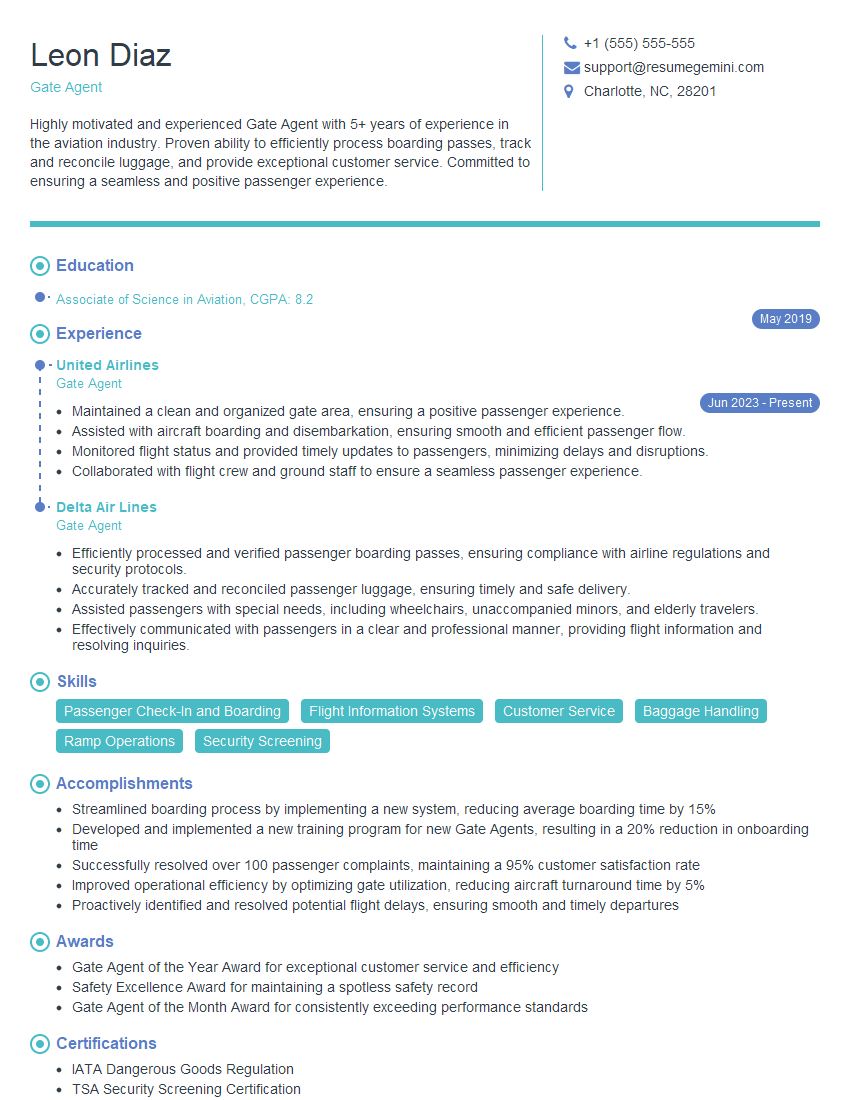
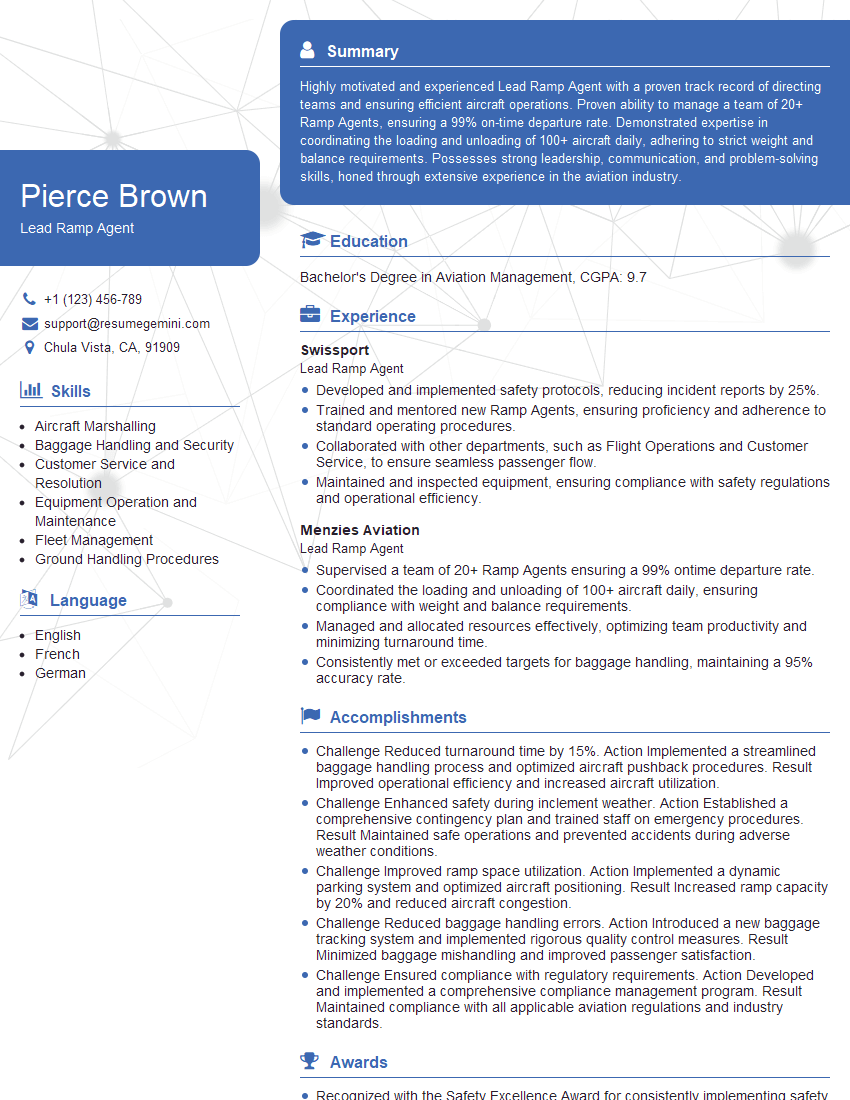
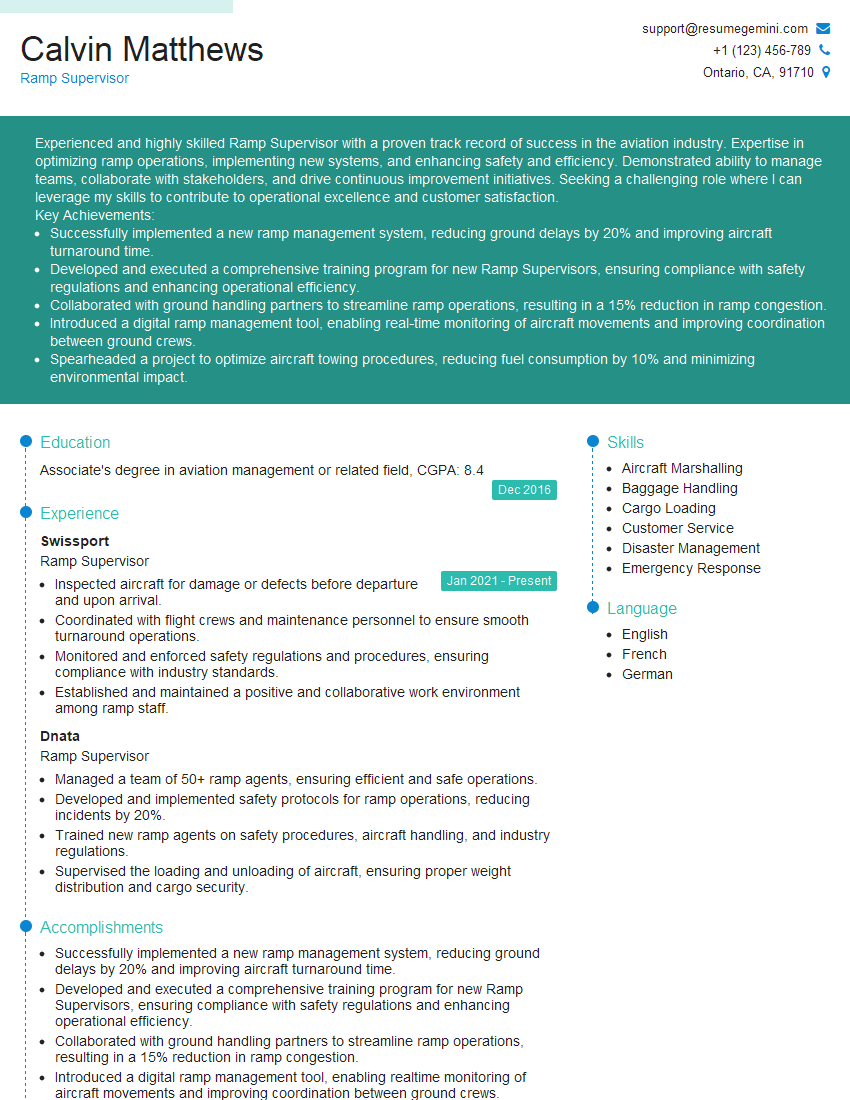
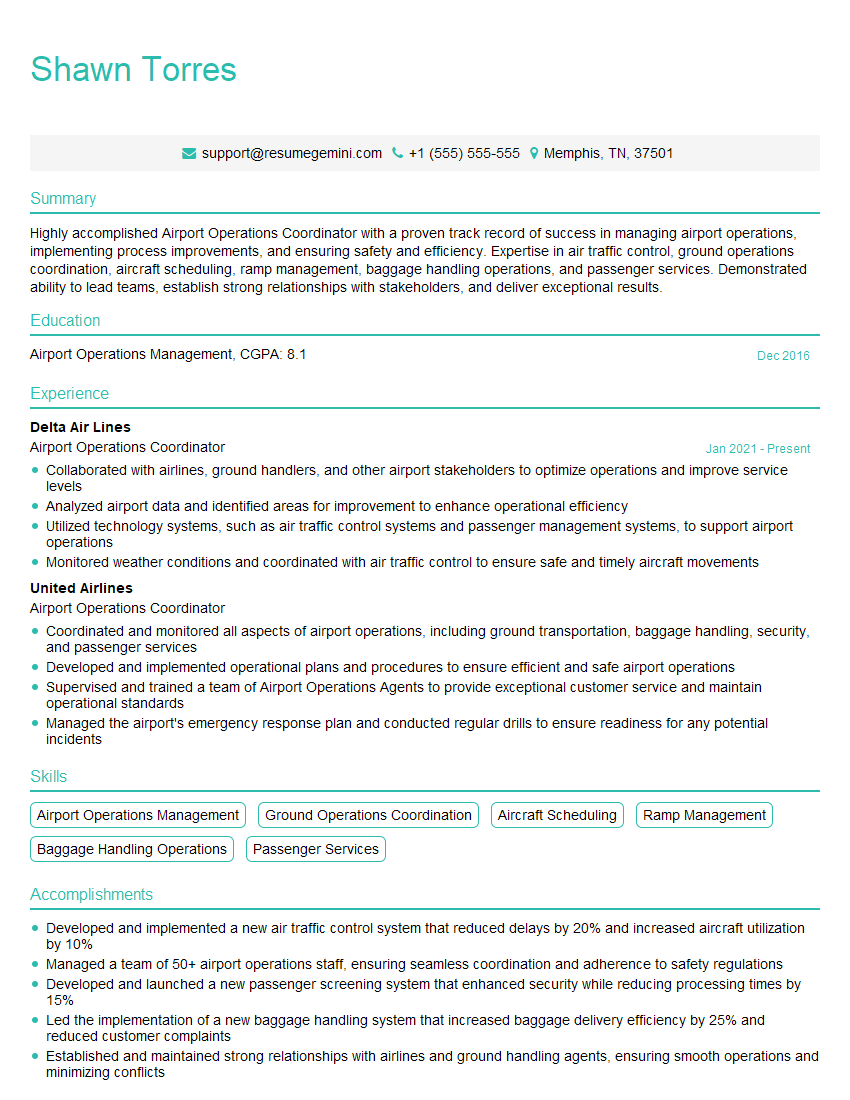
Mastering Aircraft Docking and Marshalling opens doors to a rewarding career with significant growth potential within the aviation industry. This specialized skillset is highly valued, leading to increased job opportunities and higher earning potential. To maximize your chances of securing your dream role, creating a strong, ATS-friendly resume is crucial. ResumeGemini is a trusted resource that can help you build a professional resume that highlights your skills and experience effectively. ResumeGemini provides examples of resumes tailored to Aircraft Docking and Marshalling to help you craft the perfect application. Invest in your future – build a resume that reflects your expertise and helps you land that interview!
Explore more articles
Users Rating of Our Blogs
Share Your Experience
We value your feedback! Please rate our content and share your thoughts (optional).
What Readers Say About Our Blog
Really detailed insights and content, thank you for writing this detailed article.
IT gave me an insight and words to use and be able to think of examples