Preparation is the key to success in any interview. In this post, we’ll explore crucial Aircraft Structural Inspection interview questions and equip you with strategies to craft impactful answers. Whether you’re a beginner or a pro, these tips will elevate your preparation.
Questions Asked in Aircraft Structural Inspection Interview
Q 1. Describe the different types of Non-Destructive Testing (NDT) methods used in aircraft structural inspection.
Non-Destructive Testing (NDT) methods are crucial for inspecting aircraft structures without causing damage. Several techniques are employed, each with its strengths and limitations. Common methods include:
- Visual Inspection (VI): The simplest method, involving a thorough visual examination for surface defects. This is often the first step in any inspection.
- Dye Penetrant Inspection (DPI): This method detects surface-breaking flaws by applying a dye that penetrates cracks and is then revealed by a developer. Think of it like finding a leak in a pipe using colored water.
- Magnetic Particle Inspection (MPI): Used for ferromagnetic materials (like certain steels), MPI applies a magnetic field and then iron particles to reveal surface and near-surface cracks. The particles are attracted to the magnetic flux leakage at the crack.
- Eddy Current Inspection (ECI): This uses electromagnetic induction to detect subsurface flaws in conductive materials. A probe generates eddy currents in the material, and changes in these currents indicate defects. It’s very useful for detecting corrosion beneath the surface.
- Ultrasonic Inspection (UI): High-frequency sound waves are transmitted into the material, and reflections from internal flaws are analyzed. This allows for detection of deeper flaws than other surface methods. Think of it like sonar for aircraft structures.
- Radiographic Inspection (RT): X-rays or gamma rays are passed through the material, creating an image on film or a digital detector. This reveals internal flaws and corrosion.
The choice of NDT method depends on the material being inspected, the type of defect expected, and the accessibility of the area.
Q 2. Explain the process of conducting a visual inspection of an aircraft structure.
A visual inspection is the cornerstone of aircraft structural inspection, often the first and sometimes the only method needed. It’s a meticulous process requiring trained eyes and a systematic approach. The inspector meticulously examines the aircraft structure, looking for any anomalies. This includes:
- Surface examination: Checking for scratches, dents, corrosion, cracking, and delamination.
- Checking fastener integrity: Examining rivets, bolts, and screws for looseness, corrosion, or damage.
- Checking for wear and tear: Inspecting areas subjected to high stress or friction for signs of wear.
- Checking for evidence of repairs: Carefully inspecting previous repair areas for signs of rework or potential defects.
The process often follows a pre-defined checklist and uses various tools such as mirrors, borescopes, and lighting to access hard-to-reach areas. Documentation, including photographs and detailed notes, is crucial.
For example, during a visual inspection of a wing spar, I might use a borescope to inspect internal areas for corrosion or cracks that aren’t visible from the outside. I then carefully document the findings, including the location, size, and type of any defect observed.
Q 3. What are the common signs of corrosion and fatigue in aircraft structures?
Corrosion and fatigue are significant threats to aircraft structural integrity. Recognizing their signs early is paramount for safety.
- Corrosion: This manifests in various ways, including surface pitting, discoloration (e.g., white powder on aluminum), blistering, flaking, and the formation of corrosion products. Different materials corrode differently – aluminum exhibits pitting and intergranular corrosion while composites might suffer from delamination caused by moisture ingress.
- Fatigue: Fatigue cracks are typically small and often begin at stress concentration points, such as holes or sharp corners. They can be difficult to detect visually in their early stages. Indicators might include fine hairline cracks, often starting near fastener holes or areas of high stress. These cracks can propagate over time, leading to catastrophic failure if not detected and repaired.
It’s important to understand that corrosion and fatigue often interact. Corrosion can accelerate fatigue crack initiation and propagation, and conversely, fatigue can exacerbate corrosion.
Q 4. How do you interpret and document NDT inspection results?
NDT results must be meticulously documented to ensure traceability and facilitate future inspections and maintenance decisions. Documentation typically includes:
- Detailed description of the inspection method(s) used: including equipment calibrations and operator certifications.
- Precise location of defects: using a standardized referencing system (e.g., station, frame, and offset).
- Accurate description of the defect: including size, shape, orientation, and type. For example, a crack might be described as ‘a 2 mm long fatigue crack oriented 45 degrees to the longitudinal axis, located at station 100, frame 50, offset 10 cm’.
- Photographs or digital images of the defects: These provide visual evidence supporting the written description.
- Inspector’s name and certification: ensuring accountability and quality control.
- Date and time of inspection: crucial for tracking the evolution of defects.
This comprehensive documentation is then stored in the aircraft’s maintenance records for future reference.
Q 5. What are the limitations of each NDT method?
Each NDT method has limitations. Understanding these is crucial to ensure effective inspection.
- Visual Inspection (VI): Limited to surface defects; cannot detect subsurface flaws.
- Dye Penetrant Inspection (DPI): Only detects surface-breaking flaws; requires clean, dry surfaces.
- Magnetic Particle Inspection (MPI): Only applicable to ferromagnetic materials; limited depth of penetration.
- Eddy Current Inspection (ECI): Limited by material conductivity and surface roughness; difficult to interpret results in complex geometries.
- Ultrasonic Inspection (UI): Requires skilled operators; signal interpretation can be challenging; access to the inspection area might be limited.
- Radiographic Inspection (RT): Safety concerns related to radiation; can be expensive and time-consuming; may not detect small flaws or certain types of defects.
Often, multiple NDT methods are used in combination to overcome individual limitations and provide a comprehensive assessment of the structure’s integrity.
Q 6. Explain the significance of maintaining accurate inspection records.
Maintaining accurate inspection records is paramount for several reasons:
- Ensuring airworthiness: Accurate records demonstrate compliance with regulatory requirements and ensure the aircraft remains airworthy.
- Predictive maintenance: Tracking defects over time allows for predictive maintenance, preventing unexpected failures and reducing downtime.
- Legal compliance: Comprehensive records are essential for liability purposes and investigations in case of incidents or accidents.
- Continuous improvement: Analyzing historical data can identify trends and weaknesses in materials, designs, and maintenance practices, leading to improvements in safety and efficiency.
In essence, accurate inspection records are a cornerstone of safe and efficient aircraft operation. They are not just a bureaucratic requirement, but a critical element of the aircraft’s safety management system.
Q 7. Describe your experience with different types of aircraft materials (e.g., aluminum, composites).
My experience encompasses a wide range of aircraft materials, with a focus on aluminum alloys and composite materials.
- Aluminum Alloys: I have extensive experience inspecting various aluminum alloys, understanding their susceptibility to corrosion (especially in high-humidity environments) and fatigue cracking. I’m proficient in applying appropriate NDT methods like Eddy Current and Ultrasonic inspection to detect subtle defects in these materials.
- Composite Materials: My experience includes inspecting aircraft components made from various composites, understanding their unique failure modes such as delamination, fiber breakage, and matrix cracking. I am adept at using techniques like Ultrasonic Inspection and visual inspection aided by specialized lighting to identify these issues. The challenges here lie in understanding the complex interactions between the fiber reinforcement and the matrix material.
I’ve worked on a variety of aircraft, from smaller general aviation aircraft to large commercial airliners, which has given me a broad understanding of the material selection and structural design approaches used in different aircraft applications. This practical experience has sharpened my skills in identifying and interpreting anomalies in various materials and environments.
Q 8. How do you identify and report discrepancies found during an inspection?
Identifying and reporting discrepancies during an aircraft structural inspection is paramount for ensuring airworthiness. It’s a methodical process that begins with meticulous observation and precise documentation. I utilize a standardized reporting system, often a checklist integrated with digital reporting software, to ensure consistency and completeness.
Firstly, I thoroughly examine the aircraft structure, comparing the observed condition to the manufacturer’s specifications and any applicable maintenance manuals. Any deviation from the norm – be it corrosion, cracks, dents, or damage – is meticulously documented. This documentation includes a detailed description of the discrepancy, its location (using precise measurements and referencing diagrams if necessary), its size and depth (where applicable), and any relevant photographs or videos.
For example, if I find a crack in a wing spar, my report would specify the spar’s location, the crack’s length, orientation, depth (if measurable), and its proximity to any critical fasteners. I would include high-resolution images showing the crack from multiple angles and note any surrounding damage. The severity is assessed based on established criteria and documented using standardized codes or classifications. The report then follows the established workflow within the maintenance organization – this usually involves submitting the report to my supervisor for review and subsequent actions by maintenance personnel. The report is then archived in the aircraft’s maintenance log for traceability.
Q 9. What is your understanding of airworthiness directives (ADs)?
Airworthiness Directives (ADs) are mandatory instructions issued by aviation authorities, such as the FAA in the US or EASA in Europe, to address safety concerns related to aircraft or components. These directives are usually issued in response to identified design flaws, manufacturing defects, or operational issues that could compromise safety. They mandate specific inspections, repairs, or modifications to be carried out within specified timeframes to prevent accidents or incidents.
My understanding of ADs encompasses their interpretation, implementation, and verification. This includes locating relevant ADs for specific aircraft types and serial numbers, meticulously following the instructions for required inspections, and verifying that all necessary repairs or modifications are completed according to the AD. Failure to comply with an AD can result in serious legal and safety consequences, including grounding the aircraft. I often use specialized software to track ADs and their compliance status for various aircraft under my purview. This ensures that all necessary actions are taken in a timely and organized manner. For instance, I would proactively seek out and incorporate relevant ADs into the inspection plan for any aircraft I’m responsible for inspecting.
Q 10. Describe your experience with the use of specialized inspection tools and equipment.
My experience with specialized inspection tools and equipment is extensive. Over the years, I’ve become proficient in using various non-destructive testing (NDT) methods, such as:
- Dye penetrant inspection: To detect surface-breaking cracks in non-porous materials.
- Magnetic particle inspection: To detect surface and near-surface flaws in ferromagnetic materials.
- Ultrasonic inspection: To detect internal flaws and measure component thickness.
- Eddy current inspection: To detect flaws in conductive materials.
- Visual inspection tools: Including borescopes (flexible cameras) and magnifying glasses for accessing and examining hard-to-reach areas.
- Specialized measuring instruments: Such as calipers, micrometers, and thickness gauges for precise measurements.
Furthermore, I’m experienced in using digital data acquisition systems to record and manage inspection data, generate reports, and track maintenance activities. I understand the limitations of each NDT method and select the appropriate technique based on the material, suspected flaw type, and accessibility of the area under inspection. For example, when inspecting a titanium component for internal cracks, ultrasonic inspection would be the most suitable method.
Q 11. How do you prioritize inspection tasks based on risk assessment?
Prioritizing inspection tasks based on risk assessment is crucial for efficient and effective maintenance. I use a structured approach that considers several factors:
- Criticality of the component: Components critical to flight safety (e.g., wing spars, control surfaces) receive higher priority.
- Age and condition of the aircraft: Older aircraft or those with a history of damage or repairs require more frequent and thorough inspections.
- Operating environment: Aircraft operating in harsh environments (e.g., coastal areas, high humidity) are at greater risk of corrosion and require more frequent inspections.
- Recent events: Any recent incidents, hard landings, or unusual occurrences would necessitate immediate inspection of potentially affected areas.
- ADs and service bulletins: Mandatory inspections or recommendations detailed in ADs and service bulletins must be integrated into the prioritization.
I typically use a risk matrix that combines the likelihood of failure with the potential consequences of failure to assign priority levels to each inspection task. High-risk items are inspected more frequently and thoroughly. For instance, while routine inspections might be scheduled annually, high-risk components might be inspected every six months. This risk-based approach ensures that critical safety issues are addressed proactively and efficiently.
Q 12. How do you handle disagreements with maintenance personnel regarding inspection findings?
Disagreements with maintenance personnel regarding inspection findings are handled professionally and collaboratively. Open communication and a focus on objective data are key. I always begin by clearly explaining my findings, referencing the specific evidence (e.g., photos, measurements) supporting my assessment, and citing relevant regulations or standards.
If a disagreement persists, I encourage a joint re-examination of the affected area. We might utilize different inspection techniques or consult additional experts to reach a consensus. The goal is not to win an argument but to ensure accurate assessment and appropriate maintenance actions. If a resolution cannot be reached, I would escalate the matter to a higher authority (e.g., lead inspector, maintenance supervisor) for review and decision. The safety of the aircraft is paramount, and all decisions must be made objectively and based on the available evidence. Proper documentation of the disagreement and the subsequent resolution is crucial for maintaining transparency and accountability.
Q 13. What are the regulatory requirements for aircraft structural inspections?
Regulatory requirements for aircraft structural inspections vary depending on the jurisdiction (e.g., FAA, EASA) and the type of aircraft. However, some common threads exist across all regulations:
- Airworthiness regulations: All inspections must comply with national and international airworthiness regulations, ensuring that the aircraft remains airworthy and safe for operation.
- Maintenance manuals: The aircraft’s maintenance manual outlines the specific inspection intervals, procedures, and acceptance criteria for each component.
- Airworthiness directives (ADs): Compliance with all applicable ADs is mandatory and forms a core part of the inspection process.
- Qualified personnel: Inspections must be conducted by certified and qualified personnel possessing the necessary training, experience, and certifications.
- Detailed records: Meticulous record-keeping is essential, documenting all inspections, findings, repairs, and maintenance actions. These records are crucial for demonstrating compliance with regulations and tracing the aircraft’s maintenance history.
These regulations are designed to ensure that aircraft are regularly inspected and maintained to the highest safety standards, preventing accidents and ensuring the safety of passengers and crew. Non-compliance can lead to penalties, grounding of the aircraft, and legal repercussions.
Q 14. What is your understanding of damage tolerance principles?
Damage tolerance principles are based on the understanding that aircraft structures are not perfect and may contain flaws or damage. Instead of aiming for zero defects, damage tolerance principles focus on designing and maintaining structures to withstand the presence of damage without catastrophic failure. This involves three key concepts:
- Crack initiation: The process by which a crack starts to form in a material due to stress or fatigue.
- Crack propagation: The growth of a crack over time due to cyclic loading or continued stress.
- Crack arrest: Mechanisms to stop or slow down the growth of a crack.
Damage tolerance design incorporates features like redundancy, fail-safe mechanisms, and inspection intervals designed to detect cracks before they reach critical sizes. For example, a wing spar might be designed with multiple load paths so that if one area is damaged, others can still carry the load. The inspection intervals are carefully determined based on the material properties, stress levels, and potential crack growth rates to identify and address damage before it compromises the structural integrity of the aircraft. Understanding damage tolerance allows for a more realistic assessment of aircraft safety and enables effective maintenance strategies that prioritize inspection and repair of critical structural components.
Q 15. Explain the process of conducting a post-maintenance inspection.
A post-maintenance inspection is crucial to verify the effectiveness of any repair or maintenance work performed on an aircraft structure. It’s a systematic process ensuring that the aircraft is airworthy and safe for operation. The process typically begins with a thorough review of the maintenance records, identifying the specific work completed. This is followed by a visual inspection of the affected area, looking for any discrepancies or signs of damage. Next, we utilize various Non-Destructive Testing (NDT) methods, such as ultrasonic testing (UT), radiography (RT), or liquid penetrant inspection (LPI), depending on the type of maintenance performed and the material inspected. These methods help to detect hidden flaws or inconsistencies. Finally, the inspection concludes with a detailed report documenting all findings, any necessary corrective actions, and a certification that the aircraft is fit for service. For instance, after a repair on a wing spar, we might use UT to verify the integrity of the weld and ensure complete penetration. If discrepancies are identified, the process repeats until satisfactory results are achieved.
- Review Maintenance Records
- Visual Inspection
- Non-Destructive Testing (NDT)
- Documentation and Certification
Career Expert Tips:
- Ace those interviews! Prepare effectively by reviewing the Top 50 Most Common Interview Questions on ResumeGemini.
- Navigate your job search with confidence! Explore a wide range of Career Tips on ResumeGemini. Learn about common challenges and recommendations to overcome them.
- Craft the perfect resume! Master the Art of Resume Writing with ResumeGemini’s guide. Showcase your unique qualifications and achievements effectively.
- Don’t miss out on holiday savings! Build your dream resume with ResumeGemini’s ATS optimized templates.
Q 16. Describe your experience with repair techniques for common aircraft structural damage.
My experience encompasses a wide range of repair techniques for various aircraft structural damages. I’ve worked extensively with composite repairs, including the use of prepreg materials and the application of various bonding techniques. This involves meticulous surface preparation, the precise application of resin, and the curing process under specific temperature and pressure conditions. I’ve also managed the repair of metallic structures, including techniques like welding (both gas tungsten arc welding (GTAW) and shielded metal arc welding (SMAW)), riveting, and the use of bonded patches for corrosion repair or stress concentration relief. A specific example was repairing a fatigue crack on an aluminum wing skin using a bonded patch. This involved careful crack propagation analysis, preparation of the surrounding area, application of an adhesive, and precise placement of a bonded patch to restore the structural integrity. Each repair technique requires specific skill and a deep understanding of material properties and structural mechanics.
Q 17. How familiar are you with aircraft structural drawings and maintenance manuals?
I am highly proficient in interpreting aircraft structural drawings and maintenance manuals. These documents are fundamental to my work, providing detailed information on the aircraft’s design, material specifications, and approved maintenance procedures. I can easily navigate through complex drawings, identify specific components, understand their dimensions and tolerances, and interpret the various symbols and notations used. I regularly utilize maintenance manuals to guide my inspection and repair procedures, ensuring compliance with manufacturer’s recommendations and regulatory requirements. For example, when inspecting a specific bulkhead, I would consult the structural drawings to identify the material type, thickness, and the location of critical fasteners, cross-referencing this information with the maintenance manual to understand the appropriate inspection procedures and tolerance limits.
Q 18. How do you maintain your professional certification and competency?
Maintaining my professional certification and competency is a continuous process. I regularly participate in continuing education courses and workshops focusing on advancements in aircraft structural inspection techniques, new materials, and regulatory updates. These courses often involve hands-on training and practical exercises, ensuring that my skills remain sharp and aligned with the latest industry best practices. I actively engage in professional organizations, such as [mention relevant professional organizations], to stay informed about industry trends and connect with other professionals. I also participate in internal training programs organized by my company, regularly reviewing and updating my knowledge through internal documentation and company-specific training programs. Finally, I meticulously document my professional development activities, ensuring my qualifications remain valid and current.
Q 19. Describe your understanding of fatigue crack propagation.
Fatigue crack propagation refers to the gradual growth of cracks in a material subjected to repeated cyclic loading. This is a critical concern in aircraft structures due to the constant stress cycles experienced during flight. Initially, a crack may be microscopic and undetectable, but over time, it will propagate under repeated loading, eventually leading to catastrophic failure if not detected and addressed. Several factors influence crack propagation rate, including the material properties, the magnitude of the applied stress, the geometry of the crack, and the presence of corrosive environments. Understanding fatigue crack propagation involves applying principles of fracture mechanics and using various NDT methods to detect and monitor crack growth. For example, we might use techniques like ultrasonic testing to regularly assess crack size and predict remaining life. If the crack grows beyond acceptable limits, repairs are necessary or the component must be replaced to ensure continued airworthiness.
Q 20. Explain the principles of fracture mechanics as related to aircraft structures.
Fracture mechanics provides a framework for understanding and predicting the failure of materials under stress. In aircraft structures, it’s crucial for assessing the risk of crack propagation and designing structures that can withstand expected loads. Key principles include stress intensity factors (K), which quantify the stress field at the crack tip, and fracture toughness (KIC), which represents the material’s resistance to crack propagation. When the stress intensity factor exceeds the fracture toughness, crack growth occurs. This knowledge allows engineers to design structures with appropriate safety factors and to determine the acceptable sizes of flaws. Furthermore, understanding fracture mechanics guides the selection of appropriate materials and the development of effective inspection and maintenance procedures. A common example is the use of fracture mechanics analysis to determine the acceptable size of a fatigue crack in an aircraft component before it requires repair or replacement.
Q 21. How do environmental factors affect aircraft structural integrity?
Environmental factors significantly impact aircraft structural integrity. Exposure to various environmental conditions such as humidity, temperature fluctuations, ultraviolet (UV) radiation, and salt spray can lead to corrosion, material degradation, and reduced structural strength. Corrosion, for example, can weaken structural members, leading to reduced fatigue life and increased susceptibility to cracking. Extreme temperatures can cause material expansion and contraction, leading to stress and potential damage. UV radiation can degrade composite materials, reducing their strength and stiffness. Salt spray, particularly in coastal environments, is a major contributor to corrosion. Understanding these environmental effects is essential for developing appropriate protection measures, such as corrosion-resistant coatings, regular inspections, and proper maintenance schedules. This ensures that aircraft structures maintain their structural integrity throughout their lifespan, preventing premature failures and ensuring safety.
Q 22. What is your experience with the inspection of composite materials and structures?
My experience with composite material inspection spans over 10 years, encompassing both airframe and component inspections. I’m proficient in various Non-Destructive Testing (NDT) methods specifically tailored for composites, including ultrasonic testing (UT), thermography, and visual inspection. I’ve worked extensively on aircraft like the Boeing 787 and Airbus A350, both heavily reliant on composite structures. This experience includes identifying delaminations, impact damage, and fiber breakage, as well as assessing the overall structural integrity of the composite components. For example, I once identified a hidden delamination in a 787 wing leading edge using phased array ultrasonic testing, preventing a potential catastrophic failure. My experience also includes familiarity with repair techniques and the documentation required to certify the repaired structures meet airworthiness standards.
Q 23. What are the common failure modes of aircraft structural components?
Common failure modes in aircraft structural components are diverse and depend heavily on material type and loading conditions. For metallic structures, fatigue cracking due to repeated stress cycles is prevalent. This often starts at stress concentration points like rivet holes or discontinuities. Corrosion, particularly in high-humidity environments, significantly weakens structures, leading to pitting, cracking, and eventual failure. Buckling, where a structural element collapses under compressive loads, is another concern, often seen in thin-walled components. For composite structures, delamination (separation of plies), fiber breakage, impact damage, and matrix cracking are major concerns. Environmental degradation, such as UV exposure causing matrix degradation, also plays a significant role in composite component failure. Understanding these failure modes allows for targeted inspection plans and preventive maintenance strategies. Think of it like a human body – each failure mode is like a specific disease with its own symptoms and treatments. The better we understand them, the better we can prevent major problems.
Q 24. Describe the process of developing an inspection plan.
Developing an inspection plan is a systematic process. It begins with a thorough understanding of the aircraft type, its operational history, and the relevant maintenance manuals. We identify critical structural components based on their function, stress levels, and history of past issues. Next, we select appropriate NDT methods based on the material type and potential failure modes. This is crucial as each NDT method is sensitive to certain flaws. We then define the inspection intervals, taking into consideration factors such as flight hours, flight cycles, and environmental conditions. The plan also includes detailed procedures, acceptance criteria, and reporting requirements. Finally, the plan is reviewed and approved by qualified personnel before implementation. For example, a highly stressed component on a fighter jet might require more frequent and thorough inspections using multiple NDT methods compared to a less critical component on a commercial airliner. The process is iterative, constantly refined through lessons learned and updated regulatory requirements.
Q 25. Explain your experience with the use of software for data management and reporting.
I have extensive experience using specialized software for data management and reporting in aircraft structural inspection. I’m proficient with software such as SAM (Structural Analysis Module), which allows for the digitization of inspection findings, generating comprehensive reports and analyzing trends across multiple inspections. This software helps ensure data accuracy, consistency, and facilitates efficient data sharing amongst the inspection team and maintenance personnel. I am also familiar with database systems used to track inspection findings and manage maintenance schedules. The software also enables the creation of customized reports tailored for regulatory compliance and internal audits. Think of it like having a comprehensive medical record for the aircraft – helping us track its health over time and make informed decisions about its maintenance needs.
Q 26. How do you stay up-to-date with the latest advancements in aircraft structural inspection techniques?
Staying current in this field is paramount. I actively participate in industry conferences and workshops, such as those organized by SAE International and ASTM International, to learn about the latest inspection techniques, materials, and regulatory updates. I also subscribe to relevant technical journals and online publications, keeping abreast of research and new developments in NDT methods and composite materials science. Furthermore, I regularly engage in continuing education courses to maintain my certifications and expand my knowledge base. Online forums and professional networks also provide invaluable opportunities for knowledge exchange with other experts in the field.
Q 27. Describe a situation where you had to troubleshoot a complex structural issue. What was your approach?
During an inspection of a regional jet, we discovered an unusual crack pattern near a wing spar attachment. Initial visual inspection and conventional UT were inconclusive. My approach involved a multi-step process: First, we employed advanced phased array UT to better visualize the crack’s geometry and depth. Second, we used dye penetrant inspection (DPI) to highlight the crack’s surface extent. Third, we carefully reviewed the aircraft’s maintenance history to identify any potential causes such as repeated overloading or previous damage. Through this systematic analysis, we determined that the crack was likely caused by fatigue combined with subtle corrosion. We then implemented a comprehensive repair plan, including crack removal, localized reinforcement, and thorough post-repair inspection. This case highlights the importance of a systematic diagnostic approach, combining different inspection techniques, and using historical data to accurately identify and resolve complex structural issues.
Q 28. How do you ensure the safety and integrity of aircraft structures during inspections?
Ensuring safety and integrity during inspections involves several key steps. First and foremost is adherence to stringent safety protocols. This includes using appropriate personal protective equipment (PPE), following established lockout/tagout procedures when necessary, and meticulously documenting all procedures. It’s also critical to select the right NDT methods based on the specific needs and avoid those that may pose a risk to the aircraft’s structure, like improper use of high-energy ultrasonic probes. Thorough planning, meticulous execution, and accurate reporting are equally crucial. After each inspection, the findings are documented in detail, compared against established acceptance criteria, and a report is generated. Any discrepancies or findings that deviate from these criteria are immediately communicated to the relevant stakeholders for timely action, ensuring the aircraft’s airworthiness before returning to service.
Key Topics to Learn for Aircraft Structural Inspection Interview
- Non-Destructive Testing (NDT) Methods: Understanding various NDT techniques like visual inspection, liquid penetrant inspection, magnetic particle inspection, ultrasonic testing, and eddy current testing. Practical application: Knowing which NDT method is appropriate for different materials and defect types.
- Aircraft Materials and their Properties: Familiarizing yourself with the properties of common aircraft materials (aluminum alloys, composites, titanium) and how these properties affect their susceptibility to damage. Practical application: Identifying potential failure points based on material characteristics and load conditions.
- Corrosion and its Prevention: Understanding the mechanisms of corrosion in aircraft structures and the methods used to prevent and mitigate it. Practical application: Recognizing signs of corrosion and recommending appropriate repair strategies.
- Damage Tolerance and Structural Repair: Learning about damage tolerance concepts and the process of repairing structural damage according to regulatory guidelines. Practical application: Assessing the severity of damage and determining whether repair is feasible or if replacement is necessary.
- Relevant Regulations and Standards: Familiarity with industry standards and regulatory requirements (e.g., FAA regulations) relevant to aircraft maintenance and inspection. Practical application: Ensuring compliance during inspections and repairs.
- Fatigue and Fracture Mechanics: Understanding the concepts of fatigue crack initiation and propagation, and the application of fracture mechanics principles to assess structural integrity. Practical application: Interpreting fatigue crack growth data and determining the remaining life of a component.
- Documentation and Reporting: Mastering the proper procedures for documenting inspection findings and generating comprehensive reports. Practical application: Accurately and clearly communicating inspection results to maintenance personnel.
Next Steps
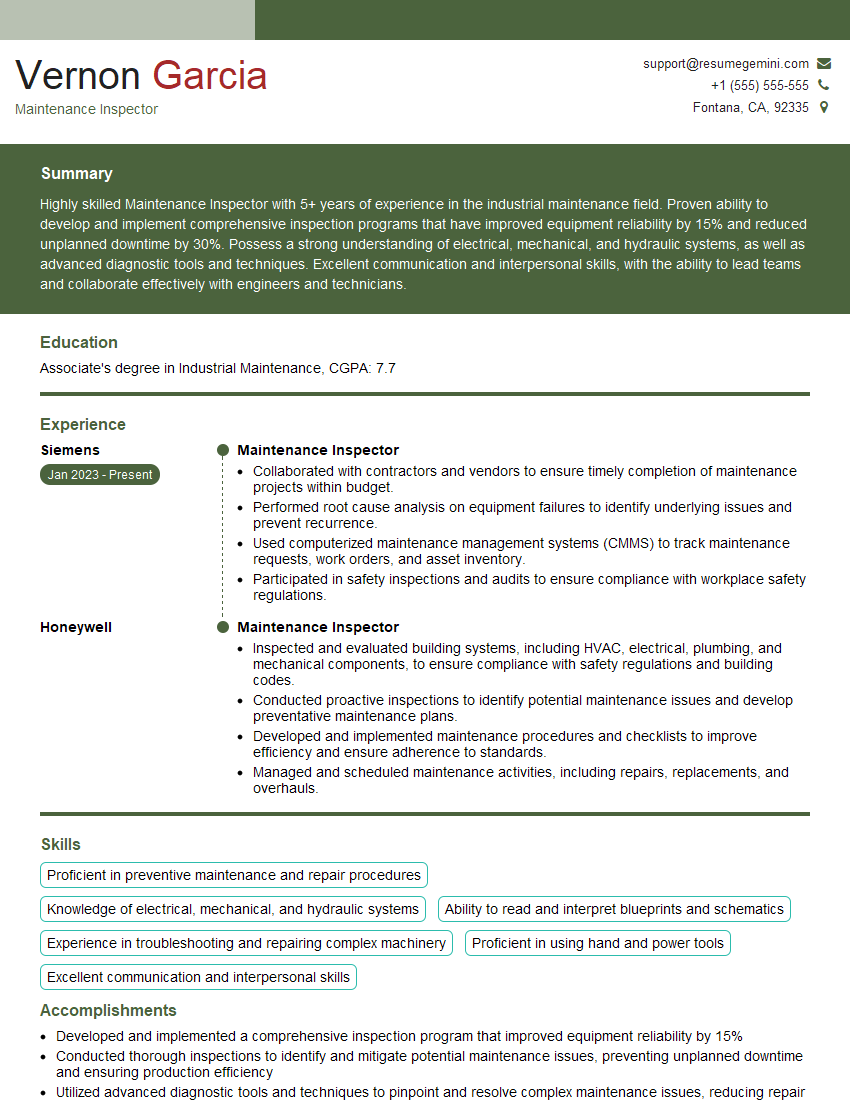
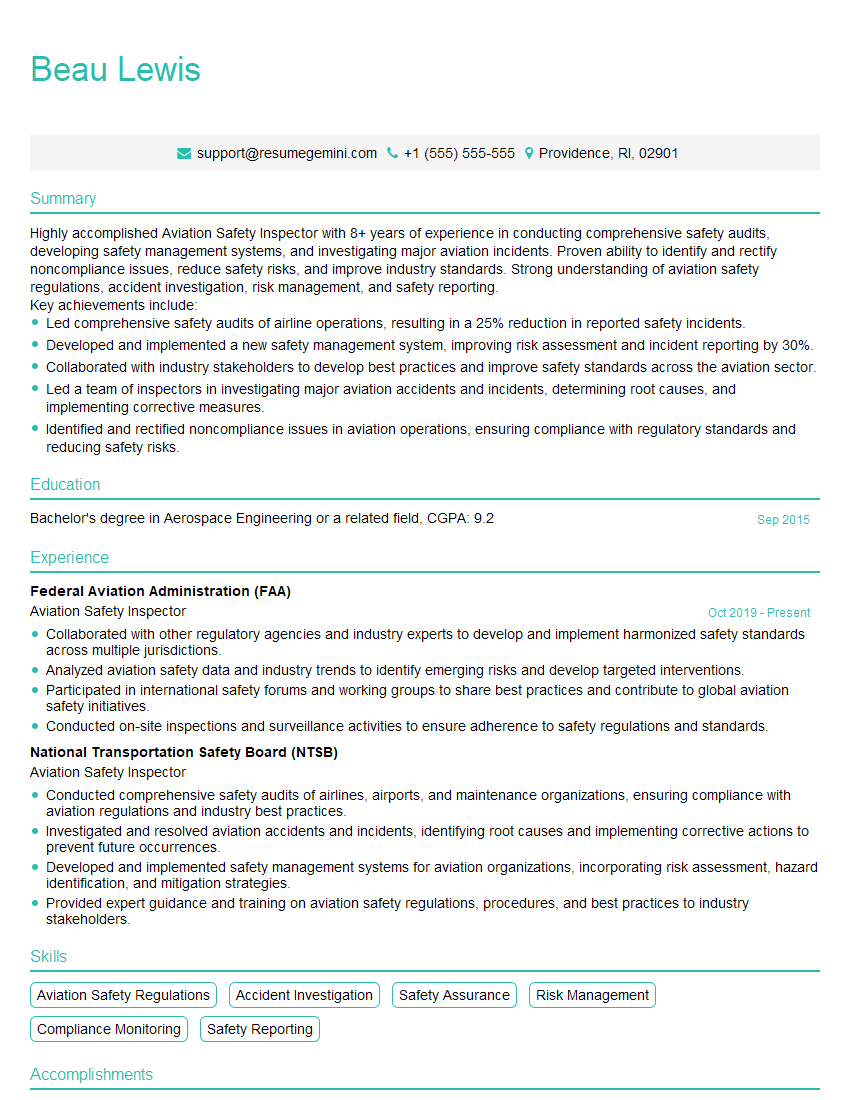
Mastering Aircraft Structural Inspection opens doors to a rewarding and challenging career path, offering opportunities for professional growth and specialization within the aviation industry. To maximize your job prospects, creating a strong, ATS-friendly resume is crucial. ResumeGemini is a trusted resource that can significantly enhance your resume-building experience, making it easier to showcase your skills and experience effectively. ResumeGemini provides examples of resumes tailored to Aircraft Structural Inspection, ensuring your application stands out from the competition. Invest time in crafting a compelling resume – it’s your first impression!

Explore more articles
Users Rating of Our Blogs
Share Your Experience
We value your feedback! Please rate our content and share your thoughts (optional).
What Readers Say About Our Blog
Really detailed insights and content, thank you for writing this detailed article.
IT gave me an insight and words to use and be able to think of examples