Feeling uncertain about what to expect in your upcoming interview? We’ve got you covered! This blog highlights the most important Animal Shelter Volunteer Coordination interview questions and provides actionable advice to help you stand out as the ideal candidate. Let’s pave the way for your success.
Questions Asked in Animal Shelter Volunteer Coordination Interview
Q 1. Describe your experience in recruiting and onboarding animal shelter volunteers.
Recruiting and onboarding volunteers is crucial for a thriving animal shelter. My approach begins with creating compelling recruitment materials highlighting the impact volunteers make – rescuing animals, providing care, and enriching the lives of both animals and staff. I utilize various channels: social media campaigns showcasing heartwarming volunteer stories, partnerships with local colleges and community groups, and presentations at community events.
Onboarding is equally important. It’s a structured process, starting with a welcoming orientation that covers shelter policies, safety procedures, and the various volunteer roles. New volunteers are paired with experienced mentors for their first few shifts, providing practical guidance and support. We also use online training modules for information like animal handling techniques and disease prevention. This structured approach ensures volunteers feel supported and prepared from day one, leading to higher retention rates.
Q 2. How would you manage volunteer scheduling to ensure adequate coverage for all shifts?
Effective volunteer scheduling is the backbone of smooth shelter operations. I utilize a combination of online scheduling software and manual adjustments based on volunteer availability and anticipated needs. The software allows volunteers to self-schedule, reducing administrative burden. It also generates reports showing coverage gaps, allowing proactive adjustments. For example, if we notice a shortage of dog walkers on weekend mornings, I can send targeted emails to volunteers who’ve expressed interest in that task. Manual adjustments might be needed to accommodate individual needs and ensure sufficient coverage during peak times, like holidays. Regular review of the schedule ensures flexibility and prevents burn-out.
Q 3. What strategies would you use to retain volunteers and maintain high morale?
Volunteer retention hinges on fostering a positive and appreciative environment. Regular feedback, both formal and informal, is critical. We use volunteer satisfaction surveys to identify areas for improvement. Appreciation is shown through ‘Volunteer of the Month’ awards, newsletters highlighting their contributions, and social events fostering camaraderie. Offering diverse volunteer opportunities allows volunteers to find roles that genuinely match their skills and interests, preventing monotony. For instance, some volunteers may prefer direct animal care, while others may excel in administrative tasks or fundraising. Providing opportunities for professional development—such as workshops on animal handling or first aid—also demonstrates investment in their growth, keeping them engaged and motivated.
Q 4. How would you handle a conflict between volunteers or a volunteer and staff member?
Conflict resolution requires a swift, fair, and empathetic approach. My first step would involve a private meeting with the individuals involved to understand each perspective without judgment. Active listening is key; I aim to help them understand each other’s viewpoints and find common ground. The focus is on identifying the root cause of the conflict, not assigning blame. Mediation might be needed, aiming for a mutually agreeable solution. If the conflict is severe or involves repeated incidents, a formal written warning may be issued. Involving management in serious cases ensures consistency and appropriate disciplinary action if necessary. It’s vital to document all steps of the process, protecting both staff and volunteers.
Q 5. Explain your experience in developing and implementing volunteer training programs.
Comprehensive training is paramount. My training programs are modular, catering to various volunteer roles and experience levels. We use a blend of online modules, hands-on workshops, and shadowing experienced volunteers. Modules cover essential topics such as animal handling techniques (including safe restraint), cleaning and sanitation protocols, recognizing signs of illness or distress in animals, and basic first aid for animals. Hands-on workshops allow volunteers to practice skills under supervision. Shadowing provides practical experience and allows new volunteers to learn from experienced peers. All training materials are regularly updated to reflect best practices and any changes in shelter procedures. Post-training assessments ensure knowledge retention and competency.
Q 6. How would you track volunteer hours and ensure compliance with reporting requirements?
Accurate volunteer hour tracking is essential for reporting and grant applications. We use a combination of methods: an online time-tracking system where volunteers clock in and out for each shift, and manual sign-in sheets for tasks that don’t fit the online system. The online system generates automated reports detailing volunteer hours per individual, task, and time period, which makes it easy to meet reporting requirements. For instance, many grant providers require detailed documentation of volunteer hours. This system ensures we comply with those reporting standards, showcasing the significant contribution of our volunteers. Regular audits ensure data accuracy and prevent discrepancies.
Q 7. What metrics would you use to measure the success of your volunteer program?
Measuring the success of a volunteer program involves a multifaceted approach. Key metrics include: Volunteer retention rate: This indicates the effectiveness of our onboarding and support systems. Volunteer hours contributed: Measures the overall impact of volunteer efforts. Number of new volunteers recruited: Shows the reach of our recruitment strategies. Volunteer satisfaction scores: Gauges morale and identifies areas for improvement. Impact on shelter operations: This might involve analyzing the reduction in staffing costs or improvement in animal welfare outcomes attributed to volunteers. By tracking these metrics, we gain valuable insights into program effectiveness and areas where adjustments may be necessary for continuous improvement.
Q 8. Describe your experience in managing volunteer databases and communication systems.
Managing a volunteer database and communication system is crucial for efficient shelter operations. I’ve used various platforms, including dedicated volunteer management software like VolunteerMatch and SignUpGenius, as well as simpler solutions like spreadsheets and email lists, adapting the choice to the shelter’s size and resources. My approach always involves:
- Data Integrity: Ensuring accurate data entry and regular updates are paramount. This includes fields for contact information, skills, availability, and volunteer history. For example, I’ve implemented a system of automated email reminders for shift confirmations, minimizing no-shows.
- Communication Strategy: Clear, consistent communication is key. I utilize a multi-channel approach, including email newsletters for general updates, text messages for urgent requests, and a dedicated online forum for discussions and announcements. This allows me to cater to diverse volunteer preferences.
- Reporting & Analysis: Tracking volunteer hours, areas of contribution, and feedback enables me to assess performance and identify areas for improvement. This data helps optimize volunteer deployment and demonstrate the impact of volunteer efforts to donors and stakeholders. For instance, I’ve created reports showing the correlation between increased volunteer hours and improved animal care metrics.
Q 9. How would you adapt volunteer roles and responsibilities to meet changing shelter needs?
Adapting volunteer roles to changing shelter needs requires flexibility and proactive planning. I approach this by regularly assessing the shelter’s needs, both short-term (e.g., a sudden influx of animals) and long-term (e.g., a new program). I then:
- Skill Mapping: Review existing volunteer skills and match them with emergent needs. For example, if we need more help with social media, I’ll identify volunteers with marketing experience and assign them tasks accordingly.
- Role Creation/Modification: Create new roles or modify existing ones to address specific requirements. This could involve developing training materials for new tasks or adjusting the scope of existing roles based on available resources.
- Communication & Training: Clearly communicate these changes to volunteers, providing adequate training and support. This minimizes confusion and ensures everyone is comfortable with their new responsibilities. For example, I’ve organized workshops on animal handling for volunteers interested in expanding their involvement.
Q 10. What are your strategies for motivating and engaging volunteers?
Motivating and engaging volunteers hinges on creating a positive and rewarding experience. My strategies include:
- Recognition & Appreciation: Regularly acknowledge individual and team contributions through emails, social media posts, or even small gifts. I believe in public acknowledgement of volunteer work; it greatly boosts morale.
- Opportunities for Growth: Provide opportunities for skill development and leadership roles. This demonstrates value in their commitment, fostering loyalty and engagement. For instance, I’ve created mentorship programs where experienced volunteers train newcomers.
- Meaningful Tasks: Ensure volunteers feel their contributions are making a difference. Clear task assignments and a focus on the impact of their work are highly motivating. This could be highlighting the number of animals adopted because of their efforts.
- Social Events & Team Building: Organize social events to foster a sense of community among volunteers. Team building activities enhance collaboration and camaraderie. For example, I have hosted volunteer appreciation picnics.
Q 11. How do you ensure volunteer safety and well-being in the shelter environment?
Volunteer safety is paramount. My approach involves:
- Thorough Training: Providing comprehensive training on animal handling, safety protocols, and emergency procedures. This includes practical sessions and written materials.
- Clear Guidelines & Policies: Establishing clear guidelines and policies regarding volunteer conduct, including appropriate animal interactions and emergency response procedures. These are readily available on a shared digital document.
- Buddy System: Implementing a buddy system, especially for new volunteers, ensuring they are never alone working with animals. This greatly reduces potential risks.
- Risk Assessment: Regularly assessing the shelter environment for potential hazards and implementing preventative measures, such as ensuring adequate lighting and removing trip hazards.
- Background Checks: Where applicable and legally permissible, conducting background checks to ensure volunteer suitability.
Q 12. Describe your experience in working with diverse volunteer populations.
I have extensive experience working with diverse volunteer populations, recognizing that different individuals bring unique skills and perspectives. My approach focuses on creating an inclusive environment where everyone feels valued and respected. This includes:
- Accessibility: Ensuring the shelter and volunteer activities are accessible to individuals with disabilities. This may include providing alternative communication methods or modifying tasks to meet individual needs.
- Multilingual Support: Providing information and communication materials in multiple languages to support a diverse linguistic background.
- Cultural Sensitivity: Demonstrating cultural sensitivity and understanding in all interactions, respecting different communication styles and values. This includes actively listening to feedback and addressing concerns.
- Inclusive Communication: Employing inclusive language in all communications and actively promoting diversity within the volunteer team.
Q 13. How would you handle a situation where a volunteer is consistently underperforming?
Addressing underperformance requires a sensitive and constructive approach. My first step is to understand the root cause: Is it a lack of training, unclear expectations, personal issues, or something else? I would:
- Private Meeting: Schedule a private meeting with the volunteer to discuss their performance, using specific examples rather than general criticisms. For example, ‘In the last two weeks, you’ve missed three scheduled shifts.’
- Open Dialogue: Encourage open communication, actively listening to their perspective and any challenges they are facing. This creates a collaborative problem-solving environment.
- Additional Training/Support: If the issue stems from a lack of training or understanding, offer additional training or mentorship. If personal issues are affecting their work, offer support and explore potential solutions.
- Performance Improvement Plan: Develop a written performance improvement plan, outlining specific expectations and a timeline for improvement. Regular check-ins will monitor progress.
- Final Decision: If improvements are not made despite support, a difficult decision regarding their continued participation may be necessary. This is always a last resort and would be handled with compassion and sensitivity.
Q 14. What are your methods for recognizing and rewarding volunteer contributions?
Recognizing and rewarding volunteer contributions is crucial for maintaining motivation and retention. My methods include:
- Verbal Appreciation: Regularly expressing gratitude for their efforts, highlighting their individual contributions and the impact they have on the shelter. I always make an effort to say thank you directly and often.
- Written Acknowledgements: Sending personalized thank-you notes or emails, acknowledging specific accomplishments or contributions. These are more formal and have a lasting impact.
- Volunteer of the Month/Year Awards: Implementing awards programs to recognize outstanding contributions, celebrating their achievements at shelter events or through social media.
- Opportunities for Advancement: Offering opportunities for leadership roles or advanced training, acknowledging their increasing experience and value to the organization.
- Social Events & Appreciation Gatherings: Organizing social events, potlucks, or appreciation dinners to recognize and celebrate the contributions of all volunteers as a team.
Q 15. How would you assess the skills and experience of potential volunteers?
Assessing potential volunteers involves a multi-faceted approach combining application review, interviews, and sometimes, trial shifts. I start by carefully reviewing applications, looking for specific skills mentioned like animal handling experience, veterinary technician skills, event planning experience, or customer service background. These are all valuable in different aspects of shelter operations. The interview process then delves deeper, allowing me to assess their soft skills – their empathy, patience, reliability, and teamwork abilities. For example, I might ask about a time they handled a difficult situation or worked as part of a team. I also assess their understanding of animal welfare and their commitment to the shelter’s mission. Finally, I might offer a trial shift for certain roles to directly observe their practical skills and how they integrate into the team. This ensures a good fit for both the volunteer and the shelter.
Career Expert Tips:
- Ace those interviews! Prepare effectively by reviewing the Top 50 Most Common Interview Questions on ResumeGemini.
- Navigate your job search with confidence! Explore a wide range of Career Tips on ResumeGemini. Learn about common challenges and recommendations to overcome them.
- Craft the perfect resume! Master the Art of Resume Writing with ResumeGemini’s guide. Showcase your unique qualifications and achievements effectively.
- Don’t miss out on holiday savings! Build your dream resume with ResumeGemini’s ATS optimized templates.
Q 16. Describe your experience in collaborating with other departments within the shelter.
Collaboration with other departments is crucial for effective volunteer management. For instance, I work closely with the animal care team to ensure volunteers are appropriately trained and matched with animals based on their experience and the animals’ needs. With the adoption team, I coordinate volunteer efforts during adoption events, ensuring a smooth and positive experience for potential adopters. The fundraising team might utilize volunteers for events they organize, and I would help with training those volunteers and scheduling. Communication is key; I regularly attend inter-departmental meetings, use shared online calendars, and maintain open channels for communication through email or internal messaging systems. This ensures everyone is informed and tasks are efficiently coordinated. One example is when we had an influx of kittens requiring extra care, I coordinated with the animal care team to recruit and train extra volunteers in kitten handling and socialization within a week. This proactive collaboration averted potential issues and ensured the kittens received the best care.
Q 17. How do you ensure that volunteers understand and adhere to shelter policies and procedures?
Ensuring volunteer adherence to shelter policies and procedures is achieved through a comprehensive orientation process and ongoing communication. The initial orientation covers everything from animal handling techniques and safety protocols to confidentiality rules and emergency procedures. This orientation includes a written acknowledgement of the policies. We utilize a combination of written materials, videos, and hands-on training sessions. Regular refresher courses and updated training materials address any changes in procedures. Furthermore, we have a clear chain of command and designated supervisors who are available to answer questions and address any concerns. A clear and concise employee handbook acts as our primary policy document. We also encourage open communication; volunteers are encouraged to ask questions and voice their concerns, fostering a culture of compliance built on mutual trust and understanding. For instance, if we update our cleaning protocols, all volunteers receive a training update so that they all follow the same practices.
Q 18. What is your approach to handling sensitive situations involving animals and volunteers?
Handling sensitive situations requires empathy, calm decision-making, and a focus on both animal and volunteer well-being. If a volunteer witnesses an upsetting event, such as an animal’s death, I offer immediate support, allowing them to express their emotions without judgment. This could involve simply listening, providing emotional support resources, or offering a brief break. Similarly, if a volunteer struggles to handle a difficult animal, I intervene calmly, offering guidance and support. This might involve retraining, pairing the volunteer with a more experienced colleague, or reassigning tasks. Maintaining open communication, actively listening, and de-escalating any stress are crucial. I always ensure that appropriate personnel, such as animal care staff or a shelter manager, are involved as needed. We prioritize the mental health of our volunteers as much as we prioritize the welfare of our animals. For example, after a particularly challenging euthanasia case, we held a brief team meeting to allow volunteers to process their emotions and receive support from experienced staff.
Q 19. How would you manage a situation where a volunteer needs additional support or training?
Addressing a volunteer’s need for additional support or training begins with open communication. I schedule a meeting to discuss their specific challenges and areas where they need improvement. This might involve a one-on-one training session, shadowing a more experienced volunteer, or revisiting specific parts of the orientation materials. I always focus on positive reinforcement and constructive feedback, emphasizing their strengths and providing specific suggestions for development. I might also check in with the volunteer regularly to monitor their progress and offer ongoing support. If the issues persist despite extra training, we might need to re-evaluate their role or explore alternative tasks where their skills are better suited. For example, a volunteer who initially struggled with handling large dogs might excel in administrative tasks or event planning.
Q 20. How would you handle a volunteer emergency or crisis situation?
A volunteer emergency necessitates a swift and organized response. We have established emergency protocols, and it’s crucial to follow these precisely. First, I assess the situation to determine the level of severity and the necessary response. This could range from a minor injury requiring first aid to a more serious incident involving animal bites or an accident. We have designated personnel trained in first aid and CPR on-site. I would immediately contact emergency services if needed, following our established procedures. After the immediate crisis is handled, I conduct a thorough review of the incident to identify any factors that contributed to the emergency and implement preventative measures to minimize the risk of future occurrences. A well-defined emergency plan, regular training, and open communication are essential for ensuring a safe and efficient response.
Q 21. How would you plan and execute a volunteer appreciation event?
Planning a volunteer appreciation event requires careful consideration of the volunteers’ preferences and the shelter’s resources. I begin by gathering feedback from volunteers to understand their interests and suggestions. This could be through a survey, informal conversations, or focus groups. Based on the feedback, I would then determine the format of the event (e.g., a casual gathering, a formal dinner, a volunteer recognition ceremony). The budget and available resources would influence the scale and type of event. This might involve securing a venue, arranging catering, and planning activities such as games, raffles, or presentations. I would involve other staff members in the planning and execution to ensure a seamless event. It’s important to tailor the event to show sincere appreciation for volunteers’ contributions and foster a stronger sense of community. One example is organizing a volunteer picnic at a local park with fun activities and food. This creates a relaxed and enjoyable setting, allowing volunteers to unwind and connect with one another and the shelter staff.
Q 22. What software or technology are you familiar with that can assist in volunteer coordination?
Several software solutions significantly improve volunteer coordination in animal shelters. I’m proficient with platforms like VolunteerMatch, SignUpGenius, and even more robust Customer Relationship Management (CRM) systems like Salesforce or Zoho CRM, which offer features tailored for volunteer management. These tools allow for streamlined scheduling, task assignment, communication, and tracking of volunteer hours. For example, VolunteerMatch provides a centralized platform to attract, screen, and manage volunteers. SignUpGenius excels at creating simple, intuitive sign-up sheets for specific events or tasks. CRMs, while more complex to set up, offer a comprehensive solution for managing the entire volunteer lifecycle – from initial application to ongoing engagement and reporting.
Additionally, I have experience using project management software like Asana or Trello to track progress on various shelter projects and coordinate volunteer involvement in those projects. These tools enable effective communication, task delegation, and progress monitoring, ensuring volunteers are informed and engaged.
Q 23. What is your experience with budgeting and resource allocation for volunteer programs?
Budgeting and resource allocation for volunteer programs require a strategic approach. My experience involves creating detailed budgets that encompass all aspects, including volunteer training materials, background check fees, event supplies, appreciation gifts, and potential stipends for specialized training. I carefully analyze the needs of each program and allocate funds accordingly. I believe in prioritizing essential resources first – those directly impacting animal welfare and volunteer safety. For example, allocating funds towards proper training and necessary safety equipment takes precedence over less critical expenditures.
I also actively seek grants and sponsorships to supplement the budget and secure funding for critical volunteer-related initiatives. Data-driven decision-making is key; I track volunteer hours, program costs, and outcomes to justify resource allocation and demonstrate the program’s value to donors and stakeholders.
Q 24. How do you prioritize tasks and manage your time effectively as a volunteer coordinator?
Effective time management and task prioritization are crucial for a volunteer coordinator. I utilize various methods to ensure efficiency. I start with a comprehensive task list prioritized using methods such as the Eisenhower Matrix (urgent/important), identifying key performance indicators (KPIs) and prioritizing tasks that have the greatest impact on those KPIs. I break down large tasks into smaller, manageable steps, and I schedule time blocks for specific activities, which prevents multitasking and enhances focus.
Communication is key; clear expectations and consistent updates keep volunteers informed and engaged. Regular team meetings, coupled with individual check-ins, allows me to provide support and address any roadblocks promptly. I utilize time management tools such as calendars and project management software to track deadlines and ensure tasks are completed on time.
Q 25. Describe your experience in creating and managing volunteer job descriptions.
Creating effective volunteer job descriptions is vital for attracting qualified individuals. My approach involves clearly outlining the role’s responsibilities, required skills, time commitment, and benefits. I make sure the descriptions are concise and engaging, emphasizing the positive impact volunteers have on the animals and the shelter community. I use action verbs to highlight the tasks involved and focus on the core responsibilities rather than overwhelming the candidate with minor details.
For instance, instead of writing ‘Assist with animal care,’ I might write ‘Provide daily care to animals including feeding, cleaning, and monitoring their health.’ I always include information on training provided, the supervision structure, and the volunteer’s contribution to the organization’s overall mission. I tailor each description to the specific volunteer role, ensuring accuracy and clarity to attract the right candidates.
Q 26. How do you ensure compliance with relevant regulations and legal requirements for volunteers?
Compliance is paramount. I ensure adherence to all relevant regulations and legal requirements for volunteers. This includes obtaining necessary background checks, implementing appropriate safety protocols, providing mandatory training on animal handling and shelter procedures, and ensuring compliance with data privacy laws (like GDPR or CCPA). I also maintain detailed records of volunteer information, training completion, and incident reports to meet both legal and internal accountability requirements.
Regular updates on relevant laws and best practices are crucial. I stay informed through professional development opportunities and collaborations with other animal shelters and relevant regulatory bodies. I create and regularly review comprehensive volunteer policies and procedures manuals to clarify expectations and maintain consistency.
Q 27. What are your strengths and weaknesses in managing a diverse volunteer team?
Managing a diverse volunteer team is both a strength and a challenge. My strength lies in building rapport and creating a welcoming and inclusive environment. I appreciate diverse skill sets and perspectives, understanding that they are valuable assets to the team. I foster open communication and actively encourage feedback from every volunteer. I use inclusive language in communications and strive to create a sense of belonging for every individual.
A potential weakness could be navigating conflicts that arise from differing personalities and working styles. However, I actively seek to address such situations through mediation and conflict resolution techniques. Proactive communication and transparent processes help mitigate these challenges significantly.
Q 28. How would you develop and maintain positive relationships with community partners and stakeholders?
Building and maintaining strong relationships with community partners and stakeholders is essential for a successful volunteer program. This involves proactive communication, creating opportunities for collaboration, and demonstrating the value of the shelter’s work and its volunteer program. I actively participate in community events, attend relevant meetings, and maintain open lines of communication with local businesses, schools, and other organizations.
I regularly share updates on the shelter’s progress and the impact of volunteer contributions through newsletters, social media, and presentations. By consistently showcasing the shelter’s positive impact, I foster a strong sense of partnership and build trust with the community, which is essential for securing continued support, both volunteer and financial.
Key Topics to Learn for Animal Shelter Volunteer Coordination Interview
- Volunteer Recruitment and Management: Understanding the process of attracting, screening, training, and scheduling volunteers effectively. This includes developing clear volunteer descriptions and managing volunteer expectations.
- Volunteer Task Assignment and Supervision: Matching volunteer skills and interests with appropriate tasks, providing clear instructions and support, and ensuring the safety and well-being of both volunteers and animals.
- Communication and Conflict Resolution: Maintaining open communication with volunteers, addressing concerns promptly and professionally, and resolving conflicts constructively. This includes effective written and verbal communication.
- Data Management and Record Keeping: Maintaining accurate records of volunteer hours, tasks completed, and any incidents. Utilizing software or systems for tracking volunteer information and reporting data.
- Safety and Risk Management: Developing and implementing safety protocols for volunteers, animals, and the shelter environment. Identifying potential risks and implementing preventative measures.
- Collaboration and Teamwork: Working effectively with shelter staff, other volunteers, and external partners to achieve common goals. Understanding how to contribute to a positive team environment.
- Program Development and Evaluation: Understanding how to evaluate the effectiveness of volunteer programs and make adjustments to improve efficiency and impact. This includes identifying areas for improvement and tracking key performance indicators (KPIs).
Next Steps
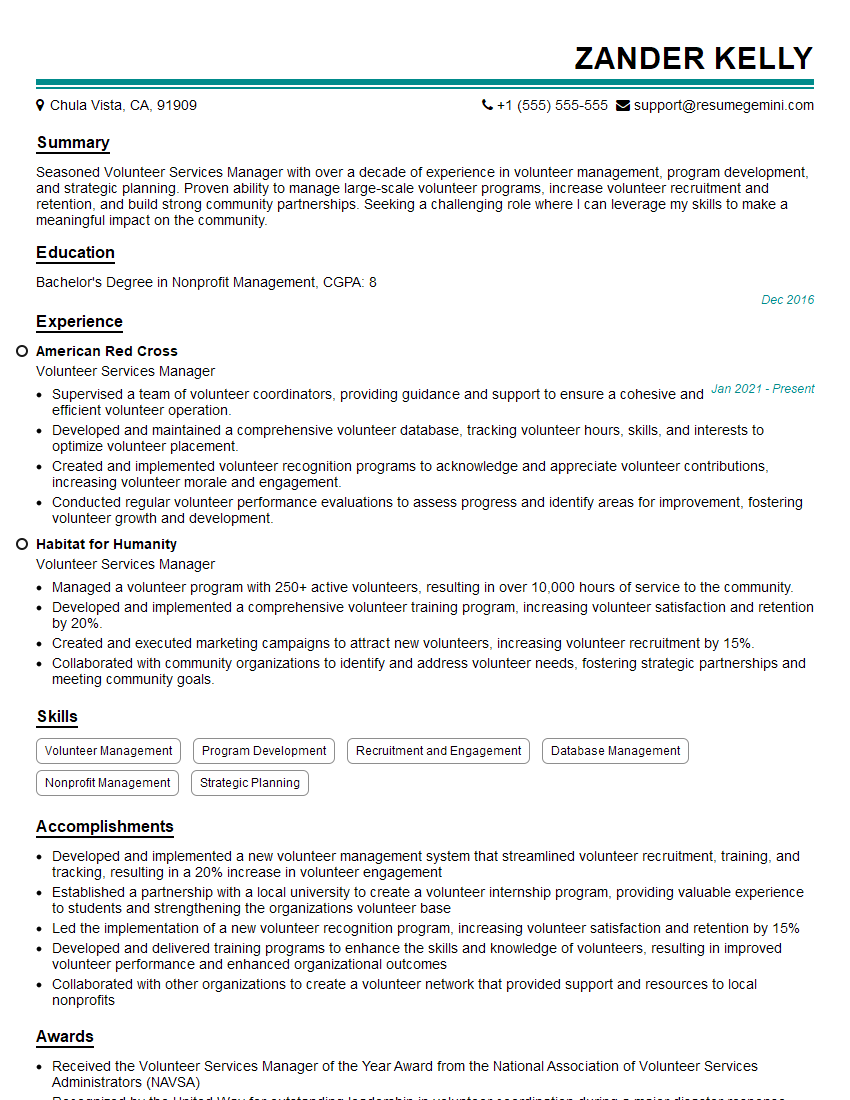
Mastering Animal Shelter Volunteer Coordination demonstrates your organizational skills, compassion, and ability to manage people and resources effectively – valuable assets for career growth in animal welfare and beyond. To significantly enhance your job prospects, crafting an ATS-friendly resume is crucial. ResumeGemini is a trusted resource that can help you build a professional and impactful resume tailored to highlight your relevant skills and experience. Examples of resumes tailored to Animal Shelter Volunteer Coordination are available to further assist you in this process.
Explore more articles
Users Rating of Our Blogs
Share Your Experience
We value your feedback! Please rate our content and share your thoughts (optional).
What Readers Say About Our Blog
Really detailed insights and content, thank you for writing this detailed article.
IT gave me an insight and words to use and be able to think of examples