Cracking a skill-specific interview, like one for Animal Skin Preparation, requires understanding the nuances of the role. In this blog, we present the questions you’re most likely to encounter, along with insights into how to answer them effectively. Let’s ensure you’re ready to make a strong impression.
Questions Asked in Animal Skin Preparation Interview
Q 1. Describe the different stages involved in the preparation of animal skins for leather production.
Preparing animal skins for leather production is a multi-stage process, broadly categorized into pre-tanning and tanning operations. Pre-tanning focuses on cleaning and preparing the hide for the transformative tanning process, while tanning itself provides durability and prevents decay.
- Receiving and Inspection: The process begins with receiving the hides, assessing their quality (checking for defects like cuts, insect damage etc.), and determining the best course of action.
- Curing/Salting/Freezing: To preserve the hides and prevent bacterial degradation before processing, they undergo curing, typically through salting or freezing. This step is crucial for maintaining hide integrity.
- Soaking and Cleaning: The hides are soaked to rehydrate and remove salt or other preservatives. This is followed by careful cleaning to remove dirt, blood, and other impurities using enzymes and detergents.
- Liming and Unhairing: This crucial step involves treating the hides with lime solutions to swell the fibers and loosen the hair follicles. This allows for easy removal of hair and other epidermal tissues.
- Fleshing: The remaining flesh and fat are removed from the hide’s inner surface to produce a clean and consistent material. This is done using mechanical fleshing machines.
- Degreasing: Excess fats and oils are removed to ensure even tanning and improve the quality of the finished leather. This is often achieved through solvent degreasing or enzymatic methods.
- Bating: Enzymes are used to further soften the hide and adjust its pH, preparing it for tanning.
- Tanning: The core process involving chemical treatment to convert the hide into leather (more on this in a later question).
- Retanning and Finishing: Further treatments to adjust the leather’s properties, such as dyeing, fatliquoring (adding oils and fats to improve softness and flexibility), and finishing processes to achieve the desired look and feel.
Q 2. Explain the purpose of liming and unhairing in the tanning process.
Liming and unhairing are critical steps in leather production, aimed at preparing the hide for tanning. Think of it as preparing the ground before planting a crop – you need to clear the area and ensure optimal conditions for growth.
- Liming: The process uses lime (calcium hydroxide) solutions to swell the collagen fibers in the hide. This swelling opens up the structure, making it more receptive to subsequent treatments. Lime also helps to remove hair, and neutralizes the acidic environment that promotes bacterial growth.
- Unhairing: After liming, the hair and epidermis are mechanically removed. The effectiveness of unhairing depends largely on the proper liming process. Efficient unhairing results in a clean hide free of hair, ready for the next phase of processing.
In short, liming softens and prepares the skin, while unhairing removes unwanted materials to allow for better penetration of tanning agents and a higher quality final product.
Q 3. What are the different types of tanning methods, and what are their advantages and disadvantages?
Several tanning methods exist, each with its own advantages and disadvantages:
- Chrome Tanning: This is the most common method, using chromium salts. It’s quick, produces soft and pliable leather, and is relatively inexpensive. However, it can have environmental concerns due to chromium’s toxicity.
- Vegetable Tanning: Uses plant extracts like tannins from tree bark. This method is environmentally friendly and produces durable, high-quality leather that ages beautifully. However, it’s a slower process resulting in stiffer leather and higher cost compared to chrome tanning.
- Alum Tanning: Uses aluminum salts, producing soft, white leather suitable for items like gloves and bookbinding. It’s less durable than chrome tanning and prone to water damage.
- Formaldehyde Tanning: Utilizes formaldehyde, yielding firm, strong leather. Though effective, it’s increasingly restricted due to health and environmental concerns associated with formaldehyde.
- Combination Tanning: Often uses a combination of chrome and vegetable tanning, blending the advantages of both methods. For example, a chrome tan may be used initially for speed and then followed by vegetable tanning for improved durability and color.
The choice of tanning method depends on factors such as the type of hide, intended end-use, budget, and environmental concerns.
Q 4. How do you ensure the quality and consistency of the final leather product?
Ensuring consistent quality in leather production requires meticulous attention to detail throughout the entire process. This begins with careful selection and inspection of raw hides, followed by standardized procedures at each stage.
- Quality Control Checks: Regular checks at each step – from pre-tanning to finishing – help identify and rectify defects early on.
- Precise Chemical Control: Accurate measurement and control of chemicals used in liming, tanning, and finishing are crucial for consistency.
- Calibration and Maintenance of Equipment: Regularly maintaining and calibrating machinery ensures consistent results and minimizes defects.
- Experienced Personnel: Skilled workers are essential to perform each step correctly and maintain consistent product quality. This also incorporates proper training and adherence to standardized operating procedures (SOPs).
- Statistical Process Control (SPC): Monitoring key process parameters with statistical methods helps identify trends and prevent defects before they escalate.
By carefully implementing these practices, we can maintain high standards of consistency in terms of thickness, softness, color, and overall characteristics of the final leather product.
Q 5. Describe your experience with different types of animal hides (e.g., cow, sheep, goat).
My experience encompasses various animal hides, each presenting unique challenges and opportunities:
- Cow Hides: These are widely used, offering strength and durability, suitable for a wide range of products, from shoes to upholstery. Their size and thickness necessitate careful handling during processing.
- Sheep Skins: Produce softer, more pliable leather ideal for garments and gloves. They are generally thinner and more delicate compared to cowhides, requiring gentler processing.
- Goat Skins: Similar to sheepskins in softness but often exhibiting a more pronounced grain, making them suitable for clothing and accessories. They are known for their resilience and resistance to tearing.
Each hide type necessitates adjustments in the processing parameters (like liming times, chemical concentrations, and tanning methods) to achieve optimal results. Understanding these nuances is key to creating high-quality leather from different species.
Q 6. What are the common defects found in animal skins, and how are they addressed?
Various defects can occur in animal skins, impacting the final product’s quality. Early identification and appropriate handling are crucial.
- Scars and Brand Marks: These are common, particularly in cowhides, and can be minimized but not entirely eliminated during processing.
- Insect Bites and Damage: These create holes and weaken the hide. Careful inspection and sometimes trimming are necessary.
- Cuts and Tears: These are often irreparable and might lead to rejection of the hide or reduction in its value.
- Uneven Thickness: This affects the consistency of the finished leather, impacting its quality and value.
- Grain Defects: Irregularities on the hide’s surface, such as wrinkles or creases, can impact the aesthetic appeal of the final product.
Addressing these defects involves careful inspection, trimming, filling, or blending techniques depending on the severity and location of the imperfection. In severe cases, sections might be discarded to maintain overall product quality.
Q 7. Explain the process of fleshing and degreasing hides.
Fleshing and degreasing are essential pre-tanning steps that prepare the hide for tanning by removing unwanted materials.
- Fleshing: This process removes the remaining flesh and fat from the inner surface of the hide. Traditionally done manually with knives, it is now largely mechanized using rotating blades. The goal is to achieve a clean, even surface for optimal tanning.
- Degreasing: This stage aims to remove excess fats and oils from the hide. High fat content can hinder tanning and negatively impact the leather’s final properties. Methods include solvent degreasing (using organic solvents), enzymatic degreasing (using enzymes to break down fats), or a combination of methods. The degree of degreasing depends on the type of hide and the desired final product characteristics.
Proper fleshing and degreasing are crucial for producing high-quality leather with consistent properties, preventing problems during tanning, and ensuring the final product meets desired specifications.
Q 8. How do you handle and store animal skins to prevent spoilage?
Proper handling and storage of animal skins are crucial to prevent spoilage and maintain their quality. Spoilage occurs primarily due to bacterial and enzymatic degradation. The key is to minimize these factors from the moment the skin is removed from the animal.
- Immediate Cooling: The skin should be cooled as quickly as possible after flaying to slow down bacterial growth. This often involves refrigeration or even freezing depending on the climate and the time until processing.
- Salting: Dry salting is a common method to preserve skins. Salt draws out moisture, creating an environment inhospitable to bacteria. The amount and type of salt, along with the method of application (e.g., rubbing, layering) will affect the effectiveness.
- Proper Storage: Salted skins need to be stored in a cool, dry, well-ventilated area. Ideally, they are placed on raised platforms to improve air circulation. Stacking should be done carefully to prevent pressure damage.
- Freezing: For long-term storage, freezing is an excellent option. It essentially halts bacterial activity and enzymatic processes. However, proper thawing procedures must be followed to avoid damage to the hide during processing.
For example, in my experience working with sheepskins in a rural setting, we used a combination of immediate salting followed by storage in a cool, shaded area. This approach was effective, reducing spoilage and maintaining the quality of the skins until we were able to begin the tanning process.
Q 9. What safety precautions do you follow when working with chemicals in the tanning process?
Safety is paramount when handling tanning chemicals. Many are corrosive, toxic, or carcinogenic. My procedures always prioritize safety through proper personal protective equipment (PPE) and adherence to strict protocols.
- PPE: This includes acid-resistant gloves, eye protection (goggles or face shields), respirators, and protective clothing (aprons, boots). The specific PPE depends on the chemical being used.
- Ventilation: Adequate ventilation is crucial to minimize exposure to airborne chemicals. Work should be done in well-ventilated areas or under appropriate fume hoods.
- Chemical Handling Procedures: Always follow the manufacturer’s safety data sheets (SDS). This includes understanding the hazards, handling instructions, and emergency response procedures. Chemicals should be stored properly and clearly labelled.
- Emergency Procedures: Having a readily available emergency eye wash station and safety shower is essential. Employees should receive thorough training on emergency procedures, including handling chemical spills and first aid for chemical exposure.
- Waste Disposal: Tanning chemicals must be disposed of responsibly, in accordance with local and national regulations. Improper disposal can cause significant environmental harm.
For instance, when working with chrome tanning salts, we always wore acid-resistant gloves and eye protection, ensuring proper ventilation. Any spills were immediately cleaned up according to our established procedures.
Q 10. What is the role of bating in the tanning process?
Bating is a crucial step in the tanning process that prepares the skin for tanning by removing unwanted substances.
Imagine the skin as a dirty sponge. Bating is like washing that sponge to remove impurities and allow the tanning agent to penetrate evenly. Specifically, it removes residual non-collagenous proteins and other materials left from the previous stages (like liming and deliming) that would otherwise interfere with the tanning process. This results in a softer, more pliable leather with better uniformity.
The process usually involves enzymes (proteases) that selectively break down these unwanted proteins. The pH level and temperature are carefully controlled to optimize enzyme activity. After bating, the skin has a cleaner, plumper, and more receptive surface for the tanning process. In practice, I monitor the enzyme activity, ensuring the removal of impurities without causing damage to the collagen structure.
Q 11. What is the difference between chrome tanning and vegetable tanning?
Chrome tanning and vegetable tanning are two fundamentally different methods that yield different types of leather.
- Chrome Tanning: This method utilizes chromium sulfate (Cr2(SO4)3), a mineral tanning agent. It’s faster and more efficient than vegetable tanning, resulting in a softer, more pliable, and more durable leather. Chrome-tanned leather is often used in garments, upholstery, and footwear.
- Vegetable Tanning: This traditional method employs tannins extracted from plant sources like tree bark, leaves, or fruits. It’s a much slower process, often taking weeks or even months. The resulting leather is stronger, more resistant to water, and has a natural look and feel. It is preferred for high-quality goods like belts, saddles, and furniture. However, it is generally less flexible than chrome-tanned leather.
The choice between chrome and vegetable tanning depends on factors such as the desired properties of the finished leather, the cost, and the environmental impact. For example, I’ve worked with both methods, preferring vegetable tanning for items requiring exceptional durability and a rustic look, and chrome tanning for items requiring flexibility and speed of production.
Q 12. How do you control the pH levels during different stages of the tanning process?
pH control is critical at every stage of the tanning process. Enzymes, chemicals, and the collagen structure itself are all sensitive to pH changes. Careful monitoring and adjustment are essential to ensure optimal results and prevent damage to the skins.
Different stages require different pH ranges. For example, liming requires an alkaline environment (high pH), while bating typically requires a neutral or slightly acidic pH. Tanning itself might involve adjustments depending on the type of tanning agent used. Precise pH control is achieved by using pH meters and adjusting with acids (like sulfuric acid) or alkalis (like sodium hydroxide) as needed.
In my work, we use automated systems to continuously monitor and adjust the pH levels in large tanning drums. For smaller batches, we regularly test the pH manually and make adjustments accordingly. Incorrect pH levels can lead to uneven tanning, damaged hides, or sub-optimal leather properties.
Q 13. What are the environmental concerns associated with animal skin preparation?
Environmental concerns associated with animal skin preparation are significant, primarily due to the use and disposal of chemicals. Sustainable practices are increasingly crucial to mitigate these issues.
- Chemical Waste: Tanning chemicals, like chromium salts and other processing agents, can contaminate water sources if not properly managed. This can have harmful impacts on aquatic life and ecosystems.
- Water Consumption: The tanning process is water-intensive, and untreated wastewater can carry pollutants, including chemicals and organic matter, posing a risk to the environment.
- Air Pollution: Some processes release volatile organic compounds (VOCs) into the air, potentially contributing to air pollution and respiratory problems.
- Waste Management: Proper disposal of solid waste generated during tanning (e.g., spent tanning agents, hair, fleshings) is crucial to prevent land contamination.
Minimizing environmental impact requires using cleaner tanning agents, implementing efficient water recycling systems, and adopting advanced wastewater treatment technologies. Sustainable practices such as closed-loop systems and bioremediation are gaining importance in the industry.
Q 14. Describe your experience with different types of tanning machinery.
My experience encompasses a wide range of tanning machinery, from traditional drum tanneries to modern automated systems.
- Drum Tanners: These are rotating drums used for processing large batches of skins. They are essential for efficient and uniform tanning. I’ve worked with both smaller drums suitable for batches of a few dozen hides to enormous drums capable of processing thousands.
- Beamhouse Equipment: This includes machines for liming, deliming, bating, and other pre-tanning operations. I’m familiar with both manual and automated systems for these processes.
- Finishing Equipment: After tanning, leather undergoes finishing processes such as splitting, dyeing, and glazing. I have experience with a variety of machines used in these operations, from simple hand tools to sophisticated computerized systems.
- Automated Control Systems: Modern tanneries often incorporate automated control systems to monitor and manage various parameters during the tanning process, including temperature, pH, and chemical concentration. This leads to improved consistency, reduced waste, and increased efficiency.
For instance, I recently oversaw the installation and commissioning of a new automated drum tanning system in a large-scale tannery. The system significantly improved production efficiency and reduced water and chemical consumption.
Q 15. How do you troubleshoot problems encountered during the tanning process?
Troubleshooting in tanning involves a systematic approach. It starts with identifying the specific problem – is the leather too stiff, too soft, discolored, or showing other defects? Then, we trace the issue back through the process. For instance, if the leather is too stiff, it could be due to insufficient unhairing, incomplete deliming, or an issue with the tanning agent concentration. If it’s too soft, the problem might lie in over-liming or insufficient tanning. I would systematically check each stage: pre-tanning (beamhouse), tanning itself, and post-tanning processes.
We use various testing methods, including physical tests like tensile strength and elongation, and chemical analyses to determine the collagen fiber structure and chemical composition of the leather. This helps pinpoint the exact stage and reason for the problem. For example, if the pH is off at the deliming stage, we adjust it accordingly. If the tanning agent isn’t penetrating correctly, we might need to re-evaluate the drum rotation speed, temperature, or the concentration of the tanning agent. Accurate record-keeping throughout the process is crucial for efficient troubleshooting.
Often, the solution involves adjusting process parameters, such as chemical concentrations, temperature, or time. In more extreme cases, it may require repeating specific steps or even discarding the batch. The key is meticulous observation, precise measurements, and a thorough understanding of the chemical and physical processes involved.
Career Expert Tips:
- Ace those interviews! Prepare effectively by reviewing the Top 50 Most Common Interview Questions on ResumeGemini.
- Navigate your job search with confidence! Explore a wide range of Career Tips on ResumeGemini. Learn about common challenges and recommendations to overcome them.
- Craft the perfect resume! Master the Art of Resume Writing with ResumeGemini’s guide. Showcase your unique qualifications and achievements effectively.
- Don’t miss out on holiday savings! Build your dream resume with ResumeGemini’s ATS optimized templates.
Q 16. Explain the process of leather finishing and dyeing.
Leather finishing and dyeing are crucial steps that transform tanned hides into the final leather product, enhancing its appearance, feel, and durability. Dyeing imparts color, while finishing improves the leather’s surface characteristics.
The dyeing process can involve various methods depending on the desired color and leather type. Aniline dyes provide a natural, translucent finish revealing the leather’s natural grain, while pigments provide a more opaque, even coverage. Dyeing is usually done in a drum using dye solutions along with other additives to enhance the penetration of dye into the leather.
Leather finishing involves a series of operations that may include:
- Shaving: To achieve uniform thickness.
- Buffing: To smooth the surface.
- Glazing: To produce a glossy finish.
- Embossing: To create patterns or textures.
- Top coating: To provide protection and enhance properties such as water resistance and abrasion resistance.
The entire finishing process is designed to enhance the leather’s aesthetic appeal and protect it from damage. These steps may involve various chemicals and machines, each carefully controlled to achieve the desired result.
Q 17. What are the different types of leather finishes, and their applications?
Leather finishes are diverse, each suited to specific applications. Some prominent finishes include:
- Full-grain: Retains the natural grain, showing the hide’s original surface markings. It’s strong and durable, ideal for high-end goods like shoes and jackets.
- Top-grain: The top layer of the hide is sanded to remove imperfections, then finished. It’s more consistent in appearance and less expensive than full-grain. Often used in furniture and automotive upholstery.
- Corrected-grain: A more extensive sanding process is used, and a layer of polyurethane is applied to create a uniform surface, suitable for affordable items needing durability.
- Nubuck: A suede-like finish created by sanding the grain side of the leather. Its soft feel is used in shoes and accessories.
- Patent leather: A glossy, highly polished finish created by applying a resin coating. Commonly seen in formal shoes and handbags.
The choice of finish dictates not only the final look but also the leather’s performance and price. A full-grain leather will inherently be more expensive due to its quality and lack of corrective processes.
Q 18. How do you ensure the compliance with relevant environmental regulations?
Environmental compliance is paramount in tanning. We strictly adhere to regulations concerning wastewater treatment, air emissions, and waste disposal. This includes regular monitoring of effluent quality to ensure it meets permissible discharge limits. We invest in advanced wastewater treatment systems, such as biological treatment plants, to reduce pollutants before releasing water back into the environment.
Our operations minimize the use of hazardous chemicals by opting for environmentally friendly alternatives wherever possible. We carefully manage the handling, storage, and disposal of hazardous materials according to strict safety guidelines. We maintain detailed records of all chemical usage and waste generation, which are regularly audited. This includes meticulous tracking of water usage and energy consumption. Training on environmental best practices is mandatory for all staff.
We actively participate in industry initiatives to promote sustainable tanning practices and environmental stewardship. Continuous improvement is a core value – we regularly assess our environmental performance and seek opportunities to reduce our impact.
Q 19. Describe your experience with quality control procedures in a tannery.
Quality control (QC) in a tannery is an ongoing process, starting from raw material inspection to the final product. At each stage, we perform rigorous checks to ensure consistent quality. Incoming hides are assessed for defects, thickness, and overall quality. During the tanning process, we monitor parameters such as pH, temperature, and chemical concentrations. Regular sampling ensures consistent tanning results. We employ visual inspection and physical testing throughout the finishing stages.
This includes measuring tensile strength, elongation, and tear resistance to evaluate the leather’s durability. We also use sophisticated equipment such as colorimeters to ensure consistent color across different batches. Microscopic examination might be used to assess fiber structure and check for defects. Detailed records are meticulously kept at every stage, allowing us to trace any problems to their source. Non-conforming materials or batches are promptly identified and dealt with according to established procedures, minimizing waste and ensuring high product quality.
Regular calibration of equipment and employee training are integral to maintaining accurate and reliable QC data. We follow strict quality standards and strive to continuously improve our QC processes to meet customer requirements and maintain our reputation for quality.
Q 20. What are the key factors that influence the quality of the final leather product?
Several factors significantly impact the final leather product’s quality:
- Raw material quality: The quality of the hides, including their origin, species, and condition, directly affects the final leather’s characteristics.
- Tanning process control: Precise control of the tanning process parameters ensures consistent results and desired leather properties.
- Chemical selection: The choice of chemicals, such as tanning agents, dyes, and finishing agents, influences the leather’s appearance, feel, and performance.
- Finishing techniques: The finishing process, including shaving, buffing, embossing, and coating, shapes the leather’s final appearance and properties.
- Environmental conditions: Temperature and humidity throughout the process affect the leather’s quality and consistency.
- Equipment maintenance: Well-maintained machinery ensures optimal processing and consistent results.
Think of it like baking a cake: using high-quality ingredients (hides), following the recipe precisely (tanning process), and using the right tools (machinery) all contribute to a delicious outcome (high-quality leather). Any lapse in any of these areas can compromise the final product.
Q 21. How do you manage waste and by-products generated during the tanning process?
Waste management is crucial in a tannery. We employ a multi-pronged approach. First, waste minimization is prioritized through efficient process optimization and the use of cleaner technologies. Second, we implement a robust waste segregation system, separating different types of waste for appropriate treatment and disposal. Wastewater is treated in a biological treatment plant, reducing pollutants before discharge. Solid waste, including spent tanning materials and trimmings, is often reused or recycled whenever possible. For example, leather scraps can be used in the production of other leather goods or converted into fertilizer.
Hazardous waste is handled with extreme care, complying fully with all regulations. This includes secure storage, proper labeling, and transportation to licensed disposal facilities. We continuously explore sustainable waste management options, such as anaerobic digestion for sludge treatment, and work closely with environmental agencies to ensure compliance and responsible environmental stewardship. Regular auditing ensures we meet our environmental commitments.
Q 22. What are the characteristics of high-quality leather?
High-quality leather is characterized by several key features. Think of it like judging a fine wine – you look at several factors to determine its excellence. First, there’s the grain: a full-grain leather retains its natural grain, showcasing its unique texture and strength. This is the top layer, and it’s the most durable. Top-grain leather, conversely, has the topmost layer removed and sanded, resulting in a more uniform but less durable surface. Then there’s thickness and uniformity; consistent thickness throughout the hide indicates even tanning and processing. Strength and elasticity are vital; high-quality leather should be able to withstand stress without tearing and return to its original shape after bending. The feel is also important; it should be supple yet firm, never stiff or brittle. Finally, the color and finish should be even and consistent across the hide, with no obvious imperfections. Imagine a beautifully crafted leather bag – its longevity and luxurious feel are directly related to the quality of the leather itself.
Q 23. Describe your experience with different types of leather testing equipment.
My experience encompasses a wide range of leather testing equipment. We use tensiometers to measure the tensile strength and elongation of the leather, giving us insights into its durability. Thickness gauges ensure uniformity across the hide. Hardness testers like the durometer evaluate the leather’s firmness and stiffness. We also utilize flex testing machines to determine the number of cycles it can endure before cracking, ensuring longevity. Furthermore, we employ colorimeters to quantify and maintain consistent color throughout the batches. And finally, we use microscopy to analyze the fiber structure, detecting any imperfections or inconsistencies early in the process. Imagine each piece of equipment as a specific tool in a craftsman’s toolbox – each plays a crucial role in quality control.
Q 24. How do you maintain the proper temperature and humidity levels in the tannery?
Maintaining optimal temperature and humidity is crucial for leather processing. Think of it as creating the perfect environment for the leather to ‘breathe’ and develop its characteristics. We use sophisticated HVAC systems (Heating, Ventilation, and Air Conditioning) with precise temperature and humidity controls. These systems monitor and adjust the environment throughout the entire tanning process, ensuring consistent conditions. The ideal parameters depend on the stage of processing and the type of leather being produced, but generally, we aim for a relatively stable temperature and humidity level to prevent cracking, shrinkage, or other defects. For example, during the drying stage, controlled humidity is essential to prevent the leather from becoming too brittle. Regular monitoring and calibration of sensors are vital to maintaining these optimal conditions and producing high-quality leather consistently.
Q 25. What are your experience in managing teams in the tannery environment?
My experience in managing tannery teams centers around fostering a collaborative and safe working environment. This involves clear communication, delegation of tasks based on individual skills, and providing regular training and supervision to ensure compliance with safety regulations and best practices. I focus on building trust and respect within the team, creating a sense of shared responsibility for achieving quality and productivity goals. We utilize daily briefings, regular performance evaluations, and team-building activities to improve communication and morale. For example, recently we implemented a suggestion box to encourage employee participation in process improvement, leading to a significant reduction in waste. Effective team management in a tannery means prioritizing safety, fostering a positive work culture, and empowering employees to contribute their best.
Q 26. Describe your experience using different types of chemicals in the tanning process.
My experience with tanning chemicals is extensive and covers a range of substances, each playing a specific role. We use preservatives like salt to prevent bacterial degradation of the hides before tanning. Tanning agents, such as chromium salts (chrome tanning) or vegetable tannins (vegetable tanning), are essential for converting the hide into leather. Dye stuffs and pigments impart the desired color to the leather. Finishing agents, like resins and waxes, provide protection, enhance flexibility and create specific surface effects. Each chemical needs to be handled with extreme care, adhering strictly to safety regulations and best practices. The precise selection and application of these chemicals are crucial for achieving desired leather characteristics and ensuring the safety of workers and the environment. Think of it as a precise recipe – the right balance of ingredients determines the final outcome.
Q 27. What are the different types of skin defects, and how are they identified?
Skin defects can significantly impact leather quality. They can be broadly categorized into several types. Scars and insect bites are common and appear as irregularities in the grain surface. Brand marks are often seen as clearly defined patterns or impressions. Grain cracks are breaks in the grain, often caused by improper handling or drying. Stretch marks appear as irregular lines or creases in the leather. Holes can result from various causes, including damage to the hide. These defects are identified through visual inspection by experienced graders and sometimes aided by advanced imaging technologies. Imagine an art connoisseur examining a painting – careful observation is crucial to identifying even subtle imperfections.
Q 28. How do you ensure efficiency and productivity in the tanning process?
Efficiency and productivity in tanning involve optimizing each stage of the process. This involves strategic planning, automation where feasible, and continuous improvement initiatives. We use Lean manufacturing principles to streamline workflows, eliminate waste, and reduce processing times. We invest in modern equipment like automated drum systems and high-efficiency drying systems. Regular maintenance of equipment is essential to prevent downtime. Employee training is crucial to improve skills and adherence to best practices. We also employ data analysis to track key metrics, allowing us to identify bottlenecks and areas for improvement. For example, by optimizing the chemical application process, we’ve significantly reduced processing times and improved leather quality. It’s a continuous effort to find new ways to improve efficiency while maintaining our commitment to quality.
Key Topics to Learn for Animal Skin Preparation Interview
- Pre-Tanning Processes: Understanding the crucial initial steps, including fleshing, degreasing, and liming, and their impact on final leather quality. Consider the variations based on animal species and hide characteristics.
- Tanning Methods: A thorough grasp of different tanning techniques (vegetable, chrome, etc.), their chemical processes, and the resulting leather properties. Be prepared to discuss the advantages and disadvantages of each method.
- Post-Tanning Operations: Mastering processes like bating, dyeing, fatliquoring, and finishing. Understand how these steps influence the final appearance, feel, and performance of the leather.
- Quality Control and Assessment: Develop a strong understanding of methods for assessing leather quality, identifying defects, and implementing corrective measures throughout the process. This includes understanding industry standards and specifications.
- Equipment and Technology: Familiarity with the machinery and technology used in modern animal skin preparation, including their operation, maintenance, and troubleshooting. Discuss automation and efficiency improvements in the field.
- Safety and Environmental Considerations: Demonstrate awareness of safety protocols and environmental regulations relevant to animal skin preparation. Discuss sustainable practices and waste management.
- Problem-Solving and Troubleshooting: Be prepared to discuss your approach to identifying and resolving common issues encountered during the skin preparation process. Illustrate your analytical and problem-solving skills.
Next Steps
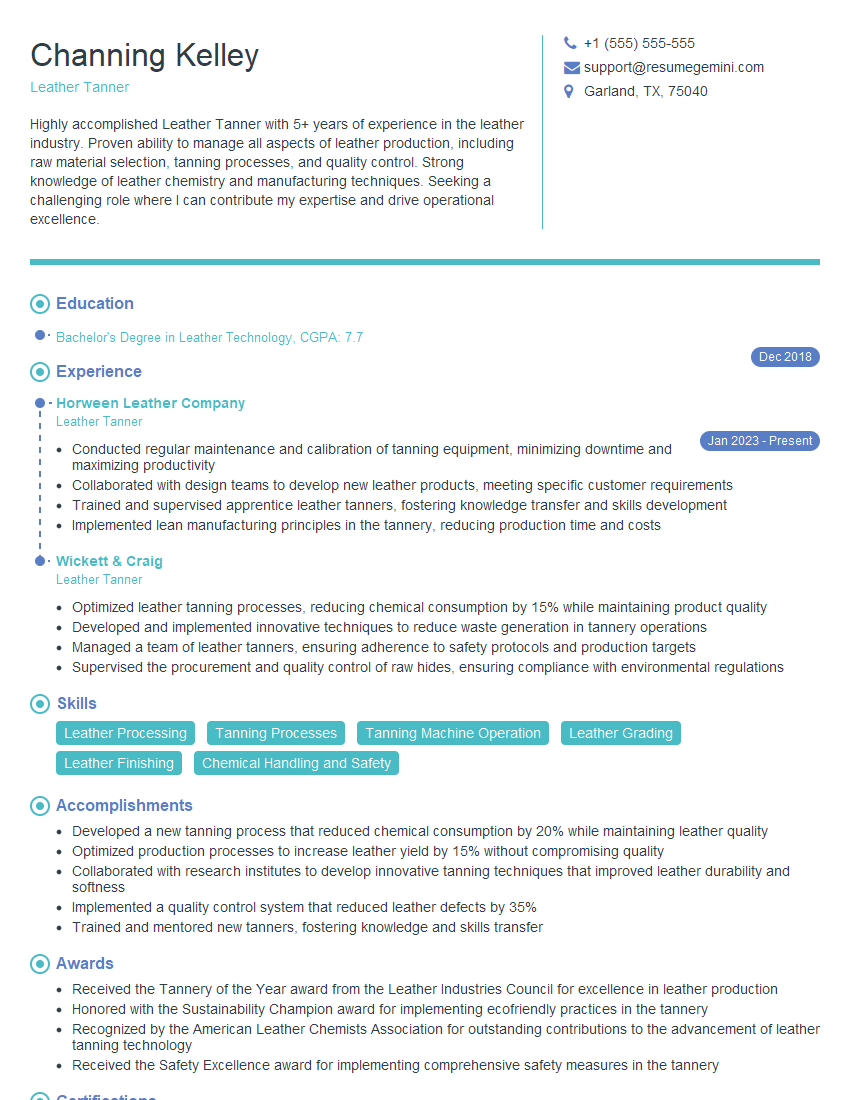
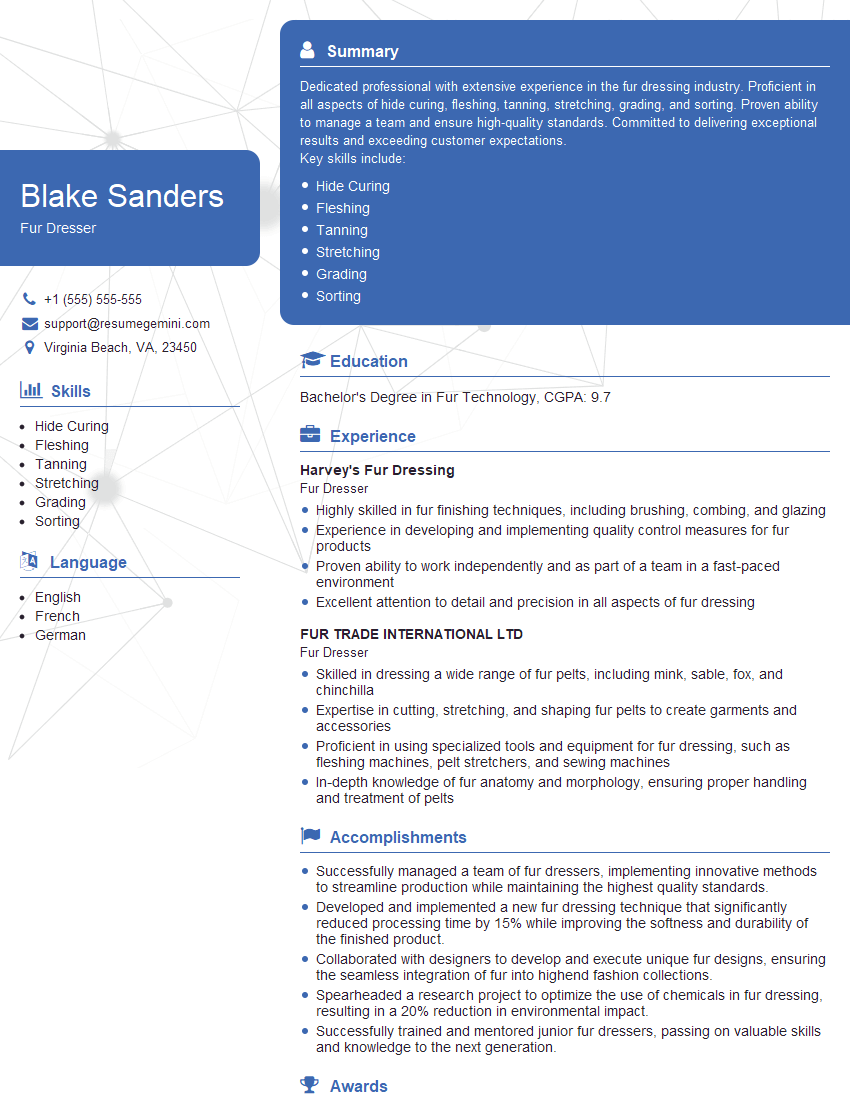
Mastering animal skin preparation opens doors to exciting career opportunities in the leather industry, offering diverse roles with excellent growth potential. To maximize your job prospects, creating a strong, ATS-friendly resume is crucial. ResumeGemini is a trusted resource to help you build a professional resume that highlights your skills and experience effectively. We provide examples of resumes tailored to Animal Skin Preparation to help you create a compelling application. Invest the time in crafting a standout resume – it’s your first impression to potential employers.


Explore more articles
Users Rating of Our Blogs
Share Your Experience
We value your feedback! Please rate our content and share your thoughts (optional).
What Readers Say About Our Blog
Really detailed insights and content, thank you for writing this detailed article.
IT gave me an insight and words to use and be able to think of examples