Are you ready to stand out in your next interview? Understanding and preparing for Artificial Insemination and Embryo Transfer interview questions is a game-changer. In this blog, we’ve compiled key questions and expert advice to help you showcase your skills with confidence and precision. Let’s get started on your journey to acing the interview.
Questions Asked in Artificial Insemination and Embryo Transfer Interview
Q 1. Describe the process of artificial insemination (AI) in detail.
Artificial Insemination (AI) is a reproductive technology where semen is collected from a male animal and artificially introduced into the reproductive tract of a female, bypassing natural mating. Think of it as a carefully orchestrated delivery service for sperm.
The process typically involves several steps:
- Semen Collection: This can be done through various methods depending on the species, often involving an artificial vagina or electro-ejaculation. The quality of this collection is paramount.
- Semen Evaluation: The collected semen is rigorously assessed for volume, concentration, motility (how well the sperm swim), and morphology (shape and structure of sperm). This ensures we’re using the best possible material.
- Semen Processing (Optional): Depending on the initial semen quality and the AI technique used, the semen may be processed to separate the most motile sperm or to extend its lifespan.
- Insemination: The processed semen is then carefully deposited into the female’s reproductive tract. The method varies based on the species; for example, in cattle, it’s typically done transcervically (through the cervix using a specialized insemination gun).
- Pregnancy Diagnosis (Later): After a suitable period, pregnancy can be confirmed through methods like ultrasound.
For example, in dairy cattle, AI is widely used to improve genetic selection by using semen from superior bulls. This is an extremely efficient and cost-effective way to enhance herd genetics.
Q 2. Explain the different types of AI techniques.
There are several types of AI techniques, primarily distinguished by the location of semen deposition within the female reproductive tract:
- Cervical AI: The semen is deposited into the cervix, a relatively simpler technique. It’s often used in species where transcervical AI is more challenging.
- Transcervical AI: The semen is deposited directly into the uterus, bypassing the cervix. This technique offers improved pregnancy rates in many species, particularly in cattle, because it places the sperm closer to the site of fertilization.
- Intrauterine AI: Similar to transcervical but sometimes involves a catheter going deeper into the uterus. This is less common for routine AI.
- Intravaginal AI: The semen is deposited into the vagina. This is the simplest but generally least efficient technique.
The choice of AI technique depends on several factors, including the species, the reproductive anatomy of the female, the quality of the semen, and the desired pregnancy rate.
Q 3. What are the criteria for selecting suitable semen samples for AI?
Selecting suitable semen samples is crucial for successful AI. Several criteria must be met:
- High Sperm Concentration: A sufficient number of sperm is essential for fertilization. Low sperm concentration decreases the chances of successful fertilization.
- High Motility: Sperm must be able to swim effectively to reach the egg. Poor motility severely reduces the fertilization potential.
- Normal Morphology: The sperm should have a normal structure. Abnormally shaped sperm may have reduced fertilizing capacity.
- Absence of Pathogens: The semen should be free from any bacterial or viral infections that could harm the female or the developing embryo.
- Suitable Age: Semen is typically used within a specific timeframe after collection, as sperm viability decreases over time.
- Source Animal Health: Information about the male’s health history is crucial. Genetic health and disease history can impact the outcome.
For example, a bull with a history of low fertility or carrying genetic defects will be unsuitable for AI, irrespective of the immediate semen quality.
Q 4. How do you assess the quality and quantity of semen samples?
Semen quality and quantity are assessed using several techniques:
- Volume: Measured using a graduated cylinder, indicating the amount of semen produced.
- Concentration: Determined using a haemocytometer or automated semen analyzer. This tells us the number of sperm per milliliter.
- Motility: Assessed visually under a microscope by observing the percentage of sperm moving progressively. Computer-assisted semen analysis (CASA) systems can provide objective measurements.
- Morphology: Evaluated microscopically by assessing the percentage of sperm with normal shapes. Abnormal shapes indicate potential fertility issues.
- Viability: Determines the percentage of live sperm using staining techniques.
- DNA integrity: Advanced tests assess sperm DNA fragmentation, critical for embryo development.
These parameters are crucial in selecting the most appropriate semen for AI and predicting the likelihood of successful fertilization.
Q 5. Explain the process of embryo transfer.
Embryo transfer (ET) is an assisted reproductive technology where embryos, produced either through natural mating or in vitro fertilization (IVF), are collected and transferred into a recipient female. Imagine it as a transplant of potential life.
The process generally involves:
- Superovulation: In the donor female, hormonal treatments are used to induce the development of multiple eggs.
- Insemination: The donor female is artificially inseminated or naturally mated.
- Embryo Recovery: After a suitable period, the embryos are surgically or nonsurgically recovered from the donor female’s reproductive tract.
- Embryo Evaluation: The recovered embryos are assessed for quality using morphology and other parameters.
- Embryo Transfer: Selected embryos are transferred into the reproductive tract of a recipient female that’s been prepared hormonally to receive the embryos.
- Pregnancy Diagnosis (Later): Pregnancy is confirmed in the recipient after a suitable interval.
ET is particularly valuable in improving genetic selection, as superior females can produce multiple offspring through the use of a single recipient female.
Q 6. What are the key factors to consider during embryo selection for transfer?
Selecting the right embryos for transfer is critical. Key factors include:
- Morphology: Embryo shape, size, and cell number are important indicators of developmental competence.
- Stage of Development: The embryo’s developmental stage at the time of transfer influences the success rate.
- Cell Number: Higher cell number typically correlates with better embryo quality.
- Symmetry: Embryos exhibiting symmetrical cell division usually have better development.
- Absence of Fragmentation: The presence of fragmented cells indicates potential abnormalities.
- Blastocyst Quality (In IVF): For IVF-produced embryos, blastocyst quality is a major factor, considering factors like inner cell mass and trophectoderm development.
Embryos with superior morphology and other characteristics are preferentially selected for transfer to maximize the chances of successful pregnancy.
Q 7. Describe the different methods of embryo transfer.
Several methods are used for embryo transfer:
- Nonsurgical ET: The embryos are deposited into the uterus through the cervix using a specialized catheter. This is less invasive and commonly used in cattle and other species.
- Surgical ET: A small incision is made in the flank to access the reproductive tract and transfer the embryos directly into the uterus. This method is commonly used in species like horses or sheep where transcervical access is difficult.
The choice of method depends on species, the size and anatomy of the recipient, and available resources. Nonsurgical ET is preferred due to its reduced invasiveness and lower risk of complications when feasible.
Q 8. What are the potential complications of AI and embryo transfer?
Artificial Insemination (AI) and Embryo Transfer (ET) are powerful reproductive technologies, but like any medical procedure, they carry potential complications. These can arise at various stages, from the initial semen collection and processing to the post-transfer period.
- Ovarian Hyperstimulation Syndrome (OHSS): This is a serious complication, particularly in women undergoing superovulation for IVF, where multiple follicles are stimulated. OHSS can cause severe abdominal pain, bloating, and fluid buildup. Careful monitoring and dose adjustments of fertility medications are crucial for prevention.
- Ectopic Pregnancy: This occurs when a fertilized egg implants outside the uterus, most commonly in the fallopian tube. It’s a life-threatening condition requiring immediate medical attention. Careful embryo transfer techniques aiming for uterine placement are crucial in prevention.
- Infection: Infection at the site of insemination or embryo transfer is a possibility, though rare with proper aseptic techniques. Symptoms may include pain, fever, and discharge.
- Multiple Gestations: In AI and ET, multiple births are a possibility, particularly with multiple embryo transfers or with naturally occurring twins. This increases the risk of complications for both the mother and the babies.
- Implantation Failure: Even with viable embryos, implantation may fail. Factors like uterine receptivity, embryo quality, and maternal age can influence this.
- Miscarriage: Sadly, miscarriage is a possibility after a successful pregnancy following AI or ET, and the risk factors are similar to natural pregnancies.
The specific risk profile of complications will depend on several factors, including the patient’s age, medical history, and the specific reproductive technologies used.
Q 9. How do you manage complications during or after AI/ET procedures?
Managing complications during and after AI/ET requires a multi-faceted approach, combining preventive measures with prompt and effective intervention.
- Pre-Procedure: Thorough patient evaluation, including medical history and physical examination, is crucial. Careful selection of candidates and appropriate medication protocols to prevent OHSS are also important.
- During the Procedure: Strict adherence to aseptic techniques minimizes the risk of infection. Ultrasound guidance during embryo transfer ensures accurate placement within the uterus.
- Post-Procedure: Close monitoring for symptoms of complications is essential. This may involve regular blood tests, ultrasound scans, and assessment of symptoms like pain or bleeding. If OHSS develops, the patient may require hospitalization for fluid management and supportive care. Treatment for ectopic pregnancies or infections requires prompt medical intervention, often involving surgery or medication.
A strong communication channel between the patient and the healthcare team is vital for addressing concerns, providing support, and managing complications effectively. This collaborative approach is crucial for maximizing success and minimizing risks.
Q 10. Explain the role of cryopreservation in AI and embryo transfer.
Cryopreservation, the process of freezing biological materials, plays a vital role in AI and ET. It allows for the preservation of both semen and embryos for future use, offering significant advantages:
- Extended Fertility Options: Cryopreservation allows individuals to preserve their reproductive potential for later use, particularly beneficial for cancer patients undergoing treatment or individuals delaying parenthood.
- Improved Efficiency: In IVF cycles, multiple embryos may be produced. Cryopreservation allows for transferring only a select number of embryos at a time, reducing the risk of multiple gestation pregnancies.
- Genetic Resource Banking: Cryopreservation of semen and embryos from genetically superior animals plays a critical role in livestock breeding programs, aiding in genetic improvement and preservation.
Essentially, cryopreservation extends the timeline of reproductive options, enhances efficiency, and plays a critical role in assisted reproduction and animal breeding.
Q 11. What are the best practices for cryopreserving embryos and semen?
Best practices for cryopreserving embryos and semen involve meticulous attention to detail at every step, from sample preparation to storage.
- Semen Cryopreservation: This involves diluting the semen with a cryoprotective agent, a solution that safeguards the sperm cells from damage during freezing and thawing. Slow freezing techniques are commonly used to minimize ice crystal formation that can damage sperm. Post-thaw evaluation assesses sperm motility and morphology.
- Embryo Cryopreservation: Embryos are typically vitrified, a rapid freezing technique that minimizes ice crystal damage. This involves exposing the embryos to high concentrations of cryoprotective agents before plunging them into liquid nitrogen. The embryos are then stored in liquid nitrogen tanks (-196°C) for long-term preservation.
Both processes require specialized equipment, trained personnel, and strict adherence to quality control measures to ensure the viability of the preserved material. Regular monitoring and maintenance of storage equipment are also crucial.
Q 12. Describe the techniques used for thawing cryopreserved embryos and semen.
Thawing cryopreserved embryos and semen requires precise techniques to minimize damage and ensure viability.
- Semen Thawing: This involves a controlled warming process, often using a water bath at a specific temperature, to gradually return the semen to a physiological state. The thawed sample is then assessed for sperm motility and morphology before use.
- Embryo Thawing: Vitrified embryos are thawed using a rapid warming method, often involving exposure to a warming solution followed by removal of cryoprotective agents. The thawed embryos are then assessed for morphology and viability before transfer or culture.
The thawing process is crucial. Rapid and controlled warming minimizes ice crystal formation that can damage the cells. Incorrect thawing procedures can dramatically reduce the viability of the sample.
Q 13. How do you assess the viability of cryopreserved embryos after thawing?
Assessing the viability of cryopreserved embryos post-thawing is essential for successful ET. Several methods are used:
- Morphological Assessment: Embryologists visually examine the embryos under a microscope to assess their shape, size, and cell number. The presence of fragmentation (broken cells) is a negative indicator of viability.
- Time-Lapse Imaging: This advanced technique uses automated imaging systems to monitor embryo development over time. It provides detailed information about cleavage patterns and cell division, aiding in the selection of high-quality embryos.
- Embryo Culture: After thawing, embryos may be cultured in vitro for a short period to assess their ability to continue developing. This can provide further information about viability before transfer.
The combination of these assessments helps embryologists select the most viable embryos for transfer, increasing the chances of a successful pregnancy.
Q 14. Explain the importance of maintaining aseptic techniques in the ART lab.
Maintaining aseptic techniques in an ART lab is paramount to prevent contamination, which could compromise the success of procedures and potentially harm patients.
- Environmental Control: The lab should maintain a clean and controlled environment with laminar flow hoods and HEPA filters to minimize airborne contamination. Regular cleaning and disinfection are essential.
- Personnel Hygiene: Staff must adhere to strict hygiene protocols, including wearing appropriate protective clothing (gowns, gloves, masks), regular handwashing, and use of sterile equipment.
- Equipment Sterilization: All equipment used in AI and ET must be properly sterilized to prevent microbial contamination. This includes media, instruments, and culture vessels.
- Quality Control: Regular quality control measures, such as environmental monitoring and sterility testing, are crucial to ensure a consistently clean and safe working environment.
Failing to maintain asepsis can lead to serious consequences, from embryo contamination and compromised development to infections in patients. Thus, a commitment to rigorous aseptic technique is fundamental for the safe and effective practice of assisted reproductive technologies.
Q 15. What are the safety protocols for handling biological specimens?
Safety protocols for handling biological specimens in an Assisted Reproductive Technology (ART) lab are paramount to prevent contamination and ensure the integrity of the samples. These protocols are designed to minimize the risk of infection to both the specimens and the laboratory personnel.
- Strict Aseptic Techniques: We use meticulous aseptic techniques at every stage, from sample collection to embryo transfer. This includes working within a laminar flow hood, using sterile gloves, instruments, and media. Imagine a surgeon preparing for an operation – the level of cleanliness is comparable.
- Proper Labeling and Identification: Each specimen is meticulously labeled with patient identifiers, collection date, and time. This prevents mix-ups, a critical aspect given the sensitive nature of the materials.
- Temperature Control: Maintaining the correct temperature is vital. Gametes and embryos are highly sensitive to temperature fluctuations. We use incubators to maintain a precise temperature range (typically 37°C).
- Waste Disposal: Proper disposal of biological waste is critical to prevent the spread of infection. All waste is treated according to strict guidelines, often involving autoclaving (high-pressure sterilization).
- Regular Cleaning and Disinfection: The lab environment is regularly cleaned and disinfected with approved disinfectants to maintain a sterile working environment. This includes laminar flow hoods, work surfaces, and incubators.
- Personnel Training: All personnel undergo thorough training on aseptic techniques, safety protocols, and waste disposal procedures. Regular competency assessments ensure adherence to these protocols.
A single lapse in these protocols can have devastating consequences, leading to sample contamination, compromised embryo development, or even infection. Therefore, maintaining the highest safety standards is an unwavering priority in our lab.
Career Expert Tips:
- Ace those interviews! Prepare effectively by reviewing the Top 50 Most Common Interview Questions on ResumeGemini.
- Navigate your job search with confidence! Explore a wide range of Career Tips on ResumeGemini. Learn about common challenges and recommendations to overcome them.
- Craft the perfect resume! Master the Art of Resume Writing with ResumeGemini’s guide. Showcase your unique qualifications and achievements effectively.
- Don’t miss out on holiday savings! Build your dream resume with ResumeGemini’s ATS optimized templates.
Q 16. How do you troubleshoot common problems encountered during AI/ET procedures?
Troubleshooting in AI/ET involves a systematic approach, often starting with identifying the stage of the procedure where the problem occurred. Common problems and solutions include:
- Poor Semen Quality: If fertilization rates are low, we might examine semen parameters (concentration, motility, morphology) to identify issues. Treatment might include sperm selection techniques like density gradient centrifugation or intracytoplasmic sperm injection (ICSI).
- Oocyte Retrieval Issues: Difficulties retrieving oocytes may necessitate adjustments to the ultrasound-guided procedure or further investigation of ovarian function. For example, poor ovarian response might warrant adjustments to stimulation protocols in future cycles.
- Fertilization Failure: Low fertilization rates could indicate issues with either the sperm or the oocyte. We would analyze the morphology of the fertilized oocytes to identify any abnormalities. ICSI may be considered.
- Embryo Development Problems: Slow or arrested embryo development could be due to culture media issues, genetic abnormalities, or environmental factors within the incubator. We might adjust culture conditions or employ time-lapse imaging to better understand the developmental arrest.
- Implantation Failure: If there’s no pregnancy after embryo transfer, factors such as endometrial receptivity, uterine abnormalities, or immunological factors could be explored. Further testing, including a hysterosalpingogram or endometrial biopsy, might be recommended.
In every case, thorough record-keeping is crucial. We meticulously document all procedures, observations, and outcomes to improve future cycle success and identify trends.
Q 17. Describe your experience with different types of culture media used in embryo culture.
My experience encompasses a wide range of culture media, each with its own formulation and advantages. The choice of media depends on factors such as the stage of embryo development, the species, and the specific needs of the patient.
- Sequential Media: These media mimic the changing nutritional requirements of the embryo as it develops. For instance, early-stage embryos require a specific balance of nutrients different from blastocyst-stage embryos. A sequential media system provides a tailored environment, often resulting in better blastocyst formation rates.
- Single-Step Media: These media are designed to support embryo development from fertilization to the blastocyst stage without changes. They are simpler to use but may not precisely reflect the dynamic nutritional needs of the developing embryo.
- Chemically Defined Media: These media are composed of precisely defined components with known concentrations. They are useful in reducing the variability associated with using serum-containing media, which can introduce inconsistencies. However, they are often more expensive.
We carefully evaluate the performance of different media formulations based on parameters such as cleavage rate, blastocyst formation rate, and blastocyst quality. Regular quality control measures ensure the consistency and efficacy of the media used. Selecting the right media is a critical factor in maximizing embryo development and ensuring successful pregnancy outcomes.
Q 18. Explain the significance of monitoring embryo development in vitro.
Monitoring embryo development in vitro is crucial for selecting the best embryos for transfer and maximizing the chances of a successful pregnancy. Time-lapse imaging has revolutionized this aspect.
- Assessment of Embryo Morphology: We evaluate aspects like cleavage rate, fragmentation, and symmetry of the cells. A high-quality embryo typically shows even cleavage and minimal fragmentation.
- Identification of Developmental Kinetics: Time-lapse imaging allows us to track the precise timing of various developmental events, providing insights into the embryo’s developmental potential. For instance, the timing of the first cleavage division and the appearance of specific morphological features can be indicative of a healthy embryo.
- Selection of Embryos for Transfer: This information helps us select embryos with the highest chances of implantation. This significantly reduces the number of embryos needed to be transferred, minimizing the risk of multiple pregnancies.
- Early Detection of Abnormalities: Time-lapse imaging can detect subtle abnormalities that may not be visible through traditional methods. This helps in the selection of only healthy embryos for transfer, thereby avoiding embryos with developmental defects.
The data gathered from monitoring embryo development are carefully analyzed to improve our understanding of embryo development and optimize our culture techniques. The ultimate aim is to select the best embryos for transfer, leading to a successful pregnancy.
Q 19. What are the ethical considerations related to AI and embryo transfer?
Ethical considerations in AI and embryo transfer are multifaceted and require careful consideration.
- Informed Consent: Patients must be fully informed about the procedures, risks, and potential benefits before undergoing treatment. This includes discussions about the success rates, multiple pregnancies, and potential complications.
- Embryo Selection: The selection of embryos raises questions about the criteria used and the potential for bias. We must ensure that selection is based on objective criteria that optimize the chances of a successful pregnancy, while ethically avoiding the selection of embryos based on non-medical factors.
- Embryo Disposition: The handling of surplus embryos is a complex ethical issue, with options including cryopreservation, donation to research, or discarding. We need to carefully counsel patients about the ethical implications of each option and ensure that their wishes are respected.
- Genetic Testing and Screening: Prenatal diagnosis technologies raise ethical concerns about the selection of embryos based on genetic traits. We must adhere to strict guidelines and ensure that testing is conducted for medically necessary reasons only, avoiding the potential for genetic discrimination.
- Access to Treatment: Equitable access to ART is an ethical concern. We must ensure that treatments are accessible to all individuals who need them, regardless of their socioeconomic status.
Ongoing dialogue and adherence to ethical guidelines are essential in ensuring that ART procedures are conducted responsibly and ethically.
Q 20. How do you ensure compliance with regulatory guidelines in the ART lab?
Compliance with regulatory guidelines is paramount in an ART lab. We adhere to stringent national and international standards to ensure the safety and quality of our services.
- Licensing and Accreditation: Our lab is licensed and accredited by the relevant regulatory bodies, demonstrating our commitment to meeting the highest quality standards. This involves regular inspections and audits.
- Record Keeping: We maintain meticulous records of all procedures, including patient information, embryo development, and treatment outcomes. These records are regularly reviewed to ensure accuracy and compliance.
- Personnel Qualifications: Our staff members possess the necessary qualifications, training, and experience to perform their duties effectively and safely. We invest heavily in ongoing training to stay updated with the latest techniques and regulations.
- Quality Control Procedures: We implement strict quality control procedures at every stage of the process, from sample handling to embryo transfer. These procedures are designed to minimize errors and ensure the consistency of our results.
- Data Security: Protecting patient information is a legal and ethical obligation. We utilize strict data security measures to protect the confidentiality of patient records.
Compliance is not just a matter of following rules; it’s a commitment to providing safe and effective treatment to our patients and maintaining the integrity of our laboratory’s work.
Q 21. Describe your experience with quality control and assurance in the ART lab.
Quality control and assurance (QA/QC) are integral to our operations, ensuring the reliability and accuracy of our work. Our QA/QC program covers all aspects of the laboratory, from equipment maintenance to personnel training.
- Equipment Calibration and Maintenance: All laboratory equipment, including incubators, microscopes, and centrifuges, undergoes regular calibration and maintenance to ensure accuracy and optimal performance. Regular preventative maintenance significantly reduces the risk of equipment failure and ensures consistent results.
- Reagent and Media Testing: We meticulously test all reagents and culture media to verify their sterility and functionality. This includes assessing pH, osmolality, and the presence of any contaminants. This is done using specific tests and quality assurance checks to ensure their compliance and effectiveness.
- Process Monitoring: We monitor key performance indicators (KPIs) such as fertilization rates, cleavage rates, blastocyst formation rates, and pregnancy rates. Regular analysis of these KPIs helps identify any trends and allows for timely adjustments to our procedures. This continuous monitoring helps us identify and address issues proactively.
- Personnel Competency: Regular training and competency assessments for our staff are vital. This is crucial to ensure that our team is proficient in all aspects of the procedures and to minimize human error.
- Internal and External Audits: We conduct regular internal audits and participate in external audits to assess our compliance with regulations and standards. This provides an objective evaluation of our processes and allows us to identify areas for improvement.
Our unwavering commitment to QA/QC ensures that we provide high-quality services, maximize pregnancy success rates and maintain the highest ethical standards in our work. It’s a continuous process of improvement and refinement.
Q 22. Explain your understanding of the legal and regulatory aspects of AI and ET.
The legal and regulatory landscape surrounding Artificial Insemination (AI) and Embryo Transfer (ET), collectively known as Assisted Reproductive Technologies (ART), is complex and varies geographically. It’s primarily focused on ensuring patient safety, informed consent, and ethical practices. Key aspects include regulations on:
- Licensing and Accreditation: Clinics and labs must meet stringent standards to operate legally, ensuring proper equipment, trained personnel, and adherence to quality control protocols.
- Informed Consent: Patients must be fully informed about the procedures, potential risks, and success rates before consenting to treatment. This includes understanding the genetic implications, potential complications, and multiple pregnancy risks. Documentation of informed consent is crucial.
- Embryo Disposition: Regulations govern the storage, use, and disposal of embryos. This includes guidelines on embryo donation, freezing, and destruction, addressing ethical considerations and patient autonomy.
- Data Privacy and Confidentiality: Strict regulations protect patient data, including medical records, genetic information, and identifying details. Adherence to HIPAA (in the US) or equivalent legislation is mandatory.
- Third-Party Reproduction: Laws addressing surrogacy, egg donation, and sperm donation vary significantly. These regulations usually cover the legal rights and responsibilities of all parties involved, including the intended parents, donors, and gestational carriers.
Non-compliance can lead to severe penalties, including fines, license revocation, and legal action. Staying updated on the evolving legal framework is essential for ethical and compliant practice.
Q 23. How do you communicate effectively with patients and their families?
Effective communication with patients and their families is paramount in ART. It requires empathy, active listening, and clear, concise explanations. I utilize a multi-faceted approach:
- Active Listening: I create a safe space for patients to share their concerns, anxieties, and hopes, ensuring they feel heard and understood. This involves asking open-ended questions and paying attention to non-verbal cues.
- Clear and Simple Explanations: I avoid medical jargon and use plain language to explain complex procedures and potential outcomes. I tailor my explanations to the patient’s level of understanding, using analogies and visual aids when necessary.
- Empathy and Emotional Support: Infertility treatment can be emotionally challenging. I offer emotional support, acknowledging the patient’s feelings and validating their experiences.
- Realistic Expectations: I provide accurate information about success rates and potential complications, managing expectations without diminishing hope.
- Regular Updates: I maintain consistent communication throughout the treatment process, providing timely updates and answering questions promptly.
- Written Materials: I often supplement verbal communication with informative handouts or online resources to reinforce key information.
I believe that building trust and rapport is crucial for positive treatment outcomes and patient satisfaction. For example, I once spent an extra hour explaining the intricacies of IVF to a particularly anxious couple, and their relief at finally understanding the process was incredibly rewarding.
Q 24. Describe your experience with data management and record-keeping in the ART lab.
Data management and record-keeping in an ART lab are crucial for ensuring patient safety, legal compliance, and accurate research. We employ a robust system involving:
- Electronic Health Records (EHR): All patient information, including medical history, treatment plans, lab results, and consent forms, is meticulously documented in a secure EHR system. This ensures easy access to information and maintains a complete audit trail.
- Sample Tracking: A sophisticated barcoding system tracks all samples (sperm, eggs, embryos) from collection to cryopreservation or transfer. This minimizes the risk of sample mix-ups and ensures traceability.
- Laboratory Information Management System (LIMS): Our LIMS software integrates data from various lab instruments and processes, generating comprehensive reports and facilitating quality control analysis.
- Regular Audits and Backups: Regular internal audits ensure data integrity and compliance with regulatory standards. Regular data backups protect against data loss due to technical failures.
- Data Security: Access to patient data is restricted to authorized personnel only, and strict security protocols are in place to prevent unauthorized access or breaches.
This rigorous approach to data management ensures the safety and well-being of our patients and maintains the highest standards of professional practice. Any deviation from the protocol is immediately investigated and addressed.
Q 25. What are the different types of assisted reproductive technologies (ART)?
Assisted Reproductive Technologies (ART) encompass a wide range of procedures designed to help individuals or couples conceive. Some common types include:
- In Vitro Fertilization (IVF): Eggs are retrieved from the ovaries, fertilized with sperm in a laboratory, and then the resulting embryos are transferred into the uterus.
- Intrauterine Insemination (IUI): Sperm is directly placed into the uterus around the time of ovulation.
- Intracytoplasmic Sperm Injection (ICSI): A single sperm is directly injected into an egg to facilitate fertilization.
- Gamete Intrafallopian Transfer (GIFT): Eggs and sperm are placed into the fallopian tubes to allow fertilization to occur naturally.
- Zygote Intrafallopian Transfer (ZIFT): A fertilized egg (zygote) is placed into the fallopian tubes.
- Preimplantation Genetic Testing (PGT): Embryos are screened for genetic abnormalities before transfer.
- Egg and Sperm Donation: Using eggs or sperm from a donor to help individuals or couples conceive.
- Surrogacy: A woman carries a pregnancy to term for another individual or couple.
The choice of ART depends on the individual’s or couple’s specific circumstances and diagnosis.
Q 26. How would you explain the procedure and its implications to a patient?
Explaining an ART procedure to a patient requires sensitivity and careful consideration of their emotional state. I would begin by establishing rapport and building trust. Then, I would explain the procedure in simple, clear terms, outlining the following:
- The Purpose of the Procedure: Clearly stating the reason for recommending the procedure and how it aims to address the patient’s infertility issues.
- Step-by-Step Process: Explaining each step of the procedure, using analogies and visual aids where appropriate. For example, explaining IVF as a ‘three-step process’ encompassing egg retrieval, fertilization, and embryo transfer would simplify the process.
- Success Rates and Potential Complications: Providing realistic information about the chances of success and potential risks and side effects, including multiple pregnancies, ovarian hyperstimulation syndrome, or ectopic pregnancy.
- Medication and Procedures: Describing any medications or procedures involved and their purpose.
- Cost and Time Commitment: Discussing the financial and time commitments associated with the procedure.
- Post-Procedure Care: Providing instructions and follow-up care guidelines.
- Alternative Options: Discuss alternative treatment options and explore other avenues if the preferred procedure isn’t viable.
After the explanation, I’d encourage the patient to ask questions and address any concerns. I would also provide written materials summarizing the key information for them to review at their own pace.
Q 27. What are your strengths and weaknesses in this field?
My strengths lie in my meticulous attention to detail, my problem-solving skills, and my ability to communicate effectively with patients. Years of experience have honed my expertise in handling complex cases and troubleshooting technical issues in the lab. I am adept at maintaining accurate records and ensuring compliance with regulations. My ability to empathize with patients during emotionally challenging times is also a significant strength.
However, like everyone, I have areas for improvement. While I strive for perfection, I recognize that occasional setbacks are inevitable. I am working on improving my time management skills to better manage my workload and prevent burnout. I am also actively seeking opportunities to further enhance my knowledge and stay abreast of the latest advancements in the field.
Q 28. Describe a time you had to troubleshoot a complex problem in the lab.
During an IVF cycle, we encountered an unexpected issue with the incubator’s temperature control system. Embryo development is exquisitely sensitive to temperature fluctuations, so a malfunction could compromise the entire cycle. The alarm indicated a temperature spike, but the problem wasn’t immediately obvious. Our initial troubleshooting steps, such as checking power supply and internal sensors, yielded no results.
I systematically investigated the issue, starting with the most likely causes and working my way down a list. I checked the internal logs for error codes, which indicated a faulty heating element. We immediately contacted the manufacturer for support and, while waiting for their assistance, implemented a temporary solution – transferring the embryos to a backup incubator. This prevented any harm to the embryos and bought us time to rectify the issue.
The manufacturer’s technician arrived within hours, confirmed the faulty heating element, and replaced it. The lab was back online, and we successfully completed the IVF cycle with no adverse effects. This experience reinforced the importance of thorough training, meticulous record-keeping, and a proactive approach to troubleshooting. Having a backup plan was critical in mitigating the risk of failure and safeguarding the embryos.
Key Topics to Learn for Artificial Insemination and Embryo Transfer Interview
- Reproductive Physiology: Understand the estrous cycle, ovarian function, and sperm characteristics in relevant species. Consider the hormonal influences and their impact on successful AI/ET.
- AI Techniques: Master various AI techniques, including the selection and processing of semen, the timing of insemination, and different insemination methods (e.g., transcervical, laparoscopic).
- Embryo Collection and Evaluation: Learn about non-surgical and surgical embryo recovery techniques, embryo morphology assessment, and the criteria for selecting high-quality embryos for transfer.
- Embryo Transfer Techniques: Become proficient in different ET methods, including the preparation of the recipient, the transfer procedure itself, and the post-transfer management of the animal.
- Cryopreservation Techniques: Understand the principles and practical applications of freezing and thawing semen and embryos, including the importance of cryoprotectants and optimal storage conditions.
- Reproductive Technologies in Specific Species: Gain expertise in the species-specific challenges and best practices for AI/ET in various animal species (e.g., cattle, swine, horses).
- Record Keeping and Data Management: Develop skills in maintaining accurate and detailed records of AI/ET procedures, including breeding history, embryo quality scores, and pregnancy outcomes. This is crucial for analyzing results and improving techniques.
- Troubleshooting and Problem Solving: Be prepared to discuss common challenges in AI/ET (e.g., low pregnancy rates, embryo mortality) and your approach to diagnosing and resolving these issues.
- Biosecurity and Hygiene: Understand the importance of maintaining a sterile environment and adhering to strict biosecurity protocols to prevent contamination and disease transmission.
- Ethical Considerations: Be familiar with the ethical implications of AI/ET and responsible animal husbandry practices.
Next Steps
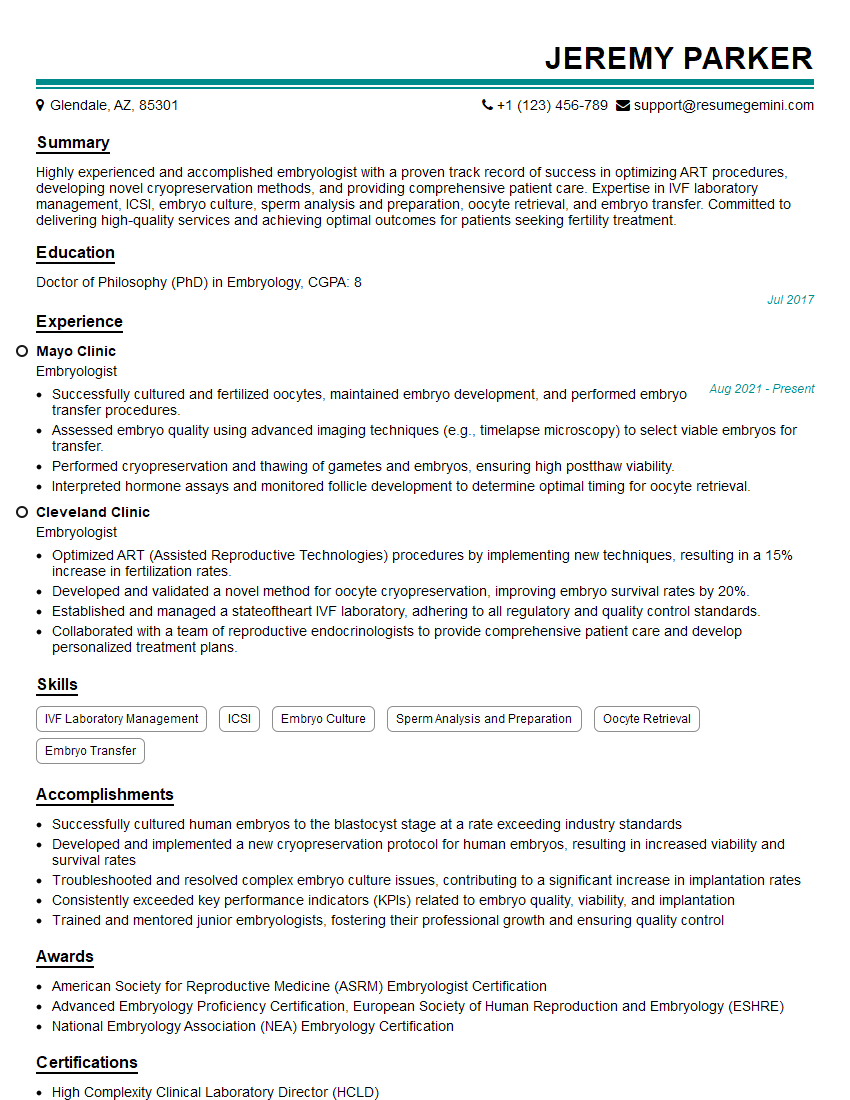
Mastering Artificial Insemination and Embryo Transfer opens doors to exciting career opportunities in animal reproduction, veterinary medicine, and agricultural biotechnology. To significantly enhance your job prospects, create a compelling and ATS-friendly resume that showcases your skills and experience effectively. ResumeGemini is a trusted resource that can help you build a professional and impactful resume. We provide examples of resumes tailored specifically to the Artificial Insemination and Embryo Transfer field to help guide you. Take the next step towards your dream career today!
Explore more articles
Users Rating of Our Blogs
Share Your Experience
We value your feedback! Please rate our content and share your thoughts (optional).
What Readers Say About Our Blog
Really detailed insights and content, thank you for writing this detailed article.
IT gave me an insight and words to use and be able to think of examples