Feeling uncertain about what to expect in your upcoming interview? We’ve got you covered! This blog highlights the most important Avionics System Monitoring and Control interview questions and provides actionable advice to help you stand out as the ideal candidate. Let’s pave the way for your success.
Questions Asked in Avionics System Monitoring and Control Interview
Q 1. Explain the principles of aircraft health monitoring systems.
Aircraft health monitoring systems (AHMS) are crucial for ensuring safe and efficient flight operations. They continuously monitor various aircraft parameters, detecting anomalies and predicting potential failures before they escalate into critical situations. The core principle lies in collecting data from various sensors distributed throughout the aircraft, processing this data, and then presenting it to pilots and maintenance personnel in a clear and understandable format. This allows for proactive maintenance, reducing unscheduled downtime and improving overall aircraft safety.
Think of it like a comprehensive check-up for your car, but instead of a mechanic manually checking everything, sensors constantly monitor engine temperature, oil pressure, fuel levels, and hundreds of other vital parameters. Any deviation from pre-defined thresholds triggers alerts, allowing for early intervention.
AHMS typically uses a combination of techniques including:
- Data Acquisition: Sensors collect data on various systems (engines, hydraulics, electrical systems etc.).
- Data Processing: Sophisticated algorithms analyze the raw data, identifying trends and anomalies. This often involves signal processing, fault detection, and isolation (FDI) techniques.
- Data Presentation: The processed information is presented to crew members through displays in the cockpit and to maintenance personnel via ground stations, providing a clear picture of the aircraft’s health.
- Predictive Maintenance: Advanced AHMS systems go a step further, using machine learning to predict potential failures based on historical data and current sensor readings.
Q 2. Describe different types of avionics data buses and their functionalities.
Avionics data buses are the nervous system of a modern aircraft, allowing different systems to communicate and share information. Several types exist, each with its strengths and weaknesses:
- ARINC 429: A widely used, older standard. It’s a point-to-point, high-speed, and reliable bus primarily used for transmitting discrete and analog data. Think of it as a series of dedicated phone lines each carrying specific information.
- AFDX (Avionics Full Duplex Switched Ethernet): A newer, more advanced standard using Ethernet technology. It’s a packet-switched network, offering higher bandwidth and deterministic communication. This is like a modern high-speed internet connection within the aircraft, allowing for complex data exchange between systems.
- 1553B: A high-speed, time-division multiplexed bus which is very robust and suitable for critical systems. This acts as a central control hub that allows devices to communicate sequentially. It’s particularly suited for situations requiring real-time data transmission.
The choice of data bus depends on the specific application and its requirements for bandwidth, reliability, and determinism (guaranteed response times). For example, critical flight control systems would likely use 1553B or AFDX due to their high reliability and deterministic nature, while less critical systems might use ARINC 429.
Q 3. How do you troubleshoot a malfunctioning avionics system?
Troubleshooting a malfunctioning avionics system requires a systematic approach. It begins with understanding the nature of the malfunction. Is it a complete failure, intermittent fault, or performance degradation? The next step involves gathering data.
Here’s a step-by-step approach:
- Identify the Symptoms: What exactly is failing? Is there an error message? What indicators are affected?
- Consult Maintenance Manuals: This is the first source of troubleshooting information; it provides diagnostic flowcharts and procedures specific to the aircraft and system.
- Data Analysis: Use built-in diagnostic tools or external equipment to access the data logs from the affected system. Look for error codes, sensor readings, and timestamps.
- Isolate the Problem: Use the collected data and the maintenance manual to pinpoint the faulty component or subsystem. This might involve conducting continuity tests, voltage checks, or signal analysis.
- Replace or Repair: Once the faulty component is identified, it needs to be replaced or repaired according to the maintenance manual’s procedures.
- Verification and Testing: After the repair or replacement, thoroughly test the system to verify that it’s functioning correctly. This might involve pre-flight checks and functional tests.
Remember, safety is paramount when troubleshooting avionics. Always follow the prescribed maintenance procedures and seek expert assistance when necessary.
Q 4. What are the key safety considerations in avionics system design?
Safety is the paramount concern in avionics system design. Failure can have catastrophic consequences. Key safety considerations include:
- Redundancy and Fault Tolerance: Multiple systems or components performing the same function, ensuring continued operation even if one component fails. This is critical for flight-critical systems.
- System Architecture: A well-defined system architecture that minimizes the impact of single points of failure. This might involve modular design and independent subsystems.
- Certification and Compliance: Adherence to strict industry standards and regulations (e.g., DO-178C for software, DO-254 for hardware) to ensure safety and reliability.
- Failure Modes and Effects Analysis (FMEA): A systematic method for identifying potential failure modes, their effects, and their severity. This helps prioritize design improvements.
- Human Factors Engineering: Designing the system to be intuitive and user-friendly, minimizing the risk of human error.
- Software Integrity: Robust software development processes to ensure code quality and reliability, minimising the risk of software related failure.
These considerations work together to create systems that are highly reliable and tolerant to faults, reducing the risk of accidents.
Q 5. Explain the concept of redundancy in avionics systems.
Redundancy in avionics systems is the concept of having multiple independent components or systems perform the same function. If one component fails, the other(s) can take over seamlessly. This drastically increases the reliability and safety of the aircraft.
There are several types of redundancy:
- Passive Redundancy: A spare component is available, but only activated if the primary component fails. This is simple but may introduce a delay in recovery.
- Active Redundancy: Multiple components are active simultaneously, with their outputs compared. A disagreement triggers an alert and/or a failover to the most reliable output. This is faster and more robust but adds complexity.
- Hybrid Redundancy: Combines elements of both passive and active redundancy for optimal performance.
For example, a modern aircraft might have three independent flight control computers. If one fails, the other two can continue flying the aircraft safely. This is a critical example of active redundancy in a flight-critical system.
Q 6. Describe your experience with avionics system testing and validation.
My experience with avionics system testing and validation spans several projects, involving both hardware and software. I’ve been involved in all stages of the testing lifecycle, from unit testing to system integration testing and flight testing. We used a variety of methods including:
- Unit Testing: Individual components or modules are tested to ensure they function correctly.
- Integration Testing: Tested to ensure that different modules work together seamlessly.
- System Testing: The complete avionics system is tested to verify it meets all requirements and performs as expected.
- Hardware-in-the-Loop (HIL) Simulation: The avionics system is tested using a simulated aircraft environment. This allows us to test the system under various scenarios, including failures, without endangering a real aircraft.
- Flight Testing: The final stage, the avionics system is tested in real-flight conditions, confirming it functions as intended.
In one project, we used HIL simulation to extensively test a new autopilot system under diverse conditions (turbulence, engine failure scenarios, etc.). This was critical in validating its safety and robustness before flight testing.
Q 7. What are the common failure modes in avionics systems?
Avionics systems are complex and can fail in numerous ways. Common failure modes include:
- Hardware Failures: This could be anything from a simple component failure (e.g., a faulty capacitor) to a more complex issue (e.g., a cracked circuit board). Aging components, vibration, and temperature extremes can all contribute to hardware failures.
- Software Glitches: Software bugs can lead to unexpected behavior or complete system crashes. This is why rigorous software development processes are crucial.
- Interference: Electromagnetic interference (EMI) or radio frequency interference (RFI) can disrupt system operation. Shielding and filtering are essential to mitigate this.
- Environmental Factors: Extreme temperatures, humidity, vibration, and pressure can damage components and impact system performance.
- Data Corruption: Errors in data transmission or storage can lead to incorrect information being processed, resulting in malfunctions.
Understanding these failure modes is crucial for effective system design, testing, and maintenance. This understanding drives the development of fault-tolerant systems, capable of handling a wide range of potential issues.
Q 8. How do you ensure the integrity of avionics data?
Ensuring the integrity of avionics data is paramount for flight safety. We achieve this through a multi-layered approach, focusing on data validity, accuracy, and timeliness. Think of it like a chain – if one link is weak, the whole system is compromised.
- Data Validation: This involves checks at various stages. For instance, range checks ensure that sensor readings fall within plausible limits (e.g., airspeed cannot be negative). Consistency checks compare data from multiple sensors measuring the same parameter to identify discrepancies. Parity checks and checksums detect bit errors during data transmission.
- Redundancy and Voting: Critical data is often obtained from multiple independent sensors. A voting algorithm compares these readings and selects the most likely value, rejecting outliers. This is like having three judges scoring a diving competition – the middle score is often the fairest representation.
- Data Filtering: This helps to smooth out noise and erratic fluctuations in sensor data. Kalman filters, for example, are commonly used to predict future data points based on previous readings and sensor dynamics, essentially removing glitches and making data more reliable.
- Health Monitoring: Continuous monitoring of sensor health is critical. If a sensor fails or starts producing unreliable data, the system needs to identify this and either switch to a backup sensor or flag the data as invalid. This alerts pilots and ground crews to potential issues.
For example, in a flight control system, redundant gyroscopes and accelerometers provide attitude and heading information. If one sensor malfunctions, the system uses data from the others, maintaining flight stability.
Q 9. Explain your experience with different avionics software architectures.
My experience encompasses several avionics software architectures, each with its own strengths and weaknesses. The choice depends heavily on the specific application and certification requirements.
- Monolithic Architecture: This older approach integrates all software functions into a single system. While simpler to develop initially, it becomes difficult to maintain and update as complexity grows. Debugging is also a challenge.
- Modular Architecture: This approach divides software into independent modules communicating via well-defined interfaces. This makes maintenance, testing, and updates far easier. It’s akin to assembling a Lego castle – individual parts can be replaced without affecting the whole structure. This is becoming increasingly popular due to its flexibility and maintainability.
- Distributed Architecture: This is used in more complex systems where processing power is distributed across multiple processing units (FPUs). Data sharing between these units requires careful consideration of data bus technologies and communication protocols. This is similar to a team where different people perform different tasks, coordinating to complete the project. It provides fault tolerance as the failure of one unit does not necessarily cause a complete system failure.
In my previous role, I worked extensively with a modular architecture for a flight management system, where each module was responsible for a specific task (navigation, flight planning, etc.). This modularity greatly simplified the integration process and allowed for independent verification and validation of each component.
Q 10. Describe your experience with real-time operating systems in avionics.
Real-time operating systems (RTOS) are the backbone of avionics systems, ensuring deterministic behavior and predictable response times. They are very different from general-purpose operating systems like Windows or MacOS.
- Determinism: RTOS guarantees that tasks are executed within defined time constraints. This is crucial for safety-critical functions where delays can have catastrophic consequences. Imagine a flight control system delaying its response – that could be disastrous.
- Prioritization: Tasks are assigned priorities, ensuring that high-priority tasks (e.g., flight control) are always processed first, even if lower-priority tasks are waiting. This ensures timely execution of critical functions.
- Interrupt Handling: RTOS efficiently handles interrupts, enabling rapid responses to external events. Interrupts are crucial for reacting to sensor data changes immediately.
- Resource Management: RTOS manages system resources (CPU, memory) effectively, minimizing conflicts and maximizing efficiency.
I’ve worked extensively with VxWorks and INTEGRITY, two widely used RTOS in avionics. My experience includes tasks scheduling, interrupt management, and memory allocation optimization to meet demanding real-time constraints and safety requirements. We used these to meet the timing requirements of tasks such as sensor data processing and actuator commands, ensuring that the aircraft responded appropriately to pilot input or changing environmental conditions.
Q 11. How do you handle conflicting data from multiple avionics sensors?
Conflicting data from multiple sensors is a common challenge. Resolving this requires a robust sensor fusion algorithm. The goal isn’t simply to choose one sensor over another but to intelligently combine the information to get the most accurate and reliable estimate.
- Data Validation: Before fusion, each sensor data point undergoes validation checks (range checks, consistency checks, etc.) to identify potentially erroneous readings. Bad data will only corrupt your results.
- Sensor Fusion Algorithms: Various algorithms are used, such as Kalman filtering, weighted averaging, and fuzzy logic, depending on the application and the nature of the sensors. Kalman filters are excellent for handling noisy data while weighted averaging is simpler but works well when sensors have known error characteristics.
- Fault Detection and Isolation (FDI): If a sensor is detected to be faulty, the fusion algorithm should adapt accordingly. For instance, it might reduce the weighting given to the faulty sensor’s data or switch to an alternative sensor altogether.
For instance, consider a GPS and an inertial navigation system (INS) providing location data. The GPS is accurate but can be affected by atmospheric conditions; the INS is less accurate but works without external references. Sensor fusion combines the strengths of both, providing a more accurate and robust location estimate. The system would flag a conflict if the GPS and INS reported drastically different positions.
Q 12. What are the challenges of integrating new avionics systems into existing aircraft?
Integrating new avionics systems into existing aircraft is complex and presents several challenges. It’s like retrofitting a modern engine into a classic car – it requires careful planning and execution.
- Certification: Meeting stringent certification requirements (e.g., DO-178C) for safety-critical systems is a significant hurdle. This involves extensive testing and validation to ensure the new system integrates seamlessly with the existing aircraft without compromising safety.
- Hardware Compatibility: Ensuring compatibility with existing aircraft hardware (power supply, data buses, physical interfaces) can be challenging. Different manufacturers use different standards, leading to integration problems. For example, you might need custom adapters to translate signals.
- Software Integration: Integrating new software with the existing avionics software suite requires careful consideration of data flow, communication protocols, and resource management to avoid conflicts. You want to avoid inadvertently creating issues.
- Weight and Space Constraints: Aircraft have limited weight and space, so any new equipment needs to meet these constraints. This often involves careful selection of equipment with the smallest footprint.
- Cost and Schedule: Retrofitting can be expensive and time-consuming, making it a significant investment for airlines.
In a real-world scenario, integrating a new weather radar system might require modifications to the aircraft’s antenna mount, power distribution, and cockpit displays, plus certification of the whole integrated system. A thorough risk assessment and change management process are absolutely critical.
Q 13. Explain the concept of ARINC standards in avionics.
ARINC standards are crucial for interoperability in the avionics industry. They define common interfaces and protocols, ensuring different manufacturers’ equipment can work together seamlessly. Think of them as the universal language of avionics.
- Data Buses: ARINC 429 and ARINC 664 are widely used data bus standards, defining how data is transmitted between avionics units. These standards guarantee interoperability among equipment from different manufacturers.
- Communication Protocols: ARINC standards define protocols for communication between different systems, ensuring data exchange occurs reliably and efficiently. These protocols cover aspects like error detection and correction.
- Cabin Systems: ARINC standards also cover cabin systems like in-flight entertainment and passenger communication systems, defining interfaces and protocols for these components.
- Maintenance and Testing: ARINC standards specify procedures for testing and maintenance of avionics equipment, promoting consistency and efficiency across different platforms.
Adhering to ARINC standards is essential for certification, promoting the safe and efficient operation of aircraft. Without standards, each system would have its unique communication methods, leading to chaos and safety concerns. A clear, standardized protocol is vital for efficient operation.
Q 14. Describe your experience with avionics system simulation and modeling.
Avionics system simulation and modeling are crucial for testing and validation before deployment in real aircraft. This allows engineers to identify and fix potential problems in a safe and controlled environment – significantly cheaper and safer than discovering problems in flight.
- Hardware-in-the-Loop (HIL) Simulation: This involves connecting real avionics hardware to a simulated environment. This allows engineers to test the hardware’s response under various conditions without risking the actual aircraft.
- Software-in-the-Loop (SIL) Simulation: This involves testing avionics software independently of the hardware. It’s a faster and less expensive way to test software functionality and correctness.
- Model-Based Design: Using tools like MATLAB/Simulink, engineers create models of avionics systems. These models can be used for various tasks, from initial design and verification to real-time simulation.
- Fault Injection: Simulation enables engineers to inject various faults (e.g., sensor failure, software bug) into the system to assess how it responds. This allows for validation of fault tolerance and safety mechanisms.
In my previous role, we used HIL simulation to test a new autopilot system. This allowed us to simulate various flight conditions and evaluate the autopilot’s response, including emergencies such as engine failure, ensuring its ability to safely handle the situation before putting the system on an actual aircraft.
Q 15. How do you ensure compliance with relevant aviation regulations (e.g., DO-178C)?
Ensuring compliance with aviation regulations like DO-178C, the standard for software considerations in airborne systems, is paramount. It’s not just about ticking boxes; it’s about building safety into the very fabric of the system. This involves a rigorous process throughout the entire lifecycle, from initial requirements definition to final validation.
- Requirements Traceability: Every requirement must be traceable from high-level system needs down to the individual software components. This ensures that all aspects of the system meet regulatory expectations.
- Software Design and Verification: The design process must be meticulously documented, and rigorous verification methods (e.g., unit testing, integration testing, system testing) must be applied to demonstrate the software meets its requirements. This often involves using formal methods and static analysis tools.
- Software Configuration Management: Strict control of software versions, changes, and configurations is crucial. This ensures that only approved software is used in the final product.
- Independent Verification & Validation (IV&V): A team independent of the development team should perform verification and validation activities to ensure objectivity and catch potential errors overlooked by the development team. This is critical for ensuring safety.
- Documentation: Comprehensive documentation is essential, including requirements specifications, design documents, test plans, test results, and all associated evidence to demonstrate compliance. This documentation forms the basis of certification audits.
For example, in a project I worked on involving an autopilot system, we used a formal methods approach to prove the correctness of critical algorithms, generating extensive documentation for audit and regulatory review. This rigorous approach ensured that the system met the stringent safety requirements mandated by DO-178C.
Career Expert Tips:
- Ace those interviews! Prepare effectively by reviewing the Top 50 Most Common Interview Questions on ResumeGemini.
- Navigate your job search with confidence! Explore a wide range of Career Tips on ResumeGemini. Learn about common challenges and recommendations to overcome them.
- Craft the perfect resume! Master the Art of Resume Writing with ResumeGemini’s guide. Showcase your unique qualifications and achievements effectively.
- Don’t miss out on holiday savings! Build your dream resume with ResumeGemini’s ATS optimized templates.
Q 16. Explain your experience with data acquisition and analysis in avionics.
My experience with data acquisition and analysis in avionics spans various platforms and applications. It involves collecting vast amounts of data from diverse sensors, processing that data efficiently, and using the insights to improve system performance and detect potential issues.
This typically involves working with:
- Sensor Data Acquisition: Integrating various sensors, including accelerometers, gyroscopes, air data computers, and engine parameters, via different interfaces such as ARINC 429 or Ethernet.
- Data Filtering and Processing: Applying signal processing techniques to remove noise and isolate relevant information from raw sensor data. This often involves Kalman filtering or other advanced signal processing algorithms.
- Data Storage and Management: Utilizing onboard data recorders or transferring data to ground stations for analysis. Data integrity and security are paramount.
- Data Visualization and Analysis: Employing data visualization tools and statistical methods to identify trends, anomalies, and potential problems.
For instance, I once used data analysis to identify a subtle correlation between a specific sensor reading and an increased occurrence of minor in-flight anomalies. Further investigation led to the identification of a calibration drift in that sensor, preventing a more significant issue down the line. This highlights the importance of effective data acquisition and analysis in maintaining the safety and reliability of avionics systems.
Q 17. Describe different methods for detecting and isolating faults in avionics systems.
Fault detection and isolation (FDI) in avionics is crucial for safety and reliability. Several methods exist, often used in combination:
- Redundancy: Implementing multiple systems performing the same function. If one fails, the others take over. This can be hardware redundancy (multiple computers) or software redundancy (diverse algorithms). A simple example would be having three independent AHRS (Air Data & Heading Reference System) units, comparing their outputs and voting on the most likely correct reading.
- Analytical Redundancy: Using mathematical models and sensor fusion to cross-check data consistency. If a sensor deviates significantly from the model’s prediction, a fault is indicated. This is common in state estimation filters like the Kalman filter.
- Built-in Test Equipment (BITE): Onboard systems that continuously monitor their own health and report any detected faults. This can include self-tests, limit checks, and comparisons against expected values.
- Watchdog Timers: A timer that triggers an alarm or resets the system if a process takes too long, indicating a potential failure.
- Parity Checks and Checksums: Used to detect errors in data transmission.
The specific FDI strategy depends on the criticality of the system and the cost-benefit tradeoff. Critical systems require a more robust and redundant approach.
Q 18. What are the key performance indicators for avionics systems?
Key Performance Indicators (KPIs) for avionics systems focus on safety, reliability, and performance. These can include:
- Mean Time Between Failures (MTBF): A measure of system reliability, indicating the average time between failures. A higher MTBF signifies greater reliability.
- Mean Time To Repair (MTTR): The average time it takes to repair a failed system. A lower MTTR is desirable.
- System Uptime: The percentage of time the system is operational. High uptime is critical for safety.
- Failure Rate: The frequency of system failures. A lower failure rate is preferred.
- Data Accuracy and Precision: Measures how accurately and precisely the system provides data. This is vital for navigational and flight control systems.
- Latency: The time delay between data acquisition and output. Low latency is crucial for real-time systems.
- Processing Power and Throughput: The ability of the system to process data effectively.
Monitoring these KPIs allows for proactive maintenance, system improvements, and effective risk management.
Q 19. How do you manage risks associated with avionics system failures?
Managing risks associated with avionics system failures requires a multifaceted approach:
- Hazard Analysis and Risk Assessment: Identifying potential hazards and assessing the associated risks. This often involves Fault Tree Analysis (FTA) or Failure Modes and Effects Analysis (FMEA).
- Safety Requirements Definition: Defining specific safety requirements based on the risk assessment. This ensures that design choices are driven by safety considerations.
- Redundancy and Fault Tolerance: Implementing redundant systems and fault-tolerant designs to mitigate the impact of single-point failures.
- Testing and Verification: Rigorous testing to ensure that the system meets its safety requirements. This includes functional testing, stress testing, and fault injection testing.
- Software Quality Assurance: Implementing software development processes that prioritize quality and safety. This includes coding standards, code reviews, and static analysis.
- Continuous Monitoring and Maintenance: Continuously monitoring the system’s performance and carrying out proactive maintenance to prevent failures.
For example, incorporating diverse software modules with independent verification and regular software updates mitigates risks associated with software vulnerabilities.
Q 20. Explain the difference between hardware and software monitoring in avionics.
Hardware and software monitoring in avionics serve different but complementary roles in ensuring system health and safety. Hardware monitoring focuses on the physical components, while software monitoring assesses the functionality and integrity of the software.
- Hardware Monitoring: This involves monitoring physical parameters such as temperature, voltage, current, and signal integrity of various hardware components. It uses sensors and monitoring circuits to detect anomalies and potential failures like overheating or power supply issues. Think of it as checking the physical health of the system.
- Software Monitoring: This focuses on the software’s functional correctness, resource utilization, and data integrity. It involves techniques like watchdog timers, exception handling, data validation checks, and runtime error detection to identify software bugs or glitches that could cause malfunctions. It essentially checks if the software is running as intended.
Both are essential. A hardware failure might not be apparent without software monitoring flagging unexpected behavior, and vice versa. A properly functioning software component can be rendered useless due to a faulty hardware component.
Q 21. Describe your experience with different types of avionics sensors.
My experience encompasses a wide range of avionics sensors, including:
- Inertial Measurement Units (IMUs): These measure acceleration and angular rate, crucial for navigation and flight control. I’ve worked with both MEMS (Microelectromechanical Systems) and ring laser gyroscope-based IMUs.
- Air Data Systems (ADS): These measure airspeed, altitude, and outside air temperature. I have experience integrating and calibrating various ADS technologies.
- GPS Receivers: These provide location and velocity information. I’ve worked with both single and dual-frequency GPS receivers, integrating them with other navigation systems.
- Magnetic Sensors: These measure the Earth’s magnetic field, aiding in heading determination. I have experience with both fluxgate and magneto-resistive sensors.
- Pressure Sensors: These measure pressure, useful for altitude determination and engine monitoring. I have experience with various pressure sensor technologies, including capacitive and piezoresistive sensors.
- Temperature Sensors: These monitor temperatures of various system components, critical for preventing overheating.
The choice of sensor depends heavily on the specific application and its requirements regarding accuracy, range, size, and power consumption. Each sensor type has its advantages and limitations, requiring careful consideration during system design.
Q 22. How do you interpret and analyze avionics system logs?
Interpreting avionics system logs involves systematically examining recorded data to identify anomalies, trends, and potential issues. Think of it like a detective investigating a crime scene – each log entry is a clue. We begin by understanding the log’s structure and the specific data it contains. This includes timestamps, event codes, system parameters (like voltage, temperature, pressure), and error messages.
My approach involves several steps:
- Data Filtering: I first filter the logs based on timestamps, specific events, or error codes to narrow down the scope of investigation. For example, if I’m looking for communication issues, I’d filter for events related to network protocols like ARINC 664 or AFDX.
- Pattern Recognition: Next, I look for recurring patterns or anomalies. This might involve using data visualization tools to plot parameters over time, identifying spikes or drops that indicate potential problems. For example, a sudden drop in voltage could indicate a battery issue.
- Correlation Analysis: Often, a problem in one system can affect another. Therefore, correlating data from multiple logs is crucial. If the flight control system shows erratic behavior, I’d examine related logs from the hydraulics, power, and air data systems to find a common cause.
- Fault Isolation: By combining data filtering, pattern recognition, and correlation analysis, I can isolate the potential cause of the problem. This step often requires a deep understanding of the avionics system architecture and the interactions between different components.
- Documentation and Reporting: Finally, I thoroughly document my findings, including the steps taken, the evidence found, and my recommendations for corrective actions. This ensures the issue is properly addressed and helps prevent future occurrences.
For instance, I once investigated recurrent communication dropouts on an AFDX network. By analyzing the logs, I identified intermittent high CPU load on a specific network switch, which was causing packet loss. This pointed to a firmware issue that was later resolved through a software update.
Q 23. Explain your experience with avionics system maintenance and repair.
My experience in avionics system maintenance and repair spans over [Number] years, encompassing both line maintenance and heavy maintenance tasks. I’ve worked on a variety of aircraft types, including [List aircraft types]. My expertise covers a range of systems, from flight control and navigation to communication and electrical power. Maintenance follows strict procedures outlined in the aircraft’s maintenance manual, and adhering to these is critical for ensuring flight safety.
Line maintenance focuses on routine checks, troubleshooting minor issues, and resolving simple faults. This often involves using specialized test equipment to diagnose problems and performing component replacements as needed. For instance, I’ve replaced faulty transponders and repaired damaged wiring harnesses.
Heavy maintenance involves more complex tasks like system overhauls, major repairs, and modifications. This requires a deeper understanding of the system architecture and often involves working closely with engineers. An example of this type of work was participating in a complete overhaul of an aircraft’s flight management system, which included replacing several Line Replaceable Units (LRUs) and rigorously testing the system’s functionality before returning the aircraft to service. Throughout this process, meticulous documentation and compliance with regulatory requirements are paramount.
Q 24. Describe your experience with troubleshooting communication problems in avionics networks.
Troubleshooting communication problems in avionics networks is a complex task requiring a systematic approach. Avionics networks are often based on standards like ARINC 664 (AFDX) and Ethernet, and understanding these protocols is crucial. Communication issues can stem from various sources, including hardware failures, software glitches, and configuration errors.
My troubleshooting strategy typically follows these steps:
- Isolate the problem: I start by identifying which systems are affected and the nature of the communication failure (e.g., complete loss of communication, intermittent dropouts, data corruption).
- Check network connectivity: I use network analyzers and monitoring tools to check the physical and logical connectivity of the network. This involves verifying cable integrity, network switch functionality, and IP addressing.
- Examine network logs and messages: Network logs and messages provide valuable insights into network activity and error conditions. Analyzing these logs helps identify the root cause of communication problems.
- Perform loopback tests: Loopback tests help isolate faulty network components. This involves sending a signal from one point in the network back to itself, and checking if the signal returns correctly.
- Verify software and firmware: In many cases, communication issues can be attributed to software or firmware bugs. Verifying the version and integrity of these components is essential.
For example, I once worked on an aircraft experiencing intermittent communication dropouts on its ARINC 664 network. By carefully analyzing network logs and performing loopback tests, I was able to isolate the problem to a faulty network switch. Replacing the switch immediately resolved the issue.
Q 25. What are the latest advancements in avionics system monitoring and control?
The field of avionics system monitoring and control is constantly evolving. Some significant advancements include:
- Data analytics and machine learning: These technologies are being used to predict potential failures, optimize maintenance schedules, and improve overall system reliability. Instead of reactive maintenance, we are moving toward predictive maintenance based on data analysis.
- Improved network architectures: Next-generation avionics systems utilize high-speed networks with enhanced redundancy and error correction capabilities. This enhances system resilience and reduces the impact of communication failures.
- Increased use of sensor technology: Advances in sensor technology have led to a greater amount of data being available for monitoring, providing a more holistic view of the aircraft’s health.
- Enhanced human-machine interfaces (HMIs): Modern HMIs present critical information to pilots in a more intuitive and efficient manner, enhancing situational awareness and reducing pilot workload.
- Cybersecurity enhancements: With the growing reliance on networked systems, cybersecurity is becoming increasingly important. New security protocols and measures are being developed to protect against cyber threats.
These advancements contribute to safer, more efficient, and more reliable aircraft operations.
Q 26. How do you stay up-to-date with the latest technologies in avionics?
Staying current in the rapidly evolving field of avionics requires a multi-pronged approach:
- Industry publications and conferences: I regularly read industry publications like Aviation Week & Space Technology and attend conferences like the AIAA Aviation Forum to learn about the latest advancements and best practices.
- Manufacturer training: Many avionics manufacturers offer training courses on their specific systems and technologies. I actively participate in these to deepen my understanding of their products and any software updates or new features.
- Professional organizations: Membership in professional organizations such as the IEEE Aerospace and Electronic Systems Society provides access to technical papers, webinars, and networking opportunities.
- Online courses and certifications: Several online platforms offer courses and certifications in various avionics specialties. Completing these courses allows me to continuously upskill and validate my knowledge.
- Self-study and research: I dedicate time to independent study and research, staying informed about new technologies and industry trends. I specifically focus on areas where my knowledge might need improvement or on new technologies that could significantly impact my work.
This commitment to lifelong learning ensures I remain a valuable asset in the field.
Q 27. Explain your experience working with different avionics manufacturers and their systems.
Throughout my career, I’ve collaborated with numerous avionics manufacturers, including [List manufacturers], working on their diverse systems. This experience has given me a broad understanding of different design philosophies, system architectures, and troubleshooting techniques. Each manufacturer has its own unique approach to system design and documentation, and adapting to these variations is a key skill.
For example, working with [Manufacturer A]’s integrated modular avionics system required a deep understanding of their specific data bus protocols and diagnostic tools. In contrast, troubleshooting a communication issue on [Manufacturer B]’s system required a different approach based on their unique software architecture and diagnostic procedures. The experience of working with these diverse systems has not only expanded my technical capabilities but also improved my ability to quickly adapt to new technologies and methodologies.
This cross-manufacturer experience is highly valuable, allowing me to approach problems with a broader perspective and draw from a wider range of solutions.
Q 28. Describe a time you had to solve a complex problem related to avionics system monitoring.
During a recent flight test, we experienced intermittent failures in the aircraft’s air data system. The problem was particularly challenging because the failures were inconsistent, making it difficult to pinpoint the root cause. Initial investigations focused on the sensors themselves, but those tests showed no obvious defects.
My approach was methodical:
- Comprehensive Log Analysis: I started by meticulously reviewing the air data system logs, paying close attention to timestamps and error codes. This revealed patterns suggestive of interference, not necessarily a sensor failure.
- Environmental Data Correlation: I then correlated the air data system logs with environmental data recorded during the flight. I noticed that the failures seemed to coincide with periods of significant turbulence and high altitude changes.
- Signal Integrity Investigation: This led me to focus on the signal integrity of the air data system’s communication lines. It turned out there was a section of the wiring that was improperly shielded, leading to interference when subjected to stress during turbulence.
- Resolution and Prevention: Once the shielding issue was identified and addressed with proper cable routing and shielding, the intermittent failures were eliminated. I then created a comprehensive report detailing the problem, solution, and recommendations for preventive maintenance to reduce the risk of similar issues in the future, including guidelines for cable routing to minimize this specific problem.
This experience highlighted the importance of not only analyzing the system directly but also considering external factors, using a holistic problem-solving approach.
Key Topics to Learn for Avionics System Monitoring and Control Interview
- Sensor Technologies and Data Acquisition: Understanding various sensor types (e.g., accelerometers, gyroscopes, pressure sensors), their principles of operation, and data acquisition techniques. Consider the implications of sensor noise and drift on system performance.
- Data Processing and Filtering: Explore signal processing techniques like Kalman filtering and other algorithms used to clean, interpret, and fuse data from multiple sensors for accurate and reliable system monitoring.
- System Architecture and Integration: Familiarize yourself with the architecture of avionics systems, including communication buses (e.g., ARINC 429, AFDX), and how monitoring and control functions integrate within the broader system.
- Fault Detection, Isolation, and Recovery (FDIR): Understand techniques used to detect faults, isolate their sources, and implement recovery strategies to ensure system safety and continued operation. This includes redundancy management.
- Human-Machine Interface (HMI) Design: Explore the principles of effective HMI design for presenting critical system information to pilots and maintenance personnel in a clear and understandable manner. Consider human factors and ergonomics.
- Software and Programming: Depending on the specific role, familiarity with programming languages (e.g., C, C++, Ada) used in avionics software development and real-time operating systems (RTOS) is crucial. Be prepared to discuss your experience with relevant coding practices.
- Safety and Certification Standards: Demonstrate knowledge of relevant aviation safety standards (e.g., DO-178C) and certification processes, especially regarding the impact on monitoring and control systems.
- Real-time Systems and Control Algorithms: Understand the challenges of real-time processing and the design of control algorithms that ensure timely and accurate responses to system events.
Next Steps
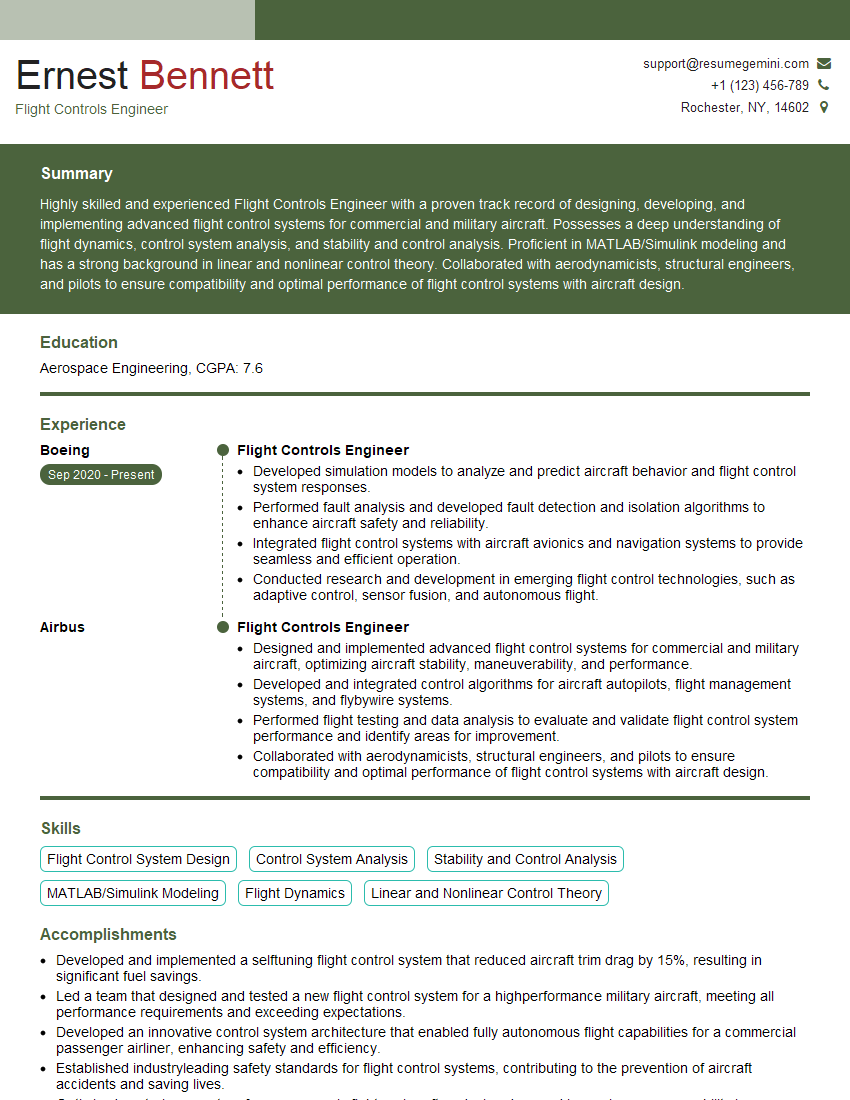
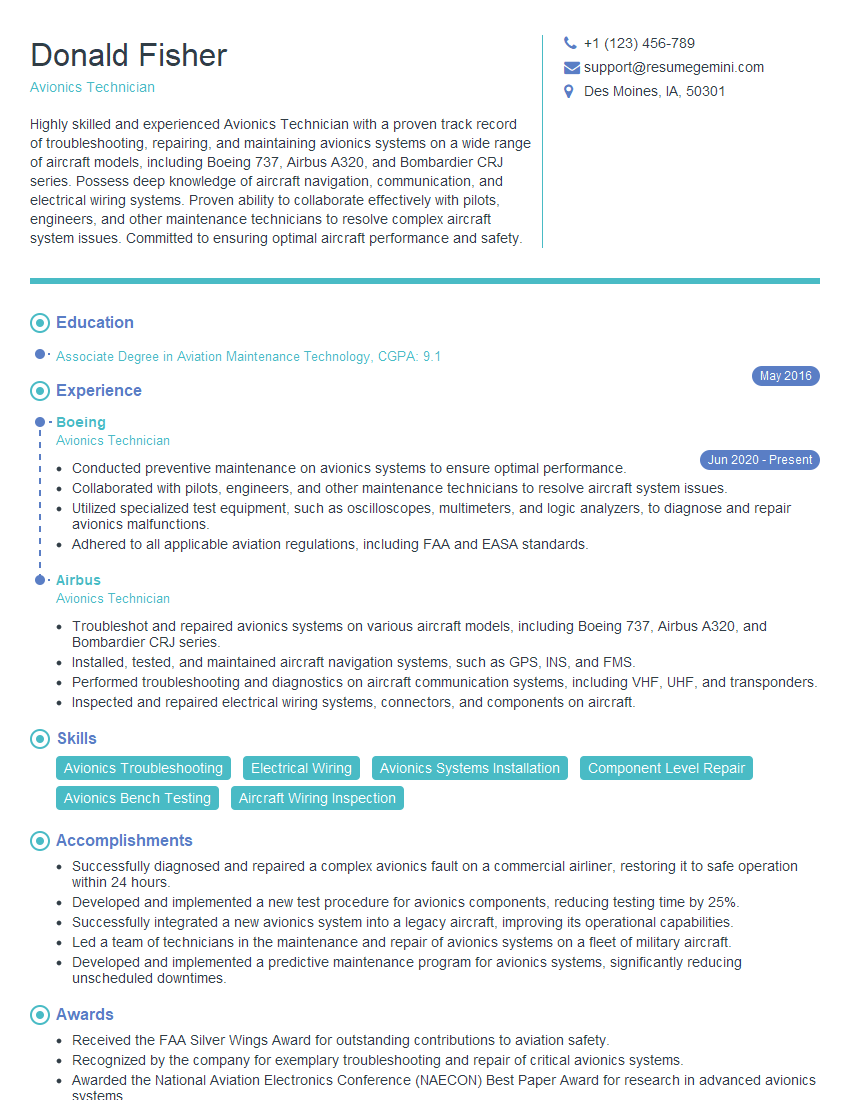
Mastering Avionics System Monitoring and Control opens doors to exciting and impactful careers in the aerospace industry. It positions you for roles requiring high levels of technical expertise and problem-solving skills, leading to significant career growth and advancement. To maximize your job prospects, crafting a compelling and ATS-friendly resume is paramount. ResumeGemini offers a powerful resource to build a professional and effective resume that highlights your skills and experience in the best possible light. They even provide examples of resumes tailored specifically to Avionics System Monitoring and Control roles to help guide you.
Explore more articles
Users Rating of Our Blogs
Share Your Experience
We value your feedback! Please rate our content and share your thoughts (optional).
What Readers Say About Our Blog
Really detailed insights and content, thank you for writing this detailed article.
IT gave me an insight and words to use and be able to think of examples