Are you ready to stand out in your next interview? Understanding and preparing for Avionics Systems Design interview questions is a game-changer. In this blog, we’ve compiled key questions and expert advice to help you showcase your skills with confidence and precision. Let’s get started on your journey to acing the interview.
Questions Asked in Avionics Systems Design Interview
Q 1. Explain the difference between ARINC 429 and ARINC 664.
ARINC 429 and ARINC 664 are both avionics data bus standards, but they differ significantly in their architecture and capabilities. ARINC 429 is an older, simpler, and more limited point-to-point, or sometimes point-to-multipoint, system using a single wire to transmit data. Think of it like a one-way street with limited traffic capacity. ARINC 664, on the other hand, is a much more modern, high-speed, and flexible network using a switched Ethernet architecture. Imagine it as a sophisticated highway system with multiple lanes and intelligent traffic management.
- ARINC 429: Uses a single wire for data transmission, is half-duplex (one direction at a time), has limited bandwidth, and supports only a small number of data words per message. It’s simple to implement but struggles with the data demands of modern avionics.
- ARINC 664: Uses a switched Ethernet network for high-speed data transmission, is full-duplex (bi-directional communication), boasts significantly higher bandwidth, and supports complex data structures. Its flexibility allows for the integration of a wider range of avionics systems.
In essence, ARINC 664 is a significant advancement over ARINC 429, offering increased bandwidth, flexibility, and scalability, crucial for handling the growing data requirements of modern aircraft.
Q 2. Describe your experience with DO-178C software development.
I have extensive experience in DO-178C software development, having participated in several projects for both commercial and military aircraft. DO-178C is the cornerstone of software safety certification in avionics, demanding rigorous processes to ensure the software meets stringent safety requirements. My experience covers the entire lifecycle, from requirements analysis and design through to implementation, verification, and validation. I’m proficient in using various development tools and methodologies aligned with DO-178C, such as static and dynamic analysis tools to identify potential defects early in the development cycle. I’ve been involved in defining software architectural designs, developing detailed design documents, and writing high-quality code adhering to coding standards. A recent project involved developing flight control software for a new regional jet. We rigorously followed the DO-178C guidelines, achieving certification with minimal issues.
A key aspect of my experience involves managing the complexities of software traceability, ensuring full compliance with DO-178C’s documentation requirements. This is crucial for demonstrating compliance to certification authorities and for future maintenance and modifications.
Q 3. How do you ensure the safety and reliability of avionics systems?
Ensuring the safety and reliability of avionics systems is paramount. It requires a multi-faceted approach encompassing various strategies throughout the system lifecycle. This starts with a thorough understanding of potential hazards and risks during the initial design phase. Following a robust safety assessment, we implement multiple layers of redundancy and fault tolerance mechanisms.
- Redundancy: Implementing multiple independent systems performing the same function allows for graceful degradation in case of failure. For example, having three independent AHRS (Air Data and Heading Reference System) units ensures the aircraft maintains its orientation even if one unit fails.
- Fault Detection, Isolation, and Recovery (FDIR): This critical process allows the system to detect failures, isolate the faulty component, and initiate a recovery strategy. This might involve switching to a backup system or implementing a safe mode of operation.
- Software Verification and Validation: Rigorous testing, including unit, integration, and system tests, is crucial to ensure the software functions correctly under all operational conditions. Techniques like formal methods and model checking can further enhance the confidence in software correctness.
- Hardware Reliability: Choosing high-quality, reliable components and implementing robust hardware design techniques, including redundancy and fault tolerance mechanisms at the hardware level, is vital.
Regular maintenance and updates also play a crucial role in maintaining the safety and reliability of avionics systems over their operational lifetime.
Q 4. What are the key considerations for designing a fault-tolerant avionics system?
Designing a fault-tolerant avionics system requires a deep understanding of potential failure modes and their impact on the overall system. Key considerations include:
- Redundancy: Employing multiple redundant channels, each performing the same function independently. This allows the system to continue operating even if one channel fails. For example, using triple-modular redundancy (TMR) for critical flight control functions.
- Diversity: Employing different design approaches, hardware, or software for redundant channels. This reduces the probability of common-mode failures, where a single fault affects multiple channels simultaneously.
- Failure Detection and Isolation: Implementing mechanisms to detect failures in individual channels and isolate them from the rest of the system to prevent cascading failures.
- Voting and Reconfiguration: Using voting algorithms to determine the correct output from redundant channels and reconfiguring the system to bypass failed components.
- Fail-Operational/Fail-Safe Design: Designing the system to either continue operating at reduced capacity (fail-operational) or to enter a safe state (fail-safe) in case of failure.
The choice of fault tolerance techniques depends on the criticality of the system and the acceptable level of risk. For example, flight control systems typically require a higher level of fault tolerance compared to less critical systems like cabin management.
Q 5. Explain your understanding of different communication protocols used in avionics.
Avionics systems utilize a variety of communication protocols, each tailored to specific needs and characteristics. Here are some examples:
- ARINC 429: A simple, point-to-point data bus used for transmitting relatively small amounts of data. Its simplicity makes it suitable for less demanding applications.
- ARINC 664: A high-speed switched Ethernet network providing significantly increased bandwidth and flexibility for transmitting large amounts of data. This is now becoming a standard in modern avionics.
- AFDX (Avionics Full Duplex Switched Ethernet): A deterministic Ethernet network specifically designed for avionics applications. It provides guaranteed bandwidth and low latency, essential for real-time applications.
- CAN (Controller Area Network): A robust and reliable communication protocol often used in embedded systems for vehicle and aircraft applications, used for lower-bandwidth applications that require high reliability.
- RS-422/RS-485: These serial communication standards are used for point-to-point or multipoint communication, suitable for transmitting data over longer distances.
The choice of protocol depends on factors such as bandwidth requirements, latency tolerance, distance, and the level of required reliability. Modern avionics architectures often employ a combination of these protocols to optimize performance and meet specific application needs.
Q 6. Describe your experience with avionics hardware testing and validation.
My experience in avionics hardware testing and validation encompasses various stages, from unit testing of individual components to system-level integration and testing of the entire avionics suite. I’m proficient in using various test equipment, including oscilloscopes, signal generators, and data acquisition systems. I understand the importance of environmental testing to ensure that the hardware can withstand the harsh conditions encountered during flight. This includes temperature cycling, vibration testing, and electromagnetic compatibility (EMC) testing. I’ve extensively used automated test equipment (ATE) to reduce testing time and improve test coverage. A successful project involved developing and executing a comprehensive test plan for a new flight management system, resulting in a system that met all safety and performance requirements.
I also have expertise in fault injection testing, which involves injecting faults into the system to evaluate its fault tolerance capabilities and robustness. This helps identify vulnerabilities and ensures the system can safely handle potential failures. Comprehensive test documentation, complying with industry standards and regulatory requirements, is an integral part of my approach.
Q 7. What is your experience with various avionics sensors and their integration?
I possess extensive experience integrating various avionics sensors, including:
- Inertial Measurement Units (IMUs): These sensors provide data on aircraft orientation and motion, crucial for navigation and flight control systems. I have experience integrating different types of IMUs, including MEMS-based and ring laser gyroscope based systems.
- Air Data Systems (ADS): These measure altitude, airspeed, and outside air temperature, critical for flight performance calculations and safety. Understanding the calibration and compensation techniques for these sensors is essential.
- Global Navigation Satellite Systems (GNSS) receivers: These provide precise location data for navigation. Experience integrating different GNSS constellations and implementing fault detection and mitigation strategies is vital.
- Magnetic Sensors: These provide heading information and are crucial for navigation and attitude determination systems. Careful consideration of magnetic interference and compensation is important.
Sensor integration often involves dealing with data fusion techniques to combine data from multiple sensors, ensuring accuracy and redundancy. This requires a thorough understanding of sensor characteristics, error models, and data processing algorithms. Successful sensor integration is key to the overall performance and reliability of the avionics system.
Q 8. How familiar are you with aircraft electrical power systems?
Aircraft electrical power systems are crucial for the operation of all onboard equipment. My familiarity extends to a deep understanding of their architecture, from power generation (using sources like APUs, generators, and batteries) to distribution and management. I’m experienced in working with various AC and DC buses, understanding the complexities of power conversion and regulation using components such as transformers, rectifiers, and inverters. I’ve also worked extensively with power system monitoring and protection systems, including circuit breakers and bus tie systems, ensuring redundancy and fault tolerance. For instance, in a recent project, I was responsible for optimizing the power distribution network of a regional jet to improve efficiency and reduce weight, leading to significant fuel savings. This involved detailed analysis of power loads, careful selection of components, and the use of advanced simulation tools.
Q 9. Explain the concept of data bus architectures in avionics systems.
Data bus architectures are the backbone of modern avionics, allowing numerous systems to communicate and share data efficiently. Think of it as a sophisticated highway system for information within the aircraft. Key architectures include ARINC 429, ARINC 629, and AFDX (Aerospace Fibre Optic Data). ARINC 429 is a relatively simple, point-to-point system using a single wire, perfect for simpler applications. ARINC 629 offers higher bandwidth and more sophisticated addressing capabilities. AFDX, however, is a high-speed Ethernet-based system offering significant bandwidth, fault tolerance, and deterministic communication – crucial for safety-critical applications. The choice of architecture depends heavily on the needs of the specific system; critical flight control systems often employ AFDX for its reliability, while less critical systems might utilize ARINC 429 to reduce cost and complexity. My experience includes designing and implementing systems using all three architectures, ensuring proper data integrity, and addressing potential network congestion issues.
Q 10. Describe your experience with Model-Based Systems Engineering (MBSE) in an avionics context.
Model-Based Systems Engineering (MBSE) is instrumental in modern avionics design. Instead of relying solely on documents, MBSE uses models (often using tools like SysML or UML) to represent the system architecture, behavior, and requirements. This approach allows for early verification and validation, reducing the risk of errors and costly rework later in the development cycle. My experience includes using MBSE throughout the entire development lifecycle, from requirements capture to system integration and testing. I’ve used MBSE to model complex systems, including flight control systems and communication networks. For example, on a recent project, using MBSE enabled early detection of a critical interface incompatibility, saving significant time and resources by addressing the issue in the design phase rather than during integration testing.
Q 11. How do you handle conflicting requirements in avionics system design?
Conflicting requirements are a common challenge in avionics. These conflicts often arise from competing objectives, such as performance versus cost, weight, or safety. My approach involves a structured process: First, I meticulously document all requirements, ensuring clarity and traceability. Then, I analyze the conflicts, using techniques like prioritization matrices to rank requirements based on their criticality and impact. This might involve discussions with stakeholders to understand the underlying rationale behind each requirement. Next, I explore potential trade-offs and compromises, potentially involving iterative design refinement and simulations to assess the impact of various solutions. Finally, I document the rationale for the chosen resolution, ensuring that all stakeholders are aware and agree upon the decision. Ultimately, the goal is to find a solution that meets the most critical needs while minimizing the negative consequences of compromises.
Q 12. Explain your experience with avionics system certification processes.
I have extensive experience navigating the complexities of avionics certification processes, primarily focusing on DO-178C (Software Considerations in Airborne Systems and Equipment Certification) and DO-254 (Design Assurance Guidance for Airborne Electronic Hardware). This includes creating and maintaining certification artifacts, such as software and hardware design documents, test plans, and verification reports. I understand the importance of meticulous documentation, rigorous testing, and traceability throughout the entire development lifecycle. For example, I led a team through the certification of a new flight management system, ensuring that all requirements were met and the system complied with all applicable regulations. This involved working closely with certification authorities, addressing their concerns, and successfully completing the certification process, delivering a safe and reliable product to market.
Q 13. What are the challenges of integrating new avionics systems into existing aircraft?
Integrating new avionics systems into existing aircraft presents several significant challenges. Firstly, ensuring compatibility with the existing aircraft architecture is crucial; this encompasses electrical power systems, data buses, and mechanical interfaces. Secondly, the weight and size constraints of the aircraft must be considered. Thirdly, there are potential issues with electromagnetic compatibility (EMC) and interference with existing systems. Fourthly, and perhaps most importantly, the certification process for modifications to existing aircraft is rigorous, requiring extensive testing and documentation. Addressing these challenges often involves detailed system integration analysis, thorough testing and verification, and a clear understanding of the aircraft’s limitations. A recent project involved retrofitting a new communication system into an older fleet of aircraft; we addressed the integration challenges through careful planning, extensive simulation, and rigorous testing to avoid unexpected problems during the operational phase.
Q 14. How do you ensure electromagnetic compatibility (EMC) in avionics systems?
Electromagnetic compatibility (EMC) is paramount in avionics. Uncontrolled electromagnetic emissions can disrupt the operation of other systems, leading to potential safety hazards. Ensuring EMC involves a multi-faceted approach starting in the design phase. This includes using proper shielding techniques, selecting components with low emissions, and implementing effective grounding practices. Rigorous testing is crucial, involving both emissions testing (ensuring the system doesn’t emit excessive electromagnetic radiation) and susceptibility testing (ensuring the system can withstand electromagnetic interference from external sources). We use specialized EMC test chambers and equipment to conduct these tests, adhering to standards like RTCA DO-160. Throughout the development lifecycle, EMC considerations are integrated into every step, using simulations and measurements to anticipate and mitigate potential issues. For instance, in a recent project, we identified a potential EMC problem during the simulation phase and implemented design modifications to prevent interference between the communication system and the flight control system, avoiding a potentially costly and time-consuming issue later in the process.
Q 15. Describe your experience with avionics simulation and testing tools.
My experience with avionics simulation and testing tools spans several platforms and methodologies. I’ve extensively used tools like MATLAB/Simulink for modeling and simulating complex avionics systems, including flight control systems, navigation systems, and communication systems. This allows for early identification of design flaws and performance bottlenecks before physical prototyping. For hardware-in-the-loop (HIL) simulations, I’m proficient with dSPACE and NI VeriStand platforms, which enable real-time testing of embedded avionics systems under realistic flight conditions. Furthermore, I have experience with various testing tools, including DO-178C compliant test harnesses, that ensure compliance with stringent industry standards. For example, I once used Simulink to model a new autopilot system, simulating various flight scenarios and identifying a critical stability issue that would have been difficult to find through traditional testing methods.
In addition to these, I’m familiar with software-based testing frameworks like JUnit and pytest, which are crucial for verifying the correct functionality and behavior of software components within the avionics architecture. This holistic approach, combining model-based design, HIL simulation, and software testing, is vital for developing robust and safe avionics systems.
Career Expert Tips:
- Ace those interviews! Prepare effectively by reviewing the Top 50 Most Common Interview Questions on ResumeGemini.
- Navigate your job search with confidence! Explore a wide range of Career Tips on ResumeGemini. Learn about common challenges and recommendations to overcome them.
- Craft the perfect resume! Master the Art of Resume Writing with ResumeGemini’s guide. Showcase your unique qualifications and achievements effectively.
- Don’t miss out on holiday savings! Build your dream resume with ResumeGemini’s ATS optimized templates.
Q 16. What is your understanding of the various avionics standards and regulations?
My understanding of avionics standards and regulations is comprehensive, encompassing both national and international requirements. I’m deeply familiar with DO-178C (Software Considerations in Airborne Systems and Equipment Certification), which defines the software development lifecycle for critical avionics systems. This includes processes for requirements analysis, design, coding, verification, and validation. I also possess a strong grasp of DO-254 (Design Assurance Guidance for Airborne Electronic Hardware), focusing on the hardware aspects of avionics certification. Furthermore, I’m knowledgeable about various other standards, such as ARINC specifications (e.g., ARINC 429, ARINC 653), which define data bus protocols and real-time operating system requirements. Understanding these regulations allows for the development of safe, reliable, and certifiable avionics systems, something that was particularly challenging when integrating a new communication system that required compliance with multiple ARINC standards.
Compliance is not just a matter of following a checklist; it’s a mindset that should permeate the entire development process. For instance, I always ensure comprehensive traceability from requirements to code to verification tests throughout my work.
Q 17. Explain your experience with real-time operating systems (RTOS) in avionics.
My experience with real-time operating systems (RTOS) in avionics is extensive. I’ve worked with several RTOS platforms, including VxWorks, QNX, and INTEGRITY. I understand the importance of scheduling, task synchronization, and memory management in a real-time context, where timing is critical to safety and operational performance. In one project, we used VxWorks to implement a flight management system that required precise control over timing for navigation calculations and data updates. I’ve also worked with RTOS features like semaphores, mutexes, and message queues to manage resource sharing and inter-process communication. These mechanisms ensure that critical processes are not blocked unnecessarily, preserving the system’s timing determinism. Understanding how to effectively configure and utilize RTOS features is critical to ensuring the performance and safety of embedded avionics systems.
Choosing the right RTOS is also important. The selection should be based on factors such as the application’s real-time constraints, the available hardware resources, and the required safety certification level.
Q 18. How do you manage risk in avionics systems design?
Risk management in avionics systems design is paramount. We employ a systematic approach using a combination of techniques. First, we conduct a thorough hazard analysis and risk assessment (HARA) early in the design process to identify potential hazards and their associated risks. This involves analyzing potential failures, their probabilities, and their severity. This allows us to prioritize our mitigation efforts. Then, we implement design strategies to mitigate these risks, such as redundancy, fault tolerance, and fail-safe mechanisms. For instance, we might incorporate triple modular redundancy (TMR) for critical flight control systems. We maintain detailed records of all risk assessments and mitigation strategies in accordance with relevant safety standards. Regular risk reviews are conducted throughout the project lifecycle to monitor and update the risk profile.
Furthermore, using formal methods and model checking can significantly reduce risk by mathematically verifying the system’s behavior against its specifications. This helps catch potential issues early in the development process.
Q 19. Describe your approach to troubleshooting avionics system failures.
My approach to troubleshooting avionics system failures is systematic and data-driven. I start by gathering data from various sources, including system logs, sensor readings, and communication buses. This often involves using specialized diagnostic tools to access real-time data and system parameters. Then, I perform a thorough analysis of the collected data, correlating events and identifying potential root causes. This often involves using techniques such as fault tree analysis and event sequence diagrams to visualize the system’s behavior before and during the failure. Simulation tools can be employed to recreate the failure scenario and test various hypotheses. This iterative process of data analysis, hypothesis generation, and verification is crucial for isolating the root cause and implementing effective corrective actions.
For example, I once diagnosed an intermittent failure in a navigation system by analyzing flight data recorder information, identifying a correlation between the failures and specific environmental conditions (high altitude and temperature), eventually pinpointing a faulty sensor as the culprit.
Q 20. Explain your experience with different types of avionics displays.
My experience encompasses a variety of avionics displays, from traditional electromechanical instruments to modern, high-resolution LCD and LED displays. I’m familiar with the advantages and disadvantages of each. Traditional instruments, while simple and reliable, lack the flexibility and information density of modern displays. LCDs and LEDs offer greater flexibility in terms of information presentation, allowing for the integration of diverse data sources and enhanced graphical capabilities. I’ve worked with displays using various communication protocols, including ARINC 429 and Ethernet. Furthermore, I understand the importance of human factors engineering in display design, ensuring readability, intuitiveness, and minimal workload for the pilot. For example, I once helped optimize the layout of a flight management system display, reducing pilot workload during critical phases of flight.
The design of these displays must always prioritize safety and clarity. Factors such as brightness, contrast, and symbol size need careful consideration to avoid issues in various lighting conditions.
Q 21. How do you ensure the maintainability of avionics systems?
Ensuring the maintainability of avionics systems is critical for safety and operational efficiency. This requires a multi-faceted approach starting with modular design. Breaking down the system into independent, replaceable modules simplifies maintenance and reduces downtime. This also allows for easier diagnostics and troubleshooting. We utilize standardized interfaces and connectors, minimizing integration challenges. Comprehensive documentation is crucial, including detailed schematics, wiring diagrams, and troubleshooting guides. Built-in self-test (BIST) capabilities within the hardware and software enhance fault detection and isolation. Furthermore, remote diagnostics and monitoring capabilities are increasingly important, enabling proactive maintenance and minimizing unscheduled disruptions. For instance, we recently implemented a remote diagnostic system that alerts maintenance personnel to potential issues before they escalate into major failures. This proactive approach significantly reduces maintenance costs and improves operational reliability.
Modular design combined with well-structured documentation ensures that even complex systems can be understood and maintained by trained personnel.
Q 22. Describe your understanding of avionics system architecture.
Avionics system architecture is the overall design and arrangement of all the electronic systems within an aircraft. Think of it as the blueprint for how all the components communicate and work together to ensure safe and efficient flight. It’s a complex interplay of hardware and software, meticulously designed to meet stringent safety and regulatory standards.
A typical architecture involves several key subsystems, including:
- Flight Management System (FMS): Calculates flight paths, manages fuel, and provides navigation data.
- Navigation Systems: Include GPS, inertial navigation systems (INS), and radio navigation aids (VOR, ILS).
- Communication Systems: Facilitate communication with air traffic control (ATC) and other aircraft (e.g., VHF, HF, SATCOM).
- Displays: Present crucial flight information to the pilots (e.g., primary flight displays (PFDs), multi-function displays (MFDs)).
- Sensors: Gather data on aircraft parameters such as airspeed, altitude, and heading (e.g., air data computers, attitude and heading reference systems).
- Actuators: Control surfaces and other systems based on pilot inputs and automation commands.
The architecture emphasizes redundancy and fail-operational capabilities. This means that if one system fails, others can take over to ensure continued safe operation. Data buses, like ARINC 429 or AFDX, are crucial for the efficient and reliable transfer of information between different subsystems.
For instance, during a flight, the FMS calculates the optimal flight path, which is then sent to the autopilot via a data bus. The autopilot then uses this information to control the aircraft’s flight path, continuously receiving updates from navigation sensors and other systems. The pilot monitors all these operations through integrated displays.
Q 23. Explain your experience with the design and implementation of flight management systems.
My experience with Flight Management Systems (FMS) encompasses design, implementation, and testing across various aircraft platforms. I’ve been involved in projects ranging from modifying existing FMS functionality to designing entirely new systems for next-generation aircraft.
In one project, I led a team that developed an enhanced FMS navigation algorithm that improved fuel efficiency by up to 5% by optimizing flight paths based on real-time weather data. This involved integrating sophisticated weather prediction models into the FMS software and rigorously testing the algorithm’s accuracy and reliability in simulated and real-flight environments. The development followed a strict DO-178C standard for software certification.
Another significant project involved migrating a legacy FMS architecture to a modern, distributed system based on AFDX. This involved significant software redesign, employing object-oriented principles and careful consideration of data bus communication protocols and fault tolerance mechanisms. This modernization significantly improved the system’s performance, maintainability, and scalability.
My work often involves close collaboration with software engineers, systems engineers, and test engineers. Understanding the intricate interactions between different FMS components – like the navigation database, performance calculations, and flight plan management – is critical for successful implementation.
Q 24. How familiar are you with the principles of human-machine interface (HMI) design in avionics?
Human-Machine Interface (HMI) design in avionics is paramount. It’s about creating intuitive and effective interfaces that allow pilots to easily access and interpret critical flight information under stressful conditions. Poor HMI design can lead to errors and accidents, so it’s a crucial aspect of avionics development.
My familiarity with HMI design principles encompasses the application of usability engineering principles to design displays and controls. This includes understanding human factors like cognitive workload, attention, and decision-making processes, and how these relate to effective information visualization and control design. I’m proficient in using industry-standard tools and methodologies for HMI design and evaluation. This involves creating user-centered designs that meet specific human factors requirements.
For example, I’ve been involved in projects where we conducted usability testing with pilots to evaluate the effectiveness of new display designs. This iterative process allowed us to identify and correct design flaws before they reached the operational phase. In another project, I helped design a new warning system that minimized pilot workload and improved situational awareness by utilizing clear and concise visual and auditory cues.
Q 25. Describe your experience with different types of avionics software development methodologies.
I’m experienced with various avionics software development methodologies, primarily focusing on those that meet the stringent safety and certification requirements of DO-178C (Software Considerations in Airborne Systems and Equipment Certification).
My experience includes using:
- Waterfall model: A structured approach suitable for projects with well-defined requirements. While effective for stability, its rigidity can make adapting to changing requirements challenging.
- Agile methodologies (like Scrum): These are better suited for projects with evolving requirements, allowing for greater flexibility and iterative development. Adapting these to the stringent safety certification process requires careful planning and documentation.
- Spiral model: A risk-driven approach that combines iterative development with risk management. Ideal for complex projects requiring high reliability, making it a good fit for avionics.
The choice of methodology depends on the project’s complexity, budget, and regulatory constraints. Regardless of the chosen methodology, rigorous configuration management, thorough testing (unit, integration, system), and meticulous documentation are essential for ensuring compliance with DO-178C and gaining certification. I am experienced in managing the entire software development lifecycle within this regulated environment.
Q 26. What are your experiences with different types of flight recorders?
My experience with flight recorders covers various types, including:
- Flight Data Recorders (FDRs): These capture a large amount of data from various aircraft systems, such as flight controls, engine parameters, and air data. This data is crucial for accident investigations and safety analysis.
- Cockpit Voice Recorders (CVRs): These record conversations in the cockpit, providing valuable context during accident investigations. They help understand the crew’s actions and communication in the lead-up to and during incidents.
- Quick Access Recorders (QARs): These recorders capture a more limited set of data, but can be easily accessed for routine maintenance and operational analysis.
I understand the importance of these recorders in post-accident investigations. The data they provide is invaluable in determining the cause of accidents, identifying areas for improvement in aircraft design and operation, and enhancing safety procedures. I am familiar with data retrieval and analysis techniques used in accident investigations, and the specific data formats and standards associated with various flight recorder types.
Q 27. Describe your understanding of the various types of navigation systems used in avionics.
Avionics navigation systems rely on a variety of technologies, each with its own strengths and weaknesses.
- Inertial Navigation Systems (INS): These are self-contained systems that use gyroscopes and accelerometers to calculate the aircraft’s position, velocity, and attitude without external references. They are highly accurate over short periods but drift over time, requiring periodic updates.
- Global Navigation Satellite Systems (GNSS), primarily GPS: These systems use signals from satellites to determine precise position, velocity, and time. GPS provides global coverage but can be susceptible to interference or signal blockage.
- Ground-based Navigation Systems: Include VOR (VHF Omnidirectional Range), ILS (Instrument Landing System), and others that provide guidance signals from ground-based transmitters. Their coverage is limited to the range of the ground stations.
- Area Navigation (RNAV): This allows for more flexible and precise route planning using advanced navigation technologies like GPS and inertial navigation.
Modern aircraft often use a combination of these systems for redundancy and improved accuracy. For instance, an FMS might use GPS as the primary navigation source but also incorporate INS data to compensate for GPS signal outages or errors. In low-visibility conditions, ground-based systems like ILS will guide the aircraft towards the runway during landing.
Q 28. How familiar are you with ADS-B and its applications?
Automatic Dependent Surveillance-Broadcast (ADS-B) is a technology that uses satellite-based navigation signals and aircraft-mounted transponders to broadcast the aircraft’s position, altitude, speed, and other data. This information is received by ground stations and other aircraft, enhancing situational awareness for air traffic control and other pilots.
ADS-B has several applications, including:
- Improved Air Traffic Management: Provides ATC with more precise and timely information about aircraft positions, reducing the risk of mid-air collisions and improving traffic flow efficiency.
- Enhanced Situational Awareness: Enables pilots to see the position and status of other aircraft in their vicinity, reducing the risk of conflicts.
- Wider Surveillance Coverage: Especially useful in areas with limited radar coverage, extending surveillance into remote regions.
- Safety Improvements: Enhanced awareness leads to better decision-making and reduced risk of accidents.
I have experience working with ADS-B systems, including the integration of ADS-B transponders into aircraft and the development of software applications that utilize ADS-B data. Understanding the protocols and data formats used in ADS-B is essential for efficient integration and use of the system, contributing to improved safety and air traffic management.
Key Topics to Learn for Avionics Systems Design Interview
- System Architecture: Understand the overall architecture of avionics systems, including data buses (e.g., ARINC 429, AFDX), communication protocols, and system integration challenges. Consider the trade-offs between different architectural choices.
- Navigation Systems: Gain a solid grasp of inertial navigation systems (INS), GPS, and integrated navigation systems. Be prepared to discuss their principles of operation, error sources, and performance limitations. Practical application: analyzing the impact of GPS signal loss on navigation accuracy.
- Flight Control Systems: Familiarize yourself with the design and functionality of flight control systems, including autopilots, flight director systems, and stability augmentation systems. Understand the role of sensors, actuators, and control algorithms. Practical application: troubleshooting a malfunctioning autopilot system.
- Communication Systems: Explore various communication systems used in avionics, such as VHF, UHF, satellite communication, and data links. Understand their capabilities, limitations, and applications. Practical application: designing a reliable communication system for a specific flight scenario.
- Display Systems: Learn about different types of cockpit displays (e.g., CRT, LCD, PFD, MFD) and their design considerations. Understand human-machine interface (HMI) principles and how they impact pilot workload and safety. Practical application: evaluating the usability and effectiveness of a new cockpit display design.
- Safety and Certification: Understand the importance of safety in avionics systems design and the relevant certification standards (e.g., DO-178C). Be prepared to discuss different safety mechanisms and hazard mitigation strategies. Practical application: analyzing a safety-critical system for potential hazards and developing mitigation plans.
- Embedded Systems and Software: Develop a strong understanding of real-time operating systems (RTOS), software development methodologies (e.g., Agile, Waterfall), and software testing techniques relevant to avionics. Practical application: designing and implementing a flight critical software module.
Next Steps
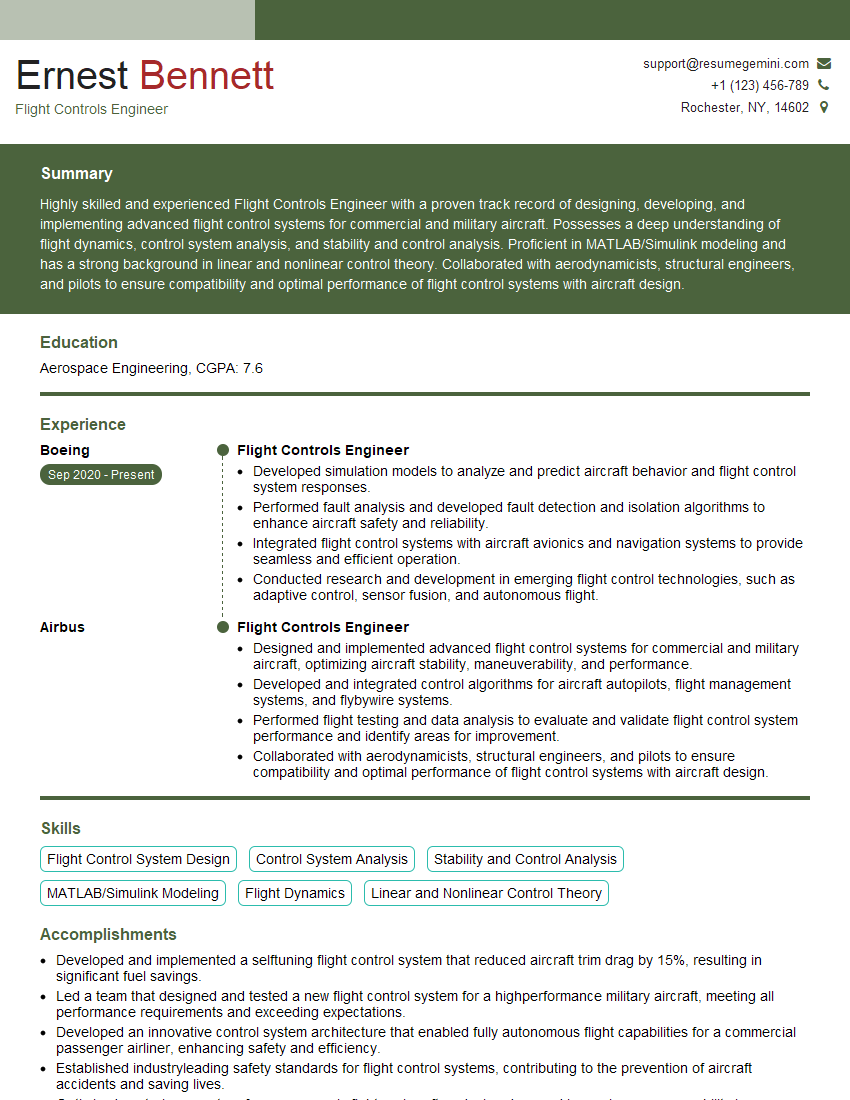
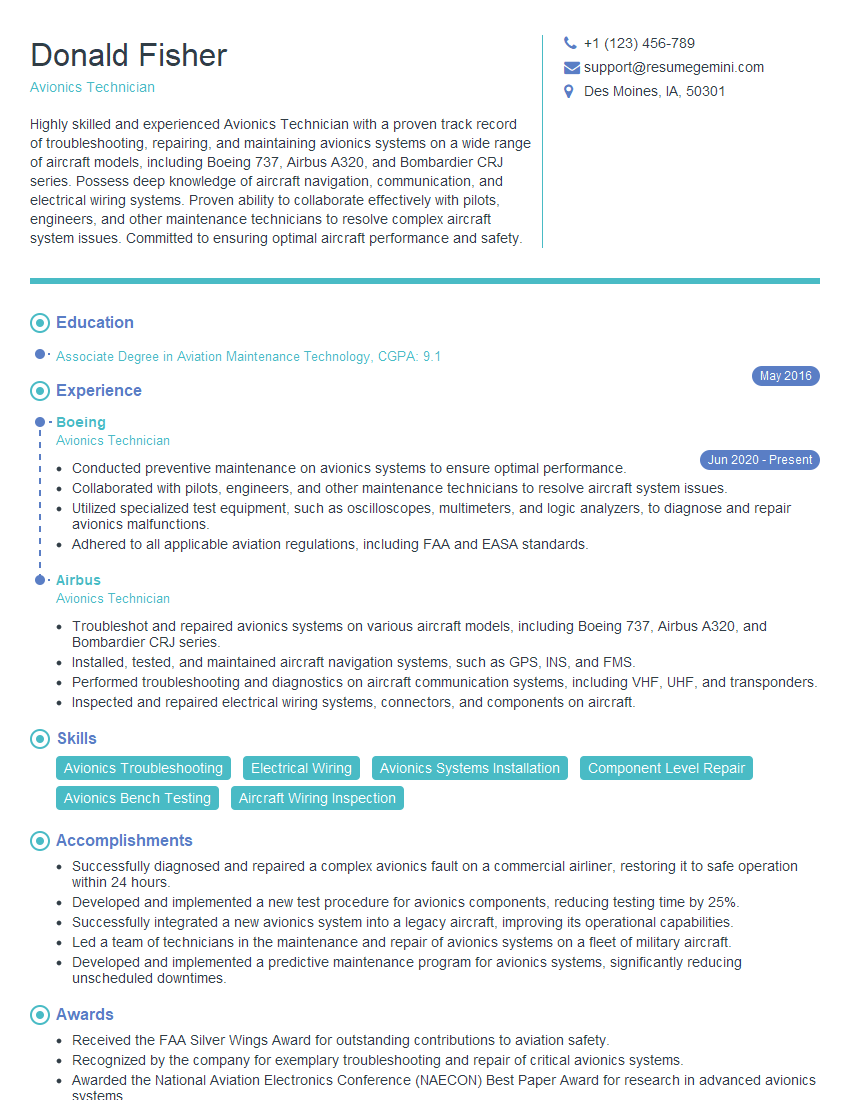
Mastering Avionics Systems Design opens doors to exciting and rewarding careers in the aerospace industry, offering opportunities for innovation and significant impact. To maximize your job prospects, creating a strong, ATS-friendly resume is crucial. ResumeGemini is a trusted resource that can help you build a professional and effective resume tailored to highlight your skills and experience. We provide examples of resumes specifically tailored for Avionics Systems Design professionals to help guide you. Invest time in crafting a compelling resume – it’s your first impression on potential employers.
Explore more articles
Users Rating of Our Blogs
Share Your Experience
We value your feedback! Please rate our content and share your thoughts (optional).
What Readers Say About Our Blog
Really detailed insights and content, thank you for writing this detailed article.
IT gave me an insight and words to use and be able to think of examples