Interviews are opportunities to demonstrate your expertise, and this guide is here to help you shine. Explore the essential Binding and Laminating interview questions that employers frequently ask, paired with strategies for crafting responses that set you apart from the competition.
Questions Asked in Binding and Laminating Interview
Q 1. Describe your experience with different binding methods (e.g., perfect binding, saddle stitch, wire-O).
My experience encompasses a wide range of binding methods, each chosen based on the project’s specific requirements and desired aesthetic. Perfect binding, for example, is ideal for books with a substantial number of pages, creating a smooth, professional spine. I’ve worked extensively with this method, from preparing the text block by carefully milling the edges to ensure a clean, even spine, to applying adhesive and covering with a durable cover. Saddle stitch binding, on the other hand, is a more cost-effective and straightforward technique best suited for booklets or magazines with a lower page count. This involves folding pages and securing them with wire staples along the spine. Finally, wire-O binding offers a professional and durable option, particularly for calendars, notebooks, or documents that need to lay flat. This involves punching holes in the pages and using a specialized machine to insert wire hoops through them, allowing for easy page turning. I’ve successfully managed projects using each of these methods, tailoring my approach to achieve optimal results for each client’s specific needs.
Q 2. Explain the process of thermal lamination.
Thermal lamination involves using heat and pressure to fuse a plastic film to the surface of a document, creating a protective barrier. The process begins with feeding the document through a laminator machine. The machine’s rollers heat the laminating film, activating its adhesive properties. As the document passes between the rollers, the film melts slightly, adhering securely to the paper. The laminator’s pressure ensures a smooth, even finish without air bubbles or wrinkles (provided the process is executed correctly!). The result is a document that’s resistant to moisture, tears, and general wear and tear, making it ideal for important documents, photographs, or anything needing added durability. I’ve laminated a vast array of materials, from delicate artwork to sturdy engineering blueprints, always ensuring precise control over temperature and pressure for optimal results.
Q 3. What are the different types of laminating films and their applications?
Laminating films come in various types, each suited to different applications. Glossy films offer a high-shine finish that’s visually appealing but can show fingerprints easily. They are frequently used for marketing materials or photos where a sleek look is desired. Matte films provide a more subdued finish, reducing glare and fingerprints, making them ideal for documents needing clear readability. There are also specialized films like UV-resistant films to protect against sunlight damage, and anti-static films for applications requiring reduced electrostatic build-up. The choice of film often depends on the nature of the document and its intended use. For example, a glossy film might be perfect for a brochure, while a matte film might be preferable for an important contract. Selecting the right film is crucial for achieving the desired aesthetic and protection level.
Q 4. How do you troubleshoot common issues with a laminator, such as air bubbles or wrinkles?
Troubleshooting laminator issues requires a systematic approach. Air bubbles usually indicate insufficient heat or pressure. I’d check the laminator’s temperature settings and ensure they’re appropriate for the film type being used. Increasing the pressure, if possible, can also help. Wrinkles often result from feeding the document unevenly or using a film that’s too thick for the machine’s capabilities. Carefully aligning the document and feeding it smoothly through the rollers can solve this. If the issue persists, I inspect the rollers for debris or damage that might impede the process. Occasionally, a jammed document might need careful extraction to prevent further damage to the laminator. My experience in diagnosing and resolving these problems ensures a consistent, high-quality output.
Q 5. What safety precautions do you follow when operating binding and laminating equipment?
Safety is paramount when operating binding and laminating equipment. I always ensure the machine is properly grounded and that all safety guards are in place before operation. Heat-resistant gloves are essential to avoid burns when handling hot laminating pouches or dealing with the hot rollers. I never leave the equipment unattended while it’s running and always follow manufacturer’s instructions for maintenance and cleaning. Eye protection is worn to prevent any accidental debris from entering the eyes. Proper disposal of waste materials is also critical to maintain a clean and safe working environment. By adhering to these strict safety protocols, I minimize the risk of accidents and maintain a safe working environment.
Q 6. How do you ensure the quality of your work in binding and laminating?
Quality assurance is a critical aspect of my work. I meticulously inspect documents before binding or laminating, ensuring they are free of defects and are correctly assembled. I use high-quality materials – from paper stock to laminating films – to guarantee durability and a professional finish. After the process, I thoroughly inspect each completed item for any inconsistencies or errors, ensuring the binding is secure, the lamination is smooth and free of defects, and the overall presentation meets the highest standards. A quality check helps ensure client satisfaction and reflects my dedication to providing top-notch service. Regular maintenance of my equipment is also critical for maintaining quality.
Q 7. Describe your experience with different types of paper and their suitability for binding and laminating.
My experience covers a diverse range of paper types, each impacting the binding and laminating process. Heavier papers, such as card stock or cover stock, are ideal for projects requiring durability and a substantial feel. Lighter weight papers, like bond paper, are suitable for smaller booklets or leaflets. The paper’s texture and finish also influence the outcome. Smooth papers typically laminate more easily than textured papers, which can sometimes create imperfections during the process. The paper’s moisture content can also affect the bonding of the adhesive in perfect binding. Choosing the appropriate paper is vital for achieving both aesthetic and functional success, and my knowledge extends to understanding how each paper type responds to different binding and laminating techniques.
Q 8. What are the advantages and disadvantages of different binding methods?
Choosing the right binding method depends heavily on the project’s needs. Let’s explore some common methods and their pros and cons:
- Perfect Binding: Think of paperback books. Pages are glued together at the spine, then a cover is wrapped around. Advantages: Cost-effective for larger runs, allows for a lay-flat design. Disadvantages: Spine can be bulky, pages might not lay perfectly flat, not ideal for very thick documents.
- Saddle Stitch Binding: Like brochures or magazines. Pages are folded and stapled along the spine. Advantages: Simple, quick, and inexpensive, especially for smaller projects. Disadvantages: Limited page count (usually under 60 pages), not suitable for thicker documents, pages can fall out easily if mishandled.
- Spiral Binding/Coil Binding: Think notebooks. Pages are punched with holes and bound with a plastic or metal coil. Advantages: Pages lay flat, allows for easy turning and removing of pages. Disadvantages: Can be less aesthetically pleasing for professional documents, the coil can be bulky.
- Wire-O Binding: Similar to spiral, but uses double-loop wire. Advantages: Elegant and professional look, lays flat, durable. Disadvantages: More expensive than spiral binding, pages cannot be easily removed.
- Case Binding: The method used for hardcover books. Sections of pages are sewn together, then glued to the cover boards. Advantages: High-quality, durable, suitable for very thick books. Disadvantages: Most expensive method, complex process, not practical for short runs.
The best method will depend on factors like the number of pages, the budget, the desired aesthetic, and the intended use of the document.
Q 9. How do you handle large-volume binding and laminating projects?
Managing large-volume binding and laminating projects requires a strategic approach. It’s all about efficient workflow and the right equipment. For example, I’ve successfully managed projects involving thousands of documents by implementing these steps:
- Detailed Planning: Precise job specifications (binding type, lamination type, quantity) are crucial. This includes scheduling and resource allocation (personnel, machines, materials).
- Efficient Processes: We use assembly lines, where each team member handles a specific stage, from collating pages to final quality checks. This minimizes bottlenecks.
- Automation: Investing in high-volume binding and laminating machines is key. These machines drastically increase output compared to manual processes.
- Quality Control at Each Stage: Regular inspections are crucial to identify and rectify any issues early, before they become costly problems.
- Inventory Management: Efficient tracking of materials (paper, binding supplies, laminating pouches) prevents production delays.
For instance, on a recent project involving 5,000 brochures, we utilized a high-speed saddle stitch binder and a thermal laminator, achieving a significant increase in productivity compared to manual methods. The result was a project completed on time and within budget.
Q 10. How do you determine the appropriate type of binding and lamination for a specific project?
Selecting the appropriate binding and lamination depends on several factors. It’s like choosing the right tool for the job!
- Document Type and Page Count: A small brochure would use saddle stitch binding, while a thesis might require perfect or case binding.
- Budget: Saddle stitching is the most economical, while case binding is the most expensive.
- Aesthetics: Wire-O binding offers a professional look, while spiral binding is more functional.
- Durability: Case binding and lamination offer the best protection.
- Intended Use: A frequently handled document might benefit from lamination, while an archival document might not need it.
For example, a client needing durable, high-quality reports would benefit from perfect binding and a matte lamination. Conversely, a quick-turnaround marketing brochure might be saddle-stitched, with no lamination.
Q 11. What are your skills in using various binding and laminating machines?
My experience encompasses a wide range of binding and laminating equipment. I am proficient in operating:
- Various Perfect Binding Machines: From small-scale manual models to high-speed automated systems.
- Saddle Stitch Binding Machines: Experience with both manual and automated systems, capable of handling different paper weights and page counts.
- Spiral and Wire-O Binding Machines: Proficient in punching, collating, and binding using these methods.
- Thermal Laminators: Experienced with both pouch and roll laminators, handling different film thicknesses and types.
- Case Binding Equipment: Experience includes operating and maintaining casemaking and adhesive binding machines.
I’m also familiar with troubleshooting common equipment malfunctions and performing routine maintenance.
Q 12. What is your experience with pre- and post-finishing processes?
Pre- and post-finishing processes are critical for a high-quality final product. My experience includes:
- Pre-finishing: This involves tasks like cutting, scoring, folding, and collating pages. Careful pre-finishing ensures smooth binding and a professional appearance.
- Post-finishing: This includes trimming, cutting, and cleaning the final bound and laminated document. It might also involve adding covers, embossing or debossing, and quality checks. I have extensive experience in quality control at this stage, ensuring the final product meets client specifications.
For example, on a recent project, precise scoring before perfect binding ensured the spine folded correctly. Post-finishing included precise trimming to ensure a clean, professional edge.
Q 13. How do you maintain binding and laminating equipment?
Regular maintenance is key to ensuring the longevity and efficiency of binding and laminating equipment. My approach is proactive and includes:
- Daily Cleaning: Removing dust, paper scraps, and other debris to prevent jams and malfunctions.
- Regular Lubrication: Using appropriate lubricants to reduce friction and wear on moving parts.
- Scheduled Inspections: Regular checks of rollers, belts, and other components to identify potential issues before they become major problems.
- Calibration and Adjustments: Ensuring machines are properly calibrated to produce consistent results. This might include adjusting settings for paper thickness or binding pressure.
- Preventive Maintenance: Following manufacturer’s recommendations for routine maintenance tasks, including replacing worn parts as needed.
By following a meticulous maintenance schedule, we ensure our equipment operates at peak performance, minimizing downtime and maximizing productivity.
Q 14. Describe your experience with quality control in binding and laminating.
Quality control is paramount in binding and laminating. My approach is multi-faceted and includes:
- Incoming Material Inspection: Checking paper quality, binding materials, and lamination pouches for defects before they enter the production process.
- In-process Checks: Regular inspections at each stage, from collating to laminating, to identify and correct any errors early on.
- Final Product Inspection: Thorough examination of the finished products for defects such as misaligned pages, crooked spines, or uneven lamination.
- Statistical Process Control: Tracking key metrics to monitor the quality of our output and identify trends or patterns.
- Client Feedback: Actively seeking and incorporating client feedback to improve our quality control measures.
For instance, I once noticed a recurring problem with slightly misaligned pages during a perfect binding job. By adjusting the machine settings and implementing stricter quality checks, we eliminated this issue. My commitment to quality control ensures that every project meets the highest standards.
Q 15. How do you handle challenging or unusual projects?
Tackling unusual binding and laminating projects requires a methodical approach. I begin by thoroughly understanding the client’s needs and the unique challenges presented by the project. This involves asking clarifying questions, carefully reviewing specifications, and potentially requesting samples or prototypes. I then analyze the project’s requirements against my existing skillset and available resources. If specialized techniques or equipment are needed, I proactively research and source them. For example, I once received a project requiring the binding of unusually thick, oversized books with delicate, embossed covers. This required careful selection of a heavy-duty binding machine and a custom-designed spine reinforcement process to prevent damage. Through careful planning and meticulous execution, we delivered a high-quality product that exceeded the client’s expectations.
My problem-solving strategy often involves breaking down complex tasks into smaller, manageable steps. This allows for better monitoring and control throughout the process. Regular communication with the client ensures that any concerns or adjustments are addressed promptly. A flexible approach is crucial; I’m comfortable adapting my methods as needed to meet the demands of non-standard projects.
Career Expert Tips:
- Ace those interviews! Prepare effectively by reviewing the Top 50 Most Common Interview Questions on ResumeGemini.
- Navigate your job search with confidence! Explore a wide range of Career Tips on ResumeGemini. Learn about common challenges and recommendations to overcome them.
- Craft the perfect resume! Master the Art of Resume Writing with ResumeGemini’s guide. Showcase your unique qualifications and achievements effectively.
- Don’t miss out on holiday savings! Build your dream resume with ResumeGemini’s ATS optimized templates.
Q 16. How familiar are you with different types of adhesives used in binding?
My familiarity with adhesives used in binding is extensive. I have experience with a wide range of adhesive types, each with its own unique properties and applications. These include:
- Hot Melt Adhesives: Excellent for fast-drying, high-volume binding, particularly for perfect binding and case binding. I understand the importance of selecting the right hot melt based on factors such as the substrate, binding speed, and required bond strength.
- PUR (Polyurethane Reactive) Adhesives: Known for their strong, flexible bonds and superior durability, these are ideal for demanding applications like perfect binding of high-quality books and magazines. I’m adept at handling the specialized equipment required for PUR binding.
- EVA (Ethylene Vinyl Acetate) Adhesives: Often used in simpler binding methods like saddle stitching, offering a good balance of cost and performance. I understand how to select appropriate EVA adhesives based on paper type and desired hold.
- Pressure-Sensitive Adhesives (PSAs): Commonly used in self-adhesive products and binding applications. I’m knowledgeable about different PSA types, their application methods, and their limitations.
Choosing the right adhesive is critical; an incorrect choice can lead to issues like weak bonds, discoloration, or poor adhesion. My selection process involves considering the material being bound, the desired bond strength, the required open time, and the overall aesthetic requirements.
Q 17. What is your experience with cutting, folding, and creasing processes related to binding?
My experience encompasses the entire pre-binding process, from cutting and folding to creasing. I’m proficient in operating various cutting and folding machines, ensuring accuracy and efficiency.
- Cutting: I can operate guillotine cutters, paper cutters, and die cutters for precision cutting of various substrates, ensuring clean, accurate cuts that are crucial for a professional finish. Experience with digital cutting technologies is also part of my skill set.
- Folding: I’m skilled in using both manual and automated folding machines, including folder-gluers, to create consistent and accurate folds for leaflets, brochures, and booklets. Understanding different fold types (e.g., parallel, Z-fold, gate fold) is essential and something I’m proficient in.
- Creasing: I know how to use creasing machines to score the paper before folding, preventing cracking and ensuring clean, sharp folds. Understanding the importance of proper creasing pressure for different paper weights is crucial for avoiding damage.
For example, in a recent project involving a complex brochure with multiple panels and intricate folds, I carefully programmed the folder-gluer to create the desired folds precisely and efficiently. This optimized production time and ensured a flawless result.
Q 18. Describe your experience with die-cutting and embossing in relation to print finishing.
Die-cutting and embossing are integral parts of print finishing, adding a unique aesthetic and tactile quality. I have extensive experience with both, understanding the intricacies of each process.
- Die-cutting: I’m adept at using die-cutting machines to create custom shapes and designs, adding a sophisticated touch to invitations, packaging, and promotional materials. This involves preparing the die, setting up the machine, and ensuring precise cutting for optimal results.
- Embossing: I understand how to use embossing techniques to add texture and depth to printed materials, creating a visually appealing and tactile element. This may involve creating blind embossing (without ink) or registered embossing (with ink). Understanding different embossing techniques and pressures is key for different materials.
For example, I once designed a custom die for a client’s product packaging, ensuring precise cuts for a unique shape. The process involved close collaboration with the designer and the careful creation and maintenance of the die. My familiarity with materials and embossing machines enabled us to achieve the desired results, enhancing the overall product appeal.
Q 19. How do you manage time effectively to meet deadlines for binding and laminating projects?
Effective time management is crucial in meeting deadlines for binding and laminating projects. My approach is based on a combination of careful planning, efficient workflow, and proactive communication.
- Project Breakdown: I start by breaking down large projects into smaller, manageable tasks with assigned deadlines for each step. This allows for better tracking of progress and the identification of potential delays early on.
- Prioritization: I prioritize tasks based on urgency and dependencies, ensuring that critical steps are completed on time. This involves using tools like Gantt charts or project management software.
- Resource Allocation: I carefully allocate resources, including equipment and personnel, to maximize efficiency and minimize downtime. This ensures that the workflow is optimized for speed and accuracy.
- Proactive Communication: Regular communication with clients and team members keeps everyone informed of progress and any potential challenges. This allows for timely adjustments and prevents unexpected delays.
For instance, in a project with a tight deadline, I carefully scheduled each step, ensuring that the cutting, folding, binding, and laminating stages were seamlessly integrated. This allowed us to complete the project on time and within budget.
Q 20. What software are you familiar with for designing or managing binding and lamination projects?
I’m proficient in several software programs used in designing and managing binding and lamination projects. My experience includes:
- Adobe Illustrator & InDesign: These are critical for designing layouts, creating templates, and preparing files for printing and binding.
- Prepress software (e.g., Esko ArtiosCAD): I’m proficient in utilizing prepress software for creating dies, checking imposition, and preparing files for efficient production.
- Project management software (e.g., Asana, Trello): For scheduling tasks, tracking progress, and managing projects efficiently, especially for large, complex jobs.
- ERP/MIS systems (various): I’m experienced with these for managing inventory, tracking costs and production times across multiple jobs.
My proficiency in these software programs enables me to efficiently manage projects, from the initial design phase to the final delivery.
Q 21. How do you handle customer requests or special instructions related to binding and laminating?
Handling customer requests and special instructions is a core part of my job. I approach this with a client-centric approach, prioritizing clear communication and a commitment to exceeding expectations.
- Active Listening: I start by actively listening to the client’s needs and carefully reviewing their instructions, asking clarifying questions to ensure complete understanding.
- Feasibility Assessment: I assess the feasibility of the requests, considering factors like technical limitations, production costs, and timelines. If a request is impractical, I provide alternatives and explain the rationale behind my suggestions.
- Collaboration: I collaborate closely with the client throughout the process, providing regular updates and addressing any concerns promptly. This ensures transparency and builds trust.
- Documentation: All requests and instructions are meticulously documented to avoid misunderstandings and ensure consistent execution. This is crucial for complex or multi-stage projects.
For example, a client recently requested a unique binding technique that was outside our standard processes. After carefully evaluating the request and collaborating with our team, I proposed a feasible approach that satisfied their needs while maintaining high-quality standards. This involved researching the new technique, sourcing the necessary materials, and developing a comprehensive procedure that resulted in a successful project and a very happy customer.
Q 22. Explain your understanding of color management and its relevance to print finishing.
Color management in print finishing ensures consistent and accurate color reproduction from digital design to the final printed product. It involves understanding and controlling the color throughout the entire workflow, from the design software to the printing press and finally, the laminating and binding stages. Inaccurate color management can lead to significant discrepancies between the intended and final colors, resulting in costly reprints and client dissatisfaction.
For example, different devices (monitors, printers, laminators) have different color profiles – essentially, ways they interpret and display color. Color management software and techniques ensure that the color values are consistently interpreted across all these devices. This involves using color profiles (like ICC profiles) to calibrate monitors and printers, and choosing appropriate color spaces (like sRGB or Adobe RGB) to ensure accurate color representation.
In laminating, accurate color management is crucial to ensure that the lamination process itself doesn’t alter the printed colors. Certain laminates can slightly alter the appearance of printed colors, requiring adjustments in the initial print process to compensate.
Q 23. Describe your experience with different types of finishing materials (e.g., covers, boards).
My experience encompasses a wide range of finishing materials. I’ve worked extensively with various cover stocks, including coated and uncoated boards, ranging in weights from lightweight card stock to heavy-duty cover boards suitable for books and presentation folders. I’m familiar with different textures, finishes (like matte, gloss, and soft-touch), and colors. For example, I’ve used premium linen-textured boards for high-end brochures and glossy boards for eye-catching annual reports. In addition to cover boards, I have considerable experience selecting and working with different types of paperboards for inserts and packaging. My selection is always based on factors such as the desired look and feel, budget, and the overall durability needed.
Beyond boards, I’m proficient in using various films for laminating, including matte, gloss, and textured films. The choice of film depends on the final desired look and the level of protection required for the printed material. For example, matte lamination provides a subtle, elegant look while glossy lamination enhances vibrancy and offers better protection against scratches and moisture.
Q 24. What are the key factors to consider when choosing a binding method?
Choosing the right binding method depends on several key factors:
- Document size and page count: Saddle stitch is ideal for smaller booklets, while perfect binding is suitable for larger books. Wire-O binding is a good option for calendars or notebooks needing lay-flat capabilities.
- Budget: Some methods, like case binding, are more expensive than others, such as saddle stitch.
- Desired aesthetic: The visual appeal of the finished product greatly influences the binding choice. For example, a spiral binding might be appropriate for a casual project, while perfect binding would be better suited for a more professional-looking document.
- Frequency of use: For frequently used documents, a durable binding method like wire-O or coil binding is preferable.
- Content and required lay-flat capabilities: Documents needing to lie completely flat, like calendars or reference materials, require a binding that allows for that, such as lay-flat binding or wire-O.
For instance, a short-run brochure might be best suited for saddle stitch binding due to its cost-effectiveness, while a high-page-count textbook would benefit from perfect binding for its durability and ability to accommodate a large number of pages.
Q 25. How do you troubleshoot jams or malfunctions in binding and laminating equipment?
Troubleshooting binding and laminating equipment involves a systematic approach. My first step is always safety – ensuring the machine is powered off and unplugged before any internal inspection. Then, I follow these steps:
- Identify the specific problem: Is it a paper jam, a malfunctioning heating element, or an issue with the rollers?
- Consult the machine’s manual: The manual usually provides troubleshooting guidance and diagrams.
- Check for simple issues: Are there any obvious obstructions, like paper jams or debris? Are the rollers clean and functioning properly?
- Inspect the heating elements (for laminators): Ensure that they are functioning correctly and evenly distributing heat.
- Test the machine’s sensors: Some machines have sensors that detect paper feed and other critical functions. A faulty sensor can cause malfunctions.
- If the problem persists, contact the manufacturer or a qualified technician: Avoid attempting repairs beyond one’s expertise to prevent further damage.
For example, I once encountered a recurring paper jam in a perfect binding machine. After a thorough inspection, I found a small piece of debris lodged in the folding mechanism. Removing the debris resolved the issue.
Q 26. Describe your experience working with different types of paper stock (e.g., coated, uncoated).
I have extensive experience working with various types of paper stock, including coated and uncoated papers, ranging in weights and finishes. Coated papers, with their smooth surface, provide excellent print quality and vibrant colors. They are ideal for high-resolution images and sharp text. However, they can be more expensive than uncoated papers.
Uncoated papers offer a more natural, textured feel and are often preferred for their absorbency and ability to create a more rustic or elegant look. They are suitable for a variety of applications, including stationery and invitations. I understand how the different properties of coated and uncoated papers affect the binding and laminating processes. For instance, coated papers might require different pressure settings during lamination to prevent damage or inconsistencies.
Moreover, understanding the weight (grammage) of the paper is crucial. Heavier papers might require adjustments to the binding machine settings to ensure proper folding and binding. I also consider paper properties like its absorbency, which impacts the ink’s drying time and can influence the laminating process.
Q 27. How familiar are you with the industry standards and best practices for binding and laminating?
I’m very familiar with industry standards and best practices in binding and laminating. I adhere to guidelines set by organizations like the Graphic Arts Technical Foundation (GATF) and follow established safety protocols for operating equipment. I understand color management standards (like ISO standards for color profiles), ensuring consistency across various platforms and print processes.
I stay updated with the latest technologies and techniques through industry publications and attending workshops and trade shows. This keeps my skills sharp and allows me to adopt best practices for efficiency, quality control, and safety. For example, I’m well-versed in proper waste management procedures for both paper and laminating film, adhering to environmentally friendly practices.
Q 28. Describe a situation where you had to solve a problem related to binding or laminating.
During a large-scale book production project, we encountered a problem with consistent spine thickness in perfect binding. The books were meant to have uniform spines for optimal shelf presentation. However, inconsistencies in the glue application were causing uneven spine thickness.
My approach was systematic. First, I analyzed the binding process, checking glue application pressure and temperature settings. I also carefully examined the paper stock for any variations in thickness or absorbency. It turned out that the glue roller needed recalibration and the adhesive itself had begun to thicken, affecting its even application. We adjusted the glue settings, replaced the adhesive, and recalibrated the roller. Through this methodical approach, we resolved the issue, ensuring consistent and visually appealing spine thickness for all the books.
Key Topics to Learn for Your Binding and Laminating Interview
- Binding Methods: Understanding various binding techniques (e.g., perfect binding, saddle stitch, coil binding, wire-o binding) including their strengths, weaknesses, and appropriate applications for different document types and volumes. Consider the equipment used for each method.
- Laminating Processes: Familiarize yourself with different laminating techniques (e.g., thermal, cold), film types (gloss, matte), and their impact on the final product’s durability and appearance. Be prepared to discuss troubleshooting common laminating issues.
- Material Selection: Know the properties of various papers, cardstocks, and films used in binding and laminating. Understand how material choices affect the final product’s quality and cost-effectiveness.
- Equipment Operation and Maintenance: Develop a working knowledge of the machinery used in binding and laminating. This includes safety procedures, preventative maintenance, and basic troubleshooting skills. Be ready to discuss your experience with specific machines if applicable.
- Quality Control and Finishing: Understand the importance of quality control throughout the binding and laminating process. Be prepared to discuss techniques for identifying and resolving defects, ensuring consistent results, and meeting client specifications.
- Production Efficiency and Workflow: Demonstrate your understanding of optimizing workflow for maximum efficiency in a binding and laminating environment. This might include techniques for job scheduling, material handling, and waste reduction.
- Health and Safety Regulations: Be aware of relevant health and safety regulations and best practices related to operating binding and laminating equipment and handling materials.
Next Steps
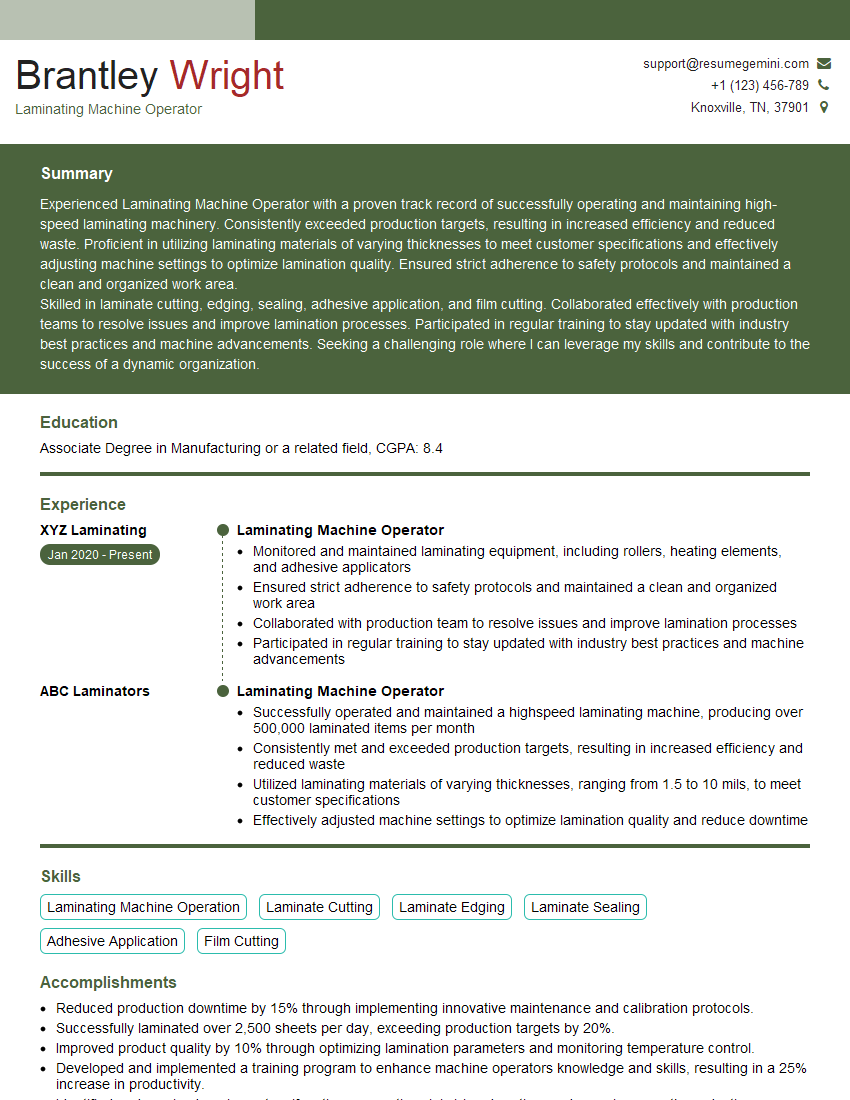
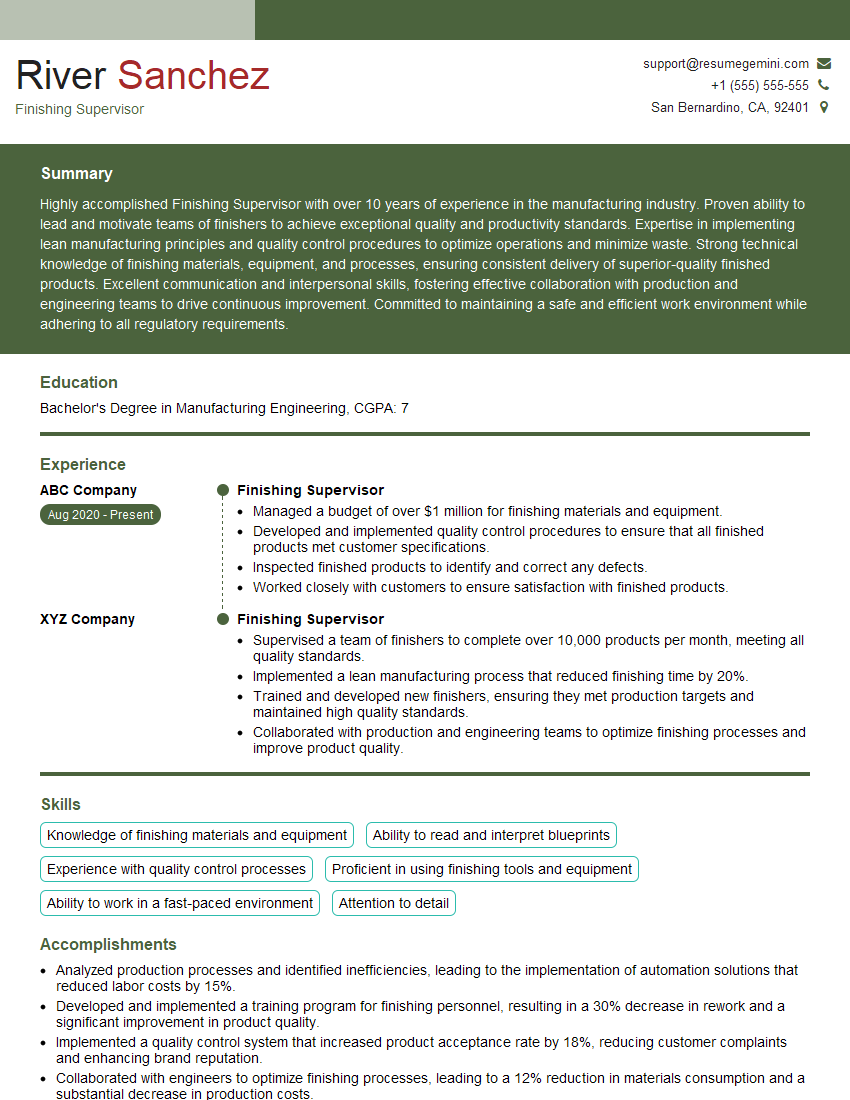
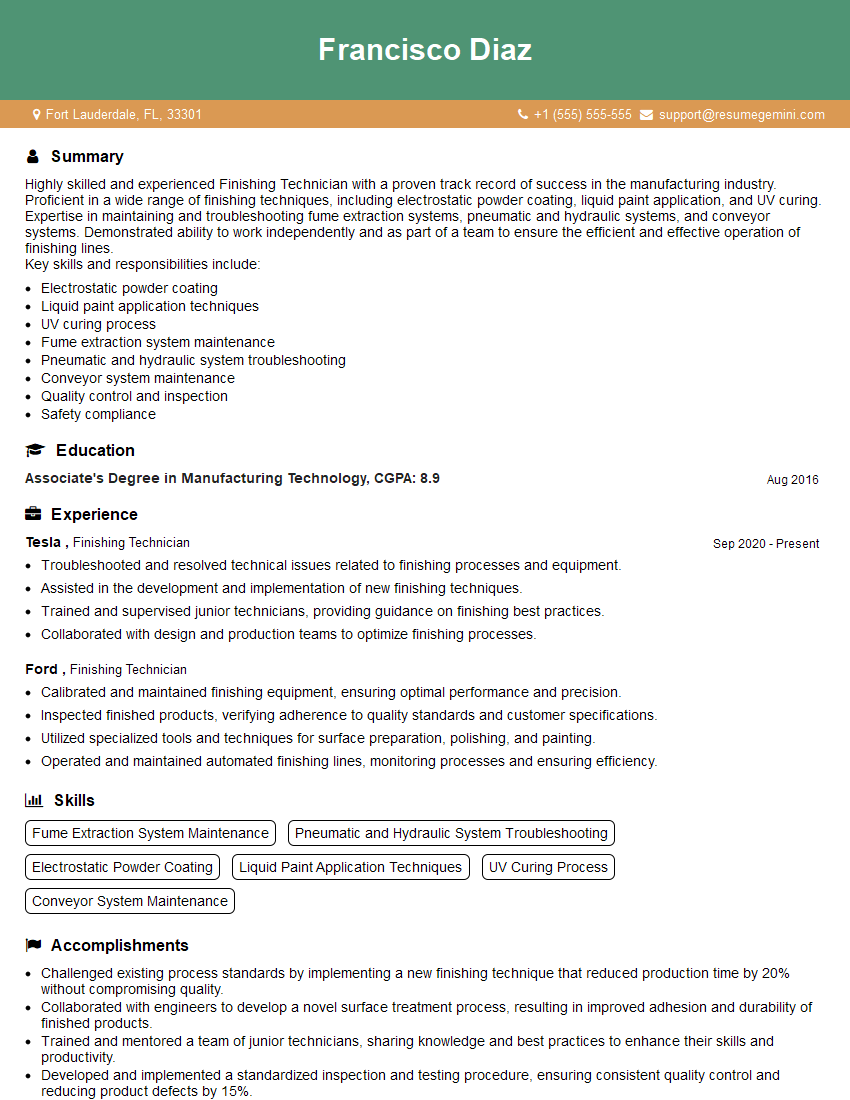
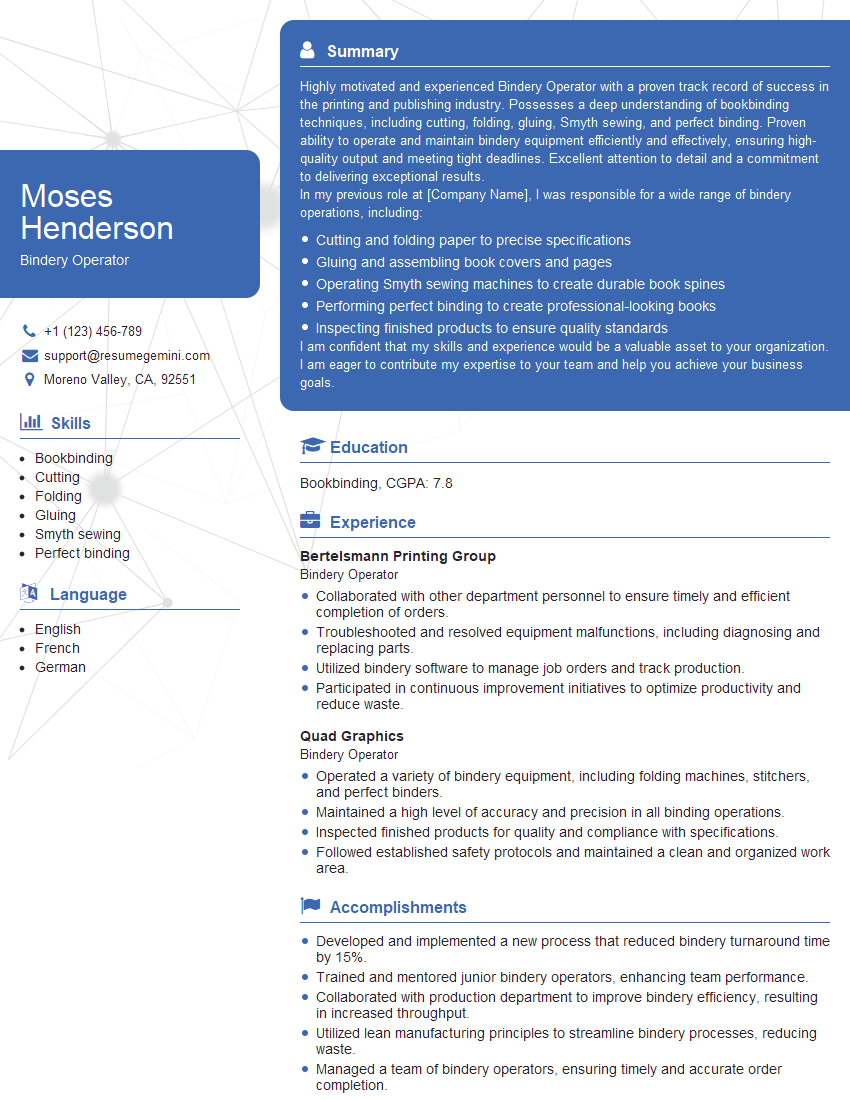
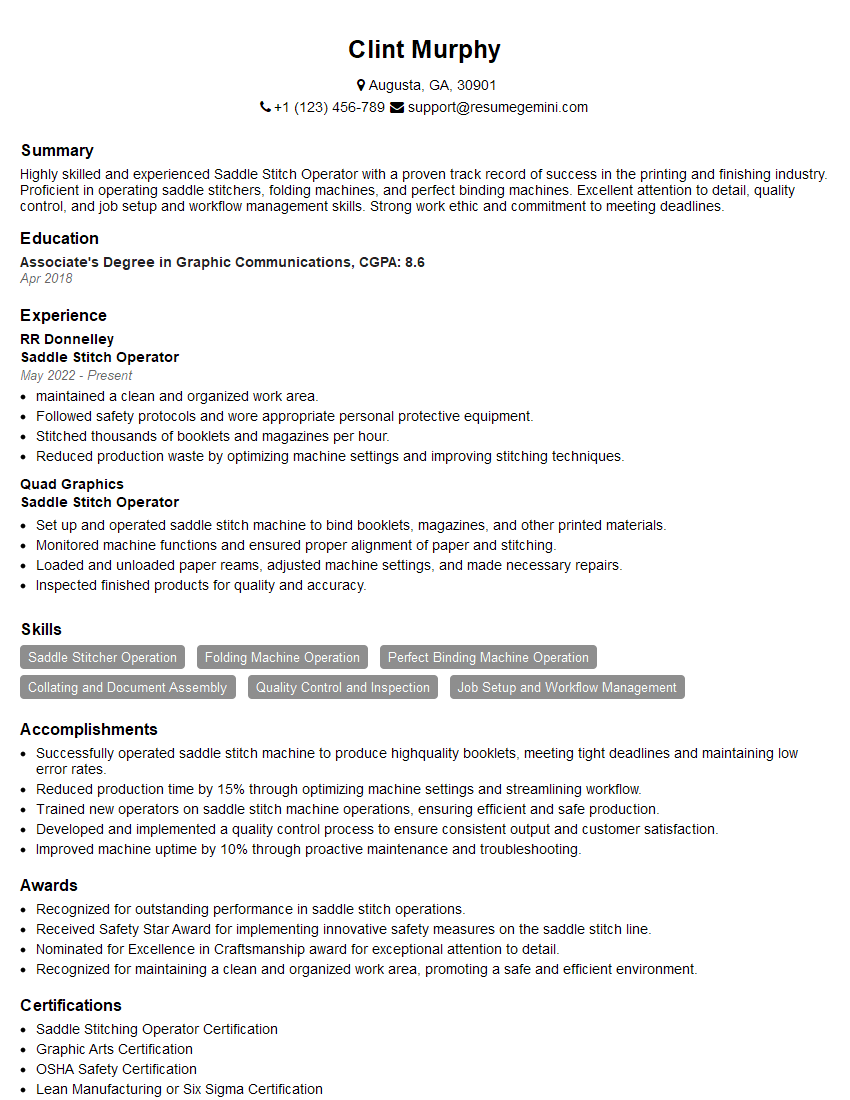
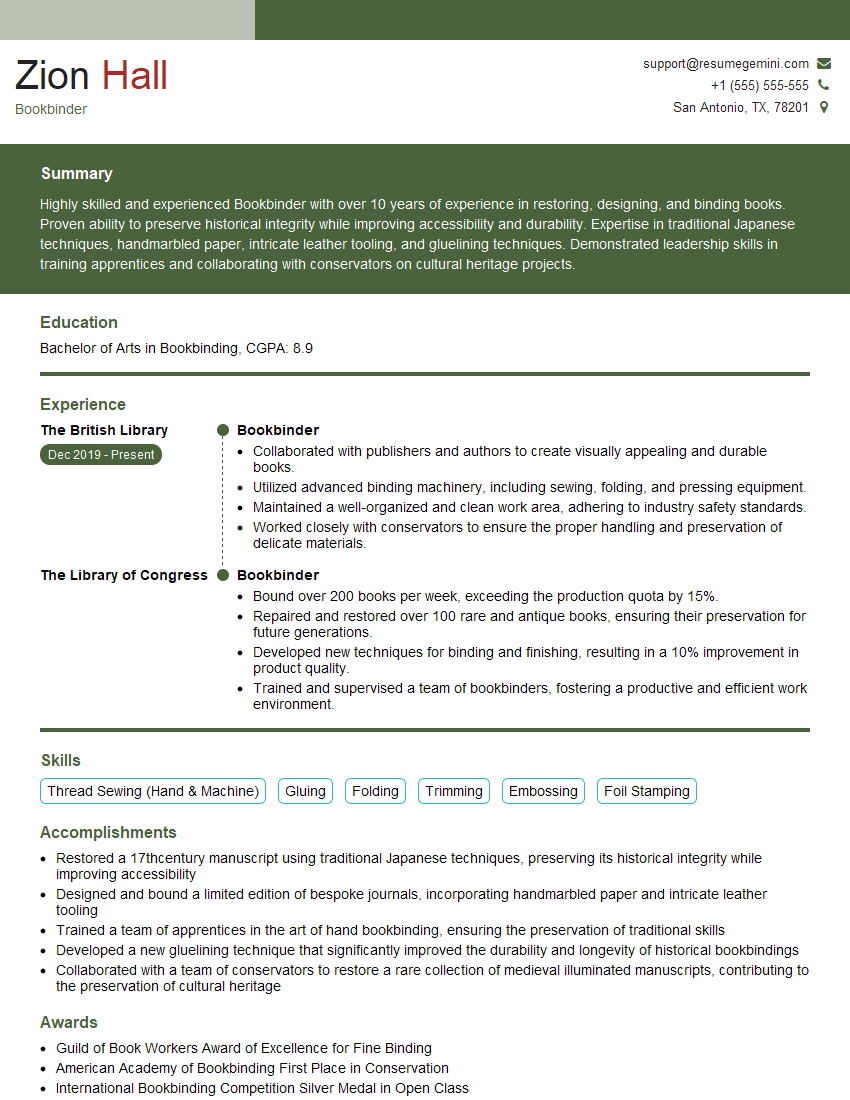
Mastering binding and laminating opens doors to exciting career opportunities in print finishing, publishing, and other related industries. To maximize your chances of landing your dream job, a strong resume is crucial. Creating an ATS-friendly resume is essential for getting past Applicant Tracking Systems and into the hands of hiring managers. To help you build a compelling and effective resume, we recommend using ResumeGemini. ResumeGemini provides a user-friendly platform and offers examples of resumes tailored to the Binding and Laminating field to guide you. Invest time in crafting a professional resume—it’s a significant step towards your successful career journey.
Explore more articles
Users Rating of Our Blogs
Share Your Experience
We value your feedback! Please rate our content and share your thoughts (optional).
What Readers Say About Our Blog
Really detailed insights and content, thank you for writing this detailed article.
IT gave me an insight and words to use and be able to think of examples