The thought of an interview can be nerve-wracking, but the right preparation can make all the difference. Explore this comprehensive guide to Boiler Regulations interview questions and gain the confidence you need to showcase your abilities and secure the role.
Questions Asked in Boiler Regulations Interview
Q 1. Explain the key differences between a high-pressure and low-pressure boiler.
The primary difference between high-pressure and low-pressure boilers lies in their operating pressure. High-pressure boilers operate at pressures significantly above atmospheric pressure (typically above 10 bar), while low-pressure boilers operate at or near atmospheric pressure (generally below 1 bar). This difference impacts various aspects of their design, construction, and safety requirements.
High-pressure boilers, due to the higher pressure, require much more robust construction, including thicker pressure vessels and more sophisticated safety features to prevent catastrophic failure. They are often used in industrial settings for processes requiring high-temperature steam or hot water, such as power generation or large-scale heating systems. Conversely, low-pressure boilers, due to their lower operating pressure, are simpler to construct and maintain. They’re commonly found in smaller commercial buildings or residential applications.
Think of it like comparing a high-pressure fire hose to a garden hose. The fire hose needs much thicker walls to withstand the immense pressure, while the garden hose is fine with much thinner materials. The same principle applies to boilers.
Q 2. Describe the purpose and function of a boiler safety valve.
A boiler safety valve is a crucial pressure relief device designed to protect the boiler and its surroundings from overpressure. Its primary function is to automatically release steam or water when the boiler pressure exceeds a predetermined safe limit. This prevents potential explosions or other serious incidents.
Imagine a pressure cooker. If the pressure gets too high, the safety valve releases steam to prevent the cooker from exploding. Similarly, a boiler safety valve protects the boiler system. They are typically set to open at a specific pressure, ensuring immediate relief should an overpressure situation occur. Regular inspection and testing of these valves are paramount to guarantee their functionality.
Q 3. What are the legal requirements for boiler inspections and certifications in your region?
Legal requirements for boiler inspections and certifications vary by region and the type of boiler. However, in many jurisdictions, regular inspections by a competent and authorized person are mandatory. These inspections typically involve thorough checks of the boiler’s components, safety devices (such as pressure relief valves and safety interlocks), and operational records. The frequency of inspections depends on factors like boiler age, operating pressure, and fuel type.
Certification is often required to demonstrate compliance with relevant regulations. This may involve a formal inspection and testing process, leading to the issuance of a certificate of compliance. Operating a boiler without the necessary certifications and inspections is usually illegal and carries significant safety and legal risks. Specific details regarding requirements should be obtained from local regulatory authorities or boiler inspection companies.
Q 4. How do you ensure compliance with relevant Boiler Regulations during boiler maintenance?
Ensuring compliance during boiler maintenance is a multi-faceted process involving meticulous adherence to established procedures and regulations. Firstly, all maintenance work must be carried out by qualified and competent personnel who understand the boiler’s specifics and relevant safety standards. Maintenance schedules must align with manufacturer’s recommendations and regulatory requirements.
Detailed records of all inspections, maintenance activities, and any repairs or replacements must be meticulously documented and kept readily available for inspection by authorized personnel. This documentation serves as proof of compliance. Using only approved spare parts is also crucial, as using substandard components compromises safety and can invalidate any certification. Regular checks of safety valves and other pressure relief devices ensure their proper functioning. Furthermore, regular training of personnel responsible for boiler operation and maintenance is vital for ensuring a safe and compliant system.
Q 5. Outline the process for commissioning a new boiler system.
Commissioning a new boiler system is a critical phase that requires thorough planning and execution. The process typically starts with a pre-commissioning inspection to ensure that the boiler and its ancillary equipment have been correctly installed and wired according to the design specifications. Next, a thorough inspection of the boiler and safety devices is conducted to confirm that all components are functioning correctly and safely.
Following this, the boiler undergoes a commissioning test run, involving a gradual increase in pressure and temperature to check for leaks, proper operation of safety devices, and overall performance. This process is documented, and any issues identified are addressed before proceeding. Finally, once all tests are successfully completed, and safety checks are satisfactory, the boiler system is officially commissioned. A commissioning report is then issued, documenting all procedures and results, ensuring future compliance and traceability.
Q 6. What are the common causes of boiler inefficiency and how can they be addressed?
Boiler inefficiency can stem from several sources, resulting in increased fuel consumption and higher operational costs. Scale buildup inside the boiler tubes is a common culprit, hindering heat transfer and reducing efficiency. Air infiltration into the combustion chamber can also reduce efficiency, as this leads to incomplete combustion and energy loss. Faulty burner adjustments can lead to improper fuel-air mixing, impacting combustion efficiency.
Addressing these issues requires a multi-pronged approach: Regular chemical cleaning of the boiler to remove scale, checking for and sealing any air leaks in the combustion chamber, and precise adjustment of burners to optimize fuel-air ratios. Regular maintenance, including cleaning, inspections, and adjustments, is crucial for maintaining optimal boiler performance and energy efficiency. In addition, ensuring adequate water treatment prevents scale formation and prolongs the boiler’s lifespan.
Q 7. Describe your experience with different types of boiler fuel sources (gas, oil, etc.).
My experience encompasses various boiler fuel sources, including natural gas, oil (both light and heavy fuel oil), and biomass. Each fuel type presents unique characteristics influencing boiler design, operation, and maintenance. Natural gas boilers are generally easier to control and maintain, offering cleaner combustion compared to oil. Oil boilers, however, can be more cost-effective in regions with lower natural gas prices or where natural gas infrastructure is limited. The combustion characteristics and safety precautions vary significantly between these fuel types.
Biomass boilers, using sustainable fuels like wood pellets or agricultural residues, are becoming increasingly prevalent due to their environmental benefits. However, their operation requires careful consideration of fuel quality, ash handling, and emissions control. Selecting the appropriate fuel type depends on factors such as cost, availability, environmental regulations, and the specific application requirements. For each fuel type, I have experience in ensuring safe and compliant operation, including proper fuel storage, handling, and combustion control.
Q 8. Explain the importance of water treatment in boiler operation.
Water treatment is paramount in boiler operation because it directly impacts efficiency, longevity, and safety. Without proper treatment, impurities in the water can cause significant problems. Imagine trying to cook pasta in dirty water – the result would be unpleasant, right? Similarly, impurities in boiler water lead to scale buildup, corrosion, and ultimately, boiler failure.
Scale Buildup: Minerals like calcium and magnesium precipitate out of solution as the water heats, forming a hard, insulating layer on heat transfer surfaces. This reduces efficiency, requiring more fuel to achieve the desired temperature and potentially leading to overheating and damage.
Corrosion: Dissolved oxygen, carbon dioxide, and other impurities in the water can cause pitting, rusting, and general deterioration of the boiler’s metal components. This compromises the structural integrity of the boiler and leads to leaks and premature failure.
Foaming and Priming: Dissolved solids and suspended matter in the water can cause foaming, leading to water carryover into the steam lines. This contaminated steam can damage downstream equipment and even pose a safety hazard.
Effective water treatment involves techniques like softening, filtration, chemical treatment (using corrosion inhibitors, oxygen scavengers, etc.), and regular blowdown to remove accumulated solids. A well-maintained water treatment program significantly extends boiler lifespan, improves efficiency, and ensures safe operation.
Q 9. How do you identify and troubleshoot common boiler malfunctions?
Troubleshooting boiler malfunctions requires a systematic approach. Think of it like diagnosing a car problem – you wouldn’t just randomly start replacing parts; you’d check for symptoms and use that information to guide your investigation. Here’s a typical process:
Identify the Symptom: Is the boiler not producing enough steam? Is there a leak? Is there unusual noise or vibration? Precise observation is key.
Check Gauges and Alarms: Examine pressure gauges, temperature indicators, water level indicators, and any safety alarms that may have activated. These provide vital clues.
Inspect the Boiler and Associated Equipment: Look for visible signs of leaks, damage, or corrosion. Check pumps, valves, and control systems for proper operation.
Consult Operating Manuals and Logs: Manufacturers’ manuals provide troubleshooting guides and diagrams. Reviewing recent boiler logs can reveal patterns or previous issues that might be relevant.
Systematic Testing: Depending on the suspected issue, specific tests might be necessary. This could involve checking fuel supply, burner operation, electrical connections, or conducting a pressure test.
Implement Corrective Actions: Once the problem is identified, implement the necessary repairs or adjustments. Always follow safety procedures.
For example, if the boiler is not producing enough steam and the pressure is low, you might suspect a problem with the fuel supply, burner operation, or a leak. A systematic investigation, involving checking fuel lines, burner ignition, and visually inspecting the boiler for leaks, will pinpoint the root cause.
Q 10. What are the safety procedures for working on a boiler system?
Safety is paramount when working on boiler systems. Never compromise on safety procedures; your well-being and the safety of others depend on it. Think of it like climbing a mountain – you wouldn’t attempt it without proper equipment and training. Here’s a summary of key safety procedures:
Lockout/Tagout Procedures: Before performing any maintenance, ensure the boiler is completely isolated from its power source (fuel, electricity, etc.) and locked out to prevent accidental start-up. This is a critical safety measure.
Personal Protective Equipment (PPE): Always wear appropriate PPE, including safety glasses, gloves, hearing protection, and heat-resistant clothing. The specific PPE will depend on the task.
Confined Space Entry Procedures (if applicable): If working in a confined space within the boiler, follow strict confined space entry procedures, including atmospheric monitoring and having a standby person present.
Hot Surface Awareness: Boilers operate at high temperatures; always be aware of potential hot surfaces and take precautions to avoid burns.
Competent Personnel: Work should only be carried out by trained and competent personnel who understand the risks involved and have the necessary qualifications.
Emergency Procedures: Be familiar with the emergency procedures for the specific boiler system and the facility.
Regular safety training and adherence to established procedures are crucial for preventing accidents and maintaining a safe working environment.
Q 11. Describe your experience with boiler control systems and their programming.
I have extensive experience with various boiler control systems, ranging from basic on/off controls to sophisticated PLC-based systems. My expertise encompasses both the hardware and software aspects, including programming and troubleshooting. I’m proficient in using various programming languages commonly used in industrial automation, including Ladder Logic and Structured Text. I can configure and program control systems to optimize boiler operation, ensuring efficiency and safety. For example, I’ve worked on projects involving the integration of boiler control systems with Building Management Systems (BMS) to achieve optimal energy efficiency across entire facilities.
In one specific project, I programmed a PLC-based control system for a large industrial boiler to automate the start-up, shutdown, and load-following operations. This involved developing control algorithms to precisely manage fuel input, air-fuel ratio, and water level based on steam demand. The system also incorporated safety interlocks to prevent hazardous conditions. The result was a significant improvement in boiler efficiency and reduced operator workload.
Q 12. How do you interpret and apply relevant Boiler Regulations documentation?
Interpreting and applying boiler regulations requires a thorough understanding of the relevant codes and standards in your region. These regulations are not simply guidelines; they are legal requirements that must be strictly adhered to. Failure to comply can result in significant penalties and, more importantly, compromise safety. My experience involves interpreting documents such as the ASME Boiler and Pressure Vessel Code, local licensing regulations, and other relevant safety standards.
My approach involves carefully reviewing the documentation, identifying the specific requirements applicable to the boiler system in question, and ensuring that all aspects of design, installation, operation, and maintenance comply with those requirements. This includes understanding the requirements for inspections, testing, and record-keeping. I am familiar with the different categories of boilers and the specific regulations that apply to each.
Q 13. What is your experience with boiler logbook maintenance and record keeping?
Meticulous boiler logbook maintenance is crucial for compliance, troubleshooting, and preventative maintenance. The logbook acts as a historical record of the boiler’s operation, providing valuable insights into its performance and any issues that may have arisen. I am experienced in maintaining comprehensive logbooks, documenting key parameters such as operating pressures, temperatures, fuel consumption, water treatment procedures, and any maintenance or repair activities carried out. The logbook also serves as a record of inspections and pressure tests.
I ensure all entries are accurate, legible, and made in a timely manner. Using a consistent format makes it easy to review and analyze the data, allowing for timely identification of potential problems and trend analysis. Maintaining a well-organized logbook is not just a matter of compliance; it’s a proactive approach to ensuring optimal boiler operation and longevity.
Q 14. Explain the process of boiler pressure testing and inspection.
Boiler pressure testing and inspection are essential components of safety and regulatory compliance. They verify the structural integrity of the boiler and its ability to withstand operating pressures safely. The process typically involves several stages:
Preparation: The boiler must be thoroughly cleaned and inspected visually for any signs of damage or corrosion before the test. All safety valves and other pressure-relief devices are checked and secured.
Isolation: The boiler is completely isolated from the rest of the system and the pressure test is performed according to the specifications outlined in the manufacturer’s instructions and relevant standards.
Pressure Test: The boiler is pressurized using a calibrated pump to a specified test pressure, usually significantly higher than the operating pressure. The pressure is maintained for a certain duration to check for leaks and structural integrity.
Leak Detection: During the pressure test, careful observation and sometimes specialized leak detection equipment are used to identify any leaks or pressure drops.
Inspection: After the pressure test, a thorough inspection is performed to verify the integrity of all welds, connections, and other components.
Documentation: All test results, including pressure readings, leak detection observations, and inspection findings, are meticulously documented and filed with the boiler logbook.
The frequency of pressure testing and inspection depends on factors such as boiler size, type, and operating conditions, and is often defined by local regulations.
Q 15. Describe your experience with different types of boiler systems (firetube, watertube, etc.).
My experience encompasses a wide range of boiler systems, from the simpler firetube boilers to the more complex watertube designs. Firetube boilers, often found in smaller applications, have hot gases passing through tubes surrounded by water. Think of it like a thermos – the heat from the combustion process heats the water externally. These are generally less efficient but simpler and cheaper to maintain. Watertube boilers, conversely, have water circulating inside tubes surrounded by hot gases. This allows for much higher pressures and steam production rates, making them ideal for large-scale industrial processes and power generation. I’ve worked extensively with both horizontal and vertical configurations of both firetube and watertube designs, including those utilizing various fuels such as natural gas, oil, and biomass. I’ve also had experience with packaged boilers, which are pre-assembled units, often used for smaller commercial applications, and custom-designed boilers for specialized industrial processes. Furthermore, my experience extends to different boiler accessories and control systems, like economizers and superheaters, impacting overall efficiency and operation.
Career Expert Tips:
- Ace those interviews! Prepare effectively by reviewing the Top 50 Most Common Interview Questions on ResumeGemini.
- Navigate your job search with confidence! Explore a wide range of Career Tips on ResumeGemini. Learn about common challenges and recommendations to overcome them.
- Craft the perfect resume! Master the Art of Resume Writing with ResumeGemini’s guide. Showcase your unique qualifications and achievements effectively.
- Don’t miss out on holiday savings! Build your dream resume with ResumeGemini’s ATS optimized templates.
Q 16. How do you ensure the safe and efficient operation of boiler systems?
Ensuring safe and efficient boiler operation is paramount. It involves a multi-faceted approach starting with meticulous adherence to all relevant regulations and codes, such as ASME, API, and local jurisdiction requirements. Regular inspections are crucial – think of it as a comprehensive health check-up for your boiler. These involve visual inspections for leaks, corrosion, or damage; pressure tests to ensure the boiler can withstand operational pressures; and operational tests to verify efficiency and performance. Crucially, we maintain detailed logs of all inspections, repairs, and maintenance activities. Proper water treatment is also essential to prevent scaling, corrosion, and other issues that can compromise safety and efficiency. This includes regular testing of boiler water chemistry and adjusting treatments as necessary. Finally, operator training is indispensable. Skilled operators understand the intricacies of the boiler system, enabling them to identify potential problems early and react swiftly and safely.
Q 17. What are the environmental considerations related to boiler operation?
Environmental considerations are increasingly important in boiler operation. The primary concern is emissions. Boiler exhaust gases contain various pollutants, including NOx (nitrogen oxides), SOx (sulfur oxides), particulate matter (PM), and CO2 (carbon dioxide). To mitigate these, many modern boilers incorporate pollution control technologies like low-NOx burners, selective catalytic reduction (SCR), and flue gas desulfurization (FGD). Furthermore, efficient boiler operation minimizes fuel consumption, directly reducing CO2 emissions. Responsible fuel selection is another key aspect; switching to cleaner fuels like natural gas or exploring biofuels can significantly lower the environmental impact. Proper waste management of boiler ash and other byproducts is equally important, ensuring compliance with all environmental regulations and minimizing impact on surrounding ecosystems. A comprehensive environmental impact assessment is crucial during the design, installation, and operational phases of a boiler project.
Q 18. What is your experience with boiler energy audits and efficiency improvements?
I have extensive experience conducting energy audits for boiler systems, identifying areas for improvement and implementing efficiency upgrades. These audits involve a thorough examination of boiler operation, fuel consumption patterns, and heat loss. I use specialized instruments to measure efficiency parameters and analyze data to pinpoint inefficiencies. For example, I might identify excessive blowdown, leading to wasted energy and water. I’ve implemented various upgrades to improve energy efficiency, including the installation of economizers to recover waste heat from flue gases, air preheaters to increase combustion efficiency, and advanced control systems to optimize boiler operation based on real-time demand. These improvements often result in significant cost savings for clients while lowering the environmental footprint. One specific project involved identifying leaks in a steam distribution network, resulting in a 15% reduction in fuel consumption after repairs.
Q 19. How do you handle emergency situations related to boiler malfunctions?
Handling boiler malfunctions requires a calm and systematic approach. The first step is to prioritize safety; immediately isolate the boiler from the fuel supply and shut down the system according to established emergency procedures. Then, assess the situation using diagnostic tools and relevant documentation. Common issues might include a low water level, high pressure, or flame failure. Based on this assessment, I would determine the appropriate course of action – repairing the fault, if feasible, or initiating a controlled shutdown to prevent damage and ensure the safety of personnel. Communication is vital – promptly informing relevant personnel, including management and maintenance teams, about the situation and the steps being taken is paramount. Following the incident, a thorough investigation is needed to identify root causes and implement preventive measures to avoid recurrence. Regular maintenance and preventative measures significantly reduce the probability of emergency situations.
Q 20. Describe your experience with boiler repairs and maintenance procedures.
My experience in boiler repairs and maintenance is extensive. This involves a wide spectrum of tasks, from minor repairs like replacing gaskets and valves to major overhauls involving tube replacement or burner refurbishment. I am proficient in various welding techniques, and regularly perform inspections, using both visual and non-destructive testing methods (NDT), such as ultrasonic testing, to identify potential issues before they escalate. Preventive maintenance is key; we adhere to a rigorous schedule of regular cleaning, inspections, and lubrication of boiler components to avoid major breakdowns and ensure longevity. I have experience with a variety of boiler types and sizes, and I’m familiar with various safety protocols and regulatory requirements. Documentation is extremely important, carefully recording all maintenance and repair activities to track the boiler’s history and assist with future maintenance planning. This ensures compliance with regulations and allows for proactive maintenance practices, extending the lifespan and efficiency of the boiler systems.
Q 21. What is your understanding of boiler water chemistry and its importance?
Boiler water chemistry is critical for safe and efficient boiler operation. The composition of boiler water directly impacts the boiler’s internal surfaces and its longevity. Impurities in the water, such as dissolved solids, can cause scaling, leading to reduced heat transfer efficiency and potential tube failures. Similarly, corrosive substances can lead to pitting and corrosion of metal components. Maintaining optimal water chemistry involves treating the water to remove impurities and adding chemicals to control pH, alkalinity, and oxygen levels. Regular testing of boiler water parameters, such as conductivity, alkalinity, and phosphate levels, is crucial to monitor the effectiveness of the treatment program and make necessary adjustments. Proper water treatment prevents costly repairs and extends the life of the boiler, contributing to both financial and environmental benefits. The importance of water chemistry cannot be overstated, as it directly contributes to safety and the overall efficiency of the boiler operation.
Q 22. Explain the role of a boiler blowdown system.
A boiler blowdown system is crucial for maintaining the efficiency and longevity of a boiler. Think of it as a regular cleaning process for your boiler’s circulatory system. Its primary function is to remove accumulated solids, impurities, and dissolved gases from the boiler water. These contaminants, if left unchecked, can lead to scaling, corrosion, and reduced heat transfer efficiency.
The system works by periodically discharging a small amount of boiler water, carrying these impurities with it. This prevents the build-up of sludge and other deposits that can severely impact boiler performance. Different types of blowdown exist, including continuous blowdown (a small, constant discharge) and intermittent blowdown (periodic, larger discharges). The choice depends on factors like boiler size, water quality, and operating conditions.
For instance, continuous blowdown helps maintain a consistent level of dissolved solids in the boiler water, whereas intermittent blowdown is more effective at removing larger deposits. Proper blowdown management is essential for maintaining boiler water chemistry within safe and efficient parameters, extending its lifespan, and preventing costly repairs.
Q 23. What is your experience with different types of boiler controls (e.g., PID controllers)?
My experience encompasses a wide range of boiler control systems, including Proportional-Integral-Derivative (PID) controllers, which are the workhorses of modern boiler automation. PID controllers excel at maintaining precise temperature and pressure levels by adjusting fuel input based on deviations from setpoints. I’ve worked extensively with both analog and digital PID controllers, configuring them to optimize boiler efficiency and responsiveness.
Beyond PID, I’m familiar with advanced control strategies such as cascade control (where one controller regulates another), feedforward control (predictive control based on anticipated changes), and ratio control (maintaining a consistent ratio between fuel and air). I understand the importance of proper tuning for optimal performance; an improperly tuned PID controller can lead to oscillations or sluggish response, impacting both efficiency and safety.
For example, I once worked on a project where we replaced an outdated analog control system with a modern digital PID system. This resulted in a significant improvement in boiler efficiency, reduced energy consumption, and minimized the risk of operational errors. The digital system allowed for precise monitoring and data logging, providing valuable insights for optimizing boiler operation.
Q 24. Describe your understanding of relevant health and safety regulations related to boiler operation.
Health and safety regulations surrounding boiler operation are paramount and vary by jurisdiction, but common threads include thorough operator training, regular inspections, and meticulous maintenance. Regulations often dictate the frequency of inspections, the qualifications of personnel allowed to operate and maintain boilers, and the implementation of safety devices like pressure relief valves and flame failure safeguards.
My understanding encompasses regulations related to pressure vessel safety, emission control, and workplace safety. I’m familiar with requirements for lockout/tagout procedures during maintenance, the use of personal protective equipment (PPE), and emergency shutdown procedures. Furthermore, I understand the importance of complying with regulations related to boiler water treatment to minimize the risk of corrosion and scale formation. Neglecting these regulations can result in severe consequences, from operational disruptions to catastrophic failures and potential injuries.
For example, I’m familiar with OSHA regulations in the United States and similar regulations in other countries, ensuring that any boiler operation under my supervision adheres to the highest safety standards.
Q 25. How do you ensure the accuracy of boiler instrumentation and readings?
Ensuring the accuracy of boiler instrumentation and readings is critical for efficient and safe operation. This involves a multi-pronged approach encompassing regular calibration, preventative maintenance, and cross-checking readings against multiple instruments wherever possible. Regular calibration, using traceable standards, is essential for maintaining the accuracy of pressure gauges, temperature sensors, and flow meters.
I use a systematic approach, including regular checks of instrument zero points and spans, comparing readings with secondary instruments, and reviewing trends over time to identify any anomalies. For instance, a slight drift in a temperature sensor reading over several weeks might indicate a developing problem that needs attention before it escalates. Beyond the instruments themselves, the accuracy of readings depends heavily on the condition of the sensors and their installation; ensuring clean, unobstructed sensors and proper wiring is vital for accurate measurements. Any discrepancies are investigated and documented thoroughly, following established protocols for addressing instrument errors.
Q 26. What is your experience with boiler system upgrades and modernization?
I have extensive experience with boiler system upgrades and modernization projects. These often involve replacing obsolete components, incorporating advanced control systems, and optimizing energy efficiency. Upgrades can range from simple replacements of worn-out parts to complete overhauls incorporating new technologies like high-efficiency burners, improved insulation, and advanced control strategies.
In one project, we modernized an older boiler system by replacing the outdated analog controls with a sophisticated digital control system integrated with a SCADA (Supervisory Control and Data Acquisition) system. This upgrade not only improved efficiency and reduced energy consumption but also allowed for remote monitoring and improved troubleshooting capabilities. It involved a detailed assessment of the existing system, careful planning to minimize downtime, and rigorous testing to ensure the upgraded system performed as intended. Successful modernization requires careful consideration of the existing infrastructure, regulatory requirements, and the long-term operational goals of the facility.
Q 27. How do you stay up-to-date with changes in Boiler Regulations and best practices?
Staying current with changes in boiler regulations and best practices is an ongoing process. I actively participate in professional organizations, attend industry conferences and training sessions, and subscribe to relevant industry publications and online resources. This helps me stay abreast of new technologies, updated safety standards, and evolving regulatory requirements.
Furthermore, I regularly review the latest editions of relevant codes and standards (e.g., ASME Boiler and Pressure Vessel Code), ensuring compliance with all applicable regulations. I also maintain a network of contacts within the industry, engaging in discussions and exchanging information on current best practices. This proactive approach ensures that my knowledge and skills remain up-to-date, allowing me to apply the latest advancements in boiler technology and safety practices.
Q 28. Describe a time you had to troubleshoot a complex boiler problem. What was your approach?
One challenging situation involved a boiler experiencing intermittent flameouts. Initial diagnostics pointed to several potential culprits: faulty fuel supply, ignition problems, or issues with the control system. My approach was systematic and methodical.
First, I meticulously reviewed operational logs and maintenance records. This revealed a pattern: the flameouts occurred mostly during periods of high load. This clue narrowed the focus. Next, I systematically checked the fuel supply system, confirming adequate pressure and flow. Following this, I inspected the ignition system, finding no obvious faults. Finally, I focused on the control system. Through careful analysis of the control signals, I discovered a subtle but critical issue in the feedback loop of the PID controller. A slight miscalibration was causing the system to misinterpret the boiler’s temperature, leading to the intermittent flameouts under high load conditions.
The solution was a simple recalibration of the PID controller, addressing the feedback loop issue. This resolved the problem, demonstrating the importance of a systematic approach to troubleshooting, thorough record-keeping, and the ability to effectively interpret data from various systems. The key was using the available data to guide my investigation, focusing my efforts on the most likely causes, and not jumping to conclusions.
Key Topics to Learn for Boiler Regulations Interview
- Safety Regulations & Compliance: Understanding the fundamental safety regulations surrounding boiler operation and maintenance, including relevant codes and standards. This includes knowing how to identify potential hazards and implement preventative measures.
- Boiler Operation & Maintenance: Practical knowledge of boiler systems, including start-up procedures, shutdown procedures, regular inspections, and troubleshooting common malfunctions. Be prepared to discuss specific maintenance tasks and their importance.
- Water Treatment & Chemistry: Understanding the principles of water treatment in boiler systems to prevent scaling, corrosion, and other issues that affect efficiency and safety. Be ready to discuss various water treatment methods and their applications.
- Energy Efficiency & Optimization: Knowledge of techniques and technologies to optimize boiler efficiency and reduce energy consumption. This could involve discussing boiler tuning, combustion optimization, and insulation practices.
- Emergency Procedures & Response: Familiarity with emergency protocols in case of boiler malfunctions or failures. This includes understanding shutdown procedures, safety protocols, and reporting requirements.
- Legislation and Reporting: A clear understanding of relevant legislation, reporting requirements, and record-keeping practices. This includes knowing which authorities to contact and the appropriate procedures for reporting incidents.
- Troubleshooting and Problem Solving: Develop your ability to diagnose and solve common boiler problems. Practice using a systematic approach to troubleshooting and be prepared to discuss your problem-solving methodology.
Next Steps
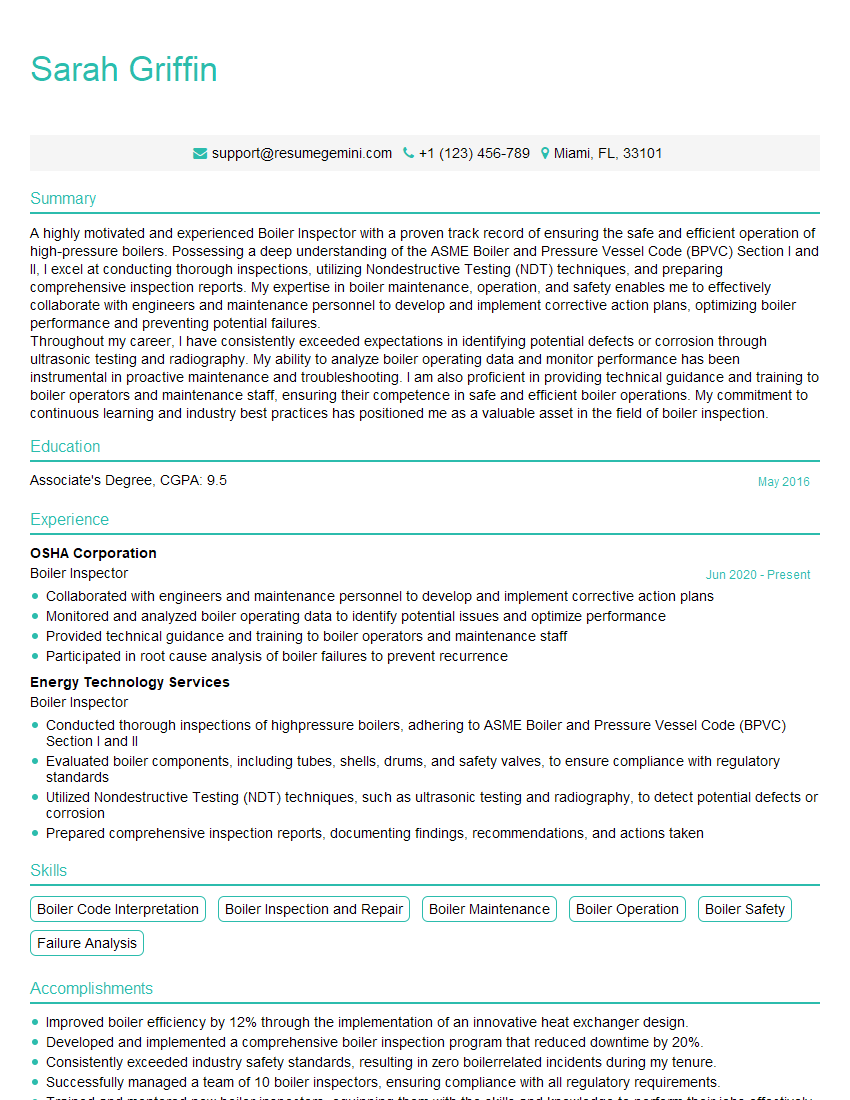
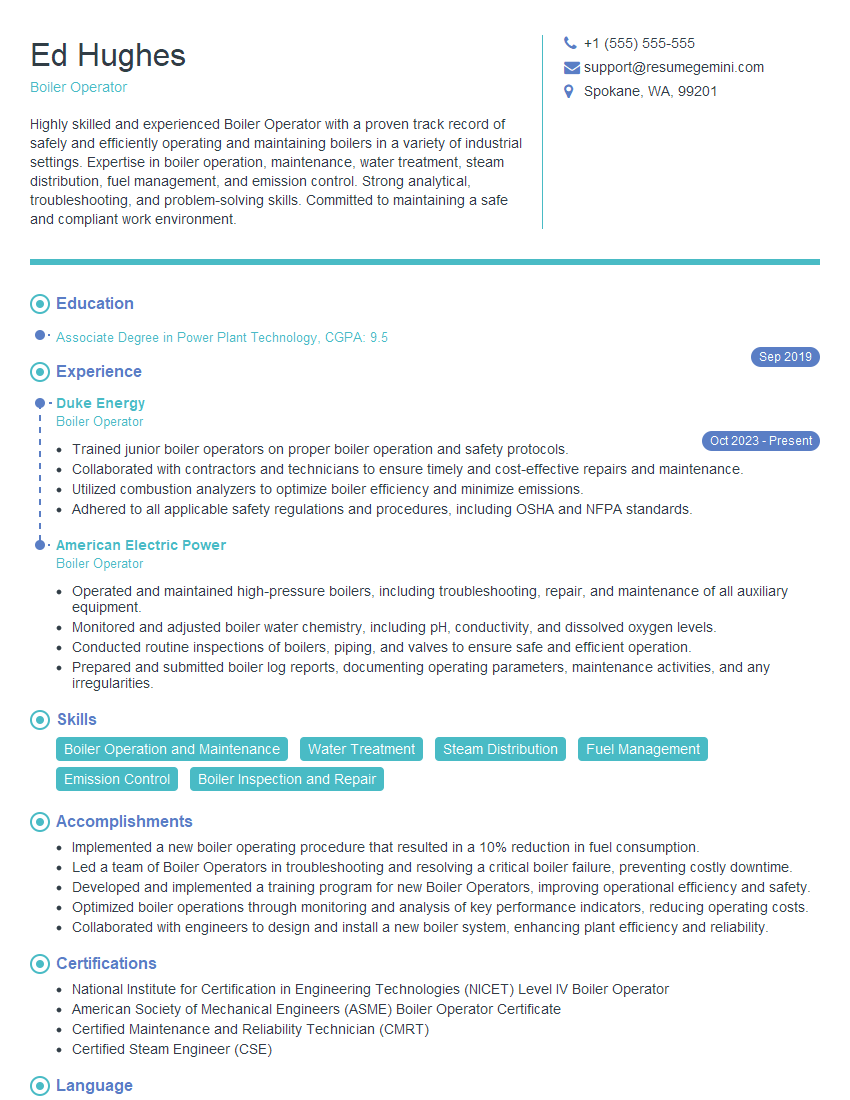
Mastering Boiler Regulations is crucial for career advancement in the field, opening doors to more senior roles and higher earning potential. A strong understanding of these regulations demonstrates your commitment to safety and efficiency, making you a highly desirable candidate. To significantly increase your chances of landing your dream job, focus on creating an ATS-friendly resume that highlights your skills and experience effectively. ResumeGemini is a trusted resource that can help you build a professional and impactful resume. Examples of resumes tailored to the Boiler Regulations field are available to guide you through the process.
Explore more articles
Users Rating of Our Blogs
Share Your Experience
We value your feedback! Please rate our content and share your thoughts (optional).
What Readers Say About Our Blog
I Redesigned Spongebob Squarepants and his main characters of my artwork.
https://www.deviantart.com/reimaginesponge/art/Redesigned-Spongebob-characters-1223583608
IT gave me an insight and words to use and be able to think of examples
Hi, I’m Jay, we have a few potential clients that are interested in your services, thought you might be a good fit. I’d love to talk about the details, when do you have time to talk?
Best,
Jay
Founder | CEO