Feeling uncertain about what to expect in your upcoming interview? We’ve got you covered! This blog highlights the most important Boiler Tube Replacement interview questions and provides actionable advice to help you stand out as the ideal candidate. Let’s pave the way for your success.
Questions Asked in Boiler Tube Replacement Interview
Q 1. Describe the different types of boiler tube failures.
Boiler tube failures can be broadly categorized into several types, each with its distinct characteristics and causes. Understanding these failure modes is crucial for effective preventative maintenance and timely repairs.
- Corrosion: This is arguably the most common cause of failure, encompassing various forms like pitting, general wastage, stress corrosion cracking, and erosion-corrosion. Pitting, for instance, creates small holes that weaken the tube, while general wastage thins the tube wall uniformly.
- Erosion: High-velocity water or steam flow can erode the inner surface of the tubes, leading to thinning and eventual failure. This is particularly prevalent in areas of high turbulence or where there are flow restrictions.
- Mechanical Damage: Physical impact, vibrations, or improper handling during installation or maintenance can cause dents, cracks, or other mechanical damage. A simple dent might seem insignificant, but it creates a stress concentration point that can lead to catastrophic failure under pressure.
- Creep: Prolonged exposure to high temperatures and pressures can cause the metal to slowly deform, leading to creep rupture. This is a time-dependent failure mechanism, meaning that even seemingly robust tubes can fail over time.
- Fatigue: Repeated thermal cycling (heating and cooling) or pressure fluctuations can lead to fatigue cracking. Think of it like bending a paper clip back and forth repeatedly – it eventually breaks. Similarly, repeated stresses in boiler tubes can cause fatigue cracks.
- Bulging: Overpressure or overheating can cause the tube to bulge outwards, weakening its structural integrity and increasing the risk of rupture. This can be readily visible during inspection.
Identifying the specific type of failure is essential for determining the root cause and implementing appropriate corrective actions. For example, corrosion might require a change in water chemistry, while mechanical damage might necessitate improved handling procedures.
Q 2. Explain the process of identifying a faulty boiler tube.
Identifying a faulty boiler tube requires a multi-faceted approach combining visual inspection with specialized testing methods. The process typically begins with a thorough visual examination.
- Visual Inspection: This involves carefully inspecting the tubes for any signs of damage, including corrosion, erosion, bulges, cracks, or leaks. Using boroscopes or specialized cameras can help inspect hard-to-reach areas. Sometimes, external signs such as discoloration or leakage can indicate internal tube problems.
- Eddy Current Testing (ECT): ECT is a non-destructive testing method that uses electromagnetic fields to detect flaws beneath the surface of the tube. It’s highly effective in identifying wall thinning and cracking, providing valuable data about the tube’s condition.
- Ultrasonic Testing (UT): UT uses high-frequency sound waves to detect internal flaws such as cracks or pitting. This is particularly useful for assessing the thickness of the tube wall and identifying areas of significant degradation.
- Hydrostatic Testing: This involves pressurizing the boiler system with water to check for leaks. While not directly identifying a *specific* faulty tube, it helps pinpoint the location of leaks, aiding in narrowing down the inspection area.
The choice of testing methods depends on factors such as the type of boiler, the severity of suspected damage, and available resources. A combination of methods is often used to ensure a comprehensive assessment.
Q 3. What are the common causes of boiler tube corrosion?
Boiler tube corrosion is a complex phenomenon influenced by several factors. Understanding these factors is crucial for implementing effective corrosion control strategies.
- Water Chemistry: Impurities in the boiler water, such as dissolved oxygen, chlorides, and sulfates, can accelerate corrosion. Maintaining proper water chemistry, including appropriate pH levels and oxygen scavenging, is vital.
- Temperature: High temperatures can accelerate corrosion rates, particularly in areas where the tube metal is exposed to high temperature gradients.
- Pressure: High pressure can exacerbate corrosion processes, especially stress corrosion cracking. The combination of high temperature and pressure significantly impacts corrosion.
- Velocity: High-velocity water or steam flow can cause erosion-corrosion, particularly in areas of bends or constrictions. This can lead to localised thinning of the tube walls.
- Material Selection: The choice of boiler tube material is crucial. Some materials are inherently more resistant to certain types of corrosion than others. Stainless steel, for instance, is often preferred due to its corrosion resistance. However, even stainless steel is not immune to corrosion under certain conditions.
Addressing these factors through careful water treatment, proper operating procedures, and material selection can significantly minimize the risk of boiler tube corrosion. Regular monitoring of water chemistry and periodic inspections are key to preventing costly repairs.
Q 4. What safety precautions are essential during boiler tube replacement?
Safety is paramount during boiler tube replacement. Working with high-pressure systems requires meticulous adherence to safety procedures. Here are some essential precautions:
- Lockout/Tagout (LOTO): Before commencing any work, the boiler system must be completely shut down and isolated using LOTO procedures to prevent accidental startup.
- Personal Protective Equipment (PPE): Workers must wear appropriate PPE, including safety glasses, gloves, and protective clothing to prevent injuries from hot surfaces, steam, or chemicals.
- Confined Space Entry: If working inside the boiler, follow proper confined space entry procedures, including atmospheric monitoring and appropriate respiratory protection.
- Hot Work Permits: If any hot work (such as welding or cutting) is required, obtain the necessary hot work permits and follow all safety guidelines.
- Fall Protection: If working at heights, appropriate fall protection measures must be in place.
- Proper Ventilation: Ensure adequate ventilation to prevent the build-up of hazardous gases.
- Emergency Procedures: Develop and communicate clear emergency procedures to be followed in case of accidents or unexpected situations.
A thorough risk assessment should be conducted before starting the replacement process. Regular safety training for the team is crucial to ensure everyone understands and adheres to the safety regulations.
Q 5. What tools and equipment are required for boiler tube replacement?
Boiler tube replacement requires a range of specialized tools and equipment. The specific tools needed might vary depending on the boiler design and the tube’s location, but generally include:
- Tube Expanders and Rollers: These tools are used to securely expand and fasten the new tube into the tube sheet.
- Tube Cutters and Reaming Tools: Used to accurately cut and clean the damaged tube before removal.
- Tube Removers: Specialized tools designed to safely remove the old tube from the tube sheet without damaging surrounding components.
- Welding Equipment (if necessary): In some cases, welding might be needed for specific tube configurations or repair techniques.
- Measuring and Inspection Tools: Calipers, micrometers, and boroscopes are used for precise measurements and inspections.
- Lifting Equipment: Hoists or cranes might be needed to lift heavy components.
- Safety Equipment: This includes PPE, lockout/tagout devices, and emergency equipment.
- Tube cleaning equipment: Equipment such as brushes and cleaning solutions might be needed to prepare the tube sheet for new tube installation.
It is crucial to use high-quality tools and equipment that are specifically designed for boiler tube work to ensure accuracy and safety.
Q 6. Explain the procedure for removing a damaged boiler tube.
Removing a damaged boiler tube is a delicate process that requires precision and care to avoid damaging adjacent tubes or the tube sheet. The exact procedure might vary slightly depending on the boiler design and the type of tube.
- Isolate the Boiler: The boiler should be completely shut down and isolated using lockout/tagout procedures.
- Drain the Water: The boiler should be thoroughly drained and depressurized to prevent scalding or other hazards.
- Access the Tube: Gain safe and proper access to the damaged tube. This may involve removing insulation, panels, or other components.
- Cut the Tube: Using specialized tube cutters, carefully cut the damaged tube into manageable sections. Be cautious to avoid damaging adjacent tubes.
- Remove the Tube Sections: Using tube removal tools, carefully extract the tube sections. This might involve using hammers and drifts to gently work the tube out of the tube sheet.
- Clean the Tube Holes: Thoroughly clean the tube holes in the tube sheet to remove any debris or remaining tube material. This prepares the tube sheet for the new tube.
Throughout this process, careful attention should be paid to avoid damaging the tube sheet or nearby components. If any difficulties are encountered, consulting a boiler specialist is recommended.
Q 7. Describe the process of installing a new boiler tube.
Installing a new boiler tube involves carefully inserting and securing the new tube into the tube sheet. The process requires precision to ensure a leak-proof and structurally sound connection.
- Prepare the Tube: The new tube should be inspected for any defects and cleaned to ensure a proper fit.
- Insert the Tube: Carefully insert the new tube into the tube holes in the tube sheet, ensuring proper alignment.
- Expand and Roll the Tube: Use tube expanders and rollers to expand the tube’s end, securely fastening it into the tube sheet. This creates a tight, leak-proof seal.
- Inspect the Joint: After expansion and rolling, carefully inspect the joint for any defects or leaks. Techniques such as dye penetrant testing or ultrasonic testing might be used.
- Clean Up: Remove any debris or excess material from the area.
- Pressure Testing: Once the new tube is installed, the boiler should undergo pressure testing to ensure it is leak-free.
The exact method of expanding and rolling the tube can vary depending on the boiler design and the type of tube used. Incorrect installation can lead to leaks or structural failure, so it’s crucial to follow established procedures and use the correct tools and techniques. Proper training and experience are essential for this task.
Q 8. What are the different methods for welding boiler tubes?
Welding boiler tubes requires precision and expertise to ensure a durable and leak-free joint. Several methods are employed, each suited to specific tube materials and boiler configurations. The most common methods include:
Gas Tungsten Arc Welding (GTAW), or TIG welding: This method uses a non-consumable tungsten electrode to create an arc, melting the base metal and filler material. It’s prized for its high quality and precise control, ideal for thin-walled tubes and critical applications. Think of it as a meticulous artist carefully crafting a weld. We use this extensively on high-pressure boilers and those using specialized alloys.
Gas Metal Arc Welding (GMAW), or MIG welding: This method uses a consumable electrode wire that feeds continuously into the weld pool, providing faster welding speeds than GTAW. It’s often preferred for thicker tubes and larger repair jobs, where speed is a factor without compromising quality. It’s like using a power tool – efficient and effective.
Shielded Metal Arc Welding (SMAW), or stick welding: This method uses a coated electrode that produces shielding gas as it melts. It’s a robust technique suitable for various tube materials and environments, but it often requires more skill to achieve high-quality welds. This is a workhorse method, often used in field repairs where access is limited.
The choice of welding method depends heavily on factors such as tube material, wall thickness, accessibility, and available resources. Safety precautions, such as appropriate PPE and ventilation, are paramount in all welding operations.
Q 9. What are the quality control checks performed after boiler tube replacement?
Rigorous quality control is critical after boiler tube replacement to ensure operational safety and longevity. Checks include:
Visual Inspection: A thorough examination of the weld for cracks, porosity, undercuts, or other imperfections. We look for anything that might compromise the weld’s integrity.
Dimensional Checks: Verification that the replaced tube is properly aligned and seated, with appropriate clearances. This ensures even heat transfer and prevents stress concentrations.
Dye Penetrant Testing (DPT): A non-destructive testing method that reveals surface cracks by drawing a dye into any imperfections. It’s like a high-powered magnifying glass for finding hidden flaws.
Radiographic Testing (RT): A non-destructive testing method using X-rays or gamma rays to detect internal flaws such as porosity or incomplete fusion. This allows us to see inside the weld to ensure its structural soundness.
Hydrostatic Testing: The boiler system is pressurized with water to a pressure exceeding the operating pressure. This verifies the integrity of the welds and the entire system under stress.
Leak Testing: Using specialized equipment to check for any leaks around the weld or along the tube. We want to be absolutely certain there are no leaks before returning the system to service.
Documentation of all these checks is essential for maintaining a complete record of the repair and satisfying regulatory requirements.
Q 10. How do you ensure the proper alignment of a new boiler tube?
Ensuring proper alignment of a new boiler tube is crucial to prevent stress concentrations and leaks. This is typically achieved through a combination of techniques:
Precise Measurement and Marking: Careful measurements are taken to determine the exact dimensions and angles needed for the new tube. Precise marking helps guide the installation process.
Tube Expanding Tools: These tools gently expand the tube’s end to ensure a tight fit within the tube sheet holes. It’s a delicate balance – tight enough for a secure fit, but not so tight as to damage the tube.
Tube Rollers: These tools are used to carefully expand and shape the tube, ensuring a snug and even fit throughout the length of the tube sheet.
Alignment Fixtures and Guides: Specialized jigs and fixtures are used to guide the tube during installation, maintaining its precise alignment throughout the process. Think of this as a precision-engineered guide to ensure accuracy.
Post-Installation Verification: After installation, the alignment is double-checked using measuring tools to ensure it meets the required specifications before welding.
Any misalignment can lead to premature failure, so this step is critical for the boiler’s long-term performance and safety.
Q 11. What are the common challenges faced during boiler tube replacement?
Boiler tube replacement presents several challenges, often intertwined and requiring careful planning and execution:
Difficult Access: Boiler tubes are often located in confined and hard-to-reach spaces, demanding specialized tools and techniques.
Tube Material Compatibility: Selecting the correct tube material and ensuring compatibility with existing components is essential to prevent corrosion and stress.
Time Constraints: Downtime during boiler tube replacement is costly, necessitating efficient work practices and skilled labor.
Weld Quality: Maintaining high weld quality is paramount for safety and preventing future leaks, requiring skilled welders and appropriate inspection.
Safety Hazards: Working with high-temperature and high-pressure systems presents significant safety risks, demanding strict adherence to safety protocols.
Cost: Replacing boiler tubes can be expensive, involving material costs, labor costs, and potential downtime costs.
Proper planning, risk assessment, and a skilled workforce are crucial for mitigating these challenges.
Q 12. How do you address tube leaks during boiler operation?
Addressing tube leaks during boiler operation requires swift and decisive action to prevent further damage and ensure safety. The approach depends on the severity and location of the leak:
Minor Leaks: Temporary repairs, such as applying specialized leak sealant, might be sufficient for minor leaks, allowing for a planned shutdown for permanent repair.
Significant Leaks: Immediate shutdown of the boiler is necessary for significant leaks to prevent further damage and potential hazards. The leaking tube will then require repair or replacement.
Emergency Procedures: Following established emergency procedures is crucial for safe shutdown and repair. This includes depressurizing the boiler safely and isolating the affected section.
Leak Detection Techniques: Using advanced leak detection technology, such as acoustic emission monitoring or infrared thermography, can help pinpoint the precise location of leaks, even while the boiler is in operation.
It’s always critical to prioritize safety and to follow established procedures during boiler operations and repairs. A thorough root cause analysis should be performed after a leak is identified to prevent future occurrences.
Q 13. Explain the importance of preheating and post-heating during welding.
Preheating and post-heating are essential steps in boiler tube welding, significantly improving the quality and durability of the weld. Think of them as preparing the canvas before painting and preserving the artwork afterward.
Preheating: Reduces the cooling rate of the weld, preventing the formation of hard, brittle microstructures that can lead to cracking. It also helps to reduce residual stresses in the weld metal.
Post-heating (Stress Relieving): After welding, the welded area is slowly heated to a specific temperature and then allowed to cool slowly. This process further reduces residual stresses, improving the overall integrity of the weld and minimizing the risk of cracking.
The specific preheating and post-heating temperatures and durations depend on the tube material, weld configuration, and applicable codes and standards. Failure to properly preheat or post-heat can compromise the weld’s integrity and lead to premature failure.
Q 14. Describe the different types of boiler tube materials and their applications.
Boiler tubes are made from various materials, each selected based on the operating conditions and the desired properties. Common materials include:
Carbon Steel: A cost-effective option for lower pressure and temperature applications. It’s like the workhorse of boiler tubes, reliable and economical.
Alloy Steel: Offers enhanced strength and creep resistance at higher temperatures and pressures, making it ideal for high-performance boilers. It’s built to withstand more demanding conditions.
Stainless Steel: Provides excellent corrosion resistance, making it suitable for applications involving corrosive fluids. Think of this as the protective layer, resisting wear and tear.
Nickel-based Alloys: Offers exceptional high-temperature strength and corrosion resistance, suitable for the most extreme operating conditions. These are the top performers, chosen when reliability and durability are paramount.
The selection of a suitable material is governed by factors such as operating pressure, temperature, fluid composition, and the desired lifespan of the boiler. Material compatibility is crucial to prevent corrosion and premature failure.
Q 15. How do you determine the appropriate size and type of replacement tube?
Selecting the right replacement boiler tube is crucial for maintaining efficiency and safety. It’s not just about picking a tube of similar diameter; the entire specification must be meticulously considered. This involves identifying the original tube’s material (e.g., carbon steel, alloy steel, stainless steel), its dimensions (outer diameter, wall thickness, length), and its metallurgical properties.
We start by referencing the boiler’s original design specifications and any available maintenance records. These documents provide essential information about the tube’s material grade, dimensions, and even the manufacturer. If these are unavailable, we perform a thorough physical inspection of the remaining tubes to determine the material grade. We then use precise measuring tools, such as calipers and micrometers, to determine the exact dimensions of the failed tube. Finally, we consult material property databases and engineering standards to ensure the replacement tube has the appropriate strength, corrosion resistance, and creep properties to handle the operating conditions of the boiler. This selection process often involves considering factors such as steam pressure, temperature, and the boiler’s overall design.
For instance, a high-pressure boiler operating at elevated temperatures might require a tube made of a high-temperature, corrosion-resistant alloy steel, whereas a lower-pressure boiler could utilize a more cost-effective carbon steel tube. The precise tolerances are critical; even a small difference in wall thickness can affect the tube’s ability to withstand pressure.
Career Expert Tips:
- Ace those interviews! Prepare effectively by reviewing the Top 50 Most Common Interview Questions on ResumeGemini.
- Navigate your job search with confidence! Explore a wide range of Career Tips on ResumeGemini. Learn about common challenges and recommendations to overcome them.
- Craft the perfect resume! Master the Art of Resume Writing with ResumeGemini’s guide. Showcase your unique qualifications and achievements effectively.
- Don’t miss out on holiday savings! Build your dream resume with ResumeGemini’s ATS optimized templates.
Q 16. What is the role of non-destructive testing (NDT) in boiler tube inspection?
Non-destructive testing (NDT) is absolutely indispensable in boiler tube inspection. It allows us to assess the condition of the tubes without causing damage, helping to identify potential problems before they lead to catastrophic failure. Several NDT methods are employed, each with its strengths:
- Ultrasonic Testing (UT): This method uses high-frequency sound waves to detect internal flaws like cracks, pitting, and wall thinning. It’s highly effective for finding defects hidden beneath the surface.
- Eddy Current Testing (ECT): ECT uses electromagnetic induction to detect surface and near-surface flaws. It’s particularly useful for identifying corrosion and wear.
- Radiographic Testing (RT): This involves using X-rays or gamma rays to create images of the tube’s internal structure, revealing flaws like cracks and inclusions. It’s less commonly used for tube inspection due to cost and complexity but provides valuable data.
- Visual Inspection (VI): Though seemingly simple, visual inspection is the first step, allowing for the detection of obvious external damage, such as corrosion, pitting, or deformation.
The results of NDT are meticulously documented, providing a baseline for future inspections and allowing us to track the degradation of the tubes over time. This data helps in predicting potential failures and scheduling preventive maintenance, thus preventing costly downtime and potential safety hazards.
Q 17. Explain the importance of proper documentation during boiler tube replacement.
Proper documentation is paramount during boiler tube replacement, acting as a safety net and a historical record of the entire process. It protects both the company and the engineers involved. The documentation should include the following:
- Detailed inspection reports: These reports contain the results of all NDT methods performed, outlining the condition of the tubes and the reasons for replacement.
- Replacement tube specifications: The documentation should precisely specify the material grade, dimensions, and manufacturer of the replacement tube, ensuring traceability.
- Work permits and safety procedures: Records of all permits obtained and safety procedures followed must be meticulously maintained.
- Step-by-step procedures: Detailed descriptions of each step in the replacement process, including photographs and diagrams, are essential for future reference.
- As-built drawings: Once the replacement is complete, updated drawings reflecting the changes are crucial. This ensures consistency for future maintenance and upgrades.
- Quality control checks: Records showing that all quality control checks have been performed and passed are critical.
This comprehensive documentation ensures compliance, facilitates future maintenance, and provides a basis for claims in case of any disputes or accidents. It is also vital for insurers. Imagine a scenario where a tube fails unexpectedly. Thorough documentation helps pinpoint the cause and prevent similar incidents.
Q 18. How do you ensure compliance with safety regulations during the process?
Safety is the utmost priority during boiler tube replacement. The process inherently involves working with high-pressure systems, hot surfaces, and potentially hazardous materials. We adhere strictly to all relevant safety regulations and codes, such as ASME (American Society of Mechanical Engineers) standards. Specific measures include:
- Lockout/Tagout procedures: Before any work commences, the boiler is completely shut down, isolated from all energy sources, and locked out, preventing accidental activation. Each worker involved is assigned a tag to ensure no unauthorized access.
- Personal Protective Equipment (PPE): All workers wear appropriate PPE, including heat-resistant gloves, eye protection, and safety footwear.
- Confined space entry procedures: If the work requires entry into confined spaces within the boiler, strict confined space entry procedures are followed, including gas monitoring and rescue plans.
- Hot work permits: Any work involving welding or cutting requires a hot work permit, ensuring appropriate fire safety precautions are in place.
- Regular safety briefings and training: Regular safety briefings and training for all personnel involved are essential.
Ignoring safety protocols can result in serious accidents, including burns, explosions, and even fatalities. The goal is to establish a safety-first mindset at every stage of the process.
Q 19. Describe your experience with different boiler types (e.g., water tube, fire tube).
I have extensive experience with both water-tube and fire-tube boilers. While the basic principle of heat transfer is similar in both, the tube replacement procedures differ significantly.
Water-tube boilers, where water circulates through tubes surrounded by hot gases, typically involve more complex tube replacement procedures due to the intricate arrangement of tubes within the boiler. Access can be challenging, requiring specialized tools and techniques. The process often necessitates the partial or complete dismantling of sections of the boiler.
Fire-tube boilers, where hot gases pass through tubes surrounded by water, generally have simpler tube replacement procedures. Tubes are typically more accessible, and replacement may involve removing sections of the boiler shell. However, the challenges are different. For example, fire tube boilers often involve removing large amounts of scale and deposits before access to the tubes.
Regardless of the boiler type, the same principles of thorough inspection, accurate measurement, material selection, and adherence to safety regulations apply. My experience spans a range of boiler sizes and complexities, allowing me to adapt my approach to meet the specific requirements of each project.
Q 20. What are the signs of impending boiler tube failure?
Several signs indicate impending boiler tube failure. Early detection is critical to preventing catastrophic events. These signs might include:
- Water leakage: This is one of the most obvious signs. A persistent leak points to tube damage.
- Reduced boiler efficiency: If the boiler isn’t performing as expected, despite seemingly normal operating conditions, it could signal internal tube damage causing reduced heat transfer.
- Increased fuel consumption: Similar to reduced efficiency, higher fuel consumption for the same output suggests a problem in the boiler’s heat transfer.
- Abnormal noise or vibration: Unusual noises, such as rattling or humming, could be caused by tube deformation or looseness.
- Tube bulging or sagging: Visible deformation indicates weakening of the tube material.
- Changes in flue gas analysis: Unusually high levels of certain gases could indicate that combustion gases are leaking through compromised tubes.
It’s important to note that these symptoms might not always be immediately apparent. Regular inspections and NDT are essential for early detection and preventative maintenance.
Q 21. How do you handle unexpected problems during boiler tube replacement?
Unexpected problems are inevitable in any complex project like boiler tube replacement. My approach involves a structured problem-solving process:
- Immediate assessment of the situation: First, I assess the nature and severity of the unexpected problem to determine its potential impact on safety and the overall project.
- Risk assessment: A thorough risk assessment is conducted to determine the hazards posed by the problem and develop mitigation strategies.
- Consult relevant documentation: Existing documentation, such as the boiler’s design specifications and maintenance history, is reviewed to ascertain potential causes and solutions.
- Consult with experts: If the problem is beyond my expertise, I consult with other experienced engineers and specialists to gather advice and collaborate on a solution.
- Develop and implement a solution: Based on the assessment, a detailed solution is developed, prioritizing safety and minimizing downtime. This could involve modifying procedures, sourcing alternative parts, or seeking advice from the equipment manufacturer.
- Documentation of the problem and solution: The unexpected problem and the implemented solution are thoroughly documented, adding to the boiler’s maintenance history for future reference.
For example, imagine discovering significant corrosion during tube removal. This could necessitate a complete reassessment of the corrosion management strategy and potentially extensive repairs beyond the initial scope of work. My experience helps in managing these situations calmly, prioritizing safety, and finding efficient solutions within the constraints of the project.
Q 22. What is your experience with different welding techniques (e.g., TIG, MIG)?
My experience encompasses a wide range of welding techniques crucial for boiler tube replacement, primarily TIG (Gas Tungsten Arc Welding) and MIG (Metal Inert Gas Welding). TIG welding, known for its precision and superior weld quality, is my preferred method for critical boiler tube repairs, especially in situations requiring intricate welds or working with thin-walled tubes. Its lower heat input minimizes distortion and allows for excellent control over the weld pool. I’ve extensively used TIG welding on various boiler tube materials, including carbon steel and stainless steel. MIG welding is also valuable, particularly for faster repairs on thicker tubes where precision is less critical. I’m proficient in selecting the appropriate filler materials, shielding gases, and amperage settings to optimize weld penetration and minimize defects for both TIG and MIG processes. For instance, during a recent repair on a high-pressure boiler, TIG welding allowed me to meticulously repair a hairline crack in a crucial section of the tube without compromising the integrity of the surrounding material.
Q 23. Explain your understanding of boiler tube metallurgy.
Understanding boiler tube metallurgy is paramount for successful and safe operation. Boiler tubes are typically manufactured from various alloys, each chosen for its specific properties and resistance to high temperatures, pressures, and corrosive environments. Common materials include carbon steel, various grades of stainless steel (like 304, 316, and 321), and low-alloy steels. Each material has a different chemical composition affecting its strength, ductility, creep resistance, and susceptibility to stress corrosion cracking. For instance, stainless steel’s chromium content enhances its corrosion resistance, making it suitable for high-temperature applications with potential exposure to aggressive chemicals. Knowing the specific alloy of the tube is critical when selecting replacement tubes and welding consumables to ensure compatibility and avoid issues like weld cracking or intergranular corrosion. I regularly consult material specifications and conduct material testing to verify the composition of existing tubes and select appropriate replacements.
Q 24. How do you ensure the integrity of the boiler after tube replacement?
Ensuring boiler integrity after tube replacement involves a multi-stage process. First, meticulous visual inspection of the weld area is conducted, followed by non-destructive testing (NDT) techniques such as radiographic testing (RT) or ultrasonic testing (UT) to detect any internal flaws in the weld. These methods allow for identifying potential weaknesses before they cause problems. Hydrostatic testing, where the boiler is filled with water and pressurized to a level exceeding the operating pressure, is crucial to verify the overall integrity of the repaired section and the boiler as a whole. Leak detection is another key aspect. Careful monitoring of pressure gauges and visual inspection of all joints are crucial after the hydrostatic test. Finally, detailed documentation of all inspections and tests is maintained to ensure traceability and compliance with safety regulations. For instance, a recent project involved a thorough UT inspection after welding several tubes; this immediately revealed a small porosity in one weld, allowing for immediate correction before pressure testing, preventing a costly failure later.
Q 25. Describe your experience with boiler tube expansion and rolling.
Boiler tube expansion and rolling is a critical skill. This involves precisely expanding the new tube’s end to securely fit within the tube sheet holes. This is done using specialized tools like rollers or expanders, ensuring a tight, leak-proof fit without damaging the tube or tube sheet. The process requires careful control of the expansion force to avoid excessive deformation or cracking of the tube or tube sheet. The objective is to create a strong mechanical bond between the tube and the tube sheet, creating a seal that withstands the pressure and thermal stresses within the boiler. I have extensive experience using both mechanical and hydraulic expanders, selecting the right tools and techniques based on the tube and tube sheet materials, dimensions, and boiler design. Improper expansion can lead to leaks or premature failure, so precision and experience are paramount. For example, on a recent project with thin-walled stainless steel tubes, a hydraulic expander provided the necessary controlled expansion to avoid tube damage.
Q 26. How do you maintain accurate records and reports for boiler maintenance?
Maintaining accurate records and reports is essential for tracking maintenance activities, ensuring compliance, and facilitating future repairs. We use a computerized maintenance management system (CMMS) to log all aspects of boiler tube replacement, including the date, time, location, affected tubes, materials used, welding parameters, inspection results (including NDT records and hydrostatic test data), and personnel involved. All documentation adheres to industry standards and regulatory requirements. This detailed record-keeping allows for efficient scheduling of future maintenance and facilitates problem analysis. We also generate comprehensive reports summarizing maintenance activities, providing valuable insights into trends, identifying potential issues, and supporting ongoing improvements to boiler operation and maintenance procedures.
Q 27. What are your troubleshooting skills related to boiler tube problems?
My troubleshooting skills focus on a systematic approach. When confronted with a boiler tube problem, I start with a thorough visual inspection to identify visible damage such as leaks, pitting, or scaling. Then, I analyze operating parameters, examining pressure, temperature, and flow rates to identify any anomalies that may indicate the cause of the problem. Non-destructive testing (NDT) methods, such as UT or RT, are employed to assess the extent of internal damage. Water chemistry analysis can reveal issues like corrosion or scaling. Based on the findings, a plan is devised for repairs, which could range from minor repairs to complete tube replacement. For instance, if excessive scaling is detected, a chemical cleaning might be implemented before replacing the affected tubes. My experience enables me to quickly identify the root cause of tube failures, preventing larger, more costly issues.
Q 28. How do you stay updated on the latest technologies and best practices in boiler maintenance?
Staying current with the latest technologies and best practices is crucial in this field. I actively participate in professional organizations such as ASME (American Society of Mechanical Engineers), attending conferences and workshops to learn about advancements in welding techniques, materials science, and boiler maintenance. I also subscribe to relevant industry journals and online publications, keeping abreast of new regulations and best practices. Regular training on new equipment and software used for boiler maintenance, including NDT equipment and CMMS, ensures I maintain my skills and knowledge. Continuous professional development is critical to ensure optimal boiler performance and safe operation.
Key Topics to Learn for Boiler Tube Replacement Interview
- Boiler Tube Failure Analysis: Understanding common causes of tube failure (erosion, corrosion, overheating) and methods for identifying the root cause.
- Tube Material Selection and Properties: Knowledge of different tube materials (e.g., carbon steel, stainless steel, alloy steel), their properties, and suitability for various boiler applications.
- Tube Removal and Installation Techniques: Familiarity with various methods for removing damaged tubes and installing new ones, including tooling and safety procedures.
- Welding and Brazing Techniques: Understanding appropriate welding and brazing techniques for joining new tubes to the boiler headers, ensuring leak-free connections.
- Boiler System Operation and Maintenance: Comprehensive knowledge of boiler systems, including water chemistry, pressure testing, and safety protocols related to tube replacement.
- Non-Destructive Testing (NDT): Understanding the application of NDT methods (e.g., ultrasonic testing, radiography) to verify the integrity of newly installed tubes.
- Safety Regulations and Compliance: Familiarity with relevant safety regulations and compliance requirements for boiler tube replacement procedures.
- Troubleshooting and Problem Solving: Applying practical problem-solving skills to diagnose and rectify issues encountered during tube replacement projects.
- Project Management Aspects: Understanding the planning, scheduling, and execution of boiler tube replacement projects, including resource allocation and cost management.
Next Steps
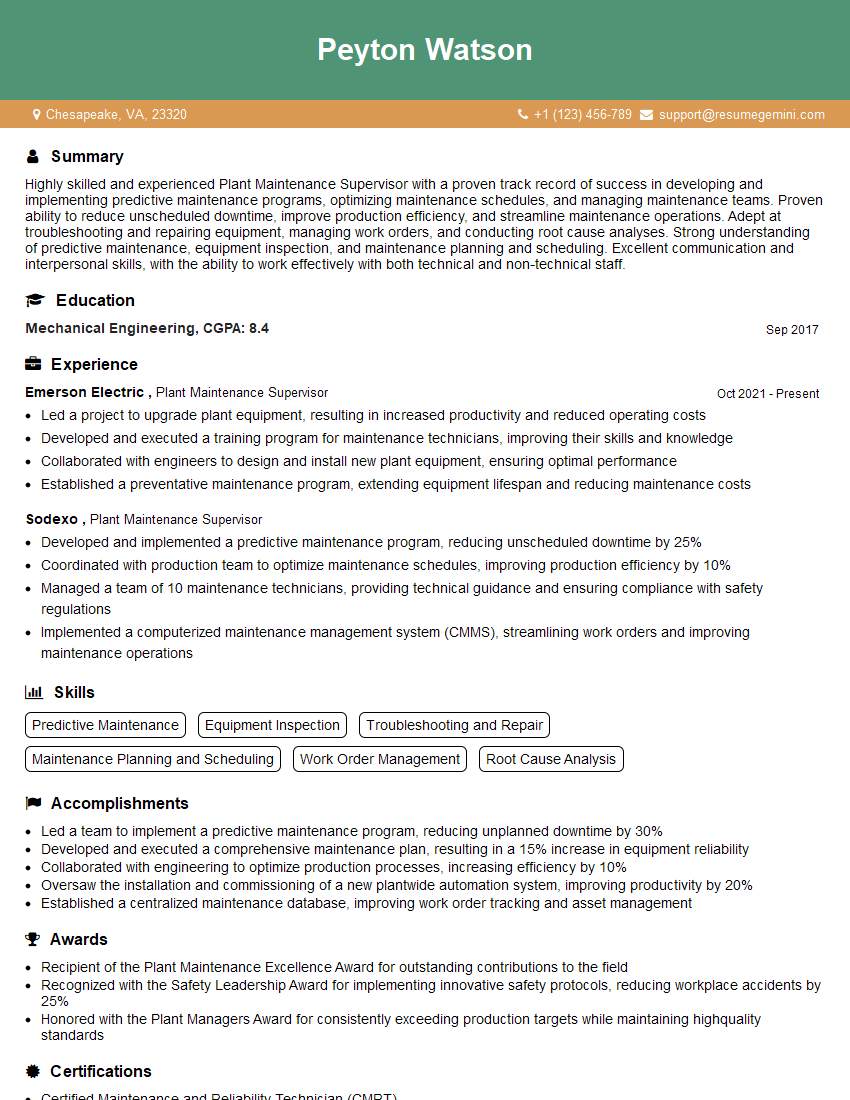
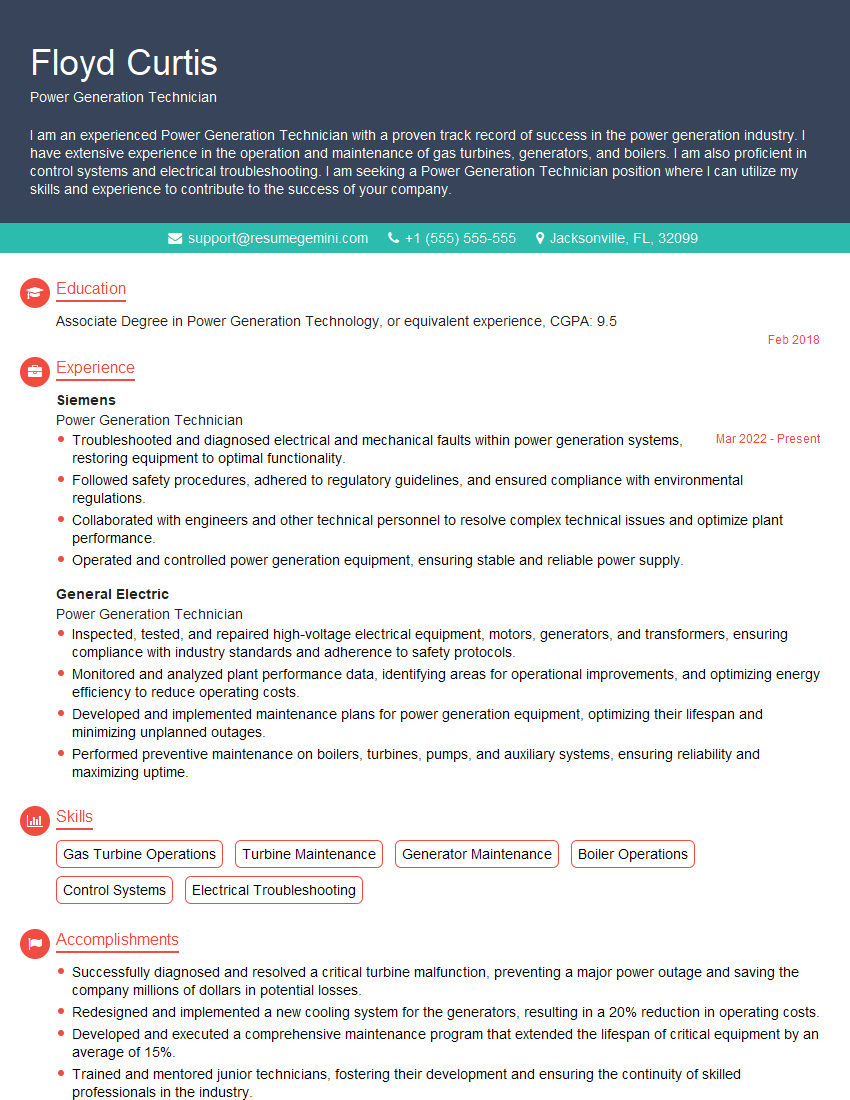
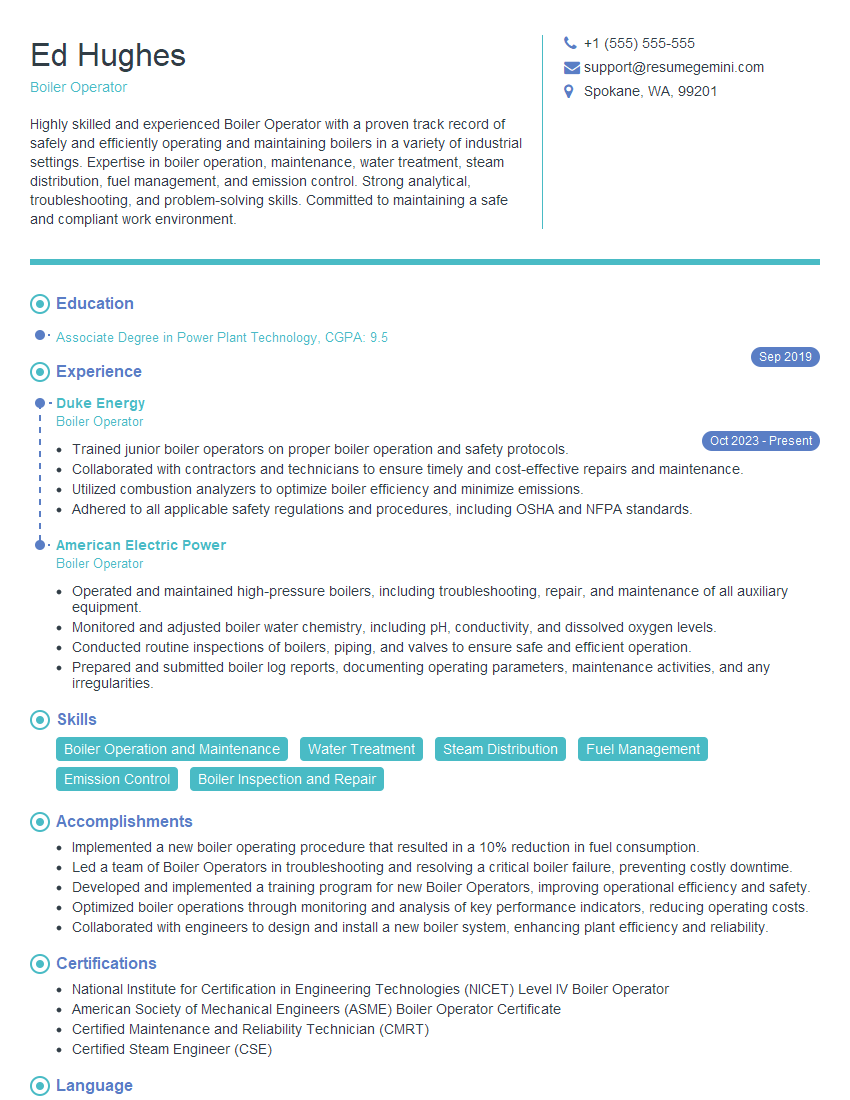
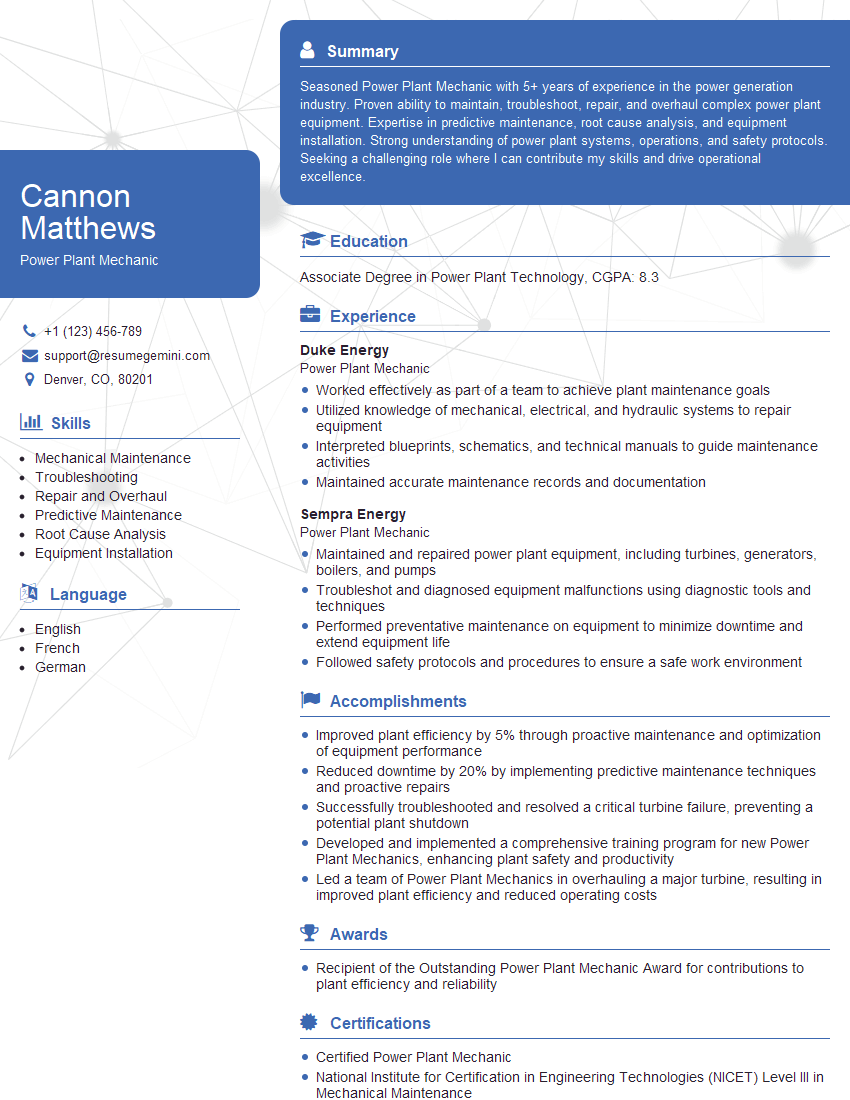
Mastering Boiler Tube Replacement opens doors to exciting career opportunities in power generation, industrial maintenance, and process engineering. This specialized skillset is highly sought after, commanding competitive salaries and promising long-term career growth. To maximize your job prospects, it’s crucial to create a resume that effectively highlights your skills and experience to Applicant Tracking Systems (ATS). ResumeGemini is a trusted resource to help you build a professional and ATS-friendly resume that showcases your expertise in Boiler Tube Replacement. Examples of resumes tailored specifically for this field are available through ResumeGemini to provide you with a valuable head start. Invest in your future; build a compelling resume today.
Explore more articles
Users Rating of Our Blogs
Share Your Experience
We value your feedback! Please rate our content and share your thoughts (optional).
What Readers Say About Our Blog
Really detailed insights and content, thank you for writing this detailed article.
IT gave me an insight and words to use and be able to think of examples