Feeling uncertain about what to expect in your upcoming interview? We’ve got you covered! This blog highlights the most important Bonding Failure Analysis interview questions and provides actionable advice to help you stand out as the ideal candidate. Let’s pave the way for your success.
Questions Asked in Bonding Failure Analysis Interview
Q 1. Explain the different types of bonding failures.
Bonding failures can be broadly categorized into cohesive and adhesive failures. Cohesive failure occurs within the adhesive itself, indicating a problem with the adhesive’s internal strength or properties. Think of it like a rope snapping in the middle – the rope (adhesive) failed internally, not where it was attached. Adhesive failure, on the other hand, occurs at the interface between the adhesive and the adherend (the material being bonded). This signifies a problem with the bond itself, like a rope detaching from the knot – the connection point failed, not the rope itself.
Further sub-categorization can be made based on the appearance of the failure: For example, a cohesive failure might be brittle (a clean break) or ductile (a more drawn-out failure), providing clues about the adhesive’s nature. Similarly, adhesive failure can be characterized as occurring at the actual interface or slightly within one of the adherends, indicating potential issues with surface preparation or material compatibility.
Q 2. Describe the common causes of adhesive bond failures.
Common causes of adhesive bond failures are multifaceted and often interconnected. Poor surface preparation is a leading culprit. Contaminants like oils, greases, or oxides on the adherend surfaces prevent proper wetting and adhesion of the adhesive, leading to weak bonds. This is like trying to glue two oily pieces of metal together – the glue can’t stick!
- Incorrect adhesive selection: Using an inappropriate adhesive for the specific materials or environmental conditions can lead to poor performance. For instance, using a water-based adhesive in a high-humidity environment might lead to premature failure.
- Improper adhesive application: Insufficient adhesive, uneven application, or the presence of air bubbles will all weaken the bond. Think of it like spreading glue unevenly – some areas will be weaker than others.
- Environmental factors: Temperature extremes, UV exposure, and moisture can degrade the adhesive over time, causing bond failure. This is similar to how sunlight can weaken a rope over time.
- Material incompatibility: Sometimes, the materials being bonded are simply not compatible with the chosen adhesive, leading to weak interfacial adhesion.
- Stress concentration: Sharp corners or high stress points in the bonded components can concentrate stress, leading to premature failure at these points.
Q 3. What are the key techniques used in bonding failure analysis?
Bond failure analysis involves a systematic approach employing various techniques to pinpoint the root cause. Key techniques include:
- Visual inspection: A thorough visual examination of the failed bond is crucial to observe the fracture surface, the mode of failure, and any signs of degradation.
- Microscopy (optical and SEM): Optical microscopy provides a magnified view of the fracture surface, revealing overall morphology. Scanning electron microscopy (SEM) offers much higher magnification and resolution, allowing for detailed examination of the fracture surface at a microscopic level, including identification of materials and contaminants.
- Mechanical testing: Techniques like tensile testing, peel testing, and shear testing quantify the strength of the bond and provide valuable data about the bond’s mechanical properties. This helps determine the strength of the original bond and compare it to standards.
- Spectroscopic analysis (e.g., FTIR, XPS): These techniques identify the chemical composition of the adhesive and the adherend surfaces, revealing the presence of contaminants or chemical degradation.
- Thermal analysis (e.g., DSC, TGA): These methods analyze the thermal properties of the adhesive, determining its glass transition temperature, melting point, and degradation behavior, providing insight into its performance under thermal stress.
Q 4. How do you identify the root cause of a bonding failure?
Identifying the root cause requires a systematic and logical approach. It’s like solving a detective case!
- Detailed visual inspection: Start with a careful visual examination of the failed bond to determine the mode of failure (adhesive or cohesive, brittle or ductile). This provides initial clues.
- Microscopic analysis: Use optical and SEM microscopy to examine the fracture surfaces at different magnifications. Look for evidence of contamination, voids, or signs of degradation.
- Spectroscopic and thermal analysis: Employ techniques like FTIR, XPS, DSC, and TGA to obtain detailed information about the chemical composition, thermal properties, and degradation mechanisms. This will confirm suspicions raised by microscopy.
- Mechanical testing: Compare the mechanical properties of the failed bond with the expected properties to determine if there were any significant deviations.
- Correlation and Interpretation: Combine the information obtained from all the above steps to form a comprehensive understanding of the failure mechanism. This will point towards the root cause – whether it was a defect in materials, poor processing, or environmental degradation.
Q 5. Explain the role of microscopy (SEM, optical) in bonding failure analysis.
Microscopy plays a crucial role in bonding failure analysis. Optical microscopy provides a lower magnification view of the fracture surface, revealing the overall failure mode and any large-scale defects. It’s like getting a bird’s-eye view of the scene.
Scanning electron microscopy (SEM) offers a much higher magnification and resolution, allowing for detailed analysis of the fracture surface at the microscopic level. This allows us to see tiny details like the presence of contaminants, voids in the adhesive, or signs of debonding at the interface. SEM also allows for elemental analysis (EDS) to identify the chemical composition of different regions on the fracture surface, revealing the presence of unexpected elements or contaminants.
Q 6. How do you interpret fractographic analysis of a bond failure?
Fractographic analysis involves the study of fracture surfaces to understand the mechanism of failure. The appearance of the fracture surface provides critical clues about the nature of the failure. A brittle, clean fracture in the adhesive indicates cohesive failure due to intrinsic weakness in the adhesive. A ductile, fibrous fracture might indicate that the adhesive was overloaded.
In adhesive failures, the fracture surface might show evidence of poor adhesion, such as a clean separation at the interface, or it might show adhesive material adhering to one of the adherends, indicating a weaker bond at that interface. The presence of contaminants or voids at the interface is readily visible under microscopy. By examining the fracture surface, we can often determine whether the failure was caused by poor adhesion, excessive stress, or degradation of the adhesive.
Q 7. Describe different analytical techniques used in adhesion testing.
Adhesion testing uses a variety of techniques to quantify the strength and durability of adhesive bonds. These include:
- Tensile testing: Measures the strength of the bond under tensile stress, simulating pulling forces.
- Shear testing: Measures the strength of the bond under shear stress, simulating forces that try to slide the surfaces past each other.
- Peel testing: Measures the strength of the bond under peeling forces, simulating forces that try to separate the bonded surfaces.
- Lap-shear testing: Measures the shear strength of an overlapping bonded joint.
- Creep testing: Measures the long-term strength and deformation of the adhesive bond under constant stress.
- Fatigue testing: Evaluates the bond’s resistance to repeated loading and unloading cycles.
- Environmental testing: Exposes bonded specimens to various environmental conditions (temperature, humidity, UV radiation) to assess their durability under these conditions.
The choice of technique depends on the application and the type of bond being tested. For instance, peel testing is commonly used for flexible materials, whereas tensile testing is more appropriate for rigid materials.
Q 8. What is the significance of surface preparation in adhesive bonding?
Surface preparation is paramount in adhesive bonding because it dictates the bond’s ultimate strength and durability. Think of it like trying to glue two pieces of wood together – if the surfaces are dirty, oily, or rough, the glue won’t adhere properly. Similarly, in industrial applications, a poorly prepared surface leads to weak bonds and premature failure. Proper preparation involves several steps, including cleaning to remove contaminants (dust, grease, oils), roughening to increase surface area for better mechanical interlocking, and sometimes, the application of primers or surface treatments to enhance adhesion. For instance, in aerospace applications, bonding composite materials requires meticulous surface preparation using techniques like plasma etching or chemical treatments to ensure a strong, reliable bond capable of withstanding extreme stresses and environmental conditions.
- Cleaning: Removing contaminants like oils, greases, and dust is crucial using solvents, ultrasonic cleaning, or abrasive blasting. The choice depends on the material and contaminant type.
- Surface Roughening: This increases the surface area, allowing for better mechanical interlocking of the adhesive and the substrate. Methods include sanding, blasting, or etching.
- Priming: Applying a primer enhances the adhesion between the substrate and the adhesive. Primers act as a chemical bridge, improving wettability and increasing the interfacial bond strength.
Q 9. How do environmental factors affect adhesive bond strength?
Environmental factors significantly impact adhesive bond strength. Imagine leaving glue-on shoes out in the sun – the heat could weaken the glue! Similarly, exposure to moisture, temperature fluctuations, UV radiation, and chemicals can degrade the adhesive and weaken the bond. For example, high humidity can absorb into some adhesives, reducing their strength and potentially causing hydrolysis. Extreme temperatures can lead to thermal expansion mismatch between the adhesive and substrates, resulting in stress and bond failure. UV radiation can degrade certain adhesives, reducing their flexibility and strength. Chemical exposure can cause chemical reactions that weaken the adhesive, or even dissolve it entirely. Understanding these effects is critical for selecting appropriate adhesives and designing robust bonded assemblies that can withstand the anticipated environmental conditions.
- Temperature: Extreme temperatures can cause thermal stress, leading to bond failure. The coefficient of thermal expansion (CTE) mismatch between the adhesive and substrate plays a crucial role here.
- Humidity: Moisture can absorb into the adhesive, causing hydrolysis and weakening the bond, especially in hydrophilic adhesives.
- UV Radiation: UV radiation can degrade the adhesive polymer chains, reducing the bond strength and causing embrittlement.
- Chemical Exposure: Certain chemicals can react with the adhesive, degrading its properties and weakening the bond.
Q 10. What are the limitations of different bonding techniques?
Different bonding techniques have their limitations. For example, while ultrasonic welding offers speed and efficiency, it’s not suitable for all materials; some might be damaged by the vibrations. Similarly, thermal bonding requires precise temperature control to avoid degradation of the adhesive or substrate. Let’s explore some common limitations:
- Ultrasonic Bonding: Limited to materials that can withstand ultrasonic vibrations; can damage heat-sensitive materials. Requires clean, smooth surfaces for optimal energy transfer.
- Thermal Bonding: Requires precise temperature control to avoid overheating; may not be suitable for heat-sensitive materials. Potential for uneven heating leading to weak bond areas.
- Pressure-Sensitive Adhesives (PSA): Limited bond strength compared to other methods. Vulnerable to environmental factors like temperature and humidity.
- Anaerobic Adhesives: Require a tight, oxygen-free environment for proper curing. May not be suitable for porous materials.
- Epoxy Adhesives: Long curing time for high-strength applications. Potential for exothermic reactions during curing, needing careful control.
Choosing the right bonding technique depends on material compatibility, desired strength, processing speed, and environmental considerations.
Q 11. Explain the concept of cohesive vs. adhesive failure.
Cohesive failure and adhesive failure describe where a bond breaks. Imagine a cracker: cohesive failure is when the cracker breaks within the cracker itself (the cohesive forces within the cracker failed), while adhesive failure is when it breaks at the point where the cracker interacts with your hand (the adhesive force between the cracker and your hand failed). In adhesive bonding, cohesive failure means the adhesive itself broke, usually due to inherent weakness in the adhesive. This indicates the adhesive is the weak link. Adhesive failure means the bond failed at the interface between the adhesive and one or both substrates. This means that the adhesive didn’t bond properly to the substrate; there was weak interaction between the adhesive and substrate surfaces.
Q 12. How do you determine the type of failure (adhesive or cohesive)?
Determining the type of failure requires careful examination of the fractured surfaces using visual inspection, microscopy, and possibly other analytical techniques. In adhesive failure, the fractured surface will generally be clean on the substrate and unclean or showing adhesive residue on the adhesive side. Microscopic examination can reveal the presence of any contaminants or poor wetting of the surface. Conversely, in cohesive failure, the fracture will typically occur within the adhesive itself. The fractured surfaces will show a similar morphology on both sides, with signs of plastic deformation or crack propagation within the adhesive.
- Visual Inspection: Observe the fractured surfaces to identify where the break occurred: within the adhesive (cohesive) or at the interface (adhesive).
- Microscopy (Optical and/or Scanning Electron Microscopy): Provide higher magnification views of the fracture surface to determine the nature of the failure and to identify contaminants.
- Energy Dispersive X-ray Spectroscopy (EDS): Used in conjunction with SEM to identify the chemical composition of the fracture surface and potentially detect any foreign material.
Analyzing the fracture surface morphology, combined with the chemical analysis of the failed interface, provides a comprehensive picture of the cause of failure.
Q 13. Describe your experience with different types of adhesives (epoxy, cyanoacrylate, etc.).
My experience encompasses a wide range of adhesives, including epoxies, cyanoacrylates (super glues), and others. Epoxies are workhorses, known for their high strength and versatility. I’ve used them extensively in applications requiring high temperature resistance and structural integrity. Cyanoacrylates, while quick-setting, are often less robust for high-stress applications and may be sensitive to moisture. I’ve worked with them where speed and ease of application were prioritized. Other adhesives I’ve used include polyurethane and acrylic adhesives, each with its own strengths and weaknesses depending on the specific application. I’ve dealt with situations involving adhesive selection for various materials (metals, plastics, composites) and environments (high temperature, high humidity, underwater). My experience goes beyond simply selecting an adhesive to troubleshooting failures and improving the bonding process. For example, I once worked on a case where the epoxy adhesive was failing due to improper curing temperature, leading us to implement more stringent quality control and optimize the curing parameters. This resulted in a 30% increase in bond strength and a significant reduction in failures.
Q 14. What is your experience with different bonding processes (e.g., ultrasonic, thermal, pressure sensitive)?
My experience includes various bonding processes. Ultrasonic bonding is efficient for certain applications, providing a fast, strong join. However, I’ve also encountered its limitations, especially with fragile substrates. Thermal bonding provides excellent strength for compatible materials, but the heat can damage sensitive components. Pressure-sensitive adhesives are convenient for quick, low-strength bonds, but fall short on durability and resistance to environmental factors. I have successfully used these techniques in different industrial settings. For instance, in the electronics industry, I’ve used ultrasonic bonding for joining delicate components, adapting the parameters to avoid damage. In automotive applications, I’ve worked with thermal bonding processes, ensuring the bond strength meets the stringent safety and performance requirements. Further, I’ve optimized pressure-sensitive adhesive applications for packaging, focusing on the balance between ease of application and sufficient durability for the specific product life cycle. My experience also includes working with dispensing equipment and optimizing the adhesive application process for consistency and quality.
Q 15. How do you assess the impact of temperature cycling on bond strength?
Assessing the impact of temperature cycling on bond strength involves subjecting bonded components to repeated cycles of heating and cooling. This simulates real-world conditions where devices experience temperature fluctuations, and it helps identify weaknesses in the bond. We typically use a thermal cycling chamber to precisely control temperature extremes and cycle rates. The bond strength is measured before and after each cycling phase using methods like pull testing (discussed later). A significant decrease in bond strength after temperature cycling indicates a susceptibility to failure under thermal stress. For example, if we’re analyzing the bond between a chip and a substrate in a semiconductor device, repeated thermal cycling could lead to cracking in the adhesive due to differences in thermal expansion coefficients between the materials. This would manifest as a sharp reduction in pull strength after several cycles. The analysis would not only quantify the drop in strength but also try to pinpoint the exact failure mechanism through microscopy and other analytical techniques.
Career Expert Tips:
- Ace those interviews! Prepare effectively by reviewing the Top 50 Most Common Interview Questions on ResumeGemini.
- Navigate your job search with confidence! Explore a wide range of Career Tips on ResumeGemini. Learn about common challenges and recommendations to overcome them.
- Craft the perfect resume! Master the Art of Resume Writing with ResumeGemini’s guide. Showcase your unique qualifications and achievements effectively.
- Don’t miss out on holiday savings! Build your dream resume with ResumeGemini’s ATS optimized templates.
Q 16. How do you assess the impact of humidity on bond strength?
Humidity’s impact on bond strength is evaluated by exposing bonded assemblies to controlled humidity environments. High humidity can lead to several degradation processes, including: water absorption by the adhesive, corrosion of metallic components, and the weakening of interfacial bonds through hydrolysis. We typically conduct these tests in humidity chambers that maintain precise levels of temperature and relative humidity. Bond strength is again measured before and after exposure, ideally using the same methodology (like a pull test). For instance, if a bond relies on an epoxy adhesive, high humidity could penetrate the epoxy, causing swelling and ultimately leading to debonding. We’d analyze the failed bonds under a microscope to look for signs of moisture ingress, possibly even using techniques like energy-dispersive X-ray spectroscopy (EDS) to check for the presence of water.
Q 17. How do you conduct a pull test and interpret its results?
A pull test is a destructive method used to measure the adhesive strength of a bond. It involves applying a controlled tensile force to separate the bonded components. The force required to achieve separation is recorded and used to calculate the bond strength. The setup is typically a testing machine with a calibrated load cell capable of applying a controlled force. One component of the bond is firmly attached to the load cell while the other is held in a fixed position. The load cell measures the force as it is gradually applied until the bond fails. The results are interpreted by calculating the average force at failure. The results should be reported along with failure mode observations (e.g., cohesive failure within the adhesive, adhesive failure at the interface). Statistical analysis is critical, typically involving multiple samples to calculate average bond strength and standard deviation, which helps to determine the consistency and reliability of the bond. For example, in a production line testing, if the average bond strength is consistently below a pre-determined threshold, or the standard deviation is high, it could indicate a problem with the bonding process.
Q 18. Explain your experience with statistical analysis in failure analysis.
Statistical analysis is crucial for interpreting bonding failure analysis data objectively. It allows us to move beyond anecdotal observations to quantitatively assess the impact of different factors. I routinely use statistical software packages like Minitab or JMP to perform analyses such as analysis of variance (ANOVA) to compare the mean bond strengths of different groups (e.g., bonds made with different adhesives or under different environmental conditions). I also use hypothesis testing to assess the significance of differences observed between groups. Regression analysis is another powerful tool to model the relationship between bond strength and various parameters (e.g., temperature, humidity, curing time). This allows us to predict bond strength under various conditions and identify the most influential factors impacting bond reliability. For example, I used ANOVA to compare the bond strength of a new adhesive formulation to that of the existing formulation. This analysis helped quantify whether the new formulation was statistically superior, leading to more informed decision-making.
Q 19. How do you document your findings from a bonding failure analysis?
Documentation of bonding failure analysis findings requires a meticulous approach. My documentation includes:
- Detailed description of the test samples: including materials used, manufacturing processes, and any relevant part numbers.
- Test methodologies: including specific protocols and equipment used for environmental testing and bond strength measurement.
- Detailed photographic and microscopic documentation: recording the appearance of the failed bonds at various magnifications.
- Quantitative data: such as bond strength measurements, statistical analysis results, and any other relevant numerical data.
- Failure mode analysis: a thorough description of the mechanisms of failure, including identification of the location of the failure (cohesive within the adhesive or adhesive at the interface).
- Conclusions and recommendations: based on the analysis, offering suggestions for process improvement, material selection, or design modification.
Q 20. How do you report your findings to engineers and management?
Reporting findings to engineers and management requires clear, concise communication that avoids technical jargon whenever possible. I start by presenting the key findings visually, using graphs and charts to summarize the data. I then explain the underlying failure mechanisms in a clear, logical manner, drawing on analogies to make the concepts relatable. For example, if describing a cohesive failure in an epoxy adhesive, I might compare it to breaking a brittle stick. I prioritize actionable recommendations that engineers can use to improve the bonding process or design, and I am prepared to answer technical questions about the analysis. I tailor the level of detail to the audience, keeping management reports concise while providing more in-depth information for engineers responsible for process improvement.
Q 21. Describe a challenging bonding failure you solved.
One challenging case involved intermittent failures in the bonding of a micro-optical device. Initial pull testing revealed inconsistent results, with some samples failing at extremely low forces while others passed well beyond the required specification. Traditional methods weren’t revealing the root cause. Through careful microscopic examination and advanced analytical techniques, including scanning electron microscopy (SEM) and energy dispersive spectroscopy (EDS), we discovered microscopic contaminants, barely visible to the naked eye, on the bonding surface. These contaminants were disrupting the interfacial bonding, causing the inconsistencies in pull strength. By implementing stricter cleaning protocols and introducing a surface treatment to enhance adhesion, we successfully eliminated the problem. This case highlighted the importance of rigorous surface preparation and the necessity of employing advanced analytical techniques when faced with seemingly inconsistent failure data.
Q 22. What are your strengths in failure analysis?
My strengths in failure analysis lie in my methodical approach, combining theoretical understanding with practical experience. I excel at systematically investigating failures, starting with a thorough visual inspection and progressing to advanced analytical techniques. My expertise extends to identifying root causes, not just symptoms. For example, in one instance, a seemingly simple wire bond failure in a semiconductor package was traced back to a subtle change in the cleaning process of the bonding pads, highlighting my ability to link seemingly unrelated factors. I also have a strong background in material science, which allows me to understand the underlying mechanisms of different failure modes. This combined with my understanding of statistical process control allows for identification of underlying process issues leading to failure.
Q 23. What software/tools are you proficient in for failure analysis?
I’m proficient in several software and tools used for failure analysis. This includes image analysis software like ImageJ for detailed microscopic examination of bond interfaces. I utilize finite element analysis (FEA) software, such as ANSYS, to simulate stress and strain on bonds under various operating conditions. For material characterization, I’m experienced with SEM (Scanning Electron Microscopy) and EDS (Energy Dispersive Spectroscopy) software packages for compositional analysis and surface morphology studies. Furthermore, I’m comfortable using statistical software packages like Minitab for data analysis and process capability studies to identify trends and root causes of bonding failures.
Q 24. What are some common mistakes in bonding processes?
Common mistakes in bonding processes often stem from seemingly minor oversights. These include improper surface preparation, leading to poor adhesion (imagine trying to glue two oily surfaces together!). Inadequate bonding parameters, such as insufficient pressure, time, or temperature, can result in weak bonds. Contamination of the bonding surfaces – even microscopic particles – can cause significant defects. Incorrect alignment or positioning of components before bonding also contributes to failures. Furthermore, selecting inappropriate bonding materials for the specific application can lead to premature failure. For instance, using a bonding adhesive not compatible with the thermal cycling of a device will cause delamination.
- Improper surface cleaning
- Incorrect bonding parameters
- Contamination
- Misalignment
- Incompatible materials
Q 25. How would you approach a case of unknown bonding failure?
Investigating an unknown bonding failure requires a systematic and structured approach. My strategy begins with a thorough visual inspection using optical microscopy, looking for any obvious defects like cracks, voids, or delamination. Next, I’d employ non-destructive testing methods like ultrasonic testing or X-ray inspection to assess the internal integrity of the bond. If necessary, I’d move to destructive techniques, such as cross-sectioning and microscopic analysis (SEM, TEM), to examine the bond interface at a microscopic level. Throughout this process, I meticulously document my findings and develop hypotheses to explain the failure mechanism. This iterative approach, combining observation, testing, and analysis, allows me to systematically narrow down the possible causes until the root cause is identified. This is similar to a detective solving a crime; you need to collect evidence, analyze it, and then build a cohesive story.
Q 26. Describe your experience with non-destructive testing methods in bonding.
My experience with non-destructive testing (NDT) methods in bonding is extensive. I routinely utilize techniques such as ultrasonic inspection to detect internal flaws and measure bond thickness. This method uses high-frequency sound waves to reveal the presence of voids or discontinuities within the bond. I also have experience with X-ray inspection, which is particularly useful for identifying delamination or voids in opaque materials. Acoustic microscopy can also provide high-resolution images of the bond interface without causing damage. The choice of NDT method depends on the specific application and the material properties. For example, ultrasonic testing is well-suited for metallic bonds, while X-ray inspection is better for examining bonds with significant differences in density.
Q 27. How would you determine the appropriate corrective actions after identifying a bonding failure?
Determining appropriate corrective actions requires a thorough understanding of the root cause of the bonding failure. Once identified, I would recommend process improvements based on the findings. For example, if inadequate surface preparation is the culprit, implementing stricter cleaning protocols or surface treatments would be necessary. If the bonding parameters are off, adjustments to pressure, temperature, or time would be required. Contamination issues necessitate improving cleanroom practices or implementing better material handling procedures. The corrective actions must be validated through controlled experiments and statistical analysis to ensure effectiveness and prevent recurrence. This ensures the changes implemented truly address the root cause and not just a symptom of the failure. A critical step is documenting all the changes made to the process for future reference and process control.
Q 28. What are the industry standards and specifications you are familiar with related to bonding?
I’m familiar with several industry standards and specifications related to bonding. These include IPC (Institute for Printed Circuits) standards for surface mount technology (SMT) and wire bonding, as well as JEDEC (Joint Electron Device Engineering Council) standards relevant to semiconductor packaging. My knowledge also encompasses military specifications (MIL-STD) where applicable. These standards provide guidelines for materials, processes, and testing methods, ensuring consistent quality and reliability in bonding applications. Adherence to these standards is critical for ensuring product reliability and meeting customer requirements. Understanding these specifications allows for proper analysis of bonding failures and implementation of corrective actions based on industry best practices.
Key Topics to Learn for Bonding Failure Analysis Interview
- Adhesion Science Fundamentals: Understand the theoretical basis of adhesion, including surface energy, interfacial interactions (Van der Waals forces, hydrogen bonding, etc.), and the role of surface chemistry.
- Failure Modes: Become proficient in identifying and characterizing various bonding failure mechanisms, such as cohesive failure, adhesive failure, and mixed-mode failure. Learn to differentiate between these using microscopy and other analytical techniques.
- Material Characterization Techniques: Gain a strong understanding of relevant analytical methods used to investigate bonding failures, including optical microscopy, scanning electron microscopy (SEM), energy-dispersive X-ray spectroscopy (EDS), and other surface analysis techniques.
- Practical Applications: Explore real-world examples of bonding failure analysis across different industries, such as electronics, automotive, aerospace, and medical devices. Be prepared to discuss case studies and how different failure mechanisms impacted the final product.
- Statistical Analysis of Failure Data: Develop your skills in analyzing large datasets to identify trends, patterns, and root causes of bonding failures. This includes understanding statistical methods relevant to failure analysis.
- Problem-Solving and Root Cause Analysis: Practice applying systematic approaches to identify the underlying reasons for bonding failures, using techniques such as 5 Whys, fishbone diagrams, and fault tree analysis.
- Defect Prevention Strategies: Learn about methods to prevent bonding failures during manufacturing and assembly processes, including material selection, surface preparation techniques, and process optimization.
- Reporting and Communication: Develop your skills in clearly and concisely communicating your findings through technical reports, presentations, and discussions.
Next Steps
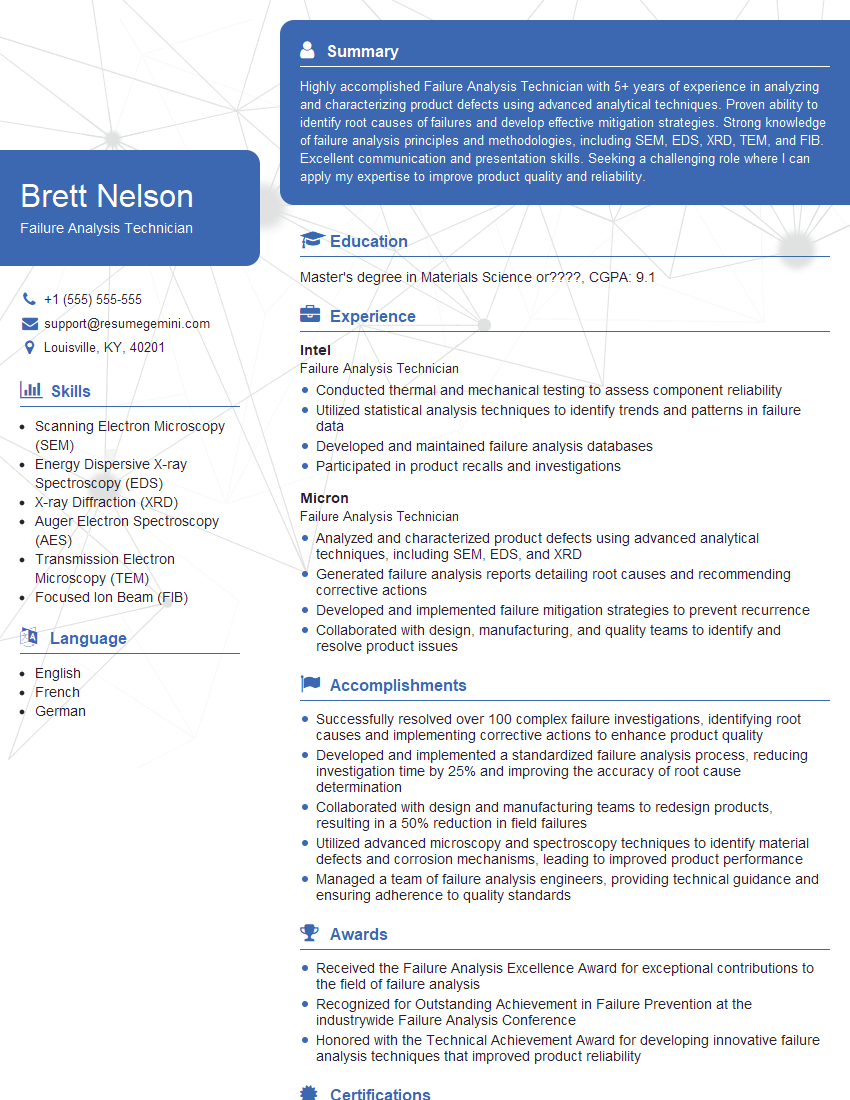
Mastering Bonding Failure Analysis opens doors to exciting career opportunities in research, development, and quality control across numerous high-tech industries. A strong understanding of this critical field is highly valued by employers. To maximize your job prospects, it’s essential to create a compelling and ATS-friendly resume that highlights your skills and experience. ResumeGemini is a trusted resource for building professional resumes that get noticed. They offer examples of resumes tailored specifically to Bonding Failure Analysis to help you present your qualifications effectively. Invest the time to build a strong resume; it’s a crucial step in securing your ideal role.

Explore more articles
Users Rating of Our Blogs
Share Your Experience
We value your feedback! Please rate our content and share your thoughts (optional).
What Readers Say About Our Blog
Really detailed insights and content, thank you for writing this detailed article.
IT gave me an insight and words to use and be able to think of examples