Are you ready to stand out in your next interview? Understanding and preparing for CAD Software (e.g., AutoCAD, SolidWorks) interview questions is a game-changer. In this blog, we’ve compiled key questions and expert advice to help you showcase your skills with confidence and precision. Let’s get started on your journey to acing the interview.
Questions Asked in CAD Software (e.g., AutoCAD, SolidWorks) Interview
Q 1. Explain the difference between 2D and 3D CAD modeling.
The fundamental difference between 2D and 3D CAD modeling lies in the dimensionality of the designs. 2D CAD, primarily used in applications like AutoCAD, creates drawings on a single plane – think of it like sketching on paper. You define objects using lines, arcs, circles, and text, all within a two-dimensional space. These drawings are great for things like floor plans, architectural blueprints, and detailed technical illustrations. However, they lack the depth and volume of a real-world object.
3D CAD modeling, on the other hand, allows you to create three-dimensional representations of objects. Software like SolidWorks enables you to build models with depth, width, and height, essentially creating a virtual prototype. This provides a far more comprehensive understanding of the design, allowing for detailed analysis, simulations, and the generation of manufacturing instructions. Imagine designing a car part – a 2D drawing might show its shape, but a 3D model lets you see how it fits, how it functions, and even its internal structure.
In short: 2D is for flat representations; 3D is for volumetric representations. They serve different purposes, and sometimes, you’ll use both in a single project. For instance, a 3D model of a machine part might be accompanied by 2D drawings detailing its dimensions for manufacturing.
Q 2. Describe your experience with AutoCAD commands like TRIM, EXTEND, and OFFSET.
I’ve extensively used AutoCAD’s TRIM, EXTEND, and OFFSET commands throughout my career, finding them indispensable for precise and efficient drafting. TRIM is used to shorten a line, curve, or other object to meet the edge of another object. Think of it like using scissors to cut excess material. For example, you might TRIM a long line to precisely meet the edge of a circle. EXTEND does the opposite; it extends an existing object to meet another object’s edge. Imagine needing to extend a line to precisely align with a boundary. OFFSET creates parallel copies of objects at a specified distance. A common use is to create parallel lines for drawing dimensions or creating space for features.
I frequently use these commands together. For instance, I might EXTEND a construction line to meet a circle, then TRIM excess portions, and finally OFFSET the resulting line to create parallel lines for a specific dimension. These commands are fundamental to efficient AutoCAD workflow, and mastering them significantly improves productivity.
During a recent project designing a complex HVAC system layout, I used these commands extensively to precisely trim and extend ductwork lines, ensuring all connections aligned perfectly, enhancing both accuracy and aesthetics. My experience shows me the power of precision.
Q 3. How familiar are you with SolidWorks features like Part, Assembly, and Drawing?
My SolidWorks experience encompasses all three key modules: Part, Assembly, and Drawing. Part modeling allows me to create individual components, using various techniques like extrusion, revolution, and sweeping to shape the geometry. I’m comfortable using features like fillets, chamfers, and holes to refine the design. Assembly is where I integrate multiple parts into a functional whole. This involves utilizing constraints to define relationships between parts, ensuring proper fit and movement. I’m proficient in managing configurations, creating exploded views for documentation, and performing interference checks. Finally, Drawing lets me create production-ready drawings from the 3D model, including detailed dimensions, notes, and sectional views.
For example, during a project involving a robotic arm, I used Part to model each individual link and joint. Then, I used Assembly to combine these parts, implementing constraints to accurately simulate the arm’s movement. Finally, I generated detailed Drawings for manufacturing the arm’s components.
Q 4. What are your preferred methods for creating complex 3D models?
Creating complex 3D models requires a strategic approach. My preferred method often involves a combination of techniques, depending on the complexity and nature of the design. For organic shapes, I often use surface modeling, which allows for the creation of complex curves and freeform shapes. For mechanical parts, I favor feature-based modeling, leveraging SolidWorks’ built-in features to construct the model in a structured way, reducing the possibility of errors and enhancing efficiency. Sometimes, a combination of both methods yields the best results.
When dealing with very intricate details, I might utilize imported data such as point clouds from 3D scanners, which I would then refine and utilize to build my models. I also utilize techniques like lofting and sweeping to create complex forms from simpler profiles. In the past, I’ve designed a complex prosthetic hand using surface modeling to match the organic curves of the hand and feature-based modeling for the mechanical joints. The iterative nature of 3D modeling means that the approach evolves as the design takes shape. The key is planning and adaptability.
Q 5. How do you manage layers and blocks effectively in AutoCAD?
Effective layer and block management is crucial for organizing large and complex AutoCAD drawings. I use layers to separate different aspects of the drawing, like architecture, MEP (Mechanical, Electrical, Plumbing), and landscaping. This allows for easy visibility control; turning layers on or off makes it easy to focus on specific aspects. I name layers consistently and descriptively (e.g., `Walls-Exterior`, `Plumbing-Pipes`, `Electrical-Wiring`).
Blocks are essential for reusing frequently used elements. I create blocks for standard components (like doors, windows, or electrical outlets) to ensure consistency and save time. I also use attributes within blocks to store data, such as dimensions or material type, which is helpful when creating schedules and generating reports. My workflow involves creating a layer naming convention, consistently using blocks, and regularly purging unused items to keep the file size manageable and the drawing organized. This significantly reduces errors, improves collaboration, and accelerates the overall design process. For example, in a building design, a consistent block for doors ensures uniformity across the project.
Q 6. Explain your understanding of constraints and relations in SolidWorks.
Constraints and relations in SolidWorks are fundamental to creating robust and parametric 3D models. Constraints define geometric relationships between features (e.g., making two faces flush, aligning two edges), while relations specify mathematical dependencies. These relationships ensure that when one part of the model changes, other related parts update automatically. For example, I can constrain two cylindrical parts to be concentric, ensuring they always align perfectly. This parametric approach allows for easy modification and optimization of the design without manual adjustments. Using relations, I can set a dimension of one feature to be dependent on another, ensuring the design stays within the specified parameters.
This is critical for maintaining design integrity during iterative changes. If I change a single dimension, all related parts update automatically, preserving the intended design relationships. For example, in a mechanical assembly, I can link the length of a connecting rod to the movement of a piston using relations, ensuring the mechanism works correctly.
Q 7. How would you troubleshoot a corrupted CAD file?
Troubleshooting a corrupted CAD file requires a methodical approach. The first step is to try opening the file in the CAD software. If this fails, I attempt to open it in a previous version of the software or using a recovery tool. If that still doesn’t work, I check for backup copies; many CAD applications have automatic backup mechanisms. If a backup is available, restoring from the backup is usually the best solution.
If a backup is unavailable, I might try opening the file in a text editor to check for corrupted data; however, this is generally a last resort. Sometimes, I can identify the problematic parts and manually repair them. If all else fails, recovering the design from scratch using original sketches and specifications might be necessary. The seriousness of the corruption influences the choice of action. Simple corruption is often recoverable; extensive corruption requires more involved recovery methods. Data recovery software designed specifically for CAD files can also be considered if the above steps are unsuccessful.
Q 8. Describe your experience with CAD rendering and visualization techniques.
CAD rendering and visualization are crucial for communicating design intent and evaluating aesthetics. My experience encompasses a wide range of techniques, from basic wireframe and shaded views to photorealistic renderings using tools like KeyShot and V-Ray integrated with SolidWorks and AutoCAD. I’m proficient in utilizing various rendering styles, including realistic, stylized, and technical illustrations. For example, I once used ray tracing in SolidWorks Visualize to create a highly realistic rendering of a complex medical device, which was instrumental in securing regulatory approval. In AutoCAD, I’ve used the rendering tools to create compelling marketing visuals for architectural designs. I understand the importance of lighting, materials, and camera angles to create impactful visuals that accurately represent the design and its intended function. I can also generate animations to showcase moving parts or assembly processes, further enhancing design communication and analysis.
Q 9. What are your preferred methods for dimensioning and annotation in CAD?
Effective dimensioning and annotation are essential for creating clear, unambiguous technical drawings. My preferred methods involve employing the built-in tools within SolidWorks and AutoCAD to create precise and consistent annotations. I adhere to industry standards (like ASME Y14.5) for dimensioning and tolerancing to ensure clarity and manufacturability. This includes using appropriate dimension styles, leader lines, and text formatting. For example, I consistently use geometric dimensioning and tolerancing (GD&T) symbols to communicate manufacturing tolerances effectively. In SolidWorks, I leverage the automated dimensioning features to save time and maintain consistency. In AutoCAD, I customize dimension styles to match project specifications and company standards ensuring a professional and easily understandable output. Using layers and layer management effectively is integral to maintaining a clean and organized drawing.
Q 10. How do you handle large and complex assemblies in SolidWorks?
Managing large and complex assemblies in SolidWorks requires a strategic approach. I utilize techniques like component suppression, lightweight components, and efficient assembly structures. For instance, I often create sub-assemblies to break down the overall assembly into more manageable parts. This reduces file size and improves performance considerably. I also make use of SolidWorks’ large assembly tools, such as the performance evaluation tools, to identify and optimize problematic areas in my assembly. Furthermore, I utilize configurations to manage variations within the design and reuse components effectively, streamlining the design process. When working with exceptionally large assemblies, I employ techniques like model simplification, using proxies, and exploiting SolidWorks’ advanced performance settings to enhance the responsiveness of the software. The key is to maintain a well-organized structure, carefully choosing which components are detailed and which are simplified depending on their role in the overall assembly.
Q 11. Explain your understanding of different file formats used in CAD (e.g., DWG, DXF, STEP).
Understanding CAD file formats is crucial for data exchange and interoperability. .DWG is AutoCAD’s native format, preserving all drawing data, including layers, blocks, and annotations. .DXF is a neutral format, suitable for exchanging data between different CAD systems, although some data loss can sometimes occur. .STEP (ISO 10303) is a standardized, neutral format for 3D models, suitable for sharing complex geometries between different CAD packages and other applications like FEA software. I’m experienced in using all three formats and understand their limitations. For example, transferring a complex SolidWorks assembly to another engineer using STEP ensures they have a neutral representation of the design; however, feature history, which is beneficial for design updates, is lost. Similarly, .DWG files opened in other programs might not render all features exactly as they appear in AutoCAD, depending on the software and its level of support for the specific AutoCAD version used to create the file.
Q 12. How familiar are you with CAD data management systems?
I’m familiar with various CAD data management systems (PDM), such as SolidWorks PDM and Autodesk Vault. These systems are crucial for managing large CAD projects and maintaining version control. My experience includes using PDM systems to control file revisions, manage design changes, and track part numbers, streamlining collaboration within teams. Using a PDM system ensures that everyone works with the most up-to-date design files and prevents conflicts from multiple versions of the same design. It facilitates efficient workflow and reduces design errors resulting from outdated files. I also have experience with implementing workflows and access controls within these systems ensuring secure access and data integrity.
Q 13. Describe your experience with parametric modeling.
Parametric modeling is a fundamental aspect of my CAD workflow. It allows for creating models based on parameters or variables, which can be modified to explore different design options. For instance, I might create a parametric model of a bracket, where the length, width, and thickness are defined as parameters. Changing these parameters instantly updates the entire model, significantly accelerating design iteration. SolidWorks excels at this; it allows for defining relationships between different parts of the model, creating a dynamic system that responds to changes in the design parameters. This is extremely useful for creating families of parts and efficiently exploring different configurations. I find parametric modeling essential for design optimization and efficient design exploration.
Q 14. What methods do you use to ensure design accuracy and precision?
Ensuring design accuracy and precision is paramount. I employ several methods: First, I meticulously review my work for any errors through visual inspections and using the software’s built-in tools for geometry checks. Second, I extensively utilize dimensioning and tolerancing techniques to define manufacturing requirements and to control design variations. Third, I verify dimensions and geometry by cross-checking measurements and employing analytical tools as needed. I regularly utilize simulation tools, like Finite Element Analysis (FEA), to validate the structural integrity and functionality of designs before finalization. In short, my approach is multi-faceted and combines rigorous attention to detail during the design phase itself with verification techniques to ensure confidence in the final product. This ensures the manufacturability and functionality of my designs meet the intended specifications and that there is minimal room for error.
Q 15. How do you create and manage design revisions?
Managing design revisions effectively is crucial for maintaining a clear history of changes and ensuring everyone works from the most up-to-date version. In CAD software, this typically involves a combination of version control and clear naming conventions.
Version Control: I utilize the built-in revision capabilities of software like AutoCAD (e.g., Xrefs, external references) or SolidWorks (using the ‘Save As’ function with descriptive version numbers in the file name). This creates a lineage of design iterations, allowing me to easily revert to previous versions if needed. I often use a naming convention like
Project_Name_Rev_A, Project_Name_Rev_B, etc.to clearly track revisions.Revision Tracking System: Beyond the software’s built-in features, I employ a dedicated revision tracking system, often integrated with a project management tool, to document changes, the rationale behind them, the date, and the person responsible. This system provides a central repository for all revisions, promoting clear communication and accountability.
Change Logs: For significant changes, I create detailed change logs that outline modifications made to the design, explaining the purpose and impact. This ensures that any future modifications can be better understood in their context.
For example, in a recent project designing a complex machine component, we moved from version A to version B after incorporating feedback from the manufacturing team regarding material selection. The change log detailed the material change, its impact on the component’s strength and weight, and the updated dimensions. This transparency helped everyone stay informed and on the same page.
Career Expert Tips:
- Ace those interviews! Prepare effectively by reviewing the Top 50 Most Common Interview Questions on ResumeGemini.
- Navigate your job search with confidence! Explore a wide range of Career Tips on ResumeGemini. Learn about common challenges and recommendations to overcome them.
- Craft the perfect resume! Master the Art of Resume Writing with ResumeGemini’s guide. Showcase your unique qualifications and achievements effectively.
- Don’t miss out on holiday savings! Build your dream resume with ResumeGemini’s ATS optimized templates.
Q 16. Explain your experience with CAD customization and automation.
CAD customization and automation are essential for streamlining workflows and improving efficiency. I’m proficient in using various techniques to achieve this.
Macros and Scripts: I use VBA (Visual Basic for Applications) in AutoCAD and other scripting languages in SolidWorks to automate repetitive tasks such as creating standard drawings, generating bills of materials (BOMs), or performing complex calculations. For instance, I wrote a macro in AutoCAD to automatically generate orthographic views based on a 3D model, saving considerable time and reducing manual errors.
Customization of Toolbars and Workspaces: I tailor my CAD environment by creating custom toolbars and workspaces to optimize my workflow. This involves organizing frequently used tools and commands in easily accessible locations, improving productivity and reducing the time spent searching for specific functions.
Add-ins and Plug-ins: I utilize and integrate relevant add-ins and plug-ins to extend the functionality of CAD software. These extensions can streamline specific processes, incorporate specialized tools, and enhance collaboration capabilities.
For example, a recent project involved creating hundreds of similar parts with slightly varying dimensions. By writing a script to automate the design changes and generate the necessary drawings, I reduced the project time by approximately 75% compared to manual creation.
Q 17. Describe a challenging CAD project you worked on and how you overcame it.
One particularly challenging project involved designing a complex assembly for a robotic arm with tight tolerances and intricate interfacing components. The initial design faced issues with interference between parts and the need to minimize weight for optimal functionality.
To overcome these challenges, we implemented a phased approach:
Detailed Analysis: We meticulously analyzed each component’s design and its interaction with others using interference checks and kinematic simulations within the CAD software. This helped identify and pinpoint problem areas accurately.
Iterative Design and Testing: We adopted an iterative design process, constantly testing and refining the assembly based on simulation results. This involved multiple design revisions, virtual prototyping, and simulations to validate the functionality and address interference issues.
Collaboration and Communication: Effective collaboration with the manufacturing and engineering teams was crucial. Regular meetings and updates ensured everyone was on the same page and helped integrate feedback effectively. This collaborative approach helped resolve issues related to manufacturability and cost efficiency.
This project emphasized the importance of meticulous design, comprehensive simulations, and seamless collaboration to overcome complex engineering challenges. The successful completion of the project resulted in a robust, lightweight, and highly functional robotic arm assembly.
Q 18. How proficient are you in using CAD for creating technical drawings?
I am highly proficient in creating technical drawings using CAD software. My expertise encompasses the creation of various types of drawings, including:
Orthographic Projections: I’m adept at creating detailed multi-view orthographic projections showcasing different aspects of a 3D model accurately.
Isometric and Perspective Views: I can create realistic isometric and perspective views to convey the design’s three-dimensional form and aesthetics.
Section Views: I am experienced in using section views to reveal internal details and features of complex assemblies and components.
Detailed Drawings: I am proficient at creating dimensioned drawings that accurately convey all the necessary specifications for manufacturing.
Bill of Materials (BOM): I can generate accurate and complete BOMs from CAD models, critical for manufacturing and procurement.
My experience extends to different CAD standards and drafting conventions, ensuring that the drawings I create are clear, accurate, and meet industry best practices.
Q 19. What is your understanding of tolerance and its importance in CAD design?
Tolerances in CAD design define the permissible variations in dimensions and geometries of a part or assembly. Understanding and correctly applying tolerances is paramount for ensuring manufacturability and proper functioning of the final product. A tolerance specifies an acceptable range of variation from a nominal (ideal) dimension.
Importance of Tolerances:
Manufacturability: Tolerances acknowledge the inherent limitations of manufacturing processes. Setting realistic tolerances ensures that parts can be produced efficiently and cost-effectively without sacrificing functionality. Too tight tolerances can be expensive and even impossible to meet.
Assembly and Functionality: Tolerances ensure that components can be assembled without interference issues. Properly defined tolerances guarantee that the final assembly functions correctly, meeting its design specifications.
Interchangeability: Tolerances allow for interchangeability of parts. Parts produced within tolerance ranges should be functionally interchangeable, simplifying assembly and reducing the need for custom fitting.
For example, specifying a tight tolerance for a critical shaft diameter may be necessary for a precision instrument, but a looser tolerance would suffice for a less critical component, balancing cost-effectiveness with functionality.
Q 20. How do you handle design changes and updates?
Handling design changes and updates requires a structured and collaborative approach to avoid errors and maintain design integrity.
Version Control: As mentioned earlier, leveraging the built-in version control features of the CAD software and a formal revision tracking system is crucial. Changes should be documented meticulously.
Impact Assessment: Before implementing a change, a thorough impact assessment is essential. This involves evaluating how the change might affect other parts of the design and related documentation.
Collaboration and Communication: Changes should be communicated clearly to all stakeholders involved in the project. This helps prevent misunderstandings and ensures everyone works from the most up-to-date version.
Design Reviews: Regular design reviews provide opportunities to discuss and address proposed changes before they are implemented. This collaborative process helps catch potential errors and improves the quality of the final design.
For instance, if a client requests a dimensional change, I would first assess the impact on other components, update the models accordingly, and then inform the manufacturing team to update their processes as required. This careful approach minimizes disruptions and errors.
Q 21. What is your experience with CAD standards and best practices?
Adhering to CAD standards and best practices is crucial for creating clear, consistent, and easily understandable drawings. This improves communication, collaboration, and reduces the risk of errors.
ISO Standards: I am familiar with relevant ISO standards (e.g., ISO 2768) for geometric dimensioning and tolerancing (GD&T), ensuring that drawings convey precise manufacturing requirements.
Company Standards: I understand and adhere to any company-specific standards for drawing styles, layers, naming conventions, and data management procedures.
Best Practices: I follow best practices, including using appropriate layer organization, employing consistent dimensioning techniques, adding clear annotations and notes, maintaining a clean and organized model structure and creating detailed BOMs.
Data Management: I am experienced in employing robust data management techniques to ensure efficient version control, data backup, and collaborative access to design files.
Following these standards ensures that our designs are easily understood by all stakeholders, from designers and engineers to manufacturers and clients. This ultimately leads to smoother workflows and reduced risks of misinterpretations.
Q 22. Explain your understanding of surface modeling versus solid modeling.
Surface modeling and solid modeling are two fundamental approaches in CAD software, differing primarily in how they represent three-dimensional objects. Solid modeling creates a complete, three-dimensional representation of an object, defining its volume and mass properties. Think of it like sculpting a solid block of clay; you’re defining the entire object from the inside out. Surface modeling, on the other hand, focuses on the outer surfaces of the object. It defines the object by creating a collection of surfaces, which are connected to form a visually complete model but without a true representation of its volume. Imagine creating a model by only defining the skin of an object; you have the shape but not the internal structure.
Solid Modeling Advantages: Allows for accurate mass property calculations (volume, weight, center of gravity), easier to perform Boolean operations (union, subtraction, intersection), and is generally preferred for manufacturing processes as it provides complete geometric information for CNC machining or 3D printing.
Surface Modeling Advantages: Excellent for creating highly complex, organic shapes, often faster to create initial designs, particularly useful for aesthetic designs where the internal structure isn’t critical, like car bodies or free-form shapes.
Example: Designing a simple cube. In solid modeling, you’d define its dimensions directly, resulting in a fully defined 3D object. In surface modeling, you’d create six individual surfaces, each representing a face of the cube, ensuring they’re correctly connected to form a closed shape. However, this approach wouldn’t inherently understand that it’s a cube with a volume.
Q 23. How do you ensure consistency and quality in your CAD work?
Maintaining consistency and quality in CAD work is paramount. My approach is multi-faceted and involves a structured workflow. Firstly, I meticulously plan the project, defining clear objectives and a step-by-step process. This ensures that I’m working towards a well-defined goal, minimizing rework and errors. Secondly, I use consistent naming conventions for layers, blocks, and files, making it easy to manage and locate specific elements within complex designs. Imagine working on a huge building design – consistent naming makes identifying specific parts a breeze.
Thirdly, I employ rigorous quality checks throughout the process. This includes regular review of dimensions, tolerances, and adherence to design standards. Using tools like design review and checking for geometric errors within the CAD software itself helps prevent mistakes that could be costly later. Finally, I always maintain detailed documentation, including revisions, changes, and decisions made during the design process. This makes it easy to track progress and revert to previous versions if needed, providing an audit trail for every design decision.
Q 24. How familiar are you with using external references (xrefs) in AutoCAD?
I’m highly proficient with external references (xrefs) in AutoCAD. Xrefs are a powerful tool for managing large and complex projects by allowing you to link external drawings into your current workspace. This is invaluable for collaborative projects where multiple designers might be working on different parts of a larger design. Imagine a team designing a building – one team works on the structural elements, another on the electrical, and they link their work together using xrefs. This ensures that everyone is working with the most up-to-date version.
I understand the different xref types (overlay, attachment), how to manage xref paths, and how to resolve conflicts. For example, I know how to use the XREF command to attach, detach, bind, and reload xrefs, ensuring seamless integration and maintaining data integrity. I also utilize xrefs to efficiently reuse standardized components or design elements across multiple projects, saving significant time and effort.
Q 25. What is your experience with creating photorealistic renderings?
My experience with creating photorealistic renderings is extensive. I’ve utilized various rendering engines, including those integrated within CAD software like SolidWorks Visualize and standalone applications such as V-Ray and Keyshot. I understand the importance of lighting, materials, and post-processing in achieving a high-quality result. Creating a photorealistic rendering requires attention to detail – choosing the right lighting setup can make all the difference between a convincing image and a lifeless one.
In my previous roles, I’ve created renderings for various purposes: client presentations, marketing materials, and design reviews. I understand how to optimize scene settings for different render engines to balance render time with image quality. For example, I know how to use different rendering techniques such as ray tracing and global illumination to achieve accurate lighting and reflections. My process usually includes creating detailed textures, setting up realistic lighting scenarios, and performing post-processing adjustments to enhance the final image quality.
Q 26. Describe your experience with different CAD software packages besides AutoCAD and SolidWorks.
Beyond AutoCAD and SolidWorks, I have experience with several other CAD packages including Revit (for BIM modeling), Inventor (for mechanical design), and Rhino (for 3D modeling and NURBS surfaces). My experience with Revit was primarily in creating and managing building information models (BIM), a critical part of modern building design and construction. Inventor provided a different approach to mechanical design, utilizing parametric modeling techniques. Rhino has been crucial for creating organic forms and for advanced surface modeling.
This diverse experience has allowed me to adapt to various design challenges and understand the strengths and weaknesses of each software. Each software has its own workflow and strengths: Revit excels in creating collaborative BIM models, Inventor streamlines the mechanical design process, and Rhino is the master of intricate shapes. This broader skillset allows me to effectively choose the right tool for the specific job.
Q 27. How do you stay up-to-date with the latest CAD software advancements?
Staying current with CAD advancements is an ongoing process. I actively engage in several strategies to remain updated. I regularly attend webinars and conferences related to CAD software, keeping me abreast of new features and techniques. Industry publications and online forums are invaluable resources, providing insights into new workflows and best practices. I also actively participate in online training courses offered by software vendors, enabling me to learn new functionalities and explore advanced features.
Further, I participate in online communities and engage with other CAD professionals to exchange knowledge and learn from their experiences. Experimentation is also key – I regularly try out new plugins, extensions, and rendering techniques to improve efficiency and output quality. Continuous learning ensures my skills remain relevant and competitive in the ever-evolving world of CAD.
Q 28. What are your strengths and weaknesses when it comes to CAD software?
My strengths lie in my problem-solving abilities, attention to detail, and ability to quickly adapt to new software and workflows. I’m confident in managing complex projects, delivering high-quality results within deadlines. My experience with various CAD software makes me versatile and capable of handling a wide range of design tasks. I’m also a strong communicator, enabling me to collaborate effectively with teams and clients.
A potential area for improvement is further expanding my expertise in specific niche applications within CAD, such as generative design or advanced simulation techniques. While I have a strong foundational knowledge, continuous learning in these areas will further enhance my capabilities and allow me to deliver even more innovative solutions.
Key Topics to Learn for CAD Software (e.g., AutoCAD, SolidWorks) Interview
- 2D/3D Modeling Fundamentals: Understanding the basics of creating and manipulating 2D and 3D models, including sketching, extrusion, revolution, and other key modeling techniques. Practice creating various shapes and assembling components.
- Software-Specific Features: Familiarize yourself with the unique features and functionalities of your target CAD software (AutoCAD or SolidWorks). Explore advanced tools such as constraints, parameters, and assemblies.
- Drafting and Annotation: Master the creation of technical drawings, including dimensioning, annotation, and layering. Practice creating clear and concise drawings that communicate design intent effectively.
- Design for Manufacturing (DFM): Understand how to design parts and assemblies considering manufacturing processes. This includes understanding tolerances, material selection, and assembly considerations.
- Data Management and File Handling: Learn best practices for organizing, saving, and sharing CAD files. Understand different file formats and their applications.
- Problem-Solving and Troubleshooting: Be prepared to discuss how you approach and solve technical challenges within the CAD environment. Think about examples from past projects.
- Collaboration and Teamwork: Showcase your ability to work effectively in a team environment, particularly concerning collaborative design and version control.
- Customization and Automation (Advanced): Explore the possibilities of customizing your workflow through macros, scripts, or add-ins (if applicable to your chosen software).
Next Steps
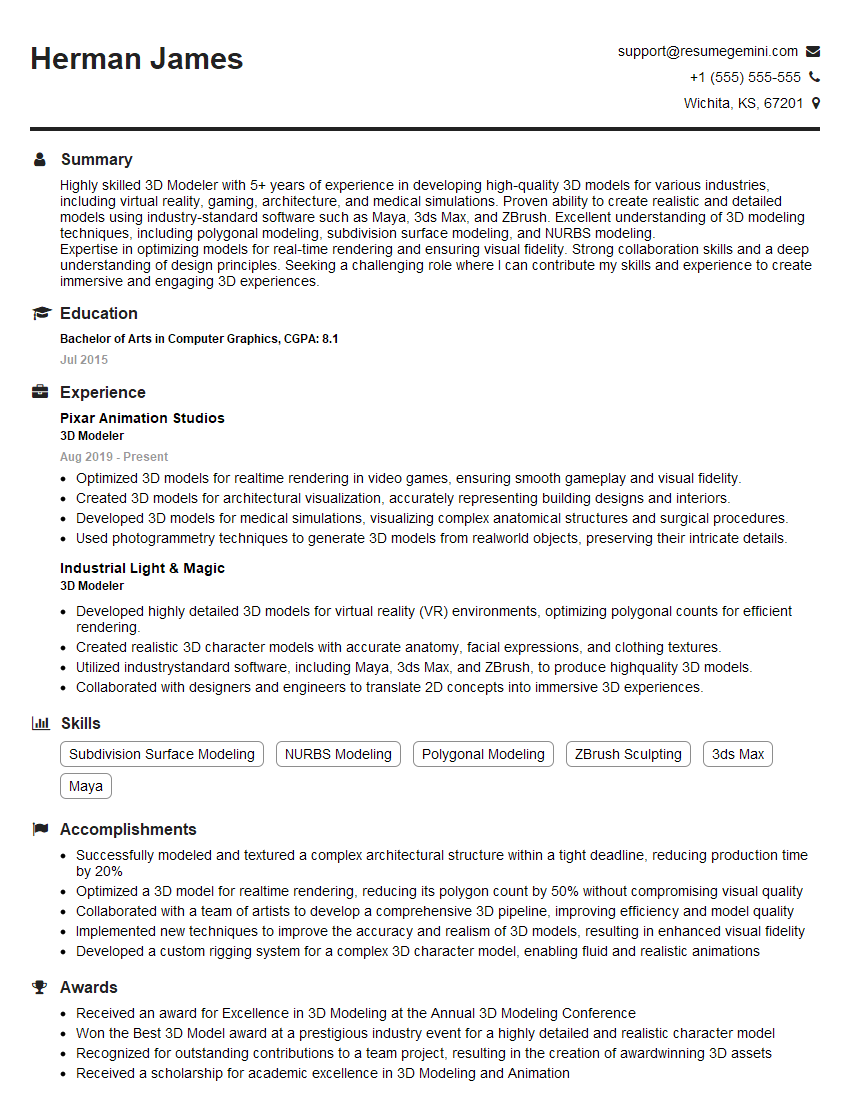
Mastering CAD software like AutoCAD or SolidWorks is crucial for a successful career in engineering, design, and manufacturing. These skills are highly sought after, opening doors to exciting opportunities and career advancement. To maximize your job prospects, it’s essential to create a resume that effectively showcases your expertise to Applicant Tracking Systems (ATS). Building an ATS-friendly resume is key to getting noticed by recruiters. We highly recommend using ResumeGemini, a trusted resource, to build a professional and impactful resume. ResumeGemini provides examples of resumes tailored to CAD Software skills, helping you present your abilities in the most compelling way.
Explore more articles
Users Rating of Our Blogs
Share Your Experience
We value your feedback! Please rate our content and share your thoughts (optional).
What Readers Say About Our Blog
Really detailed insights and content, thank you for writing this detailed article.
IT gave me an insight and words to use and be able to think of examples