Unlock your full potential by mastering the most common Calibration and Metrology Knowledge interview questions. This blog offers a deep dive into the critical topics, ensuring you’re not only prepared to answer but to excel. With these insights, you’ll approach your interview with clarity and confidence.
Questions Asked in Calibration and Metrology Knowledge Interview
Q 1. Explain the difference between calibration and verification.
Calibration and verification are closely related but distinct processes within metrology. Think of it like this: verification is like a quick check-up, confirming that something is still working within acceptable limits, while calibration is a more thorough, detailed examination and adjustment to ensure accuracy.
Verification confirms that a measuring instrument is performing within its specified tolerances. It doesn’t necessarily correct any deviations found. A simple pass/fail result is often sufficient. For example, verifying a thermometer might involve comparing its reading to a known ambient temperature. If it’s within a pre-defined acceptable range, it passes.
Calibration, however, involves comparing a measuring instrument to a known standard and adjusting it to minimize any deviations from that standard. It results in documented corrections and an updated uncertainty statement. A pressure gauge calibration, for example, would involve comparing its readings to a traceable pressure standard over a range of pressures, and adjusting the gauge if necessary. The calibration certificate will then indicate the corrected values and associated uncertainties.
Q 2. Describe the process of calibrating a pressure gauge.
Calibrating a pressure gauge involves comparing its readings to a known accurate pressure standard. Here’s a step-by-step process:
- Prepare the equipment: Gather the pressure gauge, a calibrated pressure standard (e.g., a deadweight tester or a calibrated pressure transducer), appropriate connecting tubing, and documentation.
- Establish the test points: Determine the pressure ranges you need to calibrate. The calibration points should span the entire operating range of the gauge, including minimum, maximum, and several intermediate points.
- Apply pressure: Use the pressure standard to apply a known pressure to the gauge at each test point. Allow sufficient time for the gauge to stabilize at each pressure.
- Record readings: Carefully record the readings from both the pressure standard and the gauge being calibrated for each test point. Repeat readings at least three times per point to get good statistics.
- Analyze the data: Calculate the deviation of the gauge readings from the standard at each point. Analyze the data for linearity, hysteresis, and repeatability errors.
- Adjust (if necessary): Some pressure gauges allow for minor adjustments. If the deviations exceed the acceptable limits specified in the gauge’s specifications or the customer’s requirements, the gauge might need adjustment or repair.
- Issue a calibration certificate: Document the calibration process including dates, test points, readings, deviations, uncertainties, and the identification number of the gauge. This certificate is crucial for traceability.
Example: Let’s say we’re calibrating a pressure gauge with a 0-100 psi range. We’d compare its readings at points like 0, 25, 50, 75, and 100 psi against our calibrated pressure standard.
Q 3. What are the different types of calibration standards?
Calibration standards are artifacts or instruments used to check the accuracy of measurement instruments. They come in various forms, categorized by their level of traceability and accuracy:
- Primary Standards: These are the highest level of accuracy, typically maintained by national metrology institutes (NMIs). They’re often based on fundamental physical constants and are not calibrated against another standard. An example is a kilogram mass kept in a controlled environment.
- Secondary Standards: Calibrated against primary standards, these are often used by calibration laboratories to calibrate working standards. A set of precision weights calibrated against a national standard is an example.
- Working Standards: These are used daily in the calibration process. Their accuracy is derived from their calibration against secondary standards. Think of a calibrated thermometer used in a production environment.
- Transfer Standards: Used to transfer calibration between laboratories or sites. Their purpose is to ensure consistent measurements across different locations. A set of calibrated gauge blocks would be a suitable transfer standard.
The choice of standard depends on the accuracy required for the instrument being calibrated and the level of uncertainty acceptable in the final measurement.
Q 4. Explain the concept of traceability in calibration.
Traceability in calibration refers to the unbroken chain of comparisons linking a measurement result to a national or international standard. Think of it as a family tree for your measurements, proving the reliability of your calibration.
A calibration is traceable if the equipment used in the process is calibrated against standards that themselves are calibrated against higher-level standards, ultimately leading back to an NMI. Each step in the chain has associated uncertainty, which accumulates to define the overall uncertainty of the measurement. This traceability ensures the reliability and comparability of measurements across different laboratories and locations.
Example: Imagine calibrating a digital multimeter. The lab uses a calibrated voltage source as a working standard, which was itself calibrated against a secondary standard traceable to the national standard. The calibration certificate for the multimeter will indicate this traceability chain, giving you confidence in the accuracy of the multimeter’s readings.
Q 5. What is the meaning of uncertainty in measurement?
Uncertainty in measurement represents the doubt associated with a measurement result. It quantifies the range of values within which the true value of the measurand is likely to lie. It doesn’t indicate error; rather it reflects the inherent limitations of the measurement process.
Uncertainty arises from various sources, including:
- Resolution of the instrument: A digital scale might only show weight to the nearest gram, introducing uncertainty.
- Environmental conditions: Temperature changes can affect measurements.
- Observer error: Parallax errors while reading a gauge.
- Calibration uncertainty: Uncertainty associated with the calibration standard used.
Uncertainty is usually expressed as a plus or minus value around the measurement result. For example, a measurement of 10 mm ± 0.1 mm indicates that the true value is likely between 9.9 mm and 10.1 mm. Properly evaluating and reporting uncertainty is critical for making informed decisions based on the measurement results.
Q 6. How do you determine the appropriate calibration interval?
Determining the appropriate calibration interval depends on several factors:
- Instrument type and stability: A high-stability instrument might require less frequent calibration than a less stable one.
- Usage frequency: Instruments used frequently might degrade faster and require more frequent calibration.
- Environmental conditions: Harsh environments might lead to faster degradation.
- Measurement criticality: Instruments used for safety-critical measurements require more frequent calibration.
- Manufacturer recommendations: Manufacturers often provide guidance on calibration intervals.
- Past calibration history: Analyzing past calibration data can help predict future stability.
A risk-based approach is often employed, considering the consequences of measurement errors. A formal calibration schedule should be established and documented, based on a thorough assessment of these factors.
Example: A high-precision analytical balance used daily in a laboratory might require monthly calibration, whereas a basic thermometer used for less critical purposes might only require annual calibration.
Q 7. What are some common sources of measurement error?
Measurement errors can arise from various sources:
- Instrument errors: These include calibration errors, resolution limitations, non-linearity, hysteresis, and drift.
- Environmental errors: Temperature, humidity, pressure, and electromagnetic fields can all affect measurements.
- Observer errors: Parallax, misreading scales, and improper handling can introduce errors.
- Method errors: Incorrect procedures or inappropriate methods used in measurement can lead to significant errors.
- Random errors: These are unpredictable and can’t be easily controlled, due to factors like vibrations or variations in power supply.
- Systematic errors: These are consistent and repeatable errors often linked to the equipment or measurement process itself. For instance, using a faulty scale repeatedly will introduce consistent bias.
Understanding these sources is crucial for designing effective measurement systems and implementing proper quality control procedures to minimize errors and uncertainties in measurements.
Q 8. Explain the importance of calibration documentation.
Calibration documentation is the cornerstone of a reliable measurement system. It provides irrefutable evidence that instruments are performing within acceptable limits, ensuring the quality and validity of data produced. Think of it as a detailed audit trail for your measurements, crucial for regulatory compliance, troubleshooting, and continuous improvement.
- Traceability: Documentation establishes a clear chain of custody, tracing calibrations back to national or international standards. This demonstrates the accuracy and reliability of your measurements.
- Verification: It proves that instruments were calibrated according to established procedures and meet specified tolerances. This is critical for demonstrating compliance with quality management systems like ISO 9001 or industry-specific standards.
- Troubleshooting: If a measurement error occurs, the calibration records help pinpoint the source of the problem – was it the instrument, the operator, or the process? This accelerates troubleshooting and minimizes downtime.
- Legal and Regulatory Compliance: Many industries (e.g., pharmaceuticals, aerospace) have stringent regulations requiring thorough calibration records. These records serve as proof of compliance and help avoid penalties.
- Continuous Improvement: Analyzing calibration data over time allows for identifying trends, potential instrument drift, and areas for process optimization. This contributes to a more efficient and reliable calibration program.
For instance, imagine a pharmaceutical company producing medications. Accurate measurement of active ingredients is paramount. Thorough calibration documentation proves that the instruments used for this measurement are accurate, providing assurance to regulatory bodies and safeguarding patient safety.
Q 9. Describe your experience with different calibration methods.
My experience encompasses a range of calibration methods, tailored to the specific instrument and its intended use. I’m proficient in both direct and indirect methods.
- Direct Calibration: This involves comparing the instrument under test against a known standard of higher accuracy. For example, calibrating a digital multimeter against a calibrated voltage source and precision resistor. I’ve extensively used this method for calibrating various instruments, from simple thermometers to precision balances.
- Indirect Calibration: This method uses a secondary standard, previously calibrated against a primary standard. This is particularly useful when dealing with specialized or expensive primary standards. For example, calibrating a pressure gauge using a calibrated pressure transducer.
- Comparison Calibration: This involves comparing the output of the instrument to be calibrated to the output of a known standard instrument under similar conditions. This is commonly used with instruments that don’t have readily available known standards.
- In-situ Calibration: For certain instruments, calibration can be performed while the instrument is still installed in the process. For example, a flow meter in a pipeline might be calibrated in-situ using a known flow rate.
The choice of method is determined by factors such as accuracy requirements, the type of instrument, and the availability of standards. I always meticulously document the chosen method and justify it in the calibration report. For instance, in a high-precision application like aerospace manufacturing, I would strictly use direct calibration against a traceable standard.
Q 10. What software or tools are you familiar with for calibration management?
Throughout my career, I’ve utilized various software and tools for calibration management, ranging from simple spreadsheets to sophisticated calibration management systems (CMS).
- Spreadsheet Software (Excel, Google Sheets): These are useful for basic calibration tracking, especially for smaller organizations or simpler calibration processes. I’ve used them for creating and maintaining basic calibration schedules and recording results.
- Calibration Management Software (e.g., Fluke Calibration Asset Management Software, other commercial CMS): These specialized packages offer advanced features, including automated scheduling, instrument tracking, reporting, and integration with other systems. They allow for better management of large numbers of instruments and streamlined workflows. In previous roles, I extensively used a CMS to manage over 500 instruments, automating the calibration reminders and generating reports.
- Laboratory Information Management Systems (LIMS): These systems are often integrated with CMS for a more comprehensive approach to laboratory management, including sample management and data analysis. I’ve worked with LIMS integration in pharma-related settings.
My proficiency extends to the use of specialized software for specific instrument types (e.g., software for calibrating oscilloscopes, signal generators). The choice of software depends on the complexity of the calibration program and the specific needs of the organization.
Q 11. How do you handle discrepancies found during calibration?
Discrepancies found during calibration are addressed systematically and thoroughly to ensure the integrity of the measurement system. My approach is based on a step-by-step investigation and documentation process.
- Identify and Document: First, the discrepancy is clearly defined and documented, noting the specific instrument, the parameter out of tolerance, and the extent of the deviation.
- Investigate the Cause: The next step involves thoroughly investigating the root cause. This may include checking the calibration procedure, the calibration equipment used, the instrument’s operating conditions, and potential user error.
- Corrective Action: Based on the investigation, appropriate corrective actions are implemented. This could range from minor adjustments to the instrument, recalibration using different equipment, or even replacement of the instrument.
- Verification: After implementing corrective actions, the instrument is recalibrated to verify that the discrepancy has been resolved.
- Documentation and Reporting: The entire process, including the discrepancy, investigation, corrective action, and verification, is meticulously documented and reported. This ensures traceability and aids in future troubleshooting.
- Re-calibration Schedule: Depending on the severity and root cause of the discrepancy, the calibration interval might need adjustment. If the issue is systemic, the root cause should be addressed to prevent recurrent errors.
For example, if a temperature sensor consistently reads low, I might check the sensor’s probe for damage, ensure correct installation, and check the calibration bath for accuracy. This investigation ensures that the issue is resolved and prevents inaccurate measurements in the future.
Q 12. Explain the concept of measurement uncertainty and its propagation.
Measurement uncertainty quantifies the doubt associated with a measurement result. It represents the range of values within which the true value of the measurand is likely to lie. Think of it as the margin of error associated with a measurement. A smaller uncertainty indicates greater confidence in the measurement’s accuracy.
Uncertainty Propagation: When measurements are combined to compute a derived value, the uncertainties associated with the individual measurements propagate (combine) to affect the uncertainty of the derived value. This means the uncertainty of the final result is often larger than the uncertainty of any single input.
For example, imagine calculating the area of a rectangle by measuring its length and width. Each measurement has its own uncertainty. When you multiply length and width to get the area, the uncertainties of both measurements contribute to the overall uncertainty in the area’s calculation. The way these uncertainties combine is determined by the formula used to compute the area, and usually follows the rules of error propagation (e.g., using the square root of the sum of the squares for independent, normally distributed errors).
Proper understanding and propagation of measurement uncertainty is crucial for accurate reporting and interpretation of results, especially in applications with high accuracy requirements. For instance, underestimating uncertainty in a critical application like bridge construction could have devastating consequences.
Q 13. How do you ensure the accuracy of your calibration process?
Ensuring the accuracy of my calibration process involves a multi-pronged approach that centers on traceability, rigorous procedures, and continuous improvement.
- Traceability to National/International Standards: All my calibration standards are traceable to recognized national or international standards (e.g., NIST, BIPM), ensuring the accuracy and reliability of the entire calibration chain. This traceability is documented in calibration certificates.
- Validated Calibration Procedures: I strictly adhere to validated calibration procedures that specify the equipment, standards, and steps involved. These procedures are regularly reviewed and updated to ensure they remain current and effective.
- Environmental Control: Where appropriate, I control the environmental conditions (temperature, humidity, pressure) during calibration to minimize their influence on the measurement results.
- Regular Equipment Maintenance: Calibration equipment itself needs regular maintenance and calibration to ensure its own accuracy and reliability. I always maintain a calibration schedule for the equipment used for calibration.
- Competent Personnel: I believe in continuous training and development for personnel involved in calibration activities, ensuring they are appropriately trained and competent to perform calibrations according to the established procedures.
- Statistical Process Control: Regular analysis of calibration data using statistical process control techniques helps detect trends and potential problems in the calibration process, allowing for early corrective action and continuous improvement.
Imagine calibrating a high-precision balance. I would not only use calibrated weights traceable to national standards but also control the temperature and humidity to minimize the influence of environmental factors on the weighing process. This meticulous attention to detail is essential for achieving highly accurate calibration results.
Q 14. Describe your experience with different types of measuring instruments.
My experience encompasses a wide variety of measuring instruments across various domains.
- Electrical Instruments: I’m proficient in calibrating multimeters, oscilloscopes, signal generators, power meters, and other electrical test equipment. I understand the intricacies of AC/DC measurements, impedance, and frequency.
- Mechanical Instruments: My experience includes calibrating pressure gauges, force gauges, torque wrenches, dimensional measuring equipment (calipers, micrometers), and various types of balances.
- Thermal Instruments: I’m familiar with calibrating thermometers (thermocouples, RTDs, thermistors), temperature controllers, and ovens.
- Optical Instruments: I have experience with calibrating optical instruments like spectrometers and microscopes, which require precise alignment and calibration.
- Specialized Instruments: Depending on the industry, I’ve also worked with more specialized instruments, such as flow meters, pH meters, and gas analyzers, needing specific expertise and calibration techniques.
My experience isn’t limited to just the calibration itself; it also encompasses the understanding of the application of these instruments, allowing me to advise on best practices and ensure the correct selection of equipment for a given measurement task. For example, I would advise on the appropriate type of thermometer for high-temperature applications versus low-temperature applications.
Q 15. What are the key elements of a calibration certificate?
A calibration certificate is a crucial document that formally confirms the accuracy and traceability of a measuring instrument. Think of it as a report card for your equipment, verifying its fitness for purpose. Key elements include:
- Unique Identification: A certificate number and clear identification of the calibrated instrument (serial number, model, etc.).
- Calibration Date: The date the calibration was performed.
- Calibration Method: A description of the procedures and standards used.
- Calibration Results: This is the core – a table showing the measured values, uncertainties, and deviations from the reference standards. It often includes pass/fail indicators.
- Traceability Statement: Confirmation that the calibration can be traced back to national or international standards (e.g., NIST in the US or BIPM internationally). This ensures everyone is measuring on the same scale.
- Uncertainty Analysis: A statement of the measurement uncertainty associated with the calibration results. This tells you how much the result might vary from the true value.
- Expiry Date: The date after which the calibration is no longer valid, usually determined by the instrument’s stability and use.
- Accredited Laboratory Information (if applicable): If the calibration was performed by an accredited laboratory, it will state the accreditation details, which builds confidence in the calibration’s reliability.
- Signatures and Approvals: Signatures from authorized personnel verifying the calibration process and results.
For example, a certificate for a digital thermometer might show the measured temperature at different points, the associated uncertainty, and whether it falls within the acceptable tolerance.
Career Expert Tips:
- Ace those interviews! Prepare effectively by reviewing the Top 50 Most Common Interview Questions on ResumeGemini.
- Navigate your job search with confidence! Explore a wide range of Career Tips on ResumeGemini. Learn about common challenges and recommendations to overcome them.
- Craft the perfect resume! Master the Art of Resume Writing with ResumeGemini’s guide. Showcase your unique qualifications and achievements effectively.
- Don’t miss out on holiday savings! Build your dream resume with ResumeGemini’s ATS optimized templates.
Q 16. What are the international standards relevant to calibration (e.g., ISO 17025)?
Several international standards are pivotal in calibration and metrology. The most significant is ISO/IEC 17025:2017, which provides the general requirements for the competence of testing and calibration laboratories. It sets the framework for establishing a quality management system, ensuring accurate and reliable results. Think of it as the ‘gold standard’ for labs. Adherence to ISO 17025 demonstrates a high level of professional competence and instills trust in the calibration services offered.
Other relevant standards include:
- ISO 9001: Deals with quality management systems more broadly, often complementing ISO 17025.
- ISO 10012: Focuses specifically on measurement management systems, providing guidance on establishing and maintaining a robust measurement process.
- Guide to the Expression of Uncertainty in Measurement (GUM): This guide provides internationally accepted methods for evaluating and expressing measurement uncertainty, crucial for reporting calibration results accurately.
Compliance with these standards ensures that calibration activities are performed consistently, reliably, and to a globally recognized standard.
Q 17. How do you manage calibration records and data?
Managing calibration records and data requires a robust system, typically involving a combination of software and physical storage. The aim is to ensure data integrity, traceability, and easy retrieval. We use a calibrated equipment management software which keeps a detailed history of each instrument. This includes:
- Centralized Database: All calibration records are stored in a centralized database, accessible to authorized personnel. This eliminates the risk of losing records and ensures consistency.
- Unique Identification: Each instrument is uniquely identified (often through a barcoding system) to link it to its calibration history seamlessly.
- Automated Reminders: The system sends automated reminders approaching calibration due dates, preventing equipment from going out of calibration.
- Secure Archiving: Calibration data is securely archived, both electronically and, in some cases, physically, in accordance with data retention policies. This ensures long-term accessibility and regulatory compliance.
- Version Control: If updates or revisions are needed, version control ensures traceability and prevents confusion.
- Audit Trails: All actions performed on the system are tracked and documented, ensuring data integrity and accountability.
Regular audits are performed to verify the accuracy and completeness of the records. This systematic approach ensures compliance with regulatory requirements and maintains the highest levels of data integrity.
Q 18. What is your experience with statistical process control (SPC) in calibration?
Statistical Process Control (SPC) is an invaluable tool in calibration. It helps us monitor the stability and capability of our calibration processes over time. By applying statistical methods, we can identify trends, outliers, and potential issues before they escalate into significant problems. Think of it as a proactive approach to quality control.
We use control charts (like Shewhart charts or CUSUM charts) to track key parameters such as measurement deviations. By plotting the data over time, we can quickly see if the process is in control or if there are shifts in the mean or increased variability. For example, if we consistently observe points outside the control limits on a chart tracking the accuracy of a particular instrument, it indicates a possible problem with the instrument or our calibration process. This signals the need for investigation and corrective actions, ensuring the continuous improvement of our calibration processes. This helps us identify potential problems, improve accuracy and ensure traceability.
Q 19. Describe a situation where you had to troubleshoot a calibration issue.
In one instance, we experienced a recurring discrepancy in the calibration of a high-precision pressure gauge. Initial calibrations were within the acceptable tolerance range, but subsequent checks revealed increasing deviations. Our troubleshooting involved:
- Reviewing the Calibration Procedure: We carefully examined the calibration process to rule out any procedural errors.
- Investigating Environmental Factors: We checked for any environmental factors, such as temperature fluctuations or vibrations, that could affect the gauge readings.
- Inspecting the Gauge: A thorough visual inspection revealed a small crack in the gauge’s casing, potentially affecting its internal mechanism.
- Testing Alternative Equipment: We calibrated the gauge using a different reference standard, and obtained consistent results.
The crack in the casing was determined to be the root cause. The gauge was replaced, and the problem resolved. This incident highlighted the importance of not only meticulous calibration procedures but also regular visual inspection of equipment and awareness that even seemingly minor factors could affect measurement accuracy.
Q 20. How do you ensure the integrity of calibration standards?
Maintaining the integrity of calibration standards is paramount. These standards form the foundation of our traceability chain, ensuring accurate measurements. Our approach involves:
- Regular Calibration: Our standards are regularly calibrated by a higher-level laboratory, creating a chain of traceability back to national or international standards.
- Proper Handling and Storage: Standards are handled and stored according to their manufacturer’s recommendations to minimize any damage or degradation.
- Environmental Control: Where necessary, standards are kept in controlled environments (e.g., temperature- and humidity-controlled rooms) to maintain their stability.
- Regular Inspection: Regular visual inspections are performed to check for any signs of damage or deterioration.
- Documentation: All handling, calibration, and maintenance activities are meticulously documented, ensuring a complete audit trail.
- Preventive Maintenance: Regular cleaning and any necessary maintenance are performed based on manufacturers recommendations.
By adhering to these practices, we ensure that our calibration standards remain accurate, reliable, and traceable, providing the highest level of confidence in our calibration results.
Q 21. Explain the importance of using calibrated equipment.
Using calibrated equipment is absolutely critical for ensuring accurate and reliable measurements. This has significant implications across various aspects:
- Data Accuracy: Calibrated equipment ensures that measurements are accurate and traceable, reducing errors and improving data quality.
- Product Quality: In manufacturing, calibrated equipment is crucial for ensuring that products meet specifications and quality standards.
- Safety and Compliance: In many industries, accurate measurements are essential for safety and regulatory compliance. For instance, in the pharmaceutical industry, accurate measurement is critical for drug dosage. In aerospace, precise measurements ensure that components adhere to specifications that impact safety.
- Cost Savings: While calibration adds an upfront cost, it ultimately saves money by preventing costly errors, recalls, and rework related to inaccurate measurements. Imagine the cost of a recall due to faulty equipment or inaccurate measurements.
- Improved Efficiency: Accurate measurements contribute to improved efficiency and streamlined processes. Think of the time saved by eliminating the need for rework.
In essence, calibrated equipment is an investment that ensures the accuracy and reliability of measurement, ultimately protecting product quality, ensuring compliance and driving efficiency.
Q 22. What are the consequences of using uncalibrated equipment?
Using uncalibrated equipment can lead to a cascade of negative consequences, impacting everything from product quality and safety to financial losses and legal repercussions. Imagine a scenario where a crucial manufacturing process relies on a pressure gauge that hasn’t been calibrated. Inaccurate readings could result in subpar products, leading to customer dissatisfaction, returns, and brand damage. In more serious cases, it could lead to malfunctioning products that pose safety risks to consumers, resulting in significant financial and legal liabilities.
- Inaccurate Measurements: The most direct consequence is unreliable data. This can lead to incorrect decisions in various processes, from manufacturing and quality control to research and development.
- Product Defects: In manufacturing, inaccurate measurements might result in products failing to meet specifications, leading to increased scrap, rework, and customer complaints.
- Safety Hazards: In industries like pharmaceuticals or aerospace, inaccurate measurements can pose serious safety risks, potentially leading to accidents or injuries.
- Non-Compliance: Many industries are subject to stringent regulatory requirements that mandate the use of calibrated equipment. Failure to comply can result in fines, penalties, and reputational damage.
- Wasted Resources: Inaccurate measurements can lead to wasted materials, energy, and time due to inefficient processes and repeated corrections.
Therefore, a robust calibration program is crucial for maintaining the integrity of measurements and ensuring the quality, safety, and compliance of operations.
Q 23. Describe your experience with different calibration techniques (e.g., comparison, substitution).
My experience encompasses a wide range of calibration techniques, with a particular focus on comparison and substitution methods. Comparison calibration involves comparing the measurement of the instrument under test (IUT) against a known standard of higher accuracy. Think of it like comparing your watch to an atomic clock. The difference reveals the error of your watch. This method is frequently used for calibrating instruments such as thermometers, pressure gauges, and voltage meters.
Substitution calibration involves replacing the standard with the IUT in a measurement setup. The difference in readings is then used to determine the calibration adjustment. This is particularly useful when dealing with instruments that cannot be easily compared directly to a standard. For example, calibrating a load cell might involve substituting it for a known weight in a testing machine. I’ve also worked with more sophisticated techniques such as traceability to national standards through certified calibration laboratories, ensuring the reliability and accuracy of my calibration results. This means the calibration process can be documented, reviewed and verified. My expertise extends to using advanced software for data acquisition, analysis, and report generation.
Q 24. How do you stay updated on the latest advancements in calibration and metrology?
Staying abreast of advancements in calibration and metrology is crucial for maintaining a high level of competency in this field. I regularly engage in several methods to achieve this.
- Professional Organizations: I’m an active member of relevant professional organizations, such as the American Society for Testing and Materials (ASTM) and the National Institute of Standards and Technology (NIST) user groups, which provide access to publications, conferences, and networking opportunities that keep me up to date on the latest standards and technologies.
- Conferences and Workshops: Attending conferences and workshops allows me to engage with experts in the field, learn about new technologies, and share experiences with others. I actively seek out training courses that cover the latest advances in measurement science and instrumentation.
- Publications and Journals: I regularly read industry journals and publications, specifically those focusing on metrology and calibration, to learn about the newest techniques and applications.
- Online Resources: I make use of online resources such as NIST websites and other reputable online platforms providing access to calibration guidelines and best practices. Keeping abreast of advancements in measurement technology and techniques is an ongoing process and something I take very seriously.
Q 25. What is your experience with different types of calibration labs?
My experience encompasses working with various types of calibration laboratories. I’ve worked with both internal and external labs, each presenting unique challenges and advantages.
- Internal Calibration Labs: These labs are typically found within larger organizations and provide a cost-effective way to calibrate equipment in-house. The advantages are increased efficiency, better control over calibration schedules, and closer interaction with the users of the equipment. However, maintaining an internal lab requires significant investment in infrastructure, equipment, and personnel.
- External Calibration Labs: These are independent labs that offer calibration services to various organizations. They often have access to a wider range of calibration equipment and expertise. Using external labs can be more cost-effective for organizations that don’t have the resources to maintain their own internal labs, but there might be challenges in scheduling and communication.
- ISO/IEC 17025 Accredited Labs: These labs meet stringent international quality standards, ensuring the reliability and traceability of their calibration results. Working with accredited labs is crucial for projects requiring demonstrable compliance with regulatory requirements.
My experience includes working with labs across various industries, from manufacturing and aerospace to healthcare and pharmaceuticals, allowing me to understand the unique calibration needs of each sector.
Q 26. Describe your experience with root cause analysis for calibration failures.
Root cause analysis is crucial when dealing with calibration failures. I’ve used various methodologies, most notably the 5 Whys and Fishbone diagrams, to investigate the root causes of calibration failures. The 5 Whys method involves repeatedly asking ‘why’ to understand the underlying causes. For example, if a thermometer consistently reads low, we might ask: Why is it reading low? Because the sensor is degraded. Why is the sensor degraded? Due to prolonged exposure to high temperatures. Why was it exposed to high temperatures? The oven wasn’t properly vented. Why wasn’t the oven vented? Maintenance was neglected.
Fishbone diagrams (also known as Ishikawa diagrams) provide a visual representation of potential causes, categorized into factors like equipment, environment, personnel, and procedure. By systematically analyzing these factors, we can pinpoint the root cause and implement corrective actions. These methods are complemented by careful documentation and review of calibration procedures, operator training, and equipment maintenance records. A successful root cause analysis isn’t just about fixing the immediate problem; it’s about preventing similar failures in the future through improved processes and training.
Q 27. How do you ensure compliance with regulatory requirements related to calibration?
Ensuring compliance with regulatory requirements related to calibration is paramount. My approach involves a multi-faceted strategy:
- Understanding Regulations: Thorough understanding of applicable regulations, such as ISO 9001, ISO 17025, and industry-specific regulations, is crucial. This involves staying updated on changes and amendments to these standards.
- Documented Procedures: Establishing and maintaining detailed, documented calibration procedures is essential. These procedures should outline the methods, equipment, and acceptance criteria used for each calibration, ensuring traceability and repeatability.
- Calibration Schedules: Developing and adhering to a rigorous calibration schedule, based on equipment usage, manufacturer recommendations, and regulatory requirements, is vital for maintaining the accuracy and reliability of equipment.
- Traceability: Establishing a clear chain of traceability to national or international standards is essential to demonstrate the accuracy of calibration results. This often involves using traceable standards and certified calibration laboratories.
- Record Keeping: Maintaining meticulous records of all calibration activities, including certificates, reports, and corrective actions, is crucial for demonstrating compliance during audits.
- Internal Audits: Regular internal audits provide an opportunity to identify areas of non-compliance and implement corrective actions before external audits.
My experience in navigating these regulations ensures consistent adherence to requirements and minimizes the risk of non-compliance.
Q 28. What are your salary expectations for this role?
My salary expectations are commensurate with my experience, skills, and the requirements of this role. I’m open to discussing a competitive compensation package that reflects the value I bring to your organization. I am confident that my expertise in calibration and metrology will provide a significant return on investment.
Key Topics to Learn for Calibration and Metrology Knowledge Interview
- Measurement Uncertainty: Understand the concepts of accuracy, precision, and traceability. Explore methods for calculating and minimizing uncertainty in measurement results.
- Calibration Procedures: Learn about different calibration methods, including direct comparison, substitution, and indirect methods. Familiarize yourself with standard operating procedures (SOPs) and documentation requirements.
- Calibration Standards and Traceability: Grasp the importance of using traceable standards and the role of national metrology institutes (NMIs). Understand the concept of a calibration chain.
- Common Measurement Instruments: Gain proficiency in the operation and calibration of various instruments, including multimeters, oscilloscopes, pressure gauges, and temperature sensors. Be prepared to discuss their limitations and potential sources of error.
- Statistical Process Control (SPC): Familiarize yourself with SPC techniques used in calibration laboratories, such as control charts and capability analysis, to monitor and improve measurement processes.
- Calibration Management Systems: Understand the principles of ISO/IEC 17025 and other relevant standards for calibration laboratories. Be prepared to discuss quality management systems and their role in ensuring accurate and reliable calibrations.
- Problem-Solving and Troubleshooting: Develop your ability to identify and resolve measurement discrepancies, analyze data effectively, and propose solutions to improve the accuracy and efficiency of calibration processes.
- Data Analysis and Reporting: Practice interpreting calibration data, generating reports, and communicating findings clearly and concisely. Understand the importance of data integrity and traceability.
Next Steps
Mastering Calibration and Metrology Knowledge is crucial for career advancement in this highly specialized field. A strong understanding of these principles opens doors to more challenging roles and higher earning potential. To maximize your job prospects, crafting a compelling and ATS-friendly resume is essential. ResumeGemini can significantly help you build a professional and impactful resume that showcases your skills and experience effectively. ResumeGemini provides examples of resumes tailored to Calibration and Metrology Knowledge to guide you in creating a standout application. Invest time in crafting your resume – it’s your first impression on potential employers.
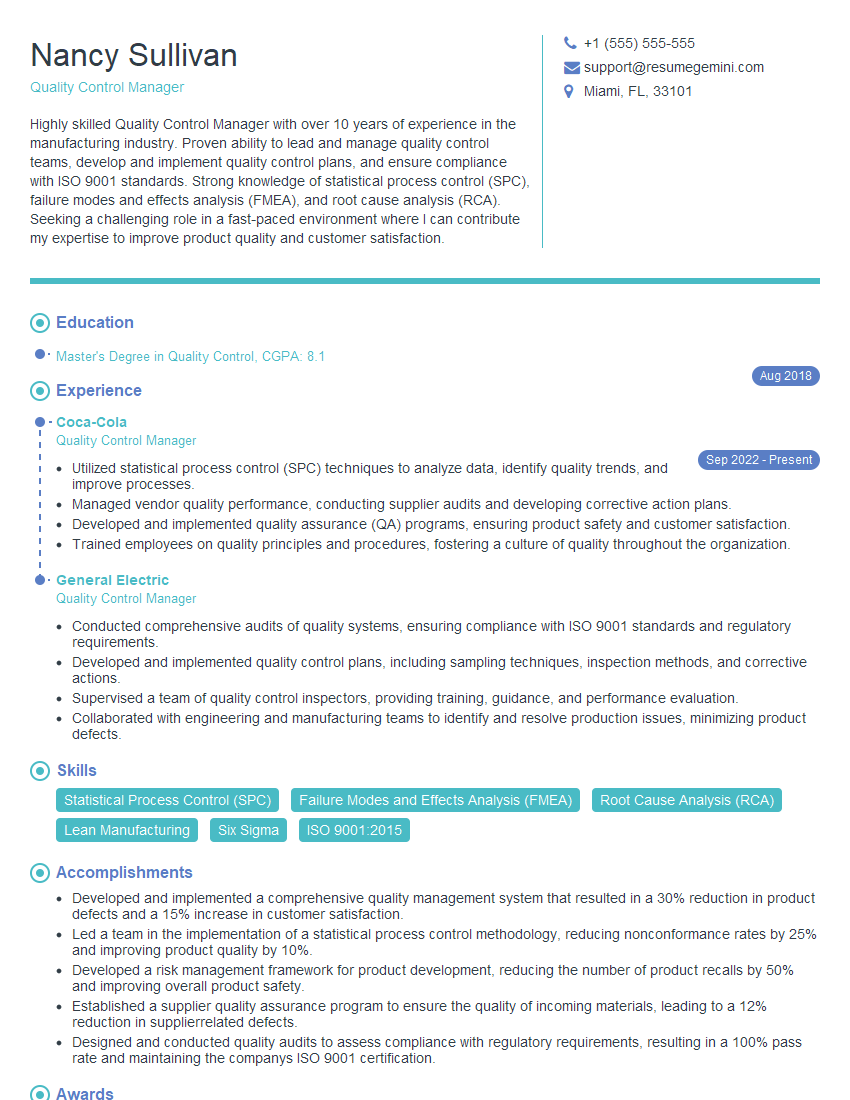
Quality Control Manager Resume Sample
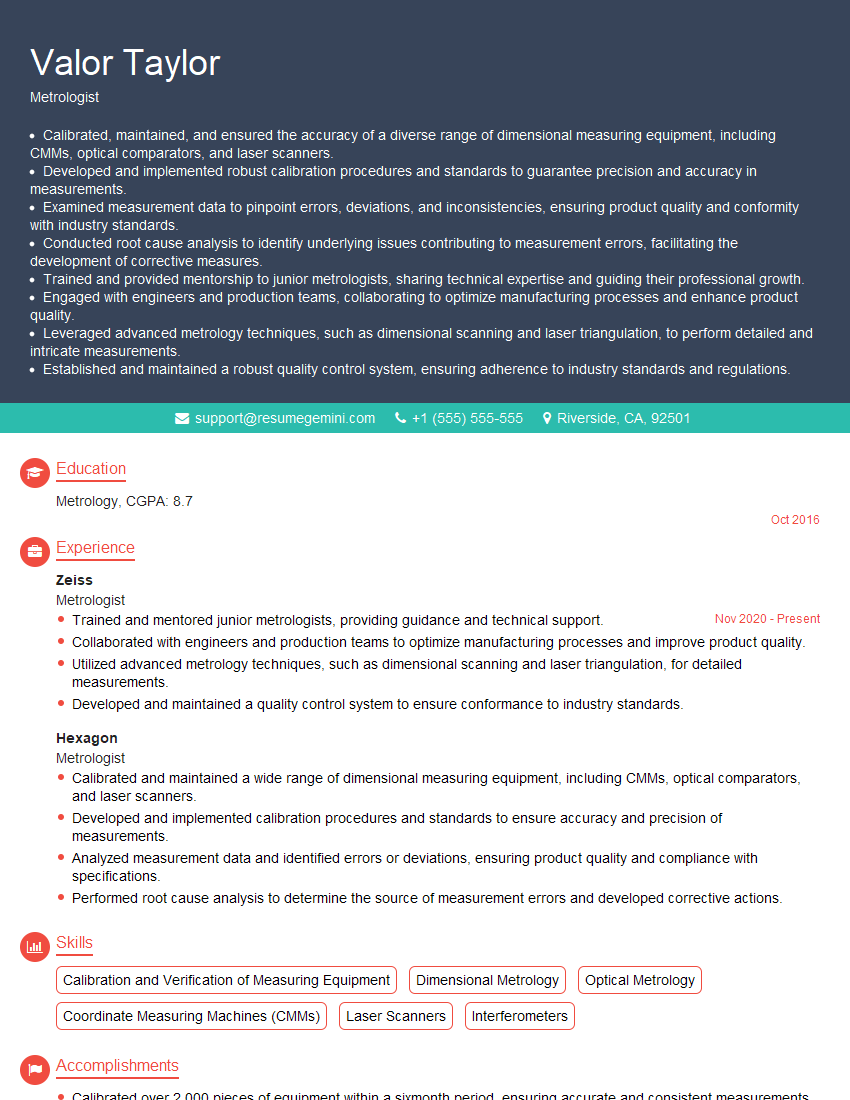
Metrologist Resume Sample
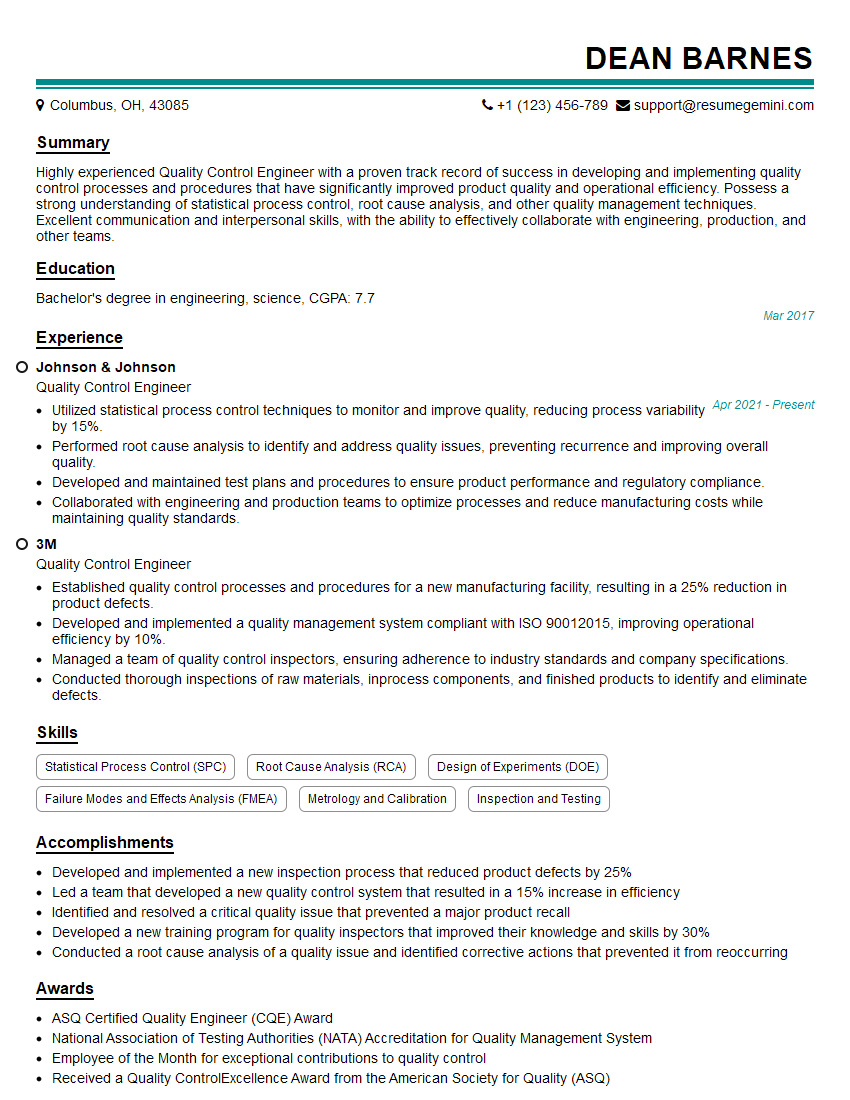
Quality Control Engineer Resume Sample
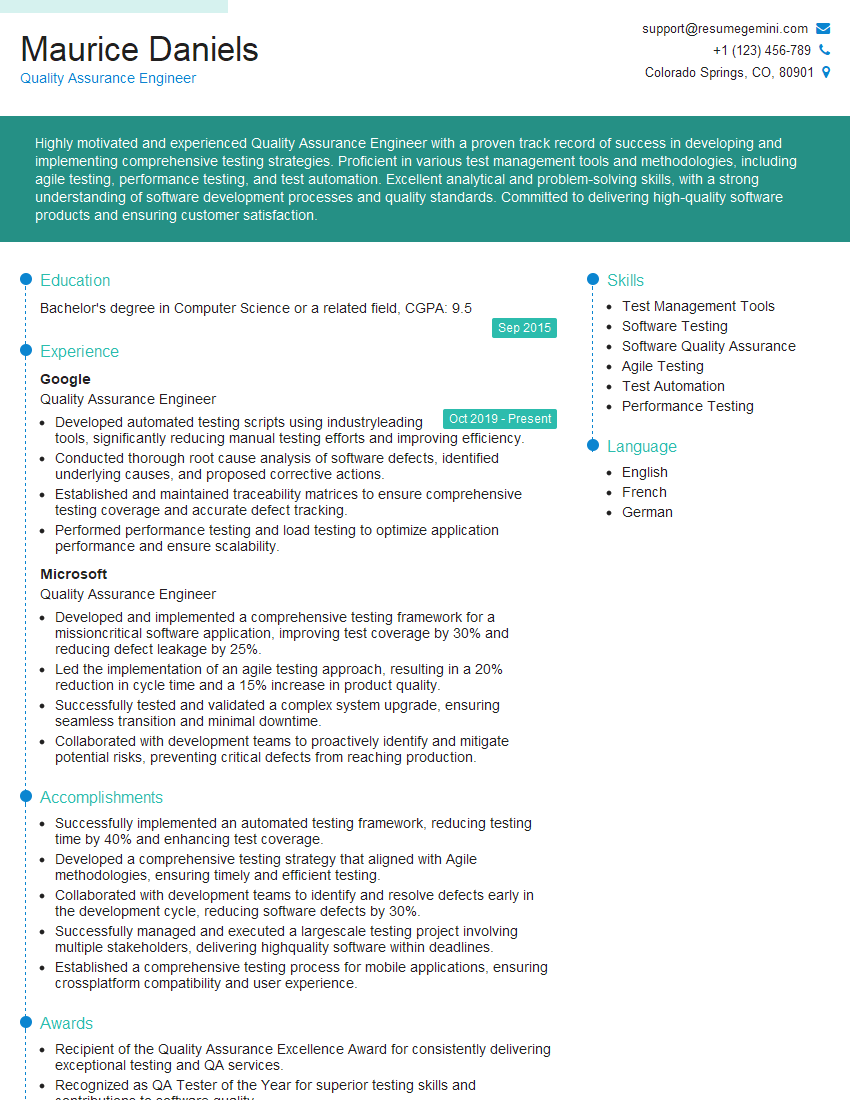
Quality Assurance Engineer Resume Sample
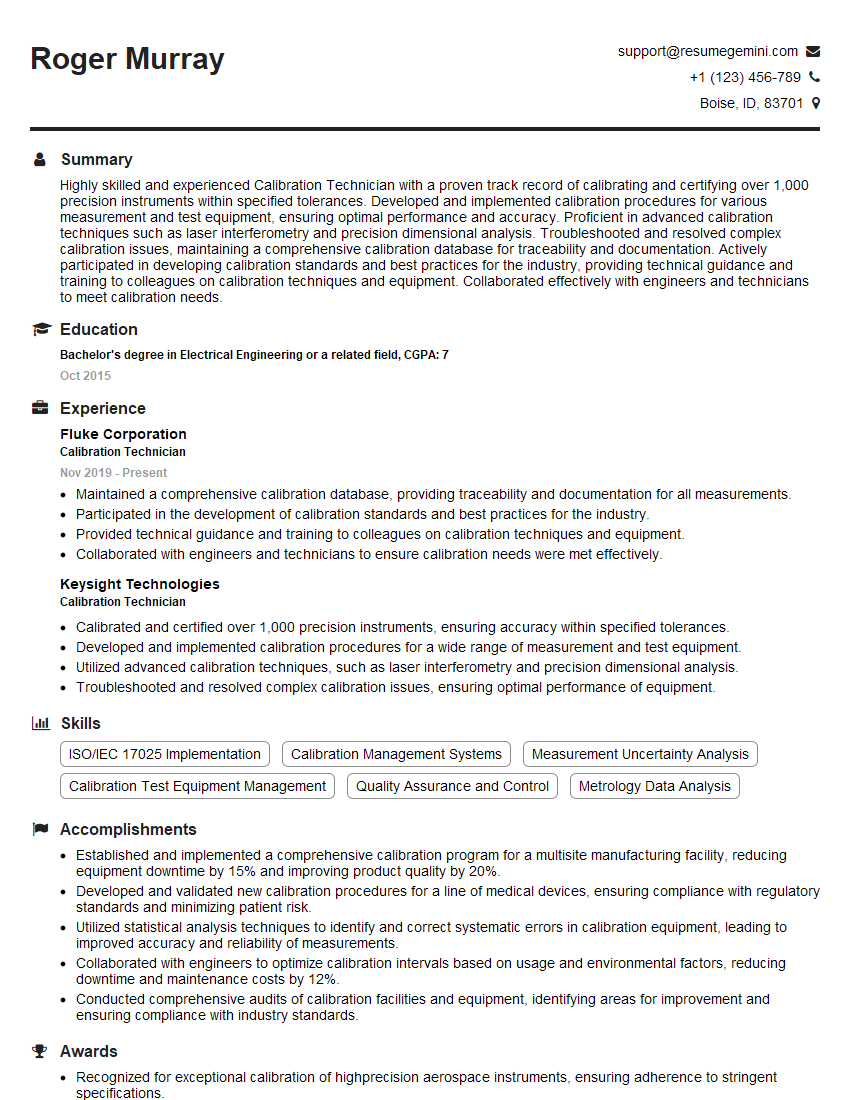
Calibration Technician Resume Sample
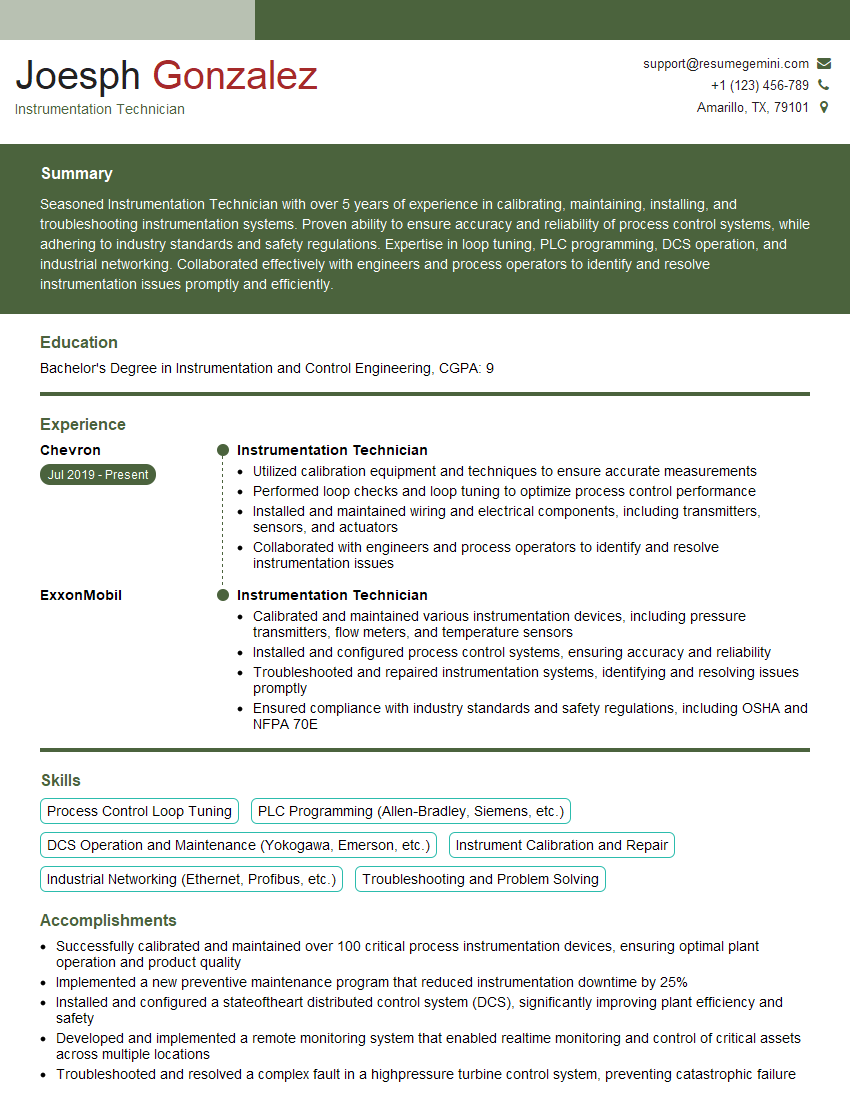
Instrumentation Technician Resume Sample
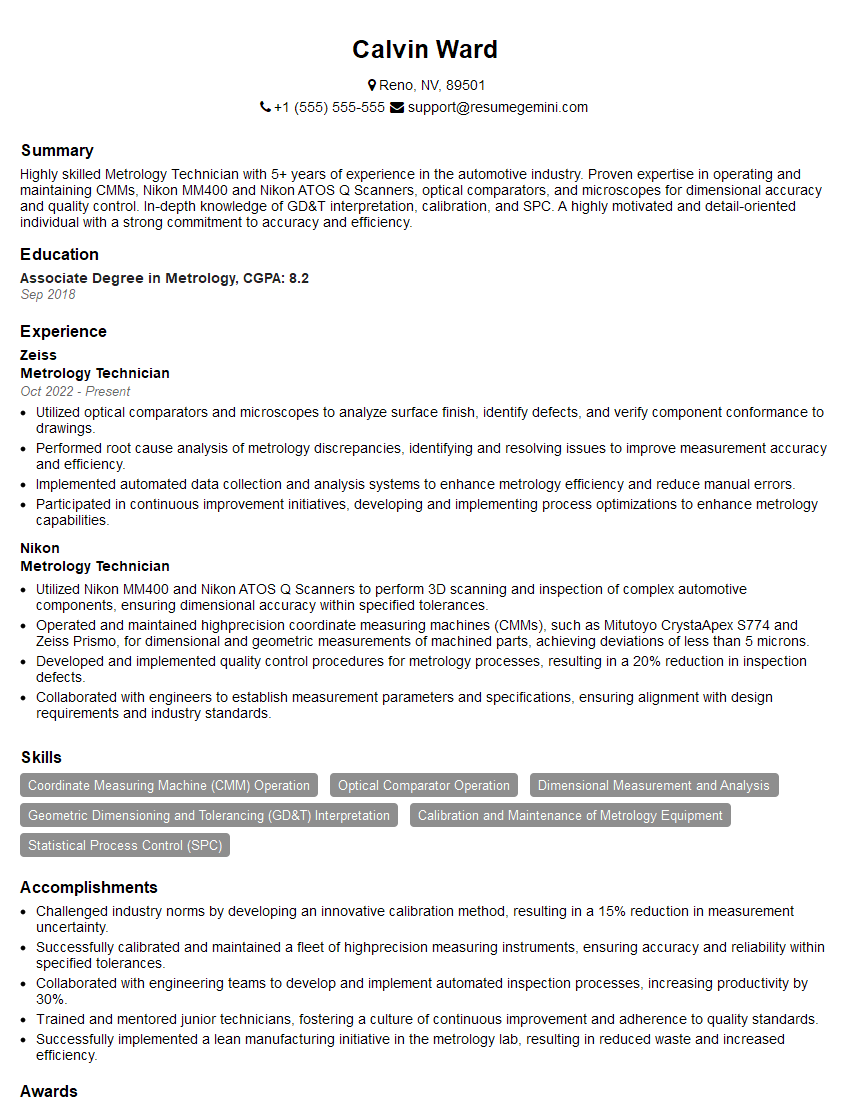
Metrology Technician Resume Sample
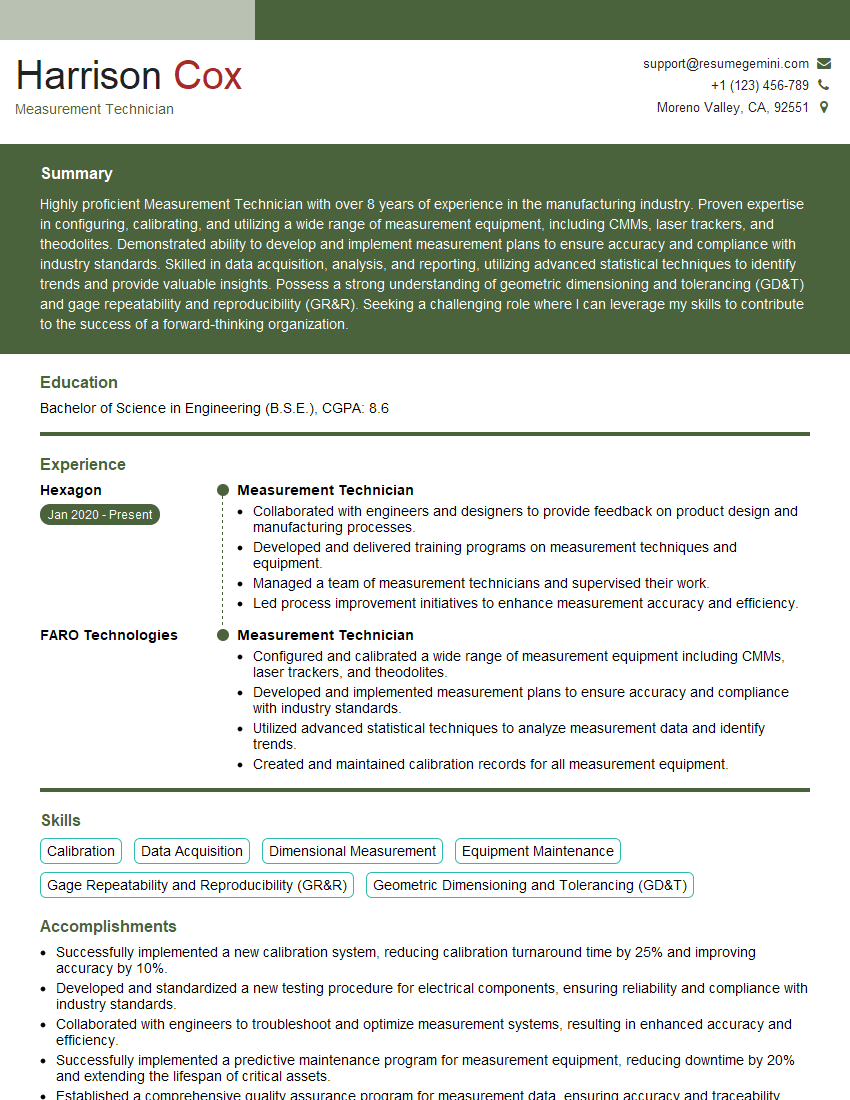
Measurement Technician Resume Sample
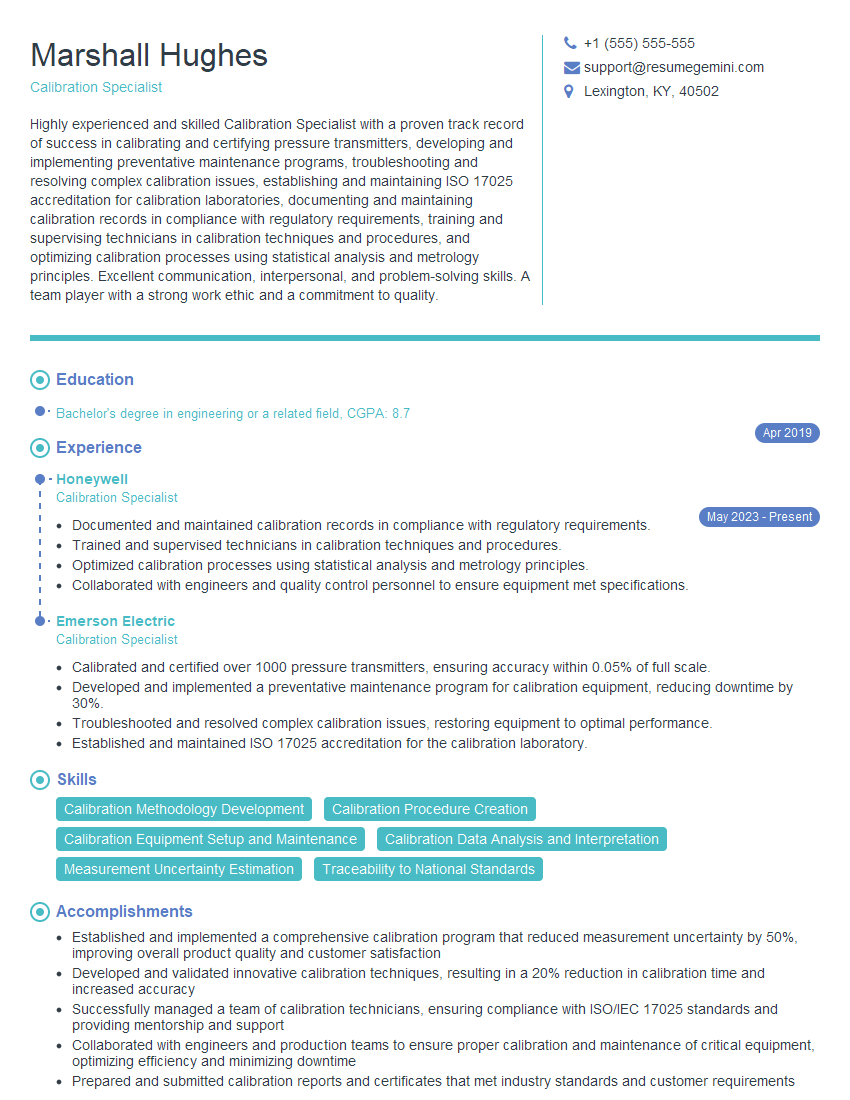
Calibration Specialist Resume Sample
Explore more articles
Users Rating of Our Blogs
Share Your Experience
We value your feedback! Please rate our content and share your thoughts (optional).
What Readers Say About Our Blog
Really detailed insights and content, thank you for writing this detailed article.
IT gave me an insight and words to use and be able to think of examples