Preparation is the key to success in any interview. In this post, we’ll explore crucial Calibration and Verification of Equipment interview questions and equip you with strategies to craft impactful answers. Whether you’re a beginner or a pro, these tips will elevate your preparation.
Questions Asked in Calibration and Verification of Equipment Interview
Q 1. Explain the difference between calibration and verification.
Calibration and verification are both crucial for ensuring the accuracy of measuring equipment, but they differ in their scope and purpose. Think of it like this: verification is a quick check-up, while calibration is a thorough medical examination.
Calibration is a more formal process where a measuring instrument is adjusted to a known standard. It involves comparing the instrument’s readings against a traceable standard and making adjustments to correct any discrepancies. The goal is to minimize measurement error and ensure the instrument provides accurate and reliable results within a specified tolerance. A calibration certificate is issued after a successful calibration.
Verification, on the other hand, confirms that an instrument is performing within its specified tolerances without necessarily making adjustments. It involves checking if the instrument’s readings are within the acceptable range compared to a known standard (which might not be as rigorous as in calibration). Verification doesn’t always require adjustments; it simply confirms the instrument is fit for use. It’s often a faster and less costly process than calibration.
In short: Calibration corrects, verification confirms.
Q 2. What is traceability in calibration, and why is it important?
Traceability in calibration is the ability to link a measurement result back to a known international standard, creating an unbroken chain of comparisons. Imagine a family tree for your measurements, with each generation linked to the one before. This chain ensures that the accuracy of your measurements is reliable and consistent.
It’s crucial because it provides confidence in the validity of your measurement results. Without traceability, you cannot be sure your instrument’s readings are accurate or comparable to other measurements taken using different equipment in different locations. For instance, a company producing pharmaceutical products needs traceable calibrations to ensure product quality and compliance with regulations.
Traceability is typically achieved through a series of calibrations, with each instrument calibrated against a standard of higher accuracy, ultimately leading back to a national or international standard maintained by accredited organizations like NIST (National Institute of Standards and Technology) or equivalent bodies.
Q 3. Describe the process of calibrating a pressure gauge.
Calibrating a pressure gauge involves comparing its readings to a known accurate pressure source (a standard). Here’s a step-by-step process:
- Gather Equipment: You’ll need a calibrated pressure source (e.g., a deadweight tester or a highly accurate pressure calibrator), the pressure gauge to be calibrated, and appropriate connecting tubing.
- Prepare the Setup: Connect the pressure source and the pressure gauge using the appropriate tubing. Ensure all connections are leak-free.
- Establish Baseline: Set the pressure source to zero and record the reading on the pressure gauge. This checks for any zero offset.
- Apply Pressure Increments: Gradually increase the pressure in increments, recording both the pressure source reading and the gauge reading at each step. Cover the entire pressure range of the gauge.
- Analyze Data: Compare the pressure gauge readings against the pressure source readings. Calculate the deviations (differences) at each pressure point. Plot these deviations on a graph to visually inspect the linearity and accuracy.
- Assess Compliance: Determine if the deviations are within the acceptable tolerance limits specified by the manufacturer or regulatory requirements. If not, adjustments might be necessary (for some gauges). For many gauges, only a record of the deviations is kept and not an adjustment is made.
- Document Findings: Create a calibration certificate detailing the date, equipment used, calibration procedure, results (including deviations), and conclusion (whether the gauge passed or failed).
Throughout the process, maintain proper environmental controls, ensuring stable temperature and humidity to minimize errors.
Q 4. How do you identify the appropriate calibration standards?
Selecting appropriate calibration standards depends on several factors:
- Accuracy Requirements: The standard’s accuracy should be significantly higher (at least 10 times better) than the accuracy required for the instrument being calibrated. A less accurate standard can introduce significant errors.
- Measurement Range: The standard’s measurement range must encompass the full operating range of the instrument being calibrated.
- Calibration Interval: Consider the frequency of calibration and the standard’s own calibration interval. The standard must be calibrated more frequently than the instrument it calibrates.
- Instrument Type: The standard must be appropriate for the type of instrument being calibrated (e.g., a deadweight tester for a pressure gauge, a traceable thermometer for a temperature sensor).
- Traceability: Ensure that the calibration standard itself is traceable to a national or international standard.
Often, manufacturers provide recommendations for appropriate standards, or you can consult accredited calibration laboratories for guidance.
Q 5. What are the common sources of measurement uncertainty?
Measurement uncertainty arises from various sources, broadly categorized as:
- Environmental Factors: Temperature fluctuations, humidity, vibrations, and electromagnetic interference can affect measurement results.
- Instrument Limitations: Resolution, linearity, hysteresis, drift, and other instrument characteristics contribute to uncertainty.
- Operator Error: Improper handling, misreading, or incorrect setup by the operator can introduce errors.
- Calibration Standard Uncertainty: Even the most accurate standards have inherent uncertainty associated with them.
- Method Uncertainty: The calibration method itself might contribute to uncertainty.
- Sample Variability: Inherent variability in the material or substance being measured adds uncertainty.
For instance, a temperature sensor’s readings might be affected by ambient temperature changes, or a pressure gauge’s readings might be influenced by friction in its internal mechanism. Minimizing these sources of uncertainty is crucial for improving measurement quality.
Q 6. Explain the concept of measurement uncertainty analysis.
Measurement uncertainty analysis is a quantitative assessment of the potential errors associated with a measurement. It’s not about finding the exact error but rather estimating the range within which the true value is likely to fall. Think of it like a target – you don’t know where the exact bullseye is, but you can define a region where most shots land.
This analysis considers all significant sources of uncertainty, quantifying their individual contributions and combining them to determine the overall measurement uncertainty. Methods like the Guide to the Expression of Uncertainty in Measurement (GUM) provide a framework for this analysis. This often involves statistical analysis of calibration data, accounting for both random and systematic errors.
The result is typically expressed as a confidence interval (e.g., ±0.5 °C with 95% confidence), indicating the range within which the true value is expected to lie with a specified probability.
Q 7. What is a calibration certificate, and what information does it contain?
A calibration certificate is a formal document that provides evidence that a measuring instrument has been calibrated against a traceable standard. It’s a crucial record that demonstrates the instrument’s accuracy and compliance with relevant standards.
A typical calibration certificate includes:
- Identification of the instrument: Model number, serial number, and other identifying information.
- Date of calibration: The date the calibration was performed.
- Calibration methods and standards used: Details of the procedures and standards used during calibration.
- Calibration results: Readings obtained during the calibration, including deviations from the reference values.
- Uncertainty statement: An expression of the measurement uncertainty associated with the calibration results.
- Calibration expiry date: The date when the next calibration is required.
- Accreditations: Information on the laboratory’s accreditation status if applicable.
- Signature and stamp: Of the person who performed the calibration and the issuing organization.
The certificate serves as proof that the instrument is suitable for use and meets the required accuracy levels. It’s often a regulatory requirement in various industries.
Q 8. How do you manage calibration records and data?
Managing calibration records and data is crucial for maintaining traceability and ensuring compliance. We utilize a robust, typically computerized, system – often a dedicated Calibration Management Software (CMS) – to track all calibration activities. This system allows for the efficient storage, retrieval, and analysis of calibration data.
- Data Entry: Each calibration event is meticulously recorded, including the equipment’s identification, date of calibration, calibration results, the standards used, and the calibrator’s signature.
- Data Storage: The CMS provides secure, centralized storage, often with access control measures in place. Data is typically backed up regularly to prevent data loss.
- Data Retrieval and Reporting: The system enables easy retrieval of calibration records, allowing for the generation of reports on equipment status, calibration history, and overdue calibrations. This is essential for audits and demonstrating compliance.
- Data Analysis: Trend analysis of calibration data can identify potential equipment degradation or systematic issues, allowing for proactive maintenance and preventing unexpected failures.
For example, in a previous role, we used a CMS that automatically generated email alerts for overdue calibrations, preventing equipment from being used outside its calibration validity period. This significantly reduced the risk of inaccurate measurements and potential production delays.
Q 9. How do you handle out-of-tolerance equipment?
Handling out-of-tolerance equipment requires a systematic approach to ensure the integrity of measurements and prevent errors. The first step is to verify the initial finding through a re-calibration. If it remains out-of-tolerance, a root cause analysis is undertaken to determine why the equipment is failing.
- Investigation: This could involve inspecting the equipment for damage, checking the environment (temperature, humidity), and reviewing operational procedures.
- Repair or Replacement: Depending on the cause, the equipment might be repaired by a qualified technician or replaced outright. Repair records should be meticulously documented.
- Tagging and Segregation: Out-of-tolerance equipment is clearly marked (e.g., with a ‘Do Not Use’ tag) and physically separated from operational equipment to prevent accidental use.
- Notification: Relevant personnel are informed, and any affected measurements or data are investigated and potentially corrected or discarded.
- Retesting: After repair or replacement, the equipment undergoes re-calibration to ensure it meets the required accuracy.
Imagine a scenario where a critical temperature sensor in a pharmaceutical lab fails its calibration. By following this process, we can identify the faulty sensor, determine whether it needs replacement or repair, and avoid using it until re-calibrated to ensure the safety and effectiveness of the pharmaceuticals produced.
Q 10. Describe your experience with different calibration methods (e.g., comparison, substitution).
I have extensive experience with various calibration methods, tailoring the approach to the specific equipment and requirements.
- Comparison Calibration: This involves comparing the readings of the equipment under test (EUT) with a known standard under identical conditions. This is common for instruments like thermometers, voltmeters, and pressure gauges. For instance, comparing a thermometer’s readings against a NIST-traceable thermometer.
- Substitution Calibration: In substitution calibration, the EUT is substituted with the standard, and the difference in readings represents the error of the EUT. This is particularly useful when the EUT’s output directly influences the measurement, as with weight scales.
- Functional Calibration: This checks the performance of the equipment based on its specified functional parameters. For example, calibrating a blood pressure monitor to ensure it accurately displays both systolic and diastolic pressures according to manufacturer’s specifications.
The choice of method depends on factors such as the instrument type, required accuracy, and available standards. For example, while comparison calibration is suitable for simple instruments, more complex systems may require functional calibration to assess their overall performance.
Q 11. What are the different types of calibration standards?
Calibration standards are fundamental to the calibration process, providing a reference point for accurate measurements. They are categorized by their level of traceability and accuracy:
- Primary Standards: These are the highest level of accuracy, usually maintained by national metrology institutes (NMIs) like NIST (National Institute of Standards and Technology). They are not directly used for routine calibration of working equipment, but instead used to calibrate secondary standards.
- Secondary Standards: These are calibrated against primary standards and are used to calibrate working standards or equipment under test in laboratories and industrial settings.
- Working Standards: These are used daily in the calibration laboratory for routine calibrations of instruments and equipment.
The selection of the appropriate standard depends on the accuracy requirements of the EUT. A higher accuracy EUT demands a higher accuracy standard for calibration.
Q 12. How do you ensure the integrity of calibration standards?
Maintaining the integrity of calibration standards is paramount. We employ several measures to ensure this:
- Proper Handling and Storage: Standards are stored in environmentally controlled areas to prevent damage from factors like temperature, humidity, and vibration.
- Regular Calibration and Verification: Standards themselves require periodic calibration against higher-level standards to ensure their continued accuracy. This is often done by an external accredited laboratory.
- Preventative Maintenance: Some standards require specific maintenance procedures to ensure their longevity and accuracy.
- Documentation: Meticulous record-keeping is vital. All calibration and maintenance activities are documented and retained according to our company’s procedures and regulatory requirements.
- Security: Access to standards is often restricted to authorized personnel to prevent tampering or accidental damage.
For example, our lab’s temperature-controlled vault strictly monitors temperature and humidity and has access logging to ensure the integrity of our reference thermometers.
Q 13. What is a calibration interval, and how is it determined?
The calibration interval is the time period between successive calibrations of an instrument or piece of equipment. It is not a fixed value, but rather determined by several factors:
- Equipment Type: Some instruments, such as high-precision instruments used in critical applications, may need more frequent calibration.
- Usage Frequency: Heavily used equipment generally requires more frequent calibration compared to equipment used infrequently.
- Environmental Conditions: Equipment subjected to harsh environmental conditions (e.g., vibration, extreme temperatures) may degrade faster, requiring more frequent calibration.
- Calibration History: The stability of the equipment based on past calibration data helps to inform the calibration interval. Consistent drift patterns might necessitate a shorter interval.
- Regulatory Requirements: Industry regulations or standards may dictate specific calibration intervals for certain types of equipment.
Determining the appropriate interval usually involves a risk assessment that balances the cost of calibration with the potential risks associated with using out-of-calibration equipment. We often use statistical analysis of past calibration data to establish optimal intervals for different equipment.
Q 14. Explain the importance of using appropriate calibration tools and equipment.
Using appropriate calibration tools and equipment is critical for accurate and reliable calibration results. Using the wrong tools can lead to inaccurate readings, flawed calibrations, and potential safety hazards.
- Accuracy and Traceability: Calibration tools and equipment must themselves be calibrated and traceable to national or international standards. They should have appropriate accuracy levels to support the required calibration uncertainties.
- Compatibility: The tools must be compatible with the equipment being calibrated. For instance, a specific type of probe might be required for a specific type of sensor.
- Calibration Procedures: Appropriate calibration procedures must be followed, often documented in standardized guides or the instrument manufacturer’s instructions.
- Environmental Considerations: The tools and equipment might require specific environmental conditions for optimal operation, and those should be met during the calibration process.
Imagine trying to calibrate a high-precision pressure gauge using an inaccurate pressure pump. The resulting calibration would be invalid and lead to incorrect measurements. Using proper tools is a fundamental principle of good calibration practice.
Q 15. How do you ensure the accuracy of your calibration procedures?
Accuracy in calibration procedures is paramount. We ensure this through a multi-layered approach. First, we meticulously trace our calibration standards to national or international standards, establishing a clear chain of traceability. This means our calibration equipment is calibrated against equipment calibrated against even higher-level standards, ultimately linking back to a recognized national standard. Second, we use validated methods and procedures, documented and regularly reviewed. These procedures detail every step, from equipment preparation to data analysis, minimizing human error. Third, we employ robust quality control measures, including regular checks of our calibration equipment and the use of control charts to monitor performance over time. Any deviation from established tolerances triggers an investigation and corrective actions. Finally, our technicians undergo rigorous training and are regularly assessed on their proficiency in following these procedures. Think of it like baking a cake – a precise recipe (procedure), quality ingredients (standards), and skilled baker (technician) are all essential for a consistently perfect result.
Career Expert Tips:
- Ace those interviews! Prepare effectively by reviewing the Top 50 Most Common Interview Questions on ResumeGemini.
- Navigate your job search with confidence! Explore a wide range of Career Tips on ResumeGemini. Learn about common challenges and recommendations to overcome them.
- Craft the perfect resume! Master the Art of Resume Writing with ResumeGemini’s guide. Showcase your unique qualifications and achievements effectively.
- Don’t miss out on holiday savings! Build your dream resume with ResumeGemini’s ATS optimized templates.
Q 16. What quality management systems are you familiar with (e.g., ISO 9001, ISO 17025)?
I’m thoroughly familiar with several quality management systems, most prominently ISO 9001 and ISO 17025. ISO 9001 focuses on establishing a comprehensive quality management system, ensuring consistency and customer satisfaction. My experience involves implementing and maintaining documentation, internal audits, and continuous improvement processes based on this standard. ISO 17025, specifically designed for testing and calibration laboratories, goes further by demanding technical competence, traceability, and the demonstration of impartiality and competence. I’ve been directly involved in implementing ISO 17025 requirements, which includes managing the calibration laboratory’s accreditation process, ensuring compliance with specific testing and calibration procedures, and maintaining detailed records of all calibrations. Both standards are crucial for maintaining a high level of accuracy and reliability in our calibration work.
Q 17. Describe your experience with statistical process control (SPC).
Statistical Process Control (SPC) is an integral part of our calibration process. We use control charts, such as X-bar and R charts or individual and moving range charts, to monitor the stability and consistency of our calibration processes. By plotting data from our calibration procedures over time, we can quickly identify trends, shifts, or unusual variations. For example, if the readings from a particular instrument consistently drift outside the acceptable control limits, it signals a potential problem requiring immediate attention. This could range from needing recalibration to identifying a fault in the instrument itself. SPC allows for proactive problem-solving, preventing inaccuracies and ensuring the ongoing reliability of our calibration processes. It’s a crucial preventative measure, much like a regular health check-up to maintain optimal performance.
Q 18. How do you troubleshoot calibration problems?
Troubleshooting calibration problems involves a systematic approach. First, we review the calibration procedure and equipment documentation to ensure it was followed correctly. Then, we examine the calibration data to identify any patterns or anomalies. Common issues include incorrect instrument settings, environmental factors (temperature, humidity), or problems with the reference standard. If the problem persists, we may investigate the equipment’s physical condition, looking for signs of damage or wear. We utilize a structured troubleshooting guide, and if the issue is beyond our expertise, we consult with specialized engineers. Think of it like diagnosing a car problem: check the basics first (fuel, battery), then delve deeper if needed.
Q 19. What are the common types of calibration equipment you have worked with?
My experience encompasses a broad range of calibration equipment, including:
- Thermometers: From liquid-in-glass to digital thermometers, covering various temperature ranges.
- Pressure Gauges: Including both analog and digital gauges, spanning diverse pressure ranges (low to high pressure).
- Balances: Analytical, precision, and top-loading balances with varying capacity and readability.
- Voltage and Current Meters: Multimeters and specialized instruments for precise electrical measurements.
- Dimensional Measuring Equipment: Calipers, micrometers, height gauges, and optical comparators.
Q 20. Explain your understanding of different measurement scales (e.g., linear, logarithmic).
Understanding measurement scales is fundamental. A linear scale represents a directly proportional relationship between the measured value and the displayed value. For example, a ruler; each increment represents an equal change in length. A logarithmic scale, on the other hand, uses exponents to represent values, making it useful for displaying a wide range of values. The pH scale is a classic example; a change of one pH unit represents a tenfold change in acidity or alkalinity. Understanding the type of scale is critical in interpreting calibration data and ensuring accurate measurements. Using an incorrect scale can lead to significant errors in interpretation and decision-making.
Q 21. How do you maintain the cleanliness and proper handling of calibration equipment?
Maintaining the cleanliness and proper handling of calibration equipment is crucial for ensuring accuracy and longevity. We follow strict cleaning procedures specific to each type of equipment, using appropriate cleaning solutions and avoiding any potential damage. For example, delicate optical instruments require specialized cleaning materials to prevent scratching. Proper handling includes using appropriate protective measures, such as anti-static mats, and storing instruments in controlled environments to prevent damage from dust, moisture, or extreme temperatures. We maintain detailed records of cleaning and maintenance, ensuring traceability and compliance with relevant standards. It’s like caring for a precision instrument, taking the appropriate precautions to ensure its optimal performance.
Q 22. What safety precautions do you take during calibration procedures?
Safety is paramount during calibration procedures. My approach is always risk-based, starting with a thorough pre-calibration assessment. This involves identifying potential hazards associated with the equipment being calibrated, such as electrical shock, chemical exposure, or moving parts. I then implement appropriate control measures, which might include:
- Personal Protective Equipment (PPE): Wearing safety glasses, gloves, lab coats, or other PPE as required by the specific equipment and its associated risks.
- Lockout/Tagout Procedures: If working with energized equipment, I rigorously follow lockout/tagout procedures to prevent accidental activation.
- Safe Work Practices: This encompasses proper handling of equipment, following manufacturer’s instructions, and ensuring adequate ventilation in case of chemical use.
- Environmental Considerations: Being mindful of the surrounding workspace, ensuring adequate lighting, and avoiding obstructions to maintain a safe and organized environment.
For example, when calibrating a high-voltage power supply, I would ensure the lockout/tagout procedure is strictly followed before even beginning to connect the calibration equipment. After the calibration, I would perform a thorough check to ensure everything is safely turned off and disconnected before leaving the area. Regular safety training keeps my practices up-to-date and responsive to evolving risks.
Q 23. Explain your experience with calibration software.
I have extensive experience with various calibration software packages, including Fluke Calibration’s MET/CAL, and several custom in-house systems. My experience goes beyond simply operating the software; I’m proficient in configuring the software to match specific calibration procedures, managing instrument data, generating reports, and troubleshooting issues. For example, I’ve used MET/CAL to manage the calibration schedules for hundreds of instruments across multiple departments, significantly improving the efficiency of our calibration processes. This involved setting up automated email alerts for upcoming calibrations and generating comprehensive reports for audits. With custom systems, I’ve been involved in designing and implementing databases, automating data transfer, and creating custom reports tailored to specific client needs. I’m familiar with data integrity practices, ensuring accuracy and traceability throughout the software’s use.
Q 24. How do you handle non-conformances related to calibration?
Non-conformances in calibration are addressed with a structured approach following our established quality management system. The process typically starts with a thorough investigation to determine the root cause of the non-conformance. This might involve examining the calibration procedure, reviewing the equipment’s history, and assessing the technician’s work. Once the root cause is identified, a corrective action is implemented to prevent recurrence. This could include retraining the technician, revising the calibration procedure, or replacing faulty equipment. A detailed report is then generated, documenting the non-conformance, the root cause analysis, the corrective actions, and the effectiveness of those actions. This information is then shared with relevant stakeholders, and the affected equipment is repaired or replaced, ensuring it meets the required standards before being returned to service. I’ve found that a collaborative approach involving all relevant parties leads to the most effective solutions.
Q 25. Describe a time you had to solve a difficult calibration problem.
One particularly challenging calibration involved a specialized pressure transducer used in a high-pressure gas system. The transducer was consistently exhibiting erratic readings outside its acceptable tolerance. I initially suspected a problem with the transducer itself, but after a thorough inspection and testing, it appeared to be functioning correctly. I then systematically checked every element of the calibration setup – the pressure standard, the connecting tubing, the data acquisition system, and even environmental factors like temperature and vibration. Eventually, I discovered a tiny leak in a section of the high-pressure tubing that wasn’t immediately apparent. Once this leak was repaired, the transducer readings stabilized, and accurate calibration was achieved. This experience emphasized the importance of meticulously investigating every potential source of error, not just the most obvious ones.
Q 26. How do you stay current with the latest calibration standards and technologies?
Staying current in the calibration field requires a multi-faceted approach. I actively participate in professional organizations like the American Society for Testing and Materials (ASTM) to access the latest standards and best practices. I regularly attend webinars and workshops offered by industry leaders, such as Fluke, to learn about new technologies and techniques. I also subscribe to relevant industry journals and publications, keeping myself informed about the advancements in measurement science and technology. Additionally, I participate in internal training programs within my organization, keeping my skills sharp and aligned with our current practices and regulatory requirements. I believe continuous learning is crucial in this field to ensure accuracy and efficiency.
Q 27. What are your strengths and weaknesses related to calibration?
My strengths lie in my meticulous attention to detail, my systematic problem-solving approach, and my ability to work effectively both independently and as part of a team. I’m highly proficient in using a variety of calibration equipment and software, and I have a strong understanding of relevant standards and regulations. One area for improvement I’m actively working on is enhancing my skills in data analysis and statistical process control (SPC) to further refine our calibration processes and identify trends more effectively. I’m pursuing training in advanced statistical methods to achieve this. I believe in continuous self-improvement and constantly strive to expand my knowledge and skills.
Q 28. Why are you interested in this calibration position?
I’m interested in this calibration position because I’m passionate about ensuring the accuracy and reliability of measurement systems. I find the work intellectually stimulating, demanding a blend of technical skill, problem-solving abilities, and attention to detail. The opportunity to contribute to a company known for its commitment to quality and precision is very appealing. Furthermore, I’m eager to leverage my experience and skills to improve calibration processes, enhance efficiency, and contribute to the overall success of your organization. The role aligns perfectly with my career goals and my desire for a challenging and rewarding position in a dynamic industry.
Key Topics to Learn for Calibration and Verification of Equipment Interview
- Measurement Uncertainty: Understanding and calculating uncertainty in measurement results, including sources of error and their propagation.
- Calibration Standards and Traceability: Knowledge of national and international standards, and how to ensure traceability to primary standards. Practical application: Explaining the process of linking a company’s calibration procedures to national standards.
- Calibration Methods and Techniques: Proficiency in various calibration methods (e.g., comparison, substitution, direct), and selecting appropriate techniques for different equipment types.
- Calibration Intervals and Schedules: Determining appropriate calibration frequencies based on equipment criticality, usage, and manufacturer recommendations. Practical application: Developing a calibration schedule for a specific set of laboratory equipment.
- Verification vs. Calibration: Clearly differentiating between verification (confirming accuracy within tolerances) and calibration (adjusting to meet standards). Practical application: Describing scenarios where verification is sufficient and when full calibration is required.
- Documentation and Record Keeping: Understanding the importance of detailed and accurate calibration records, including certificates and reports. Practical application: Explaining the necessary information for a compliant calibration certificate.
- Statistical Process Control (SPC): Applying SPC techniques to monitor calibration processes and identify potential issues. Practical application: Interpreting control charts to assess the stability of a calibration process.
- Common Equipment Types and Calibration Procedures: Familiarity with calibrating various equipment types (e.g., balances, thermometers, pressure gauges) and their specific procedures.
- Troubleshooting and Problem Solving: Diagnosing calibration issues, identifying root causes, and implementing corrective actions. Practical application: Describing a situation where you successfully resolved a calibration problem.
- Regulatory Compliance: Awareness of relevant industry regulations and standards (e.g., ISO 17025) and their impact on calibration processes.
Next Steps
Mastering Calibration and Verification of Equipment is crucial for career advancement in quality control, manufacturing, and many scientific fields. A strong understanding of these principles demonstrates your commitment to accuracy, precision, and regulatory compliance, making you a highly valuable asset to any organization. To significantly improve your job prospects, focus on creating an ATS-friendly resume that highlights your skills and experience effectively. ResumeGemini is a trusted resource to help you build a professional and impactful resume. Examples of resumes tailored to Calibration and Verification of Equipment roles are available to guide you through the process.
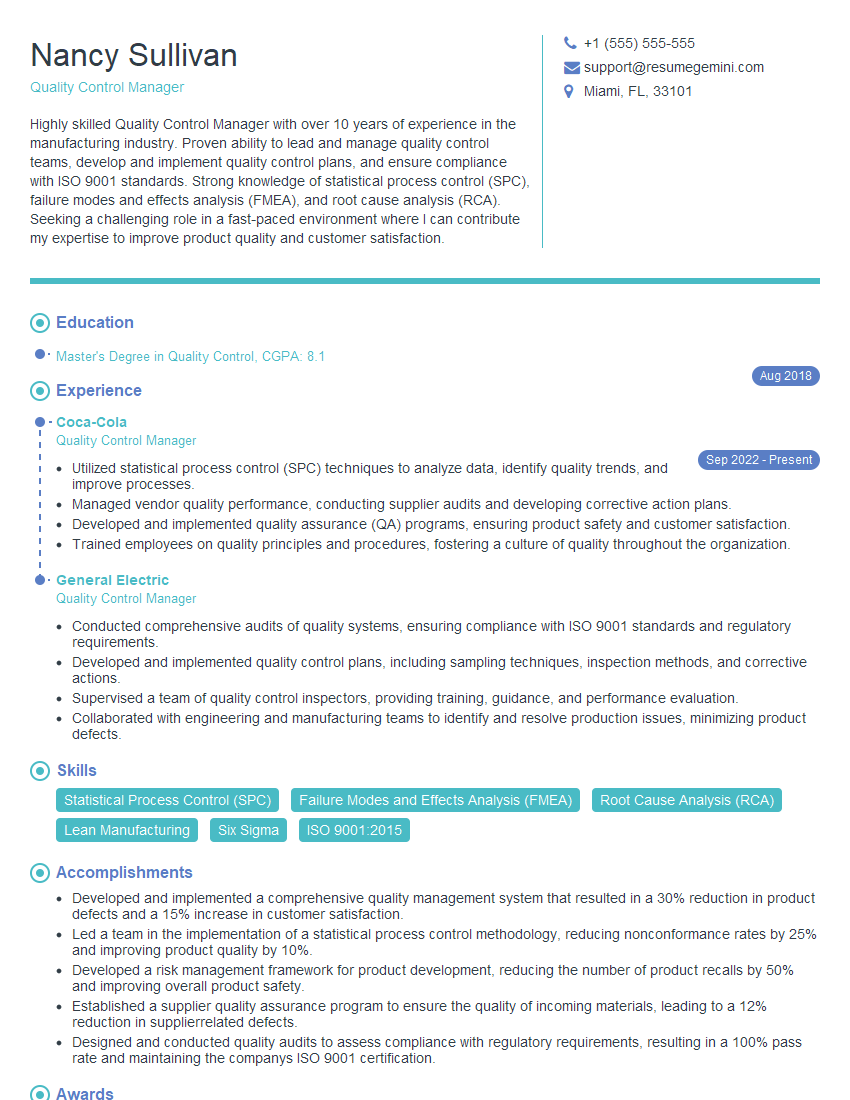
Quality Control Manager Resume Sample
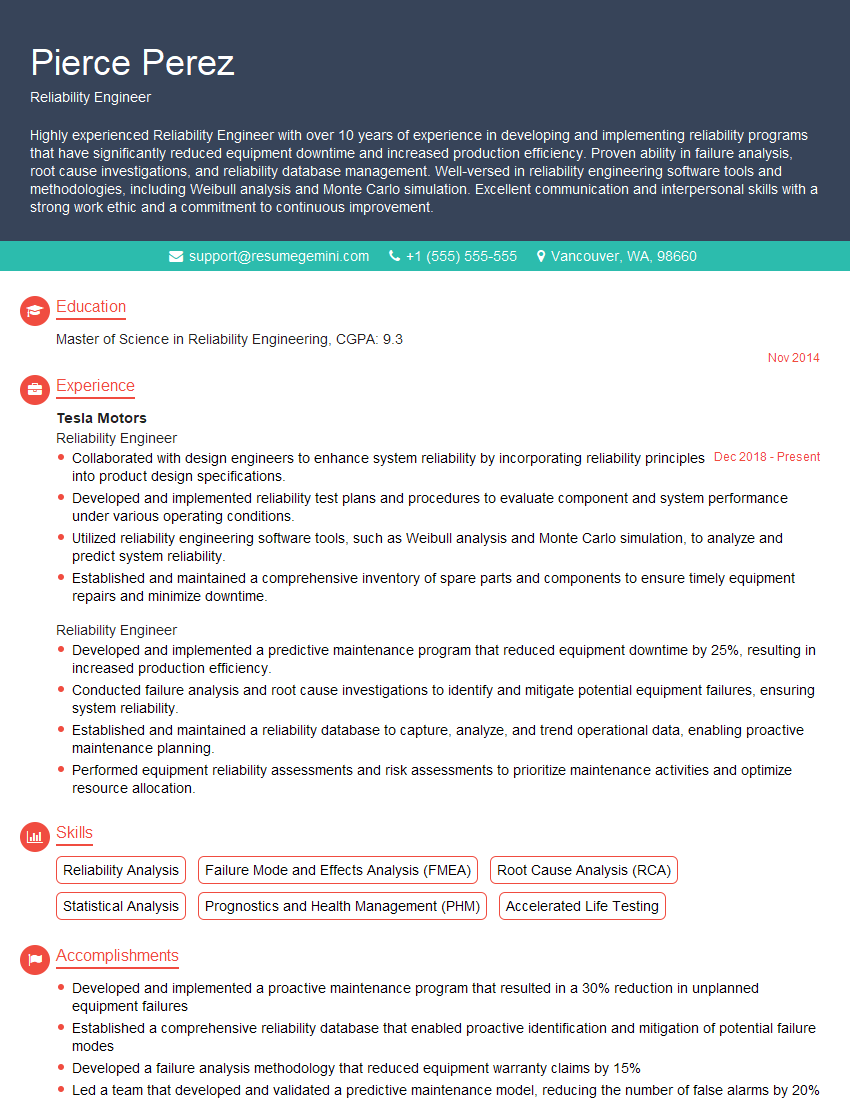
Reliability Engineer Resume Sample
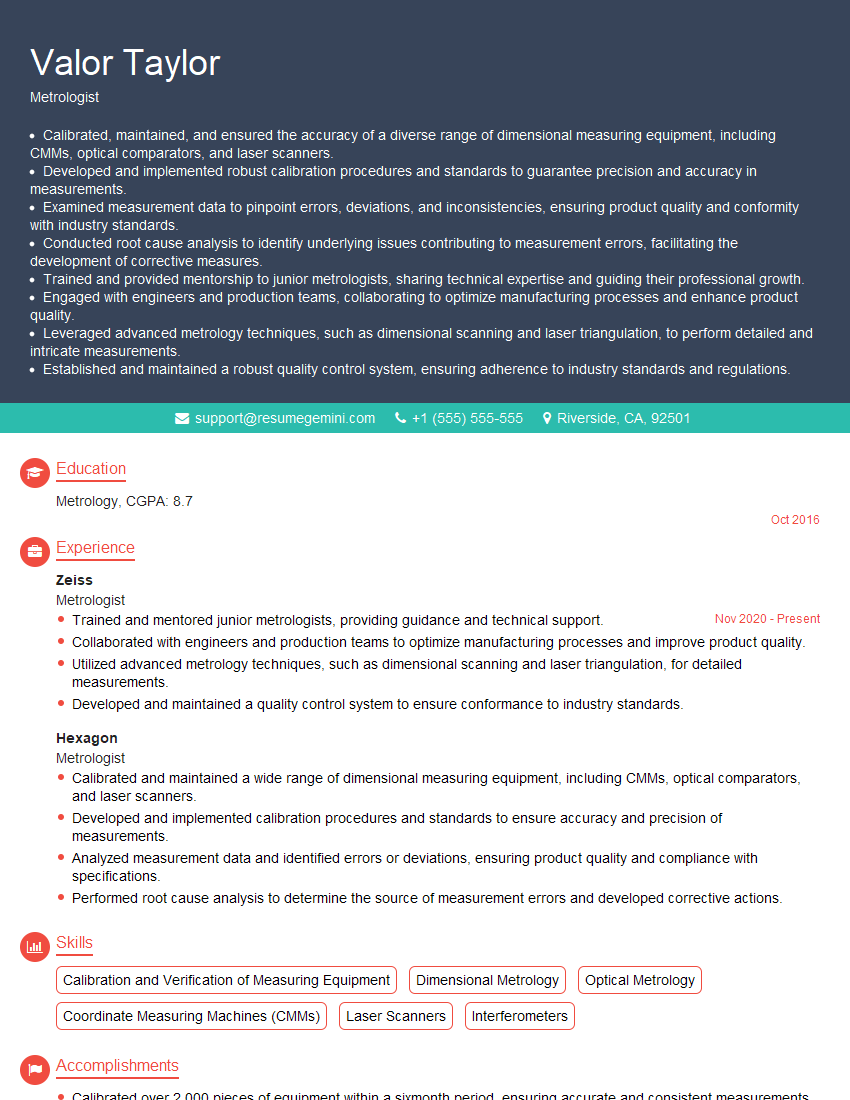
Metrologist Resume Sample
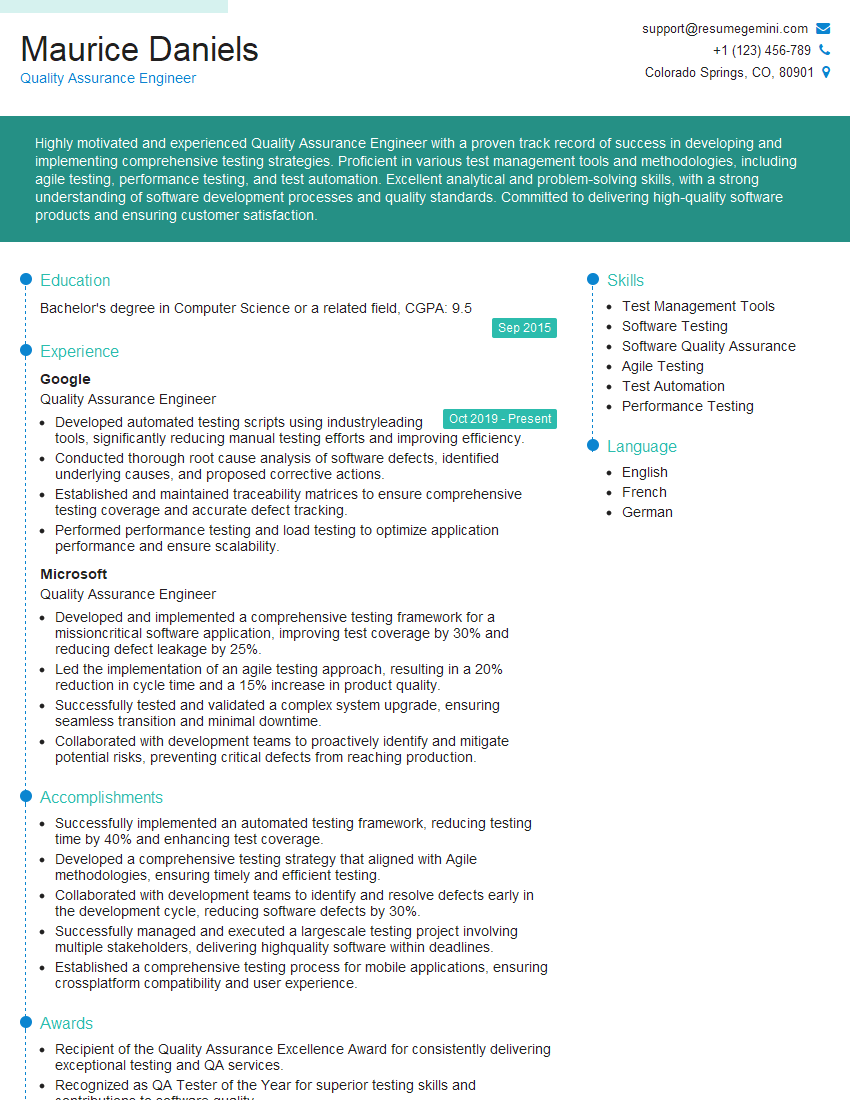
Quality Assurance Engineer Resume Sample
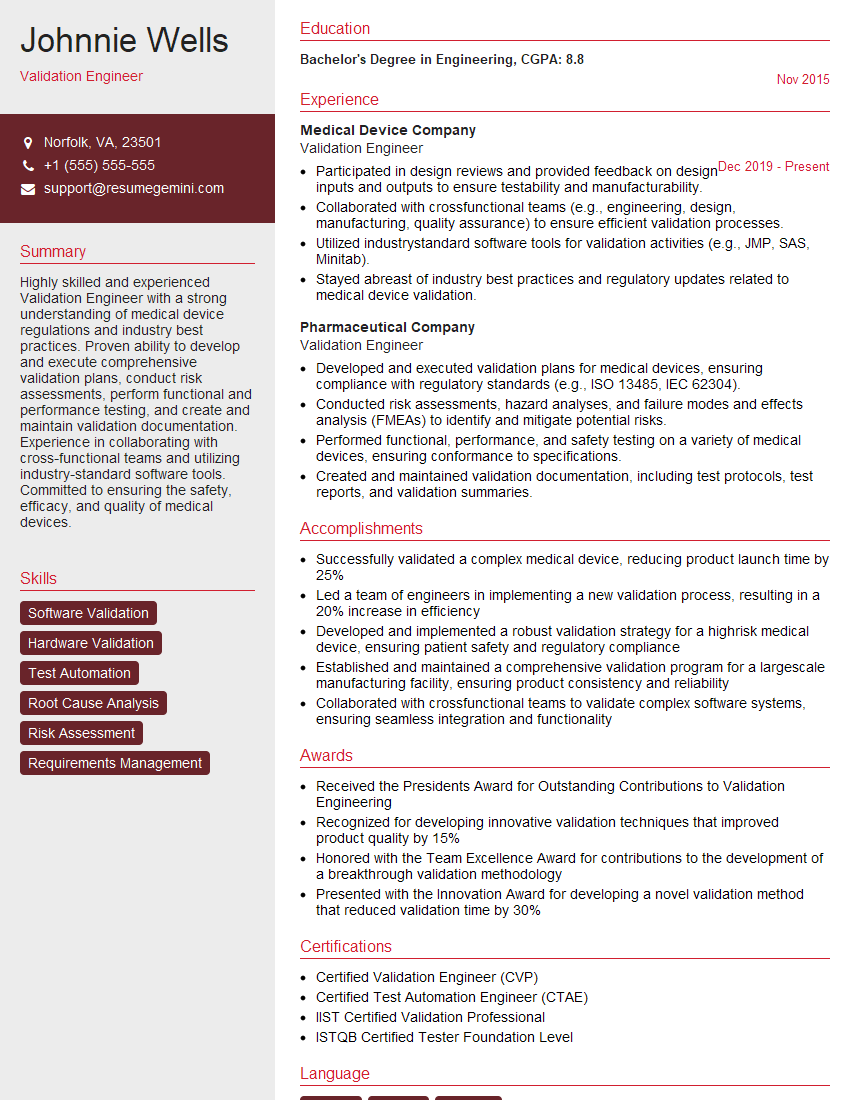
Validation Engineer Resume Sample
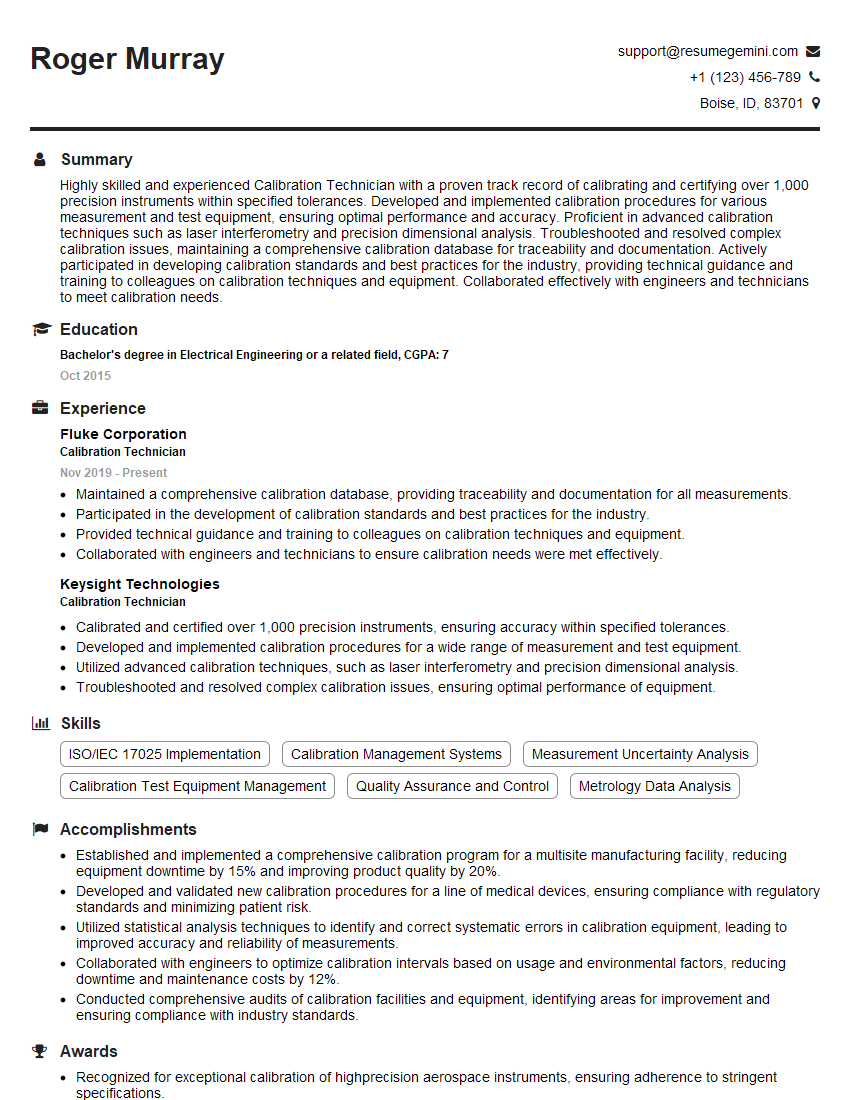
Calibration Technician Resume Sample
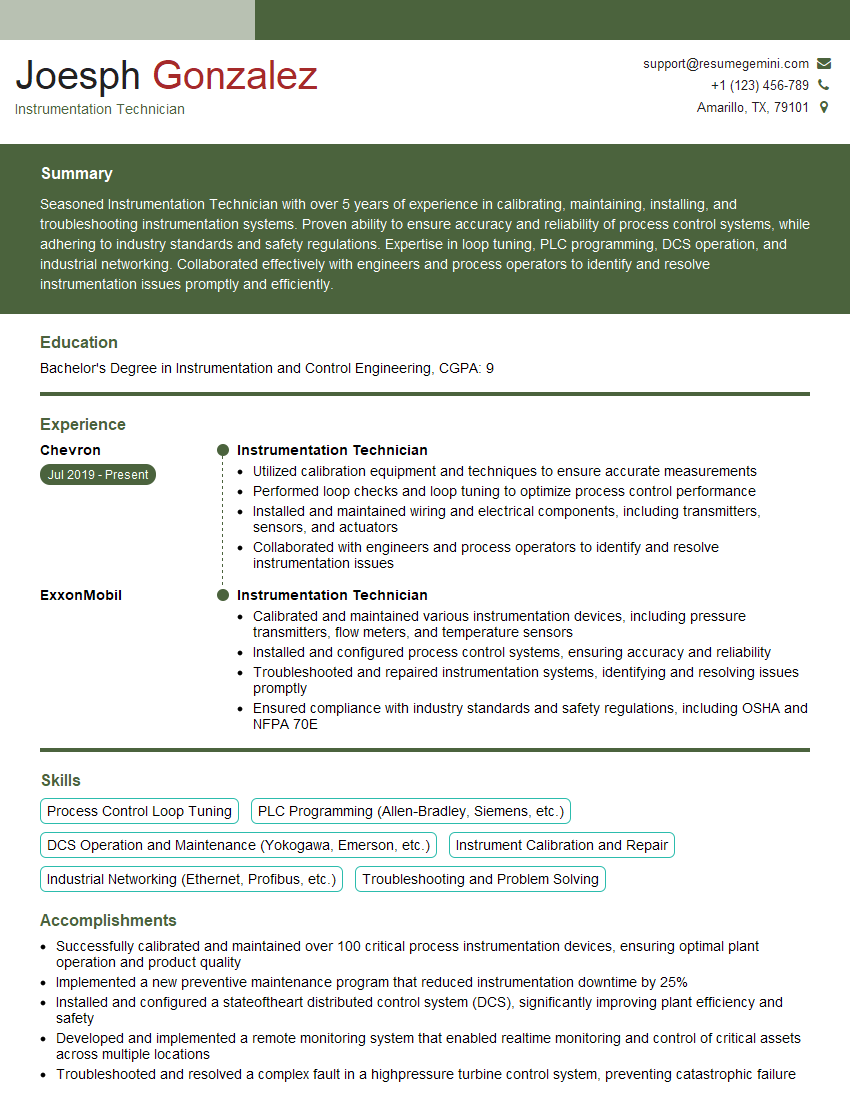
Instrumentation Technician Resume Sample
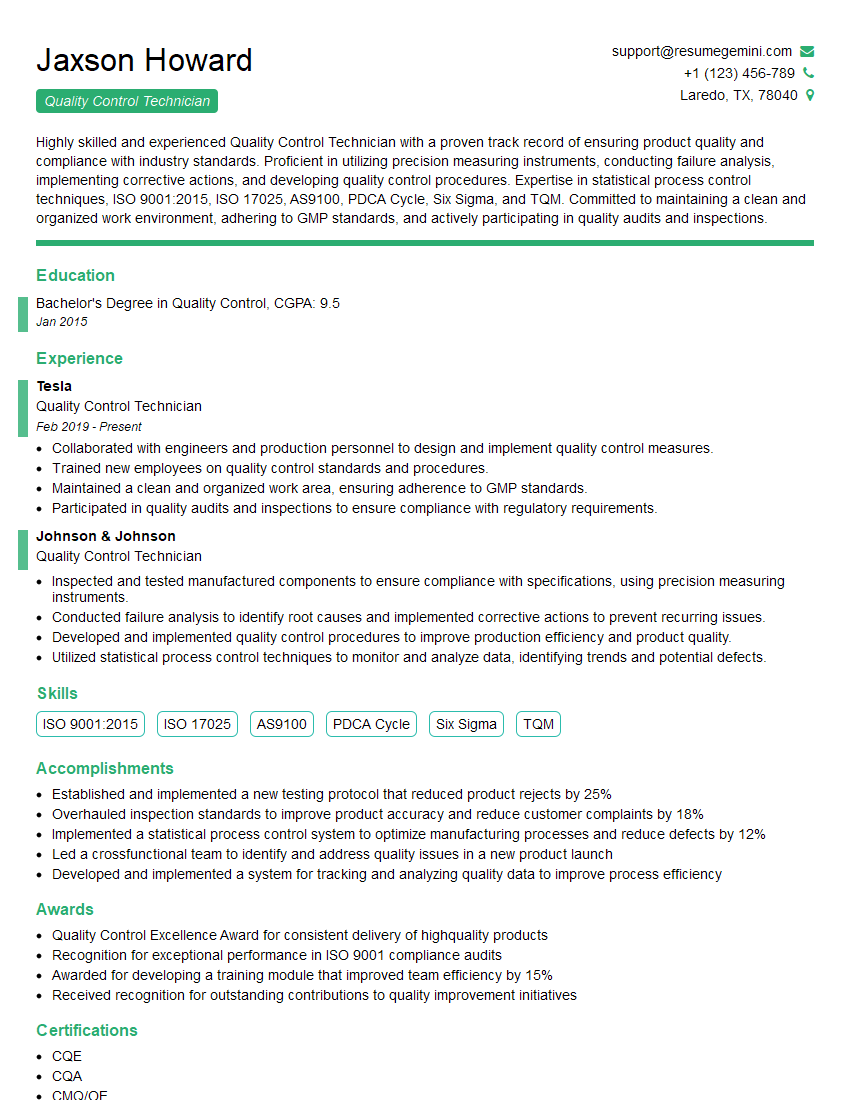
Quality Control Technician Resume Sample
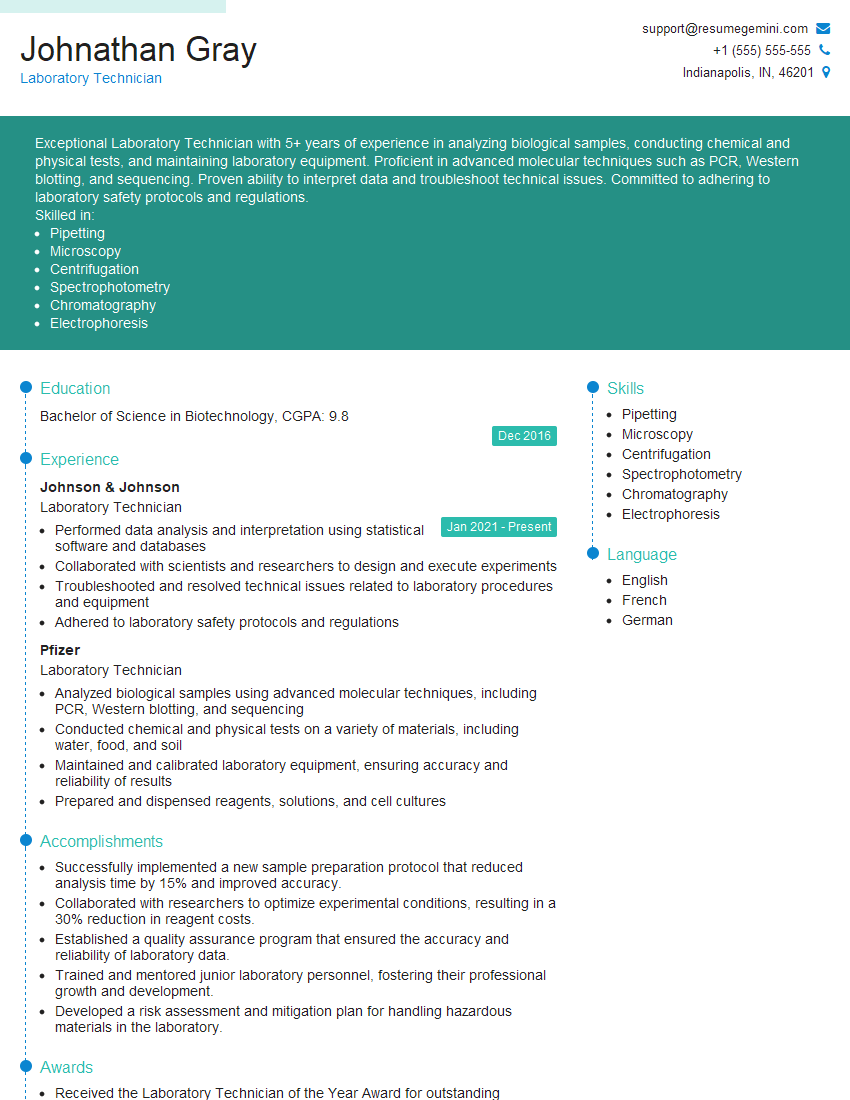
Laboratory Technician Resume Sample
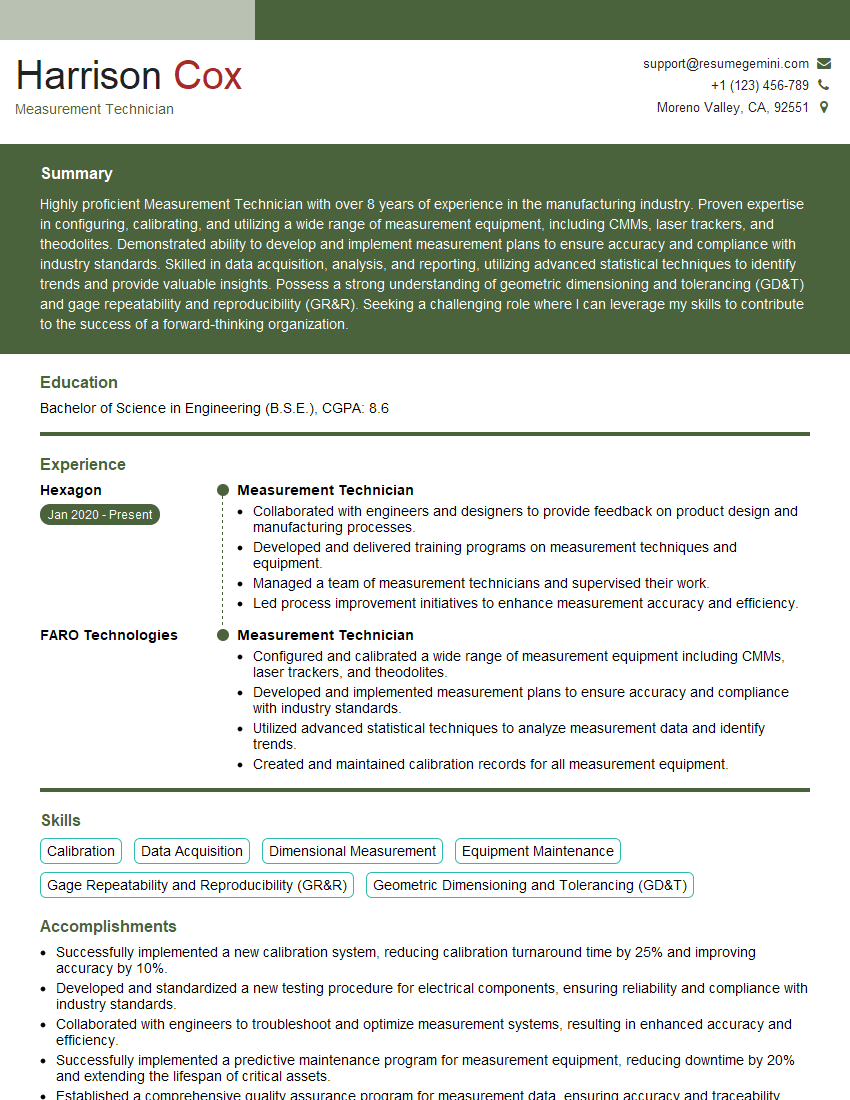
Measurement Technician Resume Sample
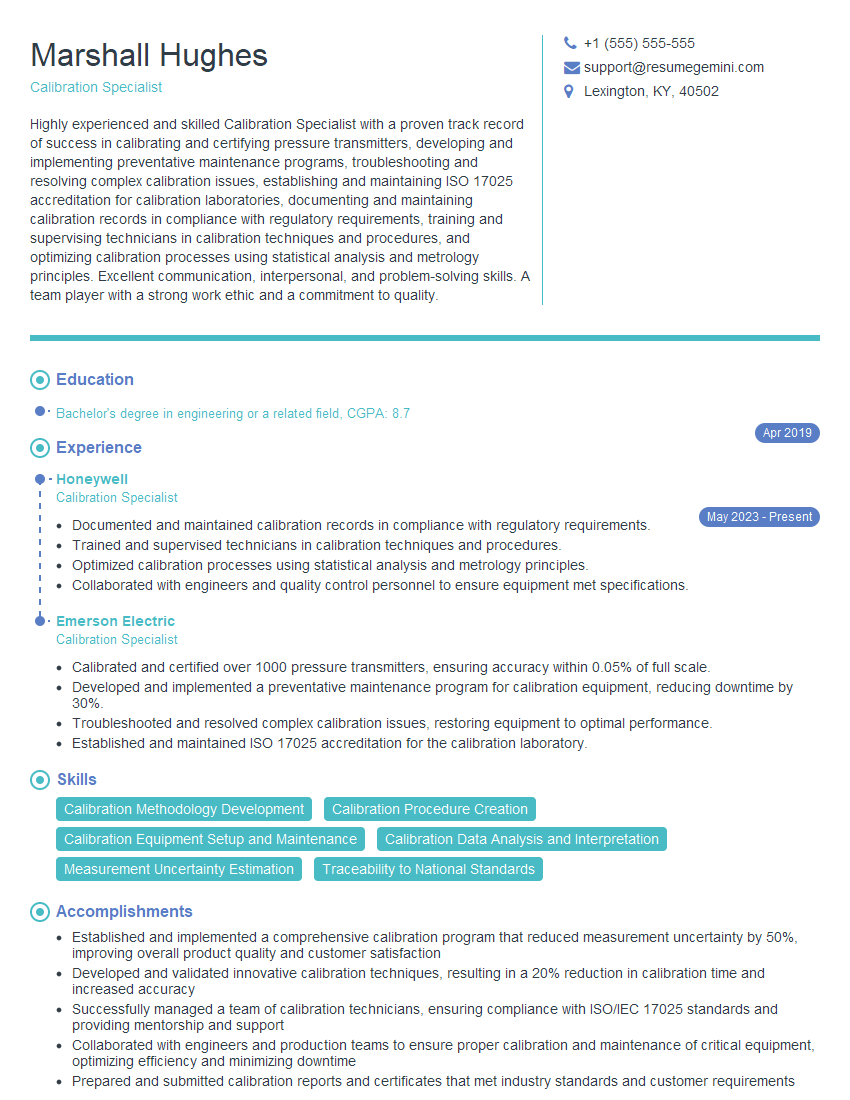
Calibration Specialist Resume Sample
Explore more articles
Users Rating of Our Blogs
Share Your Experience
We value your feedback! Please rate our content and share your thoughts (optional).
What Readers Say About Our Blog
Really detailed insights and content, thank you for writing this detailed article.
IT gave me an insight and words to use and be able to think of examples