Are you ready to stand out in your next interview? Understanding and preparing for Car Body Repair interview questions is a game-changer. In this blog, we’ve compiled key questions and expert advice to help you showcase your skills with confidence and precision. Let’s get started on your journey to acing the interview.
Questions Asked in Car Body Repair Interview
Q 1. Describe your experience with various auto body repair methods.
My experience encompasses a wide range of auto body repair methods, from traditional techniques to the latest advancements in collision repair. This includes everything from minor dent repair using paintless dent repair (PDR) techniques, to major collision repairs involving frame straightening, panel replacement, and complete refinishing. I’m proficient in various techniques like metal finishing (hammer and dolly work), plastic repair using welding or bonding, and fiberglass repair. I also have extensive experience with modern repair methods using advanced measuring systems and computerized frame straightening equipment. For example, I’ve successfully used advanced measuring tools like laser scanners to precisely assess frame damage and ensure accurate repairs, avoiding any future handling issues. I also regularly use specialized adhesives and welding techniques tailored to different materials found in modern vehicles, including high-strength steels and aluminum alloys.
Q 2. What types of damage are you most experienced in repairing?
My expertise lies primarily in repairing collision damage, including major structural repairs resulting from high-impact accidents. I’m very comfortable handling damage to all body panels (doors, fenders, hoods, bumpers, etc.), as well as repairing damage to the vehicle’s unibody or frame structure. I’m also proficient in repairing hail damage using PDR, and dealing with smaller, less severe damage like scratches, dents, and minor paint chips. One particularly challenging repair I remember involved a vehicle that had significant damage to its front end, including the radiator support and frame rails. Using a combination of frame-measuring equipment, welding, and panel replacement, I was able to restore the vehicle’s structural integrity and original dimensions.
Q 3. Explain your process for assessing vehicle damage and creating repair estimates.
Assessing vehicle damage and creating repair estimates is a systematic process. It begins with a thorough visual inspection of the vehicle, carefully documenting all damage using photographs and detailed notes. This includes identifying the extent of damage to both the vehicle’s exterior and interior. Next, I’ll use specialized measuring tools to check for hidden damage, such as frame rail misalignment. For example, I’ll use a laser measuring system to verify the accuracy of the vehicle’s frame. Then I will determine the necessary repairs, selecting the most efficient and cost-effective approach. This involves deciding between repair or replacement of damaged parts. Finally, I prepare a comprehensive repair estimate which clearly details all repairs, labor costs, parts, and materials. This estimate ensures transparency and allows the client to make informed decisions. Every estimate is reviewed for accuracy before being presented to ensure client satisfaction.
Q 4. What is your experience with different types of paint systems and application techniques?
My experience includes working with a variety of paint systems, from traditional solvent-based paints to modern waterborne basecoat/clearcoat systems. I’m familiar with different paint brands and their specific application techniques, ensuring optimal adhesion and durability. I understand the importance of proper surface preparation, including sanding, priming, and applying multiple coats of paint. I’m proficient in various paint application methods, including using spray guns, and ensuring a consistent, even finish that matches the factory finish. This process involves understanding how different paint systems react and how to manage environmental conditions like temperature and humidity to achieve the desired outcome. I am also knowledgeable about applying specialized finishes like metallic or pearlescent paints, requiring precise techniques to achieve a consistent effect. I’ve worked extensively with both single-stage and multi-stage paint systems.
Q 5. How do you ensure proper color matching during the painting process?
Achieving precise color matching is crucial for a professional finish. I use a variety of techniques to ensure an accurate match. This begins with using a spectrophotometer to measure the paint code of the vehicle and obtain precise color data. This electronic device can read and analyze the vehicle’s color, enabling us to identify the appropriate paint color code. This digital data is then used to mix the exact shade of paint needed. If the exact code isn’t available, I’ll meticulously blend colors using paint mixing systems, creating a custom blend that matches the existing vehicle’s paint. Even with technology, meticulous attention to detail is crucial. I will carefully monitor the application process, observing for any color inconsistencies and making necessary adjustments during the process to ensure uniformity. To further guarantee color matching, I often apply multiple thin coats of paint allowing for an even distribution of color without creating runs or drips.
Q 6. Explain your understanding of structural repairs and frame straightening.
Structural repairs and frame straightening require a deep understanding of vehicle design and engineering. I’m experienced in identifying and correcting frame damage using specialized equipment like frame pulling machines and measuring systems. My process involves carefully assessing the extent of the damage, then using the correct pulling and straightening techniques to restore the vehicle’s original dimensions and structural integrity. This includes working with unibody and body-on-frame vehicles. I carefully measure the damaged area(s) using laser measuring systems to verify frame alignment and assess the extent of the damage. For example, I might use a frame pulling machine to gently straighten a bent frame rail, ensuring it returns to its precise original position. Precision is crucial here as even slight misalignments can impact vehicle handling and safety. After straightening, additional repairs like welding, panel replacement, and reinforcement may be necessary to fully restore the vehicle’s structural soundness.
Q 7. Describe your experience with welding techniques used in auto body repair.
My welding experience in auto body repair includes MIG (Metal Inert Gas) and TIG (Tungsten Inert Gas) welding techniques. MIG welding is commonly used for joining sheet metal panels, while TIG welding is often preferred for more precise work, particularly on aluminum and high-strength steel components. I understand the importance of using the correct welding parameters (amperage, voltage, wire feed speed) to achieve strong, clean welds. Preparation is key; I always carefully clean and prepare the metal surfaces before welding to ensure proper fusion and prevent corrosion. I also always prioritize safety; always using proper safety equipment like welding masks, gloves, and fire-retardant clothing. I’ve used welding to repair damaged frame rails, replace body panels, and reinforce structural components in vehicles. Each weld is carefully inspected for strength and visual quality, as proper welding is essential to the structural integrity and safety of the repaired vehicle.
Q 8. How do you handle complex repairs involving multiple damaged panels?
Handling complex multi-panel damage requires a systematic approach. It’s like solving a puzzle; you need to understand the overall picture before tackling individual pieces. First, a thorough assessment is crucial. This involves carefully documenting all damaged areas, including their severity and the extent of the damage. Photography and detailed notes are essential for insurance purposes and to track progress.
Next, I prioritize repairs based on structural integrity. Major structural damage, such as frame damage, needs to be addressed first. This often involves frame straightening using specialized equipment. Only after the frame is repaired and aligned will I move on to the body panels.
Then, I focus on the sequence of repair. For example, if a door is severely damaged, I’ll typically repair the door first, then work outwards to surrounding panels. This ensures proper alignment. This often involves carefully removing and replacing or repairing damaged panels. This might include panel replacement, welding, and extensive metal work such as pulling out dents and repairing creases. After the repairs, panel alignment is meticulously checked to avoid gaps and mismatches.
Finally, precise measurements and fitting are paramount. Using measuring tools, like a measuring tape and a laser measuring tool, is crucial to ensure all panels are accurately aligned and correctly fitted before proceeding to the next stages of the repair process.
Q 9. What is your proficiency with automotive diagnostic tools and equipment?
I’m proficient in using a wide range of automotive diagnostic tools and equipment. This includes laser measuring systems for precise body alignment, frame-straightening equipment to restore structural integrity, various welding machines (MIG, TIG, spot welding) for panel repair, and paint measuring tools to ensure consistent paint thickness.
I’m also experienced with electronic diagnostic tools to check for any electrical or mechanical issues caused by the accident. This often involves using specialized scanners to diagnose problems within the vehicle’s electrical system and ensure the proper functioning of all systems after the repair.
For example, a recent repair involved a collision that damaged the vehicle’s electrical system. Using a scan tool, I was able to identify a damaged wire harness that was causing problems with the car’s lighting system. This allowed me to completely repair the damaged harness before moving onto the body repair.
Q 10. What safety precautions do you follow when performing auto body repairs?
Safety is my top priority. I strictly adhere to all relevant safety regulations and best practices. This starts with proper personal protective equipment (PPE), including safety glasses, respirators (especially when working with paints and fillers), gloves, and hearing protection when using power tools. I also ensure the workshop is well-ventilated to mitigate exposure to hazardous materials.
Working with flammable materials such as paints and solvents requires extra caution. I make sure to follow the manufacturer’s instructions and store these materials safely away from ignition sources. All electrical equipment is regularly inspected and maintained to prevent electrical hazards. Proper grounding and insulation are essential.
Furthermore, I always use proper lifting techniques when handling heavy parts. Never lift anything heavier than what I can safely and comfortably handle on my own. If a part is too heavy, I always use a hoist or other lifting equipment.
Q 11. How do you handle customer communication during the repair process?
Maintaining open communication with customers is vital. I believe in keeping them informed throughout the repair process. I start by providing a detailed estimate and explaining the repair process clearly.
I use a variety of communication methods, including phone calls, emails, and text messages, to provide updates and address any concerns. I always aim to be responsive and transparent about the repair timeline and any potential delays. For complex repairs, I might schedule regular check-in calls to keep the customer in the loop.
For example, if an unexpected issue arises during the repair process, I immediately contact the customer to explain the situation and get their approval before proceeding with any additional work. I use photos and videos to document the damage and show the customer the progress of the repairs. This way, the customer feels included and less anxious about the repair progress.
Q 12. Describe your experience with using various body fillers and primers.
I have extensive experience with various body fillers and primers. The choice of filler depends on the size and type of damage. For minor scratches and imperfections, I might use a lightweight filler, while larger dents or holes require a heavier-duty filler. I’m familiar with products from various manufacturers and understand their specific properties and applications.
Primers are equally crucial. I select primers based on the type of paint being applied (e.g., water-based or solvent-based) and the surface being primed. For example, an epoxy primer provides excellent adhesion and corrosion protection, while a urethane primer offers durability and a smooth surface for paint application. Proper application techniques, including the correct number of coats and proper drying times, are essential for optimal results.
I’m experienced with various techniques such as feathering the filler for a seamless finish. Knowing how each product behaves is crucial; for example, some fillers have shorter working times than others, requiring efficient and timely application.
Q 13. Explain your process for preparing a vehicle for paint application.
Preparing a vehicle for paint application is a meticulous process. It involves several crucial steps that directly impact the final paint finish and durability. First, the repaired areas need to be thoroughly cleaned and prepared. This usually includes sanding the repaired areas to achieve a smooth surface, removing any dust or debris, and cleaning the entire vehicle to remove dirt and contaminants.
Next, the vehicle is masked to protect areas that won’t be painted, and all repairs are carefully sanded and primed. The primer layer provides a smooth, uniform surface for the paint and enhances its adhesion. After the primer has dried, it’s wet sanded to achieve an exceptionally smooth finish.
Before the final paint application, any imperfections are dealt with. This might involve additional sanding, filling, or priming. The final step before painting is thoroughly cleaning the vehicle’s surface one last time. This ensures that no dust or other contaminants interfere with the paint application process.
Q 14. How do you ensure the quality and durability of your repairs?
Ensuring the quality and durability of repairs involves a multi-faceted approach. Firstly, I meticulously follow all repair procedures, paying close attention to detail at every stage. This includes using high-quality materials from reputable manufacturers and following manufacturer’s recommendations for the application of products.
Secondly, regular quality checks are performed throughout the process. This involves inspecting the alignment of panels, the smoothness of filler work, and the overall finish. I use various tools and techniques to measure and assess the quality of the repairs.
Finally, I always aim to exceed customer expectations, and quality control is built in at every step. A final inspection is done once the paint job is completed, checking for any blemishes. The end goal is a repair that is as close to perfect as possible, ensuring the vehicle’s safety, integrity, and aesthetic appearance.
Q 15. What software programs are you familiar with for estimating and managing repairs?
I’m proficient in several estimating and repair management software programs. My experience includes using Mitchell Ultramate, Audatex, and CCC ONE. These platforms are crucial for generating accurate repair estimates, tracking parts orders, managing labor hours, and ensuring seamless communication with insurance adjusters and clients. For example, Mitchell Ultramate’s detailed database helps me quickly identify correct parts and labor times based on the vehicle’s year, make, and model, minimizing the potential for discrepancies. Audatex’s robust reporting features help me monitor shop performance and identify areas for improvement. CCC ONE’s integration with various other systems simplifies the entire repair workflow.
Beyond the core estimating functions, these programs also offer features for digital imaging, allowing for detailed documentation of vehicle damage before, during, and after repairs. This is essential for transparency and helps avoid disputes later on. I also utilize shop management software that integrates with these estimating programs, allowing for efficient workflow management and scheduling.
Career Expert Tips:
- Ace those interviews! Prepare effectively by reviewing the Top 50 Most Common Interview Questions on ResumeGemini.
- Navigate your job search with confidence! Explore a wide range of Career Tips on ResumeGemini. Learn about common challenges and recommendations to overcome them.
- Craft the perfect resume! Master the Art of Resume Writing with ResumeGemini’s guide. Showcase your unique qualifications and achievements effectively.
- Don’t miss out on holiday savings! Build your dream resume with ResumeGemini’s ATS optimized templates.
Q 16. What is your experience with aluminum and other advanced materials repair?
Repairing aluminum and other advanced high-strength steel (AHSS) materials requires specialized training and equipment. My experience encompasses working with these advanced materials commonly found in modern vehicles. Unlike traditional steel, aluminum requires different welding techniques (like MIG welding with specific filler materials and parameters) and specialized repair procedures to avoid cracking or distortion. AHSS often necessitates specialized techniques such as resistance spot welding (RSW) repair or advanced adhesive bonding.
For example, repairing a damaged aluminum bumper requires careful attention to avoid heat distortion. I use specialized tools and techniques to ensure the integrity of the repair, including proper surface preparation and the use of specialized adhesives or welding methods appropriate for the alloy. Working with carbon fiber requires a different approach entirely, often involving composite repair techniques like patch repair using epoxy resins and careful surface finishing to match the original part. I continually invest in training to stay current with the best practices for these materials.
Q 17. How do you manage your time and prioritize tasks effectively in a busy shop?
In a busy shop, effective time management and task prioritization are essential. I employ a combination of techniques including using shop management software to schedule jobs and track progress, prioritizing urgent repairs (e.g., those impacting vehicle drivability or safety), and delegating tasks effectively within the team.
My approach involves daily planning sessions to review the workload and allocate tasks based on technician expertise and the urgency of the repairs. I use visual aids like Kanban boards or digital equivalents to track the status of each job, enabling me to identify potential bottlenecks and adjust workflow as needed. I believe in open communication with my team, ensuring everyone understands priorities and deadlines. This proactive management helps minimize delays and maintain a smooth operation.
Q 18. Describe a challenging auto body repair you’ve completed and how you overcame obstacles.
One challenging repair involved a severe collision on a high-end luxury vehicle with extensive frame damage and complex structural components. The initial assessment revealed significant damage to the unibody, requiring precise measurements and structural repairs to restore its integrity. The challenge wasn’t just the complexity of the repair but also the need to maintain the vehicle’s original factory specifications and finish.
Overcoming these obstacles involved several steps. First, we used advanced measuring systems to accurately assess the frame damage. Next, we employed specialized pulling and welding techniques to straighten the frame and replace damaged components. Careful attention was paid to ensure proper alignment and rigidity using fixtures and jigs. Finally, we collaborated with experienced paint specialists to ensure a flawless finish, matching the vehicle’s original color and paint quality. The project required meticulous attention to detail and a collaborative effort across our team, but the result was a successful restoration of the vehicle to its pre-accident condition.
Q 19. How do you stay updated on the latest technologies and techniques in auto body repair?
Staying current in auto body repair requires continuous learning. I actively participate in industry conferences and workshops, attending training sessions offered by manufacturers and suppliers of tools and materials. I also subscribe to industry publications and online resources to stay informed about new technologies and repair techniques. Furthermore, I regularly review technical service bulletins (TSBs) issued by vehicle manufacturers and utilize online resources and forums to discuss complex repair challenges with other professionals.
Specifically, I focus on keeping up-to-date with advancements in materials science (such as new adhesives and composite repair techniques), collision repair technologies (like advanced measuring systems and frame straightening equipment), and paint technologies (e.g., waterborne paint systems). This ongoing professional development ensures I can provide the highest quality repairs using the most effective and efficient methods.
Q 20. What is your understanding of insurance claims and procedures?
I have a thorough understanding of insurance claims and procedures. This involves accurately documenting damage using digital imaging and detailed descriptions, generating precise estimates that comply with insurance company guidelines, and effectively communicating with adjusters to obtain necessary approvals. I know how to navigate the various processes involved in supplemental claims, negotiating for additional repairs if needed while maintaining a positive relationship with insurance representatives.
Understanding the nuances of different insurance policies and coverage levels is crucial. I understand the difference between comprehensive and collision coverage, deductibles, and rental car provisions. This knowledge enables me to manage customer expectations and ensure the claim process proceeds smoothly. I also understand the importance of maintaining detailed records for compliance and to avoid disputes.
Q 21. Explain your experience with different types of body panels and their repair methods.
My experience encompasses working with a wide variety of body panels, each requiring specific repair techniques. For example, repairing a damaged hood often involves panel replacement or straightening using specialized tools and techniques. Door repair might involve dent removal, replacing damaged panels (outer skin, inner structure), or adjusting hinges. Fender repair might necessitate panel replacement, straightening, or specialized filler work, depending on the severity of the damage.
Each panel has its own unique characteristics and construction, influencing repair strategy. The materials used (steel, aluminum, plastic) affect the repair methods, as do the panel’s shape and location on the vehicle. For example, repairing a quarter panel might involve extensive body filler work, while a bumper cover repair could involve plastic welding or replacement. My expertise lies in selecting the most appropriate and cost-effective repair method for each situation while ensuring structural integrity and an excellent cosmetic finish.
Q 22. How do you maintain a clean and organized work area?
Maintaining a clean and organized workspace is paramount in auto body repair for several reasons: efficiency, safety, and quality of work. Think of it like a surgeon’s operating room – a cluttered space increases the risk of errors and accidents.
- 5S Methodology: I utilize the 5S methodology – Sort, Set in Order, Shine, Standardize, and Sustain. This involves regularly sorting through tools and materials, storing them in designated locations, cleaning the work area thoroughly, standardizing procedures for organization, and maintaining the system over time.
- Designated Tool Areas: I have specific areas for welding equipment, painting supplies, body filler, sanding tools, and other materials. This prevents accidental mixing of chemicals and saves valuable time searching for items.
- Regular Cleaning: After each job, I thoroughly clean my work area, removing debris, wiping down surfaces, and disposing of waste properly. This prevents cross-contamination and ensures a fresh start for the next project. For example, after welding, I meticulously remove weld spatter to prevent it from scratching the vehicle’s paint.
A clean and organized space directly translates to improved efficiency and reduces the chance of mistakes, leading to higher-quality repairs.
Q 23. What is your experience with different types of body adhesives and sealants?
My experience with body adhesives and sealants is extensive, encompassing various types for different applications. Understanding the chemical properties and application techniques is crucial for a durable and lasting repair.
- Epoxies: I’m proficient with two-part epoxy adhesives for structural repairs, knowing the importance of precise mixing ratios and cure times for optimal strength. For instance, I’ve used epoxies to repair cracked frames and reinforce weakened areas.
- Urethanes: I regularly use urethane-based adhesives for bonding various materials, including plastics, metals, and composite parts. Their flexibility is vital for areas that experience vibration or stress.
- Acrylics: These are commonly used for bonding trim and other non-structural parts, offering a balance of strength and flexibility. I understand the importance of surface preparation and proper clamping to ensure a strong bond.
- Sealants: I’m experienced with various sealants, from butyl rubber for weatherstripping to silicone for glass installation. I know the proper application techniques to prevent leaks and ensure a watertight seal.
Choosing the right adhesive or sealant is critical; improper selection can lead to repair failure. My experience allows me to select the appropriate product for each specific application and ensure the repair meets the highest standards.
Q 24. Describe your understanding of the importance of proper surface preparation.
Proper surface preparation is the foundation of any successful auto body repair. It’s not an exaggeration to say that 80% of the success of a repair depends on this step. Think of it as painting a house – you wouldn’t paint over peeling paint, would you?
- Cleaning: Thorough cleaning removes dirt, grease, and other contaminants that can prevent proper adhesion. I use appropriate solvents and degreasers depending on the material being repaired.
- Sanding: Sanding creates a smooth, even surface for better paint adhesion and ensures that imperfections are addressed. I use various grits of sandpaper, starting with coarser grits to remove damage and then progressing to finer grits for a smooth finish.
- Priming: Applying a suitable primer provides an excellent surface for topcoats and helps protect the metal from corrosion. The type of primer varies depending on the substrate and the nature of the repair.
Neglecting surface preparation leads to poor adhesion, peeling paint, and ultimately, a subpar repair. I meticulously follow these steps to ensure a long-lasting, quality repair.
Q 25. How do you troubleshoot common problems encountered during the repair process?
Troubleshooting is a daily occurrence in auto body repair. Encountering unexpected issues requires systematic problem-solving.
- Visual Inspection: I begin with a thorough visual inspection to identify the source of the problem. This often involves looking for inconsistencies in panel alignment, paint imperfections, or evidence of underlying damage.
- Testing: If the problem isn’t immediately obvious, I use various testing methods like measuring gaps, checking for structural integrity, and testing the electrical system to identify the root cause.
- Systematic Approach: I address issues systematically, starting with the most likely causes and eliminating them one by one. For example, if there’s a paint issue, I investigate whether the problem is due to poor surface preparation, improper application, or a faulty paint product.
For example, if a repaired panel doesn’t align properly, I might check the underlying structure for damage, assess the welding techniques used, or review the straightening process. My methodical approach ensures that issues are effectively resolved.
Q 26. What is your experience with working on both domestic and imported vehicles?
I have extensive experience working on both domestic and imported vehicles. The repair techniques are similar, but there are key differences in body construction, materials, and parts availability.
- Domestic Vehicles: I’m comfortable working on various makes and models of American vehicles, understanding their typical construction and repair procedures.
- Imported Vehicles: My experience also extends to European, Asian, and other imported vehicles. I am familiar with the variations in materials, manufacturing techniques, and the availability of parts. For example, some European vehicles utilize more aluminum or high-strength steel which requires specialized repair techniques.
This broad experience allows me to adapt my techniques to any vehicle and provides a comprehensive skill set for a variety of repair scenarios.
Q 27. How do you identify and address potential safety hazards in the workplace?
Safety is my top priority. I proactively identify and mitigate potential hazards to prevent accidents and injuries.
- Personal Protective Equipment (PPE): I consistently use appropriate PPE, including safety glasses, respirators, gloves, and hearing protection, as required by the task. This is non-negotiable.
- Hazardous Materials: I’m trained in the safe handling, storage, and disposal of hazardous materials, such as paints, solvents, and welding gases. I strictly adhere to all safety regulations and guidelines.
- Fire Safety: I’m aware of the fire risks associated with welding, painting, and using solvents. I take precautions to prevent fires, such as having fire extinguishers readily available and ensuring proper ventilation.
- Equipment Maintenance: Regularly inspecting and maintaining equipment is crucial for safety. I ensure that all tools and equipment are in good working order and free from defects.
By being vigilant and proactively addressing safety concerns, I create a safe work environment for myself and others.
Q 28. What are your salary expectations for this position?
My salary expectations are commensurate with my experience and skills, and are in line with the industry standard for a qualified auto body repair technician with my level of expertise. I am open to discussing a competitive compensation package that reflects the value I bring to your team.
Key Topics to Learn for Car Body Repair Interview
- Damage Assessment and Estimation: Understanding how to accurately assess the extent of vehicle damage, including structural, cosmetic, and mechanical issues, and providing detailed cost estimates for repairs.
- Metal Repair Techniques: Practical application of techniques such as panel beating, welding (MIG, TIG, spot welding), and the use of fillers and body solder to restore damaged car body panels to their original shape and condition.
- Paint and Finishing Processes: Knowledge of paint preparation, application techniques (spray guns, airless sprayers), color matching, clear coat application, and achieving a high-quality, even finish. Understanding different paint types and their properties.
- Body Shop Equipment and Tools: Familiarity with common tools and equipment used in a car body repair shop, including welders, sanders, buffers, spray guns, and measuring devices. Safe and efficient operation of these tools.
- Collision Repair Procedures: Understanding the systematic approach to repairing collision damage, including straightening frames, replacing panels, and ensuring structural integrity.
- Safety Regulations and Procedures: Knowledge of relevant safety regulations and procedures related to working with hazardous materials (paints, solvents), operating heavy machinery, and maintaining a safe work environment.
- Automotive Body Structure and Design: Understanding the construction and design principles of different car body styles, including unibody and body-on-frame construction, to effectively diagnose and repair damage.
- Problem-Solving and Troubleshooting: Demonstrating the ability to identify and solve complex problems related to car body repairs, including unexpected damage or challenges during the repair process.
- Estimating and Billing: Understanding the process of generating accurate repair estimates, including parts, labor, and materials, and documenting repair work for billing purposes.
Next Steps
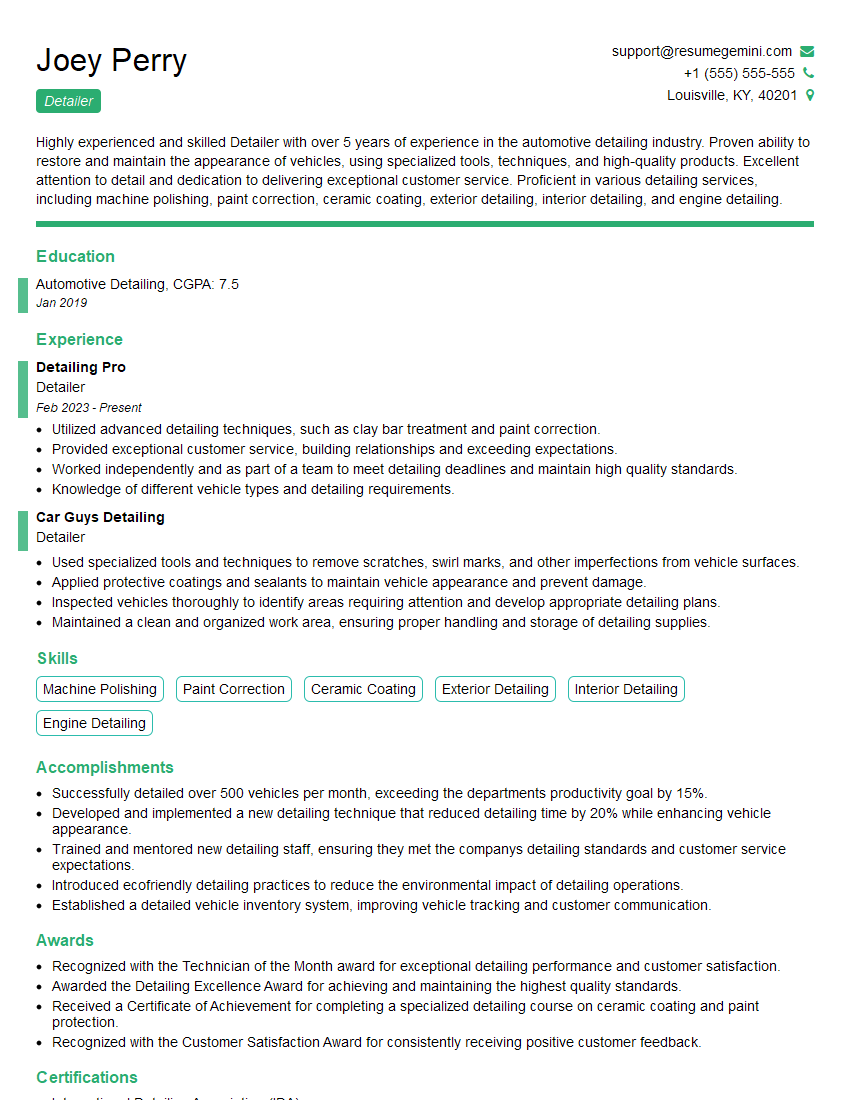
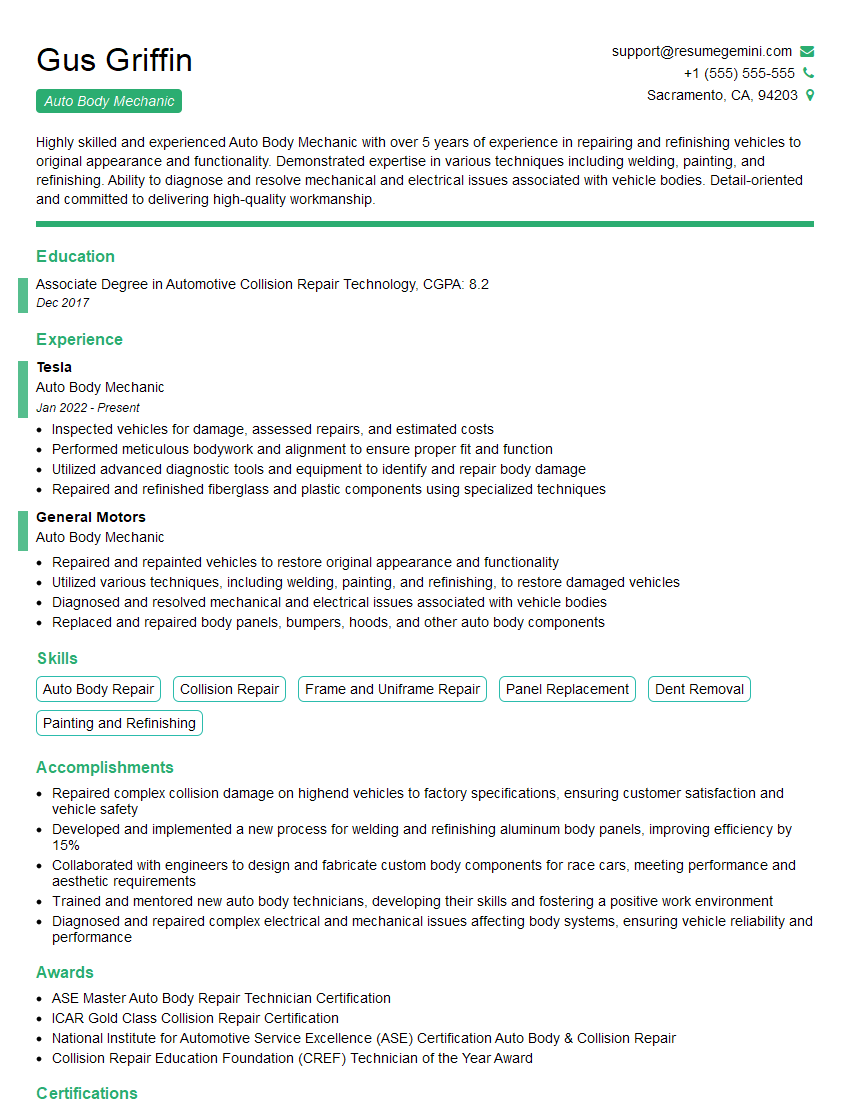
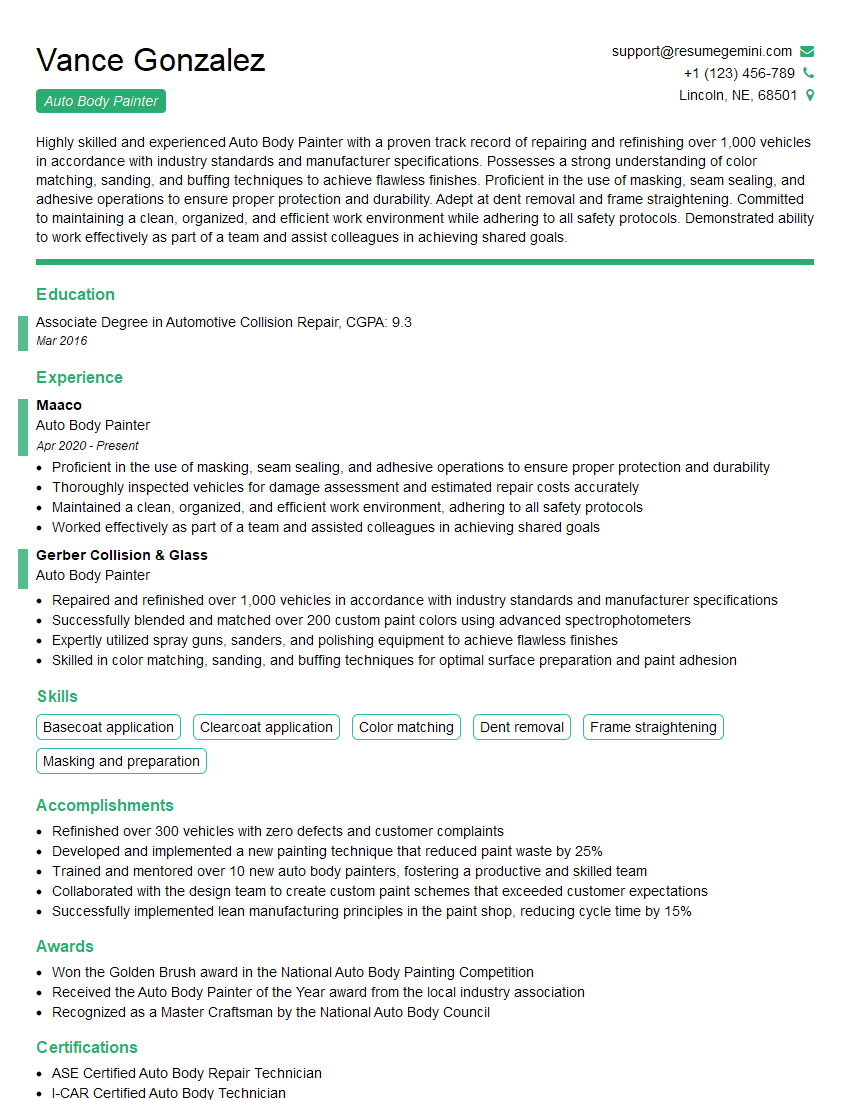
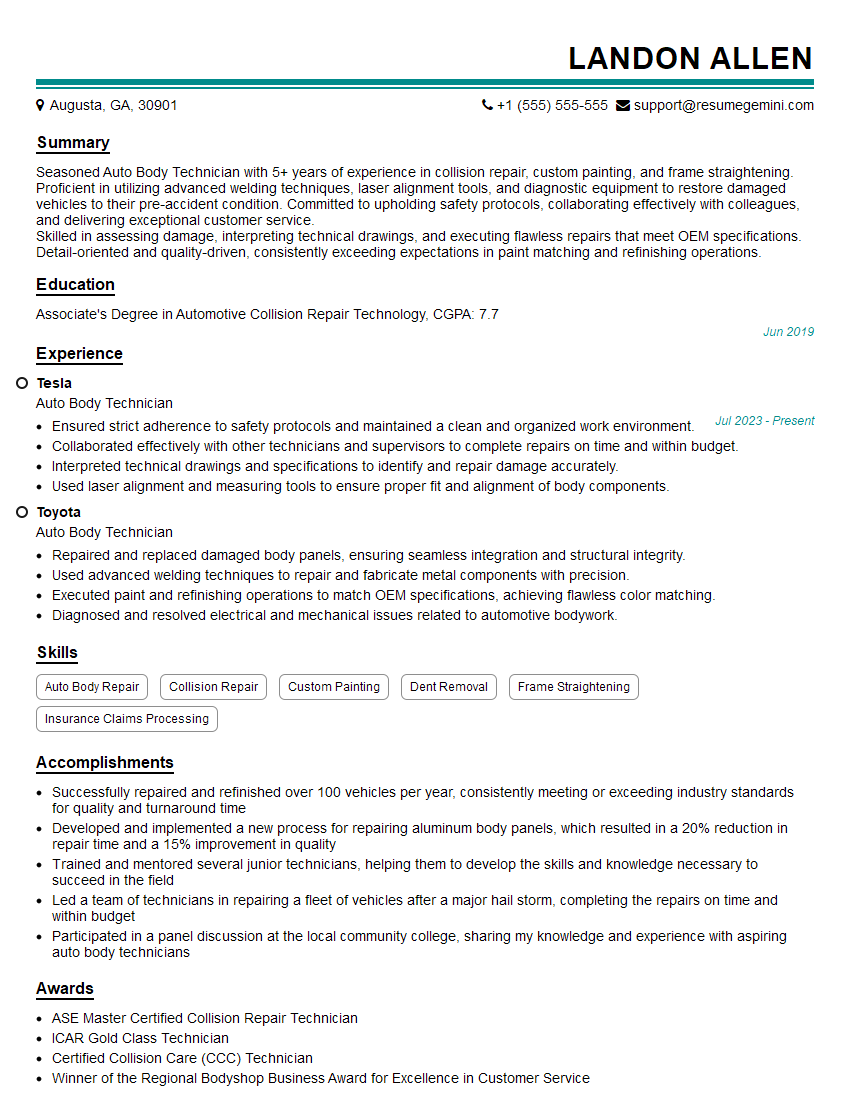
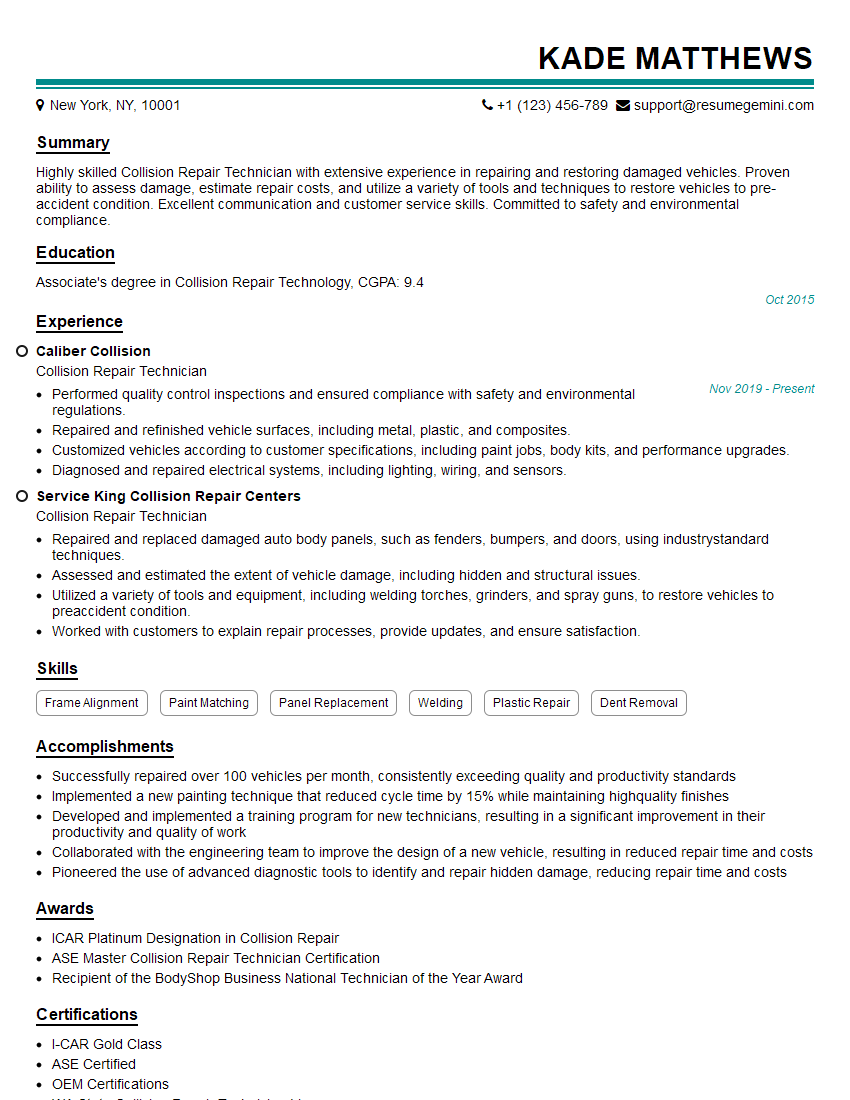
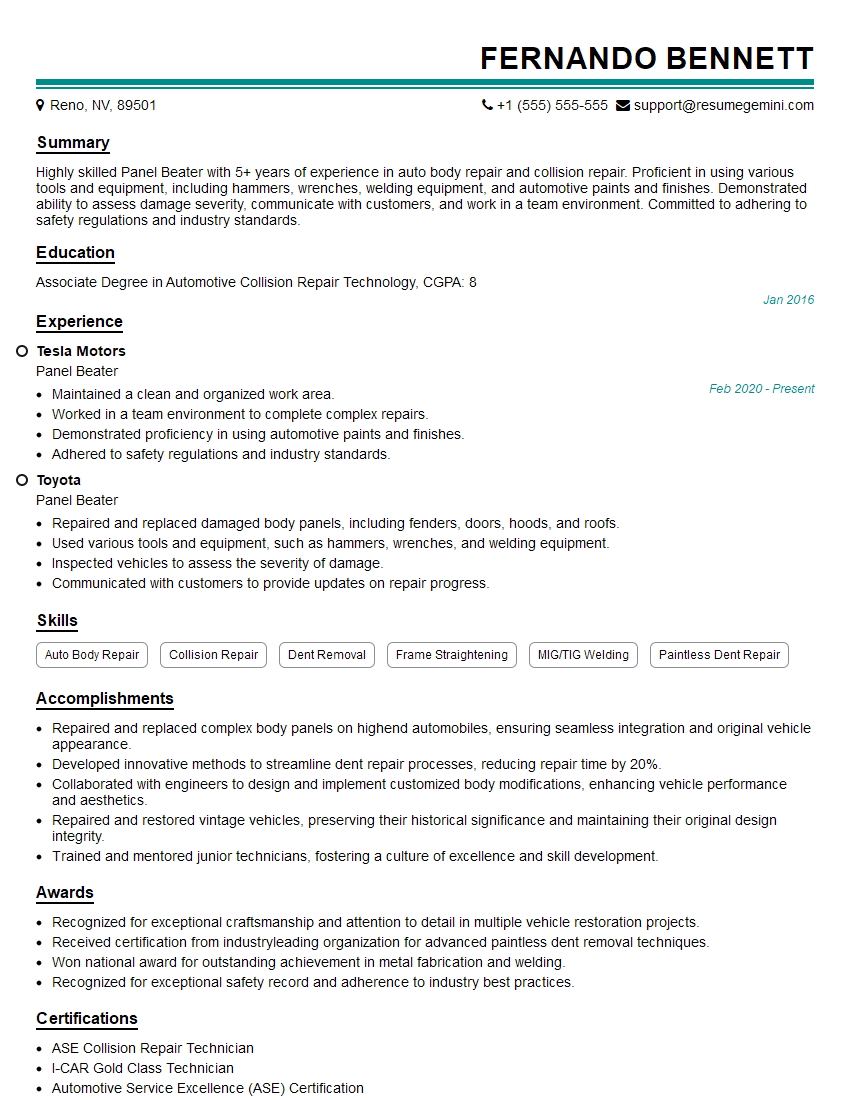
Mastering car body repair skills opens doors to a rewarding and consistently in-demand career. Advancement opportunities are plentiful for skilled technicians who stay updated with industry advancements. To maximize your job prospects, focus on creating an ATS-friendly resume that highlights your abilities and experience effectively. ResumeGemini is a trusted resource that can significantly enhance your resume-building experience. They provide examples of resumes tailored to the car body repair industry to help you showcase your qualifications to potential employers. Invest time in crafting a compelling resume—it’s your first impression and a crucial step in landing your dream job.
Explore more articles
Users Rating of Our Blogs
Share Your Experience
We value your feedback! Please rate our content and share your thoughts (optional).
What Readers Say About Our Blog
Really detailed insights and content, thank you for writing this detailed article.
IT gave me an insight and words to use and be able to think of examples