The right preparation can turn an interview into an opportunity to showcase your expertise. This guide to Cargo Restraint interview questions is your ultimate resource, providing key insights and tips to help you ace your responses and stand out as a top candidate.
Questions Asked in Cargo Restraint Interview
Q 1. What are the different methods for securing cargo?
Securing cargo involves preventing its movement during transit, protecting it from damage, and ensuring the safety of drivers and others. Methods vary depending on the type of cargo, the vehicle used, and the journey’s length and conditions. They broadly fall into these categories:
- Strapping: Using strong webbing straps with tensioning devices to secure cargo tightly. This is common for palletized goods and heavier items.
- Chaining: Employing chains and binders to secure very heavy or irregularly shaped loads. This method offers high strength but requires careful application to avoid damage.
- Netting: Using cargo nets to contain smaller items or loose cargo, preventing shifting and spillage. Often used for lighter, less-dense materials.
- Wedging: Using blocks of wood or other materials to fill gaps and prevent shifting, particularly effective for odd-shaped items.
- Blocking and Bracing: (Detailed in a later answer) This involves creating a rigid structure around the cargo to prevent movement.
- Load Locks/Securement Systems: Pre-installed systems in vehicles, such as bars and clamps, offering efficient and standardized cargo restraint.
The choice of method(s) is critical and depends on a risk assessment of the load, the transport method, and the journey’s inherent risks.
Q 2. Explain the importance of proper weight distribution in cargo securement.
Proper weight distribution is paramount in cargo securement because an unevenly distributed load creates instability, increasing the risk of accidents. Imagine a truck carrying a heavy load concentrated at one end – it’s much more likely to tip over than a truck with the weight evenly spread.
Uneven weight distribution leads to:
- Increased stress on the vehicle’s chassis and suspension: This can cause damage and premature wear.
- Higher risk of rollovers and accidents: A higher center of gravity makes the vehicle less stable.
- Increased likelihood of cargo shifting: This can cause damage to the goods and potentially lead to accidents.
Best practices include distributing heavy items evenly across the vehicle’s load-bearing capacity, and utilizing the vehicle’s weight-bearing points effectively. For example, in a container, the heaviest items should ideally be placed low and centrally. This is often visually represented as a ‘center of gravity’ calculation, and software is now available to help optimize this.
Q 3. Describe the role of dunnage in cargo restraint.
Dunnage refers to materials used to protect cargo and improve its stability during transportation. Think of it as cushioning and support for your goods. It prevents shifting and damage by filling voids and providing a stable base. Common types of dunnage include:
- Wood blocking: Provides support and fills gaps.
- Air bags: Inflatable bags used to fill spaces and create stability.
- Foam padding: Protects fragile items from shocks and vibrations.
- Corner boards: Protect the corners of boxes and crates.
For example, imagine transporting fragile glassware. Using dunnage like foam padding and wooden blocking ensures the glasses don’t shift and break during transport. Proper dunnage application is essential for effective cargo restraint, as it works in conjunction with the actual restraint methods to create a safe and stable load.
Q 4. What are the common types of cargo restraint equipment?
A wide range of equipment is used to restrain cargo, each suited to different applications. Some of the most common include:
- Strapping: Webbing straps with ratchets or winches to tighten and secure.
- Chains: Heavy-duty chains and binders for high-strength securement.
- Cargo nets: Mesh nets to contain smaller items.
- Winches: Used to tension straps and chains.
- Ratchet straps: Hand-operated straps for efficient tightening.
- Load binders: Chain binders for securing heavy loads.
- Turnbuckles: Adjustable tensioning devices for ropes or wires.
- Blocks and wedges: Used for filling gaps and creating stability.
- Shock absorbers: Provide additional protection against impact.
The choice of equipment depends heavily on the cargo’s nature, weight, and dimensions, as well as the transportation method and the distance of the journey.
Q 5. How do you determine the appropriate type and quantity of restraints for a given load?
Determining the correct type and quantity of restraints is crucial for safety and compliance. It’s not a simple formula but requires a careful assessment involving several factors:
- Cargo weight and dimensions: Heavier and larger items require stronger and more numerous restraints.
- Cargo characteristics: Fragile items need additional protection, while oddly shaped items may need specialized techniques.
- Transportation method: The type of vehicle, its suspension, and the terrain will impact the required restraint strength.
- Distance and route: Longer journeys and rougher terrains require more securement.
- Applicable regulations: Legal requirements often dictate minimum restraint standards.
A risk assessment should be conducted for each load, and calculations (often using specialized software) should be performed to determine the necessary restraint strength and placement. This often involves considering potential forces during acceleration, braking, and cornering.
Experienced professionals use their knowledge and judgment to supplement these calculations, accounting for unpredictable factors that might influence the load’s stability.
Q 6. What are the key regulations and standards related to cargo securement?
Cargo securement is subject to various regulations and standards designed to prevent accidents and damage. These vary by country and region but often align with international guidelines. Key aspects usually covered include:
- Maximum load limits: Vehicles have maximum weight capacities, and exceeding these limits is illegal and dangerous.
- Restraint requirements: Minimum standards for the type and quantity of restraints are usually specified, often based on cargo weight and type.
- Securement methods: Regulations often mandate specific techniques and equipment to be used.
- Inspection and documentation: Regular inspections of securing equipment and proper documentation of securing methods are often required.
Organizations like the American Trucking Associations (ATA) in the US and similar bodies in other countries offer detailed guidance and best practices. Non-compliance can lead to hefty fines and legal consequences.
It’s vital to stay updated on the latest regulations and standards applicable to your area of operation.
Q 7. Explain the concept of ‘blocking and bracing’.
Blocking and bracing is a crucial cargo securement technique used to create a rigid structure around the load, preventing movement. It’s particularly effective for large, heavy, or irregularly shaped items that might be difficult to secure with straps or chains alone.
This technique involves:
- Blocking: Placing blocks of wood or other material beneath and around the cargo to provide a stable base and prevent shifting.
- Bracing: Using additional wood or metal supports to prevent lateral movement and create a rigid structure around the load.
Imagine transporting a large piece of machinery. Blocking would ensure the machinery sits firmly on the transport vehicle’s floor, while bracing would use beams and supports to prevent the machinery from tilting or sliding during transit. This method is extremely effective in preventing damage to the cargo and ensuring the vehicle’s stability.
Q 8. How do you inspect cargo securing equipment for damage or wear?
Inspecting cargo securing equipment is crucial for safety and legal compliance. It’s a systematic process involving visual checks and, in some cases, physical testing. I always start with a thorough visual inspection, looking for any signs of damage or wear.
- Straps: I check for fraying, cuts, broken stitching, excessive stretching, and damage to the buckles or ratchets. Any strap showing signs of significant wear is immediately removed from service.
- Chains: I look for broken links, kinks, rust, corrosion, stretching or elongation. I’d also check the hooks for bending or deformation.
- Wire rope: I examine it for broken strands, corrosion, kinking, and excessive wear at the terminations (e.g., clamps). The integrity of the wire rope is paramount.
- Dunnage: Wooden blocks, timbers, and other dunnage are inspected for cracks, splits, rot, and excessive wear. Any compromised dunnage might not be able to withstand the load.
- Securing devices: Winches, binders, and other equipment are checked for proper function and damage. I ensure that they lock securely and operate smoothly.
Beyond visual inspection, I sometimes conduct load tests on critical equipment, especially for heavy or unusual cargo, to verify its load-bearing capacity. This ensures that the equipment is fit for purpose and won’t fail during transit.
Q 9. What are the potential consequences of improper cargo restraint?
Improper cargo restraint can have devastating consequences, ranging from minor damage to catastrophic accidents. The consequences can be grouped into several categories:
- Cargo Damage: Shifting cargo can cause damage to itself and other goods during transport. This leads to financial losses for shippers and recipients.
- Vehicle Damage: Unsecured cargo can impact the vehicle, causing damage to the chassis, body, or undercarriage, potentially leading to accidents and costly repairs.
- Injury or Death: Shifting or falling cargo can injure or kill drivers, dockworkers, or others near the vehicle. This has significant human cost and legal repercussions.
- Accidents: Unsecured loads can cause loss of control of the vehicle, leading to accidents that can result in serious injury or death, and significant property damage. Think of a heavy object shifting forward during braking—it’s a very real risk.
- Legal Penalties and Insurance Issues: Companies and drivers found to have violated cargo securement regulations can face hefty fines, license suspensions, and increased insurance premiums. It affects the reputation of the company as well.
In short, proper cargo restraint is not merely a ‘best practice’; it’s a fundamental aspect of transportation safety and legal compliance.
Q 10. Describe your experience with different types of cargo (e.g., palletized, loose, oversized).
My experience encompasses a wide range of cargo types, each presenting unique challenges for securement.
- Palletized Cargo: This is the most common type and relatively straightforward to secure using straps or chains. The key is ensuring proper weight distribution on the pallet and secure attachment points to prevent shifting.
- Loose Cargo: This poses a greater challenge due to the lack of a pre-defined unit load. Effective restraint requires careful planning, often involving dunnage (blocking and bracing) to create stable units and prevent shifting and damage. For instance, loose grain needs specialized containers and securement.
- Oversized Cargo: Oversized or heavy loads demand specialized equipment and techniques. This often involves the use of multiple straps, chains, or other securing devices, along with specific support structures, and may even require escort vehicles during transit.
I’ve worked with everything from delicate electronics requiring special padding and support to heavy steel beams needing secure chain and wire rope configurations. My experience allows me to adapt my methods to each specific cargo type, guaranteeing safety and compliance.
Q 11. How do you handle unexpected situations during cargo loading and securing?
Unexpected situations during loading and securing are common. My approach is based on risk assessment, problem-solving, and clear communication.
- Equipment Failure: If a strap or chain breaks, I immediately assess the situation and implement a contingency plan. This might involve using alternative securing devices or repositioning the cargo. Safety is the utmost priority.
- Weather Changes: Sudden changes in weather like heavy rain or high winds can impact cargo securement. I would adjust the securing accordingly (possibly adding additional restraints), or, depending on the severity of the weather, delay loading until conditions improve.
- Cargo Shifting: If cargo starts to shift during loading, I’ll stop the process and address the issue immediately by readjusting securing points and adding additional dunnage or restraints. I wouldn’t attempt to continue the loading until the cargo is secured properly.
- Damage to Cargo: If cargo is discovered to be damaged before securement, I’ll address the damage before proceeding with securing to prevent further damage during transit. It may require specialized packaging or bracing.
Clear communication with the loading team is vital. We work as a team, and everyone is informed of any changes or issues, ensuring everyone remains aware of the risks and mitigation strategies.
Q 12. What are the best practices for documenting cargo securement procedures?
Proper documentation of cargo securement procedures is essential for accountability and auditing. I follow a meticulous approach:
- Pre-loading Checklist: A checklist verifies the equipment is in good condition and the cargo is suitable for transport.
- Securement Plan: A written plan detailing the type of cargo, securing method, equipment used, and weight distribution. Sketches or diagrams can also be helpful.
- Photographs: Photos document the securement process, showing the cargo’s position, securing points, and the condition of the equipment.
- Inspection Report: A report documents any damages, issues, or adjustments during the securing process.
- Digital Documentation: Utilizing mobile devices and software to create digital reports, attach photos, and maintain a database of cargo securement activities is useful.
All documentation is kept for a specified period, adhering to company and legal requirements. This ensures that all steps have been followed properly and provides a clear record in case of audits or any incidents.
Q 13. Explain the significance of load securement certificates.
Load securement certificates (LSCs) provide independent verification that the cargo has been secured according to regulations and best practices. They’re extremely significant for several reasons:
- Legal Compliance: They demonstrate compliance with relevant transportation regulations, reducing liability in case of accidents or incidents.
- Insurance Purposes: Insurance companies often require LSCs to ensure that appropriate cargo securement measures were in place before and during transit.
- Risk Mitigation: They minimize the risk of cargo damage, accidents, and associated costs.
- Auditing and Accountability: They provide a clear and verifiable record of the securement process, making it easier to trace any issues or concerns.
The issuing authority of the LSC should be a recognized and competent entity. The certificate should clearly identify the cargo, the securement methods, and the date of issuance.
Q 14. How do environmental factors (e.g., temperature, humidity) affect cargo restraint?
Environmental factors significantly impact cargo restraint, requiring adjustments to securement strategies. Consider the following:
- Temperature: Extreme temperatures can affect the strength and integrity of securing equipment. Heat can weaken straps or chains, while extreme cold can make them brittle. Regular checks and potential replacement of equipment are necessary depending on the conditions.
- Humidity: High humidity can cause corrosion of metal components like chains and wire rope, reducing their strength. Regular inspections for rust and corrosion are vital in humid climates. Proper protective coatings can help.
- Rain and Snow: These elements can add weight to the cargo and reduce the effectiveness of certain securing methods. For example, wet cargo might be more prone to shifting. Using weather-resistant materials and taking extra precautions are required.
- Wind: High winds can put extra stress on the vehicle and cargo. This might require the use of additional securing devices or even delay transportation in extreme conditions.
Understanding and adapting to these environmental factors is crucial for maintaining safe and secure transportation of goods. It necessitates a risk-based approach to cargo securement, always prioritizing safety above all else.
Q 15. What are your strategies for ensuring compliance with safety regulations?
Ensuring compliance with safety regulations in cargo restraint is paramount. My strategy is multifaceted and begins with a thorough understanding of all applicable regulations, including those from organizations like the Department of Transportation (DOT) and any specific regulations for the type of cargo being transported and the geographical areas involved. This includes staying updated on any changes or amendments to these regulations.
Secondly, I implement a robust checklist system for every load securement. This checklist covers all aspects, from proper equipment selection and inspection to correct techniques and documentation. I meticulously verify that every step is completed correctly before the vehicle departs. Thirdly, I conduct regular training sessions for my team emphasizing best practices and the consequences of non-compliance. This keeps everyone aware of current regulations and reinforces safe work habits. Finally, I regularly audit our procedures and processes to identify any areas needing improvement and implement corrective actions promptly. This proactive approach ensures continued compliance and minimizes risk.
Career Expert Tips:
- Ace those interviews! Prepare effectively by reviewing the Top 50 Most Common Interview Questions on ResumeGemini.
- Navigate your job search with confidence! Explore a wide range of Career Tips on ResumeGemini. Learn about common challenges and recommendations to overcome them.
- Craft the perfect resume! Master the Art of Resume Writing with ResumeGemini’s guide. Showcase your unique qualifications and achievements effectively.
- Don’t miss out on holiday savings! Build your dream resume with ResumeGemini’s ATS optimized templates.
Q 16. Describe your experience with different types of vehicles and their load-bearing capacities.
My experience encompasses a wide range of vehicles, from standard flatbed trailers and vans to specialized equipment like lowboys and containers. Understanding load-bearing capacity is critical. I always consult the vehicle’s manufacturer’s specifications, including the Gross Vehicle Weight Rating (GVWR), Gross Axle Weight Rating (GAWR), and any other relevant weight limitations. For example, when working with a lowboy trailer carrying heavy machinery, I meticulously calculate the weight distribution to ensure no single axle exceeds its GAWR. I also consider the vehicle’s structural integrity, ensuring it’s suitable for the specific type of cargo and weight. I’ve worked with vehicles ranging from light-duty pickup trucks for smaller loads to heavy-duty semi-trailers for large, complex shipments, consistently adapting my securement strategies to match the vehicle’s capabilities and limitations. This includes using appropriate tie-down points and understanding the different stress points on various vehicle types.
Q 17. How do you calculate the required number of straps or chains for a specific load?
Calculating the required number of straps or chains isn’t a simple formula but rather a process involving several factors. The primary considerations are the weight of the cargo, its dimensions and center of gravity, the coefficient of friction between the cargo and the vehicle, and the vehicle’s stopping capabilities. We use a combination of industry standards and engineering principles to determine appropriate restraint. For example, a heavier, taller load will require more straps to prevent shifting than a smaller, lighter one. Additionally, the type of cargo greatly influences the calculation – a bulky, unstable load demands a more securement system than a uniformly dense load. The process usually involves consulting load securement guidelines which use a combination of weight calculations, securement angle and friction coefficients to determine the minimum number of securement points required. We often use calculation software or tables for assistance. Ultimately, it’s about ensuring the load is secure even during sudden braking or turns. Using safety factors to compensate for unexpected movements is always a critical aspect of this calculation.
Q 18. What is your experience with tensioning devices for cargo restraint?
My experience with tensioning devices is extensive. I’m proficient in using various types, including ratchet straps, winch straps, and come-alongs. Each device has its strengths and weaknesses. Ratchet straps are common for their ease of use and versatility. Winch straps offer greater tensioning capacity. Come-alongs are essential when extra force is needed, but require more skilled operation. Critical to my approach is ensuring that all devices are regularly inspected for damage, wear, and tear before each use. I am meticulous about ensuring proper tension is applied – enough to secure the load adequately without damaging the cargo or the equipment. I understand the limitations of each device and how environmental factors like temperature and humidity can impact their performance. Incorrect tensioning can be disastrous, so this is a skill refined through years of experience and constant attention to detail.
Q 19. How do you address conflicts or disagreements regarding cargo securement methods?
Disagreements regarding cargo securement methods are addressed through a collaborative and professional approach. First, I prioritize open communication and actively listen to all perspectives. I encourage everyone to clearly articulate their concerns and rationale. I then use my expertise to explain the relevant safety regulations and best practices, demonstrating why a particular method is preferred, referencing specific industry standards or engineering principles. If a disagreement persists, I advocate for a consensus-building approach; this may involve seeking a second opinion from a senior member of the team or even an external safety specialist, if necessary. The ultimate goal is to arrive at a solution that ensures safe and compliant cargo securement, while also fostering a positive and collaborative team environment. Documentation is critical, so all decisions and reasons are thoroughly documented.
Q 20. What is your experience with using load securement software or technology?
I have considerable experience with load securement software and technology. These tools greatly enhance efficiency and accuracy. Specifically, I’ve utilized software that allows for the input of cargo dimensions, weight, and vehicle specifications, automatically generating securement plans and calculating the necessary number and type of restraints. This eliminates the need for manual calculations and reduces the chances of human error. Furthermore, some software offers 3D modeling capabilities, visualizing the load and restraint system before implementation. This helps to identify potential problems early and makes it easy to communicate securement plans across teams and to clients. Technology also plays a vital role in record-keeping – digital logs track inspections and ensure compliance can be demonstrated easily when required.
Q 21. Describe a time you had to troubleshoot a cargo securement issue. What was the solution?
During the transport of a large, oddly-shaped piece of industrial machinery, we encountered an unexpected issue. Despite thorough pre-planning and securement, the load began to shift slightly during transit. Initially, we noticed a slight change in the tension of some straps. The solution involved immediately stopping the vehicle. Upon inspection, we discovered that the center of gravity was not distributed as evenly as initially assessed. This had been partly due to some shifting during the initial loading process and hadn’t been completely mitigated. Instead of simply tightening the existing straps, we added two additional ratchet straps at strategic locations to better secure the load, redistribute the weight and support the shifting load. We carefully re-tensioned all the straps ensuring the weight was distributed across all the straps and points, and meticulously checked the entire securement, paying close attention to the stability of the load. Before resuming the journey, we performed another thorough check to make sure all the straps were properly secured and the load was completely stable. This incident underscored the importance of continuous monitoring and the need for adaptability in addressing unexpected challenges during transport.
Q 22. How do you stay updated on changes in cargo restraint regulations and best practices?
Staying current in the dynamic field of cargo restraint requires a multi-pronged approach. I regularly subscribe to and actively read industry publications like those from the Cargo Securement and Safety Association (CSSA) and similar organizations. These publications often detail regulatory changes and emerging best practices. I also attend industry conferences and workshops, networking with other professionals and learning about the latest technologies and techniques. Furthermore, I actively participate in online forums and communities dedicated to cargo securing, engaging in discussions and learning from the collective expertise of others. Finally, I ensure I’m familiar with the latest versions of relevant regulations from organizations like the Department of Transportation (DOT) and international bodies, checking for updates periodically. This proactive approach ensures my knowledge remains up-to-date and aligned with industry standards.
Q 23. Explain the difference between static and dynamic loading.
The difference between static and dynamic loading is crucial for proper cargo securement. Static loading refers to the weight of the cargo itself and any forces acting on it while the vehicle is stationary. Think of a pallet of bricks sitting on a truck – its weight exerts a downward force. Dynamic loading, on the other hand, considers the forces acting on the cargo during vehicle movement – acceleration, braking, and cornering. These forces can be significantly greater than the static load, causing the cargo to shift and potentially resulting in an accident. Imagine that same pallet of bricks during sudden braking; the inertia wants to keep the bricks moving forward, exerting a substantial horizontal force. Effective cargo restraint must account for both static and dynamic loads to ensure safety.
Q 24. What are the key safety considerations for handling hazardous materials?
Handling hazardous materials requires heightened safety precautions during cargo restraint. Key considerations include:
- Material-Specific Regulations: Understanding and strictly adhering to all regulations pertaining to the specific hazardous material being transported is paramount. This includes placarding requirements, packaging standards, and specific securement methods.
- Emergency Response Planning: Having a detailed emergency response plan in place is essential in case of an accident. This should include procedures for containment, evacuation, and notification of emergency services.
- Personal Protective Equipment (PPE): Appropriate PPE, such as gloves, respirators, and safety glasses, must be worn during handling to prevent exposure to hazardous substances.
- Specialized Equipment: Certain hazardous materials may require specialized containers or securement equipment to prevent leaks or spills. These must be selected and used correctly.
- Segregation: Incompatible hazardous materials must be segregated to prevent dangerous reactions.
- Documentation: Accurate and complete documentation of the transport, including the type and quantity of materials, securement methods, and any incidents, is vital.
Q 25. What are your experience and training qualifications in load securement?
My experience in load securement spans over [Number] years. I hold certifications in [List Certifications, e.g., Certified Load Securement Professional, etc.]. My training includes extensive coursework covering various aspects of securement, including the principles of physics applied to load stability, different types of cargo, and various restraint methods. I have hands-on experience securing a wide variety of cargo, from standard pallets to oversized and irregularly shaped items, including hazardous materials. I’ve worked in [mention environments, e.g., various transportation settings including trucking and shipping]. My practical experience has equipped me with the ability to assess risks, select appropriate restraint systems, and execute securement procedures safely and effectively, always prioritizing compliance with all applicable regulations.
Q 26. How do you handle damaged or compromised cargo restraint equipment?
Damaged or compromised cargo restraint equipment poses a significant safety risk and must be addressed immediately. The first step is to identify the damage and assess its severity. Any equipment showing signs of wear, tear, or significant damage (e.g., frayed straps, broken buckles, or damaged chains) should be immediately removed from service. It should never be reused. Damaged equipment must be properly disposed of or repaired by a qualified professional, following all relevant safety protocols. The cargo must be re-secured using undamaged, appropriately rated equipment before further transport. Thorough documentation of the damaged equipment, the reason for its removal, and the replacement process is crucial for maintaining records and ensuring compliance.
Q 27. What are your strategies for training others on proper cargo restraint techniques?
My training strategy emphasizes a blend of theoretical knowledge and hands-on practice. I begin by explaining the fundamental principles of cargo securement, including the physics of forces and the importance of understanding dynamic and static loading. I then introduce different types of securing materials and equipment, explaining their strengths and limitations. The core of the training involves hands-on sessions where trainees practice securing various cargo types using different methods under my supervision. This ensures they develop practical skills and understand the proper techniques. Finally, I incorporate scenario-based exercises and quizzes to test their understanding and ensure competence. I always stress the importance of safety, compliance, and the consequences of improper securement techniques. Post-training assessments and ongoing mentorship ensure continuous improvement and the reinforcement of best practices.
Q 28. Describe your experience with different types of cargo securing materials.
My experience encompasses a wide range of cargo securing materials. I’m proficient with various types of straps (e.g., webbing straps, ratchet straps), chains, ropes, and other equipment. I understand the load limits and application suitability of each material. For instance, I know that webbing straps are excellent for securing lighter, palletized goods, while chains are necessary for heavier, bulkier items. Ropes, while sometimes used, require specific knotting techniques and may not always provide the most secure option. I also have experience using specialized equipment like airbags and dunnage for securing irregularly shaped cargo. My selection of material always depends on the specific nature of the cargo, its weight, dimensions, and the intended mode of transport, ensuring the optimal combination for safe and efficient securement.
Key Topics to Learn for Cargo Restraint Interview
- Understanding Cargo Securement Principles: Learn the fundamental principles of weight distribution, center of gravity, and the physics behind effective cargo restraint.
- Types of Cargo Restraint Equipment: Familiarize yourself with various methods and equipment, including straps, chains, nets, wedges, and their appropriate applications. Understand their limitations and safety considerations.
- Regulatory Compliance and Standards: Master relevant international and national regulations (e.g., SOLAS, IMDG Code) governing cargo securement. Be prepared to discuss specific standards and their practical implications.
- Risk Assessment and Prevention: Understand how to conduct a thorough risk assessment for various cargo types and transport modes. Be able to discuss strategies for mitigating potential hazards during transport.
- Practical Application and Case Studies: Prepare examples from your experience (or hypothetical scenarios) demonstrating your ability to apply cargo restraint techniques effectively and safely in different situations. Consider different cargo types (e.g., heavy machinery, fragile goods, liquids).
- Problem-Solving and Troubleshooting: Be prepared to discuss scenarios where cargo has shifted or become unsecured. Explain your approach to identifying the problem, implementing corrective actions, and preventing future occurrences.
- Material Handling and Safety Procedures: Understand safe lifting techniques, proper use of equipment, and best practices for minimizing workplace injuries related to cargo handling and restraint.
- Documentation and Record Keeping: Familiarize yourself with the importance of accurate documentation and record-keeping procedures related to cargo securement, including inspection reports and load plans.
Next Steps
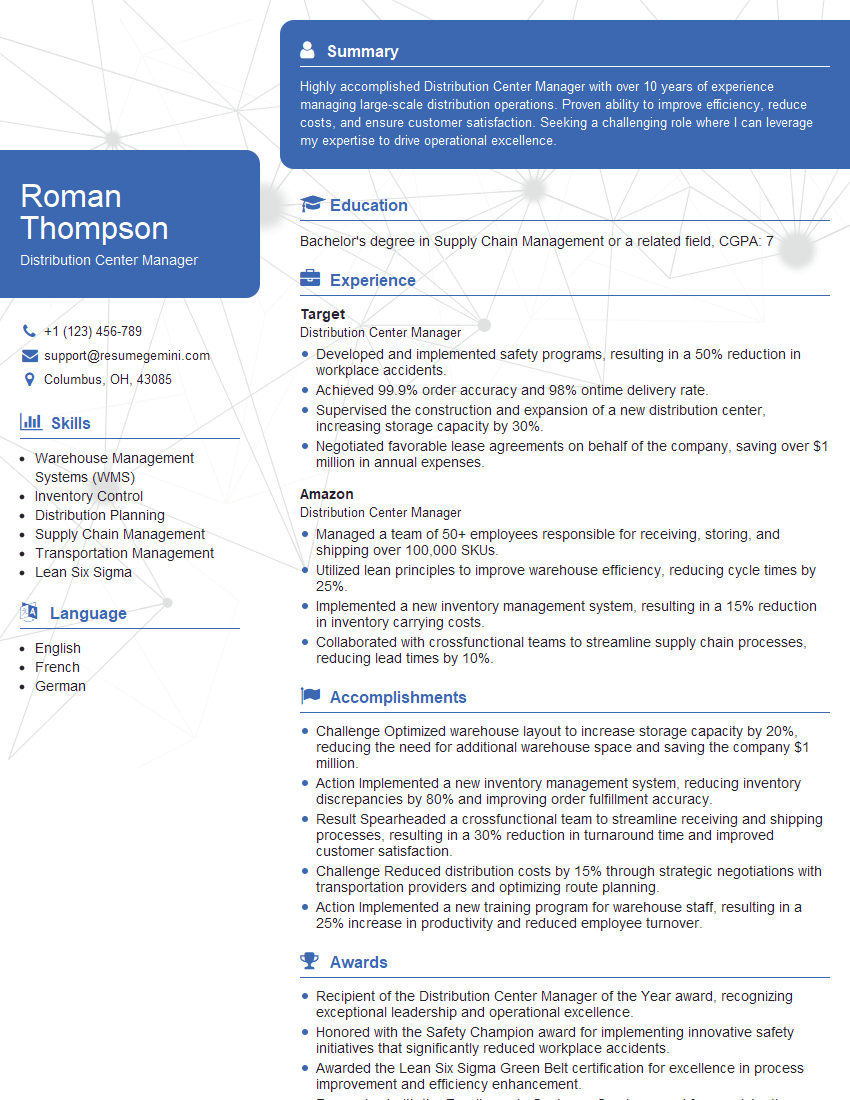
Mastering cargo restraint is crucial for a successful and rewarding career in logistics and transportation. It demonstrates a commitment to safety, efficiency, and regulatory compliance, making you a highly valuable asset to any employer. To significantly boost your job prospects, focus on creating a compelling and ATS-friendly resume that highlights your skills and experience. ResumeGemini is a trusted resource to help you build a professional and effective resume tailored to the specific requirements of the Cargo Restraint industry. Examples of resumes tailored to Cargo Restraint roles are available to further assist you in crafting your application.


Explore more articles
Users Rating of Our Blogs
Share Your Experience
We value your feedback! Please rate our content and share your thoughts (optional).
What Readers Say About Our Blog
Really detailed insights and content, thank you for writing this detailed article.
IT gave me an insight and words to use and be able to think of examples