The thought of an interview can be nerve-wracking, but the right preparation can make all the difference. Explore this comprehensive guide to Cattle Genetic Evaluation interview questions and gain the confidence you need to showcase your abilities and secure the role.
Questions Asked in Cattle Genetic Evaluation Interview
Q 1. Explain the difference between pedigree-based and genomic selection in cattle breeding.
Pedigree-based selection and genomic selection are both methods used to predict the breeding value of cattle, but they differ significantly in the information they utilize. Pedigree-based selection relies solely on the animal’s ancestry – its parents, grandparents, and so on – to estimate its genetic merit. We assume that superior animals have superior offspring. The further back we trace ancestry, the less certain we become of its influence, however. Genomic selection, on the other hand, directly analyzes an animal’s DNA to identify specific genetic markers associated with desirable traits. This offers a much more precise and direct measure of genetic potential.
Think of it like this: pedigree-based selection is like judging a book by its cover (or rather, by the covers of its ancestors). Genomic selection, however, is like actually reading the book – you’re directly examining the content (DNA) to assess its value.
In practice, pedigree-based methods were the standard for decades. However, genomic selection provides much greater accuracy, particularly for traits that are difficult or expensive to measure, allowing breeders to make more informed decisions about which animals to select for breeding.
Q 2. Describe the concept of heritability and its importance in cattle genetic evaluation.
Heritability is a crucial concept in cattle genetic evaluation. It represents the proportion of phenotypic variation (the observable differences between animals, like milk yield or growth rate) that is due to genetic differences. A heritability of 0.5, for example, means that 50% of the variation in a trait is explained by genetic differences, while the remaining 50% is due to environmental factors (like nutrition, health, or management practices).
Heritability is important because it indicates the potential for genetic improvement. Traits with high heritability are easier to improve through selection because genetic changes have a greater impact on the phenotype. For example, if a trait like milk production has high heritability, selecting cows with high milk production will lead to a larger improvement in future generations compared to a trait with low heritability.
For example, consider two traits: body weight and disease resistance. Body weight often has a higher heritability than disease resistance. This means that genetic selection will yield more rapid and predictable improvement in body weight compared to disease resistance, which is often influenced significantly by factors beyond direct genetic control.
Q 3. What are the key assumptions of the animal model used in genetic evaluation?
The animal model, a statistical model used in genetic evaluation, rests on several key assumptions. These assumptions ensure that the estimations are reliable and valid. The most critical assumptions are:
- Additive gene action: The model assumes that the effect of each gene on the trait is additive; meaning the effect of multiple genes is the sum of their individual effects, neglecting interactions between genes (epistasis).
- Independence of environmental effects: The model assumes that the environmental effects on individual animals are independent of each other. That means a positive or negative environmental effect on one animal doesn’t influence the effect on another.
- Normality of distributions: The model assumes that both genetic and environmental effects follow a normal distribution. This allows the use of statistical methods that rely on this assumption.
- Accurate pedigree information: The accuracy of the estimated breeding values is directly related to the accuracy of the pedigree information used. Errors in the pedigree can lead to biased results.
- Correct trait definitions and measurements: The model relies on accurate and consistent measurements of traits, and the traits need to be well-defined and clearly measured.
Violations of these assumptions can lead to biased or inaccurate estimates of breeding values, underscoring the importance of careful data collection and model validation.
Q 4. How do you interpret Estimated Breeding Values (EBVs) and what are their limitations?
Estimated Breeding Values (EBVs) are predictions of an animal’s genetic merit for a particular trait, expressed as a deviation from the average breeding value of the population. A positive EBV indicates that the animal is genetically superior to the average, while a negative EBV indicates that it is inferior. EBVs are expressed in the same units as the trait (e.g., kilograms for milk yield, centimeters for height).
Interpreting EBVs: When comparing two animals, the animal with the higher EBV is considered genetically superior for that specific trait. However, it’s crucial to consider the accuracy of the EBV, represented by its standard error. A larger standard error implies greater uncertainty in the EBV estimate.
Limitations of EBVs: EBVs are predictions, not guarantees. They don’t account for all sources of variation, and the accuracy depends on factors like the heritability of the trait, the size and quality of the data, and the genetic relationships among animals. Also, EBVs are specific to the population and the traits for which they were calculated. Direct comparison across different populations or traits is not reliable.
For instance, an EBV for milk yield of +1000kg with a high accuracy indicates a high confidence that this animal will produce substantially more milk than the average. However, this EBV cannot be used to predict its performance in another environment or for a different trait like disease resistance.
Q 5. Explain the concept of genomic estimated breeding values (GEBVs).
Genomic Estimated Breeding Values (GEBVs) are similar to EBVs, but they incorporate genomic information – an animal’s DNA profile – into the prediction. Instead of relying solely on pedigree information and phenotypic data, GEBVs leverage millions of single nucleotide polymorphisms (SNPs) across the animal’s genome to identify genetic markers associated with the trait of interest. This allows for much more precise prediction of genetic merit, particularly in young animals that haven’t produced offspring or have limited phenotypic data.
The process involves genotyping a large reference population of animals with both phenotypic data and SNP genotypes. Statistical models are then used to associate specific SNPs with the trait of interest. This association allows us to predict GEBVs for other animals based solely on their SNP genotypes.
Compared to EBVs, GEBVs generally offer greater accuracy and allow for earlier selection decisions, especially for traits with low heritability. This contributes to faster genetic progress and increased efficiency in breeding programs.
Q 6. Discuss different methods for estimating genetic parameters.
Several methods exist for estimating genetic parameters like heritability and genetic correlations. These methods largely rely on statistical models applied to phenotypic and pedigree data, and sometimes genomic data:
- Animal Model: A powerful method that considers the genetic relationships between animals within a pedigree. It’s commonly used for estimating breeding values and genetic parameters. It’s flexible and capable of handling various data structures.
- Restricted Maximum Likelihood (REML): A statistical technique used to estimate variance components (such as heritability and environmental variance) in the animal model. It accounts for the correlation between relatives and provides unbiased estimates.
- Bayesian methods: These methods incorporate prior information about the genetic parameters into the analysis. They can be particularly useful when data is limited. Markov Chain Monte Carlo (MCMC) is frequently used within Bayesian approaches.
- Genomic BLUP (GBLUP): Extends the traditional BLUP (Best Linear Unbiased Prediction) approach to include genomic information, increasing the accuracy of predictions especially for young animals.
The choice of method depends on the specific data available, the complexity of the trait being analyzed, and the resources available. For complex traits with limited data, Bayesian methods might be preferred, while for simpler traits with large datasets, REML within the animal model is frequently used.
Q 7. What software packages are you familiar with for performing genetic evaluations?
I am proficient in several software packages used for genetic evaluation. These include:
- BLUPF90: A widely used, flexible, and powerful suite of programs for performing various genetic analyses, including animal model evaluations and genomic evaluations. It’s known for its efficiency and ability to handle large datasets.
- DMU: Another popular package for genetic evaluation, featuring powerful algorithms for analyzing complex datasets. It’s frequently used for advanced mixed model analyses.
- ASReml: A comprehensive statistical package capable of handling animal models and other complex mixed models. It’s particularly strong in its handling of various covariance structures.
- Wombat: A user-friendly program for analyzing variance components and estimating genetic parameters, providing a more accessible interface for some users.
My familiarity extends to both the theoretical underpinnings of these packages and their practical application in real-world breeding programs. I can effectively utilize these tools to conduct comprehensive genetic evaluations, optimize breeding strategies, and contribute to the improvement of cattle genetics.
Q 8. How do you handle missing data in genetic evaluation?
Missing data is a common challenge in cattle genetic evaluation. We can’t simply ignore missing records, as this would bias our estimates. Several strategies are employed to handle this, ranging from simple to complex methods. The best approach depends on the amount of missing data, the type of data missing (e.g., performance records, pedigree information), and the specific software used.
Simple methods: These include removing animals with missing data from the analysis. This is only viable if the amount of missing data is small and the removed animals don’t represent a particular genetic group, as this could introduce sampling bias. Another simple approach is to use the mean or median value of the available data to fill in missing records. This is a crude method and may not be very accurate.
More sophisticated methods: These often involve statistical modeling techniques to predict missing values. For example, best linear unbiased prediction (BLUP) models can incorporate pedigree information to estimate missing phenotypes. Imputation methods, which use the available genotypes and phenotypes from related animals to predict missing data, are also very effective. Multiple imputation, where missing values are filled in several times with different imputed values and the results combined, can give a more reliable estimate.
Software considerations: Most animal breeding software packages offer multiple methods for handling missing data. The choice of method should always be documented and justified.
Q 9. Explain the concept of marker-assisted selection (MAS).
Marker-assisted selection (MAS) is a breeding strategy that uses DNA markers – specific locations on the genome – to identify genes associated with economically important traits in cattle. Instead of relying solely on the animal’s phenotype (observable characteristics) or pedigree, MAS allows breeders to select superior individuals based on their genotype (genetic makeup). This is helpful for traits that are difficult or expensive to measure, are expressed late in life, or have low heritability.
For example, a marker linked to a gene for disease resistance could be used to identify young animals with a higher probability of possessing that desirable gene. By selecting breeding animals carrying these favorable markers, breeders can accelerate genetic progress more quickly than relying solely on traditional phenotypic selection methods.
The effectiveness of MAS depends heavily on the identification of suitable DNA markers and their tight linkage to the quantitative trait loci (QTL) influencing the trait of interest. However, it is important to note that the power of MAS is limited and often requires the use of sophisticated statistical models.
Q 10. What are the advantages and disadvantages of using genomic selection compared to traditional pedigree-based methods?
Genomic selection (GS) represents a significant advance over traditional pedigree-based methods. While traditional methods rely on the animal’s pedigree to estimate breeding values, GS uses genome-wide marker data to predict the animal’s genetic merit directly. This allows for a much more accurate prediction of breeding values, particularly for traits with low heritability or that are expressed later in life.
Advantages of Genomic Selection:
- Increased accuracy of breeding value estimations, especially for traits with low heritability.
- Earlier selection of superior individuals. Since genotyping can be done at a young age, selection decisions can be made earlier, accelerating genetic gains.
- Improved selection intensity due to the ability to evaluate many individuals regardless of their phenotype.
- Can estimate breeding values for animals without phenotypes (e.g., young animals).
Disadvantages of Genomic Selection:
- Higher initial costs due to the cost of genotyping.
- Requires a large reference population with both genotype and phenotype data to train the prediction models.
- Potential for bias if the reference population is not representative of the breeding population.
- Computational demands are higher than traditional methods.
In essence, GS provides a more accurate and timely evaluation of animals, but comes at a higher initial cost, which becomes more cost-effective when working with traits that are expensive to measure and/or have low heritability.
Q 11. Describe the importance of accuracy in genetic evaluation.
Accuracy in genetic evaluation is paramount because it directly impacts the rate of genetic progress in a cattle breeding program. Accurate estimated breeding values (EBVs) or genomic estimated breeding values (GEBVs) allow breeders to make informed decisions about which animals to select for breeding, leading to faster genetic improvement and greater economic returns. Inaccurate evaluations, on the other hand, can lead to poor selection decisions, wasted resources, and slower genetic gain, potentially even hindering progress.
For example, if the EBV for milk yield is inaccurate and a bull with an overestimated EBV is widely used, it can result in offspring with lower-than-expected milk yields, negatively impacting the overall productivity of the herd. The accuracy of the EBV is therefore directly related to the economic success of a breeding program.
Q 12. How do you assess the reliability of EBVs or GEBVs?
The reliability of EBVs or GEBVs is typically expressed as a percentage or a correlation, indicating the confidence in the accuracy of the prediction. Several factors influence reliability, including:
Heritability of the trait: Highly heritable traits have more reliable EBVs.
Amount of information: More data (e.g., more records, more progeny) leads to higher reliability.
Accuracy of data: Errors in recording phenotypes will decrease reliability.
Genetic relationships: The inclusion of pedigree information increases the reliability of EBVs, particularly for animals with limited individual records.
The model used: Different models (e.g., BLUP, single-step GBLUP) have differing accuracies.
Reliability is usually reported alongside the EBV or GEBV. A higher reliability indicates a more confident prediction. For example, an EBV for milk yield with a reliability of 80% suggests that there’s an 80% chance that the predicted EBV is within a certain range of the animal’s true breeding value.
Q 13. Explain the role of BLUP in genetic evaluation.
Best Linear Unbiased Prediction (BLUP) is a statistical method widely used in animal breeding for estimating breeding values. It’s considered ‘best’ because it provides the most accurate predictions, ‘linear’ because it assumes a linear relationship between the data and the breeding values, and ‘unbiased’ because it doesn’t systematically over- or underestimate the true breeding values. BLUP accounts for various factors, including pedigree information (relationships among animals), environmental effects on performance, and any other fixed effects, such as age or sex.
In essence, BLUP cleverly combines individual performance data with information from relatives to provide a more accurate prediction of an animal’s genetic merit than would be possible based solely on its own performance. The more closely related individuals are and the more reliable their data is, the greater the influence of their records on the prediction for an animal with limited data of its own.
Consider a young bull with limited progeny records. BLUP uses the performance of its parents, siblings, and other relatives to estimate its breeding value, even if it hasn’t had many offspring yet. This is crucial for early selection, leading to faster genetic progress. This methodology is fundamental in national cattle evaluation programs worldwide.
Q 14. What are the ethical considerations in using genetic technologies in cattle breeding?
The use of genetic technologies in cattle breeding raises several ethical considerations. These concerns revolve around animal welfare, societal impact, and responsible innovation:
Animal welfare: Genetic selection could unintentionally lead to reduced animal welfare if traits are prioritized at the expense of health and robustness. For example, selecting for extreme milk production may result in increased incidence of mastitis or other health problems. Careful consideration must be given to the overall well-being of the animals in breeding programs.
Genetic diversity: Overuse of specific superior animals in breeding programs can reduce genetic diversity within a breed, making the herd vulnerable to disease outbreaks or environmental changes. Strategies to maintain sufficient genetic diversity are vital.
Access and equity: The high cost of genomic technologies can create disparities between large and small producers, potentially exacerbating economic inequalities. Ensuring fair access to these technologies is an ethical concern.
Transparency and traceability: Consumers have a right to know how genetic technologies are being used in food production. Transparency and clear traceability of animals’ genetic makeup are important for building consumer trust.
Unintended consequences: Genetic modification technologies hold the potential for unintended and unforeseen consequences, especially for the environment and long-term ecological stability. Therefore, rigorous safety testing and risk assessment are essential.
Addressing these ethical considerations requires a multi-stakeholder approach, involving breeders, scientists, policymakers, and consumers to develop guidelines and regulations for responsible use of genetic technologies in cattle breeding. Open dialogue and a commitment to transparent practices are crucial for ensuring the ethical and sustainable advancement of the field.
Q 15. How do you account for environmental effects in genetic evaluation?
Accurately estimating an animal’s genetic merit requires separating the genetic effects from environmental influences on its performance. Environmental effects are all non-genetic factors affecting an animal’s traits, including things like nutrition, health, management practices, and climate. We account for these using statistical models within genetic evaluations.
One common approach is the use of animal models. These models statistically partition the variation in a trait into genetic and environmental components. For example, milk yield in dairy cows is influenced by genetics (e.g., genes affecting milk production), but also by factors like feed quality, udder health, and even the time of year. The animal model uses data on the animal’s performance and that of its relatives, along with information on the environmental factors that influenced their performance, to estimate the animal’s breeding value (the genetic component of its performance).
Fixed effects represent known, measurable environmental factors that influence the trait. These can be included in the model as categorical variables (e.g., herd, year, season) or as continuous variables (e.g., average daily milk yield in the herd). Random effects represent environmental factors that are unknown or difficult to measure, such as subtle variations in management. These are modelled as random variables with a specific variance component.
By carefully including and controlling for environmental effects in the model, we obtain a more precise estimate of the animal’s genetic merit, improving the accuracy of selection decisions.
Career Expert Tips:
- Ace those interviews! Prepare effectively by reviewing the Top 50 Most Common Interview Questions on ResumeGemini.
- Navigate your job search with confidence! Explore a wide range of Career Tips on ResumeGemini. Learn about common challenges and recommendations to overcome them.
- Craft the perfect resume! Master the Art of Resume Writing with ResumeGemini’s guide. Showcase your unique qualifications and achievements effectively.
- Don’t miss out on holiday savings! Build your dream resume with ResumeGemini’s ATS optimized templates.
Q 16. Discuss the challenges of implementing genomic selection in commercial cattle breeding programs.
Implementing genomic selection (GS) in commercial cattle breeding programs presents several challenges. While GS offers the potential for significant genetic gain, it’s not a plug-and-play solution.
- High initial costs: Genotyping a large number of animals is expensive. The cost of genotyping needs to be weighed against the expected economic return from improved selection accuracy.
- Data management and analysis: GS requires extensive data management and complex statistical analyses. This necessitates specialized expertise and robust IT infrastructure, which can be a hurdle for smaller breeding programs.
- Accuracy depends on reference population: The accuracy of genomic predictions relies heavily on the size and quality of the reference population (animals with both genotype and phenotype data). A poorly constructed reference population can lead to inaccurate predictions.
- Maintaining reference population: The reference population needs to be regularly updated with new data, which requires ongoing genotyping and phenotyping efforts. This can be resource-intensive.
- Breed-specific considerations: GS models need to be tailored to specific breeds. General models may not be accurate across different breeds due to differences in genetic architecture and effective population size.
- Interpretation of genomic information: Producers need to be educated on how to interpret and use genomic information effectively in their breeding decisions.
Despite these challenges, the potential benefits of GS, such as accelerated genetic gain and reduced generation intervals, make it a valuable tool for improving cattle breeding programs, particularly when strategically implemented and supported by appropriate infrastructure and expertise.
Q 17. Explain the concept of inbreeding depression and its implications.
Inbreeding depression refers to the reduction in fitness (survival, reproduction, and overall performance) of inbred animals compared to their outbred counterparts. It’s caused by the increased probability of homozygous recessive alleles, which can have deleterious effects, leading to lower productivity and poorer health. Imagine siblings inheriting the same faulty gene from both parents; this is more likely to occur in inbred animals.
Implications:
- Reduced performance: Inbred animals often show lower growth rates, reduced milk yield, decreased fertility, and increased susceptibility to diseases.
- Increased mortality: In extreme cases, inbreeding can lead to increased mortality rates in offspring.
- Reduced genetic diversity: High levels of inbreeding reduce genetic diversity within a population, making it less adaptable to environmental changes and less resilient to disease outbreaks.
- Economic losses: The reduced performance and increased mortality associated with inbreeding depression translate into significant economic losses for farmers and breeders.
Managing inbreeding carefully is crucial in cattle breeding programs to maintain genetic diversity and maximize productivity. Strategies such as using pedigree information, calculating inbreeding coefficients, and implementing appropriate mating strategies are essential to mitigate the negative impacts of inbreeding depression.
Q 18. How can you improve the accuracy of genetic evaluation in a diverse cattle population?
Improving the accuracy of genetic evaluations in diverse cattle populations requires careful consideration of several factors. Diversity itself presents both challenges and opportunities.
- Increase the size of the reference population: A larger reference population, especially one that is representative of the genetic diversity within the population, improves the accuracy of genomic predictions.
- Utilize multiple traits: Evaluating multiple traits simultaneously, especially those with different genetic architectures and heritabilities, can improve the estimation of genetic parameters and the accuracy of breeding values.
- Develop breed-specific or multi-breed models: Account for breed differences in genetic architecture and the level of genetic relatedness between breeds by using appropriate models and adjustment methods.
- Use appropriate statistical methods: Employ sophisticated statistical methods that can accommodate diverse data structures and account for potential biases associated with data from different sources and environments.
- Improve data quality: Ensure the accuracy and consistency of phenotypic and pedigree data across different populations and sources. Accurate data are paramount.
- Utilize imputation: Imputation methods can help to fill in missing genotypes, especially for older animals or those with only partial genotyping data. This increases the overall number of genotyped animals.
By addressing these factors, we can achieve more accurate genetic evaluations, leading to more effective selection decisions and improved genetic progress in diverse cattle populations.
Q 19. What are the potential biases in genetic evaluation and how can they be minimized?
Several biases can affect the accuracy of genetic evaluations. Identifying and mitigating these biases is crucial for obtaining reliable results.
- Ascertainment bias: This occurs when the animals included in the evaluation are not a random sample of the population. For example, selectively choosing only high-performing animals will overestimate the genetic merit of the population.
- Environmental bias: Incorrectly accounting for or failing to account for environmental effects can lead to biased estimates of breeding values. For example, if animals in one herd have consistently better management and nutrition, their apparent genetic merit will be inflated.
- Selection bias: This arises when the selection of animals for breeding or data collection is not random. Animals with superior phenotypes are more likely to be selected for breeding and data collection, introducing a bias into the genetic evaluation.
- Genotyping bias: If certain genotypes are more likely to be genotyped than others, it can lead to inaccurate genetic evaluations. For instance, if high-performing animals are more likely to be genotyped, the genomic prediction model might overestimate the genetic merit of that group.
Minimizing biases: To minimize these biases, careful experimental design, rigorous data quality control, and appropriate statistical models are essential. Using large and representative datasets, implementing robust statistical methods that account for various environmental and management factors, and carefully considering the sampling scheme are crucial steps in minimizing potential biases.
Q 20. Describe different methods used for genetic diversity management in cattle.
Genetic diversity management in cattle aims to preserve the valuable genetic variation within and across breeds. Several methods are employed:
- Pedigree analysis: Tracking family lineages helps identify inbreeding levels and potential genetic bottlenecks. Software programs can calculate inbreeding coefficients and relatedness among animals, which assists in making informed mating decisions.
- Cryopreservation of germplasm: Freezing semen and embryos from genetically diverse animals preserves valuable genetic material for future use, guarding against loss of genetic diversity through unforeseen circumstances.
- Optimal mating strategies: Carefully planned mating strategies are used to maximize genetic diversity and avoid inbreeding. This can include techniques like maximizing the effective population size (Ne) and minimizing inbreeding coefficients.
- Crossbreeding: Combining different breeds can create hybrid vigor (heterosis), increase genetic diversity, and enhance the overall adaptability and productivity of the herd. Crossbreeding needs to be carefully managed to avoid the loss of valuable alleles within individual breeds.
- Genomic selection: Genomic information can be used to identify and select animals with unique genetic combinations to increase genetic diversity and simultaneously improve economically important traits.
- Maintaining smaller, isolated populations: In some cases, maintaining smaller, isolated populations of breeds or specific lineages can help to preserve unique genetic traits that may otherwise be lost in larger, more diverse populations. However, it’s vital to find a balance between diversity and population size to avoid extreme inbreeding.
The choice of method or combination of methods depends on the specific goals of the breeding program, breed characteristics, and available resources.
Q 21. How do you interpret genomic relationship matrices?
A genomic relationship matrix (GRM) is a square matrix that describes the pairwise genetic relationships among individuals based on their genomic information (SNP genotypes). Each entry in the matrix represents the genomic relationship between a pair of animals.
Interpretation:
- Diagonal elements: The diagonal elements represent the relationship of an animal with itself, typically close to 1. This value represents the inbreeding coefficient for each animal. A value of 1 implies homozygous and a value close to zero shows no genomic relatedness with itself.
- Off-diagonal elements: The off-diagonal elements (i,j) represent the genomic relationship between animal i and animal j. Values closer to 1 indicate a higher degree of genomic relatedness, meaning these animals share a significant proportion of their DNA. Values closer to 0 indicate little to no genomic relatedness.
- Positive values: Positive values indicate a positive relationship; animals share more alleles than expected by chance.
- Negative values: While uncommon, negative values can occur and usually suggest that animals have fewer alleles in common than expected by chance. This can be caused by population stratification or genotyping errors.
GRMs are fundamental in genomic selection, used to estimate breeding values, predict genomic breeding values (GEBVs), and account for relatedness in genetic evaluations. By incorporating the GRM into statistical models, we can control for the influence of genetic relationships and obtain more accurate estimates of genetic merit. Software packages like BLUPF90 provide algorithms to calculate and use GRMs in these analyses.
Q 22. Explain the concept of genomic prediction.
Genomic prediction leverages an animal’s DNA to predict its genetic merit for various traits. Instead of relying solely on the animal’s own performance and pedigree information (traditional methods), we use millions of single nucleotide polymorphisms (SNPs) – variations in the DNA sequence – to estimate the animal’s breeding value. Imagine it like this: traditional methods look at the family history of milk production; genomic prediction looks at the individual’s genetic blueprint to directly assess its *potential* milk production.
This is done through statistical models that identify associations between SNPs and phenotypes (observable characteristics). These models essentially learn to predict an animal’s performance based on its genotype. The accuracy of prediction increases with the number of animals genotyped and the density of SNPs used.
For example, a bull with a genomic prediction for high milk yield is more likely to produce daughters with high milk yield than a bull with a low prediction, even if the bull’s own daughters haven’t produced milk yet. This allows for earlier selection decisions and faster genetic gain.
Q 23. How would you design a genetic improvement program for a specific cattle trait?
Designing a genetic improvement program for a specific cattle trait, say milk yield, involves several key steps:
- Define Objectives: Clearly state the desired improvement in milk yield (e.g., increase by 10% in 5 years). This sets the target and benchmarks for success.
- Data Collection: Gather accurate and comprehensive data on milk yield, along with other relevant traits (e.g., somatic cell count, days to first calving). This may involve phenotyping (measuring traits) and genotyping (analyzing DNA).
- Genetic Evaluation: Employ appropriate statistical models (e.g., BLUP, single-step GBLUP) to estimate breeding values for each animal based on the collected data. Genomic information enhances the accuracy of these estimations.
- Selection Strategy: Determine the selection criteria based on the defined objectives. This could involve selecting animals with high breeding values for milk yield while considering other traits to avoid undesirable trade-offs.
- Breeding Scheme: Develop a mating plan to optimize genetic progress. This might include artificial insemination with selected bulls, embryo transfer, or a combination of techniques.
- Implementation and Monitoring: Put the program into action and continuously monitor progress using appropriate metrics. Regularly reassess the effectiveness of the program and make necessary adjustments based on the results.
For example, if we aim for increased milk yield and lower somatic cell count, we might select bulls with high breeding values for both traits, using a weighting system that prioritizes milk yield while keeping somatic cell count within acceptable limits.
Q 24. Describe the use of Bayesian methods in genetic evaluation.
Bayesian methods offer a flexible framework for genetic evaluation, particularly useful when dealing with limited data or complex genetic architectures. Unlike frequentist methods, Bayesian approaches incorporate prior information—beliefs about the parameters before observing the data—along with the observed data to estimate the posterior distribution, reflecting updated beliefs after seeing the data.
For instance, a prior might represent our knowledge about the distribution of breeding values in the population based on historical data. By combining this prior knowledge with new phenotypic and genotypic data, we obtain a posterior distribution that better reflects the true breeding values. This is especially valuable for less-studied traits with limited data.
One commonly used Bayesian method is the Bayesian LASSO (Least Absolute Shrinkage and Selection Operator). It automatically shrinks effects of SNPs toward zero, effectively handling high-dimensional data (many SNPs) and reducing the risk of overfitting. The output provides probabilities of each animal’s breeding values.
Q 25. How do you deal with multiple traits in genetic evaluation?
Dealing with multiple traits is crucial in cattle breeding because traits are often correlated. For example, milk yield and milk fat percentage are often positively correlated – animals with high milk yield tend to have higher fat percentages. Ignoring these correlations can lead to inefficient selection.
Multiple-trait models are used to estimate breeding values for several traits simultaneously, accounting for the genetic and phenotypic correlations between them. These models allow for more accurate selection decisions by considering the combined effects of multiple traits. For instance, we can select animals that excel in both milk yield and milk fat content rather than focusing on only one trait.
Methods like Bayesian methods and multivariate BLUP are commonly used for multiple-trait evaluations. They allow the estimation of genetic correlations between traits, which is important for informed selection decisions.
Q 26. What is the difference between single-step and two-step methods in genomic selection?
Both single-step and two-step methods are used in genomic selection, but they differ in how they combine pedigree and genomic information.
- Two-step methods first estimate genomic breeding values (GEBVs) using only genotyped animals. Then, these GEBVs are combined with traditional pedigree-based breeding values (using BLUP) to obtain a final breeding value for all animals, including those without genotypes. This is computationally simpler but can lose some accuracy by separating the steps.
- Single-step methods simultaneously use pedigree and genomic information in a single statistical model. This approach is more accurate because it avoids the potential inaccuracies and biases associated with separate analyses. It directly uses the genomic relationship matrix which encompasses both genotyped and non-genotyped animals. The computational demand is higher, but the increased accuracy often justifies the cost.
In essence, single-step methods offer greater accuracy and efficiency by integrating both data types in a unified framework, leading to better selection decisions.
Q 27. Discuss the future trends in cattle genetic evaluation.
The future of cattle genetic evaluation is bright, with several promising trends:
- Increased use of high-density SNP chips and whole-genome sequencing: This will allow for more accurate identification of quantitative trait loci (QTLs) and improved genomic prediction accuracy.
- Integration of multi-omics data: Incorporating transcriptomic, proteomic, and metabolomic data along with genomic information will provide a more holistic understanding of the genetic architecture of complex traits, leading to more precise selection.
- Development of more sophisticated statistical methods: Advances in machine learning and other statistical techniques will lead to more powerful and accurate genomic prediction models.
- Improved phenotyping technologies: Automation and remote sensing technologies will enable more efficient and accurate collection of phenotypic data, thus increasing the power of genetic evaluations.
- Focus on functional genomics: Understanding the biological mechanisms underlying genetic effects will allow for more targeted and effective selection strategies, addressing aspects like disease resistance and adaptability to changing environments.
- Increased use of genomic selection in developing countries: Making genomic technologies more accessible and affordable will accelerate genetic gain in regions where traditional breeding methods are limited.
These advancements promise to greatly enhance the efficiency and effectiveness of cattle breeding programs, leading to significant improvements in productivity and sustainability.
Key Topics to Learn for Cattle Genetic Evaluation Interview
- Quantitative Genetics Principles: Understanding heritability, breeding value, and genetic correlations is fundamental. Explore how these concepts apply to different cattle breeds and traits.
- Statistical Methods in Animal Breeding: Mastering techniques like best linear unbiased prediction (BLUP) and its application in evaluating breeding values is crucial. Practice interpreting statistical outputs and understanding their limitations.
- Genomic Selection: Learn about the use of genomic information (SNP data) to improve accuracy and efficiency in genetic evaluation. Understand the principles of genomic prediction and its practical implications.
- Data Management and Analysis: Familiarize yourself with handling large datasets, quality control procedures, and data analysis software commonly used in animal breeding (e.g., ASReml, DMU). Practical experience is highly valued.
- Software Proficiency: Demonstrating experience with relevant software packages will significantly boost your interview performance. Highlight your proficiency in statistical software and pedigree analysis programs.
- Breed-Specific Knowledge: Depending on the job, in-depth knowledge of specific cattle breeds and their genetic characteristics will be highly advantageous. Research the breeds relevant to the company or position.
- Ethical Considerations in Animal Breeding: Be prepared to discuss the ethical implications of genetic selection and the responsible use of genetic technologies in animal agriculture.
- Practical Application: Be ready to discuss how you would apply your knowledge to solve real-world problems in cattle breeding, such as improving milk yield, enhancing disease resistance, or optimizing reproductive performance.
Next Steps
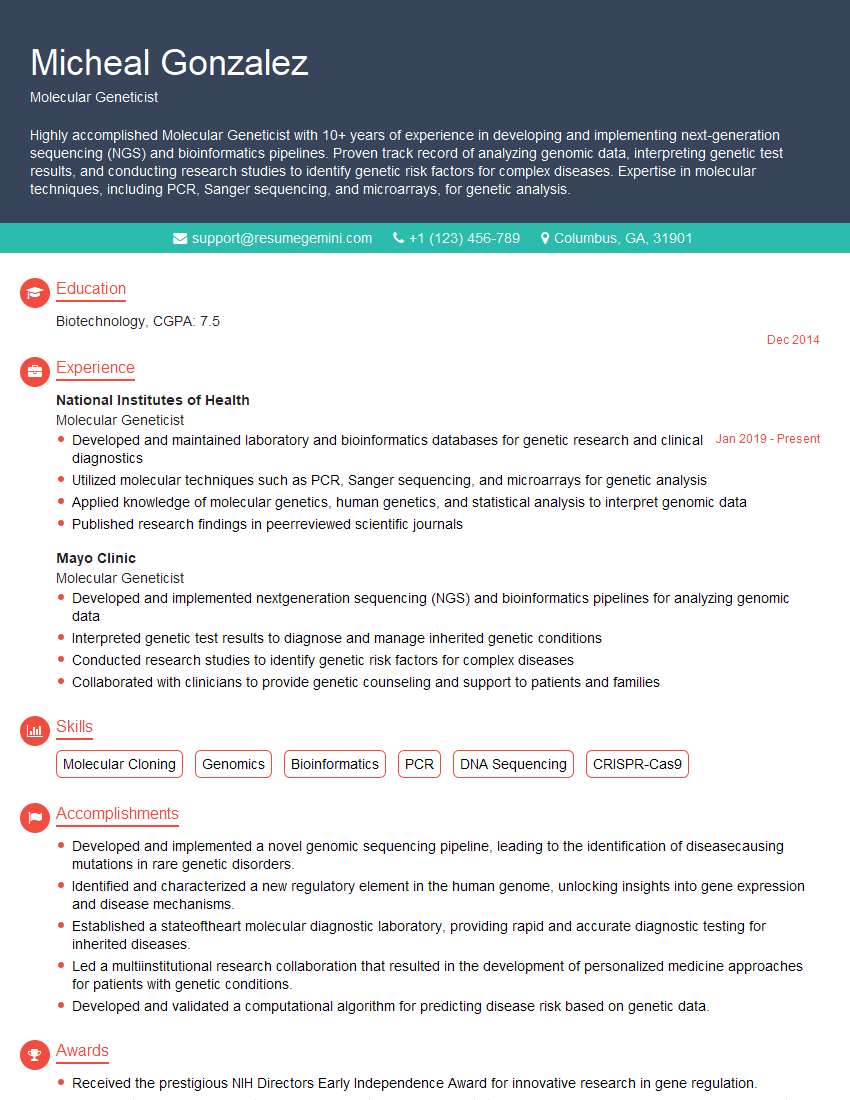
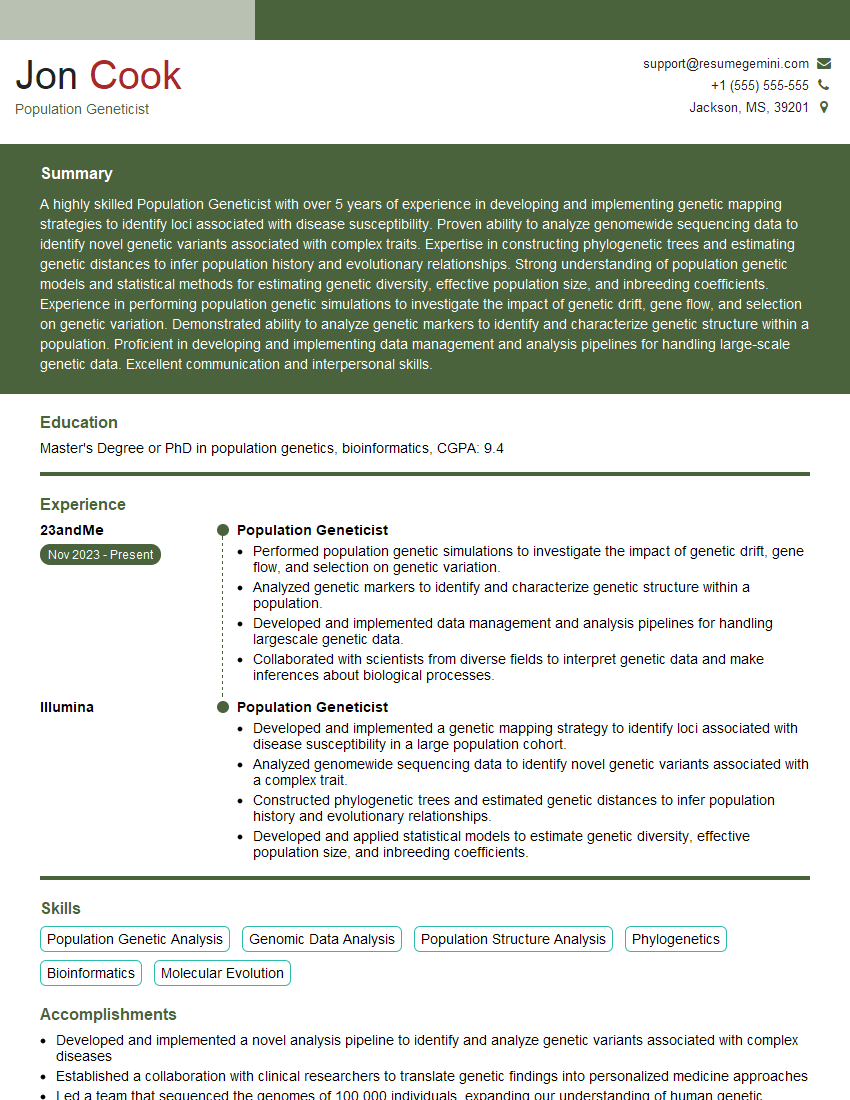
Mastering Cattle Genetic Evaluation opens doors to exciting career opportunities in the agricultural biotechnology sector, offering roles with high impact and intellectual stimulation. A strong resume is your key to unlocking these opportunities. An ATS-friendly resume, optimized for applicant tracking systems, significantly increases your chances of getting noticed by recruiters. Use ResumeGemini to build a professional and effective resume that highlights your skills and experience in Cattle Genetic Evaluation. ResumeGemini provides examples of resumes tailored specifically to this field to help you create a compelling application.
Explore more articles
Users Rating of Our Blogs
Share Your Experience
We value your feedback! Please rate our content and share your thoughts (optional).
What Readers Say About Our Blog
Really detailed insights and content, thank you for writing this detailed article.
IT gave me an insight and words to use and be able to think of examples