Feeling uncertain about what to expect in your upcoming interview? We’ve got you covered! This blog highlights the most important CCD Imaging interview questions and provides actionable advice to help you stand out as the ideal candidate. Let’s pave the way for your success.
Questions Asked in CCD Imaging Interview
Q 1. Explain the principles of charge-coupled device (CCD) operation.
At its core, a Charge-Coupled Device (CCD) is a light-sensitive semiconductor device that converts photons (light particles) into electrical charges. Imagine it like a bucket brigade for photons. When light hits the CCD’s photosensitive surface, it creates electron-hole pairs. The electrons, representing the light’s intensity, are trapped in potential wells created by the CCD’s architecture. These wells are like tiny buckets holding the collected electrons. The number of electrons in each well is directly proportional to the intensity of the light that hit that specific area of the sensor. Subsequently, these charges are meticulously shifted (the ‘coupling’ part of CCD) across the sensor, one well at a time, ultimately reaching an output amplifier that converts the charge into a voltage, providing the digital signal that forms the image.
This process involves several steps: photoelectric conversion (light to electrons), charge storage, charge transfer, and signal readout. Each step plays a crucial role in determining the final image quality.
Q 2. Describe the different types of CCD architectures (e.g., full-frame, interline transfer).
Several CCD architectures cater to different needs and applications. The most common include:
- Full-Frame CCDs: These are the simplest type. The entire sensor area is photosensitive. The charge is transferred across the entire chip during readout. This leads to excellent image quality, but readout can be relatively slow.
- Frame Transfer CCDs: These CCDs split the sensor into two halves: an imaging area and a storage area. After exposure, the charge is rapidly transferred to the storage area, allowing immediate exposure for the next frame. This significantly improves the speed of image acquisition, compared to full-frame devices, but it does come at the cost of slightly reducing the effective sensor area.
- Interline Transfer CCDs: These devices incorporate storage areas between the imaging pixels. This allows for almost instantaneous charge transfer, significantly reducing readout time and making them ideal for high-speed applications, even faster than frame transfer devices. But the physical structure leads to a reduction in the effective sensor area, thereby impacting light gathering capabilities.
The choice of architecture depends on the priorities of the application. For high-resolution astronomy, full-frame might be favored. For high-speed video, interline transfer would be preferred.
Q 3. What are the key performance parameters of a CCD, and how are they measured?
Key performance parameters of a CCD are crucial for evaluating its quality and suitability for specific applications. They include:
- Quantum Efficiency (QE): This measures the percentage of incident photons that are converted into electrons. Higher QE means better sensitivity to light. It’s measured by illuminating the CCD with a known light source and comparing the number of generated electrons to the number of incident photons.
- Dynamic Range: This is the ratio between the brightest and darkest signals that the CCD can accurately record. A wider dynamic range allows the capturing of more detail in both highlights and shadows, measured in bits or stops.
- Resolution: This refers to the number of pixels in the CCD array, determining the level of image detail. It’s measured in pixels or megapixels (millions of pixels).
- Read Noise: The inherent electronic noise introduced during the readout process. It’s measured in electrons or e- RMS (Root Mean Square). Lower read noise is crucial for low-light imaging.
- Dark Current: The current generated by the sensor even in the absence of light. Measured in electrons per pixel per second.
Measuring these parameters involves specialized equipment and techniques, often using calibrated light sources, dark frames, and specialized software for analysis.
Q 4. Explain the concept of dark current and its impact on image quality.
Dark current is the generation of electrons in the CCD’s photosensitive elements even without any external light. This is due to thermal excitation of electrons in the silicon material. Think of it like a small ember glowing faintly in the darkness. The more heat present, the brighter the ember, meaning the more electrons. It increases with temperature; higher temperatures lead to a greater dark current. This ‘dark current’ signal is indistinguishable from the actual signal generated by light, contaminating the image with additional noise.
Its impact on image quality is significant. It introduces a uniform background signal across the image, reducing the signal-to-noise ratio, and making faint details difficult to discern, especially in long exposures. Therefore, cooling the CCD is frequently used to minimise dark current, ensuring cleaner and sharper images.
Q 5. Discuss the different types of noise in CCD imaging and techniques to mitigate them.
Several types of noise can degrade CCD images. These include:
- Read Noise: As discussed earlier, this is electronic noise introduced during readout.
- Dark Current Noise: The variation in dark current across different pixels due to temperature differences.
- Photon Noise (Shot Noise): This is a fundamental noise associated with the statistical nature of light itself. It’s unavoidable, but its effect is mitigated by higher light levels.
- Fixed Pattern Noise: This arises from variations in the sensitivity across individual pixels, creating a consistent pattern in the noise.
Techniques to mitigate noise include:
- Cooling the CCD: Reduces dark current.
- Bias Subtraction: Subtracting a dark frame (taken without light) helps to remove dark current.
- Flat-Field Correction: A flat field image is taken to account for uneven illumination and sensor sensitivity.
- Multiple exposures and averaging: Reduces random noise.
Careful calibration and image processing are vital to remove or minimize the effects of these noises.
Q 6. How does CCD gain affect image quality, and how is it controlled?
CCD gain refers to the amplification of the charge signal before readout. It’s essentially the conversion factor between the number of electrons generated and the resulting digital signal. A higher gain amplifies the signal, improving sensitivity to weak light, but also amplifying the noise proportionately. Think of it as a microphone’s volume control: increasing the gain boosts the signal (making faint sounds audible), but also any background noise.
It affects image quality in a trade-off: higher gain increases sensitivity but also noise. The optimal gain depends on the lighting conditions. In low light, higher gain is necessary to bring out the signal. In bright light, a lower gain prevents saturation and reduces noise. Gain is controlled electronically, typically adjustable through the CCD’s control settings.
Q 7. Explain the process of CCD readout and its effect on image acquisition speed.
CCD readout is the process of transferring the accumulated charge from each pixel to an amplifier, where it is converted into a voltage and then digitized. The charges are transferred sequentially, typically row by row or column by column, depending on the architecture. This sequential nature directly influences the image acquisition speed.
Faster readout speeds are crucial for applications requiring high frame rates, like high-speed cameras or video. The readout process can be optimized by implementing faster clock speeds and efficient amplifier designs. However, faster readout may lead to increased read noise. The balance between speed and noise is a critical design consideration. Advanced techniques like parallel readout help to overcome the speed limitations of traditional sequential readout.
Q 8. Describe the concept of blooming in CCD sensors and how it is avoided.
Blooming in CCD sensors occurs when a bright light source overloads the capacity of a single pixel. Imagine a bucket (pixel) that can only hold a certain amount of water (charge). If you pour too much water in, it spills over into neighboring buckets, creating a bright streak or halo around the light source. This reduces image contrast and detail.
Blooming is avoided primarily through techniques that prevent charge overflow. These include:
- Anti-blooming structures: These are physical structures built into the CCD that act as drains, diverting excess charge away from the affected pixel and preventing it from spilling into adjacent pixels. Think of it as adding a drain hole to our bucket to prevent overflow. This is the most common method.
- Careful exposure control: Reducing the exposure time or lowering the gain of the camera reduces the amount of charge generated, decreasing the likelihood of exceeding the pixel’s capacity.
- Pixel binning: Combining the charge from multiple pixels into a single larger pixel increases the capacity of the resulting ‘super-pixel,’ making it less susceptible to blooming. This reduces resolution but improves the dynamic range.
For example, in astronomy, where bright stars might cause blooming, careful exposure control and potentially anti-blooming structures are critical for high-quality images. In medical imaging, appropriate adjustments to the light source or exposure are crucial to prevent this artifact from obscuring crucial details.
Q 9. What are the advantages and disadvantages of CCD compared to CMOS imagers?
CCD and CMOS imagers are both used to capture images, but they have different architectures and properties. Think of them as two different types of cameras, each with strengths and weaknesses.
Advantages of CCD over CMOS:
- Higher light sensitivity: CCDs generally have higher quantum efficiency, meaning they convert more incoming photons into electrons (the signal), resulting in better performance in low-light conditions. They are more efficient at collecting light.
- Lower noise (generally): CCDs typically exhibit lower read noise, resulting in cleaner images, particularly important for astronomy or other low-light applications. This allows capturing fainter details.
- Better color uniformity: Often better color uniformity across the sensor, leading to more consistent color reproduction.
Advantages of CMOS over CCD:
- Lower power consumption: CMOS imagers are more energy efficient, beneficial for portable or battery-powered applications.
- On-chip processing: CMOS sensors have the advantage of integrating processing circuitry directly onto the chip, allowing for features like on-chip analog-to-digital conversion (ADC) and image processing capabilities. This speeds up processing and reduces costs.
- Cost-effective manufacturing: CMOS technology is more scalable and lends itself to mass production, making it generally less expensive.
- Faster readout speeds: CMOS sensors generally offer faster readout speeds which is beneficial for high frame rate applications.
Disadvantages of CCD: Higher cost, higher power consumption, slower readout.
Disadvantages of CMOS: Generally higher noise levels, lower quantum efficiency compared to high-end CCDs.
The best choice depends on the application. Low-light applications, such as scientific imaging or astronomy, often favor CCDs, while applications where speed and cost are more important, such as webcams or smartphones, tend to use CMOS.
Q 10. How do you calibrate a CCD camera system for accurate measurements?
Calibrating a CCD camera system for accurate measurements involves several steps to correct for systematic errors and ensure reliable data. This is analogous to calibrating a scale to ensure accurate weight measurements.
The calibration process typically involves:
- Dark current correction: Subtracting the signal generated by the sensor itself in the absence of light (dark current). This is achieved by taking a series of dark frames (images taken with the shutter closed) and averaging them. This dark frame is then subtracted from the actual image.
- Flat-field correction: This corrects for variations in sensitivity across the sensor’s surface. A flat field image is obtained by uniformly illuminating the sensor (e.g., using a light diffuser). This flat field image is then divided by the image to correct for pixel-to-pixel variations.
- Gain and offset correction: This adjusts the relationship between the digital counts and the actual light intensity. This often involves acquiring a series of images at different exposure times and analyzing the signal response to determine the gain and offset parameters.
- Linearity correction: This step verifies the linear relationship between the input light intensity and the output signal. Any non-linearity is corrected using a mathematical model or lookup table.
- Geometric correction: Correcting for geometric distortions that might be inherent in the lens and sensor. This may involve using reference objects or software to rectify the image.
Calibration software often automates many of these steps, generating correction matrices or lookup tables applied to subsequent images. The frequency of calibration depends on the stability of the camera system and the required accuracy. Regular calibrations ensure continued accurate measurements.
Q 11. Explain the different methods for image pre-processing in CCD imaging.
Image preprocessing in CCD imaging involves a set of techniques applied to raw CCD images to improve their quality and prepare them for further analysis or processing. This is akin to editing a photograph before printing.
Common methods include:
- Bias subtraction: This corrects for the baseline electronic offset present in the CCD sensor. Analogous to subtracting a background level from the measured signal.
- Dark current subtraction: This is already mentioned above and essential for removing thermal noise from images.
- Flat-field correction: This is also mentioned above and is crucial for uniform image intensity.
- Cosmic ray removal: Identifying and removing spurious high-energy particles (cosmic rays) that appear as bright spots in the images. This can be done using specialized software that identifies these outliers based on their statistical properties.
- Noise reduction: Reducing noise using techniques such as median filtering, which replaces each pixel with the median value of its neighboring pixels, effectively suppressing outliers and noise.
- Gain adjustment: Adjusting the signal amplification to optimize the image contrast and dynamic range.
The choice of preprocessing methods depends on the application and the characteristics of the acquired images. A well-chosen preprocessing pipeline will minimize noise and artifacts, improving the quality of the final images.
Q 12. Describe the various types of CCD cooling methods and their importance.
Cooling CCD cameras is essential for reducing thermal noise, which manifests as random variations in pixel values. This is particularly important for long-exposure applications and low-light conditions, where thermal noise can easily obscure the desired signal. Think of it as cooling down a hot engine to improve its performance.
Different cooling methods include:
- Thermoelectric coolers (TECs): These use the Peltier effect to create a temperature difference between two junctions. They are relatively compact, inexpensive, and suitable for moderate cooling (down to -40°C or so). These are commonly found in many CCD cameras.
- Liquid nitrogen cooling: This provides extremely low temperatures (around -196°C) and significantly reduces thermal noise. This is often employed in high-end scientific CCD cameras. This method is however bulky, inconvenient, and requires expensive consumables.
- Cryogenic coolers: These use a closed-cycle refrigeration system to achieve cryogenic temperatures, providing a more convenient alternative to liquid nitrogen. These systems are complex and expensive.
The importance of cooling depends heavily on the application. For astronomical imaging, where long exposures are common and light levels are low, aggressive cooling (liquid nitrogen or cryogenic) is often necessary to minimize thermal noise and reveal faint details. In other applications, such as industrial inspection, where exposure times are shorter, TEC cooling might be sufficient.
Q 13. How do you select an appropriate CCD camera for a specific application?
Selecting an appropriate CCD camera for a specific application requires careful consideration of several factors. This is like choosing the right tool for a job – a hammer is not suitable for screwing.
Key factors include:
- Resolution: The number of pixels determines the image detail. Higher resolution is needed for applications requiring high detail.
- Sensitivity: The camera’s ability to detect low light levels, indicated by quantum efficiency. This is crucial for low-light applications.
- Spectral response: The range of wavelengths the camera detects. For example, a camera designed for UV imaging will have a different spectral response than one designed for infrared imaging.
- Readout speed: The rate at which the camera can transfer the image data. High readout speed is needed for applications requiring high frame rates (e.g. video).
- Dynamic range: The ratio between the brightest and darkest measurable signal levels. A higher dynamic range allows for capturing greater detail in both bright and dark regions of the image.
- Cooling: The level of cooling required to minimize thermal noise, as discussed previously.
- Interface: The type of interface (e.g. USB, FireWire, Gigabit Ethernet) for connecting the camera to a computer.
- Cost and budget: Different cameras have vastly different price tags.
Matching these camera specifications to the specific demands of the application ensures optimal performance and data quality. For example, a low-light astronomy application might need a high-sensitivity, cooled CCD camera with high dynamic range, while a high-speed industrial inspection task might call for a camera with a fast readout rate and potentially less demanding sensitivity needs.
Q 14. Explain the importance of spectral response in CCD selection.
Spectral response refers to the range of wavelengths (colors) of light to which a CCD sensor is sensitive. It essentially determines which colors the camera can ‘see’. Just as our eyes are most sensitive to visible light, CCD sensors have varying sensitivities to different portions of the electromagnetic spectrum.
The importance of spectral response in CCD selection is paramount because it directly influences the types of applications the camera is suitable for.
- Visible light imaging: Most common CCDs are designed for the visible range. A standard RGB (red, green, blue) filter set is often used to capture full color images.
- UV imaging: Some specialized CCDs are sensitive to ultraviolet light, allowing for applications such as fluorescence microscopy or UV astronomy.
- Infrared (IR) imaging: IR-sensitive CCDs are used for thermal imaging, night vision, and remote sensing applications.
- Multispectral imaging: Some systems use CCDs with filters to capture images in specific wavelength bands, generating data for applications in remote sensing, medical imaging, and materials science.
Selecting a CCD with the appropriate spectral response is crucial for acquiring accurate and meaningful data. Using a camera with inadequate spectral sensitivity for a specific task will inevitably lead to incomplete or inaccurate information. Therefore, the spectral response should always be considered and carefully matched to the application’s requirements.
Q 15. Discuss the different types of optical filters used with CCD cameras.
CCD cameras often utilize various optical filters to select specific wavelengths of light, improving image quality and enabling specialized applications. Think of them as sunglasses for your camera, allowing only certain colors to pass through.
- Bandpass filters: These transmit light within a specific wavelength range, blocking others. For example, a narrow bandpass filter centered around the hydrogen-alpha line (656.3 nm) is crucial in astronomy for observing solar prominences. This isolates the specific emission from hydrogen, enhancing the contrast and detail.
- Longpass filters: These transmit light above a certain wavelength, blocking shorter wavelengths. They’re useful for removing unwanted blue light, often improving the appearance of images with sky backgrounds.
- Shortpass filters: Conversely, these transmit light below a certain wavelength, blocking longer wavelengths. Useful for cutting infrared light that can interfere with imaging in certain situations.
- Neutral density (ND) filters: These attenuate light across the entire spectrum equally, reducing the overall intensity without altering the color balance. They are essential for controlling exposure in bright light conditions, preventing oversaturation of the CCD.
- Color filters: These select specific colors of light, like red, green, or blue, often used in color imaging techniques. By capturing separate images with these filters and then combining them, we create a full-color image.
The choice of filter heavily depends on the application. For instance, in fluorescence microscopy, specific excitation and emission filters are necessary to isolate the light from the fluorescent dye.
Career Expert Tips:
- Ace those interviews! Prepare effectively by reviewing the Top 50 Most Common Interview Questions on ResumeGemini.
- Navigate your job search with confidence! Explore a wide range of Career Tips on ResumeGemini. Learn about common challenges and recommendations to overcome them.
- Craft the perfect resume! Master the Art of Resume Writing with ResumeGemini’s guide. Showcase your unique qualifications and achievements effectively.
- Don’t miss out on holiday savings! Build your dream resume with ResumeGemini’s ATS optimized templates.
Q 16. How do you address issues with image artifacts in CCD data?
Image artifacts in CCD data, such as noise, blooming, and cosmic rays, can significantly impact data quality. Addressing them requires a multi-pronged approach.
- Dark Subtraction: This involves subtracting a ‘dark frame’ (an image taken with the shutter closed) from the light frame to remove thermal noise. It’s like subtracting the background hum from a recording.
- Flat Fielding: This corrects for variations in sensitivity across the CCD sensor. A ‘flat field’ image (taken with uniform illumination) is used to normalize pixel response, creating a uniformly illuminated image. It’s like calibrating the scales before weighing something.
- Cosmic Ray Removal: Cosmic rays can appear as bright spots or streaks. Dedicated algorithms can identify and remove these, based on the statistical differences between a cosmic ray event and normal signal variation.
- Median Filtering: A nonlinear filter which helps reduce salt-and-pepper noise (random bright and dark pixels). It works by replacing each pixel value with the median value of its surrounding neighborhood, which is far less affected by outliers.
- Software-based artifact removal: Many advanced image processing packages offer algorithms designed specifically for detecting and removing various types of CCD artifacts. These algorithms frequently use complex mathematical models and machine learning techniques.
The specific strategy employed depends on the nature of the artifacts and the application requirements. Sometimes, a combination of techniques is required for optimal results.
Q 17. Explain your experience with CCD data acquisition software.
My experience with CCD data acquisition software spans several platforms and applications. I’m proficient in using software packages like Maxim DL, CCDSoft, and custom LabVIEW applications for controlling cameras and acquiring images.
In one project involving astronomical imaging, I utilized Maxim DL to control a large-format CCD camera, automate the image acquisition process, and perform preliminary dark subtraction and flat fielding. This streamlined our workflow significantly, allowing us to collect and process a much larger dataset than would have been possible with manual methods.
I’m also adept at integrating various CCD cameras with custom control systems using LabVIEW. This involves writing code to control camera parameters such as exposure time, gain, and temperature, and to synchronize the camera with other instruments in the experimental setup.
Q 18. Discuss your experience with image processing techniques like noise reduction and image enhancement.
Image processing techniques are fundamental to extracting meaningful information from CCD images. I have extensive experience with both noise reduction and image enhancement techniques.
- Noise Reduction: Beyond the techniques mentioned earlier (dark subtraction, flat fielding, median filtering), I use techniques like wavelet denoising and adaptive filtering to minimize noise without losing fine details. I choose the appropriate technique based on the type and level of noise present in the image.
- Image Enhancement: To improve the visibility of features, I employ techniques such as histogram equalization, contrast stretching, and sharpening filters. I also utilize deconvolution methods to restore image resolution degraded by optical blurring or other effects. For instance, deconvolution was essential in enhancing the images of a microscopic sample where the resolution was degraded by the optical system.
I often use software like ImageJ, MATLAB, and Python libraries like scikit-image for these tasks. Selecting the proper technique depends on the image quality, the specific features of interest, and the intended application. My approach is always to optimize the image for the analysis I plan to do.
Q 19. Describe your experience with different CCD camera control protocols.
I’m familiar with several CCD camera control protocols, including those based on USB, Ethernet (e.g., using TCP/IP), and various proprietary interfaces. The choice of protocol depends on factors such as data transfer speed, distance to the camera, and the level of control required.
For example, USB is simple and convenient for close-range applications with low data rates, like microscopy. Ethernet is preferred when dealing with high-data-rate applications like astronomy, where the camera could be located remotely. I have also worked with cameras that use proprietary communication protocols, usually through dedicated software interfaces supplied by the camera manufacturer.
Understanding these protocols is crucial for integrating CCD cameras into different experimental setups and ensuring seamless data acquisition.
Q 20. How do you ensure the accuracy and reliability of CCD-based measurements?
Ensuring the accuracy and reliability of CCD-based measurements is paramount. This involves meticulous attention to detail throughout the entire process, from calibration to data analysis.
- Calibration: Regular calibration of the CCD camera, including dark frame and flat field corrections, is crucial for minimizing systematic errors. I also use traceable standards to ensure the accuracy of measurements.
- Environmental Control: Maintaining a stable temperature and minimizing vibrations can significantly reduce noise and improve measurement accuracy. Proper shielding from external light sources is equally important.
- Quality Control Checks: Employing consistent quality control checks throughout the imaging process, including visual inspection of images and systematic checks on the data acquisition and processing steps, is important to catch any anomalies.
- Error Analysis: I perform a thorough error analysis, considering sources of uncertainty, such as sensor noise, readout noise, and systematic biases arising from calibration or environmental factors. Uncertainty propagation is essential for estimating the overall uncertainty in measurements.
By adhering to these procedures, I can ensure the reliability and traceability of our CCD-based measurements, making them suitable for publication or industrial applications.
Q 21. Explain your experience with data analysis and interpretation from CCD imaging systems.
My experience with data analysis and interpretation from CCD imaging systems encompasses a wide range of techniques and applications. The specific analysis approach is always tailored to the nature of the data and the research question.
For example, in a project studying the distribution of galaxies, I used image processing techniques to identify and characterize individual galaxies, and then employed statistical methods to analyze their spatial distribution and properties. This involved using specialized software and writing custom scripts to automate the analysis workflow and handle the large datasets involved.
In other instances, I have used image analysis software to quantify the intensity and spatial distribution of fluorescence in biological samples. This required applying image segmentation and measurement algorithms to extract quantitative information about the biological process under study. The results were then analyzed using statistical methods to draw meaningful conclusions.
My analytical skills are supported by proficiency in data analysis tools like MATLAB, Python (with libraries like NumPy, SciPy, and Pandas), and specialized image analysis software, tailored to meet the project’s demands.
Q 22. Describe your experience troubleshooting CCD camera systems.
Troubleshooting CCD camera systems involves a systematic approach. It starts with understanding the symptoms – is the image blurry, noisy, dark, or showing artifacts? Then, I isolate the problem by checking each component in the imaging chain. This includes verifying the camera’s power supply, checking cable connections for damage or loose fits, inspecting the lens for dust or damage, and ensuring proper software configuration. For instance, I once encountered a situation where a seemingly faulty camera was producing extremely noisy images. After systematically eliminating hardware issues, I discovered the problem stemmed from incorrect gain settings within the camera’s software. Adjusting these settings dramatically improved the image quality.
Further steps may involve confirming correct exposure settings, evaluating the camera’s cooling system (crucial for low-light applications), and checking for software bugs or driver incompatibility. I often use diagnostic tools provided by the camera manufacturer to help pinpoint the source of the problem. Ultimately, effective troubleshooting requires a strong understanding of the entire imaging pipeline, from light source to data acquisition and processing.
Q 23. What are your strategies for optimizing the signal-to-noise ratio in CCD images?
Optimizing the signal-to-noise ratio (SNR) in CCD images is paramount for achieving high-quality results. SNR represents the ratio of the signal (the actual image information) to the noise (random variations obscuring the signal). My strategies for improvement focus on both hardware and software techniques.
- Hardware Improvements: Cooling the CCD chip significantly reduces thermal noise, a major contributor to noise in CCD images, especially in low-light conditions. Using high-quality lenses minimizes optical aberrations and stray light, improving signal quality. Choosing a camera with a low readout noise is also critical.
- Software Techniques: Binning pixels can increase sensitivity at the cost of resolution. Dark frame subtraction removes the fixed pattern noise inherent in the sensor. Flat field correction compensates for variations in illumination across the sensor. Appropriate gain settings balance sensitivity and noise. Finally, employing noise reduction algorithms (e.g., median filtering) can further improve the SNR, but careful application is necessary to avoid image blurring.
For example, in an astronomical imaging project, I used a combination of deep cooling, dark frame subtraction, and flat field correction to obtain images with significantly improved SNR, allowing for the detection of fainter celestial objects.
Q 24. Discuss your experience with different types of CCD camera interfaces (e.g., USB, GigE Vision).
I have extensive experience with various CCD camera interfaces, including USB, GigE Vision, and Camera Link. Each interface offers different bandwidth capabilities and features.
- USB: USB is widely used for its simplicity and ease of integration, particularly for low-bandwidth applications. However, it can be a bottleneck for high-speed image acquisition.
- GigE Vision: This standard offers high bandwidth over Ethernet, allowing for the transmission of high-resolution images at high frame rates. It’s well-suited for demanding applications like machine vision and scientific imaging. The advantage is that it’s a widely accepted standard with great flexibility in cabling and distance.
- Camera Link: Camera Link is a high-speed, parallel interface offering very high bandwidth, typically used for demanding applications requiring extremely fast data transfer, such as high-speed microscopy.
My choice of interface depends heavily on the specific requirements of the application. For a low-light astronomical imaging system, the high bandwidth of GigE Vision might be necessary to acquire images quickly and efficiently. In a simpler machine vision setup, the convenience of USB might suffice. Selecting the appropriate interface ensures optimal performance and data throughput.
Q 25. Explain your experience with aligning optical systems for optimal performance with CCD cameras.
Aligning optical systems for optimal performance with CCD cameras is crucial for achieving sharp, well-focused images. This process usually involves several steps. First, I ensure the mechanical alignment of the optical components, making sure everything is properly mounted and free from vibrations. Then, I use various techniques for precise optical alignment, such as using a laser collimator to align the optical path and achieve collimation. For critical applications, interferometry might be used for sub-wavelength precision.
I typically use a combination of visual inspection (checking for proper alignment of components) and image analysis (assessing sharpness and focus using test targets). Iterative adjustments are made until the optimal performance is reached. A common challenge is dealing with optical aberrations—I carefully select lenses and perform adjustments to minimize these effects. In a microscopy application, for example, meticulous alignment of the microscope’s illumination path, objective lens, and CCD camera is crucial for achieving high-resolution images.
Focusing is equally important. Autofocus functionalities are helpful, but often manual fine-tuning is necessary to get the best focus, especially at high magnifications. Tools like sharpness metrics and specialized software can assist in automating and optimizing the focusing process.
Q 26. How do you assess the quality of CCD images?
Assessing the quality of CCD images involves analyzing several key parameters. The most crucial aspect is evaluating the signal-to-noise ratio (SNR) – a higher SNR indicates a clearer image with less noise. Image sharpness, measured by metrics like the modulation transfer function (MTF), assesses the level of detail captured. Uniformity of illumination across the image is also critical, indicating the absence of vignetting or other illumination artifacts.
Other factors include spatial resolution (the level of detail the image can resolve), dynamic range (the range of brightness levels the sensor can capture), and the presence of any artifacts (e.g., blooming, dark current streaks, cosmic rays). Software tools can help quantitatively assess these parameters. For example, specialized image processing software can measure the MTF, providing a numerical evaluation of sharpness. I visually inspect images for artifacts, but also use software to identify and quantify them.
Ultimately, the assessment criteria depend on the application. In microscopy, resolution is paramount, while in astronomical imaging, high SNR is crucial for detecting faint objects. A holistic approach, combining quantitative metrics and visual inspection, ensures a thorough assessment of image quality.
Q 27. Describe your experience working with specialized CCD applications, such as astronomical imaging or microscopy.
I have significant experience with specialized CCD applications, particularly in astronomy and microscopy. In astronomy, I’ve worked on projects involving deep-sky imaging, where low-noise CCD cameras with high quantum efficiency are crucial for capturing faint light from distant objects. Here, meticulous cooling, dark frame subtraction, and flat-field correction are vital to enhance the signal-to-noise ratio, allowing the detection of subtle details. Software techniques for image stacking and processing are essential for extracting meaningful information from the raw data.
In microscopy, I’ve worked with high-resolution CCD cameras coupled with various microscopes (e.g., fluorescence, confocal) to capture high-quality images of biological samples. In this context, precise alignment, proper illumination, and specialized filters are crucial for optimal imaging. I’ve had experience adapting and customizing image processing workflows to enhance contrast, remove noise, and quantitatively analyze the resulting images, for example, measuring the size and distribution of specific cellular components.
Q 28. Discuss your familiarity with relevant standards and regulations related to CCD imaging systems.
My familiarity with relevant standards and regulations in CCD imaging systems includes, but is not limited to, those concerning safety, electromagnetic compatibility (EMC), and data security. For instance, I am familiar with safety standards that address potential hazards associated with high-voltage components in some CCD systems and the requirements for proper grounding and shielding to minimize electrical shocks or interference.
Regarding EMC, I understand the importance of meeting standards to ensure that the CCD system doesn’t emit electromagnetic interference that could affect other devices, and that it is immune to interference from other sources. Depending on the application, data security regulations might also be relevant, particularly for systems used in medical or sensitive industrial settings. For example, if a CCD system is used for medical imaging, it must adhere to relevant data privacy and security standards.
Furthermore, I understand the importance of complying with relevant industry standards for data formats and communication protocols to ensure interoperability with other systems. My knowledge encompasses both national and international standards, adapting my approach to the specific regulatory environment of a project.
Key Topics to Learn for a CCD Imaging Interview
- CCD Physics and Operation: Understand the fundamental principles behind Charge-Coupled Devices, including photoelectric effect, charge generation, charge transfer, and readout mechanisms.
- Signal Processing and Noise Reduction: Explore techniques for enhancing image quality by minimizing noise (dark current, readout noise, etc.) and optimizing signal-to-noise ratio. Consider practical applications such as dark frame subtraction and bias correction.
- Spectral Response and Sensitivity: Learn how different CCDs respond to varying wavelengths of light and how this impacts applications in astronomy, medical imaging, or remote sensing. Discuss the concept of quantum efficiency.
- Image Acquisition and Control: Familiarize yourself with the hardware and software involved in acquiring images from CCDs, including camera settings, exposure time, and gain control. Consider the challenges of optimizing these parameters for different imaging tasks.
- Calibration and Data Analysis: Understand techniques for calibrating CCD images to correct for various artifacts and distortions. Explore common data analysis methods for extracting meaningful information from CCD images.
- Applications of CCD Imaging: Gain a broad understanding of the diverse applications of CCD technology, such as astronomy, medical imaging, machine vision, and scientific instrumentation. Be prepared to discuss specific applications and their unique requirements.
- Comparison with other imaging technologies: Understand the strengths and weaknesses of CCDs compared to CMOS sensors and other imaging technologies. This demonstrates a comprehensive understanding of the field.
Next Steps
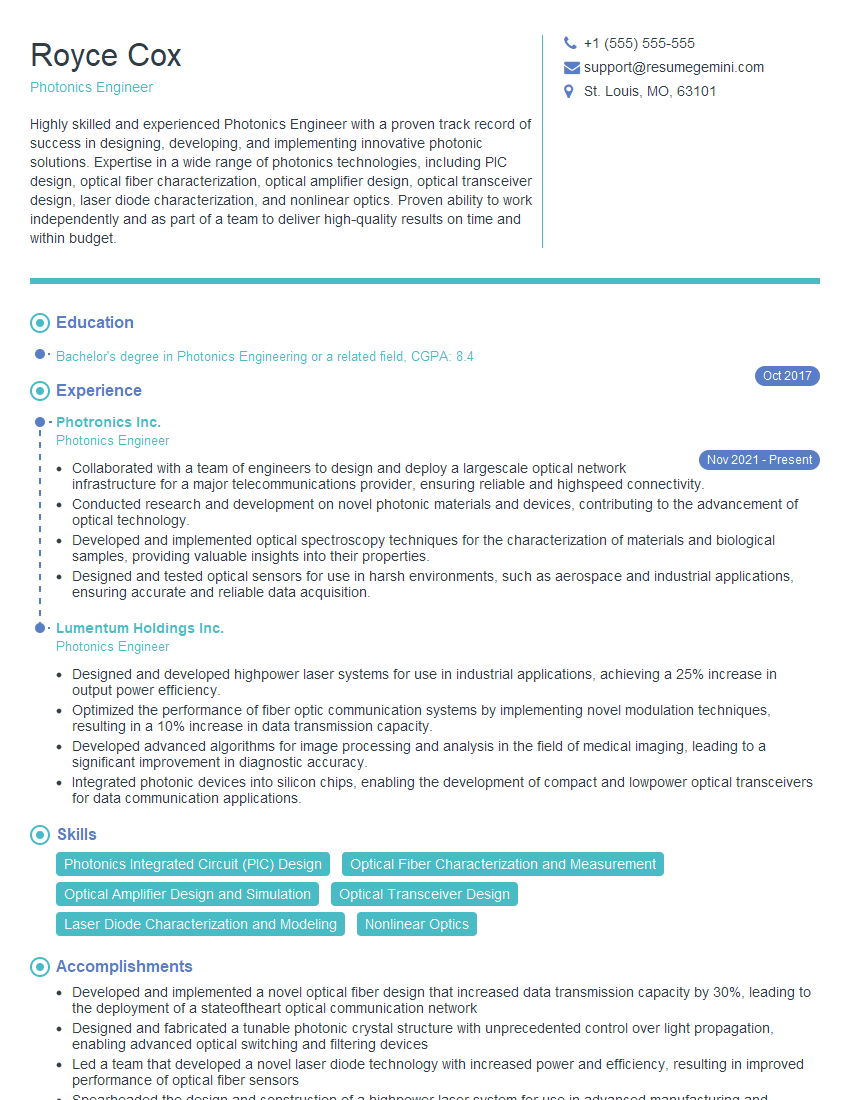
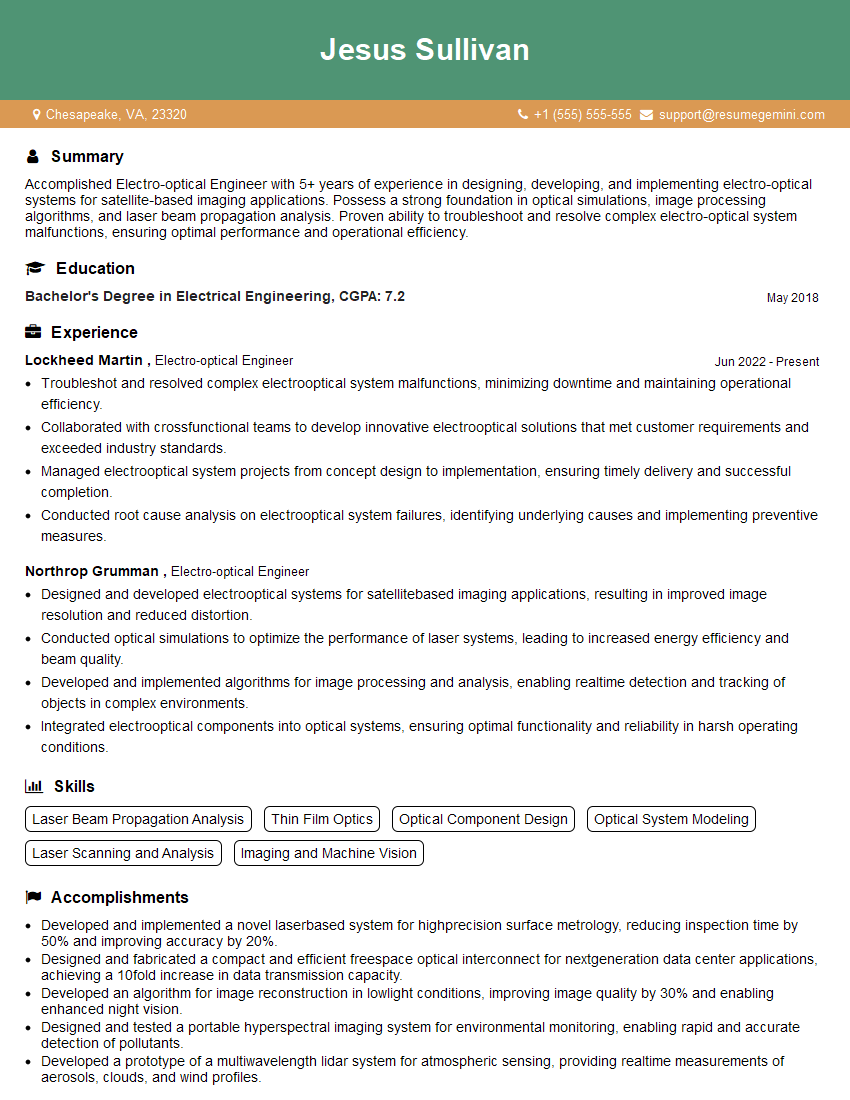
Mastering CCD imaging opens doors to exciting career opportunities in cutting-edge fields. A strong understanding of this technology significantly boosts your employability and allows you to contribute meaningfully to innovative projects. To maximize your job prospects, invest time in crafting a compelling, ATS-friendly resume that showcases your skills and experience effectively. ResumeGemini is a valuable resource to help you build a professional and impactful resume tailored to the specific demands of the CCD imaging industry. Examples of resumes tailored to CCD Imaging positions are available to further aid your preparation.
Explore more articles
Users Rating of Our Blogs
Share Your Experience
We value your feedback! Please rate our content and share your thoughts (optional).
What Readers Say About Our Blog
I Redesigned Spongebob Squarepants and his main characters of my artwork.
https://www.deviantart.com/reimaginesponge/art/Redesigned-Spongebob-characters-1223583608
IT gave me an insight and words to use and be able to think of examples
Hi, I’m Jay, we have a few potential clients that are interested in your services, thought you might be a good fit. I’d love to talk about the details, when do you have time to talk?
Best,
Jay
Founder | CEO