Preparation is the key to success in any interview. In this post, we’ll explore crucial Chemical Preservation interview questions and equip you with strategies to craft impactful answers. Whether you’re a beginner or a pro, these tips will elevate your preparation.
Questions Asked in Chemical Preservation Interview
Q 1. Explain the difference between preventive and remedial conservation.
Preventive conservation focuses on proactive measures to prevent deterioration before it occurs, while remedial conservation involves treating existing damage. Think of it like this: preventive conservation is like regular dental checkups – preventing cavities before they form; remedial conservation is like getting a filling after a cavity develops.
- Preventive Conservation: This includes environmental control (regulating temperature and humidity), proper storage and handling, minimizing exposure to light and pollutants, and regular monitoring of collections. For example, a museum might implement a climate control system to maintain stable conditions for its artifacts.
- Remedial Conservation: This involves techniques to stabilize or repair already damaged objects. Examples include cleaning artifacts, repairing tears in textiles, or consolidating weakened materials. For instance, a conservator might carefully clean a painting using specialized solvents or consolidate a cracked ceramic object with an appropriate adhesive.
Both approaches are crucial for long-term preservation. Ideally, a strong preventive program reduces the need for extensive remedial work.
Q 2. Describe various methods for controlling relative humidity in a museum setting.
Controlling relative humidity (RH) in a museum is vital to prevent deterioration. Several methods exist:
- HVAC Systems: Heating, ventilation, and air conditioning (HVAC) systems are the most common method. These systems use dehumidifiers or humidifiers to maintain RH within a specific range, typically 40-50% for most materials. Sophisticated systems can even create microclimates within display cases for particularly sensitive objects.
- Desiccants: These are materials that absorb moisture from the air. Silica gel is frequently used in sealed containers or display cases to buffer against fluctuations in RH. Regular monitoring and replacement are crucial as their effectiveness diminishes with saturation.
- Air Conditioning with Refrigeration: For extremely humid environments, refrigeration can be used in conjunction with air conditioning to reduce RH effectively.
- Buffering Materials: Materials like buffered papers or textiles can help moderate RH fluctuations within storage containers, offering an additional layer of protection.
The specific method chosen depends on the size of the collection, the sensitivity of the materials, and the available budget. Regular monitoring with calibrated hygrometers is essential to ensure the effectiveness of any chosen system.
Q 3. What are the common causes of deterioration in organic materials (e.g., paper, textiles)?
Organic materials like paper and textiles are susceptible to various forms of deterioration. These can be broadly categorized as:
- Environmental Factors:
- Humidity: High humidity promotes fungal growth and hydrolysis (breakdown of molecules by water), while low humidity can lead to embrittlement.
- Temperature: Extreme temperatures accelerate chemical reactions that degrade materials. Fluctuations in temperature are particularly damaging.
- Light: UV and visible light can cause fading, embrittlement, and discoloration.
- Pollutants: Airborne pollutants like sulfur dioxide and nitrogen oxides can cause acidification and discoloration.
- Biological Factors:
- Insect infestation: Insects like silverfish and booklice can cause significant damage by feeding on cellulose.
- Fungal growth: Mold and mildew thrive in damp conditions and produce acids that degrade materials.
- Chemical Factors:
- Acid hydrolysis: The breakdown of cellulose and other polymers by acid.
- Oxidation: Reaction with oxygen leading to discoloration and weakening.
Understanding these causes is critical in designing effective preventive and remedial strategies. For instance, storing materials in acid-free containers and controlling the environment can significantly minimize deterioration.
Q 4. Detail the chemical processes involved in the deterioration of photographic materials.
Photographic materials are complex and prone to various chemical deteriorative processes. The main culprit is often the interaction between the image and its environment.
- Fading and Discoloration: Exposure to light, particularly UV radiation, causes fading and discoloration due to the photo-oxidation of dyes and silver salts. This results in loss of image detail and color shift.
- Toning and Instability of Dyes: Chemical reactions within the emulsion layer (where the image is formed) can lead to toning, where the color of the image changes over time. Instability of dyes and their interaction with other chemicals in the emulsion layer also contributes to fading and discoloration.
- Image Degradation: The silver halide crystals that form the photographic image are inherently unstable. Over time, they can react with environmental pollutants and chemicals within the photographic material itself leading to reduction in image density, and grain growth.
- Support Degradation: The paper or film base on which the photographic image is printed can also degrade. Acidic paper can lead to embrittlement and yellowing, making the image vulnerable to cracking and loss. Plastic film bases can become brittle and sticky over time.
Understanding these processes informs conservation strategies, such as controlling light exposure, using archival-quality storage materials, and employing image stabilization techniques.
Q 5. Discuss the principles of material compatibility in conservation treatments.
Material compatibility is paramount in conservation. It refers to the principle of ensuring that materials used in treatment are chemically and physically compatible with the object being treated. Incompatible materials can cause further damage by reacting with the object, leaching harmful chemicals, or creating unstable compounds.
- Chemical Compatibility: Avoid using materials that will react with the object’s components. For example, using an acidic adhesive on an alkaline object could lead to a chemical reaction, causing further damage.
- Physical Compatibility: The chosen material must possess similar physical properties to the object; its flexibility, porosity, and strength should be carefully considered to avoid stress and cracking. A rigid consolidant on a flexible textile could cause damage.
- Reversibility: Ideally, conservation treatments should be reversible. If a treatment proves ineffective or damaging, it should be possible to remove it without causing further harm. This means choosing materials that can be removed or neutralized in the future.
Testing compatibility is crucial before initiating any treatment. This might involve conducting small-scale tests on inconspicuous areas of the object to assess the reaction and determine the appropriate concentration and application method.
Q 6. Explain the use of consolidants in object preservation.
Consolidants are materials used to strengthen and stabilize weakened or friable objects. They penetrate into the porous structure of the object and bind the particles together, improving structural integrity and preventing further loss of material. Think of it like filling cracks in a wall to prevent further damage.
- Types of Consolidants: A wide range of consolidants exist, including natural polymers (like Paraloid B72), synthetic resins, and inorganic materials. The choice of consolidant depends on the object’s material, the nature of the damage, and the desired outcome.
- Application Methods: Consolidants are typically applied as solutions or suspensions. Careful control of the concentration, application method, and drying conditions is essential to ensure even penetration and avoid surface buildup or discoloration.
- Examples: Paraloid B72 is frequently used to consolidate paintings and paper, while various acrylic resins are employed for consolidating textiles. Inorganic consolidants like calcium hydroxide might be used to strengthen stone artifacts.
Proper consolidation can greatly extend the life of fragile objects, preserving them for future generations.
Q 7. What are the safety precautions when working with chemical preservatives?
Working with chemical preservatives requires strict adherence to safety precautions to protect both the conservator and the environment.
- Personal Protective Equipment (PPE): Always wear appropriate PPE, including gloves, eye protection, and respirators, as many preservatives are toxic or irritants. The specific PPE depends on the chemicals being used.
- Ventilation: Work in a well-ventilated area or use a fume hood to minimize exposure to harmful vapors and fumes. Many solvents used in conservation are volatile organic compounds (VOCs) which can be hazardous.
- Proper Handling and Disposal: Follow the manufacturer’s instructions carefully for handling and storage. Dispose of waste chemicals according to local regulations and guidelines. Never mix chemicals without understanding the potential reactions.
- Emergency Preparedness: Have appropriate spill kits and emergency response procedures in place. Know the location of safety showers and eye washes.
- Material Safety Data Sheets (MSDS): Always review the MSDS for each chemical before use to understand its hazards and appropriate handling procedures.
Safety should be the top priority when working with any chemical. Following these precautions reduces the risk of accidents and ensures the health and well-being of the conservator.
Q 8. How do you select appropriate cleaning methods for different types of artifacts?
Selecting the right cleaning method for artifacts is crucial; it’s like choosing the right detergent for your clothes – the wrong one can damage the fabric. The approach depends entirely on the artifact’s material, its condition, and the type of soiling. We must always prioritize minimal intervention, opting for the gentlest method possible.
- For delicate objects like textiles or paper: Dry cleaning methods, such as gentle brushing with soft brushes or using low-pressure air to remove loose dust and debris, are preferred. Vacuuming with a HEPA filter can be effective for larger pieces, but it requires extreme caution to avoid damage.
- For more robust materials like stone or metal: Wet cleaning might be an option, but it requires careful selection of solvents and precise control over moisture levels to prevent staining or damage. We often use deionized water with carefully chosen pH neutral detergents and apply them using swabs or specialized cleaning tools. Testing on an inconspicuous area is always done first.
- For painted surfaces: Cleaning is extremely delicate. We use extremely soft brushes and sometimes cotton swabs moistened with deionized water, or, in some cases, very carefully chosen solvents, after extensive testing on an inconspicuous area. The goal is always to remove only loose dirt without damaging the paint layer itself.
A thorough assessment is always the first step, followed by meticulous testing of any cleaning method before applying it to the entire artifact. We meticulously document each step of the process.
Q 9. Explain the process of preparing a conservation treatment report.
A conservation treatment report is the crucial record of all work performed on an artifact. Imagine it as a detailed medical chart for a patient – it tracks the artifact’s history, diagnoses its problems, and documents the treatments applied. It’s essential for future conservation efforts and for researchers to understand the artifact’s history and treatment.
- Introduction: This section includes a summary of the artifact’s history, its condition upon arrival, and the goals of the treatment.
- Materials and Methods: Here, we meticulously document all materials used, including their brand names and compositions, and describe the exact methods and procedures applied. This is extremely important for reproducibility and for future researchers to understand what was done.
- Results: This describes the visible effects of the treatment, documenting both successful and unsuccessful interventions.
- Discussion: This section analyzes the results and offers potential explanations for unexpected outcomes. It might also discuss any limitations encountered.
- Recommendations: This concludes the report with suggestions for the artifact’s long-term care and preservation.
- Photographs:Before, during, and after treatment images are essential for visualizing the process and its effects.
The report’s quality significantly influences the artifact’s future care and research value. It must be written clearly and accessibly, using standardized terminology, and with high-quality images.
Q 10. Describe different methods for stabilizing unstable pigments.
Unstable pigments are like a ticking time bomb in a painting. They can fade, darken, or even crumble over time. Stabilizing them involves slowing or preventing these detrimental changes, often requiring a careful and complex process.
- Resin Consolidation: This involves applying a resin to bind loose pigment particles, making the paint layer more cohesive and less prone to flaking or loss. This is analogous to using glue to reinforce a crumbling wall.
- Micro-environmental control: This involves controlling the environmental factors which may cause instability. This includes controlling light, temperature and relative humidity.
- Retouching: In cases where pigment loss is significant, careful retouching may be necessary to restore visual integrity, but only when all other options have been explored, and always in a way that is clearly reversible and does not obscure the artifact’s integrity.
- In-situ consolidation: This involves strengthening the pigment layer without removing the artifact from its setting. This is often used in situ for murals or large-scale works of art.
The choice of method heavily depends on the pigment’s specific nature, its condition, and the artifact’s overall context. Each case necessitates a tailored approach, preceded by thorough testing and documentation.
Q 11. What are the advantages and disadvantages of using different types of adhesives in conservation?
Adhesives in conservation are like specialized tools – each has strengths and weaknesses. Choosing the wrong one can be disastrous, potentially causing irreversible damage.
- Animal Glue: Traditional and reversible, but susceptible to moisture and temperature changes. Works well for joining wood and paper.
- Starch Paste: Water-soluble and easily reversible, often used for paper and textiles. However, it can be prone to mold growth if not properly applied or stored.
- Synthetic Resins (e.g., Paraloid B72): Offer excellent strength and durability, but can be difficult to reverse. Suitable for a wider range of materials, but require careful selection to ensure compatibility.
- Acrylic Adhesives: Provide good strength and flexibility but can yellow or become brittle over time. A thorough understanding of their long-term behavior is crucial.
The choice depends on several factors: the materials being joined, the reversibility requirements, the environmental conditions, and the adhesive’s long-term stability. The goal is always to select an adhesive that is strong enough to secure the artifact while minimizing potential risks.
Q 12. How do you identify and treat mold or mildew damage on artifacts?
Mold and mildew are like uninvited guests who can severely damage artifacts. Their presence is an emergency requiring immediate action. Identification often involves visual inspection, noting the characteristic fuzzy growth and musty odor. Microscopic analysis can confirm the specific type of organism.
- Isolation: The first step is to isolate the affected artifact to prevent the spread of mold to other objects.
- Cleaning: Gentle cleaning with soft brushes or HEPA vacuuming might remove superficial mold. For ingrained mold, specialized cleaning with solutions like ethanol or hydrogen peroxide may be necessary but only after extensive testing.
- Environmental Control: Addressing the underlying cause of mold growth is crucial. This could involve improving ventilation, reducing humidity, or adjusting temperature.
- Consolidation: Once the mold is removed, it might be necessary to consolidate the damaged areas of the artifact to prevent further loss.
Treatment is highly material-specific, and always requires a cautious approach with a focus on conservation ethics and the preservation of the artifact’s integrity. Documentation of the cleaning and treatment process is key.
Q 13. Discuss the impact of light on artifact degradation and how it can be mitigated.
Light, while allowing us to appreciate artifacts, is a significant threat to their preservation. It’s like leaving your favorite photographs in direct sunlight—they’ll fade over time. Light causes fading, embrittlement, and even chemical changes in materials, accelerating deterioration.
- UV Filtering: Using UV-filtering materials like window film or display cases greatly reduces the harmful UV radiation reaching the artifacts.
- Controlled Illumination: Using low-intensity, cool-white light sources reduces light exposure and prevents rapid fading.
- Limited Display Time: Rotating artifacts on display minimizes their cumulative exposure to light.
- Environmental Monitoring: Regular monitoring of light levels ensures they stay within acceptable limits.
By carefully managing light exposure, we can significantly extend the lifespan of these irreplaceable treasures. It’s a balancing act between access for appreciation and preservation for future generations.
Q 14. Explain your understanding of the ethics in conservation practice.
Conservation ethics are the moral compass guiding our work. It’s about prioritizing the long-term well-being of the artifact above all else. It’s not just about fixing things; it’s about making responsible and informed decisions that respect the artifact’s historical, artistic, and cultural significance.
- Reversibility: Treatments should be reversible or at least minimally invasive, allowing future conservators to undo or modify them as needed.
- Minimum Intervention: We should only intervene when absolutely necessary, using the gentlest methods possible.
- Documentation: Maintaining meticulous records of every step of the process is essential for transparency and accountability.
- Integrity: We must preserve the artifact’s authenticity and originality to the greatest extent possible.
- Collaboration: Working collaboratively with other specialists, researchers, and stakeholders is key to ethical decision-making.
Ethics are not just rules but a framework that guides us in protecting cultural heritage for future generations. It involves a conscious commitment to responsible stewardship, where long-term preservation supersedes short-term gains.
Q 15. Describe your experience with different types of analytical techniques used in conservation science (e.g., FTIR, XRD).
Analytical techniques are crucial for understanding the composition and condition of artifacts before, during, and after conservation treatment. My experience encompasses a range of spectroscopic and diffraction methods. For instance, Fourier-Transform Infrared Spectroscopy (FTIR) allows for the identification of organic materials like pigments, adhesives, and resins through their characteristic vibrational frequencies. I’ve used FTIR extensively to analyze the degradation products on aged paintings, helping determine the nature of the damage and guide appropriate cleaning strategies. X-ray Diffraction (XRD), on the other hand, provides information about the crystalline structure of inorganic materials like minerals and metals. This is invaluable for identifying the types of pigments used in historic ceramics or the composition of metallic objects, assisting in the selection of appropriate cleaning or stabilization methods. I also have experience with techniques like Gas Chromatography-Mass Spectrometry (GC-MS) for analyzing volatile organic compounds and Scanning Electron Microscopy (SEM) with Energy-Dispersive X-ray Spectroscopy (EDS) for detailed surface analysis of materials.
For example, in one project involving a deteriorated 18th-century manuscript, FTIR analysis helped us identify the type of ink and the nature of the discoloration, leading us to a successful cleaning method that minimized damage. In another project involving a corroded bronze sculpture, XRD helped identify the corrosion products, enabling us to develop a targeted treatment to remove them safely.
Career Expert Tips:
- Ace those interviews! Prepare effectively by reviewing the Top 50 Most Common Interview Questions on ResumeGemini.
- Navigate your job search with confidence! Explore a wide range of Career Tips on ResumeGemini. Learn about common challenges and recommendations to overcome them.
- Craft the perfect resume! Master the Art of Resume Writing with ResumeGemini’s guide. Showcase your unique qualifications and achievements effectively.
- Don’t miss out on holiday savings! Build your dream resume with ResumeGemini’s ATS optimized templates.
Q 16. How do you determine the appropriate level of intervention for a damaged artifact?
Determining the appropriate level of intervention is a critical decision in conservation, balancing the need for preservation with the potential for harm. It’s a judgment call based on a careful assessment of the artifact’s condition, the nature of the damage, and the potential risks and benefits of different treatment options. My approach involves a multi-step process.
- Diagnosis: This involves thorough documentation, including detailed visual examination, photography, and analytical testing using techniques like those mentioned earlier. The goal is to fully understand the extent and nature of the damage and identify any underlying causes.
- Risk Assessment: This step involves evaluating the potential risks and benefits of different interventions. We consider the stability of the artifact, the reversibility of treatments, and the potential for unintended consequences.
- Treatment Planning: Based on the diagnosis and risk assessment, a detailed treatment plan is developed, outlining the specific interventions to be performed, the materials to be used, and the monitoring procedures to be followed.
- Ethical Considerations: This crucial step involves considering the ethical implications of any intervention. The primary goal is to preserve the artifact for future generations, while minimizing any potential damage or alteration.
The decision of whether to intervene minimally, moderately, or extensively is based on a careful weighing of the potential benefits against the risks. Sometimes, the best course of action is simply to monitor the artifact’s condition and intervene only if necessary. This ‘wait and see’ approach can be very effective when the rate of deterioration is slow and the risks of treatment are high.
Q 17. Describe your experience with the use of controlled environment storage for artifacts.
Controlled environment storage is absolutely fundamental to long-term artifact preservation. It involves maintaining stable conditions of temperature, relative humidity, and light levels to minimize deterioration. My experience includes designing and implementing storage systems for a wide range of materials, from textiles and paper to metallic artifacts and paintings. We utilize climate-controlled storage rooms equipped with environmental monitoring systems that provide continuous data on temperature and relative humidity. These systems are crucial for ensuring the stability of the storage environment and for detecting any deviations from the optimal conditions. We also consider the materials used in the storage systems, ensuring compatibility with the artifacts being stored to avoid interactions that could lead to further damage. For instance, for certain metals we might need specific inert materials to prevent corrosion. Similarly, acid-free materials are essential for storing paper artifacts.
One memorable project involved designing a climate-controlled storage facility for a collection of historic textiles. The careful consideration of RH, light levels and the use of acid-free storage materials was crucial in preserving the delicate fibers and vibrant colors of the textiles. Regular monitoring and maintenance of the system allowed us to maintain a stable environment and prevent deterioration.
Q 18. How do you manage risks associated with chemical preservation treatments?
Chemical preservation treatments, while often necessary, introduce inherent risks. Managing these risks requires a meticulous approach.
- Material Safety Data Sheets (MSDS): Thorough review of MSDS for all chemicals used is paramount to understand potential health hazards and environmental impacts. Appropriate personal protective equipment (PPE) is always worn.
- Testing and Pilot Studies: Before applying a treatment on a full scale, testing on small, inconspicuous areas is critical to assess its effectiveness and potential side effects. This minimizes the risk of irreversible damage.
- Monitoring and Evaluation: Careful monitoring of the artifact during and after treatment is essential. Regular documentation, including photography and analytical testing, allows for the early detection of any adverse reactions.
- Waste Management: Proper disposal of chemical waste according to environmental regulations is crucial to minimize environmental impact. This might involve using specialized waste disposal companies for hazardous materials.
- Emergency Preparedness: Having a well-defined emergency response plan is crucial in case of accidental spills or other unforeseen events.
For example, when cleaning a painting with a solvent, a small-scale test on an inconspicuous area allows us to evaluate the solvent’s effectiveness on the paint layer and its potential to remove or damage the varnish. If unexpected reactions occur during testing, the treatment plan is adjusted or abandoned altogether.
Q 19. Explain the concept of reversible vs. irreversible treatments in conservation.
The distinction between reversible and irreversible treatments is fundamental in conservation ethics. A reversible treatment can be easily removed or undone without harming the artifact. Examples include the careful removal of surface dirt using soft brushes or the application of certain consolidants that can be removed with appropriate solvents. Irreversible treatments, on the other hand, permanently alter the artifact’s physical or chemical properties. These treatments should only be considered as a last resort when less intrusive options are ineffective and the benefits clearly outweigh the risks. Examples include filling losses with consolidants which can permanently alter the surface texture.
Imagine cleaning a painting. Using deionized water to remove surface grime is a reversible treatment; the water evaporates, leaving the painting essentially unaltered. Conversely, inpainting (filling losses with paint) is generally irreversible; removing it would further damage the painting. The decision of which treatment to use is made based on the artifact’s condition, the nature of the damage, and the overall preservation goals.
Q 20. What are the environmental factors that affect the long-term preservation of artifacts?
Environmental factors significantly affect the long-term preservation of artifacts. These include:
- Temperature: Fluctuations in temperature can cause expansion and contraction of materials, leading to stress and damage. Extreme temperatures can accelerate degradation processes. For example, high temperatures can cause fading in dyes and paints while low temperatures can cause embrittlement.
- Relative Humidity (RH): RH affects the moisture content of materials, impacting their stability. High RH can lead to mold growth and corrosion, while low RH can cause embrittlement and cracking. Wood, for example, can swell or shrink drastically, impacting its structural integrity, in response to humidity changes.
- Light: Exposure to light, especially ultraviolet (UV) and visible light, causes fading and degradation of many organic materials. This effect is especially pronounced in textiles, paintings, and photographs. Light exposure also contributes to discoloration and weakening of materials.
- Pollutants: Air pollutants, such as sulfur dioxide and nitrogen oxides, can react with materials, causing corrosion and discoloration. Acid rain, in particular, poses a significant threat to stone and metal artifacts.
- Pests: Insects and other pests can cause significant damage to organic materials like textiles, wood, and paper. These require specialized pest control measures.
Controlling these environmental factors through careful storage and display practices is crucial for the long-term preservation of artifacts. This often involves the use of climate-controlled storage rooms, UV filters for lighting, and regular monitoring of environmental conditions.
Q 21. Discuss the use of different types of coatings in artifact preservation.
Coatings play a crucial role in artifact preservation by providing a protective barrier against environmental factors. The choice of coating depends on the artifact’s material, the type of damage, and the desired level of protection. Examples include:
- Protective Coatings for Paintings: These coatings, often a type of varnish, protect the paint layers from environmental damage, such as UV radiation, dust, and moisture. However, the selection of the varnish is crucial as it must be compatible with the paint and reversible for future treatment.
- Consolidants for Fragile Materials: Consolidants are used to strengthen weak or deteriorated materials, such as stone, ceramics, and paper. They penetrate the material and bind the particles together, improving its structural integrity. The choice of consolidant is crucial as it has to be compatible with the material to be consolidated. In the case of porous materials, the consolidant should only strengthen without completely filling the pores.
- Barrier Coatings for Metals: These coatings prevent corrosion by isolating the metal from the environment. The choice of coating depends on the specific metal and the environmental conditions. For example, wax coatings may offer temporary protection, while more durable coatings like acrylics might be more appropriate for long-term preservation.
- Protective Coatings for Textiles: These coatings can protect textiles from damage caused by light, pollutants, and handling. They often involve a careful balance between protection and breathability to prevent deterioration. Water-based acrylic coatings are sometimes employed to prevent deterioration due to moisture or light.
The application of coatings requires careful consideration. It is crucial to use appropriate materials that are compatible with the artifact and to apply the coatings evenly to avoid creating new damage. Moreover, the reversibility of the coating should also be a primary concern.
Q 22. Explain the importance of proper documentation in chemical preservation work.
Proper documentation is the cornerstone of successful chemical preservation. It’s not just about recording what you did; it’s about creating a comprehensive and auditable trail that allows others (and your future self!) to understand the condition of an artifact before, during, and after treatment. This ensures the preservation work is repeatable, verifiable, and informs future conservation efforts.
- Detailed Treatment Records: These include the artifact’s identification number, date of treatment, materials used (with specific batch numbers if applicable), methods employed, observations during treatment, and any unexpected findings or challenges encountered.
- Photography and Videography: Before, during, and after treatment images provide visual documentation of the artifact’s condition and the effectiveness of the treatment. This is particularly crucial for subtle changes that might not be captured in written notes.
- Sample Analysis: If samples are taken for analysis (e.g., to determine the composition of a material), the results of those analyses must be meticulously recorded and included in the documentation.
- Storage Conditions: Records should detail the environmental conditions (temperature, humidity, light levels) in which the artifact is stored, both before and after treatment. These conditions directly impact its long-term preservation.
Imagine a scenario where you’re treating a delicate 18th-century painting. Without detailed documentation, you’d struggle to replicate the successful treatment approach if another section of the painting requires later intervention. Documentation is the insurance policy for your work and protects against future misinterpretations or replication failures.
Q 23. Describe your experience with the preservation of specific materials, such as wood, metal, or glass.
My experience spans a range of materials. For wood, I’ve worked extensively with consolidants to stabilize degraded surfaces. For example, I used a 5% Paraloid B-72 solution in acetone to consolidate a severely cracked wooden sculpture. Careful monitoring of the solvent penetration and application techniques are vital to avoid warping or discoloration. For metal artifacts, I’ve dealt with corrosion issues using electrochemical methods and chemical cleaning agents. For instance, I removed surface corrosion from a bronze statue using a chelating agent, meticulously controlling pH and reaction times to avoid damaging the underlying patina. With glass, my experience includes the removal of surface deposits using specialized cleaning solutions and the repair of minor cracks using compatible adhesives. The critical factor here is understanding the composition of the glass to select appropriate cleaning and adhesive materials that won’t damage the surface.
Q 24. How do you assess the condition of an artifact prior to initiating a treatment?
Assessing the condition of an artifact before treatment is a multifaceted process requiring a careful and methodical approach. It’s analogous to a doctor performing a thorough examination before beginning treatment.
- Visual Inspection: This involves carefully examining the artifact for visible damage, such as cracks, discoloration, corrosion, insect infestation, or surface deposits. This often includes using magnification tools (e.g., microscopes) to observe small details.
- Non-destructive Testing: Techniques like X-ray fluorescence (XRF) spectroscopy can identify the composition of materials without damaging the artifact. This helps determine the cause of degradation and guides the selection of appropriate treatment methods.
- Documentation: Detailed photographic documentation, including macro-photography, is crucial to record the initial condition accurately. This establishes a baseline for comparison after treatment.
- Environmental Monitoring: Recording environmental conditions (temperature, humidity, light levels) is essential for understanding the artifact’s history and potential degradation factors.
For example, before treating a leather-bound book, I might examine it for signs of mold, check the acidity of the paper, and assess the condition of the binding to tailor my treatment plan accordingly. A thorough assessment reduces the risk of causing further damage during conservation efforts.
Q 25. What are the common challenges encountered in chemical preservation and how do you overcome them?
Chemical preservation presents numerous challenges. One common issue is incompatibility of materials; for instance, using a cleaning solution that reacts negatively with the artifact’s material. This is mitigated through thorough material analysis and testing on inconspicuous areas before widespread application. Another challenge is unforeseen reactions during treatment. For instance, a cleaning solution might unexpectedly remove surface details along with unwanted deposits. This emphasizes the importance of careful control of variables (concentration, temperature, time), and pilot tests. Controlling environmental factors is also crucial, as fluctuating temperatures and humidity can cause significant damage to artifacts. Addressing this requires optimal storage conditions and the use of appropriate environmental control measures.
Overcoming these challenges involves meticulous planning, thorough testing, and a deep understanding of material science and chemistry. Utilizing non-destructive testing methods and adopting a cautious, iterative approach are essential to minimizing risks.
Q 26. Describe your experience with pest control in museum collections.
Pest control in museum collections is paramount for preserving artifacts. My experience involves implementing integrated pest management (IPM) strategies, which focus on preventing infestations through environmental controls rather than solely relying on pesticides. This approach typically involves:
- Environmental Controls: Maintaining stable temperature and humidity levels within the storage areas, to prevent conditions conducive to pest growth.
- Regular Inspections: Frequent monitoring of collections to detect infestations early, before significant damage occurs.
- Physical Barriers: Using airtight containers or enclosures to isolate vulnerable artifacts.
- Vacuuming and Cleaning: Regular cleaning of storage areas removes dust and debris, eliminating potential food sources for pests.
- Targeted Pesticide Use: In cases of severe infestations, using appropriate, low-toxicity pesticides following strict safety guidelines and adhering to museum protocols.
It’s crucial to meticulously document every step of the pest control process, including the types of pests found, the methods used for control, and the effectiveness of the treatment. Remember, safety is paramount when dealing with pesticides. Always follow manufacturer instructions and adhere to all relevant safety protocols.
Q 27. How do you stay updated on the latest advancements and best practices in chemical preservation?
Staying updated in this field requires a multifaceted approach. I actively participate in professional organizations such as the American Institute for Conservation (AIC) and attend conferences and workshops to learn about the latest advancements in materials science, analytical techniques, and conservation methodologies. I regularly read peer-reviewed journals and follow online resources related to chemical preservation. Networking with colleagues and participating in professional discussions also provides valuable insights and keeps me abreast of new best practices. Continuous learning is essential in this dynamic field, ensuring my methods remain aligned with current standards and research findings.
Q 28. Describe a time you had to troubleshoot a problem during a conservation treatment.
During the treatment of a 19th-century water-color painting, I encountered an unexpected problem. The painting’s varnish had degraded and was causing discoloration and flaking. My initial plan was to gently remove the varnish using a solvent-based cleaner, but the solvent reacted unexpectedly with the underlying pigments causing further damage. I had to quickly troubleshoot the situation. I immediately stopped the treatment and consulted literature, seeking alternative methods. I discovered that an enzymatic cleaner, instead of a solvent-based one, could safely remove the varnish without damaging the pigments. The enzymatic cleaner worked successfully, restoring the painting’s vibrancy without harming the delicate pigments. This experience highlighted the critical importance of having a flexible approach and staying adaptable to unexpected problems.
Key Topics to Learn for Chemical Preservation Interview
- Principles of Degradation: Understanding the chemical and physical processes that lead to the deterioration of materials (e.g., oxidation, hydrolysis, microbial attack).
- Preservation Techniques: Familiarize yourself with various methods like freeze-drying, irradiation, chemical stabilization, and encapsulation, including their advantages and limitations.
- Material Compatibility: Knowing how to select appropriate preservation methods based on the material’s properties and desired longevity.
- Environmental Control: Understanding the role of temperature, humidity, and light in material degradation and how to control them for effective preservation.
- Quality Control and Testing: Familiarize yourself with methods for assessing the effectiveness of preservation techniques and monitoring material condition over time.
- Safety Regulations and Handling: Demonstrate understanding of relevant safety protocols, including the handling and disposal of chemicals used in preservation.
- Case Studies and Problem-Solving: Be prepared to discuss real-world examples of chemical preservation challenges and your approach to solving them.
- Emerging Technologies: Staying updated on the latest advancements in chemical preservation techniques and materials.
Next Steps
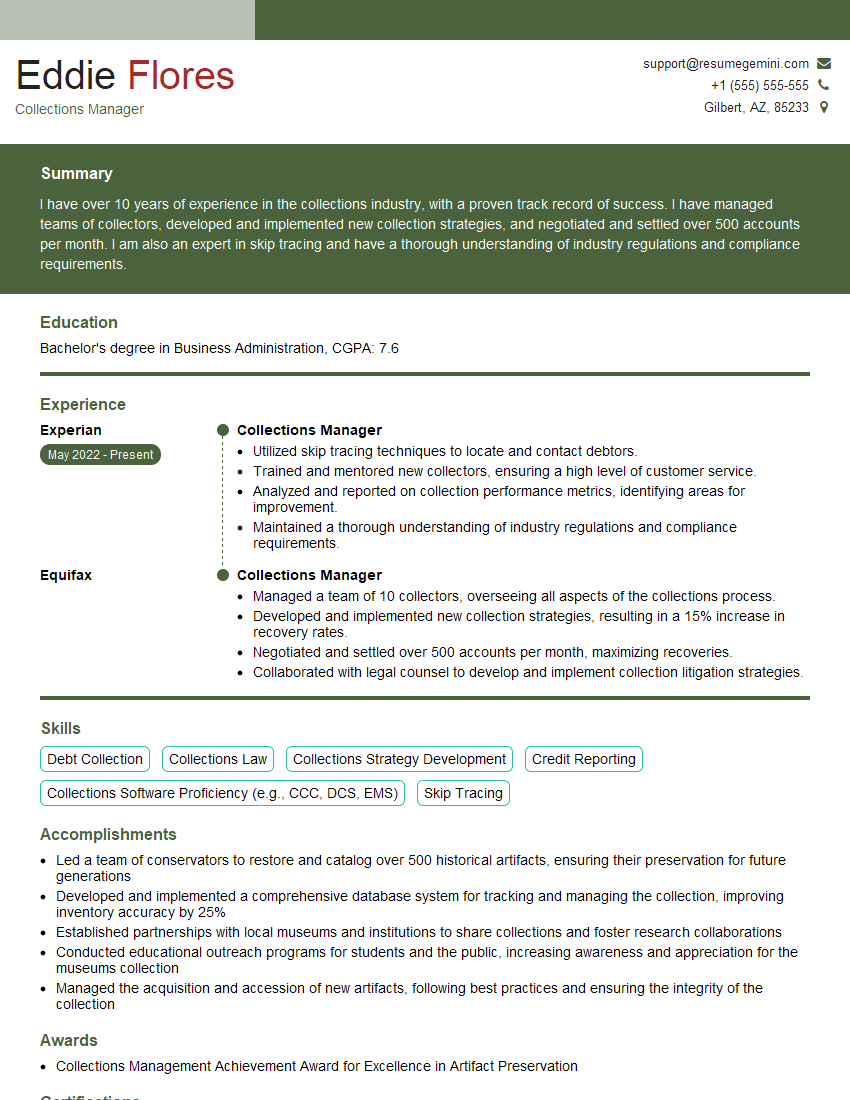
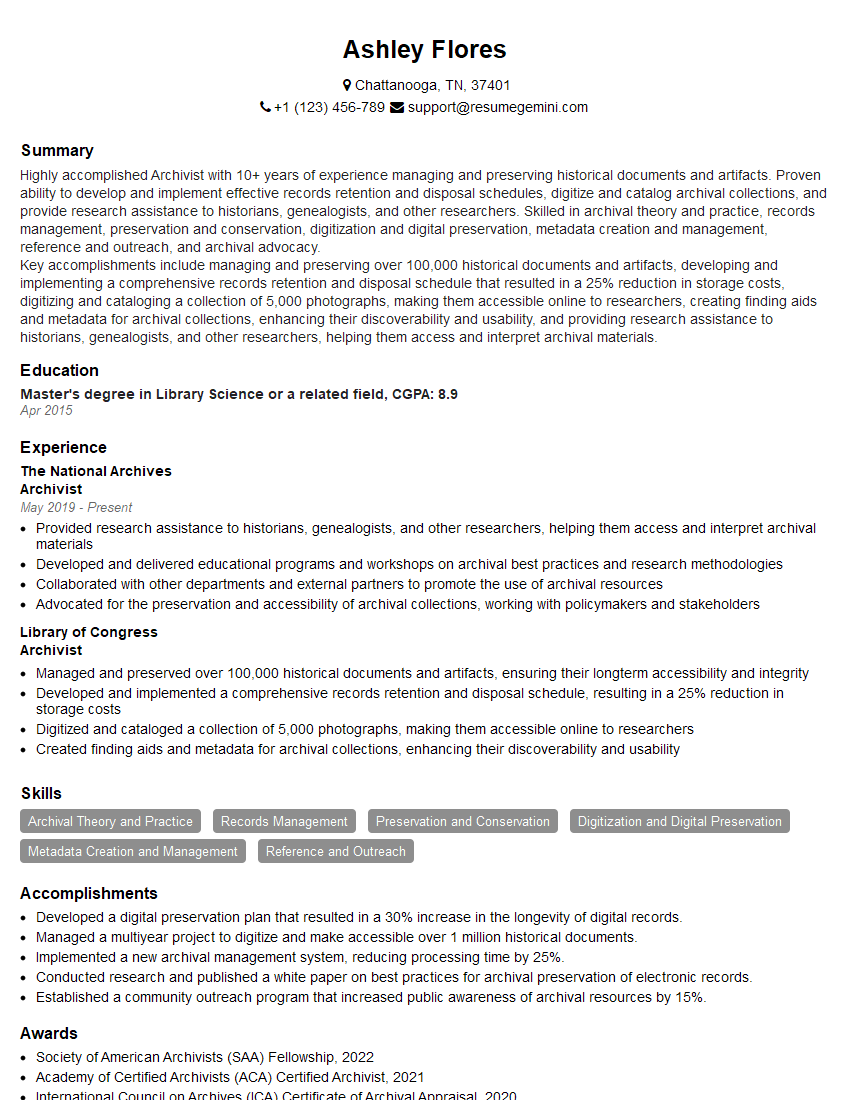
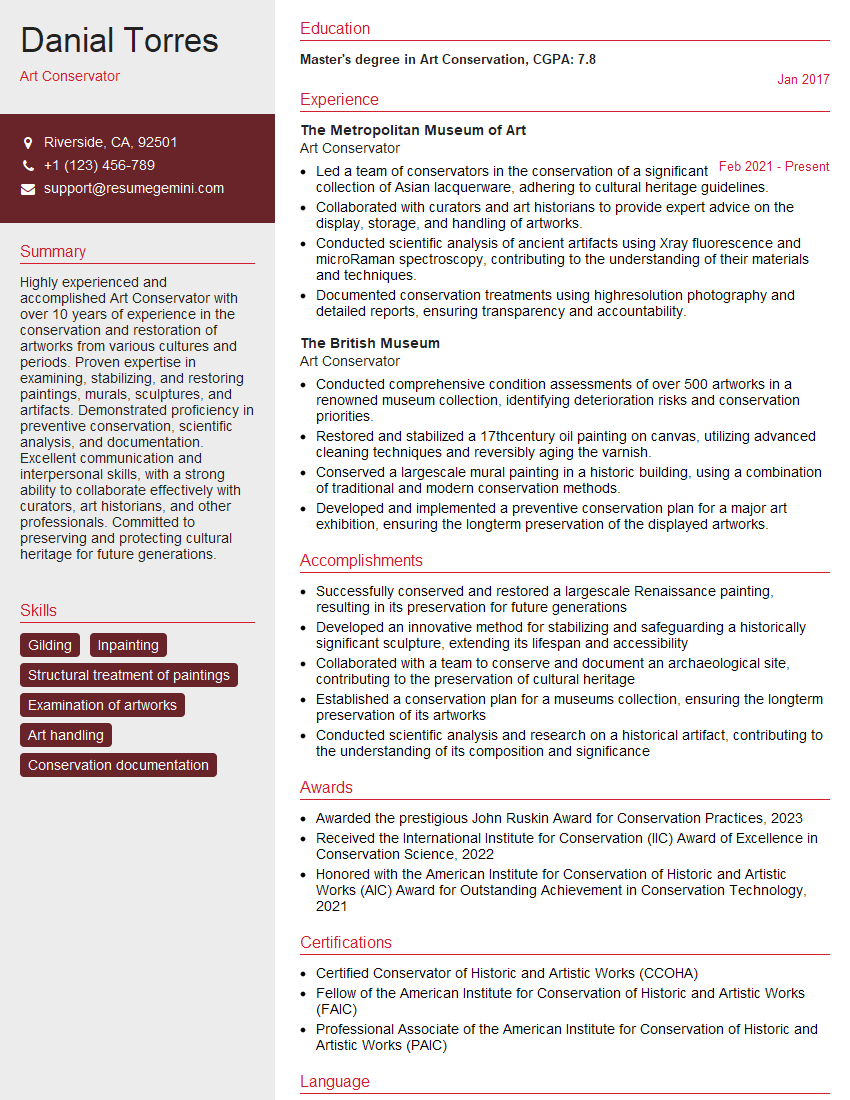
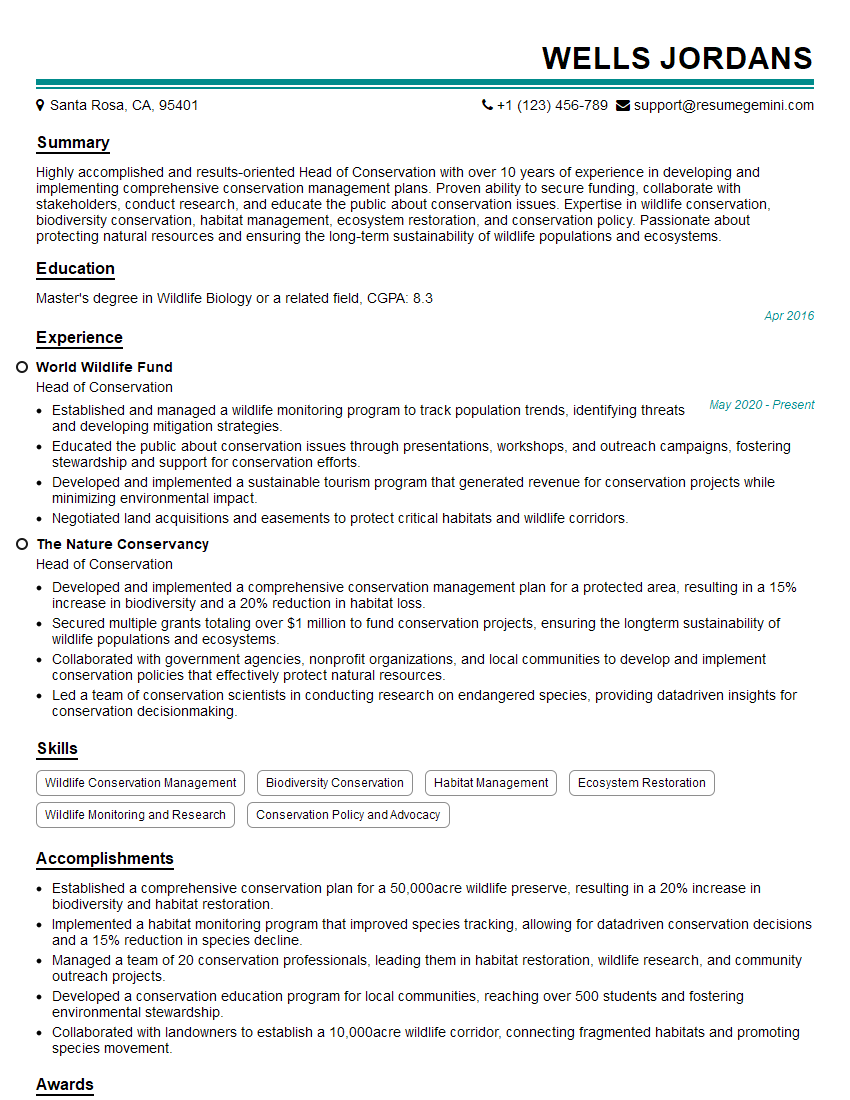
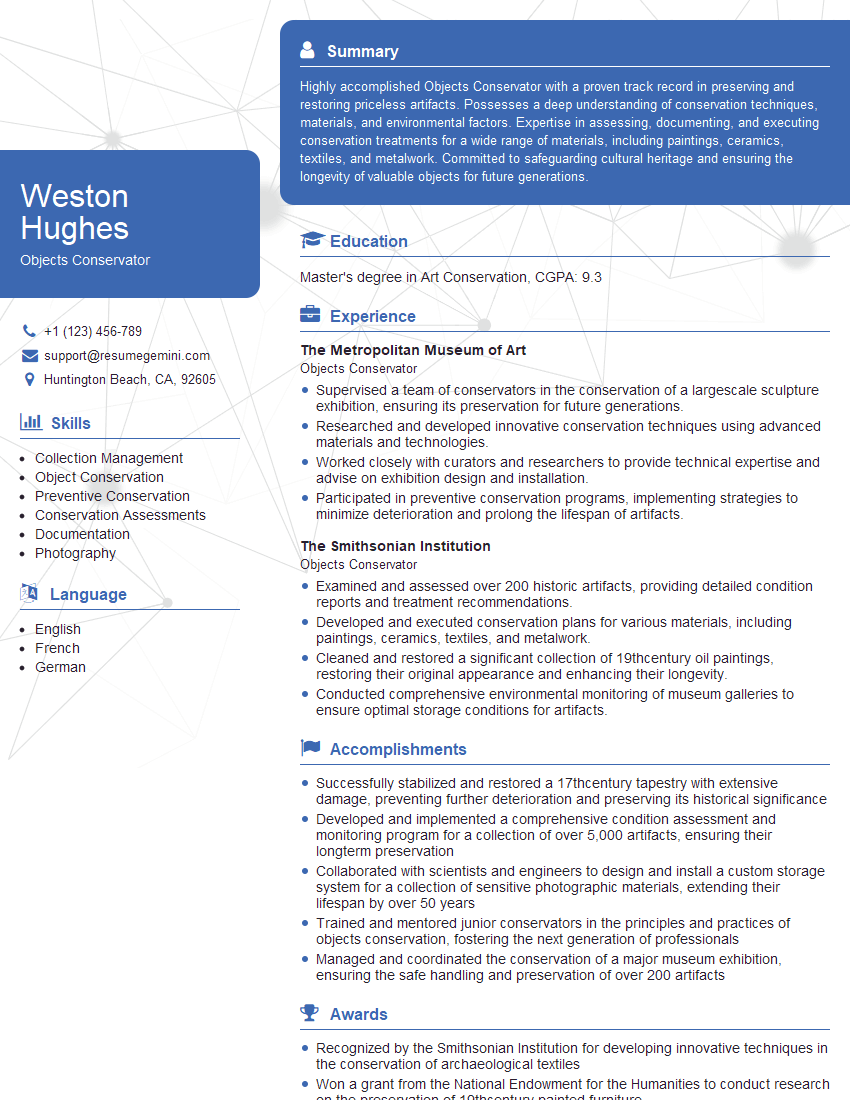
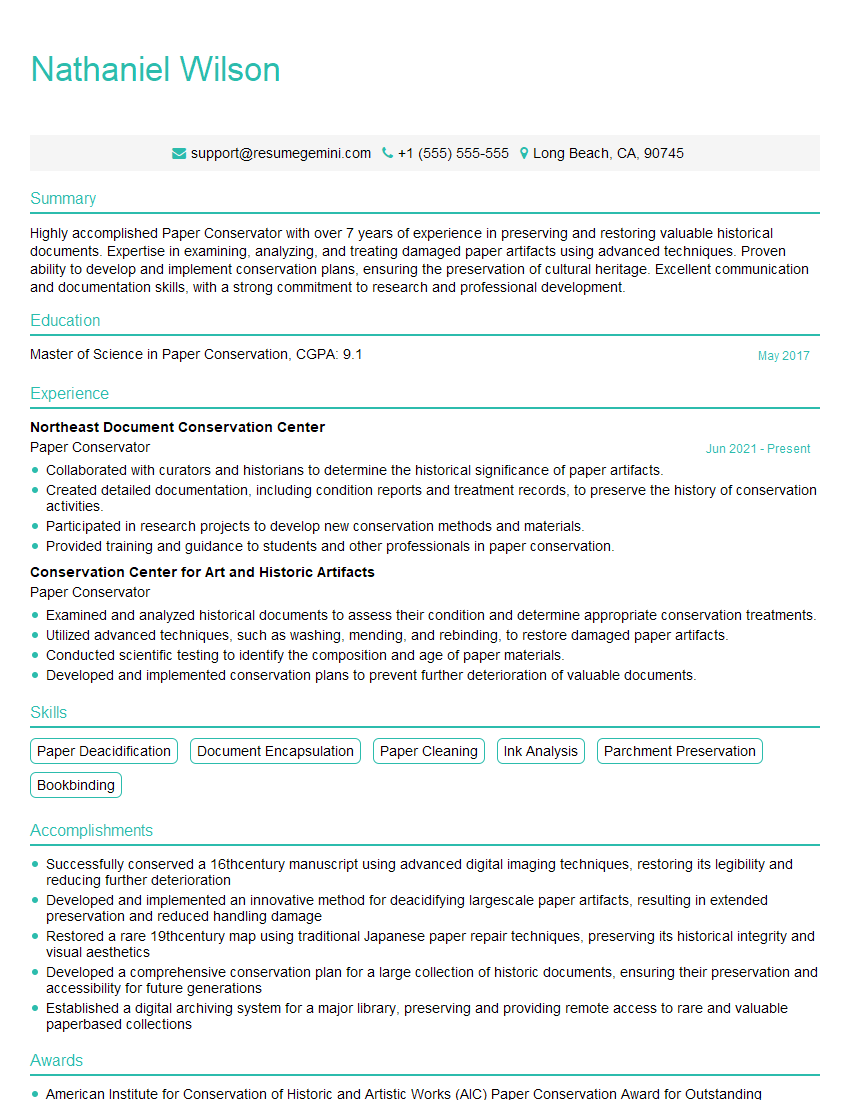
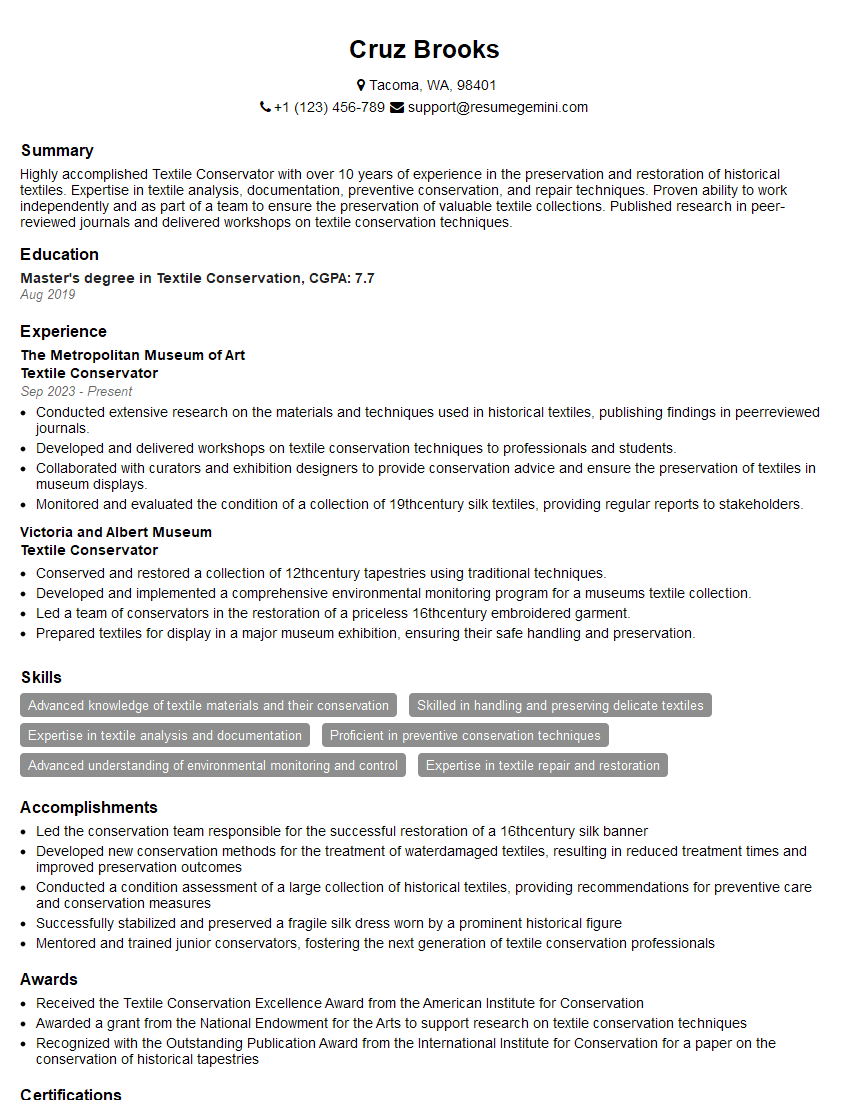
Mastering chemical preservation opens doors to exciting career opportunities in diverse fields, from museums and archives to pharmaceuticals and food science. A strong understanding of this field is crucial for securing your dream role. To maximize your job prospects, creating an ATS-friendly resume is essential. ResumeGemini offers a trusted platform to build a professional and impactful resume that highlights your skills and experience effectively. We provide examples of resumes tailored to Chemical Preservation to help you get started. Invest time in crafting a compelling resume – it’s your first impression with potential employers.
Explore more articles
Users Rating of Our Blogs
Share Your Experience
We value your feedback! Please rate our content and share your thoughts (optional).
What Readers Say About Our Blog
Really detailed insights and content, thank you for writing this detailed article.
IT gave me an insight and words to use and be able to think of examples