The thought of an interview can be nerve-wracking, but the right preparation can make all the difference. Explore this comprehensive guide to Chemical Stripping and Degreasing interview questions and gain the confidence you need to showcase your abilities and secure the role.
Questions Asked in Chemical Stripping and Degreasing Interview
Q 1. What are the different types of chemical strippers available?
Chemical strippers are categorized based on their chemical composition and the type of coatings they remove. Broadly, we have:
- Alkaline Strippers: These are water-based solutions containing strong bases like sodium hydroxide or potassium hydroxide. They are effective at removing paints, lacquers, and some epoxy coatings. Think of them as powerful soap solutions, but far more aggressive.
- Acid Strippers: These utilize strong acids such as sulfuric acid, phosphoric acid, or nitric acid. They’re particularly effective on metal oxides, rust, and some types of paint. However, they require careful handling due to their corrosive nature.
- Solvent Strippers: These are organic solvent-based systems often containing methylene chloride, N-methylpyrrolidone (NMP), or other solvents. They are efficient at removing various coatings, including paints, adhesives, and resins, and they often evaporate quickly, leaving a clean surface. But they can be quite volatile and pose health and environmental risks.
- Specialty Strippers: This category includes strippers formulated for specific applications or materials, such as powder coatings, plastics, or delicate surfaces. They may be based on unique chemical combinations tailored to a particular removal task.
The choice of stripper depends heavily on the substrate, the coating to be removed, and environmental concerns. For instance, an alkaline stripper would be suitable for removing paint from steel, while a solvent stripper might be preferred for delicate plastics. Always test a small inconspicuous area before applying the stripper to the entire surface.
Q 2. Explain the process of alkaline cleaning.
Alkaline cleaning, a type of chemical stripping, uses alkaline solutions to remove oils, greases, and other contaminants from surfaces. It’s like a powerful soap and water wash, but on an industrial scale. The process generally involves:
- Pre-cleaning: Removing loose debris and particles from the surface to ensure efficient cleaning.
- Immersion or Spraying: Submerging the parts in an alkaline cleaning bath or spraying the solution onto the surface. The temperature and time of exposure are critical factors, dependent on the soil type and material of the object being cleaned.
- Rinsing: Thorough rinsing with clean water to remove all traces of the alkaline solution. Residual alkali can cause corrosion or other problems.
- Drying: Drying the cleaned parts to prevent re-contamination. This can be done using air drying, forced-air drying, or other appropriate methods.
Alkaline cleaners typically contain surfactants (to emulsify oils and greases), chelating agents (to bind metal ions), and other additives to enhance cleaning performance. A common example is the use of alkaline cleaners in automotive parts cleaning to remove manufacturing oils and lubricants before painting.
Q 3. Describe the process of solvent degreasing.
Solvent degreasing is a process that uses organic solvents to remove oils, greases, and other contaminants from surfaces. It’s commonly used for precision cleaning where complete removal of contaminants is critical. The process involves immersing parts in a solvent bath or spraying them with a solvent. Common solvents include chlorinated solvents (once popular, but now largely phased out due to environmental concerns), hydrocarbons, and fluorocarbons. The process typically follows these steps:
- Vapor Degreasing (Most Common): The parts are placed in a vapor degreasing machine. The machine has three sections: a cleaning section where the parts are immersed in boiling solvent, a rinsing section, and a drying section. Solvent vapors condense on the parts, removing the contaminants. This method provides efficient and thorough degreasing.
- Immersion Degreasing: Parts are immersed in a tank of liquid solvent. This is a simpler method, but less effective than vapor degreasing and more wasteful.
- Spray Degreasing: Solvent is sprayed onto the parts using a specialized spray equipment. This method is effective for cleaning large parts or areas that cannot be easily immersed.
After degreasing, parts must be thoroughly dried to prevent solvent residue from interfering with subsequent processes. Solvent degreasing is commonly used in the electronics industry for cleaning circuit boards and other delicate components. However, the selection of solvent and the process itself should take environmental regulations into account.
Q 4. What safety precautions are necessary when handling chemical strippers?
Chemical strippers and degreasers are hazardous materials requiring strict safety precautions. These include:
- Personal Protective Equipment (PPE): Always wear appropriate PPE, including gloves (chemical-resistant), eye protection (safety glasses or goggles), and respiratory protection (respirator, depending on the stripper and ventilation). Appropriate clothing should also be worn to prevent skin contact.
- Ventilation: Ensure adequate ventilation to prevent inhalation of vapors or fumes. Work in a well-ventilated area or use a local exhaust ventilation system. In confined spaces, respiratory protection is essential.
- Fire Safety: Many solvents are flammable. Avoid sparks, open flames, and heat sources. Have appropriate fire extinguishers readily available.
- Spill Response: Have a spill response plan in place. Know how to handle spills safely and have absorbent materials on hand.
- Emergency Procedures: Be familiar with emergency procedures in case of accidental exposure. Have readily available eyewash stations and safety showers.
- Safe Handling Practices: Follow the manufacturer’s safety data sheets (SDS) carefully. This includes proper storage, handling, and disposal of the chemicals.
Safety training is crucial for anyone handling these chemicals. Remember, even a small lapse in safety procedures can lead to serious consequences.
Q 5. How do you select the appropriate chemical stripper for a specific material?
Selecting the right chemical stripper depends on several factors:
- Material to be stripped: Different materials react differently to various chemical strippers. Some strippers can damage certain materials. For example, a strong acid stripper could damage aluminum.
- Type of coating: The type of coating to be removed (paint, epoxy, powder coating, etc.) dictates the appropriate stripper. A stripper effective for paint might not work well on epoxy.
- Substrate compatibility: The stripper should not damage the underlying substrate (metal, plastic, wood, etc.).
- Environmental concerns: Choose environmentally friendly strippers whenever possible, considering VOC content and disposal requirements.
- Cost-effectiveness: Balance the cost of the stripper with its effectiveness and the overall process time.
Before selecting a stripper for a specific application, always conduct a small-scale test on an inconspicuous area to ensure compatibility and effectiveness. Manufacturer’s recommendations and consultations with chemical suppliers are valuable resources in this selection process. I often advise clients to prioritize safety and environmental considerations, even if it slightly increases the initial cost.
Q 6. What are the environmental concerns associated with chemical stripping and degreasing?
Chemical stripping and degreasing processes raise several environmental concerns:
- Air Pollution: Volatile organic compounds (VOCs) released during solvent degreasing and the use of certain strippers can contribute to air pollution and smog formation. These compounds can also have adverse health effects.
- Water Pollution: Improper disposal of spent strippers and degreasing solutions can contaminate water bodies. Alkaline and acidic solutions can alter the pH of water, harming aquatic life. Solvents can also contaminate groundwater.
- Hazardous Waste Generation: Spent strippers and degreasing solvents are often classified as hazardous waste, requiring special handling and disposal according to regulations.
- Ozone Depletion: Some chlorinated solvents were previously used as degreasers but contributed to ozone depletion, leading to their ban or strict regulation in many regions.
Minimizing environmental impact requires using environmentally friendly strippers, implementing proper waste management practices, and adopting cleaner technologies like aqueous cleaning methods. Adherence to local, regional, and national environmental regulations is paramount.
Q 7. How do you dispose of chemical waste from stripping and degreasing processes?
Disposal of chemical waste from stripping and degreasing processes must comply with all applicable local, state, and federal regulations. This typically involves:
- Waste Characterization: Identifying the composition of the waste to determine its hazardous characteristics. This often requires laboratory analysis.
- Waste Segregation: Separating different types of waste streams to ensure proper handling and disposal. For example, spent alkaline strippers should be kept separate from spent solvent degreasing solutions.
- Containerization and Labeling: Properly labeling containers to clearly indicate the contents and associated hazards. Containers should be compatible with the waste type.
- Transportation: Utilizing licensed hazardous waste transporters to transport the waste to a permitted treatment, storage, and disposal facility (TSDF).
- Disposal at a Permitted Facility: Using only permitted facilities for disposal. Different waste streams may require different treatment methods (e.g., incineration, neutralization, or other specialized processes).
- Record Keeping: Maintaining detailed records of waste generation, handling, transportation, and disposal. This documentation is essential for compliance audits.
Working with a qualified hazardous waste management company is crucial to ensure safe and compliant disposal. Failing to follow these steps can result in significant fines and environmental damage. Remember that responsible waste management is not just a regulation; it’s a commitment to environmental stewardship.
Q 8. Explain the importance of pre-cleaning before chemical stripping.
Pre-cleaning before chemical stripping is crucial for optimal results and efficiency. Think of it like preparing a canvas before painting – you wouldn’t start painting on a dirty canvas, would you? Similarly, removing loose debris and surface contaminants before applying a chemical stripper ensures that the stripper can effectively reach and remove the target coating. This prevents the stripper from being wasted on unnecessary materials and ensures a more thorough and uniform stripping process. Pre-cleaning can involve methods such as solvent wiping, pressure washing, or abrasive blasting, depending on the substrate and the nature of the contaminants. For example, if you’re stripping paint from a metal surface, a solvent wipe might remove dust and loose particles, allowing the stripper to penetrate and work more effectively on the paint itself. Skipping this step can lead to inconsistent stripping, requiring multiple applications and potentially damaging the underlying material.
Q 9. What are the different methods for neutralizing chemical strippers?
Neutralization of chemical strippers is essential for safety and environmental reasons. The spent stripper, often containing strong acids or bases, needs to be rendered harmless before disposal. Several methods exist:
- Water Washing: This involves thoroughly rinsing the stripped surface with copious amounts of water, diluting the stripper and carrying it away. This is effective for many water-soluble strippers but might not be sufficient for all.
- Chemical Neutralization: This method involves using a neutralizing agent, like a base to neutralize an acid stripper or vice-versa. For instance, a sodium carbonate solution might be used to neutralize an acidic stripper. Careful control of the process is vital to ensure complete neutralization and avoid generating harmful byproducts. The pH of the solution should be monitored throughout the process.
- Specialized Neutralization Products: Many commercially available products are designed specifically to neutralize particular types of strippers. These are usually formulated for safety and ease of use and often include indicators to confirm successful neutralization.
The choice of method depends on the type of stripper used, the nature of the waste, and local regulations.
Q 10. How do you ensure complete removal of the stripping agent?
Ensuring complete removal of the stripping agent is paramount to prevent residual contamination, corrosion, and potential health hazards. This is achieved through a multi-step process:
- Thorough rinsing: Multiple rinses with clean water or a suitable solvent are critical to remove the bulk of the stripper. The rinsing should be done under controlled conditions, ensuring the spent stripping solution is collected and properly disposed of.
- Neutralization (if applicable): As discussed previously, neutralizing the stripper is a key step in ensuring complete removal of its harmful components.
- Inspection: A thorough visual inspection of the stripped surface is necessary to identify any residual stripper or coating. Sometimes, specialized techniques like chemical analysis might be required to ensure complete removal, particularly for sensitive applications.
- Post-Cleaning: A final cleaning step might be necessary to remove any remaining residue and prepare the surface for further processing. This can include additional washing, drying, and/or surface treatments.
For example, in aerospace applications, the complete removal of stripping agents is critical to ensure structural integrity and prevent corrosion. Any residue could compromise the performance of the aircraft.
Q 11. What are the signs of improper chemical stripping?
Signs of improper chemical stripping can range from subtle to readily apparent. These include:
- Uneven stripping: Areas of the surface might still retain the original coating, indicating inconsistent stripper application or inadequate dwell time.
- Damage to the substrate: Over-stripping or the use of an incompatible stripper can damage the underlying material, causing pitting, etching, or other forms of surface degradation. This is especially critical when stripping delicate materials like aluminum or plastics.
- Residue of the stripper: The presence of stripper residue is a clear indication of incomplete removal, posing a safety and environmental risk. This can often be detected by visual inspection or through chemical analysis.
- Poor surface finish: After stripping, the surface should be clean and relatively smooth. A rough or uneven surface points towards an improper stripping process.
- Discoloration: Unexpected discoloration of the underlying substrate could signal chemical interaction between the stripper and the material.
Careful attention to detail and adherence to the proper procedures are crucial in minimizing these issues.
Q 12. How do you troubleshoot issues with chemical stripping?
Troubleshooting issues with chemical stripping involves a systematic approach:
- Identify the problem: Carefully assess the nature of the problem – uneven stripping, substrate damage, residue, etc. Take photos and detailed notes for documentation.
- Review the process: Check the stripping process parameters, including the type and concentration of the stripper, application method, dwell time, rinsing procedure, and neutralization steps. Verify that the correct procedures were followed meticulously.
- Investigate potential causes: Based on the identified problem, investigate potential causes. Was the surface properly pre-cleaned? Was the correct stripper used? Was the dwell time sufficient? Were rinsing and neutralization steps adequately performed?
- Test alternative solutions: If the problem persists, experiment with alternative strippers, concentrations, application techniques, or rinsing procedures. Perform these tests on a small, inconspicuous area first.
- Document findings: Thoroughly document the findings of the troubleshooting process. This information will be invaluable in preventing similar issues in the future.
Remember safety first! Always consult the Safety Data Sheet (SDS) for the chemical stripper before undertaking any troubleshooting steps.
Q 13. What are the different types of degreasing solvents?
Degreasing solvents come in various forms, each suited for specific applications and materials:
- Chlorinated solvents: These were once widely used (e.g., trichloroethylene, perchloroethylene) but their use is now heavily restricted due to environmental and health concerns. They are very effective degreasers, but their volatility and potential toxicity make them less desirable.
- Hydrocarbon solvents: These are less hazardous than chlorinated solvents but still pose flammability risks (e.g., mineral spirits, petroleum ethers). They are commonly used for degreasing metal parts.
- Fluorocarbon solvents: These are non-flammable and relatively non-toxic, but they are more expensive than other options (e.g., HFC-43-10mee). Their excellent degreasing capabilities make them suitable for sensitive applications.
- Aqueous degreasers: These use water-based solutions with detergents and emulsifiers to remove grease and oil. They are generally safer and more environmentally friendly than solvent-based degreasers.
The choice of solvent depends on the type of grease or oil being removed, the material being degreased, environmental regulations, and cost considerations.
Q 14. What are the advantages and disadvantages of using aqueous degreasers?
Aqueous degreasers offer several advantages:
- Environmental friendliness: They are generally less harmful to the environment than solvent-based degreasers and often biodegradable.
- Safety: They typically pose lower health risks and are less flammable than many solvent-based alternatives.
- Cost-effectiveness: Water is relatively inexpensive compared to many organic solvents.
- Ease of use: They are often easier to handle and dispose of than volatile organic solvents.
However, they also have some disadvantages:
- Effectiveness: They might not be as effective as solvent-based degreasers for removing heavy grease or oil, especially on porous materials.
- Rinse requirements: Thorough rinsing is essential to ensure complete removal of the aqueous degreaser and prevent residue.
- Water usage: The process can consume significant amounts of water, especially in large-scale operations.
- Corrosion potential: If not properly dried, residual water can contribute to corrosion on certain metals.
The decision to use aqueous degreasers should consider these factors in relation to specific application requirements.
Q 15. Explain the concept of vapor degreasing.
Vapor degreasing is a highly effective cleaning process that uses the vapor of a solvent to remove oils, greases, and other contaminants from metal parts. Imagine a small metal part submerged in a bath of boiling water; the steam cleanses the part. Vapor degreasing is similar but uses a specially chosen solvent instead of water. The process typically involves three stages:
- Vapor degreasing: The parts are suspended in the vapor zone of a boiling solvent. The vapor condenses on the cool parts, dissolving and rinsing away contaminants. This is the primary cleaning stage.
- Solvent rinsing: The parts are then immersed in a liquid solvent bath to remove any remaining contaminants that weren’t lifted by the vapor. This is for thorough cleaning.
- Drying: Finally, the parts are further cleaned with hot solvent vapor, removing any remaining liquid solvent, and then allowed to air dry. This ensures the parts are completely clean and dry.
Different solvents are chosen based on the type of contaminant and the material of the parts. For example, trichloroethylene (now largely phased out due to environmental concerns) was once commonly used, but now safer alternatives like hydrofluorocarbons (HFCs) and other environmentally friendly solvents are preferred. The choice depends heavily on safety regulations and the specific application.
Career Expert Tips:
- Ace those interviews! Prepare effectively by reviewing the Top 50 Most Common Interview Questions on ResumeGemini.
- Navigate your job search with confidence! Explore a wide range of Career Tips on ResumeGemini. Learn about common challenges and recommendations to overcome them.
- Craft the perfect resume! Master the Art of Resume Writing with ResumeGemini’s guide. Showcase your unique qualifications and achievements effectively.
- Don’t miss out on holiday savings! Build your dream resume with ResumeGemini’s ATS optimized templates.
Q 16. How do you maintain and clean degreasing equipment?
Maintaining degreasing equipment is crucial for optimal performance, safety, and longevity. Regular maintenance involves several key steps:
- Regular Solvent Level Checks: Monitoring the solvent level is vital; insufficient solvent leads to inefficient cleaning. We must maintain the proper solvent level as indicated by the machine’s specifications.
- Filter Changes: Filters trap contaminants preventing them from recirculating and degrading the solvent’s effectiveness. Regular filter changes are scheduled based on usage and solvent type. This prolongs the life of the solvent and ensures consistent cleaning quality.
- Regular Cleaning of the Tank: Accumulated sludge and residue at the bottom of the tank can negatively impact cleaning efficacy. Periodically, the tank needs to be drained and cleaned thoroughly to remove accumulated debris.
- Inspection of Heating Elements: Heating elements are critical to the vaporization process. Regular inspection for damage, wear, and proper function is essential for safe and efficient operation.
- Leak Detection and Repair: Regular inspections can detect leaks early on, preventing solvent loss, environmental pollution, and potential safety hazards. Prompt repairs are crucial.
Cleaning the equipment involves carefully following the manufacturer’s instructions and using appropriate safety precautions. Always ensure the equipment is turned off and cooled before beginning any cleaning or maintenance procedures.
Q 17. What are the health hazards associated with degreasing solvents?
Degreasing solvents, while effective, pose several health hazards if not handled correctly. Many are volatile organic compounds (VOCs) that can cause:
- Respiratory problems: Inhalation can lead to irritation, dizziness, headaches, and in severe cases, lung damage. This is a critical concern and is why good ventilation is crucial.
- Skin irritation and dermatitis: Prolonged contact can cause skin dryness, cracking, and allergic reactions. Protective equipment like gloves is essential.
- Central nervous system effects: Some solvents can affect the central nervous system, leading to impaired coordination, confusion, and even loss of consciousness.
- Carcinogenicity: Certain degreasing solvents are known or suspected carcinogens, increasing the risk of cancer with prolonged exposure.
Therefore, strict adherence to safety protocols, including proper ventilation, the use of personal protective equipment (PPE), and regular health monitoring, is paramount. Remember, safety should always be the top priority when working with degreasing solvents.
Q 18. How do you prevent cross-contamination during stripping and degreasing?
Preventing cross-contamination during stripping and degreasing is vital to maintain product quality and avoid issues. Key strategies include:
- Dedicated Equipment: Use separate equipment for different materials or finishes. This prevents contamination of sensitive materials by residues from previous processes.
- Thorough Cleaning Between Batches: Always thoroughly clean and rinse equipment between different parts or batches. This eliminates the possibility of cross-contamination.
- Proper Waste Management: Dispose of waste solvents and materials appropriately. This adheres to environmental regulations and avoids potential contamination risks.
- Clean Workspace: Maintain a clean and organized workspace to minimize the risk of accidental contamination. A well-organized environment allows for better tracking and control.
- Solvent Selection: Selecting a solvent that is compatible with both the material being cleaned and the contaminants is key. This ensures optimal cleaning without damaging the part or leaving unwanted residues.
A well-defined cleaning process, with clearly documented procedures, is essential to ensure consistency and prevent cross-contamination. Regular training of personnel on proper procedures is equally important.
Q 19. Describe the process of rinsing and drying after chemical stripping.
Rinsing and drying after chemical stripping are essential to remove any residual stripping solution and prevent corrosion or other negative effects. This typically involves a multi-step process:
- Initial Rinse: The parts are first rinsed with a suitable solvent or water to remove the bulk of the stripping solution. The choice of rinse depends on the stripping solution used and material being stripped.
- Final Rinse: A second rinse, often with deionized water, is performed to ensure complete removal of the first rinse solution. This is particularly important to prevent residue.
- Drying: Parts are then dried using methods appropriate for the material. Common methods include air drying, hot air drying, or vacuum drying. The method chosen depends on the material’s properties and the desired level of dryness.
It is critical to carefully control the parameters of the rinse and drying steps to prevent issues like streaking, corrosion, or damage to the stripped surface. Monitoring water quality is crucial when using water for rinsing.
Q 20. What are the quality control checks performed after chemical stripping and degreasing?
Quality control checks after chemical stripping and degreasing are essential to ensure the process has been successful and the parts meet specifications. Checks may include:
- Visual Inspection: A thorough visual inspection is performed to check for any remaining contaminants, residue, or damage to the parts.
- Dimensional Measurement: Dimensional measurements are taken to ensure the stripping and degreasing process has not affected the dimensions of the parts.
- Surface Finish Testing: Various tests can be used to assess the surface finish, such as roughness measurements, gloss testing, or microscopy.
- Solvent Residue Testing: Tests like gas chromatography can be employed to detect any residual solvent on the parts, ensuring complete removal.
- Weight Measurement: Changes in weight can indicate the effectiveness of the cleaning and stripping process.
Documentation of these checks is vital for traceability and ensuring consistent quality. Establishing clear acceptance criteria for each test is also crucial.
Q 21. Explain the importance of proper ventilation in chemical stripping areas.
Proper ventilation in chemical stripping areas is absolutely critical for worker safety and environmental protection. Degreasing solvents often release hazardous fumes that can cause various health problems. Effective ventilation systems:
- Dilute and remove hazardous fumes: They minimize the concentration of harmful vapors in the air, reducing worker exposure.
- Prevent solvent buildup: This prevents the creation of flammable or explosive atmospheres.
- Protect the environment: Properly designed ventilation systems can capture and treat solvent emissions before they are released into the atmosphere.
The ventilation system’s design should meet or exceed all relevant safety standards and regulations. Regular maintenance and monitoring of the system are also vital to ensure its effectiveness. Inadequate ventilation can lead to serious health consequences and regulatory non-compliance.
Q 22. What are the regulatory requirements for handling and disposing of chemical strippers and degreasers?
Handling and disposing of chemical strippers and degreasers are strictly regulated to protect human health and the environment. Regulations vary by location (country, state/province, etc.), but generally involve compliance with several key areas.
- Safety Data Sheets (SDS): Every chemical used must have an SDS readily available, detailing its hazards, safe handling procedures, and emergency response information. This is crucial for worker safety and emergency planning.
- Wastewater Discharge Permits: If any waste goes into a sewer system or waterway, permits are usually required. These permits specify allowable concentrations of various chemicals and often necessitate pre-treatment before discharge.
- Hazardous Waste Management: Many strippers and degreasers are classified as hazardous waste. This requires following specific procedures for storage, transportation, and disposal, often involving licensed waste haulers and permitted disposal facilities. Improper disposal can lead to significant fines and legal repercussions.
- Air Emissions Control: Some stripping and degreasing processes generate airborne emissions (vapors). Regulations might necessitate the use of ventilation systems, scrubbers, or other technologies to minimize these emissions and comply with air quality standards.
- Worker Training and Personal Protective Equipment (PPE): Workers must be adequately trained in safe handling procedures, and appropriate PPE (gloves, respirators, eye protection) must be provided and used. Regular safety training and audits are vital.
For example, in one project, we had to meticulously document every step of the process for a chlorinated solvent degreasing operation to ensure full compliance with local and national hazardous waste regulations. This included detailed records of solvent usage, waste generation, and disposal tracking numbers from the licensed waste management company.
Q 23. How do you determine the effectiveness of a chemical stripper?
Determining the effectiveness of a chemical stripper involves several methods. Simply visually inspecting the surface isn’t enough; a robust assessment needs quantitative and qualitative data.
- Visual Inspection: This is the first step, providing a preliminary assessment of the extent of coating removal. We look for complete removal of the coating, any residue, and damage to the substrate.
- Weight Measurement (before and after): Measuring the weight of the part before and after stripping helps determine the precise amount of coating removed. This is particularly useful for quantifying the effectiveness of the stripper and optimizing the process.
- Thickness Measurement: Instruments like ultrasonic or eddy current gauges measure the remaining coating thickness. This helps verify complete removal or identify areas needing additional stripping.
- Chemical Analysis (of the stripped coating): Testing the removed coating’s chemical composition ensures that the stripper effectively removed the targeted material. This could involve techniques like chromatography or spectroscopy.
- Substrate Testing: After stripping, it’s essential to check if the substrate material (metal, plastic, etc.) has been damaged or etched by the stripper. This ensures the process doesn’t compromise the structural integrity of the parts.
In a recent project involving the removal of epoxy paint from aluminum aircraft components, we combined weight measurements with thickness gauging and visual inspection to confirm the complete removal of the paint without damaging the aluminum substrate.
Q 24. Describe your experience with different types of cleaning equipment.
My experience spans a wide range of cleaning equipment, from simple manual methods to sophisticated automated systems.
- Immersion Tanks: These tanks hold the chemical stripper and allow for complete immersion of parts. They are efficient for high-throughput cleaning but require careful management of chemical levels and waste disposal.
- Spray Washing Systems: These systems utilize high-pressure nozzles to apply the stripper to the surface. They offer greater control and are suitable for large parts or those with complex geometries.
- Ultrasonic Cleaners: Ultrasonic waves create cavitation bubbles that help loosen and remove contaminants. They’re excellent for cleaning intricate parts and delicate components but are less effective for thick coatings.
- Automated Cleaning Systems: These integrated systems combine various cleaning methods, often including pre-cleaning stages, chemical stripping, rinsing, and drying. They improve efficiency and consistency but demand greater capital investment and expertise.
- Manual Cleaning Tools: Sometimes, simple tools like brushes, scrapers, and cloths are sufficient, especially for smaller-scale or delicate jobs. However, this approach is labor-intensive and may not always be efficient.
For instance, I’ve successfully implemented an automated system for cleaning automotive parts, significantly reducing processing time and improving consistency compared to previous manual methods. The automated system also minimized worker exposure to chemicals.
Q 25. How do you handle unexpected issues or malfunctions during a chemical stripping or degreasing operation?
Unexpected issues during chemical stripping and degreasing require a calm, systematic approach. My response focuses on safety and containment, followed by diagnosis and remediation.
- Immediate Safety Measures: If a leak occurs, or a malfunction compromises safety, the first priority is to evacuate the immediate area and isolate the problem. This might involve shutting down equipment, containing spills, and ensuring proper ventilation.
- Assessment and Diagnosis: Once the immediate danger is mitigated, we assess the situation to understand the cause of the malfunction. This may involve examining equipment, checking chemical levels, reviewing operating procedures, or consulting with technical experts.
- Remediation and Repair: After diagnosing the issue, we implement corrective actions. This might involve repairing faulty equipment, adjusting chemical concentrations, modifying operating procedures, or even replacing damaged components.
- Documentation and Reporting: Thorough documentation of the incident, including the cause, remediation steps, and any lessons learned, is essential for preventing recurrence. This information is also valuable for regulatory compliance and safety improvements.
For example, a pump failure in a spray washing system once led to a chemical spill. We quickly shut down the system, contained the spill using absorbent materials, and initiated an emergency response plan. After the cleanup, the faulty pump was replaced, and operator training was reinforced to prevent similar incidents.
Q 26. What are the different methods for measuring the concentration of chemical strippers and degreasers?
Measuring the concentration of chemical strippers and degreasers is crucial for ensuring effectiveness and safety. Various methods are available, each with its strengths and limitations.
- Titration: This is a common analytical technique involving reacting a known volume of the stripper with a standard solution of known concentration. The volume of the standard solution needed to neutralize the stripper provides information about its concentration.
- Spectrophotometry: This method uses the absorption or transmission of light to determine the concentration of a specific chemical component in the stripper solution. It’s useful for measuring the concentration of specific ingredients, such as active solvents.
- Refractometry: This measures the refractive index of the solution, which is related to its concentration. This is a quick and relatively simple technique but might require calibration.
- Density Measurement: The density of a solution can provide an indication of its concentration. This is a straightforward measurement but can be less precise than other methods.
- Pre-packaged Test Kits: Commercially available test kits provide simple and relatively inexpensive ways to determine the concentration of certain chemical strippers.
The choice of method depends on the specific chemical composition of the stripper, the required accuracy, and available resources. For example, in one project, we used titration to precisely measure the concentration of an alkaline stripper to ensure consistent performance and avoid over-stripping the substrate.
Q 27. How do you ensure the safety of personnel working in chemical stripping and degreasing areas?
Ensuring personnel safety in chemical stripping and degreasing areas is paramount and involves a multi-faceted approach.
- Engineering Controls: These are primary preventative measures. They include well-ventilated workspaces, enclosed systems to minimize exposure, and properly designed equipment with safety interlocks.
- Administrative Controls: These involve procedures, policies, and training programs. This includes detailed Standard Operating Procedures (SOPs) for handling chemicals, regular safety training for workers, and clearly defined emergency response procedures.
- Personal Protective Equipment (PPE): Appropriate PPE must be readily available and correctly used. This includes gloves, eye protection, respirators (depending on the chemicals), protective clothing, and safety footwear.
- Health Monitoring: Regular health monitoring and medical evaluations might be necessary, particularly when handling hazardous chemicals. This helps detect potential health effects early on.
- Emergency Preparedness: Adequate spill containment materials, emergency showers, eye wash stations, and a comprehensive emergency response plan are essential for responding to accidents and protecting worker health.
In all our operations, we emphasize a layered safety approach, combining engineering and administrative controls with proper PPE and emergency preparedness. Regular safety audits and training ensure that our processes are continually updated and worker safety remains our top priority.
Q 28. Describe your experience with documenting and tracking chemical usage and waste disposal.
Documenting and tracking chemical usage and waste disposal is not only essential for regulatory compliance but also crucial for process optimization and cost control.
- Inventory Management System: We use a system to track the purchase, storage, and usage of every chemical. This ensures we always have sufficient stock and helps prevent waste.
- Waste Stream Monitoring: Every aspect of waste generation is carefully documented, including the type, quantity, and disposal method. This information is crucial for reporting and compliance.
- Chain of Custody Documentation: When hazardous waste is transported to a disposal facility, a complete chain of custody is maintained, including manifest numbers and waste tracking documentation. This ensures proper accountability.
- Data Analysis and Reporting: Data on chemical usage and waste generation are regularly analyzed to identify trends, areas for improvement, and potential cost savings. This might involve identifying opportunities to reduce chemical consumption or optimize waste disposal processes.
- Software and Database Management: We utilize specialized software or databases to effectively manage and track all aspects of chemical usage and waste disposal. This creates a comprehensive record and ensures traceability.
In a recent large-scale project, our meticulous documentation and tracking system not only ensured full compliance with environmental regulations but also allowed us to identify and rectify inefficiencies in our chemical usage, resulting in significant cost savings and reduced environmental impact.
Key Topics to Learn for Chemical Stripping and Degreasing Interview
- Chemistry of Stripping and Degreasing Solutions: Understand the chemical reactions involved in different stripping and degreasing processes, including the role of solvents, acids, alkalis, and surfactants. Consider the environmental impact of different chemistries.
- Process Selection and Optimization: Learn how to select the appropriate stripping and degreasing method based on the substrate material, type of contaminant, and desired outcome. This includes understanding factors like immersion time, temperature, and agitation.
- Safety and Environmental Regulations: Familiarize yourself with OSHA and EPA regulations pertaining to handling hazardous chemicals, waste disposal, and personal protective equipment (PPE) in chemical stripping and degreasing operations.
- Equipment and Technology: Gain knowledge of various equipment used in chemical stripping and degreasing, including immersion tanks, spray systems, ultrasonic cleaners, and automated systems. Understand their maintenance and operation.
- Quality Control and Testing: Learn about methods used to ensure the effectiveness of the stripping and degreasing process, including visual inspection, weight measurements, and chemical analysis of the cleaned parts. Understand the importance of documenting results.
- Troubleshooting and Problem Solving: Develop your ability to identify and solve common problems encountered in chemical stripping and degreasing, such as incomplete cleaning, damage to the substrate, and process inefficiencies.
- Waste Management and Recycling: Understand the principles of responsible waste management and explore options for recycling or disposing of spent stripping and degreasing solutions in an environmentally sound manner.
Next Steps
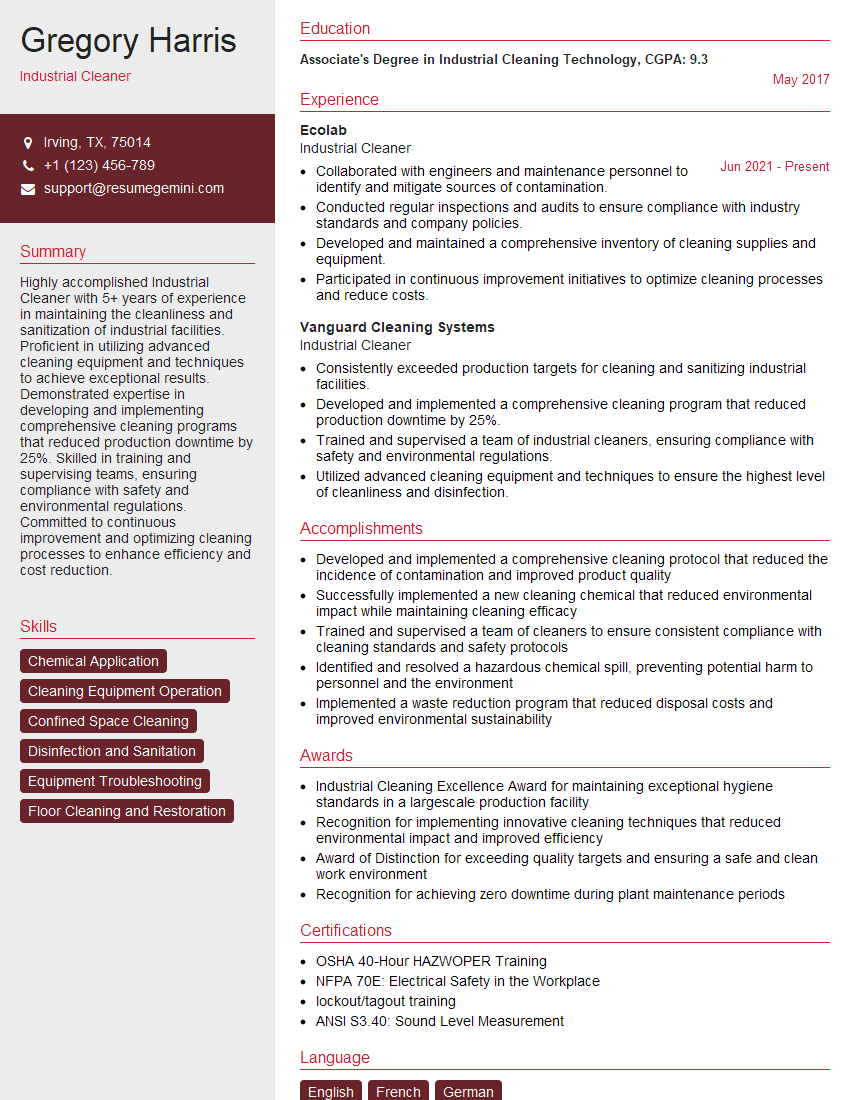
Mastering Chemical Stripping and Degreasing opens doors to exciting career opportunities in various industries. A strong understanding of this field demonstrates technical proficiency and commitment to safety and environmental responsibility, making you a highly valuable asset to any employer. To maximize your job prospects, focus on creating an ATS-friendly resume that highlights your skills and experience effectively. ResumeGemini is a trusted resource for building professional resumes that stand out. They provide examples of resumes tailored to Chemical Stripping and Degreasing to help you create a compelling application that showcases your expertise. Take advantage of these resources to build a resume that lands you your dream job!
Explore more articles
Users Rating of Our Blogs
Share Your Experience
We value your feedback! Please rate our content and share your thoughts (optional).
What Readers Say About Our Blog
Really detailed insights and content, thank you for writing this detailed article.
IT gave me an insight and words to use and be able to think of examples