Unlock your full potential by mastering the most common Collaborating with Engineering Teams interview questions. This blog offers a deep dive into the critical topics, ensuring you’re not only prepared to answer but to excel. With these insights, you’ll approach your interview with clarity and confidence.
Questions Asked in Collaborating with Engineering Teams Interview
Q 1. Describe your experience working with cross-functional engineering teams.
My experience working with cross-functional engineering teams spans over [Number] years, encompassing various roles from [Your Role 1] to [Your Role 2]. I’ve consistently collaborated with teams composed of software engineers, hardware engineers, data scientists, and product managers. A key aspect of my success has been understanding the unique perspectives and priorities of each discipline. For example, while software engineers might focus on code efficiency and scalability, hardware engineers prioritize power consumption and physical constraints. Successfully navigating these different priorities requires strong communication and a willingness to find common ground. I utilize agile methodologies and collaborative tools to ensure seamless information flow and shared understanding amongst team members, regardless of their specific expertise.
In one particular project involving the development of a [Project Description], we had a team comprised of embedded systems engineers, front-end developers, and cloud infrastructure specialists. Successfully launching the product required coordinating the hardware, software, and cloud components, which meant constant communication, regular progress updates, and a shared understanding of milestones and dependencies. I facilitated this through daily stand-ups, weekly progress reports, and collaborative online workspaces.
Q 2. How do you handle disagreements or conflicts within an engineering team?
Disagreements are inevitable in collaborative environments. My approach centers on fostering a culture of respectful communication and constructive conflict resolution. I firmly believe that disagreements, when handled effectively, can lead to innovative solutions. My process involves:
- Active Listening: Understanding the root cause of the disagreement before jumping to conclusions. This requires truly listening to all perspectives without interruption.
- Facilitation: Creating a safe space where everyone feels comfortable expressing their viewpoints. I guide discussions towards finding common ground and solutions.
- Data-Driven Decision Making: Relying on evidence and objective data rather than emotional arguments to resolve differences. For example, if there’s a disagreement on a technical approach, we analyze benchmarks and performance data to make an informed decision.
- Mediation: If the disagreement escalates, I mediate, acting as a neutral party to guide the team to a resolution. This might involve private conversations to understand individual concerns before bringing them back to the team.
Ultimately, the goal is to find a solution that satisfies the core needs of all involved while aligning with the overall project goals.
Q 3. Explain your approach to managing competing priorities in a collaborative engineering environment.
Managing competing priorities in a collaborative engineering environment is a constant balancing act. My approach relies on a combination of prioritization frameworks and transparent communication:
- Prioritization Frameworks: I use methods like MoSCoW (Must have, Should have, Could have, Won’t have) or value vs. effort matrices to objectively rank project tasks based on their importance and feasibility.
- Transparent Communication: I ensure everyone understands the prioritized tasks and the rationale behind the prioritization decisions. This often involves regular meetings to review progress and adjust priorities as needed.
- Scope Management: Sometimes, it’s necessary to adjust the project scope to accommodate competing priorities. This involves careful consideration of the trade-offs and making informed decisions based on the available resources and time constraints.
- Risk Management: Identifying potential roadblocks early on and developing mitigation strategies. This minimizes the impact of delays and disruptions caused by competing priorities.
For instance, in a project with tight deadlines, I might use a Kanban board to visualize the workflow and identify bottlenecks, enabling efficient task allocation and progress tracking.
Q 4. How do you facilitate effective communication among engineers with diverse technical backgrounds?
Effective communication is crucial when working with engineers having diverse technical backgrounds. My strategy involves:
- Establishing Common Language: Defining key terms and concepts upfront to avoid misunderstandings. This could involve creating a shared glossary or holding brief introductory sessions on relevant technical areas.
- Visual Aids: Utilizing diagrams, charts, and flowcharts to illustrate complex concepts and facilitate understanding across different technical domains. This is especially helpful when discussing intricate systems or processes.
- Pair Programming/Knowledge Sharing Sessions: Encouraging collaboration through pair programming or dedicated knowledge-sharing sessions where engineers from different backgrounds can learn from each other and share best practices.
- Regular Check-ins: Conducting frequent check-ins and informal meetings to ensure everyone is on the same page and address any questions or concerns promptly.
By fostering a culture of open communication and mutual respect, I ensure that everyone feels comfortable asking questions and contributing their expertise, regardless of their technical specialization.
Q 5. What tools or methodologies have you used to improve collaboration within engineering teams?
Several tools and methodologies have significantly improved collaboration within engineering teams I’ve worked with:
- Agile Methodologies (Scrum, Kanban): These frameworks promote iterative development, frequent communication, and continuous feedback, which are crucial for effective collaboration.
- Project Management Software (Jira, Asana): These platforms provide centralized task management, progress tracking, and communication channels, enabling streamlined collaboration.
- Version Control Systems (Git): Git facilitates collaborative code development and allows for seamless integration of contributions from multiple developers.
- Collaborative Document Editing Tools (Google Docs, Microsoft Teams): These tools enable real-time collaboration on documents, specifications, and design documents, fostering shared understanding and reducing version control issues.
- Communication Platforms (Slack, Microsoft Teams): These platforms enable rapid communication, facilitating quick problem-solving and knowledge sharing.
The selection of specific tools depends on the project requirements and team preferences, but the core principle is choosing tools that promote transparency, communication, and efficient workflows.
Q 6. Describe a time you successfully resolved a conflict between engineers on a project.
In a project involving the development of a [Project Description], two senior engineers disagreed on the best approach for a critical component. One favored a more complex, highly optimized solution, while the other advocated for a simpler, more readily maintainable approach. The disagreement risked delaying the project and impacting team morale.
My approach was to first listen carefully to both engineers, understanding their reasoning and concerns. I then facilitated a technical discussion where each engineer presented their approach, including performance benchmarks and maintainability considerations. We identified the strengths and weaknesses of each approach, using data to inform the decision. Ultimately, we decided to adopt a hybrid solution that combined elements of both approaches, leveraging the strengths of each while mitigating their weaknesses. This collaborative solution addressed both engineers’ concerns, leading to a successful project outcome and stronger team cohesion.
Q 7. How do you ensure everyone’s voice is heard in team discussions?
Ensuring everyone’s voice is heard requires establishing a culture of inclusivity and psychological safety. I use a variety of techniques:
- Rotating Facilitation: In meetings, I rotate the role of facilitator, giving different team members the opportunity to lead discussions and ensure diverse perspectives are heard.
- Structured Meeting Agendas: Using a clear agenda with dedicated time for each topic, allowing for balanced contributions from all team members.
- Round Robin Discussions: In meetings, I use round-robin discussions where each team member gets a chance to share their thoughts before moving on to the next person. This ensures everyone has a fair opportunity to contribute.
- Anonymous Feedback Mechanisms: Providing anonymous feedback channels (e.g., surveys) allows team members to share their concerns or opinions without fear of reprisal.
- One-on-One Check-ins: Regular one-on-one check-ins with team members provide a private space for individuals to voice their concerns or suggestions.
By proactively creating opportunities for all team members to participate and share their thoughts, I ensure a truly collaborative and inclusive work environment.
Q 8. Explain your experience with Agile methodologies and their impact on team collaboration.
Agile methodologies, like Scrum and Kanban, fundamentally shift engineering team collaboration from a siloed approach to a highly interactive, iterative process. My experience spans several years working in Agile environments, and I’ve witnessed firsthand how it fosters communication and shared responsibility.
For example, in a previous role, we transitioned from a waterfall model to Scrum. Initially, there was resistance, but by implementing daily stand-ups, sprint reviews, and retrospectives, we built a culture of transparency and collaboration. Stand-ups ensured everyone knew daily progress and roadblocks, while sprint reviews allowed for collaborative feedback on working software. Retrospectives provided a safe space to discuss what worked well and what needed improvement, enhancing our collaborative process over time. This resulted in improved team cohesion, faster delivery cycles, and higher-quality software.
- Daily Stand-ups: Brief daily meetings focusing on progress, roadblocks, and plans for the day.
- Sprint Reviews: Demonstrations of completed work to stakeholders and the team for feedback.
- Sprint Retrospectives: Meetings to reflect on the process and identify areas for improvement.
Q 9. How do you identify and mitigate risks that threaten engineering team collaboration?
Identifying and mitigating risks to engineering team collaboration requires a proactive and multifaceted approach. I typically employ a risk assessment framework that considers both technical and interpersonal factors.
For example, unclear requirements can lead to misunderstandings and rework. To mitigate this, I ensure requirements are clearly defined and documented, often using tools like user stories and acceptance criteria. Another frequent risk is communication breakdowns. I proactively address this by establishing clear communication channels, utilizing collaborative tools, and fostering a culture of open communication. Finally, personality clashes can hinder collaboration. I address this by fostering a culture of respect and understanding, promoting team-building activities, and providing conflict resolution support when needed.
A practical example is when a project experienced delays due to dependencies between different teams. To mitigate this, we implemented a dependency management process, which included regular cross-team meetings and a shared project schedule visualized on a Kanban board. This allowed us to proactively identify and resolve any blocking issues before they impacted the overall project timeline.
Q 10. How do you contribute to a positive and productive team culture?
Contributing to a positive and productive team culture is crucial for effective collaboration. I believe in leading by example, demonstrating respect, empathy, and open communication. I actively encourage team members to share their ideas and perspectives, creating a safe space for constructive criticism and feedback.
I also focus on building trust and psychological safety within the team. This involves celebrating successes together, acknowledging individual contributions, and providing support during challenging times. Furthermore, I encourage social interaction outside of work through team-building activities and informal gatherings. This helps foster stronger relationships and enhances collaboration.
One example is implementing a peer recognition program where team members could publicly acknowledge each other’s contributions and achievements. This simple act fostered a sense of appreciation and boosted morale, resulting in improved teamwork and productivity.
Q 11. How do you handle situations where engineers are resistant to collaboration?
Resistance to collaboration can stem from various reasons: fear of change, lack of trust, personality conflicts, or simply a preference for individual work. Addressing this requires patience, understanding, and a tailored approach.
My strategy involves first understanding the root cause of the resistance. I would engage in one-on-one conversations to understand the engineer’s perspective, addressing their concerns directly and empathetically. I might offer training or mentorship opportunities to enhance their collaboration skills or provide support to address any underlying anxieties.
For instance, if an engineer was resistant due to a lack of trust in the team’s processes, I would focus on improving transparency and involving them in process improvements. If it’s due to a personality clash, I might facilitate a mediated conversation between the individuals, focusing on finding common ground and establishing clear expectations for collaboration.
Q 12. Describe your experience using collaborative tools such as Jira, Confluence, or Slack.
I have extensive experience using collaborative tools like Jira, Confluence, and Slack to streamline communication and project management. Jira is my go-to for task management, issue tracking, and sprint planning. Its Kanban boards and Scrum functionalities facilitate efficient workflow management and provide visibility into project progress. Confluence serves as our central repository for documentation, meeting notes, and knowledge sharing. This ensures that information is readily accessible to all team members and fosters consistency.
Slack acts as our primary communication platform for quick questions, updates, and informal discussions. Its channels enable topic-specific conversations, preventing information overload and improving organization. For example, we use dedicated Slack channels for specific projects, allowing for quick and targeted communication among team members working on that project. The integration between Jira, Confluence, and Slack further enhances efficiency, enabling seamless information flow between different platforms.
Q 13. How do you measure the effectiveness of your team’s collaboration efforts?
Measuring the effectiveness of team collaboration requires a combination of quantitative and qualitative metrics. Quantitative metrics might include:
- Velocity (Agile): Measures the amount of work completed per sprint.
- Cycle time: Measures the time taken to complete a task from start to finish.
- Defect rate: Measures the number of defects found in the software.
However, these alone are insufficient. Qualitative metrics, like team surveys and observations of team dynamics during meetings and collaborations, are essential for a complete picture. For instance, observing whether team members actively participate in discussions, share knowledge freely, and offer support to each other provides valuable insights into the collaborative environment. Regular retrospectives also provide a platform to gather feedback and identify areas for improvement in team collaboration.
Q 14. How do you provide constructive feedback to engineers on their collaboration skills?
Providing constructive feedback on collaboration skills is essential for individual and team growth. My approach focuses on being specific, timely, and solution-oriented. I avoid generalizations and instead focus on observable behaviors. For example, instead of saying ‘You’re not a team player,’ I might say, ‘During the last sprint review, I noticed you didn’t actively participate in the discussion of the user stories. Could you share your perspective next time? It’s valuable to hear your input.’
The feedback is framed positively, focusing on improvement rather than criticism. I also offer specific suggestions for improvement, linking them to the observed behaviors. For instance, if someone struggles with active listening, I might suggest practicing techniques like paraphrasing and summarizing to ensure understanding. The feedback is delivered privately, offering a safe space for discussion and allowing for two-way conversation. Following up after the feedback is crucial to ensure the individual feels supported and is making progress.
Q 15. How do you adapt your communication style to effectively collaborate with different personality types?
Effective collaboration hinges on adapting communication to diverse personality types. I believe in understanding individual communication preferences – some thrive on direct, concise communication, while others prefer a more collaborative, detail-oriented approach.
For instance, with individuals who are direct and results-oriented, I use a concise, bullet-pointed approach, focusing on key deliverables and timelines. With those who are more collaborative, I facilitate brainstorming sessions and actively seek their input, fostering a sense of shared ownership. I also adjust my communication style based on the context. A quick email might suffice for a simple update, while a face-to-face meeting is better suited for complex, sensitive discussions. I actively listen, observe body language, and tailor my language to resonate with each person. Think of it like choosing the right tool for the job – a hammer for a nail, a screwdriver for a screw. Similarly, my communication style needs to match the situation and the individual.
Career Expert Tips:
- Ace those interviews! Prepare effectively by reviewing the Top 50 Most Common Interview Questions on ResumeGemini.
- Navigate your job search with confidence! Explore a wide range of Career Tips on ResumeGemini. Learn about common challenges and recommendations to overcome them.
- Craft the perfect resume! Master the Art of Resume Writing with ResumeGemini’s guide. Showcase your unique qualifications and achievements effectively.
- Don’t miss out on holiday savings! Build your dream resume with ResumeGemini’s ATS optimized templates.
Q 16. Describe a time you had to navigate a challenging technical discussion with non-technical stakeholders.
During a project involving a new AI-powered feature, I had to explain complex technical concepts – like model training and hyperparameter tuning – to a group of non-technical stakeholders, including the CEO and marketing team. Simply using technical jargon would have been counterproductive. Instead, I used analogies and visual aids. I explained model training as ‘teaching a computer to recognize patterns,’ similar to how a child learns. I also used charts and graphs to visualize performance metrics, avoiding complex equations. The key was to focus on the business impact – how the feature would improve user engagement and revenue – rather than the intricate technical details. This approach ensured everyone understood the potential and risks, leading to informed decision-making. Focusing on the ‘why’ – the business value – helped bridge the gap between technical complexity and executive understanding.
Q 17. How do you ensure that decisions made within the engineering team align with the overall product strategy?
Aligning engineering decisions with product strategy requires constant communication and a shared understanding of goals. We start by clearly defining the product roadmap and key performance indicators (KPIs). Regular sprint reviews and product backlog refinement sessions ensure transparency and alignment. The engineering team is actively involved in shaping the product backlog, helping to estimate effort and feasibility. We utilize a system of prioritizing features based on their contribution to overall product strategy, and I actively facilitate discussions to ensure that all technical decisions support the overarching product goals. This also involves documenting these decisions and their rationale – a living document that informs future development.
Q 18. How do you handle situations where deadlines are tight and team members are stressed?
Tight deadlines and stressed team members are challenging but manageable. My first step is to assess the situation – identifying the root causes of the pressure. Are we facing unexpected technical challenges? Is there a lack of resources? Once identified, I work with the team to find solutions. This might involve re-prioritizing tasks, requesting additional resources, or adjusting deadlines in collaboration with stakeholders. Equally important is fostering a supportive environment – encouraging open communication and allowing team members to voice their concerns. I also emphasize the importance of work-life balance, encouraging breaks and time off to prevent burnout. Open and honest communication is crucial to effectively navigate stressful situations; fostering a sense of teamwork helps to overcome hurdles together.
Q 19. What strategies do you employ to encourage knowledge sharing within the engineering team?
Encouraging knowledge sharing is crucial for team growth and efficiency. We use several strategies, including regular knowledge-sharing sessions (brown bag lunches, tech talks), a robust internal wiki for documenting solutions and best practices, and peer programming or code reviews. I also encourage mentorship programs, where senior engineers guide junior engineers, fostering a culture of learning and collaboration. We actively celebrate successes and acknowledge contributions; this encourages team members to share their knowledge and expertise freely. We also prioritize time for technical discussions and problem-solving sessions – these spaces provide opportunity for informal knowledge sharing and collaboration.
Q 20. How do you ensure that everyone on the engineering team understands the project goals?
Ensuring everyone understands project goals is paramount. We start with a clear and concise project kickoff, outlining the objectives, scope, and success metrics. We use visual aids like roadmaps and project dashboards to provide a clear overview. Regular stand-up meetings and sprint reviews provide ongoing updates and opportunities for questions. We also create a central repository for all project-related documents, ensuring easy access to information for all team members. Moreover, I always emphasize the ‘why’ behind the project, connecting the individual tasks to the larger picture and the value it brings to our users. This helps maintain team motivation and ensures everyone is working towards a shared goal.
Q 21. Describe your experience with mentoring junior engineers on collaboration best practices.
I have extensive experience mentoring junior engineers. My approach focuses on practical application and continuous feedback. I guide them through collaborative processes, demonstrating best practices in communication, conflict resolution, and code review. I provide opportunities for them to lead small projects, giving them hands-on experience and supporting their growth. Regular one-on-one meetings provide a space for feedback, discussion, and identifying areas for improvement. My mentoring style is focused on building their confidence and fostering independent problem-solving skills. I view mentoring as a two-way street; it’s a chance for me to learn from their perspectives and innovative ideas as well. The goal is to empower them to become effective and collaborative team members.
Q 22. How do you identify and address bottlenecks in the engineering workflow?
Identifying and addressing bottlenecks in the engineering workflow requires a systematic approach. It starts with understanding the entire process, from initial design to deployment and maintenance. I typically use a combination of methods to pinpoint these roadblocks.
- Data Analysis: I leverage project management tools to analyze metrics like cycle time, lead time, and defect rates. Identifying unusually high values in these metrics often points to a bottleneck. For example, consistently long cycle times for a specific stage might indicate a problem with code reviews or testing processes.
- Team Interviews and Feedback: Directly engaging with engineers through one-on-one conversations and team meetings is crucial. This allows me to gather firsthand insights into their challenges and frustrations. Anonymous surveys can also provide valuable, unbiased feedback.
- Workflow Mapping: Visually mapping the entire workflow helps identify dependencies and areas where tasks are piling up. This visual representation makes bottlenecks much easier to spot. Tools like swim lane diagrams are extremely helpful in this process.
Once a bottleneck is identified, I work collaboratively with the team to find solutions. This often involves proposing process improvements, providing additional resources (e.g., hiring additional staff or providing specialized training), or addressing underlying technical issues hindering progress. For instance, if testing is a bottleneck, we might explore automated testing tools or improve our testing procedures.
Q 23. How do you promote a culture of continuous improvement within the engineering team?
Fostering a culture of continuous improvement within an engineering team is an ongoing process, not a one-time event. It’s about creating an environment where learning, experimentation, and adaptation are valued and encouraged.
- Regular Retrospectives: I facilitate regular retrospectives, using frameworks like the 5 Whys or a simple SWOT analysis, to reflect on past projects, identify areas for improvement, and establish actionable steps. This involves both celebrating successes and openly discussing failures, learning from mistakes.
- Knowledge Sharing and Learning Opportunities: I encourage knowledge sharing through internal workshops, brown bag sessions, or peer code reviews. Providing access to online courses, conferences, and other professional development opportunities helps upskill the team and fosters a growth mindset.
- Experimentation and Iteration: I encourage the team to experiment with new technologies, processes, and approaches. Creating a safe space for experimentation and allowing for iterative improvements is key. Even small, incremental changes can lead to significant improvements over time.
- Feedback Mechanisms: Establishing clear and open channels for providing and receiving feedback is crucial. This includes peer feedback, manager feedback, and feedback from users or stakeholders. This constant feedback loop helps guide continuous improvement.
Think of it like a garden – you constantly nurture it, remove weeds (obstacles), and plant new seeds (new ideas) to encourage growth. Continuous improvement is about consistently nurturing the team’s ability to learn and adapt.
Q 24. How have you successfully integrated new team members into an existing engineering team?
Integrating new team members smoothly is critical for maintaining team productivity and morale. I use a structured onboarding process to ensure a seamless transition.
- Pre-Onboarding Communication: Before their first day, I provide new hires with relevant information about the team, the projects they’ll be working on, and who their key contacts will be. This reduces initial uncertainty.
- Structured Training Program: I create a structured training program covering relevant technologies, processes, and team norms. This includes hands-on training, shadowing experienced team members, and access to relevant documentation.
- Mentorship Program: I pair new hires with experienced team members who can act as mentors, providing guidance, support, and answering questions. This fosters a sense of belonging and helps them learn the ropes quickly.
- Regular Check-ins and Feedback: I schedule regular check-ins to monitor their progress, address any challenges they are facing, and provide constructive feedback. This allows for early identification and resolution of integration issues.
- Social Integration: I encourage social interaction to help new members bond with the team. This can include team lunches, social events, or informal coffee breaks. A strong team spirit makes integration easier.
For example, in one project, I created a dedicated onboarding wiki page that included project documentation, coding guidelines, and contact information for all relevant team members. This helped new hires quickly get up to speed and become productive members of the team.
Q 25. What are some common challenges you face when collaborating with engineering teams and how do you overcome them?
Collaboration with engineering teams presents various challenges. Some common ones include:
- Communication Barriers: Technical jargon, conflicting communication styles, and lack of clear communication channels can hinder collaboration.
- Conflicting Priorities: Different teams might have competing priorities, leading to disagreements on resource allocation and project timelines.
- Technical Dependencies: Reliance on other teams for deliverables can create dependencies and delays.
- Lack of Shared Understanding: Differing levels of technical expertise can make it challenging to ensure everyone is on the same page.
To overcome these challenges, I prioritize clear and open communication, using tools like project management software and regular meetings. I also work to establish clear roles and responsibilities, manage expectations effectively, and build strong relationships with other teams. Active listening, empathy, and finding win-win solutions are crucial in navigating disagreements and prioritizing tasks.
Q 26. Describe a time you leveraged collaboration to successfully overcome a significant technical hurdle.
In a previous project, we faced a significant challenge integrating a new payment gateway into our e-commerce platform. The gateway had a complex API, and the initial integration attempts resulted in numerous errors and unexpected behavior.
To overcome this, I initiated a collaborative problem-solving session involving developers from our team, the payment gateway provider’s support team, and quality assurance engineers. We leveraged a shared online whiteboard to diagram the integration process, identify potential points of failure, and collaboratively debug the code. The payment gateway provider’s expertise proved invaluable in understanding the nuances of their API. By openly sharing knowledge and working closely together, we successfully identified and resolved the integration issues within a significantly shorter timeframe than initially anticipated.
This experience highlighted the importance of cross-functional collaboration and open communication in navigating complex technical challenges. The collaborative approach enabled us to leverage the collective knowledge and expertise of the involved parties, leading to a faster and more effective solution.
Q 27. How do you maintain transparency and accountability within an engineering team?
Maintaining transparency and accountability within an engineering team is crucial for trust and efficient collaboration. I employ several strategies to achieve this:
- Open Communication Channels: Using project management tools, regular team meetings, and readily available documentation ensures information is accessible to all team members.
- Clearly Defined Roles and Responsibilities: Each team member understands their tasks, ownership, and accountability. This avoids confusion and ensures tasks are completed timely.
- Regular Progress Updates: Frequent updates—using dashboards or visual reports—keep everyone informed about the progress of projects and identify potential roadblocks early.
- Transparent Decision-Making: Involving the team in decision-making processes, even when it’s not a direct input on the outcome, promotes a sense of ownership and builds trust.
- Constructive Feedback Mechanisms: Regular feedback sessions allow for open discussion and improvement in collaboration and performance.
For example, using a project management tool that allows for collaborative task management, time tracking, and progress updates fosters transparency and accountability. Every team member can see what tasks are assigned, who’s responsible, and the current status. This creates a shared understanding and promotes accountability.
Q 28. How do you facilitate effective decision-making within a collaborative engineering environment?
Facilitating effective decision-making in a collaborative engineering environment requires a structured approach that balances individual input with efficient group processes.
- Clearly Defined Decision-Making Processes: Establishing clear processes, such as using a weighted voting system or consensus-based approaches, helps ensure decisions are made efficiently and fairly.
- Data-Driven Decisions: Base decisions on data and evidence whenever possible. This reduces biases and improves the objectivity of decisions.
- Structured Brainstorming and Discussion: Employ structured brainstorming techniques to encourage idea generation and ensure all viewpoints are heard. This can involve techniques such as mind-mapping or brainwriting.
- Conflict Resolution Strategies: Having processes and strategies to address disagreements respectfully and productively is essential for maintaining a positive team dynamic.
- Documentation and Follow-up: Decisions should be documented and communicated clearly to the entire team. Following up on decisions to ensure they are implemented effectively is essential.
For example, when faced with a critical design decision, I might use a decision matrix to weigh the pros and cons of different options, scoring each based on predefined criteria. This ensures a more objective and less emotionally driven decision-making process, resulting in a better outcome for the team and the project.
Key Topics to Learn for Collaborating with Engineering Teams Interview
- Understanding Engineering Processes: Learn the Agile methodology, Scrum, Kanban, and other common engineering workflows. Understand the importance of sprints, daily stand-ups, and retrospectives.
- Effective Communication Strategies: Practice clear and concise communication, both written and verbal. Learn how to translate complex technical concepts into easily understandable terms for non-technical audiences and vice-versa. Master active listening techniques.
- Conflict Resolution and Negotiation: Develop skills in identifying and addressing conflicts constructively. Learn negotiation strategies for balancing competing priorities and reaching mutually beneficial solutions within the team.
- Requirements Gathering and Documentation: Understand how to elicit requirements from stakeholders, translate them into actionable tasks for engineering teams, and document the process effectively. Learn different techniques for user story creation and acceptance criteria definition.
- Project Management Fundamentals: Familiarize yourself with project planning, scheduling, tracking progress, and managing risks. Understand the use of tools like Jira or similar project management software.
- Technical Proficiency (At a High Level): While deep technical knowledge might not be required, demonstrate a basic understanding of the technologies used by the engineering team. This shows you can engage in informed conversations.
- Stakeholder Management: Learn how to effectively manage expectations, communicate updates, and build strong relationships with stakeholders at all levels.
- Problem-Solving and Decision-Making: Practice your ability to analyze problems, identify root causes, and propose effective solutions within a collaborative team environment. Be prepared to discuss your approach to problem-solving.
Next Steps
Mastering collaboration with engineering teams is crucial for career advancement in many fields. It demonstrates your ability to work effectively in cross-functional environments, a highly valued skill in today’s workplace. To significantly improve your job prospects, focus on creating an ATS-friendly resume that highlights your relevant skills and experience. ResumeGemini is a trusted resource that can help you build a professional and impactful resume tailored to your specific needs. Examples of resumes tailored to showcasing experience in collaborating with engineering teams are available within ResumeGemini to provide you with inspiration and guidance.
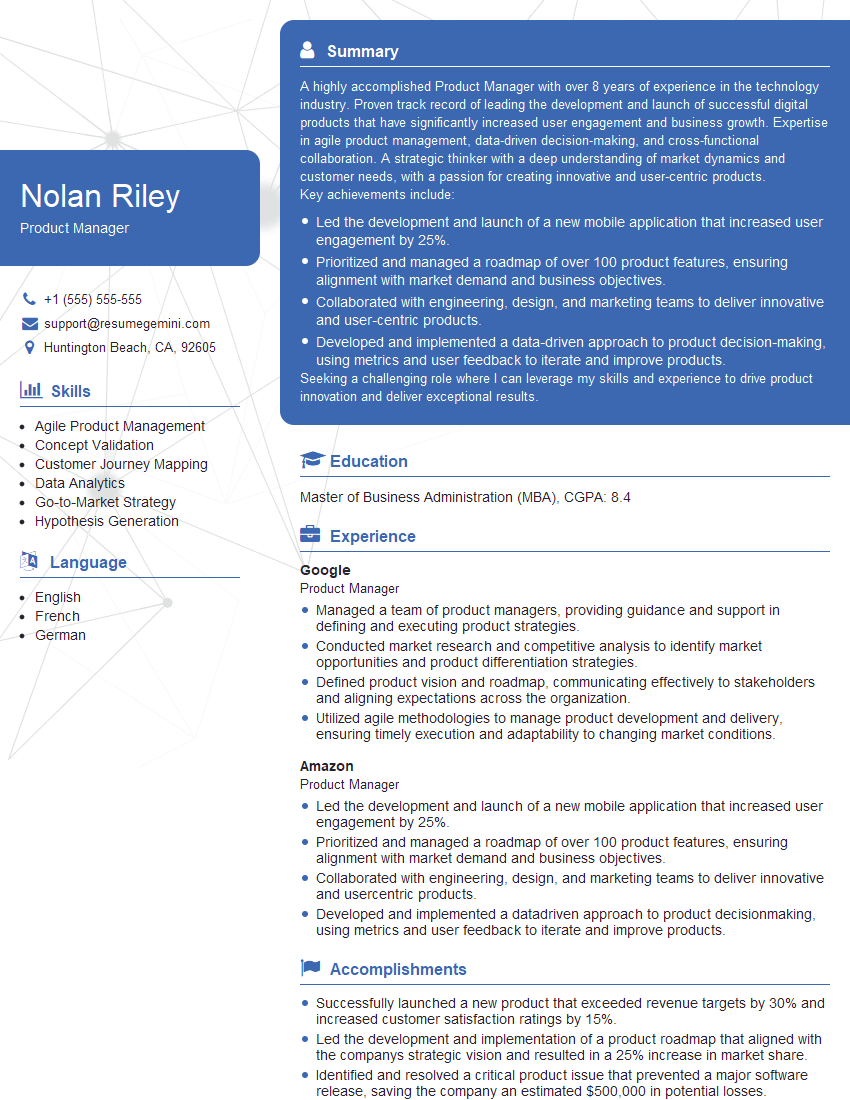
Product Manager Resume Sample
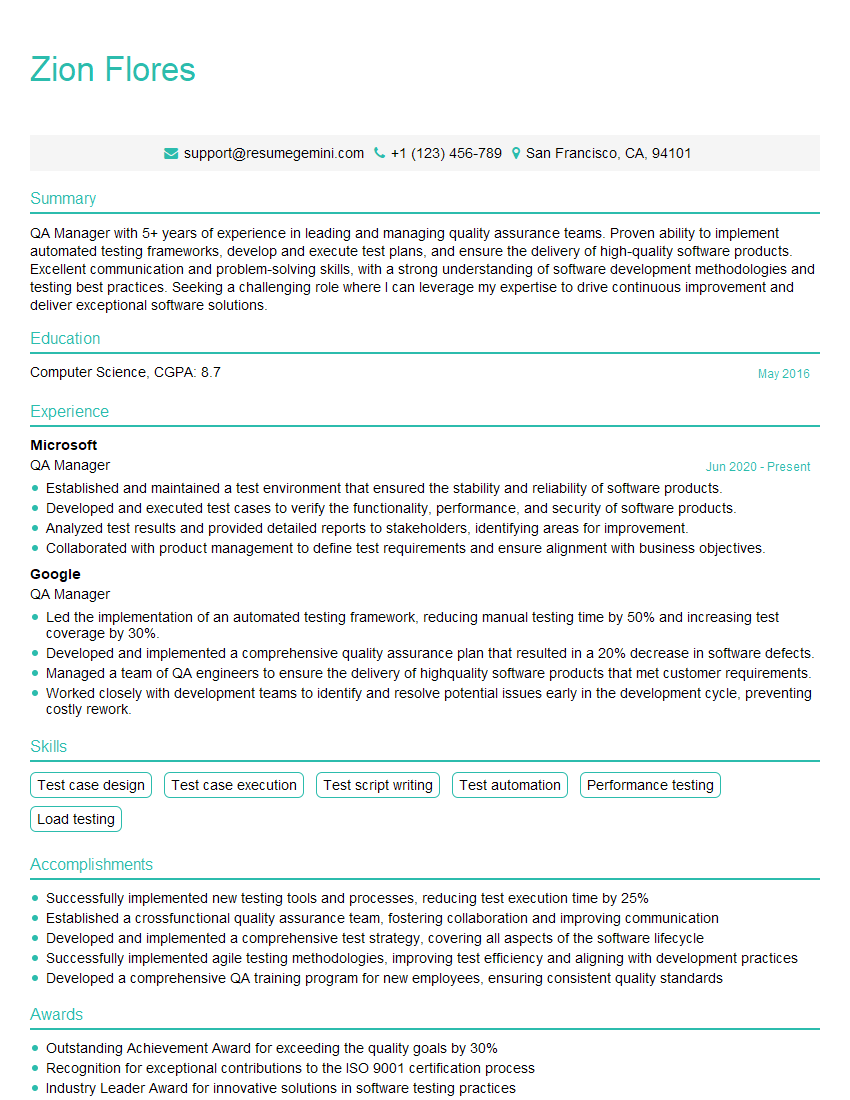
QA Manager Resume Sample

Project Manager Resume Sample
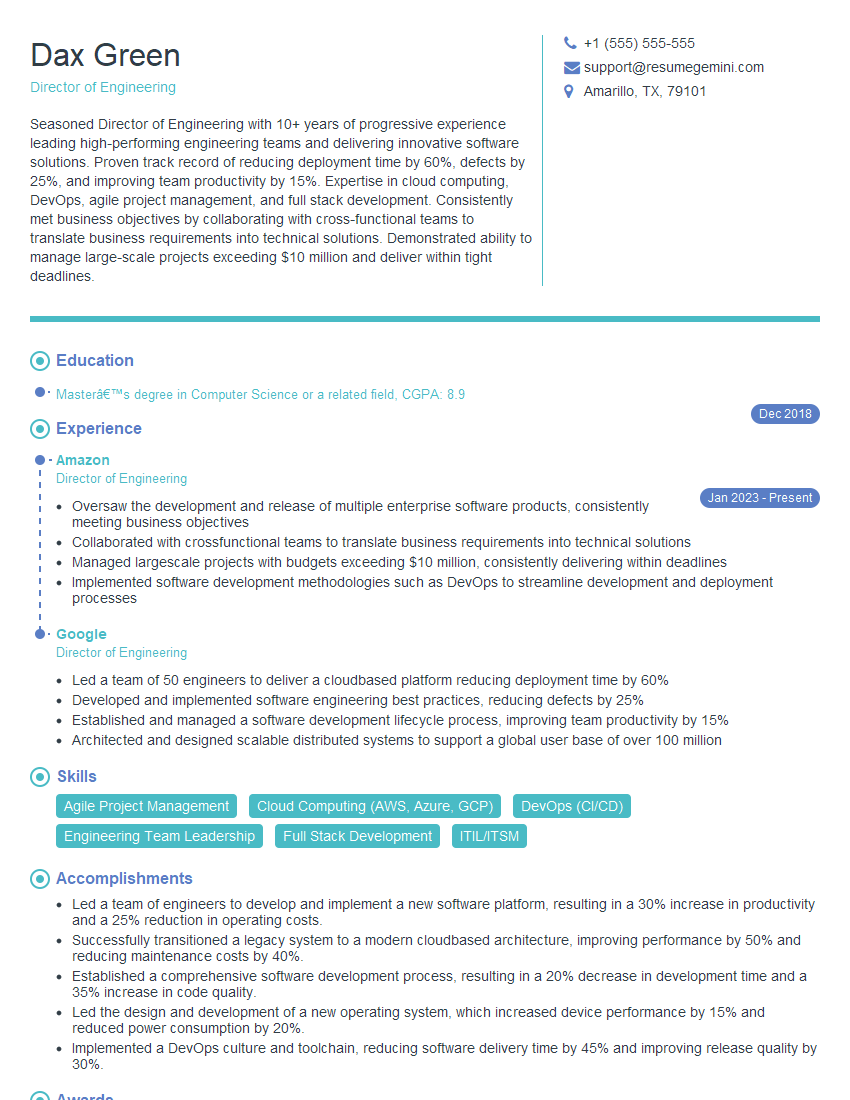
Director of Engineering Resume Sample
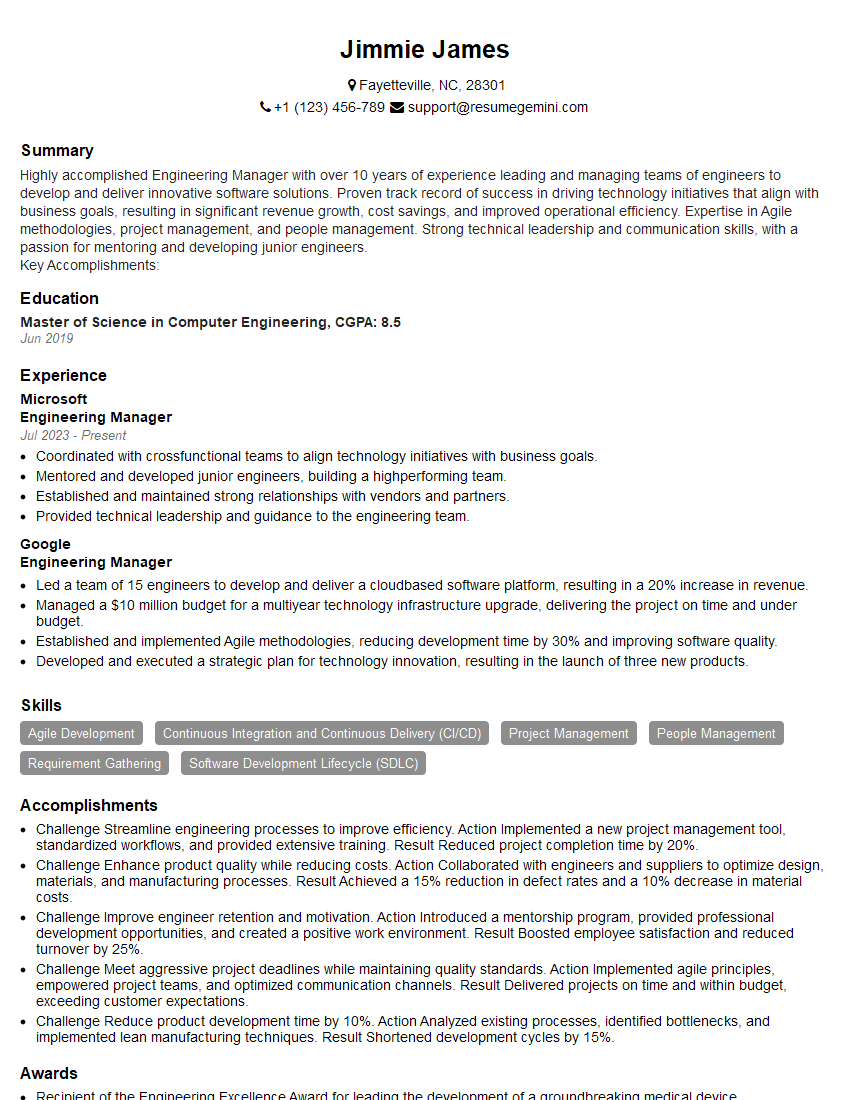
Engineering Manager Resume Sample
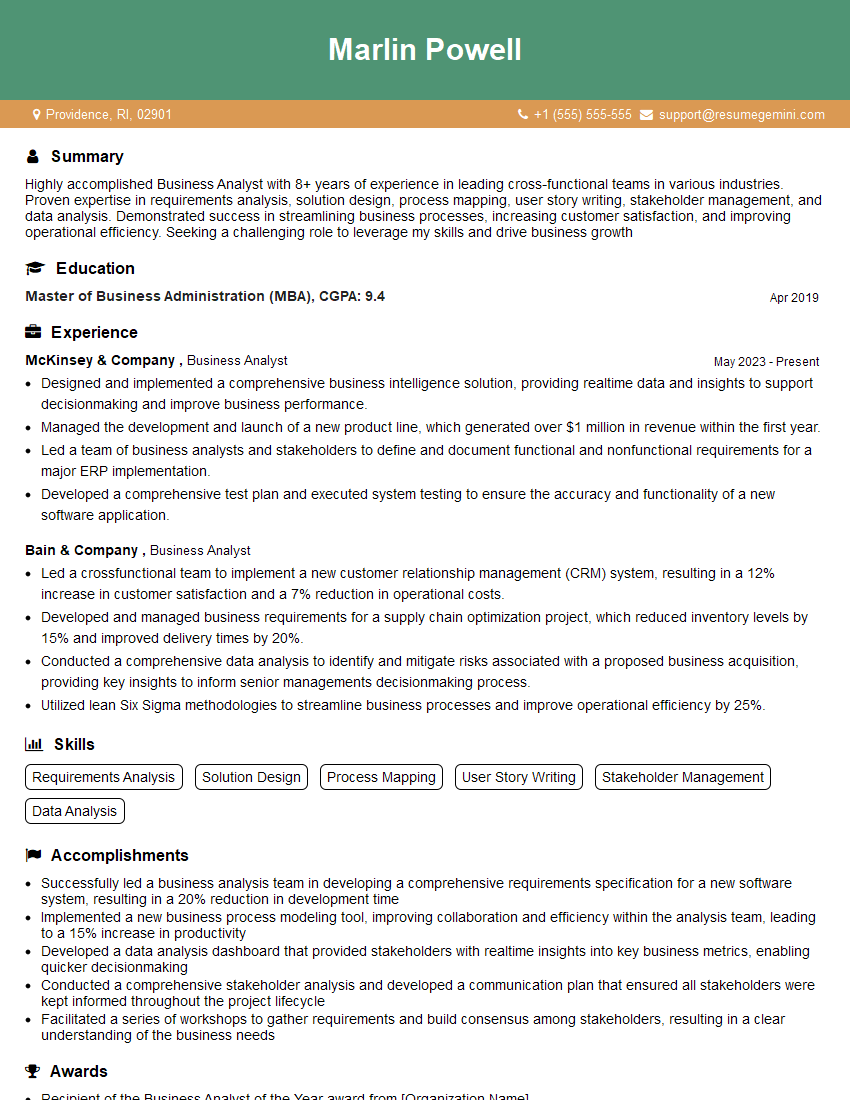
Business Analyst Resume Sample
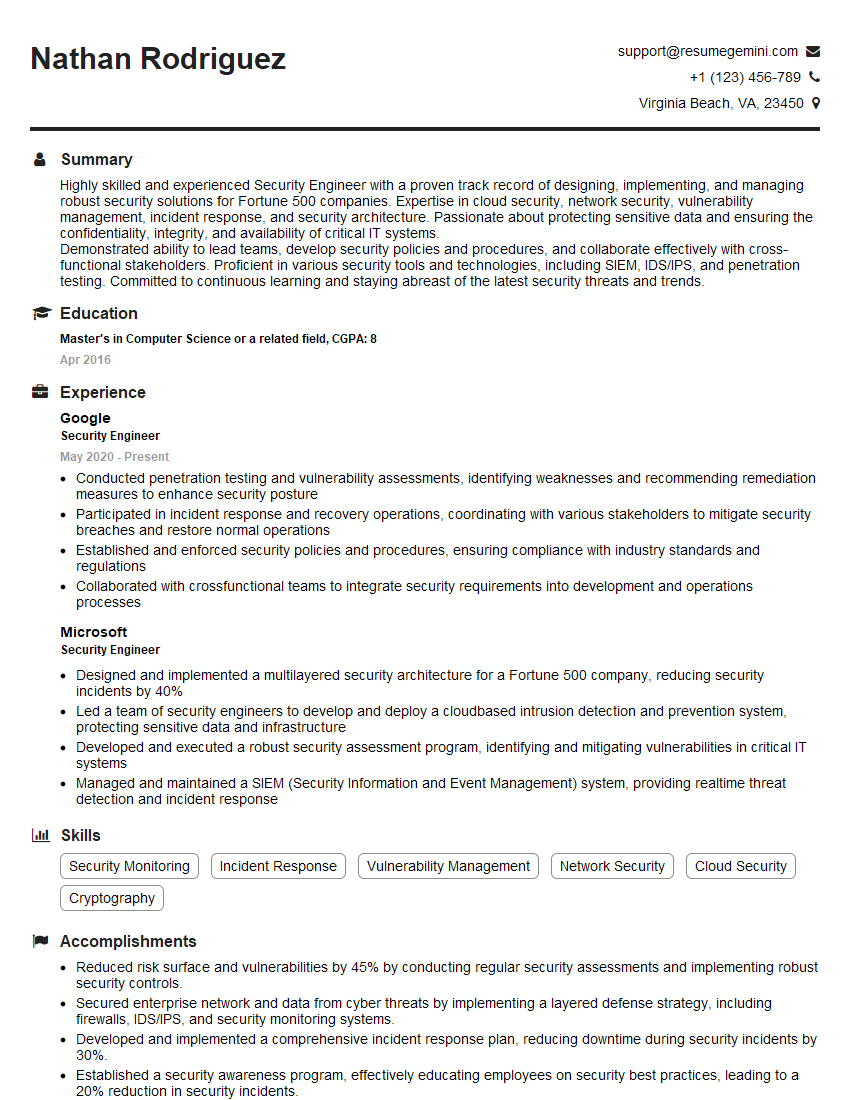
Security Engineer Resume Sample
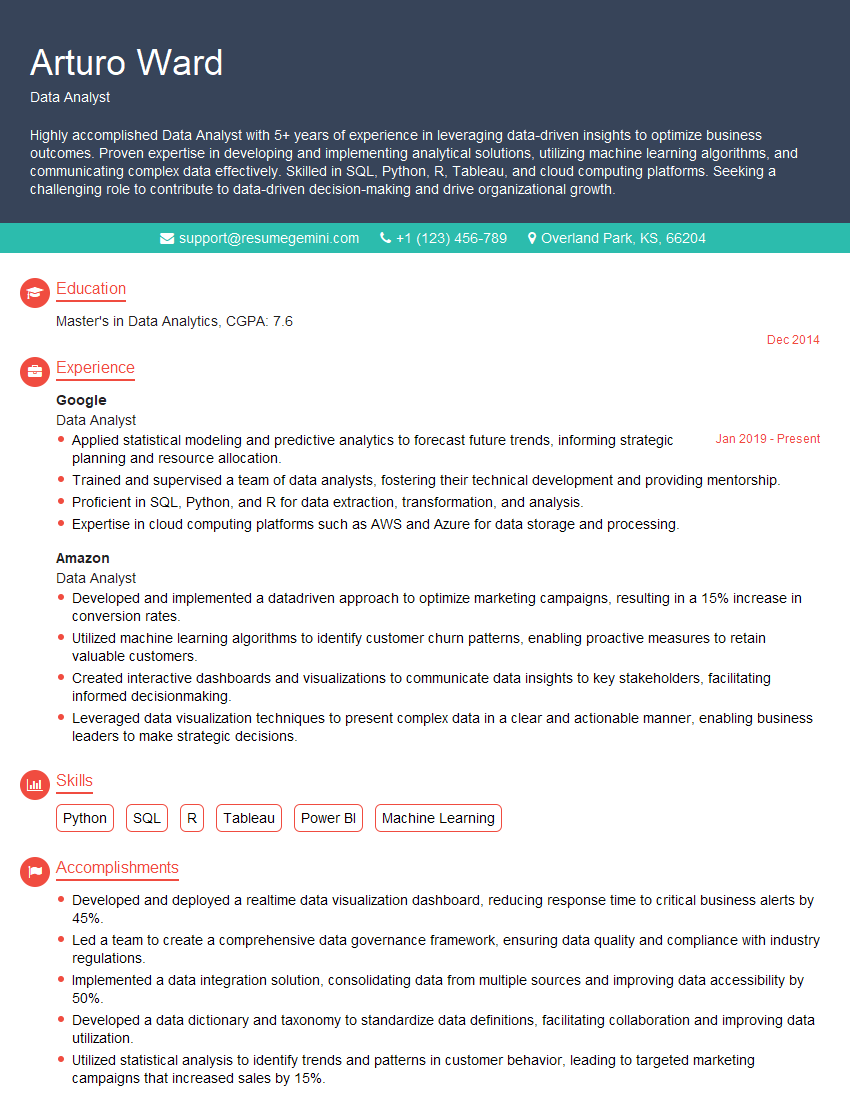
Data Analyst Resume Sample
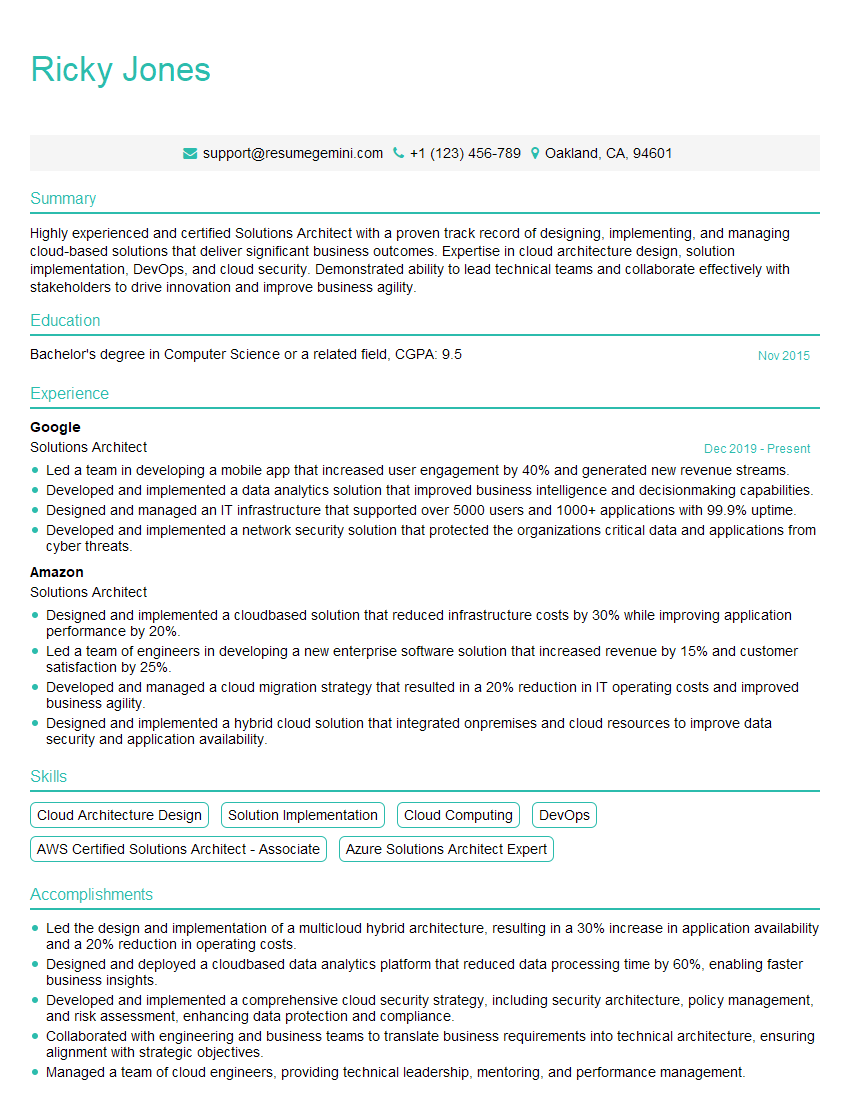
Solutions Architect Resume Sample
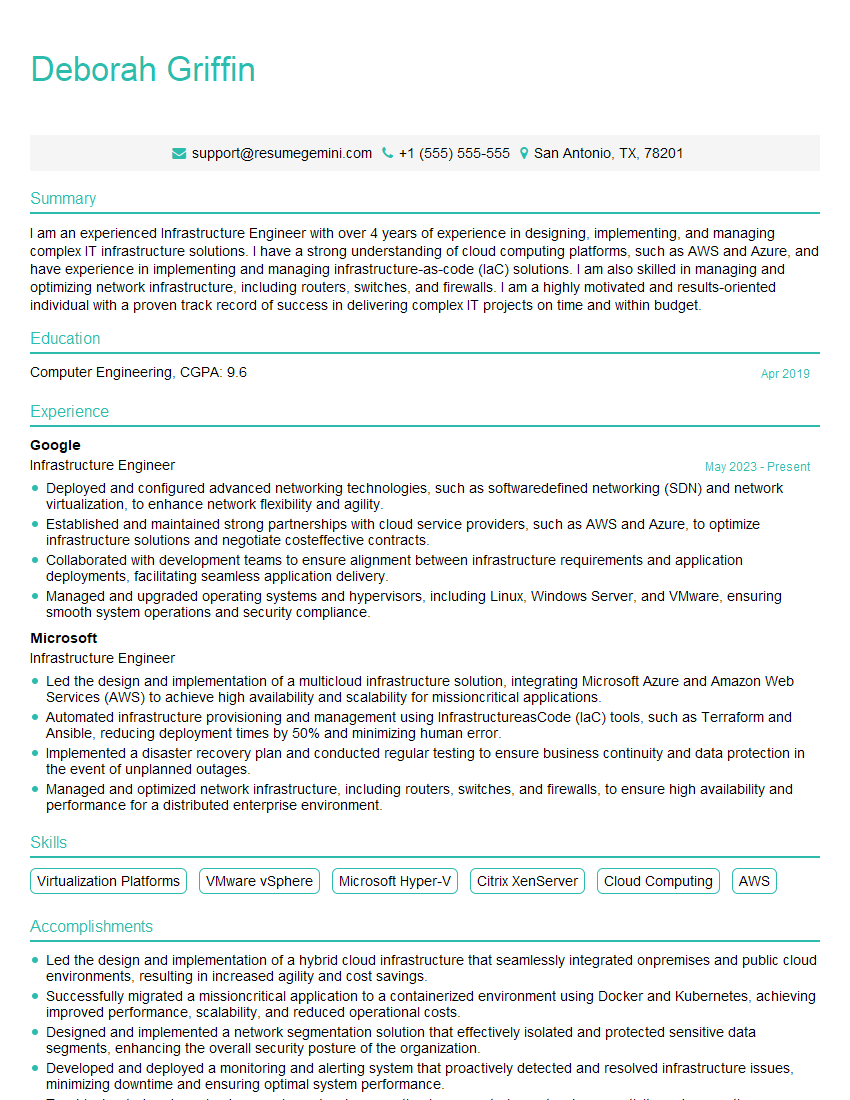
Infrastructure Engineer Resume Sample
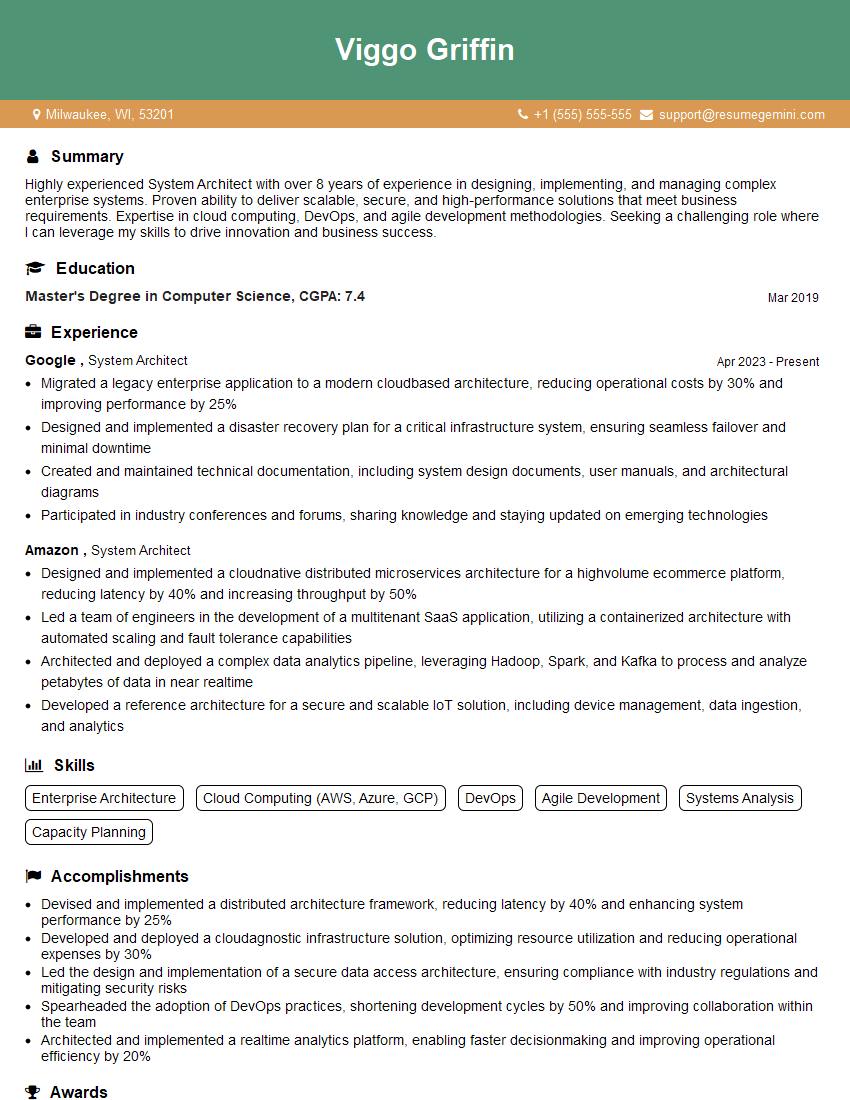
System Architect Resume Sample
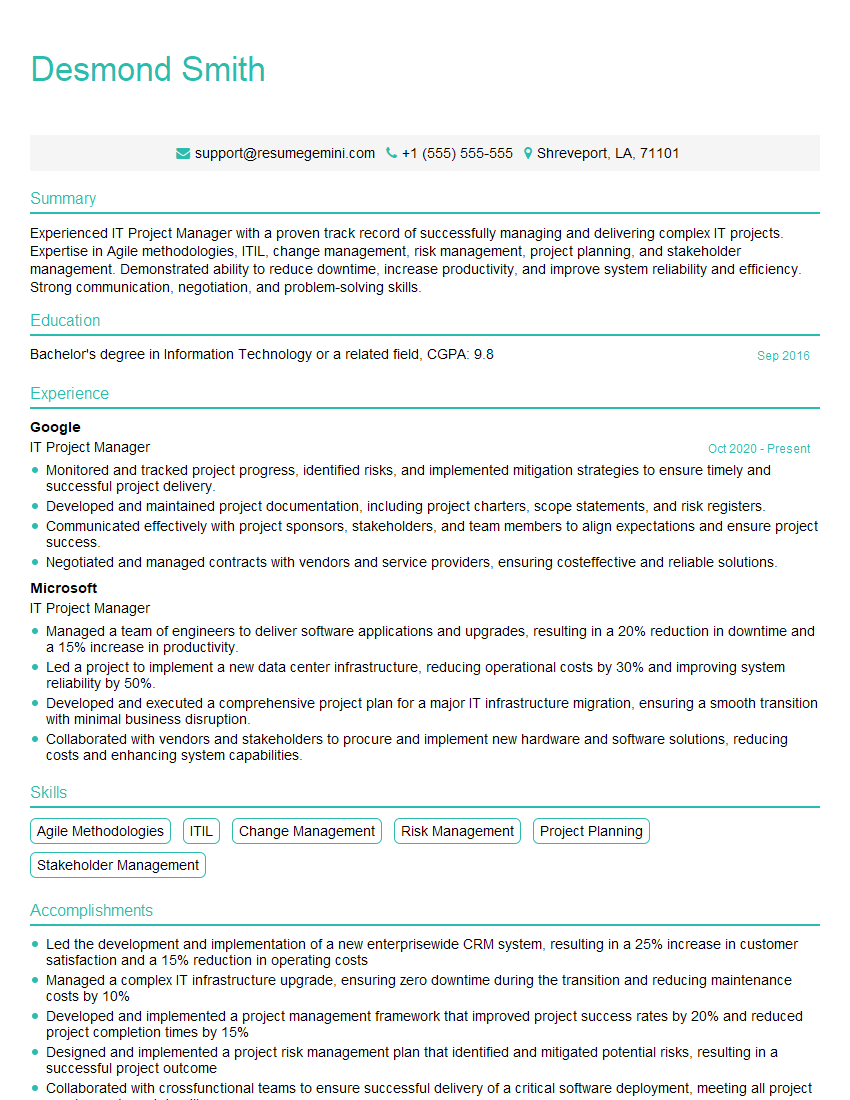
IT Project Manager Resume Sample
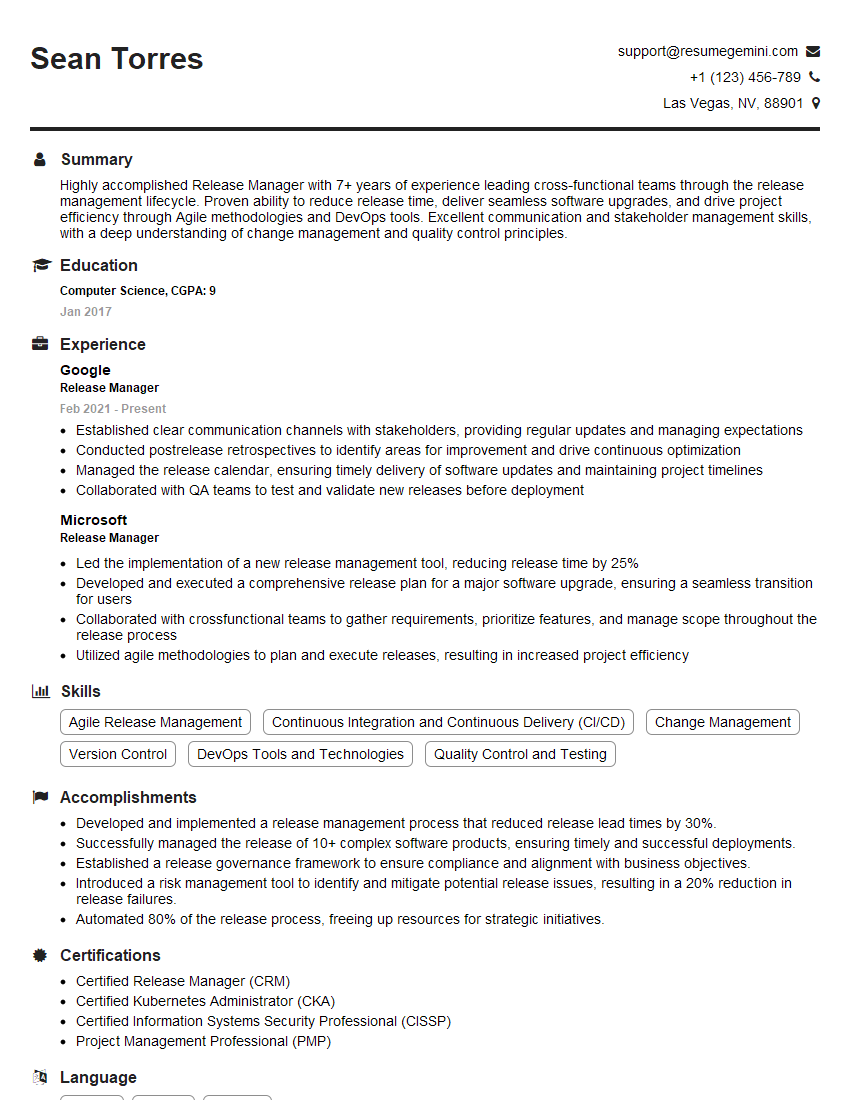
Release Manager Resume Sample
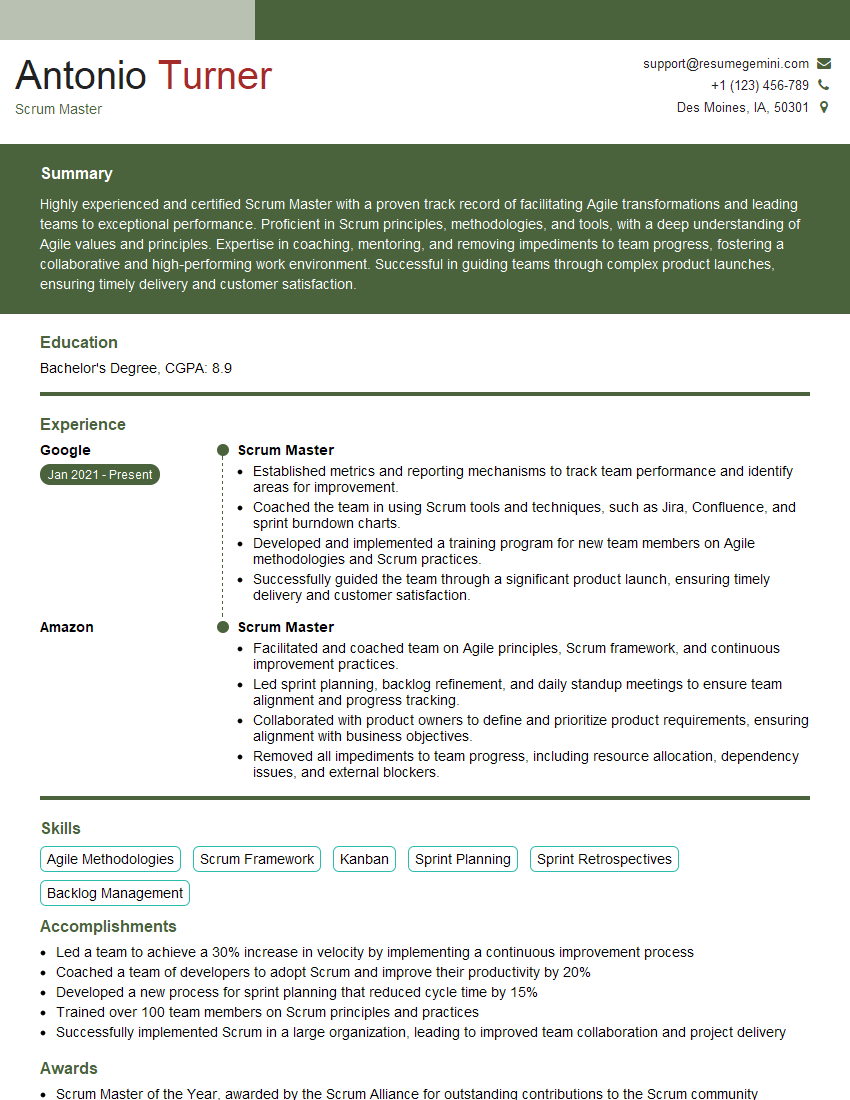
Scrum Master Resume Sample
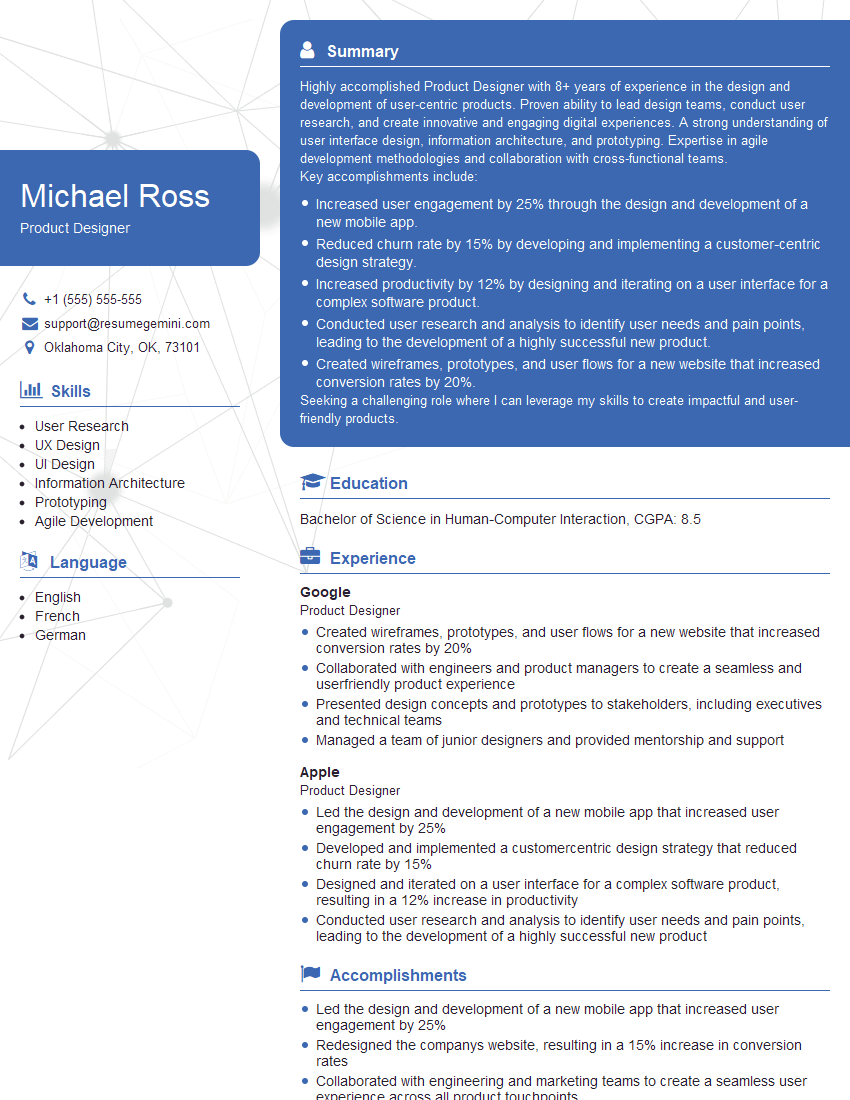
Product Designer Resume Sample

Technical Writer Resume Sample
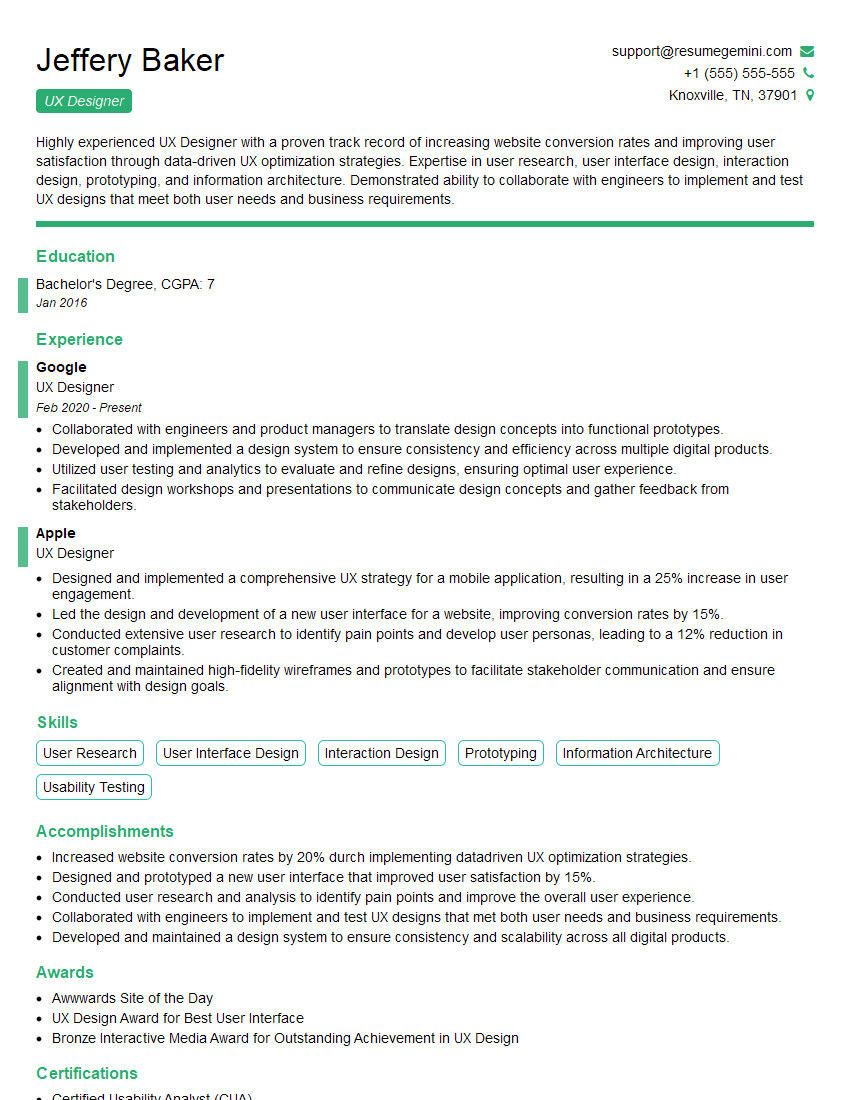
UX Designer Resume Sample
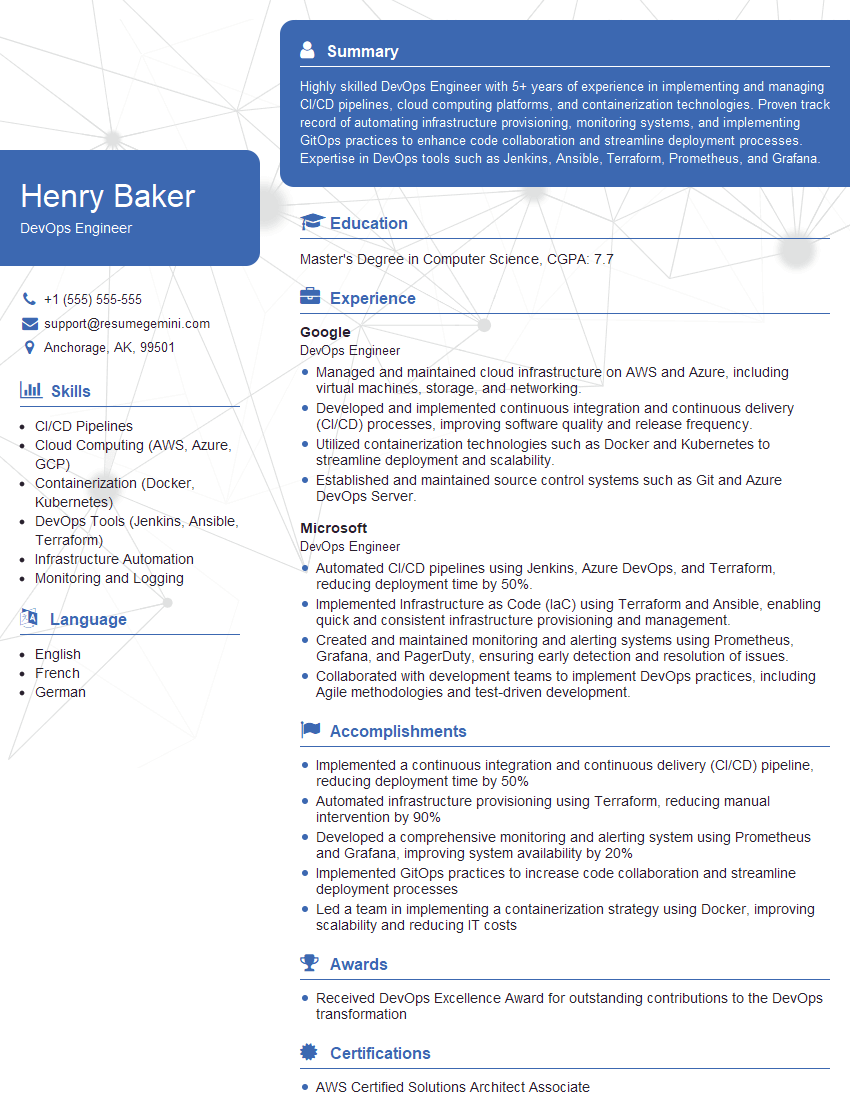
DevOps Engineer Resume Sample
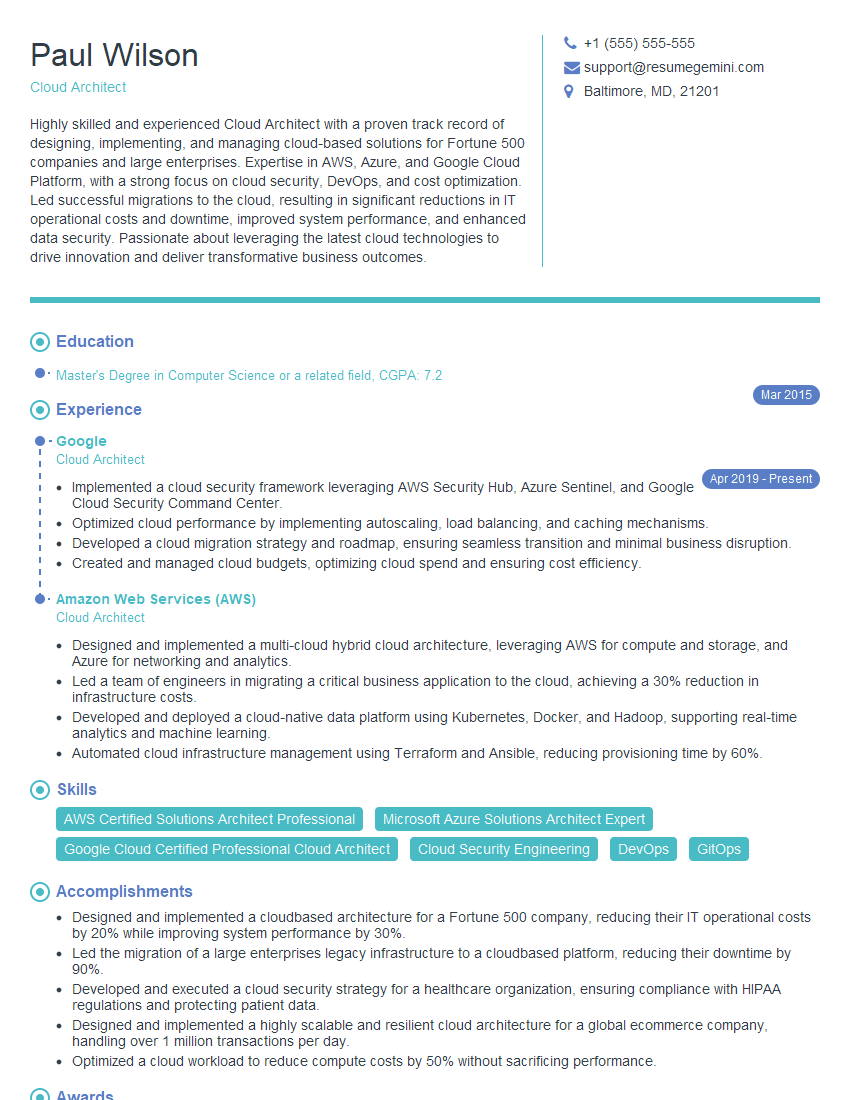
Cloud Architect Resume Sample
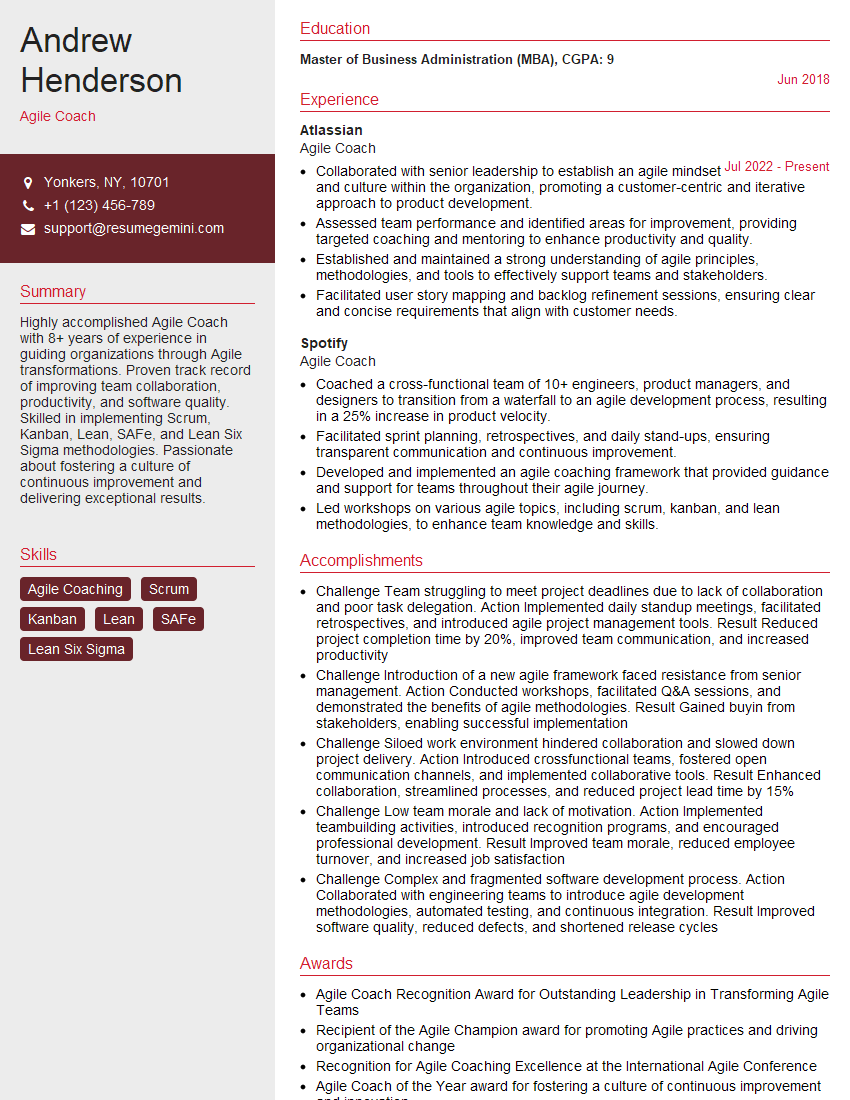
Agile Coach Resume Sample
- Product Manager
- QA Manager
- Project Manager
- Director of Engineering
- Engineering Manager
- Business Analyst
- Security Engineer
- Data Analyst
- Solutions Architect
- Infrastructure Engineer
- System Architect
- IT Project Manager
- Release Manager
- Scrum Master
- Product Designer
- Technical Writer
- UX Designer
- DevOps Engineer
- Cloud Architect
- Agile Coach
Explore more articles
Users Rating of Our Blogs
Share Your Experience
We value your feedback! Please rate our content and share your thoughts (optional).
What Readers Say About Our Blog
I Redesigned Spongebob Squarepants and his main characters of my artwork.
https://www.deviantart.com/reimaginesponge/art/Redesigned-Spongebob-characters-1223583608
IT gave me an insight and words to use and be able to think of examples
Hi, I’m Jay, we have a few potential clients that are interested in your services, thought you might be a good fit. I’d love to talk about the details, when do you have time to talk?
Best,
Jay
Founder | CEO