The right preparation can turn an interview into an opportunity to showcase your expertise. This guide to Collaboration with Parents and Colleagues interview questions is your ultimate resource, providing key insights and tips to help you ace your responses and stand out as a top candidate.
Questions Asked in Collaboration with Parents and Colleagues Interview
Q 1. Describe your experience building positive relationships with parents from diverse backgrounds.
Building positive relationships with parents from diverse backgrounds requires cultural sensitivity, empathy, and a genuine desire to understand their unique perspectives. It’s not just about speaking the same language, but about understanding the different ways families communicate and value education.
My approach starts with active listening. I make a conscious effort to understand their concerns, values, and expectations. I begin each interaction by acknowledging their cultural background and tailoring my communication style to match. For example, I might use a translator if needed or adjust my communication style to be more formal or informal based on cultural norms. I also actively seek to learn about their cultural practices and beliefs that could affect their child’s learning. This could involve reading relevant materials or engaging in conversations with community members. Finally, I make sure to value their insights and contributions, ensuring that their voice is heard and respected in the classroom.
For instance, I once worked with a family where the parents preferred a more hands-on approach to their child’s homework. Instead of viewing this as a challenge, I embraced it as an opportunity to partner with them. We collaborated to develop a system where they helped with homework alongside my guidance and support.
Q 2. How do you effectively communicate complex information to parents with varying levels of education?
Effective communication with parents with varying levels of education hinges on clear, concise language, avoiding jargon and complex terminology. I use visual aids like charts, graphs, and pictures to supplement verbal explanations. I also adjust my communication style to the parent’s comfort level. If a parent seems uncomfortable with technical terms, I use simpler language and analogies to explain concepts.
For parents with limited literacy skills, I opt for more informal communication, perhaps a phone call or a face-to-face meeting where I can gauge their understanding through observation and active listening. I provide written summaries in plain language, using bullet points and short sentences to make them more accessible. Providing translated materials and utilizing interpreters are also crucial strategies.
For example, if I’m explaining a complex assessment, I would not just explain the numerical score, but what that score actually means for the child’s progress, focusing on their strengths and areas for improvement using simple language and relatable examples.
Q 3. Explain your approach to resolving conflicts between parents and teachers.
Resolving conflicts between parents and teachers requires a collaborative and empathetic approach. My strategy begins with active listening – hearing both sides without judgment. I aim to create a safe space where everyone feels comfortable expressing their feelings and perspectives. Then, I work to identify the root cause of the conflict, focusing on the student’s well-being as the central priority.
I facilitate open dialogue, encouraging both parties to share their concerns and perspectives. I help them to see the situation from each other’s standpoint. If needed, I might suggest a structured problem-solving approach, where we brainstorm potential solutions together. I document the discussion and agreed-upon solutions, keeping both parents and teachers informed throughout the process.
For example, if a parent complains about a teacher’s grading policy, I would arrange a meeting to discuss the policy, explain the rationale behind it, and listen to the parent’s concerns. We would collaborate to find a solution that meets both the educational needs of the student and the parent’s concerns, perhaps agreeing on an alternative approach to assessment or homework.
Q 4. How do you involve parents in their child’s education?
Involving parents in their child’s education is crucial for academic success and overall well-being. My approach focuses on creating multiple avenues for parental involvement, recognizing that parents have varied commitments and resources.
I utilize a multi-faceted approach, including regular communication through newsletters, emails, and parent-teacher conferences. I also offer volunteer opportunities in the classroom and school events to allow parents to actively participate in their child’s school life. I encourage parents to be actively involved in their child’s homework, providing support and guidance but respecting their own learning styles. Finally, I provide resources and workshops that enhance parental understanding of educational concepts and strategies. This could be anything from workshops on effective parenting to sessions on supporting learning at home.
For example, I’ve organized parent workshops on reading strategies and math games. Parents found these sessions incredibly valuable, empowering them to actively support their child’s learning outside the classroom.
Q 5. Describe a time you had to collaborate with colleagues to solve a problem involving a student.
In one instance, a student was consistently struggling with behavior issues in the classroom. Initial interventions by the classroom teacher proved ineffective. This prompted a collaborative effort involving the classroom teacher, the special education teacher, the school counselor, and myself (as the administrator).
Our team followed a structured problem-solving process. We first collaboratively analyzed the student’s behavior, considering classroom dynamics, home environment, and academic performance. We then brainstormed interventions, reviewing data-driven strategies to address the underlying causes of the behavior. After selecting the most promising interventions, we implemented them, carefully monitoring their effectiveness through regular observation and data collection. We shared observations and adjusted the approach based on the data obtained. This collaborative approach led to a significant improvement in the student’s behavior and academic performance. The key was open communication and a shared commitment to the student’s success.
Q 6. How do you ensure effective communication and collaboration within a team?
Effective communication and collaboration within a team require clear roles, open channels of communication, and mutual respect. We utilize various tools, such as regular team meetings, collaborative online platforms, and shared documents to ensure everyone is informed and involved.
Clear communication protocols are paramount. We establish specific methods for information sharing, feedback, and decision-making. For instance, we might use a shared online calendar for scheduling and a project management tool for task assignments and progress updates. We emphasize active listening and constructive feedback within our team, fostering a supportive environment where everyone feels comfortable expressing their opinions. We also ensure that all team members understand their roles and responsibilities, preventing duplication of effort and fostering efficient workflow.
Q 7. What strategies do you use to build consensus among colleagues with differing opinions?
Building consensus among colleagues with differing opinions requires fostering a culture of respect, empathy, and open dialogue. I typically initiate discussions by clearly articulating the problem and the desired outcome. Then, I encourage each colleague to share their perspectives and concerns in a non-judgmental environment.
I employ a collaborative problem-solving approach, encouraging brainstorming sessions where everyone’s ideas are valued. We work towards finding common ground and exploring options that address the concerns of all parties. We might use a voting or ranking system to prioritize different options, ensuring transparency and fair consideration. Compromise is key. Sometimes, finding a solution that satisfies everyone perfectly isn’t possible; it’s about finding an option that addresses the most important concerns and allows us to move forward collaboratively. It’s about recognizing the value of diverse perspectives and appreciating that differing opinions can lead to innovative solutions.
Q 8. How do you manage competing priorities when collaborating with multiple stakeholders?
Managing competing priorities when collaborating with multiple stakeholders requires a structured approach. Think of it like conducting an orchestra – each instrument (stakeholder) has its own part, but they must harmonize to create beautiful music (successful project). My strategy involves several key steps:
Prioritization: I use frameworks like Eisenhower Matrix (urgent/important) to classify tasks and allocate time effectively. This helps me focus on the most crucial tasks first, ensuring the most important stakeholder needs are met.
Clear Communication: I proactively communicate expectations and deadlines to all stakeholders. This includes regular updates and open forums for discussion to prevent misunderstandings and manage expectations.
Collaboration Tools: Utilizing project management software (e.g., Trello, Asana) ensures everyone has visibility into tasks, deadlines, and progress. This fosters transparency and accountability.
Regular Meetings: Scheduled meetings, both formal and informal, provide platforms for open communication, conflict resolution, and collaborative decision-making. This allows for real-time adjustments based on evolving priorities.
Delegation: I effectively delegate tasks to appropriate individuals, empowering them and freeing my time for higher-priority activities. This ensures work is distributed efficiently.
For instance, in a project involving parents, teachers, and administrators to implement a new reading program, I would first prioritize the initial teacher training, followed by parent communication and then administrative approvals, ensuring a smooth and efficient rollout.
Q 9. Describe your experience using technology to facilitate parent-teacher communication.
Technology plays a crucial role in facilitating seamless parent-teacher communication. I have extensive experience utilizing various platforms to improve engagement and information sharing.
ClassDojo/SeeSaw: These platforms allow for sharing of student work, announcements, and quick updates to parents. The visual nature of these platforms makes sharing student progress more engaging and relatable for parents.
Email/SMS: While seemingly simple, these remain efficient for targeted communications regarding school events, policy changes, or individual student concerns. I prefer using email for detailed information and SMS for quick reminders and urgent updates.
Parent-Teacher Conferencing Tools: Scheduling tools like Calendly or similar allow parents to easily book conference times, reducing scheduling conflicts and improving efficiency.
School Website/Learning Management Systems (LMS): Our school website and LMS are centrally used to provide consistent information, such as school calendars, policies, and announcements.
I always ensure I am mindful of privacy concerns and utilize secure communication channels when sharing sensitive information, complying with all relevant data protection regulations.
Q 10. How do you address a parent’s concerns about their child’s progress?
Addressing a parent’s concerns requires empathy, active listening, and a collaborative problem-solving approach. I view these interactions as opportunities to build trust and support the child’s learning journey.
Active Listening: I start by attentively listening to the parent’s concerns without interruption. I use verbal and nonverbal cues (nodding, eye contact) to show that I understand and value their perspective.
Data-Driven Discussion: I share relevant data, such as assessments, classroom observations, and anecdotal records, to provide a balanced picture of the child’s progress. I avoid using subjective language and focus on observable behaviors.
Collaborative Solutions: I work collaboratively with the parent to develop strategies to support the child’s learning. This could involve adjusting teaching methods, providing additional support, or suggesting resources for at-home learning.
Follow-Up: I ensure consistent follow-up communication to monitor progress and make adjustments as needed. This reinforces my commitment to the child’s success.
For example, if a parent expresses concern about their child’s reading level, I will share the child’s assessment results, discuss strategies used in class, and collaboratively develop a home reading plan, involving the parent actively in the process.
Q 11. How do you adapt your communication style to meet the needs of different individuals?
Adapting my communication style is crucial for effective collaboration. I tailor my approach based on individual needs and preferences, recognizing that ‘one size does not fit all’.
Understanding Communication Styles: I am aware of different communication styles (e.g., visual, auditory, kinesthetic) and adjust my methods accordingly. Some individuals may respond better to visual aids, while others prefer detailed verbal explanations.
Building Rapport: I prioritize building strong relationships based on mutual respect and trust. This creates a safe space for open communication, even when discussing challenging topics.
Clear and Concise Language: I avoid jargon and use clear, concise language that is easily understood by everyone. I actively check for comprehension to ensure the message is received accurately.
Nonverbal Communication: I pay close attention to nonverbal cues (body language, tone of voice) and adjust my approach as needed. Maintaining eye contact, a positive tone, and attentive body language are crucial.
For example, when communicating with a parent who is primarily visual, I would use charts, graphs, or visual representations of their child’s progress to support my verbal explanation. For a more detail-oriented colleague, I would provide detailed written reports and evidence-based arguments.
Q 12. How do you provide constructive feedback to colleagues?
Providing constructive feedback to colleagues requires a thoughtful and sensitive approach, focusing on improving performance and fostering professional growth.
Focus on Behavior, Not Personality: I focus on specific observable behaviors and their impact, rather than making personal judgments. For example, instead of saying “You’re disorganized,” I would say, “I noticed that the lesson plans weren’t submitted on time, which impacted our ability to coordinate effectively.”
Be Specific and Provide Examples: I use concrete examples to illustrate my points, making the feedback more impactful and less open to misinterpretation. I provide specific instances of behavior, along with the consequences and desired alternative behavior.
Positive Framing: I start with positive feedback before addressing areas for improvement. This creates a more receptive environment and avoids making the feedback feel overly critical.
Collaborative Approach: I frame the feedback as a collaborative process, inviting the colleague to share their perspective and discuss potential solutions together.
Follow-Up: I follow up with the colleague to ensure the feedback has been understood and acted upon. This demonstrates my commitment to their professional development.
For instance, If a colleague’s lesson lacked engagement, I’d start by praising their thorough content coverage, then suggest strategies for incorporating more interactive activities, offering specific examples from successful lessons I’ve observed.
Q 13. How do you handle disagreements with colleagues professionally?
Handling disagreements with colleagues professionally requires respect, open communication, and a commitment to finding mutually agreeable solutions.
Focus on the Issue, Not the Person: I concentrate on the specific issue at hand, avoiding personal attacks or emotional outbursts. This maintains a professional tone and prevents escalation.
Active Listening and Empathy: I actively listen to the colleague’s perspective, seeking to understand their viewpoint, even if I don’t agree with it. This fosters understanding and respect.
Seek Common Ground: I look for areas of agreement and build upon shared goals to find common ground. This facilitates a collaborative problem-solving approach.
Mediation If Necessary: If a resolution cannot be reached independently, I am open to seeking mediation from a supervisor or neutral third party to facilitate a productive conversation.
Document Everything: I maintain records of the disagreement and the steps taken to resolve it. This is important for accountability and future reference.
For example, if there’s a disagreement about curriculum implementation, I would focus on the specific aspects of the curriculum causing contention, explore the rationale behind differing viewpoints, and collaboratively create a compromise that reflects the best interests of the students.
Q 14. Describe your experience working with parents who have challenging behaviors.
Working with parents who exhibit challenging behaviors requires patience, understanding, and a consistent approach. My focus is always on maintaining a professional demeanor and prioritizing the child’s well-being.
Remain Calm and Professional: I remain calm and professional, even when faced with anger or hostility. This de-escalates tense situations and prevents the interaction from becoming unproductive.
Active Listening and Empathy: I attempt to understand the underlying reasons for the parent’s behavior. Sometimes challenging behaviors stem from stress, frustration, or unmet needs.
Clear and Consistent Communication: I communicate clearly and consistently, providing updates on the child’s progress and addressing any concerns in a timely and appropriate manner.
Set Boundaries: I set clear boundaries while maintaining respect. This ensures the interaction remains professional and productive.
Seek Support: I am not afraid to seek support from colleagues, administrators, or other professionals when necessary. This is particularly important when dealing with severe or persistent challenging behaviors.
Document Interactions: I meticulously document all interactions with the parent, including the date, time, topic, and actions taken. This is crucial for maintaining a record and ensuring accountability.
For example, if a parent becomes verbally aggressive, I would remain calm, listen to their concerns, acknowledge their emotions, and redirect the conversation towards problem-solving, perhaps involving a mediator if the situation continues to escalate. The focus remains on finding solutions that support the child’s needs, while ensuring a safe environment for all.
Q 15. How do you ensure confidentiality when discussing student information with parents and colleagues?
Confidentiality is paramount when discussing student information. I adhere strictly to FERPA (Family Educational Rights and Privacy Act) guidelines and any similar regulations within my institution. This means I only share information on a need-to-know basis with parents and colleagues directly involved in the student’s education or well-being.
For instance, I would only discuss a student’s academic performance with their parents, and information regarding a behavioral issue would be limited to relevant school personnel like counselors, administrators, and the student’s teachers. I would never discuss a student’s information in public spaces or with individuals not authorized to receive it. I also ensure all electronic communication follows secure protocols.
When communicating with colleagues, I use secure internal communication channels and avoid sending sensitive information through email unless absolutely necessary and using encrypted methods. I also emphasize the importance of confidentiality during team meetings, reminding colleagues of the legal and ethical implications of sharing private information inappropriately.
Career Expert Tips:
- Ace those interviews! Prepare effectively by reviewing the Top 50 Most Common Interview Questions on ResumeGemini.
- Navigate your job search with confidence! Explore a wide range of Career Tips on ResumeGemini. Learn about common challenges and recommendations to overcome them.
- Craft the perfect resume! Master the Art of Resume Writing with ResumeGemini’s guide. Showcase your unique qualifications and achievements effectively.
- Don’t miss out on holiday savings! Build your dream resume with ResumeGemini’s ATS optimized templates.
Q 16. How do you navigate cultural differences when collaborating with parents?
Navigating cultural differences requires sensitivity and a proactive approach. I believe in building rapport by learning about the cultural backgrounds of the parents I work with. This might involve simple gestures like learning a few phrases in their native language or being mindful of their communication styles. I also aim to understand their values and beliefs related to education.
For example, I had a parent who preferred non-confrontational communication. Understanding this, I structured my meetings with her to focus on positive aspects of her child’s progress first, before addressing any concerns. I also make sure to provide information in multiple formats, such as written summaries, translated materials, or even visual aids, to cater to different learning preferences.
Active listening is crucial. I avoid making assumptions and strive to understand their perspectives, even if they differ from my own. If there is a language barrier, I ensure access to interpretation services. This ensures that communication is clear and avoids any misunderstandings that can hinder collaboration.
Q 17. Describe a situation where you had to negotiate a solution that satisfied all stakeholders.
In one instance, a student was struggling academically and behaviorally. The parents wanted a more lenient approach, while the teachers felt stricter measures were needed. The student’s IEP team, including myself, the parents, teachers, and the special education coordinator, met to find a solution. Initially, opinions were polarized.
To negotiate, we used a collaborative problem-solving approach. We started by acknowledging everyone’s concerns and validating their feelings. We then focused on the student’s needs and brainstormed strategies that addressed both academic and behavioral challenges. We explored different interventions and gradually built consensus. The final plan incorporated elements from everyone’s suggestions, offering a balanced approach that catered to the student’s individual needs while satisfying all stakeholders.
This involved creating a detailed behavior plan with tiered interventions, additional academic support, and regular communication channels between school and home. It was a process of compromise and mutual understanding that resulted in a positive outcome for the student.
Q 18. How do you ensure all voices are heard during collaborative discussions?
Ensuring all voices are heard is critical for effective collaboration. I utilize several strategies to foster inclusivity. I start by creating a safe and respectful environment where everyone feels comfortable sharing their thoughts and opinions.
I employ active listening techniques, making sure to paraphrase and summarize to confirm understanding. I also use visual aids, such as mind maps or shared documents, to visually represent everyone’s contributions and make sure everyone has a chance to contribute. During discussions, I actively solicit input from quieter members, asking direct questions like, “What are your thoughts on this?” or “Can you share your perspective?”
When dealing with diverse perspectives, I make sure to acknowledge all viewpoints and look for common ground. I might ask clarifying questions to fully grasp the reasoning behind each perspective. This helps create a shared understanding and fosters a sense of collaboration rather than conflict. This inclusive approach ensures the best solutions emerge and everyone feels valued.
Q 19. How do you document your collaborations with parents and colleagues?
Documentation is essential for maintaining transparency and accountability in collaborations. I use a variety of methods depending on the context. For parent communication, I utilize email, school-provided communication platforms, and progress reports. I always ensure that all communications are kept in a secure and accessible system, often through the school’s central system.
For collaborations with colleagues, I utilize shared online documents, meeting minutes, and project management software. Minutes from meetings clearly outline decisions made, action items, and assigned responsibilities. Shared documents allow for real-time collaboration and easy access to information for everyone involved. I regularly update these records to ensure they reflect the most current information.
The type of documentation is tailored to the specific collaboration. It always aims to be clear, concise, and easily accessible to all involved parties. This ensures continuity and allows everyone to stay informed about the progress.
Q 20. How do you measure the success of your collaborations?
Measuring the success of collaborations involves both quantitative and qualitative data. Quantitative data might include improvements in student performance, attendance, or behavior. For example, I might track a student’s grades or behavioral incidents before and after implementing a collaborative intervention.
Qualitative data offers a richer understanding of the impact. This can be gathered through observations, feedback from parents and colleagues, student self-reports, and reflective journaling on my part. For instance, I’d consider feedback from parents on the effectiveness of our communication or the student’s increased engagement in class. I might also analyze the level of collaboration and satisfaction amongst colleagues involved in the process.
The specific metrics used depend on the goal of the collaboration. But the ultimate measure of success is the positive impact on the students and the development of a strong, collaborative partnership with parents and colleagues.
Q 21. Describe your experience with using collaborative tools (e.g., shared documents, project management software).
I have extensive experience using a variety of collaborative tools. I regularly use shared document platforms like Google Docs and Microsoft 365 for collaborative writing, lesson planning, and creating presentations. These tools allow real-time editing, tracking of changes, and seamless sharing, which are incredibly efficient for teamwork.
For project management, I’ve used tools like Trello and Asana to organize tasks, assign responsibilities, and track progress. These platforms are especially helpful for managing multiple projects concurrently, particularly IEP meetings or school-wide initiatives. These platforms allow the creation of deadlines and effective management of different contributions.
I also utilize communication platforms, including email and school-specific communication apps, to maintain a constant flow of communication with parents and colleagues. The choice of tool always depends on the specific project and the needs of all the individuals involved. The overall aim is to increase efficiency and effective communication.
Q 22. How do you handle situations where a parent is uncooperative or resistant to collaboration?
Handling uncooperative parents requires a multifaceted approach focused on understanding their perspective and building trust. It’s rarely about forcing collaboration, but rather finding common ground.
- Active Listening: Begin by truly listening to their concerns without interruption. Try to understand their underlying anxieties or frustrations. Often, resistance stems from fear or misunderstanding.
- Empathy and Validation: Acknowledge their feelings, even if you don’t agree with their perspective. A statement like, “I understand you’re feeling frustrated about X,” can go a long way.
- Collaboration, not Confrontation: Frame the conversation as a partnership, focusing on the child’s best interests. Ask questions like, “What are your goals for your child’s education?” to shift the focus to shared objectives.
- Clear Communication: Explain your approach clearly, using simple language and avoiding educational jargon. Provide concrete examples of how collaboration will benefit their child.
- Offer Options and Compromise: Present several options for moving forward, allowing them some sense of control. A flexible approach can often overcome resistance.
- Seek Support: If necessary, involve other school personnel, such as a counselor or administrator, for support and mediation.
For example, I once worked with a parent who was resistant to homework assignments. Through active listening, I discovered they felt the assignments were too difficult for their child and were adding to existing family stress. By collaborating to adjust the workload and provide extra support, we established a positive relationship and improved the child’s academic performance.
Q 23. How do you promote a culture of collaboration within your team?
Cultivating a collaborative team culture requires a conscious and consistent effort. It’s about fostering an environment where everyone feels empowered to contribute, share ideas, and work together towards shared goals.
- Establish Shared Goals and Vision: Clearly define team goals and ensure everyone understands their role in achieving them. This creates a sense of shared purpose.
- Open Communication: Encourage open and honest communication through regular team meetings, informal discussions, and feedback mechanisms. Establish clear communication protocols.
- Shared Decision-Making: Involve team members in the decision-making process. This empowers them and fosters a sense of ownership.
- Mutual Respect and Trust: Create a culture of mutual respect and trust. Celebrate successes and acknowledge individual contributions.
- Team Building Activities: Engage in team-building activities to foster camaraderie and strengthen relationships. These can range from informal social gatherings to structured problem-solving exercises.
- Conflict Resolution Strategies: Establish clear procedures for addressing conflict and disagreements constructively. Encourage active listening and empathy.
For instance, I implemented regular “check-in” meetings for my team, providing a space for brainstorming, sharing challenges, and celebrating successes. This simple practice significantly improved communication and fostered a strong sense of team unity.
Q 24. How do you ensure that all team members feel valued and respected?
Ensuring all team members feel valued and respected is paramount for effective collaboration. It’s about recognizing individual strengths and creating a supportive environment where everyone feels their contributions matter.
- Recognize Individual Contributions: Regularly acknowledge and appreciate individual contributions, both big and small. Public recognition, such as in team meetings, can be particularly effective.
- Provide Opportunities for Growth and Development: Offer opportunities for professional development, mentorship, or leadership roles to help team members grow their skills and advance their careers. This demonstrates investment in their future.
- Seek Feedback and Input: Regularly solicit feedback from team members about their experiences, workload, and suggestions for improvement. This shows that their opinions are valued.
- Fair Distribution of Workload: Ensure a fair distribution of tasks and responsibilities, considering individual strengths and capacity. Avoid overloading any single member.
- Promote Inclusivity and Diversity: Foster an inclusive environment where everyone feels welcome and respected, regardless of their background or identity. Celebrate diversity and different perspectives.
- Address Concerns Promptly: Respond promptly and effectively to concerns or complaints from team members. Demonstrate that their well-being is a priority.
For example, I implemented a peer-recognition program where team members could nominate colleagues for outstanding contributions. This simple act boosted morale and strengthened team cohesion.
Q 25. Describe a time when you had to adapt your approach to collaboration due to unexpected circumstances.
Adaptability is key in collaboration. Unexpected circumstances often require a shift in approach to maintain effectiveness.
During a school-wide technology failure, our planned parent-teacher conferences had to be abruptly changed from a digital platform to entirely in-person. Our initial collaborative plan, heavily reliant on online scheduling and communication tools, became obsolete. We had to quickly adapt. This involved:
- Emergency Meeting: We immediately held a team meeting to discuss the situation and brainstorm solutions.
- Revised Communication Plan: We swiftly switched to phone calls and emails to inform parents of the change and reschedule appointments.
- Resource Allocation: We reorganized staff to manage the increased workload of in-person meetings and manual scheduling.
- Flexibility and Patience: We understood parents’ frustration and maintained a flexible approach, accommodating scheduling conflicts as needed.
Despite the initial disruption, the adapted approach ensured that all scheduled conferences were successfully held. The experience highlighted the importance of flexibility and proactive problem-solving in navigating unexpected challenges.
Q 26. How do you ensure that all team members are aware of their roles and responsibilities?
Clarity of roles and responsibilities is crucial for efficient teamwork. Ambiguity can lead to confusion, duplication of effort, and missed deadlines.
- Clear Role Descriptions: Provide each team member with a clear written description of their roles, responsibilities, and expected outcomes.
- Team Charter or Agreement: Develop a team charter or agreement outlining the team’s goals, working processes, communication protocols, and decision-making procedures. This creates a shared understanding.
- Regular Check-ins: Conduct regular team meetings to discuss progress, address challenges, and ensure everyone is on track. This facilitates open communication and accountability.
- Training and Onboarding: Provide adequate training and onboarding to ensure all team members understand their responsibilities and have the necessary skills.
- Delegation and Empowerment: Delegate tasks effectively, empowering team members to take ownership of their work. This builds confidence and competence.
- Performance Reviews and Feedback: Conduct regular performance reviews to provide feedback and identify areas for improvement. This helps ensure that everyone is meeting expectations.
For instance, I created a project management system with clearly defined tasks and deadlines for each team member. This fostered transparency and accountability, minimizing confusion and improving overall efficiency.
Q 27. How do you use data to inform your collaborations with parents and colleagues?
Data plays a crucial role in informing collaboration with parents and colleagues. It provides objective evidence to support decision-making and ensure interventions are effective.
- Student Performance Data: Academic data (grades, test scores, attendance) helps identify areas where students need support and inform discussions with parents about their child’s progress. This allows for targeted interventions.
- Behavioral Data: Data on student behavior (discipline records, social interactions) can inform collaborative efforts to address behavioral challenges. This allows for a more data-driven approach to support interventions.
- Parent Feedback: Gathering feedback from parents through surveys, questionnaires, or informal conversations provides valuable insights into their needs and perspectives. This ensures that collaboration efforts are aligned with parental expectations.
- Team Performance Data: Tracking team progress on shared goals using metrics and indicators allows for assessment of efficiency and identification of areas needing improvement. This promotes continuous improvement.
- Data Visualization: Use graphs, charts, and other visual representations to communicate data effectively to both parents and colleagues. Visualizations make data more accessible and easier to understand.
For example, using student assessment data, I identified a group of students struggling in math. By sharing this data with parents and collaboratively developing an intervention plan, we were able to significantly improve these students’ math skills.
Q 28. Describe a time you successfully mediated a conflict between a parent and a teacher.
Mediating conflicts requires impartiality, active listening, and a focus on finding solutions that benefit all parties involved.
I once mediated a conflict between a parent who felt their child was unfairly graded on an assignment and the teacher who felt the grading was fair and justified. My approach was as follows:
- Create a Safe Space: I arranged a private meeting with both the parent and the teacher in a neutral and comfortable setting.
- Active Listening: I allowed both parties to express their perspectives without interruption, ensuring each felt heard and understood.
- Identify Shared Goals: I highlighted the shared goal of providing the best possible education for the child. This helped refocus the discussion on collaboration rather than conflict.
- Objective Review: I facilitated a review of the assignment and grading criteria. This process helped clarify the teacher’s rationale and address the parent’s concerns.
- Collaborative Solution: Together, we developed a plan that included re-evaluation of the assignment based on clarified grading criteria and additional support for the student.
The outcome was a positive resolution. The parent felt heard and understood, and the teacher felt valued and respected. The student benefited from additional support and a clearer understanding of expectations. This successful mediation strengthened the relationship between the parent and teacher, ultimately benefitting the child.
Key Topics to Learn for Collaboration with Parents and Colleagues Interview
- Effective Communication Strategies: Understanding diverse communication styles and adapting your approach to build rapport with parents and colleagues from various backgrounds. Practical application: Developing strategies for clear and concise communication in both written and verbal formats, handling sensitive information with tact and diplomacy.
- Conflict Resolution and Negotiation: Identifying and addressing conflicts constructively, finding common ground, and mediating disagreements among parents and colleagues. Practical application: Role-playing scenarios to practice active listening, empathy, and compromise skills in resolving interpersonal conflicts.
- Building Trust and Rapport: Establishing strong relationships based on mutual respect, open communication, and a shared commitment to student success. Practical application: Developing strategies for actively listening to concerns, providing timely feedback, and demonstrating genuine care and understanding.
- Teamwork and Collaboration: Working effectively within a team to achieve shared goals, leveraging individual strengths, and contributing positively to the team dynamic. Practical application: Describing experiences where you successfully collaborated with diverse teams to achieve a common objective. Highlighting your role in fostering a positive and productive team environment.
- Stakeholder Management: Understanding the needs and perspectives of different stakeholders (parents, colleagues, administrators) and managing expectations effectively. Practical application: Developing strategies for proactively communicating with stakeholders, addressing concerns promptly, and managing expectations realistically.
- Professionalism and Ethical Conduct: Maintaining high ethical standards in all interactions, demonstrating professionalism, and respecting confidentiality. Practical application: Describing situations where you upheld ethical principles and maintained professional boundaries.
Next Steps
Mastering collaboration with parents and colleagues is crucial for career advancement in many fields. It demonstrates essential interpersonal skills highly valued by employers. To increase your job prospects, focus on building an ATS-friendly resume that highlights your relevant skills and experiences. ResumeGemini is a trusted resource to help you craft a professional and impactful resume that showcases your abilities effectively. Examples of resumes tailored to showcasing expertise in Collaboration with Parents and Colleagues are available to guide you.
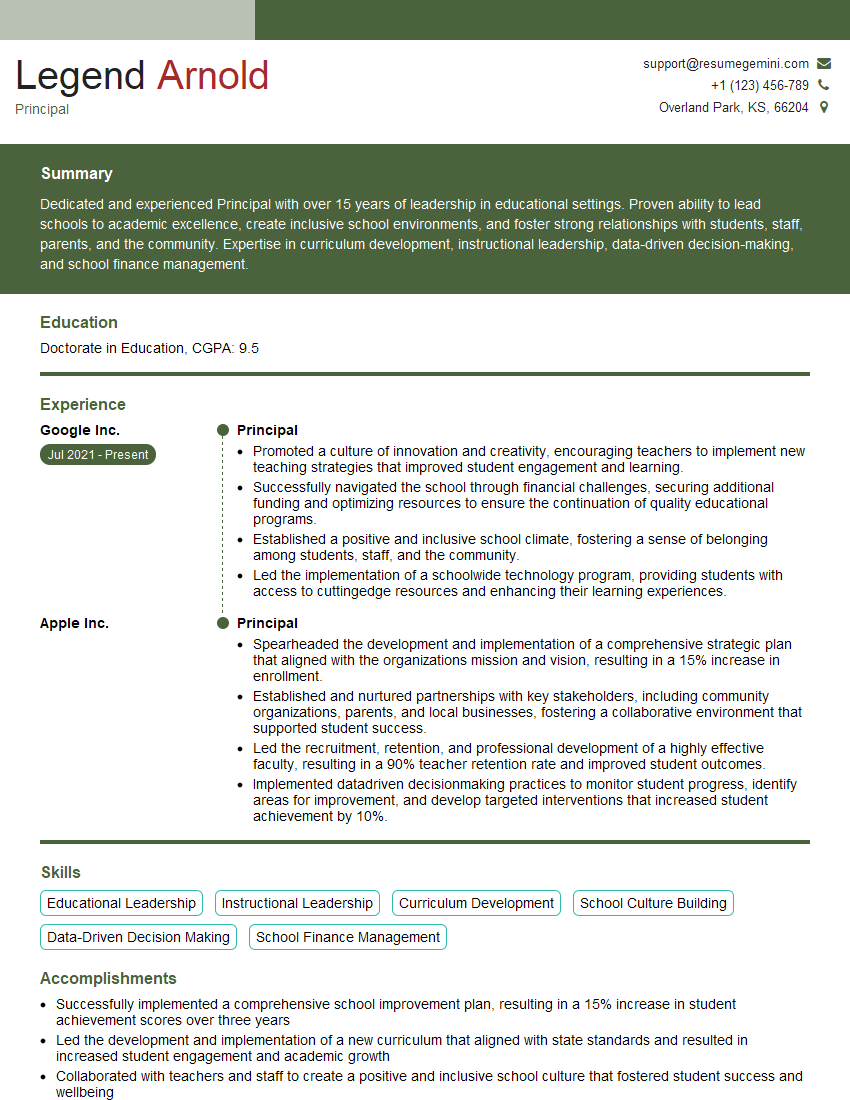
Principal Resume Sample
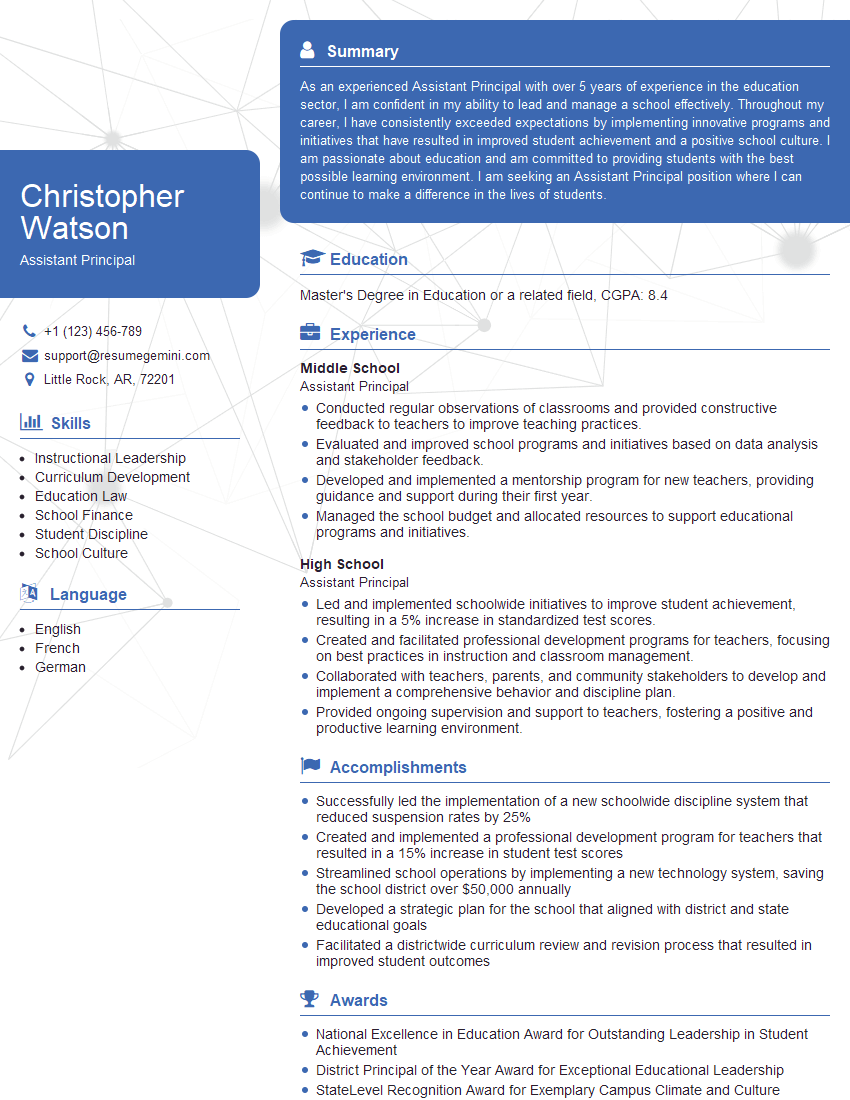
Assistant Principal Resume Sample
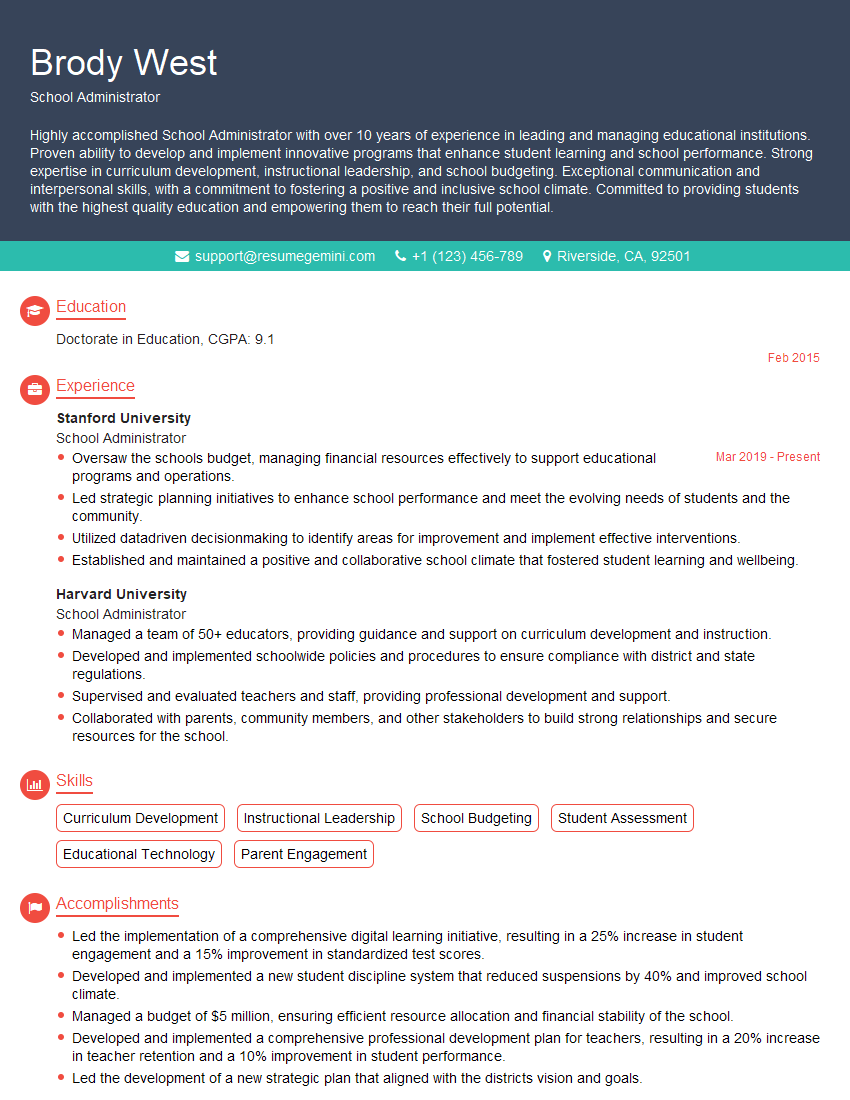
School Administrator Resume Sample
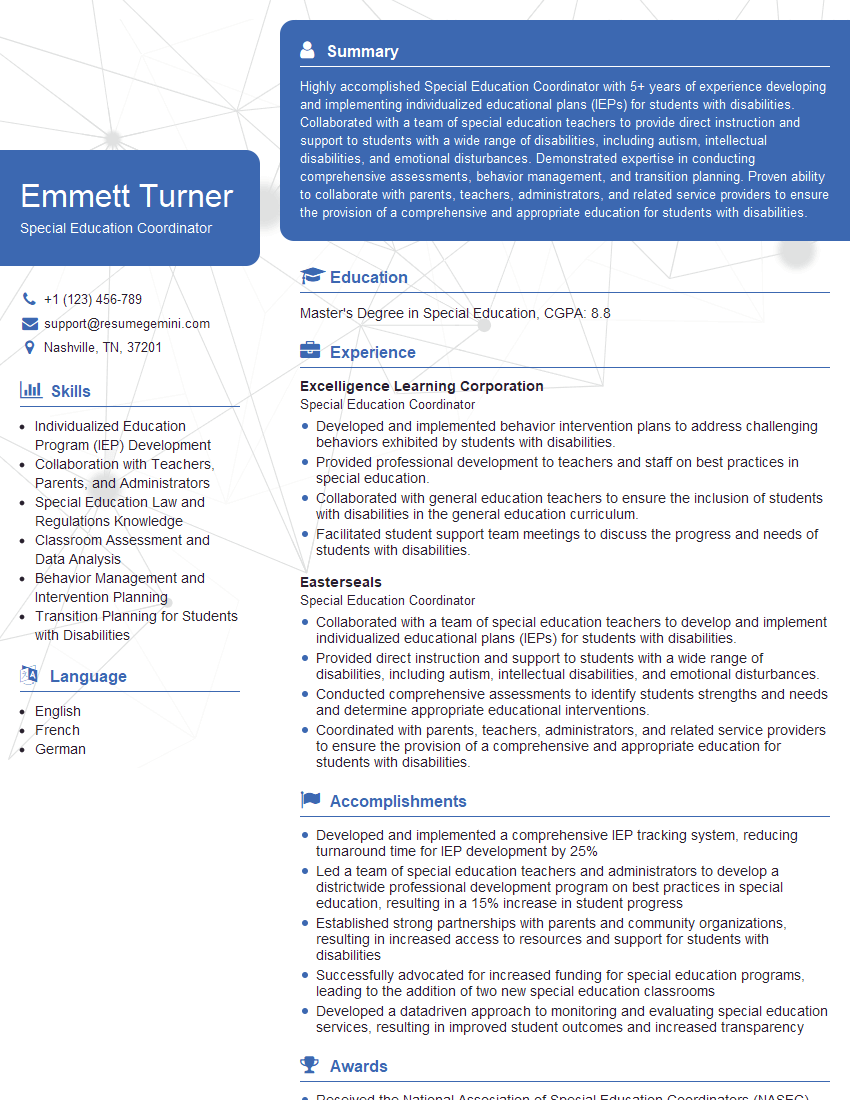
Special Education Coordinator Resume Sample
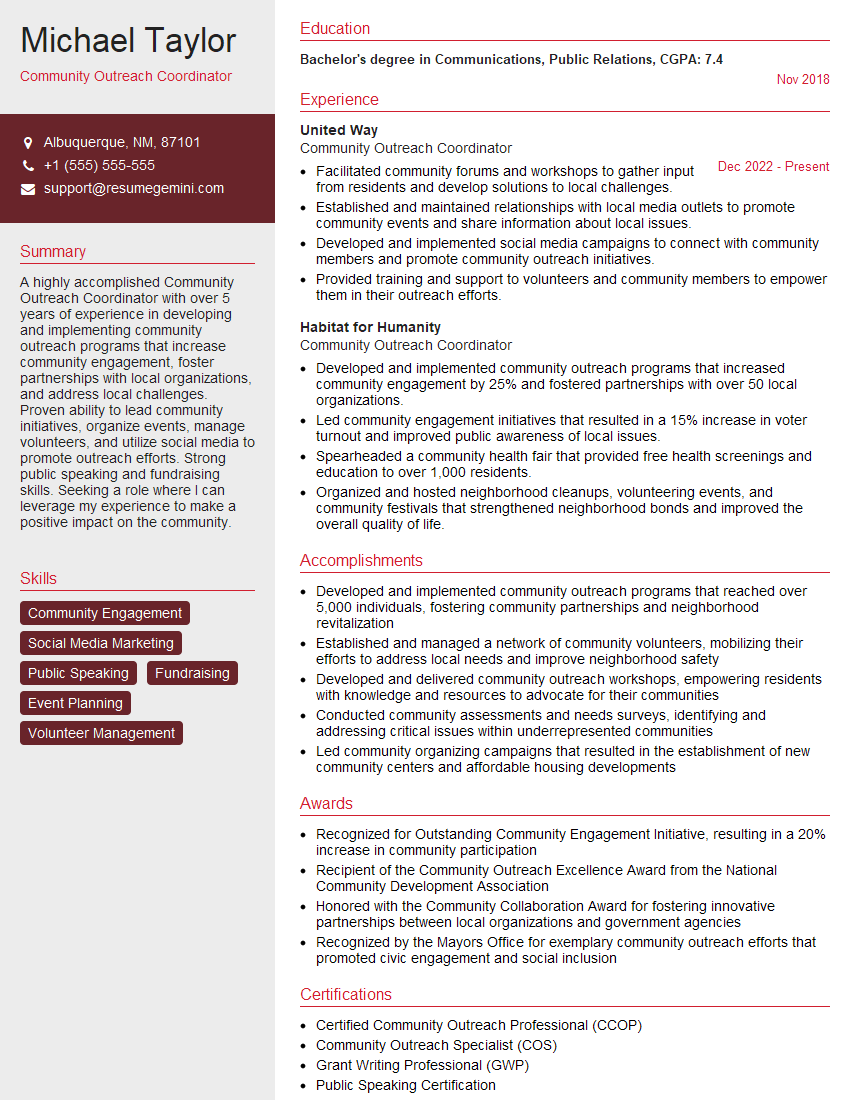
Community Outreach Coordinator Resume Sample
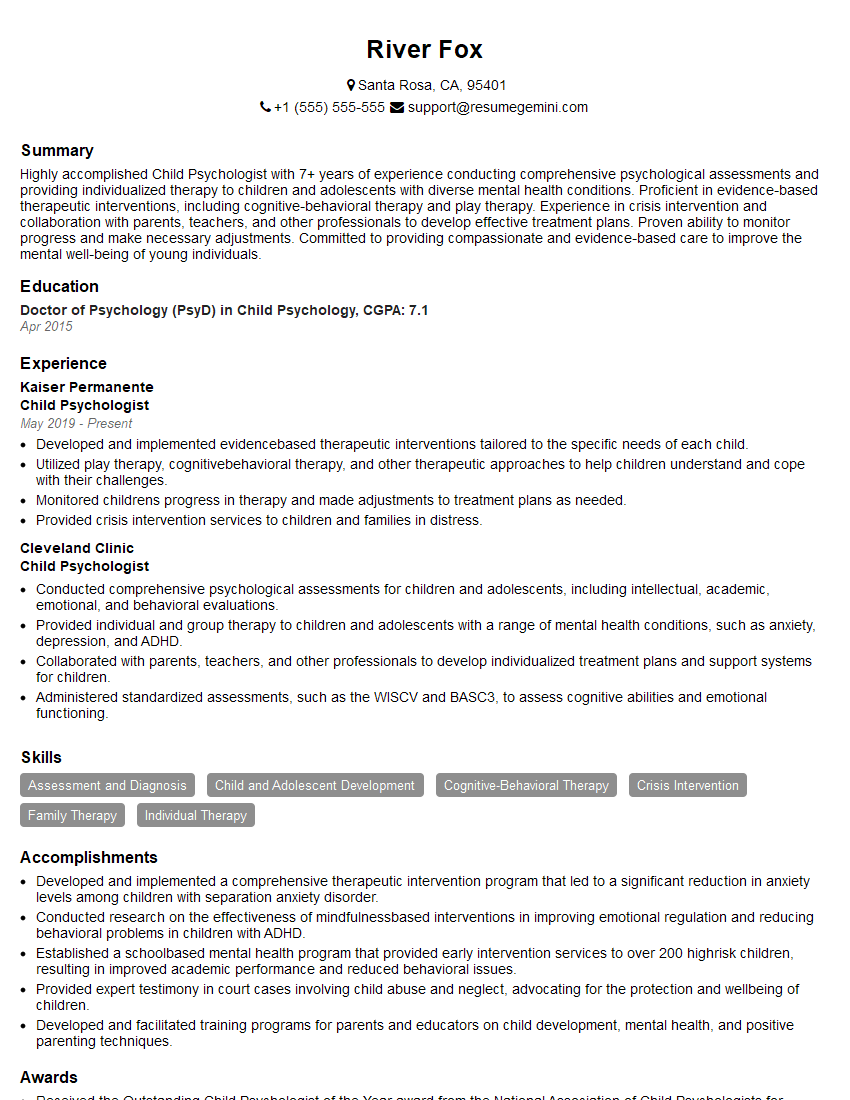
Child Psychologist Resume Sample
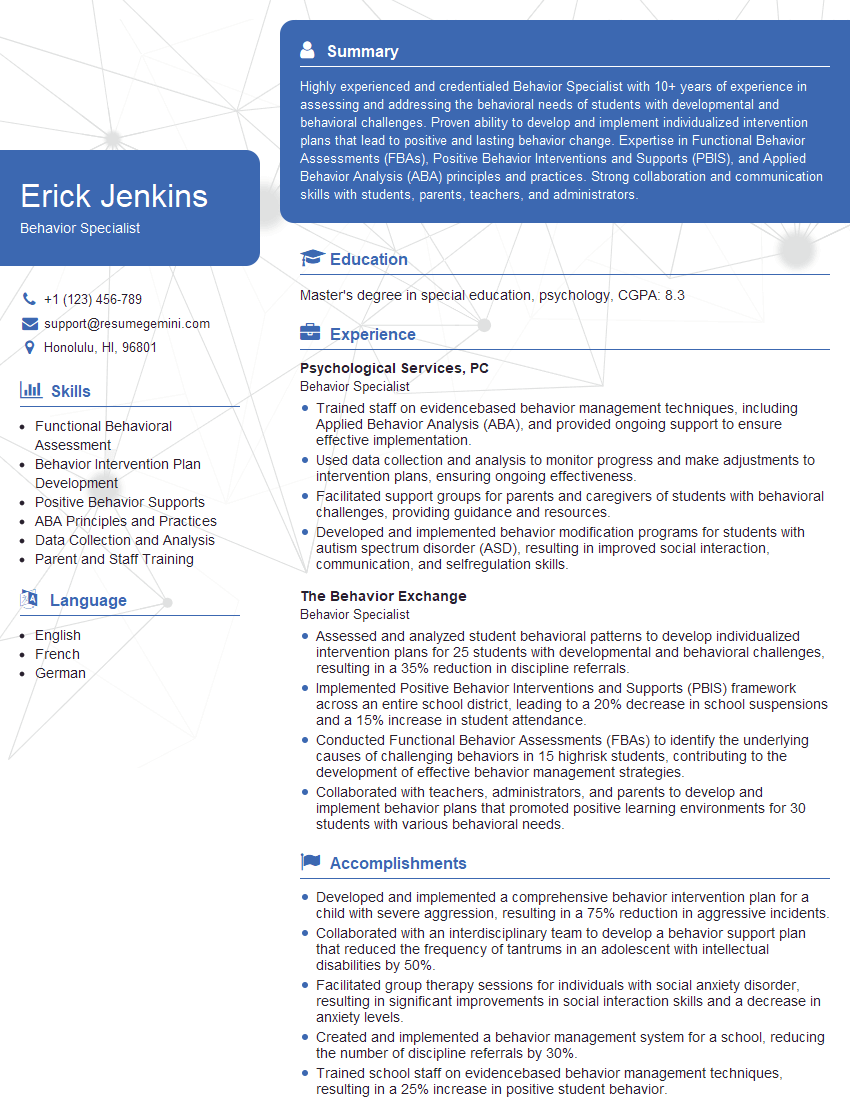
Behavior Specialist Resume Sample
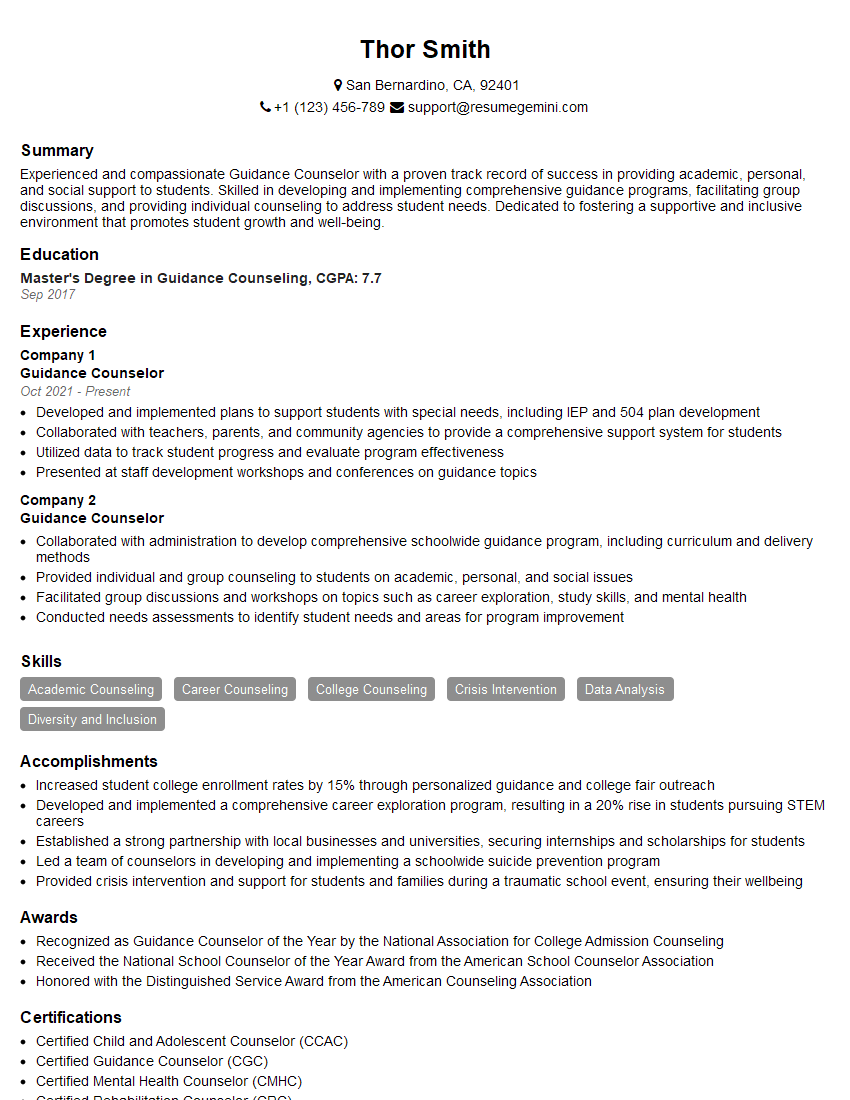
Guidance Counselor Resume Sample
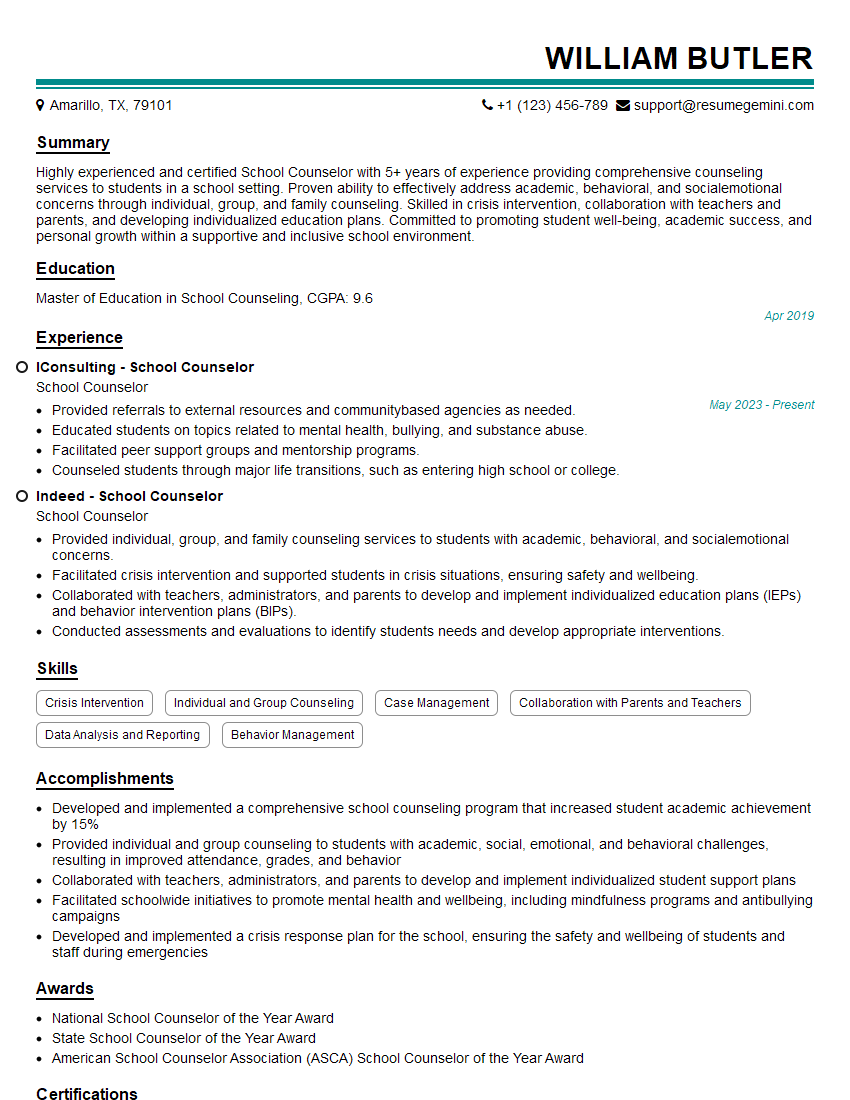
School Counselor Resume Sample
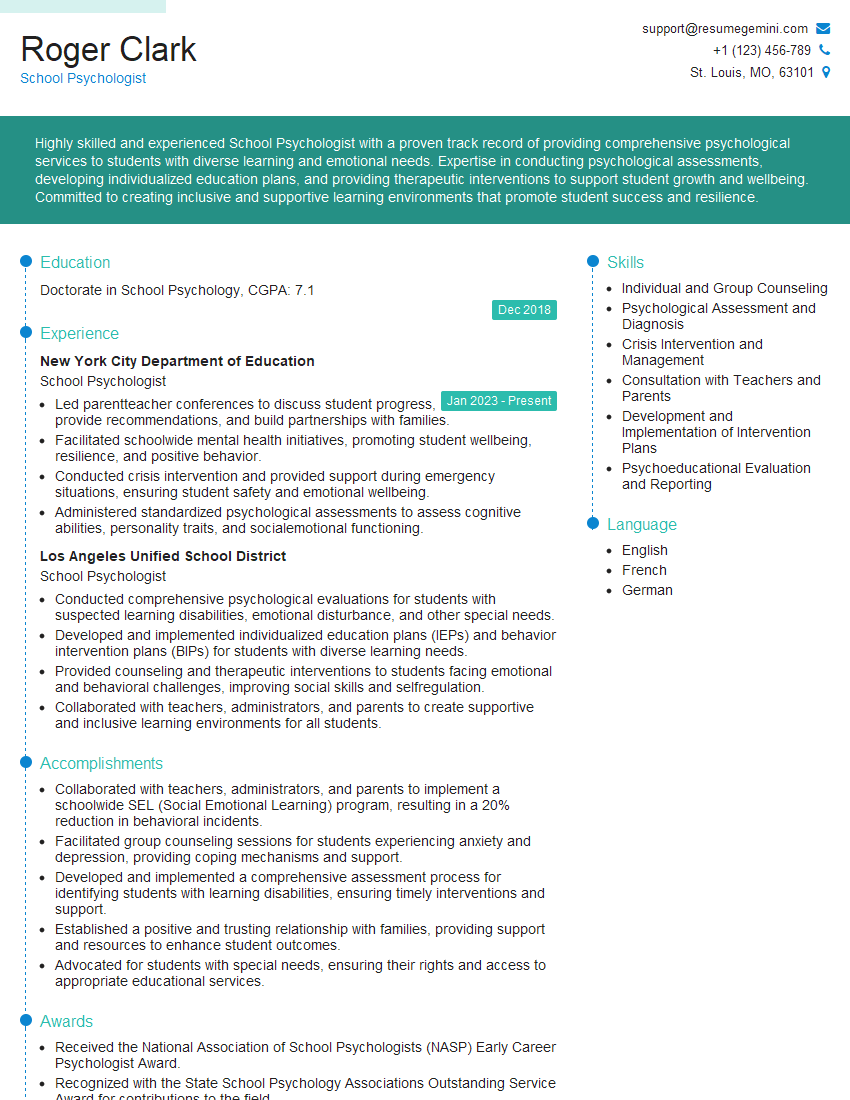
School Psychologist Resume Sample
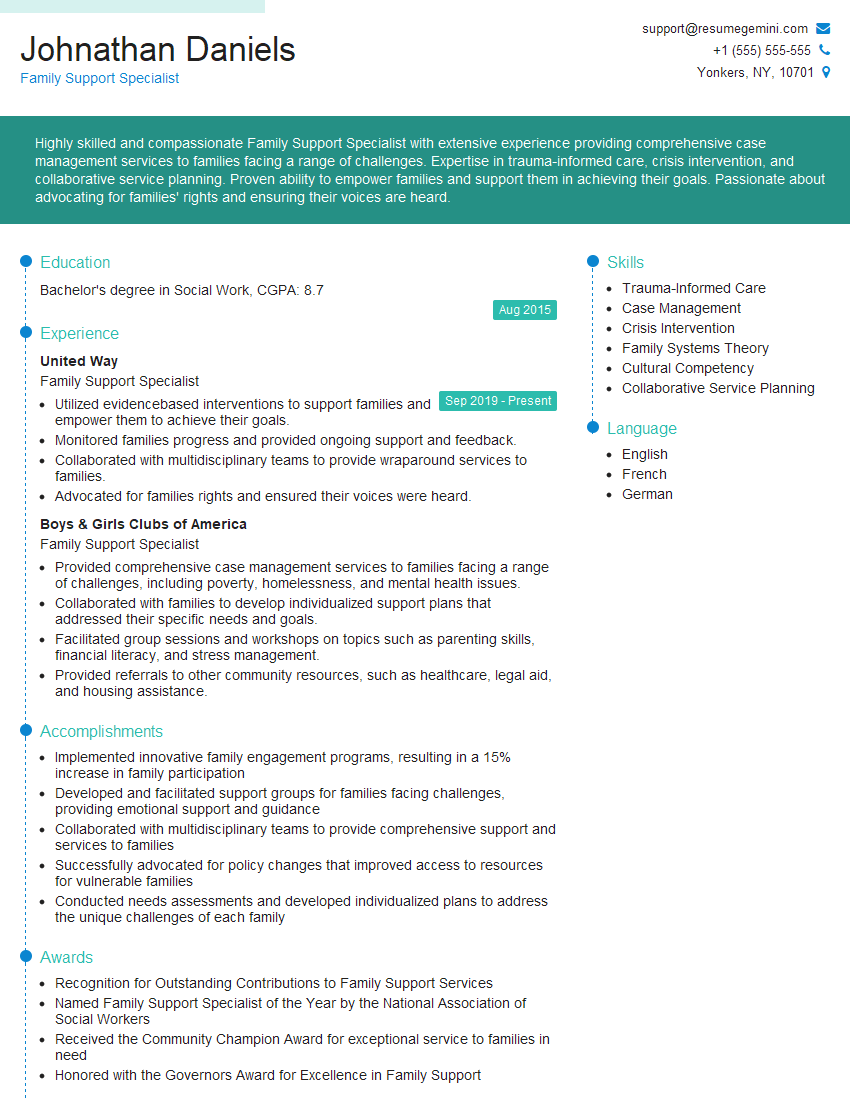
Family Support Specialist Resume Sample
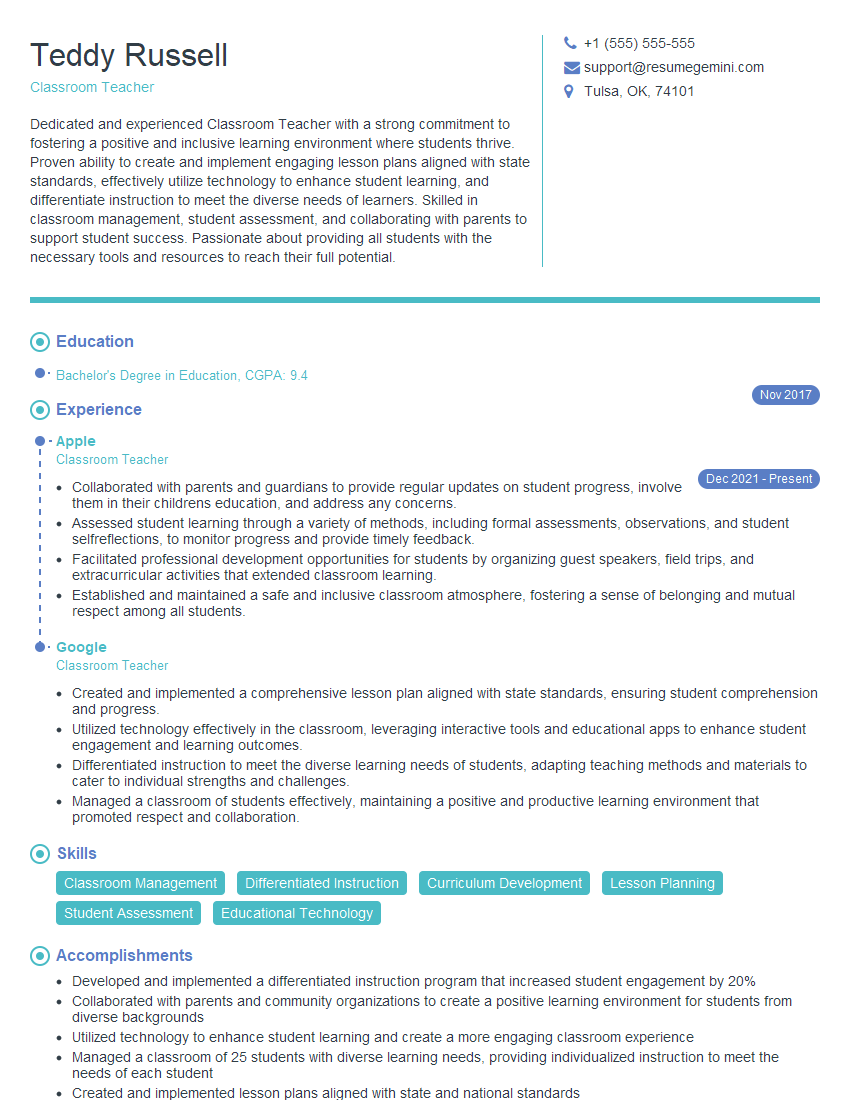
Classroom Teacher Resume Sample
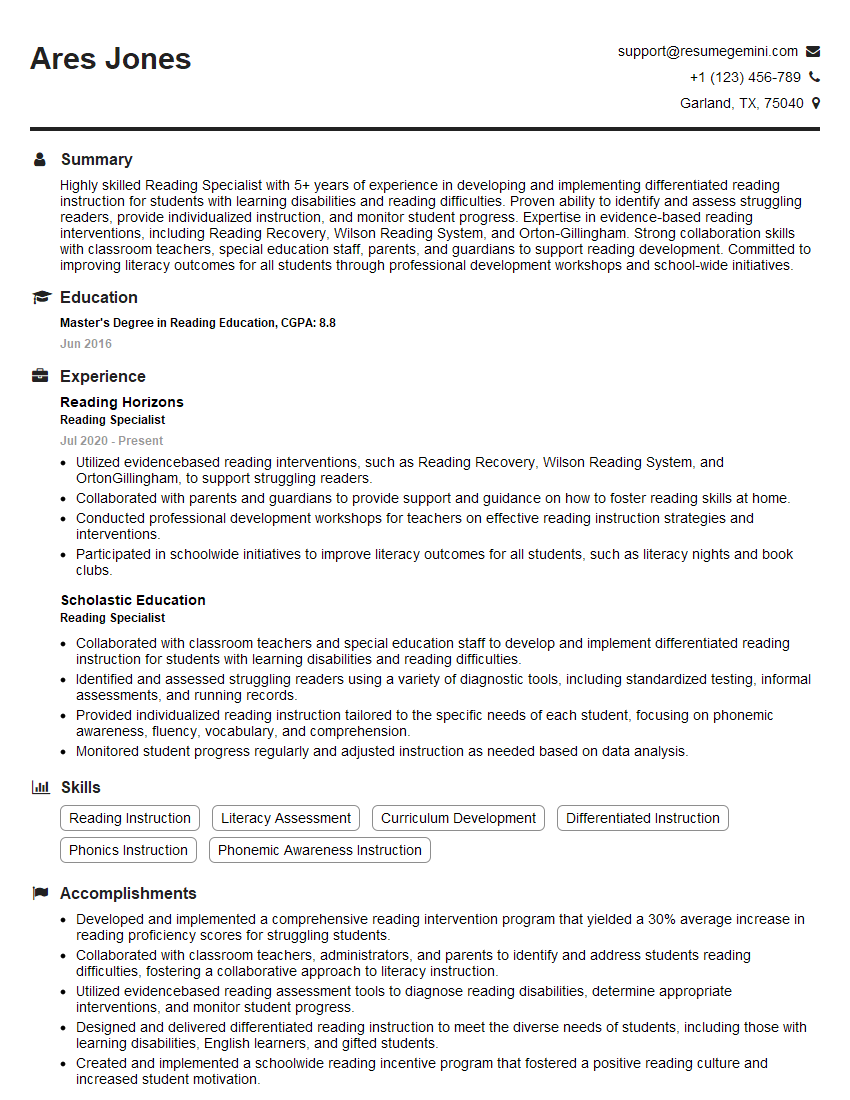
Reading Specialist Resume Sample
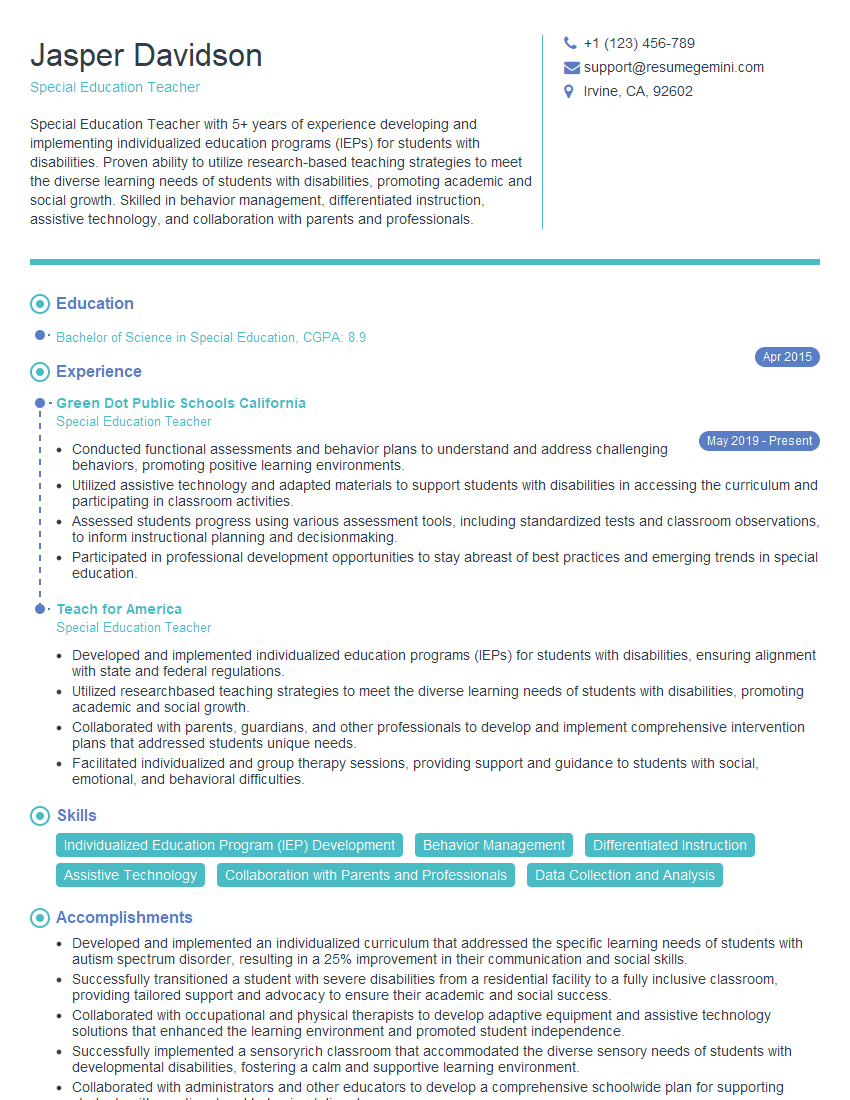
Special Education Teacher Resume Sample
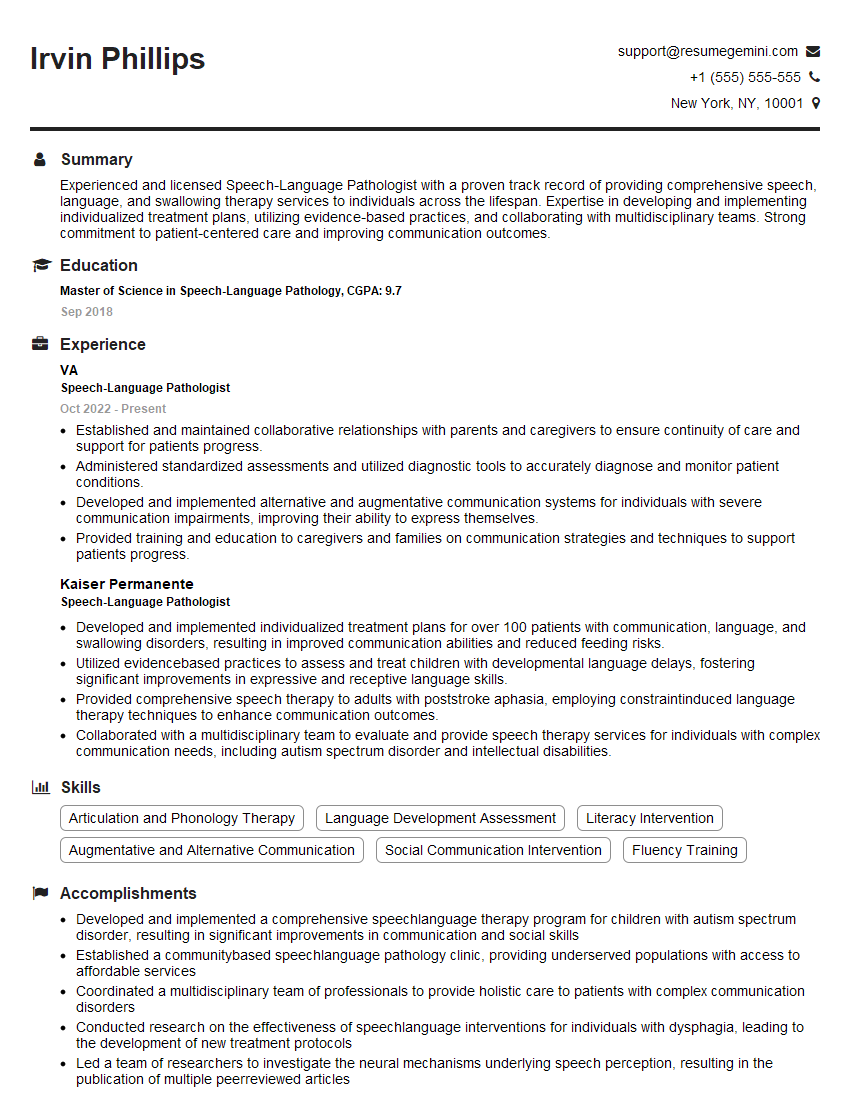
Speech-Language Pathologist Resume Sample
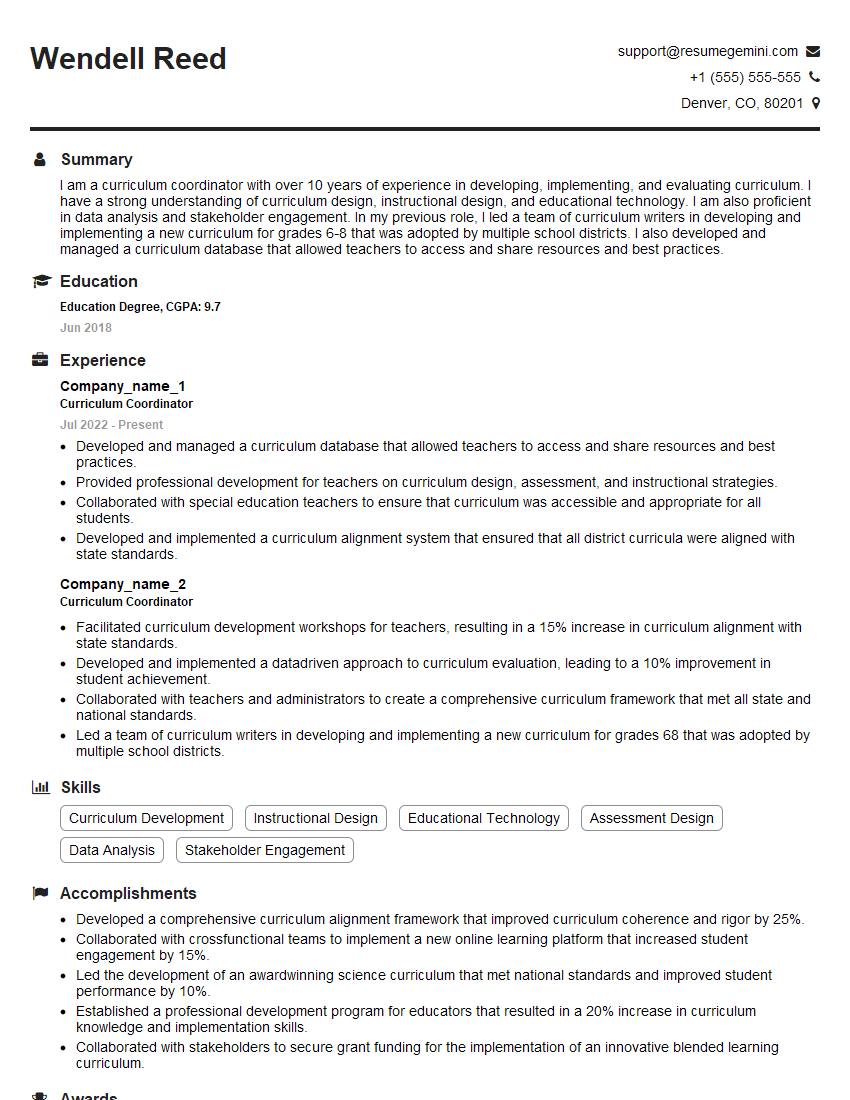
Curriculum Coordinator Resume Sample
- Principal
- Assistant Principal
- School Administrator
- Special Education Coordinator
- Community Outreach Coordinator
- Child Psychologist
- Behavior Specialist
- Guidance Counselor
- School Counselor
- School Psychologist
- Family Support Specialist
- Classroom Teacher
- Reading Specialist
- Special Education Teacher
- Speech-Language Pathologist
- Curriculum Coordinator
Explore more articles
Users Rating of Our Blogs
Share Your Experience
We value your feedback! Please rate our content and share your thoughts (optional).
What Readers Say About Our Blog
Really detailed insights and content, thank you for writing this detailed article.
IT gave me an insight and words to use and be able to think of examples