Unlock your full potential by mastering the most common Collections Cataloging interview questions. This blog offers a deep dive into the critical topics, ensuring you’re not only prepared to answer but to excel. With these insights, you’ll approach your interview with clarity and confidence.
Questions Asked in Collections Cataloging Interview
Q 1. Describe your experience with RDA (Resource Description and Access).
RDA, or Resource Description and Access, is the current international standard for creating bibliographic records. It’s a significant departure from AACR2 (Anglo-American Cataloguing Rules, 2nd edition), focusing more on the user’s needs and providing more flexibility. My experience with RDA includes years of practical application in cataloging diverse materials, from books and journals to audiovisual resources and born-digital objects. I’ve successfully applied RDA principles to create records that are both accurate and easily discoverable. For example, I’ve worked extensively with the RDA’s emphasis on establishing relationships between resources, leading to enhanced access points and improved retrieval for users. I’m proficient in applying RDA’s rules for various resource types and have experience training others in its application. I’ve also adapted to the evolving interpretations and best practices surrounding RDA implementation within our library’s system.
Q 2. Explain the difference between descriptive and subject cataloging.
Descriptive cataloging focuses on the physical or digital characteristics of an item, providing a factual description of what the item *is*. It details the title, author, publication information, physical dimensions, and other bibliographic details. Think of it as creating a detailed inventory of the item itself. Subject cataloging, on the other hand, describes what the item *is about*. It involves assigning subject headings, keywords, and classification numbers that reflect the content and themes of the resource. This allows users to search for information based on topic, rather than just by author or title. For instance, descriptive cataloging for a book might list its title, author, publisher, and page count; subject cataloging would involve assigning Library of Congress Subject Headings (LCSH) like “Artificial Intelligence” or “Machine Learning” if the book covers those topics. Both are critical for effective information retrieval; descriptive cataloging makes it possible to identify a specific item, while subject cataloging makes it possible to discover items on a particular subject.
Q 3. What are the key elements of a MARC record?
A MARC (Machine-Readable Cataloging) record is a standardized format for storing bibliographic data in a computer-readable form. It consists of various fields, each identified by a three-digit tag, containing specific data elements. Key elements include:
- Leader: Provides information about the record’s structure and content.
- Directory: A table of contents indicating the location of each field.
- Fields: Contain the actual data elements, such as:
010: International Standard Book Number (ISBN)020: International Standard Serial Number (ISSN)040: Cataloging source100: Main Entry – Personal Name245: Title Statement260: Publication, Distribution, etc.650: Subject Added Entry
These fields work together to create a comprehensive description of a resource, enabling efficient searching and retrieval within library management systems. A well-structured MARC record is essential for interoperability between different library systems and databases.
Q 4. How do you ensure authority control in your cataloging workflow?
Authority control is crucial for consistency and accuracy in cataloging. It ensures that each unique author, subject, and corporate body is represented by a single, standardized entry in the catalog. This avoids creating duplicate records and confusion for users. In my workflow, I use a combination of techniques to maintain authority control. This includes using existing authority records whenever possible by searching existing authority files such as Library of Congress Name Authority File (LCNAF) or Library of Congress Subject Headings (LCSH) in addition to local authority files within the system. When a new name, subject, or corporate body needs to be added, I follow a strict procedure for creating a new authority record (as described in my next answer) ensuring it aligns with existing standards and best practices. Regular review and updates of authority records are also important to maintain accuracy and reflect changes over time. For example, a change in an author’s name or the preferred terminology for a subject requires updating corresponding authority and bibliographic records accordingly.
Q 5. What are your preferred methods for managing metadata schemas?
Effective management of metadata schemas is essential for ensuring data consistency and interoperability. My preferred methods involve a combination of strategies. I leverage schema documentation thoroughly to understand the structure and requirements of specific schemas. This includes both formal documentation from organisations like Dublin Core and specialized documentation specific to the system being utilized. I use specialized metadata editors and validation tools to ensure records conform to chosen schemas. These tools offer functionality to check for errors and inconsistencies before the metadata is ingested, reducing potential issues later. I also advocate for collaborative development of local metadata profiles where needed, establishing guidelines that enhance consistency within our institution. Additionally, regular review and updates of schema implementation are essential to adapt to changing standards and technological advancements. For example, we have a process in place for updating our metadata schemas when upgrades to our library management system are rolled out.
Q 6. Describe your experience with various cataloging software (e.g., Koha, Alma, Voyager).
My experience spans several widely-used cataloging software packages. I’ve worked extensively with Koha, a fully integrated open-source library system, where I have developed proficiency in its cataloging modules, including authority control functionality and MARC editing tools. I’m also familiar with Alma, an integrated library system known for its robust features and scalability, utilizing it for complex cataloging projects and authority record maintenance. Furthermore, I have experience with Voyager, a legacy system, highlighting my ability to adapt to different interfaces and approaches to cataloging. My experience with these diverse systems demonstrates my adaptability and proficiency in managing various metadata formats and workflows. I find that while each system offers unique strengths, the core principles of cataloging remain consistent across all platforms. My skillset allows me to quickly become familiar with new library systems and their specific requirements.
Q 7. Explain the process of creating a new authority record.
Creating a new authority record is a systematic process ensuring consistency and accuracy within the catalog. It starts with a thorough search of existing authority files to confirm the absence of a record for that name, subject, or corporate body. If a suitable record isn’t found, I then gather all the necessary information, adhering to the relevant standards such as LCNAF or LCSH. This includes verifying names (using sources like WorldCat or VIAF), spelling variants, and dates. For a personal name authority, for instance, this could include birth and death dates, nationality, and profession. For subject headings, the specificity and broader and narrower terms are identified. Next, the record is created within the chosen library system, ensuring all relevant fields are populated with accurate and consistent data. Finally, the record is reviewed and approved following established workflows, often involving a review by another cataloger for quality control, before becoming part of the authority file. This careful process ensures the quality and consistency necessary for successful authority control within the larger catalog.
Q 8. How do you handle complex or conflicting bibliographic information?
Handling conflicting bibliographic information is a common challenge in cataloging. It requires careful analysis, verification, and a methodical approach. My strategy involves several steps:
Identify the conflict: Carefully compare the conflicting data points. Are there discrepancies in author names, publication dates, titles, or ISBNs? For example, one source might list an author as “Jane Doe” while another uses “J. Doe.”
Source verification: Assess the reliability and authority of each source. Is one source a primary source (e.g., the book itself) and the other a secondary source (e.g., a library catalog record)? Primary sources usually take precedence.
Authority control: Use authority files (like Library of Congress Name Authority File or subject heading lists) to standardize names, titles, and subjects. This ensures consistency across the catalog. For instance, if both “Jane Doe” and “J. Doe” refer to the same author, I’d choose the preferred form from the authority file.
Documentation: Thoroughly document the decision-making process, including which sources were consulted and why a particular choice was made. This helps maintain transparency and allows for future review. I’d include notes in the catalog record itself explaining any choices made regarding conflicting information.
Collaboration (if needed): For exceptionally complex cases, I consult with colleagues or subject matter experts to ensure accuracy and consistency. For example, a rare book might require expertise in the specific historical context to resolve conflicting publication details.
Q 9. Describe your experience with digital asset management systems.
I have extensive experience with digital asset management (DAM) systems, having used several platforms including [mention specific systems used, e.g., ‘AssetBank,’ ‘Bynder,’ ‘Canto’]. My experience encompasses not just the technical aspects of uploading, tagging, and organizing digital assets but also the crucial metadata creation and management.
In a DAM system, I apply my cataloging skills to create consistent and accurate metadata schemas, ensuring that each digital object is properly described using controlled vocabularies and standardized terms. This allows for efficient searching and retrieval of the assets. I’m adept at working with different metadata standards like Dublin Core and MODS. This ensures interoperability and enables seamless integration with other library systems. For example, I’ve integrated a DAM system with our online catalog, so users can easily access both textual and digital versions of resources.
Q 10. How do you ensure the accuracy and consistency of your cataloging work?
Ensuring accuracy and consistency is paramount in cataloging. My approach is multi-faceted:
Adherence to standards: I strictly follow cataloging rules like AACR2 and ISBD, ensuring that bibliographic records are created consistently. This creates uniformity and makes the catalog easier to navigate.
Authority control: I use authority files extensively to standardize names, titles, and subjects. This eliminates inconsistencies and improves retrieval of information. Imagine searching for a book by “Charles Dickens” – consistency ensures all his works appear together, not scattered under various spellings.
Quality control: I regularly review my own work, and in team environments I participate in peer review. This helps catch errors and ensures consistent application of standards.
Training and continuous learning: I stay current with changes in cataloging standards and best practices through professional development and continuous learning. Cataloging is a dynamic field, and keeping updated is crucial.
Data validation: Before finalizing records, I meticulously validate the information using a variety of checks and cross-referencing to identify inconsistencies or errors.
Q 11. What are some common challenges in collections cataloging, and how have you overcome them?
Collections cataloging presents several common challenges. One is dealing with incomplete or inaccurate information in legacy materials. I overcame this by developing a systematic approach involving careful examination of the item itself, cross-referencing with external sources, and applying judgment based on my expertise. Another significant challenge is managing large backlogs. I’ve tackled this by prioritizing items based on urgency (e.g., high-demand materials) and applying efficient workflow strategies.
Another challenge involves the ever-increasing volume of digital materials. To manage this, I’ve embraced digital asset management systems, and developed metadata schemas to ensure the efficient and consistent description of digital assets. The lack of standardized metadata for some digital objects required creative solutions including developing custom metadata fields in accordance with best practices.
Q 12. Explain your understanding of cataloging standards like AACR2 and ISBD.
AACR2 (Anglo-American Cataloguing Rules, 2nd edition) and ISBD (International Standard Bibliographic Description) are fundamental cataloging standards. AACR2 provides comprehensive rules for describing bibliographic items, covering everything from author identification to subject access points. ISBD specifies the punctuation and structure of bibliographic descriptions, ensuring consistency in how information is presented.
Think of AACR2 as the detailed instruction manual for creating a catalog record and ISBD as the formatting guide that ensures everyone ‘speaks the same language’ when describing a book, regardless of the country or library.
Understanding these standards is crucial for creating accurate, consistent, and discoverable catalog records. They ensure interoperability between different library systems and improve global information access.
Q 13. How do you prioritize tasks when faced with a large cataloging backlog?
Prioritizing a large cataloging backlog requires a strategic approach. I usually begin by assessing the collection’s composition and user needs. This involves identifying:
High-demand items: Materials frequently requested by patrons should be prioritized to improve user experience.
Items at risk of deterioration: Fragile or deteriorating materials might require urgent cataloging to ensure preservation.
Items supporting current research or teaching: Prioritizing materials relevant to active projects within the institution.
Collection development priorities: Cataloging may be prioritized to support the institution’s goals in building specific areas of its collections.
Once prioritized, I’ll use project management techniques (e.g., assigning deadlines, tracking progress) to ensure efficient completion of the backlog. I may also involve other catalogers or utilize crowdsourcing methods where appropriate.
Q 14. Describe your experience with subject headings (e.g., Library of Congress Subject Headings).
I have extensive experience using Library of Congress Subject Headings (LCSH). LCSH is a controlled vocabulary providing standardized terms for describing the subject matter of library materials. It’s a hierarchical system, allowing for broader and narrower terms and related terms.
Understanding the structure and principles of LCSH is vital for creating accurate and consistent subject access points. This makes it easier for patrons to find relevant materials using keyword searches. For instance, instead of using a variety of terms like “dogs,” “canines,” or “dog breeds,” I’d utilize the appropriate, standardized LCSH term (e.g., “Dogs” or more specific terms like “German Shepherds”). My skill involves selecting the most appropriate and specific subject headings to accurately reflect the content of the item while adhering to the established hierarchy and guidelines.
Q 15. How do you handle cataloging materials in multiple languages?
Cataloging multilingual materials requires a nuanced approach ensuring accessibility and accurate representation for all users. The key is to maintain consistency while accommodating linguistic variations. This involves creating records in the original language whenever possible, using standardized transliteration schemes for non-roman scripts, and employing appropriate subject headings and classification codes that reflect the language and cultural context of the material.
- Language Codes: We use standardized language codes (like those from ISO 639) to clearly identify the language of the item’s title, description, and subject matter. For example,
engfor English andspafor Spanish. This ensures interoperability with other library systems. - Transliteration: When dealing with non-roman scripts (like Cyrillic, Arabic, or Chinese), I consistently apply a recognized transliteration system to create romanized versions for easier searching. I would document the system used in the catalog record. For instance, I might use the Library of Congress system for Cyrillic.
- Subject Headings and Classification: Selecting appropriate subject headings is crucial. I ensure to use multilingual subject headings (if available) or adapt existing headings to reflect the nuances of the language. Similarly, classification schemes (like Library of Congress Classification or Dewey Decimal Classification) might need adjustments depending on the language. Careful attention is paid to ensure the material is classified appropriately within the overall collection.
For instance, if cataloging a novel written in Spanish, I would create the bibliographic record in Spanish, using the appropriate language code, and selecting subject headings relevant to Spanish literature and the novel’s themes. I would also ensure the classification scheme reflects the Spanish language literature section.
Career Expert Tips:
- Ace those interviews! Prepare effectively by reviewing the Top 50 Most Common Interview Questions on ResumeGemini.
- Navigate your job search with confidence! Explore a wide range of Career Tips on ResumeGemini. Learn about common challenges and recommendations to overcome them.
- Craft the perfect resume! Master the Art of Resume Writing with ResumeGemini’s guide. Showcase your unique qualifications and achievements effectively.
- Don’t miss out on holiday savings! Build your dream resume with ResumeGemini’s ATS optimized templates.
Q 16. What is your familiarity with controlled vocabularies?
Controlled vocabularies are essential for consistent and accurate cataloging. They provide standardized terms to describe items, ensuring that different catalogers use the same language for the same concepts. This facilitates easier searching and retrieval by users. My familiarity extends to using various controlled vocabularies, including Library of Congress Subject Headings (LCSH), thesaurus-based subject headings, and authority files.
- Library of Congress Subject Headings (LCSH): I’m proficient in using LCSH, a comprehensive hierarchical vocabulary, to assign subject headings to items. This ensures consistent terminology across different libraries and collections.
- Thesauri: I understand the importance of employing thesauri, which are controlled vocabularies organized by relationships between terms (broader, narrower, related). This allows for richer subject access to materials.
- Authority Files: I am experienced in utilizing authority files to ensure consistency in naming conventions for authors, titles, and other key elements of the bibliographic record. This avoids having multiple variations for the same entity in the catalog.
For example, when cataloging a book about the history of ancient Rome, I would carefully select appropriate LCSH terms like “Rome — History” or “Roman Empire” to ensure users searching for related topics can easily find the item. I would also verify the author’s name against an authority file to make sure I use the correct standardized form.
Q 17. How do you manage conflicting classification schemes?
Conflicting classification schemes are a common challenge in collections. The most effective way to handle this is through careful consideration of the collection’s context, user needs, and the advantages and disadvantages of each scheme. Often, the solution involves a combination of approaches rather than a rigid adherence to a single system.
- Understanding the Schemes: Thoroughly understanding the structure and principles of each scheme (e.g., DDC vs. LCC) is crucial. Recognizing their strengths and weaknesses helps determine which might be more suitable for specific materials.
- Mapping and Cross-References: Creating cross-references between the different schemes is helpful. If an item is classified differently under two systems, I would document these alternative classifications within the catalog record to ensure comprehensive access.
- Prioritizing User Needs: Ultimately, the decision on which scheme to prioritize should be informed by the needs of the collection’s users. If a particular scheme provides better access to the majority of the items, it might be the most appropriate one to emphasize.
For example, if a library uses both DDC and LCC, and a new acquisition is classified differently in each, I would use the system that is most commonly used within the library’s existing collection. I would also add a note within the bibliographic record indicating the alternative classification.
Q 18. Describe your experience with creating finding aids.
Creating finding aids is a crucial part of providing access to archival collections and other complex materials. A well-crafted finding aid serves as a roadmap for researchers, guiding them through the collection’s contents. My experience involves designing and implementing finding aids that meet professional standards and incorporate appropriate descriptive and access points.
- Scope and Content Notes: I meticulously document the scope and content of the collection, identifying its creators, dates, subjects, and arrangement.
- Descriptive Inventory: I create a detailed inventory that outlines the collection’s structure, including folder titles, container listings, and other relevant details.
- Controlled Vocabularies and Access Points: I utilize standardized vocabularies and controlled terms to create a comprehensive index that allows users to retrieve information efficiently. I would consider the specific needs of the researchers who will be using the finding aid.
- Digital Formats: I’m proficient in creating finding aids in various digital formats, such as EAD (Encoded Archival Description), which allows for efficient searchability and online accessibility.
For example, when creating a finding aid for a personal papers collection, I would carefully describe the contents of each box or folder, using consistent terminology and including relevant contextual information. I would create a subject index that would allow users to quickly locate specific documents or correspondence within the collection.
Q 19. Explain your understanding of metadata schemas (e.g., Dublin Core, MODS).
Metadata schemas provide a standardized structure for describing resources, enabling interoperability between different systems and improving access to information. My understanding encompasses several common schemas, including Dublin Core and MODS.
- Dublin Core (DC): A simple, widely adopted schema offering a core set of fifteen elements to describe a resource. It’s ideal for quick descriptions and broad coverage. I utilize elements like title, creator, subject, and description to provide basic information about an item.
- Metadata Object Description Schema (MODS): A more complex and detailed schema, often used for rich bibliographic description. It allows for more specific details, including physical characteristics, publication information, and hierarchical subject access points. I use it when a detailed description is necessary.
The choice between schemas depends on the context. For a simple online catalog entry, Dublin Core might suffice; however, for a detailed library catalog record, MODS is preferred because of its capacity for greater detail. I carefully select the appropriate schema based on the complexity of the resource and the needs of the system.
Q 20. How do you ensure accessibility in your cataloging work?
Ensuring accessibility in cataloging is paramount to providing equitable access to information for all users. My approach focuses on creating records that can be understood and utilized by individuals with diverse abilities.
- Structured Data: Using structured metadata elements ensures that information can be easily interpreted by assistive technologies used by individuals with visual or cognitive impairments.
- Descriptive Language: I use clear, concise, and unambiguous language in catalog records, avoiding jargon or overly technical terms.
- Alternative Text: For images or multimedia, I provide accurate and detailed alternative text descriptions, enabling users with visual impairments to understand the content.
- Linked Data: I leverage linked data to create connections between related resources, enhancing navigation and contextual understanding for users.
For example, when describing an image in a catalog record, I provide detailed alternative text describing the image’s content, rather than simply stating ‘image of a painting’. This makes the record accessible to users who cannot see the image.
Q 21. What are your strategies for staying current with cataloging best practices and standards?
Staying current in the ever-evolving field of cataloging requires a multifaceted approach. I actively engage in professional development opportunities to maintain my expertise and adapt to emerging best practices and standards.
- Professional Organizations: I’m a member of relevant professional organizations (like the American Library Association or equivalent) that provide access to publications, conferences, and continuing education opportunities. Staying connected to the library community keeps me informed about changes in standards.
- Conferences and Workshops: I regularly attend conferences and workshops on cataloging to learn about new technologies, methodologies, and best practices.
- Publications and Journals: I read relevant cataloging journals and publications to stay informed about new developments and trends in the field. This also exposes me to new literature on accessible cataloging and metadata.
- Online Resources: I actively explore online resources, including library websites and online training modules to keep updated on changes to metadata standards and cataloging rules.
For instance, I actively follow updates from the Library of Congress regarding changes to LCSH and regularly review online training materials to maintain proficiency in using cataloging software and metadata schemas.
Q 22. How do you collaborate with other librarians and staff in the cataloging process?
Collaboration is the backbone of effective cataloging. In my experience, it involves a multifaceted approach, encompassing both formal and informal interactions. Formally, I participate in regular cataloging meetings where we discuss workflow improvements, address shared challenges, and ensure consistency in applying cataloging rules. For example, we recently debated the best approach to cataloging born-digital materials, ultimately agreeing on a standardized metadata schema.
Informally, I frequently consult with colleagues. If I encounter a particularly complex item—let’s say, a rare manuscript with unusual formatting—I’ll leverage the expertise of a colleague specializing in special collections or rare books. Conversely, I might assist a colleague struggling with a specific aspect of MARC record creation or authority control. This constant exchange of knowledge and support ensures a smooth and efficient cataloging process and produces high-quality records.
We also utilize collaborative online tools, such as shared spreadsheets for tracking projects or shared online catalogs. These digital systems allow everyone to see progress, contribute their expertise simultaneously, and maintain a shared understanding of our workflow and decisions.
Q 23. Describe your experience with metadata mapping and migration.
Metadata mapping and migration are crucial for ensuring data longevity and accessibility, especially when dealing with legacy systems or transitioning to new platforms. My experience encompasses several projects involving the transformation of metadata from various formats (e.g., local databases, spreadsheets, even printed card catalogs!) into standardized formats like MARC21. This requires careful analysis of existing metadata fields, identifying their equivalents in the target schema, and developing appropriate mapping rules.
For instance, in one project, we migrated data from a legacy system using a custom database to a modern library management system. This involved mapping custom fields representing subject classifications to Library of Congress Subject Headings (LCSH) and other controlled vocabularies. We used XSLT (Extensible Stylesheet Language Transformations) to automate much of the process, but manual review and correction were essential to ensure accuracy.
The key to successful metadata migration is meticulous planning, including thorough data analysis, robust testing, and a clear understanding of both the source and destination metadata structures. It’s also crucial to document the entire process, including mapping rules and any exceptions, for future reference and troubleshooting.
Q 24. How do you handle damaged or incomplete bibliographic records?
Handling damaged or incomplete bibliographic records demands a careful and methodical approach. The first step is to assess the extent of the damage or incompleteness. Is it a physical problem (e.g., a torn page preventing accurate transcription of information), a metadata issue (missing publication date, author’s name), or both?
For physical damage, I’d prioritize preservation techniques, consulting with preservation staff as needed. If possible, I’d attempt to reconstruct missing information using available resources like online catalogs, library databases, or even contacting the publisher. For incomplete metadata, I try to fill the gaps using contextual clues from the item itself or external sources. Whenever information is inferred or supplied, clear notes are added to the bibliographic record documenting the source and nature of the addition.
If significant information remains missing despite these efforts, I create a record that clearly flags the incompleteness, using appropriate MARC fields to indicate the problem areas. This ensures that the catalog is accurate and transparent about its limitations, rather than presenting potentially inaccurate or misleading information.
Q 25. Explain your experience with quality control procedures in cataloging.
Quality control is paramount in cataloging. My approach incorporates a multi-layered system of checks and balances. This begins with careful adherence to established cataloging standards like RDA (Resource Description and Access) and the use of authoritative controlled vocabularies such as LCSH and subject headings from other relevant classification schemes.
Beyond the application of rules, I employ several additional quality control measures. This includes regularly reviewing my own work, utilizing software tools to detect potential errors (such as duplicate records or inconsistencies in data), and participating in peer review sessions with colleagues. We examine each other’s work, offering constructive feedback and identifying potential issues before they reach the public catalog.
Finally, a crucial step is post-cataloging quality assurance. This often involves searching the catalog for inconsistencies or finding problematic records through user feedback and reports. This continuous monitoring and improvement of our processes ensures the highest quality of our cataloging work.
Q 26. How do you troubleshoot cataloging errors or inconsistencies?
Troubleshooting cataloging errors or inconsistencies requires a systematic approach. First, I identify the nature of the problem. Is it a single record with an error, or a pattern of errors across multiple records? Is it a problem with authority control, subject headings, or other metadata elements?
I start by examining the record itself, checking for inconsistencies in the data. If the problem is with a specific field, I refer to the relevant cataloging rules and standards to ensure compliance. If I suspect a problem with authority control, I verify the authority records for names and subjects in the online authority file. If the problem persists, I consult with colleagues or utilize online resources like cataloging discussion groups or manuals.
For widespread inconsistencies, a more thorough investigation may be needed. This might involve reviewing the cataloging workflow to identify potential procedural issues, or investigating the data source to rule out broader problems with the data itself. Documenting these troubleshooting steps is key for future reference and prevent similar problems from occurring.
Q 27. What are your strengths and weaknesses in collections cataloging?
My strengths lie in my meticulous attention to detail, my proficiency in applying cataloging rules, and my ability to solve complex cataloging problems creatively and effectively. I am also highly adept at using various cataloging software and online resources, and I am a collaborative team player.
One area for development is expanding my expertise in specific areas like archival description or cartographic cataloging. While I have a good foundational knowledge in these areas, deeper specialization would enhance my abilities further. I’m actively seeking opportunities to participate in workshops and training sessions to build upon this area.
Q 28. Where do you see yourself in five years in the field of Collections Cataloging?
In five years, I envision myself as a contributing leader in collections cataloging. I aim to not only continue to hone my technical skills but also contribute significantly to developing and improving our cataloging practices. This might involve mentoring junior catalogers, leading projects focused on improving catalog usability or accessibility, or contributing to broader institutional initiatives aimed at improving metadata management and discoverability.
I’m interested in exploring opportunities to participate in professional development activities, potentially pursuing advanced certifications or engaging in research related to metadata standards and best practices. My goal is to be a recognized expert, contributing to the advancement of the field while ensuring that our library collections remain accessible and useful to our patrons.
Key Topics to Learn for Collections Cataloging Interview
- Metadata Schemas and Standards: Understanding and applying schemas like Dublin Core, MARC, and MODS; knowing their strengths and weaknesses for different collection types.
- Descriptive Cataloging: Creating accurate and consistent descriptions of collection items, including title, author, publisher, and subject headings; applying cataloging rules (e.g., RDA, AACR2).
- Subject Analysis and Classification: Assigning appropriate subject headings and classification numbers (e.g., Library of Congress Classification, Dewey Decimal Classification) to ensure accurate retrieval.
- Authority Control: Maintaining consistency in cataloging by using controlled vocabularies and authority files to standardize names, titles, and subjects.
- Digital Asset Management: Cataloging digital objects, including images, audio, and video; understanding metadata best practices for digital preservation.
- Cataloging Workflow and Best Practices: Understanding the entire cataloging process, from acquisition to public access, including quality control and collaborative workflows.
- Data Quality and Error Detection: Identifying and correcting inconsistencies and errors in metadata, and maintaining data integrity.
- Cataloging Software and Databases: Familiarity with common cataloging software (e.g., Alma, Koha) and library databases.
- Problem-Solving and Decision-Making: Applying cataloging rules and principles to solve ambiguous or complex cataloging situations.
- Collaboration and Communication: Working effectively with librarians, archivists, and other professionals in a collaborative cataloging environment.
Next Steps
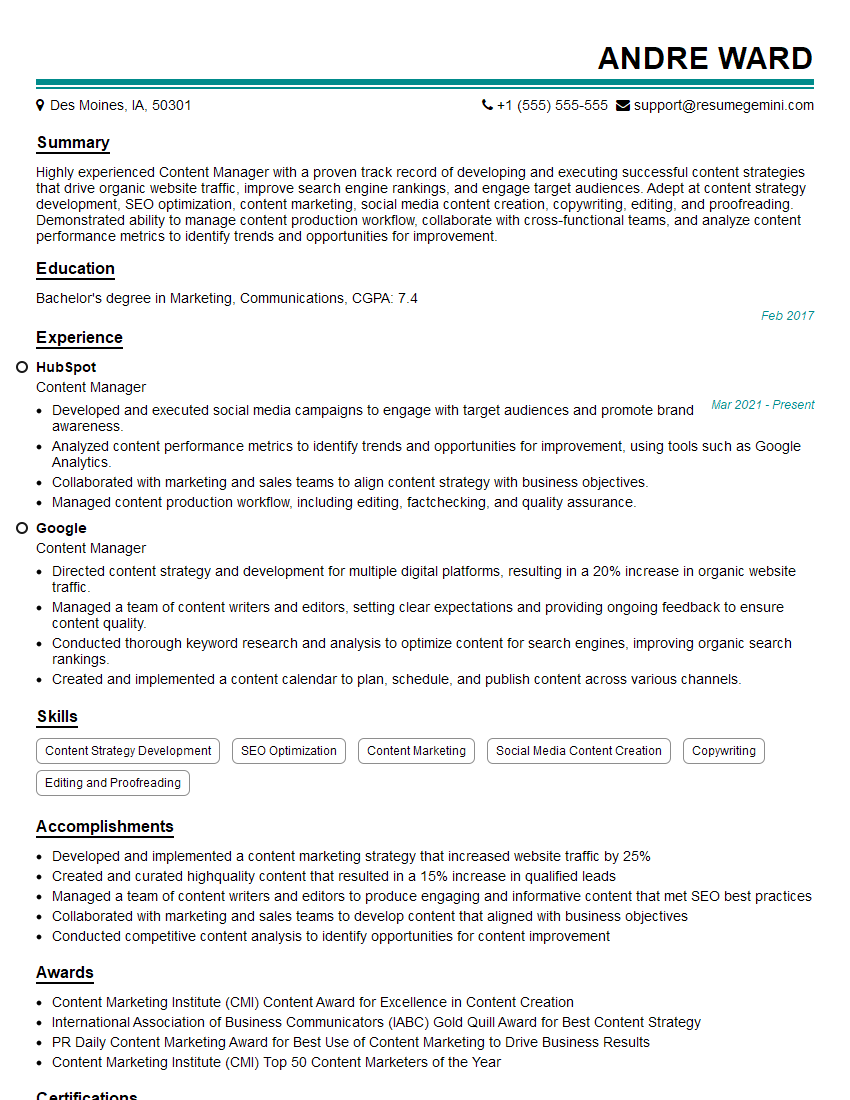
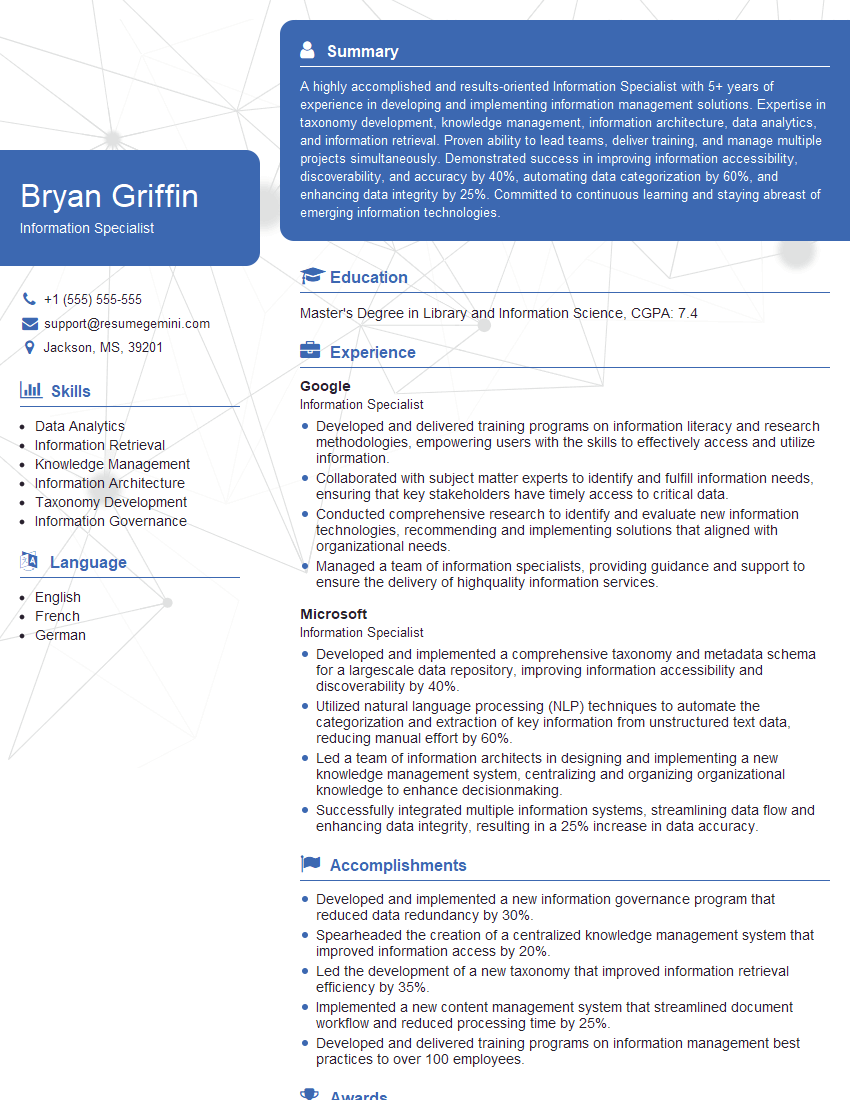
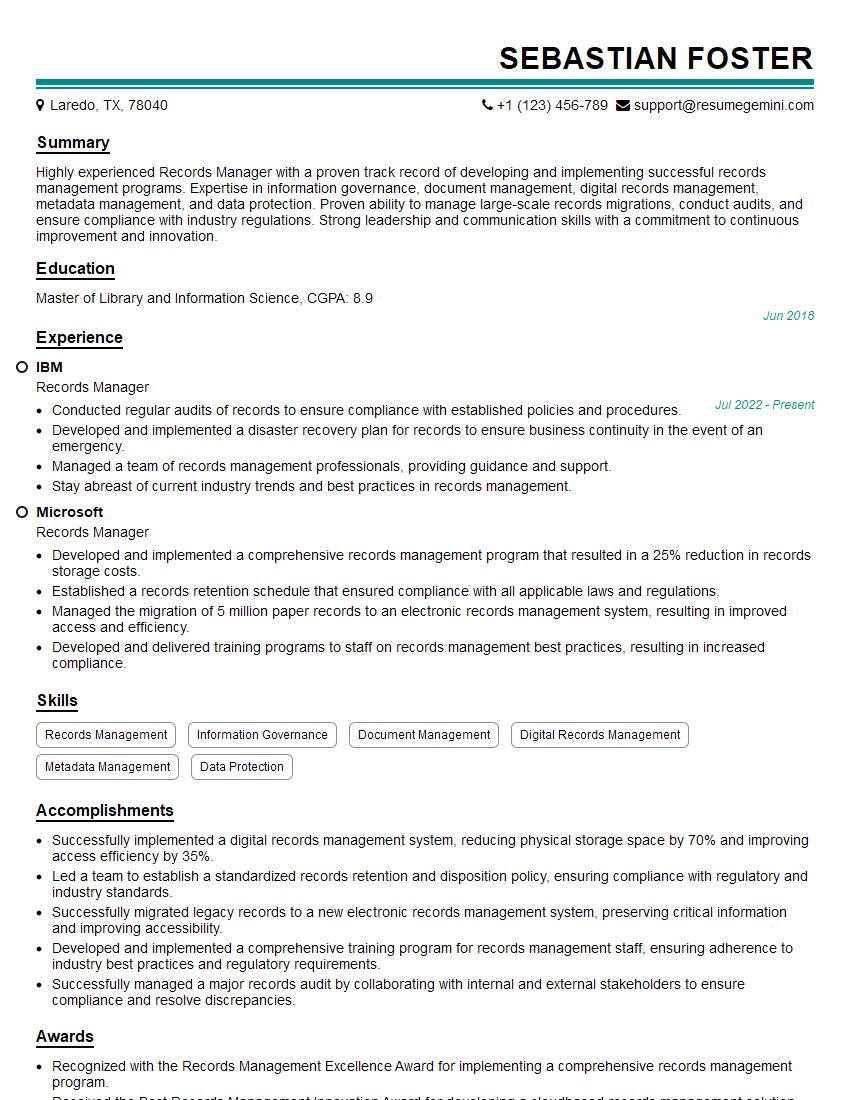
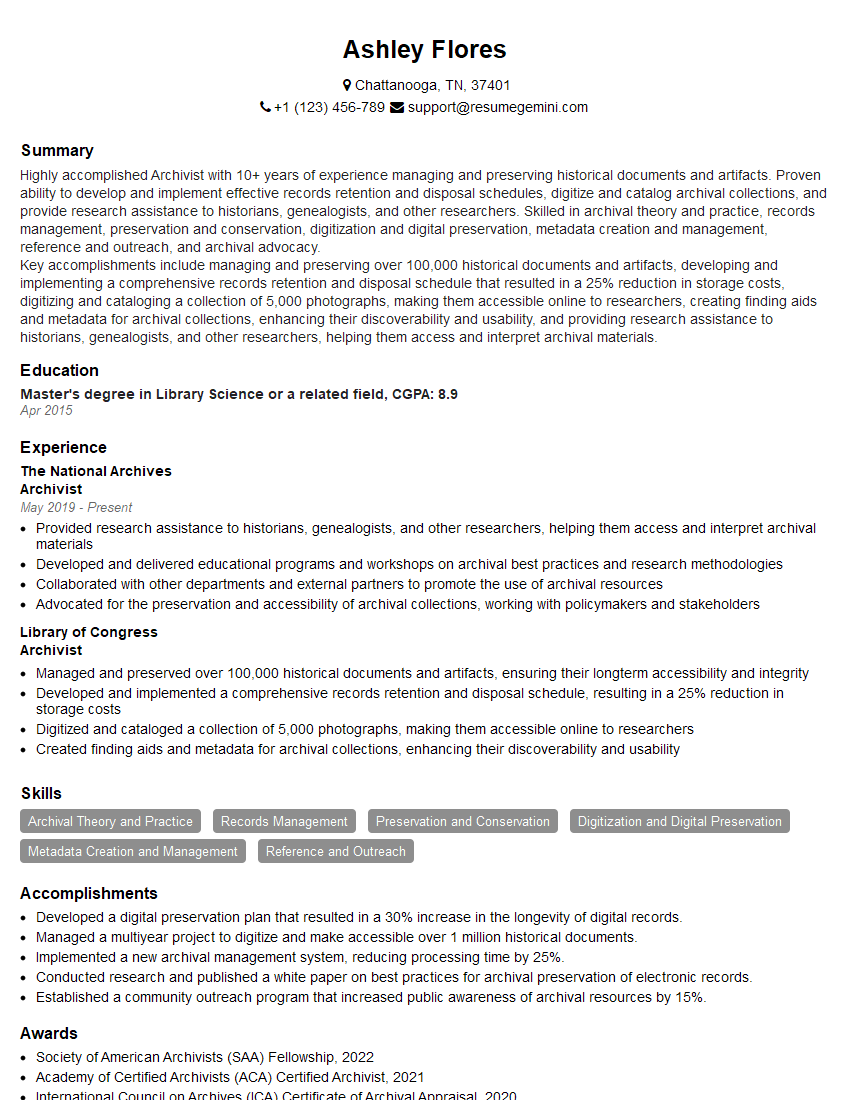
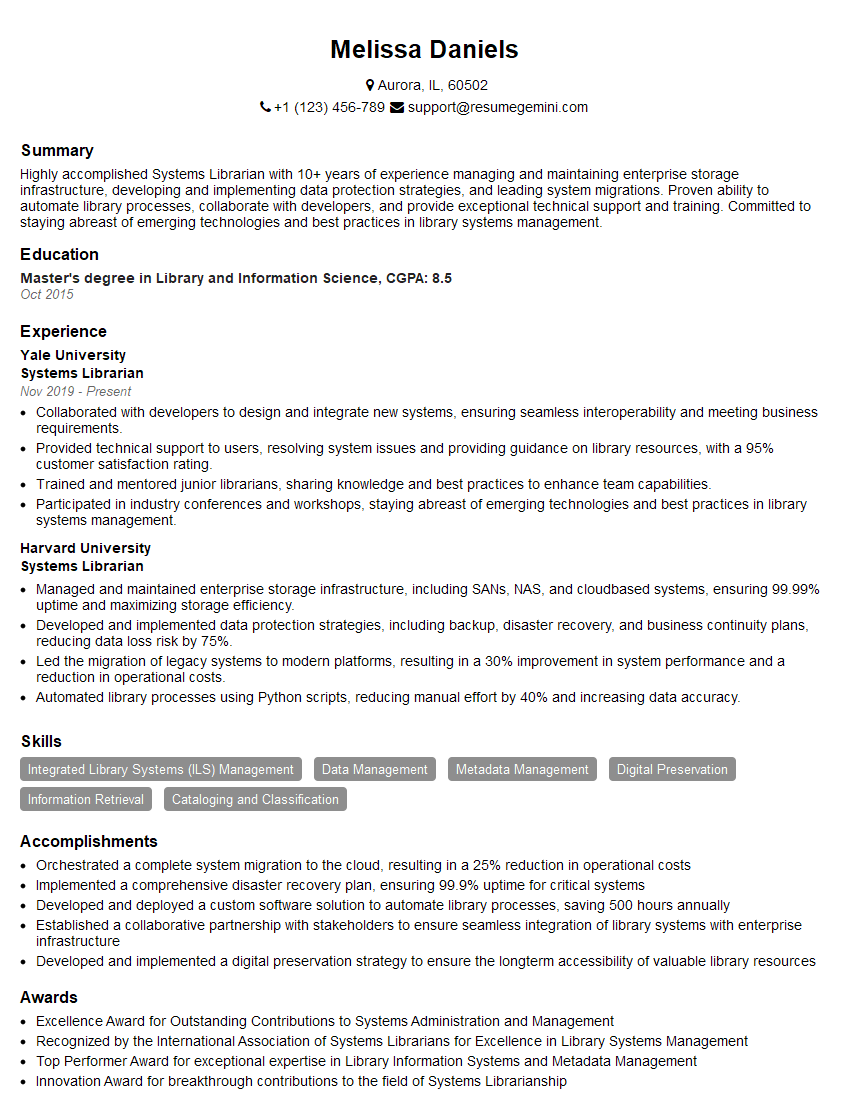
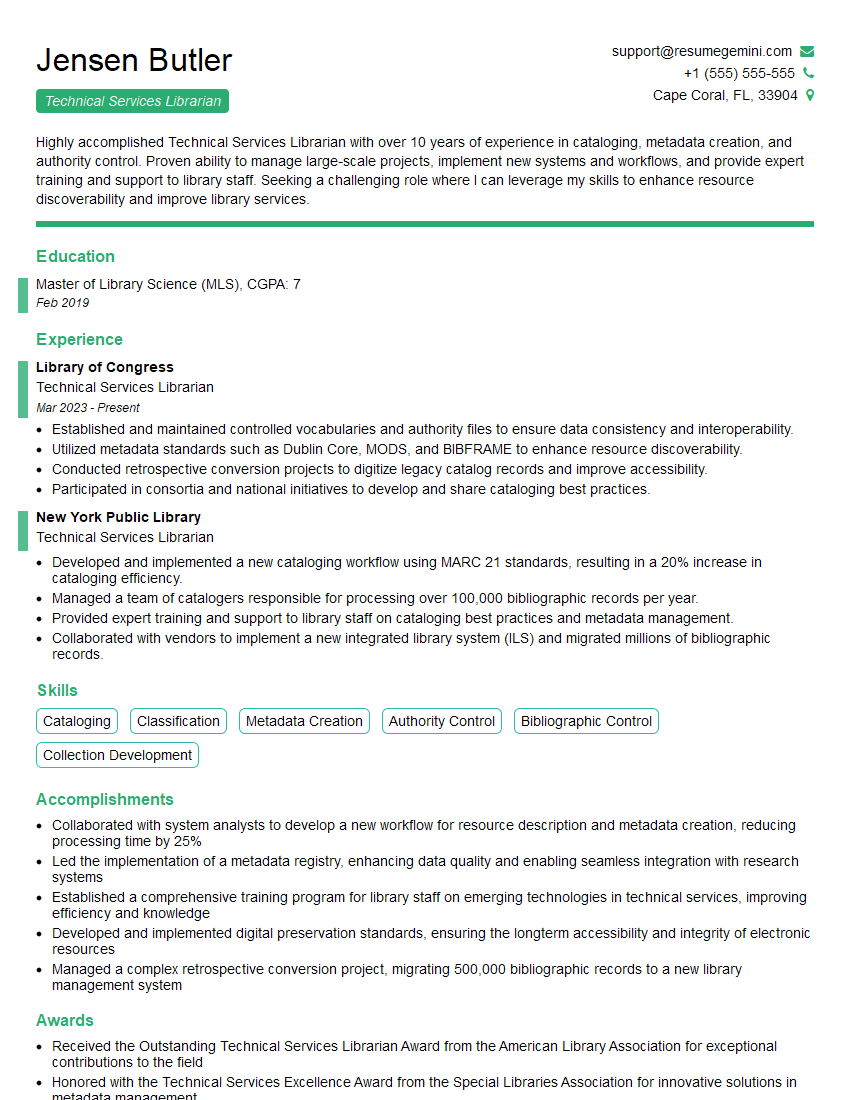
Mastering Collections Cataloging opens doors to exciting career opportunities in libraries, archives, museums, and other cultural heritage institutions. To maximize your job prospects, crafting an ATS-friendly resume is crucial. This ensures your qualifications are effectively communicated to potential employers and bypasses automated screening processes. We highly recommend using ResumeGemini to build a professional and impactful resume. ResumeGemini provides a streamlined process and offers examples of resumes tailored to Collections Cataloging to guide you. Invest time in crafting a compelling resume that showcases your skills and experience – it’s your first impression!
Explore more articles
Users Rating of Our Blogs
Share Your Experience
We value your feedback! Please rate our content and share your thoughts (optional).
What Readers Say About Our Blog
Really detailed insights and content, thank you for writing this detailed article.
IT gave me an insight and words to use and be able to think of examples