The thought of an interview can be nerve-wracking, but the right preparation can make all the difference. Explore this comprehensive guide to Compliance Auditing and Enforcement interview questions and gain the confidence you need to showcase your abilities and secure the role.
Questions Asked in Compliance Auditing and Enforcement Interview
Q 1. Explain the difference between internal and external compliance audits.
Internal and external compliance audits both aim to ensure an organization adheres to relevant regulations and standards, but they differ significantly in their scope, execution, and purpose.
- Internal Audits: Conducted by an organization’s internal audit team or a hired third-party firm working closely with the organization. These audits focus on evaluating the effectiveness of the organization’s internal controls, identifying weaknesses, and recommending improvements. They are typically less formal than external audits and may cover a specific area or department. Think of it like a self-checkup – identifying potential problems before they become major issues. For example, an internal audit might focus on reviewing the accuracy of a company’s financial reporting process.
- External Audits: Performed by independent, external auditing firms. These audits provide assurance to stakeholders, including investors, regulators, and customers, that the organization’s processes and controls are compliant. External audits are more formal, often following established frameworks like those dictated by regulatory bodies, and are typically more thorough and rigorous than internal audits. Think of it as an independent medical exam from a specialist; it offers a separate, unbiased evaluation. An example would be an external audit performed to assess a public company’s compliance with the Sarbanes-Oxley Act (SOX).
In short, internal audits are proactive and improve the organization’s control environment, while external audits are reactive and provide external assurance of compliance.
Q 2. Describe your experience with SOX compliance.
I have extensive experience with SOX compliance, having led and participated in numerous audits across various industries. My experience encompasses all phases, from planning and scoping the audit to testing controls, documenting findings, and developing remediation plans. I’ve worked with both public and privately-held companies, helping them navigate the complexities of SOX compliance.
One notable project involved a publicly traded manufacturing company where I led the internal audit team in assessing their financial reporting processes. This involved detailed testing of internal controls over financial reporting (ICFR) in accordance with SOX Section 404. We used a risk-based approach, focusing on high-risk areas such as revenue recognition and inventory management. We identified several control deficiencies, worked collaboratively with management to develop remediation plans, and ensured these deficiencies were effectively addressed. The success of that project culminated in a clean audit report and provided assurance to investors and stakeholders about the accuracy and reliability of their financial statements.
Q 3. How do you identify and assess compliance risks?
Identifying and assessing compliance risks requires a systematic approach. I typically employ a risk-based methodology, leveraging a combination of techniques including:
- Risk Assessment Frameworks: Utilizing frameworks like COSO ERM or ISO 31000 to identify potential risks across different areas of the organization (financial, operational, legal, etc.).
- Regulatory Analysis: Thoroughly reviewing all relevant regulations and industry standards applicable to the organization to understand the specific requirements and potential risks of non-compliance. This includes considering changes in legislation and updated guidance.
- Gap Analysis: Comparing current organizational processes and controls against the regulatory requirements to determine any gaps or weaknesses.
- Vulnerability Assessments: Utilizing automated tools and manual reviews to identify vulnerabilities in IT systems and processes that could lead to compliance violations (e.g., data breaches).
- Stakeholder Interviews and Surveys: Gathering input from employees at all levels to identify potential compliance risks that might not be apparent from documentation review alone. This provides invaluable insight into the realities on the ground.
Once identified, risks are prioritized based on their likelihood and potential impact, enabling a focused approach to remediation efforts. For example, a higher risk might be assigned to a control deficiency that could lead to material misstatement in financial reporting.
Q 4. What are your preferred methods for documenting audit findings?
Comprehensive and accurate documentation is critical for audit findings. My preferred methods include:
- Audit Workpapers: I utilize a standardized workpaper methodology, documenting all audit procedures performed, evidence gathered, and conclusions reached. This ensures consistency, traceability, and auditability of the entire audit process. The workpapers typically include detailed descriptions of tests performed, evidence obtained, conclusions drawn, and recommendations for remediation.
- Issue Tracking Systems: I use issue tracking software to centralize and manage the findings. This allows for efficient tracking of issues, their status, and the responsible parties. The system typically tracks issue details, assignment, resolution status, due dates, etc.
- Report Writing: A final report summarizes the audit findings, including significant deficiencies and material weaknesses, along with recommendations for corrective actions. This report will use clear and concise language, avoiding technical jargon whenever possible.
These methods ensure that audit findings are clearly articulated, well-supported by evidence, and easily understood by management and stakeholders.
Q 5. How do you handle non-compliance issues?
Handling non-compliance issues requires a structured and proactive approach. My strategy typically involves:
- Immediate Action: Addressing any immediate risks or threats to ensure the safety and security of data or systems.
- Root Cause Analysis: Investigating the underlying cause of the non-compliance to prevent recurrence.
- Corrective Action Plan: Developing a detailed plan to address the root cause and bring the organization back into compliance. This plan should include timelines, responsibilities, and measurable outcomes.
- Monitoring and Follow-up: Tracking the progress of the corrective action plan to ensure its effectiveness and identifying any further issues that may arise.
- Escalation: In some cases, non-compliance issues may need to be escalated to senior management or regulatory authorities, depending on the severity and nature of the violation.
Open communication and collaboration with management are crucial throughout this process. The goal is to not only resolve the immediate non-compliance but also to strengthen the organization’s compliance program to prevent future occurrences.
Q 6. Explain your understanding of Sarbanes-Oxley Act (SOX).
The Sarbanes-Oxley Act of 2002 (SOX) is a federal law enacted in response to several major corporate accounting scandals. Its primary goal is to protect investors by improving the accuracy and reliability of corporate disclosures. SOX mandates a number of requirements, most significantly for publicly traded companies, focusing on:
- Section 302: Requires company executives to certify the accuracy of financial reports.
- Section 404: Requires management to assess and document the effectiveness of internal controls over financial reporting (ICFR).
- Enhanced corporate responsibility and financial disclosures: Including requirements for independent audits and increased transparency in financial reporting.
SOX has significantly reshaped the corporate governance landscape, impacting accounting practices, internal controls, and corporate responsibility. Non-compliance can result in severe penalties, including fines and even criminal prosecution.
Q 7. Describe your experience with HIPAA compliance.
My experience with HIPAA compliance centers around protecting the privacy and security of Protected Health Information (PHI). I’ve worked with healthcare organizations of various sizes to assess their compliance with HIPAA’s security, privacy, and breach notification rules.
One project involved auditing a large healthcare provider’s implementation of security measures to protect electronic PHI (ePHI). This included reviewing their access controls, encryption policies, and incident response plans. We identified several gaps in their security measures, such as inadequate password policies and a lack of comprehensive employee training. We collaborated with the organization to develop a remediation plan focused on strengthening their security posture and enhancing employee awareness. This resulted in a more robust and secure environment for handling ePHI, demonstrating a strong commitment to patient data privacy.
HIPAA compliance goes beyond technical security; it also necessitates robust administrative and physical safeguards for patient data. Ensuring strict adherence is crucial for maintaining patient trust and avoiding hefty penalties for violations.
Q 8. What is your experience with GDPR compliance?
My experience with GDPR compliance spans several years, encompassing both auditing and advisory roles. I’ve conducted numerous GDPR audits across various sectors, including healthcare, finance, and e-commerce. This involved assessing organizations’ adherence to the regulation’s core principles, such as lawfulness, fairness, and transparency; data minimization; accuracy; storage limitation; integrity and confidentiality; and accountability. I’ve helped organizations develop and implement data processing agreements (DPAs), data breach response plans, and privacy impact assessments (PIAs). A recent project involved a large financial institution where we identified a gap in their consent management process, leading to the implementation of a new, GDPR-compliant system that improved user experience and mitigated risk.
I’m proficient in identifying and mitigating risks related to data subject rights (access, rectification, erasure, etc.), cross-border data transfers, and the appointment of data protection officers (DPOs). I am deeply familiar with the complexities of GDPR enforcement and the potential penalties for non-compliance. My approach is pragmatic, focusing on practical implementation rather than just theoretical understanding.
Q 9. How do you prioritize compliance audit tasks?
Prioritizing compliance audit tasks requires a risk-based approach. I typically start by identifying the highest-risk areas based on factors such as the potential impact of a non-compliance finding, the likelihood of a breach, and regulatory scrutiny. For example, data security vulnerabilities would generally be prioritized higher than minor procedural issues. I utilize a risk matrix, where risks are rated based on likelihood and impact, assigning scores to each task.
Following risk assessment, I consider factors like deadlines, resource availability, and interdependencies between tasks. Critical audits needed for regulatory filings or responding to imminent threats will take precedence. I use project management tools to track progress and manage dependencies. This ensures that the most critical and time-sensitive audits are completed first, and that resources are allocated effectively.
Q 10. How familiar are you with COSO framework?
I’m very familiar with the COSO framework (Committee of Sponsoring Organizations of the Treadway Commission). I understand its three key components: control environment, risk assessment, and control activities. I use it extensively in my compliance work to assess the effectiveness of internal controls and to identify areas of weakness within an organization’s compliance program. The COSO framework provides a structured approach to evaluating the design and operating effectiveness of controls relevant to compliance with regulations like GDPR, SOX, and HIPAA. I find it invaluable in providing a consistent and comprehensive assessment methodology.
For instance, when assessing a company’s financial reporting controls, I utilize COSO to evaluate the effectiveness of segregation of duties, authorization procedures, and reconciliation processes. This helps determine the reliability of financial reporting, mitigating the risk of fraud and misstatement. It’s not just a theoretical framework for me; it’s a practical tool I employ daily.
Q 11. Explain your experience with data privacy regulations.
My experience with data privacy regulations extends beyond GDPR. I have worked extensively with CCPA (California Consumer Privacy Act), HIPAA (Health Insurance Portability and Accountability Act), and other regional and international privacy laws. My understanding goes beyond simply knowing the regulations; I understand the nuances between them, the interdependencies, and how to tailor a compliance program to address the specific requirements of each.
A key aspect of my work is helping organizations navigate the complexities of data mapping, data classification, and data retention policies, ensuring compliance with all relevant regulations. This often involves conducting detailed data flow analyses and identifying data processing activities to pinpoint potential risks and vulnerabilities. I’ve seen firsthand how a lack of understanding of these regulations can lead to significant fines and reputational damage.
Q 12. How do you communicate audit findings to management?
Communicating audit findings to management requires clarity, conciseness, and a focus on actionable recommendations. I avoid technical jargon and present findings using clear visuals like charts and graphs to illustrate key points. My reports follow a consistent structure: an executive summary highlighting key findings and recommendations, a detailed section with findings categorized by risk level, and a section outlining remediation steps with clear timelines and responsibilities. I also include appendices with supporting documentation.
I prefer a collaborative approach, presenting the findings in person, allowing for a Q&A session and open discussion. This approach ensures that management understands the implications of the findings and is actively involved in developing solutions. Follow-up meetings are scheduled to monitor progress on remediation efforts, ensuring accountability and timely resolution of identified issues.
Q 13. How do you stay updated on changes in compliance regulations?
Staying updated on compliance regulations is crucial in this field. I utilize a multi-pronged approach: I subscribe to reputable legal and compliance newsletters, participate in industry conferences and webinars, and actively follow regulatory agencies’ websites and publications. I also maintain a network of contacts within the compliance field, allowing for the exchange of information and best practices. Furthermore, I use professional development courses and certifications to ensure my knowledge stays current and relevant.
Staying abreast of these changes allows me to anticipate potential compliance challenges and provide proactive advice to clients, mitigating risks before they become major issues. Continuous learning is not just a professional requirement, but a passion of mine; it allows me to provide the best possible service to my clients.
Q 14. Describe a time you had to deal with a difficult audit finding.
During an audit of a healthcare provider, we uncovered a significant data breach involving the exposure of patient protected health information (PHI). This was a very challenging finding, not only due to its severity but also because of the emotional impact on the patients affected. Initially, there was a reluctance from management to fully acknowledge the extent of the breach and its implications.
To address this, I first documented all evidence meticulously, showing a clear chain of events leading to the breach. Then, I presented the findings in a calm and professional manner, emphasizing the importance of transparency and immediate action. I worked closely with management to develop a comprehensive remediation plan, including notification of affected patients, enhancement of security measures, and cooperation with regulatory authorities. The experience highlighted the importance of building trust and demonstrating empathy, in addition to technical expertise, when dealing with sensitive situations.
Q 15. What is your experience with using compliance auditing software?
My experience with compliance auditing software spans several years and various platforms. I’m proficient in using tools that automate tasks such as data extraction, risk scoring, and report generation. For example, I’ve extensively used Archer, a widely recognized GRC (Governance, Risk, and Compliance) platform, to manage audits, track remediation efforts, and visualize compliance posture. I’m also familiar with smaller, more specialized tools used for specific compliance frameworks like HIPAA or SOC 2. My expertise extends beyond simply using the software; I understand the importance of data integrity, configuration management, and user training to ensure the software effectively supports the audit process. I’m comfortable configuring these tools to meet specific audit requirements and can tailor reports to different stakeholders. In a recent project, I utilized Archer to streamline the annual SOC 2 audit, reducing our processing time by 30% and improving the accuracy of our findings through automated data validation.
Career Expert Tips:
- Ace those interviews! Prepare effectively by reviewing the Top 50 Most Common Interview Questions on ResumeGemini.
- Navigate your job search with confidence! Explore a wide range of Career Tips on ResumeGemini. Learn about common challenges and recommendations to overcome them.
- Craft the perfect resume! Master the Art of Resume Writing with ResumeGemini’s guide. Showcase your unique qualifications and achievements effectively.
- Don’t miss out on holiday savings! Build your dream resume with ResumeGemini’s ATS optimized templates.
Q 16. What is your experience with risk assessment methodologies?
My experience with risk assessment methodologies encompasses various frameworks, including COSO, NIST, and ISO 31000. I understand the importance of aligning the methodology with the specific organization and its industry. For instance, a financial institution would require a far more stringent risk assessment than a small non-profit. I’m adept at conducting both qualitative and quantitative risk assessments. Qualitative assessments often involve expert interviews and workshops to identify potential vulnerabilities, while quantitative assessments utilize statistical methods and data analysis to assign numerical values to risks. My approach often involves using a combination of both. A key part of my methodology is to prioritize identified risks based on likelihood and impact, allowing organizations to focus resources effectively. I recently utilized the FAIR (Factor Analysis of Information Risk) model to quantify the financial impact of potential cybersecurity breaches for a client in the Fintech sector, enabling them to make informed decisions on resource allocation for security enhancements.
Q 17. How do you ensure the objectivity and independence of your audits?
Objectivity and independence are paramount in compliance auditing. To ensure this, I maintain a strict code of ethics and follow established professional standards. This includes a clear declaration of any potential conflicts of interest, utilizing pre-defined audit plans to prevent bias, and having a thorough review process by another independent auditor or team member. I avoid any involvement with the areas I’m auditing, limiting interaction with those directly responsible for the processes being evaluated. For example, during an IT audit, I’d engage with IT staff to gain information, but all findings and conclusions would be documented and reviewed independently to prevent undue influence. A well-defined scope and methodology, documented upfront and followed rigorously, is another critical element in ensuring objectivity. This ensures that the audit process remains consistent and unbiased, fostering trust and confidence in the findings.
Q 18. Describe your experience with developing compliance programs.
I’ve been involved in developing comprehensive compliance programs for various organizations across different industries. This process generally involves understanding the relevant regulations and industry best practices, identifying key compliance risks, and designing control measures to mitigate those risks. For example, I helped a healthcare provider develop a HIPAA compliance program encompassing policies, procedures, training materials, and ongoing monitoring activities. This involved conducting risk assessments, designing data security protocols, and implementing employee training programs. My approach is to create a program that is both effective and practical, minimizing disruption to daily operations. A key element is embedding compliance within the organization’s culture, rather than treating it as a separate entity. This ensures long-term sustainability and reduces the likelihood of non-compliance.
Q 19. How do you handle conflicts of interest in an audit?
Handling conflicts of interest is crucial to maintain the integrity of an audit. My first step is to proactively identify any potential conflicts—this might involve reviewing my personal relationships, prior engagements, or any financial interests that could compromise my objectivity. If a conflict arises, I immediately disclose it to my supervisor and relevant stakeholders. Depending on the nature and severity of the conflict, several actions might be taken. This could range from recusal from the specific audit engagement to implementing robust safeguards to mitigate potential bias. For example, if I have a close personal relationship with a member of the team being audited, I would recuse myself entirely from that audit and the project would be assigned to another auditor. Transparency and strict adherence to ethical guidelines are key components of handling conflicts of interest effectively.
Q 20. What is your experience with auditing financial statements?
While my primary focus is compliance auditing, I have significant experience in auditing financial statements, specifically within the context of compliance audits. This often involves reviewing financial records to verify the accuracy and completeness of financial data relevant to specific compliance requirements. For example, during a Sarbanes-Oxley (SOX) audit, I would review financial statement processes to ensure compliance with internal controls over financial reporting. This typically includes reviewing internal control documentation, testing key controls, and evaluating the effectiveness of the organization’s overall financial reporting processes. My experience here complements my compliance expertise, enabling a holistic view of an organization’s operational and financial integrity.
Q 21. How familiar are you with different audit sampling techniques?
I’m familiar with various audit sampling techniques, including statistical sampling (like stratified random sampling and monetary unit sampling) and non-statistical sampling (like haphazard sampling and judgmental sampling). The choice of technique depends heavily on the audit objectives, the nature of the population being sampled, and the level of assurance required. Statistical sampling offers a more robust and mathematically defensible approach, allowing for a quantifiable level of confidence in the audit findings. However, non-statistical sampling might be more appropriate in certain situations where resources are limited or the population is small. I often use a combination of techniques, tailoring my approach to the specific circumstances. For example, during a large-scale inventory audit, I’d utilize stratified random sampling to ensure representation from various product categories. On the other hand, for smaller scale reviews, judgmental sampling might be more efficient in focusing on high-risk areas.
Q 22. What are the key elements of an effective compliance program?
An effective compliance program is the bedrock of any responsible organization, ensuring adherence to laws, regulations, and internal policies. It’s not just about avoiding penalties; it’s about building a culture of ethics and integrity.
- Clear Policies and Procedures: A well-defined set of policies and procedures, readily accessible to all employees, is crucial. These documents should outline expected conduct, responsibilities, and reporting mechanisms for compliance-related issues. Think of this as a company’s rulebook, clearly defining the playing field.
- Risk Assessment: Regularly identifying and assessing potential compliance risks is essential. This involves understanding the organization’s specific vulnerabilities and prioritizing mitigation efforts. Imagine it as a security check-up for your company’s compliance health.
- Training and Education: Comprehensive training programs must be implemented to ensure employees understand and can apply the compliance policies. Regular refresher courses and updated materials are vital to maintain awareness of evolving regulations. This is like continuous professional development for compliance.
- Monitoring and Reporting: Effective systems need to be in place to monitor compliance activities and generate reports to identify potential issues. This involves establishing metrics and mechanisms to track adherence to policies and regulations. Think of it as the dashboard of your compliance program.
- Enforcement and Accountability: A robust system of enforcement and accountability is key. This includes disciplinary measures for non-compliance and mechanisms for addressing reported violations. This is the discipline aspect – ensuring that the rules are followed.
- Continuous Improvement: Regular reviews and updates of the program are essential to adapt to changes in regulations and the organization’s operating environment. Compliance is not a one-time event; it’s an ongoing process of adaptation and refinement.
For example, a healthcare organization might have a robust compliance program focusing on HIPAA regulations, including employee training on patient data privacy, secure data storage protocols, and incident response plans. A financial institution might emphasize anti-money laundering (AML) compliance, with stringent transaction monitoring, customer due diligence procedures, and regular audits.
Q 23. Describe your experience with performing IT audits.
My experience with IT audits spans over ten years, encompassing various industries and regulatory frameworks. I’ve conducted numerous audits focusing on areas like data security, network infrastructure, access controls, and system compliance with regulations like SOX, HIPAA, and GDPR. These audits involved:
- Planning and Scoping: Defining the audit objectives, scope, and methodology based on risk assessments and organizational context.
- Evidence Gathering: Employing various techniques such as document review, interviews, observation, and data analysis to gather audit evidence. This includes reviewing system configurations, access logs, and security policies.
- Testing and Validation: Performing tests to verify the effectiveness of controls related to data security, access management, and system integrity.
- Reporting and Remediation: Documenting findings, identifying gaps and weaknesses, and recommending corrective actions to address identified vulnerabilities. I’ve also worked closely with IT teams to implement these remediation plans.
In one particular instance, an audit of a financial institution revealed insufficient encryption of sensitive customer data stored on cloud servers. This led to the implementation of robust encryption protocols and the development of a comprehensive data security policy.
Q 24. How do you measure the effectiveness of a compliance program?
Measuring the effectiveness of a compliance program is crucial to ensure it’s achieving its intended goals. This goes beyond simply checking boxes; it requires a holistic approach.
- Key Performance Indicators (KPIs): Establishing relevant KPIs, such as the number of compliance incidents, the time taken to remediate issues, employee training completion rates, and the frequency of audits. Tracking these metrics provides valuable insights into the program’s performance.
- Audit Findings: The frequency and severity of audit findings provide a strong indicator of the program’s effectiveness. A decreasing trend in critical findings suggests an improvement in compliance.
- Employee Surveys: Gathering feedback from employees on their understanding of compliance policies and procedures, as well as their comfort level in reporting potential violations. This provides insights into the program’s reach and effectiveness.
- Incident Response: Evaluating the speed and effectiveness of the response to compliance incidents. A timely and well-managed response demonstrates the program’s resilience.
- Benchmarking: Comparing the organization’s compliance performance against industry best practices and competitors helps identify areas for improvement and highlights areas of strength.
For instance, a reduction in the number of data breaches over time indicates improved effectiveness of data security controls. Conversely, a high rate of employee non-compliance with certain policies might signal a need for additional training or policy clarification.
Q 25. What are the key differences between a compliance audit and a financial audit?
While both compliance and financial audits assess the organization’s operations, they have distinct objectives and scopes.
- Objective: A compliance audit focuses on ensuring adherence to laws, regulations, and internal policies. A financial audit primarily assesses the accuracy and reliability of financial statements.
- Scope: Compliance audits may cover areas like data privacy, environmental regulations, or ethical business practices. Financial audits primarily deal with accounting records, transactions, and internal controls related to financial reporting.
- Methodology: Compliance audits may use a risk-based approach, focusing on high-risk areas. Financial audits typically follow established accounting standards and frameworks.
- Reporting: Compliance audit reports highlight compliance gaps and recommendations for improvement. Financial audit reports provide an opinion on the fairness of the financial statements.
Think of it this way: a financial audit ensures the numbers add up correctly, while a compliance audit ensures the company is playing by the rules.
Q 26. Explain your understanding of internal controls.
Internal controls are processes and procedures implemented within an organization to safeguard assets, ensure accuracy and reliability of financial reporting, promote operational efficiency, and encourage compliance with laws, regulations, and internal policies. They are the backbone of a well-run organization, providing a framework for managing risk and ensuring effective governance.
- Preventive Controls: Designed to prevent errors or irregularities from occurring, such as segregation of duties or authorization controls for transactions.
- Detective Controls: Aimed at identifying errors or irregularities that have already occurred, such as bank reconciliations or regular inventory counts.
- Corrective Controls: Procedures for rectifying errors or irregularities that have been detected, such as adjusting journal entries or implementing disciplinary measures.
For example, a two-person approval process for all purchase orders prevents unauthorized purchases. Regular reconciliation of bank statements detects any discrepancies between the bank records and the company’s internal records. If a discrepancy is found, corrective actions, such as investigating the cause and making necessary adjustments, are implemented.
Q 27. Describe your experience with conducting investigations related to compliance breaches.
My experience in conducting investigations related to compliance breaches encompasses a structured and thorough approach. I’ve been involved in investigations involving data breaches, violations of anti-bribery laws, and instances of insider trading.
- Initial Assessment: Gathering information about the alleged breach, including the nature of the violation, potential impact, and involved parties.
- Evidence Gathering: Employing various methods to gather evidence, such as interviewing witnesses, reviewing documents, analyzing logs, and potentially engaging forensic experts.
- Analysis and Findings: Analyzing collected evidence to determine the facts of the breach, identify root causes, and assess the extent of any damage.
- Reporting and Remediation: Documenting findings in a comprehensive report, including recommendations for corrective actions, disciplinary measures, and preventative measures to avoid future occurrences.
In one case, an investigation into a suspected data breach revealed vulnerabilities in the organization’s network security. This led to implementing enhanced security measures, including employee training on cybersecurity best practices and a comprehensive security awareness program.
Q 28. How do you ensure the confidentiality of audit information?
Ensuring the confidentiality of audit information is paramount, both ethically and legally. This involves adhering to strict protocols and best practices.
- Data Security Measures: Implementing robust data security measures, such as access controls, encryption, and secure storage solutions. This includes restricting access to sensitive information to authorized personnel only.
- Confidentiality Agreements: Requiring all individuals involved in the audit process, including auditors, interviewees, and staff, to sign confidentiality agreements to protect the sensitive information handled during the audit.
- Data Anonymization: Where appropriate, anonymizing data to protect the identity of individuals or organizations involved. This removes personally identifiable information while preserving the integrity of the audit findings.
- Secure Storage and Disposal: Implementing secure storage practices for audit documents, both physical and electronic, and using secure methods for disposing of sensitive information.
- Compliance with Regulations: Adhering to all relevant data privacy regulations and laws, such as GDPR, CCPA, and HIPAA, to ensure the lawful handling of sensitive data.
For instance, all audit files are encrypted and stored on secure servers with access limited to authorized personnel. Any physical documents are kept in locked cabinets, and a secure disposal procedure is followed upon completion of the audit.
Key Topics to Learn for Compliance Auditing and Enforcement Interview
- Regulatory Frameworks: Understanding relevant laws, regulations, and industry standards (e.g., SOX, HIPAA, GDPR). Consider the practical application of interpreting these regulations in diverse business contexts.
- Auditing Techniques: Mastering risk assessment methodologies, internal control evaluations, and audit sampling techniques. Think about how you would design an audit plan to address specific compliance risks.
- Data Analysis & Reporting: Proficiency in data extraction, analysis, and visualization to identify trends, anomalies, and compliance breaches. Practice presenting complex findings clearly and concisely in reports.
- Enforcement Procedures: Familiarity with investigation techniques, remediation strategies, and reporting procedures for identified compliance violations. Consider how you would escalate findings and work collaboratively to achieve resolution.
- Ethical Considerations & Professionalism: Understanding professional codes of conduct and maintaining objectivity, integrity, and confidentiality throughout the audit process. Think about ethical dilemmas you might face and how you’d address them.
- Communication & Collaboration: Effective communication skills to articulate complex compliance issues to both technical and non-technical audiences. Consider how you’d present findings to different stakeholders (management, regulators).
- Emerging Technologies & Compliance: Understanding the impact of new technologies (e.g., AI, blockchain) on compliance programs and the evolving audit landscape. Consider discussing examples of how technology can both improve and complicate compliance efforts.
Next Steps
Mastering Compliance Auditing and Enforcement opens doors to exciting career opportunities with significant growth potential in various industries. A strong understanding of these principles is highly valued by employers and demonstrates your commitment to ethical and responsible business practices. To enhance your job prospects, creating an ATS-friendly resume is crucial. This ensures your qualifications are effectively communicated to potential employers. We highly recommend using ResumeGemini, a trusted resource, to build a professional and impactful resume. ResumeGemini provides examples of resumes tailored to Compliance Auditing and Enforcement to guide you through the process. Take advantage of these resources to showcase your skills and land your dream job!
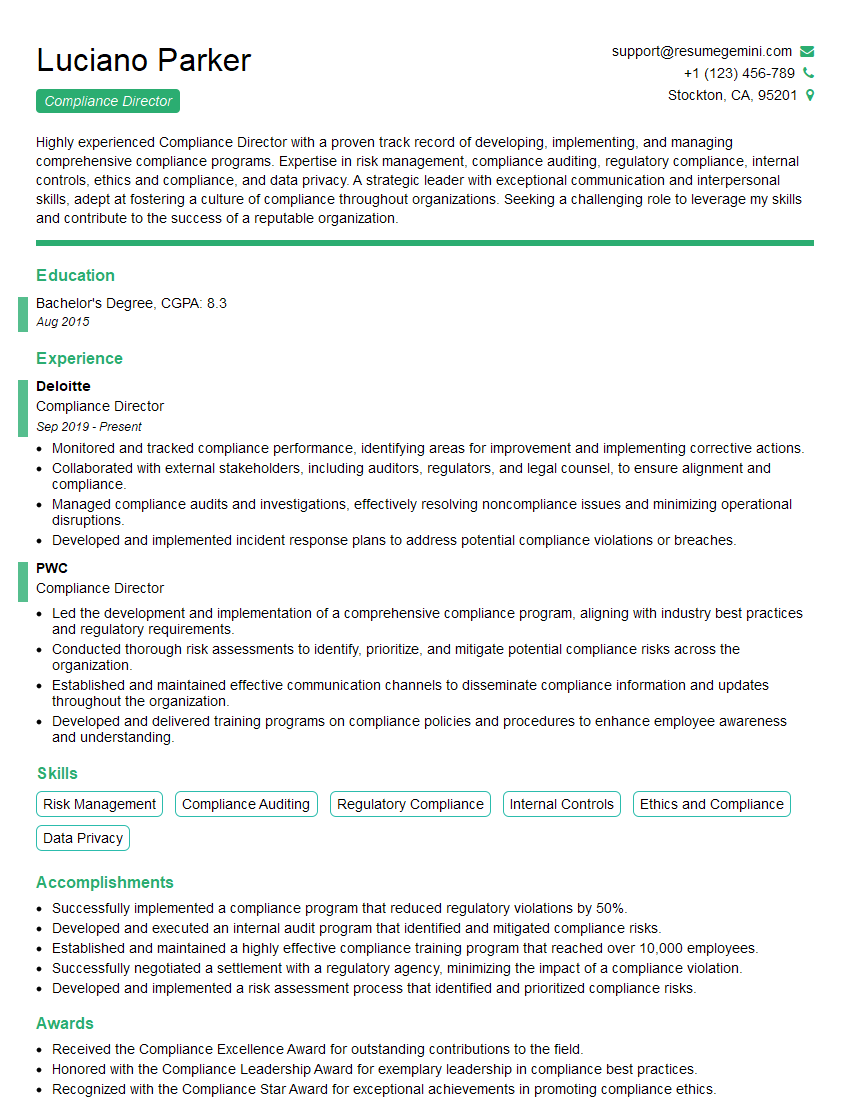
Compliance Director Resume Sample
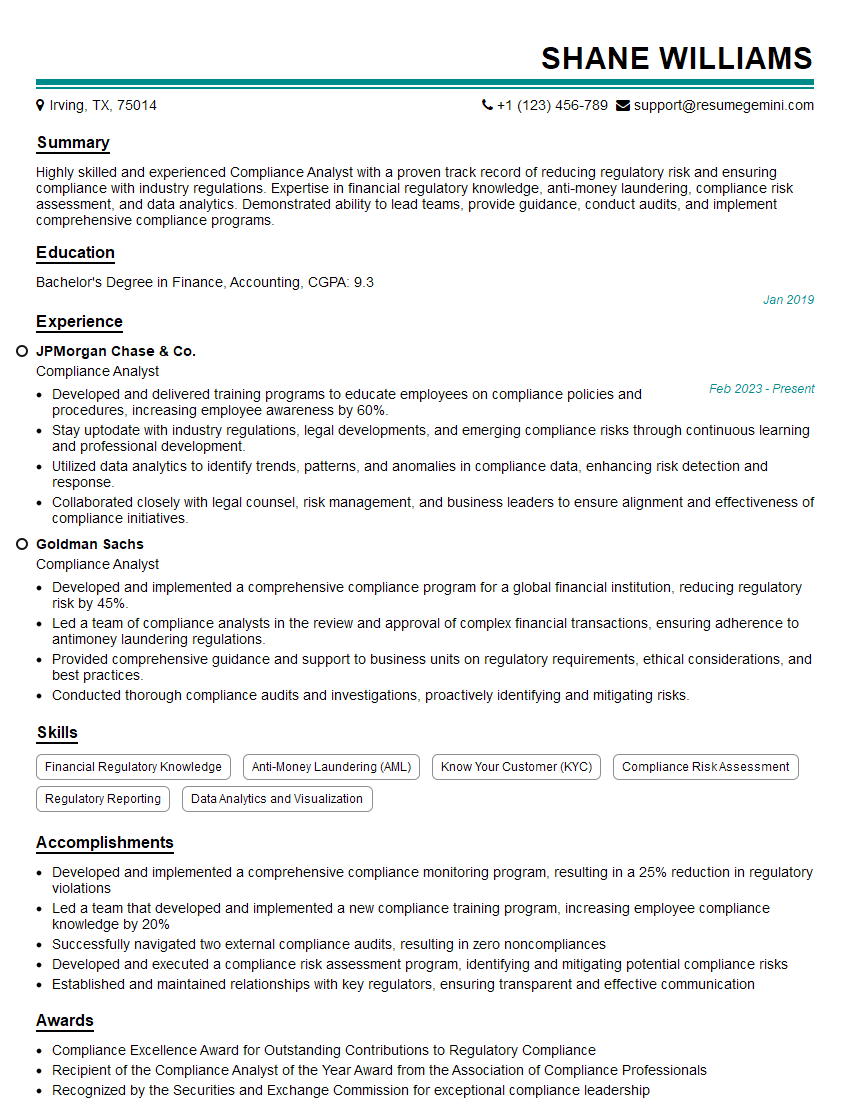
Compliance Analyst Resume Sample
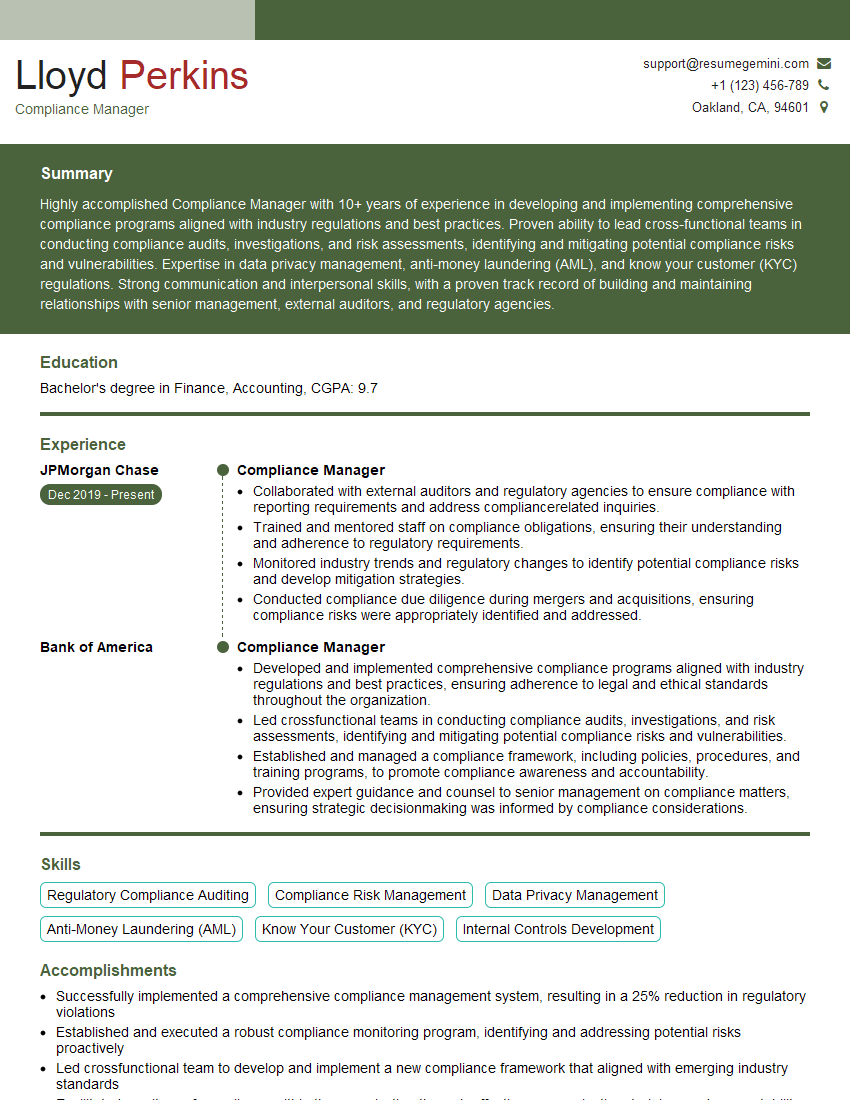
Compliance Manager Resume Sample
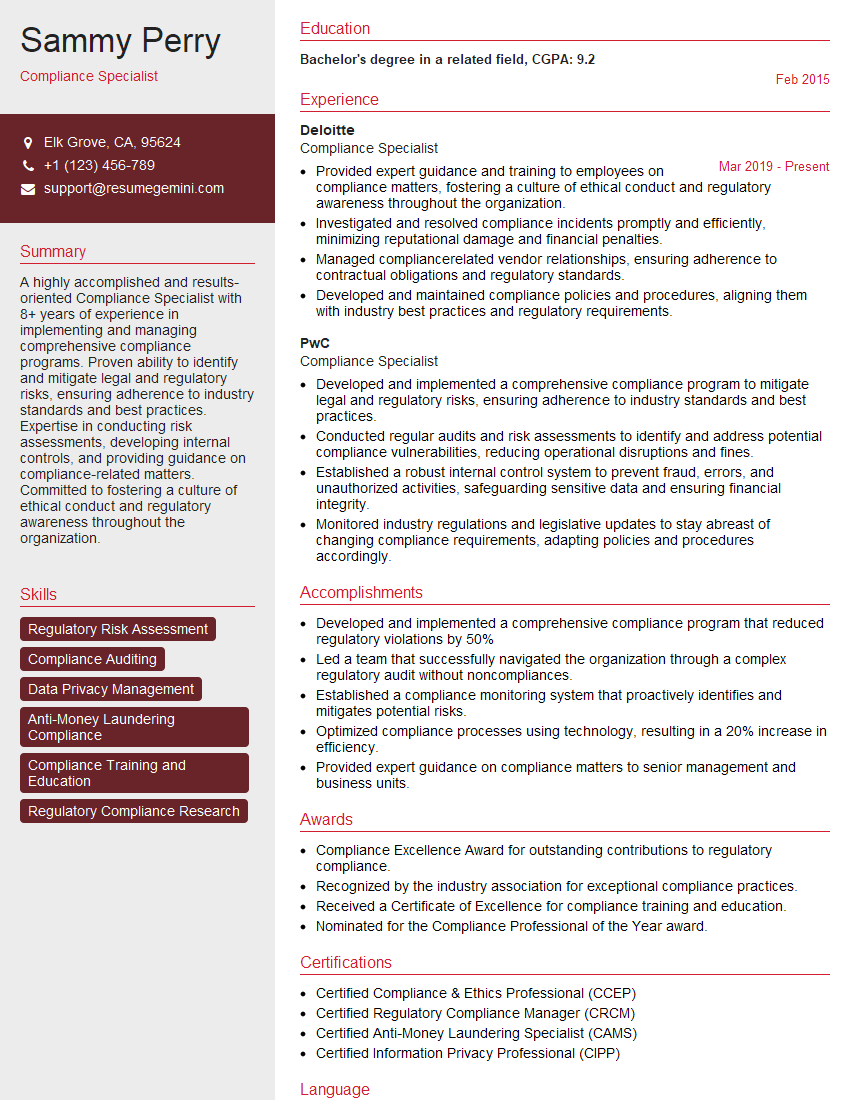
Compliance Specialist Resume Sample
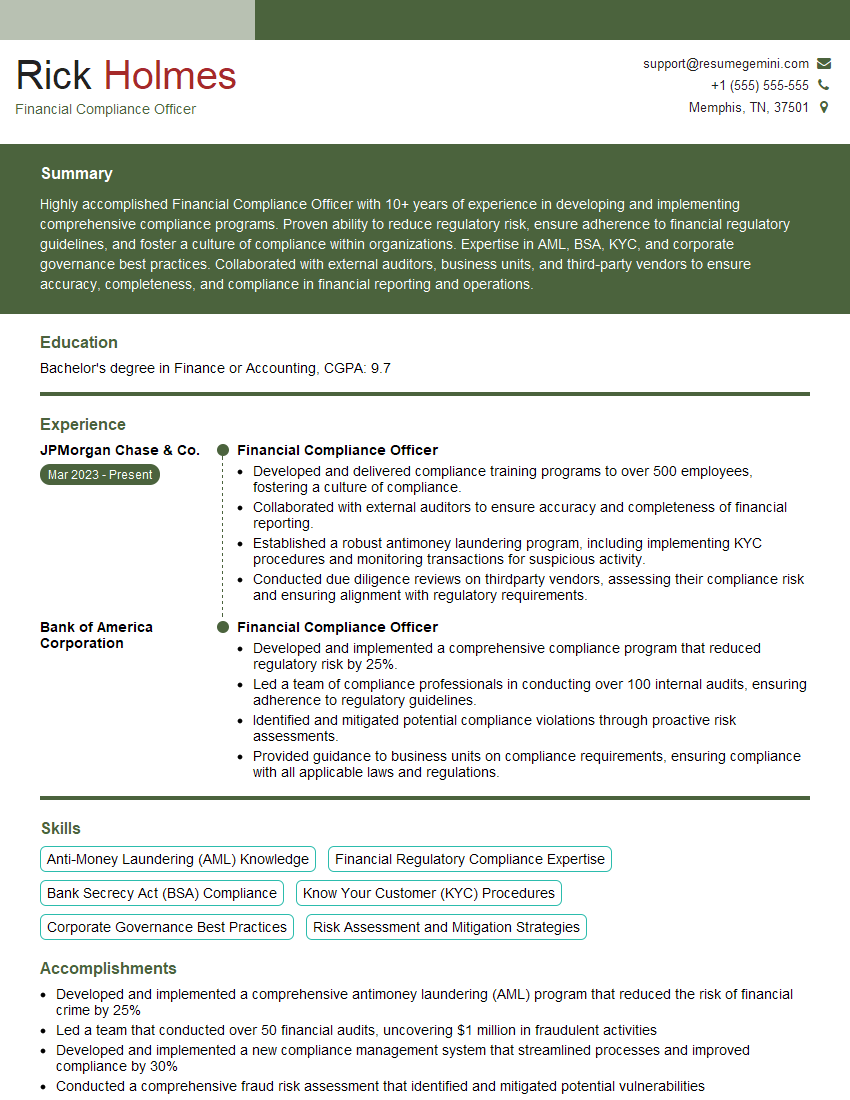
Financial Compliance Officer Resume Sample
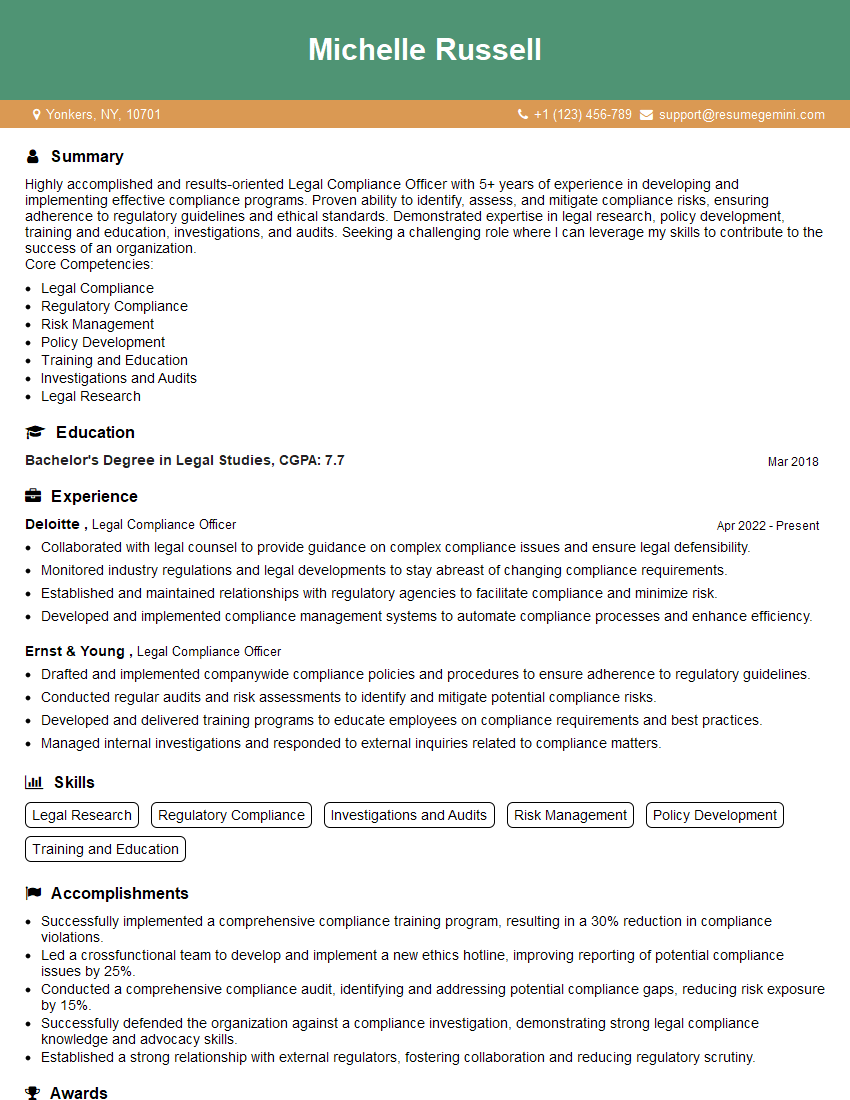
Legal Compliance Officer Resume Sample
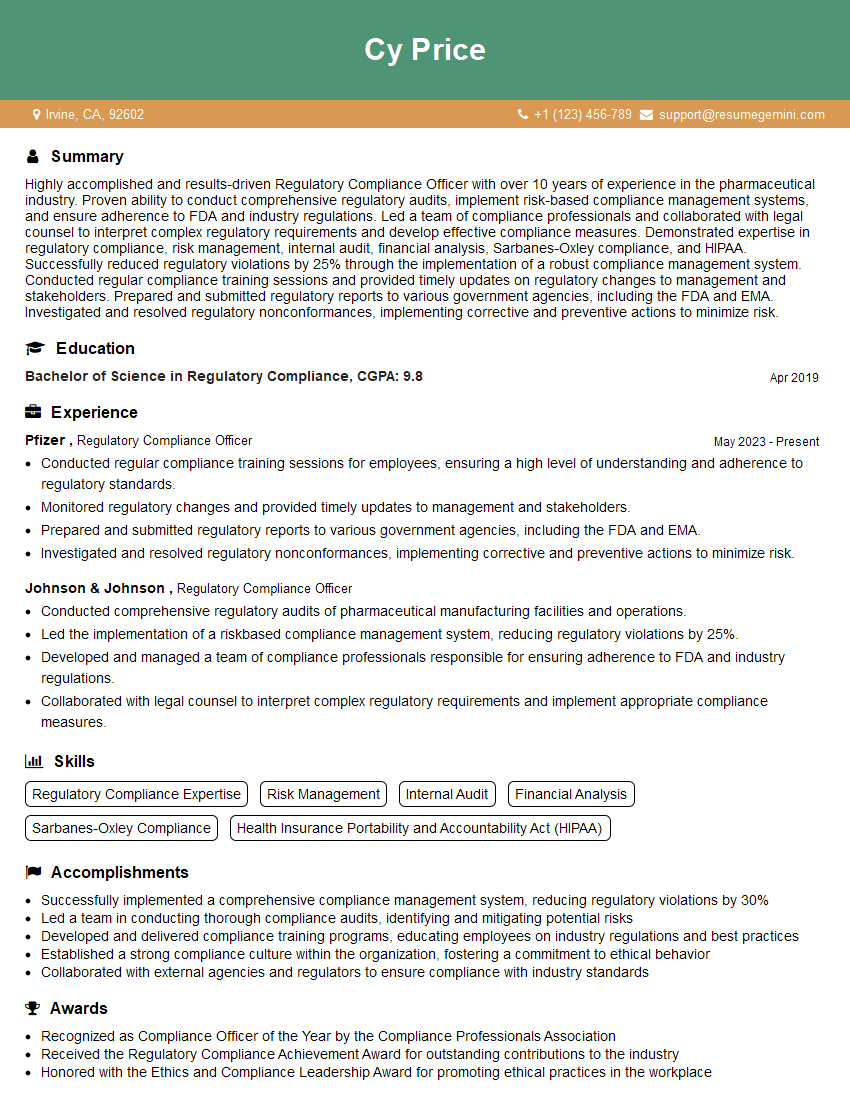
Regulatory Compliance Officer Resume Sample
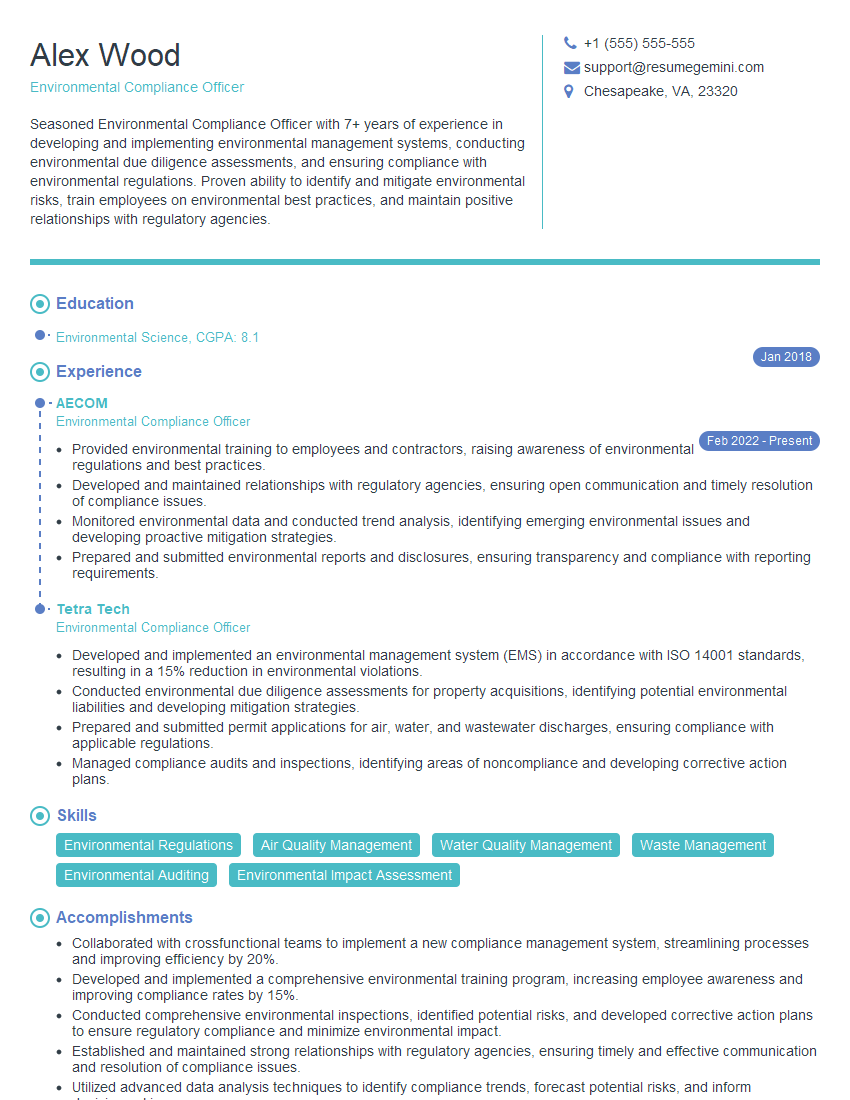
Environmental Compliance Officer Resume Sample
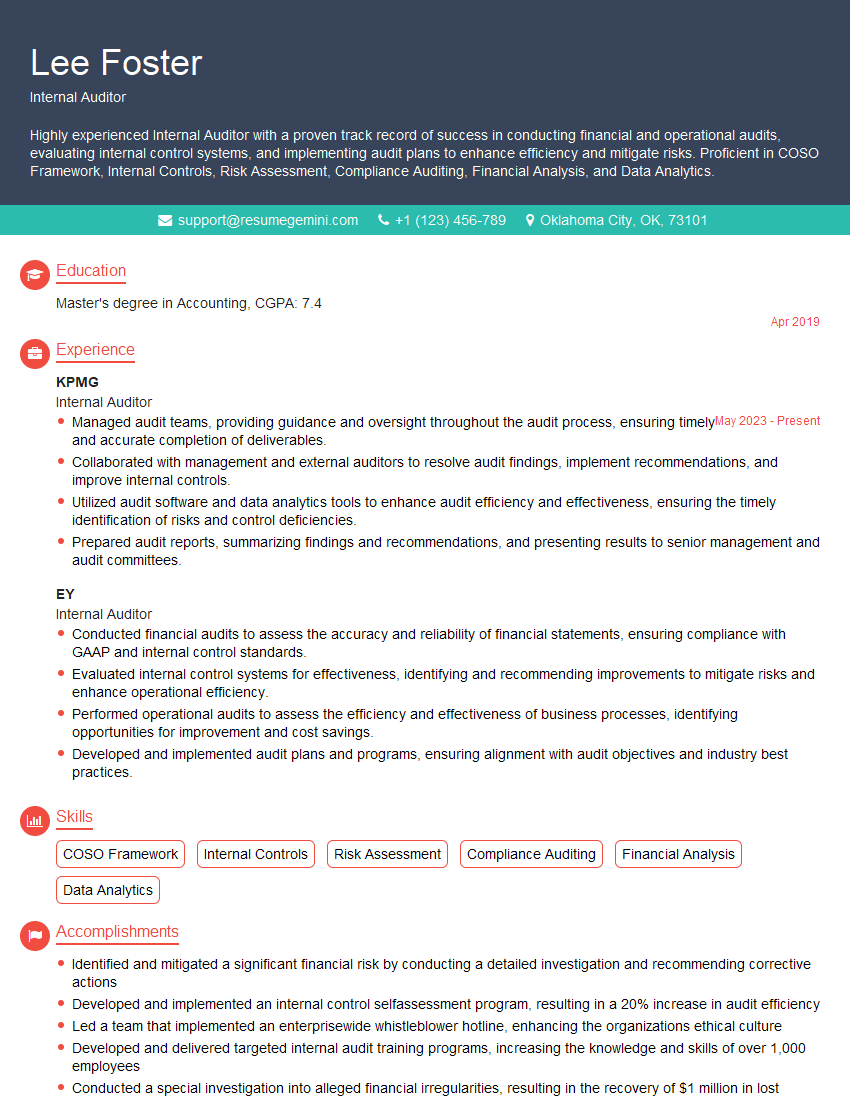
Internal Auditor Resume Sample
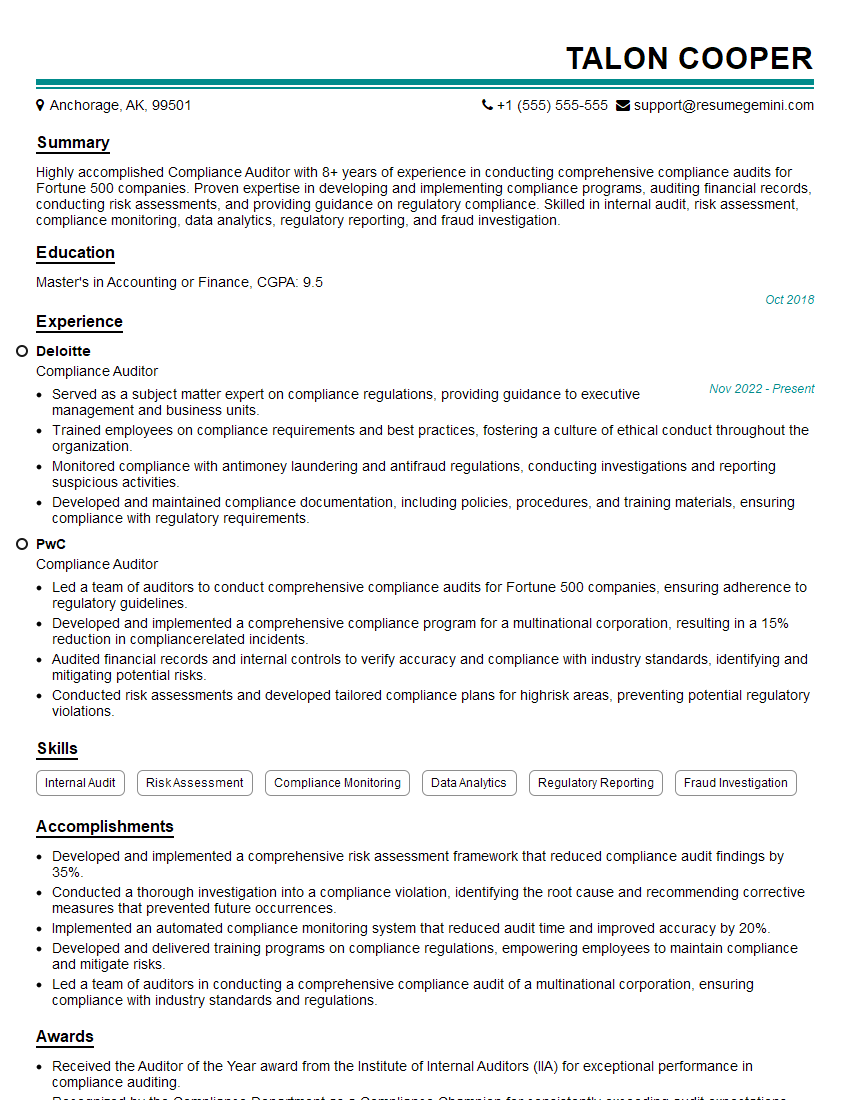
Compliance Auditor Resume Sample
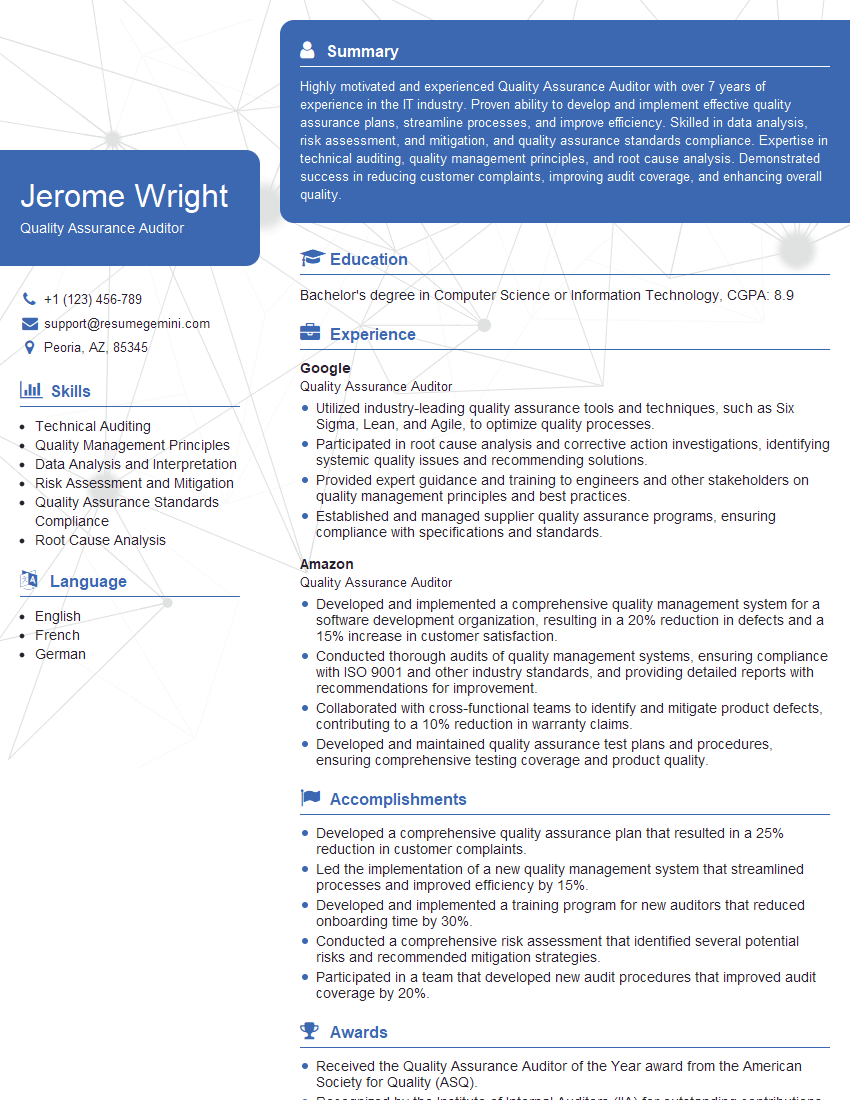
Quality Assurance Auditor Resume Sample
Explore more articles
Users Rating of Our Blogs
Share Your Experience
We value your feedback! Please rate our content and share your thoughts (optional).
What Readers Say About Our Blog
Really detailed insights and content, thank you for writing this detailed article.
IT gave me an insight and words to use and be able to think of examples