Interviews are opportunities to demonstrate your expertise, and this guide is here to help you shine. Explore the essential Concept Development and Ideation interview questions that employers frequently ask, paired with strategies for crafting responses that set you apart from the competition.
Questions Asked in Concept Development and Ideation Interview
Q 1. Describe your process for generating innovative concepts.
My process for generating innovative concepts is a multi-stage approach that blends divergent and convergent thinking. It begins with a deep understanding of the problem or opportunity. I immerse myself in research, gathering data from various sources like market analysis, user interviews, and competitor analysis. This helps me establish a solid foundation of knowledge. Then, I employ a variety of brainstorming techniques – mind mapping, SCAMPER, lateral thinking – to explore a wide range of potential solutions, pushing beyond obvious answers. This divergent phase prioritizes quantity over quality. The next phase is convergent, focusing on refinement and evaluation. I use criteria like feasibility, desirability, and viability to narrow down the options, prioritizing ideas with the highest potential for impact. Prototyping and iterative testing are crucial here, allowing for early feedback and continuous improvement.
For example, when tasked with developing a new eco-friendly packaging solution, I would first research sustainable materials, existing packaging trends, and environmental regulations. Then, I might use a mind map to explore different material options, packaging designs, and manufacturing processes. SCAMPER (Substitute, Combine, Adapt, Modify, Put to other uses, Eliminate, Reverse) would help me think creatively about how to improve existing solutions. Finally, I would prototype various designs, test them with target consumers, and iterate based on their feedback, ultimately selecting the most promising option.
Q 2. Explain your understanding of design thinking.
Design thinking is a human-centered, iterative problem-solving approach. It emphasizes empathy, collaboration, and experimentation to create innovative solutions. The core principles involve understanding the user’s needs and perspectives through deep empathy, defining a clear problem statement, ideating multiple solutions, prototyping those solutions, and testing and iterating based on user feedback. This process is not linear but cyclical, allowing for continuous refinement and improvement. It’s less about finding the perfect solution on the first try and more about continuously learning and adapting through a series of experiments.
For instance, consider designing a new mobile app. Design thinking would start with user research: conducting interviews and surveys to understand their pain points and needs related to the app’s purpose. This informs the problem definition – clarifying the specific challenge the app addresses. Then, brainstorming sessions generate multiple app designs. Low-fidelity prototypes (simple sketches or wireframes) are quickly created and tested with users, identifying areas for improvement before investing heavily in high-fidelity prototypes. This iterative testing loop continues until a user-friendly and effective solution emerges.
Q 3. How do you identify and prioritize innovative ideas?
Identifying and prioritizing innovative ideas requires a structured approach. I begin by evaluating each idea based on its potential impact, feasibility, and alignment with strategic goals. I use a scoring system or a weighted matrix to quantify these factors. Impact considers the potential market size, user benefits, and overall contribution to the business. Feasibility assesses the technical challenges, resources required, and time constraints. Alignment ensures the idea aligns with the company’s vision and strategy. Ideas are ranked based on their overall score, prioritizing those with high impact and feasibility and strong alignment. Qualitative factors, like novelty and originality, are also considered, particularly when dealing with breakthrough innovations.
For example, when evaluating potential new product ideas, I might use a matrix with weighted scores for market size (40%), technological feasibility (30%), and alignment with company strategy (30%). Each idea receives a score for each factor, and the weighted average determines its priority. This approach ensures objectivity and avoids bias in the selection process.
Q 4. How do you evaluate the feasibility of a new concept?
Evaluating the feasibility of a new concept requires a multifaceted analysis. I start with a thorough technical assessment, determining if the technology needed exists and is sufficiently mature. This involves researching available technologies, assessing their limitations, and evaluating their potential integration with existing systems. Next, I analyze the market feasibility, investigating the target market size, competition, and potential market penetration. This often involves market research, competitive analysis, and potential customer surveys. Finally, I assess the financial feasibility, considering the development costs, manufacturing costs, marketing costs, and projected revenue. Building a detailed financial model is critical to understanding the project’s potential profitability. Sensitivity analysis identifies key factors influencing the outcome and highlights potential risks.
A good example would be evaluating the feasibility of launching a new electric vehicle. This would involve assessing battery technology, charging infrastructure, manufacturing capabilities, market demand for electric vehicles, competition from established players, and the projected return on investment.
Q 5. Describe a time you overcame a creative block.
I once faced a significant creative block while developing a marketing campaign for a new product. After days of struggling, I realized I was too focused on the end product and had become overly self-critical. To overcome this, I took a step back from the project and actively sought inspiration from different sources. I spent time in nature, listened to music, and engaged in activities unrelated to work. I also actively engaged in discussions with colleagues, sharing my challenges and brainstorming ideas collaboratively. The process of explaining my problem to others helped me look at it from a fresh perspective. Surprisingly, it was a conversation with a friend about a completely unrelated topic that triggered an idea that ultimately formed the foundation for a successful campaign. The key was to shift my mindset from frustration to exploration and actively seek out new stimuli.
Q 6. How do you manage conflicting ideas within a team?
Managing conflicting ideas within a team requires fostering an environment of constructive discussion and collaboration. I encourage open communication, ensuring everyone feels comfortable expressing their ideas without fear of judgment. I facilitate structured discussions, using techniques like the nominal group technique or a multi-voting process to ensure all ideas are heard and considered. The goal is not to eliminate conflicting ideas but to identify the underlying reasons for the disagreement and find common ground. Often, the best solution lies in synthesizing elements from different perspectives, creating a more comprehensive and robust concept. It’s also important to clearly define decision-making criteria and ensure that decisions are made transparently and fairly.
For instance, if a team is debating between two different design concepts for a website, I would facilitate a discussion where each team member presents their arguments. Then, we might use a multi-voting system where each member ranks the concepts based on defined criteria such as user experience, visual appeal, and technical feasibility. This approach allows for a more objective and less emotionally charged decision-making process.
Q 7. Explain your experience with brainstorming techniques.
I have extensive experience with various brainstorming techniques, including mind mapping, SCAMPER, brainwriting, and the six thinking hats. Mind mapping helps to visually organize and expand on ideas, creating a comprehensive overview of potential solutions. SCAMPER is a checklist that prompts creative thinking by systematically exploring ways to substitute, combine, adapt, modify, put to other uses, eliminate, and reverse existing concepts. Brainwriting is a written brainstorming technique where participants anonymously generate ideas, reducing the influence of dominant personalities and encouraging more diverse contributions. The six thinking hats framework encourages participants to consider a problem from different perspectives, promoting a more holistic approach to problem-solving.
For instance, in a brainstorming session for a new product feature, I might start with a mind map to visually map out the core features and potential extensions. Then, I might use SCAMPER to explore alternative ways to implement the feature, potentially leading to unexpected and innovative solutions. In situations with a large group, brainwriting would allow quieter participants to contribute valuable ideas without being overshadowed.
Q 8. How do you use market research to inform your concept development?
Market research is the cornerstone of effective concept development. It helps us understand the needs, wants, and pain points of our target audience, ensuring we’re not building solutions in a vacuum. I use a multi-pronged approach, incorporating quantitative and qualitative methods.
Quantitative research involves gathering numerical data through surveys, analyzing sales figures, and studying market trends. This provides a broad understanding of the market size, demographics, and purchasing behavior.
Qualitative research delves deeper into the ‘why’ behind consumer choices. This involves conducting focus groups, user interviews, and ethnographic studies to uncover unmet needs and understand the emotional drivers behind purchasing decisions. For example, in developing a new fitness app, quantitative data might show a high demand for weight-loss apps, but qualitative research could reveal that users are more motivated by community and accountability features rather than simply tracking calories.
By combining these methods, I can create a detailed customer profile, identify market gaps, and validate potential concepts before investing significant resources in development. This data-driven approach significantly reduces the risk of developing a product that nobody wants.
Q 9. How do you translate abstract concepts into tangible solutions?
Translating abstract concepts into tangible solutions requires a structured approach. I often use a process that involves breaking down the core idea into smaller, manageable components. This might involve creating a mind map to brainstorm all associated ideas, then using a matrix to prioritize features based on feasibility and impact.
For example, if the abstract concept is ‘improving urban mobility,’ I would break it down into several areas: reducing congestion, improving public transport, encouraging cycling, and promoting ride-sharing. Each of these becomes a separate, more concrete development goal. Then, I would research existing solutions and identify innovative approaches, ultimately leading to the development of a prototype or Minimum Viable Product (MVP) that addresses one or more of these sub-goals. For instance, a tangible solution might be a smart traffic management system or a user-friendly bike-sharing app.
Visual aids, like storyboards or mood boards, are also invaluable in this process, helping to bring the concept to life and communicate the vision to others. A well-defined design specification outlining the functionality, user interface, and technical specifications makes sure the abstract concept has a clear path to realization.
Q 10. Describe your experience with prototyping and iterative design.
Prototyping and iterative design are integral to my process. I believe in building, testing, and refining concepts continuously. I’ve used a wide range of prototyping methods, from low-fidelity paper prototypes to high-fidelity interactive mockups, depending on the stage of development and the resources available.
For instance, in a recent project involving the design of a new medical device, we began with simple cardboard mockups to test the ergonomics and user flow. This allowed us to quickly identify usability issues and iterate on the design before investing in expensive 3D printing or machining. As the project progressed, we moved to more sophisticated digital prototypes and simulations, allowing us to refine the functionality and assess the performance of the device.
The iterative approach allows for continuous feedback integration, ensuring the final product aligns with user needs and expectations. Each iteration refines the design, addressing shortcomings and enhancing the user experience. This is akin to sculpting—chipping away at unnecessary elements and refining the form until a satisfying outcome is reached.
Q 11. How do you measure the success of a new concept?
Measuring the success of a new concept is multifaceted and depends on the specific goals of the project. It’s not simply about sales figures, but a holistic assessment considering various factors.
User adoption and engagement: Metrics like daily/monthly active users, user retention rate, and customer satisfaction scores are crucial indicators of a product’s appeal and usability.
Market penetration and revenue: Sales figures, market share, and return on investment (ROI) provide an understanding of the commercial success of the concept.
Achieving the problem’s intended solution: Did the product effectively address the user needs identified during the research phase? This is often measured through user feedback, surveys, and observation.
For example, a successful social media app might boast high user engagement, strong growth in user base, and a positive ROI, even if it doesn’t immediately achieve market dominance. It’s important to set clear Key Performance Indicators (KPIs) at the beginning of the project to provide a benchmark for success.
Q 12. How do you handle criticism of your ideas?
Criticism is an invaluable part of the creative process; it helps refine and strengthen ideas. I view criticism not as a personal attack but as an opportunity for improvement. My approach involves actively seeking feedback and engaging constructively with criticism.
First, I listen attentively, striving to understand the perspective of the critic. Then, I analyze the feedback objectively, separating constructive suggestions from personal opinions. I ask clarifying questions to ensure I fully grasp the points raised. If the criticism is valid, I integrate it into the design, explaining my reasoning behind changes to stakeholders. If the criticism is subjective or unfounded, I maintain a polite but firm stance, explaining my design decisions and the reasoning behind them.
Ultimately, the goal is to produce the best possible solution, and constructive criticism is an essential tool in that process. It’s a collaborative process, and a willingness to consider alternate perspectives is crucial for success.
Q 13. Describe your experience working with stakeholders.
Collaborating with stakeholders is crucial for successful concept development. Effective communication and a clear understanding of everyone’s roles and objectives are essential. I strive to build strong, trusting relationships with stakeholders based on transparency and open communication.
This involves regularly updating stakeholders on progress, actively soliciting their feedback, and addressing any concerns promptly. I use various communication methods, including regular meetings, progress reports, and presentations tailored to the audience’s level of technical understanding. I also leverage project management tools to track progress, manage tasks, and facilitate communication amongst the team. For instance, using tools like Trello or Jira allows for seamless collaboration and visibility for all stakeholders. This ensures everyone remains informed and engaged in the process.
A key aspect is understanding the motivations and priorities of each stakeholder. This allows for more effective negotiation and consensus-building, ensuring the final product reflects the needs and priorities of all involved parties.
Q 14. How do you incorporate user feedback into your design process?
User feedback is paramount in refining and improving designs. I employ several strategies to gather and integrate user feedback effectively throughout the design process.
Usability testing: I conduct usability tests with representative users to observe how they interact with the prototype and identify areas for improvement.
Surveys and questionnaires: These tools efficiently gather quantitative data on user satisfaction, preferences, and needs.
Interviews and focus groups: These qualitative methods provide rich insights into user experiences and motivations.
A/B testing: This method allows for the comparison of different design iterations, enabling data-driven decision-making.
Integrating feedback involves carefully analyzing the data, prioritizing actionable insights, and iterating on the design accordingly. It’s not simply about implementing every suggestion but about making informed decisions based on user needs and design principles. For example, during usability testing of a website, if users consistently struggle to find a particular feature, the design would be modified to improve its discoverability and ease of use.
Q 15. How do you stay up-to-date on industry trends?
Staying current in the fast-paced world of concept development and ideation requires a multi-pronged approach. I leverage several key strategies to ensure I’m always aware of the latest trends.
- Industry Publications and Journals: I regularly read publications like Fast Company, Wired, and industry-specific journals relevant to my projects. This provides in-depth analysis and future forecasts.
- Conferences and Workshops: Attending industry conferences and workshops allows me to network with peers, learn from leading experts, and directly experience emerging trends. For example, I recently attended a conference on sustainable design, which significantly impacted my approach to future projects.
- Online Resources and Communities: I actively participate in online communities, forums, and follow key influencers on platforms like LinkedIn and Twitter. This allows for immediate access to breaking news and discussions about emerging technologies and design thinking methodologies.
- Competitive Analysis: I regularly analyze the work of competitors and other innovative companies to identify emerging patterns and identify opportunities for disruption. This is a crucial aspect of staying ahead of the curve.
By combining these methods, I build a comprehensive understanding of industry shifts and ensure my concepts remain innovative and relevant.
Career Expert Tips:
- Ace those interviews! Prepare effectively by reviewing the Top 50 Most Common Interview Questions on ResumeGemini.
- Navigate your job search with confidence! Explore a wide range of Career Tips on ResumeGemini. Learn about common challenges and recommendations to overcome them.
- Craft the perfect resume! Master the Art of Resume Writing with ResumeGemini’s guide. Showcase your unique qualifications and achievements effectively.
- Don’t miss out on holiday savings! Build your dream resume with ResumeGemini’s ATS optimized templates.
Q 16. Explain your understanding of intellectual property.
Intellectual property (IP) refers to creations of the mind, such as inventions; literary and artistic works; designs; and symbols, names, and images used in commerce. Understanding IP is crucial in concept development to protect both my own work and the interests of my clients.
- Patents: Protect inventions, processes, and designs. For example, a novel product design might be patent-protected to prevent unauthorized copying.
- Copyright: Protects original works of authorship, including software code, designs, and written materials. I always ensure appropriate copyright notices are included on any deliverables.
- Trademarks: Protect brand names, logos, and other identifying marks. A strong brand identity relies heavily on effective trademark protection.
- Trade Secrets: Protect confidential information that provides a competitive edge, such as proprietary algorithms or manufacturing processes. Strict confidentiality agreements are essential here.
My approach involves understanding the relevant IP rights from the project’s outset, proactively seeking legal counsel when necessary, and ensuring that all deliverables are handled with due care to avoid infringement or unauthorized disclosure.
Q 17. How do you manage risk in concept development?
Risk management in concept development is paramount. It’s a proactive process that starts at the ideation phase and continues throughout the development lifecycle. I employ a multi-faceted approach:
- Identifying Potential Risks: This involves brainstorming potential problems, including technical feasibility, market acceptance, regulatory hurdles, and financial constraints. For instance, a new technology might be technically challenging to implement, thus requiring thorough risk assessment.
- Assessing Risk Probability and Impact: Once risks are identified, I assess their likelihood of occurring and the potential consequences. This helps prioritize mitigation efforts. A risk matrix can be a useful tool for this analysis.
- Developing Mitigation Strategies: This involves designing plans to reduce or eliminate the identified risks. For example, prototyping can address technical feasibility concerns, while market research can mitigate the risk of poor market acceptance.
- Contingency Planning: I always develop contingency plans to address unexpected events. These plans might include alternative approaches or resources to maintain project momentum if primary strategies fail.
- Regular Monitoring and Evaluation: Risks should be monitored continuously, and the mitigation plans reviewed and adjusted as the project progresses.
This structured approach ensures that potential problems are addressed proactively, minimizing the likelihood of project delays or failures.
Q 18. Describe your experience with visual communication.
Visual communication is integral to effective concept development. I have extensive experience using various mediums to convey ideas clearly and compellingly.
- Sketching and Hand-Drawn Diagrams: These methods are crucial for rapid ideation and communicating initial concepts. I use them extensively during brainstorming sessions to translate abstract ideas into visual representations.
- Digital Design Software: Proficient in tools like Adobe Creative Suite (Photoshop, Illustrator, InDesign), I use them to create detailed visuals, mockups, and presentations. This allows for high-fidelity prototyping and client presentations.
- Storyboarding and Mood Boards: I use these techniques to visualize the user experience and set the overall tone and style for a project. This helps to ensure consistency and coherence in the final design.
- 3D Modeling and Prototyping: For complex projects, I utilize 3D modeling software (e.g., Blender, SolidWorks) to create realistic prototypes. This allows for detailed evaluation of form, function, and ergonomics.
My approach focuses on choosing the most appropriate visual communication method for each stage of the design process, ensuring clarity, engagement, and effective communication of ideas.
Q 19. How do you present your ideas effectively?
Effective idea presentation hinges on clear communication, engaging visuals, and a compelling narrative. My approach follows a structured format:
- Understanding the Audience: I tailor my presentation to the audience’s level of understanding and their specific interests. For example, a technical presentation for engineers will differ significantly from a marketing pitch to investors.
- Storytelling: I frame my ideas within a compelling narrative, highlighting the problem being solved, the proposed solution, and its potential impact. This helps connect emotionally with the audience.
- Visual Aids: I utilize high-quality visuals, such as prototypes, mockups, charts, and graphs, to support my narrative and make the presentation more engaging. Data visualization is a key component of this.
- Interactive Elements: Depending on the context, I may incorporate interactive elements such as demonstrations or Q&A sessions to enhance engagement and gather feedback.
- Practice and Feedback: Before any major presentation, I rehearse thoroughly and seek feedback from colleagues to refine my delivery and content.
This structured approach ensures my ideas are not only understood but also resonate with the audience, leading to better collaboration and successful outcomes.
Q 20. How do you handle ambiguity and uncertainty?
Ambiguity and uncertainty are inherent in concept development. Instead of fearing them, I see them as opportunities for creative exploration and innovation. My approach involves:
- Defining the Scope of Uncertainty: The first step is to clearly identify the specific areas of ambiguity and uncertainty. This might involve defining the unknown parameters of the project or the potential risks involved.
- Developing a Flexible Framework: I create a flexible framework that can accommodate change and adapt to new information. This usually involves iterative design processes and agile methodologies.
- Exploring Multiple Solutions: I actively explore several alternative solutions to address the uncertainties, ensuring that we have multiple approaches that can be used depending on the specific situation.
- Utilizing Prototyping and Testing: I leverage rapid prototyping and testing throughout the development process to validate assumptions and identify potential problems early on.
- Iterative Refinement: The iterative process allows for continuous refinement of the concept based on feedback and new information as the project progresses.
This approach allows me to navigate ambiguity and uncertainty effectively, leading to more robust and adaptable solutions.
Q 21. How do you adapt your approach to different project contexts?
Adaptability is crucial in concept development. I adjust my approach based on several factors:
- Project Scope and Goals: A small-scale project with a limited budget will require a different approach than a large-scale, complex project with multiple stakeholders.
- Client Needs and Expectations: Understanding the client’s specific needs, preferences, and expectations is crucial. I will actively collaborate with them to align the process with their vision.
- Technological Constraints: Technological limitations often dictate the feasibility of certain concepts. I adjust the approach accordingly, ensuring the proposed solutions are technologically feasible and cost-effective.
- Team Dynamics and Expertise: The composition of the team influences the workflow and methodologies employed. I work collaboratively to leverage the strengths of each team member.
- Timeline and Budget: Time and budget constraints significantly impact the development process. I apply agile methodologies and prioritize tasks effectively to stay on schedule and within budget.
My approach prioritizes open communication and collaboration to ensure the process is tailored to the specific needs and characteristics of each project, guaranteeing a successful outcome.
Q 22. Describe a time you had to pivot a project due to unforeseen circumstances.
Pivoting a project is a crucial skill in concept development. It involves adapting your approach or even the core concept itself in response to unexpected challenges or changed circumstances. This isn’t about failure; it’s about demonstrating agility and resourcefulness.
In one project, we were developing a smart home device designed to track energy consumption and offer personalized savings recommendations. Our initial concept relied on a complex algorithm requiring significant processing power, making the device expensive and energy-intensive – ironically undermining our sustainability goal. During user testing, we discovered that users found the complex interface overwhelming and preferred simpler, visual representations of their energy use. This feedback, coupled with supply chain issues impacting the availability of our chosen processor, forced a pivot. We simplified the algorithm, focusing on clear data visualization and user-friendly controls. This not only addressed the user experience issues but also reduced manufacturing costs and aligned perfectly with our original sustainability aims. The revised concept proved significantly more successful.
Q 23. How do you foster a culture of innovation?
Fostering a culture of innovation is about creating an environment where creative thinking is not only encouraged but actively celebrated and supported. This goes beyond simply saying ‘be innovative’; it involves building a foundation of trust, psychological safety, and open communication.
- Embrace Failure as a Learning Opportunity: Frame mistakes as valuable learning experiences rather than setbacks. Create a safe space where people feel comfortable taking calculated risks without fear of retribution.
- Promote Cross-Functional Collaboration: Encourage collaboration between teams and departments with diverse skill sets. This cross-pollination of ideas often leads to breakthrough innovations.
- Provide Resources and Time: Dedicate time and resources specifically for ideation and experimentation. This might involve hackathons, brainstorming sessions, or dedicated ‘innovation time’ in team schedules.
- Recognize and Reward Innovation: Publicly acknowledge and reward innovative ideas, both big and small. This reinforces the value of creative thinking within the organization.
- Seek External Inspiration: Regularly expose the team to outside perspectives and trends by attending industry events, reading industry publications, and exploring competitor offerings.
Q 24. How do you ensure the sustainability of your concepts?
Ensuring the sustainability of a concept involves considering its long-term viability across multiple dimensions: economic, environmental, and social. It’s about designing concepts that are not only profitable but also responsible and resilient.
- Economic Sustainability: Analyze the long-term cost-effectiveness and market potential of the concept. Develop a robust business model that ensures profitability and scalability.
- Environmental Sustainability: Evaluate the environmental impact throughout the concept’s lifecycle, from production and distribution to disposal. Consider using sustainable materials and processes, minimizing waste, and reducing carbon footprint.
- Social Sustainability: Assess the societal impact of the concept. Does it address a real need? Does it benefit the community? Is it inclusive and equitable? Consider factors like ethical sourcing, fair labor practices, and community engagement.
For example, when developing a new product, we would conduct a thorough Life Cycle Assessment (LCA) to identify and mitigate potential environmental impacts. We would also evaluate the social aspects, ensuring fair wages and safe working conditions for those involved in production.
Q 25. How do you utilize data analytics in your ideation process?
Data analytics plays a vital role in refining and validating our ideation process. We leverage data to understand user needs, market trends, and the performance of existing solutions. This ensures that our concepts are not only innovative but also grounded in real-world insights.
For example, during the initial stages of ideation, we might use market research data to identify unmet needs or underserved segments. Then, during concept testing, we would collect user feedback through surveys, interviews, and usability testing. This data informs iterative improvements and helps to refine the concept before proceeding to development.
We also use data to track the performance of launched concepts. This post-launch data provides valuable insights for future iterations and informs our understanding of long-term success factors.
Q 26. Describe your experience with different concept mapping techniques.
I’ve extensive experience with various concept mapping techniques, each offering unique strengths depending on the project’s needs. Some of my favorites include:
- Mind Mapping: Excellent for brainstorming and visualizing complex ideas. It’s a great starting point to generate a large number of initial ideas and identify relationships between them.
- Affinity Diagrams: Ideal for organizing and grouping large amounts of qualitative data, such as user feedback from interviews. This helps to identify common themes and patterns.
- Fishbone Diagrams (Ishikawa Diagrams): Useful for identifying potential causes of a problem or challenge related to the concept. It helps to systematically explore potential issues and solutions.
- Storyboard: A powerful tool for visualizing the user journey and experience with the concept. It’s particularly useful for conveying a narrative and user flow.
The choice of technique depends on the project phase and the specific information we’re trying to gather and organize. Often, we combine multiple techniques for a holistic view.
Q 27. How do you identify and mitigate potential ethical concerns related to a new concept?
Identifying and mitigating ethical concerns is paramount in concept development. Ignoring these concerns can lead to significant reputational damage, legal issues, and ultimately, project failure. A proactive approach is crucial.
Our process involves a dedicated ethics review at various stages. This includes:
- Early Stage Screening: We assess the potential ethical implications of the concept from the outset. This includes considering issues like data privacy, bias in algorithms, environmental impact, and potential for misuse.
- Stakeholder Consultation: We actively involve stakeholders—including users, community members, and experts in relevant ethical fields—to obtain diverse perspectives and identify potential blind spots.
- Impact Assessment: We conduct a thorough impact assessment to analyze the potential consequences of the concept across various dimensions, including environmental, social, and economic factors.
- Mitigation Strategies: Based on the assessment, we develop strategies to mitigate any identified risks. This might involve modifying the concept, implementing safeguards, or establishing clear guidelines for its use.
For instance, if we are developing a facial recognition system, we would ensure data privacy is prioritized through robust security measures and transparent data handling policies.
Q 28. Explain your experience with competitive analysis in the context of concept development.
Competitive analysis is an integral part of concept development. It helps to understand the existing market landscape, identify opportunities and threats, and differentiate our concepts from the competition. This is not about simply copying competitors; it’s about learning from their successes and failures to create a better product or service.
Our process typically involves:
- Identifying Key Competitors: We define the competitive landscape by identifying direct and indirect competitors.
- Analyzing Competitor Offerings: We systematically analyze the strengths and weaknesses of competitor offerings, their pricing strategies, and target markets.
- Identifying Market Gaps: We analyze the market to pinpoint unmet needs or underserved segments that competitors have overlooked.
- Developing a Competitive Advantage: Based on our analysis, we identify opportunities to create a unique value proposition and differentiate our concept from existing offerings.
For example, when developing a new mobile application, we would analyze existing apps in the same category, identifying their strengths, weaknesses, and user feedback. This would inform our design and feature choices, allowing us to create an app that offers a superior user experience or addresses a specific unmet need.
Key Topics to Learn for Concept Development and Ideation Interview
- Understanding the Design Thinking Process: Learn the stages of the design thinking process (Empathize, Define, Ideate, Prototype, Test) and how to apply them in various contexts. Practical application involves explaining how you’ve used this process in past projects, highlighting your contributions at each stage.
- Idea Generation Techniques: Master brainstorming, mind mapping, SCAMPER, and other methods for generating innovative ideas. Practical application involves demonstrating your ability to generate multiple creative solutions to a given problem, showcasing your problem-solving skills.
- Concept Evaluation & Selection: Learn frameworks for evaluating the feasibility, viability, and desirability of different concepts. Practical application includes describing how you’ve used data or user feedback to inform your decisions about which concepts to pursue.
- Storyboarding and Visual Communication: Develop your ability to effectively communicate concepts through visual aids like storyboards, mockups, and presentations. Practical application involves showing your proficiency in creating compelling visuals to convey ideas clearly and concisely.
- Prototyping and Testing: Understand different prototyping methods (low-fidelity, high-fidelity) and how to effectively test and iterate on concepts based on user feedback. Practical application includes explaining your experience creating prototypes and gathering user feedback to refine your ideas.
- Market Research & Trend Analysis: Learn how to conduct effective market research to identify opportunities and understand user needs. Practical application involves showcasing how you’ve used market research to inform your concept development process.
Next Steps
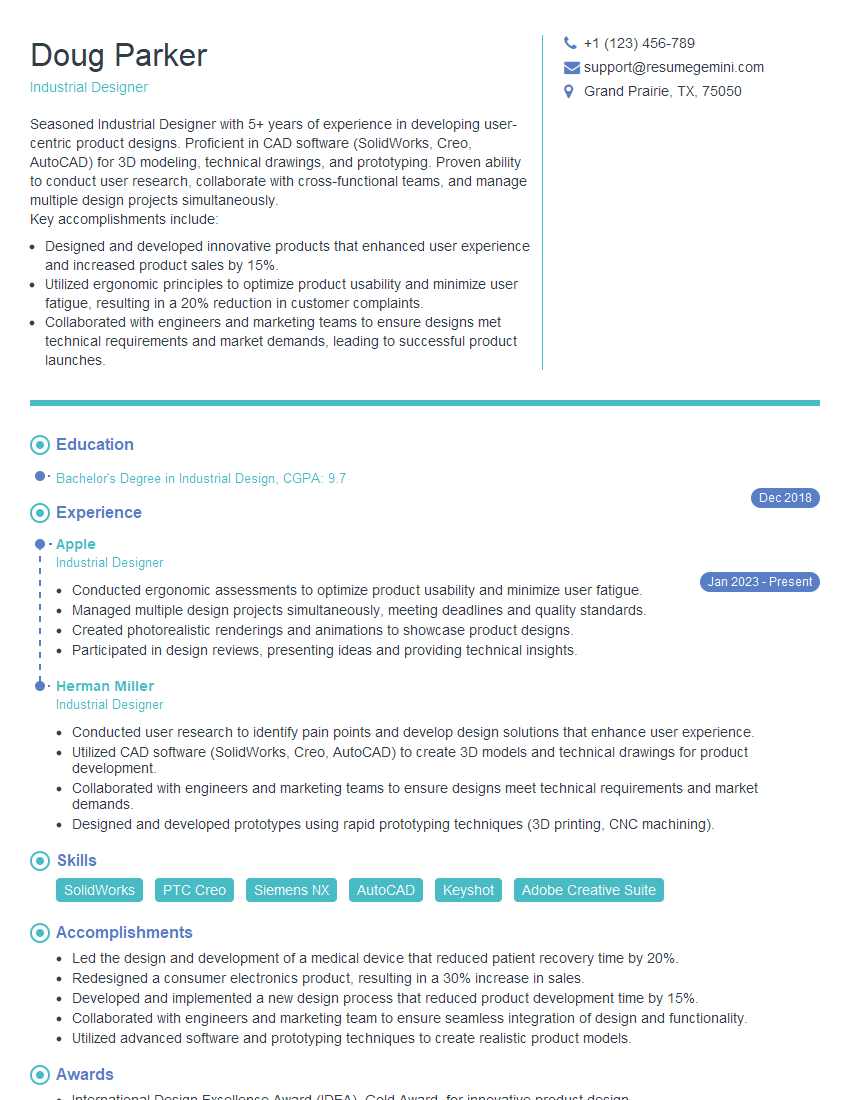
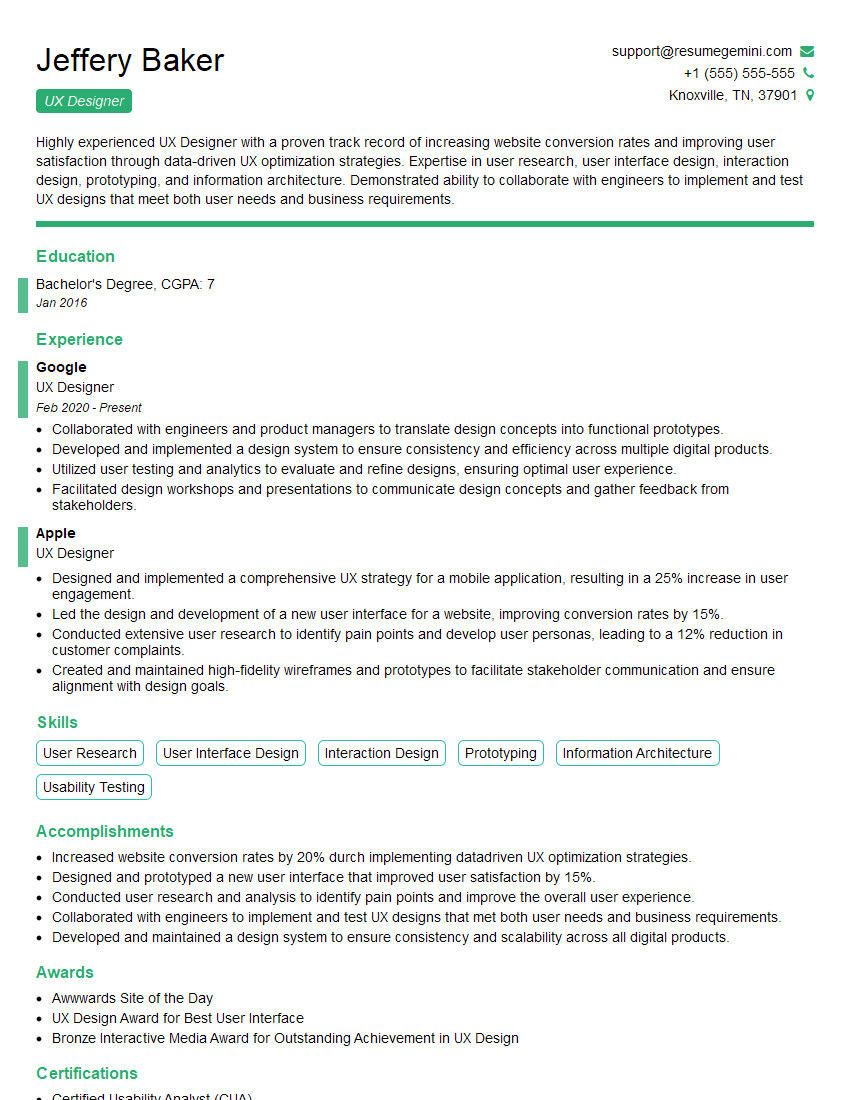
Mastering Concept Development and Ideation is crucial for career advancement in many creative fields. It demonstrates your ability to think critically, solve complex problems, and bring innovative ideas to life. To significantly boost your job prospects, creating an ATS-friendly resume is essential. This ensures your application gets noticed by recruiters and hiring managers. We highly recommend using ResumeGemini to build a professional and impactful resume that highlights your skills in Concept Development and Ideation. ResumeGemini provides a streamlined process and offers examples of resumes tailored to this specific field, helping you present your qualifications effectively. Invest time in crafting a compelling resume—it’s your first impression.

Explore more articles
Users Rating of Our Blogs
Share Your Experience
We value your feedback! Please rate our content and share your thoughts (optional).
What Readers Say About Our Blog
I Redesigned Spongebob Squarepants and his main characters of my artwork.
https://www.deviantart.com/reimaginesponge/art/Redesigned-Spongebob-characters-1223583608
IT gave me an insight and words to use and be able to think of examples
Hi, I’m Jay, we have a few potential clients that are interested in your services, thought you might be a good fit. I’d love to talk about the details, when do you have time to talk?
Best,
Jay
Founder | CEO