Interviews are more than just a Q&A session—they’re a chance to prove your worth. This blog dives into essential Construction and repair of hardscape features interview questions and expert tips to help you align your answers with what hiring managers are looking for. Start preparing to shine!
Questions Asked in Construction and repair of hardscape features Interview
Q 1. Describe your experience with different types of paving stones.
My experience encompasses a wide range of paving stones, each with unique properties and applications. I’ve worked extensively with brick pavers, offering durability and classic aesthetics; flagstone, prized for its natural beauty and irregular shapes, requiring careful planning for a cohesive look; concrete pavers, known for their affordability and versatility in color and texture; and permeable pavers, increasingly popular for their eco-friendly water management capabilities. Choosing the right paver depends heavily on the project’s budget, desired aesthetic, and environmental considerations. For instance, a high-traffic area might necessitate the strength of concrete pavers, while a residential walkway could elegantly feature flagstone. I’ve even worked with porcelain pavers, a newer option offering exceptional durability and a wide array of styles, though they often come with a higher price tag.
- Brick Pavers: Excellent for driveways and patios, offering classic charm and significant durability.
- Flagstone Pavers: Ideal for natural-looking walkways and patios, each stone is unique, adding character and texture.
- Concrete Pavers: Versatile and cost-effective, suitable for a wide range of applications, from driveways to pool decks.
- Permeable Pavers: Environmentally conscious choice; allows water to seep through, reducing runoff and replenishing groundwater.
- Porcelain Pavers: High-end option offering superior durability, resistance to stains and fading, and a wide range of design options.
Q 2. Explain the process of installing a retaining wall.
Installing a retaining wall is a multi-step process requiring careful planning and execution. It begins with proper site preparation, including surveying the land to determine the wall’s exact location, height, and length. Next, excavation is crucial, ensuring a level and compacted base for stability. We then install a geotextile fabric to prevent soil from mixing with the base material. The wall itself is constructed using either interlocking blocks, concrete, or natural stone, depending on the project’s specifications and budget. Each block or stone is carefully placed and secured with mortar or other suitable binding agents. Drainage is paramount; we often incorporate weep holes in the wall to allow water to escape, preventing hydrostatic pressure buildup that can cause failure. Backfilling the wall with compacted gravel provides further support and aids drainage. Finally, we add topsoil and landscaping to blend the retaining wall seamlessly into the surrounding environment.
Think of it like building a brick castle – each layer needs a solid foundation and proper support to withstand the pressure of the surrounding materials. Neglecting any of these steps can lead to serious structural problems down the line.
Q 3. What are the different types of concrete used in hardscape projects?
Several types of concrete find application in hardscape projects, each suited for different purposes. The most common is standard concrete, often used for driveways, patios, and foundations. It’s relatively inexpensive but can be prone to cracking if not properly reinforced. Ready-mix concrete is delivered pre-mixed, simplifying the process for smaller jobs. For added strength and durability, reinforced concrete incorporates steel rebar to withstand higher loads. Exposed aggregate concrete offers a decorative finish, showcasing the aggregate (stones, pebbles) within the concrete matrix. Stamped concrete mimics the look of other materials like brick or stone, providing a visually appealing, cost-effective alternative. Finally, colored concrete offers a range of hues, allowing for customized aesthetic appeal.
- Standard Concrete: Economical and versatile, ideal for basic applications.
- Ready-Mix Concrete: Convenient pre-mixed concrete for smaller projects.
- Reinforced Concrete: Enhanced strength and durability due to embedded steel rebar.
- Exposed Aggregate Concrete: Decorative finish showing the aggregates within the concrete.
- Stamped Concrete: Cost-effective way to mimic other materials like brick or stone.
- Colored Concrete: Offers various colors for customized aesthetic appeal.
Q 4. How do you ensure proper drainage in hardscape installations?
Proper drainage is critical for the longevity and structural integrity of any hardscape installation. We achieve this through a combination of techniques. First, ensuring a proper slope is essential; the ground should slope away from structures to direct water flow. Secondly, we use permeable paving materials whenever possible, allowing water to seep through, reducing surface runoff. Thirdly, we install drainage systems, such as gravel beds, French drains, and perforated pipes, to collect and redirect excess water away from structures. Finally, we carefully grade the soil and utilize swales (shallow channels) to manage runoff efficiently. In essence, we design the hardscape to work with, not against, nature’s water flow.
Think of it like designing a river system; you need channels to guide the water and prevent flooding. Without proper drainage, water can accumulate, causing damage to the hardscape and potentially the surrounding structures.
Q 5. What safety precautions do you take when working with heavy machinery?
Safety is paramount when operating heavy machinery. Before starting any work, we perform thorough pre-operational checks of all equipment, ensuring all safety devices are functional. We wear appropriate personal protective equipment (PPE), including hard hats, safety glasses, gloves, and steel-toed boots. We maintain a safe working distance from the equipment and any other workers, avoiding distractions. We adhere strictly to all traffic control procedures, establishing clear signage and barriers to prevent accidents. Proper training and certification are vital for operating heavy machinery, and we ensure all operators are qualified and competent. Furthermore, we regularly review and update our safety protocols to address potential hazards and maintain a safe working environment. This isn’t just a matter of compliance; it’s about safeguarding our team and ensuring the successful completion of the project without incidents.
Q 6. Describe your experience with base preparation for hardscape projects.
Base preparation is the foundation of any successful hardscape project; a poorly prepared base will inevitably lead to problems down the road, such as settling, cracking, and uneven surfaces. My experience encompasses various methods, tailored to the specific project requirements. This typically begins with excavating the area to the required depth, removing any vegetation or unstable soil. Next, we compact the sub-base using heavy machinery, creating a solid and stable platform. The type of base material used – gravel, crushed stone, or recycled materials – depends on factors such as the soil conditions and intended use. A critical aspect is proper compaction; we use specialized equipment to achieve the required density, ensuring the base is firm and even. Finally, a leveling course is often added to create a perfectly smooth surface for the final paving layer. The whole process mirrors baking a cake – you need a solid, level base before you add the final decorative layers.
Q 7. How do you handle unexpected site challenges during construction?
Unexpected site challenges are inevitable in construction. My approach centers on meticulous planning and proactive problem-solving. Encountering unforeseen underground utilities, for example, requires immediate communication with the relevant authorities, and often necessitates adjusting the project plan accordingly. Discovering unstable soil necessitates modifying the base preparation, potentially requiring additional compaction or the introduction of geotechnical solutions. Similarly, changes in weather conditions might require adjusting the construction schedule or implementing specific mitigation strategies. I consistently prioritize open communication with the client, keeping them informed of any challenges and collaboratively finding solutions. Flexibility and adaptability are essential; the ability to swiftly assess the situation, implement effective solutions, and maintain project momentum are critical components of my skillset.
For example, I once discovered a previously unknown underground spring during excavation. Instead of halting the project, we re-engineered the drainage system to incorporate the spring, resulting in a more sustainable and efficient solution. Adapting to challenges often leads to innovative and superior outcomes.
Q 8. Explain your knowledge of different jointing methods for paving stones.
Jointing methods for paving stones are crucial for both aesthetics and structural integrity. The choice depends on the type of paver, the project’s scale, and the desired look. Common methods include:
- Dry-laid Joints: This involves placing pavers tightly together without mortar. It’s ideal for permeable paving, allowing water to drain easily. However, it’s less stable than mortared joints and may require more careful planning to prevent shifting. Think of it like building a brick wall without any cement; each brick relies on the others for support.
- Mortar Joints: These use a mixture of cement, sand, and water to fill the gaps between pavers. This provides superior stability and longevity, resisting movement and weed growth. The mortar color can be chosen to complement or contrast with the pavers, offering design flexibility. It’s like adding strong glue between each brick in the wall, making it much stronger and more resistant to shifting.
- Joint Stabilizing Sand: Fine sand is compacted between pavers, creating a stable base without mortar. This is a cost-effective alternative to mortar, though it’s less durable and more susceptible to weed growth. Think of it as a more flexible, less permanent option, suitable for patios or less demanding applications.
Proper jointing techniques involve ensuring consistent joint widths, completely filling the joints, and using the appropriate jointing material for the chosen paver type and application.
Q 9. What are the common problems encountered with retaining walls and how do you address them?
Retaining walls, if not properly designed and constructed, can encounter several problems. Common issues include:
- Settlement and Cracking: Uneven settlement of the soil behind the wall can lead to cracks and instability. Addressing this requires proper soil compaction during construction and possibly installing drainage systems to mitigate hydrostatic pressure.
- Overturning: Improper design or inadequate backfilling can cause the wall to overturn. Solutions involve ensuring sufficient wall height-to-base width ratios and using geogrid reinforcement to increase the wall’s stability.
- Drainage Issues: Water accumulating behind the wall can exert significant pressure, leading to cracks and failure. Effective drainage systems, such as weep holes and drainage pipes, are critical for preventing water buildup.
- Frost Heave: In colder climates, freezing and thawing cycles can cause the soil to heave, potentially damaging the wall. Using frost-resistant materials and proper drainage are crucial for mitigating this problem.
Addressing these problems often involves a combination of preventative measures during construction and corrective actions if problems arise. These may include repair work, reinforcement, or even complete wall reconstruction in severe cases. Regular inspections are key to catching minor problems before they escalate.
Q 10. How do you ensure the longevity and durability of your hardscape projects?
Longevity and durability in hardscape projects are achieved through careful planning, high-quality materials, and meticulous execution. Key factors include:
- Proper Base Preparation: A well-compacted, stable base is paramount. This involves excavating to the correct depth, adding a suitable base material (like gravel or compacted soil), and thoroughly compacting it to prevent settling.
- Material Selection: Using high-quality, durable paving stones, concrete, and other materials that are suitable for the local climate and intended use is vital.
- Drainage Solutions: Implementing effective drainage systems to prevent water accumulation and erosion is essential. This might involve creating slopes, adding drainage pipes, or installing French drains.
- Proper Installation Techniques: Following best practices during installation, including proper jointing, leveling, and compaction, ensures long-term stability and minimizes the risk of cracking or shifting.
- Regular Maintenance: Periodic cleaning and sealing can prevent deterioration and extend the lifespan of the hardscape features.
For example, a patio built on poorly compacted soil will likely settle and crack over time, whereas one built on a solid, well-prepared base will remain stable for many years.
Q 11. Describe your experience with working with different types of mortar and grout.
My experience with various mortars and grouts is extensive. I’ve worked with a range of types, including:
- Portland Cement Mortar: The standard for many hardscape applications, offering excellent strength and durability. The mix ratio (cement to sand) can be adjusted for different needs, like increased flexibility for curved walls or increased strength for high-stress applications.
- Polymer-Modified Mortar: These mortars contain polymers that enhance their flexibility and bond strength. They are particularly useful in situations where there’s a high risk of cracking, such as in areas with significant temperature fluctuations or movement.
- Epoxy Grout: Excellent for very tight joints and situations requiring high strength and water resistance. It’s often used for setting tile or in high-traffic areas. However, it has a short working time, requiring precise and rapid application.
- Furan Resin Grout: Ideal for applications where extreme chemical resistance is needed, like industrial settings.
The choice of mortar or grout is dictated by the specific project requirements, including the type of pavers, the intended use of the area, and the environmental conditions. For example, I would choose epoxy grout for a swimming pool surround because of its superior water resistance.
Q 12. What are your preferred methods for cutting and shaping paving stones?
Cutting and shaping paving stones requires precision and the right tools. My preferred methods depend on the material and the complexity of the cut:
- Angle Grinder with Diamond Blade: This is my go-to tool for most cutting tasks, providing clean, precise cuts in various stone types. Different blade types are selected depending on the hardness of the material. It’s essential to wear appropriate safety gear.
- Wet Saw: Used for more intricate cuts and for larger quantities of pavers, the wet saw helps prevent dust and keeps the blade cool for a longer lifespan.
- Masonry Chisel and Hammer: Useful for less precise shaping, especially for removing small amounts of material. This method requires more skill and experience to achieve a clean finish.
- Specialized Paver Splitters: These tools allow for the controlled splitting of pavers, which can be particularly useful for creating specific shapes or sizes.
The choice of method depends on the project’s scope and desired precision. For example, a simple straight cut might be done with an angle grinder, while a complex curve would require a wet saw or potentially hand-chiseling.
Q 13. How do you manage a hardscape project timeline and budget?
Managing hardscape project timelines and budgets requires careful planning and execution. My approach involves:
- Detailed Planning: Creating a comprehensive project plan that includes detailed scope of work, material lists, timelines, and budget breakdowns. I always include a contingency buffer to account for unforeseen issues.
- Material Procurement: Securing materials well in advance to avoid delays. This often involves checking material availability and sourcing from reliable suppliers.
- Scheduling and Coordination: Maintaining a clear schedule that includes all tasks, milestones, and deadlines. This ensures efficient coordination of labor, materials, and equipment.
- Regular Monitoring: Tracking progress closely against the schedule and budget to identify potential issues early on. Regular communication with clients is key.
- Contingency Planning: Having a plan to address potential issues, delays, or changes in scope to minimize cost overruns and project delays.
For instance, on a large patio project, I might break the work down into stages (excavation, base prep, paver laying, etc.), setting realistic timelines for each stage and tracking expenses closely. Regular client meetings ensure transparency and allow for course correction as needed.
Q 14. Explain your understanding of ADA compliance in hardscape design and construction.
ADA (Americans with Disabilities Act) compliance is crucial in hardscape design and construction. It focuses on creating accessible spaces for people with disabilities. Key aspects include:
- Accessible Routes: Providing clear, continuous, and unobstructed pathways that meet minimum width requirements, with appropriate slopes and surface textures to ensure safe navigation for wheelchair users.
- Ramps and Curb Cuts: Designing and constructing ramps with appropriate slopes and landings to ensure accessibility to different levels, and providing curb cuts at intersections.
- Surface Textures: Using contrasting surface textures to provide tactile warnings of changes in level, such as at steps or pool areas.
- Clearances: Ensuring sufficient clearances around features like seating and landscaping to allow for easy maneuvering of wheelchairs and other mobility devices.
Compliance involves understanding and adhering to the specific guidelines and regulations outlined in the ADA Standards for Accessible Design. Failure to comply can result in legal issues and accessibility challenges for users. A detailed site analysis and adherence to best practices are essential during the design and construction phases.
Q 15. What software or tools do you use for planning and design?
For planning and design, I utilize a suite of software and tools tailored to hardscape projects. This starts with AutoCAD for precise 2D and 3D modeling, allowing me to create detailed plans, including elevations and sections, ensuring accurate material estimations and efficient workflow. I also use SketchUp for its intuitive interface and ease of visualizing complex designs in 3D. This helps clients understand the final product better. Furthermore, I leverage Lumion for rendering photorealistic images and videos, crucial for client presentations and securing approvals. Finally, I utilize project management software like Asana to track timelines, budgets, and communicate effectively with teams and clients throughout the project lifecycle. For on-site measurements and design adjustments, I rely on a total station for precise surveying and laser levels for accurate grading.
Career Expert Tips:
- Ace those interviews! Prepare effectively by reviewing the Top 50 Most Common Interview Questions on ResumeGemini.
- Navigate your job search with confidence! Explore a wide range of Career Tips on ResumeGemini. Learn about common challenges and recommendations to overcome them.
- Craft the perfect resume! Master the Art of Resume Writing with ResumeGemini’s guide. Showcase your unique qualifications and achievements effectively.
- Don’t miss out on holiday savings! Build your dream resume with ResumeGemini’s ATS optimized templates.
Q 16. Describe your experience with different types of edging materials.
My experience encompasses a wide range of edging materials, each with its own strengths and weaknesses. Concrete edging offers durability and a clean look, perfect for formal settings. However, it can be costly and labor-intensive to install. Plastic edging is a budget-friendly option, readily available in various colors and styles; its flexibility makes it suitable for curves, but it can degrade over time and is less durable than concrete. Metal edging, like aluminum or steel, provides excellent durability and a modern aesthetic, but it’s susceptible to rust and can be expensive. Natural stone edging (e.g., flagstone, bluestone) adds a rustic charm and blends well with natural landscapes. It’s durable but requires more careful installation and can be expensive. Finally, brick edging offers a classic and versatile option, combining durability with aesthetic appeal, although it’s more labor-intensive than some alternatives. The choice depends on budget, aesthetic preferences, and the specific project requirements. For example, a high-traffic commercial space would benefit from concrete or metal edging, while a residential garden might utilize plastic or natural stone depending on the desired look.
Q 17. How do you deal with frost heaving in cold climates?
Frost heaving, the upward movement of soil due to freezing and thawing, is a significant challenge in cold climates. To mitigate this, I employ several strategies: First, proper drainage is paramount. This includes creating a well-graded base to prevent water accumulation. Second, I use a geotextile fabric beneath the base material to separate the soil from the compacted base, inhibiting moisture migration. Third, selecting frost-resistant base materials like crushed stone with larger aggregate sizes is crucial. These larger particles allow for better drainage and reduce the impact of frost. Fourth, I ensure proper compaction of the base material to minimize voids where water can accumulate. Lastly, using a porous paving material allows for the passage of moisture, preventing hydrostatic pressure build-up that exacerbates frost heaving. These measures work in concert to create a hardscape that can withstand the freeze-thaw cycle with minimal damage.
Q 18. What are the different types of sealants used in hardscape projects and when would you use each?
Various sealants play crucial roles in hardscape projects. Polyurethane sealants offer excellent flexibility and durability, making them ideal for sealing joints in concrete pavers and other porous materials, protecting them from water damage and staining. Silicone sealants are highly weather-resistant and provide a watertight seal, suitable for sealing cracks in natural stone or around coping stones. Acrylic sealants are a more budget-friendly option, but they are less durable and weather-resistant than polyurethane or silicone. They are suitable for less demanding applications. The choice depends on the material, its exposure to the elements, and the required level of durability. For instance, a highly visible walkway might use polyurethane for its long-lasting UV resistance, while a less visible area might opt for acrylic for cost savings. Always follow manufacturer instructions for proper application and curing.
Q 19. What is your experience with repairing damaged hardscape features?
Repairing damaged hardscape features requires careful assessment and a methodical approach. For cracked concrete, I assess the severity of the crack. Minor cracks might be repaired with epoxy injection, while larger cracks may require section removal and replacement. For damaged pavers, I remove the damaged stones, ensure the base material is sound, and replace them with matching pavers. Missing grout can be easily replaced using appropriate color-matched grout. Repairing damaged edging involves carefully excavating around the damaged section, replacing the damaged portion with fresh material, and ensuring proper alignment and compaction. It is important to use materials that match the existing materials to maintain aesthetic consistency. For example, I once repaired a severely cracked patio by removing the damaged section, re-compacting the base, and replacing the concrete to ensure structural integrity and the original look.
Q 20. Explain your understanding of soil compaction and its importance in hardscape construction.
Soil compaction is the process of reducing the air voids in the soil, increasing its density. This is critical in hardscape construction because it provides a stable and uniform base for the paving materials. Insufficient compaction can lead to settling, cracking, and uneven surfaces. Compaction ensures the load is properly distributed and prevents shifting of the base material over time. Imagine building a house on loose sand – it would inevitably shift and crack. Properly compacted soil is like building on a solid foundation, ensuring long-term stability and preventing costly repairs down the line. The level of compaction required depends on the soil type and the load-bearing requirements of the hardscape. This needs to be assessed properly before construction.
Q 21. How do you ensure proper compaction of base materials?
Ensuring proper compaction of base materials involves a multi-step process. First, the base material is laid in lifts (layers) of a specified thickness. Then, a mechanical compactor, such as a plate compactor or roller compactor, is used to compact each lift. The choice of compactor depends on the area’s size, the type of base material, and the required compaction level. The compaction process is monitored using a density gauge or nuclear density gauge to ensure the specified density is achieved. Compaction is repeated until the target density is reached. Over-compaction can be as damaging as under-compaction; it’s essential to strike a balance to ensure structural integrity without causing damage to the base material. Water content of the base material also plays a crucial role. Proper moisture content is necessary for optimum compaction. Too dry and it won’t compact well, too wet and it’ll be too soft. This requires experience and knowledge of the materials used.
Q 22. Describe your experience with working with different types of landscape fabrics.
My experience with landscape fabrics is extensive, encompassing various types used for different hardscape applications. I’m familiar with woven and non-woven fabrics, each serving a unique purpose. Woven fabrics, like polypropylene, are stronger and better at preventing weed growth, making them ideal for larger projects or areas with aggressive weeds. They’re also more durable, able to withstand heavier equipment and shifting soil. I’ve used these extensively under patios and retaining walls to create a stable base. Non-woven fabrics, often made from polyester, are more permeable and allow for better water drainage. This is beneficial in areas prone to waterlogging, where we might use them under permeable paving systems to prevent soil migration. I’ve also worked with geotextiles, specifically designed for separation and filtration, placed between different layers of a hardscape to prevent mixing and improve drainage. For instance, I used a geotextile beneath a gravel base for a driveway to keep the base separate from the underlying soil, preventing settling and ensuring a smooth surface. Choosing the right fabric is crucial to a project’s long-term success, and my experience enables me to make informed decisions based on the specific needs of the project.
Q 23. What are your troubleshooting skills related to hardscape installation issues?
Troubleshooting hardscape installations requires a systematic approach. I start by carefully examining the problem area, documenting observations with photos and notes. This could involve anything from uneven paving stones to drainage issues or settling. Once the problem is identified, I consider the root cause. For example, uneven paving stones often indicate inadequate base preparation, while drainage issues might stem from improper grading or clogged drainage systems. I utilize my knowledge of materials and construction techniques to determine the best solution. For instance, if settling occurs, I might need to re-compact the base or consider using a more robust foundation. If drainage is inadequate, I might need to adjust the grading or install additional drainage features. I always prioritize finding a long-term solution that addresses the underlying problem rather than simply masking the symptoms. I’ve successfully resolved many complex issues this way, from repairing cracked concrete to correcting improperly installed retaining walls, ensuring the longevity and safety of the completed project.
Q 24. How do you handle customer communication and expectations?
Effective customer communication is paramount. I believe in open and honest communication throughout the project. Before starting any work, I carefully explain the process, materials, timelines, and potential costs. I encourage questions and provide detailed answers, ensuring the customer fully understands what to expect. During the project, I keep customers informed of progress and any potential challenges that may arise. I’m also readily available to address any concerns and make adjustments as needed. For example, if a material is unavailable, I proactively explore alternatives, discussing the implications and getting their approval before proceeding. Following completion, I provide a thorough walkthrough, addressing any final questions or concerns. This approach builds trust and ensures that the project meets or exceeds their expectations. I have a strong track record of exceeding client expectations thanks to this transparent and proactive communication style.
Q 25. Describe your experience with working in a team environment.
I thrive in team environments. My experience has involved working with various skilled tradespeople, including masons, excavators, and laborers. I understand the importance of clear communication, collaboration, and mutual respect within a team. I’ve consistently been responsible for coordinating tasks, delegating responsibilities, and ensuring that the project stays on schedule and within budget. For instance, on a large retaining wall project, I collaborated closely with the excavator to ensure proper excavation and grading, while coordinating with the mason team on the stonework. I believe in fostering a supportive environment where everyone feels valued and empowered to contribute their expertise. This collaborative approach leads to high-quality workmanship and efficient project completion.
Q 26. Explain your understanding of relevant building codes and regulations.
Understanding and adhering to building codes and regulations is crucial for any hardscape project. I’m familiar with local, state, and national codes pertaining to retaining walls, drainage, and accessibility. This includes understanding regulations for excavation, foundation requirements, and appropriate material specifications. For example, I’m aware of regulations concerning setbacks from property lines and requirements for proper drainage to prevent erosion and flooding. I ensure all my projects comply with these regulations, incorporating best practices to maintain safety and quality. Before starting a project, I review all applicable codes and regulations, ensuring the design and construction plans align perfectly. This attention to detail not only ensures a legally compliant project but also safeguards the safety and structural integrity of the work.
Q 27. What is your experience with estimating materials and labor costs for hardscape projects?
Accurate cost estimation is a critical skill. My experience in estimating materials and labor costs involves a detailed breakdown of project requirements. This begins with a thorough site assessment, precisely measuring the area and identifying all necessary materials. I use established pricing sources and current market rates to determine material costs. Labor costs are calculated based on the estimated time required for each task, considering factors like crew size, skill level, and potential equipment rental. I build a comprehensive estimate that includes contingency for unforeseen challenges and always provide the client with a transparent breakdown. I’ve found that accurate upfront estimations lead to smoother project execution and prevent cost overruns. My goal is to provide a realistic and competitive estimate that fosters trust and a positive client experience.
Q 28. Describe your experience with sustainable hardscape practices.
Sustainable hardscape practices are a core component of my approach. I prioritize using locally sourced materials to reduce transportation costs and emissions. This also supports local businesses and reduces the environmental impact. Permeable paving systems are frequently incorporated in my designs to allow rainwater to infiltrate the ground, replenishing groundwater and reducing runoff. I select materials with high recycled content whenever possible, reducing landfill waste. For instance, I’ve used recycled concrete aggregates in paving bases and reclaimed lumber for retaining wall accents. Proper grading and drainage design minimizes the need for extensive irrigation systems, conserving water. Furthermore, I educate clients on low-maintenance practices to further reduce the overall environmental footprint of the project. Integrating these sustainable approaches ensures environmentally conscious and responsible hardscape solutions.
Key Topics to Learn for Construction and Repair of Hardscape Features Interview
- Site Preparation and Design: Understanding site analysis, grading, drainage plans, and the selection of appropriate materials based on project requirements and local conditions. This includes practical knowledge of surveying techniques and blueprint reading.
- Base Preparation and Installation: Mastering techniques for constructing stable and durable bases for various hardscape elements like patios, walkways, and retaining walls. This involves practical application of compaction methods and understanding different base materials and their properties.
- Material Selection and Handling: Knowing the characteristics, applications, and limitations of various hardscape materials (pavers, concrete, natural stone, etc.). This includes safe handling and storage practices to minimize waste and ensure project quality.
- Construction Techniques for Specific Features: Developing proficiency in the construction of retaining walls, patios, walkways, driveways, steps, and other hardscape elements, including different construction methods and best practices for each.
- Repair and Maintenance Strategies: Understanding common hardscape problems (e.g., settling, cracking, erosion) and developing effective repair and maintenance strategies, including the selection of appropriate repair materials and techniques.
- Safety Procedures and Regulations: Demonstrating a strong understanding of OSHA safety regulations and best practices for working with heavy equipment, hazardous materials, and in potentially challenging environments.
- Estimating and Project Management: Ability to accurately estimate materials, labor costs, and project timelines. This also includes understanding basic project management principles for efficient execution.
- Problem-Solving and Troubleshooting: Experience in identifying and resolving on-site issues, adapting to unexpected challenges, and implementing effective solutions to maintain project quality and timelines.
Next Steps
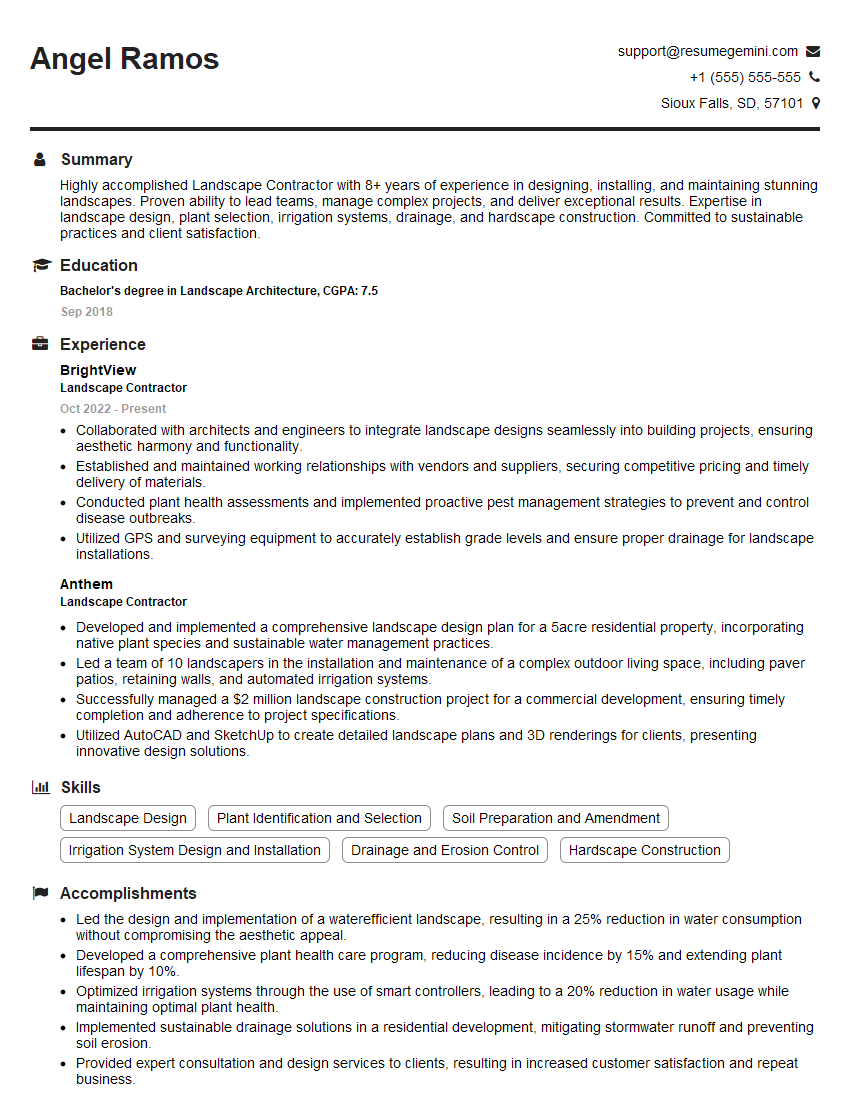
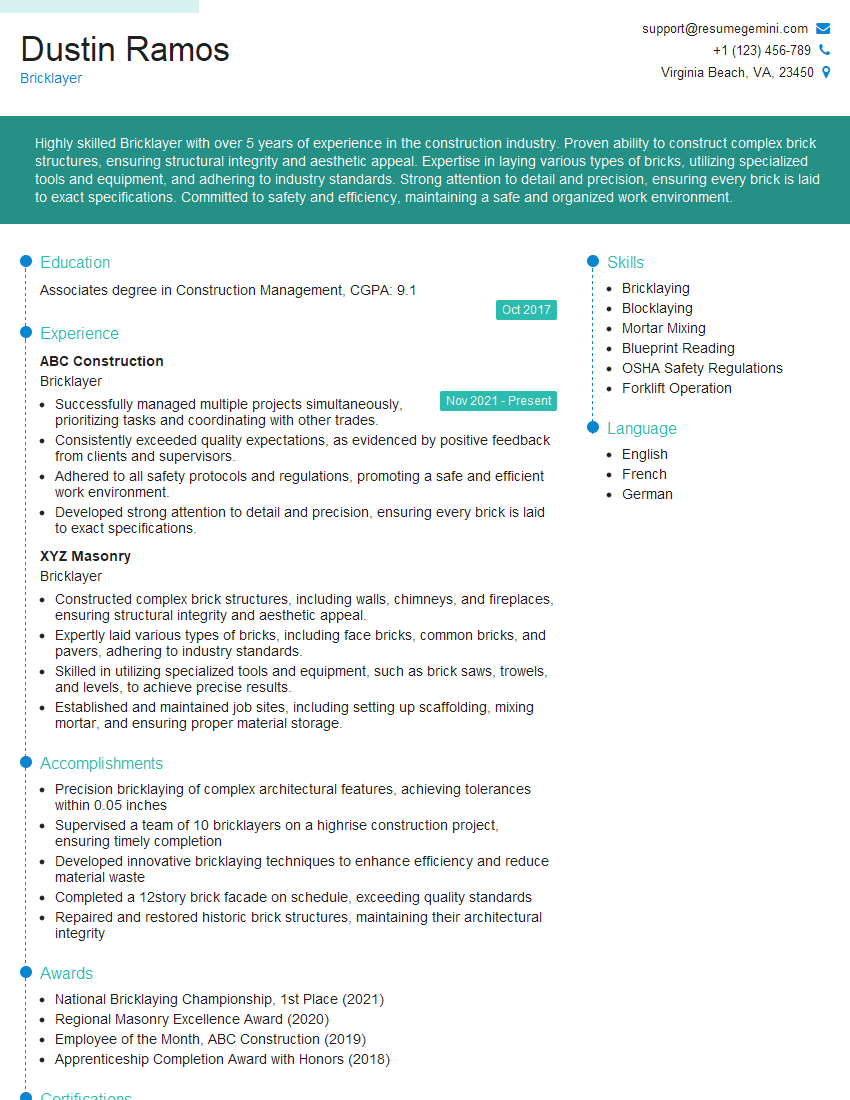
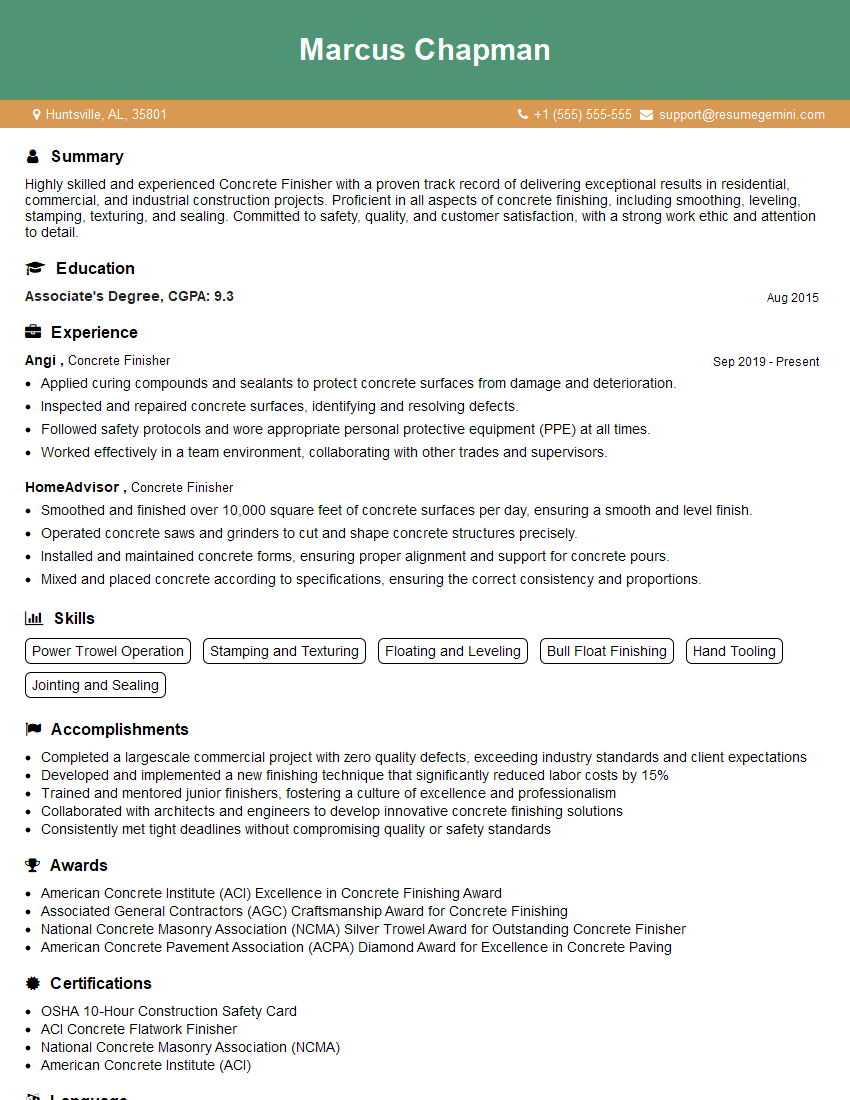
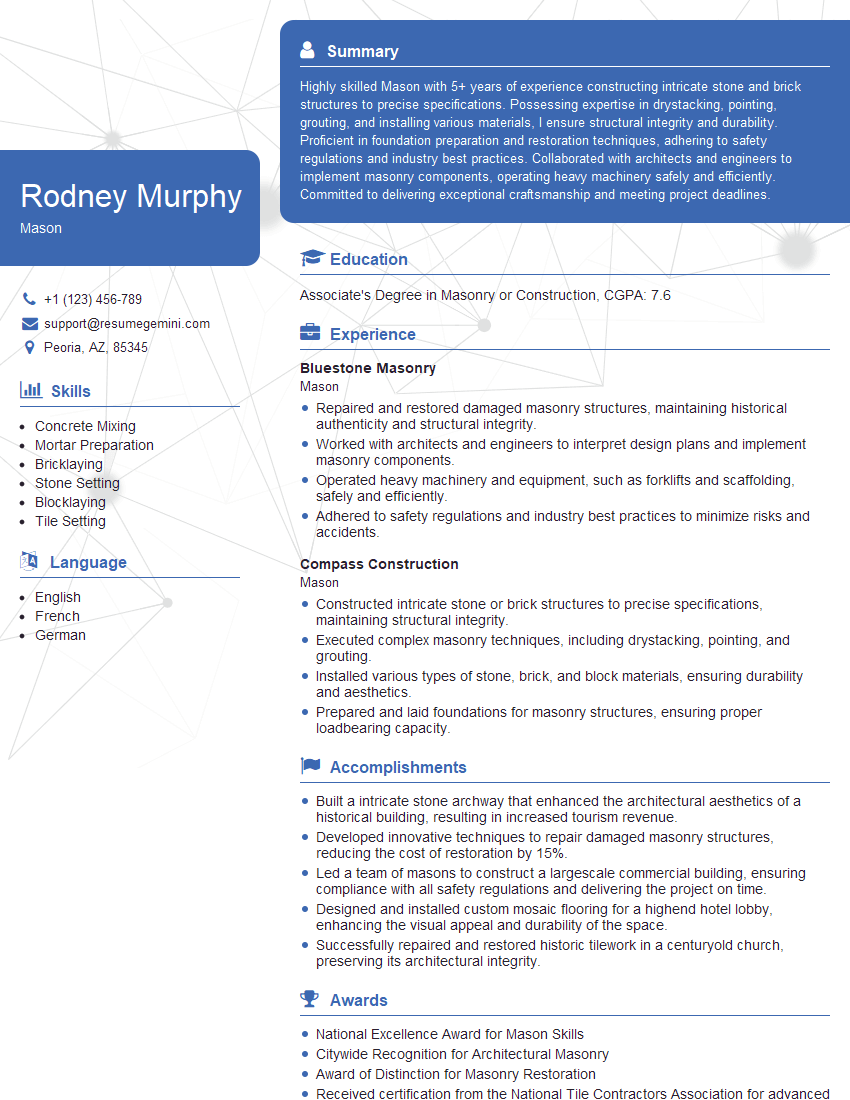
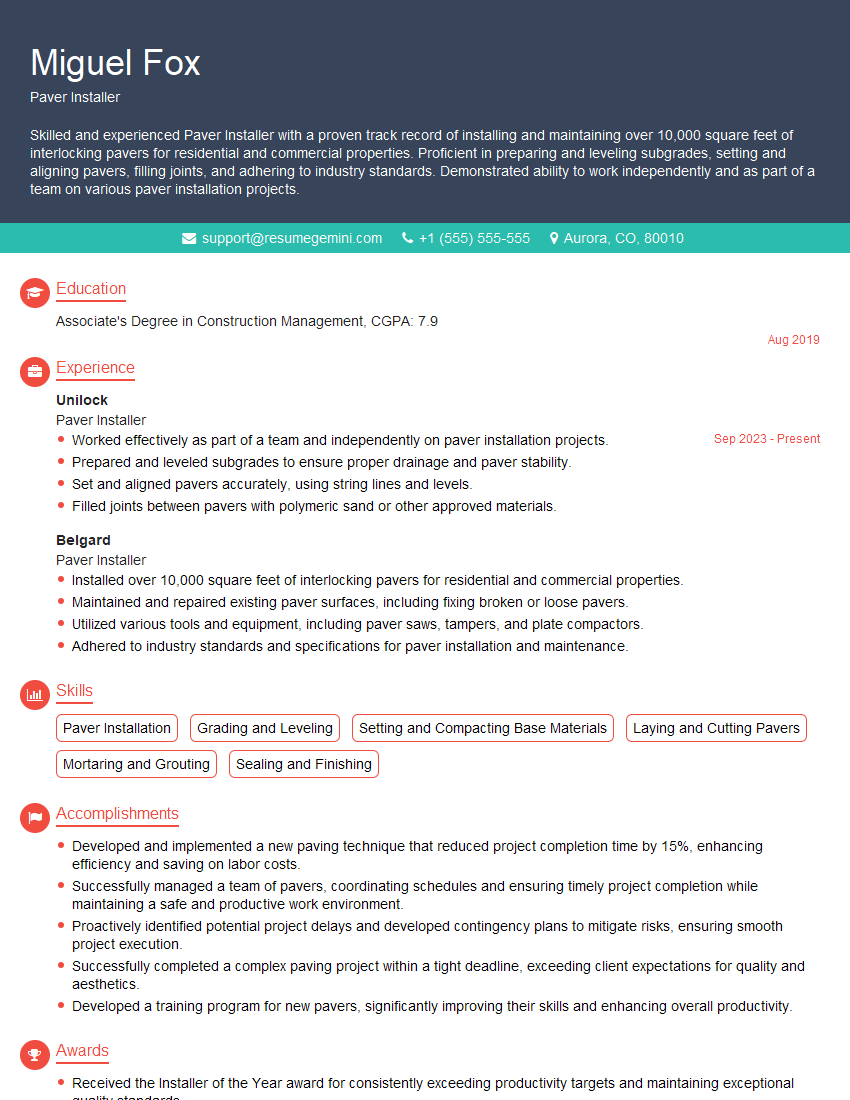
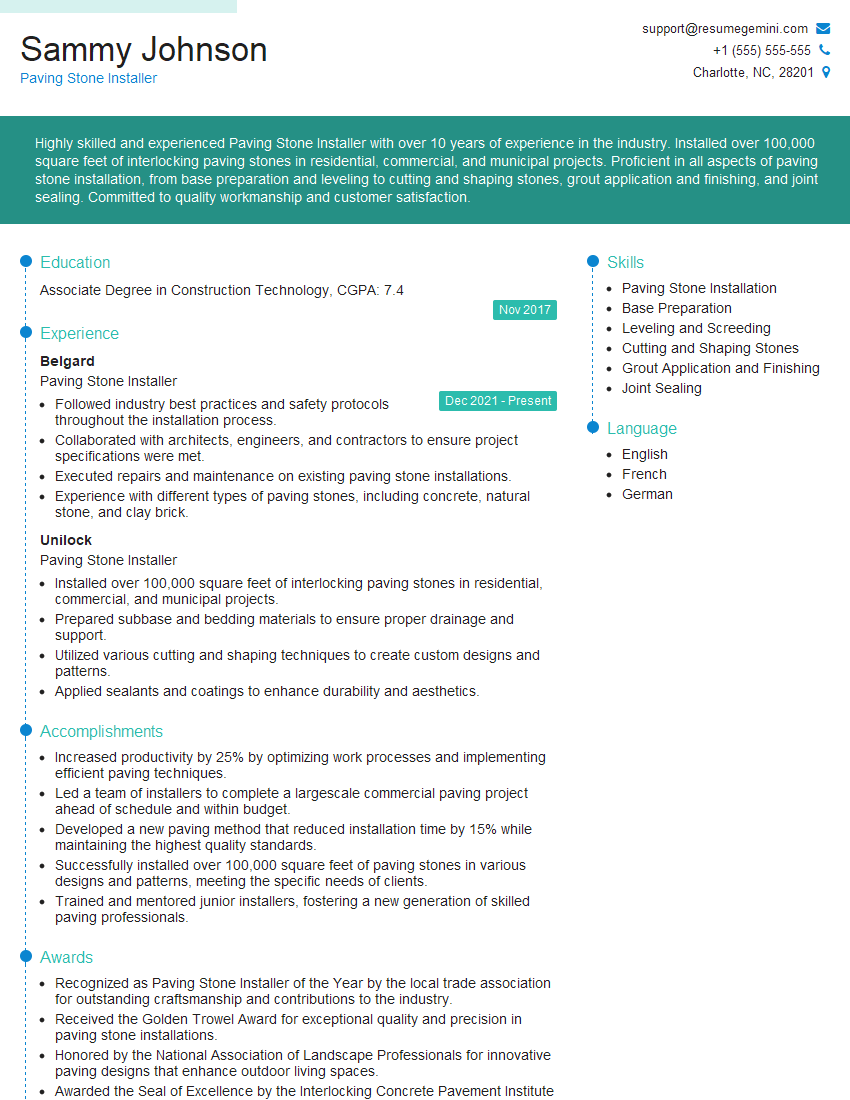
Mastering the construction and repair of hardscape features is crucial for career advancement in this in-demand field. Demonstrating a strong understanding of these skills will significantly improve your job prospects and open doors to higher-paying positions and more challenging projects. To maximize your chances, it’s essential to create a compelling and ATS-friendly resume that highlights your qualifications effectively. ResumeGemini is a trusted resource that can help you build a professional and impactful resume tailored to the construction industry. Examples of resumes specifically designed for candidates in Construction and repair of hardscape features are available to guide you. Take the next step toward your dream career today!

Explore more articles
Users Rating of Our Blogs
Share Your Experience
We value your feedback! Please rate our content and share your thoughts (optional).
What Readers Say About Our Blog
Really detailed insights and content, thank you for writing this detailed article.
IT gave me an insight and words to use and be able to think of examples