Are you ready to stand out in your next interview? Understanding and preparing for Consumer Trend Forecasting interview questions is a game-changer. In this blog, we’ve compiled key questions and expert advice to help you showcase your skills with confidence and precision. Let’s get started on your journey to acing the interview.
Questions Asked in Consumer Trend Forecasting Interview
Q 1. Describe your experience with various qualitative research methods used in consumer trend forecasting.
Qualitative research is crucial for understanding the ‘why’ behind consumer behavior, providing rich insights that quantitative methods often miss. My experience encompasses a range of techniques, including:
- In-depth interviews: These one-on-one conversations allow for deep exploration of individual perspectives, motivations, and experiences related to a product or trend. For example, I conducted interviews with millennial parents to understand their evolving needs regarding children’s clothing, uncovering a strong preference for sustainable and ethically sourced brands.
- Focus groups: Facilitated group discussions reveal shared attitudes and opinions, highlighting common trends and conflicts. I’ve used focus groups to understand consumer reactions to new product designs, leading to valuable feedback on aesthetics and functionality.
- Ethnographic studies: This involves immersing myself in the target consumer’s environment, observing their natural behavior, and gaining firsthand insights. For instance, I shadowed shoppers in a mall to understand their in-store decision-making process, revealing factors like product placement and visual merchandising that influence purchases.
- Netnography: Analyzing online communities and forums provides a rich source of qualitative data. I’ve leveraged netnography to understand the conversations surrounding new beauty products, tracking consumer sentiment and identifying emerging preferences.
Combining these methods provides a holistic understanding of consumer motivations and perspectives, informing more accurate trend forecasts.
Q 2. How do you identify emerging consumer trends using quantitative data analysis?
Quantitative data analysis provides the ‘what’ – the numbers behind consumer behavior. I identify emerging trends by analyzing large datasets using statistical methods and data visualization techniques. My process involves:
- Analyzing sales data: Tracking sales figures over time helps identify growing product categories or specific items gaining popularity. For example, a sharp increase in sales of plant-based meat alternatives signals a burgeoning trend towards veganism.
- Social media analytics: Monitoring mentions, hashtags, and sentiment analysis reveals public perception and adoption rates of particular trends. A spike in positive sentiment around a particular fitness routine on Instagram might suggest a new workout trend is gaining traction.
- Market research reports: Reviewing industry reports and surveys provides insights into broad consumer behaviors and preferences. This provides context for the trends identified through other data sources.
- Web analytics: Examining website traffic, search queries, and engagement metrics can reveal growing consumer interest in specific topics or products. Increased searches for ‘sustainable fashion’ could signify a significant shift in consumer consciousness.
- Statistical modeling: Techniques like time series analysis and regression modeling help predict future trends based on past data. By analyzing past trends, we can establish plausible future scenarios with varying degrees of likelihood.
Combining these data sources and leveraging statistical methods allows for a data-driven identification of emerging consumer trends.
Q 3. Explain your process for validating consumer trends identified through research.
Validating trends is critical to ensuring forecast accuracy. My validation process typically involves:
- Triangulation: Comparing findings from different research methods (qualitative and quantitative) to confirm the consistency and robustness of the identified trend. If multiple sources point towards the same conclusion, the trend’s validity is strengthened.
- Further data collection: Gathering additional data points – for example, expanding the scope of surveys or conducting follow-up interviews – to confirm initial findings. This ensures the trend isn’t a statistical anomaly.
- Expert validation: Consulting with industry experts and thought leaders to gain their perspective on the identified trend and its potential impact. External validation provides a crucial check on bias.
- Real-world observation: Monitoring actual consumer behavior in the marketplace to observe the trend’s manifestation. For example, observing increased demand for specific products or services in stores or online validates sales data insights.
- A/B testing: If applicable, testing different marketing strategies targeted at the identified trend to assess its responsiveness in a controlled environment.
Through rigorous validation, we minimize the risk of false positives and ensure the forecasts are based on solid evidence.
Q 4. What are some key indicators you use to assess the potential impact of a trend?
Assessing a trend’s potential impact requires considering several key indicators:
- Market size and growth potential: Estimating the total addressable market (TAM) and projected growth rate helps determine the trend’s commercial viability.
- Consumer adoption rate: Assessing how quickly consumers are adopting the trend provides an indication of its momentum and longevity.
- Technological feasibility: Evaluating the technological advancements needed to support or enhance the trend helps anticipate potential barriers to adoption.
- Regulatory environment: Understanding the legal and regulatory landscape can reveal potential challenges or opportunities.
- Social and cultural impact: Analyzing the trend’s alignment with prevailing societal values, beliefs, and cultural norms helps assess its long-term sustainability.
- Economic factors: Considering macroeconomic conditions, consumer spending patterns, and economic stability is crucial to assess the trend’s resilience.
A comprehensive assessment of these factors allows for a nuanced understanding of a trend’s potential impact and its implications for businesses.
Q 5. How do you incorporate social media analytics into your trend forecasting process?
Social media analytics are indispensable for trend forecasting. I integrate them by:
- Sentiment analysis: Utilizing tools to gauge public opinion and emotional response towards particular products, brands, or ideas. Positive sentiment indicates strong potential, while negative sentiment suggests caution.
- Hashtag tracking: Monitoring relevant hashtags to identify emerging topics and measure their popularity over time. Increased hashtag usage signifies growing interest and potentially a developing trend.
- Community listening: Actively participating in online conversations and forums to understand consumer opinions directly. This uncovers valuable insights not always apparent through automated analysis.
- Influencer identification: Identifying key influencers promoting particular trends allows us to understand their impact on consumer behavior and adoption rates.
- Competitor analysis: Monitoring competitor activity on social media helps understand market dynamics and identify potential threats or opportunities. Assessing their engagement with emerging trends provides insights.
Social media offers real-time data on consumer behavior and preferences, enabling quick adaptation and refinement of trend forecasts.
Q 6. Describe a time you had to revise your trend forecast due to unexpected events.
During a project forecasting the rise of personalized fitness apps, we initially predicted a slow but steady growth. However, the unexpected global pandemic dramatically accelerated this trend. Suddenly, gyms closed, and people sought at-home fitness solutions. We had to revise our forecast upwards significantly, highlighting the increased demand and accelerated market penetration driven by the unforeseen event.
Our revised forecast included new sections detailing the influence of lockdowns on consumer behavior, the surge in app downloads, and the impact on the competition. We also included qualitative data gathered from interviews with users explaining their shift to at-home fitness.
This experience underscored the importance of incorporating ‘black swan’ events into forecasting models and regularly reviewing predictions in light of unexpected circumstances.
Q 7. What are some common biases to watch out for when interpreting consumer data?
Interpreting consumer data requires careful consideration of various biases. Some common pitfalls include:
- Confirmation bias: The tendency to favor information that confirms pre-existing beliefs, potentially leading to overlooking contradictory data. To mitigate this, I ensure a diverse team reviews data interpretations and challenge assumptions.
- Survivorship bias: Focusing solely on successful products or trends while ignoring failed ones, leading to an overly optimistic view of the market. I actively search for examples of failed products and understand why to gain a more balanced view.
- Sampling bias: Drawing conclusions based on a non-representative sample, leading to inaccurate generalizations. Thorough sampling methodology, ensuring a diverse and representative sample, is crucial.
- Anchoring bias: Over-relying on the first piece of information received when making judgments. I actively seek out multiple data points and perspectives to avoid being anchored to a single source.
- Availability heuristic: Overestimating the likelihood of events that are easily recalled or highly publicized. To counteract this, I use statistical models to objectively measure likelihood and avoid relying on anecdotal evidence alone.
By proactively identifying and mitigating these biases, I ensure more objective and accurate trend forecasts.
Q 8. How do you differentiate between a fad and a lasting consumer trend?
Differentiating between a fad and a lasting consumer trend requires understanding their longevity and societal impact. A fad is a fleeting enthusiasm for a product, service, or idea, characterized by rapid rise in popularity followed by an equally swift decline. Think of silly bands or fidget spinners – intensely popular for a short period, then largely forgotten. A lasting consumer trend, on the other hand, represents a more enduring shift in consumer behavior, reflecting deeper societal changes and persisting for a considerable time. For example, the rise of sustainable and ethical consumption isn’t a fad; it’s a trend with significant staying power because it aligns with evolving values.
Key differentiators include:
- Duration: Fads are short-lived; trends are longer-lasting.
- Depth of Impact: Fads are superficial; trends reflect deeper societal shifts.
- Geographic Reach: Fads may be localized; trends often have broader reach.
- Underlying Drivers: Fads are often driven by novelty; trends are rooted in evolving needs, values, or technologies.
To identify a lasting trend, we look for indicators like sustained market demand, consistent media coverage, and integration into established industries rather than short bursts of interest.
Q 9. Explain your understanding of diffusion of innovations theory and its relevance to trend forecasting.
The diffusion of innovations theory explains how, why, and at what rate new ideas and technologies spread within a population. It’s crucial for trend forecasting because it helps us understand the adoption lifecycle of new trends. The theory identifies adopter categories:
- Innovators: The first to adopt (risk-takers).
- Early Adopters: Opinion leaders who influence others.
- Early Majority: Adopt after seeing success in others.
- Late Majority: Skeptical, adopt only when it’s widely accepted.
- Laggards: Adopt last, often resistant to change.
Understanding these categories allows us to predict the trajectory of a trend. For instance, if a new product gains traction among early adopters and early majority, it signals potential for longer-term success. Conversely, limited uptake beyond innovators might indicate a fad. By tracking the adoption rate across these categories, we can project future market penetration and adjust forecasts accordingly.
Q 10. How do you segment consumer groups based on their adoption of new trends?
Segmenting consumers based on trend adoption involves combining several approaches. I use a multi-faceted strategy:
- Demographics: Age, gender, income, location, education – these factors influence purchasing power and exposure to new trends.
- Psychographics: Values, lifestyle, attitudes, interests – understanding these sheds light on what motivates consumer choices and trend adoption.
- Behavioral Segmentation: Brand loyalty, purchase frequency, channel preference, online engagement – revealing how consumers interact with brands and trends.
- Innovation Adoption Rate: As discussed in diffusion of innovations, classifying consumers into innovator, early adopter, etc. helps pinpoint individuals most likely to drive a trend’s spread.
For example, sustainable fashion trends are largely driven by younger, more affluent consumers with strong environmental values (psychographics), making them a key segment to monitor. Understanding the behavior of early adopters within this segment allows forecasting adoption patterns among later adopter groups.
Q 11. Describe your experience using trend forecasting software or tools.
I’ve extensive experience using various trend forecasting tools, including both proprietary software and publicly available data sources. For example, I’ve utilized platforms that combine social media listening tools (analyzing sentiment and volume around specific keywords), e-commerce data analysis (examining sales trends and product popularity), and consumer survey data to identify emerging patterns. These tools help quantify qualitative insights and create more robust forecasts. Specific software used has included [mention specific software, e.g., ‘Brandwatch,’ ‘Talkwalker,’ etc., if comfortable sharing. Otherwise, ‘proprietary software used by my previous employer’ is acceptable], which offer powerful analytics capabilities for tracking social media conversations and analyzing consumer sentiment around various product categories.
Q 12. How do you communicate your trend forecasts to different stakeholders?
Communicating trend forecasts to diverse stakeholders requires tailoring the message to their specific needs and understanding. For example:
- Executive Leadership: I provide concise executive summaries highlighting key findings and strategic implications, focusing on potential business opportunities and risks.
- Marketing Teams: More detailed reports are shared, including insights on target audiences, trend lifecycle, and potential marketing strategies.
- Product Development Teams: I present data-driven recommendations for product innovation, featuring consumer preferences and potential market demand for future product iterations.
- Sales Teams: I equip them with data on market trends, consumer motivations, and anticipated demand to enhance sales strategies and address potential objections.
Visualizations like charts, graphs, and infographics are used extensively to improve understanding. I always ensure clear, concise language, avoiding jargon and tailoring the complexity of the information to the audience’s familiarity with the topic.
Q 13. How do you measure the accuracy of your trend predictions?
Measuring the accuracy of trend predictions is an ongoing process. It’s rare to achieve perfect accuracy; rather, we assess the forecast’s performance relative to the inherent uncertainties. I use a combination of methods:
- Tracking Key Indicators: Monitoring sales figures, social media engagement, market share data, and media coverage related to the predicted trends over time.
- Comparative Analysis: Comparing actual outcomes with the initial predictions, identifying areas of accuracy and deviation.
- Statistical Modeling: Using regression analysis or other statistical techniques to assess the predictive power of the model and identify factors influencing its accuracy.
- Qualitative Feedback: Gathering feedback from stakeholders and consumers about the trend’s actual adoption rate and impact. This helps refine future forecasting models.
This iterative process allows for continuous improvement and increases the accuracy of subsequent trend predictions.
Q 14. What are some ethical considerations in consumer trend forecasting?
Ethical considerations are paramount in consumer trend forecasting. Foremost, maintaining data privacy and securing informed consent when gathering consumer information are critical. Using data responsibly is essential; avoiding biased data collection or interpretation and ensuring transparency in our methodologies to prevent misleading conclusions is critical. Moreover, we must consider the potential societal impact of our predictions. For instance, highlighting trends that may exacerbate social inequalities or promote harmful behaviors necessitates careful consideration and ethical communication. It’s our responsibility to ensure that our work is used to benefit society and not cause harm.
Q 15. Explain your understanding of different forecasting methodologies (e.g., Delphi method, scenario planning).
Consumer trend forecasting relies on various methodologies, each with its strengths and weaknesses. Let’s explore two key approaches: the Delphi method and scenario planning.
Delphi Method: This is a structured communication technique used to gather expert opinions on a particular topic. It involves multiple rounds of questionnaires distributed to a panel of experts. After each round, a summary of the responses is provided, allowing experts to refine their opinions based on the collective knowledge. This iterative process helps to converge towards a consensus forecast. For example, in forecasting the future of sustainable fashion, we might use the Delphi method to poll experts on consumer acceptance of recycled materials, ethical sourcing practices, and the price premium consumers are willing to pay.
Scenario Planning: This approach builds multiple plausible futures based on different combinations of key driving forces. Instead of predicting a single future, it explores a range of possibilities. We might identify factors like technological advancements, economic shifts, and regulatory changes as key drivers. Then, we’d develop several scenarios (e.g., a ‘Green Revolution’ scenario with rapid adoption of sustainable practices, a ‘Stagnation’ scenario with slow change, and a ‘Disruption’ scenario with unexpected technological breakthroughs). Each scenario then informs the development of appropriate strategies.
Choosing the right methodology depends on the specific forecasting problem, available resources, and the desired level of detail. Often, a combination of techniques yields the best results.
Career Expert Tips:
- Ace those interviews! Prepare effectively by reviewing the Top 50 Most Common Interview Questions on ResumeGemini.
- Navigate your job search with confidence! Explore a wide range of Career Tips on ResumeGemini. Learn about common challenges and recommendations to overcome them.
- Craft the perfect resume! Master the Art of Resume Writing with ResumeGemini’s guide. Showcase your unique qualifications and achievements effectively.
- Don’t miss out on holiday savings! Build your dream resume with ResumeGemini’s ATS optimized templates.
Q 16. How do you stay current with the latest consumer trends?
Staying ahead of the curve in consumer trend forecasting requires a multi-pronged approach. I leverage a combination of data sources and methods to ensure I’m always up-to-date.
- Data Analysis: I regularly analyze large datasets from sources like social media listening tools (monitoring trending hashtags and conversations), e-commerce platforms (tracking sales data and product reviews), and market research reports. This provides quantitative insights into consumer behavior.
- Trend Reports and Publications: I subscribe to leading trend forecasting firms and publications (e.g., WGSN, Mintel) and actively attend industry conferences and webinars. These resources offer valuable qualitative perspectives and insights from industry experts.
- Cultural Immersion: I actively engage with different cultural touchpoints – exploring new restaurants, attending events, browsing independent retailers – to experience trends firsthand. This helps me understand the emotional and experiential aspects of consumer behavior, not just the data.
- Competitive Analysis: Analyzing competitor strategies and product launches is crucial. I regularly monitor their marketing campaigns and product innovations to assess their responses to emerging trends and identify potential future directions.
This holistic approach ensures my forecasts are both data-driven and grounded in a deep understanding of current consumer sentiment and cultural shifts.
Q 17. Describe your experience with competitive analysis in the context of trend forecasting.
Competitive analysis is integral to trend forecasting. Understanding competitor actions allows me to anticipate market shifts and identify emerging opportunities or threats. I typically follow these steps:
- Identify Key Competitors: This involves defining the relevant market and pinpointing the main players. For example, in forecasting food trends, this could include established brands, innovative startups, and even international competitors.
- Analyze their Strategies: I assess their product offerings, marketing strategies, target audience, and pricing models. This involves examining their website, social media presence, advertising campaigns, and news coverage.
- Assess their Strengths and Weaknesses: This involves identifying their competitive advantages and disadvantages. For example, a competitor might have a strong brand reputation but lack agility in responding to new trends.
- Predict their Future Actions: Based on the previous steps, I try to anticipate their future moves, such as new product launches, market expansions, or changes in marketing strategies.
- Identify Opportunities and Threats: Finally, this analysis helps me identify potential market gaps, emerging trends they might be missing, or areas where they might pose a competitive threat.
This process provides critical context for my trend forecasts, allowing me to assess the likelihood of specific trends taking hold and identify potential opportunities for my clients.
Q 18. How do you incorporate macroeconomic factors into your trend analysis?
Macroeconomic factors significantly influence consumer behavior and spending patterns. I incorporate them into my analysis by considering factors such as:
- Economic Growth: A strong economy typically leads to increased consumer spending, while a recession can cause consumers to become more cautious and prioritize value.
- Inflation and Interest Rates: High inflation erodes purchasing power and affects consumer confidence. Rising interest rates can make borrowing more expensive, impacting large purchases like homes and cars.
- Unemployment Rates: High unemployment rates reduce consumer spending and can lead to a shift towards more budget-friendly products and services.
- Government Policies: Tax changes, subsidies, and regulations can all impact consumer behavior. For example, carbon taxes can influence the demand for environmentally friendly products.
- Exchange Rates: Fluctuations in exchange rates affect the cost of imported goods and can impact consumer prices and purchasing patterns.
I often use econometric modeling or scenario planning to incorporate these macroeconomic variables into my forecasts, enabling me to project how these factors might influence consumer trends in the future.
Q 19. How do you present complex trend data in a clear and concise manner?
Presenting complex trend data clearly and concisely requires a thoughtful approach. My strategy involves:
- Data Visualization: I use charts, graphs, and infographics to visually represent key findings. This makes complex data more accessible and engaging. For example, a heatmap could show the popularity of different product categories across various demographic segments.
- Storytelling: I frame my findings within a compelling narrative, highlighting key insights and their implications. This makes the data more relatable and memorable.
- Prioritization: I focus on the most important trends and avoid overwhelming the audience with too much detail. I might use a prioritization matrix to highlight the most impactful and likely trends.
- Clear and Concise Language: I avoid jargon and technical terms whenever possible, using simple and direct language to explain complex concepts. I tailor the language and level of detail to the audience’s knowledge and expertise.
- Interactive Presentations: For large audiences or complex data sets, I often use interactive dashboards or presentations that allow viewers to explore the data at their own pace.
By using these techniques, I ensure that even complex data can be easily understood and acted upon.
Q 20. Describe a time you had to work under pressure to meet a trend forecasting deadline.
During a project for a major retailer, we were tasked with forecasting holiday season trends within an extremely tight deadline – just four weeks. The pressure was immense, as the retailer needed this information to plan inventory and marketing campaigns.
To meet the deadline, we employed an agile approach. We divided the work into smaller, manageable tasks and assigned them to different team members. We prioritized the most critical trends based on their potential impact on sales. We also leveraged existing data sources and automated reporting tools to speed up the analysis process. We held daily stand-up meetings to track progress, identify roadblocks, and make necessary adjustments. The team worked long hours, including weekends, but we successfully delivered the report on time. The retailer was extremely satisfied with the speed and accuracy of our analysis and the actionable insights we provided.
This experience taught me the importance of effective project management, resource allocation, and teamwork when facing tight deadlines. It also highlighted the value of leveraging technology and automation to improve efficiency.
Q 21. How do you handle conflicting data or contradictory findings in your analysis?
Conflicting data is common in trend forecasting. My approach involves a systematic investigation to understand the discrepancies and arrive at a robust conclusion. I follow these steps:
- Identify the Source of the Conflict: I carefully examine the data sources, methodology, and assumptions behind the conflicting findings. Are the datasets comparable? Are there methodological differences that could explain the divergence?
- Data Validation: I cross-reference the data with other reliable sources to verify its accuracy and consistency. I also check for potential errors or biases in data collection or processing.
- Qualitative Research: If the quantitative data is inconclusive, I often conduct qualitative research, such as consumer interviews or focus groups, to gain a deeper understanding of consumer attitudes and behaviors.
- Sensitivity Analysis: I explore how the conflicting data affects the overall forecast. This helps determine the robustness of my conclusions and identify which data points have the biggest influence on the outcome.
- Reconciliation and Synthesis: I seek to reconcile the conflicting findings, possibly by weighting the evidence from different sources or by identifying the underlying reasons for the discrepancies. The final conclusion might be a range of possible outcomes rather than a single definitive prediction.
This meticulous approach helps ensure that my forecasts are as accurate and reliable as possible, even in the face of conflicting or uncertain data.
Q 22. What are some emerging technologies impacting consumer behavior that you are monitoring?
Several emerging technologies are profoundly reshaping consumer behavior. I’m particularly focused on three key areas:
- Artificial Intelligence (AI) and Machine Learning (ML): AI-powered personalization is transforming shopping experiences. Recommendation engines, chatbots, and targeted advertising are all becoming increasingly sophisticated, shaping consumer choices and expectations. For example, Netflix’s recommendation algorithm significantly impacts viewing habits, leading consumers to discover content they might not have found otherwise.
- The Metaverse and Web3: The growing interest in virtual and augmented reality experiences is creating new avenues for brands to engage consumers. Digital fashion, virtual events, and interactive product demonstrations are becoming increasingly common, presenting both opportunities and challenges for understanding consumer preferences in these novel environments. I track data on user engagement within these platforms to gauge the long-term impact.
- The Internet of Things (IoT): Connected devices are generating vast amounts of data that provide unprecedented insights into consumer habits. Smart home devices, wearable fitness trackers, and connected cars reveal patterns of consumption, lifestyle choices, and even emotional states. Analyzing this data, while respecting privacy concerns, is crucial for predicting future trends.
My team actively monitors research publications, industry reports, and social media sentiment related to these technologies to understand their influence on consumer behavior and adjust our forecasting models accordingly.
Q 23. Explain your experience working with large datasets for trend identification.
My experience with large datasets for trend identification is extensive. I’ve worked on projects involving millions of data points, utilizing various techniques for data cleaning, analysis, and visualization. I’m proficient in programming languages like Python and R, leveraging libraries such as Pandas, NumPy, and scikit-learn.
A recent project involved analyzing social media data from various platforms to identify emerging trends in sustainable fashion. We used natural language processing (NLP) techniques to extract relevant keywords and sentiment from millions of posts, then applied clustering algorithms to identify key themes and emerging patterns. This allowed us to predict the growing demand for eco-friendly and ethically sourced apparel, enabling our clients to adapt their strategies effectively.
Data visualization is also critical. We use tools like Tableau and Power BI to create interactive dashboards that communicate complex findings clearly to stakeholders. This ensures transparency and helps facilitate informed decision-making.
Q 24. How do you use trend forecasting to inform strategic decision-making?
Trend forecasting informs strategic decision-making by providing a forward-looking perspective on consumer behavior. By anticipating future needs and preferences, businesses can proactively adapt their product development, marketing strategies, and resource allocation.
For example, if our analysis reveals a growing interest in personalized wellness products, we can advise clients to invest in developing customizable solutions and targeted marketing campaigns focused on individual needs. Similarly, if a trend suggests declining demand for a particular product category, we can recommend adjustments to production schedules or explore diversification options. Ultimately, our goal is to help clients make data-driven decisions that maximize their market opportunities and minimize risks.
We present our findings using a mix of quantitative and qualitative data, ensuring that the insights are not only statistically sound but also resonate with the human context of consumer behavior.
Q 25. What are some limitations of consumer trend forecasting?
While powerful, consumer trend forecasting has limitations. It’s crucial to acknowledge these constraints to avoid drawing inaccurate conclusions.
- Unpredictability of Events: Unexpected events like pandemics or economic downturns can significantly disrupt established trends, rendering forecasts less reliable. The COVID-19 pandemic, for instance, dramatically altered consumer behavior in many sectors.
- Bias and Subjectivity: Data collection methods and interpretation can be influenced by biases, potentially skewing the results. Care must be taken to ensure data integrity and employ robust statistical techniques to mitigate bias.
- Limited Predictive Power: Forecasting is probabilistic, not deterministic. While trends can be identified, predicting their exact trajectory and intensity is inherently challenging. It’s more about identifying likely scenarios and probabilities rather than absolute certainty.
- Rapidly Changing Consumer Preferences: Consumer tastes can shift quickly, rendering some forecasts outdated even before their implementation. Continuous monitoring and iterative adjustments are necessary to stay relevant.
By acknowledging these limitations, we strive to develop forecasts that are both insightful and realistic, emphasizing the probabilistic nature of our predictions.
Q 26. How do you prioritize different consumer trends based on their potential impact?
Prioritizing consumer trends requires a systematic approach, considering several factors. We typically use a framework that evaluates each trend based on:
- Potential Impact: How significantly will this trend affect the target market or industry?
- Time Horizon: How quickly will this trend gain momentum and reach its peak?
- Feasibility: How easily can businesses adapt to or capitalize on this trend?
- Alignment with Business Goals: Does this trend align with the client’s strategic objectives and capabilities?
We often use a scoring system to quantify these factors, allowing for a more objective comparison. For example, a trend with a high potential impact and short time horizon, and which aligns well with our client’s business goals, would receive a higher priority than a trend with a low impact and long time horizon, regardless of its feasibility.
Q 27. Describe your experience in developing a trend forecasting framework.
I’ve developed and implemented numerous trend forecasting frameworks throughout my career. A typical framework involves several key steps:
- Data Collection: Gathering data from diverse sources such as market research reports, social media, consumer surveys, sales data, and economic indicators.
- Data Cleaning and Preparation: Cleaning and preparing the data for analysis, including handling missing values and transforming variables.
- Trend Identification: Using statistical methods, machine learning algorithms, and qualitative analysis to identify emerging trends.
- Trend Validation: Verifying identified trends through secondary data sources and expert opinions.
- Scenario Planning: Developing alternative future scenarios based on different potential outcomes.
- Trend Prioritization: Evaluating and prioritizing trends based on their potential impact and feasibility.
- Communication and Visualization: Presenting findings in a clear and concise manner, using visualizations and storytelling techniques.
Each framework is tailored to the specific needs and characteristics of the client and industry, ensuring that the process is both relevant and actionable.
Q 28. How do you adapt your trend forecasting approach to different industries or product categories?
Adapting the trend forecasting approach to different industries and product categories is crucial for generating relevant and actionable insights. My approach involves understanding the unique dynamics of each sector.
For example, when forecasting trends in the fashion industry, we focus heavily on social media data, runway shows, and fashion blogs. In contrast, when analyzing trends in the automotive industry, we emphasize technological advancements, regulatory changes, and economic indicators. The data sources, analytical methods, and even the key performance indicators (KPIs) used for evaluation will vary depending on the specific context. We adapt our methodologies to accurately reflect the specific dynamics and complexities of each industry, ensuring that our predictions are both contextually relevant and practically useful.
Key Topics to Learn for Consumer Trend Forecasting Interview
- Macroeconomic Influences: Understanding how economic factors (inflation, recession, etc.) impact consumer behavior and purchasing decisions. Practical application: Analyzing economic data to predict shifts in consumer spending patterns.
- Social & Cultural Trends: Identifying emerging social movements, values, and cultural shifts that influence consumer preferences. Practical application: Using social listening tools and ethnographic research to understand evolving consumer attitudes.
- Technological Advancements: Assessing the impact of new technologies on consumer behavior and market opportunities. Practical application: Forecasting the adoption rate of new technologies and their influence on purchasing habits.
- Data Analysis & Interpretation: Mastering quantitative and qualitative data analysis techniques to identify trends and patterns in consumer behavior. Practical application: Utilizing statistical software to analyze market research data and draw meaningful conclusions.
- Competitive Landscape Analysis: Understanding the competitive environment and identifying opportunities for differentiation based on consumer trends. Practical application: Analyzing competitor strategies and identifying unmet consumer needs.
- Trend Reporting & Presentation: Effectively communicating trend forecasts and insights to stakeholders. Practical application: Creating compelling presentations and reports that clearly articulate findings and recommendations.
- Forecasting Methodologies: Familiarization with various forecasting techniques (e.g., qualitative methods like expert panels, quantitative methods like time series analysis). Practical application: Selecting the appropriate forecasting method based on the available data and business context.
Next Steps
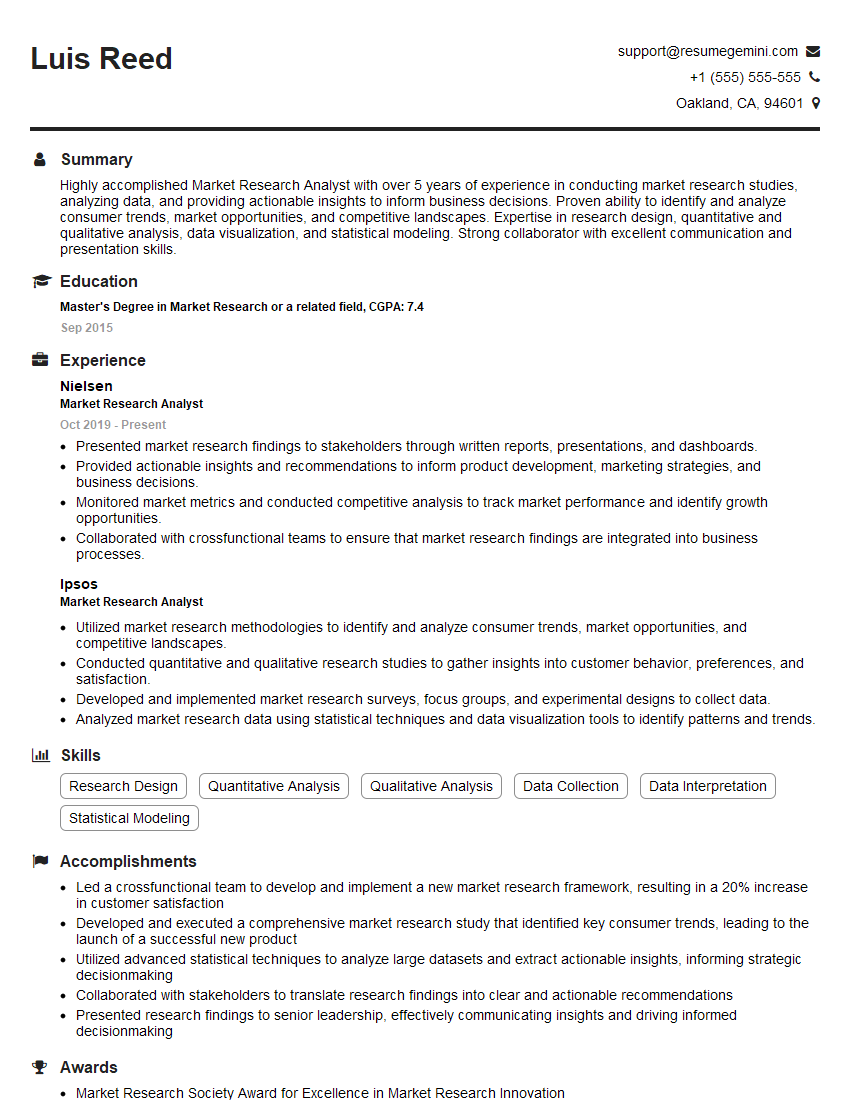
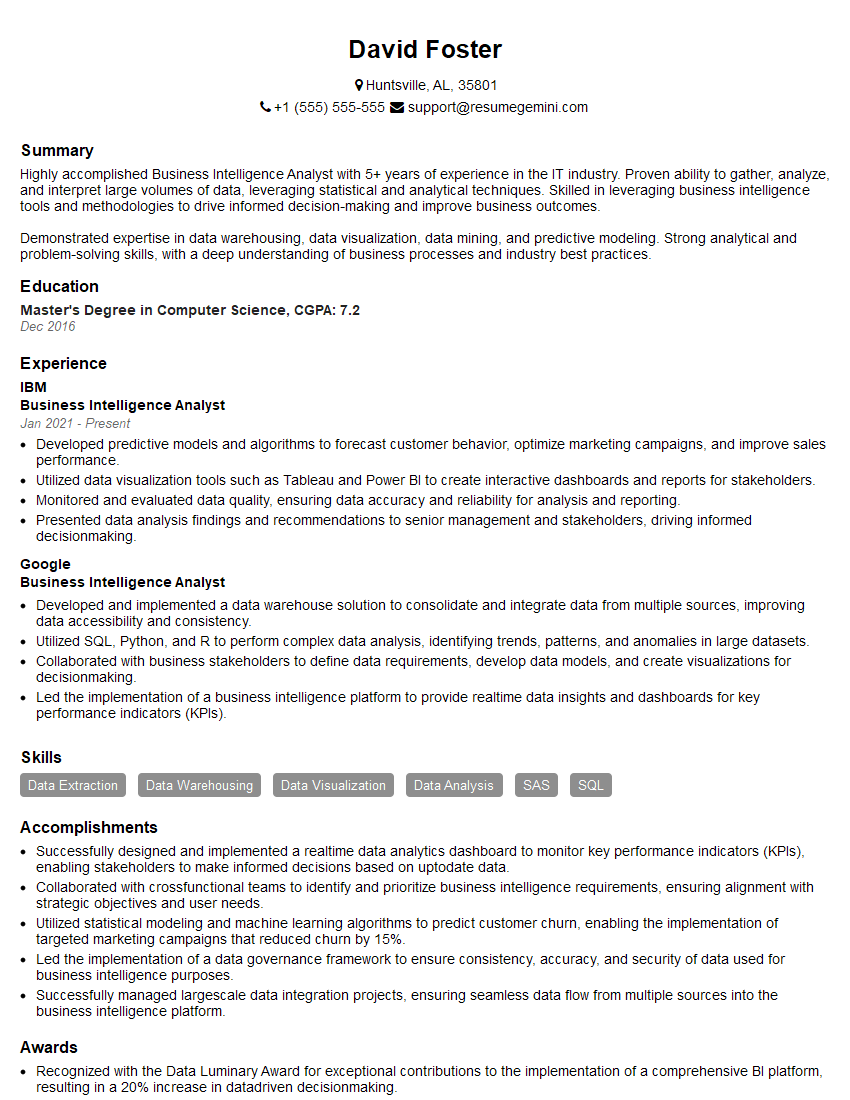
Mastering Consumer Trend Forecasting is crucial for career advancement in today’s dynamic market. A strong understanding of consumer behavior and the ability to predict future trends are highly sought-after skills. To maximize your job prospects, create an ATS-friendly resume that showcases your expertise effectively. ResumeGemini is a trusted resource to help you build a professional and impactful resume. Examples of resumes tailored to Consumer Trend Forecasting are available to guide your resume creation process. Take the next step towards your dream career – build a standout resume with ResumeGemini today!

Explore more articles
Users Rating of Our Blogs
Share Your Experience
We value your feedback! Please rate our content and share your thoughts (optional).
What Readers Say About Our Blog
Really detailed insights and content, thank you for writing this detailed article.
IT gave me an insight and words to use and be able to think of examples