Interviews are more than just a Q&A session—they’re a chance to prove your worth. This blog dives into essential Contract Document Production interview questions and expert tips to help you align your answers with what hiring managers are looking for. Start preparing to shine!
Questions Asked in Contract Document Production Interview
Q 1. Explain your experience with various contract types (e.g., NDA, MSA, SOW).
My experience spans a wide range of contract types, each demanding a unique approach. I’ve extensively worked with Non-Disclosure Agreements (NDAs), Master Service Agreements (MSAs), and Statements of Work (SOWs), among others. NDAs, for instance, focus heavily on protecting confidential information, requiring meticulous attention to definitions and permitted disclosures. I’ve drafted and reviewed numerous NDAs, ensuring they appropriately balance the needs of both parties while adhering to best practices. MSAs, on the other hand, serve as the foundational framework for ongoing business relationships. My work with MSAs involves establishing clear terms for service delivery, payment schedules, intellectual property rights, and dispute resolution mechanisms. I’ve successfully negotiated several key provisions within MSAs, securing favorable terms for my clients. Finally, SOWs are crucial for defining the specifics of individual projects within the larger context of an MSA. I’ve developed numerous SOWs, ensuring they clearly outline deliverables, timelines, acceptance criteria, and payment milestones, minimizing ambiguity and potential disputes.
For example, in a recent project, I negotiated an MSA that included a flexible pricing structure, benefiting both my client and the vendor by tying payment to actual deliverables achieved, rather than a rigid, pre-defined cost. This demonstrably reduced risk for my client while also ensuring the vendor was fairly compensated for their work.
Q 2. Describe your process for reviewing and redlining contracts.
My contract review process is thorough and systematic. It begins with a careful reading of the entire document to understand its overall intent and key provisions. Then, I move to a detailed clause-by-clause analysis, paying close attention to potential risks, ambiguities, and areas requiring clarification or modification. I use a redlining tool – I’m proficient in both Adobe Acrobat and Bluebeam Revu – to mark up the document, highlighting areas for change and suggesting specific wording. My redlining includes clear explanations for each change, ensuring transparent communication and easy understanding for the other party. I typically focus on key areas such as liability limitations, payment terms, termination clauses, and intellectual property rights, ensuring they align with my client’s best interests and legal requirements. I also meticulously check for inconsistencies and typographical errors. After completing the redlining, I produce a summary report outlining all changes and their rationale, facilitating efficient review and discussion.
For instance, I once identified a clause in a contract that subtly shifted liability to our client for events outside their control. By redlining this clause with a clear explanation, we successfully negotiated a fairer allocation of risk.
Q 3. How do you ensure contract compliance within an organization?
Ensuring contract compliance involves a multi-pronged approach. First, I advocate for creating a robust contract management system. This includes a central repository for all contracts, a standardized process for contract creation and review, and clear workflows for approval and execution. Regular training programs for employees on contract-related policies and procedures are essential. These should cover various aspects of contract compliance, such as understanding key terms, obligations, and reporting requirements. Next, I implement regular audits to monitor compliance. These audits involve reviewing a sample of contracts and related documentation to assess compliance with organizational policies and applicable laws. Early detection of non-compliance allows for timely corrective action, preventing more significant issues later. Finally, establishing a clear escalation path for addressing contract-related issues is critical. This ensures that any violations or ambiguities are promptly identified and resolved.
Think of it as a three-legged stool: effective systems, comprehensive training, and rigorous audits. Without all three, the system is unstable and prone to failure.
Q 4. What software or tools are you proficient in for contract management?
I’m proficient in several software tools for contract management. My experience includes using Adobe Acrobat Pro for redlining and document management, Bluebeam Revu for collaborative review and markup, and various CLM (Contract Lifecycle Management) platforms such as Agiloft and ContractWorks. These CLM platforms offer features like central repositories, automated workflows, and analytics dashboards. My familiarity with these tools enables me to streamline contract processes, improve efficiency, and reduce the risk of errors or omissions. I’m comfortable working with both stand-alone tools and integrating them into existing systems.
Q 5. Explain your understanding of contract lifecycle management (CLM).
Contract Lifecycle Management (CLM) is a holistic approach to managing contracts throughout their entire lifecycle, from creation and negotiation to execution, performance monitoring, and ultimately, renewal or termination. It involves using technology and processes to optimize every stage. A typical CLM system includes features for authoring contracts, securely storing and accessing documents, tracking deadlines, managing approvals, and generating reports on key metrics. Effective CLM significantly reduces manual work, minimizes risk, and improves compliance. It allows for better collaboration across teams and provides a central repository of accurate and up-to-date information. The use of automation within CLM reduces processing time, enabling faster contract turnaround.
For example, using a CLM system can automatically alert stakeholders to upcoming deadlines or potential breaches, proactively mitigating risks and enabling prompt action.
Q 6. How do you handle conflicting clauses or ambiguities in a contract?
Handling conflicting clauses or ambiguities requires a systematic approach. My first step is to carefully analyze the conflicting clauses, identifying the precise points of conflict. I then research relevant legal precedents and industry best practices to determine the most likely interpretation. If the contract contains a specific clause addressing conflicts or ambiguities (e.g., an ‘interpretation’ or ‘governing law’ clause), I adhere to it. Negotiation plays a crucial role in resolving ambiguities; I engage in constructive dialogue with the other party to explore mutually acceptable solutions. If negotiations fail to resolve the conflict, I recommend seeking legal counsel to determine the best course of action, potentially including mediation or arbitration. Thorough documentation throughout the process is paramount to preserve a record of the conflict and the steps taken to resolve it.
I’ve successfully resolved multiple ambiguous clauses by working collaboratively with both parties to identify a mutually beneficial interpretation that addressed the underlying concerns. Documentation was essential in showing how we reached the resolution and establishing clear understanding between both parties.
Q 7. Describe your experience with contract negotiation.
My experience in contract negotiation is extensive and encompasses a variety of situations, from simple service agreements to complex, multi-million dollar transactions. My approach is collaborative and strategic, focusing on building a positive relationship with the other party while protecting my client’s interests. Prior to entering negotiations, I thoroughly research the other party, understanding their motivations and potential leverage points. I develop clear negotiation objectives, prioritising key clauses and identifying potential compromises. During negotiations, I employ active listening, seeking to understand the other party’s perspective while clearly articulating my client’s position. I am adept at using various negotiation tactics, such as principled negotiation, to find creative solutions that benefit both sides. I also maintain meticulous records of all negotiations, documenting agreements and any outstanding issues. Post-negotiation, I review the final agreement to ensure it reflects the agreed-upon terms and protects my client’s interests.
In one instance, I helped a client secure a significantly better payment schedule by showcasing the value of their unique contribution, and by establishing a strong rapport with the other party that enabled a collaborative, trust-based approach to negotiation.
Q 8. How do you prioritize tasks when managing multiple contracts simultaneously?
Prioritizing tasks when managing multiple contracts is crucial for efficiency and preventing delays. I utilize a combination of techniques, starting with a clear understanding of each contract’s criticality and deadlines. I employ a prioritization matrix, often visualized with a simple table or Kanban board, considering factors like contract value, potential risk, and looming deadlines. Contracts with imminent deadlines or high-value implications naturally receive higher priority.
For instance, a contract nearing its expiration date with a major client would be prioritized over a routine vendor agreement with ample time before renewal. This requires me to be proactive; I don’t wait until the last minute – I schedule regular reviews to anticipate potential bottlenecks. Furthermore, I leverage project management software to track progress, set milestones, and allocate resources effectively. This allows for transparent monitoring and easy adjustment of priorities as needed.
Q 9. How do you manage contract revisions and version control?
Managing contract revisions and version control is paramount to avoid confusion and legal issues. I strictly adhere to a version control system, typically using a dedicated contract management software or a secure cloud-based repository like SharePoint or Dropbox. Each revision is clearly labeled with a version number (e.g., v1.0, v1.1, etc.) and a detailed changelog outlining the modifications. This ensures traceability and allows us to easily revert to previous versions if necessary.
For instance, if a clause needs to be amended, I create a new version, highlighting the changes using track changes or a clear comparison tool. This version is then reviewed and approved by all relevant parties before becoming the official version. I also maintain a comprehensive audit trail, recording who made each change, when it was made, and the reason behind it. This meticulous approach prevents disagreements and ensures everyone works with the most up-to-date document.
Q 10. What are your strategies for risk mitigation in contract management?
Risk mitigation in contract management is an ongoing process. My strategies focus on proactive identification and management of potential risks throughout the contract lifecycle. This starts with a thorough review of the contract before signing, identifying potential risks like ambiguous clauses, unrealistic deadlines, or insufficient payment terms. We use checklists to ensure consistent review processes.
I then implement mitigation strategies, which could involve negotiating favorable terms, adding specific clauses to address potential issues, or establishing clear communication channels to facilitate early problem-solving. For example, including a force majeure clause could mitigate risks related to unforeseen events. Regular monitoring and reporting are also vital – I track key performance indicators (KPIs) and flag potential problems early on. This allows for timely interventions and minimizes the impact of risks.
Q 11. How do you ensure the accuracy and completeness of contract data?
Ensuring accuracy and completeness of contract data requires a methodical approach. I use a combination of methods, starting with standardized templates and data entry protocols. This ensures consistency and reduces errors. Data validation checks are built into our systems, flagging any inconsistencies or missing information.
For example, we might have automated checks to ensure all required fields are filled and that data types are correct (e.g., dates are in the correct format). Regular audits and reconciliation with other systems (e.g., CRM, accounting) help identify any discrepancies. Finally, robust training for staff on data entry procedures minimizes errors caused by human oversight. A meticulous approach is key; accuracy impacts compliance, financial reporting, and overall contract health.
Q 12. Explain your experience with contract databases or repositories.
I have extensive experience with contract databases and repositories, both on-premise and cloud-based. In previous roles, I’ve utilized systems ranging from simple shared drives with version-controlled files to sophisticated contract lifecycle management (CLM) platforms. These systems provide centralized storage, version control, search capabilities, and reporting functionalities.
For example, I’ve used a CLM platform that integrated seamlessly with our CRM, allowing us to track contract details alongside customer information. This integration streamlined workflows and provided a holistic view of customer relationships. Experience with different platforms has taught me the value of selecting a system that aligns with the specific needs and scale of the organization, prioritizing security and user-friendliness.
Q 13. Describe your process for generating contract reports and metrics.
Generating contract reports and metrics is crucial for performance monitoring and decision-making. My process typically involves defining key metrics relevant to the business objectives, such as contract value, renewal rates, and average contract length. I then use the contract database or CLM system to extract the relevant data and generate reports, utilizing tools like Excel, dedicated reporting software, or the built-in reporting features of the CLM system itself.
These reports might include summaries of contract status, risk assessments, key performance indicators (KPIs), and financial summaries. Visualizations such as charts and graphs are incorporated to facilitate easy comprehension of complex data. For example, a report might highlight contracts approaching expiration or those with high-risk clauses, enabling proactive management and mitigation strategies.
Q 14. How do you ensure contracts are properly executed and signed?
Ensuring proper execution and signing of contracts is a critical step, demanding a meticulous approach. This starts with confirming the contract is complete and accurate, reflecting the final agreement reached by all parties. We then employ a secure electronic signature process, often using e-signature platforms that ensure authenticity and non-repudiation.
This involves sending the contract to each signatory for electronic signing. The platform verifies identities and maintains a secure audit trail. For physically signed contracts, we use secure delivery methods (e.g., registered mail with return receipt) and maintain a copy of the signed document in our secure repository. After signing, we immediately update the contract status in our database, ensuring clear visibility into contract status for all stakeholders.
Q 15. How do you communicate effectively with stakeholders regarding contracts?
Effective communication with stakeholders regarding contracts hinges on clarity, transparency, and proactive engagement. I begin by understanding each stakeholder’s role and their level of contract knowledge. This informs my communication style – I use plain language, avoiding legal jargon where possible, and tailor my explanations to their specific needs and understanding.
- For senior management: I focus on the high-level implications, risks, and potential ROI of the contract.
- For operational teams: I emphasize the practical aspects, deadlines, and responsibilities outlined in the contract.
- For legal teams: I ensure precision and accuracy in my communication, addressing specific legal clauses and potential liabilities.
I utilize various communication channels, including regular meetings, email updates, and contract summaries, to keep everyone informed and engaged throughout the contract lifecycle. This proactive approach minimizes misunderstandings and fosters collaboration.
Career Expert Tips:
- Ace those interviews! Prepare effectively by reviewing the Top 50 Most Common Interview Questions on ResumeGemini.
- Navigate your job search with confidence! Explore a wide range of Career Tips on ResumeGemini. Learn about common challenges and recommendations to overcome them.
- Craft the perfect resume! Master the Art of Resume Writing with ResumeGemini’s guide. Showcase your unique qualifications and achievements effectively.
- Don’t miss out on holiday savings! Build your dream resume with ResumeGemini’s ATS optimized templates.
Q 16. How do you handle contract breaches or disputes?
Handling contract breaches or disputes requires a systematic approach focused on prevention and resolution. My first step is to identify the nature and extent of the breach. This often involves reviewing the contract, gathering evidence, and communicating with the breaching party to understand their perspective. Depending on the severity of the breach, I may:
- Initiate informal negotiations: Attempting to resolve the issue amicably through direct communication and compromise.
- Escalate to formal dispute resolution: Employing mediation, arbitration, or litigation as outlined in the contract or governed by applicable law.
- Seek legal counsel: Engaging lawyers to advise on legal options and representation in formal proceedings.
Documentation is critical throughout the process. Maintaining a detailed record of all communications, agreements, and actions taken helps to protect our interests and supports any future legal proceedings. I treat each dispute as a learning opportunity, identifying weaknesses in our contract drafting or negotiation processes to prevent similar issues in the future.
Q 17. Describe your experience with contract automation tools.
I have extensive experience with several contract automation tools, including DocuSign, Concord, and Ironclad. These tools have significantly improved our contract lifecycle management (CLM) processes. My experience encompasses:
- Contract creation and drafting: Utilizing templates and clause libraries to streamline the creation of consistent and accurate contracts.
- Negotiation and collaboration: Using features that allow for secure and trackable online collaboration with counterparties.
- E-signatures and approvals: Ensuring secure and legally compliant electronic signing and approval workflows.
- Contract repository and management: Leveraging the tools’ central repository for easy access, search, and management of all contract documents and related data.
- Analytics and reporting: Utilizing the analytical capabilities to track key metrics such as contract cycle time, completion rates, and potential risks.
For example, implementing DocuSign reduced our contract processing time by 40% and minimized errors associated with manual processes.
Q 18. How do you stay updated on changes in contract law and regulations?
Staying updated on contract law and regulations is crucial. I employ a multi-pronged approach:
- Subscribing to legal updates and newsletters: Regularly reviewing publications from reputable legal publishers and organizations specializing in contract law.
- Attending industry conferences and webinars: Participating in events that discuss the latest legal trends and best practices.
- Networking with legal professionals: Engaging with lawyers and legal experts to stay informed about relevant changes.
- Monitoring regulatory bodies: Keeping track of updates and changes in regulations issued by relevant government agencies.
- Continuing legal education (CLE): Undertaking professional development courses to maintain my knowledge of contract law.
This ongoing effort ensures that my contract drafting and negotiation practices remain compliant with the most up-to-date laws and regulations.
Q 19. What is your approach to building strong working relationships with legal teams?
Building strong working relationships with legal teams is vital for successful contract management. I approach this by:
- Open and clear communication: Maintaining regular communication and proactively sharing relevant information.
- Respect for expertise: Recognizing and valuing their legal expertise, seeking their advice and guidance where appropriate.
- Collaboration and teamwork: Working collaboratively on contract review, negotiation, and dispute resolution.
- Mutual understanding: Ensuring that both parties have a clear understanding of each other’s roles and responsibilities.
- Building trust and rapport: Fostering a respectful and professional relationship based on mutual trust and respect.
I view the legal team as a critical partner, not just an external resource. This collaborative approach leads to higher quality contracts and more effective risk management.
Q 20. How do you identify and mitigate potential contract risks?
Identifying and mitigating potential contract risks is a proactive process that begins during the contract drafting stage. My approach involves:
- Risk assessment: Identifying potential risks associated with the specific contract, considering factors such as the counterparty’s creditworthiness, the complexity of the project, and potential legal liabilities.
- Due diligence: Conducting thorough background checks on the counterparty, including financial stability and reputation.
- Clear and unambiguous language: Ensuring that the contract is clearly written and free of ambiguity, minimizing the potential for disputes.
- Robust clauses: Including appropriate clauses to address potential risks, such as termination clauses, dispute resolution mechanisms, and liability limitations.
- Regular review and monitoring: Periodically reviewing the contract to identify and address any emerging risks.
A practical example is including a force majeure clause to address unforeseen events that may impact the contract’s performance, such as natural disasters or pandemics.
Q 21. Describe a situation where you had to resolve a complex contract issue.
In a previous role, we faced a complex contract issue involving a significant delay in the delivery of goods by a supplier. The initial contract lacked a clearly defined remedy for late delivery. This created significant disruptions to our production schedule and threatened to impact project deadlines. To resolve the issue, I:
- Reviewed the contract thoroughly: Identified gaps in the existing clauses regarding late delivery penalties and dispute resolution.
- Negotiated with the supplier: Explained the impact of the delay and sought a mutually agreeable solution, focusing on compensation for the incurred damages and a revised delivery schedule.
- Involved legal counsel: Consulted with our legal team to assess our legal options and ensure compliance with all applicable laws.
- Documented all communications: Maintained a clear record of all communications, agreements, and actions taken throughout the process.
Ultimately, we reached a settlement that included financial compensation and a revised delivery timeline. This experience highlighted the importance of comprehensive contract drafting, clear communication, and proactive risk management.
Q 22. Explain your understanding of different contract clauses (e.g., indemnification, liability).
Contract clauses are the building blocks of any agreement, defining the rights and responsibilities of each party. Understanding them is crucial for mitigating risk and ensuring a legally sound contract. Let’s explore two key examples: Indemnification and Liability.
Indemnification: This clause outlines how parties will compensate each other for losses or damages arising from the contract. For example, a company might indemnify its client for any liability arising from the use of its software. A typical indemnification clause would state which party is responsible for what types of losses and under what circumstances. It’s crucial to clearly define the scope of the indemnification to avoid ambiguity and future disputes. A poorly drafted clause can leave one party exposed to significant financial risk.
Liability: This clause defines the extent to which each party is responsible for losses, damages, or injuries. It might limit liability to a specific amount or exclude certain types of damages. For instance, a software license agreement might limit the vendor’s liability to the license fee, excluding indirect or consequential damages. Think of liability clauses as setting a cap on potential financial exposure. Carefully considering the limits of liability is crucial, especially for high-risk contracts.
Other important clauses include: Force Majeure (events beyond control), Termination, Governing Law, Dispute Resolution, and Intellectual Property Rights. Each plays a vital role in shaping the contractual relationship and needs careful consideration during drafting.
Q 23. How do you ensure the confidentiality of sensitive contract information?
Confidentiality is paramount in contract document production. My approach involves a multi-layered strategy to protect sensitive information. First, I utilize secure document storage and management systems, employing access controls based on the principle of least privilege. Only authorized personnel with a legitimate need-to-know have access to specific contract documents. This often involves password protection, encryption, and regular security audits.
Second, I adhere to strict data handling procedures, including secure printing, shredding of physical documents, and secure email communication. All electronic documents are encrypted both in transit and at rest. Third, I insist on strong non-disclosure agreements (NDAs) with all involved parties, clearly outlining their confidentiality obligations and the penalties for breaches. Finally, I regularly review and update security protocols to adapt to evolving threats and best practices. I treat confidentiality as a continuous process rather than a one-time task.
Q 24. What is your experience with international contract law?
My experience with international contract law spans several years and involves working on cross-border transactions. I understand the complexities of dealing with different legal systems, jurisdictions, and languages. I’ve worked on contracts governed by various laws, including English, US, and international arbitration rules. This has required me to understand the nuances of different legal approaches to contract interpretation, dispute resolution, and enforcement. For example, I’ve had to carefully consider the choice of law clause, selecting the jurisdiction most favorable to my client while ensuring the enforceability of the agreement under international law. I always work closely with legal counsel specializing in international law to ensure compliance and mitigate risk in these complex scenarios.
Q 25. How do you use technology to streamline contract document production?
Technology plays a crucial role in streamlining contract document production. I leverage contract lifecycle management (CLM) software to automate many processes. This includes creating and managing templates, negotiating contracts electronically, tracking versions, and ensuring compliance. The software helps to standardize contract language, reduce manual effort, and accelerate the contract lifecycle. For instance, I use tools that allow for redlining and electronic signatures, making negotiations faster and more efficient. These tools also provide robust audit trails and reporting capabilities, helping to track progress and identify potential bottlenecks in the process. In addition to CLM, I utilize document automation tools to generate customized contracts based on predefined templates and data fields. This significantly reduces the risk of human error and ensures consistency.
Q 26. Describe your experience with contract templates and standardization.
Contract templates and standardization are fundamental to efficient contract management. I’ve developed and implemented numerous contract templates tailored to specific business needs and risk profiles. These templates incorporate best practices and comply with relevant legal regulations. For example, I’ve created templates for software licenses, service agreements, and non-disclosure agreements, each with clearly defined clauses and standardized language. Standardization helps to reduce ambiguity, improve efficiency, and minimize legal risk. The templates include placeholders for specific information, allowing for quick customization. Regular reviews and updates are critical to ensure the templates remain up-to-date and reflect the latest legal and business requirements. This approach not only saves time and resources but also ensures consistency and reduces the risk of errors and disputes.
Q 27. How do you measure the success of your contract management efforts?
Measuring the success of contract management efforts requires a multi-faceted approach. Key metrics I use include the time taken to finalize contracts, the cost per contract, the number of contract-related disputes, and the overall compliance rate. By tracking these metrics, I can identify areas for improvement and demonstrate the effectiveness of my processes. For example, a reduction in contract finalization time indicates process improvement. A decrease in disputes highlights the clarity and effectiveness of the contracts. I also track key risk indicators such as the number of exceptions raised during contract review and the number of breaches reported. This data provides insights into the effectiveness of the risk mitigation strategies implemented. Regular reporting and analysis of these metrics are essential to ensure continuous improvement in the contract management function.
Q 28. What are your salary expectations for this role?
My salary expectations are in line with the industry standard for a domain expert with my experience and skill set in contract document production. I am open to discussing a competitive compensation package that reflects the value I bring to the organization. I would appreciate the opportunity to discuss this further based on a detailed understanding of the role and responsibilities.
Key Topics to Learn for Contract Document Production Interview
- Contract Lifecycle Management: Understanding the stages of a contract, from negotiation to renewal and termination, and the role of document production at each stage.
- Document Formatting & Style Guides: Mastering formatting software (e.g., Word, Adobe Acrobat) and applying consistent style guides to ensure professional and legally sound documents.
- Redlining & Version Control: Efficiently tracking changes, managing multiple versions, and utilizing tools to clearly identify revisions and approvals.
- Legal Terminology & Clause Interpretation: Familiarity with key legal terms and the ability to understand and accurately reflect contractual clauses in documents.
- Data Extraction & Integration: Understanding how to extract relevant data from various sources and seamlessly integrate it into contract documents.
- Templates & Automation: Utilizing contract templates and exploring automation tools to streamline document production and ensure consistency.
- Quality Assurance & Proofreading: Developing a keen eye for detail to identify and correct errors, ensuring accuracy and compliance.
- Collaboration & Communication: Working effectively with legal teams, clients, and other stakeholders to gather information and finalize documents.
- Security & Confidentiality: Understanding and adhering to strict security protocols to protect sensitive information within contract documents.
- Problem-Solving & Troubleshooting: Approaching challenges proactively and finding solutions to issues that may arise during the document production process.
Next Steps
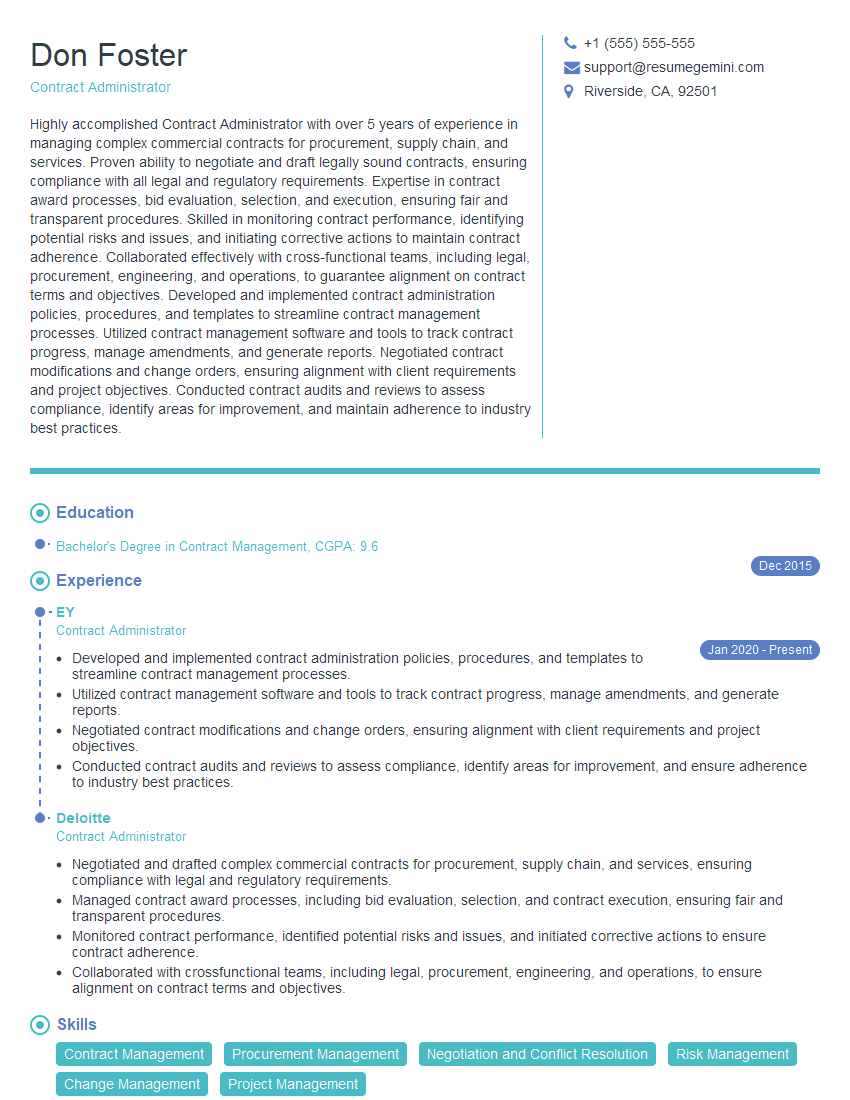
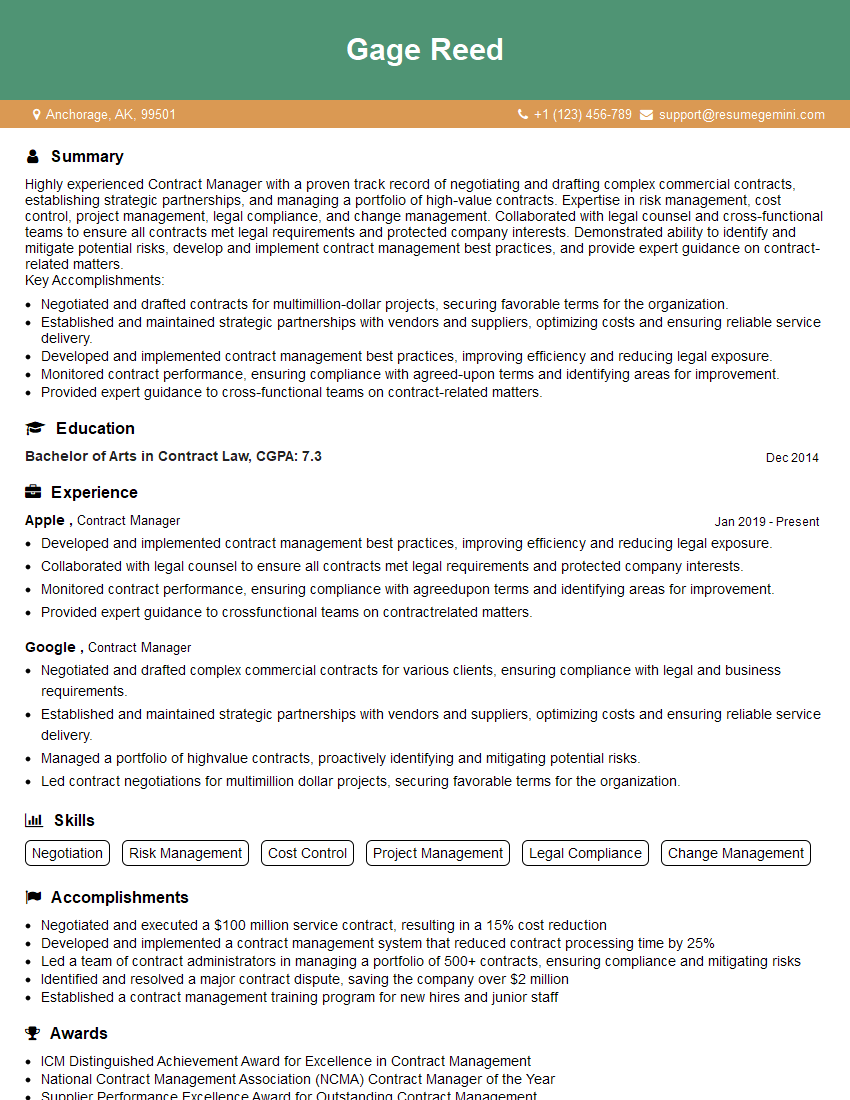
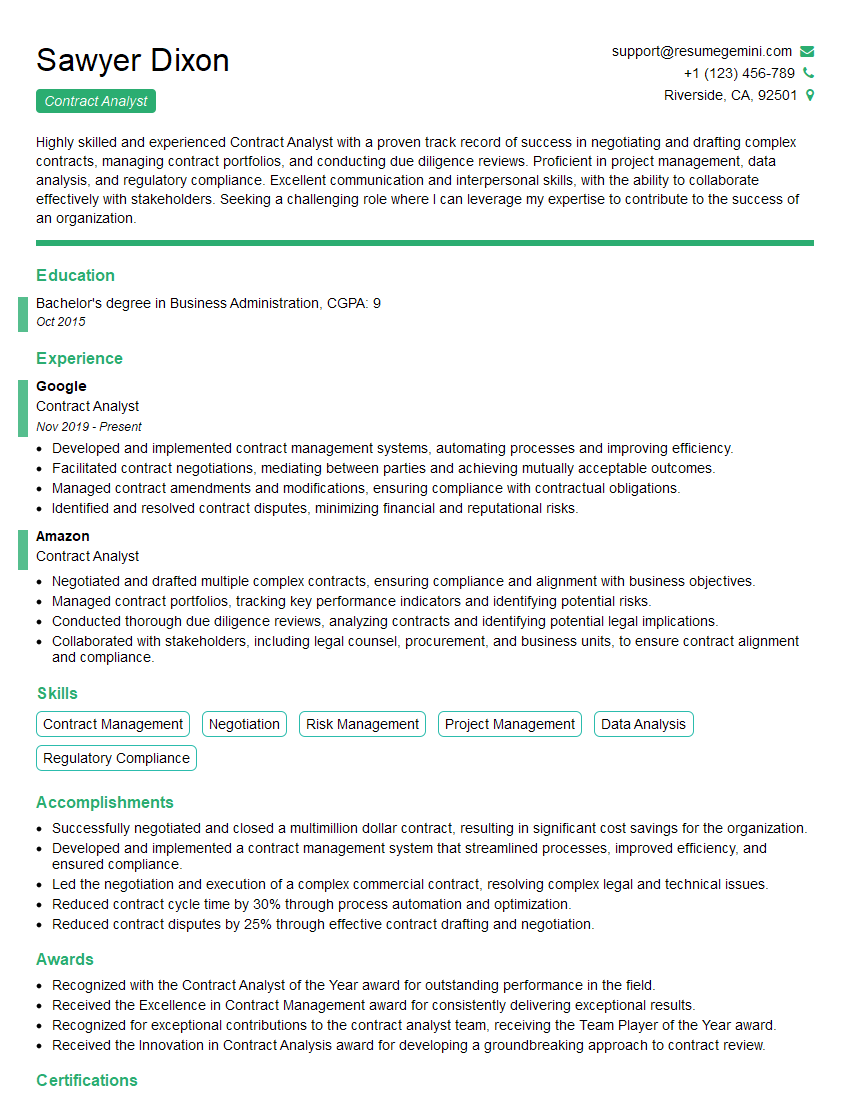
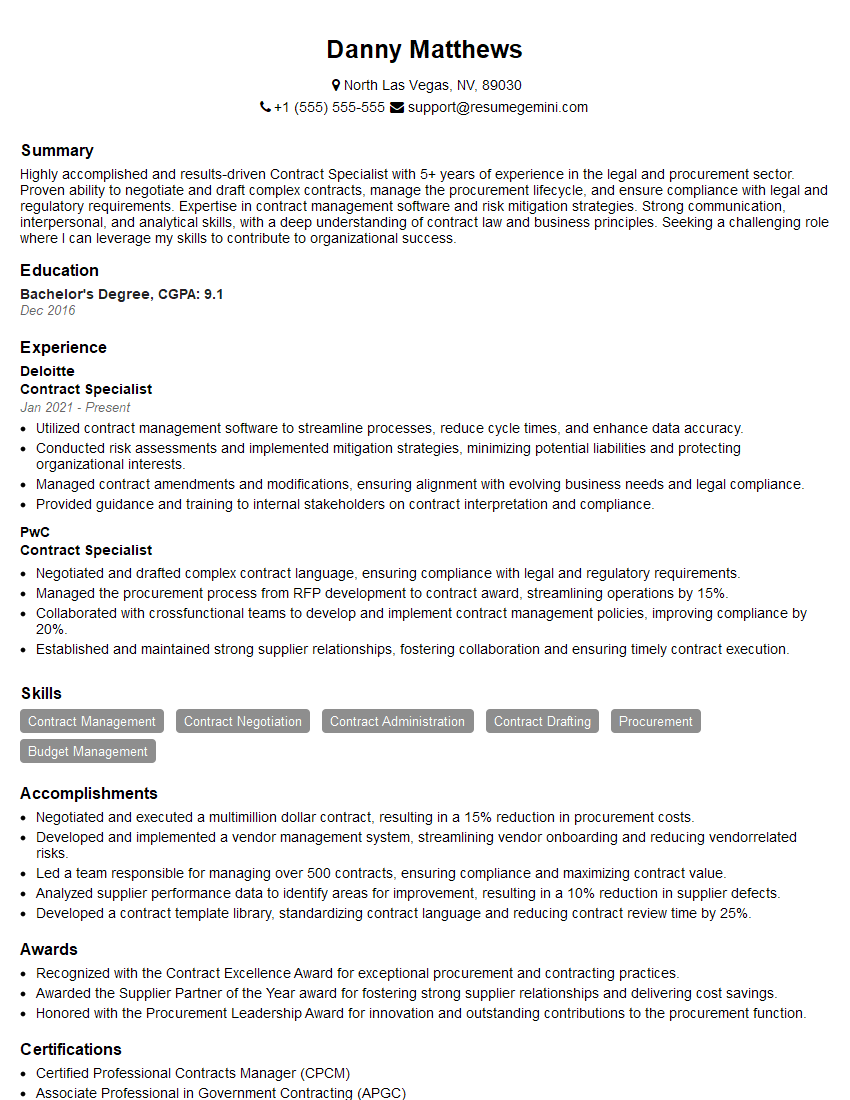
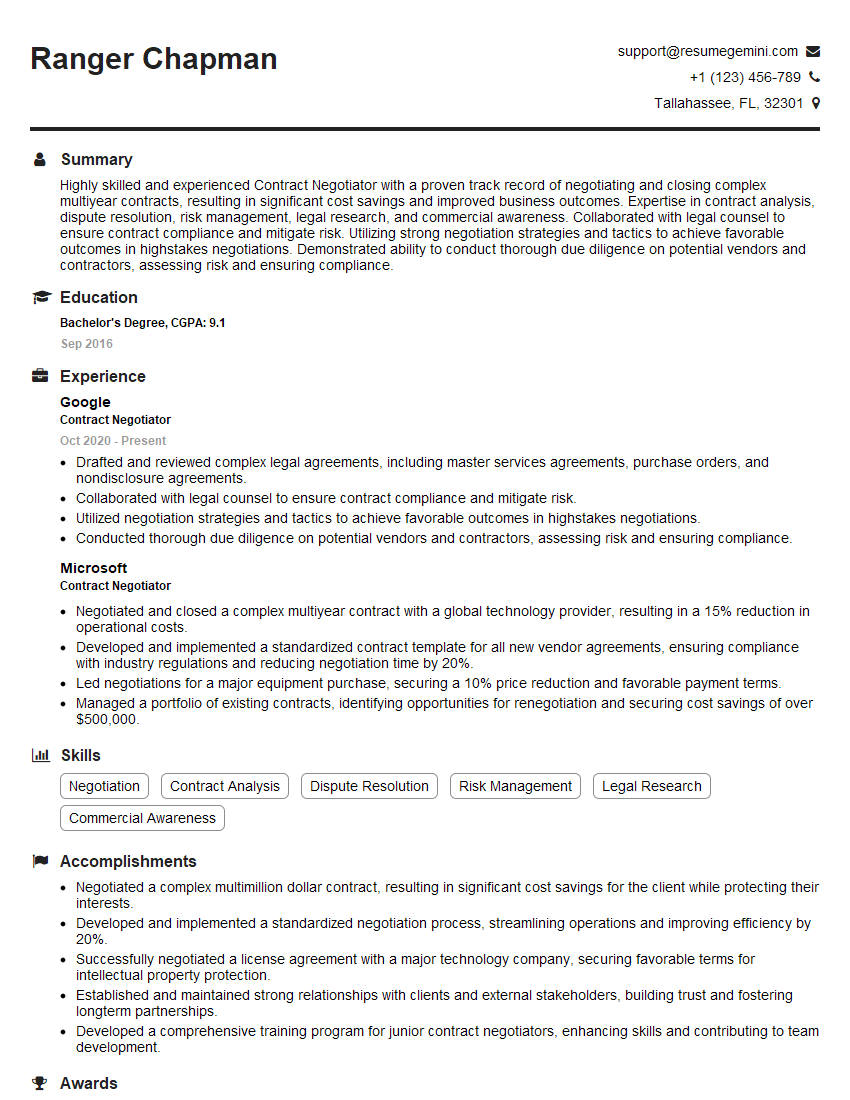
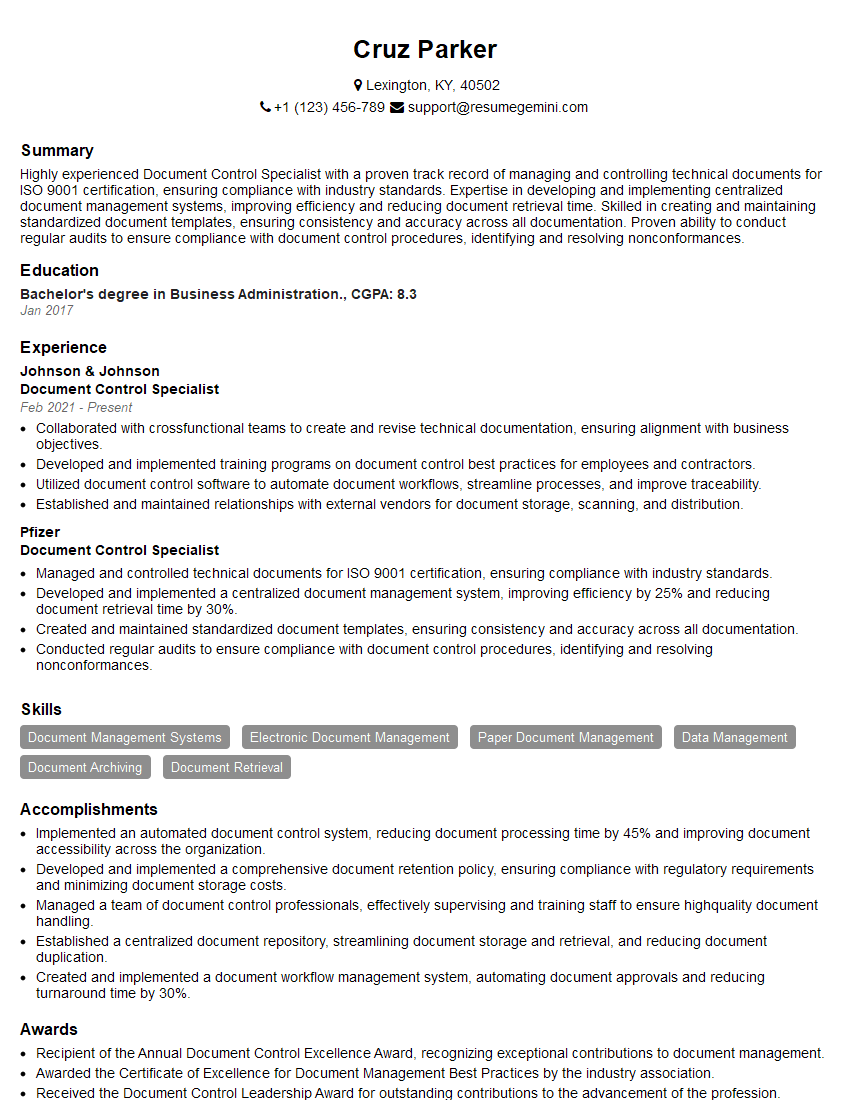
Mastering Contract Document Production opens doors to exciting career opportunities in legal, business, and technology sectors. It’s a highly sought-after skill, offering excellent prospects for growth and higher earning potential. To maximize your job search success, creating an ATS-friendly resume is crucial. This ensures your qualifications are effectively highlighted to recruiters and applicant tracking systems. We recommend using ResumeGemini to build a professional and impactful resume. ResumeGemini provides tools and resources to craft a compelling narrative that showcases your skills and experience. Examples of resumes tailored to Contract Document Production are available to guide you.
Explore more articles
Users Rating of Our Blogs
Share Your Experience
We value your feedback! Please rate our content and share your thoughts (optional).
What Readers Say About Our Blog
Really detailed insights and content, thank you for writing this detailed article.
IT gave me an insight and words to use and be able to think of examples