Preparation is the key to success in any interview. In this post, we’ll explore crucial Custom Guitar Design interview questions and equip you with strategies to craft impactful answers. Whether you’re a beginner or a pro, these tips will elevate your preparation.
Questions Asked in Custom Guitar Design Interview
Q 1. Describe your experience with different wood types used in guitar construction and their tonal characteristics.
Wood selection is paramount in guitar design, profoundly impacting the instrument’s tone and aesthetics. Different woods possess unique density, stiffness, and resonant frequencies. For example, mahogany is known for its warm, full-bodied sound, often used in the body of a Les Paul for its rich midrange. On the other hand, spruce, typically used for guitar tops, delivers a brighter, more articulate sound, common in classical and acoustic guitars.
Here’s a breakdown of some popular tonewoods:
- Spruce (Sitka, Engelmann): Bright, articulate highs, good projection, often used for tops.
- Mahogany: Warm, full-bodied midrange, good sustain, used for bodies and necks.
- Maple: Bright, clear, resonant, often used for necks and tops (especially figured maple for aesthetics).
- Rosewood (Brazilian, Indian): Rich, warm low-end, strong mids, complex overtones, often used for back and sides.
- Alder: Balanced tone, versatile, good for many styles, often used for bodies.
My experience encompasses working with many exotic woods like Koa (sweet, mellow), Ebony (bright, snappy), and Pau Ferro (rich, warm), allowing me to tailor the sound to the client’s specific musical preferences and style.
Q 2. Explain the process of designing a guitar neck profile for optimal playability.
Neck profile design is crucial for playability. It’s the shape of the neck as viewed from the side, and it dictates how comfortable the guitar feels in the player’s hand. A poorly designed profile can lead to hand fatigue and hinder performance. The design process considers factors like the player’s hand size, playing style, and desired feel.
I usually start by consulting with the client about their preferred playing style and hand size. For instance, a classical guitarist might prefer a wider, flatter neck, while a rock guitarist might prefer a thinner, more contoured ‘C’ or ‘D’ shape. I then use a combination of digital modeling and hand-carving techniques to create a prototype. Multiple iterations are necessary, involving careful adjustments to the thickness, radius (curvature), and overall shape of the neck until the ideal profile is achieved. Feel is key – it’s about finding the ‘sweet spot’ where the neck feels natural and comfortable under the player’s fingers. I often employ specialized measuring tools and feedback from experienced players to refine the profile.
Q 3. How do you choose the appropriate bracing pattern for a specific guitar body shape and wood combination?
Bracing patterns are crucial for a guitar’s structural integrity and tonal response. They’re the internal wooden supports glued to the top and sometimes back of the guitar body. The pattern’s design influences the vibrational modes of the top, affecting the guitar’s volume, sustain, and overall tonal character.
The choice of bracing pattern depends heavily on the body shape, wood type, and desired tonal characteristics. A traditional X-bracing pattern in an acoustic guitar, for instance, provides strength and a balanced tone, while a more modern fan bracing can offer more volume and projection. For archtop guitars, tone bars are frequently used.
My approach involves careful consideration of the wood’s properties; a stiffer wood like maple might require less aggressive bracing than a more flexible wood like spruce. Finite Element Analysis (FEA) software can aid this process by simulating vibrational patterns and predicting the impact of different bracing configurations. The final decision comes through a combination of theoretical analysis, practical experience, and often, prototyping and testing.
Q 4. Describe your experience with different guitar finishing techniques and their impact on sound and aesthetics.
Finishing techniques are as much about aesthetics as they are about the guitar’s sound. A guitar’s finish protects the wood, but it also affects the resonance and tonal characteristics. A thick, heavy finish will dampen the vibrations, producing a duller sound, whereas a thinner finish allows for more resonance.
I offer a variety of finishes, including:
- Nitrocellulose lacquer: A traditional finish that’s thin and allows for good resonance but can be more prone to scratches. It ages beautifully, developing a unique patina over time.
- Polyurethane: A more modern, durable finish offering excellent protection but potentially reducing resonance.
- French Polish: A hand-rubbed finish resulting in a deep, lustrous sheen with minimal impact on resonance.
- Oil and wax finishes: Natural and environmentally friendly options that provide protection while maintaining the wood’s natural feel and resonance. They require more frequent maintenance.
The choice of finish is often determined in collaboration with the client, weighing the trade-offs between durability, aesthetics, and tonal impact.
Q 5. What are the key considerations when designing a guitar’s electronics system?
Designing a guitar’s electronics system involves careful consideration of several factors to ensure optimum sound quality and functionality. Key elements include pickups, preamplification, wiring, and controls.
For example, in electric guitars, the choice of single-coil or humbucker pickups dramatically alters the tone. Single coils offer a bright, clear sound, whereas humbuckers provide a thicker, warmer sound with less noise. The preamp circuit shapes the signal, influencing the overall tone and volume. Wiring affects the signal path, and the selection of pots (volume and tone controls) and switches further shapes the tonal possibilities. I always consider the guitar’s overall design and intended musical style when selecting components, often utilizing high-quality components that minimize noise and maximize signal clarity. I also take into account the client’s desired tonal range and functionality.
Q 6. How do you ensure the structural integrity of a custom-designed guitar?
Ensuring structural integrity is critical for a custom guitar. A poorly constructed guitar will not only sound bad but also be prone to cracking or warping over time. My approach incorporates several key strategies:
- Careful wood selection: Using high-quality, properly seasoned wood is the foundation of a strong instrument.
- Precise joinery: Precise cuts and glue joints are critical. I frequently use advanced techniques like mortise and tenon joints for enhanced strength.
- Appropriate bracing: Correct bracing patterns, as discussed previously, are vital for both sound and structural support.
- Quality materials: Using strong glues and high-quality hardware prevents failures.
- Stress testing: I often perform stress tests on the completed instrument to check its durability and identify potential weaknesses.
By carefully addressing each of these areas, I can confidently guarantee the longevity and structural integrity of every custom guitar I build.
Q 7. Explain your process for creating a guitar design from initial concept to finished product.
My process for creating a custom guitar is iterative and collaborative. It begins with an initial consultation with the client to understand their musical style, preferences, and budget. This is followed by the design phase, where I create detailed drawings and specifications, often using CAD software to visualize the instrument.
Next is the construction phase, which involves selecting the wood, shaping the body and neck, applying the finish, and installing the electronics. This is a meticulous process, involving many steps and requiring specialized tools and techniques.
Following construction, the instrument undergoes a rigorous setup process. This includes adjusting the neck relief, action, intonation, and truss rod tension to ensure optimal playability. The final stage involves quality control checks and a final consultation with the client to make any adjustments before delivery.
Throughout the entire process, I maintain open communication with the client, ensuring they are involved and updated on the progress. This collaborative approach results in an instrument that perfectly matches the client’s vision and meets their specific needs.
Q 8. Describe your experience with CAD software for guitar design.
My experience with CAD software in guitar design is extensive. I’m proficient in several programs, most notably SolidWorks and Fusion 360. These aren’t just for creating aesthetically pleasing designs; they’re crucial for ensuring structural integrity and accurate manufacturing. For example, in SolidWorks, I can perform finite element analysis (FEA) to simulate the stress on a guitar neck under various playing conditions, allowing me to optimize its design for strength and durability. This is particularly important when designing instruments with unconventional shapes or materials. Fusion 360’s capabilities allow for rapid prototyping and easier collaboration with clients, letting them visualize their custom guitar design at different stages of development.
Beyond the basic modeling, I use these programs to create precise CNC (Computer Numerical Control) machining files, guaranteeing accurate cuts and component placement during manufacturing. This level of precision minimizes waste and leads to a superior finished product. I also employ them for creating detailed assembly drawings, which are essential for maintaining consistency and efficiency throughout the construction process.
Q 9. How do you handle client requests that may compromise the structural integrity of a guitar?
Balancing client requests with structural integrity is a delicate art. I begin by educating the client on the limitations of the design. For instance, extremely thin bodies might look visually appealing but could compromise resonance and durability. I use visual aids, including CAD renderings and examples of past projects, to demonstrate how design choices affect the final product’s playability and longevity. If a client insists on a design element that compromises structural integrity, I propose alternative solutions that achieve a similar aesthetic effect without sacrificing functionality. This might involve using advanced composite materials, incorporating internal bracing differently, or subtly modifying the design to distribute stress more effectively. The goal is always a compromise where the client’s vision is respected while maintaining the guitar’s structural soundness. Open communication and collaboration are paramount in navigating these situations.
Q 10. Explain your understanding of guitar acoustics and resonance.
Understanding guitar acoustics and resonance is fundamental to my craft. It’s about the interaction between the instrument’s wood, its shape, and the air inside to produce a specific tone. The top, back, and sides of the guitar body vibrate sympathetically, creating sound waves. The bridge transmits these vibrations from the strings to the body. The shape and thickness of the wood, along with internal bracing patterns, significantly influence the frequency response and overall tone. A well-designed guitar will have specific resonant frequencies that amplify certain notes and harmonics, contributing to its unique sound. Think of it like a finely tuned bell – each strike produces a specific tone. Similarly, each note played on a guitar resonates differently based on its construction.
I use both theoretical knowledge and practical experience to design for optimal resonance. This includes careful selection of tonewoods, precise measurements, and detailed bracing designs. I also utilize tools such as a tap tone test, which helps determine the resonant frequencies of the individual wood pieces before assembly. This allows me to fine-tune the instrument’s response during construction.
Q 11. How do you troubleshoot common guitar problems, such as buzzing or poor intonation?
Troubleshooting buzzing and intonation issues requires a systematic approach. Buzzing can stem from various sources: high action (string height), improperly seated frets, or issues with the bridge or nut. I start by carefully inspecting the guitar, checking the fretwork for any high spots or loose frets using a straight edge and feeler gauges. If the action is too high, I adjust the bridge saddle height or truss rod. Poor intonation often involves the bridge saddle placement. Using a strobe tuner, I carefully measure and adjust the saddle position to ensure each fretted note is in tune. Sometimes, a combination of factors contributes to the problem, so I address each potential issue systematically until the problem is resolved. I also take note of the guitar’s construction materials and playing style, as certain woods and playing techniques can amplify these issues.
Q 12. Describe your experience with different types of guitar pickups and their tonal qualities.
My experience with guitar pickups encompasses a wide range of types, each offering distinct tonal characteristics. Single-coil pickups, such as those found in Fender Stratocasters, are known for their bright, clear, and articulate sound, but can be prone to hum. Humbuckers, common in Gibson Les Pauls, are designed to reduce hum through their dual-coil construction; they deliver a thicker, warmer, and often higher-output tone. P-90 pickups offer a middle ground, delivering a unique blend of clarity and warmth.
Beyond these classic designs, there’s a vast world of boutique and custom-wound pickups, each with unique tonal characteristics. The choice of pickup significantly affects the guitar’s overall sound and character, and I work with clients to understand their desired tonal profile before making a recommendation. For example, a client seeking a bright, clean sound for jazz might prefer single-coils, while a player pursuing a thick, overdriven rock sound might opt for high-output humbuckers.
Q 13. What are the common challenges faced in custom guitar design and how have you overcome them?
One of the biggest challenges in custom guitar design is managing client expectations while maintaining the structural and acoustic integrity of the instrument. Clients often have ambitious designs, and it’s crucial to guide them toward achievable and functional outcomes. Another challenge is sourcing high-quality tonewoods; consistency in wood properties can be a hurdle. To address this, I work with established and reliable lumber suppliers who understand the demands of instrument-grade wood. Finally, the balance between artistry and functionality is always a tightrope walk. I ensure the artistic vision is not compromised while maintaining playability and durability. I use innovative design techniques and modern manufacturing methods to overcome these challenges and deliver exceptional results.
Q 14. Describe your process for quality control during the guitar building process.
Quality control is integrated throughout the entire guitar building process. It starts with the selection of tonewoods; I meticulously inspect each piece for flaws and measure its properties. During construction, I employ regular inspections at key stages—neck setting, fretwork, finishing—to ensure precision and accuracy. I use various measuring instruments such as calipers, feeler gauges, and straight edges to check dimensions and tolerances. The final inspection includes a comprehensive setup, checking playability, intonation, and overall sound. I often test the finished guitar under various playing conditions to ensure its durability and performance. Client feedback is crucial; I always encourage clients to test the instrument and provide feedback before final delivery, ensuring that the guitar meets their expectations and high standards.
Q 15. How do you stay updated with the latest trends and technologies in guitar design?
Staying ahead in custom guitar design requires a multifaceted approach. I actively engage with several key resources to remain current on the latest trends and technologies. This includes subscribing to industry publications like Guitar Player and Premier Guitar, which often feature articles on innovative materials and construction techniques. I also regularly attend trade shows like the NAMM Show, where manufacturers showcase the newest hardware, tools, and finishes. Furthermore, I’m deeply involved in online communities and forums dedicated to guitar building, where luthiers and enthusiasts share their knowledge and experiences, discussing everything from new wood sourcing practices to advanced finishing techniques. Finally, continuous hands-on experimentation is crucial; I regularly explore new materials and processes in my workshop to evaluate their practicality and potential for enhancing guitar design and sound.
Career Expert Tips:
- Ace those interviews! Prepare effectively by reviewing the Top 50 Most Common Interview Questions on ResumeGemini.
- Navigate your job search with confidence! Explore a wide range of Career Tips on ResumeGemini. Learn about common challenges and recommendations to overcome them.
- Craft the perfect resume! Master the Art of Resume Writing with ResumeGemini’s guide. Showcase your unique qualifications and achievements effectively.
- Don’t miss out on holiday savings! Build your dream resume with ResumeGemini’s ATS optimized templates.
Q 16. What software or tools are you proficient with for guitar design and manufacturing?
My software proficiency is crucial to my design process. I’m highly adept at using CAD software like SolidWorks and Fusion 360 for detailed 3D modeling of guitar bodies, necks, and intricate hardware components. This allows me to visualize and refine designs before even touching wood. For 2D design work, I utilize Adobe Illustrator for creating detailed plans and artwork for inlays. Beyond design, I’m also proficient with various manufacturing software. For CNC routing, I use Vectric Aspire, which seamlessly integrates with my CAD designs, allowing for precise and efficient cutting of guitar components. Finally, I have experience using various digital audio workstations (DAWs) to analyze the tonal characteristics of different wood combinations and structural designs, optimizing sound qualities before the final build.
Q 17. What is your experience with prototyping and testing new designs?
Prototyping and testing are integral steps in my design process. I typically begin with a small-scale prototype, often using readily available materials like inexpensive wood to test the overall design concept. This initial prototype allows me to assess the ergonomics, playability, and overall aesthetic. Once the design is refined, I move to a more accurate prototype using the client-specified materials. Rigorous testing then follows, involving both objective measurements (like resonance frequencies using a sound analyzer) and subjective evaluations based on playability and sound. For example, I recently prototyped a new neck profile using 3D-printed materials before committing to costly wood. This allowed me to gather feedback from several players and refine the design until it felt perfect. This iterative process ensures that the final guitar meets and exceeds client expectations.
Q 18. Describe your experience working with different types of guitar hardware (bridges, tuners, etc.)
My experience encompasses a wide range of guitar hardware. I’ve worked extensively with various bridge designs, from traditional Tune-o-matic bridges and vibrato systems like Floyd Rose to more modern designs. Understanding the nuances of each bridge type – its influence on sustain, intonation, and overall tone – is crucial. Similarly, I’m familiar with a broad spectrum of tuners, from vintage-style open-gear tuners to high-precision locking tuners. Beyond bridges and tuners, I possess expertise in selecting and installing pickups, electronics, and other hardware components. I prioritize sourcing high-quality, reliable parts from reputable manufacturers. For example, I recently collaborated with a client to select custom-wound pickups that matched their desired tonal profile, resulting in a unique and highly satisfying instrument.
Q 19. Explain your knowledge of different guitar building techniques (e.g., carved top, laminated wood)
My understanding of guitar building techniques is comprehensive. I’m proficient in both carved-top and laminated wood construction methods. Carved-top guitars, often associated with higher-end instruments, involve painstakingly shaping a solid wood top, which significantly impacts the instrument’s resonance and tonal characteristics. This requires specialized tools and considerable skill. Conversely, laminated wood construction offers a more cost-effective and often more stable alternative, with different layers of wood glued together. I often combine these techniques, using a laminated body for stability and a carved top for aesthetic appeal and tonal enhancement. I’m also adept at other techniques such as neck-through construction, set-neck construction, and bolt-on neck construction, each affecting the guitar’s resonance and sustain in unique ways. The choice of technique depends heavily on the client’s requirements and the desired tonal characteristics of the finished instrument.
Q 20. How do you ensure the consistency of your work across multiple custom guitars?
Consistency is paramount in custom guitar making. I achieve this through meticulous record-keeping and standardized procedures. Every detail of each guitar build, from wood selection and measurements to finishing techniques and hardware specifications, is meticulously documented. I use a digital database to track every aspect of each project, ensuring that I can replicate specific aspects of previous builds if necessary. Furthermore, I employ standardized jigs and templates for various tasks, from routing body cavities to shaping neck profiles. These jigs ensure precision and accuracy, minimizing variations between instruments. Finally, regular calibration of my tools and equipment guarantees accuracy and consistent results throughout the entire building process.
Q 21. What is your approach to managing project timelines and budgets?
Managing project timelines and budgets requires a systematic approach. Before beginning a project, I conduct a thorough consultation with the client to establish their specifications, design preferences, and budget. Based on this information, I create a detailed project timeline, breaking it down into manageable tasks with estimated completion times. This detailed plan helps me monitor progress effectively and identify potential delays. I also provide the client with a comprehensive breakdown of the projected costs, including materials, labor, and any additional expenses. Regular updates are communicated to the client, ensuring transparency and allowing for adjustments to the timeline or budget if necessary. This structured approach ensures projects are completed on time and within budget, fostering trust and a positive client experience.
Q 22. How do you handle feedback from clients regarding their custom guitar design?
Client feedback is crucial in custom guitar design. It’s the bridge between my artistic vision and the player’s needs. I handle it through a multi-stage process. First, we have in-depth consultations – sometimes multiple – to thoroughly understand their musical style, preferences, and playing habits. This informs the initial design concept. Throughout the build process, I provide regular updates, including photos and videos of the progress. This allows for iterative feedback; clients can see the instrument evolving and suggest modifications as needed. For example, a client might initially want a specific wood but after seeing the sample, might choose something else for better tonal properties. I’m always open to reasonable adjustments, ensuring the final product perfectly reflects their vision. Finally, post-delivery, I encourage feedback to help me refine my craft and improve future designs.
Q 23. Describe your experience with different types of guitar inlays and binding.
My experience with guitar inlays and binding is extensive. I’ve worked with a vast range of materials, each offering unique aesthetic and tonal qualities. Inlays, the decorative elements embedded into the fretboard, can range from simple dot inlays (often made from mother-of-pearl, abalone, or wood) to highly intricate custom designs, perhaps featuring a client’s logo or a specific artwork. Binding, the material that outlines the body and neck, adds protection and aesthetic enhancement. I’ve used various materials like wood (maple, ebony, rosewood), acrylic, celluloid, and even metallic options like aluminum or nickel silver. The choice depends heavily on the overall design and the client’s preferences. For instance, a vintage-inspired guitar might use simple celluloid binding and dot inlays, while a modern design could feature bold, multi-colored acrylic binding with elaborate fretboard inlays. Understanding the interaction between different materials and their impact on the instrument’s overall look and feel is paramount.
Q 24. How do you choose the appropriate materials for guitar construction based on client preferences and budget?
Material selection is a critical aspect of custom guitar design, balancing client preferences with budget constraints. I begin by discussing their musical style and preferred tone. A guitarist focused on blues might favor a warmer tone achieved with mahogany, while a metal player might prefer the brighter sound of alder or ash. Next, we discuss budget. Premium tonewoods like Brazilian rosewood or figured maple are significantly more expensive than their counterparts. I’ll present various options with their corresponding costs, explaining the tonal differences. For example, a client might initially want a solid top figured maple guitar but might opt for a flame maple veneer top to stay within budget while maintaining a visually appealing design. Finding the sweet spot between tone, aesthetics, and budget involves careful negotiation and a deep understanding of the properties of each material.
Q 25. Describe your understanding of ergonomics and comfort in guitar design.
Ergonomics and comfort are paramount in guitar design. An uncomfortable guitar is a frustrating guitar, regardless of its aesthetic appeal. I consider several factors: neck profile (C-shape, D-shape, etc.), neck scale length (affecting string tension and playability), body shape and size (influencing how the guitar sits on the player’s body), and the overall weight. I study the client’s body type and playing style to optimize comfort. A smaller player might need a smaller-bodied guitar with a thinner neck profile, while a larger player might prefer a more substantial body. I leverage CAD software for prototyping and virtual adjustments to ensure the guitar feels right before I even start building. A slight change in neck heel carve, for example, can significantly improve playability.
Q 26. What are your strengths and weaknesses as a custom guitar designer?
My strengths lie in my meticulous attention to detail, my deep understanding of tonewoods and their properties, and my ability to translate a client’s vision into a tangible instrument. I’m also adept at problem-solving during the construction process, often finding creative solutions to unexpected challenges. My weakness is perhaps my perfectionism – I can sometimes be too focused on minor details, which might slightly delay project timelines. I am working on improving time management to balance quality with efficiency. I’ve developed strategies to mitigate this by breaking down projects into smaller, manageable tasks and setting realistic deadlines.
Q 27. What are your salary expectations for this position?
My salary expectations are commensurate with my experience and skill level in the custom guitar design field. I am open to discussing a competitive compensation package that reflects the value I bring to your organization. I’d be happy to provide a detailed breakdown of my salary expectations after learning more about the specific role and benefits offered.
Q 28. Do you have any questions for us?
Yes, I have a few questions. First, what are the company’s expectations regarding turnaround time for custom projects? Second, what support systems are in place for sourcing materials and specialized tools? Finally, what opportunities for professional development are available within the company?
Key Topics to Learn for Your Custom Guitar Design Interview
- Wood Selection and Properties: Understanding the tonal characteristics of different wood types (e.g., mahogany, alder, maple) and their impact on guitar sound and playability. Practical application: Explaining your choices for a specific guitar design based on the desired tonal profile.
- Electronics and Pickups: Knowledge of various pickup types (single-coil, humbucker, P90), their tonal characteristics, and wiring configurations. Practical application: Designing a wiring scheme to achieve a specific tonal range or functionality.
- Construction Techniques: Familiarity with different guitar building methods (e.g., bolt-on neck, set-neck, neck-through), their advantages and disadvantages, and the tools and techniques involved. Practical application: Troubleshooting potential issues in a given guitar design or construction process.
- Hardware and Finishes: Understanding the role of bridges, tuners, and other hardware components in guitar performance and aesthetics. Familiarity with various finishing techniques and their impact on the guitar’s sound and appearance. Practical application: Choosing appropriate hardware and finishes to complement a specific design and desired tonal outcome.
- Design Software and CAD: Proficiency in using design software (e.g., CAD programs) to create detailed guitar blueprints and models. Practical application: Demonstrating your ability to create accurate and detailed technical drawings for guitar production.
- Ergonomics and Playability: Understanding the principles of guitar ergonomics and how neck profile, body shape, and other factors affect playability and comfort. Practical application: Justifying design choices based on player comfort and ease of playing.
- Budgeting and Material Costs: Ability to estimate material costs and manage budgets effectively within a given project scope. Practical application: Developing a cost-effective design while maintaining high-quality standards.
- Client Communication and Collaboration: Understanding how to effectively communicate with clients, gather requirements, and manage expectations throughout the design process. Practical application: Describing your approach to working collaboratively with clients to realize their vision.
Next Steps
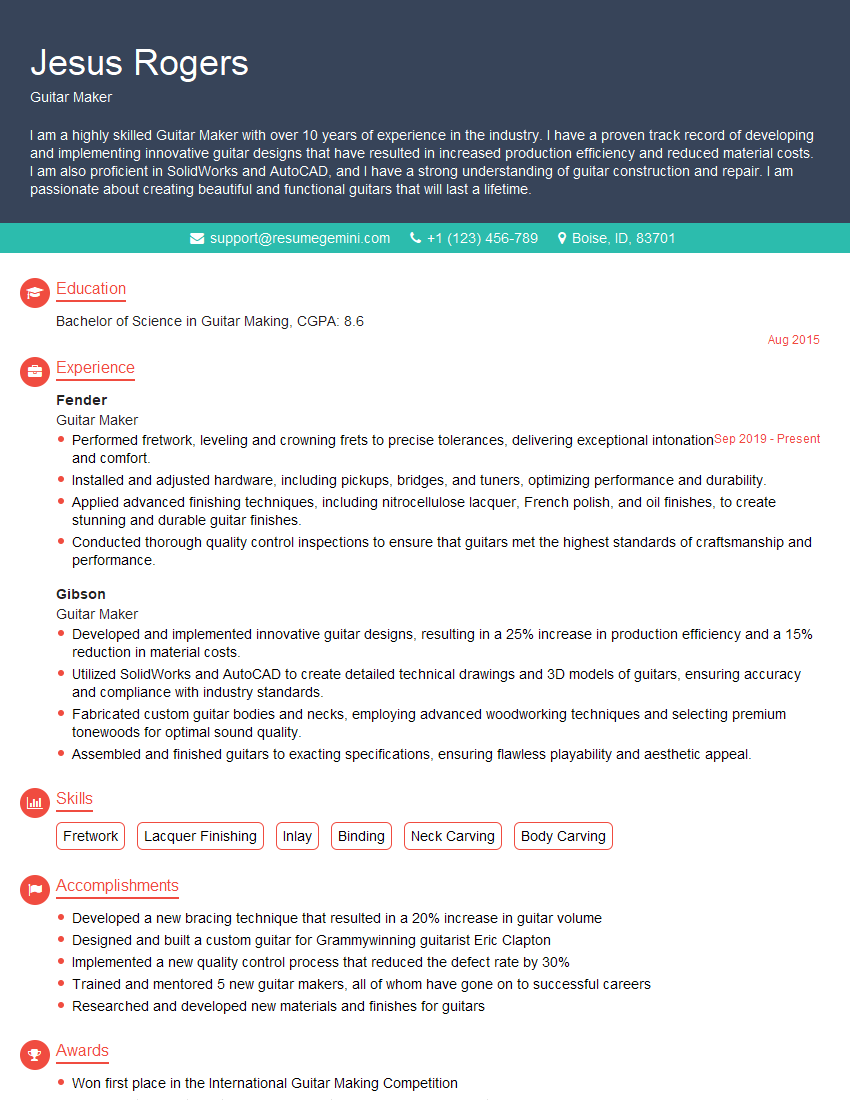
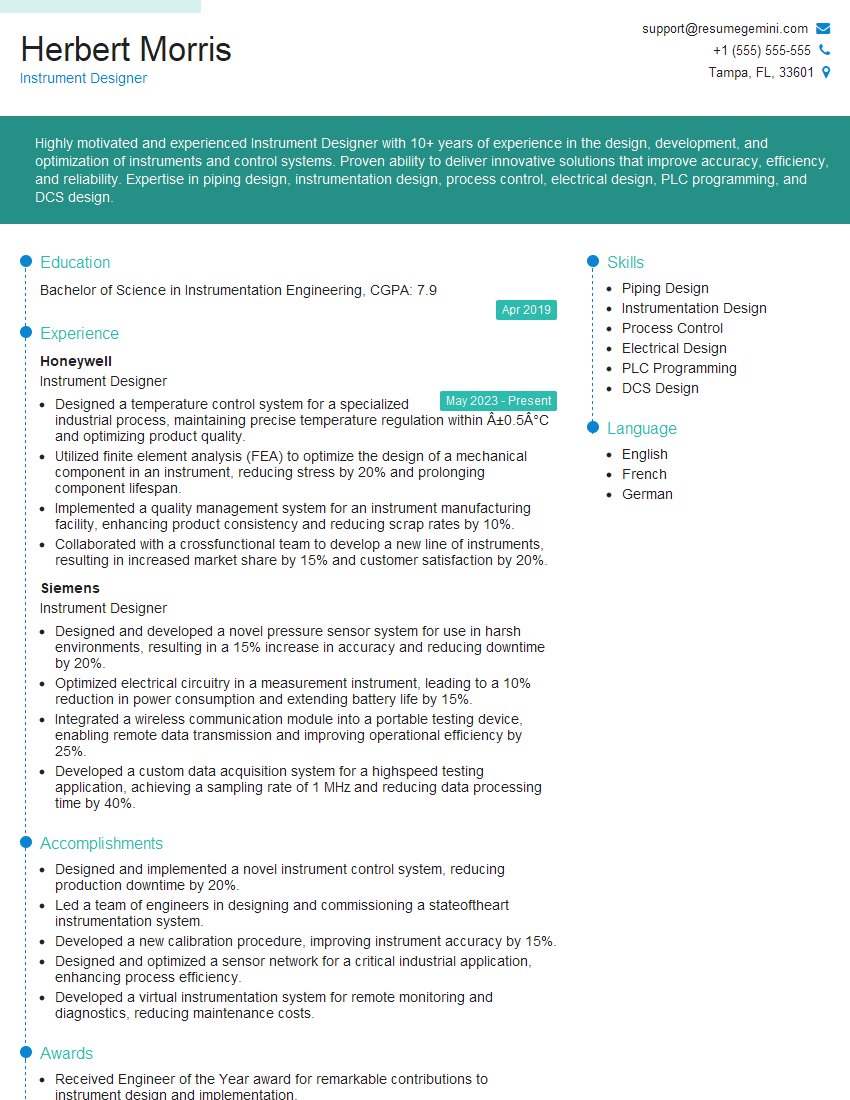
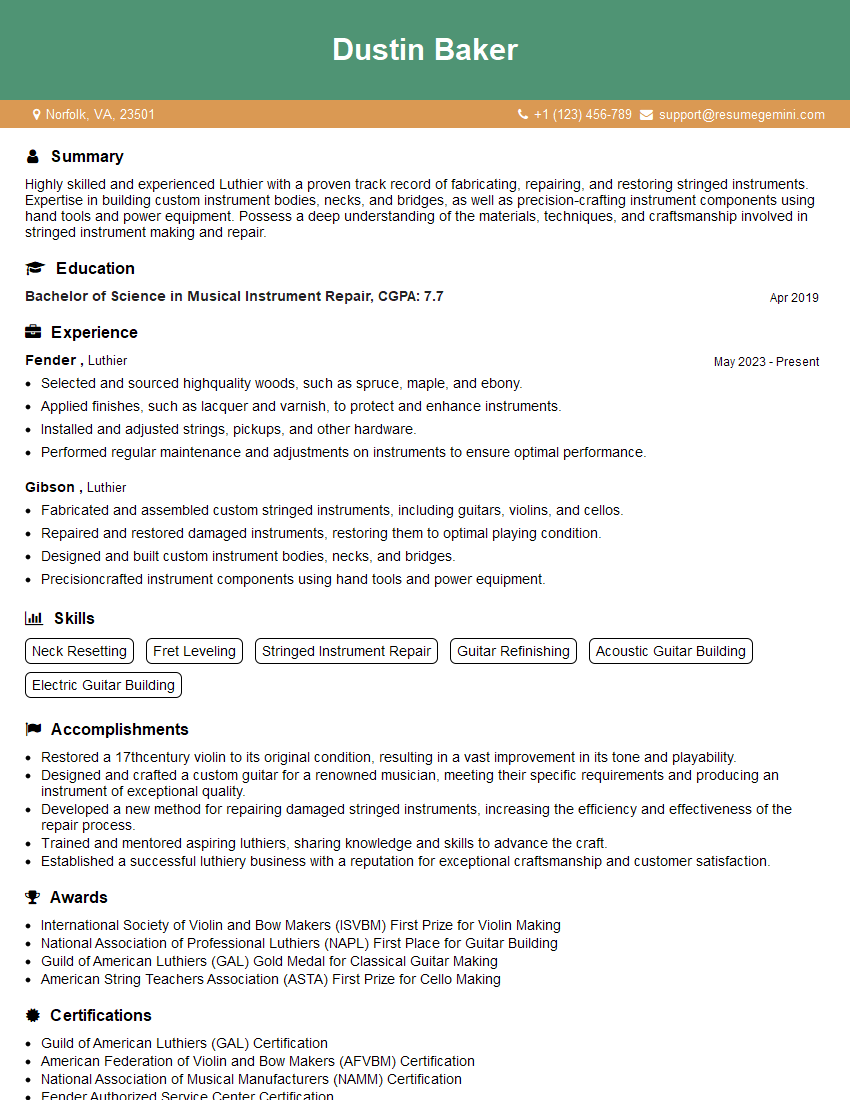
Mastering custom guitar design opens doors to exciting and rewarding career opportunities in the music industry. To maximize your chances of landing your dream job, crafting an ATS-friendly resume is crucial. ResumeGemini is a trusted resource that can help you create a professional and impactful resume tailored to the specific demands of the Custom Guitar Design field. Take advantage of the examples of resumes tailored to Custom Guitar Design provided to refine your own and showcase your skills effectively. Invest the time to create a powerful resume; it’s your first impression with potential employers.
Explore more articles
Users Rating of Our Blogs
Share Your Experience
We value your feedback! Please rate our content and share your thoughts (optional).
What Readers Say About Our Blog
Really detailed insights and content, thank you for writing this detailed article.
IT gave me an insight and words to use and be able to think of examples