Feeling uncertain about what to expect in your upcoming interview? We’ve got you covered! This blog highlights the most important Customer Support and Relationship Building interview questions and provides actionable advice to help you stand out as the ideal candidate. Let’s pave the way for your success.
Questions Asked in Customer Support and Relationship Building Interview
Q 1. Describe your experience handling difficult customer situations.
Handling difficult customer situations requires a calm, empathetic approach coupled with strong problem-solving skills. My strategy involves active listening to fully understand the customer’s concern, validating their feelings, and then systematically working towards a resolution. I avoid becoming defensive, even if the customer is being unreasonable. Instead, I focus on finding common ground and demonstrating a genuine desire to help.
For example, I once dealt with a customer who was extremely angry about a delayed shipment. Instead of arguing, I apologized sincerely for the inconvenience, explained the reasons for the delay (providing concrete details), and offered a proactive solution – expedited shipping with a discount code. This showed I understood their frustration and was committed to rectifying the situation. I also kept my tone calm and reassuring throughout the interaction. This combination of empathy and efficient problem-solving resulted in a positive outcome, turning a very unhappy customer into a satisfied one.
Q 2. How do you prioritize multiple customer requests simultaneously?
Prioritizing multiple customer requests involves a combination of urgency and impact assessment. I use a system that considers factors like the severity of the issue, the customer’s importance (e.g., high-value client), and the potential consequences of delay. I often employ a triage system, categorizing requests into urgent, important, and less urgent.
For example, a system outage affecting many users would be considered urgent and prioritized immediately over a simple billing inquiry. I also use tools like ticketing systems with prioritization features to manage workflow and ensure that time-sensitive issues are addressed promptly. This approach ensures that I’m efficient and provide the best service to each customer, even when handling multiple requests simultaneously.
Q 3. Explain your approach to de-escalating angry or frustrated customers.
De-escalating angry or frustrated customers involves understanding their emotions and responding with empathy and patience. My approach centers around active listening, validating their feelings, and demonstrating a sincere willingness to help. I avoid interrupting and allow them to express their concerns fully.
I use phrases like, “I understand your frustration,” or “I can see why you’re upset.” Then, I restate their concerns to confirm understanding. Once the customer feels heard, it’s easier to move towards a solution. I might offer a small concession or a quick, achievable resolution to demonstrate my commitment to fixing the issue, even if a full solution requires more time. A calm, measured tone and a focus on finding a solution, rather than assigning blame, is crucial in de-escalation.
Q 4. What metrics do you use to measure the success of your customer interactions?
Measuring the success of customer interactions relies on several key metrics. These include:
- Customer Satisfaction (CSAT): Measured through surveys or feedback forms, this metric reflects overall customer happiness with the interaction.
- First Call Resolution (FCR): This indicates the percentage of issues resolved during the first contact, reflecting efficiency and problem-solving skills.
- Average Handling Time (AHT): This measures the average time spent on each interaction, providing insight into efficiency and workflow.
- Net Promoter Score (NPS): This measures customer loyalty and willingness to recommend the service.
- Resolution Time: This tracks how long it takes to resolve a customer issue.
By tracking these metrics, I can identify areas for improvement and refine my approach to maximize customer satisfaction and efficiency.
Q 5. How do you build rapport with customers quickly and effectively?
Building rapport involves creating a positive connection with the customer quickly. I achieve this by actively listening, using their name, and demonstrating genuine empathy and understanding. I try to find common ground, even if it’s something as simple as mentioning a shared interest or making a positive observation.
For example, if a customer mentions they’re a fan of a particular sports team, I might briefly mention my own interest (if applicable) to establish a connection. Using a friendly and approachable tone, along with clear and concise communication, helps me create a comfortable and trusting atmosphere, which facilitates a more positive interaction and a stronger customer relationship.
Q 6. Describe a time you went above and beyond for a customer.
In one instance, a customer was having persistent technical difficulties that were not easily resolved through our standard troubleshooting methods. After spending significant time on the phone and remotely trying various solutions, we still couldn’t fix the issue. The customer was understandably frustrated and nearing the end of their patience.
Instead of just closing the ticket, I researched alternative solutions, and even contacted the product development team to understand the issue more deeply. After several hours of investigation, I discovered a software bug that was causing the problem. I escalated the issue, and while I couldn’t resolve it immediately, I kept the customer updated, provided regular status updates, and eventually secured a full refund for their subscription. The extra effort in going above and beyond, including direct communication with the development team and proactive follow-up, significantly improved the customer’s experience and strengthened their trust in our company.
Q 7. How do you handle customer complaints and feedback?
Handling customer complaints and feedback involves a structured approach focused on active listening, understanding the root cause, and providing a resolution or appropriate action. I begin by listening carefully to the customer’s complaint, acknowledging their feelings, and thanking them for providing feedback. I then work to understand the underlying issue – was it a product defect, poor service, or miscommunication?
Once the root cause is understood, I work toward a solution. This might involve offering a refund, replacement, apology, or a detailed explanation. If the complaint reveals a systemic issue, I document it and forward it to the relevant team for investigation and improvement. Following up with the customer after resolution is crucial to ensure satisfaction and build confidence. Regularly analyzing customer feedback provides valuable insights that can be used to improve products, services, and processes.
Q 8. What is your experience with CRM software (e.g., Salesforce, Zendesk)?
Throughout my career, I’ve extensively utilized various CRM platforms, most notably Salesforce and Zendesk. My experience encompasses not just data entry and report generation, but also leveraging the advanced features these systems offer for effective customer relationship management. In Salesforce, I’m proficient in creating custom reports to track key performance indicators (KPIs) like customer satisfaction scores and resolution times. I’ve used its automation features to streamline repetitive tasks, such as sending follow-up emails or assigning tickets based on predefined rules. With Zendesk, I’ve mastered its ticketing system, customizing workflows to ensure efficient ticket routing and resolution. My proficiency extends to integrating Zendesk with other tools for a seamless customer support experience. For example, I’ve used it in conjunction with live chat tools to provide immediate assistance and track conversations effectively.
I understand the importance of data integrity within these systems. This involves ensuring data accuracy, maintaining proper record-keeping, and regularly cleaning up outdated information to maintain system efficiency. I’m confident in my ability to quickly adapt to new CRM systems and leverage their functionalities to optimize workflows and improve customer service.
Q 9. How do you stay organized and manage your workload efficiently?
Effective workload management is crucial in customer support. My approach is multifaceted and combines proactive planning with flexible adaptation. I begin each day by prioritizing tasks based on urgency and importance, often using a system like Eisenhower Matrix (Urgent/Important) to categorize my tickets and responsibilities. I leverage task management tools, such as Asana or Trello, to visually organize my workflow, set deadlines, and track progress. This allows me to anticipate potential bottlenecks and adjust my schedule proactively.
Time blocking is a critical component of my strategy. I allocate specific time slots for different activities like responding to emails, handling phone calls, and addressing complex issues. This focused approach minimizes context switching and maximizes productivity. Regular breaks are also essential to maintain focus and prevent burnout. Finally, I regularly review my progress and adjust my strategies as needed. This iterative process ensures I remain efficient and adaptable to evolving demands.
Q 10. Explain your understanding of customer relationship management (CRM).
Customer Relationship Management (CRM) is far more than just software; it’s a holistic strategy focused on building and maintaining strong, profitable relationships with customers. It encompasses all aspects of the customer journey, from initial contact to ongoing engagement. A robust CRM system helps businesses understand customer needs, preferences, and behaviors, enabling personalized interactions and targeted marketing efforts.
At its core, CRM involves collecting and analyzing customer data to improve business processes. This data might include purchase history, communication logs, feedback surveys, and demographic information. By leveraging this data, businesses can identify opportunities for upselling, cross-selling, and improved customer service. For example, if a CRM system reveals a customer consistently purchases a specific product, the business can offer related products or services, enhancing the customer’s experience and driving revenue. Effective CRM also fosters a culture of customer-centricity within the organization, aligning all departments towards a unified goal of customer satisfaction.
Q 11. How do you identify and resolve customer issues promptly?
Promptly identifying and resolving customer issues requires a systematic approach. First, I actively listen to understand the problem fully. I avoid interrupting and ask clarifying questions to ensure I grasp the issue’s nuances. Once I have a clear understanding, I utilize my knowledge base and available resources to find a solution. This may involve accessing internal documentation, consulting colleagues, or searching online databases for relevant information.
My problem-solving process is guided by a structured approach: I begin by categorizing the issue (e.g., technical, billing, account-related). This helps me narrow down potential solutions. Then, I implement the most appropriate solution. Throughout this process, I maintain clear and consistent communication with the customer, keeping them informed of my progress and any potential delays. If I cannot resolve the issue immediately, I escalate it to the appropriate team or individual, ensuring the customer is aware of the escalation and the expected timeframe for resolution. Following up with the customer after the issue is resolved ensures their satisfaction and allows me to gather feedback for continuous improvement.
Q 12. Describe your experience with different customer support channels (e.g., phone, email, chat).
I have extensive experience across multiple customer support channels, including phone, email, and chat. Each channel demands a slightly different approach. Phone calls allow for immediate interaction and clarification, enabling quick resolution of many issues. However, they require strong active listening and concise communication skills. Emails, while offering a written record, often require more patience due to the asynchronous nature of communication. Clear, well-structured emails with concise information are essential. Live chat provides instant support and allows for quicker resolution of simple queries, but requires the ability to handle multiple conversations simultaneously and to communicate effectively in a limited space.
My experience includes managing high call volumes while maintaining a calm and professional demeanor, composing clear and comprehensive email responses that anticipate customer needs, and navigating complex technical issues via live chat. I understand the importance of using the appropriate channel for each situation. For example, a complex technical issue is better addressed via a phone call or email to allow for detailed explanations, while a simple billing query can be efficiently handled through live chat.
Q 13. How do you adapt your communication style to different customer personalities?
Adapting communication style to different customer personalities is paramount. I assess each customer’s communication style early in the interaction, noting their tone, language, and preferred level of detail. Some customers appreciate a friendly and informal approach, while others prefer a formal and direct style. I adjust my vocabulary, pace, and tone accordingly. For instance, a technical customer may appreciate detailed explanations, while a less technically inclined customer may benefit from simpler terms and analogies.
Empathy plays a vital role in this process. I try to understand the customer’s perspective and emotional state, responding accordingly. A frustrated customer may need more reassurance and patience than a customer who is simply seeking information. Active listening, paying close attention to both verbal and nonverbal cues, helps me gauge the customer’s emotional state and tailor my responses effectively. My goal is to build rapport and establish trust, ensuring the customer feels heard and understood, regardless of their personality or communication style.
Q 14. How do you handle situations where you don’t have an immediate solution to a customer’s problem?
When faced with a problem I can’t immediately solve, transparency and proactive communication are key. I begin by acknowledging the issue and assuring the customer that I will do everything to find a solution. I then explain the steps I’m taking to address the problem, such as consulting with experts or researching the issue thoroughly. It’s crucial to avoid false promises and provide a realistic timeframe for resolution.
I might offer alternative solutions in the meantime, if possible. For example, if the issue involves a software glitch, I could suggest a workaround while the problem is being addressed. I keep the customer updated throughout the process, providing regular progress reports. Even if there’s a delay, keeping the customer informed demonstrates my commitment to resolving the issue. Finally, once a solution is found, I follow up with the customer to ensure their satisfaction and gather feedback on the overall experience. This shows the customer that their issue is valued, even if the immediate resolution wasn’t possible.
Q 15. What is your experience with troubleshooting technical issues?
My experience in troubleshooting technical issues spans several years and various platforms. I approach each problem systematically, employing a tiered troubleshooting methodology. First, I gather as much information as possible from the customer, clarifying the issue and any error messages they’re encountering. This involves active listening and asking clarifying questions to avoid assumptions. Next, I utilize a process of elimination, checking the most common causes first, such as internet connectivity, software versions, or hardware compatibility. For instance, if a customer reports slow loading times on a website, I’d first check their internet speed, then the website’s server status, and finally investigate any browser extensions that might be causing conflicts. If the issue persists, I consult our internal knowledge base, and if still unresolved, I leverage remote access tools, under strict security protocols, to directly examine the system. This allows me to identify the root cause more efficiently. Finally, I document the troubleshooting steps and resolution in our ticketing system for future reference and knowledge base updates.
I’m proficient in troubleshooting a wide array of technical issues, including network connectivity problems, software malfunctions, hardware failures, and account access issues. I’m comfortable working with both end-users and technical staff to resolve complex problems.
Career Expert Tips:
- Ace those interviews! Prepare effectively by reviewing the Top 50 Most Common Interview Questions on ResumeGemini.
- Navigate your job search with confidence! Explore a wide range of Career Tips on ResumeGemini. Learn about common challenges and recommendations to overcome them.
- Craft the perfect resume! Master the Art of Resume Writing with ResumeGemini’s guide. Showcase your unique qualifications and achievements effectively.
- Don’t miss out on holiday savings! Build your dream resume with ResumeGemini’s ATS optimized templates.
Q 16. How do you identify and escalate critical customer issues to the appropriate team?
Identifying and escalating critical customer issues requires a keen understanding of priority levels and efficient communication. My process begins with assessing the impact of the issue on the customer. Factors I consider include the urgency of the problem, the number of affected users, the potential financial impact, and the level of customer frustration. For example, a widespread service outage is immediately escalated, while a minor account access issue might be handled within standard resolution times. I use a ticketing system with clearly defined escalation paths and service level agreements (SLAs). This system allows me to track the issue’s progress and ensure timely resolution. For critical issues, I clearly document the problem, its severity, and any immediate steps taken to mitigate the impact. I directly communicate this information to the appropriate team lead or manager, ensuring they understand the situation and its urgency. I follow up regularly until the issue is fully resolved and the customer is informed of progress. Clear and concise communication is crucial at this stage to prevent any further escalation or miscommunication.
Q 17. How do you measure customer satisfaction?
Measuring customer satisfaction is an ongoing process that utilizes several key metrics. The most common are Customer Satisfaction (CSAT) scores, often obtained through post-resolution surveys that ask customers to rate their experience. These surveys typically use a simple rating scale (e.g., 1-5 stars). Net Promoter Score (NPS) is another crucial indicator, gauging customer loyalty and willingness to recommend our services. This metric uses a single question: “On a scale of 0-10, how likely are you to recommend our company to a friend or colleague?” Beyond these quantitative measures, I also actively monitor customer feedback through various channels, including reviews, social media comments, and direct communications. Qualitative feedback, while subjective, offers valuable insights into areas for improvement. Regular analysis of these metrics helps identify trends, pinpoint areas needing improvement in our processes, and measure the effectiveness of our customer support strategies. For example, a consistently low CSAT score in a specific area suggests a need for additional training or process refinement.
Q 18. Describe your experience with knowledge base systems and documentation.
I have extensive experience with knowledge base systems and documentation. I’m proficient in using various knowledge base platforms to create, update, and maintain comprehensive articles, FAQs, and troubleshooting guides. My approach prioritizes clear, concise, and easily searchable content. I believe in using plain language, avoiding technical jargon whenever possible, and structuring information logically to ensure users can quickly find the solutions they need. For example, I’ve used platforms like Zendesk, Salesforce Service Cloud, and internal wikis to build and maintain comprehensive knowledge bases. I understand the importance of regular updates to ensure information remains accurate and relevant. Moreover, I actively contribute to the knowledge base by documenting solutions to unusual or complex problems, sharing best practices, and incorporating customer feedback to improve article quality and effectiveness. A well-maintained knowledge base is crucial for efficient self-service and reduces the volume of incoming support tickets.
Q 19. How do you maintain a positive and professional attitude when facing challenging customers?
Maintaining a positive and professional attitude when dealing with challenging customers is paramount. I believe in empathy and active listening. I try to understand the customer’s perspective, even if their tone is aggressive. I acknowledge their frustration and validate their feelings before attempting to resolve the issue. For instance, I might say, “I understand this is frustrating, and I apologize for the inconvenience.” Then, I focus on finding a solution rather than engaging in an argument. I remain calm, patient, and respectful, even under pressure. I use clear and concise language, avoiding jargon and technical terms that might further confuse the customer. I also actively seek to understand the root cause of their frustration, which may go beyond the immediate technical issue. Sometimes, a simple apology or an offer of a small concession can significantly improve the interaction. I always aim to leave the customer feeling heard, understood, and valued, regardless of the outcome.
Q 20. What is your process for following up with customers after resolving an issue?
Following up with customers after resolving an issue is crucial for building strong relationships and ensuring their continued satisfaction. My process involves sending a brief email or making a short call, depending on the nature and complexity of the initial problem. This follow-up is typically done within 24-48 hours of resolution. I briefly reiterate the solution implemented and confirm that the problem has been fully resolved. I also ask a simple satisfaction question, such as, “Was there anything else I could have done to improve your experience?” or “Are you happy with the resolution?” This proactive check-in shows that we value their business and are committed to providing excellent service. It also gives us valuable feedback that can be used to improve our processes. In addition, this follow-up interaction provides an opportunity to suggest helpful resources or additional support if needed. Finally, I always document the follow-up in the ticketing system for future reference and performance tracking.
Q 21. How do you proactively identify and address potential customer problems?
Proactive problem identification is key to preventing customer issues and enhancing satisfaction. I regularly monitor system logs, analyze support tickets, and review customer feedback for recurring issues or emerging trends. For instance, a spike in error reports related to a specific feature indicates a potential problem that needs immediate attention. I also actively participate in team meetings and knowledge-sharing sessions to stay informed about any changes in our products or services. This allows me to anticipate potential problems and proactively address them before they impact customers. We utilize predictive analytics tools to identify users who may be at risk of experiencing problems based on their usage patterns. For example, if a user is consistently encountering an error message, we might proactively reach out to them to offer assistance. Proactive communication through email newsletters, blog posts, or in-app notifications can keep customers informed about updates, maintenance, or known issues, preventing frustration and confusion.
Q 22. What are your strengths and weaknesses in customer support?
My greatest strength in customer support is my ability to empathize and build rapport quickly. I understand that every customer interaction is an opportunity to build loyalty, and I approach each one with genuine concern and a desire to find a resolution. For example, I once dealt with a highly frustrated customer whose order was delayed due to a shipping error. Instead of simply apologizing, I actively listened to their concerns, proactively updated them on the progress of their order, and even offered a small compensation for their inconvenience. This resulted in them not only being satisfied but becoming a loyal repeat customer. A weakness I’m actively working on is delegating tasks more effectively. While I enjoy being hands-on and ensuring quality, I recognize the importance of efficient workflow and am implementing time management techniques to better distribute tasks, thereby improving team efficiency.
Q 23. How do you handle conflicting priorities between different customer requests?
Handling conflicting priorities requires a structured approach. I utilize a prioritization matrix, weighing urgency and impact. Requests with the highest impact and urgency are tackled first. For example, if I have one customer experiencing a critical service outage and another with a less urgent billing question, I’d address the outage first as it has a higher immediate impact. Transparency is key. I inform customers about the prioritization, managing their expectations while assuring them their request is important and will be addressed as soon as possible. I also utilize efficient tools such as ticketing systems to track progress and ensure no request falls through the cracks. This structured approach allows for efficient resource management and ensures all customers feel heard and valued, even if their requests aren’t addressed immediately.
Q 24. Describe your experience with providing training to customers or colleagues.
I have extensive experience in providing both formal and informal training. I’ve led workshops for colleagues on effective communication techniques in customer support, using role-playing scenarios and practical exercises to improve their skills. I’ve also created and delivered online training modules on our company’s products and services, using screen recordings and interactive quizzes to ensure knowledge retention. Moreover, I regularly mentor junior colleagues, providing guidance on handling difficult situations and sharing best practices. My approach emphasizes practical application and continuous feedback, creating a supportive learning environment where individuals can grow their skills and confidence.
Q 25. What is your experience with customer segmentation and personalization?
My experience with customer segmentation and personalization involves utilizing data analytics to identify different customer groups based on their behavior, demographics, and purchase history. For example, I’ve worked with companies that segmented their customer base into high-value, mid-value, and low-value segments. This allows for tailored communication strategies—high-value customers receive personalized offers and proactive support, while other segments receive targeted messaging based on their needs and preferences. I’m proficient in using CRM software to track customer interactions and segment audiences effectively. This leads to improved customer satisfaction and increased loyalty by providing a more relevant and personalized experience.
Q 26. How do you contribute to a positive team environment in customer support?
Contributing to a positive team environment is paramount. I believe in fostering open communication, mutual respect, and collaboration. I actively participate in team meetings, sharing best practices and offering support to my colleagues. I celebrate team successes and offer constructive feedback to encourage continuous improvement. I also take initiative to help colleagues when they are overloaded or facing challenging situations. My aim is to create a supportive and collaborative atmosphere where everyone feels valued, empowered, and motivated to deliver exceptional customer service.
Q 27. What are your salary expectations for this role?
My salary expectations for this role are in the range of [Insert Salary Range], depending on the benefits package and the overall compensation structure. I am confident that my skills and experience align well with the requirements of this position and I am eager to contribute to your organization’s success.
Key Topics to Learn for Customer Support and Relationship Building Interview
- Active Listening and Empathetic Communication: Understanding the customer’s perspective and responding with genuine empathy. Practical Application: Role-playing scenarios where you practice actively listening to a frustrated customer and finding solutions.
- Problem-Solving and Troubleshooting: Identifying the root cause of customer issues and implementing effective solutions. Practical Application: Developing a structured approach to troubleshooting, such as using a decision tree or flowchart to guide your problem-solving process.
- Conflict Resolution and De-escalation: Managing difficult conversations and resolving conflicts in a calm and professional manner. Practical Application: Learning techniques for de-escalating tense situations, such as using calming language and validating the customer’s feelings.
- Product Knowledge and Expertise: Demonstrating a thorough understanding of the products or services you’ll be supporting. Practical Application: Preparing detailed answers about product features, limitations, and troubleshooting common problems.
- Communication Channels and Etiquette: Mastering various communication channels (email, phone, chat) and maintaining professional etiquette in all interactions. Practical Application: Practicing clear and concise written and verbal communication, adapting your style to the chosen channel.
- Customer Relationship Management (CRM) Systems: Familiarity with CRM software and its application in managing customer interactions and data. Practical Application: Researching popular CRM systems and their functionalities, such as Salesforce or HubSpot.
- Metrics and Performance Tracking: Understanding key performance indicators (KPIs) related to customer support and how to track and improve performance. Practical Application: Familiarizing yourself with common metrics like customer satisfaction (CSAT) scores, resolution time, and first-call resolution (FCR).
Next Steps
Mastering Customer Support and Relationship Building is crucial for career advancement, opening doors to leadership roles and increased earning potential. An ATS-friendly resume is key to getting your application noticed. To significantly enhance your job prospects, we recommend crafting a compelling resume that highlights your skills and experience. ResumeGemini is a trusted resource that can help you build a professional and effective resume. We provide examples of resumes tailored to Customer Support and Relationship Building roles to guide you in creating your own.
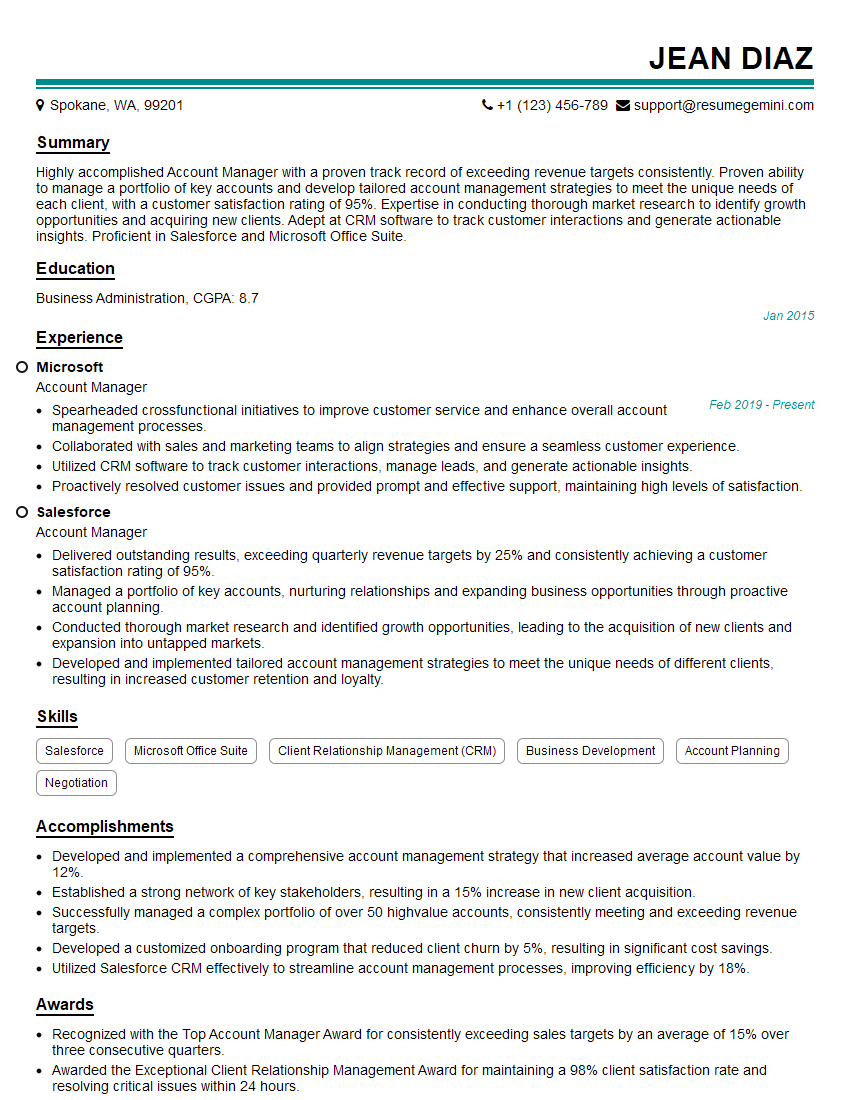
Account Manager Resume Sample
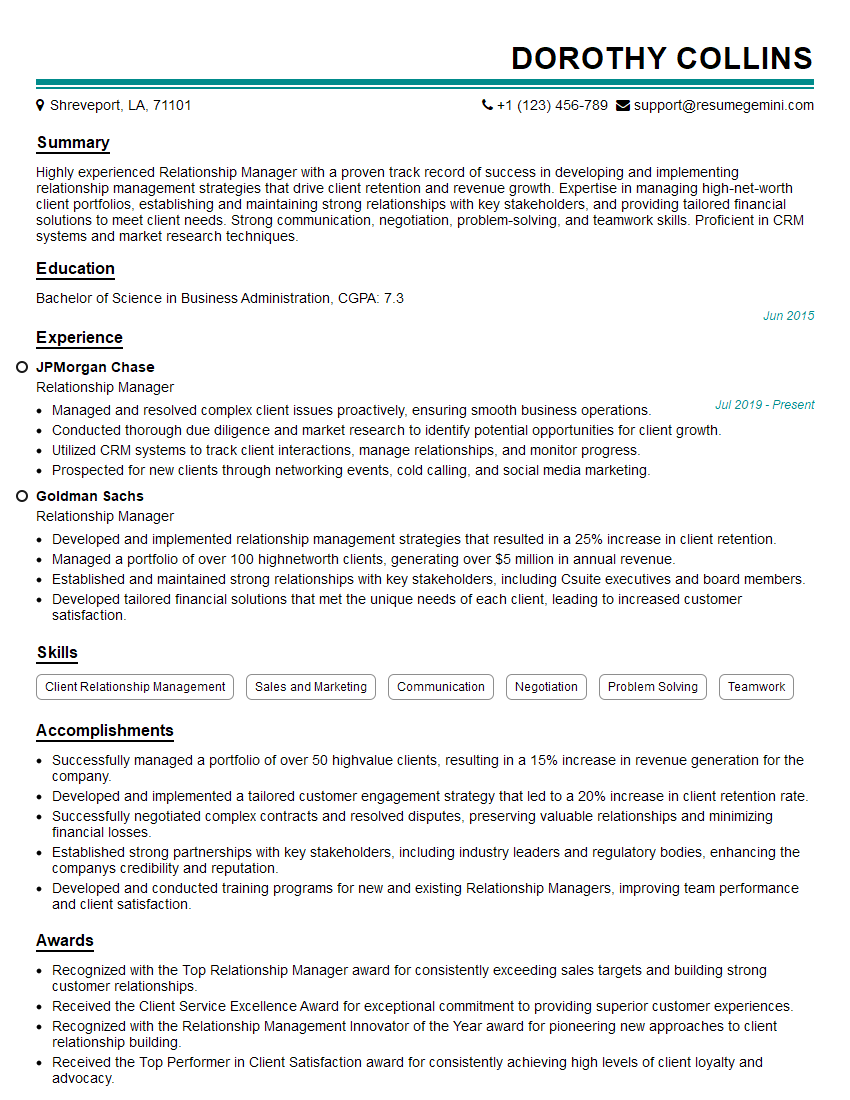
Relationship Manager Resume Sample
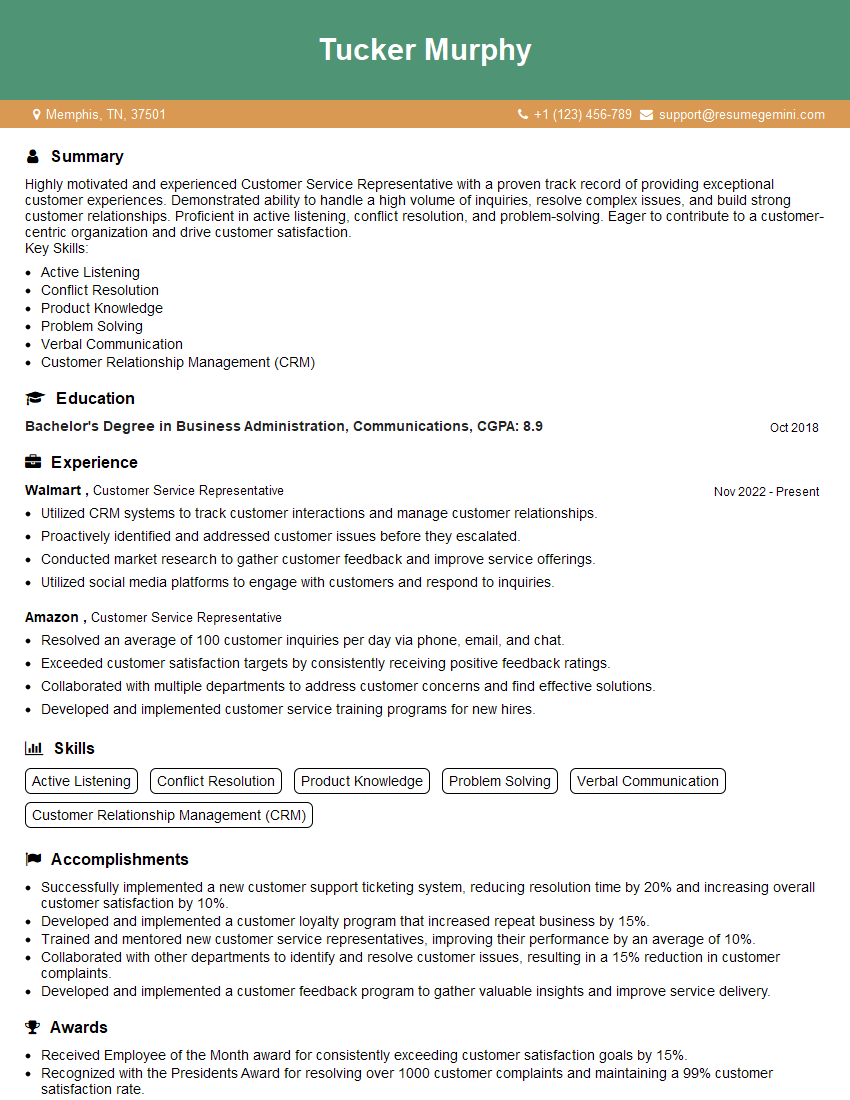
Customer Service Representative Resume Sample

Technical Support Engineer Resume Sample

Customer Support Analyst Resume Sample
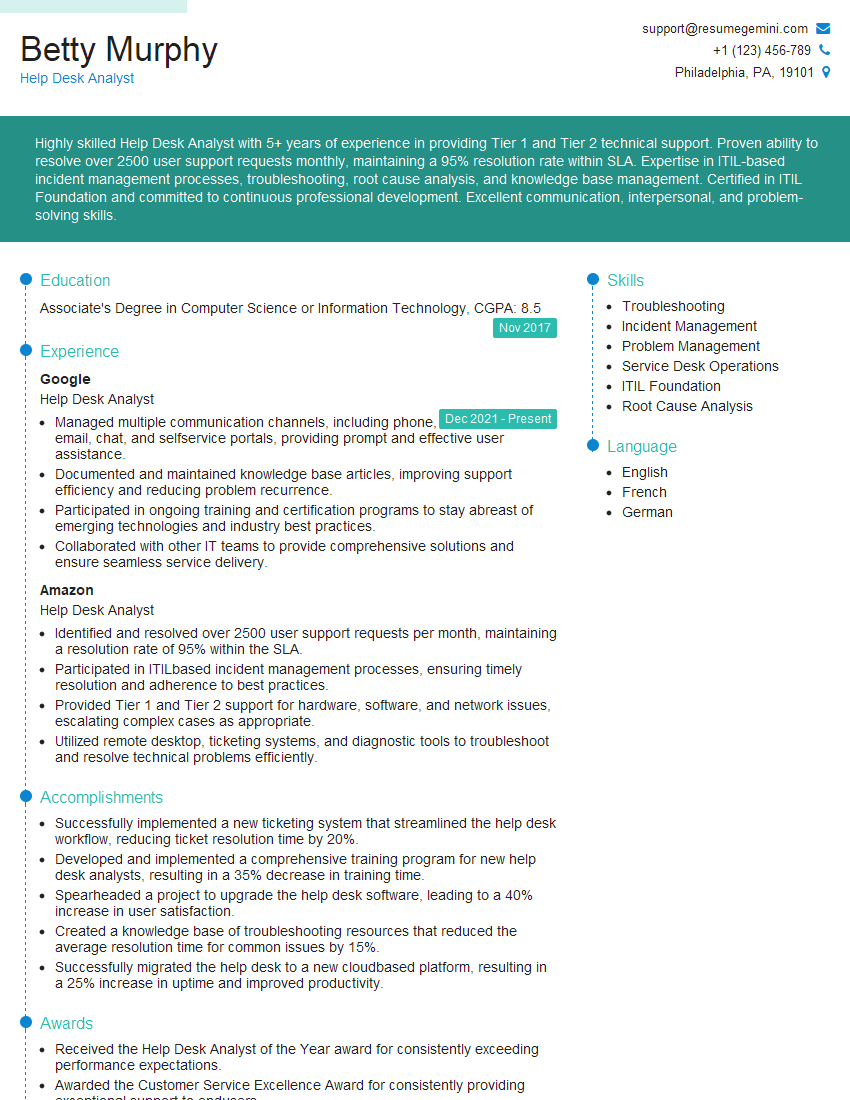
Help Desk Analyst Resume Sample
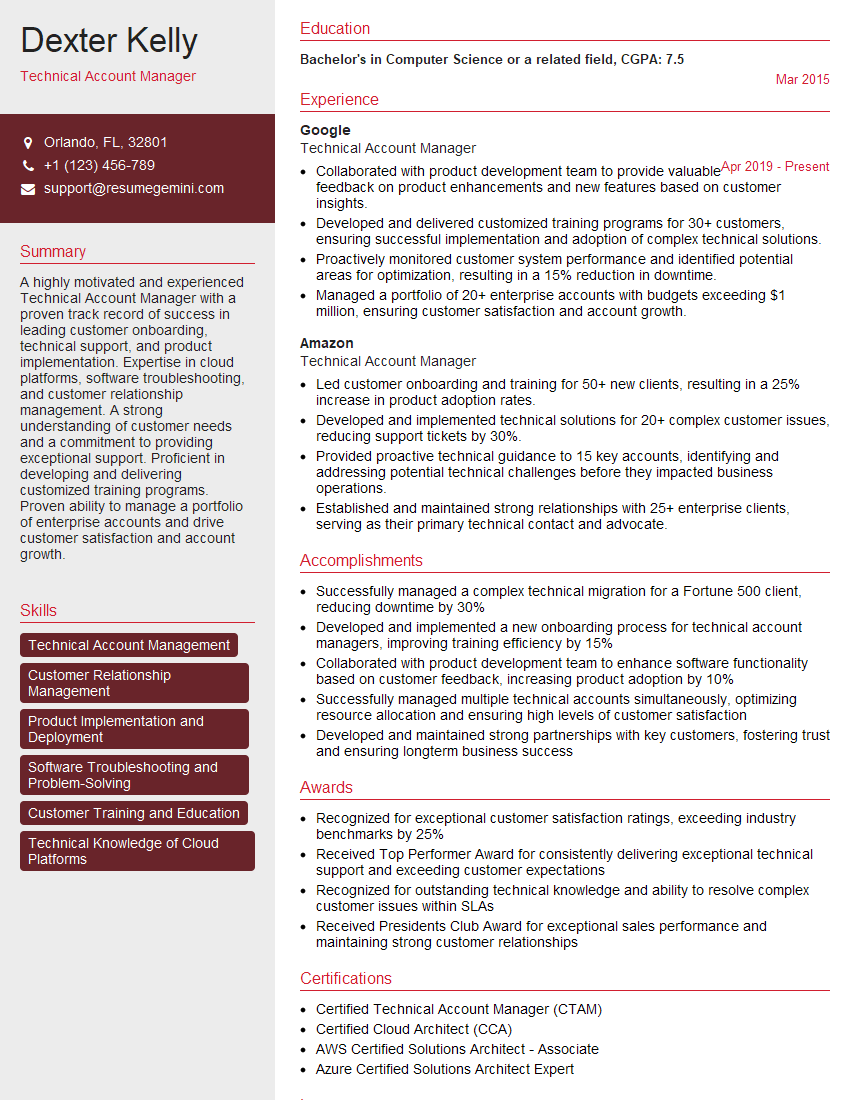
Technical Account Manager Resume Sample
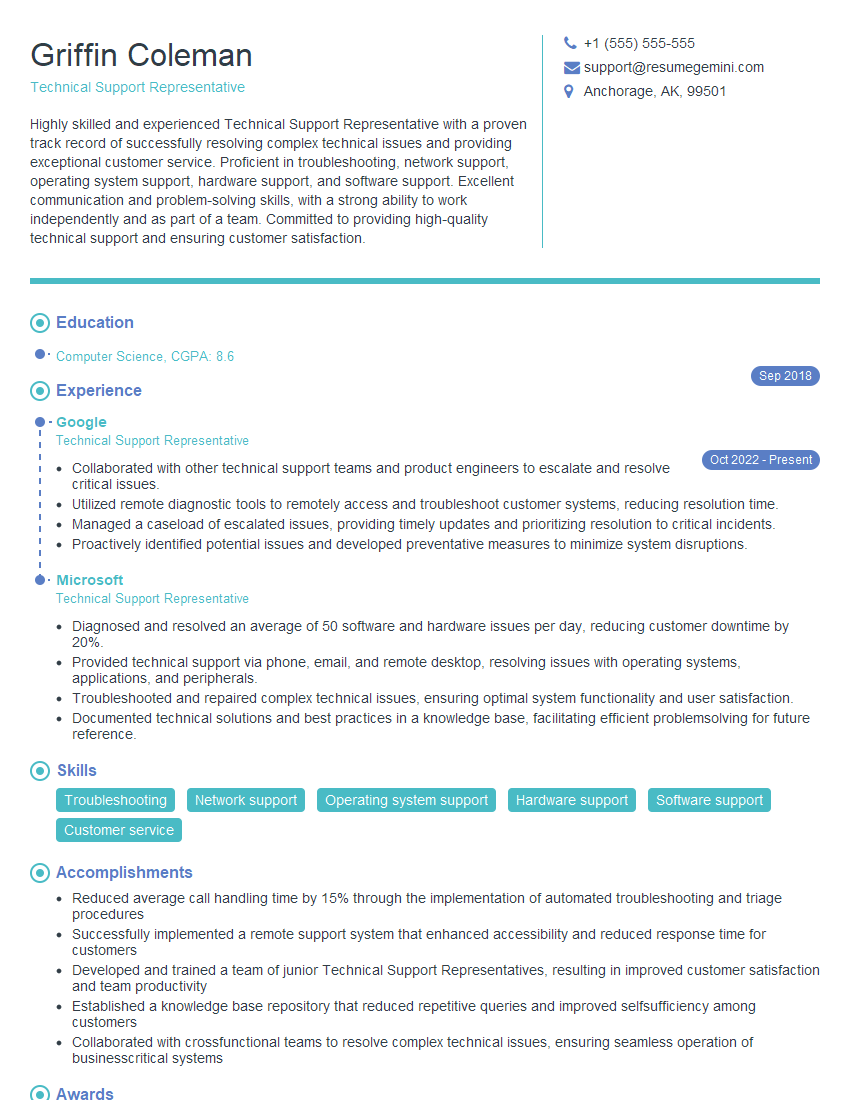
Technical Support Representative Resume Sample
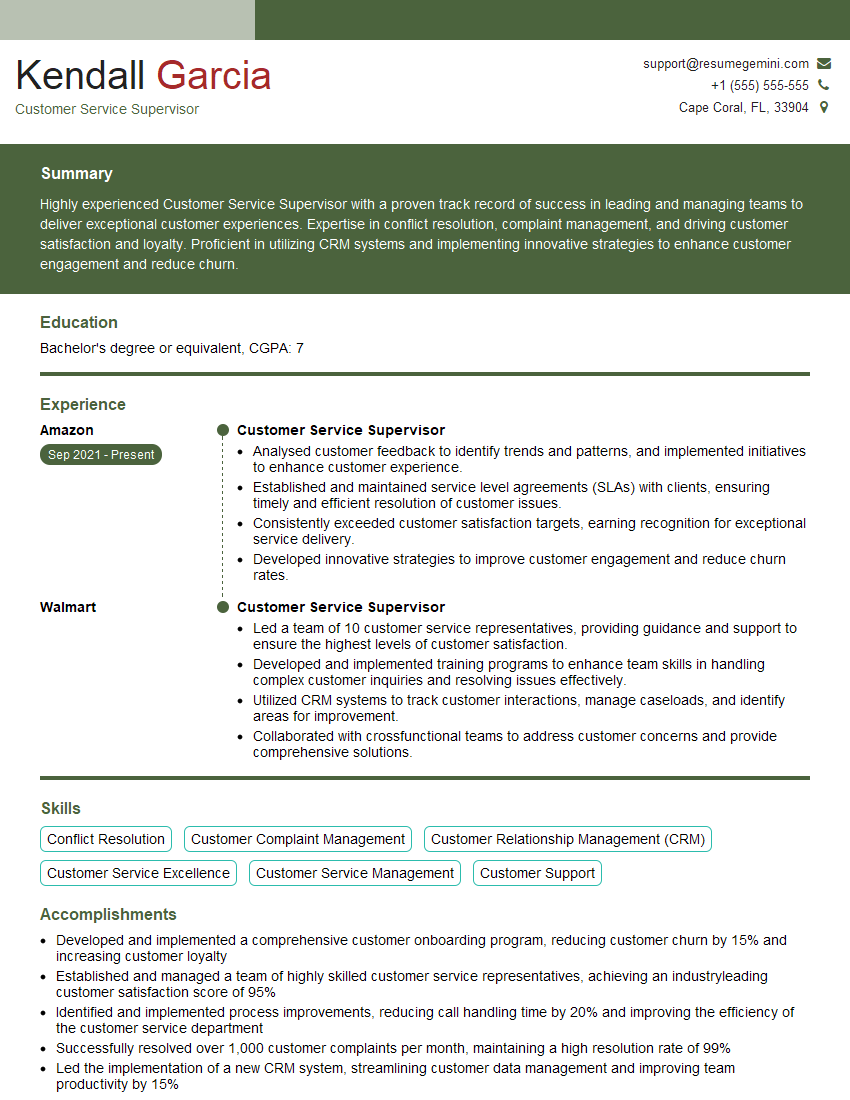
Customer Service Supervisor Resume Sample
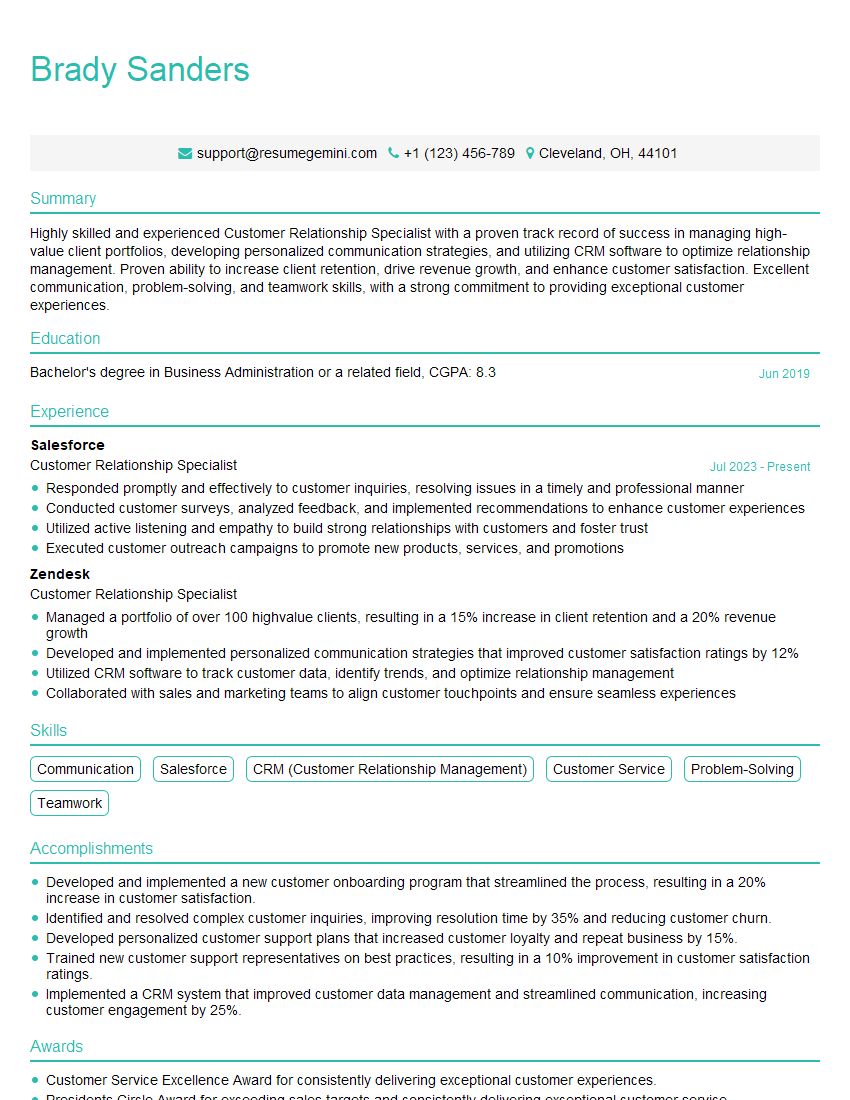
Customer Relationship Specialist Resume Sample
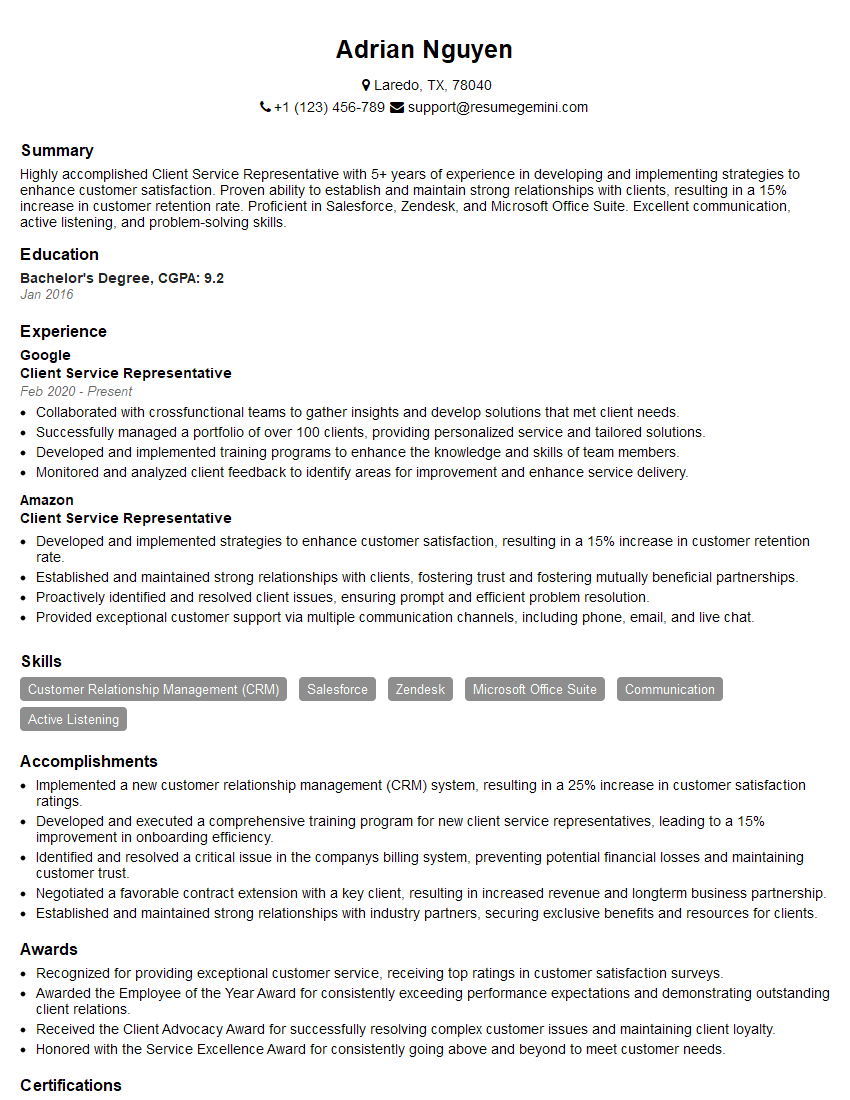
Client Service Representative Resume Sample
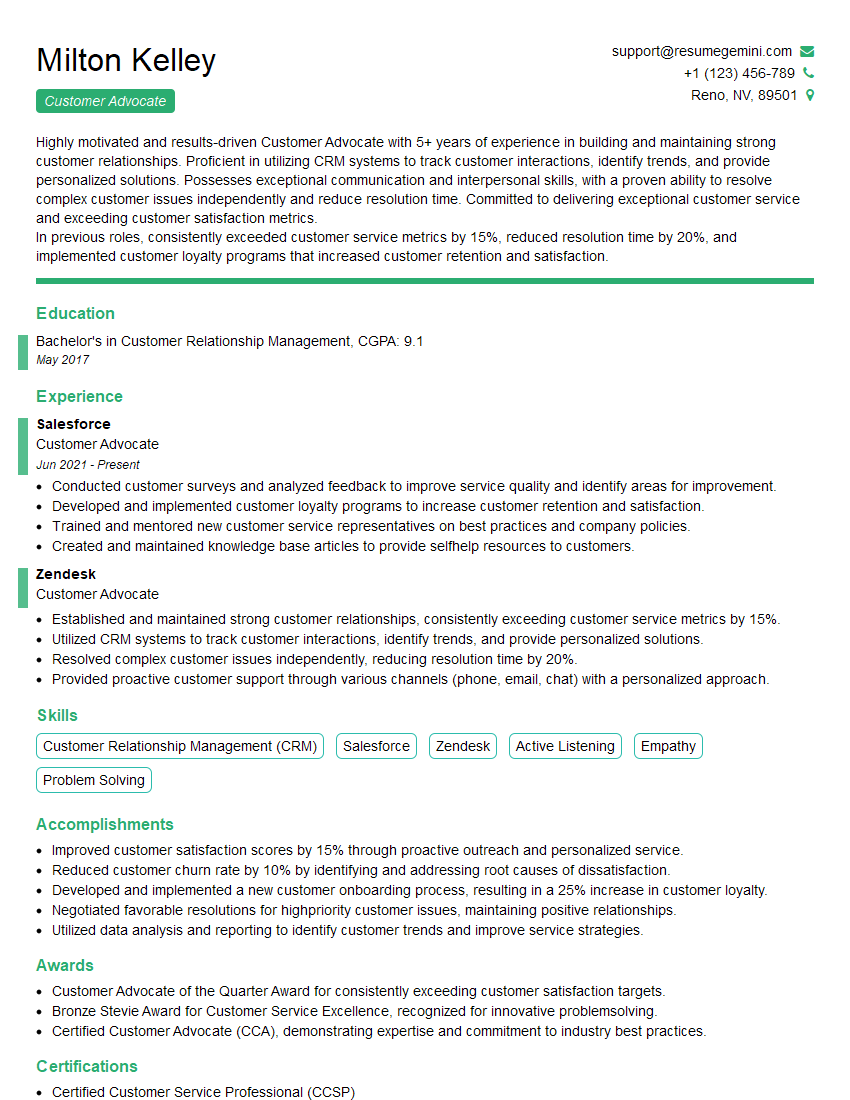
Customer Advocate Resume Sample
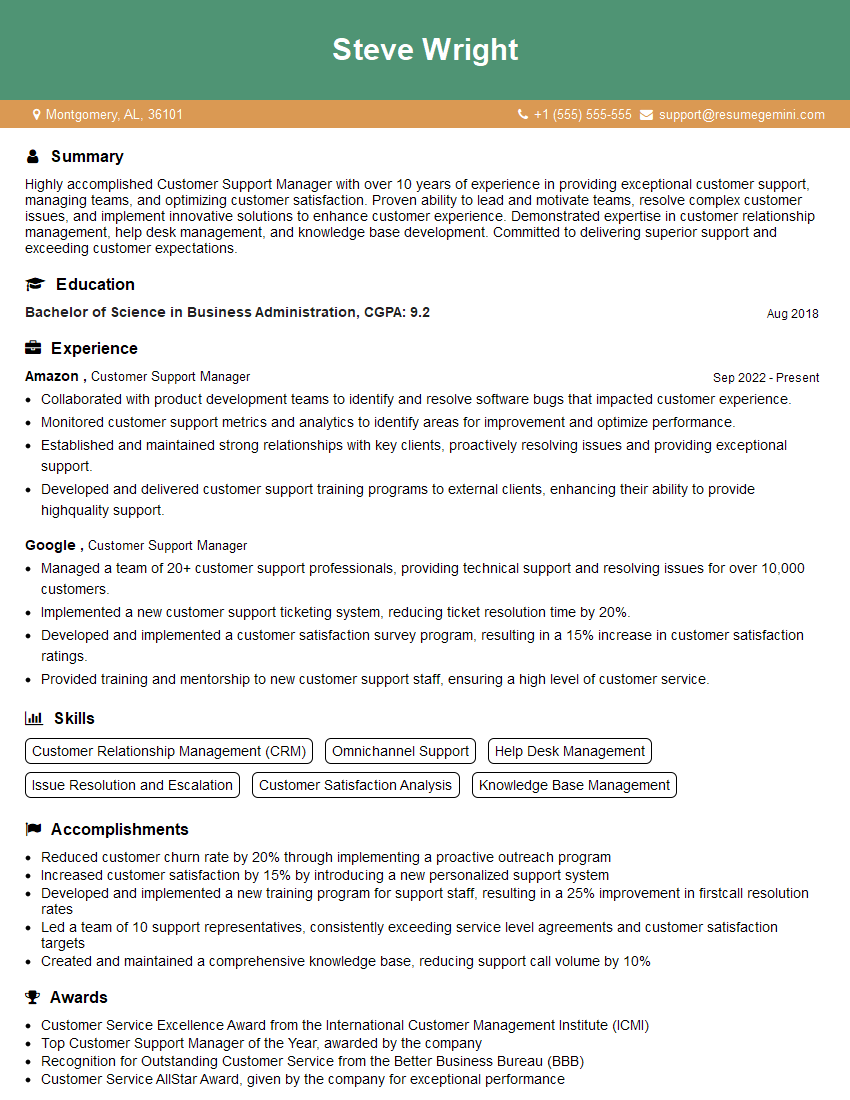
Customer Support Manager Resume Sample
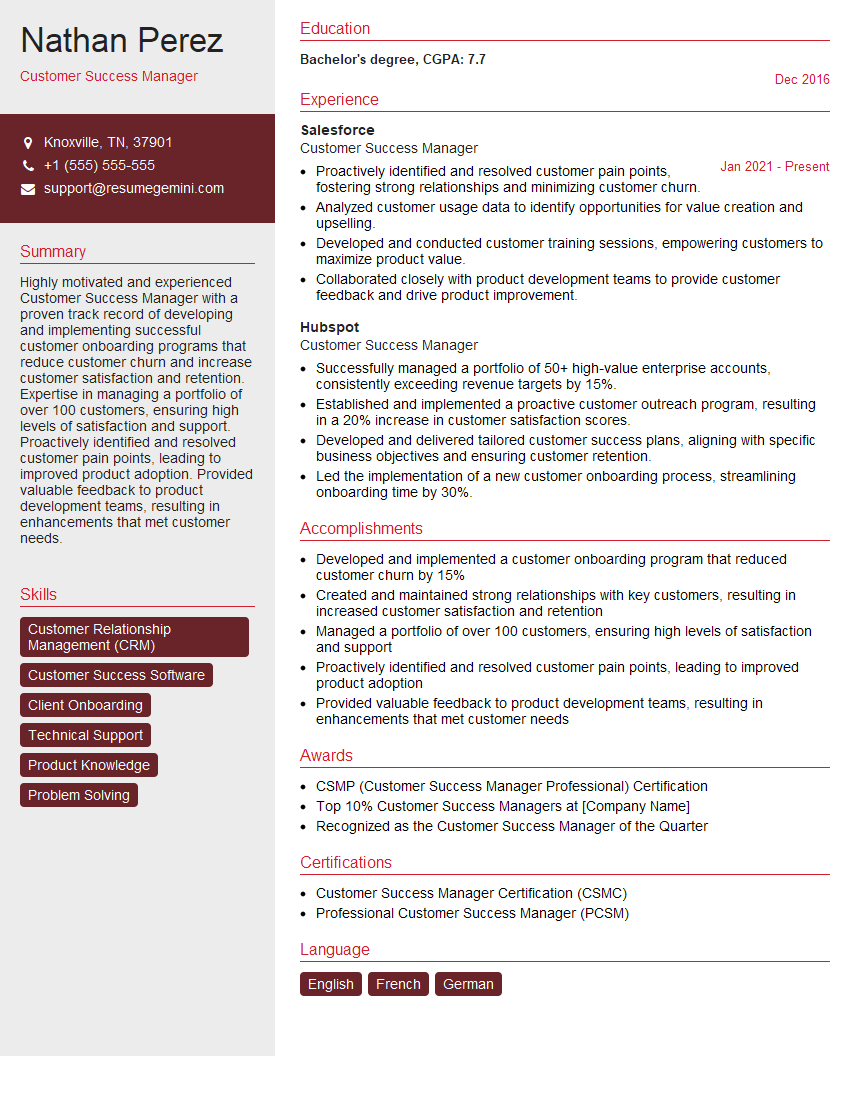
Customer Success Manager Resume Sample
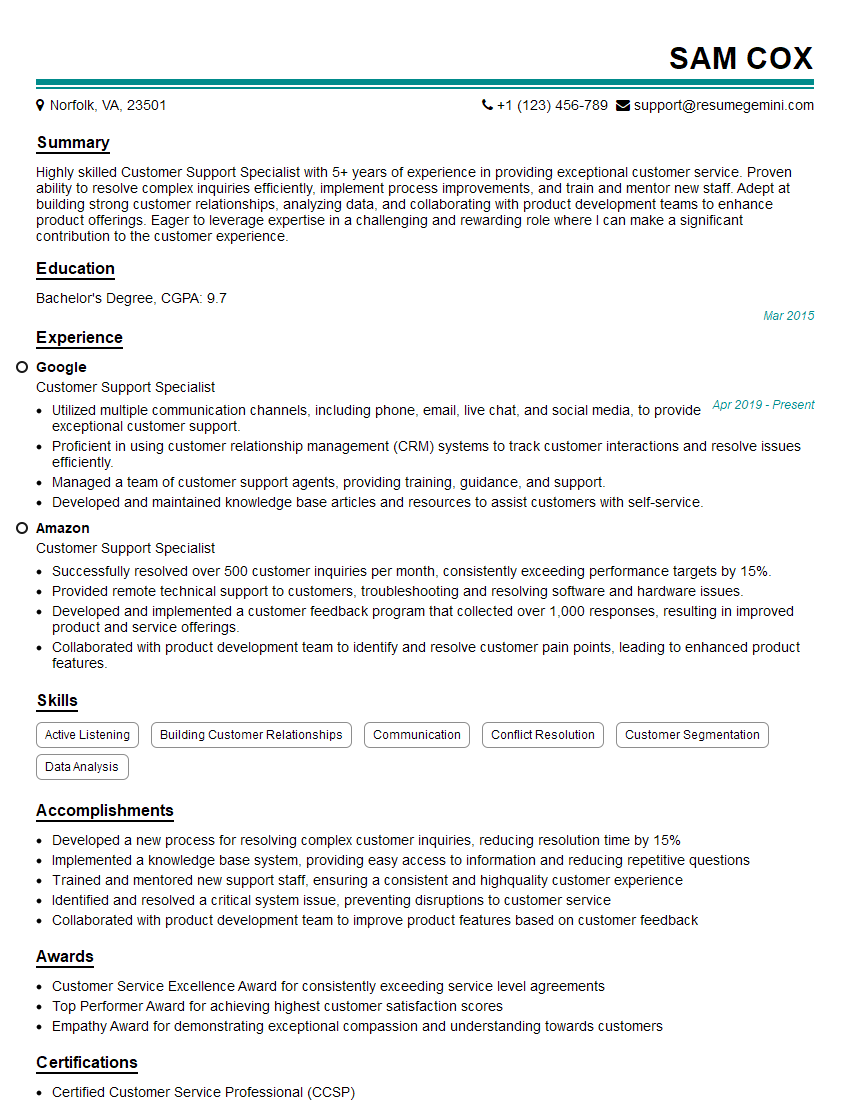
Customer Support Specialist Resume Sample
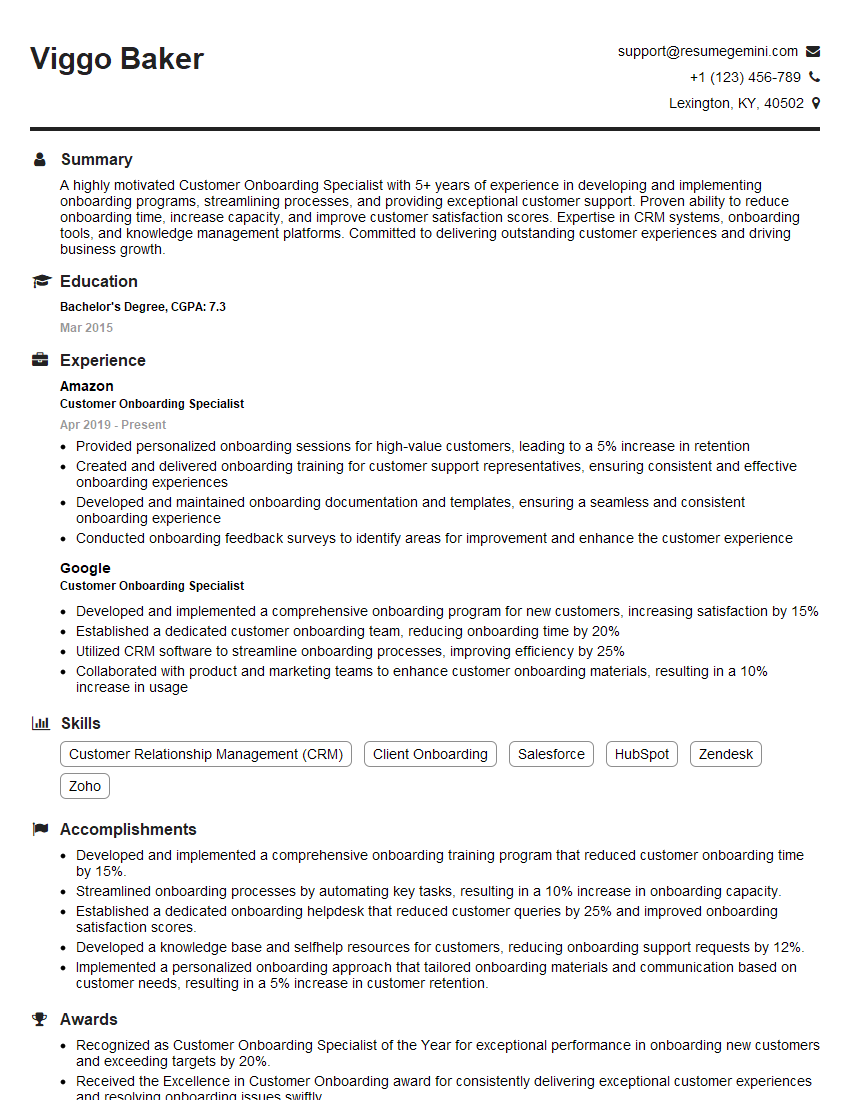
Customer Onboarding Specialist Resume Sample
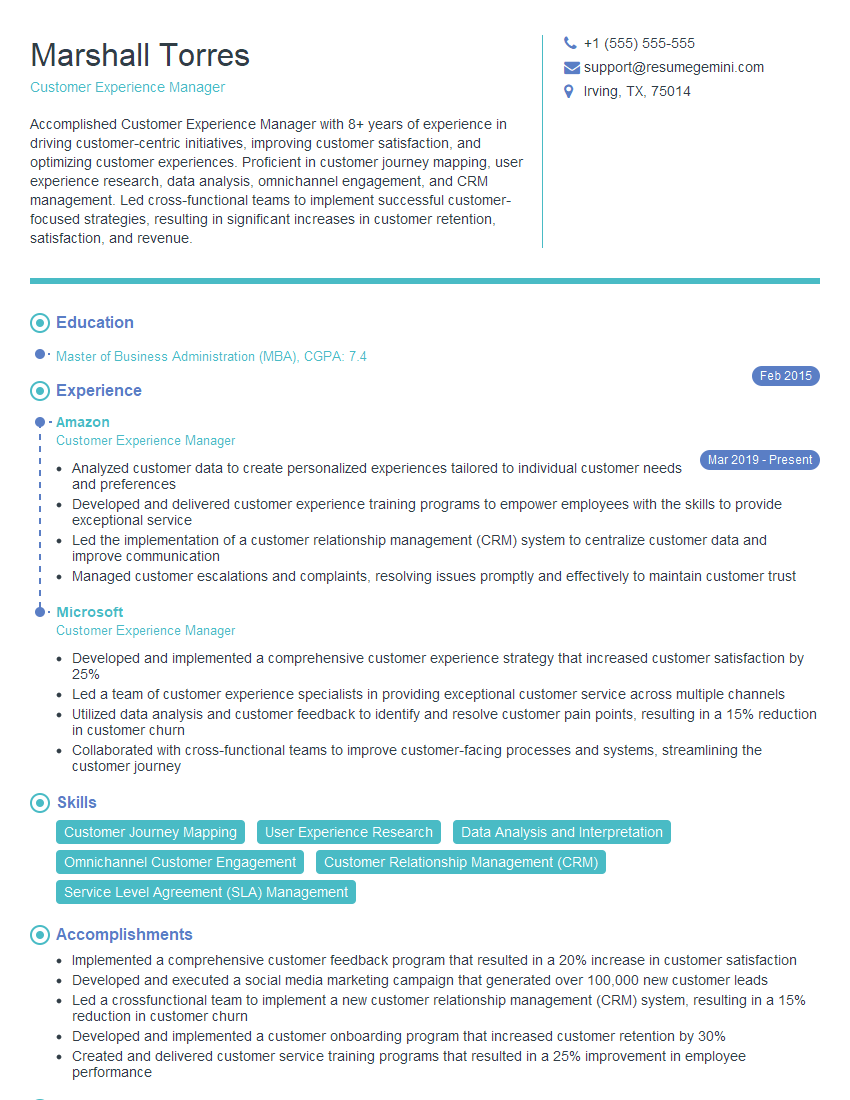
Customer Experience Manager Resume Sample
- Account Manager
- Relationship Manager
- Customer Service Representative
- Technical Support Engineer
- Customer Support Analyst
- Help Desk Analyst
- Technical Account Manager
- Technical Support Representative
- Customer Service Supervisor
- Customer Relationship Specialist
- Client Service Representative
- Customer Advocate
- Customer Support Manager
- Customer Success Manager
- Customer Support Specialist
- Customer Onboarding Specialist
- Customer Experience Manager
Explore more articles
Users Rating of Our Blogs
Share Your Experience
We value your feedback! Please rate our content and share your thoughts (optional).
What Readers Say About Our Blog
I Redesigned Spongebob Squarepants and his main characters of my artwork.
https://www.deviantart.com/reimaginesponge/art/Redesigned-Spongebob-characters-1223583608
IT gave me an insight and words to use and be able to think of examples
Hi, I’m Jay, we have a few potential clients that are interested in your services, thought you might be a good fit. I’d love to talk about the details, when do you have time to talk?
Best,
Jay
Founder | CEO