Every successful interview starts with knowing what to expect. In this blog, we’ll take you through the top Dairy Microbiology and Bacteriology interview questions, breaking them down with expert tips to help you deliver impactful answers. Step into your next interview fully prepared and ready to succeed.
Questions Asked in Dairy Microbiology and Bacteriology Interview
Q 1. Explain the role of lactic acid bacteria in dairy fermentation.
Lactic acid bacteria (LAB) are the workhorses of dairy fermentation, transforming milk into a diverse range of products like yogurt, cheese, and kefir. They achieve this through the process of lactic acid fermentation. Essentially, these bacteria metabolize lactose (milk sugar) into lactic acid. This process lowers the pH of the milk, creating an environment inhospitable to many spoilage and pathogenic microorganisms. The lactic acid itself also contributes to the characteristic tartness and texture of fermented dairy products. Different LAB species produce various by-products besides lactic acid, influencing the final flavor and aroma profile. For instance, Lactobacillus and Streptococcus are key players in yogurt production, while various Lactococcus strains are essential for cheese ripening.
Think of it like this: LAB are the chefs of the dairy world, using lactose as their main ingredient to create a unique and delicious final product. The drop in pH is their secret weapon against unwanted guests (spoilage bacteria).
Q 2. Describe common spoilage organisms found in dairy products and their control methods.
Several spoilage organisms can compromise dairy products, leading to off-flavors, gas production, and undesirable textures. Pseudomonas species are common culprits, producing proteolytic and lipolytic enzymes that break down proteins and fats, leading to bitter or rancid tastes. Bacillus species, often forming heat-resistant spores, can survive pasteurization and subsequently spoil products. Yeast and molds, particularly in cheeses, can cause discoloration, off-odors, and undesirable textures. Clostridium species, known for producing potent toxins, pose a significant health risk if present.
Control methods include: rigorous sanitation and hygiene practices throughout the production chain; effective pasteurization to kill vegetative cells; using appropriate starter cultures to quickly dominate the microbial landscape and prevent spoilage organisms from establishing themselves; low-temperature storage to slow microbial growth; and employing packaging that protects against microbial entry.
Imagine a cheese factory: impeccable cleanliness is paramount! From milking to packaging, every step needs careful control to minimize the chance of spoilage bacteria getting a foothold.
Q 3. What are the key indicators of milk quality from a microbiological perspective?
Microbiological indicators of milk quality assess the safety and suitability of milk for processing. Total bacterial count (TBC) gives an overall measure of microbial contamination. A high TBC suggests poor hygiene practices during milking or storage. The presence of coliforms (E. coli and related bacteria) indicates fecal contamination, a serious health concern. Somatic cell count (SCC) measures the number of white blood cells in milk; elevated SCC can signify mastitis (inflammation of the udder), which impacts both milk quality and animal health. Psychrotrophic bacteria, capable of growing at refrigeration temperatures, are a concern as they can produce enzymes that negatively impact the quality of processed dairy products.
Think of these indicators as a health check-up for milk. High TBC or coliform counts are like warning signs, showing a need for improvement in hygiene.
Q 4. Discuss the principles of pasteurization and its impact on dairy microbiology.
Pasteurization is a heat treatment that effectively eliminates most pathogenic and spoilage microorganisms in milk. The most common methods are High-Temperature Short-Time (HTST) pasteurization (72°C for 15 seconds) and Ultra-High Temperature (UHT) pasteurization (135-150°C for 2-5 seconds). HTST pasteurization aims to inactivate pathogens while preserving much of the milk’s flavor and nutritional value. UHT offers a longer shelf life by eliminating almost all microorganisms, albeit sometimes affecting the sensory quality slightly.
Pasteurization’s impact on dairy microbiology is dramatic. It drastically reduces the microbial load, making milk significantly safer for consumption and extending its shelf life. However, it doesn’t eliminate all microorganisms; heat-resistant spores of certain bacteria, such as Bacillus, might survive.
Pasteurization is like a powerful disinfectant for milk, dramatically reducing the risk of foodborne illnesses.
Q 5. How do you identify and differentiate between different species of bacteria commonly found in dairy products?
Identifying and differentiating bacterial species in dairy products often involves a combination of techniques. Gram staining helps classify bacteria as Gram-positive or Gram-negative. Biochemical tests, such as catalase and oxidase tests, reveal metabolic characteristics. Selective and differential media (e.g., MRS agar for LAB) allow for the isolation and identification of specific groups. Molecular methods, including PCR and DNA sequencing, provide the most precise identification down to the species and even strain level. API strips offer a miniaturized version of numerous biochemical tests, simplifying the identification process.
For example, distinguishing between Lactococcus lactis and Enterococcus faecalis involves a combination of Gram staining (both are Gram-positive), catalase test (Lactococcus is catalase-negative, Enterococcus is catalase-positive), and additional biochemical tests.
Think of it as a detective work: we use various clues (morphology, biochemical reactions, DNA) to identify the bacterial suspects.
Q 6. Explain the importance of hygiene practices in preventing microbial contamination in dairy processing.
Hygiene practices are critical in preventing microbial contamination throughout the dairy production chain. This includes maintaining cleanliness of milking equipment, ensuring proper udder hygiene during milking, using sanitized pipelines and processing equipment, employing appropriate cleaning and sanitizing agents, and adhering to strict personal hygiene protocols for workers. Implementing good manufacturing practices (GMPs) and Hazard Analysis and Critical Control Points (HACCP) principles is crucial in minimizing risks.
For example, regular cleaning and sanitization of milking equipment prevents the transfer of bacteria from the udder to the milk. Likewise, regular hand washing by workers minimizes the risk of introducing human-associated microorganisms into the milk.
Hygiene is the first line of defense against microbial contamination. A clean and organized facility is essential for producing safe and high-quality dairy products.
Q 7. What are the different methods used for detecting and enumerating microorganisms in dairy products?
Various methods exist for detecting and enumerating microorganisms in dairy products. Plate count methods involve diluting the sample and spreading it onto agar plates, incubating, and counting the colonies formed. This provides an estimate of the total viable count. Membrane filtration is another technique, particularly useful for low-microbial samples. It involves filtering a known volume of the sample through a membrane filter, transferring the bacteria to an agar plate, and counting colonies. Rapid methods, such as ATP bioluminescence, provide quicker estimates of microbial contamination, though they don’t identify specific organisms. Molecular methods, like qPCR, can detect and quantify specific microbial species or groups, enabling more precise assessments.
Choosing the right method depends on the specific needs of the analysis. Plate counting offers a relatively simple and inexpensive way to estimate the total viable count, while molecular methods offer greater specificity and sensitivity but are typically more complex and expensive.
Think of these methods as different tools in a microbiologist’s toolkit, each designed for a specific task in assessing milk quality.
Q 8. Describe the challenges in controlling bacterial contamination in cheesemaking.
Controlling bacterial contamination in cheesemaking presents a significant challenge due to the diverse array of microorganisms present in raw milk and the cheesemaking environment. These contaminants can lead to spoilage, impacting the quality and shelf life of the final product, and even posing health risks. The fight against contamination begins with the raw milk, which can harbor various bacteria, yeasts, and molds. Effective sanitation practices throughout the entire cheesemaking process are crucial.
- Raw Milk Quality: Maintaining high hygienic standards during milking, transportation, and storage is paramount. Any contamination at this stage can rapidly multiply throughout the process.
- Equipment Sanitation: Thorough cleaning and sanitization of all equipment, including vats, pipes, and utensils, are essential to eliminate existing microorganisms and prevent cross-contamination. This often involves multiple steps, such as pre-cleaning with detergents and subsequent sanitization with chemicals like chlorine or peracetic acid.
- Starter Cultures: The use of carefully selected and robust starter cultures helps to suppress the growth of unwanted bacteria by creating an environment less hospitable for them (e.g., through rapid acidification). This is a cornerstone of cheesemaking.
- Environmental Control: Maintaining a clean and sanitary production environment minimizes the risk of airborne contamination. This includes proper ventilation, air filtration, and worker hygiene protocols.
- Temperature Control: Controlling temperature throughout the entire process is critical. Many undesirable bacteria grow optimally at higher temperatures, so strict refrigeration is often necessary during certain stages.
- Salt Concentration: In some cheeses, salt plays a crucial role in inhibiting microbial growth and contributing to preservation. The salt concentration must be carefully managed to balance flavor and safety aspects.
Think of it like this: imagine cheesemaking as a delicate ecosystem. We strive to nurture the ‘good’ bacteria (starter cultures) while keeping out the ‘bad’ ones. It requires vigilance, meticulous cleaning, and a deep understanding of microbial interactions.
Q 9. Explain the principles of phage typing in dairy microbiology.
Phage typing is a powerful tool in dairy microbiology used to differentiate strains of bacteria, primarily those belonging to the Listeria, Salmonella, and Staphylococcus genera, which are important foodborne pathogens. It relies on the principle of bacteriophage specificity: each bacteriophage (a virus that infects bacteria) is highly specific to a particular bacterial strain or a closely related group of strains. By exposing a bacterial isolate to a panel of different bacteriophages, we can determine its susceptibility to various phages. This produces a unique phage typing pattern, which can act like a fingerprint, allowing us to distinguish between bacterial strains that might appear identical using other methods.
The process involves growing the bacterial isolate on agar plates and then adding specific phage suspensions onto the surface. Where the phage infects and lyses the bacteria, it creates clear zones called plaques. The presence or absence of plaques for each phage in the panel generates a phage type (e.g., phage type 1, phage type 2, etc.). This information helps in tracing outbreaks, understanding bacterial dissemination, and evaluating the effectiveness of sanitation procedures within a dairy facility. For example, if multiple samples of contaminated cheese all exhibit the same phage type, it’s strong evidence that the contamination originated from a single source.
Q 10. Discuss the use of probiotics in dairy products and their health benefits.
Probiotics are live microorganisms that, when administered in adequate amounts, confer a health benefit on the host. In dairy products, they are often added as part of the manufacturing process, and they survive the product’s shelf life and digestive process. Commonly used probiotics include strains of Lactobacillus and Bifidobacterium. Their inclusion in dairy foods is beneficial because these bacteria are naturally found in the human gut and have several documented health effects.
- Improved Gut Health: Probiotics help to restore the balance of gut microbiota, potentially alleviating symptoms of digestive disorders like irritable bowel syndrome (IBS). They compete with pathogenic bacteria for resources and space, limiting their growth.
- Enhanced Immunity: Some probiotics stimulate the immune system, boosting its response to pathogens. They can directly modulate the activity of immune cells in the gut.
- Lactose Tolerance: Certain probiotic strains can help individuals with lactose intolerance digest lactose more easily by producing lactase enzyme.
- Reduced Inflammation: Studies suggest that some probiotics can have anti-inflammatory effects in the gut, which may be beneficial for several health conditions.
For example, yogurt with live and active cultures often contains probiotics. It’s essential to note that the benefits of probiotics are strain-specific, meaning not all probiotic strains offer the same health effects. Therefore, proper strain selection is crucial in the development of probiotic dairy products.
Q 11. How does temperature affect the growth of microorganisms in dairy products?
Temperature plays a crucial role in the growth of microorganisms in dairy products. Each microorganism has an optimal temperature range for growth, and the temperature of the dairy product significantly impacts which organisms thrive. Most dairy products are perishable due to their nutritional composition, making temperature control critical for extending their shelf life and ensuring safety.
- Psychrophiles: These microorganisms grow best at low temperatures (0-20°C) and can cause spoilage in refrigerated dairy products if not properly controlled. They are often responsible for the off-flavors and slimy textures in spoiled milk and yogurt.
- Mesophiles: These are the most common type of bacteria in dairy products, thriving at moderate temperatures (20-45°C). Many pathogenic bacteria fall into this category, and their growth is minimized by refrigeration.
- Thermophiles: These organisms grow at high temperatures (45-80°C) and are less common in dairy products unless there has been a failure in temperature control.
Imagine a graph showing microbial growth rate versus temperature. Each type of microbe has a bell-shaped curve with an optimal growth temperature at its peak. Refrigeration shifts the temperature to a level where the growth rate of most undesirable bacteria is significantly reduced, extending the shelf life of the product.
Q 12. Explain the role of water activity in the growth of microorganisms in dairy products.
Water activity (aw) is a measure of the availability of water for microbial growth. It’s expressed as the ratio of the vapor pressure of the water in a substance to the vapor pressure of pure water at the same temperature. Aw values range from 0 to 1, with 1 representing pure water. The aw of a food product significantly influences the growth of microorganisms. Lower aw values typically inhibit microbial growth.
In dairy products, aw is reduced through several methods: the addition of solutes (like salt and sugar), drying (as in powdered milk), and concentration (as in evaporated milk). Many spoilage and pathogenic bacteria require a relatively high aw (above 0.90) to grow, hence methods to lower aw act as a preservation strategy. However, some microorganisms, known as osmophiles, can tolerate and even thrive in environments with low aw. The interplay between aw and other factors, such as temperature and pH, determines which microorganisms can grow in a given dairy product.
For instance, hard cheeses have a lower aw than soft cheeses because of the higher salt content, resulting in a longer shelf life due to inhibited microbial growth.
Q 13. What are the different types of media used for culturing dairy microorganisms?
Various culture media are employed to cultivate and identify dairy microorganisms. The choice of medium depends on the specific organism being targeted and the purpose of the cultivation.
- Plate Count Agar (PCA): This is a general-purpose medium used for determining the total viable count of bacteria in dairy products. It supports the growth of a wide range of microorganisms.
- M17 Agar: A selective medium for lactic acid bacteria, commonly used in dairy microbiology. It contains components that enhance the growth of these bacteria while inhibiting others.
- MRS Agar: Specifically designed for the cultivation of lactic acid bacteria from fermented dairy products. This rich medium helps to recover even those strains that might be stressed or present in low numbers.
- Violet Red Bile Agar (VRBA): Used for the selective isolation and enumeration of coliforms, indicators of fecal contamination. The bile salts inhibit the growth of most other bacteria.
- MacConkey Agar: Another selective medium, useful for the identification of Gram-negative bacteria, including Enterobacteriaceae, which might contaminate dairy products.
These are just a few examples. Specialized media exist for isolating and identifying specific dairy-related pathogens or spoilage organisms. The correct choice of media is essential for obtaining accurate and reliable results in dairy microbiology testing.
Q 14. Describe the different methods for preserving dairy cultures.
Preserving dairy cultures is critical for maintaining their viability and consistent performance in cheesemaking and other dairy processes. Several methods are used:
- Freeze-drying (Lyophilization): This is a widely used method where the culture is rapidly frozen and then dehydrated under vacuum. This process removes water, inhibiting microbial growth, and preserving the culture for extended periods.
- Cryopreservation: Involves freezing the culture at ultra-low temperatures (-80°C or lower) in a cryoprotective agent, such as glycerol or dimethyl sulfoxide (DMSO). This protects the cells from damage during freezing and thawing.
- Storage at Low Temperatures: Cultures can be stored at refrigerator temperatures (4°C) for short periods, but this method doesn’t offer long-term viability.
- Subculturing: This involves periodically transferring the culture to fresh medium. While it’s simple, it risks genetic drift and contamination over time.
The optimal preservation method depends on factors like the type of culture, the desired storage duration, and the available resources. Lyophilization is generally preferred for long-term storage, while cryopreservation is suitable for maintaining viability for shorter periods but offers greater ease of handling.
Q 15. What are the regulatory requirements for microbial safety in dairy products?
Microbial safety in dairy products is governed by stringent regulations worldwide, varying slightly by country but sharing common goals. These regulations aim to prevent foodborne illnesses caused by pathogens like Listeria monocytogenes, Salmonella spp., E. coli O157:H7, and Staphylococcus aureus, as well as to ensure the quality and wholesomeness of the products.
- Maximum permitted levels: Regulations often specify the maximum allowable counts of various microorganisms (e.g., total coliforms, E. coli) in different dairy products. Exceeding these limits triggers corrective actions and may result in product recalls.
- Good Manufacturing Practices (GMPs): These encompass all aspects of dairy production, from raw milk handling to packaging, emphasizing hygiene, sanitation, and process control. GMP compliance is crucial for meeting safety standards.
- Hazard Analysis and Critical Control Points (HACCP): This preventative system identifies potential hazards and establishes control measures at critical points in the production process to minimize risks. HACCP plans are often mandatory for dairy processors.
- Testing and monitoring: Regular microbiological testing of raw materials, intermediate products, and finished goods is essential to ensure ongoing compliance. Results are meticulously documented and analyzed.
- Traceability: Effective traceability systems are necessary to rapidly identify and remove contaminated batches in case of an outbreak. This involves detailed record-keeping throughout the production chain.
For example, the FDA in the US and the EFSA in Europe have established detailed guidelines and regulations for the dairy industry, impacting everything from farm practices to final product labeling.
Career Expert Tips:
- Ace those interviews! Prepare effectively by reviewing the Top 50 Most Common Interview Questions on ResumeGemini.
- Navigate your job search with confidence! Explore a wide range of Career Tips on ResumeGemini. Learn about common challenges and recommendations to overcome them.
- Craft the perfect resume! Master the Art of Resume Writing with ResumeGemini’s guide. Showcase your unique qualifications and achievements effectively.
- Don’t miss out on holiday savings! Build your dream resume with ResumeGemini’s ATS optimized templates.
Q 16. How do you interpret microbiological test results in the context of dairy product safety?
Interpreting microbiological test results in dairy products requires a holistic approach, considering several factors beyond just the numerical count of microorganisms.
- Type of organism: The presence of pathogens (e.g., Listeria) is far more critical than that of spoilage organisms (e.g., lactic acid bacteria). Even low numbers of pathogens necessitate immediate action.
- Organism count: While specific limits are set by regulations, the magnitude of the count provides context. A high count suggests inadequate control measures at some point in the production process.
- Product type: Different dairy products have varying levels of inherent microbial tolerance. A count acceptable in yogurt might be unacceptable in pasteurized milk.
- Testing method: The sensitivity and specificity of the microbiological testing methods must be considered. Different methods may yield different results. For example, a PCR test is far more sensitive for detecting pathogens than traditional plate counts.
- Environmental context: The overall hygiene standards in the production facility and the conditions during storage and distribution impact interpretation. High counts might indicate a systemic problem rather than a single event.
Imagine finding a high count of E. coli in pasteurized milk. This is highly concerning, indicating a possible breach in processing or post-processing contamination. This would necessitate a thorough investigation of the entire production chain to identify the source.
Q 17. Discuss the impact of sanitation procedures on the microbial quality of dairy products.
Sanitation procedures are absolutely fundamental in maintaining the microbial quality of dairy products. Thorough sanitation significantly reduces the microbial load on equipment, surfaces, and ultimately, the final product.
- Cleaning-in-place (CIP): This automated system uses various chemicals and hot water to clean and sanitize processing equipment without disassembly. It’s crucial for large-scale dairy operations.
- Manual cleaning and sanitization: Manual cleaning, especially in smaller facilities, relies on careful cleaning and disinfection of all contact surfaces with appropriate sanitizers. Proper training is key to its effectiveness.
- Sanitizer selection: The choice of sanitizer (e.g., chlorine compounds, iodophores, quaternary ammonium compounds) depends on several factors including the type of equipment, the targeted microorganisms, and potential interactions with the product.
- Monitoring and validation: Regular monitoring of sanitation efficacy through microbial testing and visual inspection is essential to ensure consistent effectiveness. Validation studies demonstrate the ability of the sanitation procedure to effectively eliminate target organisms.
- Personal hygiene: Employees’ personal hygiene practices, including handwashing and wearing appropriate protective clothing, are critical to preventing contamination.
Effective sanitation, as part of a comprehensive GMP program, significantly reduces the risk of post-processing contamination, greatly improving the shelf life and safety of the dairy products.
Q 18. Explain the concept of Hazard Analysis and Critical Control Points (HACCP) in dairy processing.
Hazard Analysis and Critical Control Points (HACCP) is a systematic, preventative approach to food safety that identifies potential biological, chemical, or physical hazards in the production process and establishes controls to minimize or eliminate them.
- Hazard Analysis: This initial step involves identifying potential hazards, such as microbial contamination, chemical residues, or physical contaminants. For dairy, this includes pathogens, allergens, and toxins from spoilage microorganisms.
- Critical Control Points (CCPs) Identification: These are specific points in the process where control can prevent or eliminate a hazard. Examples include pasteurization, cooling, and sanitation.
- Critical Limits: These are the measurable limits at each CCP that must be met to control the hazard. For example, the temperature and holding time during pasteurization.
- Monitoring Procedures: Regular monitoring of the CCPs ensures that the critical limits are met. This might involve temperature monitoring, pH measurements, or microbiological testing.
- Corrective Actions: Procedures must be in place to deal with deviations from the critical limits. This could involve discarding a batch or adjusting the process parameters.
- Verification Procedures: Regular verification activities ensure that the HACCP plan is effective. This includes audits, record reviews, and environmental monitoring.
- Record-Keeping: Detailed records must be maintained documenting all aspects of the HACCP plan. This provides traceability in case of a contamination incident.
A well-implemented HACCP plan minimizes food safety risks, making dairy products safer for consumers. It’s not just a regulatory requirement; it’s a proactive strategy to prevent problems before they occur.
Q 19. Describe the use of molecular techniques in dairy microbiology.
Molecular techniques have revolutionized dairy microbiology, offering speed, sensitivity, and specificity unmatched by traditional methods. These techniques are particularly useful for detecting pathogens and spoilage organisms even at low concentrations.
- Polymerase Chain Reaction (PCR): PCR amplifies specific DNA sequences, allowing for the detection of even a few pathogen cells. Real-time PCR provides quantitative results.
- Next-Generation Sequencing (NGS): NGS allows for the simultaneous sequencing of many microbial genomes, providing detailed information about the composition of the microbial community in dairy products and processing environments. This helps identify emerging pathogens and track contamination sources.
- Microarrays: Microarrays can simultaneously detect many different microorganisms, providing a comprehensive profile of the microbial community. They are useful for rapid screening of numerous samples.
- Pulsed-Field Gel Electrophoresis (PFGE): This technique is used for characterizing bacterial strains, helping to track the source of contamination in outbreaks.
- Quantitative PCR (qPCR): qPCR provides precise quantification of target microbial DNA, enabling more accurate risk assessments.
For example, PCR is routinely used to detect Listeria monocytogenes in dairy products, even at very low concentrations, allowing for timely intervention and preventing outbreaks. NGS can help track the source of a contamination event by identifying the genetic fingerprints of the contaminating strains.
Q 20. How do you investigate a microbial contamination outbreak in a dairy processing plant?
Investigating a microbial contamination outbreak in a dairy processing plant is a complex process requiring a systematic and multidisciplinary approach.
- Immediate Actions: The first step involves isolating the implicated product and tracing its origin and distribution to prevent further spread. Sick consumers must be identified and treated.
- Sample Collection: Samples of implicated products, raw materials, environmental surfaces, and worker hands must be collected for microbiological analysis. These samples need to be collected using sterile techniques.
- Microbiological Testing: Detailed microbiological analysis, including identification of the contaminating organism and its strain type (using techniques like PFGE), will pinpoint the cause.
- Trace-Back Investigation: This involves meticulously tracking the product’s journey through the processing facility and supply chain, reviewing records, and interviewing personnel to pinpoint the contamination source.
- Environmental Sampling: This involves examining processing equipment, surfaces, and the facility’s environment for sources of contamination. High-risk areas like drains and cooling systems warrant special attention.
- Corrective Actions: Once the source is identified, specific corrective actions are implemented to prevent future occurrences. This may involve equipment upgrades, new sanitation protocols, or employee retraining.
- Report Generation: A comprehensive report summarizing the investigation’s findings, including the source of contamination, corrective actions, and recommendations for prevention, is crucial.
Such an investigation needs close collaboration between microbiologists, food safety specialists, plant management, and potentially public health officials. Effective communication and thorough documentation are paramount.
Q 21. What are the key challenges in maintaining the sterility of dairy processing equipment?
Maintaining the sterility of dairy processing equipment is a significant challenge due to the nature of dairy products and the environment they are processed in. Several key challenges exist:
- Biofilm formation: Biofilms, complex communities of microorganisms attached to surfaces, are extremely resistant to cleaning and sanitization. They are notoriously difficult to remove.
- Equipment design: Equipment design plays a critical role. Complex designs with hard-to-reach crevices can harbor microorganisms, making cleaning difficult. Simple, easily cleanable designs are essential.
- Sanitizer efficacy: Sanitizers’ effectiveness is impacted by factors such as temperature, concentration, contact time, and the presence of organic matter. Optimizing these parameters is critical.
- Cleaning validation: Demonstrating that cleaning and sanitation procedures effectively remove microorganisms is critical, but it can be complex and resource-intensive. Effective monitoring and validation are essential.
- Product residue: Dairy products leave residues that can protect microorganisms from sanitizers, hindering their efficacy. Thorough cleaning to remove these residues is therefore important.
Imagine a situation where a milk line has a small, hard-to-reach crack. This crack can become a reservoir for bacteria, which may not be removed during regular cleaning, leading to recurring contamination and product spoilage. Thus, careful equipment design and thorough cleaning protocols are crucial.
Q 22. Explain the role of preservatives in extending the shelf life of dairy products.
Preservatives in dairy products play a crucial role in extending shelf life by inhibiting or slowing down the growth of spoilage and pathogenic microorganisms. They work by targeting various aspects of microbial metabolism, preventing them from multiplying and causing undesirable changes in the product’s quality, safety, and sensory attributes. This is particularly important for dairy products, which are highly susceptible to microbial spoilage due to their nutrient-rich nature.
Examples of preservatives commonly used in dairy products include:
Sorbic acid and sorbates: These inhibit fungal growth and are particularly effective against yeasts and molds, common culprits in dairy spoilage.
Benzoic acid and benzoates: Similar to sorbates, these inhibit fungal and bacterial growth, preventing souring and off-flavors.
Nisin: A bacteriocin (naturally produced antimicrobial peptide) effective against Gram-positive bacteria, commonly found in cheese and fermented dairy products. It’s considered a natural preservative.
Sodium nitrite/nitrate: Used primarily in processed cheese to inhibit the growth of Clostridium botulinum, a deadly bacterium that can produce toxins.
The choice of preservative depends on factors such as the type of dairy product, desired shelf life, and consumer preferences for natural versus synthetic preservatives. For instance, nisin is preferred in products marketed as ‘natural’, while others might use a combination of sorbates and benzoates for broader spectrum protection.
Q 23. Describe the effects of different packaging materials on the microbial growth in dairy products.
Packaging materials significantly impact the microbial growth in dairy products by controlling factors like oxygen permeability, moisture transmission, and light exposure. These factors directly influence the growth environment for microorganisms.
High-barrier packaging (e.g., multilayer films with aluminum foil): These materials effectively limit oxygen and moisture transfer, thus retarding the growth of aerobic microorganisms that require oxygen to survive (e.g., many spoilage molds and some bacteria). They can also block UV light, which can degrade some dairy components and promote microbial growth indirectly.
Modified Atmosphere Packaging (MAP): This technique involves modifying the gaseous environment within the package. For example, replacing air with a mixture of nitrogen and carbon dioxide can reduce oxygen levels, inhibiting aerobic microbial growth. This extends the shelf life significantly.
Aseptic packaging: This involves sterilizing the product and packaging material separately before filling, ensuring a completely sterile environment. This is commonly used for long-shelf-life products like UHT milk.
Glass bottles: While offering good barrier properties against oxygen, glass bottles are heavier and more fragile compared to other options. They can also be more susceptible to breakage, potentially leading to contamination.
Cardboard cartons: Less effective as barriers compared to other options, more susceptible to moisture ingress and thus increased microbial spoilage. This is often mitigated by using special coatings.
Choosing the right packaging material is crucial for ensuring the quality and safety of dairy products. The selection will be based on factors like the type of product, desired shelf life, cost, and environmental impact. For example, UHT milk will always opt for aseptic packaging to ensure prolonged shelf life, while fresh pasteurized milk might choose a high-barrier plastic container to extend shelf-life a few days.
Q 24. Discuss the importance of good manufacturing practices (GMP) in dairy production.
Good Manufacturing Practices (GMPs) are fundamental to ensuring the safety and quality of dairy products. They encompass a comprehensive system of procedures, guidelines, and regulations designed to minimize contamination risks throughout the production process. Think of GMP as a holistic approach ensuring every step from raw material handling to final packaging minimizes the possibility of microbial contamination.
Importance of GMPs in dairy production:
Preventing contamination: GMPs dictate strict hygiene standards for equipment, facilities, and personnel, significantly reducing the risk of introducing microorganisms from various sources (e.g., raw materials, environment, personnel).
Ensuring product consistency: Consistent application of GMPs ensures that the product quality remains consistent from batch to batch.
Meeting regulatory requirements: Compliance with GMPs is essential for meeting local and international food safety regulations and standards (e.g., FDA, HACCP).
Protecting consumer health: By minimizing microbial contamination, GMPs directly contribute to protecting consumer health and preventing foodborne illnesses.
In practice, GMPs involve rigorous sanitation protocols, regular equipment maintenance, employee training, proper handling of raw materials, and a robust traceability system. Neglecting GMP can lead to serious consequences, such as product recalls, legal issues, and damage to brand reputation.
For example, a dairy failing to follow proper sanitation procedures could lead to a Listeria outbreak, resulting in a product recall and potentially serious health consequences for consumers. Regular internal audits and external inspections ensure adherence to GMP principles.
Q 25. Explain the impact of storage temperature on the microbial stability of dairy products.
Storage temperature profoundly impacts the microbial stability of dairy products. Lower temperatures significantly slow down the growth of most microorganisms, increasing the product’s shelf life and maintaining its quality.
Psychrophiles: These cold-loving bacteria can still grow at refrigeration temperatures (0-7°C), although at a slower rate than at higher temperatures. This is important to consider for products stored in refrigerators, as even slow growth can eventually lead to spoilage.
Mesophiles: The majority of spoilage and pathogenic bacteria are mesophiles, growing optimally at temperatures between 20-45°C. They’re inactive at refrigeration temperatures and thrive at room temperature. Therefore, proper refrigeration is critical.
Thermophiles: These heat-loving bacteria can grow at high temperatures (above 45°C). While not directly relevant to typical storage, they are important in the pasteurization process where they might be present (though usually killed by the process).
Practical Application: Pasteurized milk should always be kept refrigerated (below 4°C) to minimize the growth of any surviving psychrophiles. Improper storage at room temperature will rapidly lead to spoilage (souring, off-flavors) due to rapid bacterial growth.
For example, leaving milk out at room temperature for several hours will cause a drastic increase in bacterial count, resulting in off-flavors and potential health risks if the count includes pathogens. A properly refrigerated dairy product can maintain its quality and safety for a significantly longer period.
Q 26. How do you evaluate the effectiveness of different cleaning and sanitization protocols?
Evaluating the effectiveness of cleaning and sanitization protocols in dairy production requires a multi-faceted approach combining visual inspection, microbiological testing, and ATP bioluminescence. The aim is to verify that the chosen protocols effectively eliminate or reduce microbial populations to acceptable levels.
Visual Inspection: A first step to check for visible residues or biofilms on equipment surfaces. Clean surfaces should be free of visible debris.
Microbiological Testing: This is a crucial step. Samples are taken from various equipment surfaces after cleaning and sanitization. These samples are then cultured on appropriate media to determine the total microbial count, including specific indicator organisms (e.g., coliforms and E. coli) or pathogens of concern. The results are compared against established limits to assess the effectiveness of the protocol.
ATP Bioluminescence: This rapid method measures adenosine triphosphate (ATP), present in all living cells. A higher ATP reading indicates a higher level of microbial contamination, providing a quick assessment of cleanliness. It complements microbiological testing, offering a rapid indication of cleaning effectiveness.
Example: A dairy could monitor the effectiveness of its CIP (Clean-in-Place) system by regularly collecting samples from various points within the system after the cleaning cycle. Microbiological analysis of these samples will indicate if the system is effectively removing bacteria and preventing biofilm formation. If the results exceed acceptable limits, the protocol may need optimization (e.g., increase cleaning time, change chemicals, etc.).
Q 27. Describe the different types of spoilage microorganisms found in milk and their metabolic characteristics.
Milk, being a rich nutrient source, supports a diverse range of spoilage microorganisms. These organisms have varied metabolic characteristics which dictate their spoilage mechanisms.
Bacteria:
Lactococcus lactis: A lactic acid bacterium (LAB) responsible for souring milk through lactic acid fermentation. It’s involved in many fermented dairy products, though undesirable in pasteurized milk.
Pseudomonas spp.: These psychrotrophic bacteria (grow at low temperatures) produce proteases and lipases, leading to off-flavors, ropiness, and changes in texture.
Bacillus spp.: Spore-forming bacteria that can survive pasteurization and cause issues with off-flavors or gas production during storage.
Yeasts and Molds:
Candida spp. and Saccharomyces spp.: These can cause undesirable flavors and smells, often leading to off-odors and changes in texture.
Penicillium spp. and Aspergillus spp.: Molds are often associated with surface spoilage, causing discoloration and off-flavors.
Understanding the metabolic characteristics of these organisms is vital for implementing appropriate control measures. For example, knowing that Pseudomonas spp. are psychrophiles highlights the importance of refrigeration in preventing spoilage. Similarly, the spore-forming nature of Bacillus spp. underlines the need for effective pasteurization to ensure their inactivation.
Q 28. Explain the principles of microbial risk assessment in dairy production.
Microbial risk assessment in dairy production is a systematic process to identify, analyze, and manage potential hazards associated with microbial contamination. It’s a proactive approach aiming to prevent foodborne illnesses and maintain product quality.
Hazard Identification: This involves identifying potential microbial hazards throughout the production process, from raw milk receipt to finished product. This involves considering possible pathogens (e.g., Salmonella, Listeria monocytogenes, E. coli O157:H7) and spoilage organisms. Raw milk quality, processing steps, equipment, and storage conditions are assessed.
Hazard Characterization: This involves assessing the likelihood and severity of each identified hazard. Factors considered include the prevalence of the pathogen, its virulence, and the potential consequences of contamination.
Exposure Assessment: This involves evaluating the potential exposure of consumers to the identified hazards. Factors considered include the amount of pathogen likely present, the size of the population at risk, and the potential for contamination to go undetected.
Risk Characterization: This integrates the information from the previous steps to estimate the overall risk to consumers. This assessment helps prioritize control measures.
Risk Management: This involves implementing and monitoring control measures to reduce or eliminate the identified risks. Examples of control measures include proper sanitation, pasteurization, refrigeration, and appropriate packaging. Continuous monitoring and adjustments are necessary to maintain an effective risk management system.
HACCP (Hazard Analysis and Critical Control Points) is a widely used system for implementing microbial risk assessment in dairy production. HACCP identifies critical control points (CCPs) where control measures are crucial to prevent hazards. These CCPs are continuously monitored to guarantee safety and quality.
Key Topics to Learn for Your Dairy Microbiology and Bacteriology Interview
Ace your interview by mastering these essential areas of Dairy Microbiology and Bacteriology. Remember to focus on not just the theory, but also how these concepts apply in real-world dairy settings.
- Microbial Ecology of Dairy Products: Understanding the diverse microbial communities found in milk and dairy products (starter cultures, spoilage organisms, pathogens). Consider the impact of various environmental factors on microbial growth.
- Starter Cultures and Fermentation: Deep dive into the role of lactic acid bacteria in cheese, yogurt, and other fermented dairy products. Explore the metabolic pathways involved and the factors influencing fermentation efficiency and flavor development.
- Dairy Spoilage Microorganisms: Learn to identify common spoilage organisms and the mechanisms by which they alter the quality and shelf-life of dairy products. Understand the strategies used to prevent spoilage, such as sanitation, refrigeration, and preservation techniques.
- Foodborne Pathogens in Dairy: Focus on the major bacterial pathogens associated with dairy products (e.g., *Listeria monocytogenes*, *Salmonella*, *E. coli*). Understand their survival and growth characteristics in dairy environments and the methods for their detection and control.
- Dairy Hygiene and Sanitation: Master the principles of good manufacturing practices (GMPs) and Hazard Analysis and Critical Control Points (HACCP) in dairy processing. This includes understanding sanitation procedures, equipment hygiene, and preventing microbial contamination.
- Bacteriological Testing and Analysis: Familiarize yourself with common microbiological techniques used in dairy quality control, such as plate counts, MPN estimations, and rapid detection methods. Practice explaining the interpretation of results and their implications.
- Dairy Product Preservation: Explore various preservation methods used in the dairy industry, such as pasteurization, ultra-high temperature (UHT) processing, and other non-thermal techniques. Understand their impact on microbial populations and product quality.
- Quality Control and Assurance: Develop your understanding of how microbiological testing contributes to maintaining consistent product quality and meeting safety standards.
Next Steps: Unlock Your Dairy Career Potential
Mastering Dairy Microbiology and Bacteriology is crucial for a successful career in the dairy industry. It opens doors to exciting roles in quality control, research and development, production, and more. To maximize your job prospects, invest time in creating a strong, ATS-friendly resume that showcases your skills and experience effectively.
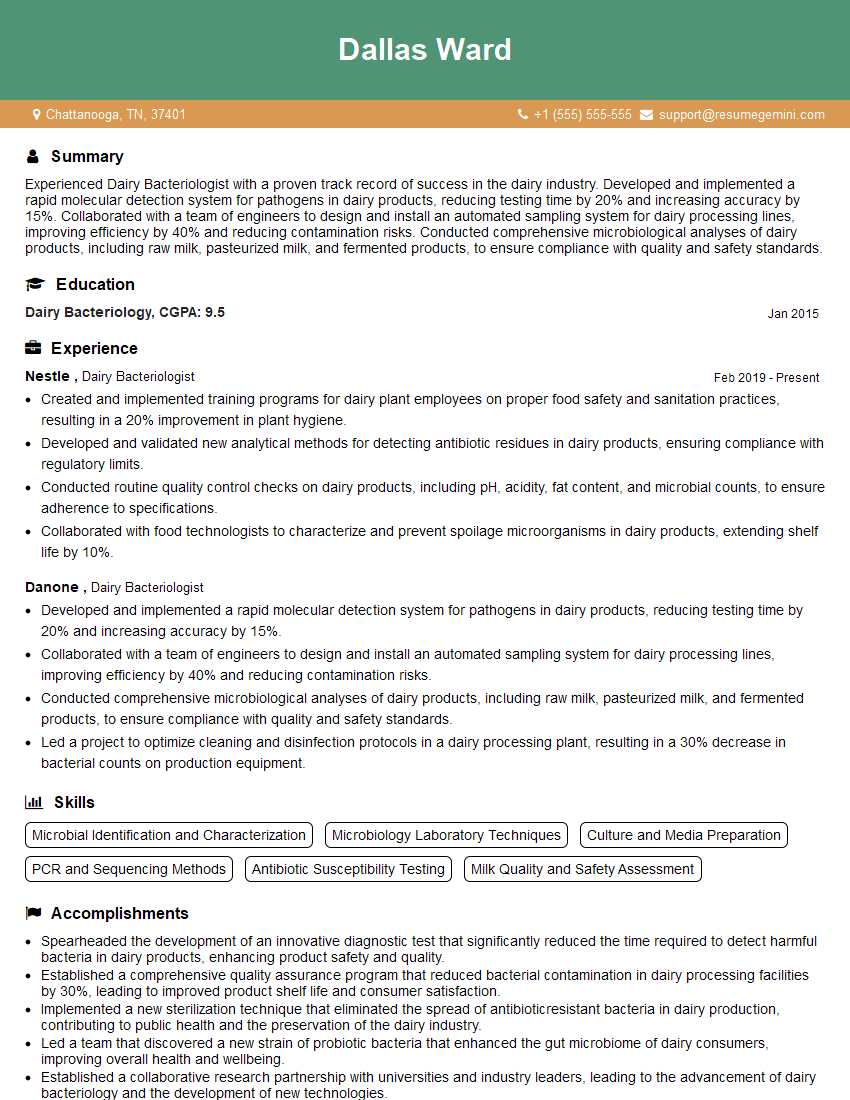
ResumeGemini is a trusted resource to help you build a professional resume that stands out. They provide examples of resumes tailored to Dairy Microbiology and Bacteriology to give you a head start. Take the next step towards your dream dairy career today!
Explore more articles
Users Rating of Our Blogs
Share Your Experience
We value your feedback! Please rate our content and share your thoughts (optional).
What Readers Say About Our Blog
Really detailed insights and content, thank you for writing this detailed article.
IT gave me an insight and words to use and be able to think of examples