Interviews are more than just a Q&A session—they’re a chance to prove your worth. This blog dives into essential Dairy Processing Technologies interview questions and expert tips to help you align your answers with what hiring managers are looking for. Start preparing to shine!
Questions Asked in Dairy Processing Technologies Interview
Q 1. Describe the pasteurization process and its impact on milk safety.
Pasteurization is a heat treatment process that eliminates harmful microorganisms in milk, significantly enhancing its safety. It’s named after Louis Pasteur, who pioneered the technique. The process involves heating milk to a specific temperature for a set time, then rapidly cooling it. This heat destroys pathogens like Salmonella, E. coli, and Listeria, which can cause foodborne illnesses.
There are several methods:
- High-Temperature Short-Time (HTST) pasteurization: Milk is heated to 72°C (161°F) for 15 seconds. This is the most common method due to its efficiency and minimal impact on milk flavor.
- Ultra-High Temperature (UHT) pasteurization: Milk is heated to 135°C (275°F) for 2-5 seconds. This results in a longer shelf life, often without refrigeration, but can slightly alter the taste and nutritional value.
The impact on safety is dramatic. Before pasteurization, milk-borne illnesses were common. Now, pasteurization is a cornerstone of safe milk production, protecting consumers from potentially fatal diseases.
Q 2. Explain the principle of homogenization and its effect on milk texture.
Homogenization is a process that reduces the size of fat globules in milk, preventing them from separating and creating a cream layer. It uses high pressure to force milk through tiny nozzles, breaking down the fat globules into microscopic particles that remain evenly distributed throughout the liquid.
This has a profound effect on milk texture, resulting in a smoother, creamier consistency. Without homogenization, milk would separate into layers, with the cream rising to the top. This separation affects the mouthfeel and overall sensory experience. Imagine drinking milk with a thick layer of cream at the top – not very appealing! Homogenization ensures a uniform and enjoyable texture that most consumers prefer.
Q 3. What are the common methods for milk powder production?
Milk powder production involves removing water from milk to create a concentrated, shelf-stable product. The two primary methods are:
- Spray drying: This is the most common method. Milk is first concentrated (often via evaporation), then sprayed into a hot-air chamber. The water evaporates quickly, leaving behind a powder. This method is efficient for large-scale production.
- Roller drying: Milk is spread onto heated rollers, which evaporate the water. This method is less efficient than spray drying but can be more suitable for certain types of milk and produces a slightly different texture in the resulting powder.
Both methods result in a product with a significantly extended shelf life compared to liquid milk, making it easier to transport, store, and use in various food applications.
Q 4. Discuss the different types of cheese making processes.
Cheesemaking is a diverse field with numerous variations, but processes generally involve these key steps:
- Coagulation: Milk is coagulated, either using rennet (an enzyme) or acids (like lactic acid produced by bacteria), causing the milk proteins to solidify into curds and whey (liquid).
- Cutting and Cooking: The curds are cut into various sizes, influencing the final texture of the cheese. They’re then often cooked to expel more whey.
- Whey Drainage: The whey is drained from the curds.
- Salting and Shaping: Curds are salted (often with dry salt or brine) and shaped into the desired form.
- Aging (Ripening): Many cheeses are aged for varying periods, allowing for further development of flavor and texture. The aging conditions (temperature, humidity) are crucial and greatly affect the final product.
Different cheese types, like cheddar, mozzarella, brie, etc., vary significantly in these steps – particularly in the types and amounts of starter cultures used, the size and treatment of the curds, and the length and conditions of aging.
Q 5. Explain the role of starter cultures in yogurt production.
Starter cultures are essential in yogurt production. They’re mixtures of specific bacteria, primarily Lactobacillus bulgaricus and Streptococcus thermophilus. These bacteria ferment the lactose (milk sugar) in milk, converting it into lactic acid.
This lactic acid production serves several crucial roles:
- Acidification: It lowers the pH of the milk, giving yogurt its characteristic tartness.
- Coagulation: The acidification causes the milk proteins to coagulate, resulting in the thick, gel-like texture of yogurt.
- Flavor Development: The fermentation process also generates various compounds that contribute to yogurt’s unique flavor profile.
The specific strains of bacteria used can influence the final flavor and texture of the yogurt. Choosing appropriate starter cultures is crucial for producing high-quality yogurt with consistent characteristics.
Q 6. How do you ensure the quality and safety of dairy products throughout the production process?
Ensuring quality and safety in dairy production requires a comprehensive approach, involving stringent measures at every stage:
- Raw Milk Quality Control: Testing for bacterial contamination, somatic cell count (indicating udder health), and other quality parameters before processing.
- Hygiene and Sanitation: Maintaining impeccable cleanliness throughout the facility, using effective sanitizing agents and adhering to strict hygiene protocols.
- Process Control: Monitoring and controlling key process parameters like temperature, time, and pressure during pasteurization, homogenization, and other processes.
- Testing and Analysis: Regularly testing finished products for microbial contamination, chemical composition, and other quality attributes.
- Traceability: Maintaining accurate records of every step in the production process, allowing for quick identification of any potential source of contamination or quality issues.
- Packaging and Storage: Using appropriate packaging materials to prevent contamination and employing proper storage conditions to maintain product quality and shelf life.
Employing a Hazard Analysis and Critical Control Points (HACCP) system is crucial for identifying and controlling potential hazards throughout the production process.
Q 7. What are the key indicators of milk spoilage?
Several key indicators signal milk spoilage:
- Sour Odor and Taste: Lactic acid bacteria produce lactic acid during spoilage, resulting in a sour smell and taste.
- Off-Flavors: Other microorganisms can produce various off-flavors like bitterness, rancidity, or putrid smells.
- Curdling or Separation: Spoilage can cause the milk to curdle or separate into layers.
- Gas Formation: Some bacteria produce gas, causing bloating or swelling of the container.
- Abnormal Appearance: Changes in color, consistency, or presence of visible mold or bacterial growth indicate spoilage.
The speed of spoilage depends on factors such as temperature and initial bacterial load. Refrigeration significantly slows down spoilage but doesn’t prevent it indefinitely.
Q 8. Describe common sanitation procedures in a dairy processing plant.
Sanitation in a dairy processing plant is paramount to prevent contamination and ensure food safety. It’s a multi-step process involving cleaning and sanitizing all surfaces that come into contact with dairy products.
- Cleaning-in-Place (CIP): This automated system uses hot water, detergents, and sometimes acids to thoroughly clean equipment like pipelines, tanks, and pasteurizers. It’s highly efficient and reduces manual labor. Think of it like a super-powered dishwasher for the entire plant.
- Cleaning-Out-of-Place (COP): This involves manually disassembling and cleaning smaller equipment, tools, and utensils. This requires meticulous attention to detail and often involves soaking and scrubbing.
- Sanitization: After cleaning, surfaces are sanitized using chemicals like chlorine, iodine, or peracetic acid to kill any remaining microorganisms. This ensures a pathogen-free environment.
- Monitoring: Regular monitoring of sanitation effectiveness is crucial, often involving swab tests to check for microbial counts. A high count indicates a problem in the sanitation process, requiring immediate attention.
For example, after a batch of yogurt is processed, the entire production line undergoes a thorough CIP cycle. This includes rinsing, detergent washing, acid rinsing (to remove milkstone build-up), and finally a sanitizing rinse. COP is employed for smaller tools like filling machine parts that require detailed cleaning.
Q 9. What are the different types of dairy packaging and their advantages/disadvantages?
Dairy packaging options are diverse, each with its own strengths and weaknesses.
- Cartons (Tetra Pak, Gable Top): These are popular for their lightweight nature, ease of handling, and extended shelf life, often due to aseptic packaging. However, they are not always recyclable and can be more expensive than some alternatives.
- Plastic Bottles (PET): Lightweight, transparent, and cost-effective, these are widely used for milk and yogurt. But, they contribute to plastic waste and can leach chemicals under certain conditions.
- Glass Bottles: They offer a premium feel, excellent barrier properties protecting the product’s quality, and are recyclable. However, they are heavy, fragile, and expensive to transport.
- Pouches (Flexible Packaging): These are lightweight, versatile, and can be designed for various filling methods, reducing material usage. However, they can be difficult to recycle and pose challenges in terms of shelf appeal.
Choosing the right packaging involves balancing cost, shelf life requirements, environmental impact, and consumer perception. For instance, a high-end yogurt brand might opt for glass for its premium image, while a budget-friendly brand might use plastic bottles.
Q 10. Explain the importance of HACCP in dairy processing.
HACCP (Hazard Analysis and Critical Control Points) is a proactive food safety management system crucial in dairy processing. It focuses on identifying and controlling potential hazards that could compromise the safety of the final product.
The system involves seven key principles:
- Conduct a hazard analysis.
- Determine critical control points (CCPs).
- Establish critical limits for each CCP.
- Establish monitoring procedures.
- Establish corrective actions.
- Establish verification procedures.
- Establish record-keeping and documentation procedures.
In dairy processing, CCPs might include pasteurization temperature, cleaning and sanitization procedures, and refrigeration temperature. Regular monitoring and documentation are vital to ensure the safety and quality of the products. A failure to adhere to HACCP could lead to serious foodborne illnesses, damaging the company’s reputation and potentially leading to legal repercussions.
Q 11. How do you troubleshoot equipment malfunctions in a dairy processing line?
Troubleshooting equipment malfunctions in a dairy processing line requires a systematic approach.
- Identify the Problem: Pinpoint the exact issue. Is it a complete shutdown, reduced output, or a quality defect?
- Check for Obvious Issues: Look for simple problems like power outages, clogged lines, or faulty sensors. This often involves visual inspection and checking indicator lights.
- Consult the Operating Manual: The manual provides detailed information on the equipment’s operation and common troubleshooting steps.
- Check Sensor Readings and Control System Data: Review historical data and current readings from sensors and control systems to identify any deviations from normal operating parameters.
- Isolate the Problem: If the issue is not immediately apparent, try isolating sections of the processing line to narrow down the source of the malfunction. For example, if the entire line is down, check upstream equipment first.
- Call for Maintenance or Technical Support: If the problem cannot be solved internally, consult with specialized maintenance personnel or the equipment manufacturer for technical support.
For example, if a pasteurizer’s temperature drops below the critical limit, the immediate response involves checking the heating elements, fuel supply, and the temperature sensors. The HACCP plan outlines corrective actions, including product rejection or reprocessing.
Q 12. Describe your experience with dairy plant automation and control systems.
I have extensive experience with dairy plant automation and control systems, primarily using Programmable Logic Controllers (PLCs) and Supervisory Control and Data Acquisition (SCADA) systems. My experience involves:
- PLC Programming: I’m proficient in designing and implementing PLC programs to control automated processes such as filling, packaging, and cleaning-in-place (CIP). This includes using ladder logic and structured text programming languages.
- SCADA System Integration: I have integrated various sensors, actuators, and PLCs into SCADA systems for real-time monitoring and control of the entire processing line. This allows for remote monitoring and efficient data analysis.
- Process Optimization: I have worked on projects to optimize process parameters, improving efficiency, yield, and reducing waste. This involves analyzing data from SCADA systems and using statistical methods to identify areas for improvement.
- Troubleshooting and Maintenance: I possess experience in troubleshooting automated systems, identifying and resolving malfunctions, and performing preventative maintenance to ensure smooth operation.
For example, I implemented a PLC-based control system for a milk pasteurization line. This improved the efficiency of the pasteurization process by precisely controlling temperature and flow rate, leading to consistent product quality and reduced energy consumption. The SCADA system provides a user-friendly interface for operators to monitor the process in real-time and quickly identify potential problems.
Q 13. What are the common challenges associated with dairy product storage and distribution?
Dairy product storage and distribution present several challenges:
- Maintaining Cold Chain: Dairy products require continuous refrigeration to prevent spoilage and maintain quality. Breaks in the cold chain, from the plant to the retail shelf, can lead to significant losses.
- Shelf Life Management: Dairy products have varying shelf lives, depending on the product and processing method. Effective inventory management is crucial to avoid waste due to spoilage.
- Transportation and Logistics: Efficient and reliable transportation is essential to deliver products to market quickly, while preserving their quality. This involves using refrigerated trucks and optimized delivery routes.
- Storage Space and Capacity: Dairy plants need sufficient cold storage capacity to handle fluctuating production and demand. Optimal space utilization is important to minimize operating costs.
- Product Damage During Transit: Dairy products are susceptible to damage during transportation, especially if the handling is rough. Proper packaging and handling procedures are necessary to minimize losses.
For instance, maintaining the cold chain during long-distance transportation requires sophisticated monitoring systems and proper insulation in the transport vehicles. Efficient warehouse management systems help optimize inventory levels, preventing spoilage and ensuring smooth delivery.
Q 14. Explain the principles of thermal processing in dairy production.
Thermal processing in dairy production primarily aims to inactivate microorganisms, extending the shelf life and ensuring the safety of the products. The most common methods are:
- Pasteurization: This involves heating the dairy product to a specific temperature for a set time to kill harmful bacteria while preserving the product’s quality and nutritional value. Different pasteurization methods exist, such as High-Temperature Short-Time (HTST) and Ultra-High Temperature (UHT). HTST is gentler, preserving more flavors, while UHT results in extended shelf life.
- Sterilization: This involves heating the product to even higher temperatures than pasteurization, ensuring the complete destruction of all microorganisms. It results in an extended shelf life, even without refrigeration. This process is typically used for shelf-stable products like UHT milk.
- Cooling: Rapid cooling after thermal processing is crucial to prevent microbial growth and maintain product quality. Efficient cooling systems, such as plate heat exchangers, are employed to quickly reduce the product temperature.
The selection of the thermal processing method depends on the product, desired shelf life, and quality requirements. For example, HTST pasteurization is suitable for milk intended for refrigeration, while UHT is chosen for long-shelf-life milk that can be stored at room temperature.
Q 15. What are the different types of membrane filtration used in dairy processing?
Membrane filtration is a crucial process in dairy processing, enabling separation and purification of various components. Several types are employed, each with its own pore size and application:
- Microfiltration (MF): This removes larger particles like bacteria and spores, typically with pore sizes ranging from 0.1 to 10 micrometers. Think of it like a very fine sieve. In dairy, it’s used for clarification of milk and whey, removing somatic cells and improving shelf life.
- Ultrafiltration (UF): UF separates larger molecules like proteins and fats from smaller ones like lactose and minerals. Pore sizes are smaller than MF, usually 0.001 to 0.1 micrometers. This is used to concentrate milk proteins for cheesemaking or to produce whey protein concentrates.
- Nanofiltration (NF): NF operates at an even finer level, removing salts, sugars, and some smaller proteins. Pore sizes are in the nanometer range (0.001 micrometers and smaller). This is used for demineralization of whey or for concentrating specific components.
- Reverse Osmosis (RO): This is the most aggressive method, removing almost all dissolved substances including salts and sugars. It’s often used for water treatment in the dairy plant, ensuring the highest quality water for cleaning and processing.
The choice of membrane type depends on the specific application and the desired outcome. For example, producing a whey protein isolate would necessitate UF and possibly NF, while clarifying milk for UHT processing might only require MF.
Career Expert Tips:
- Ace those interviews! Prepare effectively by reviewing the Top 50 Most Common Interview Questions on ResumeGemini.
- Navigate your job search with confidence! Explore a wide range of Career Tips on ResumeGemini. Learn about common challenges and recommendations to overcome them.
- Craft the perfect resume! Master the Art of Resume Writing with ResumeGemini’s guide. Showcase your unique qualifications and achievements effectively.
- Don’t miss out on holiday savings! Build your dream resume with ResumeGemini’s ATS optimized templates.
Q 16. How do you ensure the traceability of dairy products throughout the supply chain?
Traceability is paramount in the dairy industry, ensuring product safety and building consumer confidence. This involves tracking a product from its origin (farm) to the consumer. A robust traceability system typically includes:
- Unique Identification: Each batch of milk receives a unique identifier, often a lot number, linked to specific farms and processing dates. This number is carried throughout the entire process.
- Record Keeping: Detailed records are kept at every stage—milk collection, processing, packaging, distribution, and even retail sales. These records document all steps and parameters, including temperature, processing times, and any quality control tests.
- Barcode/RFID Technology: Barcodes or Radio-Frequency Identification (RFID) tags can be attached to individual units or pallets for easy tracking. This allows for real-time monitoring of the product’s journey.
- Software Systems: Specialized software integrates all data points, enabling quick retrieval of information about any batch. This is crucial for product recalls, investigations into quality issues, or simply answering consumer inquiries.
- Blockchain Technology: Emerging technologies like blockchain are increasingly used to create a transparent and immutable record of the product’s journey, enhancing security and traceability.
In the case of a contamination issue, the traceability system allows for rapid identification of the affected batch and pinpoint its origin, minimizing the impact of the recall. A well-designed system is essential for maintaining safety, regulatory compliance, and consumer trust.
Q 17. Describe your experience with dairy product formulation and development.
My experience in dairy product formulation and development spans over 10 years. I’ve been involved in projects ranging from creating new yogurt varieties with unique textures and flavor profiles to reformulating existing cheese products to reduce fat content without compromising taste or functionality. This includes:
- Ingredient Selection: Choosing the right dairy ingredients (milk powder, whey proteins, butterfat, etc.) and other components (fruit purees, sweeteners, stabilizers) to achieve the desired sensory attributes and nutritional profile.
- Process Optimization: Developing and refining processing parameters (temperature, time, mixing techniques) to ensure optimal product texture, stability, and shelf life.
- Sensory Evaluation: Conducting sensory tests (taste panels) to evaluate the product’s taste, aroma, texture, and appearance, and make necessary adjustments. This often involves blind testing and statistical analysis of data.
- Shelf-Life Studies: Testing the product’s stability over time under various storage conditions to determine its shelf life and appropriate packaging requirements.
- Cost Optimization: Working to create formulations that are both cost-effective and meet the desired quality standards. This involves evaluating the cost of ingredients, processing, and packaging.
For example, in one project, we developed a low-fat yogurt using a combination of milk protein concentrates and stabilizers to maintain the creamy texture of full-fat yogurts. This involved extensive experimentation to find the optimal balance of ingredients and process parameters.
Q 18. What are the regulatory requirements for dairy products in your region?
Dairy product regulations vary by region, but generally cover aspects of food safety, labeling, and composition. In my region [Specify region and relevant regulations], key regulations include:
- Pasteurization Requirements: Specific time-temperature combinations must be followed for pasteurization to eliminate harmful pathogens.
- Labeling Regulations: Clear and accurate labeling is mandatory, including ingredients lists, nutritional information, and any allergens.
- Compositional Standards: Regulations specify minimum or maximum levels of certain components (e.g., fat content in milk, protein content in cheese).
- Microbiological Limits: Acceptable limits for microbial counts (bacteria, yeast, mold) are defined for different dairy products.
- Good Manufacturing Practices (GMP): Dairy processors must adhere to GMP guidelines to ensure hygiene and safety throughout the production process.
Non-compliance can result in fines, product recalls, and damage to the company’s reputation. Therefore, staying updated on the latest regulatory changes and maintaining rigorous quality control systems is crucial for compliance.
Q 19. How do you manage waste and by-products in a dairy processing plant?
Waste management is a crucial aspect of sustainable dairy processing. Efficient strategies minimize environmental impact and can even generate revenue from by-products. In a dairy plant, waste management includes:
- Whey Processing: Whey, a by-product of cheesemaking, is a significant waste stream. It can be processed into whey protein concentrate or isolate, lactose, or used as animal feed. This converts waste into valuable products.
- Sludge Treatment: Sludge from wastewater treatment needs proper disposal or anaerobic digestion to reduce its environmental footprint.
- Recycling: Packaging materials (plastic, cardboard) should be recycled whenever possible.
- Composting: Organic waste can be composted to create a valuable soil amendment.
- Wastewater Treatment: Effective wastewater treatment systems are essential to remove pollutants before discharge into the environment.
Implementing a comprehensive waste management program not only reduces environmental impact but can also improve efficiency and profitability by recovering valuable resources from by-products. A well-managed system incorporates proper segregation, treatment, and disposal methods tailored to the specific waste streams generated in the dairy plant.
Q 20. Explain the role of quality control testing in ensuring product consistency.
Quality control testing is essential to ensure consistent product quality and meet regulatory requirements. It involves a series of tests performed at various stages of the process:
- Raw Material Testing: Incoming milk is tested for fat content, protein content, somatic cell count, and microbial contamination.
- In-Process Testing: Tests are conducted during processing to monitor parameters like temperature, pH, and viscosity, ensuring the process is proceeding as expected.
- Finished Product Testing: The final product undergoes rigorous testing for its composition, microbiological quality, shelf life, and sensory attributes.
- Sensory Evaluation: Taste panels assess the product’s flavor, texture, and appearance.
- Statistical Process Control (SPC): SPC charts are used to monitor variations in process parameters over time and identify potential issues before they escalate into major quality problems.
Consistent testing and adherence to established quality standards are crucial in maintaining product quality, ensuring consumer satisfaction, and preventing costly recalls. It also ensures regulatory compliance and protects the company’s reputation.
Q 21. What are the different types of dairy microorganisms and their impact on product quality?
Dairy products are susceptible to spoilage and contamination by various microorganisms. Understanding these microbes is crucial for effective quality control.
- Bacteria: Lactococcus lactis is a beneficial bacteria used in cheese and yogurt production, while Listeria monocytogenes and Salmonella spp. are dangerous pathogens that must be eliminated through pasteurization.
- Yeasts: Yeasts can cause spoilage by producing off-flavors and gas, particularly in dairy products with high sugar content.
- Molds: Molds can also cause spoilage and produce mycotoxins that are harmful to human health. They are especially problematic in cheeses.
- Spore-Forming Bacteria: Spores can survive high temperatures, making pasteurization challenging. Bacillus and Clostridium species are examples.
The impact on product quality ranges from off-flavors and undesirable textures to serious health risks. Therefore, controlling microbial growth through proper sanitation, pasteurization, and refrigeration is vital for maintaining safety and extending the shelf life of dairy products. Regular microbiological testing is crucial to monitor the effectiveness of these control measures.
Q 22. How do you monitor and control the temperature and humidity in a dairy processing facility?
Maintaining precise temperature and humidity levels is crucial in dairy processing to ensure product safety, quality, and shelf life. We achieve this through a multi-layered approach.
- Environmental Control Systems: Our facility utilizes sophisticated HVAC (Heating, Ventilation, and Air Conditioning) systems with strategically placed sensors to monitor temperature and humidity in various processing zones. These systems are programmed with setpoints specific to each stage of production – for example, lower temperatures during storage and higher temperatures during pasteurization. Deviations trigger automated alerts and adjustments.
- Real-time Monitoring and Data Logging: We employ SCADA (Supervisory Control and Data Acquisition) systems that provide real-time dashboards displaying temperature and humidity levels across the facility. This data is continuously logged for traceability, allowing us to identify trends and address potential issues proactively. For example, we can immediately identify if a refrigeration unit is malfunctioning based on a temperature spike.
- Preventive Maintenance: Regular maintenance of HVAC equipment, including filter changes, cleaning, and calibration of sensors, is essential. A preventative maintenance schedule ensures optimal performance and minimizes the risk of equipment failure that could impact temperature and humidity control.
- Emergency Procedures: We have established emergency protocols to handle unexpected temperature or humidity fluctuations. This includes backup power systems to maintain refrigeration during power outages and procedures to rapidly identify and address the root cause of any deviations from the setpoints.
Think of it like this: maintaining the right temperature and humidity is like baking a cake. You wouldn’t just throw ingredients together and hope for the best; you follow a precise recipe and use accurate measuring tools. Similarly, in dairy processing, we use technology and protocols to maintain the optimal conditions needed for high-quality products.
Q 23. Describe your experience with different types of dairy processing equipment.
My experience spans a wide range of dairy processing equipment, from basic to highly automated systems. I’ve worked extensively with:
- Milk Reception and Storage: This includes refrigerated bulk tanks, in-line milk filters, and automated milk receiving systems. I’ve been involved in optimizing the efficiency of these systems to minimize milk loss and maintain quality.
- Pasteurization and Homogenization: I’m proficient in operating and maintaining various pasteurizers (HTST, UHT) and homogenizers. I understand the critical parameters for each process and the impact on product texture and shelf life. For instance, I’ve optimized UHT processing parameters to achieve extended shelf life for specific products without negatively impacting flavor.
- Separation and Standardization: I have experience with centrifuges and separators used to separate cream from skim milk and adjust fat content in various dairy products. I’ve been instrumental in improving the yield and efficiency of these separation processes.
- Filling and Packaging: My expertise includes aseptic filling and packaging systems for extended shelf life products and traditional filling lines for refrigerated products. I’ve worked on improving line speeds and minimizing product waste during packaging.
- Cleaning-in-Place (CIP) Systems: I’m well-versed in the design, operation, and maintenance of CIP systems, which are crucial for maintaining sanitation and preventing microbial contamination. I’ve implemented improvements to reduce water and chemical consumption in CIP cycles.
In each case, my focus has been on optimizing the equipment’s performance, ensuring its proper maintenance, and maximizing its contribution to the overall efficiency and quality of the processing line. This involves troubleshooting, performance analysis, and implementing upgrades where necessary.
Q 24. How do you manage employee training and safety in a dairy processing environment?
Employee training and safety are paramount in a dairy processing environment. We approach this through a multi-pronged strategy:
- Comprehensive Training Programs: All new employees undergo a comprehensive onboarding program that covers food safety regulations, equipment operation, sanitation procedures, and safety protocols. This includes both theoretical instruction and hands-on training.
- Regular Refresher Training: Ongoing training and refresher courses are provided to ensure that employees remain up-to-date on best practices, new technologies, and changes in regulations. This might involve training on new equipment, updated safety procedures, or refresher courses on food safety regulations.
- Hazard Analysis and Critical Control Points (HACCP) Training: All employees receive thorough training on HACCP principles and their application in the dairy processing environment. They understand their role in identifying and controlling critical control points to prevent foodborne illness.
- Personal Protective Equipment (PPE): Appropriate PPE, such as gloves, aprons, and safety glasses, is provided and its correct use is strictly enforced. Regular inspections ensure that the equipment is in good condition.
- Safety Audits and Inspections: Regular safety audits and inspections are conducted to identify potential hazards and ensure compliance with safety regulations. This also includes employee feedback mechanisms to identify potential safety concerns.
- Emergency Response Plan: A detailed emergency response plan is in place and employees are regularly trained on emergency procedures, including fire safety, first aid, and spill management.
Safety is not just a policy; it’s a culture. We foster a work environment where employees feel empowered to report hazards and participate actively in maintaining a safe and healthy workplace. We use regular feedback sessions and open communication to continually improve our safety programs.
Q 25. What are your strategies for continuous improvement in dairy processing efficiency?
Continuous improvement in dairy processing efficiency requires a systematic approach. My strategies focus on several key areas:
- Data-Driven Decision Making: We leverage data from various sources, including SCADA systems, production records, and quality control reports, to identify bottlenecks, inefficiencies, and areas for improvement. For example, analyzing production data might reveal inefficiencies in a specific stage of the process.
- Lean Manufacturing Principles: We actively implement lean manufacturing principles, such as Kaizen (continuous improvement), 5S (sort, set in order, shine, standardize, sustain), and value stream mapping, to eliminate waste and optimize processes. Implementing 5S in our warehouse has resulted in significant time savings in material handling.
- Process Optimization: We continuously evaluate and optimize our processing parameters, such as temperature, time, and pressure, to improve product quality, yield, and efficiency. For instance, we may adjust pasteurization parameters to maximize product shelf life while minimizing energy consumption.
- Technological Upgrades: We invest in new technologies and automation to improve efficiency and reduce labor costs. This might include upgrading to more efficient processing equipment or implementing automated systems for tasks like cleaning and packaging.
- Employee Engagement: We encourage employee participation in identifying and implementing improvement initiatives. Their on-the-ground knowledge is invaluable in spotting opportunities for optimization.
Continuous improvement is an ongoing journey, not a destination. We use regular performance reviews, team meetings, and data analysis to track our progress and identify new areas for optimization.
Q 26. How do you address customer complaints regarding dairy product quality?
Addressing customer complaints regarding product quality is crucial for maintaining customer satisfaction and brand reputation. Our approach involves:
- Prompt Acknowledgement and Response: We acknowledge all complaints promptly and respond to customers within a specified timeframe. This demonstrates our commitment to addressing their concerns.
- Thorough Investigation: We conduct a thorough investigation into each complaint, including reviewing production records, quality control data, and analyzing the product itself. This helps us identify the root cause of the problem.
- Root Cause Analysis: We use root cause analysis techniques to determine the underlying cause of the quality issue. This might involve analyzing data, interviewing employees, and reviewing processing procedures.
- Corrective Actions: Based on our investigation, we implement appropriate corrective actions to prevent similar issues from recurring. This may involve adjustments to processing parameters, equipment maintenance, or employee retraining.
- Customer Communication: We keep the customer informed of our investigation, the findings, and the actions taken to resolve the issue. This demonstrates transparency and accountability.
- Compensation or Replacement: Depending on the severity of the issue, we may offer compensation or replace the defective product. This shows our commitment to customer satisfaction.
We view customer complaints as valuable feedback that can help us improve our products and processes. By learning from our mistakes and implementing corrective actions, we can continuously enhance our quality control systems and prevent future issues.
Q 27. Explain your understanding of different dairy ingredient functionalities.
Dairy ingredients possess diverse functionalities that significantly influence the properties of finished dairy products. Understanding these functionalities is critical for product development and quality control.
- Milk Proteins (Casein and Whey): Casein proteins provide structure and viscosity, while whey proteins contribute to texture, emulsification, and foaming properties. For example, casein is crucial for the structure of yogurt, while whey protein enhances the texture of ice cream.
- Milk Fat: Milk fat contributes to flavor, texture, and mouthfeel. Its level influences the creaminess and richness of the final product. For example, the fat content of ice cream directly affects its smoothness and texture.
- Lactose: Lactose, the milk sugar, contributes to sweetness and browning reactions. It also impacts the texture and crystallization of products like ice cream.
- Minerals: Minerals like calcium and phosphorus contribute to nutritional value and influence the functionality of proteins. For instance, calcium is essential for the coagulation process in cheese making.
- Stabilizers and Emulsifiers: These additives, often used in processed dairy products, enhance texture, stability, and shelf life. They prevent separation and maintain a smooth, consistent product.
A deep understanding of these individual ingredient functionalities enables us to tailor the composition of our dairy products to achieve desired sensory attributes and functional properties. For example, we can adjust the ratio of casein and whey proteins to optimize the texture of a specific yogurt type.
Q 28. Describe your experience with lean manufacturing principles in a dairy processing context.
Lean manufacturing principles are highly applicable to dairy processing to improve efficiency and reduce waste. My experience includes:
- Value Stream Mapping: We’ve used value stream mapping to identify and eliminate non-value-added steps in our processing lines. This helped to reduce processing time and improve overall efficiency.
- 5S Methodology: Implementing 5S (sort, set in order, shine, standardize, sustain) has significantly improved workplace organization, reduced clutter, and enhanced safety. This has led to improved workflow and reduced search times for materials.
- Kaizen Events: We’ve conducted several Kaizen events, involving cross-functional teams, to identify and address specific process improvements. This collaborative approach has fostered innovation and ownership among employees.
- Kanban Systems: We’ve implemented Kanban systems in some areas to manage inventory and improve material flow. This helps to prevent overstocking and ensure timely availability of materials.
- Total Productive Maintenance (TPM): TPM helps ensure that our equipment operates at peak efficiency and minimizes downtime. This reduces waste and improves overall productivity.
The application of lean principles has resulted in significant improvements in our throughput, reduced waste, and enhanced employee morale. It’s a continuous process of improvement, and we regularly review and refine our lean initiatives to maintain their effectiveness.
Key Topics to Learn for Dairy Processing Technologies Interview
- Milk Reception and Handling: Understanding quality control measures, sanitary practices, and the impact of raw milk quality on final product.
- Milk Standardization and Separation: Practical application of techniques to achieve desired fat and solids content in various dairy products. Troubleshooting common issues like inefficient separation.
- Pasteurization and UHT Processing: Theoretical understanding of heat treatment methods and their effects on microbial load and product shelf life. Practical considerations for optimizing energy efficiency and maintaining product quality.
- Homogenization: Principles of homogenization and its role in preventing fat separation and enhancing texture. Addressing challenges related to equipment maintenance and optimal homogenization parameters.
- Cheesemaking Technology: Understanding different cheesemaking processes (e.g., cheddar, mozzarella, etc.), the role of starter cultures, and the impact of processing parameters on cheese characteristics.
- Yogurt and Fermented Dairy Product Production: Knowledge of fermentation principles, starter culture selection, and process control for optimal product quality and yield.
- Dairy Powder Production: Understanding different drying techniques (e.g., spray drying, roller drying), their impact on powder properties, and quality control measures.
- Packaging and Storage: Best practices for maintaining product quality and extending shelf life through appropriate packaging and storage conditions.
- Quality Control and Assurance: Implementation of quality control measures throughout the processing chain, including microbiological testing and sensory evaluation.
- Plant Sanitation and Hygiene: Understanding and applying Good Manufacturing Practices (GMP) and Hazard Analysis and Critical Control Points (HACCP) principles to ensure food safety.
- Process Optimization and Automation: Exploring techniques for improving efficiency, reducing waste, and enhancing product consistency through process automation and data analysis.
- Troubleshooting and Problem-Solving: Developing analytical skills to diagnose and resolve common processing issues, such as equipment malfunctions or quality deviations.
Next Steps
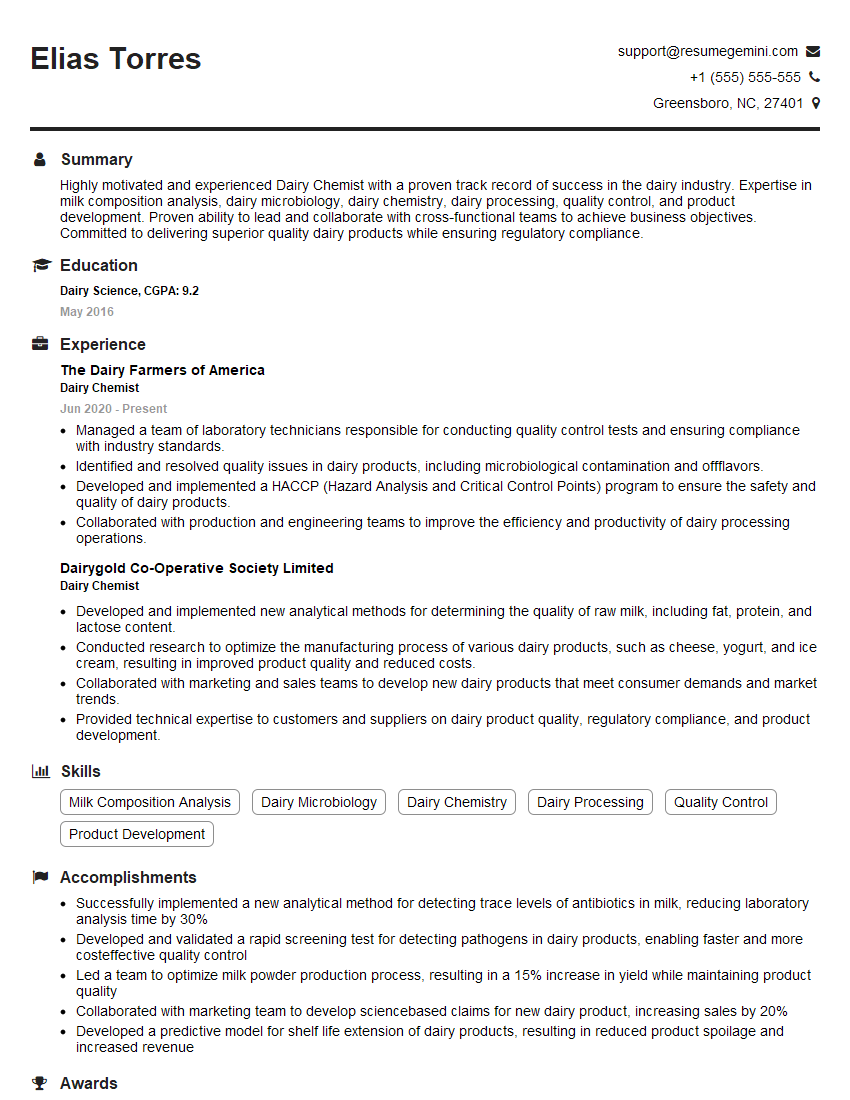
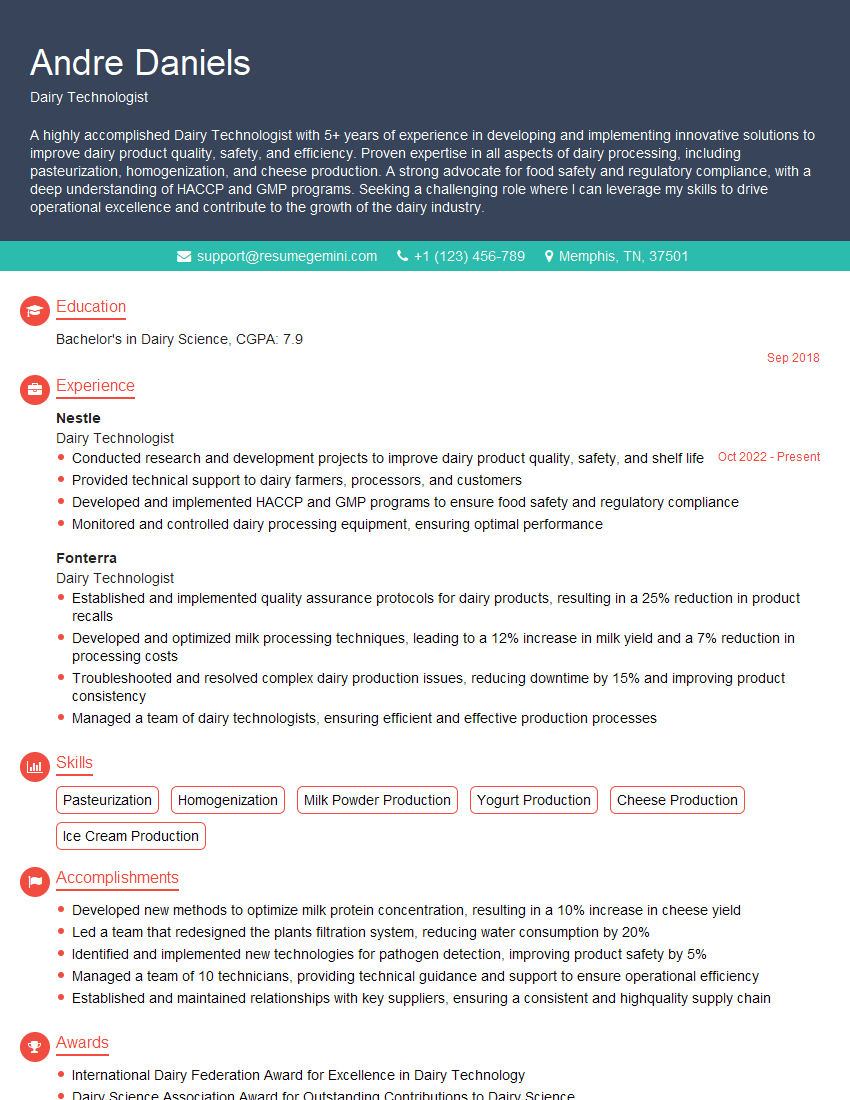
Mastering Dairy Processing Technologies is crucial for a successful and rewarding career in the food industry, opening doors to diverse roles and opportunities for advancement. To maximize your job prospects, create an ATS-friendly resume that highlights your skills and experience effectively. ResumeGemini is a trusted resource to help you build a professional and impactful resume that gets noticed. They provide examples of resumes tailored to Dairy Processing Technologies to guide you through the process. Invest time in crafting a strong resume – it’s your first impression and a critical step in landing your dream job.
Explore more articles
Users Rating of Our Blogs
Share Your Experience
We value your feedback! Please rate our content and share your thoughts (optional).
What Readers Say About Our Blog
Really detailed insights and content, thank you for writing this detailed article.
IT gave me an insight and words to use and be able to think of examples