The right preparation can turn an interview into an opportunity to showcase your expertise. This guide to Data Fusion and Integration interview questions is your ultimate resource, providing key insights and tips to help you ace your responses and stand out as a top candidate.
Questions Asked in Data Fusion and Integration Interview
Q 1. Explain the difference between data fusion and data integration.
While both data fusion and data integration involve combining data from multiple sources, they differ significantly in their approach and goals. Data integration focuses on consolidating data from various sources into a unified view, often aiming for consistency and completeness. Think of it like assembling a jigsaw puzzle – you’re bringing together individual pieces to form a complete picture, even if some pieces might be slightly different. Data fusion, on the other hand, goes a step further. It’s about combining data from different sources to create a more accurate and comprehensive representation of reality than any single source could provide. This often involves resolving conflicts and inconsistencies, weighting information based on reliability, and potentially even creating new information from the combined data. It’s more like blending ingredients in a recipe – you’re combining elements to create something entirely new and improved.
For example, integrating customer data from a CRM, website analytics, and marketing automation platforms involves aligning those datasets to have a single, unified customer profile. Data fusion, conversely, might involve combining sensor data from multiple devices to create a more accurate and robust prediction of equipment failure, by considering factors each sensor might miss independently.
Q 2. Describe the ETL process in detail.
ETL stands for Extract, Transform, Load. It’s a three-stage process used to integrate data from various sources into a target system, typically a data warehouse or data lake.
- Extract: This stage involves retrieving data from different sources. These sources can be databases (SQL, NoSQL), flat files (CSV, TXT), APIs, or cloud-based storage. The extraction process needs to handle different data formats and structures efficiently, often involving techniques like parsing, filtering, and selecting specific data fields.
- Transform: This is the core of ETL, where the extracted data is cleaned, transformed, and standardized. This may involve data cleansing (handling missing values, correcting errors), data type conversion, data validation, data aggregation, and deduplication. For instance, you might standardize date formats, convert currencies, or apply business rules to derive new data points.
- Load: In this final stage, the transformed data is loaded into the target system. This could involve creating new tables, updating existing ones, or appending data to existing tables. The loading process needs to be efficient and handle potential errors gracefully.
Consider a scenario where you’re integrating sales data from different regional offices. The Extract stage would pull data from each office’s database. The Transform stage would standardize product codes, currency conversions, and data formats. Finally, the Load stage would populate a central data warehouse table with the unified sales data. Proper error handling and logging are crucial throughout the entire ETL process to ensure data quality and traceability.
Q 3. What are some common data integration challenges?
Data integration projects face numerous challenges:
- Data inconsistency: Different systems may use different formats, naming conventions, and data types for the same information.
- Data quality issues: Data might be incomplete, inaccurate, or outdated.
- Data volume and velocity: Handling large volumes of data, particularly in real-time scenarios, presents a significant challenge.
- Data silos: Data may be scattered across various systems, making it difficult to access and integrate.
- Security and compliance: Ensuring data security and compliance with regulations (like GDPR) is crucial during data integration.
- Lack of standardization: The absence of consistent data standards across systems hinders the integration process.
- Data governance: Establishing clear processes for data management, quality, and security is essential.
For example, one company might store customer addresses in a single field, while another breaks them into multiple fields (street, city, state, zip code). Harmonizing these variations during integration requires careful planning and transformation rules.
Q 4. How do you handle data inconsistencies during the integration process?
Handling data inconsistencies requires a multi-pronged approach:
- Data profiling: Analyze the data to understand its structure, quality, and inconsistencies before integration.
- Data cleansing: Correct errors, handle missing values, and standardize data formats.
- Data transformation: Apply rules to convert data to a consistent format and structure. This might involve using techniques like data mapping, data masking, and data deduplication.
- Data reconciliation: Identify and resolve conflicts between different data sources, possibly through manual review or automated rules based on data quality scores or business rules.
- Data validation: Verify data accuracy and consistency after the integration process.
For example, if two sources have conflicting values for a customer’s birth date, you might use a business rule to prioritize one source based on data quality or recency. If both sources are equally reliable, manual intervention might be required to resolve the discrepancy.
Q 5. What are the different types of data integration architectures?
Several data integration architectures exist:
- Enterprise Service Bus (ESB): A centralized messaging system that acts as a middleware to connect various applications and systems.
- Data virtualization: Provides a unified view of data without physically moving or copying data. It’s like creating a virtual layer on top of different data sources.
- Message queues: Used for asynchronous data integration, where messages are processed in a queue, enabling scalability and decoupling of systems.
- ETL tools: Software packages designed to perform the Extract, Transform, and Load process.
- API-driven integration: Using APIs to connect and exchange data between applications.
The choice of architecture depends on factors like the complexity of integration, data volume, and real-time requirements. A simple integration between two applications might utilize direct API calls, whereas a complex integration across many systems might benefit from an ESB.
Q 6. Explain the concept of data warehousing and its role in data integration.
A data warehouse is a central repository that stores integrated data from various operational systems. Its purpose is to support business intelligence and analytical processing. It plays a vital role in data integration by providing a consistent, unified view of data from diverse sources.
Imagine a business with sales data in one system, customer data in another, and marketing data in a third. A data warehouse integrates this data, allowing analysts to perform comprehensive analyses, such as identifying customer segments with high purchase frequencies, determining the effectiveness of marketing campaigns, and forecasting future sales. The data warehouse facilitates this by providing a structured, consistent, and historical perspective on the business, something that’s usually impossible to achieve by examining individual operational systems in isolation.
Q 7. What are some common data integration tools and technologies you’re familiar with?
I’m familiar with several data integration tools and technologies, including:
- Informatica PowerCenter: A widely used ETL tool for large-scale data integration projects.
- IBM DataStage: Another robust ETL tool with strong capabilities for data transformation and loading.
- Talend Open Studio: An open-source ETL tool with a user-friendly interface.
- Apache Kafka: A distributed streaming platform ideal for real-time data integration.
- Apache NiFi: A powerful data integration platform for building custom data flows.
- Cloud-based ETL services: Services offered by cloud providers like AWS (AWS Glue), Azure (Azure Data Factory), and Google Cloud (Cloud Data Fusion).
The choice of tool depends on specific needs, such as scalability, performance, ease of use, and budget. Cloud-based services are often preferred for their scalability and cost-effectiveness.
Q 8. How do you ensure data quality during data integration?
Ensuring data quality during integration is paramount. It’s like building a house – you wouldn’t use cracked bricks, would you? We need to ensure our data is accurate, complete, consistent, timely, and relevant. This involves several strategies:
- Data Profiling: Before integration, we analyze the data to understand its structure, content, and quality. This involves identifying data types, detecting missing values, and assessing data distribution.
- Data Cleansing: This crucial step involves correcting or removing inaccurate, incomplete, irrelevant, or duplicate data. Techniques include standardizing formats, handling missing values (imputation or removal), and deduplication.
- Data Validation: We implement rules and checks to ensure data meets predefined standards. This can be done through constraints, data type validation, range checks, and referential integrity checks.
- Data Monitoring: Post-integration, ongoing monitoring is critical. We use dashboards and alerts to track data quality metrics and identify potential issues proactively.
For example, in integrating customer data from multiple sources, we might find inconsistencies in address formats or duplicate customer records. Data cleansing would involve standardizing addresses and merging duplicates, ensuring a single, accurate view of each customer.
Q 9. Describe your experience with different data formats (e.g., CSV, JSON, XML).
I’m proficient in handling various data formats, each with its own strengths and weaknesses.
- CSV (Comma Separated Values): Simple and widely supported, ideal for tabular data. However, it lacks the ability to represent complex data structures.
- JSON (JavaScript Object Notation): Lightweight and human-readable, excellent for representing hierarchical data structures and commonly used in web applications. It’s flexible and easily parsed by various programming languages.
- XML (Extensible Markup Language): More complex than JSON, offers robust features for defining custom data structures and metadata. It’s useful for complex data exchange but can be more verbose.
In a recent project, we integrated customer data from a legacy system using XML files, then transformed it into a JSON format for use in a modern web application. This involved parsing the XML using XML parsers, extracting relevant fields, and then constructing JSON objects using appropriate libraries.
Q 10. How do you handle data transformation in data integration?
Data transformation is the process of converting data from one format or structure into another. Think of it as translating a document from one language to another. This is crucial in data integration to ensure compatibility and consistency. Methods include:
- Data type conversion: Converting data types (e.g., string to integer, date to timestamp).
- Data aggregation: Summarizing data from multiple sources (e.g., calculating sums, averages).
- Data filtering: Selecting specific subsets of data based on criteria.
- Data enrichment: Adding new data attributes from external sources.
- Data normalization: Structuring data to reduce redundancy and improve data integrity.
For example, we might need to convert date formats from ‘MM/DD/YYYY’ to ‘YYYY-MM-DD’ across multiple datasets to maintain consistency. Or, we could aggregate sales data from different regions into a national sales summary.
ETL (Extract, Transform, Load) tools and programming languages like Python (with libraries like Pandas) are often used for data transformation.
Q 11. Explain the concept of data cleansing and its importance.
Data cleansing is the process of identifying and correcting (or removing) inaccurate, incomplete, irrelevant, duplicate, or inconsistent data. It’s like editing a manuscript to eliminate errors and improve clarity. Its importance cannot be overstated:
- Improved Data Quality: Cleansing ensures data accuracy and reliability, leading to better decision-making.
- Enhanced Data Integrity: It removes inconsistencies and duplicates, leading to a more consistent and trustworthy dataset.
- Reduced Errors: Clean data reduces errors in analyses, reports, and downstream applications.
- Better Data Analysis: Accurate and consistent data allows for more meaningful insights and conclusions.
Imagine a customer database with duplicate entries or inconsistent address information. Data cleansing would help unify customer profiles, leading to a more accurate representation of your customer base.
Q 12. How do you approach data security and privacy in data integration?
Data security and privacy are critical in data integration. We must protect sensitive information throughout the entire process, complying with regulations like GDPR and CCPA. My approach involves:
- Data Encryption: Encrypting data at rest and in transit to protect it from unauthorized access.
- Access Control: Implementing strict access control measures to limit access to sensitive data only to authorized personnel.
- Data Masking: Replacing sensitive data elements with non-sensitive substitutes while preserving data utility for analysis.
- Data Anonymization: Removing or altering personally identifiable information to protect individual privacy.
- Regular Security Audits: Conducting periodic security assessments to identify and address vulnerabilities.
For example, when integrating customer financial data, we would encrypt the data both in storage and during transmission, and implement strict access control policies to prevent unauthorized viewing or modification.
Q 13. What is master data management (MDM) and its role in data integration?
Master Data Management (MDM) is a holistic approach to managing an organization’s most important data – master data. Think of it as a central repository for critical information about customers, products, suppliers, and employees. It plays a vital role in data integration by providing a single, consistent, and authoritative source of truth for this data.
In data integration, MDM helps resolve inconsistencies across different systems by providing a central point of reference. This eliminates data silos and ensures everyone works with the same, accurate data. It improves data quality, enhances decision-making, and streamlines operational processes. For instance, if customer information is inconsistent across sales, marketing, and customer service systems, MDM would help consolidate this data into a single, accurate view.
Q 14. Describe your experience with data modeling techniques.
I have experience with various data modeling techniques, including relational, dimensional, and NoSQL models. The choice of technique depends on the specific needs of the project.
- Relational Modeling: This involves designing databases using tables with relationships between them. It’s suitable for structured data and transactional systems. I use ER diagrams to visually represent the relationships between entities.
- Dimensional Modeling: Used primarily for data warehousing and business intelligence, it organizes data into facts and dimensions, making it easier for querying and analysis. Star schemas and snowflake schemas are common dimensional models.
- NoSQL Modeling: Suitable for unstructured or semi-structured data, it uses various data models like document, key-value, graph, and column-family stores. This is ideal for handling large volumes of data with varying structures.
In a recent project, we used dimensional modeling to design a data warehouse for analyzing customer behavior. This involved creating fact tables containing sales transactions and dimension tables containing customer, product, and time information. The choice of this model was driven by the need for efficient analytical querying.
Q 15. How do you design and implement a data pipeline?
Designing and implementing a data pipeline involves a systematic approach to moving data from various sources to a target destination for analysis or processing. Think of it like building a highway system for your data. Each step is crucial for efficient and reliable data flow.
- Ingestion: This is where you collect data from diverse sources – databases, APIs, cloud storage, etc. Consider using connectors or ETL (Extract, Transform, Load) tools to streamline this process. For example, you might use a connector to pull data from a Salesforce CRM or an API to gather data from a weather service.
- Transformation: This is where the data gets cleaned, standardized, and prepared for analysis. This could involve tasks like data cleansing (handling missing values or inconsistencies), data type conversion, and data enrichment (adding information from other sources).
- Loading: This is the final step where the transformed data is loaded into its final destination, which could be a data warehouse, data lake, or other analytical tools. You’ll need to ensure your loading method is efficient and doesn’t disrupt operations.
- Monitoring and Maintenance: Throughout the pipeline, you need monitoring tools to track performance, identify errors, and ensure the data quality remains high. Regular maintenance is vital to keep the pipeline running smoothly.
Example: Imagine building a pipeline for e-commerce data. Ingestion might involve pulling order data from a database, product data from a catalog, and customer data from a CRM. Transformation would involve cleaning addresses, standardizing product categories, and calculating total revenue. Finally, the data is loaded into a data warehouse for business intelligence reporting.
Career Expert Tips:
- Ace those interviews! Prepare effectively by reviewing the Top 50 Most Common Interview Questions on ResumeGemini.
- Navigate your job search with confidence! Explore a wide range of Career Tips on ResumeGemini. Learn about common challenges and recommendations to overcome them.
- Craft the perfect resume! Master the Art of Resume Writing with ResumeGemini’s guide. Showcase your unique qualifications and achievements effectively.
- Don’t miss out on holiday savings! Build your dream resume with ResumeGemini’s ATS optimized templates.
Q 16. What are some performance optimization techniques for data integration processes?
Optimizing data integration performance is crucial for efficient data processing. It’s like optimizing a highway system for faster traffic flow. Key techniques include:
- Data Partitioning: Breaking down large datasets into smaller, manageable chunks improves processing speed. Imagine splitting a huge traffic jam into several smaller ones for faster movement.
- Parallel Processing: Executing multiple tasks concurrently on different processors or cores greatly accelerates processing. Think of multiple lanes on a highway instead of just one.
- Caching: Storing frequently accessed data in memory reduces database access times. Like having a well-stocked roadside convenience store to reduce long journeys to a large city.
- Indexing: Creating indexes on database tables speeds up data retrieval. It’s like having exit ramps on a highway for efficient navigation.
- Data Compression: Reducing the size of the data minimizes storage and transmission costs. It’s like using a smaller vehicle to transport goods, saving fuel and space.
- Optimized Queries: Writing efficient SQL queries minimizes processing time on the database. It is analogous to using precise navigation to take the fastest route.
Example: If you’re processing large log files, you could partition them by date, process each partition in parallel, and use caching to store frequently accessed log patterns.
Q 17. Explain your experience with cloud-based data integration services (e.g., AWS Glue, Azure Data Factory).
I have extensive experience with cloud-based data integration services like AWS Glue and Azure Data Factory. These services provide managed environments for building and managing data pipelines, significantly reducing infrastructure management overhead. They are like pre-built highway systems you can customize to your needs.
AWS Glue: I’ve used Glue extensively for ETL jobs, leveraging its serverless architecture for cost-effective processing of large datasets. Its ability to automatically discover schema from data sources and its integration with other AWS services is highly valuable.
Azure Data Factory: I’ve utilized Azure Data Factory for building complex, orchestrated data pipelines with various data sources and sinks. Its visual interface for pipeline design and monitoring capabilities enhance productivity. I have a particular fondness for using it to orchestrate complex pipelines involving both batch and real-time data processing.
In both cases, I’ve employed best practices like using appropriate data formats (e.g., Parquet for efficient storage and processing), implementing error handling and logging, and leveraging monitoring tools to ensure pipeline reliability and performance.
Q 18. How do you handle data from various sources with different schemas?
Handling data from diverse sources with different schemas is a common challenge. It’s like merging traffic from roads with different lane markings and traffic rules – you need a system to manage it effectively. Here’s how I approach it:
- Schema Mapping: I define mappings between different schemas, identifying corresponding fields across data sources. This involves careful data analysis and potentially some data transformation.
- Data Transformation: Using ETL tools, I transform data to a common schema. This may involve data type conversions, data cleansing, and resolving conflicts between different formats and naming conventions.
- Data Profiling: Before integrating, I thoroughly profile the data to understand its structure, data types, and quality. This is like conducting a traffic survey to understand the flow and challenges.
- Data Standardization: I establish standardized data formats and naming conventions to ensure consistency across different sources. This provides uniformity and helps avoid later complexities.
- Metadata Management: I maintain a metadata repository to track schema definitions, mappings, and transformation rules. This acts as a central location for all the data details.
Example: If one system uses ‘customerID’ while another uses ‘cust_id,’ I would define a mapping to ensure consistency. Data type conversions (e.g., string to date) are also commonly handled during this process.
Q 19. What are some common data integration patterns?
Common data integration patterns provide reusable solutions for specific data integration tasks. They are like pre-designed highway interchanges that optimize traffic flow. Here are a few:
- ETL (Extract, Transform, Load): The most common pattern, extracting data from sources, transforming it, and loading it into a target system.
- ELT (Extract, Load, Transform): Data is first extracted and loaded into a data warehouse or lake, then transformed within the target system. This is suitable for large datasets where transformation in the source system would be inefficient.
- Data Virtualization: Provides a unified view of data across various sources without physically moving or copying the data. This is efficient and scalable but might not support all types of transformations.
- Change Data Capture (CDC): Tracks changes in data sources and propagates these changes to the target system efficiently. Ideal for real-time data integration or incremental updates.
- Message Queues: Used for asynchronous data integration. Data is sent as messages to a queue and processed later by consumers. Great for decoupling systems and handling bursts of data.
Q 20. How do you monitor and maintain data integration processes?
Monitoring and maintaining data integration processes are vital for ensuring data quality and system reliability. It’s like highway maintenance ensuring smooth traffic flow. Here’s what I do:
- Pipeline Monitoring: I use tools to monitor the execution of data pipelines, track their performance metrics, and identify bottlenecks or errors. Key metrics include processing time, data volume, and error rates.
- Data Quality Monitoring: I implement data quality checks to ensure the accuracy, completeness, and consistency of the integrated data. This could involve checking for data anomalies, missing values, or inconsistencies.
- Alerting and Notifications: I set up alerts and notifications for critical events such as pipeline failures, data quality issues, or performance degradations. This ensures timely intervention and minimizes downtime.
- Logging and Auditing: I maintain detailed logs of pipeline executions, data transformations, and errors. This aids in troubleshooting and auditing data transformations.
- Regular Maintenance: I regularly review and update the pipelines, optimizing their performance, addressing bugs, and incorporating new data sources or transformations as needed.
Example: I might use cloud monitoring services (like CloudWatch or Azure Monitor) to track pipeline performance, set up alerts for failed jobs, and regularly review data quality reports to identify and address any issues.
Q 21. Describe your experience with different data integration methodologies (e.g., batch processing, real-time processing).
I have experience with both batch processing and real-time processing methodologies. The choice depends on the specific requirements of the project and the characteristics of the data. It’s like choosing between a freight train (batch) and a high-speed rail (real-time).
Batch Processing: Suitable for large datasets that don’t require immediate processing. It’s cost-effective but introduces latency. I’ve used it for periodic updates of data warehouses, where nightly processing is sufficient.
Real-time Processing: Ideal for applications requiring immediate insights from streaming data. It’s more complex and requires robust infrastructure but enables real-time decision-making. I’ve used this in applications such as fraud detection and real-time analytics dashboards where immediate data updates are crucial.
Example: A nightly batch process might update a data warehouse with daily sales figures, while a real-time system might process credit card transactions to detect fraudulent activity immediately.
Often, a hybrid approach is best, utilizing real-time processing for critical data and batch processing for less time-sensitive operations.
Q 22. Explain the concept of change data capture (CDC) and its use in data integration.
Change Data Capture (CDC) is the process of identifying and tracking data changes in a database. Instead of processing the entire database, CDC focuses only on the modifications—insertions, updates, and deletions—that have occurred since the last snapshot. This significantly improves efficiency and reduces processing time, particularly crucial in large databases. In data integration, CDC plays a vital role in near real-time data synchronization between systems. For example, imagine an e-commerce platform. CDC can track changes in the order database and immediately propagate these updates to inventory management, shipping, and customer relationship management (CRM) systems, ensuring all systems are instantly consistent.
Consider a scenario where we have an order database and an inventory database. Using CDC, when a new order is placed (an insertion), the system detects this change and updates the inventory database accordingly, subtracting the ordered items. Similarly, an order update (e.g., cancellation) will trigger a corresponding update in the inventory, restoring the stock. This approach avoids unnecessary full database replication and improves operational speed and responsiveness.
Q 23. How do you troubleshoot data integration issues?
Troubleshooting data integration issues requires a systematic approach. I start by identifying the source of the problem: Is it the data itself, the transformation process, or the target system? I use a combination of techniques including:
- Data Profiling and Validation: Analyzing the data quality in the source systems—checking for inconsistencies, missing values, and data type mismatches—is crucial. Tools and techniques for profiling are essential in this stage.
- Log Analysis: Examining logs from the integration process helps pinpoint errors and bottlenecks. This often involves looking for specific error codes, timestamps, and data values that may have caused the issue. This is where detailed logging is a huge benefit.
- Debugging: Step-by-step debugging of the transformation logic can reveal the exact point of failure. This might involve tracing data values, inspecting intermediate results, or using debugging tools tailored to the integration platform.
- Testing and Simulation: Simulating various scenarios, including edge cases, can help reveal unexpected behaviors. This can highlight shortcomings in the integration design.
- Communication and Collaboration: If the problem spans multiple systems, close collaboration with database administrators, application developers, and business users is vital for comprehensive troubleshooting.
For example, if a data transformation fails, I’d examine the log files to see the error message. If the error is related to data type mismatch, I would investigate the source data and the transformation code. Perhaps a field needs type conversion, or data cleansing.
Q 24. What are some best practices for testing data integration solutions?
Testing data integration solutions is crucial to ensure data accuracy, completeness, and consistency. My approach incorporates several levels of testing:
- Unit Testing: Each individual component (e.g., data transformation, data validation) should be tested independently. This helps isolate defects early in the process.
- Integration Testing: Testing the interactions between different components of the integration solution to ensure they work correctly together. This is where we focus on the flow of data between systems.
- System Testing: Testing the entire end-to-end process to validate the complete functionality. This usually involves simulated data and checks to confirm the data is successfully integrated and ready for downstream usage.
- Performance Testing: Testing the speed, scalability, and resource usage of the integration solution under various load conditions. This gives us insight into how it will perform in a real-world environment.
- Data Quality Testing: Checking the quality and completeness of the integrated data. This includes verifying that data transformations have occurred correctly and that no data is lost during the integration process.
I often use automated testing tools to increase the efficiency and repeatability of the testing process. For instance, I might script automated checks for data validation using tools that compare source and target datasets to make sure the expected transformations occurred as planned.
Q 25. How do you ensure scalability and maintainability of data integration solutions?
Ensuring scalability and maintainability of data integration solutions requires careful planning and design. Key strategies include:
- Modular Design: Breaking down the integration solution into independent, reusable modules makes it easier to scale and maintain. Changes can be made to one module without affecting the rest.
- Microservices Architecture: Using a microservices architecture allows for independent deployment and scaling of different parts of the integration solution, increasing flexibility and resilience.
- Automated Deployment: Automating the deployment process minimizes manual errors and ensures consistency across different environments. Tools like CI/CD are invaluable here.
- Version Control: Using version control for the integration code and configurations enables tracking changes and easy rollback in case of errors. This makes maintaining previous versions straightforward if needed.
- Documentation: Clear and comprehensive documentation of the integration solution is essential for maintainability. This includes architecture diagrams, code comments, and operational procedures.
- Monitoring and Alerting: Implementing monitoring and alerting systems allows for proactive identification and resolution of issues, crucial for maintaining a robust and scalable solution.
For example, if we anticipate a significant increase in data volume, a modular design allows us to scale only the data processing module, adding more computing resources to that specific area without impacting other components.
Q 26. Describe your experience working with NoSQL databases in the context of data integration.
My experience with NoSQL databases in data integration focuses on leveraging their strengths for specific use cases. NoSQL databases, with their flexible schemas and scalability, are particularly well-suited for handling large volumes of unstructured or semi-structured data. I’ve integrated NoSQL databases, such as MongoDB and Cassandra, into various data integration pipelines. This typically involves:
- Data Modeling: Careful consideration of the NoSQL database’s schema is critical. The schema should be designed to support efficient querying and data manipulation based on the expected use case. NoSQL schemas differ greatly from relational models, so understanding this difference is crucial.
- Data Transformation: Transforming data from relational sources to a NoSQL format often requires custom code or ETL tools with NoSQL database connectors. This is where understanding document structures or key-value pairs is necessary.
- Data Validation: Implementing data validation rules is equally important for NoSQL databases, though the mechanisms may differ from traditional relational approaches. Ensuring data integrity in NoSQL is critical.
- Performance Optimization: Performance optimization often includes techniques like indexing, sharding, and query optimization, which are specific to NoSQL databases.
In one project, I integrated customer data from a relational CRM system into a MongoDB instance to build a recommendation engine. The flexible schema of MongoDB allowed us to easily store rich customer profiles, including unstructured data such as purchase history and preferences, which greatly enhanced the accuracy of recommendations.
Q 27. How do you handle metadata management in data integration?
Metadata management is crucial in data integration as it provides context and understanding to the data. A robust metadata management strategy includes:
- Metadata Repository: Centralized storage for all relevant metadata, including data source descriptions, transformation rules, data quality metrics, and lineage information. A metadata repository improves clarity and transparency.
- Metadata Discovery and Search: Tools and mechanisms for easily searching and discovering metadata within the repository. This is extremely important for understanding the integrated data and data origin.
- Metadata Standardization: Using standardized metadata schemas and vocabularies ensures consistency and interoperability. This makes integration and data understanding much more straightforward.
- Metadata Governance: Establishing processes and policies for metadata creation, updates, and maintenance. This ensures data accuracy and the long-term health of the metadata.
- Data Lineage Tracking: Tracking the origin and transformations of data throughout the integration process is paramount for auditing and debugging. This is where the metadata repository becomes extremely important.
For instance, if a data quality issue arises in the integrated data, metadata can quickly reveal the source of the problem, including the origin of the data and all transformations applied.
Q 28. What is your approach to resolving data conflicts during data fusion?
Resolving data conflicts during data fusion requires a well-defined strategy that depends on the nature of the conflict and the business context. My approach typically involves:
- Conflict Detection: Identifying conflicts through data comparison and validation. This could involve identifying duplicate records or discrepancies in data values.
- Conflict Resolution Strategy: Defining rules or algorithms for resolving conflicts. Common strategies include:
- Prioritization: Giving precedence to data from a specific source based on its reliability or recency.
- Conciliation: Combining data from multiple sources, potentially using statistical methods to generate a consensus value.
- Human Intervention: In cases of complex or critical conflicts, manual review and resolution might be required.
- Rejection: Rejecting conflicting records if neither source data is considered trustworthy.
- Conflict Logging and Tracking: Maintaining a log of all detected and resolved conflicts. This is crucial for auditing and analysis.
For example, if two sources provide conflicting address information for a customer, we might prioritize the data from the most recent interaction or involve human intervention if the discrepancy is significant. We then document this resolution in our conflict log for future tracking and analysis.
Key Topics to Learn for Data Fusion and Integration Interview
- Data Modeling and Schema Design: Understanding different data models (relational, NoSQL, graph), schema design principles, and techniques for data transformation to ensure consistency and compatibility across various sources.
- ETL (Extract, Transform, Load) Processes: Mastering the ETL pipeline lifecycle, including data extraction methods, data cleansing and transformation techniques (e.g., using SQL, Python with Pandas), and efficient loading strategies for different target systems.
- Data Integration Architectures: Familiarity with various architectural patterns like message queues (Kafka, RabbitMQ), data streaming platforms (Apache Kafka, Apache Flink), and batch processing frameworks (Spark, Hadoop).
- Data Quality and Governance: Understanding data quality dimensions (accuracy, completeness, consistency), implementing data quality checks, and establishing data governance policies for ensuring data reliability and trustworthiness.
- Data Governance and Metadata Management: Explain the importance of metadata management for data lineage tracking, data discovery, and ensuring data compliance. Discuss relevant technologies and best practices.
- Cloud-Based Data Integration Solutions: Experience with cloud-based ETL tools (e.g., AWS Glue, Azure Data Factory, Google Cloud Data Fusion) and their advantages in scalability, cost-efficiency, and managed services.
- Data Fusion Techniques: Explore different data fusion methods (e.g., record linkage, entity resolution) and their applications in resolving inconsistencies and enriching data from multiple sources.
- Problem-solving and debugging in data integration: Discuss approaches to troubleshoot common issues like data inconsistencies, performance bottlenecks, and error handling within data pipelines.
- API Integration: Understanding REST APIs, working with different API formats (JSON, XML), and utilizing APIs for integrating data from various sources.
Next Steps
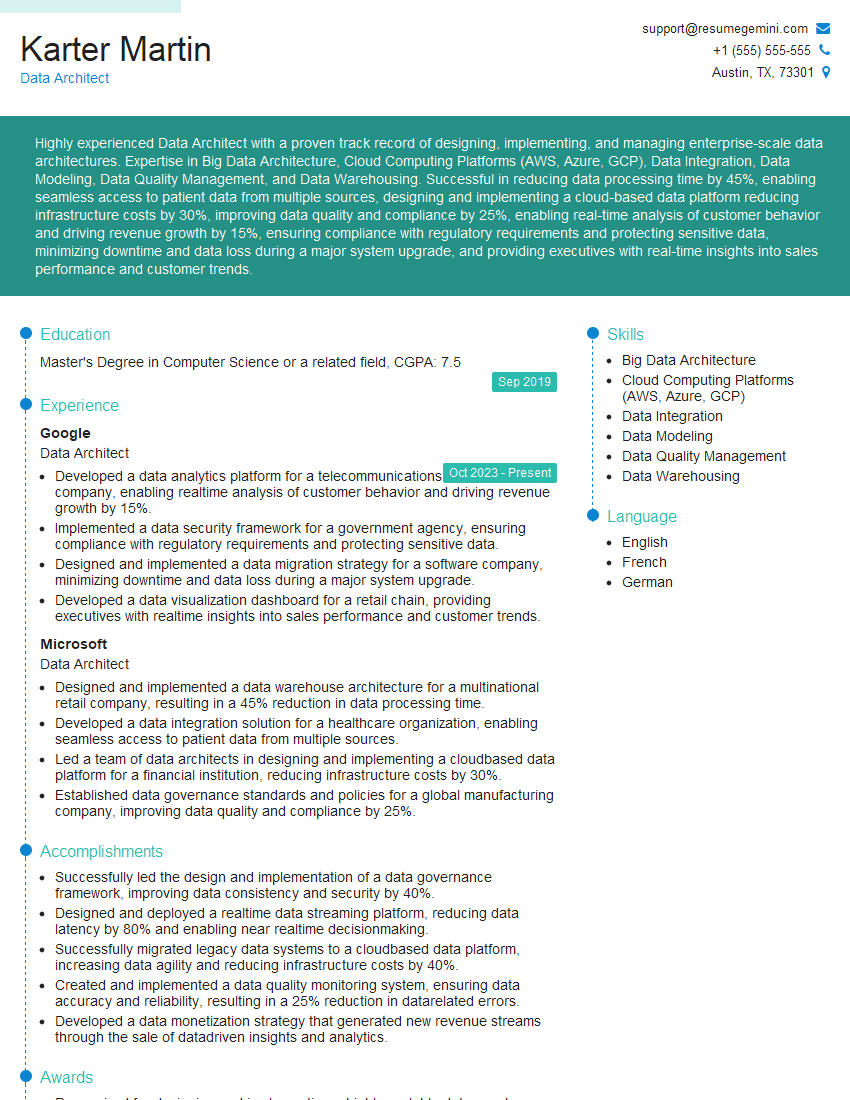
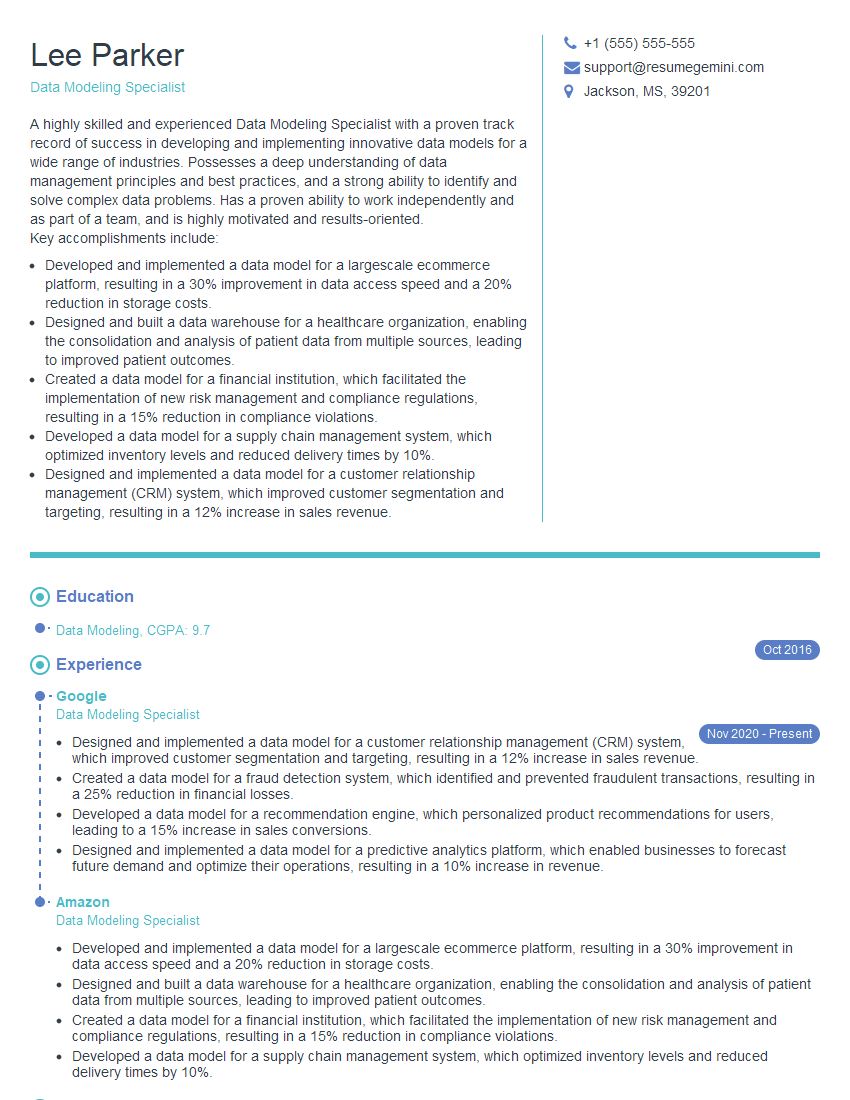
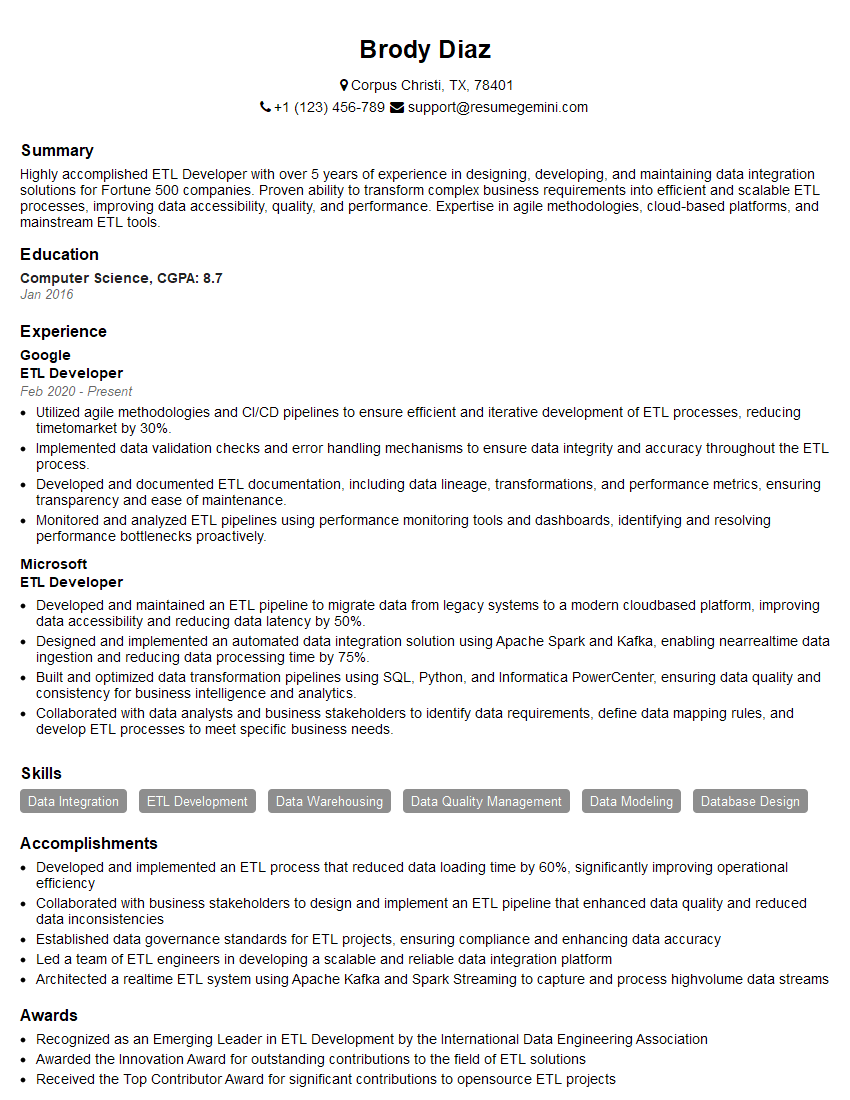
Mastering Data Fusion and Integration opens doors to exciting and high-demand roles in the data industry, offering significant career growth potential. To maximize your job prospects, it’s crucial to present your skills effectively. Crafting an ATS-friendly resume is key to getting your application noticed. ResumeGemini is a trusted resource that can help you build a professional and impactful resume, ensuring your qualifications stand out. Examples of resumes tailored to Data Fusion and Integration roles are available to help guide you.
Explore more articles
Users Rating of Our Blogs
Share Your Experience
We value your feedback! Please rate our content and share your thoughts (optional).
What Readers Say About Our Blog
Really detailed insights and content, thank you for writing this detailed article.
IT gave me an insight and words to use and be able to think of examples