Feeling uncertain about what to expect in your upcoming interview? We’ve got you covered! This blog highlights the most important Developing and implementing customer service policies and procedures interview questions and provides actionable advice to help you stand out as the ideal candidate. Let’s pave the way for your success.
Questions Asked in Developing and implementing customer service policies and procedures Interview
Q 1. Describe your experience in developing customer service policies.
Developing effective customer service policies involves a systematic approach that balances customer expectations with business goals. It begins with a thorough understanding of the customer journey and identifying pain points. I start by analyzing customer feedback from various sources – surveys, reviews, social media, and internal reports – to pinpoint areas needing improvement. Then, I collaborate with cross-functional teams, including sales, marketing, and operations, to understand their perspectives and challenges. This collaborative process ensures that the policies are practical and achievable. The final stage involves drafting clear, concise, and easy-to-understand policies that are legally compliant and aligned with the company’s brand values. For example, in a previous role, I led the development of a new returns policy that simplified the process for customers while mitigating potential losses for the company. The new policy reduced customer complaints related to returns by 30% within the first quarter.
Q 2. How do you ensure customer service policies align with company objectives?
Aligning customer service policies with company objectives is crucial for success. I achieve this by closely examining the company’s strategic goals – whether it’s increasing customer lifetime value, improving brand reputation, or expanding market share. I then map out how the customer service policies directly contribute to those goals. For example, if a primary objective is to improve customer retention, policies should focus on providing exceptional support, prompt issue resolution, and personalized experiences. I ensure that all policies contribute meaningfully, and I use Key Performance Indicators (KPIs) to track progress towards the company’s objectives. These KPIs provide data-driven insights to continuously refine the policies and ensure ongoing alignment.
Q 3. Explain your process for implementing new customer service procedures.
Implementing new customer service procedures requires a phased approach to minimize disruption and ensure adoption. First, I thoroughly communicate the rationale behind the changes to all relevant teams. This often involves training sessions, presentations, and written documentation. I then pilot the new procedures with a small group to identify and address any potential issues before a full rollout. This pilot phase allows for iterative improvements based on real-world feedback. Following the successful pilot, I implement the new procedures company-wide, providing ongoing support and addressing any questions or concerns that arise. Change management is crucial here; I often use a combination of training, communication, and incentives to encourage adoption. For example, I might offer bonus points or recognition for employees who effectively use the new procedures. Regular monitoring and feedback loops ensure continuous improvement.
Q 4. How do you measure the effectiveness of customer service policies?
Measuring the effectiveness of customer service policies relies heavily on data analysis. I use a combination of quantitative and qualitative data to assess the impact of our policies. Quantitative data includes metrics like customer satisfaction scores (CSAT), Net Promoter Score (NPS), resolution time, and first-call resolution rate. Qualitative data, such as customer feedback surveys and comments, provides valuable context and insights. By analyzing this data, I identify areas of strength and weakness and use these findings to improve our policies and procedures. Regularly reviewing these metrics – ideally monthly or quarterly – allows for proactive adjustments to ensure policies remain effective and meet evolving customer needs.
Q 5. What metrics do you use to track customer service performance?
Tracking customer service performance involves monitoring several key metrics. Some of the most important are:
- Customer Satisfaction (CSAT): Measures overall customer satisfaction with the service received.
- Net Promoter Score (NPS): Gauges customer loyalty and willingness to recommend the company.
- Average Handle Time (AHT): Measures the average time spent resolving a customer issue.
- First Call Resolution (FCR): Indicates the percentage of issues resolved on the first contact.
- Customer Effort Score (CES): Measures the ease with which customers can resolve their issues.
- Resolution Time: Tracks the time it takes to resolve customer issues.
Q 6. How do you handle resistance to new customer service policies?
Resistance to new customer service policies is common. I address this by focusing on clear and open communication, emphasizing the benefits of the changes for both the employees and the customers. I also actively seek input and feedback from employees to address their concerns and incorporate their suggestions whenever possible. Addressing resistance requires empathy and understanding. For example, I might offer additional training and support to employees struggling to adapt to the new policies. By engaging employees in the process and making them feel heard, I can effectively reduce resistance and increase buy-in. Sometimes, offering incentives for adopting the new procedures can also prove beneficial.
Q 7. Describe a time you had to revise a customer service policy.
In a previous role, we had a policy requiring customers to call within 24 hours of delivery to report damaged goods. We found that this was causing significant frustration, as many customers discovered the damage later. We received numerous complaints and negative reviews related to this policy. After analyzing the data and customer feedback, we revised the policy to extend the reporting window to 7 days. This simple change significantly reduced customer complaints, improved our reputation, and increased customer satisfaction. This experience highlighted the importance of regularly reviewing and adapting customer service policies based on data and feedback to ensure they remain effective and customer-centric.
Q 8. How do you ensure consistency in applying customer service policies across teams?
Consistency in applying customer service policies is paramount for a positive brand image and customer experience. It prevents confusion and ensures fairness. I achieve this through a multi-pronged approach.
- Standardized Training: All teams receive identical training on policies, using the same materials and assessment methods. This ensures everyone understands expectations.
- Centralized Knowledge Base: A readily accessible, regularly updated online resource (wiki, internal knowledge base) serves as the single source of truth for all policies and procedures. This ensures everyone refers to the same information.
- Regular Audits and Monitoring: I implement regular audits – both self-audits by teams and supervisory reviews – to assess policy adherence. This helps identify inconsistencies early and allows for corrective action.
- Performance Metrics: Tracking key performance indicators (KPIs) like customer satisfaction scores (CSAT), Net Promoter Score (NPS), and resolution times, broken down by team, helps highlight areas needing improvement in policy application.
- Feedback Mechanisms: Open channels for feedback from both employees and customers help identify inconsistencies or areas where policies need clarification.
For example, if one team consistently deviates from the refund policy while another adheres strictly, the audit will highlight this discrepancy, enabling targeted retraining or policy clarification.
Q 9. How do you communicate new customer service policies and procedures to employees?
Communicating new policies effectively requires a multi-channel strategy that considers different learning styles and team preferences.
- Official Announcement: A formal announcement, possibly via email or company-wide meeting, introduces the changes and highlights key impacts.
- Detailed Training Materials: Comprehensive training materials, including presentations, videos, and FAQs, are essential for a thorough understanding. These should be easily accessible to employees.
- Interactive Workshops or Webinars: Hands-on training sessions provide opportunities for questions and reinforce learning. Webinars cater to geographically dispersed teams.
- On-the-Job Coaching: Supervisors and team leaders should provide on-the-job coaching and support to ensure employees apply the new policies correctly. This offers personalized guidance and immediate feedback.
- Regular Updates and Reinforcement: Periodic updates and reinforcement through newsletters, team meetings, or short training modules keep policies fresh in employees’ minds.
For example, introducing a new return policy might involve a company-wide email announcing the change, followed by team-based workshops to clarify the process and address any questions.
Q 10. What strategies do you use to train employees on customer service policies?
Employee training on customer service policies must be comprehensive and engaging to ensure effective implementation.
- Role-Playing: Scenarios that simulate real-life customer interactions are extremely effective in developing empathy and problem-solving skills.
- Case Studies: Analyzing past customer interactions – both positive and negative – helps employees understand policy application in context.
- Interactive Quizzes and Assessments: Regular testing reinforces learning and identifies knowledge gaps, allowing for targeted retraining.
- Gamification: Using game mechanics like points, badges, and leaderboards can add an element of fun and competition to training, enhancing engagement.
- Mentorship Programs: Pairing experienced employees with newer ones provides on-the-job support and allows for knowledge transfer.
For instance, a training module on handling complaints might use role-playing exercises to practice de-escalation techniques and applying the company’s complaint resolution policy.
Q 11. How do you incorporate feedback into the improvement of customer service policies?
Incorporating feedback is crucial for continuous improvement. I use a multi-faceted approach.
- Customer Feedback Surveys: Regular surveys capture customer opinions about their interactions, identifying areas needing improvement in policies and procedures.
- Employee Feedback Sessions: Regular meetings and anonymous feedback mechanisms allow employees to share their experiences and suggest improvements. This is crucial as they are on the front lines.
- Analysis of Customer Interactions: Reviewing call recordings, chat transcripts, and email exchanges helps pinpoint areas where policies may be unclear, inefficient, or unfair.
- Data Analytics: Analyzing key performance indicators (KPIs) like CSAT and NPS, along with customer churn rates, helps identify patterns and areas for policy adjustments.
- Focus Groups: Conducting focus groups with both employees and customers provides rich qualitative data to inform policy updates.
For example, consistently low CSAT scores related to a specific policy might indicate a need for simplification or clarification.
Q 12. How do you handle exceptions to customer service policies?
Exceptions to customer service policies should be handled judiciously, ensuring fairness and consistency while maintaining the integrity of the overall policy framework.
- Clear Exception Policy: A documented process outlines situations where exceptions may be considered, with clear criteria for approval.
- Designated Authority: Specific individuals or teams are authorized to approve exceptions, ensuring accountability and consistency.
- Documentation: All exceptions are meticulously documented, including the reason, the approved deviation, and the involved parties. This maintains transparency and aids in future policy refinement.
- Regular Review: The frequency of exceptions is regularly reviewed. High frequency might indicate a need to revise the policy itself rather than making numerous exceptions.
- Communication: Transparency is key. Employees should understand the exception process and its rationale.
For instance, a customer experiencing an exceptional hardship might be granted an extension on a payment deadline, but this would require documented approval from a designated manager, adhering to a predefined exception policy.
Q 13. How do you stay up-to-date on best practices in customer service?
Staying current with best practices is vital. I actively engage in several strategies:
- Industry Publications and Conferences: Attending relevant conferences and reading industry publications like journals and blogs keeps me abreast of emerging trends and best practices.
- Professional Networks: Participating in professional organizations and online communities allows for the exchange of knowledge and insights with peers and experts.
- Benchmarking: Analyzing the customer service approaches of leading companies in the industry helps identify areas for improvement and adaptation.
- Continuous Learning Platforms: Utilizing online learning platforms and courses keeps my knowledge of customer service best practices and technologies current.
- Customer Feedback Analysis: Regular analysis of customer feedback provides valuable insights into areas where the company’s practices can be improved to align with evolving customer expectations.
For example, I might attend a customer service conference to learn about new technologies or methodologies, such as AI-powered chatbots, and assess their applicability to our company.
Q 14. Describe your experience with developing customer service documentation.
I have extensive experience in developing customer service documentation, ensuring clarity, accuracy, and accessibility. My approach includes:
- Needs Assessment: I begin by identifying the target audience and their specific needs, ensuring the documentation is relevant and easy to understand.
- Structured Approach: I use a clear and logical structure, often incorporating visual elements like flowcharts and diagrams to improve comprehension. I avoid jargon and use plain language.
- Version Control: I utilize version control systems to track changes, ensuring all employees are working with the latest, most accurate version of the documentation.
- Regular Updates: I schedule regular reviews and updates to ensure the documentation remains current and reflects any changes in policies or procedures.
- Feedback Incorporation: I solicit feedback from employees and customers to identify areas for improvement and ensure the documentation remains user-friendly and effective.
I’ve developed various documents including detailed policy manuals, quick reference guides, training materials, FAQs, and even interactive online help systems. For example, I recently created an interactive online knowledge base for our customer support team, which resulted in a significant reduction in resolution times.
Q 15. How do you ensure customer service policies are compliant with relevant regulations?
Ensuring compliance with relevant regulations is paramount for any customer service policy. This involves a multi-step process starting with thorough identification of all applicable laws and regulations, such as consumer protection acts, data privacy laws (like GDPR or CCPA), and industry-specific rules. Next, a detailed review of existing policies is necessary to pinpoint areas needing revision or additional clauses to guarantee full compliance. This might include explicit statements on data handling, dispute resolution processes, and accessibility requirements.
For example, if dealing with EU customers, ensuring compliance with GDPR requires explicit consent for data collection and clearly defined procedures for data requests. Regular audits and updates are crucial; legal landscapes are constantly evolving. We employ a dedicated compliance team that monitors legislative changes and proactively updates our policies to maintain full legal adherence. We also incorporate training programs for customer service representatives to ensure they understand and apply these regulations consistently.
Career Expert Tips:
- Ace those interviews! Prepare effectively by reviewing the Top 50 Most Common Interview Questions on ResumeGemini.
- Navigate your job search with confidence! Explore a wide range of Career Tips on ResumeGemini. Learn about common challenges and recommendations to overcome them.
- Craft the perfect resume! Master the Art of Resume Writing with ResumeGemini’s guide. Showcase your unique qualifications and achievements effectively.
- Don’t miss out on holiday savings! Build your dream resume with ResumeGemini’s ATS optimized templates.
Q 16. How do you balance customer needs with company policies?
Balancing customer needs and company policies requires a delicate approach. It’s about finding solutions that meet both customer expectations and organizational constraints. This often involves a process of empathy, clear communication, and a willingness to explore flexible options within policy guidelines. Think of it like navigating a tightrope – you need to maintain equilibrium.
For instance, a customer might request a refund outside our standard return policy due to a genuine product defect. While strictly enforcing the policy might seem easier, understanding the customer’s situation and providing a partial refund or an exchange could foster goodwill and loyalty. The key is having clearly defined escalation paths and empowered representatives who can make informed decisions within predefined parameters. We empower our representatives with decision-making authority, providing them with tools and training to navigate such situations effectively.
Q 17. What is your approach to resolving conflicts related to customer service policies?
Conflict resolution regarding customer service policies often follows a structured approach. The initial step is to actively listen to the customer’s complaint and gather all relevant information. This helps in understanding their perspective and identifying the root cause of the conflict. We encourage open communication and use empathy to build rapport. Next, we carefully review the policy to determine if the customer’s concerns are valid or if there’s a misinterpretation. If a policy breach is found, the issue is addressed fairly and transparently.
If the conflict escalates, our escalation protocol will involve a supervisor or a dedicated conflict resolution team. We always aim for a fair and equitable resolution, even if it requires bending the policy within reasonable limits. Documentation of the entire process is critical for accountability and continuous improvement. Our system includes feedback mechanisms to refine our processes based on these experiences.
Q 18. How do you prioritize the implementation of multiple customer service initiatives?
Prioritizing multiple customer service initiatives requires a strategic approach. We utilize a prioritization matrix that considers factors such as the impact on customer satisfaction, the alignment with overall business goals, the resource requirements, and the potential return on investment. High-impact initiatives with readily available resources and strong ROI are typically prioritized first. This matrix helps us to visualize the initiatives and make informed decisions based on a clearly defined set of criteria.
For example, improving our response time through better routing and training would likely be prioritized higher than implementing a new, less crucial customer feedback tool. Regular review and adjustment of the matrix are essential to keep up with evolving needs and opportunities. We also utilize project management tools to ensure efficient allocation of resources and track progress across initiatives.
Q 19. How do you deal with ambiguous situations regarding customer service policies?
Ambiguous situations require careful consideration and a proactive approach. We address this by ensuring our policies are written as clearly and concisely as possible, minimizing room for interpretation. However, even with clear policies, ambiguous situations can arise. Our approach involves referring to similar past cases, consulting with senior staff or legal counsel when necessary, and striving for a consistent interpretation that aligns with the overarching principles of the policy and fair customer treatment.
If a pattern of ambiguity is identified, it points to a need for policy revision. This process involves collecting data from ambiguous situations, analyzing common challenges and gaps, and adjusting policy wording to provide greater clarity for both customers and representatives. We also leverage training to equip our staff to handle similar ambiguities in the future.
Q 20. How do you measure the impact of customer service policies on customer satisfaction?
Measuring the impact of customer service policies on customer satisfaction relies on several key metrics. Customer satisfaction (CSAT) scores, gathered through surveys or feedback forms, are essential indicators. Net Promoter Score (NPS) measures customer loyalty and willingness to recommend. First Call Resolution (FCR) rate reflects efficiency in resolving issues. Average Handling Time (AHT) showcases efficiency in call center operations.
We also monitor customer churn rate, which can indicate underlying issues with customer service. We correlate these metrics with policy changes or implementations to identify their impact. For example, a significant improvement in CSAT scores after introducing a new policy for faster order processing highlights its positive effect. Analyzing this data helps us refine policies for optimal customer experience.
Q 21. Describe a time you identified a gap in your company’s customer service policies.
In my previous role, we discovered a gap in our returns policy regarding damaged goods received by customers. The policy was unclear on the process for customers to report damage and what evidence was needed to support their claim. This led to inconsistent treatment of customers and increased processing time for returns. Some customers faced difficulty proving damage, while others had their claims easily approved without proper verification.
To address the gap, we introduced a detailed step-by-step process for reporting damage, outlining the required documentation (photos, videos) and clarifying the timelines for assessment and resolution. We also included a dedicated section in the returns policy addressing damaged goods explicitly. Implementing this new procedure reduced confusion, improved the efficiency of returns processing, and significantly improved customer satisfaction in these cases.
Q 22. How did you address the gap in your company’s customer service policies?
Identifying gaps in customer service policies often begins with analyzing customer feedback, employee experiences, and operational inefficiencies. In my previous role, we noticed a significant increase in negative customer reviews citing long wait times and inconsistent responses. This pointed to a gap in our call handling procedures and agent training.
To address this, I implemented a three-pronged approach: First, we conducted a thorough review of our existing policies, identifying areas needing improvement. Second, we analyzed best practices within our industry and from competitors. Third, we invested in new training programs for our customer service agents, focusing on efficient call handling, conflict resolution, and empathy. We also implemented a new call routing system to optimize call distribution. The result was a significant decrease in wait times and a marked improvement in customer satisfaction scores.
Q 23. How do you involve stakeholders in the development of customer service policies?
Involving stakeholders is crucial for developing effective and widely accepted customer service policies. I utilize a collaborative approach, involving representatives from various departments: customer service, sales, marketing, operations, and even legal.
This engagement takes several forms:
- Surveys and Feedback Forms: Gathering initial input on current processes and pain points.
- Focus Groups and Workshops: Facilitating discussions and brainstorming sessions to identify areas for improvement and explore different solutions.
- Regular Meetings and Updates: Keeping stakeholders informed about the policy development process and incorporating their feedback along the way.
- Pilot Programs: Testing new policies on a smaller scale before full implementation to identify and rectify potential issues.
Q 24. What technology or tools have you used to manage customer service policies and procedures?
Technology plays a vital role in managing customer service policies and procedures. In my experience, I’ve leveraged several tools:
- Knowledge Management Systems (KMS): These systems, like Salesforce Knowledge or Zendesk Guide, centralize policies, procedures, and FAQs, making them easily accessible to employees. This ensures consistency and accuracy across all interactions.
- Customer Relationship Management (CRM) systems: Systems such as Salesforce or HubSpot integrate directly with KMS and provide a holistic view of customer interactions, enabling analysis of policy effectiveness and identification of areas needing refinement.
- Document Management Systems (DMS): Tools like SharePoint or Google Drive efficiently manage and version-control policy documents, ensuring that everyone is working with the most up-to-date versions.
These systems, when integrated, create a seamless workflow, reducing manual effort and improving overall efficiency.
Q 25. How do you ensure that customer service policies are accessible to all employees?
Accessibility is key to policy effectiveness. To ensure all employees can easily access and understand our customer service policies, I employ a multi-faceted strategy:
- Centralized Digital Repository: Policies are stored in easily accessible digital locations (KMS, intranet) with clear labeling and search functionality.
- Multiple Formats: Information is provided in various formats – text, video tutorials, and FAQs – catering to diverse learning styles and preferences.
- Regular Training and Communication: New employee onboarding and regular training sessions focus on the policies, emphasizing their importance and practical application. Internal newsletters and announcements also keep everyone updated on policy changes.
- Feedback Mechanisms: Anonymous feedback channels allow employees to ask clarifying questions or suggest improvements, ensuring clarity and continuous improvement.
This ensures that all employees, regardless of their role or technical proficiency, have easy and equal access to the information they need.
Q 26. How do you handle situations where customer service policies conflict with other company policies?
Conflicts between customer service policies and other company policies require careful consideration and a structured approach. The first step is identifying the specific conflict. For instance, a customer service policy offering a full refund might conflict with a company’s return policy.
To resolve these conflicts, I typically follow these steps:
- Prioritize Customer Satisfaction: The resolution should generally favor customer satisfaction while staying within legal and ethical boundaries.
- Escalation Procedure: Develop a clear escalation path for situations where policies clash. This may involve consulting legal counsel, upper management, or other relevant departments.
- Policy Revision: Analyze the root cause of the conflict. Do the policies need to be revised to ensure consistency and clarity? This may involve creating an exception policy or amending existing ones.
- Documentation: Meticulously document the conflict, the decision-making process, and the final resolution.
Q 27. How do you ensure your customer service policies are scalable to support business growth?
Scalability is crucial for customer service policies. To ensure our policies can adapt to business growth, we design them with flexibility and modularity in mind:
- Modular Design: Policies are structured in modules, allowing for independent updates and expansion without affecting the entire system. For example, a module for handling international orders can be added as the business expands globally.
- Technology Integration: Using scalable technology solutions like CRM and KMS allows for seamless expansion as the customer base and team size grow.
- Process Automation: Automating routine tasks (e.g., ticket routing, initial responses) frees up agents to handle complex issues, improving efficiency even as the volume of inquiries increases.
- Regular Reviews: Regular reviews of policies and procedures help to identify areas where improvements are needed to handle the increasing demands of business growth.
This approach ensures that our customer service operations can remain efficient and effective even as the business expands.
Q 28. How do you adapt customer service policies to changing market conditions?
Adapting customer service policies to changing market conditions is an ongoing process. I regularly monitor trends, customer feedback, and competitor strategies to identify potential areas for improvement.
Here are some strategies I use:
- Market Research: Regularly conducting market research to understand evolving customer expectations and industry best practices.
- Competitive Analysis: Analyzing competitor customer service strategies to identify areas where we can improve or innovate.
- Customer Feedback Analysis: Actively monitoring customer feedback (surveys, reviews, social media) to identify areas where policies are not meeting customer needs.
- Technology Adoption: Embracing new technologies (e.g., AI-powered chatbots) to enhance customer service capabilities and efficiency.
- Agile Approach: Adopting an agile approach to policy development allows for iterative changes and faster response to market shifts.
Key Topics to Learn for Developing and Implementing Customer Service Policies and Procedures Interview
- Understanding Customer Needs: Analyzing customer feedback, identifying pain points, and defining service level expectations. Practical application: Conducting surveys, analyzing call center data, and using customer journey mapping.
- Policy Development & Documentation: Creating clear, concise, and legally compliant policies that address common customer issues. Practical application: Drafting policies for returns, refunds, and handling complaints, ensuring alignment with company values and legal requirements.
- Procedure Implementation & Training: Designing efficient workflows and training programs to ensure consistent application of policies across teams. Practical application: Developing training materials, conducting workshops, and creating checklists for staff to follow.
- Metrics & Performance Measurement: Establishing Key Performance Indicators (KPIs) to track the effectiveness of policies and procedures. Practical application: Tracking customer satisfaction scores, resolution times, and first-call resolution rates.
- Continuous Improvement & Adaptation: Regularly reviewing and updating policies and procedures based on performance data and evolving customer needs. Practical application: Analyzing feedback, identifying areas for improvement, and implementing changes to enhance the customer experience.
- Communication & Stakeholder Management: Effectively communicating policies and procedures to all stakeholders, including customers and internal teams. Practical application: Creating internal communications plans, developing customer-facing FAQs, and building strong relationships with relevant departments.
- Legal & Compliance Considerations: Ensuring policies and procedures comply with relevant laws and regulations (e.g., data privacy, consumer protection). Practical application: Staying updated on relevant legislation and incorporating compliance requirements into all processes.
Next Steps
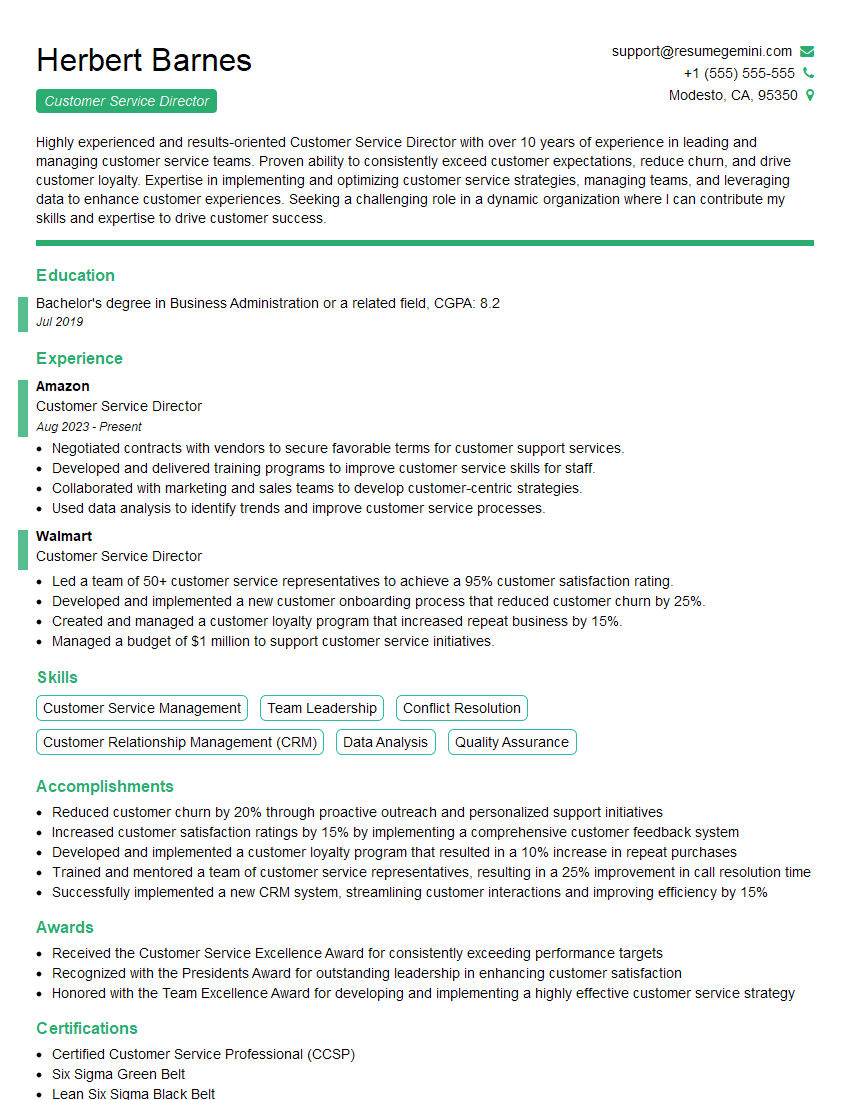
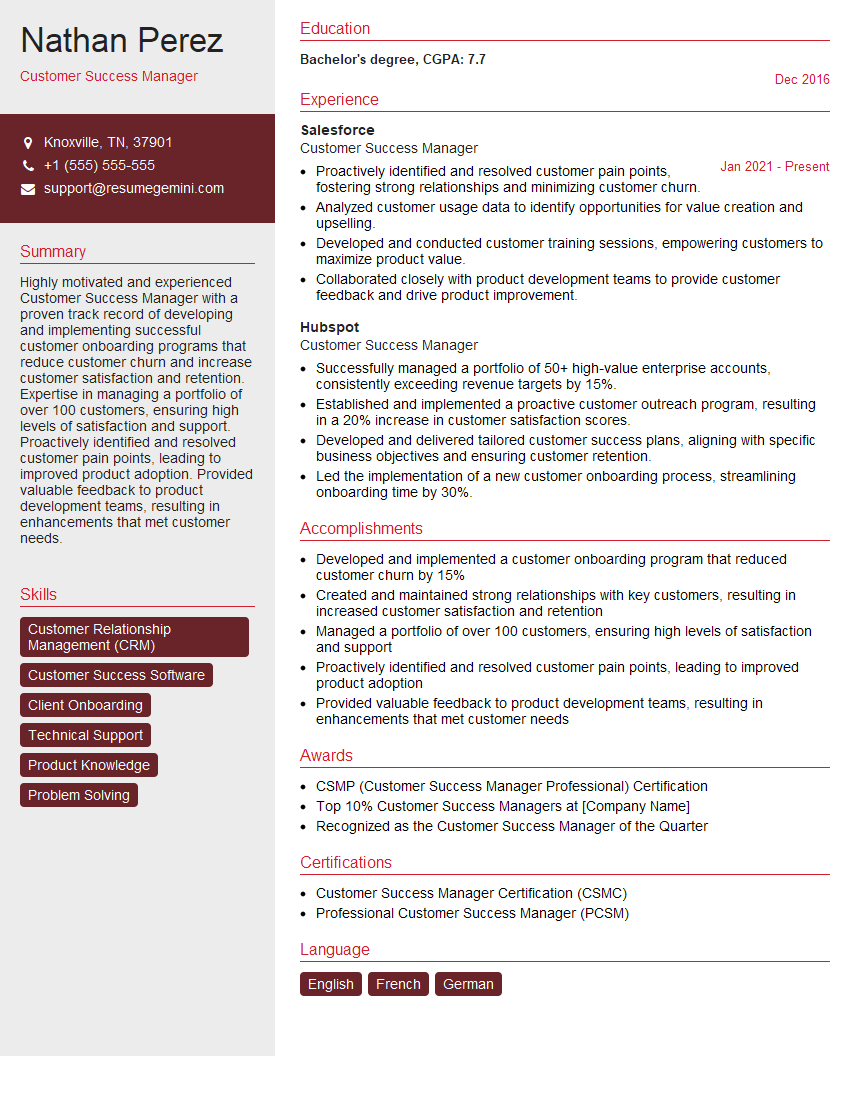
Mastering the development and implementation of customer service policies and procedures is crucial for career advancement, demonstrating your ability to build strong customer relationships and improve operational efficiency. An ATS-friendly resume is vital for maximizing your job prospects. To create a compelling and effective resume that highlights your skills and experience, we recommend using ResumeGemini. ResumeGemini provides a user-friendly platform and offers examples of resumes tailored to roles focusing on developing and implementing customer service policies and procedures, helping you showcase your expertise effectively and land your dream job.

Explore more articles
Users Rating of Our Blogs
Share Your Experience
We value your feedback! Please rate our content and share your thoughts (optional).
What Readers Say About Our Blog
Really detailed insights and content, thank you for writing this detailed article.
IT gave me an insight and words to use and be able to think of examples