Are you ready to stand out in your next interview? Understanding and preparing for Development and Implementation of Milk Safety Programs interview questions is a game-changer. In this blog, we’ve compiled key questions and expert advice to help you showcase your skills with confidence and precision. Let’s get started on your journey to acing the interview.
Questions Asked in Development and Implementation of Milk Safety Programs Interview
Q 1. Describe the HACCP plan for milk processing.
A Hazard Analysis and Critical Control Point (HACCP) plan for milk processing is a preventative system designed to identify and control biological, chemical, and physical hazards that can compromise milk safety. It focuses on preventing problems rather than reacting to them.
The plan typically involves these seven principles:
- Conduct a hazard analysis: Identify potential hazards in all stages of milk production, from farm to consumer, like Salmonella, E. coli, or pesticide residues.
- Determine critical control points (CCPs): Identify steps in the process where hazards can be prevented, eliminated, or reduced to safe levels. Pasteurization is a primary CCP.
- Establish critical limits: Set measurable parameters for each CCP. For example, a minimum pasteurization temperature and holding time.
- Establish monitoring procedures: Define how and how often CCPs are monitored. This might involve regular temperature checks during pasteurization.
- Establish corrective actions: Outline steps to take if a CCP is not met. This might involve discarding a batch of milk.
- Establish verification procedures: Implement methods to ensure the HACCP plan is effective. This could involve regular audits and record reviews.
- Establish record-keeping and documentation procedures: Maintain detailed records of all HACCP activities.
For example, a deviation from the required pasteurization temperature would trigger a corrective action, potentially involving product rejection and investigation of the equipment malfunction.
Q 2. Explain the importance of pasteurization in milk safety.
Pasteurization is a critical step in ensuring milk safety because it eliminates most harmful bacteria, such as Salmonella, Listeria, and E. coli, that can cause illness. These bacteria can naturally occur in raw milk from animal sources. The process uses heat to kill these pathogens without significantly altering the nutritional value or taste of the milk. It’s like giving the milk a ‘health check’ by eliminating dangerous invisible passengers.
Without pasteurization, the risk of milk-borne illnesses would be significantly higher, potentially leading to widespread outbreaks. Pasteurization dramatically reduces the chance of contracting diseases like brucellosis, tuberculosis, and typhoid fever.
Q 3. What are the common microbiological hazards in milk?
Raw milk can harbor a variety of dangerous microorganisms. Common microbiological hazards include:
- Salmonella spp.: Causes food poisoning, leading to diarrhea, fever, and abdominal cramps.
- E. coli O157:H7: A particularly dangerous strain causing severe bloody diarrhea, potentially leading to kidney failure (hemolytic uremic syndrome).
- Listeria monocytogenes: Can cause listeriosis, particularly dangerous for pregnant women, newborns, and immunocompromised individuals.
- Staphylococcus aureus: Produces toxins that cause food poisoning characterized by vomiting and diarrhea.
- Campylobacter spp.: Another common cause of food poisoning, characterized by diarrhea, fever, and abdominal cramps.
- Spore-forming bacteria (Bacillus and Clostridium spp.): These bacteria are very heat-resistant and may survive pasteurization, causing spoilage or illness if conditions are favorable.
The presence of these bacteria highlights the importance of stringent hygiene practices throughout the entire milk production chain.
Q 4. How do you control bacterial growth during milk processing?
Controlling bacterial growth during milk processing relies on several key strategies. A crucial element is rapid cooling of raw milk immediately after milking to inhibit bacterial multiplication. This slows down the growth rate of most bacteria, reducing their chances to produce toxins. Another major factor is pasteurization, which effectively eliminates most pathogens.
Beyond these, maintaining strict hygiene throughout the process is essential. This involves:
- Proper sanitation of equipment: Cleaning and sanitizing all equipment that comes into contact with milk to remove any bacterial residue.
- Use of clean and sanitized containers: Ensuring that all containers used for storage and transportation are clean.
- Maintaining low temperatures throughout processing: Using refrigerated storage and transportation to minimize bacterial growth.
- Employing good manufacturing practices (GMPs): Adhering to strict procedures designed to minimize contamination risks.
Imagine it as creating a hostile environment for bacteria to survive and grow; lowering the temperature and removing any food they need to multiply.
Q 5. What are the key sanitation procedures for dairy equipment?
Sanitation of dairy equipment is crucial to prevent contamination and ensure milk safety. It’s a two-step process, typically involving:
- Cleaning: Removing visible dirt, milk residue, and organic matter using detergents and hot water. This often involves dismantling parts of the equipment for thorough cleaning.
- Sanitizing: Eliminating remaining microorganisms using chemical sanitizers such as chlorine compounds or iodophors. This kills bacteria not removed through cleaning.
Specific procedures depend on the equipment involved, but a general procedure involves:
- Disassemble equipment where feasible.
- Pre-rinse with cold water.
- Wash with a detergent solution using brushes or automated systems.
- Rinse thoroughly with hot water.
- Sanitize using a suitable chemical sanitizer.
- Allow equipment to air dry or dry with sanitized air.
- Reassemble equipment.
Regular maintenance, including checking for cracks or damage, ensures the effectiveness of sanitation and avoids harboring bacteria.
Q 6. What are the regulatory requirements for milk safety in your region?
Regulatory requirements for milk safety vary by region, but generally involve adherence to guidelines set by national or regional food safety agencies. These regulations usually cover aspects like:
- Milk production standards: Requirements for farm hygiene, animal health, and milk handling practices.
- Processing requirements: Specifications for pasteurization, packaging, and labeling.
- Testing and quality control: Regular testing for microbiological contamination and chemical residues.
- Record keeping: Documentation of all stages of milk production, processing, and distribution.
- Licensing and inspections: Dairy farms and processing plants are often required to obtain licenses and undergo regular inspections.
For example, in many regions, there are specific legal limits for the bacterial count allowed in pasteurized milk. Failure to meet these standards can lead to sanctions, including product recalls and fines.
Q 7. Explain the role of GMPs (Good Manufacturing Practices) in milk safety.
Good Manufacturing Practices (GMPs) are a set of guidelines and procedures designed to minimize contamination risks during the manufacturing process. In the context of milk safety, GMPs cover a wide range of practices, ensuring that milk is produced and handled under conditions that maintain its safety and quality.
Key aspects of GMPs in milk safety include:
- Hygiene and sanitation: Maintaining high standards of cleanliness in the dairy plant and on the farm.
- Personnel hygiene: Employees must follow strict hygiene protocols, including handwashing and wearing appropriate protective clothing.
- Equipment maintenance: Regular cleaning, sanitization, and maintenance of all equipment to prevent contamination.
- Pest control: Implementing measures to prevent pest infestation and contamination.
- Traceability: Maintaining accurate records to track the origin and handling of milk throughout the supply chain.
- Product quality control: Regularly testing milk to ensure it meets quality standards.
GMPs act as the foundation for a safe and efficient milk production process, acting like a checklist ensuring all steps have been followed for the best results.
Q 8. How do you conduct a dairy farm audit for milk safety?
A dairy farm audit for milk safety is a systematic evaluation of all aspects of milk production, from cow health and hygiene to processing and storage. Think of it like a thorough health check for the entire farm. It’s crucial for ensuring the milk produced meets safety standards and minimizes risks of contamination.
The audit typically involves a combination of:
- Documentation review: Examining farm records on animal health, feed management, cleaning and sanitation procedures, employee training, and pest control.
- On-site inspection: A physical walkthrough of the farm, including milking parlors, storage facilities, and waste management areas. This allows for visual assessment of cleanliness, equipment condition, and adherence to protocols.
- Sampling and testing: Collecting milk samples for laboratory analysis to check for bacterial contamination, antibiotic residues, and other potential hazards. This is the most concrete way to assess the quality of the final product.
- Interviews: Talking with farm personnel at all levels to understand procedures, identify any potential weaknesses in the system, and assess their knowledge and commitment to safety practices.
For instance, a critical part of the inspection would be evaluating the proper cleaning and sanitization of milking equipment. Failure to adequately sterilize these tools can lead to bacterial growth and compromise the safety of the milk. The audit would assess whether appropriate procedures are followed and whether employees are trained properly.
Q 9. How do you identify and manage potential contamination sources in milk production?
Identifying and managing contamination sources in milk production requires a multi-faceted approach, focusing on preventing contamination at every stage. Think of it like building a strong defense against invaders.
Potential contamination sources can be grouped into:
- Udder and Teat Contamination: Improper pre-milking hygiene (not cleaning and disinfecting teats) introduces bacteria directly into the milk.
- Milking Equipment Contamination: Poorly cleaned and sanitized milking equipment harbors bacteria that can transfer to the milk.
- Water Contamination: Contaminated water used for cleaning or diluting milk can lead to bacterial growth.
- Environmental Contamination: Dust, insects, rodents, and manure can introduce pathogens into the milk.
- Human Contamination: Poor hygiene practices of the milkers can spread bacteria.
Managing these sources involves implementing Good Agricultural Practices (GAPs) and Good Manufacturing Practices (GMPs):
- Strict Hygiene Protocols: Pre-milking teat disinfection, proper handwashing, and use of protective clothing.
- Regular Cleaning and Sanitization: Thorough cleaning and sanitization of all equipment and surfaces after each milking.
- Water Quality Control: Using safe, potable water for cleaning and dilution.
- Pest Control: Implementing effective measures to control insects, rodents, and other pests.
- Employee Training: Regular training and education on hygiene and safety procedures.
For example, regularly testing the water used for cleaning helps identify potential contamination early on. Implementing a robust pest control program prevents rodents from accessing milk storage areas.
Q 10. Describe different methods of milk preservation.
Milk preservation aims to extend its shelf life and maintain its quality. Imagine it like keeping your favorite food fresh for longer.
Common methods include:
- Refrigeration: Lowering the temperature significantly slows bacterial growth, extending shelf life to several days. This is the most common method for home use and most commercial applications.
- Pasteurization: Heating milk to a specific temperature for a set time kills most harmful bacteria, significantly increasing shelf life (typically around 7 days when refrigerated). This process doesn’t affect the nutritional value drastically.
- Ultra-High Temperature (UHT) Processing: Milk is heated to very high temperatures for a short time, making it shelf-stable for several months without refrigeration. This creates a product with an extended shelf life but can slightly alter taste and nutritional profile.
- Homogenization: While not a preservation method itself, homogenization reduces fat globule size, preventing creaming and improving the overall stability and shelf life of the milk.
- Adding Preservatives: Some preservatives can extend the shelf life, but their use is tightly regulated due to safety concerns.
The choice of method depends on various factors, including intended shelf life, desired taste, and cost.
Q 11. What are the signs of spoilage in milk?
Spoilage in milk is usually indicated by several sensory changes and sometimes chemical alterations. These are warning signs that the milk is no longer safe to consume.
Common signs include:
- Sour smell and taste: This is a clear indication of bacterial fermentation, producing lactic acid.
- Curdling or clumping: The milk separates into curds and whey, indicating bacterial activity and protein breakdown.
- Off-flavors: Development of unusual tastes, such as bitterness or rancidity.
- Changes in color or texture: The milk may become thicker or thinner than normal, or change color.
- Visible mold: Presence of fuzzy or slimy growths on the surface.
It’s crucial to remember that even if milk doesn’t show obvious signs of spoilage, it’s always best to follow the ‘use by’ date and refrigerate properly to avoid potential health risks.
Q 12. How do you investigate a milk safety incident?
Investigating a milk safety incident requires a systematic and thorough approach to identify the root cause and prevent recurrence. Think of it as a detective investigation to pinpoint the source of the problem.
The process typically involves:
- Immediate containment: Removing the affected milk from circulation to prevent further harm.
- Sample collection and testing: Gathering samples of the milk to identify the contaminant and determine the extent of the contamination.
- Traceback investigation: Tracing the milk back through the supply chain to identify the point of contamination, which often involves scrutinizing farm records and tracking the milk’s movement.
- On-site inspection: Inspecting the farm or processing facility to identify potential sources of contamination, such as equipment malfunctions or hygiene failures.
- Interviews with personnel: Gathering information from individuals involved in the milk’s production and handling.
- Data analysis: Analyzing data from various sources to pinpoint the root cause.
- Corrective actions: Implementing measures to rectify the problem and prevent similar incidents in the future.
- Communication: Keeping all relevant stakeholders informed about the investigation and its findings.
For example, if a batch of milk is found to be contaminated with E. coli, the investigation would retrace the milk’s journey from the farm to the consumer to identify where the contamination occurred – perhaps a failure in hygiene protocols at a specific stage.
Q 13. Explain the importance of traceability in milk production.
Traceability in milk production is essential for ensuring food safety and consumer confidence. It’s like having a detailed roadmap for the milk’s journey from farm to table.
It allows for:
- Rapid identification of contaminated products: In case of a safety incident, traceability enables quick removal of affected products from the market.
- Improved food safety management: By tracking milk through the supply chain, potential contamination sources can be identified and addressed.
- Enhanced consumer confidence: Consumers are more likely to trust products with a clear and transparent traceability system.
- Better response to recalls: Traceability significantly speeds up recall processes, minimizing health risks and economic losses.
- Improved regulatory compliance: Traceability systems help producers meet regulatory requirements.
A typical traceability system involves assigning unique identifiers (such as batch numbers or farm IDs) to milk at each stage of production, processing, and distribution. This information is recorded and stored, enabling efficient tracking throughout the supply chain.
Q 14. How do you handle customer complaints related to milk quality?
Handling customer complaints related to milk quality requires a prompt, professional, and empathetic approach. Think of it as damage control with a focus on regaining trust.
The process should include:
- Acknowledge and empathize: Begin by acknowledging the customer’s concern and expressing empathy for their experience.
- Gather information: Collect details about the complaint, including the batch number, purchase location, and specific issues encountered.
- Investigate the complaint: Thoroughly investigate the complaint to determine its validity and identify potential causes.
- Take appropriate action: This could include offering a refund, replacement product, or providing further explanations.
- Follow up: Follow up with the customer to ensure their concerns have been addressed and to gather feedback on the resolution.
- Learn from the complaint: Analyze the complaint to identify areas for improvement in milk production, processing, or customer service.
For example, if a customer complains about a sour taste, the information gathered (batch number, etc.) allows for an investigation to trace the origin and potential causes – such as a problem with refrigeration or a contamination issue at a specific stage of production.
Q 15. What are the challenges in ensuring milk safety throughout the supply chain?
Ensuring milk safety across the entire supply chain is a complex undertaking, fraught with challenges at every stage. Think of it like a relay race – if one leg falters, the whole team suffers.
- On the farm: Maintaining hygienic milking practices, preventing contamination from manure or mastitis (udder infection), and ensuring proper cooling are crucial. A single infected cow can contaminate an entire batch.
- Transportation: Maintaining the cold chain is paramount. Temperature fluctuations can lead to bacterial growth, rapidly spoiling the milk and potentially making it unsafe. Imagine a truck breaking down on a hot day – the milk could become dangerous within hours.
- Processing: Maintaining hygiene in processing plants is vital. Improper cleaning and sanitization can introduce pathogens. Think of a tiny crack in a pipe allowing bacteria to proliferate into a huge tank of milk.
- Packaging and Distribution: Packaging integrity is essential to prevent contamination. Similarly, storage and distribution must uphold the cold chain to maintain safety. A damaged carton or a delay in transportation can compromise the milk.
- Retail: Even at the retail level, maintaining proper refrigeration is critical. Imagine milk left out on a warm shelf – this significantly increases the risk of spoilage and pathogen growth.
Each of these stages presents unique challenges, requiring a multi-pronged approach involving rigorous quality control, proper training, and robust traceability systems.
Career Expert Tips:
- Ace those interviews! Prepare effectively by reviewing the Top 50 Most Common Interview Questions on ResumeGemini.
- Navigate your job search with confidence! Explore a wide range of Career Tips on ResumeGemini. Learn about common challenges and recommendations to overcome them.
- Craft the perfect resume! Master the Art of Resume Writing with ResumeGemini’s guide. Showcase your unique qualifications and achievements effectively.
- Don’t miss out on holiday savings! Build your dream resume with ResumeGemini’s ATS optimized templates.
Q 16. Describe the role of quality control testing in milk safety.
Quality control testing is the cornerstone of milk safety. It’s like a health checkup for your milk, identifying potential problems before they impact consumers. These tests ensure that the milk meets regulatory standards and is safe for consumption. Testing helps identify potential problems early in the process, minimizing losses and preventing the distribution of unsafe milk. This includes both microbiological and physicochemical tests. The frequency of testing depends on the stage of the supply chain and the risk profile.
Q 17. What are the different types of milk quality tests?
Milk quality tests can be broadly categorized into microbiological and physicochemical tests.
- Microbiological Tests: These detect the presence of harmful bacteria and microorganisms. Examples include:
- Total Bacterial Count (TBC): Measures the total number of bacteria present. A high TBC indicates potential spoilage and safety issues.
- Coliform Count: Detects the presence of coliform bacteria, indicating fecal contamination.
- Pathogen testing (e.g., Salmonella, Listeria, E. coli O157:H7): Looks for specific harmful bacteria. This is crucial for ensuring public health.
- Physicochemical Tests: These assess the milk’s physical and chemical properties. Examples include:
- Fat content: Measures the percentage of fat in the milk.
- Protein content: Measures the amount of protein.
- Solids-not-fat (SNF): Measures the total solids excluding fat.
- pH: Measures the acidity level, indicating potential spoilage.
- Freezing point depression: A test used to detect added water.
The specific tests conducted depend on the stage of production and the risk assessment.
Q 18. How do you interpret the results of milk quality tests?
Interpreting milk quality test results requires a combination of understanding the test methods, established standards, and risk assessment. Each test has specific acceptable limits set by regulatory bodies.
- Microbiological results: Results are usually expressed as colony-forming units (CFU) per milliliter. Exceeding established limits indicates potential contamination. For instance, a high coliform count suggests fecal contamination, necessitating investigation of the source and possible rejection of the batch.
- Physicochemical results: These are compared with regulatory standards. For example, if the fat content is below the required level, it might necessitate blending with milk that has higher fat content, or rejection. Similarly, deviations in pH or SNF can indicate potential problems like spoilage or adulteration.
Any result exceeding established limits warrants immediate investigation to identify the root cause, implement corrective actions, and prevent further occurrences. This might involve reviewing farm practices, processing procedures, or storage conditions.
Q 19. What is your experience with food safety management systems?
I have extensive experience with various food safety management systems, including ISO 22000, BRC Global Standard for Food Safety, and SQF Code. I’ve been involved in the development, implementation, and auditing of these systems across multiple dairy processing plants. My experience includes conducting gap analyses, identifying areas for improvement, and developing customized systems to meet specific needs and regulatory requirements. For example, I helped a small dairy farm transition from basic GMPs to a full ISO 22000 certification, resulting in improved product safety and market access.
Q 20. Describe your experience with implementing and maintaining HACCP plans.
I have a strong track record of developing, implementing, and maintaining HACCP (Hazard Analysis and Critical Control Points) plans for dairy processing facilities. HACCP is a systematic approach that identifies potential hazards in the food production process and establishes controls to eliminate or mitigate them. I’ve led numerous HACCP teams, conducting hazard analyses, identifying CCPs, establishing monitoring procedures, and developing corrective actions. This includes creating flow diagrams, defining critical limits, and establishing record-keeping systems. For instance, I successfully implemented a HACCP plan at a large processing plant, reducing instances of bacterial contamination by 75% in the first year. This involved specific focus on sanitation procedures, temperature control, and employee training.
Q 21. What is your experience with food safety audits?
My experience with food safety audits is comprehensive. I have conducted numerous internal audits and participated in many third-party audits (e.g., BRC, ISO, SQF). I understand the audit process thoroughly, including the requirements for documentation, record keeping, and traceability. My knowledge extends to various audit types, including announced and unannounced audits. I have a strong track record of successfully guiding facilities through audits, identifying and addressing non-conformances, and developing corrective action plans. During one audit, my proactive identification of a potential sanitation issue prevented a major recall and saved the company significant financial losses. This involved identifying a potential cross-contamination hazard that was missed during the internal audit process. My experience shows a strong ability to anticipate and resolve challenges.
Q 22. How do you manage food safety risks?
Managing food safety risks in milk production involves a multi-faceted approach based on the Hazard Analysis and Critical Control Points (HACCP) system. This preventative approach identifies potential hazards at each stage, from farm to consumer, and establishes critical control points (CCPs) to minimize risks. Think of it like building a safety net—each layer addresses a potential fall.
- Hazard Identification: We meticulously identify biological hazards (bacteria like E. coli or Salmonella), chemical hazards (pesticides, cleaning agents), and physical hazards (glass shards, metal fragments). We use risk assessments, including data analysis from past incidents and industry best practices, to determine the likelihood and severity of each hazard.
- Critical Control Point Determination: CCPs are steps in the process where control can prevent or eliminate a hazard. For example, pasteurization is a crucial CCP for eliminating pathogenic bacteria. Proper cleaning and sanitization of equipment are other CCPs.
- Establishing Critical Limits: For each CCP, we set measurable limits. For pasteurization, this might be a specific temperature and holding time. Deviation from these limits triggers corrective action.
- Monitoring: Continuous monitoring of CCPs is essential using tools like thermometers, timers, and visual inspections. This ensures processes remain within established limits.
- Corrective Actions: A clear protocol for addressing deviations from critical limits must be in place. This might involve re-pasteurization, discarding contaminated milk, or adjusting equipment settings.
- Verification: Regular audits and testing verify the effectiveness of the entire HACCP plan. This may include microbial testing of the final product.
- Record Keeping: Meticulous record-keeping documents every step of the process, allowing for traceability in case of a problem. This provides a historical audit trail for compliance and continuous improvement.
For instance, during a recent audit, we discovered a slight temperature fluctuation during pasteurization. Our corrective action involved retraining staff on proper equipment operation and implementing additional temperature monitoring points. This proactive approach prevented potential contamination.
Q 23. How do you ensure the effectiveness of your milk safety program?
Ensuring the effectiveness of our milk safety program relies on a robust system of checks and balances. It’s not just about having a plan; it’s about continuously evaluating and improving it.
- Regular Audits: Internal audits assess adherence to our HACCP plan and Standard Operating Procedures (SOPs). We also participate in third-party audits to ensure compliance with industry standards and regulations.
- Microbial Testing: Routine testing of raw milk and finished products monitors microbial load and the presence of pathogens. This provides objective evidence of the program’s success.
- Employee Training: Ongoing training keeps employees updated on best practices, new regulations, and improvements to the safety program. This is crucial, as human error can be a significant source of contamination.
- Data Analysis: We regularly analyze data from audits, testing, and production records to identify trends and areas for improvement. This allows us to proactively address potential problems before they escalate.
- Continuous Improvement: Our program is not static. We are always looking for ways to improve our processes and implement new technologies to enhance safety. This could involve investing in new equipment, adopting improved sanitization methods, or implementing more advanced traceability systems.
For example, after analyzing data showing a slight increase in bacterial counts during a particular season, we implemented a new cleaning procedure and improved our raw milk handling protocols. This proactive response minimized the impact on product quality and safety.
Q 24. Describe your experience with milk safety training programs.
I’ve been involved in designing and delivering numerous milk safety training programs for farm workers, processing plant employees, and quality control personnel. My approach emphasizes hands-on learning and practical application.
- Tailored Training: Training is tailored to the specific roles and responsibilities of participants. Farm workers receive training on proper hygiene, milking practices, and animal health. Processing plant employees focus on equipment sanitation, handling procedures, and quality control techniques.
- Interactive Sessions: We utilize interactive methods like group discussions, case studies, and simulations to reinforce learning. For instance, we might simulate a scenario where a temperature deviation is detected during pasteurization to test their response.
- Practical Demonstrations: Hands-on demonstrations on proper cleaning and sanitization techniques, equipment operation, and sample collection ensure participants understand the practical application of what they learn.
- Assessment and Feedback: Regular assessments and feedback throughout the training ensure participants understand the material and can apply it in their work. This often includes written tests and practical evaluations.
- Documentation and Certification: Comprehensive documentation records training completion, ensuring compliance with regulations and maintaining a trained workforce.
In a recent training program for a dairy farm, we implemented a new hands-on module demonstrating proper cleaning and sanitization techniques using a mock milking machine. This resulted in a significant reduction in contamination rates.
Q 25. What are your strategies for preventing milk adulteration?
Preventing milk adulteration requires a multi-pronged strategy focusing on security, traceability, and testing.
- Secure Supply Chain: Maintaining a secure supply chain from farm to processing plant is critical. This involves establishing relationships with trusted suppliers, implementing secure transportation methods, and utilizing tamper-evident seals on packaging.
- Traceability Systems: Implementing robust traceability systems enables tracking milk from its source to the consumer. This allows for rapid identification and removal of adulterated products if a problem arises. We use batch numbers and RFID technology to ensure complete traceability.
- Regular Testing: Regular testing for adulterants, such as water, urea, or detergents, is essential. This can involve both routine testing in the lab and using quick, on-site testing methods.
- Employee Training: Rigorous employee training emphasizes the importance of preventing adulteration and the procedures for reporting suspicious activity.
- Secure Storage: Secure storage of raw milk and finished products is crucial to prevent unauthorized access and tampering.
For example, we recently implemented a new secure storage system for our raw milk tanks, including video surveillance and access control, which helped prevent a potential case of adulteration.
Q 26. How do you manage personnel hygiene to maintain milk safety?
Maintaining high standards of personnel hygiene is paramount to milk safety. We achieve this through a combination of training, policies, and monitoring.
- Hygiene Training: All personnel receive comprehensive hygiene training, covering handwashing procedures, proper use of protective clothing, and maintaining a clean work environment. This often includes regular refresher courses.
- Hygiene Policies and Procedures: Clearly defined policies and procedures outline hygiene expectations for all staff. This includes guidelines on handwashing, use of gloves and protective gear, and proper disposal of waste.
- Regular Monitoring: Supervisors regularly monitor employee hygiene practices. This includes observing handwashing techniques, checking for proper use of protective clothing, and ensuring adherence to hygiene protocols.
- Health Checks: Health checks and reporting mechanisms for illness are in place. Employees with symptoms of illness are prevented from handling milk or coming into contact with milk production areas.
- Cleanliness of Facilities: Maintaining impeccable cleanliness of facilities, including regular cleaning and sanitization of all surfaces and equipment, is crucial.
For example, we implemented a color-coded system for cleaning cloths and utensils, which made it easier to differentiate between cleaning areas and ensured that cross-contamination was minimized.
Q 27. What is your understanding of food allergen management in dairy products?
Food allergen management in dairy products is crucial due to the potential for severe allergic reactions. Our approach focuses on prevention and control at every stage.
- Allergen Identification: We accurately identify all potential allergens present in our products, including milk, nuts, soy, and eggs (depending on the production facility). This is done through thorough ingredient analysis and supply chain management.
- Allergen Control: Implementing stringent controls to prevent cross-contamination is paramount. This involves dedicated equipment, cleaning procedures, and separate production lines for allergen-containing and allergen-free products.
- Labeling: Accurate and clear allergen labeling is mandatory. We adhere to all relevant regulations and ensure that labels clearly state all potential allergens present in the product.
- Traceability: Comprehensive traceability allows rapid identification of the source of contamination if an allergic reaction occurs. This is essential for effective recall procedures.
- Employee Training: Thorough employee training on allergen awareness, handling procedures, and prevention of cross-contamination is essential.
For instance, we recently implemented a new cleaning procedure specifically designed to remove traces of nuts from processing equipment, preventing potential cross-contamination with dairy products.
Q 28. How do you ensure compliance with food labeling regulations regarding milk products?
Ensuring compliance with food labeling regulations regarding milk products requires meticulous attention to detail. We follow a strict protocol to ensure that all our labels meet the required standards.
- Accurate Information: All labels accurately reflect the product’s ingredients, nutritional information, net weight, and allergen statements. We regularly review labels against the latest regulations.
- Proper Formatting: Labels are formatted according to specified guidelines, ensuring that all required information is clearly presented and easily understood by consumers.
- Allergen Declaration: We strictly adhere to regulations for declaring all major allergens, using clear and unambiguous language.
- Legal Compliance: Our labeling process is designed to comply with all applicable local, regional, and international regulations. We regularly update our procedures to reflect changes in laws and standards.
- Verification and Audits: Regular internal audits and third-party inspections verify the accuracy and compliance of our labeling practices.
For example, when new labeling requirements were introduced regarding font size and allergen declaration, we promptly updated our labeling system to ensure compliance, avoiding any potential legal issues and consumer safety risks.
Key Topics to Learn for Development and Implementation of Milk Safety Programs Interview
- Milk Production Hygiene: Understanding on-farm practices, sanitation procedures, and the role of hygiene in preventing contamination.
- Hazard Analysis and Critical Control Points (HACCP): Applying HACCP principles to identify and control biological, chemical, and physical hazards throughout the milk production chain. Practical application: Developing a HACCP plan for a dairy farm.
- Good Manufacturing Practices (GMPs) in Dairy Processing: Knowledge of GMPs related to equipment sanitation, personnel hygiene, and facility maintenance in processing plants.
- Milk Quality Testing and Analysis: Understanding various methods for testing milk quality, including bacterial counts, somatic cell counts, and fat content analysis. Practical application: Interpreting test results and implementing corrective actions based on findings.
- Food Safety Regulations and Compliance: Familiarity with relevant national and international food safety regulations and standards related to milk production and processing. Practical application: Ensuring compliance with regulatory requirements.
- Traceability and Recall Systems: Implementing and managing traceability systems to track milk products throughout the supply chain and efficiently manage recalls if necessary.
- Milk Pasteurization and Other Processing Technologies: Understanding the principles and application of various milk processing technologies, including pasteurization, homogenization, and ultra-high temperature (UHT) processing.
- Supply Chain Management and Logistics: Managing the efficient and safe movement of milk from farm to consumer, considering temperature control and transportation hygiene.
- Data Analysis and Reporting: Analyzing milk safety data to identify trends, improve processes, and demonstrate compliance.
- Problem-Solving and Decision-Making in Milk Safety: Developing effective problem-solving strategies to address milk safety challenges and make informed decisions in critical situations.
Next Steps
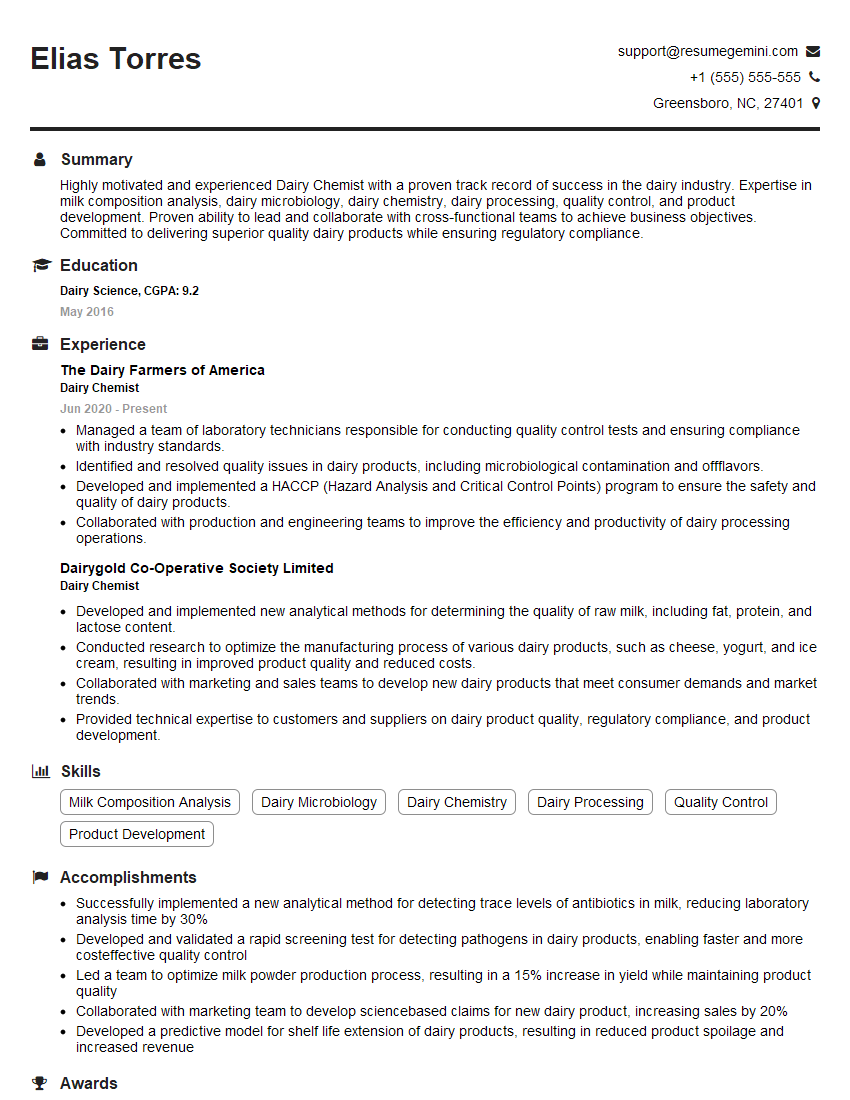
Mastering the development and implementation of milk safety programs is crucial for advancing your career in the food industry. It demonstrates your commitment to food safety and your ability to contribute significantly to a company’s success. To maximize your job prospects, focus on building an ATS-friendly resume that highlights your skills and experience effectively. ResumeGemini is a trusted resource for creating professional, impactful resumes. They provide examples of resumes tailored to roles in Development and Implementation of Milk Safety Programs, helping you present your qualifications in the best possible light. Take the next step in your career journey – craft a resume that truly showcases your expertise.
Explore more articles
Users Rating of Our Blogs
Share Your Experience
We value your feedback! Please rate our content and share your thoughts (optional).
What Readers Say About Our Blog
Really detailed insights and content, thank you for writing this detailed article.
IT gave me an insight and words to use and be able to think of examples