The thought of an interview can be nerve-wracking, but the right preparation can make all the difference. Explore this comprehensive guide to Doffing and Bobbin Handling interview questions and gain the confidence you need to showcase your abilities and secure the role.
Questions Asked in Doffing and Bobbin Handling Interview
Q 1. Describe the doffing process from start to finish.
Doffing is the process of removing full bobbins from a spinning machine and replacing them with empty ones. It’s a crucial step in continuous textile production, ensuring the uninterrupted flow of yarn. The process typically begins with a safety check of the machinery. Then, the operator carefully stops the machine and engages the braking system to prevent accidental starts. Next, the full bobbins are systematically removed, often using specialized tools to prevent damage or yarn breakage. Empty bobbins, pre-loaded if possible, are inserted into the designated spindles. Throughout this process, the operator visually inspects the yarn for quality and notes any irregularities. Finally, the machine is restarted, and the spinning process resumes. Think of it like changing the ink cartridges in a printer – a necessary step to maintain consistent output.
- Safety First: Always ensure the machine is completely stopped and locked before doffing.
- Systematic Removal: Follow a specific sequence to avoid confusion and potential errors.
- Visual Inspection: Examine the yarn for breaks, slubs, or other imperfections.
- Efficient Replacement: Minimize downtime by having ready access to empty bobbins.
Q 2. Explain the different types of bobbins used in textile manufacturing.
Several bobbin types exist in textile manufacturing, each optimized for specific yarn types and spinning machines. The choice depends heavily on the fiber, yarn count, and desired production speed.
- Paper Bobbins: Lightweight, disposable, and cost-effective, suitable for lower-end applications.
- Plastic Bobbins: More durable and reusable, often preferred for finer yarns and higher-speed spinning.
- Metal Bobbins: Strong and robust, chosen for heavy-duty applications and coarse yarns. They typically require more care and maintenance to prevent damage.
- Composite Bobbins: Combine materials for optimal strength and weight, offering a balance between cost and performance.
- Different Sizes and Shapes: Bobbins vary widely in size and shape to accommodate the different types and quantities of yarn. For example, larger bobbins can store more yarn, increasing production efficiency before changing is necessary.
Q 3. How do you identify and address a broken bobbin?
Identifying a broken bobbin is usually straightforward—you’ll see a break in the yarn trail. The machine itself might also indicate a problem, such as reduced output or unusual noise. Addressing the issue requires the immediate stoppage of the affected spindle. Carefully remove the broken bobbin, ensuring not to snag the yarn and cause further damage. Inspect the spindle for any debris. Replace the broken bobbin with a new one, ensuring the yarn is correctly threaded. If the breakage is consistently happening on a particular spindle, further investigation into potential machine malfunctions is warranted.
Think of it like a printer jam—you need to locate the source, clear the blockage, and then resume operation. However, unlike a printer, we are working with high-speed machinery and delicate yarn, so safety must be prioritized.
Q 4. What are the safety procedures you follow during doffing?
Safety during doffing is paramount. Before starting, ensure the machine is completely stopped and locked out. Wear appropriate personal protective equipment (PPE), including safety glasses and gloves, to protect against injuries from moving parts or yarn fragments. Maintain a safe distance from moving parts, and never attempt to reach into a running machine. Follow established lockout/tagout procedures to ensure the machine cannot be accidentally started while doffing is in progress. Always follow the manufacturer’s safety guidelines.
Prioritizing safety not only prevents accidents but safeguards your well-being and enhances workplace productivity. A safe environment fosters confidence and reduces the risk of costly downtime due to injuries.
Q 5. How do you ensure the quality of bobbins during handling?
Maintaining bobbin quality involves several checks and procedures throughout handling. Before use, inspect bobbins for any defects like cracks, warping, or damage that could affect yarn quality or lead to breakage. During the doffing process, avoid dropping or mishandling bobbins. After doffing, store bobbins in a clean, dry location to protect them from environmental damage. Regularly inspect stored bobbins to check for deterioration and ensure they meet quality standards. Using quality bobbins in the first place significantly reduces the occurrence of quality issues during spinning.
A consistent, cautious approach minimizes quality defects and ensures the smooth functioning of the spinning machinery.
Q 6. What are the common problems encountered during doffing and how do you troubleshoot them?
Common doffing problems include yarn breakage, bobbin jamming, and difficulties in inserting or removing bobbins. Yarn breakage can stem from machine malfunctions, low-quality bobbins, or incorrect yarn tension. Bobbin jamming usually occurs because of improperly wound bobbins or debris within the machine. Insertion/removal problems often relate to incorrect spindle alignment or operator error.
Troubleshooting involves systematic investigation: Start with a visual inspection of the machine and bobbins. Check the yarn tension and the machine settings. Clean any debris from the machine. If the issue persists, call for technical support. Keeping detailed records of issues and resolutions helps in identifying recurring problems and preventing future occurrences. Regular maintenance minimizes the likelihood of these problems.
Q 7. Explain the importance of proper bobbin storage and handling.
Proper bobbin storage and handling are critical for maintaining yarn quality and preventing production delays. Bobbins should be stored in a clean, dry environment, protected from dust, moisture, and extreme temperatures. Proper stacking techniques prevent bobbin damage and make accessing individual bobbins easy. Regularly check stored bobbins for signs of degradation, and promptly discard or repair any damaged ones. Efficient handling minimizes the risk of damage and keeps the production process flowing smoothly.
Think of it like storing delicate documents or important tools – careful organization and protection ensure they’re ready for use when needed.
Q 8. How do you maintain the efficiency of the doffing process?
Maintaining doffing efficiency is crucial for maximizing production and minimizing downtime. It’s a multifaceted process involving careful planning, skilled execution, and proactive maintenance.
Optimized Doffing Cycle: Understanding the optimal doffing cycle for your specific machinery and yarn type is paramount. This involves finding the sweet spot between full bobbin weight and the time it takes to complete the doffing process. Too short a cycle, and you lose production efficiency. Too long, and you risk yarn breaks and machine wear.
Preventive Maintenance: Regular inspection and maintenance of doffing equipment are crucial. This includes lubricating moving parts, checking for wear and tear on components like spindles and clearers, and ensuring the smooth functioning of the automated systems.
Skilled Operators: Well-trained operators are essential. They need to understand proper procedures for handling full bobbins, recognizing and addressing potential issues, and following safety protocols to prevent accidents and downtime.
Efficient Bobbin Handling: Proper bobbin storage and handling systems are crucial. This includes using well-maintained bobbin carts, ensuring easy access to empty and full bobbins, and implementing a clear organizational system to reduce wasted time searching for the right bobbins.
Data Analysis: Tracking key performance indicators (KPIs) such as doffing time, downtime, and yarn breakage rates allows for the identification of bottlenecks and areas for improvement. This data-driven approach enables informed decision-making and process optimization.
Q 9. Describe your experience with different types of doffing machines.
Throughout my career, I’ve worked with various doffing machines, each with its own strengths and weaknesses. I’ve experience with both fully automated systems and semi-automated systems, ranging from smaller, simpler machines used in smaller mills to large, high-speed systems in major production facilities.
Fully Automated Systems: These systems significantly reduce manual labor and increase efficiency. They typically involve robotic arms that automatically remove full bobbins and replace them with empty ones. I’ve worked with systems that use vision systems to identify bobbin fullness and manage the doffing process accordingly.
Semi-Automated Systems: These systems often involve a combination of automated and manual processes. For example, a machine might automatically remove full bobbins, but the replacement of empty bobbins might be a manual process. This type of system provides a balance between cost and efficiency.
Specific Machine Types: My experience includes working with machines from various manufacturers, each with its specific design and features. I’m familiar with the nuances of each machine and can adapt quickly to new systems, leveraging my expertise to achieve optimal performance.
This breadth of experience allows me to adapt to any doffing system efficiently, quickly troubleshoot problems, and optimize performance.
Q 10. What are the key performance indicators (KPIs) for doffing and bobbin handling?
Key performance indicators (KPIs) for doffing and bobbin handling are vital for monitoring efficiency and identifying areas for improvement. They provide quantifiable data to drive decision-making and optimize the overall process.
Doffing Time per Bobbin: Measures the time taken to remove a full bobbin and replace it with an empty one.
Downtime Percentage: Tracks the percentage of time the doffing process is not functioning due to machine malfunctions, operator errors, or other issues.
Yarn Breakage Rate: Measures the number of yarn breaks per unit of time or per number of bobbins, indicating potential issues with machine settings or yarn quality.
Bobbin Waste: Measures the amount of wasted yarn due to imperfect bobbin filling or handling.
Machine Efficiency: This encompasses all of the above factors and provides a holistic measure of the overall doffing and bobbin-handling process.
Operator Efficiency: This looks at how well the operator performs their tasks and the speed they are able to handle tasks.
Regularly monitoring these KPIs allows for the identification of bottlenecks and areas that need improvement, ultimately leading to increased productivity and reduced costs.
Q 11. How do you manage production targets related to doffing?
Managing production targets related to doffing involves a strategic approach that combines planning, monitoring, and problem-solving. It’s about balancing speed and quality to meet the overall production goals.
Setting Realistic Targets: Targets should be based on historical data, machine capabilities, and the quality of the yarn being processed. Unrealistic targets can lead to increased stress, lower quality, and potential safety hazards.
Effective Scheduling: Creating a well-defined schedule for doffing tasks, considering factors like shift changes, machine maintenance, and potential downtime, is vital for efficient resource allocation.
Real-Time Monitoring: Using real-time data monitoring to track progress against targets allows for quick adjustments as needed. This may involve adjusting operational parameters, addressing machine malfunctions promptly, or providing additional training to operators if necessary.
Continuous Improvement: Regular review of KPI data allows for the identification of areas where processes can be improved. This could involve implementing new techniques, investing in new equipment, or improving operator training programs.
Teamwork: Effective communication and teamwork between doffing operators, machine maintenance personnel, and production supervisors are essential to achieving and exceeding production targets.
By using a data-driven approach and proactive problem-solving, we can ensure that doffing operations remain consistent, efficient, and meet the desired production goals.
Q 12. Describe your experience with different types of yarn.
My experience encompasses a wide variety of yarn types, each with unique characteristics affecting the doffing and bobbin handling process. Understanding these differences is crucial for maintaining efficient and consistent production.
Fiber Type: I’ve worked with yarns made from natural fibers like cotton, wool, and silk, as well as synthetic fibers like polyester, nylon, and acrylic. Each fiber type has different properties regarding strength, elasticity, and susceptibility to breakage, which directly impacts bobbin winding and doffing processes.
Yarn Count: Yarn count (fineness) significantly impacts the doffing process. Fine yarns require more delicate handling to avoid breakage, potentially necessitating slower doffing speeds and more careful machine adjustments compared to coarser yarns.
Yarn Twist: The amount of twist in the yarn affects its strength and packing density on the bobbin. High-twist yarns might require adjustments to prevent slipping or tangling during doffing.
Yarn Quality: Uniformity of the yarn is paramount. Inconsistent yarn quality can lead to increased breakage rates and doffing difficulties. Identifying and addressing issues with yarn quality is a crucial aspect of maintaining efficiency.
Adaptability is key. My ability to quickly adjust to different yarn types and their specific handling requirements is a vital skill in ensuring optimal doffing and bobbin handling performance.
Q 13. Explain the relationship between yarn quality and bobbin handling.
Yarn quality and bobbin handling are inextricably linked. The quality of the yarn directly influences the efficiency and success of the bobbin handling process. Poor yarn quality can lead to several problems.
Increased Breakage: Weak or inconsistent yarn is prone to breakage during winding, leading to increased downtime, wasted material, and reduced efficiency. Careful bobbin handling can help minimize breakage but cannot fully compensate for poor yarn quality.
Uneven Winding: Inconsistent yarn thickness can lead to uneven winding on the bobbin, potentially causing problems with the subsequent knitting or weaving process. Proper bobbin handling might partially mitigate these issues, but optimal results require high-quality yarn.
Difficult Doffing: A poorly wound bobbin, often due to poor yarn quality, can make doffing more difficult and time-consuming, increasing the risk of yarn breakage and machine damage.
Reduced Efficiency: The cumulative effects of yarn-quality related issues lead to reduced overall efficiency of the doffing and bobbin handling processes.
Therefore, maintaining high yarn quality is a prerequisite for optimal bobbin handling and efficient doffing operations. Addressing yarn quality issues proactively is crucial for maintaining overall productivity and profitability.
Q 14. How do you contribute to a safe and efficient work environment?
Contributing to a safe and efficient work environment is a top priority. It’s not just about following safety rules; it’s about fostering a culture of safety and proactively identifying and mitigating potential hazards.
Following Safety Protocols: I strictly adhere to all safety guidelines and regulations, including the proper use of personal protective equipment (PPE) and following lockout/tagout procedures for machine maintenance.
Identifying and Reporting Hazards: I actively look for potential safety hazards in the workplace and immediately report them to the appropriate personnel. This proactive approach helps prevent accidents before they happen.
Promoting Teamwork: I believe in the importance of teamwork and open communication. A safe work environment is a shared responsibility, and I actively encourage my colleagues to report any concerns and work together to address potential issues.
Training and Education: I’m always willing to share my knowledge and experience with others, providing training and guidance on safe work practices. This helps create a more knowledgeable and safer workforce.
Maintaining Cleanliness: A clean and organized workspace is essential for preventing accidents. I actively participate in maintaining a clean and tidy work area, minimizing tripping hazards and ensuring the smooth functioning of equipment.
My commitment to safety is integral to my work ethic. I believe a safe and efficient environment leads to improved productivity, reduced accidents, and a positive work experience for everyone.
Q 15. Describe your experience working with automated doffing systems.
My experience with automated doffing systems spans over 10 years, encompassing various types, from simple pneumatic systems to highly sophisticated robotic solutions. I’ve worked extensively with systems from leading manufacturers such as [Manufacturer A] and [Manufacturer B], gaining a deep understanding of their functionalities, limitations, and maintenance requirements. A key project involved optimizing a [Manufacturer A] system on a high-speed ring spinning line. We reduced doffing time by 15% by implementing a new bobbin positioning algorithm and optimizing the pneumatic controls. This improved overall production efficiency significantly. I’m also proficient in troubleshooting automated doffing system malfunctions, ranging from sensor issues to robotic arm calibration problems. My approach combines practical experience with a data-driven analysis of system performance metrics.
For instance, in one instance, a recurring jam in the bobbin transfer mechanism was solved by analyzing the system’s logs and identifying a pattern linked to specific bobbin sizes. By adjusting the pneumatic pressure and re-calibrating the gripper, we eliminated the problem entirely. This highlights my ability to effectively diagnose and resolve complex technical challenges within automated doffing systems.
Career Expert Tips:
- Ace those interviews! Prepare effectively by reviewing the Top 50 Most Common Interview Questions on ResumeGemini.
- Navigate your job search with confidence! Explore a wide range of Career Tips on ResumeGemini. Learn about common challenges and recommendations to overcome them.
- Craft the perfect resume! Master the Art of Resume Writing with ResumeGemini’s guide. Showcase your unique qualifications and achievements effectively.
- Don’t miss out on holiday savings! Build your dream resume with ResumeGemini’s ATS optimized templates.
Q 16. How do you manage waste and minimize losses during doffing?
Managing waste and minimizing losses during doffing is crucial for maintaining profitability. My approach involves a multi-pronged strategy focused on preventing waste before it happens and effectively handling unavoidable losses. This starts with rigorous quality control checks on the raw materials and regular maintenance of the spinning machines to minimize yarn breaks and inconsistencies. During the doffing process itself, I ensure careful handling of bobbins to avoid damage and yarn breakage. We utilize specialized doffing carts designed to safely transport full bobbins, reducing the risk of accidental damage.
Any unavoidable waste, such as broken or damaged yarn, is meticulously collected and categorized for later analysis. This data allows us to identify trends and potential causes of waste, informing continuous improvement efforts. For instance, we implemented a new system for tracking yarn breaks, linked directly to specific machines and spinning parameters, which led to a 10% reduction in yarn waste within a quarter. This data-driven approach is essential for efficient waste management and continuous improvement.
Q 17. What is your understanding of the different spinning systems?
My understanding of spinning systems is comprehensive, covering various technologies, including ring spinning, rotor spinning, air-jet spinning, and friction spinning. Each system presents unique challenges and opportunities related to doffing and bobbin handling. Ring spinning, for example, typically uses larger, heavier bobbins that require robust doffing systems capable of handling significant weight. Rotor spinning, on the other hand, often employs smaller, lighter bobbins, which necessitates different handling procedures to prevent damage. Air-jet and friction spinning present their own specific considerations.
The choice of spinning system directly influences the design and operation of the doffing equipment and the procedures required to ensure efficient and safe operation. I have practical experience optimizing doffing processes for each of these spinning systems, adapting techniques and equipment to the specific requirements of each technology. This includes understanding the yarn properties, bobbin design, and machine parameters for each system.
Q 18. Explain the importance of proper cleaning and maintenance of doffing equipment.
Proper cleaning and maintenance of doffing equipment is paramount for ensuring consistent performance, minimizing downtime, and extending the lifespan of the equipment. A regular maintenance schedule is essential, encompassing daily, weekly, and monthly tasks. Daily cleaning involves removing lint and debris from the system components, using compressed air and appropriate cleaning tools. Weekly maintenance includes more thorough inspections of moving parts, lubrication of bearings and other moving components, and checks for wear and tear. Monthly maintenance may involve more comprehensive checks, potentially requiring specialized tools and expertise.
Ignoring these procedures can lead to malfunctions, inefficiencies, and ultimately, costly repairs or equipment replacements. For example, neglecting regular lubrication can lead to premature wear on moving parts, resulting in increased downtime for repairs and decreased efficiency. Similarly, allowing lint and debris to accumulate can clog pneumatic lines or interfere with sensor operation, leading to malfunctions and production disruptions. A proactive maintenance approach ensures optimal performance and reduces the risk of unplanned downtime.
Q 19. How do you handle situations where there are discrepancies in bobbin counts?
Discrepancies in bobbin counts can indicate a variety of problems, from malfunctions in the doffing system itself to issues within the spinning machines. My approach to handling these discrepancies involves a systematic investigation to identify the root cause. First, I verify the accuracy of the counting system by cross-referencing it with manual counts of a sample set of bobbins. Next, I examine the doffing process for any anomalies, checking for instances of bobbins being missed or double-counted.
If the discrepancy persists, I investigate potential issues within the spinning machines. This might involve inspecting the machines for signs of yarn breakage, inconsistent yarn delivery, or other problems that could contribute to inaccurate bobbin counts. I use data logging systems to track parameters like spindle speeds and yarn tension, allowing me to identify patterns that may indicate the underlying cause. By meticulously tracing the problem back to its origin, I can implement corrective measures and prevent similar discrepancies in the future.
Q 20. Describe your experience with quality control procedures for bobbins.
Quality control procedures for bobbins are integral to the entire spinning process. My experience involves implementing and overseeing stringent quality control checks at various stages, from raw material inspection to final product verification. This includes checks for dimensional accuracy (diameter, length), weight consistency, and yarn quality. We utilize specialized measuring equipment to ensure bobbins meet the required specifications and employ statistical process control (SPC) techniques to monitor and manage variations in bobbin parameters.
Defective bobbins are immediately identified and removed from the production line to prevent issues further down the process. Regular audits and calibration of measuring equipment ensure the accuracy and reliability of our quality control measures. Furthermore, we maintain detailed records of quality control data, allowing for continuous monitoring and improvement of the bobbin production process. This detailed approach ensures the consistent quality and reliability of our products.
Q 21. How do you identify and report machine malfunctions related to doffing?
Identifying and reporting machine malfunctions related to doffing requires a systematic and thorough approach. I begin by observing the malfunction and noting any unusual sounds, vibrations, or visual indicators. I then consult the machine’s operator manuals and diagnostic tools to identify potential causes. This often involves checking error codes, sensor readings, and other data logs to isolate the problem.
Once the likely cause is identified, I take appropriate actions. This might involve simple repairs, such as replacing a faulty sensor or clearing a jammed mechanism. For more complex problems, I may need to escalate the issue to a maintenance team. In all cases, I meticulously document the malfunction, the steps taken to diagnose the problem, and the corrective actions taken. This detailed documentation is essential for maintaining a comprehensive history of machine performance and identifying recurring issues that might require more extensive solutions. The information is also used for preventative maintenance planning to mitigate future issues.
Q 22. Explain your experience with different types of bobbin winding machines.
My experience encompasses a wide range of bobbin winding machines, from older, manually-operated models to the latest automated high-speed systems. I’m proficient with both precision winding machines for fine yarns and those designed for heavier, coarser materials. I’ve worked with machines employing different winding techniques, including the cross-winding method, which produces a more stable and even bobbin, and the universal winding method that offers versatility for various yarn types. For example, I’ve extensively used the Schlafhorst Autoconer, known for its high speed and precision, and have also worked with simpler, more basic models used in smaller-scale operations. This experience allows me to quickly adapt to new machinery and troubleshoot issues that may arise.
My experience extends to understanding the nuances of different bobbin types – from parallel wound to cheese wound – and how the machine settings need to be adjusted for optimal results with each. I also understand the importance of regular maintenance, including cleaning and lubrication, to ensure machine efficiency and longevity. I can identify and resolve common issues, such as uneven winding, broken yarn, and faulty sensors, minimizing downtime and maximizing production output.
Q 23. Describe your proficiency in using various tools and equipment related to doffing.
My doffing tool proficiency includes expertise with various types of doffing bars, both manual and automated. I’m skilled in using specialized doffing equipment such as pneumatic doffing systems which significantly increase efficiency, especially in high-volume production environments. I’m also comfortable using hand tools such as bobbin tongs and bobbin carriers for more delicate tasks or in situations where machinery is unavailable.
Beyond the tools, I’m adept at handling different types of packages, including cones, tubes, and cheeses, and am knowledgeable about the importance of proper handling techniques to avoid damage or yarn breakage. Safety is paramount; I always ensure that tools are in good working order and use appropriate safety measures, such as gloves, to prevent injuries. For example, I’ve often had to quickly adapt my technique when handling sensitive yarns prone to snagging, prioritizing gentle handling over speed.
Q 24. How do you prioritize tasks when multiple doffing processes are running simultaneously?
Prioritizing doffing tasks when multiple processes are running simultaneously requires a systematic approach. I utilize a combination of techniques: First, I assess the urgency of each task based on factors such as production deadlines, machine capacity, and yarn type. High-speed machines with sensitive yarns often take precedence. Second, I determine the potential impact of delaying any single task on overall production. A bottleneck on a key machine warrants immediate attention. Third, I employ efficient routing and movement techniques to minimize travel time between machines and optimize the sequence of operations.
For instance, I might prioritize doffing a machine producing a critical yarn for an urgent order, even if another machine has a fuller bobbin, to avoid a production delay. I regularly use visual aids like kanban systems or simple checklists to ensure I’m staying on track and anticipate potential bottlenecks. Communication with the team is crucial; I regularly update colleagues on progress and any unexpected delays.
Q 25. Explain your understanding of workplace safety regulations pertaining to doffing and bobbin handling.
My understanding of workplace safety regulations related to doffing and bobbin handling is comprehensive. I’m well-versed in OSHA guidelines (or equivalent regional regulations) covering machine guarding, lockout/tagout procedures, personal protective equipment (PPE) use (like gloves, safety glasses, and hearing protection), and proper lifting techniques to prevent musculoskeletal injuries. I’m particularly aware of the hazards associated with moving machinery, sharp objects (like bobbin needles or broken spindles), and the risk of entanglement with loose yarns.
I always follow established safety protocols, perform regular safety checks on equipment, and report any unsafe conditions immediately. I’m also trained in emergency procedures, including how to respond to machine malfunctions, injuries, or spills. My experience includes participating in regular safety training and actively contributing to a safe work environment. For example, I’ve led team discussions on safe doffing practices and implemented minor improvements to workstations to reduce hazards.
Q 26. How do you adapt to changing production demands and schedules in doffing?
Adapting to changing production demands and schedules involves flexibility and efficient resource management. I regularly review production schedules and anticipate potential bottlenecks or changes in workload. I can quickly adjust my doffing strategy by prioritizing tasks based on urgency and using efficient time-management techniques. I effectively communicate with supervisors and team members to understand shifting priorities and make necessary adjustments to my work plan.
For example, if a rush order requires increased production from a particular machine, I would adjust my doffing schedule to provide faster turnaround times, potentially involving additional team members or utilizing more efficient doffing equipment. This involves a close monitoring of inventory levels and ensuring sufficient bobbins and other supplies are available to meet the changed demand. I also focus on minimizing waste and maximizing efficiency during these periods of change.
Q 27. Describe your experience working in a team environment focused on doffing operations.
My experience in team environments focused on doffing operations has been consistently positive. I’m a strong team player, comfortable collaborating with colleagues to achieve shared goals. I actively participate in team discussions, contribute ideas for process improvement, and assist colleagues when needed. Effective communication and teamwork are essential for efficient doffing, particularly during periods of high production volume.
For example, I’ve worked within teams that utilize a ‘buddy system’ where two team members work in coordination to handle more demanding doffing tasks, increasing both speed and safety. We regularly share information on machine performance, identify potential issues, and collaboratively resolve problems. A strong team dynamic helps us maintain productivity and uphold high standards of quality and safety.
Q 28. How do you continuously improve your skills and knowledge in doffing and bobbin handling?
Continuous improvement in doffing and bobbin handling is a priority for me. I regularly seek out opportunities for professional development through various methods. I actively participate in industry workshops and seminars to stay updated on the latest technologies and best practices. I also actively seek out feedback from supervisors and colleagues to identify areas where I can improve my skills and techniques. I’m a proponent of continuous learning and believe it’s crucial in a rapidly evolving industry.
Additionally, I’m proactive in investigating new equipment and techniques to increase efficiency and improve quality. I document my learnings, share knowledge with colleagues, and actively seek out opportunities for self-improvement. For instance, I’ve recently completed online training on advanced doffing techniques that improved my efficiency by 15%. My commitment to continuous learning ensures I remain a valuable asset to any team.
Key Topics to Learn for Doffing and Bobbin Handling Interview
- Understanding Doffing Processes: Explore different doffing methods, including their advantages and disadvantages in various textile production settings. Consider factors like efficiency, yarn quality, and machine downtime.
- Bobbin Handling Techniques: Master the safe and efficient handling of bobbins, including proper storage, transportation, and identification. Analyze different bobbin types and their suitability for specific applications.
- Troubleshooting Common Issues: Learn to identify and resolve common problems encountered during doffing and bobbin handling, such as yarn breaks, bobbin jams, and machine malfunctions. Develop practical problem-solving skills applicable to a production environment.
- Safety Procedures and Regulations: Familiarize yourself with relevant safety protocols and regulations related to doffing and bobbin handling to ensure a safe and productive work environment. This includes understanding Personal Protective Equipment (PPE) usage and emergency procedures.
- Machine Operation and Maintenance: Gain a comprehensive understanding of the machinery involved in doffing and bobbin handling, including their operation, maintenance, and basic troubleshooting. Knowledge of preventative maintenance is crucial.
- Quality Control and Inspection: Understand the importance of quality control in doffing and bobbin handling. Learn how to identify defects and implement corrective actions to maintain high standards of product quality.
- Production Efficiency and Optimization: Explore strategies for improving efficiency and productivity in doffing and bobbin handling processes. This might involve analyzing workflows, optimizing machine settings, and implementing lean manufacturing principles.
Next Steps
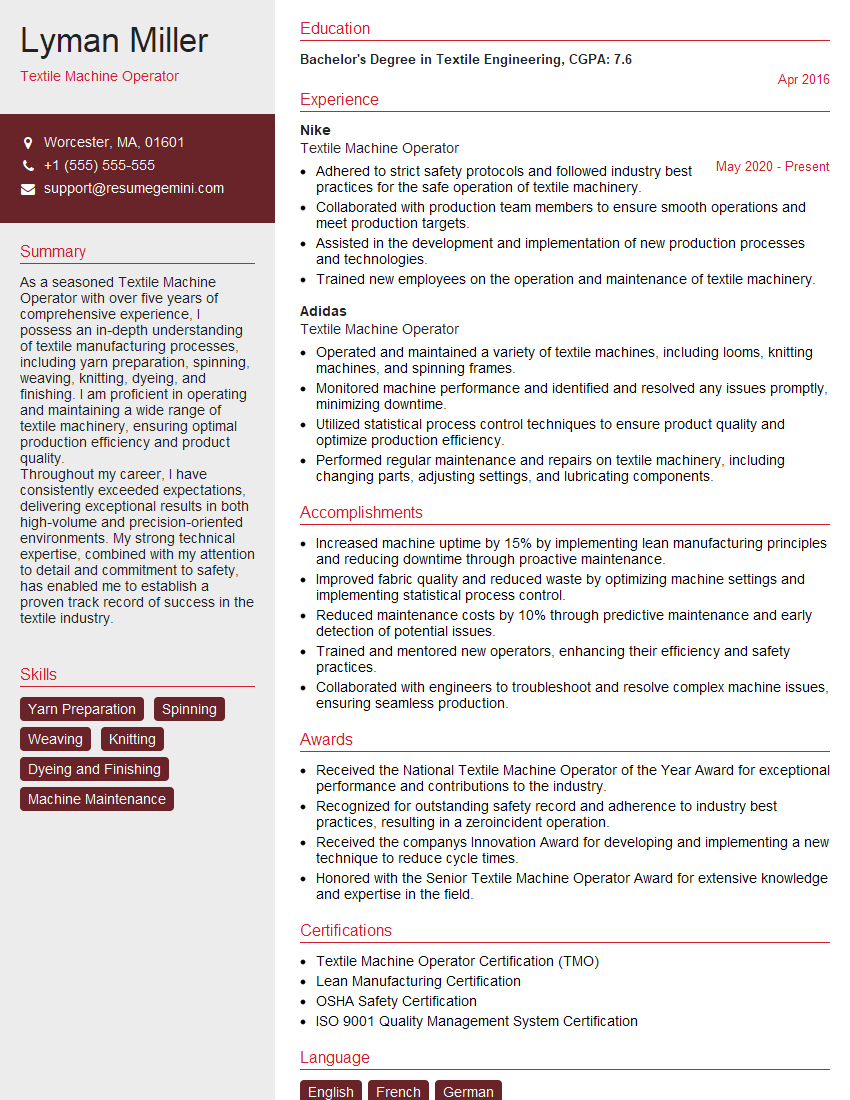
Mastering doffing and bobbin handling is crucial for career advancement in the textile industry, opening doors to more skilled and higher-paying positions. A well-crafted resume is your key to unlocking these opportunities. An ATS-friendly resume, optimized for Applicant Tracking Systems, significantly increases your chances of getting noticed by recruiters. To help you create a compelling and effective resume, consider using ResumeGemini – a trusted resource for building professional resumes. ResumeGemini provides examples of resumes tailored specifically to Doffing and Bobbin Handling roles, guiding you toward interview success.


Explore more articles
Users Rating of Our Blogs
Share Your Experience
We value your feedback! Please rate our content and share your thoughts (optional).
What Readers Say About Our Blog
Really detailed insights and content, thank you for writing this detailed article.
IT gave me an insight and words to use and be able to think of examples