Unlock your full potential by mastering the most common Drill Bit Performance Testing interview questions. This blog offers a deep dive into the critical topics, ensuring you’re not only prepared to answer but to excel. With these insights, you’ll approach your interview with clarity and confidence.
Questions Asked in Drill Bit Performance Testing Interview
Q 1. Explain the different types of drill bits and their applications.
Drill bits are categorized based on their design and application. Choosing the right bit is crucial for efficient drilling.
- Roller Cone Bits (or Roller Bits): These bits use rotating cones with teeth or inserts to crush and cut the rock. They’re robust and effective in hard, abrasive formations but have lower ROP in softer rocks. Think of them like a powerful, rotating rock crusher. They are further divided into types like three-cone, two-cone, and insert roller cone bits, each suited to slightly different applications.
- PDC Bits (Polycrystalline Diamond Compact): These bits have diamond inserts brazed onto a matrix. They are extremely efficient in softer to medium-hard formations, offering high ROP and long bit life. Imagine them as tiny, incredibly hard diamonds cutting through the rock. They are preferred in directional drilling due to their ability to maintain a specific trajectory.
- Tricone Bits: A specific type of roller cone bit that utilizes three cones with teeth, providing a balanced cutting action. The teeth are designed to break the rock formation into smaller pieces.
- Other Specialized Bits: This includes bits designed for specific applications like reaming (enlarging existing holes), directional drilling (controlling the wellbore trajectory), and specific rock types. For example, you might find bits specifically designed for shale formations, which are known for being brittle and unstable.
Q 2. Describe the factors affecting drill bit performance.
Drill bit performance is a complex interplay of several factors. Think of it like a delicate ecosystem – disrupt one part, and the whole system suffers.
- Formation Properties: Rock hardness, abrasiveness, and formation type significantly influence bit wear and ROP. Harder formations wear bits faster. For instance, drilling through granite will be vastly different from drilling through sandstone.
- Bit Design and Type: The type of bit (PDC, roller cone, etc.), its size, and its specific design features directly affect performance. A PDC bit optimized for soft formations will struggle in hard rock.
- Weight on Bit (WOB): This is the force applied to the bit. Too little WOB results in poor penetration; too much can cause premature bit failure. It’s about finding the ‘Goldilocks’ zone.
- Rotary Speed (RPM): The speed at which the bit rotates. Optimizing RPM is crucial for achieving maximum ROP without excessive bit wear. It’s another balancing act.
- Mud Properties: Drilling mud (or drilling fluid) lubricates, cools, and cleans the bit. Its properties – viscosity, density, and chemical composition – directly affect bit life and ROP.
- Inclination and Azimuth: In directional drilling, the angle and direction of the wellbore influence bit wear, particularly on the gauge (outside cutting) sections of the bit.
Q 3. How do you measure drill bit wear and tear?
Measuring drill bit wear and tear involves regular inspections and data analysis. It’s not just about visual inspection; it involves careful examination of the data collected during drilling.
- Visual Inspection: Regular visual checks of the bit after pulling it out of the hole reveal wear patterns on cutters, gauge sections, and the overall structure. This provides a qualitative assessment.
- Measurement of Cutter Wear: Precise measurements of the height, width and wear of individual cutters using specialized tools and imaging provide quantitative data on bit wear.
- Gauge Wear: Monitoring the wear on the outer cutting structure of the bit (gauge) provides crucial insights into the bit’s performance and stability. Significant gauge wear might indicate problems with WOB, RPM, or even formation characteristics.
- Data Logging: Modern drilling systems continuously log data, including WOB, torque, RPM, and ROP. Analyzing these parameters helps identify periods of high wear or unusual behavior, indicating potential bit problems even before visual inspection.
Q 4. What are the key performance indicators (KPIs) for drill bit performance?
Key Performance Indicators (KPIs) for drill bit performance provide crucial insight into efficiency and cost-effectiveness. The right KPIs are essential for improving future drilling operations.
- Rate of Penetration (ROP): This is the speed at which the bit penetrates the formation (covered in more detail below).
- Bit Life: The total time (or footage drilled) before the bit needs to be replaced. A longer bit life translates to cost savings.
- Mechanical Specific Energy (MSE): This KPI measures the energy required to drill a unit volume of rock. A lower MSE indicates better bit efficiency.
- Drilling Cost per Foot: This metric considers all costs associated with drilling (bit cost, rig time, etc.) to determine the overall cost efficiency of the operation.
- Torque and Drag: High torque and drag can indicate problems like bit balling (build-up of cuttings), which can reduce ROP and increase wear.
Q 5. Explain the concept of Rate of Penetration (ROP) and its significance.
Rate of Penetration (ROP) is a fundamental KPI in drilling, representing the speed at which the drill bit advances through the formation. Think of it as the ‘speedometer’ for your drilling operation.
ROP is measured in feet per hour (ft/hr) or meters per hour (m/hr). A higher ROP translates to faster drilling, reduced non-productive time, and lower overall drilling costs. It is a critical indicator of overall drilling efficiency and helps identify any challenges early on. For example, a sudden drop in ROP might signal a change in formation, a problem with the bit, or issues with the drilling mud.
Q 6. How do you interpret drill bit data to optimize drilling operations?
Interpreting drill bit data involves a systematic approach using both quantitative and qualitative data analysis. It’s a multi-step process that requires experience and sound judgment.
- Data Collection: Gather all available data, including ROP, WOB, RPM, torque, and drag from the drilling system.
- Data Cleaning and Preprocessing: Clean and prepare the data to ensure accuracy and consistency. Remove any outliers or erroneous readings.
- Analysis of ROP Trends: Identify trends in the ROP data. Sudden drops or spikes may indicate changes in formation, bit wear, or other issues.
- Correlation Analysis: Examine the relationship between ROP and other parameters (WOB, RPM). This helps to optimize drilling parameters to maximize ROP.
- Visualizations: Use graphs and charts to visualize the data and identify patterns. Visualizing ROP against depth or time provides clear insights.
- Comparison and Benchmarking: Compare current bit performance to previous drilling experiences or industry benchmarks to identify areas for improvement.
- Expert Judgement: Experienced drilling engineers interpret the data considering geological information and operational conditions to make recommendations for improving drilling efficiency and bit life.
Q 7. What are the common causes of drill bit failure?
Drill bit failure can be costly and disruptive. Understanding the common causes is vital for preventative maintenance and operational improvements.
- Excessive Wear: This is the most frequent cause, particularly from drilling through abrasive formations or using improper drilling parameters (WOB, RPM).
- Bit Balling: The accumulation of cuttings on the bit, hindering its ability to penetrate the formation. This is often caused by poor mud properties or inadequate cleaning action.
- Mechanical Failure: Fractures or breakage of the bit’s structure due to high stress, impact, or improper handling. This might manifest as broken cones or cutters.
- Gauge Wear: Excessive wear on the gauge can lead to hole instability and increased vibrations, ultimately causing bit failure. It often suggests that the weight on bit was miscalculated, the formation was harder than expected, or the RPM was too low or high.
- Improper Drilling Parameters: Incorrect WOB, RPM, or mud properties can lead to premature bit wear and failure. Finding the optimal drilling parameters is key to successful drilling.
- Formation Characteristics: Unexpected changes in formation characteristics (e.g., encountering unexpectedly hard or abrasive formations) can lead to rapid bit wear and failure.
Q 8. How do you troubleshoot drill bit problems in the field?
Troubleshooting drill bit problems in the field requires a systematic approach. It starts with understanding the symptoms – is the Rate of Penetration (ROP) unexpectedly low? Are we experiencing excessive vibration? Are there unusual noises coming from the bottom hole assembly (BHA)?
First, we gather data: reviewing the drilling parameters (weight on bit (WOB), rotary speed (RPM), torque), mud properties (viscosity, density, flow rate), and any changes in formation characteristics. We then visually inspect the bit once it’s retrieved: are the cutters worn or damaged? Are there signs of balling (formation sticking to the bit)?
Based on this information, we can start to isolate the problem. For example, low ROP with excessive vibration might point to a dull bit, while low ROP with high torque could indicate a hole-size issue or a problem with the BHA itself. We use this data to determine appropriate adjustments; perhaps we need to change the bit, adjust WOB and RPM, or optimize the mud properties. Documentation is key – we meticulously record the problem, our observations, and the solutions implemented to prevent recurrence.
Think of it like diagnosing a car problem; we wouldn’t just throw parts at it. We’d check the fluids, listen to the engine, and systematically find the source.
Q 9. Describe your experience with different drill bit types (e.g., PDC, roller cone).
My experience spans various drill bit types, primarily focusing on PDC (Polycrystalline Diamond Compact) and roller cone bits. PDC bits are excellent for harder, more abrasive formations due to their diamond cutting elements. I’ve extensively used them in formations like granite and sandstone, achieving high ROPs in these scenarios. However, they can be less efficient in softer, unconsolidated formations or those with large hard inclusions.
Roller cone bits, on the other hand, are more versatile and generally cost-effective. I’ve worked with both insert and milled tooth roller cone bits. Insert bits are suitable for a range of formations and offer good durability, while milled tooth bits are better suited for softer formations and are more easily replaced when worn.
The choice between PDC and roller cone isn’t arbitrary. It’s critical to consider the specific formation properties, expected drilling conditions, and overall cost analysis. A recent project required drilling through a complex formation with interspersed hard and soft layers; there, we used a combination of PDC and roller cone bits, optimizing bit selection for each stratum.
Q 10. Explain the impact of drilling parameters (e.g., weight on bit, rotary speed) on drill bit performance.
Drilling parameters significantly affect drill bit performance. Weight on bit (WOB) is the force pushing the bit into the formation, directly influencing the rate of penetration (ROP). Increasing WOB generally increases ROP up to a point, after which increasing WOB will lead to bit damage (and decreases ROP).
Rotary speed (RPM) affects the cutting action of the bit. Higher RPMs generally increase ROP in softer formations. However, excessively high RPMs can lead to excessive wear and tear and decreased bit life. Think of it as trying to dig a hole in the sand with a shovel: pushing harder (WOB) and moving faster (RPM) helps up to a point, beyond that you just make a mess.
The optimal combination of WOB and RPM is formation-dependent and requires careful monitoring and adjustment. We often use real-time drilling data and performance models to optimize these parameters, maximizing ROP while minimizing bit wear and drilling cost. For example, in a hard formation, we might use a higher WOB and lower RPM to maximize the cutting efficiency of the diamond inserts on a PDC bit. In a softer formation, we might use a lower WOB and higher RPM, while always carefully managing torque to prevent sticking.
Q 11. How do you select the appropriate drill bit for a specific formation?
Selecting the appropriate drill bit for a specific formation requires a thorough understanding of geological data, drilling conditions, and bit characteristics. We start by analyzing the formation’s lithology (rock type, hardness, abrasiveness), compressive strength, and presence of any unusual inclusions (hard layers, large pebbles). Geologic logs, core samples, and formation evaluation logs are invaluable in this stage.
Next, we consider the drilling parameters; anticipated WOB, RPM, and mud properties all influence bit selection. For example, a hard, abrasive formation might require a PDC bit with a robust design, whereas a softer, unconsolidated formation may be better suited to a roller cone bit. Cost considerations are important too. PDC bits are generally more expensive but offer longer life in specific formations, while roller cone bits are more cost-effective but have a shorter life. We often use software and models to compare the cost and performance of different bit types for specific formations.
Finally, we use our expertise and experience to make a well-informed decision, weighing the cost, the ROP, and the overall drilling efficiency. A well-chosen bit can significantly reduce drilling time and costs.
Q 12. How do you analyze drilling data to identify opportunities for improvement?
Analyzing drilling data to identify opportunities for improvement is crucial for optimizing drilling operations. We use a variety of tools and techniques, including specialized drilling software, to analyze parameters such as ROP, WOB, RPM, torque, and mud properties.
We look for trends and patterns in the data; for example, a consistent drop in ROP might indicate bit dulling, while increasing torque could suggest problems with the BHA or formation changes. We compare the actual performance against predicted performance models and analyze any deviation. We also meticulously track bit life and cost-per-foot to identify areas for improvement. This often involves visual inspection of the bit after each run to assess wear patterns, as these patterns can hint at problems in the operational parameters.
A recent project involved analyzing drilling data that showed a cyclical drop in ROP, which wasn’t initially attributed to any obvious factor. Through detailed analysis, we uncovered a correlation between the ROP decline and the frequency of shale layers. This helped us develop a strategy of adapting WOB and RPM as the drill bit progressed through different strata, significantly improving ROP and reducing overall drilling time.
Q 13. Describe your experience with drill bit modeling and simulation.
I have extensive experience with drill bit modeling and simulation using industry-standard software packages. These tools allow us to predict drill bit performance under different conditions before we actually run the bit. They are particularly valuable in complex formations or when trying to optimize drilling parameters for specific geological challenges.
The modeling process involves inputting parameters such as formation properties, bit design, and drilling parameters into the software. The software then simulates the drilling process, predicting ROP, torque, bit wear, and other relevant factors. We can use these simulations to explore different scenarios—for example, we can test the impact of different WOB and RPM combinations on bit life and ROP without the expense and time of actually drilling.
This predictive capability is invaluable. In one project, simulation showed that a slight alteration to the drilling parameters could dramatically improve bit life without sacrificing ROP significantly, saving the company substantial costs. These models are not perfect—they rely on the quality of input data and the underlying assumptions of the simulation—but they remain an extremely powerful tool in optimizing drilling operations.
Q 14. What are the best practices for maintaining and handling drill bits?
Proper maintenance and handling of drill bits are essential to maximizing their lifespan and performance. This starts with careful inspection before and after each run. We check the bit for any visible damage, wear patterns, and signs of unusual wear. We also closely monitor the condition of the bit’s bearings and cutters.
Cleanliness is crucial. After each use, we thoroughly clean the bit to remove any cuttings or debris that could accelerate wear or damage. Proper storage is also important. Bits are stored in a controlled environment that prevents corrosion and damage. We use specialized racks and protective coatings to keep them in optimal condition.
Furthermore, proper handling during transportation and assembly is crucial to avoid accidental damage. Using appropriate lifting equipment and handling procedures helps prevent accidental drops or impacts. We conduct regular maintenance and potentially reconditioning (depending on the type and condition of the bit), which could extend the lifespan.
By following these best practices, we can significantly extend the life of drill bits, reduce repair costs, and ensure optimal performance.
Q 15. How do you ensure the safety of drill bit operations?
Ensuring safety during drill bit operations is paramount. It’s a multifaceted process involving rigorous adherence to safety protocols, regular equipment inspections, and comprehensive personnel training. Think of it like a layered security system.
- Pre-operation checks: Before any operation begins, a thorough inspection of the drill bit, drilling rig, and associated equipment is mandatory. This includes checking for wear and tear, proper lubrication, and ensuring all safety mechanisms are functioning correctly. We’re essentially performing a ‘health check’ before surgery.
- Risk assessment and mitigation: A detailed risk assessment identifies potential hazards like equipment malfunction, wellbore instability, or human error. Mitigation strategies, like using remote-controlled operations in hazardous conditions or implementing strict safety procedures, are developed and implemented. We predict problems and plan solutions beforehand.
- Emergency response planning: We must have detailed emergency response plans for different scenarios, including well control issues, equipment failures, or personnel injuries. Regular drills and simulations ensure preparedness and effective response. This is our ‘insurance policy’ in case something goes wrong.
- Personal Protective Equipment (PPE): The use of appropriate PPE, such as safety helmets, gloves, eye protection, and specialized clothing, is mandatory for all personnel on site. This is the ‘first line of defense’ for our team.
- Continuous monitoring: Throughout the operation, continuous monitoring of critical parameters like pressure, temperature, and vibration ensures early detection of anomalies, allowing for timely intervention. This is akin to a doctor regularly monitoring a patient’s vital signs.
Career Expert Tips:
- Ace those interviews! Prepare effectively by reviewing the Top 50 Most Common Interview Questions on ResumeGemini.
- Navigate your job search with confidence! Explore a wide range of Career Tips on ResumeGemini. Learn about common challenges and recommendations to overcome them.
- Craft the perfect resume! Master the Art of Resume Writing with ResumeGemini’s guide. Showcase your unique qualifications and achievements effectively.
- Don’t miss out on holiday savings! Build your dream resume with ResumeGemini’s ATS optimized templates.
Q 16. Explain the relationship between drill bit performance and wellbore stability.
Drill bit performance is intrinsically linked to wellbore stability. Think of it as a delicate dance. A poorly performing drill bit, such as one that’s dull or improperly designed, can lead to increased torque and drag, creating stress on the wellbore and potentially causing it to collapse. This can lead to stuck pipes, increased non-productive time, and even wellbore abandonment.
Conversely, a well-designed and effectively maintained drill bit, operating within optimal parameters, minimizes stress on the wellbore, promoting stability. This reduces the risk of complications and ensures a smoother, more efficient drilling process. In essence, optimal bit performance minimizes borehole damage and enhances safety.
For example, using a bit optimized for the specific formation being drilled reduces the likelihood of induced fracturing or other stability issues. Selecting the right bit type and optimizing its operation to reduce vibrations helps maintain the structural integrity of the wellbore.
Q 17. Discuss the role of drilling fluids in drill bit performance.
Drilling fluids, often called muds, play a crucial role in drill bit performance and overall drilling efficiency. They act as a multi-functional workhorse.
- Cooling and lubrication: Drilling fluids cool the drill bit, reducing wear and tear and extending its lifespan. The lubrication aspect minimizes friction between the bit and the formation, promoting smoother cutting action and preventing premature bit failure. It’s like the oil in an engine.
- Carrying cuttings: They effectively remove the rock cuttings generated by the drill bit from the wellbore, preventing them from accumulating and hindering the drilling process. This is essential for maintaining drilling rate.
- Wellbore stability: Properly formulated drilling fluids maintain wellbore pressure, preventing formation collapse or fracturing. This is especially crucial in unstable formations.
- Hydraulics: Drilling fluids deliver the hydraulic power needed to efficiently operate the drill bit. It’s essentially the ‘power source’ for the bit.
The properties of the drilling fluid – viscosity, density, and filtration – are carefully controlled to optimize its performance for the specific geological conditions encountered during drilling.
Q 18. What is your experience with different types of drilling muds and their effects on drill bit performance?
My experience encompasses a wide range of drilling muds, including water-based, oil-based, and synthetic-based fluids. Each type has unique properties that affect drill bit performance differently.
- Water-based muds: These are generally less expensive but may exhibit higher friction, leading to increased bit wear in some formations. They are often best suited for less demanding formations.
- Oil-based muds: They offer superior lubrication and cooling, leading to longer bit life and improved penetration rates. However, they are more expensive and pose environmental concerns.
- Synthetic-based muds: They combine the advantages of oil-based muds with reduced environmental impact. These often represent the best compromise between performance and environmental responsibility, leading to increased efficiency and reduced operating costs.
The selection of drilling mud depends on several factors, including the formation type, wellbore stability requirements, environmental regulations, and overall cost considerations. I’ve personally worked on projects where the choice of mud type directly impacted the bit’s lifespan by as much as 30%, highlighting the criticality of this decision.
Q 19. How do you handle unexpected drill bit issues during drilling operations?
Handling unexpected drill bit issues requires a systematic approach, combining quick thinking with a methodical problem-solving strategy. This often involves a combination of experience and access to real-time data.
- Data analysis: We’ll start by analyzing data from the drilling parameters. This includes reviewing torque, drag, weight on bit (WOB), and rate of penetration (ROP) to understand the nature of the problem. Unusual spikes or trends point toward potential causes.
- Troubleshooting: Based on the data analysis, we’ll begin troubleshooting. Possible causes might include bit dulling, formation changes, stuck cuttings, or problems with the drilling mud. The problem may require a simple adjustment, such as changing the WOB or mud properties, or more involved intervention such as pulling the bit out for inspection and repair.
- Communication and collaboration: Effective communication with the drilling crew is essential. Clear instructions and coordinated efforts are needed to implement solutions safely and efficiently.
- Decision making: Depending on the severity, sometimes a quick, decisive action is necessary. It might be as simple as increasing the mud weight to improve stability. In more serious cases, such as a severely damaged bit or stuck pipe, we may need to pull the string, potentially impacting the overall project schedule and budget.
In my experience, addressing these issues promptly minimizes downtime and reduces costly wellbore interventions.
Q 20. How do you quantify the cost savings associated with improved drill bit performance?
Quantifying cost savings from improved drill bit performance involves a multifaceted approach. It requires detailed data analysis and a good understanding of the drilling economics.
- Reduced non-productive time (NPT): Improved bit performance translates to faster penetration rates and less frequent bit changes, directly minimizing NPT. This translates to substantial cost savings as rig time is expensive.
- Lower bit costs: Longer bit life reduces the frequency of bit replacements, leading to lower overall expenditure on drill bits.
- Reduced fuel consumption: Faster penetration rates mean less time spent drilling, leading to lower fuel consumption for the drilling rig and support equipment.
- Improved drilling efficiency: All these factors combine to improve overall drilling efficiency, which directly reflects in the overall project cost.
For instance, a 10% increase in ROP can translate into significant savings in rig time and bit costs, easily adding up to hundreds of thousands of dollars on a large-scale project. I’ve personally developed cost-benefit analyses that use detailed modeling of various parameters to demonstrate the financial advantages of optimizing drill bit performance.
Q 21. Describe your experience using drilling software and data analysis tools.
I have extensive experience using various drilling software and data analysis tools, both on-site and in the office. This proficiency is critical for optimizing drilling operations and interpreting the vast amount of data generated during the drilling process.
- Drilling simulators: I frequently use drilling simulators to model different drilling scenarios and optimize parameters like WOB and rotary speed to achieve optimal ROP and reduce bit wear. These tools help predict the performance of different bit types and mud parameters before deploying them in the field.
- Data acquisition and analysis software: I’m proficient in using software that acquires, processes, and analyzes real-time drilling data (like drilling parameters, mud properties, and formation data). We use this information to identify trends, predict potential problems and make informed decisions regarding bit selection, mud properties, and overall drilling strategy.
- Geomechanical modeling software: This software allows us to create accurate geological models of the subsurface formations which helps in selecting appropriate bits and optimizing drilling parameters based on predicted rock properties.
My expertise extends to the application of statistical analysis and machine learning techniques to improve the predictive capabilities of these tools, which allows for proactive mitigation of potential drilling issues, and ultimately, enhances drilling efficiency and reduces operational costs.
Q 22. Explain the difference between PDC bits and roller cone bits.
PDC (Polycrystalline Diamond Compact) bits and roller cone bits are the two primary types of drill bits used in the oil and gas industry, each with distinct mechanisms and applications. Think of it like comparing a scalpel to a hammer – both cut, but in vastly different ways.
PDC bits utilize cutting elements made of polycrystalline diamond embedded in a hard metal matrix. These diamonds are incredibly hard and wear-resistant, allowing for efficient cutting in hard, abrasive formations. They’re known for their high Rate of Penetration (ROP) and smooth cutting action, leading to less vibration and improved directional control. Imagine a finely sharpened blade slicing through rock.
Roller cone bits, on the other hand, have rotating cones with teeth or inserts that crush and grind the rock. These are more robust and can handle tougher, more heterogeneous formations. While generally offering less ROP than PDC bits in hard formations, they’re often more cost-effective for softer rocks and can self-sharpen to some degree. Picture a rock crusher slowly grinding away at the material.
The choice between PDC and roller cone bits depends heavily on the specific geological conditions encountered. Hard, abrasive formations generally benefit from PDC bits, while softer, less abrasive formations might be better suited to roller cone bits. Cost considerations also play a vital role; PDC bits have a higher initial cost but can offer longer operational life in the right conditions.
Q 23. Describe the different types of drill bit failures and their causes.
Drill bit failures can be categorized in several ways, but common types include:
- Gauge wear: This refers to the reduction in the diameter of the bit, usually caused by abrasion from the formation. Imagine the bit gradually becoming thinner from friction.
- Tooth/Insert failure: In roller cone bits, teeth can break or wear down, reducing cutting efficiency. In PDC bits, the diamond inserts can be chipped or fractured. This is often seen as the ‘teeth’ of the bit breaking or becoming significantly dull.
- Bearing failure: The bearings within the bit are critical for its rotation. Failure here will lead to complete operational failure of the bit.
- Washout: This occurs when the bit is unable to properly remove cuttings from the borehole, resulting in clogging and inefficient cutting. This is sometimes caused by inadequate hydraulics.
- Stick-slip: This is characterized by intermittent periods of high and low ROP which often cause increased stress and damage on the bit and its associated equipment.
Causes of these failures can be diverse, including formation hardness, abrasive content, drilling parameters (e.g., weight on bit, rotary speed), hydraulics, and bit design. For instance, excessive weight on bit can accelerate gauge wear, while improper hydraulics can lead to washout.
Q 24. How do you identify and mitigate the risks associated with drill bit performance issues?
Identifying and mitigating risks associated with drill bit performance issues requires a proactive, data-driven approach. It’s like being a detective, piecing together clues to prevent future incidents.
Identification: This involves continuously monitoring key performance indicators (KPIs), such as ROP, torque, weight on bit, and pump pressure. Anomalous changes in these parameters can signal potential problems. Real-time monitoring systems and downhole sensors are essential. We also look for visual cues; close examination of the recovered bit after a run is crucial for assessing wear patterns and identifying the root causes.
Mitigation: Once a problem is identified, mitigation strategies are implemented. This could involve adjusting drilling parameters (e.g., reducing weight on bit if excessive gauge wear is observed), optimizing hydraulics to improve cuttings removal, or selecting a different bit type better suited for the formation. Predictive modeling, based on historical data and geological information, can also assist in predicting potential issues and adjusting the plan accordingly. For example, if we know a certain formation is notoriously abrasive, we would choose a PDC bit with a particularly hard matrix, and adjust our drilling parameters accordingly to avoid excessive wear.
Q 25. What are your preferred methods for optimizing drilling parameters?
Optimizing drilling parameters is a critical aspect of maximizing drill bit performance and minimizing costs. It’s a delicate balancing act.
My preferred methods involve using a combination of:
- Real-time monitoring and analysis: Constantly observing parameters like ROP, torque, weight on bit, and pump pressure allows for immediate adjustments to optimize the drilling process.
- Data-driven optimization software: These tools can analyze historical data and predict optimal parameter settings for specific formations and bit types. Think of them as advanced calculators considering numerous factors to predict the best result.
- Experimental design: A structured approach to testing different parameter combinations helps determine the most effective settings for specific conditions. This may involve systematically varying parameters and observing the impact on ROP and other KPIs.
- Experienced judgment: Combining data analysis with the experience and expertise of drilling engineers is vital for making informed decisions. Software provides guidelines, but real-world experience helps interpret the data and consider unpredictable factors.
The goal is to find the sweet spot – maximizing ROP while minimizing bit wear and avoiding potential problems like stick-slip or vibrations. It requires constantly adapting strategies based on the geological conditions and the feedback from monitoring systems.
Q 26. Discuss your experience with hydraulics and its impact on drill bit performance.
Hydraulics play a crucial role in drill bit performance, essentially acting as the bit’s cleaning system. It is vital that the hydraulics are properly engineered and balanced for the specific formation, bit type, and drilling parameters.
Insufficient hydraulics can lead to poor cuttings removal, resulting in bit balling (cuttings building up and hindering cutting action), reduced ROP, and potentially even bit failure. Imagine trying to cut wood without clearing the sawdust – it would quickly become inefficient and damaging to the saw blade.
Conversely, excessive hydraulic pressure can cause premature bit wear and damage. Think of using too high a water pressure in your cleaning equipment – it can damage the equipment. Therefore, careful control and optimization of flow rate and pressure are essential for maximizing bit performance and longevity. My experience involves using various techniques to model and analyze hydraulic conditions, choosing appropriate mud types and rheology to meet the requirements, along with using downhole pressure sensors to ensure optimized hydraulic performance. Proper management of drilling mud properties is also key to a successful hydraulic system.
Q 27. Describe your experience working with different types of drilling rigs.
My experience encompasses working with a variety of drilling rigs, from land-based rigs to offshore platforms. Each rig type presents unique challenges and opportunities.
Land-based rigs: These offer flexibility in terms of location and mobility, but can be affected by terrain and weather conditions. They range from small, portable rigs to large, powerful units for deep wells. I’ve worked extensively with various rig designs in this domain.
Offshore rigs: These include jack-up rigs, semisubmersibles, and drillships, each with its own complexities related to marine operations and environmental factors. Safety protocols and logistical planning are particularly critical in offshore drilling.
Regardless of the rig type, my approach always involves understanding the specific capabilities and limitations of the equipment, working closely with the rig crew to ensure safe and efficient operations, and adapting my strategies to the unique challenges presented by each rig and its location. I’ve been involved in numerous projects across different rig types, allowing me to develop strong skills in adapting to various working conditions.
Q 28. How do you stay up-to-date on the latest advancements in drill bit technology?
Staying current in the rapidly evolving field of drill bit technology requires a multifaceted approach.
Industry publications and conferences: I regularly read journals like SPE Journal and attend conferences like the IADC/SPE Drilling Conference to learn about the latest innovations and research findings. This ensures I’m familiar with the newest bit designs and materials. It’s like keeping up with the latest technology in any other field.
Vendor collaborations: Maintaining close relationships with bit manufacturers allows access to their expertise and insights into the performance of their products. This can involve attending training sessions, receiving updates on new technologies and sharing performance data.
Online resources and databases: I utilize online databases and technical papers to access research and data related to bit performance. This provides a wide range of viewpoints and a deeper understanding of the underlying principles.
Networking with peers: Sharing information and experiences with other drilling engineers through professional organizations and informal networks fosters continuous learning and provides valuable insights. It allows learning from each other’s successes and failures.
Key Topics to Learn for Drill Bit Performance Testing Interview
- Drill Bit Wear Mechanisms: Understanding abrasive, adhesive, and fatigue wear is crucial. Analyze how different rock formations and drilling parameters impact wear rates.
- Performance Metrics: Learn to interpret data on penetration rate (ROP), torque, weight on bit (WOB), and bit life. Know how to analyze this data to optimize drilling operations.
- Bit Design and Selection: Familiarize yourself with various bit types (roller cone, PDC, etc.) and their applications in different geological formations. Understand the factors influencing bit selection for optimal performance.
- Data Acquisition and Analysis: Mastering data logging techniques and using software to analyze drilling parameters is essential. Practice interpreting trends and identifying potential problems.
- Hydraulics and Drilling Fluid: Understand the role of drilling fluid in bit performance. Know how to assess the impact of fluid properties on ROP and bit wear.
- Problem-Solving and Troubleshooting: Develop your ability to diagnose issues based on performance data. Be prepared to discuss strategies for resolving common drilling problems and optimizing bit performance.
- Advanced Techniques: Explore specialized topics like real-time monitoring, predictive maintenance, and the application of advanced materials in drill bit design.
Next Steps
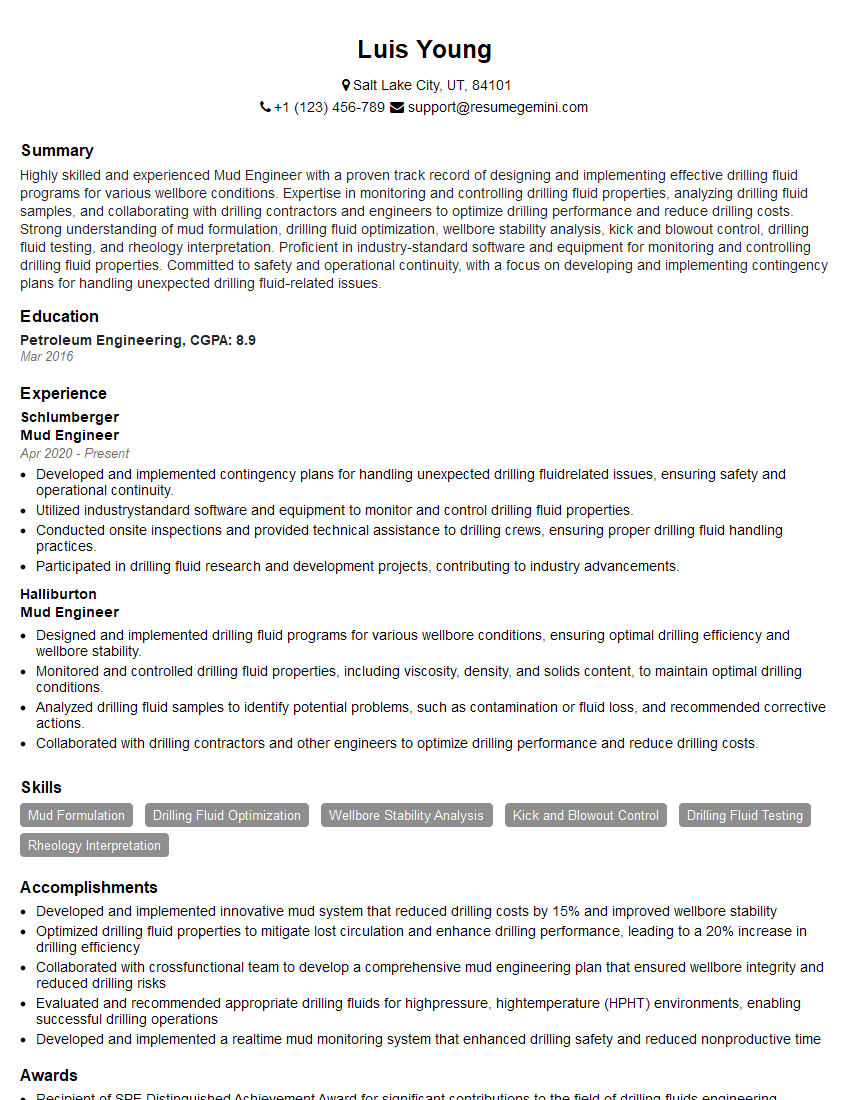
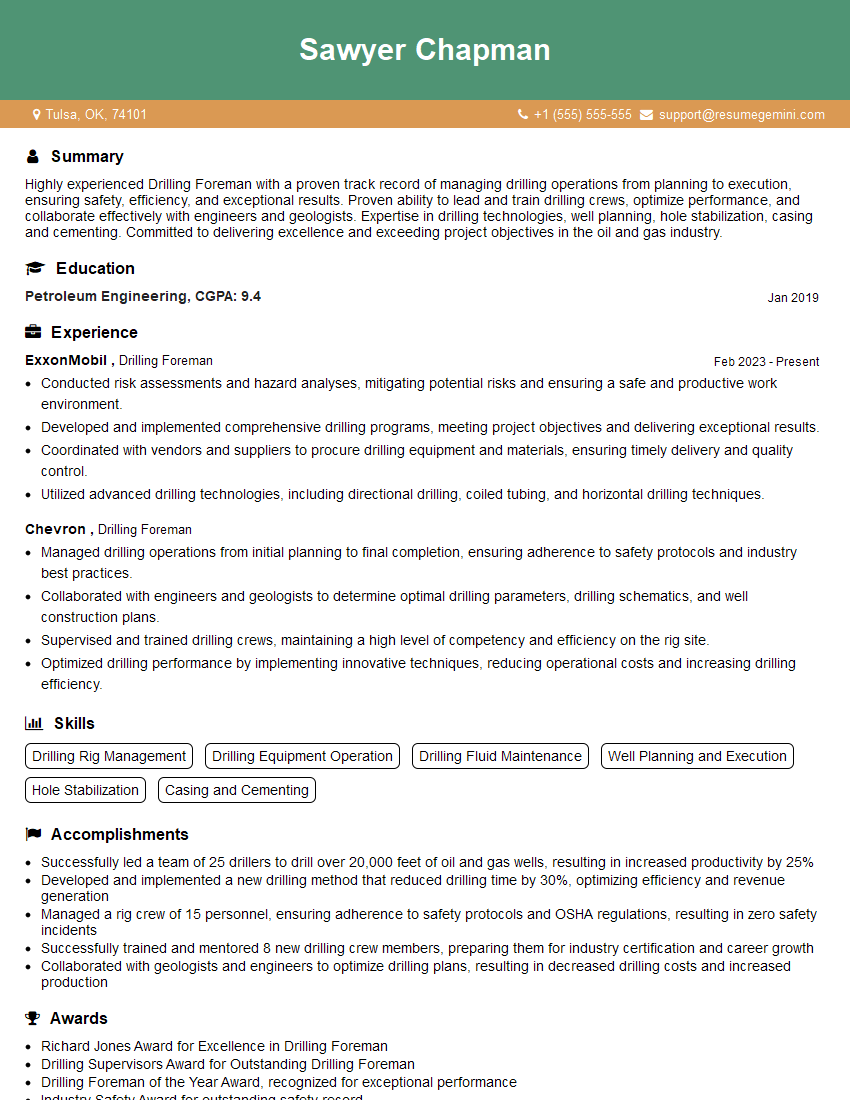
Mastering Drill Bit Performance Testing opens doors to exciting career opportunities in the energy sector, offering high earning potential and significant contribution to efficient resource extraction. To maximize your job prospects, creating a strong, ATS-friendly resume is critical. ResumeGemini is a trusted resource to help you build a professional and effective resume tailored to the specific requirements of Drill Bit Performance Testing roles. Examples of resumes tailored to this field are available to guide you. Invest time in crafting a compelling resume to showcase your skills and experience effectively – it’s your first impression with potential employers.
Explore more articles
Users Rating of Our Blogs
Share Your Experience
We value your feedback! Please rate our content and share your thoughts (optional).
What Readers Say About Our Blog
Really detailed insights and content, thank you for writing this detailed article.
IT gave me an insight and words to use and be able to think of examples