Every successful interview starts with knowing what to expect. In this blog, we’ll take you through the top Drills holes accurately using collets interview questions, breaking them down with expert tips to help you deliver impactful answers. Step into your next interview fully prepared and ready to succeed.
Questions Asked in Drills holes accurately using collets Interview
Q 1. Explain the different types of collets used in precision drilling.
Collets are precision clamping devices crucial for accurate hole drilling. Several types cater to different needs and drill bit sizes. The most common are:
- Spring Collets: These utilize a spring mechanism to grip the drill bit. They’re simple, relatively inexpensive, and suitable for smaller drills and less demanding applications. Think of them like a tiny, adjustable clamp.
- Hydraulic Collets: These use hydraulic pressure to grip the bit, providing superior clamping force and repeatability, especially beneficial for larger drills and high-precision work. Imagine a more powerful, precisely controlled clamp.
- Pneumatic Collets: Similar to hydraulic collets, but using compressed air for clamping. They are often preferred where hydraulic fluid is undesirable or impractical.
- ER Collets (European Standard): These are standardized collets offering high precision and repeatability. They are widely used in CNC machining centers and other high-precision applications, ensuring consistent and accurate bit holding.
The choice depends heavily on the application’s precision requirements, drill bit size, and the machine’s capabilities.
Q 2. Describe the process of selecting the appropriate collet for a specific drilling application.
Selecting the right collet is critical for accuracy. It’s a multi-step process:
- Determine the drill bit shank size: Measure the diameter of the drill bit’s shank precisely. Even slight discrepancies will lead to inaccuracies.
- Consult the collet manufacturer’s specifications: Match the shank diameter to the collet’s specified range. Collets have specific size ranges; using a collet outside this range will result in either insufficient clamping or damage to the collet or bit.
- Consider the material being drilled: The material’s hardness and the required drilling speed and feed rate influence the required collet clamping force. For harder materials, you might need a collet with a higher clamping capacity.
- Check the machine’s collet chuck compatibility: Ensure the collet is compatible with your machine’s chuck. Different machines use different collet systems (e.g., ER, hydraulic).
- Test the fit: Before actual drilling, test the collet’s grip. The drill bit should be firmly held but not excessively tightened, preventing damage.
For instance, drilling a small hole in soft wood might allow the use of a spring collet, whereas drilling a large diameter hole in hardened steel would necessitate a hydraulic collet for optimal clamping force and to prevent slippage.
Q 3. How do you ensure the proper clamping force is applied when using a collet?
Proper clamping force is crucial; too little leads to slippage, while too much can damage the drill bit or collet. The approach depends on the collet type:
- Spring Collets: These usually have a tightening nut. Tighten it until the drill bit is firmly gripped, but avoid over-tightening. A slight resistance should be felt.
- Hydraulic/Pneumatic Collets: These are controlled through a pressure gauge. Refer to the machine’s manual for the recommended pressure setting for the specific drill bit size. Over-pressurizing can damage the collet.
- ER Collets: These are typically tightened using a collet chuck wrench. The correct torque is crucial and should be verified with a torque wrench to ensure consistent clamping.
Always refer to the manufacturer’s instructions for the specific collet type and your machine. Incorrect clamping force is a primary source of drilling errors.
Q 4. What are the common causes of inaccurate drilling when using collets?
Inaccurate drilling with collets often stems from:
- Collet slippage: Insufficient clamping force, worn collet, or a damaged drill bit shank are common culprits.
- Collet misalignment: The collet may not be properly seated in the chuck, resulting in off-center drilling. This can arise from improper installation or a damaged chuck.
- Drill bit runout: This refers to the drill bit wobbling as it rotates. It’s caused by a bent bit, a damaged collet, or improper collet seating.
- Machine vibrations: Excessive vibrations in the machine can also lead to inaccurate holes.
- Incorrect speed and feed rates: Using improper drilling parameters can cause the bit to wander or break.
Identifying the root cause through careful observation and inspection is paramount for effective troubleshooting.
Q 5. How do you troubleshoot problems related to collet slippage or misalignment?
Troubleshooting collet slippage or misalignment requires a systematic approach:
- Inspect the collet and drill bit: Check for any damage, wear, or deformation on both. Replace damaged parts immediately.
- Verify clamping force: Ensure the collet is providing adequate clamping force according to the manufacturer’s recommendations. Adjust if necessary.
- Check collet alignment: Make sure the collet is correctly seated and aligned within the chuck. If misaligned, correct the seating. If the chuck itself is damaged, it might need repair or replacement.
- Assess machine vibrations: Excessive vibrations can impact accuracy. Investigate and address any vibration-related issues in the machine.
- Test run: Perform a test drill on scrap material before working on the actual workpiece.
Remember, documenting each step and the results helps in identifying the source of the problem and preventing its recurrence.
Q 6. What safety precautions should be taken when using collets in drilling operations?
Safety is paramount when working with collets and drills:
- Eye protection: Always wear safety glasses to protect your eyes from flying debris.
- Hearing protection: Drills can be noisy; earplugs or muffs are necessary.
- Proper clothing: Wear appropriate clothing, avoiding loose garments that could get caught in the machinery.
- Secure workpiece: Ensure the workpiece is securely clamped to prevent movement during drilling.
- Machine guarding: Use all machine guards provided to prevent accidental contact with moving parts.
- Never reach into moving parts: Always turn off and disconnect power before adjusting or cleaning the machine.
Following these precautions significantly reduces the risk of accidents and injuries.
Q 7. Explain the importance of collet maintenance and how it impacts drilling accuracy.
Regular collet maintenance is crucial for maintaining drilling accuracy and prolonging the collet’s lifespan.
- Cleaning: Clean the collet regularly to remove chips and debris that can interfere with clamping and cause wear.
- Inspection: Visually inspect the collet for wear, damage, or deformation. Replace worn or damaged collets immediately.
- Lubrication (if applicable): Some collets require lubrication; refer to the manufacturer’s instructions for appropriate lubricants and application methods.
- Storage: Store collets properly to prevent damage or deformation. Keep them clean and organized.
Neglecting maintenance can lead to reduced accuracy, increased wear, and ultimately, premature collet failure, resulting in costly downtime and potential damage to the drill bit or workpiece. A properly maintained collet is an investment in precision and longevity.
Q 8. How do you inspect a collet for wear or damage?
Inspecting a collet for wear and damage is crucial for maintaining drilling accuracy and preventing costly mistakes. Think of it like checking the tire tread on your car – regular inspection prevents accidents.
Visual Inspection: Carefully examine the collet’s gripping surface for any scratches, gouges, or pitting. Look for signs of deformation or uneven wear. A magnifying glass can be helpful for detecting minor imperfections.
Dimensional Check: Use a micrometer or caliper to measure the collet’s internal diameter at several points. Compare these measurements to the manufacturer’s specifications. Even minor variations can affect gripping force and accuracy.
Grip Test: Insert a drill bit of the appropriate size into the collet and check how securely it’s held. If there’s any noticeable play or looseness, the collet is likely worn and needs replacement. Try gently twisting the bit – it should grip firmly and not move independently.
Runout Test: Mount the collet and drill bit in the machine and carefully check for runout using a dial indicator. Runout indicates wobble, which drastically reduces accuracy and could damage your work piece or the bit itself. Acceptable runout is typically very low, often less than 0.001 inch (0.025mm).
Q 9. What are the advantages and disadvantages of using collets compared to other clamping methods?
Collets offer a number of advantages over other clamping methods, particularly for precise drilling. However, there are trade-offs.
Advantages:
High Accuracy: Collets provide a very precise and concentric grip, minimizing drill bit runout and ensuring accurate hole placement.
Ease of Use: Collets are relatively simple to use and change, which speeds up the setup process compared to methods requiring more complex adjustments.
Repeatability: Once a collet is properly set, it consistently provides the same level of gripping force and accuracy.
Disadvantages:
Limited Size Range: Each collet is designed for a specific range of drill bit sizes. A wide variety of collets might be needed for different jobs.
Cost: Collets can be more expensive than some other clamping methods, particularly high-precision collets made from specialized materials.
Wear: Collets wear over time and need replacement. The rate of wear depends on usage, material and the type of bit used.
Q 10. How does the material of the collet affect its performance and lifespan?
The collet material significantly impacts its performance and lifespan. Imagine trying to grip a slippery fish with a soft glove versus a firm, strong hand.
Spring Steel: A common and cost-effective material, but it can wear faster than harder materials. It offers good clamping force and accuracy for standard applications.
High-Speed Steel (HSS): More durable and wear-resistant than spring steel, HSS collets are ideal for heavy-duty use and demanding materials. However, they are usually more expensive.
Tungsten Carbide: Extremely hard and wear-resistant, tungsten carbide collets are perfect for long-life applications and abrasive materials. However, they are the most expensive option and can be brittle.
The choice of collet material often depends on the application, the material being drilled, and the budget.
Q 11. Describe the relationship between collet size, drill bit size, and drilling accuracy.
The relationship between collet size, drill bit size, and drilling accuracy is fundamental. A perfect fit is key.
A collet that is too large for the drill bit will not grip securely, leading to wobble (runout) and inaccurate holes. Conversely, a collet that is too small will damage the drill bit and can cause the bit to break, or the collet to fail. Think of it like choosing the right size wrench for a bolt – using the wrong size will result in damage or ineffective work.
The correct collet should grip the drill bit firmly, centered, with minimal play. This tight fit minimizes runout, resulting in higher drilling accuracy and better surface finish.
Q 12. How do you compensate for variations in material thickness when using collets?
When drilling through materials of varying thickness, using a through-hole drilling setup is often best. But to compensate for thickness variations while using collets, several approaches can be used:
Adjustable Collets: Some collets are designed to accommodate a range of drill bit sizes within the same collet. These adjustable collets offer flexibility to handle slight material thickness changes.
Z-axis Adjustment: Utilize the machine’s Z-axis (vertical) adjustment to fine-tune the drill bit’s depth of penetration. By raising or lowering the drill bit, you can ensure consistent contact and maintain accuracy with varying material thicknesses.
Multiple Collets: For significantly varying material thicknesses, it might be necessary to use different collets suited to the specific thickness ranges.
Careful planning and precise measurements are crucial to prevent damaging the collet or workpiece.
Q 13. What is the impact of spindle speed and feed rate on drilling accuracy when using collets?
Spindle speed and feed rate significantly impact drilling accuracy with collets. Too fast or too slow can ruin the result.
Spindle Speed: High spindle speed can cause excessive heat buildup leading to drill bit wear and reduced accuracy, potentially even melting the material. Too low spindle speed can lead to slower drilling, increasing chances of drill bit wander.
Feed Rate: Too fast feed rate will put extra strain on the bit and collet, increase chance of broken bits and inaccurate holes. A feed rate that is too slow results in longer processing times and potentially poor surface finish.
Finding the optimal combination of speed and feed rate requires understanding the material being drilled and the capabilities of the drill bit. It is often best to start with slower speeds and feed rates and progressively adjust them up based on your experience.
Q 14. How do you determine the optimal drilling parameters for different materials and collet types?
Determining optimal drilling parameters involves a combination of experience, experimentation, and reference materials.
Material Properties: Consider the hardness, toughness, and thermal conductivity of the material. Hard materials often require lower spindle speeds and feed rates to prevent tool breakage, while softer materials permit higher speeds.
Drill Bit Material: High-speed steel (HSS) bits are versatile but may require adjustments compared to carbide bits. Carbide bits are harder and more durable but can be brittle.
Collet Material: As mentioned before, the collet’s material and its ability to clamp firmly impact the parameters. A high-quality collet will give a better outcome than a cheap alternative.
Trial and Error: Start with conservative settings, gradually increase the speed and feed rate while closely monitoring the process. Look for signs of excessive heat, vibration, and tool wear.
Manufacturer Recommendations: Consult manufacturer’s specifications for drill bits and collets. They typically provide recommended parameters for various materials and applications.
Proper parameter selection leads to efficient drilling with increased accuracy and longer tool life.
Q 15. Explain how to calibrate a drilling machine to ensure accurate drilling with collets.
Calibrating a drilling machine for accurate drilling with collets involves ensuring the machine’s spindle is perfectly aligned and the collet is properly tightened to grip the drill bit securely. Think of it like tuning a musical instrument – you need precise settings for perfect results.
The process typically starts with checking the machine’s runout. Runout is the wobble or eccentricity of the spindle. A dial indicator is clamped to the chuck and the spindle is rotated. Excessive runout indicates misalignment and needs addressing, often through machine adjustments. Next, the collet should be chosen appropriately for the drill bit’s shank diameter. Inserting the drill bit, you ensure a firm grip without forcing. Over-tightening can damage the collet or the bit; under-tightening leads to slippage and inaccurate drilling. A visual check confirming the bit is centered and secure within the collet is crucial. Finally, a test drill on a scrap piece of the target material helps confirm the setup. A clean, straight hole indicates accurate calibration. Any deviations require rechecking and adjusting each step.
Career Expert Tips:
- Ace those interviews! Prepare effectively by reviewing the Top 50 Most Common Interview Questions on ResumeGemini.
- Navigate your job search with confidence! Explore a wide range of Career Tips on ResumeGemini. Learn about common challenges and recommendations to overcome them.
- Craft the perfect resume! Master the Art of Resume Writing with ResumeGemini’s guide. Showcase your unique qualifications and achievements effectively.
- Don’t miss out on holiday savings! Build your dream resume with ResumeGemini’s ATS optimized templates.
Q 16. Describe your experience with different types of drilling machines that utilize collets.
My experience spans various drilling machines incorporating collets, from small benchtop models ideal for intricate work to larger, more robust floor-standing machines suited for heavy-duty applications. I’ve worked extensively with CNC (Computer Numerical Control) drilling machines that use collets for high-precision, automated drilling tasks. These machines offer programmable control over depth, speed, and feed rate, enhancing accuracy and repeatability. I’ve also used manual drilling machines employing collets, where precise hand control is paramount for navigating complex geometries. The choice of machine and collet type depends entirely on the specific drilling project – the material, hole size, tolerances, and quantity all play a role.
For instance, in one project involving the creation of circuit boards, a precision benchtop drill with micro collets was essential for drilling tiny holes with exceptional accuracy. On the other hand, fabricating large metal plates required a heavy-duty floor model with larger collets designed for higher torque and larger drill bits.
Q 17. How do you handle situations where a collet becomes damaged or malfunctioning during a drilling operation?
A damaged or malfunctioning collet is a critical issue that compromises accuracy and can damage the drill bit or workpiece. The first step is to immediately stop the drilling operation. A visual inspection often reveals the problem – cracks, deformation, or excessive wear are common indicators.
If the collet is merely slightly damaged, it might be possible to carefully clean it and try again (using a new bit) though it’s advisable to replace it if the damage is visible. However, if the collet is severely damaged or malfunctioning, it must be replaced immediately with a new collet of the correct size and specification. Continuing to use a damaged collet risks further damage to the machine, the bit, and the material being worked on. It’s a safety precaution as well.
Prevention is key. Regular inspection of collets before and after use and adherence to manufacturer’s recommended usage guidelines dramatically reduce the risk of damage and premature failure.
Q 18. What is your experience with different materials commonly drilled using collets (e.g., steel, aluminum, plastics)?
My experience encompasses drilling various materials using collets, including steel, aluminum, plastics, and composites. Each material requires a different approach.
- Steel: Requires high-speed steel or carbide drill bits, appropriate cutting fluids (lubrication), and careful feed rates to prevent breakage.
- Aluminum: Generally easier to drill than steel; however, using a sharp bit and appropriate speeds is essential to prevent tearing or chipping.
- Plastics: These materials are susceptible to heat buildup and melting, so lower speeds and potentially different bit types (e.g., those with reduced cutting angles) are necessary.
- Composites: These often require specialized drill bits designed to handle their unique properties, avoiding delamination or cracking.
The material properties directly impact drill bit selection, speeds, feeds, and the need for coolant, highlighting the importance of material understanding in accurate and effective collet drilling.
Q 19. Explain the importance of using proper lubrication when using collets.
Proper lubrication is crucial when using collets for several reasons: it reduces friction, prevents heat buildup, improves accuracy, extends the life of both the drill bit and the collet, and leads to a cleaner cut. Think of it as reducing friction in any mechanical system – lubrication ensures smooth operation and prevents damage.
Lubricants, typically cutting fluids or specialized drilling oils, are applied to the drill bit and the workpiece to reduce friction between the cutting edges and the material being drilled. This prevents excessive heat generation, which can lead to thermal expansion, causing inaccurate holes and potentially damaging the bit. Proper lubrication ensures that the drill bit remains sharp for longer, promoting smoother and more consistent drilling. Inadequate lubrication leads to increased friction, premature tool wear, and ultimately, less precise holes.
Q 20. How do you deal with burrs or other imperfections created during collet drilling?
Burrs and imperfections are common occurrences in drilling. Addressing them depends on the application and the material. For smaller burrs, a deburring tool, such as a hand file or a rotary tool with a burr-removing bit, can be used. For larger burrs or for smoother finishes, I often employ countersinking tools to remove material from the edges of the hole. This creates a more aesthetically pleasing and often functionally better finish. In cases where a flawless surface finish is paramount, advanced techniques like honing or polishing can be utilized.
Choosing the right drill bit, using correct drilling parameters, and proper lubrication can significantly reduce burr formation in the first place. Prevention is always the best approach!
Q 21. How do you ensure the alignment of the drill bit and workpiece when using collets?
Ensuring the drill bit and workpiece are aligned is paramount for accurate hole placement. This starts with secure workpiece clamping – a vise or a clamping fixture are commonly used. The workpiece must be firmly held to prevent movement during drilling, which is a primary source of misalignment. The drill bit should be visually centered in the collet before commencing the drilling process. This can be verified by looking down the axis of the bit. The drill press or machine itself should be adjusted to ensure that the spindle is perfectly perpendicular to the workpiece surface.
In CNC drilling, the software programs the exact location for the drill, enhancing precision. However, even with sophisticated equipment, regularly checking for alignment is critical. Using a drill guide or jig assists in holding the drill in the correct position.
Q 22. Describe your experience using different types of drill bits with collets.
My experience with collets spans a wide range of drill bits, from standard high-speed steel (HSS) bits for general-purpose drilling to specialized carbide-tipped bits for harder materials like stainless steel and titanium. I’ve worked extensively with various shank types, including straight shank, reduced shank, and Morse taper shank bits, each requiring a corresponding collet. For example, when drilling through aluminum, I frequently use a HSS bit with a straight shank in a corresponding size collet. For tougher materials, I would switch to a carbide-tipped bit, carefully ensuring the correct collet size is used to maintain concentricity and prevent slippage. The choice of bit and collet always depends on the material, the required hole size and tolerance, and the desired surface finish.
- HSS bits: Ideal for softer metals and wood.
- Carbide-tipped bits: Necessary for harder materials, providing superior durability and wear resistance.
- Cobalt HSS bits: Offer increased hardness and heat resistance compared to standard HSS bits.
Understanding the capabilities and limitations of each bit type is crucial for efficient and accurate drilling. Incorrect bit selection can lead to broken bits, inaccurate holes, or damage to the workpiece.
Q 23. How do you handle situations where the collet is not properly gripping the drill bit?
If a collet isn’t gripping the drill bit properly, the first step is to ensure the correct collet size is being used for the specific drill bit shank diameter. A common mistake is using the wrong size collet; this is easily rectified by choosing the appropriate size. Secondly, I visually inspect both the collet and the drill bit shank for any signs of damage or debris. A damaged collet, such as one with worn jaws, might need replacement. Similarly, a bent or damaged drill bit shank will not grip properly.
If the problem persists after checking these factors, I would investigate the collet’s tightening mechanism. I ensure the collet is properly tightened in the chuck, using consistent and appropriate torque. Over-tightening can damage the collet, while under-tightening can cause slippage. Sometimes, a slight tap with a mallet on the chuck (while the collet is tightened) can help to seat the collet and bit properly. In persistent cases, a new collet is the solution.
Q 24. What are the signs of a worn or damaged collet?
Signs of a worn or damaged collet include: visible wear or deformation on the collet’s gripping jaws, scoring or grooves on the inside of the collet, and difficulty achieving a secure grip on the drill bit. A worn collet might allow the drill bit to slip, leading to inaccurate holes or damaged bits. You might notice the collet becoming loose more easily than usual. Sometimes, you might even observe metal shavings or debris lodged in the collet’s gripping mechanism. I regularly inspect collets for these signs, and any collet showing significant wear is replaced immediately to avoid compromising accuracy and safety. Regular visual checks are part of preventative maintenance.
Q 25. What are your preferred methods for cleaning and maintaining collets?
Cleaning and maintaining collets is essential for their longevity and performance. After each use, I carefully remove any metal chips or debris from the collet’s gripping jaws using a small brush, compressed air, or a suitable cleaning solvent. It’s important to avoid abrasive cleaners that could scratch the collet’s surface. After cleaning, I inspect the collet for any signs of wear or damage. I store collets in a clean, dry place, ideally in their designated storage case to protect them from dust and damage. Proper storage prevents premature wear and ensures their optimal functionality. Lubricating the collet’s mechanism might be needed in some cases to ensure smooth operation, but this depends on the collet’s design and manufacturer recommendations.
Q 26. How do you troubleshoot inconsistent drilling depths when using collets?
Inconsistent drilling depths can stem from several sources when using collets. First, I check the drill press’s depth stop mechanism to ensure it’s accurately set and functioning correctly. A malfunctioning depth stop is a common cause of this issue. Second, I verify the drill bit is securely clamped in the collet. Improper clamping can lead to bit slippage and inaccurate depths. Third, I inspect the drill bit itself for any signs of damage or wear that might affect its cutting performance. Finally, I also consider the material being drilled; variations in material hardness or density can affect drilling depth. For instance, a harder section of material may result in a shallower drill depth. By systematically investigating these aspects, the problem’s root can usually be identified and resolved. Consistent drilling depths require careful attention to each of these details.
Q 27. Describe a time you had to troubleshoot a problem related to collet drilling. What was the problem, and how did you solve it?
I once encountered a situation where I was drilling a series of precise holes in a batch of stainless steel plates. The first few holes were accurate, but after several parts, the depth of the holes started becoming inconsistent. Initially, I suspected a problem with the drill bit itself but after visual inspection, it seemed fine. I then checked the collet for wear and found significant scoring on one jaw. This minor damage was enough to affect the drill bit’s clamping and lead to inconsistencies. The solution was to replace the worn collet with a new one. After that, the drilling depths were consistent and accurate. This experience reinforced the importance of regular collet inspection and preventative maintenance.
Q 28. What are some common quality control checks you would perform after a collet drilling operation?
After a collet drilling operation, several quality control checks are essential. First, I visually inspect each hole for accuracy, checking diameter and depth against specifications using calibrated measuring tools. Micrometers, calipers, and depth gauges are commonly used here. Second, I check the surface finish of the hole for any burrs, imperfections, or damage caused during the drilling process. Third, I look at the overall appearance of the workpiece for any signs of damage or distortion. And lastly, I conduct dimensional checks on the finished product, ensuring that everything meets the tolerances specified in the design. These checks ensure high-quality results and meet the required specifications.
Key Topics to Learn for Drills holes accurately using collets Interview
- Understanding Collet Types and Specifications: Learn the different types of collets (e.g., ER, 5C, etc.), their clamping mechanisms, and how to select the appropriate collet for various drill bit sizes and materials. Understand collet specifications and tolerances.
- Drill Bit Selection and Preparation: Master the process of selecting the correct drill bit for the job, considering material properties and desired hole size. Learn proper drill bit sharpening and maintenance techniques to ensure accuracy.
- Machine Setup and Calibration: Understand the importance of proper machine setup, including spindle speed, feed rate, and coolant application. Learn how to calibrate the machine to ensure consistent and accurate drilling.
- Accurate Hole Positioning: Explore techniques for precise hole positioning, including the use of jigs, fixtures, and digital readouts. Understand the impact of workpiece clamping and alignment on hole accuracy.
- Troubleshooting Common Issues: Learn to identify and troubleshoot common problems such as drill bit breakage, inaccurate hole sizes, and collet malfunctions. Develop problem-solving strategies to maintain efficiency and accuracy.
- Safety Procedures and Best Practices: Understand and adhere to all relevant safety procedures when operating drilling machines and handling collets and drill bits. Familiarize yourself with best practices for maintaining a safe and efficient work environment.
- Material Science and its Impact on Drilling: Understand how different materials (e.g., steel, aluminum, plastics) affect drilling parameters and collet selection. This includes considerations like hardness, brittleness and thermal properties.
Next Steps
Mastering the skill of drilling holes accurately using collets is crucial for career advancement in many manufacturing and engineering fields. It demonstrates precision, technical proficiency, and attention to detail – highly valued attributes in today’s job market. To increase your job prospects, create an ATS-friendly resume that highlights your relevant skills and experience. ResumeGemini is a trusted resource that can help you build a professional and impactful resume. Examples of resumes tailored to showcase expertise in accurately drilling holes using collets are available to help you craft a compelling application.

Maintenance Planner Resume Sample

Production Supervisor Resume Sample
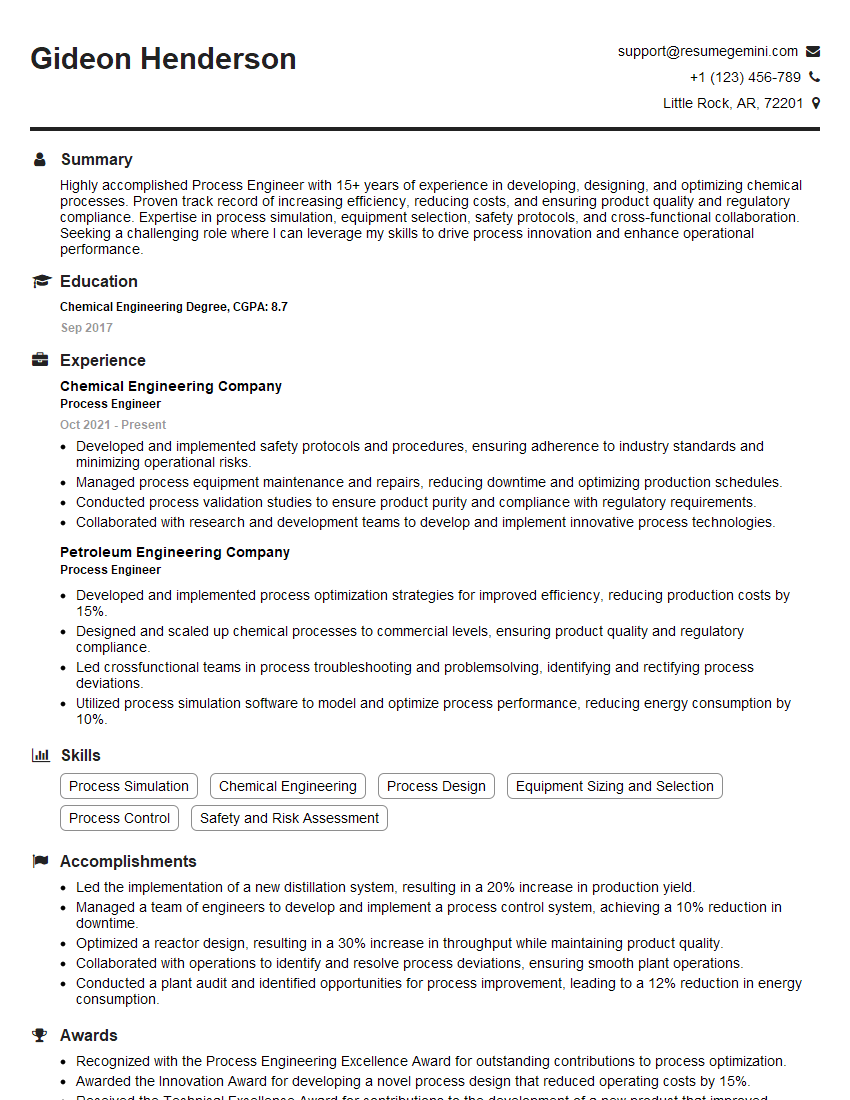
Process Engineer Resume Sample

Automation Engineer Resume Sample

Technical Specialist Resume Sample

Maintenance Technician Resume Sample

Manufacturing Engineer Resume Sample

Tooling Engineer Resume Sample

Quality Assurance Engineer Resume Sample

Robotics Technician Resume Sample

Manufacturing Technician Resume Sample

Equipment Operator Resume Sample

Machine Operator Resume Sample
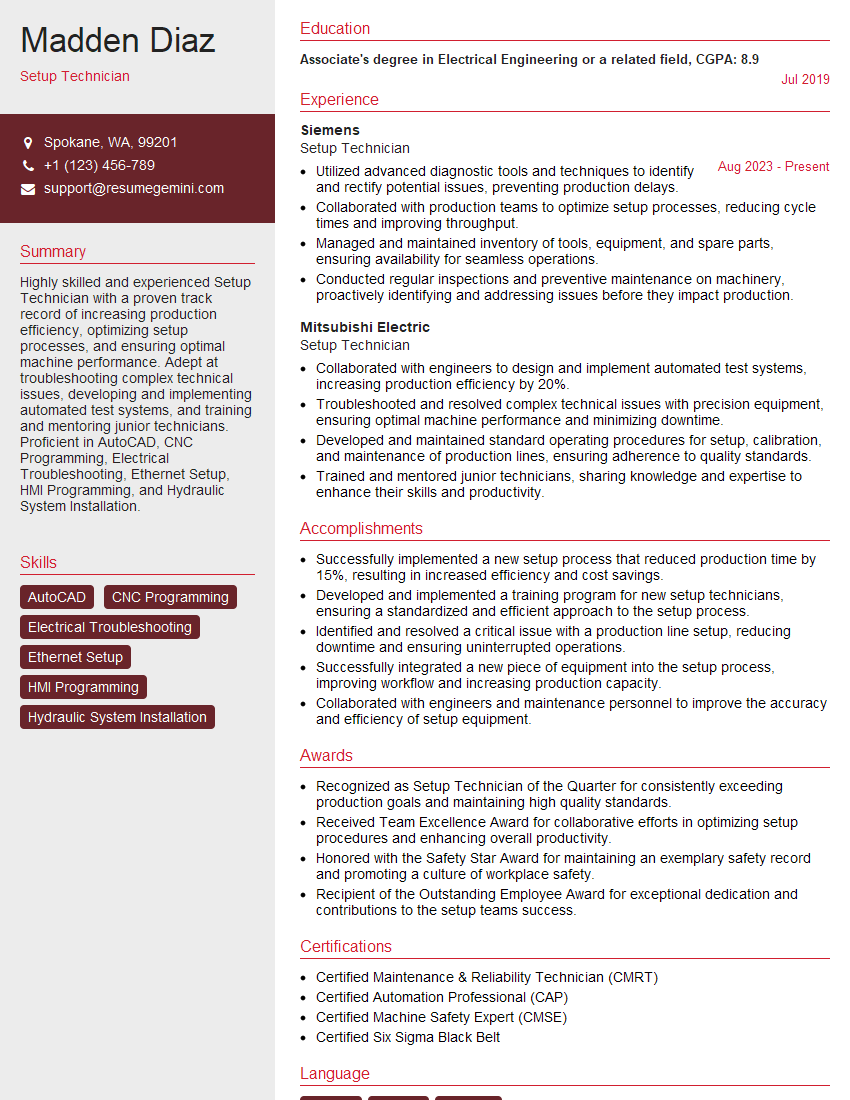
Setup Technician Resume Sample

Precision Machinist Resume Sample

Jig and Fixture Builder Resume Sample
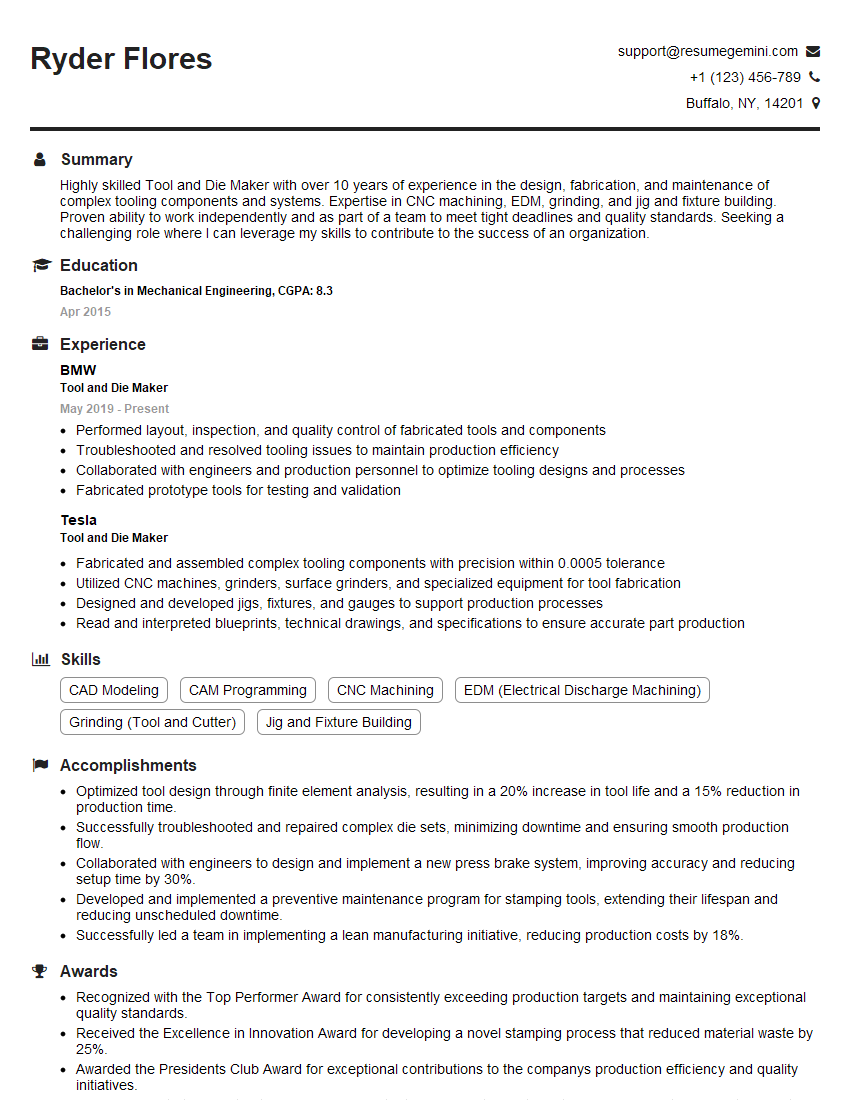
Tool and Die Maker Resume Sample

Quality Control Inspector Resume Sample
- Maintenance Planner
- Production Supervisor
- Process Engineer
- Automation Engineer
- Technical Specialist
- Maintenance Technician
- Manufacturing Engineer
- Tooling Engineer
- Quality Assurance Engineer
- Robotics Technician
- Manufacturing Technician
- Equipment Operator
- Machine Operator
- Setup Technician
- Precision Machinist
- Jig and Fixture Builder
- Tool and Die Maker
- Quality Control Inspector
Explore more articles
Users Rating of Our Blogs
Share Your Experience
We value your feedback! Please rate our content and share your thoughts (optional).
What Readers Say About Our Blog
Really detailed insights and content, thank you for writing this detailed article.
IT gave me an insight and words to use and be able to think of examples