Preparation is the key to success in any interview. In this post, we’ll explore crucial Effluent Disposal interview questions and equip you with strategies to craft impactful answers. Whether you’re a beginner or a pro, these tips will elevate your preparation.
Questions Asked in Effluent Disposal Interview
Q 1. Describe the different types of effluent treatment processes.
Effluent treatment processes aim to remove pollutants from wastewater before discharge. The choice of process depends on the type and concentration of pollutants present. Common methods include:
- Primary Treatment: This involves physical processes like screening, sedimentation, and flotation to remove large solids and settleable materials. Think of it like a basic cleanup – removing the obvious debris.
- Secondary Treatment: This uses biological processes to break down dissolved and suspended organic matter. Activated sludge and trickling filters are common examples. This is like a deeper clean, where microorganisms ‘eat’ the remaining pollutants.
- Tertiary Treatment: This is an advanced level of treatment that removes remaining pollutants like nutrients (nitrogen and phosphorus) and pathogens. Techniques include filtration, disinfection (e.g., UV or chlorination), and advanced oxidation processes. This is the final polish, ensuring the water is as clean as possible.
- Anaerobic Digestion: This process uses microorganisms in the absence of oxygen to break down organic matter, producing biogas (methane) as a byproduct. It’s particularly useful for treating high-strength wastewater like sewage sludge.
Often, a combination of these processes is used to achieve the desired level of treatment. For example, a typical municipal wastewater treatment plant might use primary, secondary, and tertiary treatment stages.
Q 2. Explain the importance of effluent discharge permits and compliance.
Effluent discharge permits are crucial for environmental protection. They legally limit the amount and type of pollutants a facility can discharge into receiving waters (rivers, lakes, oceans). Compliance is mandatory; failure to comply leads to penalties, including fines and potential plant closure. These permits set specific limits for key parameters like BOD (Biochemical Oxygen Demand), COD (Chemical Oxygen Demand), suspended solids, and various chemicals. Regular monitoring and reporting are required to demonstrate compliance. Think of it as a driver’s license for discharging wastewater – you need one, and you need to follow the rules.
For example, a manufacturing plant might need a permit specifying maximum limits for heavy metals in their wastewater. Consistent monitoring ensures they remain within these limits, protecting the environment and public health.
Q 3. What are the key parameters monitored in effluent treatment?
Monitoring key parameters is essential for ensuring effective effluent treatment. The specific parameters depend on the industry and the type of pollutants present, but some common ones include:
- Biochemical Oxygen Demand (BOD): Measures the amount of oxygen consumed by microorganisms while breaking down organic matter. High BOD indicates significant organic pollution.
- Chemical Oxygen Demand (COD): Measures the total amount of oxygen required to chemically oxidize organic matter. It provides a broader measure than BOD.
- Suspended Solids (SS): Represents the total amount of solid particles suspended in the effluent.
- pH: Measures the acidity or alkalinity of the effluent. Extreme pH values can harm aquatic life.
- Nutrients (Nitrogen & Phosphorus): Excess nutrients can cause eutrophication (algal blooms) in receiving waters.
- Heavy Metals: These toxic metals (e.g., lead, mercury, cadmium) can accumulate in the food chain and pose serious health risks.
- Oil and Grease: These substances can harm aquatic life and foul waterways.
Regular monitoring of these parameters allows operators to make adjustments to the treatment process to maintain compliance and protect the environment.
Q 4. How do you ensure the effective operation and maintenance of an effluent treatment plant?
Effective operation and maintenance are crucial for optimal plant performance and compliance. This involves a multi-faceted approach:
- Regular Inspections: Routine checks of equipment, piping, and instrumentation to identify potential problems early.
- Preventive Maintenance: Scheduled maintenance to prevent equipment failures, ensuring smooth operation.
- Process Control: Monitoring key parameters and making adjustments as needed to maintain optimal treatment performance. This often involves using sophisticated control systems.
- Operator Training: Well-trained operators are essential for efficient plant operation and troubleshooting.
- Record Keeping: Detailed records of operations, maintenance, and monitoring data are crucial for tracking performance and identifying trends.
- Compliance Monitoring: Regular sampling and analysis of effluent to ensure compliance with discharge permits.
For example, regular cleaning of aeration tanks in an activated sludge process is vital to prevent sludge bulking and ensure efficient biological treatment. A well-maintained plant will minimize downtime, reduce costs, and protect the environment.
Q 5. Describe your experience with different effluent treatment technologies (e.g., activated sludge, membrane bioreactors).
I have extensive experience with various effluent treatment technologies. My work has included:
- Activated Sludge: I’ve designed and managed several activated sludge plants, optimizing aeration, sludge retention time, and other parameters to achieve optimal performance. I’ve also tackled challenges like sludge bulking and foaming.
- Membrane Bioreactors (MBR): I’ve worked with MBR systems, leveraging their ability to produce high-quality effluent. This includes experience with membrane cleaning and replacement strategies to maintain efficiency.
- Other technologies: My experience also encompasses anaerobic digestion, constructed wetlands, and various advanced oxidation processes.
In one project, I successfully optimized an activated sludge plant by implementing a dissolved oxygen control system, resulting in a 15% reduction in energy consumption and improved effluent quality. In another, I oversaw the installation and commissioning of an MBR system, significantly enhancing the removal of suspended solids and pathogens.
Q 6. What are the common pollutants found in industrial effluent?
Industrial effluent contains a wide range of pollutants, depending on the industry. Common pollutants include:
- Organic Matter: From food processing, textiles, and other industries. This includes BOD and COD.
- Inorganic Matter: Salts, heavy metals, and other inorganic compounds from various industrial processes.
- Nutrients: Nitrogen and phosphorus from fertilizers, wastewater from food processing and agricultural runoff.
- Suspended Solids: Sediments, fibers, and other particulate matter.
- Oil and Grease: From manufacturing and automotive industries.
- Toxic Substances: Heavy metals, pesticides, and other hazardous materials.
- Pathogens: Bacteria, viruses, and parasites from various sources.
The specific pollutants and their concentrations vary significantly depending on the type of industry and its manufacturing processes. A metal plating facility, for example, will have high concentrations of heavy metals, whereas a food processing plant will have high levels of organic matter.
Q 7. How do you troubleshoot problems in an effluent treatment plant?
Troubleshooting in an effluent treatment plant often involves a systematic approach:
- Identify the problem: Observe the symptoms (e.g., poor effluent quality, equipment malfunction). This often involves checking monitoring data and conducting visual inspections.
- Analyze the cause: Investigate potential causes based on the symptoms. This might involve reviewing operational logs, checking process parameters, and conducting laboratory tests.
- Develop solutions: Based on the identified cause, develop and implement corrective actions. This may involve repairing equipment, adjusting process parameters, or implementing process improvements.
- Monitor the results: After implementing the solutions, monitor the system to confirm their effectiveness. This involves tracking key parameters and observing plant performance.
- Document findings: Document the entire troubleshooting process, including the problem, cause, solution, and results. This helps prevent future occurrences.
For example, if effluent BOD is consistently high, you might investigate aeration efficiency, sludge age, or the presence of inhibitory substances. Addressing these underlying issues would then involve adjusting aeration, modifying the sludge wasting rate, or implementing pretreatment to remove inhibitors.
Q 8. What safety precautions are essential when working with effluent?
Working with effluent demands rigorous safety protocols. Effluent can contain harmful pathogens, toxic chemicals, and other hazardous substances. Therefore, personal protective equipment (PPE) is paramount. This includes waterproof gloves, eye protection, respirators (depending on the effluent composition), and protective clothing. Proper handwashing after any contact is essential. Furthermore, controlled access to effluent storage and treatment areas is critical, ensuring only authorized personnel with appropriate training enter. Regular safety training and emergency response plans are mandatory to mitigate risks. For instance, in one project, we implemented a color-coded system for effluent tanks, with red indicating highly hazardous contents and requiring specialized PPE, while yellow indicated moderate risk and green indicated relatively safe, treated effluent. This visual cue system reduced potential accidents significantly. Finally, adherence to all relevant occupational safety and health administration (OSHA) guidelines and company-specific safety procedures is non-negotiable.
Q 9. Explain the concept of BOD and COD and their significance in effluent treatment.
BOD (Biochemical Oxygen Demand) and COD (Chemical Oxygen Demand) are crucial indicators of water pollution caused by organic matter in effluent. BOD measures the amount of dissolved oxygen consumed by aerobic microorganisms while decomposing organic waste in a water sample over a specific time period (usually 5 days at 20°C). A high BOD suggests a significant amount of organic pollution and can lead to oxygen depletion in receiving water bodies, harming aquatic life. COD, on the other hand, measures the total amount of oxygen required to chemically oxidize all organic and inorganic substances in a sample. COD is a more comprehensive test than BOD as it includes non-biodegradable organic matter. Both are essential for designing and monitoring effluent treatment plants. For example, a high BOD/COD ratio may indicate that the effluent contains a significant amount of readily biodegradable organic matter. Conversely, a low ratio can signify that a substantial proportion of the organic matter is difficult to degrade biologically, requiring more advanced treatment technologies.
Q 10. Describe your experience with effluent sampling and analysis.
My experience in effluent sampling and analysis is extensive. I’ve been involved in numerous projects, from small industrial plants to large municipal wastewater treatment facilities. The process typically involves collecting representative samples from various points within the effluent stream, following standardized procedures to prevent contamination. Sampling equipment is meticulously cleaned and sterilized between samples. Accurate documentation, including sampling location, date, time, and any relevant observations, is vital for data integrity. The collected samples are then transported to a certified laboratory for analysis, which may include parameters like BOD, COD, suspended solids, pH, nutrients (nitrogen and phosphorus), and specific pollutants depending on the effluent source. In one particular project involving a food processing plant, I discovered that the traditional sampling method was not capturing the true variability in the effluent. I implemented a composite sampling technique that involved collecting small samples at regular intervals throughout the day. This improved the accuracy of the results and helped in optimizing the treatment process significantly.
Q 11. How do you manage sludge disposal from an effluent treatment plant?
Sludge management is a critical aspect of effluent treatment plant operation. Sludge, the byproduct of wastewater treatment, is a semi-solid material containing organic and inorganic matter. Disposal methods vary depending on the sludge characteristics and local regulations. Common methods include: Anaerobic digestion: This process breaks down organic matter in the sludge, producing biogas (a renewable energy source) and a reduced volume of digested sludge. Dewatering: This reduces the water content of the sludge, making it easier to handle and transport. Methods include belt presses, centrifuges, and vacuum filters. Land application: The dewatered sludge can be used as a soil amendment in agriculture, provided it meets specific quality standards. Landfilling: In some cases, sludge is disposed of in specially designed landfills. Incineration: Thermal treatment can reduce sludge volume and eliminate pathogens, but it requires careful management of air emissions. In my previous role, we implemented a cost-effective sludge management strategy that involved anaerobic digestion followed by dewatering and land application to local farmers. This approach reduced disposal costs and promoted sustainable resource utilization. Careful monitoring of the digested sludge is always necessary to ensure it doesn’t introduce contaminants into the soil.
Q 12. What are the legal and regulatory requirements for effluent disposal in your region?
Effluent discharge regulations vary significantly depending on location. In my region [Specify your region or a hypothetical one, e.g., California, USA], the primary regulatory body is [Specify the regulatory body, e.g., the State Water Resources Control Board]. They enforce stringent discharge permits that specify limits for various pollutants, such as BOD, COD, suspended solids, nutrients, and specific toxic substances. These limits are based on the receiving water body’s capacity to assimilate pollutants without causing ecological damage. Regular monitoring and reporting are mandatory to ensure compliance. Non-compliance can result in significant penalties, including fines and operational shutdowns. Understanding and adhering to these regulations is paramount for responsible effluent management. Moreover, companies must regularly update their discharge permits, as regulations can change, and effluent characteristics may change over time. Regular training programs and audits help ensure compliance.
Q 13. Explain your experience with effluent treatment plant design and optimization.
My experience with effluent treatment plant design and optimization spans diverse projects. I’ve been involved in the design of new plants, as well as the optimization of existing ones. Design considerations involve selecting appropriate treatment technologies based on the effluent characteristics and the desired level of treatment. Optimization involves utilizing data analysis and process control strategies to improve efficiency, reduce energy consumption, and meet stringent discharge standards. For example, I worked on a project where we implemented advanced process control systems in an existing plant. By optimizing aeration and sludge retention time, we achieved significant reductions in energy consumption and BOD/COD removal. Simulation modeling is a valuable tool in both design and optimization, helping to predict plant performance and identify potential bottlenecks. Life cycle assessment, evaluating the environmental impacts throughout a plant’s lifecycle, is also a key consideration in the design stage.
Q 14. How do you ensure the environmental impact of effluent disposal is minimized?
Minimizing the environmental impact of effluent disposal is a core principle in my work. This involves employing best available technologies (BAT) for treatment, aiming to achieve the highest level of pollutant removal feasible. Careful site selection for treatment plants, considering factors like proximity to sensitive ecosystems and groundwater resources, is crucial. Environmental impact assessments (EIAs) are carried out to assess potential risks and develop mitigation strategies. Regular monitoring of receiving water bodies helps evaluate the effectiveness of the treatment process and detect any adverse impacts. Furthermore, ongoing research and development in effluent treatment technologies is essential to improve efficiency and reduce environmental footprints. For instance, I’ve been involved in pilot projects exploring the use of constructed wetlands and advanced oxidation processes as sustainable treatment alternatives. Public engagement and transparency about treatment plant operations are also crucial to ensure community trust and environmental responsibility.
Q 15. Describe your experience with different types of effluent treatment equipment.
My experience encompasses a wide range of effluent treatment equipment, from basic technologies to advanced systems. I’ve worked extensively with:
- Primary Treatment: This includes screening, grit removal, and sedimentation tanks, which physically remove larger solids and settleable materials. For example, I oversaw the upgrade of a grit removal system at a food processing plant, improving efficiency by 15% and reducing maintenance costs.
- Secondary Treatment: I’m highly proficient with activated sludge systems, trickling filters, and rotating biological contactors (RBCs). In one project, we optimized an activated sludge plant by adjusting aeration strategies, leading to a significant reduction in sludge production.
- Tertiary Treatment: My expertise extends to advanced treatment processes like membrane filtration (microfiltration, ultrafiltration, and reverse osmosis), disinfection (UV, chlorination), and nutrient removal (biological nutrient removal, chemical precipitation). I successfully implemented a membrane bioreactor (MBR) system at a pharmaceutical facility, achieving exceptionally high effluent quality.
- Sludge Treatment: I have practical experience with sludge thickening, dewatering, and anaerobic digestion. For instance, I helped a municipality select the most cost-effective sludge dewatering technology, considering factors like sludge characteristics and energy consumption.
My experience is not limited to just operation; I’ve also been involved in the design, specification, and commissioning of new equipment, ensuring optimal performance and compliance with regulations.
Career Expert Tips:
- Ace those interviews! Prepare effectively by reviewing the Top 50 Most Common Interview Questions on ResumeGemini.
- Navigate your job search with confidence! Explore a wide range of Career Tips on ResumeGemini. Learn about common challenges and recommendations to overcome them.
- Craft the perfect resume! Master the Art of Resume Writing with ResumeGemini’s guide. Showcase your unique qualifications and achievements effectively.
- Don’t miss out on holiday savings! Build your dream resume with ResumeGemini’s ATS optimized templates.
Q 16. What is your experience with process control systems used in effluent treatment?
I’m experienced with various process control systems (PCS) used in effluent treatment plants, ranging from simple PLC-based systems to sophisticated SCADA systems. My expertise includes:
- Supervisory Control and Data Acquisition (SCADA): I have extensive experience utilizing SCADA systems to monitor and control critical parameters such as flow rates, dissolved oxygen levels, pH, and chemical dosages. For example, I developed a SCADA-based alarm system that significantly reduced response times to process upsets, preventing potential environmental violations.
- Programmable Logic Controllers (PLCs): I’m proficient in programming PLCs to automate tasks, such as controlling pumps, valves, and chemical dosing systems. This improves efficiency and reduces the risk of human error. I once programmed a PLC to optimize the backwashing cycle of a filter press, resulting in significant water savings.
- Data Historians: I utilize data historians to store and retrieve operational data, enabling detailed analysis of plant performance and troubleshooting. This data is crucial for identifying trends, optimizing processes, and meeting regulatory reporting requirements.
My experience encompasses not only using these systems, but also troubleshooting and maintaining them, ensuring consistent, reliable operation of the effluent treatment plant.
Q 17. How do you handle unexpected surges or variations in effluent flow?
Unexpected surges or variations in effluent flow are common challenges in effluent treatment. My approach involves a multi-pronged strategy:
- Early Detection and Warning Systems: We use flow meters and level sensors integrated with the SCADA system to provide real-time monitoring and early warning of flow changes. This allows for proactive adjustments.
- Flexible Treatment System Design: Designing a treatment plant with sufficient capacity and flexibility is critical. Features like equalization basins can help buffer flow variations and maintain consistent treatment performance. I’ve been instrumental in designing such systems, mitigating the impact of fluctuating flows.
- Automated Control Strategies: Using PCS to automate responses to flow changes is essential. For example, we can program pumps and valves to automatically adjust flow rates based on real-time data. I’ve developed and implemented such strategies many times.
- Emergency Procedures: It’s crucial to have well-defined emergency procedures to handle extreme flow events. This might involve diverting excess flow temporarily or implementing bypass strategies. I always make sure the plant personnel are adequately trained in these procedures.
By combining these strategies, we can minimize the impact of unexpected surges and maintain effluent quality even during periods of high variability.
Q 18. Explain your experience with data analysis and reporting related to effluent treatment.
Data analysis and reporting are integral to effective effluent treatment management. My experience encompasses:
- Data Collection and Management: I utilize SCADA systems and data historians to collect a wide range of operational data. This includes flow rates, chemical dosages, effluent quality parameters (e.g., BOD, COD, TSS, nutrients), and energy consumption. I have developed database systems to organize and manage this data effectively.
- Statistical Analysis: I use statistical techniques to analyze the collected data, identifying trends, correlations, and anomalies. This enables us to optimize plant performance and pinpoint areas for improvement. For example, I used regression analysis to correlate effluent quality parameters with operational variables, allowing for more precise control of the treatment process.
- Report Generation: I prepare comprehensive reports, both routine and ad-hoc, to summarize plant performance, identify areas of concern, and ensure regulatory compliance. These reports include graphical representations of key performance indicators (KPIs) to facilitate clear communication.
- Data Visualization: I employ data visualization tools to create dashboards and graphs, enabling quick identification of trends and potential problems. This allows for prompt action and reduces the time needed to understand complex datasets.
My reporting goes beyond simply presenting data; it provides actionable insights for decision-making and continuous improvement.
Q 19. How do you address non-compliance issues related to effluent discharge?
Non-compliance issues related to effluent discharge are serious matters. My approach to addressing them is methodical and focuses on:
- Immediate Corrective Actions: Upon identification of a non-compliance issue, the immediate priority is to take corrective actions to mitigate further violations. This might involve adjusting treatment parameters, repairing equipment, or temporarily reducing discharge flow. I’ve had to implement such measures to bring a plant back into compliance rapidly.
- Root Cause Analysis: A thorough investigation is necessary to determine the root cause of the non-compliance. This often involves analyzing operational data, reviewing maintenance logs, and conducting plant inspections. I am skilled at identifying the underlying factors leading to non-compliance, going beyond immediate symptoms.
- Corrective and Preventative Measures: Based on the root cause analysis, we implement corrective measures to address the immediate problem and preventative measures to ensure that it doesn’t recur. This might involve equipment upgrades, process modifications, or enhanced operator training. I developed a training program for operators that significantly reduced the frequency of non-compliance incidents.
- Regulatory Reporting: Accurate and timely reporting to the relevant regulatory authorities is essential. I’m experienced in preparing detailed reports outlining the non-compliance event, the corrective actions taken, and the preventative measures implemented.
My goal is not only to bring the plant back into compliance but also to prevent future incidents through robust preventative measures and continuous improvement.
Q 20. Describe your experience with budget management and resource allocation in effluent treatment.
Budget management and resource allocation are crucial aspects of effluent treatment plant operations. My experience includes:
- Budget Development: I’ve participated in the development of annual budgets, forecasting operating expenses, capital expenditures, and personnel costs. This involves considering factors such as energy prices, chemical costs, and maintenance requirements.
- Resource Allocation: I’m skilled in allocating resources efficiently to optimize plant performance and meet regulatory requirements. This requires careful consideration of competing priorities and balancing the need for operational efficiency with environmental protection. I developed a resource allocation model that saved the company 10% in operational costs.
- Cost Control: I implement strategies to control costs effectively, focusing on energy efficiency, optimized chemical usage, and preventative maintenance. I’ve successfully implemented several energy-saving initiatives, reducing the plant’s carbon footprint while cutting expenses.
- Performance Monitoring: I track actual expenditures against the budget and identify any variances. This allows for timely adjustments and helps prevent cost overruns. My meticulous tracking has consistently kept projects within budget.
My approach to budget management and resource allocation ensures responsible spending while maintaining high standards of effluent treatment.
Q 21. What is your experience with different types of effluent treatment chemicals?
My experience with effluent treatment chemicals is extensive and covers a wide range of applications. I’m familiar with:
- Coagulants and Flocculants: These chemicals are used to enhance the removal of suspended solids in primary and secondary treatment. I’ve worked with various types, including alum, ferric chloride, and polymeric flocculants, optimizing their dosage for different effluent characteristics.
- Disinfectants: I’m experienced with chlorine, chloramines, and UV disinfection for eliminating pathogens in the treated effluent. I have knowledge of the safety regulations and handling procedures associated with these chemicals.
- pH Adjusters: Acids (e.g., sulfuric acid, hydrochloric acid) and bases (e.g., sodium hydroxide, lime) are used to adjust the pH of the effluent to optimal levels for various treatment processes. I have worked extensively with optimizing pH control for biological processes.
- Nutrient Removal Chemicals: For advanced nutrient removal, I’m familiar with chemicals like ferric chloride and alum for phosphorus removal, and various nitrogen-removal strategies involving chemical or biological processes. I have experience with selecting the most appropriate chemical strategy for a specific effluent composition.
Beyond application, I also understand the environmental implications of chemical usage and strive to minimize the impact on the environment through optimization of dosages and selection of eco-friendly alternatives whenever possible.
Q 22. How do you ensure the quality of treated effluent meets discharge standards?
Ensuring treated effluent meets discharge standards involves a multi-step process focusing on robust monitoring and treatment optimization. It begins with a clear understanding of the specific discharge limits set by the regulatory authorities for the given location and industry. These limits typically cover parameters like BOD (Biochemical Oxygen Demand), COD (Chemical Oxygen Demand), suspended solids, pH, and various pollutants specific to the industry (e.g., heavy metals, oils, specific chemicals).
We employ a rigorous monitoring program throughout the treatment process. This includes regular sampling at various stages – influent (incoming wastewater), different treatment stages (e.g., after primary clarification, after biological treatment, after disinfection), and finally, the effluent before discharge. Analysis of these samples against the regulatory limits is crucial. We use accredited laboratories and employ quality control measures to ensure data accuracy.
If any parameter exceeds the limits, a thorough investigation is launched to identify the root cause. This might involve adjustments to the treatment processes (e.g., increasing aeration in the biological reactor, optimizing chemical dosing in the disinfection stage), improvements in pretreatment measures at the source of the wastewater, or upgrading the treatment system itself. Regular maintenance of the equipment is also critical to maintain consistent performance and meet discharge standards. Detailed records of all monitoring data, corrective actions, and maintenance activities are meticulously documented and reported to relevant authorities.
For example, in a project involving a food processing plant, we discovered high BOD levels in the final effluent. After investigation, we found that inadequate pretreatment of organic waste from the production line was the main culprit. Implementing improved pre-treatment measures, including better separation of solids and a more efficient waste management system, solved the problem and ensured consistent compliance with discharge standards.
Q 23. How do you manage and mitigate the risk of environmental incidents related to effluent?
Managing and mitigating environmental risks associated with effluent requires a proactive, multi-layered approach. This starts with a comprehensive risk assessment, identifying potential hazards (e.g., equipment failure, accidental spills, process upsets) and their potential impact on the environment. This assessment guides the development of a robust emergency response plan.
Key elements of this plan include procedures for handling spills, equipment failures, and other emergencies. We must have clearly defined roles and responsibilities, well-maintained emergency equipment (e.g., spill containment booms, pumps), and regular training for personnel on emergency procedures. Regular drills and simulations ensure the effectiveness of the plan and the preparedness of the team.
Beyond emergency response, we implement preventative measures to minimize risks. This includes regular inspections of the treatment plant, equipment maintenance, and robust process control systems to prevent upsets. We implement environmental monitoring programs beyond the regulatory requirements, including groundwater monitoring to detect any potential leakage or contamination. Data from these programs are used to refine operational practices and improve overall risk management.
For instance, in a project involving a chemical manufacturing plant, we implemented a comprehensive leak detection system using sensors and alarms. This system, coupled with regular equipment inspections and operator training, significantly reduced the risk of chemical spills and their potential environmental impact.
Q 24. Explain your understanding of life cycle assessment related to effluent treatment.
Life cycle assessment (LCA) in effluent treatment considers the environmental impacts of the entire process, from the design and construction of the treatment plant to its operation, maintenance, and eventual decommissioning. It goes beyond simply analyzing the effluent quality and considers the wider environmental footprint.
An LCA for an effluent treatment plant would typically involve evaluating several aspects:
- Raw material extraction and manufacturing: The environmental impact associated with the production of construction materials and equipment.
- Energy consumption: The energy required for plant operation, including pumping, aeration, and other processes.
- Water usage: The amount of water used during the treatment process itself.
- Waste generation: Sludge production and its disposal or reuse.
- Greenhouse gas emissions: The carbon footprint of the entire system.
- Transport and disposal: The emissions and impacts related to transporting materials and disposing of wastes.
By conducting an LCA, we can identify the ‘hotspots’ – the stages in the process with the most significant environmental impacts. This information allows us to make informed decisions on design, technology selection, and operational practices to minimize the overall environmental footprint. For example, choosing energy-efficient equipment, optimizing treatment processes to reduce sludge production, and exploring sustainable sludge disposal methods can significantly improve the overall sustainability of the effluent treatment system.
Q 25. How do you stay updated with the latest advancements and technologies in effluent treatment?
Staying updated in the rapidly evolving field of effluent treatment is paramount. I actively engage in several strategies to maintain my expertise:
- Professional memberships and conferences: I am a member of relevant professional organizations, such as the Water Environment Federation (WEF), and regularly attend conferences and workshops to learn about new technologies and best practices.
- Peer-reviewed publications and journals: I closely follow scientific literature and research papers in the field to keep abreast of the latest advancements in treatment technologies and research findings.
- Online resources and training courses: I utilize online platforms and training courses offered by leading universities and institutions to acquire knowledge on emerging technologies and techniques.
- Networking with industry professionals: I actively participate in networking events and discussions with colleagues and experts to exchange knowledge and gain insights into real-world applications of new technologies.
- Industry-specific publications and news: I regularly review industry-specific publications and newsletters to stay informed on regulatory changes, new technologies, and case studies from successful projects.
This multi-faceted approach allows me to adapt my expertise to constantly evolving challenges and implement the best and most sustainable solutions for effluent treatment.
Q 26. Describe your experience working with multidisciplinary teams in effluent treatment projects.
Effluent treatment projects are inherently multidisciplinary, requiring collaboration between engineers, chemists, biologists, environmental scientists, and regulatory specialists. I have extensive experience working in such teams. My role often involves bridging the gap between technical expertise and regulatory requirements.
Successful collaboration involves clear communication, mutual respect for each other’s expertise, and a shared understanding of project goals. I foster collaboration by ensuring clear communication channels, regular team meetings, and establishing a shared platform for information sharing. I also facilitate consensus-building when conflicting opinions or approaches arise. In one project involving the remediation of a contaminated site, effective collaboration between hydrogeologists, geochemists, and environmental engineers was crucial in developing a successful remediation plan.
My approach focuses on active listening, clear articulation of technical concepts, and the ability to translate complex technical information into easily understandable terms for team members with different backgrounds. I believe in a collaborative approach where everyone’s input is valued, leading to innovative and comprehensive solutions.
Q 27. What is your experience with the implementation of sustainable practices in effluent treatment?
Sustainable practices are central to modern effluent treatment. My experience encompasses various approaches focused on minimizing environmental impact and resource consumption. This involves several key strategies:
- Energy efficiency: Optimizing treatment processes to reduce energy consumption. This may involve selecting energy-efficient equipment, using renewable energy sources (e.g., solar power), and implementing energy-saving operational strategies.
- Water reuse and recycling: Designing systems that allow for the reuse of treated effluent for non-potable purposes (e.g., irrigation, industrial processes), minimizing water withdrawal from freshwater sources.
- Sludge management: Implementing sustainable sludge management practices, such as anaerobic digestion to produce biogas, composting, or beneficial reuse of dewatered sludge in agriculture (after proper testing and compliance).
- Resource recovery: Exploring opportunities to recover valuable resources from the effluent, such as phosphorus recovery from wastewater streams.
- Minimizing chemical use: Employing treatment methods that minimize the use of chemicals, prioritizing biological treatment processes wherever possible.
For example, in a recent project, we incorporated anaerobic digestion to treat sludge, generating biogas that reduced the plant’s reliance on fossil fuels. We also explored options for using the digested sludge as a soil amendment after meeting all relevant regulations and ensuring its safety.
Q 28. Explain your experience with the use of advanced oxidation processes in effluent treatment.
Advanced oxidation processes (AOPs) are powerful technologies used to remove recalcitrant pollutants from effluent that are difficult to treat with conventional methods. These processes involve generating highly reactive species, such as hydroxyl radicals (•OH), which can oxidize a wide range of organic and inorganic contaminants.
I have experience with several AOPs, including:
- Ozone (O3): Ozone is a powerful oxidant that can break down many organic pollutants. Ozone can be used alone or in combination with other AOPs.
- Ultraviolet (UV) radiation with hydrogen peroxide (H2O2): UV radiation breaks down H2O2, producing hydroxyl radicals, which then oxidize the pollutants.
- Fenton’s reaction: This involves the use of hydrogen peroxide (H2O2) and ferrous ions (Fe2+) to generate hydroxyl radicals.
The selection of a specific AOP depends on the nature of the pollutants, the effluent characteristics, and cost considerations. AOPs are particularly effective in removing persistent organic pollutants, pharmaceuticals, and other emerging contaminants. However, it’s important to note that AOPs can be energy-intensive and require careful consideration of operational parameters to optimize treatment efficiency and minimize costs. For instance, in a project treating industrial wastewater containing chlorinated solvents, UV/H2O2 oxidation proved highly effective in removing these persistent contaminants.
Key Topics to Learn for Effluent Disposal Interview
- Effluent Characteristics and Treatment Needs: Understanding the physical, chemical, and biological properties of different effluent types and their impact on treatment selection.
- Wastewater Treatment Processes: Familiarize yourself with various treatment methods such as primary, secondary, and tertiary treatment, including their applications and limitations. Consider biological treatment processes (activated sludge, trickling filters), chemical treatment (coagulation, flocculation), and physical treatment (screening, sedimentation).
- Regulations and Compliance: Understand relevant environmental regulations and discharge permits. Knowing how to ensure compliance with local, national, and international standards is crucial.
- Effluent Monitoring and Analysis: Master the techniques and technologies used for monitoring effluent quality parameters (BOD, COD, TSS, pH, etc.) and interpreting analytical data.
- Sludge Management and Disposal: Learn about different sludge handling techniques, including thickening, dewatering, and disposal methods (landfill, incineration, land application). Understand the environmental impact of each.
- Design and Operation of Effluent Treatment Plants: Gain knowledge of the design principles and operational aspects of effluent treatment plants, including process control, troubleshooting, and optimization.
- Sustainability and Resource Recovery: Explore sustainable effluent treatment practices and resource recovery options (e.g., energy recovery, nutrient recovery).
- Cost-Benefit Analysis and Life Cycle Assessment: Understanding the economic and environmental implications of different effluent disposal strategies is essential for decision-making.
- Troubleshooting and Problem-Solving: Be prepared to discuss common problems encountered in effluent treatment and your approach to solving them.
- Emerging Technologies in Effluent Treatment: Research and understand the latest advancements in effluent treatment technologies and their potential applications.
Next Steps
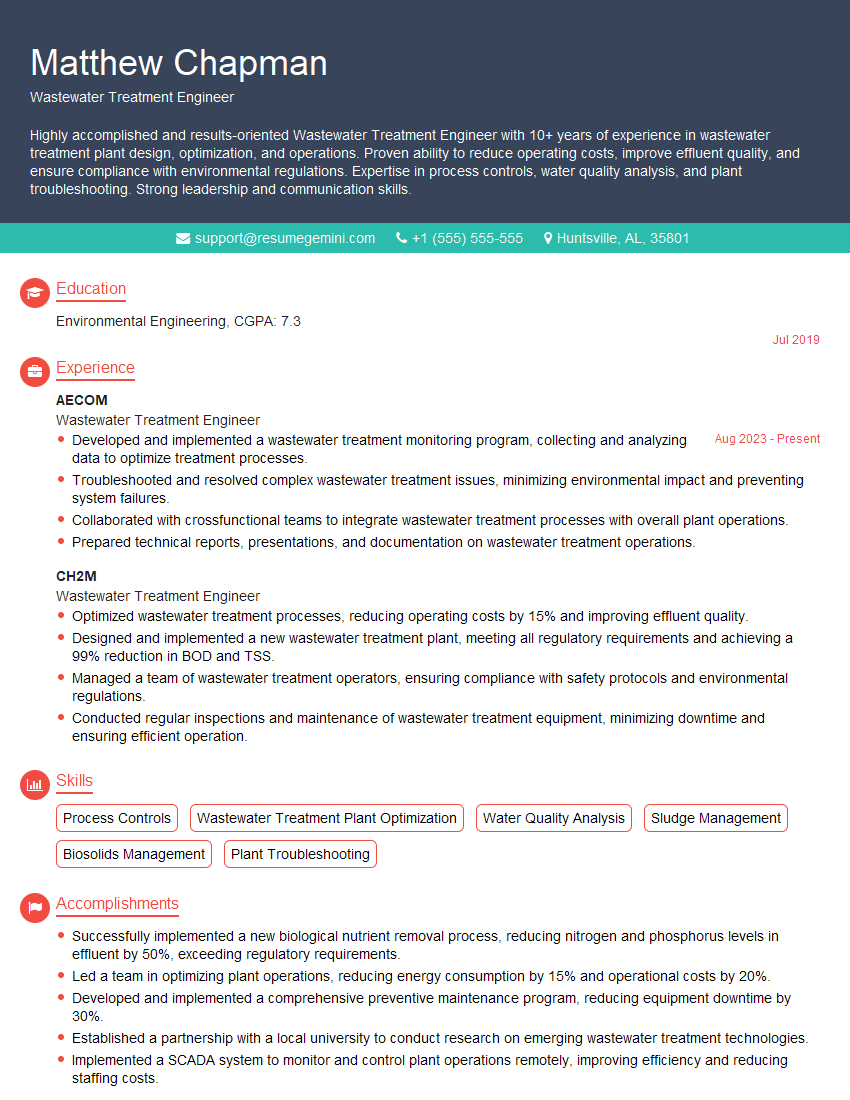
Mastering Effluent Disposal opens doors to rewarding careers in environmental engineering and related fields, offering opportunities for growth and specialization. To maximize your job prospects, it’s crucial to present your skills effectively. Creating an ATS-friendly resume is key to getting noticed by recruiters. We highly recommend using ResumeGemini to build a professional and impactful resume that highlights your expertise in Effluent Disposal. ResumeGemini provides examples of resumes tailored to this field to help you create a winning application. Take the next step towards your dream career today!
Explore more articles
Users Rating of Our Blogs
Share Your Experience
We value your feedback! Please rate our content and share your thoughts (optional).
What Readers Say About Our Blog
Really detailed insights and content, thank you for writing this detailed article.
IT gave me an insight and words to use and be able to think of examples