Interviews are opportunities to demonstrate your expertise, and this guide is here to help you shine. Explore the essential Electrical Wire Management interview questions that employers frequently ask, paired with strategies for crafting responses that set you apart from the competition.
Questions Asked in Electrical Wire Management Interview
Q 1. Explain the difference between stranded and solid core wire.
The core difference between stranded and solid core wire lies in their construction and flexibility. Solid core wire consists of a single, solid conductor. Imagine a single, thick piece of metal. This makes it stiff and less flexible, suitable for applications where movement isn’t expected, like wiring within walls. Stranded wire, on the other hand, is made up of multiple smaller wires twisted together. Think of it like a braided rope. This construction allows for greater flexibility and is ideal for applications where the wire needs to bend or move frequently, such as appliance cords or wiring in machinery.
In short:
- Solid Core: Stiff, less flexible, cost-effective for stationary installations.
- Stranded Core: Flexible, more durable for moving applications, often more expensive.
Choosing between the two depends entirely on the application. A lamp cord needs the flexibility of stranded wire, while the wiring in your walls can effectively use the more economical solid core wire, as its position remains fixed.
Q 2. What are the color codes for common electrical wires?
Electrical wire color codes vary slightly depending on the region and application, but some standards are widely adopted. In the United States, the most common color codes are:
- Black: Typically used for hot wires carrying the main electrical current.
- Red: Also often used for hot wires, especially in circuits with multiple hot wires.
- White or Grey: Usually designated as the neutral wire, which completes the circuit. It carries current back to the source.
- Green or Bare Copper: Represents the grounding wire, providing a path to earth in case of a fault, protecting against electric shock.
It’s crucial to always verify the wiring’s purpose using a voltage tester before working with any electrical circuit. Never rely solely on color codes, as they can sometimes be inconsistent or improperly wired.
Q 3. Describe different types of wire connectors and their applications.
Several types of wire connectors are used to join electrical wires safely and effectively:
- Wire Nuts (or Connectors): These are twist-on connectors that secure multiple wires together. They’re commonly used for joining wires within a junction box.
- Screw-Type Connectors: These connectors use screws to clamp wires together, offering a more secure connection than wire nuts, particularly useful for larger gauge wires.
- Split Bolt Connectors: These are used to join two wires by clamping them together with a bolt. They’re often employed in larger electrical applications.
- Crimp Connectors: These connectors use a crimping tool to create a secure connection. These are ideal for applications where space is limited.
- Push-In Connectors: These connectors use a spring mechanism to hold the wires in place, often used in low-voltage applications or quick installations.
Choosing the correct connector depends on the wire gauge, the number of wires being connected, and the overall application. Always ensure the connector is properly sized and installed to guarantee a safe and reliable connection. Improperly installed connectors are a major fire hazard.
Q 4. How do you identify and prevent wire chafing?
Wire chafing is the abrasion or wearing away of a wire’s insulation, often caused by friction against a sharp edge or continuous movement. This exposes the conductor, creating a fire hazard and the risk of electric shock. Identification involves visual inspection, checking for cuts, scrapes, or signs of wear on the insulation. You should also check areas where wires might rub against metal components or other wires.
Preventing wire chafing involves several strategies:
- Proper Routing: Guide wires through smooth paths, avoiding sharp edges or corners.
- Use of Conduits and Sleeves: Enclosing wires in conduits (metal or plastic tubes) protects them from abrasion.
- Wire Loom or Split Loom: These flexible coverings provide additional protection.
- Strain Relief: This secures the wire at entry points to prevent pulling or movement.
- Proper Support: Use wire ties or clips to support wires and prevent sagging.
Regular inspections are crucial. Early detection and prompt repair prevent potentially serious consequences.
Q 5. Explain the importance of proper grounding and bonding in electrical systems.
Proper grounding and bonding are essential for safety and the reliable operation of electrical systems. Grounding provides a low-impedance path to the earth for fault currents. Think of it as a safety valve. If a fault occurs, the current will flow to the ground instead of through a person who might touch the equipment, preventing electric shock. Bonding, on the other hand, connects metal parts of the electrical system together to equalize their electrical potential, minimizing the risk of voltage differences that could lead to electrical hazards.
In essence:
- Grounding: Connects the system to the earth.
- Bonding: Connects metal parts within the system to each other.
Both are crucial for preventing electrical shocks, fires, and equipment damage. A properly grounded and bonded system helps to ensure that fault currents are safely directed to earth, preventing dangerous voltages from appearing on exposed conductive surfaces.
Q 6. What are the safety regulations related to electrical wire management?
Safety regulations related to electrical wire management are crucial for preventing accidents and ensuring compliance. These regulations vary by region but generally cover:
- Wire Gauges and Ampacity: Using appropriately sized wires for the intended current capacity to prevent overheating.
- Insulation Types and Ratings: Employing insulation suitable for the voltage and environmental conditions.
- Wiring Methods and Installation Practices: Following specific guidelines for running wires, securing them, and connecting them.
- Overcurrent Protection: Installing circuit breakers or fuses to prevent overcurrent situations.
- Grounding and Bonding Requirements: Adhering to regulations for grounding and bonding electrical systems.
- Junction Box Requirements: Proper sizing and installation of junction boxes to prevent overheating and provide adequate space for connections.
Ignoring these regulations can lead to serious consequences including electrical fires, shocks, and equipment damage. Always consult local codes and standards before undertaking any electrical work. If unsure, always call a qualified electrician.
Q 7. Describe your experience with different types of wire insulation.
My experience encompasses a wide range of wire insulation types, each with its specific properties and applications:
- Thermoplastic Insulation (e.g., PVC): Commonly used due to its cost-effectiveness, flexibility, and good dielectric strength. Excellent for general-purpose wiring in residential and commercial settings.
- Thermoset Insulation (e.g., rubber, silicone): Offers superior heat and chemical resistance, often used in harsh environments or high-temperature applications.
- Cross-linked Polyethylene (XLPE): Known for its high dielectric strength and resistance to moisture, ideal for underground or high-voltage applications.
- Fluoropolymer Insulation (e.g., PTFE, PFA): Exceptional chemical resistance and high-temperature capability, used in very demanding environments.
The choice of insulation is dictated by factors such as the voltage level, the operating temperature, the environment, and the specific safety requirements. Selecting the wrong insulation can lead to insulation failure and pose safety risks. For instance, using PVC insulation in a high-temperature setting would be inadequate and dangerous.
Q 8. How do you troubleshoot a short circuit in a wiring harness?
Troubleshooting a short circuit in a wiring harness requires a systematic approach. A short circuit, simply put, is an unintended low-resistance path allowing excessive current flow, potentially leading to overheating, fire, or equipment damage. My process begins with safety: always disconnect power before working on any live circuit.
- Visual Inspection: I start by carefully examining the harness for any obvious signs of damage, such as frayed wires, melted insulation, or burn marks. Often, the problem is visually apparent.
- Continuity Testing: Using a multimeter set to continuity mode (often symbolized by a diode), I test the continuity of each wire in the harness, comparing the readings to the wiring diagram. A short will show a low resistance reading between wires that shouldn’t be connected.
- Voltage Drop Testing: If the visual inspection and continuity test don’t reveal the problem, I use a multimeter to measure voltage drop across sections of the harness. An unexpectedly high voltage drop across a specific section indicates a high resistance, possibly caused by a partial short or a high-resistance connection.
- Systematic Isolation: To pinpoint the exact location, I often disconnect sections of the harness and re-test. This helps isolate the faulty segment. This process might involve removing connectors and testing continuity on individual wires.
- Specialized Equipment: In complex harnesses, a wire tracing tool can be invaluable for pinpointing the location of a short circuit. These tools use signals to trace the wire’s path.
For example, I once worked on a vehicle’s wiring harness where the driver’s side power window stopped working. Visual inspection showed nothing, but continuity testing revealed a short between the power and ground wires near the door hinge. A closer look revealed that the insulation had been pinched by the door’s mechanism.
Q 9. Explain your experience with wire routing and bundling techniques.
Wire routing and bundling are crucial for maintaining the harness’s integrity, aesthetics, and functionality. My experience includes working with various techniques tailored to the application’s specific needs. Proper routing minimizes stress on the wires, prevents chafing, and ensures that wires are appropriately separated according to voltage ratings and signal sensitivity.
- Proper Separation: High-voltage wires are kept separate from low-voltage signals to avoid interference and potential hazards. This is often achieved by using separate cable trays or conduits and maintaining adequate spacing.
- Strain Relief: Wires are secured using proper strain reliefs at connection points to prevent damage from vibration or movement. This includes using cable clamps and tie wraps strategically. Over-tightening should be avoided to prevent wire damage.
- Bundling Techniques: I use various techniques to neatly bundle wires, including using cable ties, lacing cords, and corrugated tubing. The goal is to create a manageable, organized harness that can withstand vibration and maintain its integrity over time.
- Harness Design Software: In many projects, I use specialized harness design software to plan the wire routing virtually before the physical installation. This ensures an optimal route and minimizes potential errors during installation.
For instance, in a recent project involving industrial robotics, meticulous wire routing was essential. We utilized separate conduits for high-voltage power and low-voltage control signals to prevent electromagnetic interference, ensuring smooth and reliable operation of the robotic arm.
Q 10. What software or tools are you proficient in for electrical design or documentation?
I am proficient in several software tools used in electrical design and documentation. These tools streamline the design process, improve accuracy, and allow for better collaboration among team members.
- AutoCAD Electrical: For schematic creation, component selection, and automated wire numbering and labeling.
- EPLAN Electric P8: Similar capabilities to AutoCAD Electrical, known for its comprehensive libraries and efficient workflow.
- SolidWorks Electrical: Integration with 3D CAD modeling for better visualization and physical design.
- Microsoft Visio: Excellent for creating clear and concise wiring diagrams and other documentation.
My experience includes using these tools to create complex wiring diagrams for industrial machinery and automotive applications. The software allows for easy modification and version control, significantly improving efficiency and reducing errors.
Q 11. How do you handle wire labeling and identification?
Wire labeling and identification are critical for safety, maintenance, and troubleshooting. A well-labeled harness allows for quick identification of wires, preventing accidental connections and reducing downtime during repairs. I adhere to industry best practices and company standards in labeling.
- Clear and Concise Labels: Labels should be clearly legible, using a permanent marker and providing sufficient information, such as wire function, voltage rating, and wire gauge.
- Consistent Labeling System: Consistency is key. I use a standardized system that’s easy to understand and follow, typically utilizing color-coding, numbers, and abbreviations for function descriptions.
- Heat-Shrink Tubing or Adhesive Labels: Durable labels that are resistant to heat, moisture, and abrasion are preferred, ensuring the labels remain legible over time.
- Digital Documentation: Maintaining a digital record of the wiring harness, including detailed schematics and labeling information, simplifies future troubleshooting and maintenance.
For example, in a previous project, we developed a color-coded system for a complex machine, where each color represented a different function. This simplified troubleshooting, as technicians could immediately identify the function of a wire by its color. The combination of physical labels and digital schematics ensured that all wiring information was readily available.
Q 12. Describe your experience with different types of cable trays and conduits.
My experience encompasses a range of cable trays and conduits, each suited for different applications and environments. The choice depends heavily on factors such as the number of cables, environmental conditions, and load capacity requirements.
- Ladder Cable Trays: These are versatile and offer good ventilation, ideal for many applications, particularly where cable density is moderate.
- Wire Mesh Cable Trays: Lightweight and offer excellent ventilation, perfect for applications where airflow is critical.
- Solid Bottom Cable Trays: Offer better protection against damage but provide less ventilation.
- Conduit (Metallic and Non-Metallic): Conduits provide superior protection against physical damage, moisture, and fire. Metallic conduits are often used for high-voltage applications or where increased protection is needed.
- PVC Conduit: Common for less demanding applications, cost-effective but may not offer the same level of protection as metallic conduit.
I’ve used ladder trays in large industrial settings where many cables needed to be routed efficiently, while metallic conduits were crucial in applications involving high-voltage power distribution, ensuring safety and compliance with electrical codes.
Q 13. Explain your understanding of NEC (National Electrical Code) regulations.
The National Electrical Code (NEC) is a crucial reference for safe and compliant electrical installations. My understanding of the NEC goes beyond simply knowing the code; it’s about applying its principles to real-world scenarios. I’m familiar with articles addressing wiring methods, grounding, overcurrent protection, and other crucial aspects of electrical safety.
- Wiring Methods: I understand the requirements for different wiring methods, including conduit, cable trays, and other approved techniques, ensuring proper support, spacing, and protection of the wiring.
- Grounding and Bonding: NEC’s grounding requirements are crucial for safety. I am proficient in ensuring proper grounding and bonding of equipment and wiring systems.
- Overcurrent Protection: Proper selection and installation of overcurrent protection devices (circuit breakers, fuses) are essential to prevent fires and equipment damage. My knowledge extends to selecting the correct devices based on the load characteristics and environmental conditions.
- Specific Articles: I’m familiar with relevant NEC articles related to industrial and commercial applications, including those addressing hazardous locations, special occupancies, and other requirements applicable to specific projects.
For example, in a recent project involving a hazardous location, I meticulously followed NEC articles pertaining to wiring methods and equipment suitable for Class I, Division 2 environments. This involved selecting explosion-proof enclosures and using intrinsically safe wiring techniques to ensure the safety of personnel and equipment.
Q 14. How do you ensure the integrity of wire connections in harsh environments?
Maintaining the integrity of wire connections in harsh environments demands careful consideration of the materials and techniques used. Harsh environments can include extreme temperatures, high humidity, vibration, and corrosive substances. My approach focuses on selecting appropriate components and implementing robust connection methods.
- Weatherproof Connectors: For outdoor or wet locations, weatherproof connectors with sealing gaskets are essential to prevent moisture ingress.
- Corrosion-Resistant Materials: In corrosive environments, using stainless steel or other corrosion-resistant materials for connectors and hardware is vital.
- Vibration-Dampening Techniques: Using strain reliefs, vibration dampeners, and appropriately secured cable trays helps to minimize stress on wire connections caused by vibration.
- High-Temperature Wire and Insulation: For high-temperature applications, selecting appropriate wire with high-temperature insulation is crucial.
- Potting and Sealing: For particularly harsh environments, potting or sealing the connections with a suitable epoxy or sealant can enhance protection against moisture and physical damage.
For example, I worked on a project involving offshore oil rigs. The environment presented challenges like salt spray, high humidity, and extreme temperatures. We addressed these challenges by using specialized marine-grade connectors, stainless steel hardware, and epoxy potting for critical connections. This ensured reliable operation of the equipment despite the demanding environment.
Q 15. Describe your experience with crimp tooling and techniques.
Crimp tooling and techniques are fundamental to reliable wire termination. The process involves using a crimping tool to securely connect a wire to a terminal or connector. Proper crimping ensures a low-resistance, mechanically strong connection, preventing failures and ensuring signal integrity. My experience spans various types of crimp tools, from hand-held tools for smaller gauge wires to hydraulic crimpers for larger conductors. I’m proficient in selecting the appropriate tool and die based on the wire gauge and terminal type.
For instance, I’ve worked extensively with tools from manufacturers like Klein Tools and Ideal Industries. Selecting the correct die is critical; using the wrong die can lead to insufficient or excessive crimp, causing connection failure. I always ensure the wire is properly inserted into the terminal before crimping. After crimping, I visually inspect the connection to verify a complete and even crimp.
I’ve also used automated crimping machines in high-volume production environments. These machines offer higher consistency and speed compared to manual crimping, minimizing human error. Regardless of the tool, I prioritize safety by using appropriate eye protection and following the manufacturer’s instructions carefully.
Career Expert Tips:
- Ace those interviews! Prepare effectively by reviewing the Top 50 Most Common Interview Questions on ResumeGemini.
- Navigate your job search with confidence! Explore a wide range of Career Tips on ResumeGemini. Learn about common challenges and recommendations to overcome them.
- Craft the perfect resume! Master the Art of Resume Writing with ResumeGemini’s guide. Showcase your unique qualifications and achievements effectively.
- Don’t miss out on holiday savings! Build your dream resume with ResumeGemini’s ATS optimized templates.
Q 16. How do you manage wire lengths to prevent excessive slack or tension?
Managing wire lengths effectively is crucial for preventing both excessive slack (which can lead to snags, short circuits, and damage) and excessive tension (which can compromise connections and stress components). My approach involves careful planning and measurement before even starting the wiring process. This includes creating detailed schematics with accurate wire length calculations. I use a variety of techniques to manage excess wire.
For example, I utilize wire ties and cable clamps to bundle and secure wires, preventing tangling and excessive movement. When excess wire needs to be stored, I use strain relief techniques to prevent pulling on the crimped connection. This might involve using heat-shrink tubing, adhesive-lined strain relief boots, or securing the excess wire neatly within a designated area of the enclosure.
In some cases, I incorporate wire management systems, such as cable trays or conduits, which provide structured paths for wires and help reduce stress and strain. I always ensure that the wires are neatly routed, avoiding sharp bends or kinks which can damage insulation and weaken the conductors. Accurate length calculations and attention to detail prevent both slack and excessive tension, ensuring a neat and reliable installation.
Q 17. Explain your experience with different types of wire termination methods.
I’m experienced with various wire termination methods, each suited to different applications. These include crimping (as discussed above), soldering, and screw terminals. Crimping offers speed and reliability, particularly in mass production, while soldering provides a strong and durable connection suitable for high-vibration environments. Screw terminals are easy to use for individual wire connections and offer a simple way to add or remove wires.
I have experience with various types of terminals, including ring terminals, spade terminals, and bullet connectors. The choice depends on the connector type and specific application. Soldering, while providing a strong bond, requires skill and careful attention to prevent damage to the wire insulation and component. I always use a soldering iron with a suitable tip size and appropriate flux to ensure a clean, solid connection. It’s crucial to check the solder joint for cold solder joints or bridging, indicators of improper soldering.
Screw terminals provide ease of access for maintenance and replacement but require careful tightening to ensure good electrical contact. Over-tightening can damage the wires, while under-tightening can result in loose connections. My experience ensures I select the right method based on the application’s requirements for durability, ease of use, and maintainability.
Q 18. What are the considerations for selecting the appropriate wire gauge for a given application?
Selecting the appropriate wire gauge is critical for safety and functionality. The wire gauge, expressed in American Wire Gauge (AWG), determines the wire’s diameter and its current-carrying capacity. Choosing the wrong gauge can lead to overheating, fire hazards, or insufficient power delivery.
Factors to consider include the expected current draw, voltage, length of the wire, ambient temperature, and the type of insulation. Higher amperage applications require larger gauge wires to prevent excessive heat generation. Longer wire lengths experience more voltage drop, requiring larger gauges to minimize this. Ambient temperature also impacts the current-carrying capacity; higher temperatures reduce the capacity, necessitating a larger gauge.
For example, a high-power motor might require a thick 10 AWG wire, while a low-power sensor could use a much smaller 22 AWG wire. I always consult the manufacturer’s specifications, industry standards, and relevant code requirements to ensure appropriate selection. I also account for safety factors and future expansion, selecting a slightly larger gauge if uncertainty exists.
Q 19. How do you ensure proper strain relief for wire terminations?
Proper strain relief is essential to prevent damage to wire terminations caused by pulling or vibration. This is especially critical for connections that might experience movement or stress. A poorly secured termination can lead to connection failure, resulting in intermittent operation or complete system failure.
I utilize a variety of techniques to achieve this, including heat-shrink tubing, strain relief boots, and proper cable clamping. Heat-shrink tubing provides a secure grip around the wire and the connection, preventing pulling or movement. Strain relief boots are effective for panel-mounted connectors, offering mechanical protection and securing the cable to the panel.
Cable clamps are used to secure bundles of wires, preventing movement and providing additional strain relief. In my experience, properly designed and implemented strain relief extends the life of wire terminations and enhances the overall reliability of the system. The specific method used depends on the application and the type of termination, always prioritizing a secure and durable solution.
Q 20. How do you test the continuity and insulation resistance of wires?
Testing wire continuity and insulation resistance is vital for ensuring the integrity of electrical circuits. Continuity testing verifies the electrical path from one end of the wire to the other, while insulation resistance testing checks for leakage current through the wire’s insulation. These tests identify faulty wires, poor connections, and damaged insulation before they can cause problems.
I use a digital multimeter (DMM) for both tests. For continuity, I set the DMM to the continuity setting, typically symbolized by a diode icon. Touching the leads to either end of the wire should result in a continuous tone and/or a low resistance reading if the wire is intact. A lack of continuity indicates a break in the wire.
To test insulation resistance, I use the DMM’s resistance setting, often with a higher range. One lead connects to the conductor and the other to the insulation. A high resistance reading (ideally in Megaohms) indicates good insulation. A low resistance reading suggests damage to the insulation, leading to potential short circuits. Safety is paramount during testing; I always ensure the circuit is de-energized before conducting any tests.
Q 21. Describe your experience with different types of cable connectors (e.g., RJ45, DB9).
My experience encompasses a wide range of cable connectors, including RJ45, DB9, USB, and various industrial connectors. RJ45 connectors are ubiquitous in networking, used for Ethernet connections. DB9 connectors are often found in older serial communication systems. Both require careful crimping and insertion to ensure reliable connections.
RJ45 connectors use a specific arrangement of wires, which must be precisely crimped. Incorrect wiring can lead to connectivity problems. I utilize crimping tools specifically designed for RJ45 connectors, ensuring proper seating of the wires. I always verify the wiring after crimping using a network cable tester.
DB9 connectors, being less common now, require attention to the pinout configurations. These connectors have a more complex structure and often use screw-down terminals. I’ve worked with both male and female versions, understanding their different applications. Throughout my work with these and other connectors, careful attention to pinouts and secure connections is paramount for correct functionality.
Q 22. Explain your experience with wire harness manufacturing processes.
My experience in wire harness manufacturing spans over 10 years, encompassing all stages from design to final assembly. I’ve worked extensively with both automated and manual processes. In automated processes, I’m proficient in programming and troubleshooting automated wire cutting and crimping machines, ensuring precision and efficiency. For example, I once optimized a crimping machine program, reducing waste by 15% and increasing production speed by 10%. In manual processes, my expertise lies in ensuring consistent quality through meticulous attention to detail, proper wire routing, and adherence to stringent quality control standards. I’ve led teams in building harnesses for various applications, including automotive, aerospace, and industrial machinery, always emphasizing efficiency, safety, and adherence to industry best practices. I’m familiar with various harnessing techniques including hand-crimping, heat-shrink tubing, and specialized connector installation. I also have experience with the use of CAD software for design and simulation before the production process.
Q 23. How do you manage wire documentation and revisions?
Wire documentation is crucial for traceability and maintainability. We utilize a robust system combining electronic databases and physical documentation. Revision control is managed through a version-control system, often something like a dedicated CAD software with revision history. Each revision is clearly marked with a revision number and date, detailing all changes made. This ensures everyone is working with the latest and accurate documentation. For example, if a component changes, we update the documentation, issue a new revision, and clearly indicate the changes. The physical documentation, including schematics and harness layouts, is carefully stored and indexed. This ensures we can quickly identify the specific harness needed and its corresponding revision, crucial for repair and maintenance. We have implemented barcodes or QR codes for easier traceability, linking physical harnesses to digital records. This complete system ensures accurate documentation and facilitates smooth collaboration within the team and with external stakeholders.
Q 24. Describe your experience with troubleshooting complex electrical systems.
Troubleshooting complex electrical systems requires a systematic approach. I start by carefully reviewing the system’s documentation, schematics, and wiring diagrams. This provides a foundational understanding of the system’s design and functionality. Then, I use a combination of multimeter testing, signal tracing, and visual inspection to pinpoint the faulty component or wiring. For instance, I once diagnosed a problem in a complex industrial control system by systematically tracing signals through the harness, discovering a faulty connector hidden within a densely packed area of the wiring. I often utilize specialized diagnostic tools such as oscilloscopes and logic analyzers to analyze signal integrity and identify intermittent issues. Effective communication is key; I always work closely with other engineers and technicians to share findings and coordinate troubleshooting efforts. Documenting all steps and findings is essential for future reference and to avoid repeating mistakes.
Q 25. What is your experience with working at heights related to electrical wire management?
Safety is paramount when working at heights. I possess extensive experience and appropriate training in fall protection and safe work practices at height. This includes using harnesses, lanyards, and other personal protective equipment (PPE). I’m fully certified in working at heights and always conduct thorough risk assessments before starting any task involving elevated work. This includes assessing the stability of the work surface, considering environmental conditions like wind, and ensuring that all equipment is securely fastened. Before commencing any elevated work I carefully plan escape routes and ensure access to emergency services. This proactive approach prevents accidents and ensures the safety of myself and my colleagues. My experience includes working on high-voltage systems, requiring extra caution and safety protocols.
Q 26. How familiar are you with different types of wire markers and identification systems?
I’m familiar with a wide range of wire markers and identification systems. This includes heat-shrink tubing with printed labels, adhesive labels, wire wraps, and color-coded wires. My experience includes using both manual and automated labeling systems, ensuring accuracy and efficiency. I understand the importance of clear and consistent labeling, crucial for quick identification and efficient troubleshooting. I’ve worked with various labeling materials suitable for different environmental conditions, such as those resistant to extreme temperatures, chemicals, and moisture. For example, I’ve helped implement a new barcoding system for wire harnesses which improved traceability and greatly reduced errors during assembly and maintenance. Choosing the right identification method depends on factors such as the application’s environmental conditions, the complexity of the harness, and the required level of traceability.
Q 27. Explain your understanding of electromagnetic interference (EMI) and how to mitigate it.
Electromagnetic Interference (EMI) is the disruption of electronic circuitry caused by unwanted electromagnetic radiation. It can lead to malfunctions, data corruption, and system failures. Mitigation techniques involve careful cable selection, proper grounding, shielding, and filtering. For cable selection, using shielded cables minimizes EMI emission and susceptibility. Proper grounding ensures a low-impedance path to earth, reducing the effect of stray currents. Shielding involves enclosing components or cables in conductive materials like metal to block electromagnetic radiation. Finally, filtering uses components like capacitors and inductors to block specific frequencies of electromagnetic radiation. For example, I’ve designed and implemented a comprehensive EMI mitigation strategy for a sensitive medical device, reducing EMI levels by over 90%, ensuring reliable device operation in a hospital environment. Understanding the source of the interference, the frequency range, and the system’s sensitivity are all crucial for designing effective mitigation strategies.
Key Topics to Learn for Electrical Wire Management Interview
- Wire Sizing and Selection: Understanding ampacity, voltage drop calculations, and the National Electrical Code (NEC) requirements for selecting appropriate wire sizes for various applications.
- Wiring Methods and Techniques: Familiarity with different wiring methods (e.g., conduit bending, cable tray installation, raceway systems) and their practical applications in various settings (industrial, commercial, residential).
- Safety Regulations and Best Practices: Thorough knowledge of relevant safety standards (NEC, OSHA) and best practices for safe wire installation, maintenance, and troubleshooting, including lockout/tagout procedures.
- Troubleshooting and Diagnostics: Ability to identify and resolve common wiring problems, such as short circuits, open circuits, and ground faults using appropriate diagnostic tools and techniques.
- Electrical Drawings and Schematics: Understanding and interpreting electrical schematics, blueprints, and wiring diagrams to plan and execute wiring installations accurately.
- Wire Termination and Connection Methods: Proficiency in various wire termination techniques (e.g., crimping, soldering, using connectors) and selecting appropriate methods for different wire types and applications.
- Cable Management Systems: Knowledge of different cable management systems (e.g., cable trays, conduits, ladder racks) and their selection based on factors like cable type, environment, and capacity.
- Grounding and Bonding: Understanding the principles of grounding and bonding to ensure electrical safety and prevent hazardous situations.
- Emerging Technologies: Familiarity with advancements in wire management, such as smart wiring systems and data communication cabling.
Next Steps
Mastering Electrical Wire Management is crucial for career advancement in the electrical industry, opening doors to specialized roles and higher earning potential. A strong resume is your key to unlocking these opportunities. Creating an ATS-friendly resume is essential for getting your application noticed by recruiters and hiring managers. To build a truly impactful resume that showcases your skills and experience effectively, we encourage you to use ResumeGemini. ResumeGemini provides a powerful and user-friendly platform to craft a professional resume, and we offer examples of resumes tailored specifically to Electrical Wire Management to help guide you.
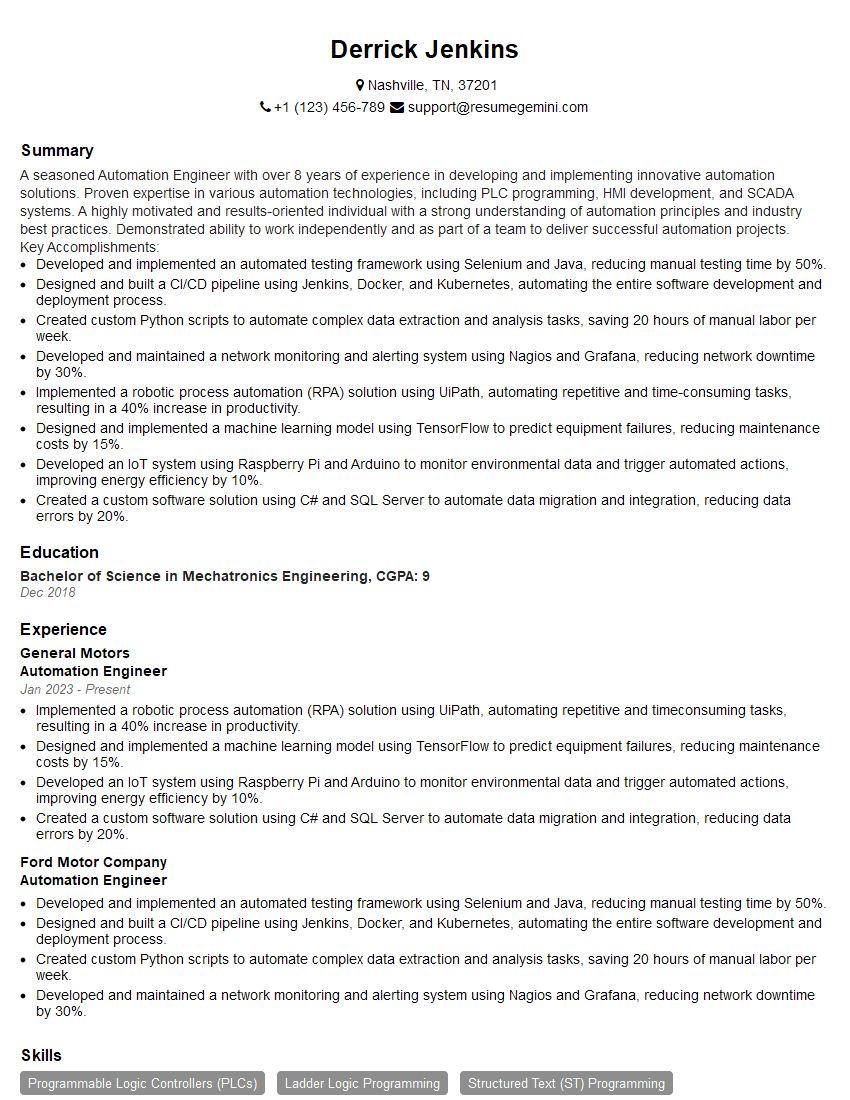
Automation Engineer Resume Sample
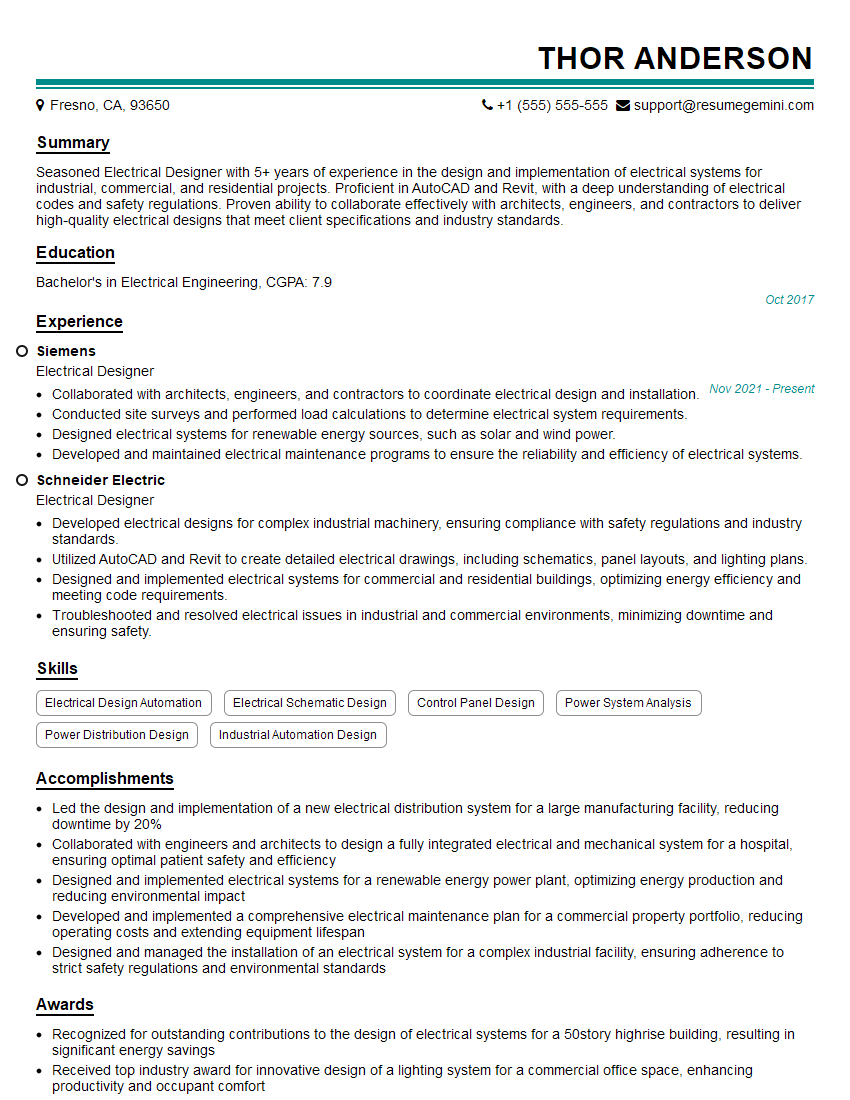
Electrical Designer Resume Sample
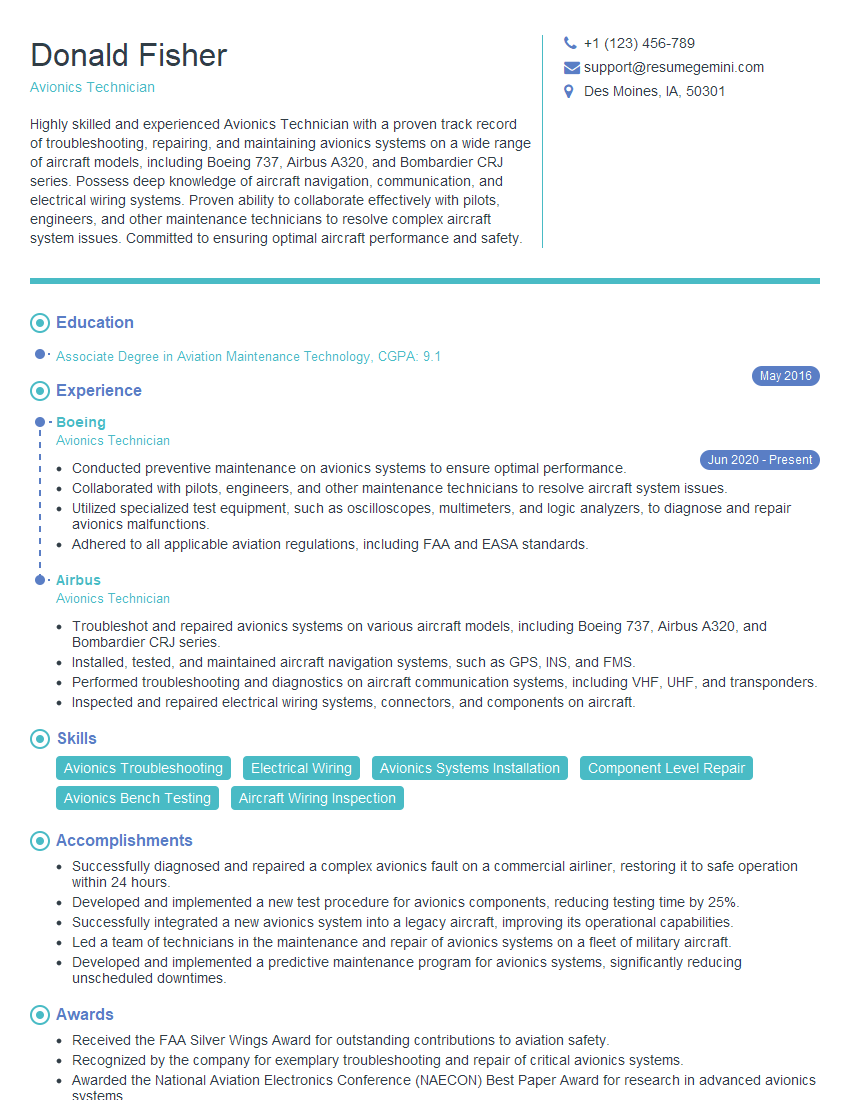
Avionics Technician Resume Sample
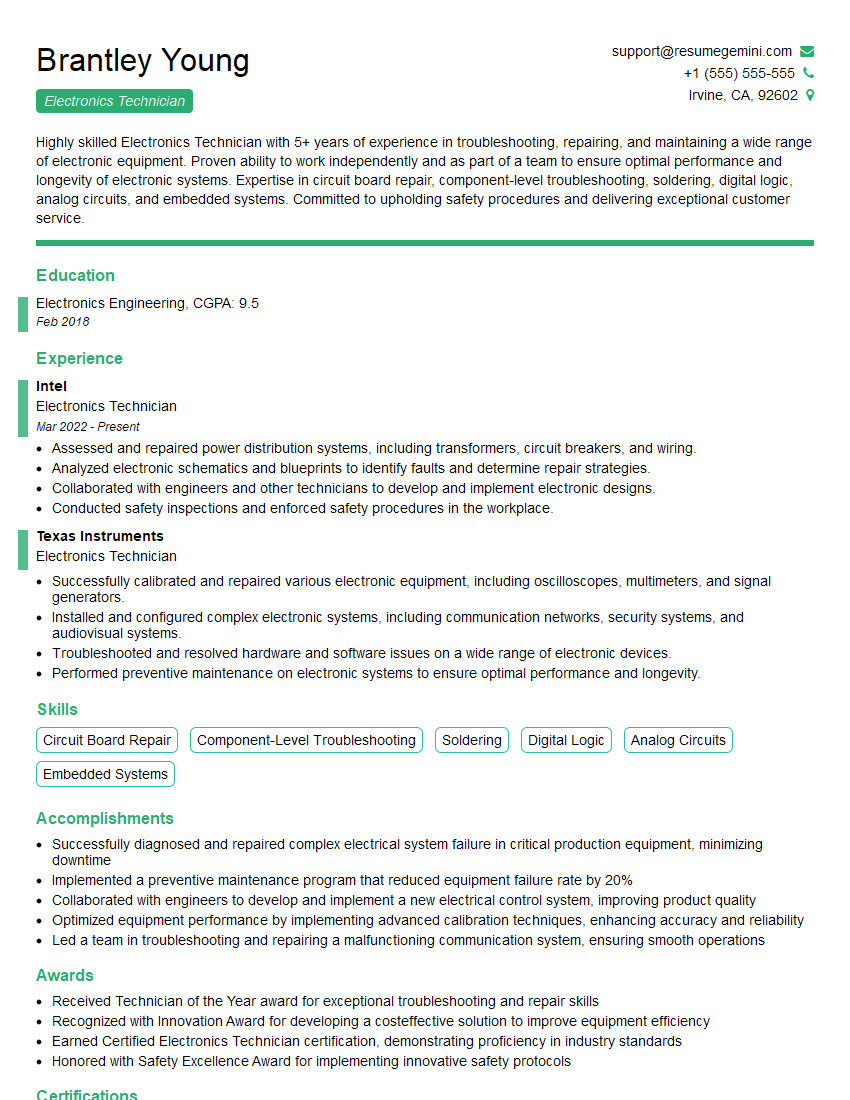
Electronics Technician Resume Sample
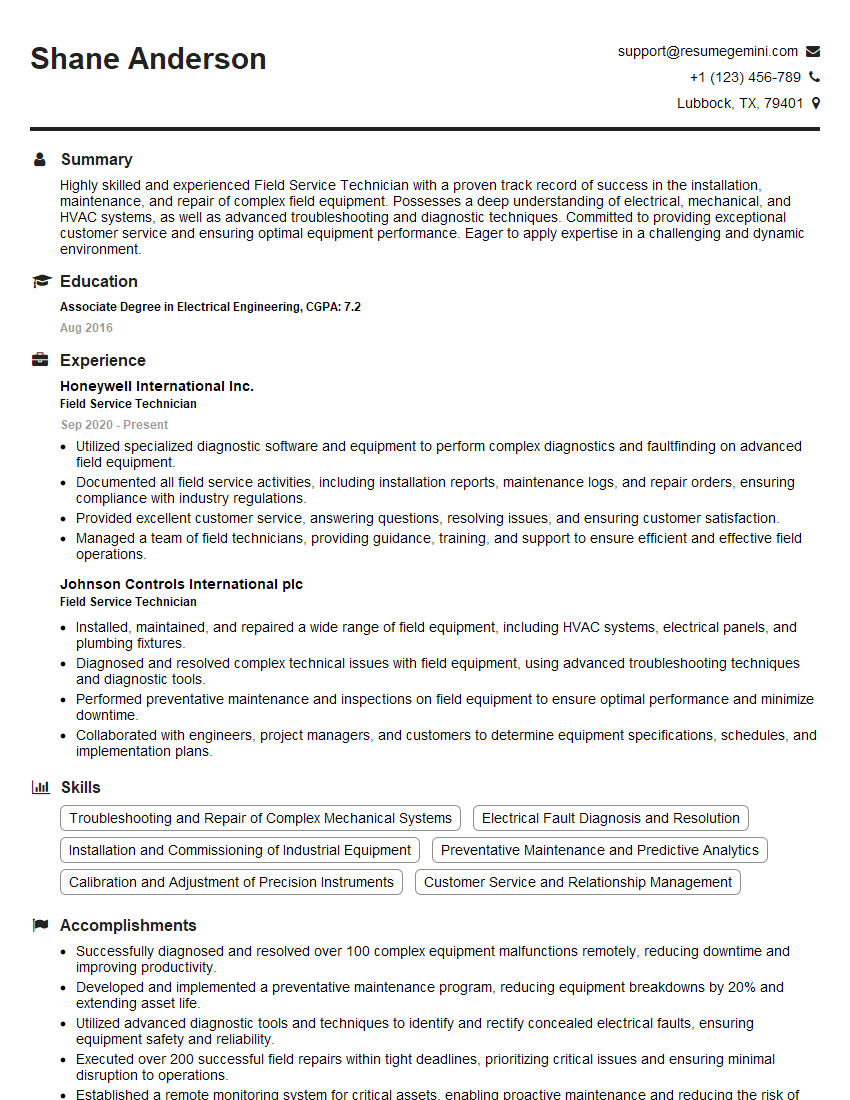
Field Service Technician Resume Sample
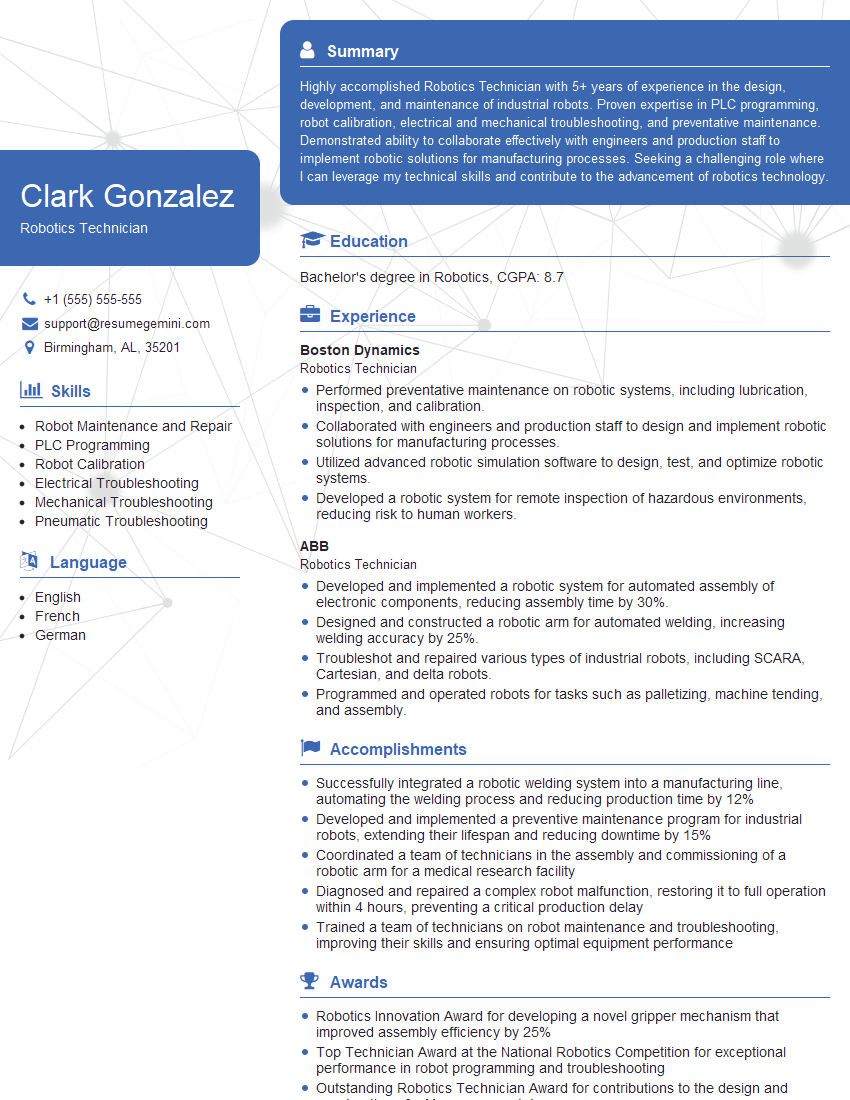
Robotics Technician Resume Sample
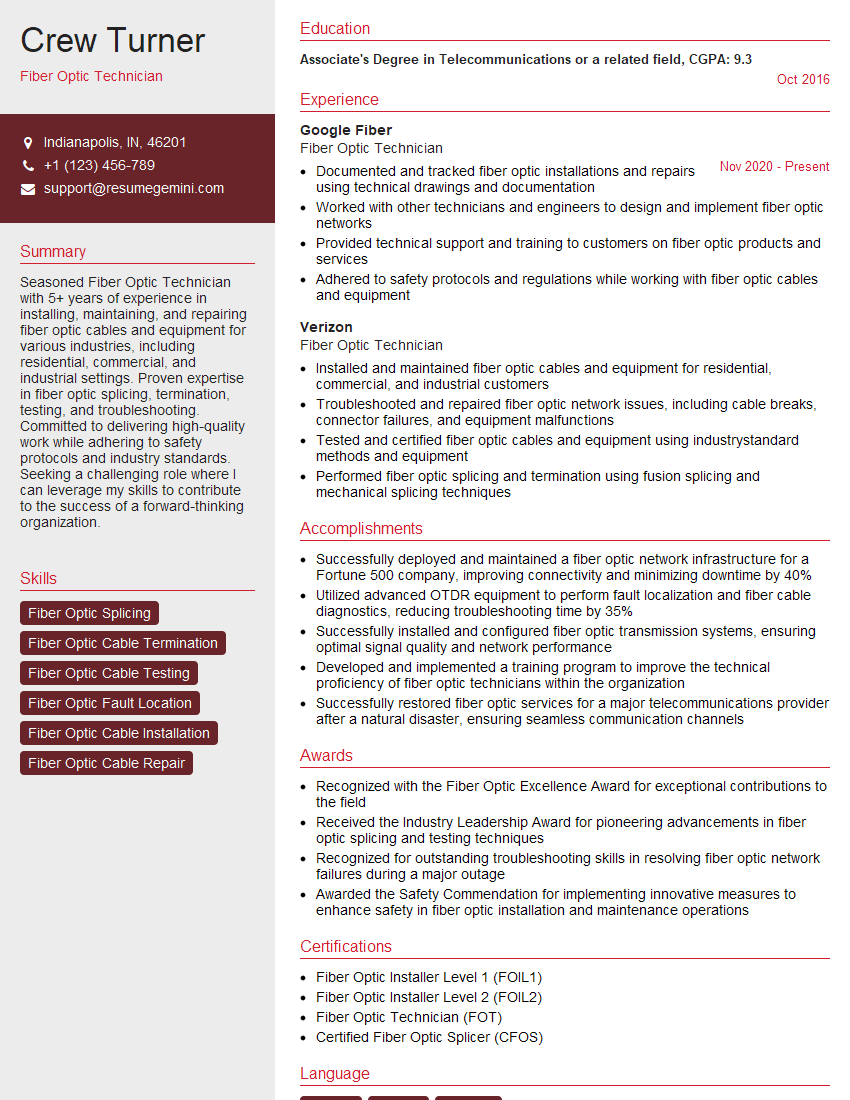
Fiber Optic Technician Resume Sample
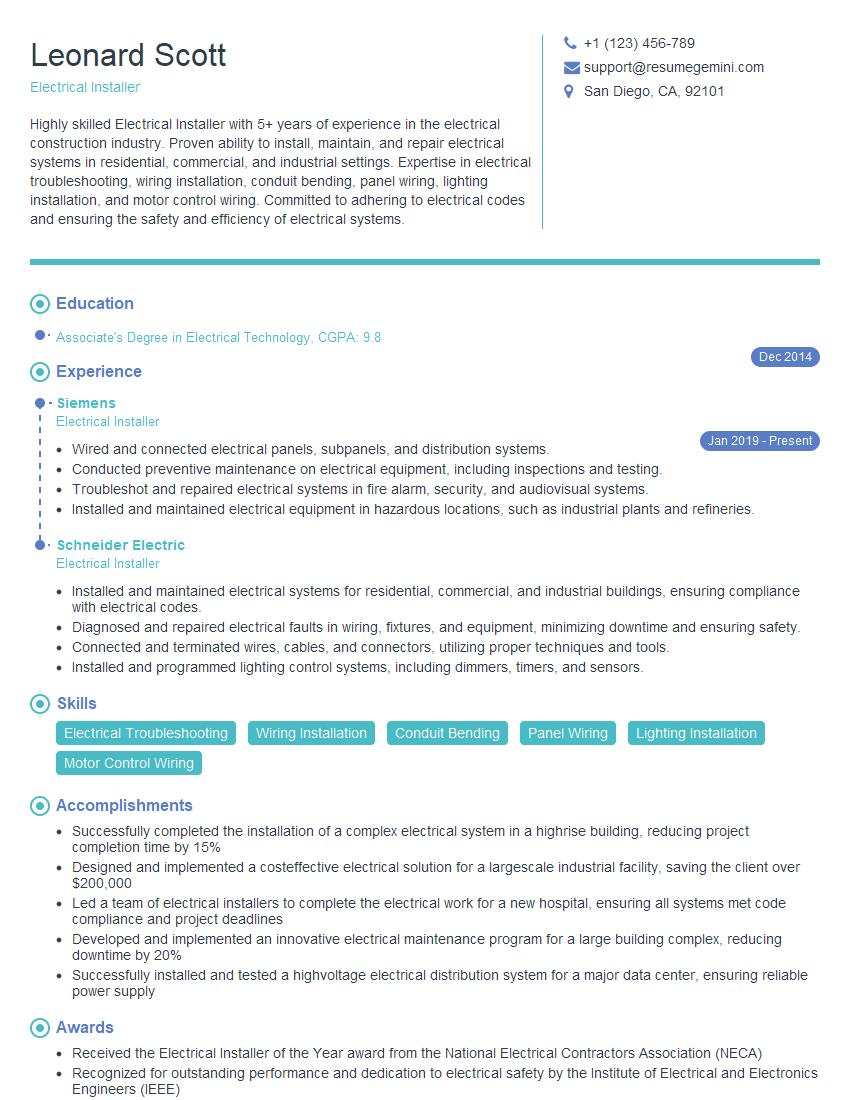
Electrical Installer Resume Sample
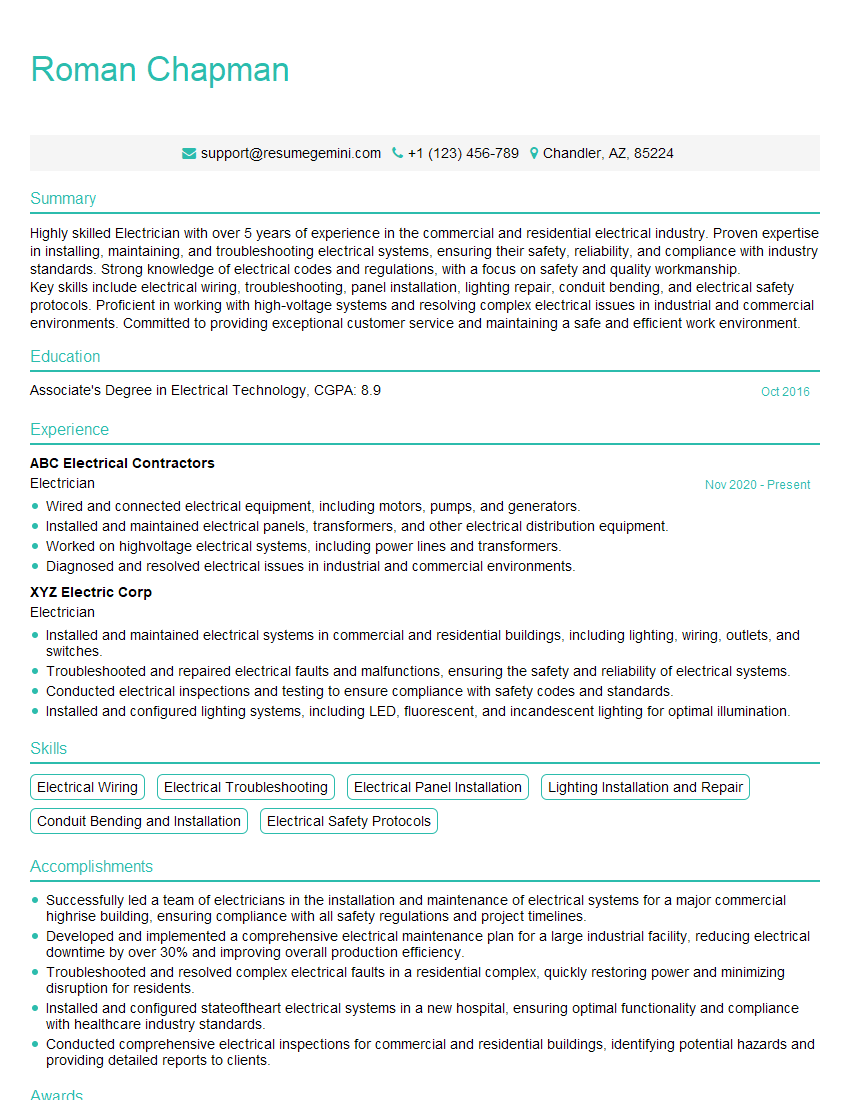
Electrician Resume Sample

Maintenance Electrician Resume Sample
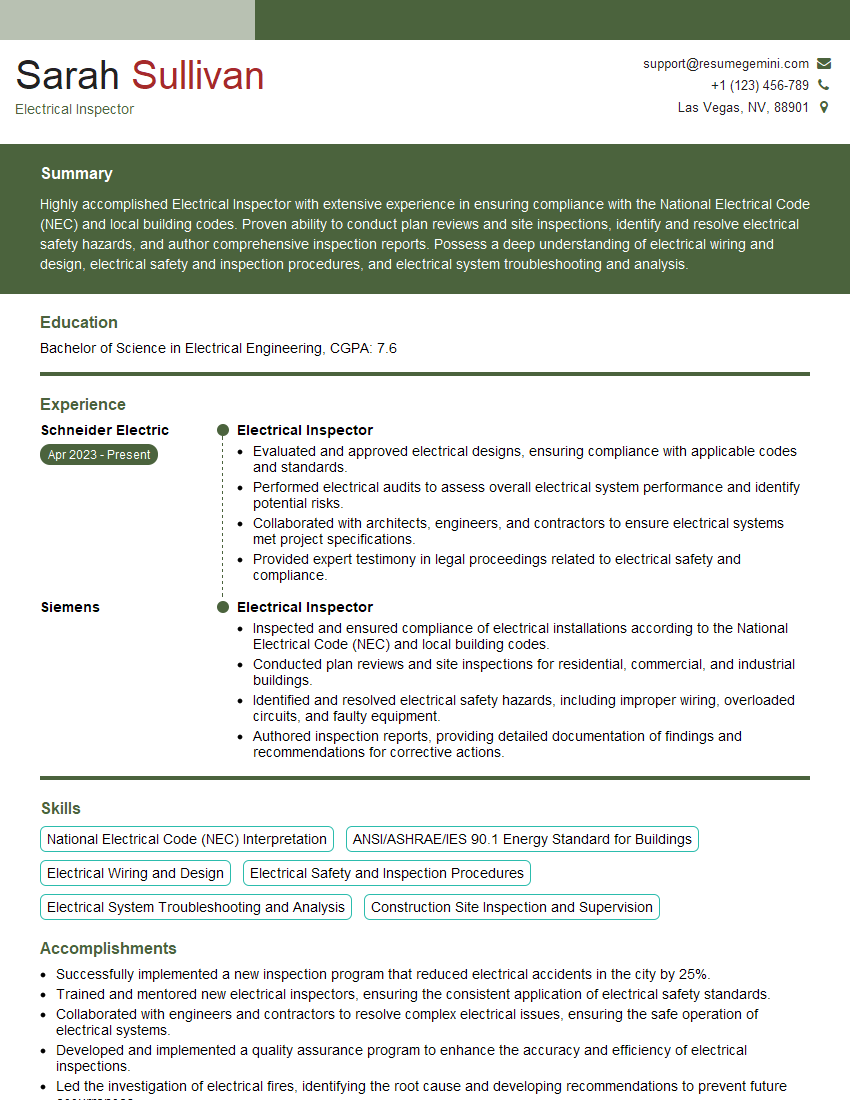
Electrical Inspector Resume Sample
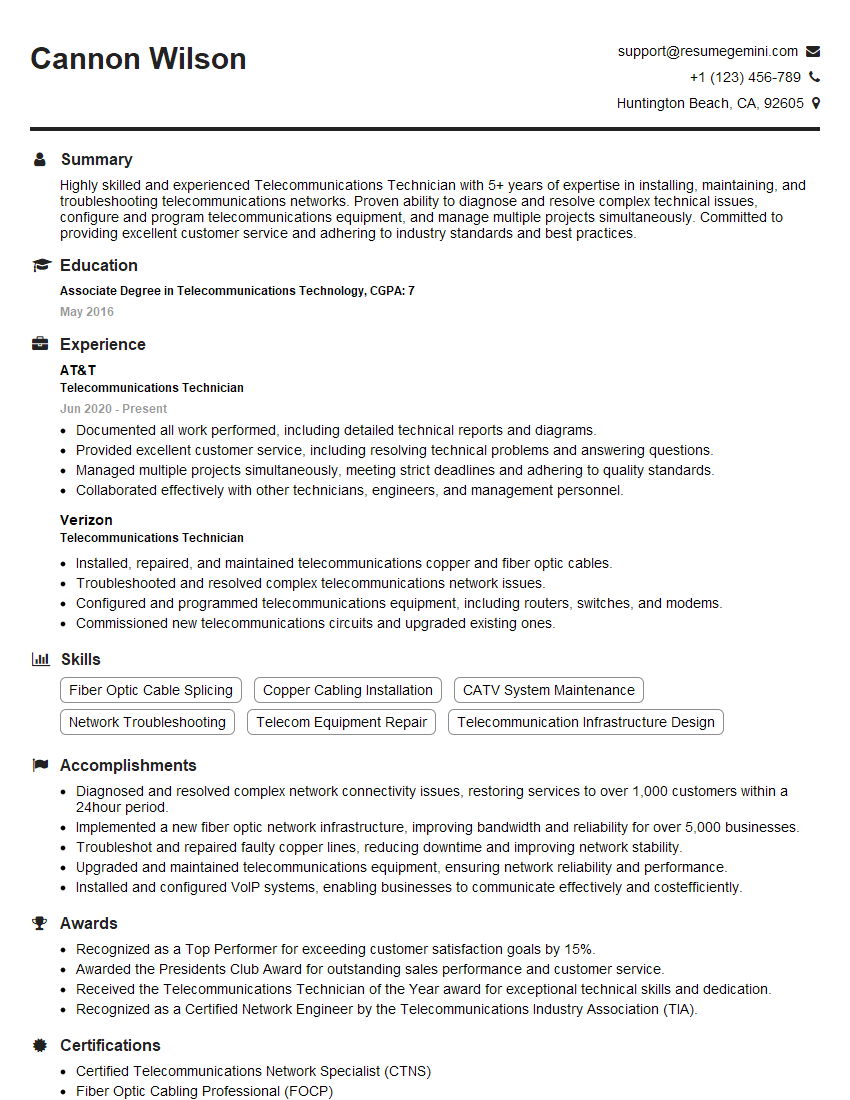
Telecommunications Technician Resume Sample
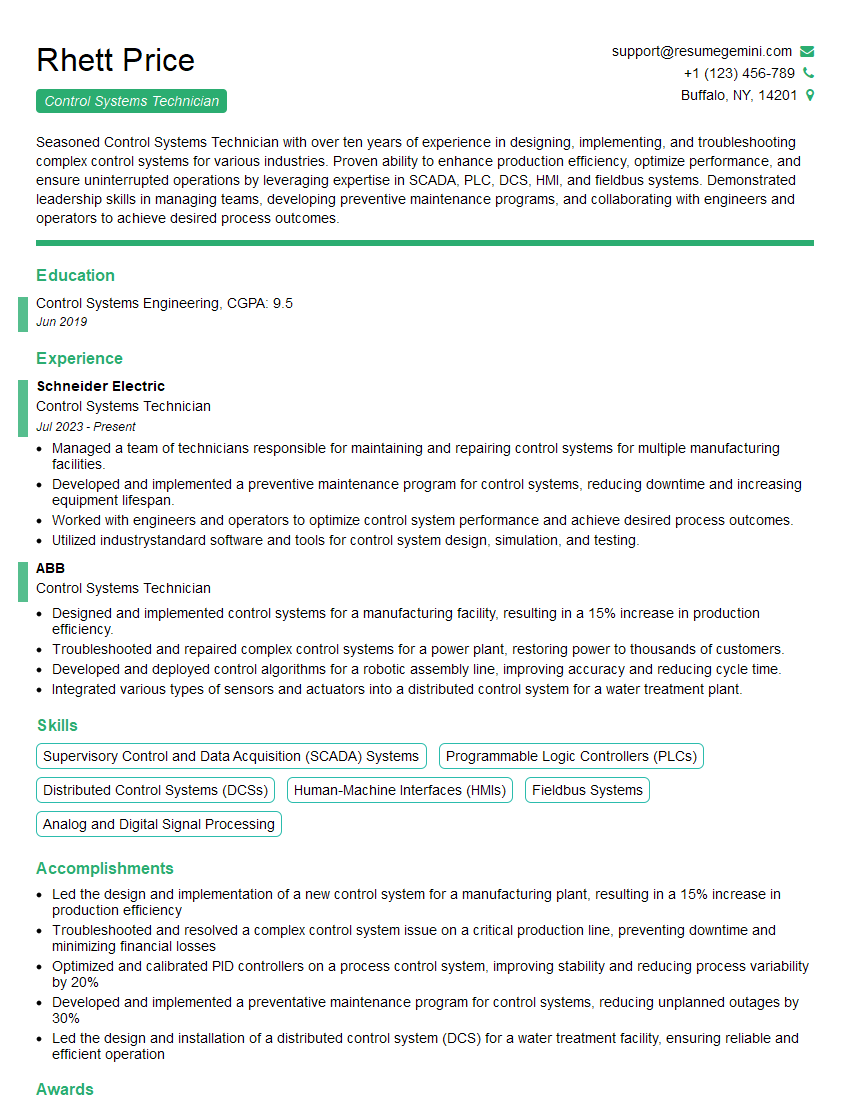
Control Systems Technician Resume Sample
Explore more articles
Users Rating of Our Blogs
Share Your Experience
We value your feedback! Please rate our content and share your thoughts (optional).
What Readers Say About Our Blog
Really detailed insights and content, thank you for writing this detailed article.
IT gave me an insight and words to use and be able to think of examples