Interviews are more than just a Q&A session—they’re a chance to prove your worth. This blog dives into essential Electrical Wiring and Interconnection interview questions and expert tips to help you align your answers with what hiring managers are looking for. Start preparing to shine!
Questions Asked in Electrical Wiring and Interconnection Interview
Q 1. Explain the difference between AC and DC current.
The key difference between AC (Alternating Current) and DC (Direct Current) lies in the direction of electron flow. In DC, electrons flow consistently in one direction, like a river flowing downstream. This is the type of current produced by batteries. AC, on the other hand, reverses its direction periodically, oscillating back and forth like a swinging pendulum. This cyclical change is what allows AC to be easily transformed to different voltages, making it ideal for long-distance power transmission. Think of it like this: DC is a steady stream, while AC is a wave.
Consider a simple battery powering a flashlight (DC). The electrons flow from the negative terminal to the positive terminal, creating a continuous flow of current. Now, imagine your home’s power supply (AC). The current constantly reverses its direction, usually 50 or 60 times per second (depending on your region’s power grid), allowing for efficient transmission over long distances via transformers.
Q 2. Describe the National Electrical Code (NEC) and its importance.
The National Electrical Code (NEC) is a nationally recognized standard for the safe installation of electrical wiring and equipment in the United States. It’s not a law itself, but it’s adopted by most states and municipalities as part of their building codes. The NEC provides detailed guidelines for everything from wire sizing and circuit protection to grounding and electrical safety practices. Its importance cannot be overstated; it ensures consistency in electrical installations, protecting lives and property from electrical hazards.
Imagine a building with electrical work done without adhering to the NEC. The consequences could be disastrous, ranging from minor inconveniences like blown fuses to catastrophic events like electrical fires. The NEC acts as a comprehensive safety manual, minimizing these risks by establishing clear, standardized practices that electricians follow.
Q 3. What are the different types of wire gauges and their applications?
Wire gauges refer to the diameter of a wire, with lower numbers representing thicker wires and higher numbers representing thinner wires. Thicker wires can carry more current than thinner ones because they offer less resistance to the flow of electrons. The choice of wire gauge depends heavily on the amperage (current) the circuit will draw.
- 10 AWG (American Wire Gauge): Commonly used for higher-amperage circuits, such as those powering appliances like ovens or air conditioners.
- 12 AWG: A standard gauge for general-purpose circuits, such as lighting and receptacle circuits in homes.
- 14 AWG: Often used for lower-amperage circuits, such as lighting circuits with low-wattage fixtures.
- 18 AWG: Used for low-current applications like doorbells and thermostats.
Selecting the wrong wire gauge can be dangerous. Using a wire that’s too thin for a given current can lead to overheating, potentially causing fires. Conversely, using a wire that’s unnecessarily thick adds unnecessary cost and complexity.
Q 4. How do you identify different types of cables?
Identifying cables involves examining several key characteristics:
- Insulation Color: Different colored insulation indicates different voltages or functions within a circuit. For example, black and red are commonly used for hot wires, white for neutral, and green or bare copper for grounding.
- Marking/Printing on the Jacket: Manufacturers often print information on the cable jacket, indicating the voltage rating, gauge, and other relevant specifications. This is crucial for safety and proper installation.
- Number of Conductors: Count the number of wires within the cable’s outer jacket. This indicates the capacity of the cable to carry multiple circuits.
- Type of Sheath (if present): Some cables have an outer protective sheath that provides additional protection from moisture or abrasion. The type of sheath material (e.g., PVC, thermoplastic) provides further clues about its application.
For example, a cable marked ’12/2 NM-B’ indicates a non-metallic (NM) sheathed cable with two conductors, each with a 12 AWG gauge. This type of cable is common in residential wiring. Always refer to the manufacturer’s specifications for complete details.
Q 5. Explain the process of installing a three-way switch.
Installing a three-way switch allows you to control a light fixture (or other appliance) from two different locations. This requires two three-way switches and a few steps:
- Turn off the power: This is paramount! Never work with live wires.
- Wire the Switches: Each three-way switch has three terminals: two common terminals and one traveler terminal. The travelers are connected between the two three-way switches, and the commons are wired to the hot and neutral wires coming from the power source and the load (light).
- Connect the Load (Light Fixture): Connect the wires from the light fixture to the common terminals of the switches.
- Connect the Power Source: Connect the hot and neutral wires from the power source.
- Test and Turn on Power: After completing the connections, carefully inspect your work before turning the power back on. Verify that the light can be turned on and off from both switch locations.
The wiring scheme for three-way switches utilizes traveler wires, carrying the switching signal between the switches. A common mistake is incorrectly connecting the traveler wires, which prevents the switches from working correctly. Always consult wiring diagrams before undertaking this installation.
Q 6. What safety precautions do you take when working with electrical wiring?
Safety is paramount when working with electrical wiring. My approach always includes:
- Always de-energize the circuit: Turn off the breaker or fuse at the electrical panel before working on any wiring. Double-check with a non-contact voltage tester to ensure the circuit is truly dead.
- Use appropriate personal protective equipment (PPE): This includes safety glasses, insulated gloves, and insulated tools. Never rely on your own body as insulation.
- Work in well-lit areas: Adequate lighting reduces the risk of mistakes and accidents.
- Never work alone: Having a partner provides an extra layer of safety and assistance if an emergency arises.
- Follow all NEC guidelines: This ensures compliance with safety standards and reduces potential hazards.
A real-world example: I once encountered a situation where a homeowner had attempted to install a new outlet themselves, and they had made a critical mistake in their wiring. By carefully following my safety procedures, de-energizing the circuit, and using the correct PPE, I was able to safely correct their wiring and avoid a potential fire hazard. Safety is never a compromise; it’s the foundation of every electrical installation.
Q 7. Describe your experience with different types of connectors.
Throughout my career, I’ve worked with a wide variety of connectors, each designed for specific applications. My experience includes:
- Wire Nuts (for residential wiring): These are commonly used to join wires securely within junction boxes.
- Push-in connectors: These offer a quick and convenient way to connect wires, ideal for low-amperage applications.
- Screw-terminal connectors: Ideal for applications requiring a secure connection for higher currents.
- Compression connectors: Used to create strong and reliable connections, commonly found in high-current applications.
- Receptacle and Plug Connectors: These are standard electrical connectors for outlets and appliances.
The choice of connector depends on the specific application. For example, using a simple wire nut for a high-amperage circuit is unsafe. I always carefully select connectors that match the wire gauge, amperage, and environmental conditions.
Q 8. How do you troubleshoot a faulty circuit?
Troubleshooting a faulty circuit involves a systematic approach. First, you must prioritize safety – always de-energize the circuit before working on it. Then, I typically follow these steps:
- Visual Inspection: Look for any obvious problems such as loose connections, damaged insulation, or burnt components. This often reveals the culprit immediately.
- Testing with a Multimeter: A multimeter is essential. I’d check for voltage at the breaker, at the outlet or switch, and along the wiring. This helps pinpoint where the power is interrupted. I also test for continuity in the wiring to identify breaks.
- Circuit Tracing: If the problem isn’t immediately apparent, I trace the circuit from the source (breaker) to the end point (outlet/load). This helps identify any faulty components or wiring sections.
- Load Testing: If possible, I’ll test the load (e.g., the appliance or light) separately to rule out a faulty device causing the circuit to trip.
- Specialized Testing Equipment (if needed): For complex circuits or hard-to-find faults, more advanced tools such as a clamp meter (to measure current draw) or a circuit tracer may be necessary.
For example, I once worked on a circuit where a light fixture wasn’t working. A visual inspection revealed a loose connection at the fixture itself. Tightening it resolved the issue. In another instance, a multimeter identified a break in the wiring within the wall, requiring more extensive repairs.
Q 9. What are the different types of grounding techniques?
Grounding techniques are crucial for safety, preventing electrical shock and protecting equipment. The primary goal is to provide a low-resistance path for fault currents to flow to the earth, preventing dangerous voltage buildup.
- Grounding Electrode Conductor System (GEC): This is the most common type, using a metal rod driven into the earth to connect the electrical system to the ground. The size and depth of the rod depend on soil conditions and local codes.
- Grounding Electrode System (GES): This uses multiple grounding electrodes (rods or plates) connected together to improve reliability. This is important in areas with high soil resistivity.
- Plate Grounding: Uses a large metal plate buried in the earth. It’s often used when a single rod isn’t sufficient.
- Water Pipe Grounding (deprecated): Historically, water pipes were used for grounding but this practice is largely discouraged now due to plastic pipe usage and the potential for corrosion.
The choice of grounding technique depends heavily on local electrical codes and site-specific conditions such as soil type. Proper grounding is non-negotiable for safety.
Q 10. Explain the concept of voltage drop and its implications.
Voltage drop is the reduction in voltage along a conductor due to its resistance. Imagine water flowing through a pipe – the friction against the pipe walls causes a pressure drop. Similarly, electrical current flowing through a wire experiences resistance, leading to a voltage drop.
Implications of significant voltage drop are numerous:
- Reduced Equipment Performance: Appliances and equipment may not operate efficiently or correctly with insufficient voltage. A motor, for instance, may run slower or overheat.
- Overheating of Wires: Excessive voltage drop can cause wires to overheat, increasing the risk of fire.
- Dim Lighting: In lighting circuits, voltage drop results in dim or flickering lights.
- Safety Concerns: Extreme voltage drop can compromise safety devices like ground fault circuit interrupters (GFCIs).
Calculating voltage drop is essential during the design phase of an electrical system. The formula is: Voltage Drop = 2 * I * R * L / 1000, where I is the current, R is the resistance per 1000ft, and L is the length of the wire.
Q 11. How do you calculate the amperage required for a specific circuit?
Calculating the amperage required for a specific circuit involves considering the total load of all devices connected to it. Start by determining the power (wattage) of each device. Then, use the following formula:
Amperage (A) = Total Wattage (W) / Voltage (V)
For example, if you have a 1500-watt microwave and a 100-watt light bulb on a 120-volt circuit, the total amperage would be:
(1500W + 100W) / 120V = 13.33A
It is crucial to account for a safety factor and select a circuit breaker that handles a higher amperage than the calculated value. In our example, a 15-amp breaker would be appropriate. Always consult the National Electrical Code (NEC) for specific requirements for different types of circuits and loads. Underestimating amperage can lead to overloads and potential fire hazards.
Q 12. What are the different types of conduit and their uses?
Conduit protects electrical wiring from physical damage and environmental factors. Various types are available, each suited for specific applications:
- Rigid Metal Conduit (RMC): Durable and strong, ideal for industrial and commercial settings where high mechanical protection is needed. It provides excellent protection against corrosion and damage.
- Intermediate Metal Conduit (IMC): Lighter and easier to install than RMC, while still offering good protection. It’s suitable for less demanding applications.
- Electrical Metallic Tubing (EMT): Lightweight and flexible, commonly used in residential and commercial settings for its ease of installation. It bends more easily than RMC or IMC but offers less mechanical protection.
- Flexible Metal Conduit (FMC): Very flexible, used for connecting equipment or in areas where tight bends are required. Offers less protection than rigid conduits.
- Plastic Conduit (PVC): Less expensive and lightweight, typically used in dry locations. Offers good corrosion resistance but less mechanical protection than metal conduits.
Choosing the right type of conduit is crucial for compliance with building codes and for the long-term protection of your electrical wiring. Factors like the environment, the type of wiring used, and the potential for physical damage will dictate the appropriate choice.
Q 13. Describe your experience with wire termination techniques.
I have extensive experience with various wire termination techniques, adhering strictly to safety standards and best practices. These techniques ensure a secure, reliable, and code-compliant connection. My experience includes:
- Wire Nuts: For joining wires of the same gauge and type, ensuring proper twisting and tightness.
- Screw-type Connectors: For connecting wires to terminals on switches, outlets, and other devices. Proper tightening is critical for preventing loose connections.
- Crimp Connectors: Often used for stranded wires, providing a strong and reliable connection when crimped correctly with the right tool. I use a ratchet-type crimper to ensure consistent crimp quality.
- Soldering (for specialized applications): In specific situations where a superior connection is required, soldering may be utilized. It must be done correctly to avoid cold solder joints.
- Push-in connectors: These are increasingly common and convenient in some applications, though proper insertion and security should be verified.
Throughout my career, I’ve consistently prioritized safety and followed the proper procedures for each technique. Using the wrong technique or improper execution can lead to loose connections, overheating, and even fire hazards. I always verify my connections before energizing the circuit.
Q 14. How do you ensure the integrity of a wiring installation?
Ensuring the integrity of a wiring installation requires attention to detail at every stage, from planning and design to final inspection. Key elements include:
- Proper Planning and Design: Accurate load calculations, appropriate wire sizing, and correct choice of conduit and components are crucial.
- Code Compliance: Adhering to the National Electrical Code (NEC) and local codes is paramount for safety and legal compliance.
- Quality Materials: Using high-quality wires, conduits, and other components prevents premature failure and minimizes risks.
- Proper Installation Techniques: Following the correct techniques for wire routing, termination, grounding, and connection ensures a secure and reliable system.
- Thorough Testing: Testing the installation with a multimeter, continuity tester and other appropriate equipment identifies any issues before energizing the system. GFCI and AFCI breaker testing should be done regularly
- Documentation: Maintaining detailed records of the installation process is essential for troubleshooting and future maintenance.
- Regular Inspections: Periodic inspections for signs of wear and tear, loose connections, or other problems ensure the long-term integrity of the system.
Neglecting any of these steps can compromise the safety and reliability of the electrical system. A well-maintained and properly installed system is crucial not just for preventing accidents but also for ensuring efficient and reliable operation of electrical equipment.
Q 15. Explain the process of installing a GFCI outlet.
Installing a Ground Fault Circuit Interrupter (GFCI) outlet is crucial for safety, especially in areas with potential water exposure like bathrooms and kitchens. It protects against electrical shocks by detecting imbalances in current and instantly cutting off power. The process involves several key steps:
- Turn off the power: This is the most important step! Locate the breaker controlling the outlet and switch it off. Use a voltage tester to double-check the power is off before proceeding.
- Remove the old outlet: Unscrew the mounting screws and carefully pull the old outlet out of the electrical box. Take note of the wiring configuration before disconnecting anything.
- Wire the GFCI outlet: GFCI outlets have specific terminals for line (incoming power), load (to other outlets in the circuit), and ground wires. Typically, the line wires (black and white) connect to the ‘LINE’ terminals, and the load wires connect to the ‘LOAD’ terminals. The bare copper ground wire connects to the ground terminal (usually green screw). Consult the outlet’s wiring diagram for specific instructions.
- Test the GFCI: Once wired, push the GFCI outlet into the electrical box and secure it with the mounting screws. Test the GFCI using the ‘TEST’ and ‘RESET’ buttons. The ‘TEST’ button should trip the breaker, and the ‘RESET’ button should restore power.
- Turn the power back on: After successful testing, switch the breaker back on. Verify the outlet is functioning correctly.
Example: During a recent kitchen remodel, I installed a GFCI outlet near the sink. I meticulously followed these steps, taking extra care to ensure proper grounding. A simple voltage tester confirmed the absence of power before and after the process, demonstrating the importance of safety precautions.
Career Expert Tips:
- Ace those interviews! Prepare effectively by reviewing the Top 50 Most Common Interview Questions on ResumeGemini.
- Navigate your job search with confidence! Explore a wide range of Career Tips on ResumeGemini. Learn about common challenges and recommendations to overcome them.
- Craft the perfect resume! Master the Art of Resume Writing with ResumeGemini’s guide. Showcase your unique qualifications and achievements effectively.
- Don’t miss out on holiday savings! Build your dream resume with ResumeGemini’s ATS optimized templates.
Q 16. What is a raceway and why is it used?
A raceway is a protective enclosure for electrical wiring, providing a pathway for cables and wires while offering physical protection and preventing damage. It can be made of various materials, including metal conduit (rigid or flexible), PVC conduit, and surface raceways.
Raceways are used for several crucial reasons:
- Protection: They safeguard wires from physical damage, such as impact, abrasion, and crushing.
- Organization: Raceways keep wires neatly bundled, improving aesthetics and making future maintenance easier.
- Safety: They prevent accidental contact with wires, reducing the risk of electrical shock or fire.
- Code Compliance: Many building codes mandate the use of raceways for wiring in certain applications, ensuring safety and proper installation.
Example: In a commercial building renovation project, we used metal conduit to protect the wiring running through walls and ceilings. This ensured durability and compliance with local electrical codes.
Q 17. Describe your experience with fiber optic cable installation.
My experience with fiber optic cable installation includes both fusion splicing and mechanical splicing techniques. I’ve worked on projects ranging from small-scale home installations to larger-scale commercial deployments.
Fusion splicing offers superior performance, but requires specialized equipment and expertise. It involves precisely aligning and melting the ends of the fiber strands together to create a strong, seamless connection. Mechanical splicing, on the other hand, is faster and simpler, but can potentially result in signal loss.
Important aspects of fiber optic cable installation involve careful planning of the route to minimize bending radius, correct termination of the cables, and thorough testing using an optical time-domain reflectometer (OTDR) to detect any signal loss or faults. I’m proficient in using OTDR and other testing equipment to ensure the integrity of the installed fiber optic network.
Example: During a recent project installing fiber optic internet to a cluster of houses, I employed fusion splicing for optimal connection strength and minimal signal degradation. The project demanded accuracy and attention to detail as any splicing errors could impact the internet speed for the entire cluster.
Q 18. What are the differences between shielded and unshielded cables?
The key difference between shielded and unshielded cables lies in their susceptibility to electromagnetic interference (EMI).
Shielded cables incorporate a metallic layer (e.g., foil or braided metal) that surrounds the conductors, acting as a barrier against EMI. This is vital in environments with high levels of electrical noise, where unshielded cables could be vulnerable to signal degradation or data corruption.
Unshielded cables lack this protective layer, making them more susceptible to EMI. They are often suitable for applications where EMI is minimal.
Example: Shielded cables are commonly used in audio applications to minimize interference, whereas unshielded cables might suffice for low-voltage circuits within a controlled environment. The choice between shielded and unshielded cables always depends on the application’s specific requirements and the potential for EMI.
Q 19. How do you test for continuity in a circuit?
Testing for continuity verifies the presence of an unbroken electrical path in a circuit. A multimeter is used for this test, set to the continuity mode (often symbolized by a diode icon). One probe is connected to one end of the circuit, and the other probe to the other end.
A continuous tone indicates a complete circuit, whereas no tone signifies a break in the circuit. This test helps identify faults in wiring, such as broken wires, loose connections, or faulty components.
Safety Precautions: Always switch off the power supply before conducting continuity tests.
Example: While troubleshooting a non-functioning outlet, I used a multimeter to test for continuity. The lack of a tone indicated a broken wire within the circuit, which I promptly located and repaired.
Q 20. Explain your experience with different types of electrical panels.
My experience encompasses various types of electrical panels, including residential load centers (typically 120/240V), commercial panelboards (with higher amperage ratings and potentially multiple phases), and industrial switchboards (often incorporating advanced protection devices).
I’m familiar with different breaker types, such as circuit breakers (for overcurrent protection), ground fault circuit interrupters (GFCIs), and arc fault circuit interrupters (AFCIs). Understanding the different panel configurations, busbar arrangements, and safety standards is crucial for efficient and safe panel installation and maintenance.
Example: In a recent commercial project, I installed a three-phase panelboard for a large office space. Accurate calculations of the total load were necessary to choose the appropriate size panel and breakers, ensuring the system could handle the power requirements of all office equipment.
Q 21. Describe your experience working with low-voltage systems.
I have extensive experience with low-voltage systems, including various applications such as data networks (structured cabling), security systems (CCTV, alarm systems), and home automation systems.
Working with low-voltage systems necessitates a different approach compared to high-voltage systems. Safety is still paramount, but the focus shifts to signal integrity, proper grounding, and understanding data transmission protocols.
I’m proficient in troubleshooting low-voltage system problems, which often involve using specialized testing equipment such as network testers or signal tracers.
Example: In a home automation project, I installed a smart lighting system using a low-voltage control system, ensuring that communication between the lights and the control panel was seamless and reliable. This involved meticulous wiring and system configuration to ensure the whole system operates flawlessly.
Q 22. What are the common causes of electrical fires?
Electrical fires are a serious hazard, often stemming from a combination of factors. The most common causes include:
- Overloaded circuits: When too many appliances draw power from a single circuit, the wires overheat, potentially igniting nearby flammable materials. Think of it like trying to squeeze too much water through a thin straw – it causes a bottleneck and excessive heat.
- Faulty wiring: Damaged or improperly installed wiring, including loose connections, frayed insulation, and corroded terminals, creates resistance and generates heat. This is akin to a kink in a garden hose, restricting water flow and building pressure.
- Short circuits: A direct connection between a live wire and a neutral or ground wire, bypassing the intended path for electricity, results in a surge of current, creating intense heat and sparks. This is like taking a shortcut – but in electricity, shortcuts are extremely dangerous.
- Overheating appliances: Appliances with faulty heating elements or motors can overheat, potentially causing a fire if not properly ventilated or maintained. This is similar to leaving a stove on high heat for too long – it’s going to get dangerously hot.
- Improper grounding: Insufficient or missing grounding can lead to electrical shocks and fires, as it prevents the safe dissipation of excess electricity. Imagine grounding as a safety valve – without it, pressure can build up to dangerous levels.
Preventing electrical fires requires careful planning, regular inspections, and adherence to safety codes. Properly sized circuits, high-quality materials, and regular maintenance are crucial.
Q 23. How do you handle a situation where you encounter an unexpected electrical hazard?
Encountering an unexpected electrical hazard demands a calm and controlled response. Safety is paramount. My first step would always be to immediately isolate the hazard. This might involve switching off the power at the breaker box, unplugging the affected appliance, or moving away from the immediate vicinity.
Next, I’d assess the situation to determine the nature and extent of the hazard. Is there a fire? Are there live wires exposed? Are there any injuries? This assessment helps determine the next steps.
If there’s a fire, I’d evacuate the area and call emergency services immediately (911). I would never attempt to extinguish an electrical fire with water unless instructed by a fire professional. Water can conduct electricity and make the situation far worse.
If the hazard involves exposed wires or a malfunctioning appliance, I would wait for qualified professionals to address the issue. Never attempt to repair electrical hazards yourself unless you are a qualified electrician with the appropriate safety equipment and experience. A seemingly minor electrical fault can lead to a catastrophic outcome.
Q 24. Describe your experience with electrical blueprints and schematics.
I possess extensive experience interpreting and working with electrical blueprints and schematics. From single-family homes to large industrial facilities, I’ve consistently used these documents to understand the layout, functionality, and components of electrical systems.
My experience goes beyond simple reading; I can analyze schematics to troubleshoot problems, identify potential hazards, and plan modifications or upgrades. For instance, I recently worked on a project where the existing schematic was outdated. By carefully analyzing the existing wiring and comparing it with the blueprint, I identified several inconsistencies and corrected them, preventing potential safety issues.
I’m adept at identifying various symbols, understanding different wiring methods (e.g., conduit runs, cable trays), and interpreting information about circuit breakers, transformers, and other equipment. This allows me to visualize the system’s overall architecture and anticipate potential problems before they arise.
Q 25. What software or tools are you familiar with for electrical design or documentation?
Throughout my career, I’ve utilized various software and tools for electrical design and documentation. My expertise includes:
- AutoCAD: For creating detailed electrical drawings, including floor plans, panel schedules, and wiring diagrams.
- Revit: A Building Information Modeling (BIM) software that allows for collaborative design and comprehensive system visualization. I’ve used Revit extensively for large-scale projects.
- SKM PowerTools: For power system analysis, including short-circuit calculations, load flow studies, and protective device coordination.
- ETAP: Another powerful software package for electrical power system analysis and design, useful for complex projects.
Beyond software, I am proficient with various testing instruments like multimeters, clamp meters, and meggers to verify proper installation and functionality.
Q 26. Explain your understanding of power factor correction.
Power factor correction (PFC) is crucial in AC circuits. It addresses the issue of reactive power, which is power that flows back and forth in the circuit without doing any useful work. This reactive power increases current without increasing real power (kW), leading to increased energy losses and higher electricity bills.
A low power factor indicates a significant portion of the current is reactive. Ideal power factor is 1 (unity), implying purely real power. To correct the power factor, we add devices called power factor correction capacitors. These capacitors supply the reactive power needed by inductive loads (like motors), reducing the current drawn from the source.
For example, in an industrial setting with many motors, a low power factor can lead to significant energy losses and higher electricity costs. PFC capacitors reduce this reactive power component, bringing the power factor closer to unity. This results in lower electricity bills, reduced losses in transmission lines, and increased system efficiency.
Q 27. Describe your experience with different types of transformers.
My experience encompasses various transformer types, each suited for different applications:
- Power Transformers: These are large transformers used in power distribution systems to step up or step down voltage levels efficiently. I’ve worked on projects involving both step-up (increasing voltage for long-distance transmission) and step-down (decreasing voltage for local distribution) transformers.
- Distribution Transformers: Smaller transformers located at substations or poles, stepping down voltage for residential and commercial customers. These are essential components in ensuring safe and reliable power supply.
- Instrument Transformers: Used for measuring current and voltage in electrical systems without directly connecting measuring instruments to high-voltage lines. These provide isolation and safety.
- Autotransformers: Having only one winding, these are used for voltage regulation and stepping up or down the voltage by a smaller factor than conventional two-winding transformers. I’ve seen these used in variable-speed drives and other applications requiring voltage adjustment.
Understanding the characteristics of each type – their voltage ratings, power capacities, efficiency, and construction – is crucial for selecting the right transformer for a specific application.
Q 28. What are the benefits and drawbacks of different wiring methods?
Different wiring methods each have their own advantages and disadvantages. The best choice depends on factors like application, cost, safety requirements, and installation environment.
- Conduit wiring: Uses metal or plastic pipes (conduits) to protect wires. Offers excellent protection against physical damage and environmental factors, but can be more expensive and time-consuming to install.
- Cable tray wiring: Uses metal or plastic trays to support and organize multiple cables. Good for large installations and offers flexibility, but may not offer the same level of protection against physical damage as conduit.
- Surface mount wiring: Wires are run directly on the surface of walls or ceilings using surface-mounted raceways. Easy and inexpensive to install, but less aesthetically pleasing and offers less protection compared to other methods.
- In-wall wiring (Romex): Sheathed cable installed within the walls. Common and cost-effective for residential installations, but requires careful planning and execution, as damage can be difficult to repair.
For instance, in a hazardous location, conduit wiring offering better protection from chemical spills or impacts would be the preferred choice over surface mount wiring. Cost considerations often play a major role in residential settings, where in-wall wiring is a common and relatively cost-effective solution.
Key Topics to Learn for Electrical Wiring and Interconnection Interview
- Circuit Theory Fundamentals: Understanding Ohm’s Law, Kirchhoff’s Laws, series and parallel circuits, and voltage/current calculations is crucial for analyzing and troubleshooting wiring systems.
- Wiring Codes and Standards (NEC, IEC etc.): Demonstrate familiarity with relevant national and international electrical codes to showcase your commitment to safety and compliance. Be prepared to discuss specific code requirements and their practical implications.
- Wiring Methods and Techniques: Discuss different wiring methods (e.g., conduit bending, cable tray installation, splicing techniques) and their applications in various settings (residential, commercial, industrial).
- Electrical Safety Practices: Highlight your understanding of lockout/tagout procedures, arc flash hazards, and other safety protocols essential for working with electrical systems. Be prepared to explain how these practices prevent accidents and injuries.
- Troubleshooting and Diagnostics: Explain your approach to identifying and resolving common wiring faults, using appropriate testing equipment (multimeters, clamp meters etc.). Provide examples of successful troubleshooting experiences.
- Electrical Drawings and Schematics: Demonstrate your ability to interpret and understand electrical drawings, including single-line diagrams, wiring diagrams, and panel schedules. Practice reading and interpreting complex schematics.
- Types of Wiring and Connectors: Discuss various cable types (e.g., THHN, BX, MC), their applications, and appropriate connector choices based on voltage, amperage, and environmental factors.
- Grounding and Bonding: Explain the importance of proper grounding and bonding techniques for ensuring electrical safety and preventing equipment damage. Understand the different grounding methods and their applications.
- Motor Control Circuits: If applicable to the role, demonstrate understanding of basic motor control circuits, including starters, relays, and overload protection.
- Practical Problem Solving: Be prepared to discuss how you approach complex wiring challenges, emphasizing your analytical skills and ability to find creative solutions to problems.
Next Steps
Mastering Electrical Wiring and Interconnection opens doors to diverse and rewarding career opportunities in a constantly evolving field. A strong foundation in these skills is highly valued by employers. To significantly boost your job prospects, invest time in creating an ATS-friendly resume that effectively showcases your expertise. ResumeGemini is a trusted resource that can help you build a professional and impactful resume tailored to the specific requirements of Electrical Wiring and Interconnection roles. Examples of resumes tailored to this field are available to help you get started.
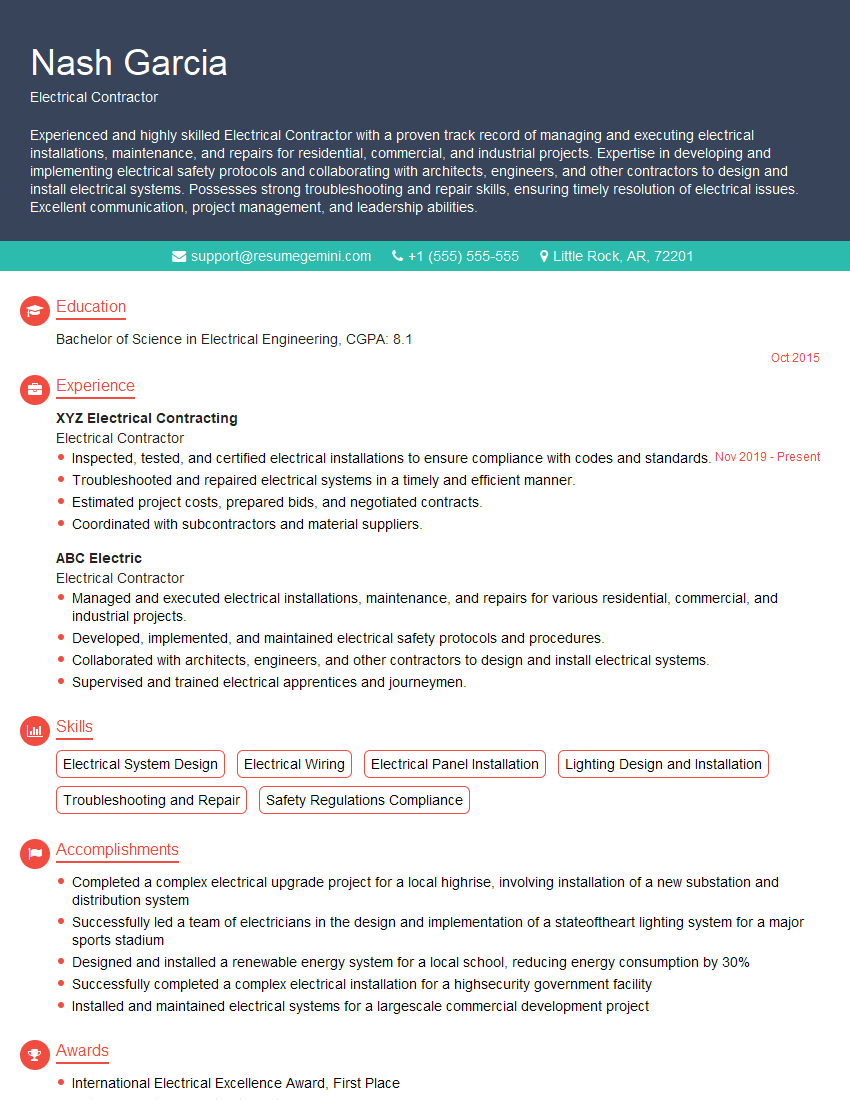
Electrical Contractor Resume Sample
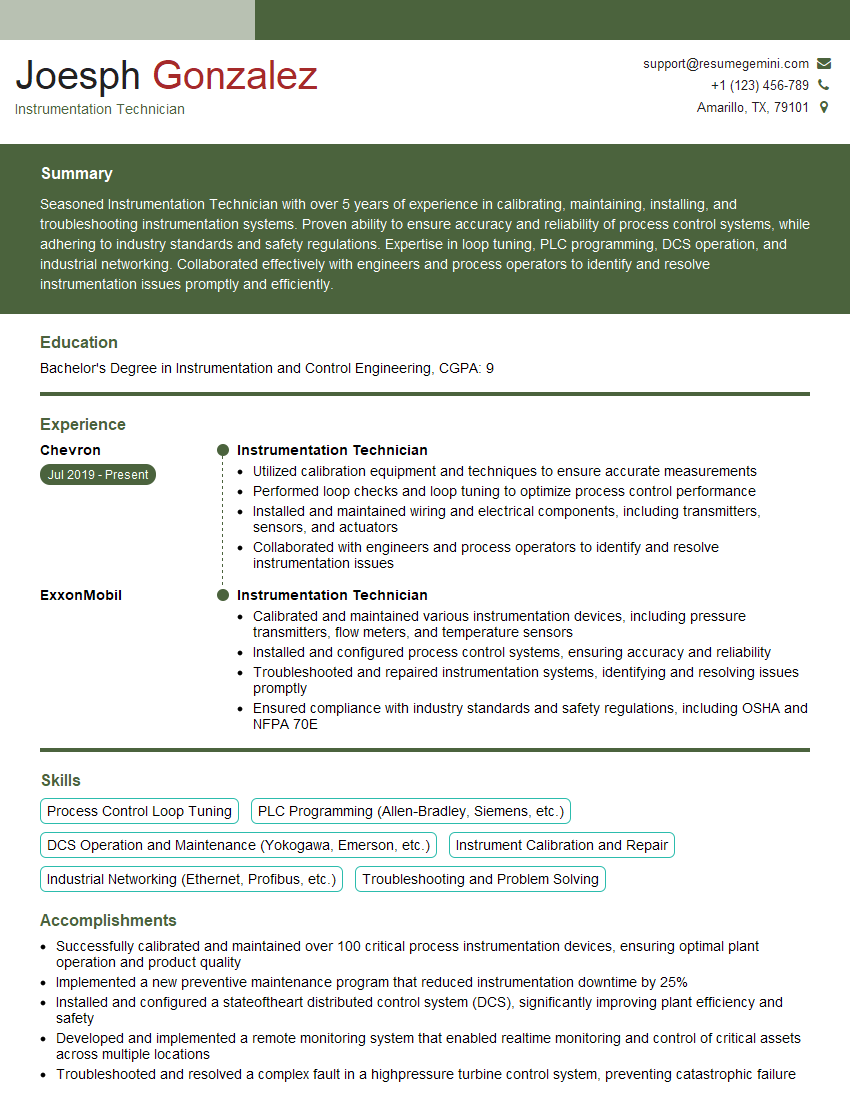
Instrumentation Technician Resume Sample
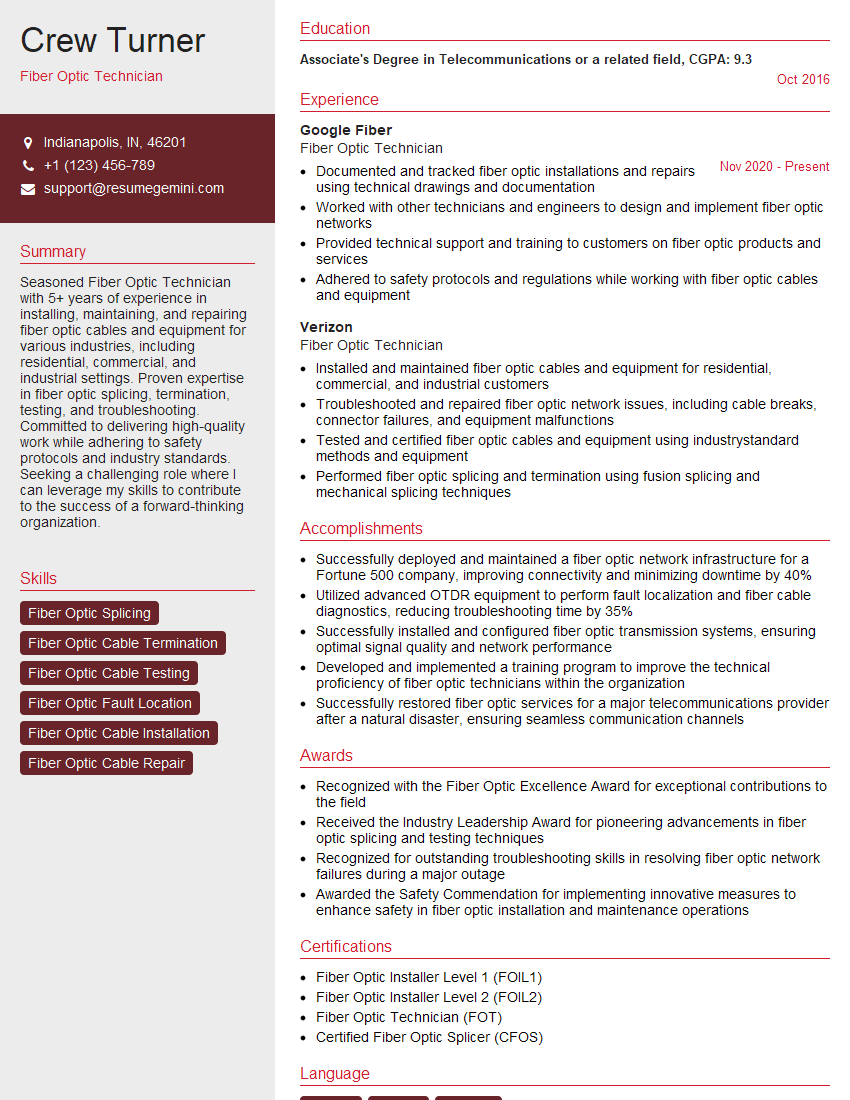
Fiber Optic Technician Resume Sample
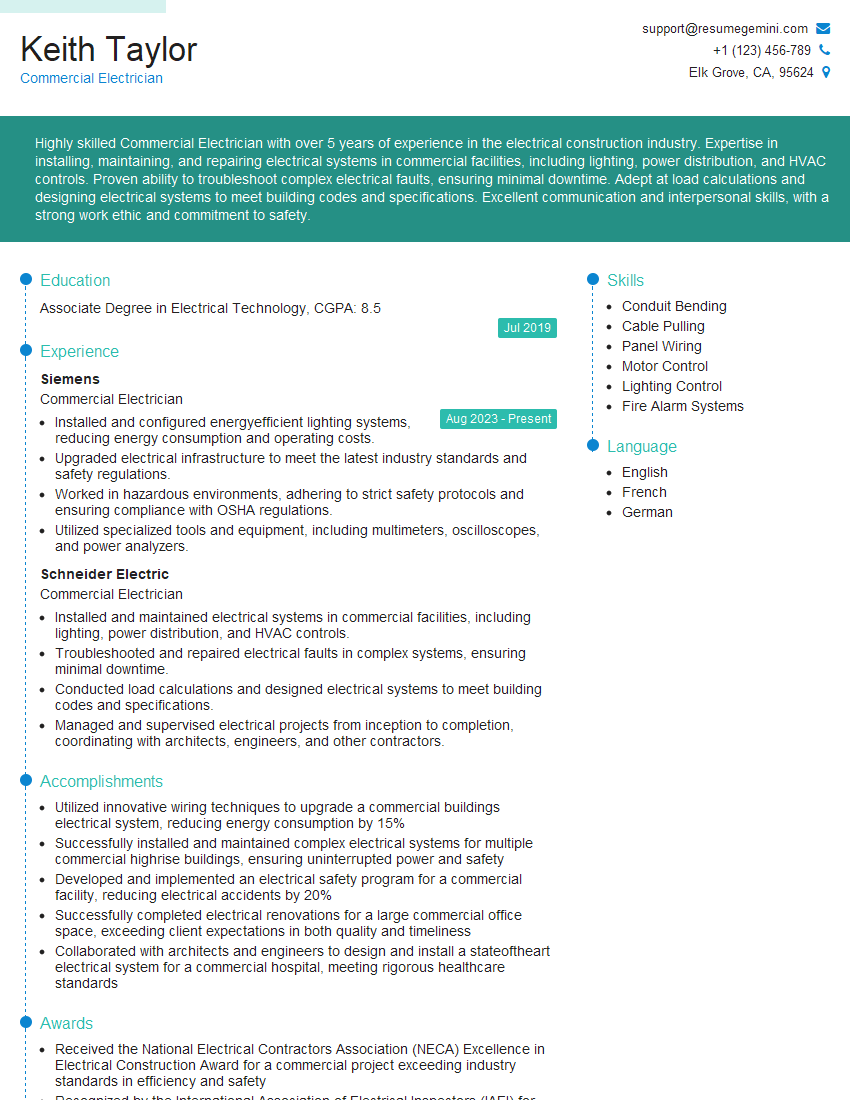
Commercial Electrician Resume Sample
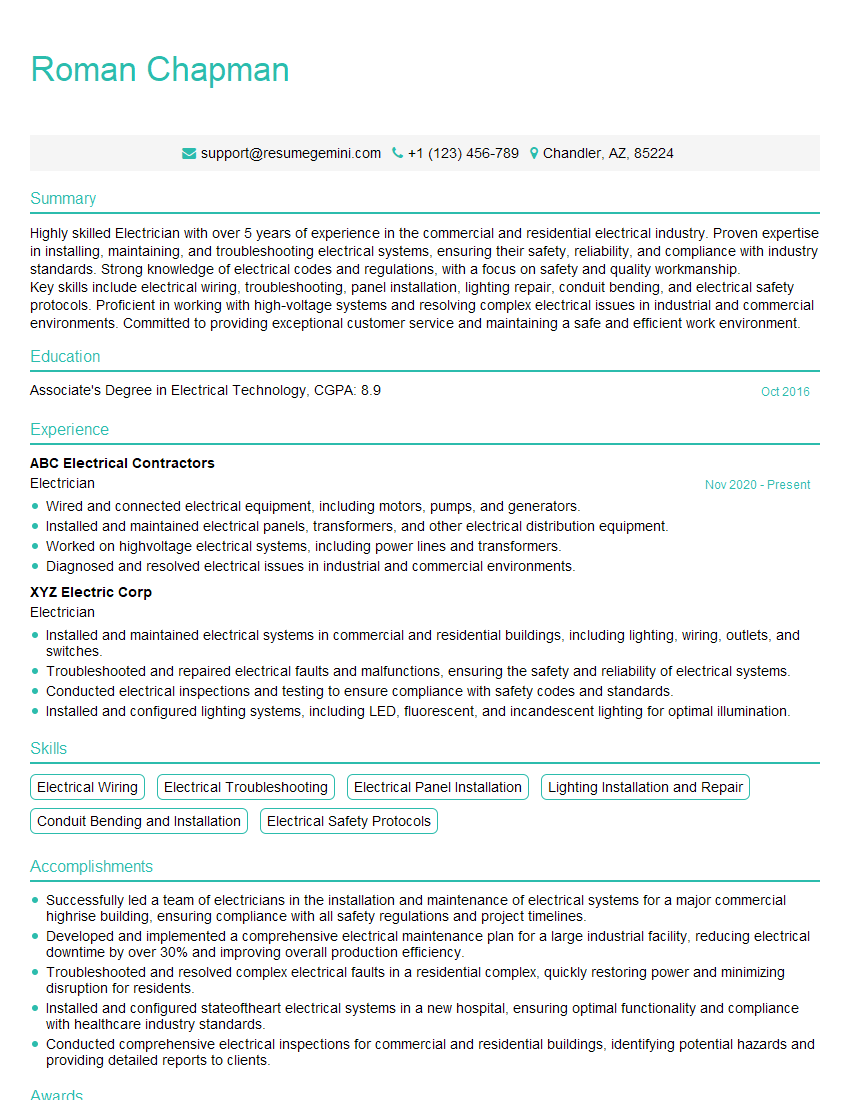
Electrician Resume Sample
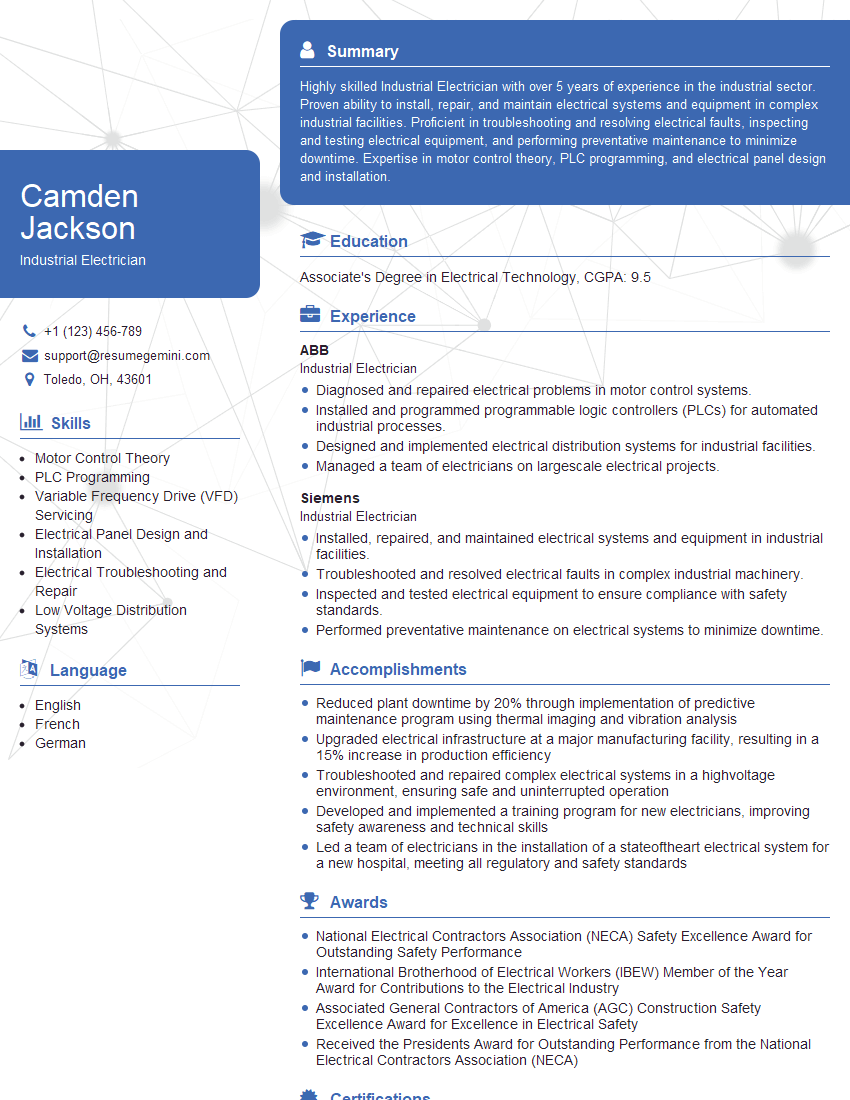
Industrial Electrician Resume Sample
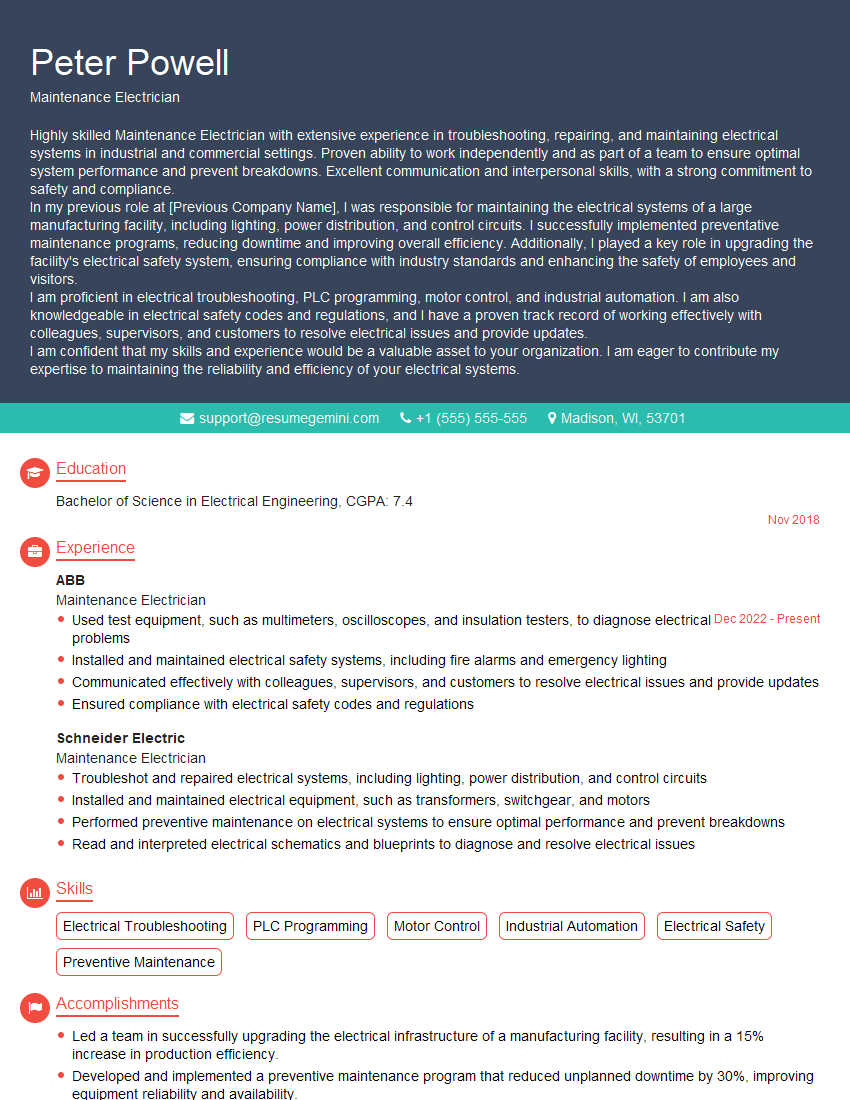
Maintenance Electrician Resume Sample
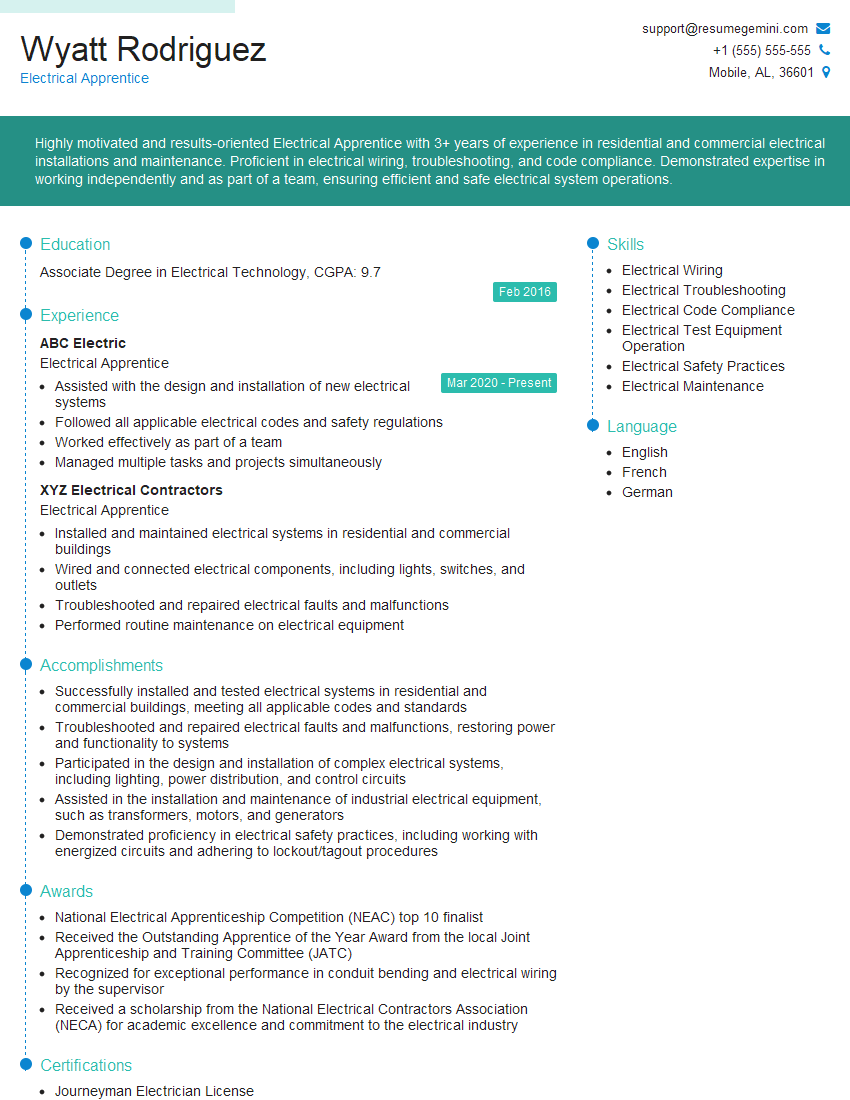
Electrical Apprentice Resume Sample
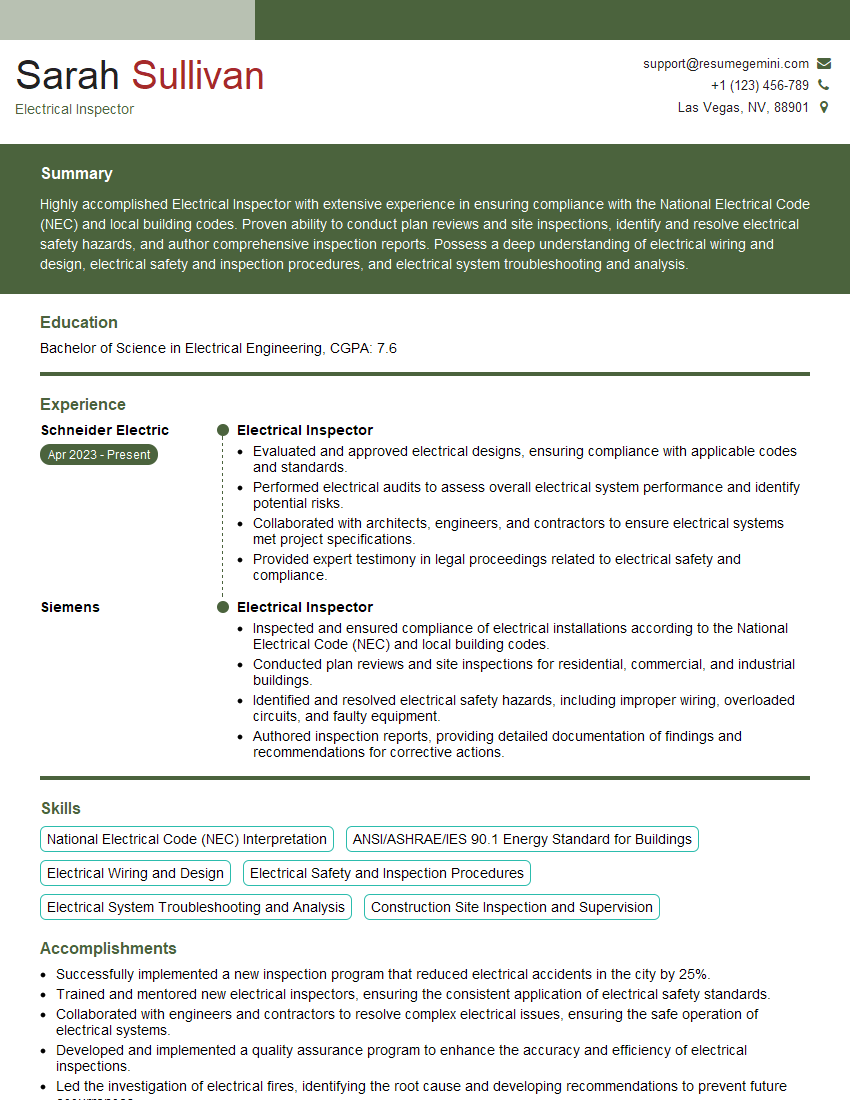
Electrical Inspector Resume Sample
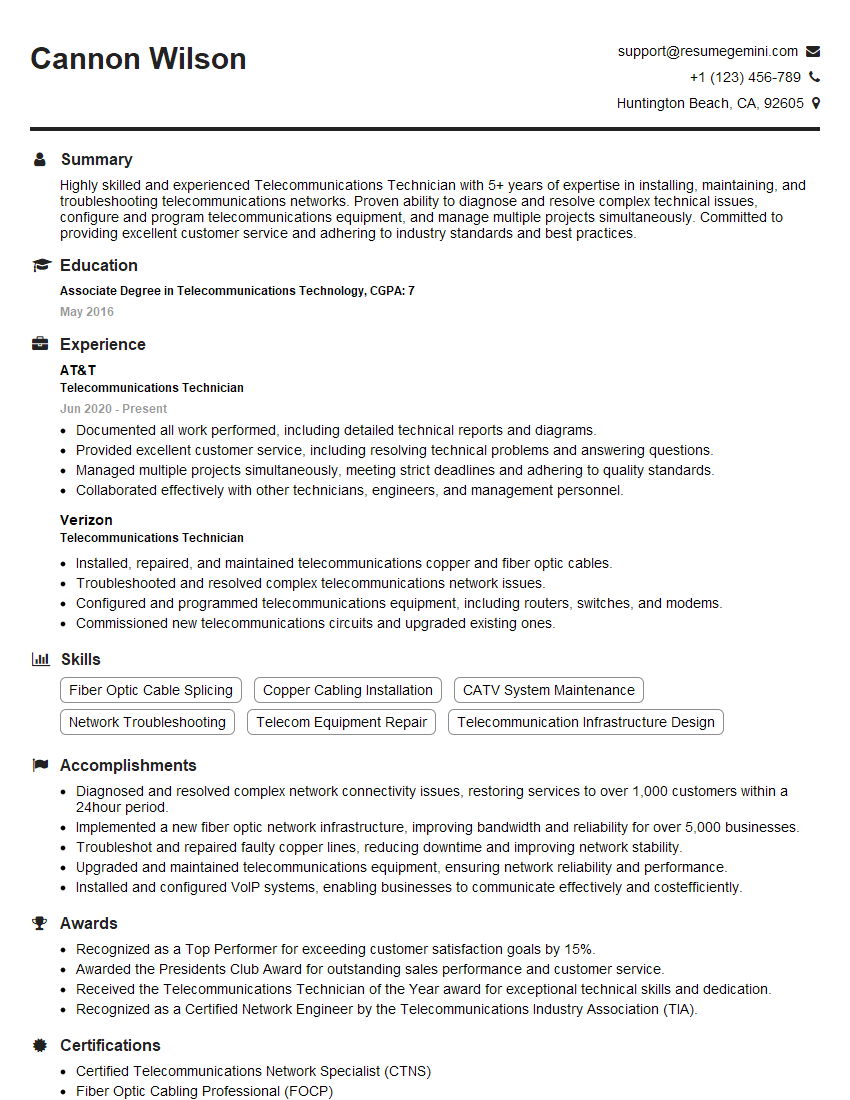
Telecommunications Technician Resume Sample
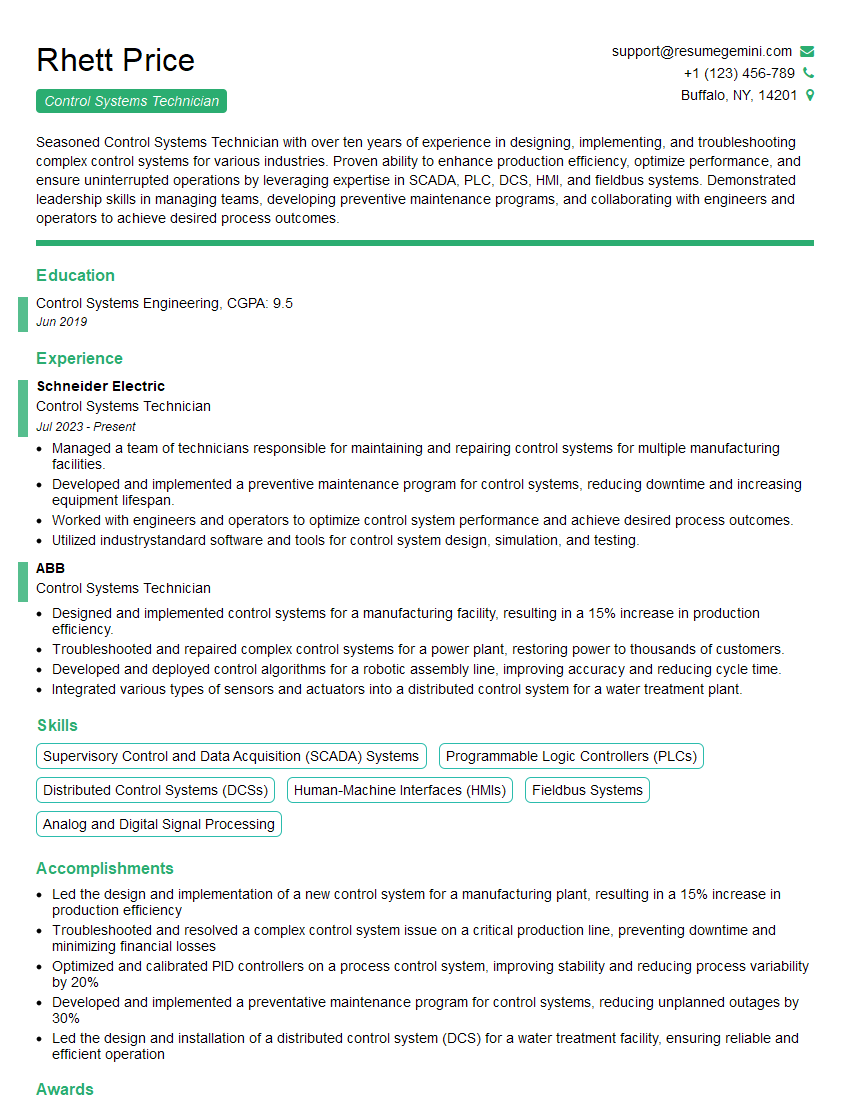
Control Systems Technician Resume Sample
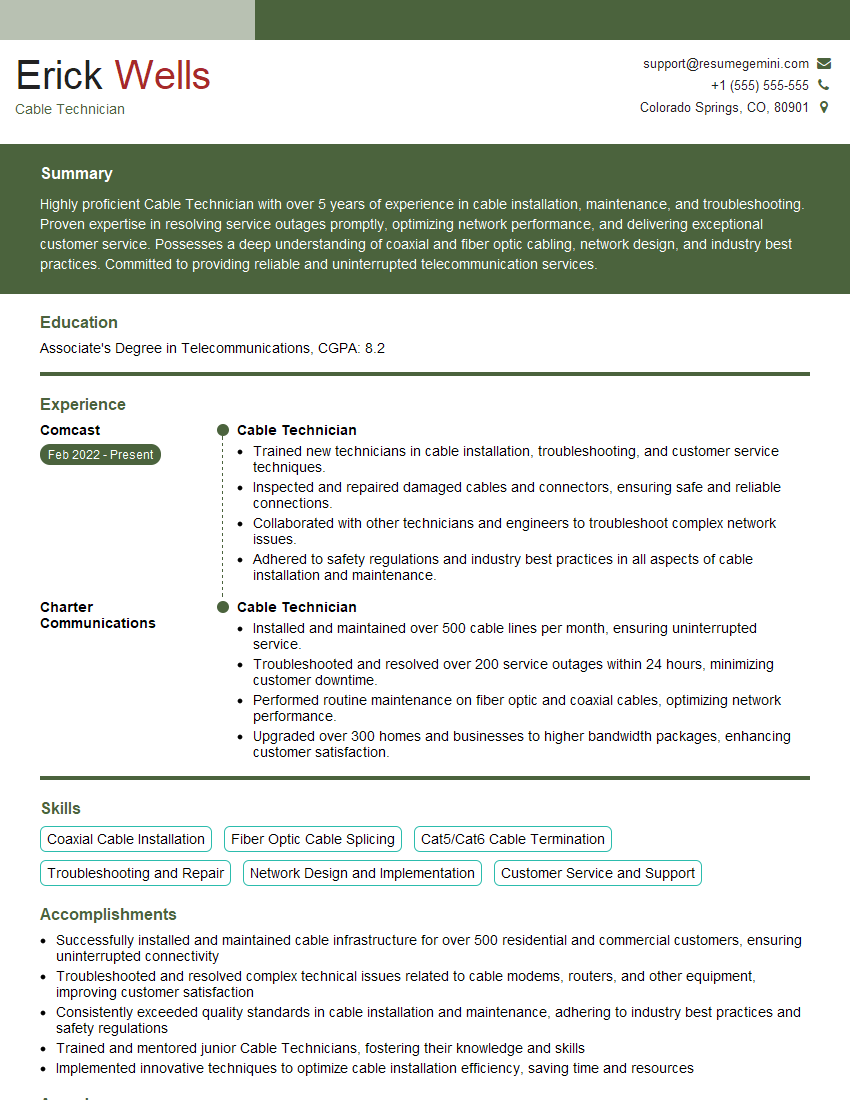
Cable Technician Resume Sample
Explore more articles
Users Rating of Our Blogs
Share Your Experience
We value your feedback! Please rate our content and share your thoughts (optional).
What Readers Say About Our Blog
Really detailed insights and content, thank you for writing this detailed article.
IT gave me an insight and words to use and be able to think of examples