Are you ready to stand out in your next interview? Understanding and preparing for English Language Proficiency Assessment interview questions is a game-changer. In this blog, we’ve compiled key questions and expert advice to help you showcase your skills with confidence and precision. Let’s get started on your journey to acing the interview.
Questions Asked in English Language Proficiency Assessment Interview
Q 1. Explain the difference between communicative competence and grammatical accuracy in language assessment.
Communicative competence and grammatical accuracy are two distinct but interconnected aspects of language proficiency. Grammatical accuracy focuses on the correct use of grammar rules, vocabulary, and pronunciation. Think of it as the mechanics of language – the building blocks. Communicative competence, on the other hand, goes beyond mere accuracy to encompass the ability to use language effectively and appropriately in different contexts. It’s about successfully conveying meaning, understanding different communication styles, and adapting language use to the situation.
For example, a speaker might produce grammatically flawless sentences but fail to understand the nuances of sarcasm or informal conversation, demonstrating high grammatical accuracy but low communicative competence. Conversely, someone might make grammatical errors but still effectively communicate their ideas in a clear and engaging way, highlighting higher communicative competence despite lower grammatical accuracy. Effective language assessment considers both aspects, though the weighting might vary depending on the purpose of the test.
Q 2. Describe three different types of English language proficiency tests and their strengths and weaknesses.
Three common types of English language proficiency tests are:
- Multiple-choice tests (e.g., TOEFL iBT, IELTS): These tests often employ a multiple-choice format to assess various language skills (reading, listening, writing, and speaking). Strengths include ease of scoring and standardization, making them efficient and reliable for large-scale assessments. However, weaknesses include their inability to fully capture complex communicative skills and their potential for encouraging rote learning over genuine understanding.
- Computer-based adaptive tests (e.g., Duolingo English Test): These tests dynamically adjust the difficulty of questions based on the test-taker’s performance. Strengths include greater efficiency in pinpointing proficiency levels and reduced test anxiety through personalized question selection. A weakness is the potential for technical issues to disrupt the test and the reliance on algorithms which might not perfectly capture the intricacies of human language use.
- Performance-based tests (e.g., speaking tests in some IELTS versions, oral proficiency interviews): These tests require test-takers to demonstrate their skills through real-world tasks such as presentations, conversations, or essay writing. Strengths are their ability to capture communicative competence more effectively and to provide richer qualitative data. Weaknesses include the subjective nature of scoring, higher cost of administration, and logistical challenges in ensuring consistent scoring across different assessors.
Q 3. What are the ethical considerations in designing and administering English language proficiency tests?
Ethical considerations in language test design and administration are crucial for ensuring fairness and preventing bias. Key considerations include:
- Test content validity and fairness: The test content should accurately reflect the language skills being assessed and avoid cultural biases or assumptions that might disadvantage certain groups. For example, using idioms or cultural references that are not universally understood can create an unfair advantage for native speakers or those from specific cultural backgrounds.
- Test accessibility: The test should be accessible to all test-takers, regardless of their physical or learning disabilities. Reasonable accommodations, such as extra time or assistive technology, should be provided to ensure equitable participation.
- Test security and confidentiality: Measures should be in place to maintain the security of the test materials and to protect the privacy of test-takers’ data. This includes secure storage of test materials, standardized procedures, and adherence to data protection regulations.
- Transparency and informed consent: Test-takers should be fully informed about the purpose, format, and scoring criteria of the test before they take it. They should provide informed consent to participate in the assessment.
Q 4. How do you ensure test fairness and validity in an English language assessment?
Ensuring test fairness and validity requires a multi-faceted approach:
- Item analysis: Thorough analysis of individual test items to identify items that are too difficult, too easy, or biased against specific groups. This involves statistical analysis to detect patterns of differential item functioning (DIF).
- Standard setting: Establishing clear and consistent scoring criteria to minimize subjective judgment and ensure fairness in grading. This might involve the use of rating scales, rubrics, or anchor papers to standardize scoring across different assessors.
- Pilot testing: Administering the test to a smaller sample of test-takers before large-scale deployment to identify and address any potential issues with the test design or administration. Feedback from pilot testing is vital for refinement.
- Equating and scaling: Using statistical techniques to ensure that different versions of the test are comparable and that scores from different administrations are meaningfully equivalent.
By addressing these aspects meticulously, test developers can significantly improve the fairness and validity of English language assessments.
Q 5. Explain the concept of washback in language testing and its implications for test design.
Washback refers to the impact of a test on teaching and learning. Positive washback occurs when a test encourages learners to focus on relevant skills and improve their language proficiency. Negative washback happens when the test leads to inappropriate teaching practices or narrow learning objectives, potentially harming students’ overall language development. For instance, if a test only focuses on grammar, teachers might overemphasize grammar instruction to the detriment of communicative skills.
Understanding washback is crucial for test design. To minimize negative washback, test designers should ensure the test aligns with broader language learning objectives, emphasizes communicative competence, and doesn’t lead to rote learning or narrow skill development. Clear communication between test developers, teachers, and curriculum designers is vital to fostering positive washback and aligning assessment with pedagogical goals.
Q 6. What are some common biases that can affect the results of English language proficiency tests?
Several biases can affect English language proficiency test results:
- Cultural bias: Test items that rely on specific cultural knowledge or experience can disadvantage test-takers from different cultural backgrounds. For example, using idioms or references that are not widely understood can create unfair disparities.
- Gender bias: Although less common now, some tests might contain subtle biases that favor one gender over another in terms of question types or topic selection.
- Rater bias: Subjective scoring can lead to inconsistencies in rating, especially in tests involving essay writing or oral interviews. This can be mitigated through training raters on standardized rubrics and using multiple raters to assess each response.
- Item bias: Individual test items can be biased if they are significantly harder or easier for certain groups of test-takers. Item analysis techniques can help detect and remove such biased items.
Careful test design, rigorous item analysis, and the use of standardized scoring procedures are essential in mitigating these biases and ensuring fair and accurate assessment.
Q 7. Describe different rating scales used in assessing written English proficiency.
Different rating scales are used to assess written English proficiency. Common types include:
- Holistic scoring: A single score is assigned to the entire piece of writing, reflecting the overall quality. This is efficient but might lack the detailed feedback that analytic scoring provides.
- Analytic scoring: Separate scores are assigned to different aspects of the writing, such as grammar, vocabulary, organization, and content. This provides more specific feedback on areas for improvement.
- Primary trait scoring: The focus is solely on a single aspect of the writing, such as argumentation or clarity, depending on the writing task. This is useful when assessing specific skills.
- Numerical scales: Scales using numbers, such as 1-5 or 1-10, are often used to represent different proficiency levels. A rubric usually explains what each number represents.
- Descriptive scales: Scales using descriptive labels instead of numbers, such as “Excellent,” “Good,” “Fair,” “Poor,” offer qualitative judgments but may lack precision.
The choice of rating scale depends on the specific assessment goals and the level of detail required in feedback. Using well-defined rubrics and training raters are crucial to ensure consistency and fairness across different assessments.
Q 8. How do you assess speaking proficiency in an interview setting?
Assessing speaking proficiency in an interview setting requires a multifaceted approach that goes beyond simply evaluating grammatical accuracy. I focus on evaluating fluency, pronunciation, vocabulary range, and communicative effectiveness within the context of the conversation.
- Fluency: I assess the smoothness and naturalness of the speech, looking for hesitations, self-corrections, and unnatural pauses. For example, a candidate who speaks in a continuous, well-paced manner demonstrates better fluency than one who frequently stumbles or needs to restart sentences.
- Pronunciation: I listen for clarity and accuracy in pronunciation, noting any consistent mispronunciations that might hinder understanding. This isn’t about perfection; it’s about intelligibility.
- Vocabulary Range: I evaluate the breadth and precision of the candidate’s vocabulary. Do they use a limited range of simple words, or do they demonstrate a sophisticated command of language, choosing words appropriately for the context?
- Communicative Effectiveness: This is perhaps the most crucial aspect. Can the candidate clearly convey their ideas and respond appropriately to my questions? I observe their ability to maintain a coherent conversation, use appropriate register (formal or informal), and handle interruptions or unexpected turns in the conversation gracefully. I might even introduce a slightly unexpected topic to see how they adapt.
I often use a structured interview format, incorporating tasks such as describing a picture, recounting a personal experience, or expressing an opinion on a given topic, to elicit a range of speaking skills.
Q 9. What are the key characteristics of a good test item for measuring English vocabulary?
A good test item for measuring English vocabulary needs to be clear, unambiguous, and assess the specific vocabulary skill being targeted (e.g., meaning, usage, collocations). Key characteristics include:
- Clarity and Unambiguity: The item’s meaning must be readily apparent to the test-taker. Avoid complex sentence structures or obscure language within the item itself.
- Relevance: The vocabulary tested should be relevant to the context and level of the test. Using highly specialized or outdated vocabulary is inappropriate.
- Validity: The item accurately measures the intended vocabulary knowledge. For example, a multiple-choice question testing word meaning should offer plausible distractors (incorrect options).
- Difficulty Level: The item’s difficulty should align with the intended proficiency level of the test.
- Avoidance of Bias: Items should be free of cultural or gender biases that could unfairly disadvantage certain test-takers. For example, using culturally specific idioms could disadvantage non-native speakers.
For example, a good item might present a sentence with a blank and ask the test-taker to select the best word from a list to fill the blank. This directly tests vocabulary knowledge within a meaningful context. A poor item would be a single word definition test out of context. The context greatly assists comprehension.
Q 10. Explain the role of criterion-referenced and norm-referenced scoring in English language assessment.
Criterion-referenced and norm-referenced scoring represent different approaches to interpreting test results. They serve distinct purposes in English language assessment.
- Criterion-Referenced Scoring: This approach compares a test-taker’s performance against a predetermined standard or criterion. The focus is on what the test-taker knows or can do, regardless of how others perform. Scores indicate mastery of specific skills or content. For instance, a criterion-referenced test might specify that a score of 80% indicates proficiency in a particular grammar skill. Think of a driving test – you either meet the criteria for a license or you don’t.
- Norm-Referenced Scoring: This approach compares a test-taker’s performance to the performance of a reference group (the norm group). The score indicates the test-taker’s relative standing within that group, often expressed as a percentile rank or a standardized score. Norm-referenced tests are useful for comparing individuals or groups, but they don’t necessarily indicate mastery of specific skills. Consider a standardized academic aptitude test – your score is compared to the scores of others who took the test.
Many high-stakes English language proficiency tests use a combination of both approaches. For example, a test might have criterion-referenced cut scores defining different proficiency levels (e.g., beginner, intermediate, advanced) while also providing norm-referenced scores that show how a candidate’s performance compares to a larger group of test takers. This gives a holistic view of proficiency.
Q 11. How do you handle cases of test-taker anxiety during an assessment?
Test-taker anxiety is a significant factor that can negatively impact performance. I address this by creating a supportive and reassuring environment.
- Clear Instructions and Explanation: I provide clear and concise instructions for each task, ensuring test-takers understand what is expected of them. This reduces uncertainty and potential for stress.
- Practice Items: Providing practice items helps familiarize test-takers with the test format and reduces anxiety associated with the unknown.
- Building Rapport: I start the assessment with a brief, friendly conversation to establish rapport and alleviate tension. A calm and understanding demeanor can help reduce stress.
- Breaks: For longer assessments, I allow for short breaks to help test-takers regain their composure.
- Empathetic Approach: I am mindful of the pressure test-takers are under and react with empathy and understanding to any signs of distress. If a test-taker expresses anxiety, I provide reassurance and encourage them to take deep breaths to relax.
In extreme cases, if a test-taker is visibly overwhelmed, I might consider rescheduling the assessment to allow them to better prepare. The goal is to ensure the assessment is fair and provides an accurate reflection of their abilities, not their anxiety levels.
Q 12. What strategies do you use to ensure the reliability of English language proficiency scores?
Ensuring the reliability of English language proficiency scores is paramount. I employ several strategies to achieve this:
- Test Design: A well-designed test with clear instructions, unambiguous items, and a consistent format contributes to reliability. This reduces the chance of misinterpretations or inconsistent scoring.
- Multiple Raters: For tasks involving subjective judgment, such as essay scoring or oral interviews, I use multiple raters to minimize bias and increase inter-rater reliability. The scores from multiple raters are compared, and discrepancies are resolved through discussion and consensus.
- Item Analysis: Post-test analysis involves examining individual items to identify those that are poorly performing or discriminating poorly between different proficiency levels. These items can be revised or removed in future test versions.
- Statistical Analysis: I utilize statistical measures like Cronbach’s alpha to determine the internal consistency of the test. A higher alpha coefficient indicates greater reliability.
- Standardisation: Standardised test procedures ensure all test-takers experience the same conditions. This means consistent administration, timing, and scoring procedures, reducing variability due to extraneous factors.
By using these strategies, I aim to minimise error variance and ensure that the scores obtained accurately reflect the test-takers’ true English language proficiency.
Q 13. How can technology be used to enhance English language proficiency assessment?
Technology offers several ways to enhance English language proficiency assessment, improving efficiency, objectivity, and access to assessment.
- Computer-Adaptive Testing (CAT): CAT adjusts the difficulty of test items based on a test-taker’s responses. This provides a more precise measurement of proficiency and reduces test time compared to fixed-form tests.
- Automated Essay Scoring (AES): AES systems can provide quick and objective feedback on writing tasks, freeing up human raters to focus on more complex aspects of writing evaluation. However, human review is still important to catch nuances AES may miss.
- Speech Recognition Software: This technology can analyze oral responses in speaking tests, providing objective measures of fluency, pronunciation, and vocabulary. The scores may require human validation.
- Online Testing Platforms: Online platforms offer convenience and accessibility to a wider range of test-takers. They also allow for the use of multimedia content and interactive tasks. This makes the assessment experience more engaging.
- Data Analytics: Technology allows for the collection and analysis of large datasets from assessments, enabling the identification of trends and insights into test-taker performance that can inform improvements in teaching and assessment practices.
It’s crucial to remember that technology should enhance, not replace, the human element in assessment. Human judgment and expertise remain essential for ensuring the validity and fairness of the assessment process.
Q 14. Describe the different approaches to assessing reading comprehension in English.
Assessing reading comprehension involves various approaches, each focusing on different aspects of reading skills.
- Multiple-Choice Questions (MCQs): MCQs are widely used to assess comprehension of factual information and inferential understanding. They test vocabulary, comprehension of main ideas, details and author’s purpose. Distractor options should be plausible and engaging.
- Short-Answer Questions: These require test-takers to provide concise answers to specific questions, demonstrating their understanding of particular passages or aspects of the text.
- Essay Questions: Essay questions assess the ability to analyze and synthesize information from multiple passages or to discuss broader themes and interpretations. They test deeper understanding and critical analysis.
- Cloze Tests: Cloze tests involve filling in blanks within a text, evaluating vocabulary knowledge and sentence-level comprehension. They also check the test-taker’s understanding of grammar, syntax, and cohesion in a text.
- Summary Writing: This tasks test-takers to condense information from a text into a shorter, coherent summary, measuring their ability to identify main ideas and express them concisely.
- Inferencing Questions: These assess the ability to draw conclusions and make predictions based on information explicitly or implicitly presented in the text. This shows a deeper level of reading comprehension.
The best approach often involves a combination of these methods to provide a comprehensive assessment of reading comprehension skills, catering to different cognitive processes and abilities. The selection of assessment approaches depends on the purpose of the assessment and the level of language proficiency being assessed.
Q 15. What are some innovative approaches to assessing English language proficiency?
Innovative approaches to English language proficiency assessment move beyond traditional pen-and-paper tests, embracing technology and dynamic assessment methods. One exciting development is the use of computer-adaptive testing (CAT). CAT adjusts the difficulty of questions based on the test-taker’s performance, providing a more precise measure of their abilities in less time than a fixed-length test. Imagine taking a test where easy questions lead to harder ones, and vice versa – that’s CAT.
Another innovation is integrated performance assessment, which combines different skill areas within a single task, such as asking candidates to plan and deliver a presentation on a given topic, assessing their speaking, writing, and research skills simultaneously. This holistic approach provides a richer understanding of a candidate’s language proficiency than individual tests might.
Furthermore, dynamic assessment focuses on the learner’s potential for improvement rather than solely their current skills. This involves providing targeted feedback and scaffolding during the assessment process to observe how the learner responds to support. Think of it like a tutoring session integrated into the assessment – observing how the learner progresses with assistance provides valuable insight.
Finally, the increasing use of corpus linguistics allows for more nuanced analysis of language use, going beyond simple grammar and vocabulary checks. Analyzing large datasets of language helps to identify subtle linguistic features that might indicate proficiency levels, offering more objective and comprehensive results.
Career Expert Tips:
- Ace those interviews! Prepare effectively by reviewing the Top 50 Most Common Interview Questions on ResumeGemini.
- Navigate your job search with confidence! Explore a wide range of Career Tips on ResumeGemini. Learn about common challenges and recommendations to overcome them.
- Craft the perfect resume! Master the Art of Resume Writing with ResumeGemini’s guide. Showcase your unique qualifications and achievements effectively.
- Don’t miss out on holiday savings! Build your dream resume with ResumeGemini’s ATS optimized templates.
Q 16. Discuss the challenges of assessing English language proficiency in diverse learner populations.
Assessing English language proficiency in diverse learner populations presents significant challenges. One major hurdle is linguistic background. Learners with different first languages bring diverse linguistic systems and learning styles, which can impact their performance on tests designed for native English speakers. For example, a learner whose first language doesn’t use articles might struggle with the grammatical nuances of English articles, even if they have strong overall language abilities.
Another challenge is cultural factors. Test design should be culturally sensitive and avoid biases that might disadvantage certain groups. Concepts and contexts familiar to one culture might be unfamiliar or even offensive to another. This calls for careful test item design and the use of culturally appropriate materials.
Furthermore, varying levels of educational background and access to resources pose significant challenges. Learners who haven’t had equal opportunities for English language learning might perform poorly on tests, even if their actual language abilities are higher than indicated. This calls for the use of assessment methods that can account for unequal educational experiences.
Finally, ensuring fair and equitable assessment for learners with disabilities is crucial. Accommodations might need to be made to cater to specific needs. This could involve providing extra time, alternative formats, or assistive technology.
Q 17. How do you ensure the security and integrity of English language proficiency tests?
Ensuring the security and integrity of English language proficiency tests is paramount to maintain the validity and reliability of the assessments. This involves a multi-faceted approach. Firstly, rigorous test development processes ensure question security and prevent leakage. Questions go through multiple rounds of review and piloting before use.
Secondly, secure test administration protocols are essential. This might involve proctoring (supervised testing), use of secure online platforms with anti-cheating measures, and rigorous identification procedures to prevent impersonation. Advanced technologies such as biometric authentication can be incorporated.
Thirdly, data encryption and secure storage are crucial to protect the sensitive information of test takers and to maintain the confidentiality of test materials. Robust data security measures and regular audits are necessary to minimize risks.
Furthermore, regular review and updates to the assessment process and protocols are crucial to address potential vulnerabilities and adapt to changing circumstances and emerging threats. Keeping abreast of technological advances in security is also key to prevent breaches.
Q 18. Explain the process of developing a rubric for assessing written English essays.
Developing a rubric for assessing written English essays involves a systematic approach. First, define clear criteria for assessment based on the learning objectives. These criteria could focus on areas such as argumentation, organization, grammar, vocabulary, mechanics, and style.
Second, create performance levels for each criterion, outlining what constitutes excellent, good, fair, and poor performance. For example, under ‘argumentation’, ‘excellent’ could mean ‘a clear, well-supported argument with a strong thesis statement,’ while ‘poor’ could mean ‘lack of clear argumentation or unsupported claims’.
Third, assign weights to each criterion based on its relative importance. For example, argumentation might be weighted more heavily than grammar if the essay’s primary purpose is to evaluate critical thinking skills.
Fourth, construct a table or matrix that organizes the criteria, performance levels, and weights, making the rubric clear and easy to use. This rubric will serve as a guide for consistent and objective scoring.
Finally, pilot the rubric with a small sample of essays to identify any ambiguities or areas for improvement. Feedback from raters can be invaluable in refining the rubric before large-scale implementation.
Q 19. How do you interpret and report the results of English language proficiency tests?
Interpreting and reporting the results of English language proficiency tests involves understanding the test’s scoring system and communicating the results clearly and meaningfully. Most tests provide a numerical score, often converted to a band score or a percentile rank.
The numerical score indicates the candidate’s overall performance, while the band score or percentile rank places the score within a broader context, comparing it to the performance of other test takers. For instance, a band score of 7 out of 9 might indicate advanced English proficiency.
Reporting should be done in a transparent and accessible manner, providing a clear explanation of the scoring system and the meaning of the scores obtained. Reports often include detailed feedback on different aspects of language proficiency, potentially highlighting areas of strength and weakness. This detailed feedback enables learners and stakeholders to understand the areas for improvement.
Reports should also clearly state the limitations of the tests. For example, the test might not fully capture all aspects of language proficiency, or the test might not be perfectly aligned with a specific context of use. Transparency in reporting builds trust and helps stakeholders to utilize the results effectively.
Q 20. Describe your experience with different types of assessment tasks, such as multiple-choice, essays, presentations, etc.
My experience encompasses a wide range of assessment tasks. I’ve extensively used multiple-choice questions for assessing grammatical accuracy, vocabulary knowledge, and reading comprehension. These are efficient for large-scale testing but can lack the depth of other methods.
I’ve also evaluated essays to assess writing skills, focusing on organization, argumentation, grammar, and style. This provides a richer understanding of writing abilities but requires more time for scoring and may be prone to subjective biases if rubrics are not meticulously applied.
Furthermore, I’ve conducted and assessed oral presentations to assess speaking proficiency. This involves evaluating fluency, pronunciation, grammar, vocabulary, and the ability to communicate effectively. The interactive nature allows for real-time feedback and better understanding of communication styles.
Finally, I have experience using role-plays and simulations, which are often more engaging and authentic than traditional methods, assessing learners’ abilities to communicate in context. They provide a more real-world assessment of language skills.
Q 21. What software or tools are you familiar with for conducting and analyzing English language assessments?
I’m proficient in several software and tools for conducting and analyzing English language assessments. I’m familiar with computer-adaptive testing (CAT) platforms that allow for dynamic adjustments of questions, enabling more efficient and accurate measurement. These often include robust scoring engines and reporting functionalities.
I have experience with Item Response Theory (IRT) software, which analyzes item difficulty and discrimination, leading to improved test quality and more precise measurement. This is crucial for ensuring the fairness and reliability of the assessment.
I also utilize statistical software packages like SPSS or R for detailed data analysis, enabling the creation of reliable and valid assessments. This involves running analyses like reliability checks, item analysis, and exploring correlations to refine the assessments.
Furthermore, I’m familiar with various online assessment platforms that offer features like secure test delivery, automated scoring, and reporting. These platforms are increasingly important in the context of remote assessment and large-scale testing.
Q 22. How do you maintain your professional development in the field of English language assessment?
Maintaining professional development in English Language Assessment is crucial for staying current with best practices and advancements in the field. My approach is multifaceted and involves a blend of formal and informal learning strategies.
- Professional Organizations: Active membership in organizations like TESOL (Teachers of English to Speakers of Other Languages) and IATEFL (International Association of Teachers of English as a Foreign Language) provides access to conferences, journals, and networking opportunities. These events offer insights into cutting-edge research and practical application of assessment methods.
- Continuing Education Courses: I regularly participate in workshops and online courses focusing on specific areas like psychometrics, test development, and assessment technology. Recent examples include a course on automated essay scoring and another on designing culturally sensitive assessments.
- Research and Publications: I actively follow research published in reputable journals, such as Language Testing and Applied Linguistics. Staying updated with research helps me understand the limitations of existing assessments and consider innovative approaches.
- Mentorship and Collaboration: Engaging with colleagues through mentorship and collaborative projects offers invaluable insights and allows for the sharing of best practices. I actively seek feedback from peers to refine my approaches.
- Self-Directed Learning: I dedicate time to independent study through books, articles, and online resources. For instance, I recently completed a self-study module on the principles of Universal Design for Learning (UDL) in assessment.
This ongoing commitment to professional development ensures that my assessment practices remain ethical, valid, reliable, and aligned with contemporary understanding of language learning.
Q 23. Discuss the impact of language learning theories on English language assessment.
Language learning theories significantly influence how we design and interpret English language assessments. Different theories highlight different aspects of language acquisition and proficiency, shaping the types of tasks we use and the criteria for evaluating performance.
- Behaviorism: Behaviorist theories focus on observable behaviors and stimulus-response patterns. Assessments stemming from this perspective often involve discrete-point testing, focusing on grammatical accuracy and vocabulary recall. For example, multiple-choice grammar tests are rooted in behaviorist principles.
- Cognitivism: Cognitivist theories emphasize mental processes like memory, attention, and problem-solving. Assessments informed by cognitivism often use tasks that require higher-order thinking skills, such as essay writing, problem-solving tasks, and interpreting complex texts. These assessments focus on understanding, analysis, and application of linguistic knowledge.
- Constructivism: Constructivist theories highlight the active role of learners in constructing their own knowledge. Assessments aligned with constructivism prioritize authentic tasks, encouraging learners to actively engage with language in meaningful contexts. Examples include project-based assessments, portfolio assessments, and presentations.
- Sociocultural Theory: This theory emphasizes the social and cultural context of language learning. Assessments informed by sociocultural theory focus on communicative competence and language use in realistic social settings. Role-plays, discussions, and collaborative tasks are commonly used.
Effective assessment design considers the strengths and limitations of each theory, selecting tasks and criteria that accurately reflect the target language skills and the chosen theoretical framework. A balanced approach, drawing on insights from multiple theories, often leads to the most comprehensive and valid assessments.
Q 24. What are some best practices for providing feedback to test takers on their performance?
Providing effective feedback is crucial for learners’ development. Best practices focus on clarity, specificity, actionability, and a focus on strengths alongside areas for improvement.
- Specificity: Avoid vague comments like “good job.” Instead, pinpoint specific strengths (“Your use of complex sentence structures is impressive”) and areas for improvement (“Consider using stronger verbs in your descriptive writing”).
- Actionable Feedback: Offer concrete suggestions for improvement. For example, instead of simply stating “Your grammar needs work,” suggest specific resources or strategies like “Review the rules of subject-verb agreement and practice using them in sentences.”
- Balance: Highlight both strengths and weaknesses. Beginning with positive comments can create a more receptive environment for receiving constructive criticism.
- Focus on Learning Goals: Align feedback directly with the learning objectives of the assessment. This helps learners understand how their performance relates to their overall language development.
- Multiple Formats: Offer feedback through various formats, such as written comments, audio recordings, or individual conferences. Tailor the feedback format to suit the learner’s needs and preferences.
- Timely Feedback: Provide feedback promptly to maximize its impact on learning.
For instance, after a writing assessment, I might provide written comments highlighting specific grammatical errors and suggesting alternative word choices, while also praising the clarity of the argument and originality of thought. I might then schedule a short meeting to discuss the feedback in more detail and answer any questions the student may have.
Q 25. Explain the differences between formative and summative assessment in English language learning.
Formative and summative assessments serve different purposes in the English language learning process. They are both important, but differ significantly in their timing, function, and impact on instruction.
- Formative Assessment: This is ongoing, informal assessment integrated into the learning process. Its primary purpose is to monitor student progress, identify areas needing improvement, and adjust instruction accordingly. Examples include quizzes, class discussions, exit tickets, and peer review activities. Formative assessments are low-stakes and often ungraded.
- Summative Assessment: This is a formal assessment conducted at the end of a learning unit or course. Its purpose is to evaluate student achievement and provide a summary of their overall performance. Examples include final exams, major projects, and standardized tests. Summative assessments are high-stakes and are often used for grading or certification.
Imagine a cooking class. Formative assessments would be like the chef checking on your progress throughout the cooking process, offering guidance and suggestions. Summative assessment would be the final dish evaluation at the end, judging the overall quality and taste.
Q 26. How would you adapt assessment methods for learners with different learning styles and needs?
Adapting assessment methods to accommodate diverse learning styles and needs is essential for ensuring fairness and accuracy. This involves using a variety of assessment formats and providing appropriate accommodations.
- Multiple Assessment Formats: Offering a range of assessment types, such as written tests, oral presentations, projects, and portfolios, caters to learners who excel in different ways. A visual learner might thrive on a presentation, while a kinesthetic learner might prefer a hands-on project.
- Accommodations for Learners with Disabilities: Students with disabilities require individualized support. This might involve providing extra time, alternative formats (e.g., audio versions of written tests), assistive technology, or modified assessment tasks. Careful consideration of accessibility needs is paramount.
- Differentiated Instruction: Tailoring assessment tasks to match students’ different levels of proficiency and learning needs is crucial. This might involve adjusting the complexity of tasks, providing scaffolding support, or offering choices within the assessment.
- Culturally Responsive Assessment: Considering cultural backgrounds and linguistic experiences when designing assessments ensures that students are not disadvantaged due to cultural biases or differences in language use. This may involve using culturally relevant materials or adjusting language demands.
For example, for a writing assessment, I might offer learners the choice of writing an essay, creating a presentation, or designing a multimedia project. This caters to different learning styles and provides flexibility based on individual strengths.
Q 27. Describe your experience with developing and implementing assessment plans.
My experience in developing and implementing assessment plans spans various contexts, including classroom-based assessments and large-scale standardized testing. My approach is systematic and emphasizes validity, reliability, and fairness.
- Needs Analysis: I begin by conducting a thorough needs analysis to determine the specific skills and knowledge to be assessed. This involves identifying the target audience, learning objectives, and the intended uses of the assessment results.
- Test Blueprint Development: Based on the needs analysis, I develop a test blueprint that outlines the content, task types, scoring criteria, and weighting of different sections of the assessment.
- Item Development and Review: I carefully develop assessment items, ensuring they are clear, unambiguous, and aligned with the test blueprint. These items undergo rigorous review by colleagues and subject-matter experts to ensure quality and fairness.
- Pilot Testing and Revision: Before large-scale implementation, I conduct pilot testing to identify any flaws or biases in the assessment. This allows for necessary revisions before the final version is administered.
- Data Analysis and Reporting: Following the assessment, I analyze the data to determine student performance, identify areas of strength and weakness, and provide informative reports to stakeholders. These reports inform future instructional planning and curriculum development.
For instance, in developing an assessment for a university English program, I worked collaboratively with faculty to define learning objectives, created a test blueprint to ensure appropriate coverage of skills, and piloted the test with a sample of students before finalizing and administering it to the entire cohort.
Q 28. How do you address issues of cultural bias in English language proficiency assessments?
Addressing cultural bias in English language proficiency assessments is paramount to ensuring fairness and equity. Bias can manifest in various forms, such as content, language, and format.
- Content Analysis: Thorough review of assessment content is crucial to identify any culturally specific references or assumptions that might disadvantage certain groups of test-takers. For example, using idioms or cultural references unfamiliar to a diverse test-taking population should be avoided.
- Language Use: The language used in instructions and test items should be clear, concise, and accessible to learners from various linguistic backgrounds. Avoid using overly complex sentence structures or specialized vocabulary that might hinder understanding.
- Item Bias Detection: Employing statistical techniques to detect differential item functioning (DIF) helps identify items that function differently for different groups of test-takers, suggesting potential bias. This requires a careful analysis of item response data.
- Test Format Considerations: Different assessment formats might impact test-takers differentially. For example, timed tests might disadvantage learners with processing speed difficulties, while tasks requiring extensive writing may disadvantage learners whose first language differs significantly from English.
- Diverse Item Selection: Use a wide range of item types and contexts, ensuring they reflect the diverse experiences and perspectives of the test-taking population. Incorporating items reflecting different cultural backgrounds can mitigate bias.
For example, if assessing reading comprehension, I’d choose passages reflecting diverse themes and styles to avoid cultural biases. I’d also ensure that the language used is accessible to all test takers and use a variety of question types to test understanding.
Key Topics to Learn for English Language Proficiency Assessment Interview
- Vocabulary & Grammar: Mastering precise word choice and grammatical accuracy is crucial for clear and effective communication. Practice using a wide range of vocabulary in different contexts.
- Reading Comprehension: Develop strategies for efficiently understanding complex texts and extracting key information. Practice analyzing different writing styles and identifying the author’s purpose.
- Listening Comprehension: Enhance your ability to understand spoken English in various accents and speeds. Practice actively listening and taking notes during conversations or lectures.
- Speaking Fluency & Pronunciation: Practice speaking clearly and confidently, focusing on pronunciation and intonation. Record yourself speaking and identify areas for improvement.
- Writing Skills: Develop skills in writing different types of texts, such as emails, reports, and essays. Focus on clarity, conciseness, and proper structure.
- Cultural Sensitivity & Awareness: Understand the nuances of English language use in different cultural contexts. This demonstrates adaptability and professionalism.
- Effective Communication Strategies: Learn how to tailor your communication style to different audiences and situations. Practice active listening and responding appropriately.
Next Steps
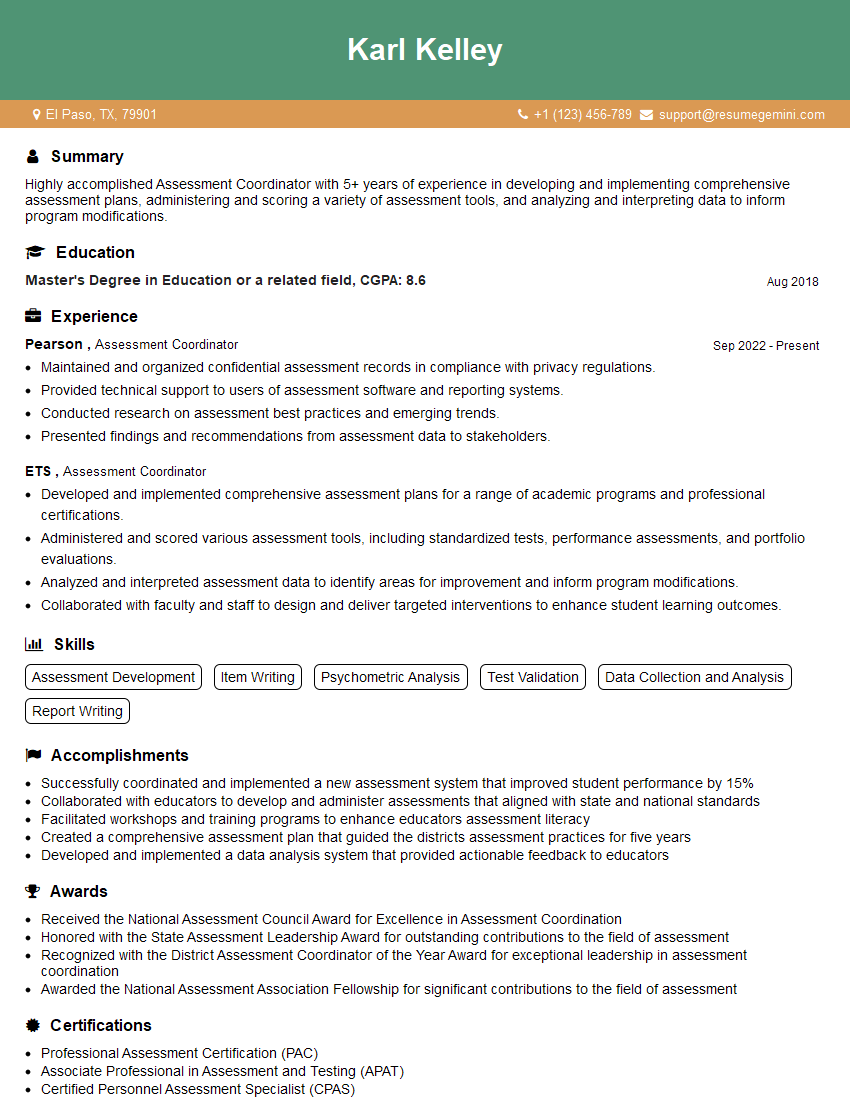
Mastering an English Language Proficiency Assessment opens doors to a wider range of career opportunities and significantly enhances your professional prospects globally. A strong command of English is increasingly sought after by employers across diverse sectors. To maximize your chances of landing your dream job, it’s vital to create an ATS-friendly resume that effectively highlights your skills and experience. We highly recommend using ResumeGemini, a trusted resource, to build a professional and impactful resume. ResumeGemini provides examples of resumes tailored to English Language Proficiency Assessment, helping you present your qualifications in the best possible light. Invest the time in crafting a compelling resume; it’s your first impression on potential employers.
Explore more articles
Users Rating of Our Blogs
Share Your Experience
We value your feedback! Please rate our content and share your thoughts (optional).
What Readers Say About Our Blog
I Redesigned Spongebob Squarepants and his main characters of my artwork.
https://www.deviantart.com/reimaginesponge/art/Redesigned-Spongebob-characters-1223583608
IT gave me an insight and words to use and be able to think of examples
Hi, I’m Jay, we have a few potential clients that are interested in your services, thought you might be a good fit. I’d love to talk about the details, when do you have time to talk?
Best,
Jay
Founder | CEO