Interviews are more than just a Q&A session—they’re a chance to prove your worth. This blog dives into essential Enterprise Health Information Systems interview questions and expert tips to help you align your answers with what hiring managers are looking for. Start preparing to shine!
Questions Asked in Enterprise Health Information Systems Interview
Q 1. Describe your experience with different EHR systems (e.g., Epic, Cerner, Allscripts).
My experience with EHR systems spans several leading vendors, including Epic, Cerner, and Allscripts. I’ve worked extensively with Epic, particularly within the ambulatory setting, configuring and optimizing workflows for physician practices. This included implementing order sets, customizing dashboards, and training staff on best practices for efficient documentation. With Cerner, my involvement has been primarily on the inpatient side, focusing on system integration with ancillary departments like radiology and pathology. I’ve overseen the implementation of Cerner’s Millennium platform, including data migration, testing, and go-live support. Finally, with Allscripts, my experience centers on their ambulatory EHR solutions. I’ve participated in system upgrades, troubleshooting performance issues, and developing customized reports to meet specific client needs. Each system presents unique challenges and advantages; Epic excels in its comprehensive functionality and robust reporting, while Cerner is strong in its integration capabilities and scalability. Allscripts often provides a more flexible and customizable solution, ideal for smaller practices. My understanding of these diverse platforms allows me to effectively compare and contrast functionalities, ultimately selecting the optimal solution based on a given organization’s specific needs and resources.
Q 2. Explain the concept of HL7 and its role in healthcare data exchange.
HL7, or Health Level Seven, is a set of international standards for exchanging, storing, and retrieving electronic health information. Think of it as the universal translator for healthcare data. It defines various messaging standards, allowing different healthcare systems, such as EHRs, laboratory information systems (LIS), and radiology information systems (RIS), to communicate seamlessly. For example, a patient’s lab results from an LIS can be automatically sent to their EHR using HL7 messages, eliminating the need for manual data entry. HL7 messages are structured using XML or other formats. A common HL7 message type is ADT (Admission, Discharge, and Transfer), used to convey patient status changes between systems. The role of HL7 is crucial for interoperability in healthcare, ensuring accurate and efficient data flow across organizations, ultimately improving patient care and reducing medical errors. My experience includes designing, implementing, and troubleshooting HL7 integrations, ensuring reliable data exchange between various systems.
Q 3. What are the key challenges in implementing a new EHR system?
Implementing a new EHR system presents a multitude of challenges. One major hurdle is the significant cost, encompassing software licensing, hardware upgrades, implementation services, training, and ongoing maintenance. Then there’s the disruption to workflows, as staff adjusts to a new system and processes. Data migration poses another challenge; ensuring accurate and complete transfer of patient data from the legacy system to the new EHR is critical. Resistance to change from healthcare professionals who are accustomed to the old system is another common obstacle. Finally, ensuring sufficient and appropriate training to all end-users is paramount to successful implementation and operational efficiency. A robust change management plan, incorporating user input and feedback throughout the process, is essential to address these challenges effectively. I have developed strategies to minimize downtime during go-live and to establish effective communication channels to address user concerns. Furthermore, I’ve successfully addressed the integration challenges that sometimes arise between the new EHR and other critical healthcare systems.
Q 4. How do you ensure data security and privacy within an Enterprise Health Information System?
Data security and privacy are paramount in Enterprise Health Information Systems. We implement a multi-layered approach, starting with robust access controls, using role-based authentication and authorization to restrict access to sensitive data. Data encryption, both in transit and at rest, is essential to protect against unauthorized access. Regular security audits and penetration testing are conducted to identify and address vulnerabilities. Compliance with HIPAA regulations, including the implementation of appropriate safeguards for electronic protected health information (ePHI), is strictly followed. Employee training on security protocols is crucial to raise awareness and promote responsible data handling practices. Furthermore, the implementation of audit trails allows us to track data access and modifications, facilitating investigations in case of security breaches. Incident response plans are in place to effectively manage and mitigate security incidents. These measures help protect patient confidentiality and ensure the integrity of the healthcare data.
Q 5. What are your experiences with data migration in healthcare?
Data migration in healthcare is a complex process. I have extensive experience in planning and executing data migrations, from smaller physician practices to large hospital systems. The process involves a detailed assessment of the source and target systems, including data cleansing, transformation, and validation. We use various tools and techniques to ensure data accuracy and integrity during the migration. The successful migration is contingent upon establishing a clear project plan with well-defined milestones, thorough testing, and rigorous quality assurance procedures. Careful consideration must be given to potential issues such as data loss or corruption. We always have comprehensive rollback plans in place to ensure data integrity and recovery in case of problems. Effective communication and collaboration with all stakeholders, including clinicians and IT staff, are critical to the success of the migration. For instance, in one project, we used a phased approach, migrating data in segments to minimize disruption and allow for continuous monitoring and validation.
Q 6. Describe your experience with health information exchange (HIE) initiatives.
My experience with Health Information Exchange (HIE) initiatives involves working with regional and national HIE networks. This includes configuring systems to enable secure exchange of patient information between different healthcare organizations. We often use HL7 standards and various secure messaging protocols to facilitate this exchange. I’ve been involved in projects that improve care coordination by enabling the exchange of clinical summaries, lab results, and radiology images. The benefits of HIE include improved patient care, reduced healthcare costs, and improved population health management. However, implementing HIEs requires careful consideration of security, privacy, and interoperability issues. The proper implementation requires aligning the exchange infrastructure with governance policies and standards to ensure data quality, accuracy, and security. I’ve also had the opportunity to work directly with stakeholders to understand their requirements and to ensure their systems are correctly integrated within the HIE network.
Q 7. Explain your understanding of HIPAA compliance and its implications for EHR systems.
HIPAA compliance is crucial for EHR systems. The Health Insurance Portability and Accountability Act of 1996 sets standards for protecting patient health information. HIPAA compliance involves implementing administrative, physical, and technical safeguards to protect electronic protected health information (ePHI). These safeguards include access controls, encryption, audit trails, and employee training programs. My experience includes developing and implementing HIPAA compliance policies and procedures, ensuring our systems meet all relevant requirements. Regular audits and risk assessments are conducted to ensure ongoing compliance. Non-compliance with HIPAA can lead to severe penalties, including financial fines and reputational damage. Therefore, maintaining HIPAA compliance is not merely a legal obligation but a critical aspect of building and maintaining trust with patients and upholding professional standards.
Q 8. How do you handle data integrity issues within an EHR system?
Data integrity in an EHR system is paramount. It ensures the accuracy, consistency, and reliability of patient data. We handle this through a multi-faceted approach, focusing on prevention and detection.
- Data Validation Rules: We implement strict rules at the point of data entry to prevent invalid or illogical data. For example, a patient’s age cannot be negative, or their weight cannot exceed a certain realistic maximum. These rules are often coded into the system and trigger alerts if violated.
- Data Cleansing and Standardization: Regular data cleansing processes identify and correct inconsistencies, such as duplicate records or misspellings. We use standardization techniques to ensure data is entered consistently (e.g., using standard codes for diagnoses and procedures).
- Audit Trails: A complete audit trail records all data modifications, including who made the changes, when, and what changes were made. This allows us to track down errors and investigate discrepancies.
- Data Backup and Recovery: Regular backups are critical to recovering from data loss due to system failures or cyberattacks. We employ robust disaster recovery plans to ensure business continuity and data preservation.
- Access Control and Authorization: Strict access controls prevent unauthorized access and modification of patient data. Only authorized personnel with appropriate credentials can access and modify specific data elements, following the principle of least privilege.
For example, in one project, we implemented a data validation rule to prevent incorrect entry of medication dosages. This rule significantly reduced medication errors and improved patient safety.
Q 9. What are some common reporting needs in a healthcare setting, and how do you address them?
Healthcare reporting needs are diverse, ranging from operational efficiency to clinical outcomes and regulatory compliance. Common reports include:
- Patient demographics and clinical summaries: These reports provide a snapshot of the patient population served, including age, gender, diagnoses, and procedures.
- Operational metrics: These reports track key performance indicators (KPIs) such as appointment wait times, bed occupancy rates, and length of stay.
- Financial reports: These reports track revenue, expenses, and profitability, providing insights into the financial health of the organization.
- Quality and safety indicators: These reports assess the quality of care delivered, focusing on metrics such as infection rates, readmission rates, and patient satisfaction.
- Regulatory reporting: These reports fulfill regulatory requirements, such as reporting to government agencies or accreditation bodies.
We address these needs through a combination of reporting tools and techniques. This involves designing reports that are user-friendly and easily understandable, incorporating data visualization techniques to enhance comprehension, and ensuring the reports align with organizational goals and compliance requirements.
For instance, a report summarizing readmission rates within 30 days of discharge can be instrumental in identifying areas where care can be improved and potentially reduce costs.
Q 10. How familiar are you with data warehousing and business intelligence in healthcare?
I’m very familiar with data warehousing and business intelligence (BI) in healthcare. Data warehousing involves extracting, transforming, and loading (ETL) data from various sources into a central repository for analysis. BI tools then use this data to create reports, dashboards, and other visualizations to support decision-making.
In healthcare, this translates to aggregating data from disparate EHR systems, claims databases, and other sources to gain a comprehensive view of patient populations, care processes, and financial performance. This enables more effective population health management, strategic planning, and operational improvements.
For example, a data warehouse can be used to identify patients at high risk for readmission, allowing proactive interventions to improve outcomes and reduce costs. BI tools can then visualize these insights through interactive dashboards, enabling clinicians and administrators to quickly understand and act on the information.
Q 11. What are your experiences with health data analytics and interpretation?
My experience in health data analytics and interpretation involves extracting meaningful insights from complex healthcare data. This includes identifying trends, patterns, and anomalies that can inform clinical decisions, improve operational efficiency, and advance research.
I have experience with various analytical techniques, including descriptive statistics, regression analysis, and predictive modeling. I’m proficient in using statistical software such as R and Python for data analysis and visualization. Furthermore, I understand the importance of data quality and the ethical considerations surrounding the use of patient data.
For instance, I’ve used predictive modeling to identify patients at high risk of developing heart failure, enabling early intervention and preventative strategies.
Q 12. Describe your experience with different database technologies used in healthcare (e.g., SQL, NoSQL).
I have extensive experience with various database technologies used in healthcare, including both SQL and NoSQL databases. The choice of database technology often depends on the specific needs of the application.
- SQL databases (e.g., Oracle, SQL Server, MySQL): These relational databases are well-suited for structured data, such as patient demographics and clinical data. Their strengths lie in data integrity, ACID properties (atomicity, consistency, isolation, durability), and efficient querying of structured data.
- NoSQL databases (e.g., MongoDB, Cassandra): These non-relational databases are better suited for unstructured or semi-structured data, such as medical images, sensor data, or free-text clinical notes. They excel at handling large volumes of data and high scalability.
In practice, a hybrid approach often works best, utilizing SQL databases for structured data and NoSQL databases for unstructured data. For example, patient demographics and lab results might be stored in a SQL database, while medical images are stored in a NoSQL database.
Q 13. How do you ensure the accuracy and reliability of data within an EHR system?
Ensuring the accuracy and reliability of data within an EHR system is a continuous process. It requires a combination of technical and procedural safeguards.
- Data Validation: Implementing robust data validation rules at the point of entry prevents invalid data from entering the system. This includes range checks, data type checks, and consistency checks.
- Data Cleansing: Regularly cleansing the data to identify and correct errors, inconsistencies, and duplicates is crucial. This may involve manual review or automated processes.
- Data Governance: Establishing a formal data governance framework defines roles, responsibilities, and processes for data management, ensuring data quality is prioritized throughout the organization.
- Data Standardization: Adopting standard terminologies and coding systems (e.g., SNOMED CT, LOINC) ensures consistency and interoperability of data across different systems.
- Regular Audits: Conducting periodic audits to assess the accuracy and completeness of the data provides assurance that the data is reliable.
For example, regularly scheduled data quality checks on medication orders, identifying any potential discrepancies between the prescribed dosage and the administered dosage, ensures patient safety and mitigates potential errors.
Q 14. What is your approach to troubleshooting technical issues related to EHR systems?
My approach to troubleshooting technical issues related to EHR systems is systematic and methodical. I follow these steps:
- Gather information: Clearly define the problem, including the symptoms, when it started, and any relevant error messages.
- Reproduce the issue: Attempt to reproduce the problem to better understand its cause and scope.
- Isolate the problem: Determine the source of the problem – is it a hardware, software, network, or user-related issue?
- Check logs and documentation: Examine system logs, error messages, and documentation for clues about the problem.
- Test potential solutions: Based on the investigation, test potential solutions systematically, starting with the simplest and least disruptive options.
- Escalate if necessary: If the problem cannot be resolved, escalate it to the appropriate support team or vendor.
- Document the resolution: Clearly document the problem, the steps taken to resolve it, and the outcome. This helps with future troubleshooting.
For example, if a user reports they cannot access the EHR system, I would first check their network connectivity, then their user credentials, and then investigate any system-wide outages before escalating the issue to the IT department.
Q 15. Describe your experience with interoperability standards and their importance in healthcare.
Interoperability in healthcare refers to the ability of different health information systems and applications to exchange and use data seamlessly. It’s crucial for providing safe, efficient, and coordinated patient care. My experience encompasses working with various interoperability standards, including HL7 FHIR (Fast Healthcare Interoperability Resources), DICOM (Digital Imaging and Communications in Medicine), and X12.
HL7 FHIR, for example, is a modern, RESTful standard that allows for flexible data exchange, facilitating communication between different systems such as EHRs, patient portals, and public health agencies. I’ve been involved in projects implementing FHIR APIs to enable secure data sharing between our hospital system and affiliated clinics. This improved the flow of patient information, significantly reducing delays in diagnosis and treatment. DICOM, on the other hand, is essential for managing and transferring medical images like X-rays and MRIs. Understanding and implementing these standards ensures data integrity, consistency, and prevents data silos, leading to better healthcare outcomes.
The importance of these standards cannot be overstated. Without interoperability, clinicians have to manually reconcile data from various sources, increasing the risk of errors and delays. Interoperability enables the creation of comprehensive patient records, supports population health management initiatives, and improves research capabilities by facilitating large-scale data analysis. It’s essentially the backbone of a modern, connected healthcare system.
Career Expert Tips:
- Ace those interviews! Prepare effectively by reviewing the Top 50 Most Common Interview Questions on ResumeGemini.
- Navigate your job search with confidence! Explore a wide range of Career Tips on ResumeGemini. Learn about common challenges and recommendations to overcome them.
- Craft the perfect resume! Master the Art of Resume Writing with ResumeGemini’s guide. Showcase your unique qualifications and achievements effectively.
- Don’t miss out on holiday savings! Build your dream resume with ResumeGemini’s ATS optimized templates.
Q 16. How do you manage user training and support for an EHR system?
Managing user training and support for an EHR system is critical for adoption and successful implementation. My approach is multifaceted and involves a combination of strategies tailored to different user groups. This includes needs assessments to identify specific training needs for physicians, nurses, administrative staff, and other stakeholders.
We utilize a blended learning approach, combining instructor-led training sessions with online modules, interactive tutorials, and readily accessible documentation. Instructor-led training ensures hands-on practice and addresses individual questions. Online modules provide flexibility for users to learn at their own pace and review material as needed. We also build a robust knowledge base with FAQs, troubleshooting guides, and video tutorials accessible 24/7. Furthermore, we establish a dedicated help desk with trained support staff to address immediate issues and provide ongoing assistance. We utilize various communication tools like email, chat, and phone support depending on user preferences.
Regular feedback sessions and surveys are conducted to measure user satisfaction and identify areas for improvement in the training materials and support services. This iterative process allows us to continuously refine our training program and optimize its effectiveness. For example, in one project, we implemented a gamified training module, and user engagement and satisfaction scores increased significantly. A successful EHR implementation depends heavily on well-trained and supported users. This ensures efficient workflow, high data quality, and improved patient care.
Q 17. Explain your experience with health information technology project management.
My experience in health information technology project management spans several large-scale implementations and upgrades of EHR systems. I use a structured approach based on established project management methodologies like Agile and Waterfall, adapting the approach depending on the project’s specific needs and complexity.
This involves detailed planning, scope definition, risk assessment, resource allocation, and meticulous tracking of progress against timelines and budgets. I’m proficient in using project management tools such as Jira and MS Project to manage tasks, track milestones, and ensure effective communication among project stakeholders.
Crucially, I prioritize stakeholder engagement throughout the project lifecycle. This includes regular communication with clinicians, administrators, and IT teams to gather feedback, address concerns, and manage expectations. Successful project management in healthcare requires careful consideration of clinical workflows and regulatory compliance. For example, in a recent implementation of a new patient portal, we employed an iterative Agile approach, releasing features incrementally and incorporating user feedback at each stage. This ensured a smoother rollout and better user acceptance compared to a traditional Waterfall approach.
Q 18. What is your approach to optimizing EHR workflows for improved efficiency?
Optimizing EHR workflows requires a deep understanding of clinical processes and how technology can enhance efficiency. My approach begins with thorough workflow analysis, identifying bottlenecks and areas for improvement. This involves observing clinicians’ daily work, conducting interviews, and analyzing EHR usage data.
Once pain points are identified, we implement solutions to streamline processes. This might involve configuring the EHR system to optimize data entry, customizing templates, integrating with other systems, or adopting new technologies like voice recognition. For example, we once redesigned the medication order entry process by implementing a structured order set, reducing medication errors and saving significant time for nurses.
Training and change management are crucial elements of workflow optimization. Clinicians need to be adequately trained on new processes and technologies to ensure effective adoption. Regular monitoring and evaluation are essential to measure the impact of changes and identify areas for further improvement. We use key performance indicators (KPIs) such as time spent on documentation, error rates, and user satisfaction to track progress and demonstrate the value of workflow optimization initiatives.
Q 19. How do you ensure compliance with relevant regulations (e.g., HIPAA, GDPR)?
Ensuring compliance with regulations such as HIPAA (Health Insurance Portability and Accountability Act) and GDPR (General Data Protection Regulation) is paramount in healthcare. My approach involves implementing a comprehensive compliance program that encompasses all aspects of data security, privacy, and access control.
This includes implementing robust security measures such as access controls, encryption, audit trails, and regular security assessments. We conduct thorough risk assessments to identify potential vulnerabilities and implement appropriate safeguards. We develop and regularly update policies and procedures to comply with regulatory requirements.
Training is a critical component of our compliance program. All staff members receive regular training on data privacy and security best practices. We maintain detailed documentation of our compliance efforts, including policies, procedures, and audit trails. Regular audits and assessments are conducted to ensure ongoing compliance. For example, we maintain a strict process for handling data breaches, including immediate notification to affected individuals and regulatory bodies. This proactive approach to compliance minimizes the risk of violations and protects patient data.
Q 20. Describe your experience with different types of healthcare data (e.g., clinical, financial, administrative).
My experience encompasses working with various types of healthcare data, including clinical, financial, and administrative data. Clinical data includes patient demographics, medical history, diagnoses, medications, lab results, and imaging reports. This data is crucial for clinical decision-making and patient care. Financial data comprises billing information, payments, and insurance claims. Effective management of financial data is vital for the financial health of the organization. Administrative data includes patient registration information, scheduling data, and operational data related to the delivery of healthcare services.
Understanding the nuances of each data type is crucial for effective data management and analysis. For instance, clinical data needs to be managed with stringent security and privacy protocols to comply with regulations like HIPAA. Financial data requires robust controls to ensure accuracy and prevent fraud. Administrative data needs to be organized and accessible to support operational efficiency. I have experience working with various data management technologies, including data warehouses, data lakes, and cloud-based solutions, to store, manage, and analyze these diverse data types. This enables informed decision-making, supports clinical research, and improves the overall efficiency of the healthcare system.
Q 21. How do you manage and resolve conflicts between different healthcare departments regarding data access and usage?
Conflicts between healthcare departments regarding data access and usage are common. My approach to resolving these conflicts involves a collaborative and structured process. It starts with open communication and identifying the root cause of the conflict. This often involves bringing together representatives from the affected departments to understand their perspectives and needs.
Next, I work to define clear data access policies and procedures that address the concerns of all stakeholders while ensuring compliance with regulations. This may involve creating data governance committees to oversee data access and usage. These committees provide a forum for discussion and decision-making, ensuring fairness and transparency.
In some cases, technical solutions may be required. This might involve implementing role-based access controls to restrict access to sensitive data or developing data sharing agreements to facilitate information exchange between departments. Ultimately, my goal is to find solutions that balance the needs of different departments while protecting patient privacy and ensuring data integrity. For example, we once resolved a conflict between the billing and clinical departments by creating a secure data exchange system, improving billing efficiency and preserving patient confidentiality.
Q 22. What are your experiences with system integration and testing in a healthcare setting?
System integration and testing in healthcare is a complex process requiring meticulous planning and execution. It involves connecting various healthcare systems, such as Electronic Health Records (EHRs), Picture Archiving and Communication Systems (PACS), and laboratory information systems (LIS), to ensure seamless data flow and interoperability. My experience encompasses all phases, from requirements gathering and mapping interfaces to conducting comprehensive testing and validation.
For instance, in a recent project involving the integration of a new EHR with an existing radiology PACS, I led the team in defining the interface specifications using HL7 standards. We then designed and executed a series of test cases, including unit, integration, and system testing, to verify data accuracy, completeness, and security. We utilized test automation tools to streamline the process and ensure thorough coverage. Identifying and resolving integration issues, like data mapping inconsistencies or timing problems, was a crucial aspect of this work. We used a phased rollout approach to mitigate risks and ensure a smooth transition for end-users. This methodical approach allowed us to detect and address potential issues early on, preventing major disruptions after the go-live.
Q 23. Explain your understanding of different healthcare data models (e.g., SNOMED CT, LOINC).
Healthcare data models are standardized terminologies used to represent clinical information consistently across different systems. They’re critical for interoperability and data analysis. SNOMED CT (Systematized Nomenclature of Medicine – Clinical Terms) is a comprehensive, multilingual clinical healthcare terminology that provides a standardized way to represent clinical findings, diagnoses, procedures, and other medical concepts. It’s like a highly detailed dictionary of medical terms with structured relationships between them.
LOINC (Logical Observation Identifiers Names and Codes) is a standard for identifying laboratory and clinical observations. Think of it as a universal identifier for blood tests, imaging results, and other measurements. Each LOINC code uniquely identifies a specific observation, allowing for consistent data exchange between labs and clinical systems.
Understanding these models allows for proper data mapping and exchange between systems. For example, when integrating a new EHR with a lab system, ensuring both systems use consistent LOINC codes for lab tests ensures accurate and meaningful data exchange, preventing misinterpretations and potential errors in patient care. The richness and detail of SNOMED CT allows for more nuanced clinical documentation and supports sophisticated clinical decision support systems. These models significantly impact data quality and the ability to derive meaningful insights for research and quality improvement.
Q 24. How familiar are you with data visualization tools and techniques used in healthcare?
Data visualization is essential for transforming complex healthcare data into actionable insights. I’m proficient in using various tools and techniques, including Tableau, Power BI, and R. These tools allow me to create dashboards and reports that effectively communicate key performance indicators (KPIs), trends, and patterns in healthcare data.
For example, I’ve used Tableau to build interactive dashboards that track key metrics like hospital readmission rates, average length of stay, and infection rates. These visualizations have helped clinicians and administrators identify areas for improvement and make data-driven decisions to enhance the quality of care. Furthermore, I’ve leveraged R for more advanced statistical analysis and data mining techniques, such as predictive modeling to identify patients at risk for readmission, which can facilitate proactive interventions.
Beyond the software, the key is understanding how to select the appropriate visualization technique for the data and the intended audience. Choosing the wrong chart type can obscure insights or even lead to misinterpretations. Selecting effective charts (bar graphs, line graphs, scatter plots, heat maps) depending on the type of data and the message being conveyed is crucial for clear communication.
Q 25. Describe your experience with health information technology disaster recovery and business continuity planning.
Disaster recovery and business continuity planning (BCP) are crucial for ensuring the continued availability and integrity of health information systems. My experience includes developing and implementing comprehensive BCP plans that address various scenarios, including natural disasters, cyberattacks, and equipment failures. These plans typically outline procedures for data backup and recovery, system redundancy, alternate work locations, and communication strategies during an outage.
In a previous role, I led the development of a BCP plan for a large hospital system. This plan involved conducting risk assessments, defining recovery time objectives (RTOs) and recovery point objectives (RPOs), establishing data backup and recovery procedures, and implementing a failover system for critical applications. We also conducted regular drills and simulations to test the plan’s effectiveness and identify areas for improvement. We utilized cloud-based solutions for data backup and recovery, along with redundant hardware and software, ensuring that patient data remained accessible even during major incidents. The BCP plan was vital in our preparedness and ability to maintain critical functions during an unexpected power outage caused by severe weather.
Q 26. How do you stay current with the latest trends and technologies in Enterprise Health Information Systems?
Staying current in the rapidly evolving field of Enterprise Health Information Systems requires a multifaceted approach. I actively participate in professional organizations such as HIMSS (Healthcare Information and Management Systems Society), attending conferences, webinars, and workshops to learn about the latest advancements in EHR systems, interoperability standards, and data analytics. I also subscribe to industry publications, follow thought leaders on social media, and engage with online communities to stay informed about emerging trends and best practices.
Furthermore, I dedicate time to self-directed learning through online courses and certifications offered by reputable organizations like Coursera and edX. This continuous learning ensures I am equipped with the necessary knowledge and skills to effectively address the challenges and opportunities presented by the ever-changing healthcare technology landscape. Staying updated on regulatory changes, particularly HIPAA and related compliance aspects, is also a crucial part of maintaining expertise in this area.
Q 27. What are your experiences with vendor management related to EHR systems?
Vendor management is a critical aspect of implementing and maintaining EHR systems. My experience involves working with multiple vendors, from negotiating contracts and managing expectations to overseeing system implementation and ongoing support. This encompasses understanding the vendor’s capabilities and track record, defining clear service level agreements (SLAs), and establishing effective communication channels.
In one project, I worked with several vendors to implement a new integrated EHR system. This involved selecting the right vendor based on rigorous evaluation of proposals, negotiating favorable contract terms, and managing the vendor throughout the entire implementation process. We established clear communication protocols to address issues promptly, ensuring a smooth integration and minimal disruption to the healthcare workflow. Regular performance reviews and ongoing relationship management proved essential for the success of this multi-vendor integration and ensuring the ongoing support and maintenance of the system.
Q 28. How would you approach the problem of data silos in a healthcare organization?
Data silos in healthcare organizations are a significant challenge, hindering interoperability and effective data analysis. Addressing this requires a multifaceted approach involving technology, process, and governance changes.
My strategy would begin with a thorough assessment of the existing data landscape, identifying the location and nature of each silo. This includes understanding the data structures, formats, and limitations of each system. Then, I would develop a comprehensive data integration strategy, potentially involving techniques like ETL (Extract, Transform, Load) processes to consolidate data into a central data repository or data warehouse. This approach would necessitate careful data mapping and transformation to ensure consistency and accuracy. An enterprise data governance framework is critical, defining data ownership, access control, and quality standards to ensure data integrity and compliance.
Implementing an enterprise master patient index (EMPI) is also crucial to resolving data silos. An EMPI will accurately link records across multiple systems, ensuring a single, unified view of each patient. Finally, promoting a culture of data sharing and collaboration across different departments is essential for the long-term success of any data integration initiative. It requires education and training for healthcare professionals to understand the value of data sharing and utilizing the unified data sources to improve patient care.
Key Topics to Learn for Enterprise Health Information Systems Interview
- Data Integration and Interoperability: Understanding HL7, FHIR, and other standards for exchanging health information between systems. Practical application: Describing your experience with implementing or troubleshooting interoperability challenges.
- Electronic Health Records (EHR) Systems: Familiarity with major EHR vendors (e.g., Epic, Cerner) and their functionalities. Practical application: Discussing your experience with EHR implementation, optimization, or support.
- Data Security and Privacy: Knowledge of HIPAA regulations, data encryption methods, and access control mechanisms. Practical application: Explaining your understanding of security best practices within the context of EHR systems.
- Clinical Decision Support Systems (CDSS): Understanding how CDSS improves healthcare quality and efficiency. Practical application: Describing your experience with or knowledge of specific CDSS functionalities.
- Health Information Exchange (HIE): Understanding the role of HIEs in improving patient care coordination and data sharing. Practical application: Discussing the benefits and challenges associated with HIE implementation.
- Data Analytics and Reporting: Ability to extract, analyze, and interpret data from EHRs and other health information systems to inform clinical and administrative decisions. Practical application: Describing your experience with data analysis techniques and reporting tools in a healthcare setting.
- System Implementation and Project Management: Understanding the lifecycle of implementing new health information systems, including planning, testing, and go-live support. Practical application: Discussing your project management experience within a healthcare IT environment.
Next Steps
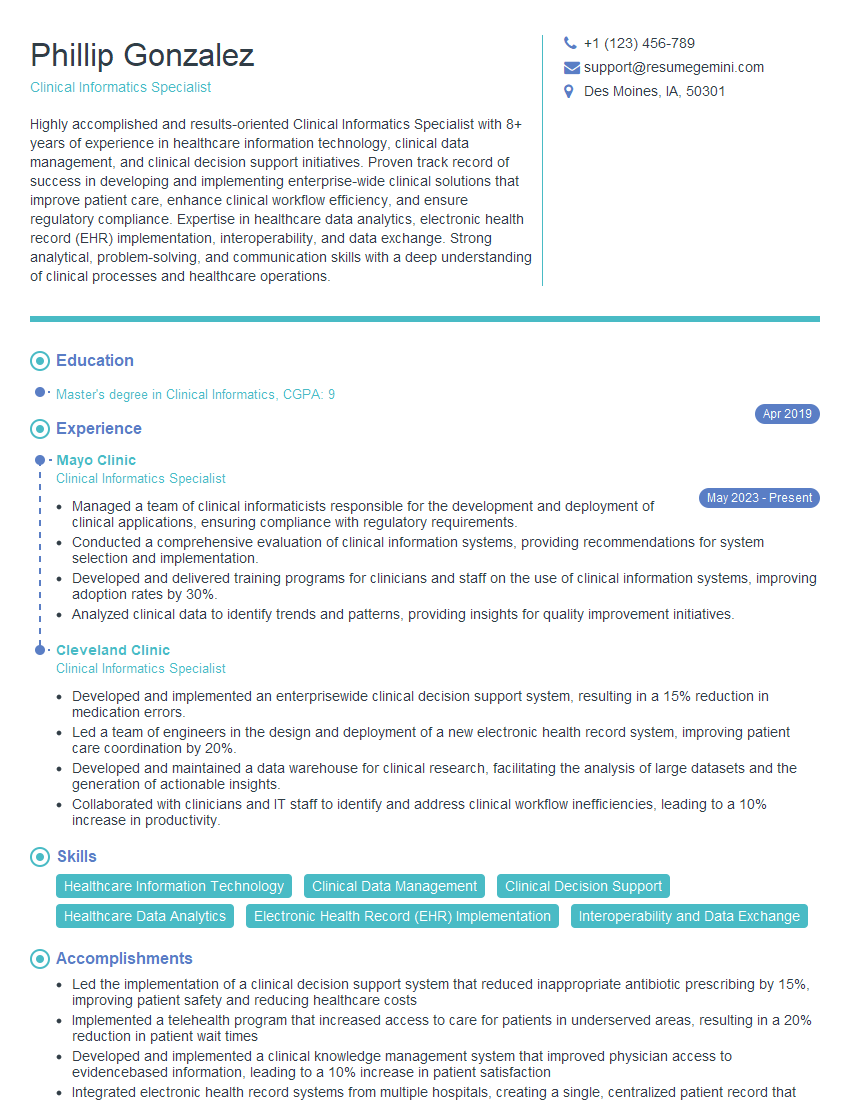
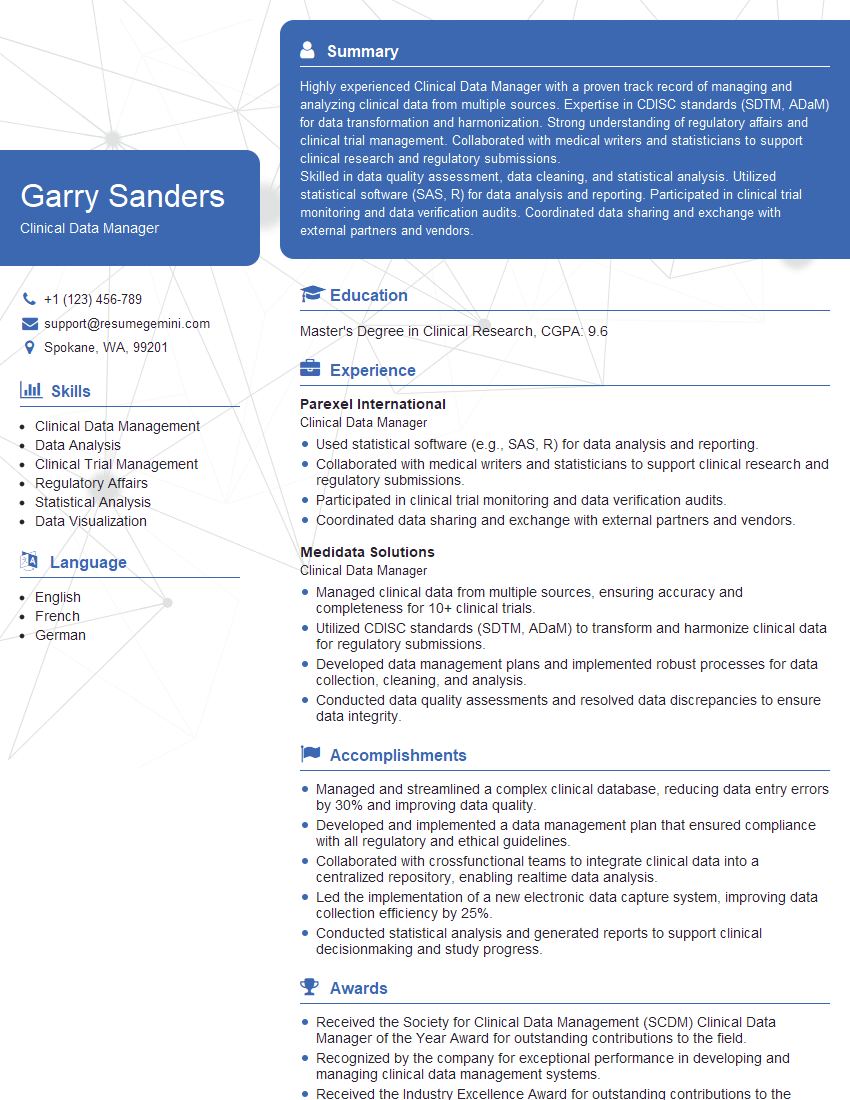
Mastering Enterprise Health Information Systems opens doors to rewarding careers with significant impact on healthcare delivery. A strong understanding of these systems is highly sought after, making you a valuable asset to any healthcare organization. To maximize your job prospects, creating an ATS-friendly resume is crucial. This ensures your application is effectively screened by Applicant Tracking Systems. We highly recommend using ResumeGemini to build a professional and impactful resume. ResumeGemini offers a streamlined process and provides examples of resumes tailored to Enterprise Health Information Systems roles, giving you a significant head start in your job search.
Explore more articles
Users Rating of Our Blogs
Share Your Experience
We value your feedback! Please rate our content and share your thoughts (optional).
What Readers Say About Our Blog
Really detailed insights and content, thank you for writing this detailed article.
IT gave me an insight and words to use and be able to think of examples