Preparation is the key to success in any interview. In this post, we’ll explore crucial Ethical and Regulatory Compliance interview questions and equip you with strategies to craft impactful answers. Whether you’re a beginner or a pro, these tips will elevate your preparation.
Questions Asked in Ethical and Regulatory Compliance Interview
Q 1. Explain the difference between ethical and legal compliance.
While both ethical and legal compliance aim to ensure responsible conduct, they differ significantly. Legal compliance focuses on adherence to laws, regulations, and statutes – the minimum acceptable standard defined by the government. Violation results in legal penalties. Ethical compliance, on the other hand, goes beyond the letter of the law, encompassing a broader set of values, principles, and societal expectations. It’s about doing what’s right, even if it’s not legally mandated. For example, a company might legally be allowed to outsource manufacturing to a factory with subpar working conditions, but ethically, it would be the wrong thing to do.
Think of it like this: legal compliance is the floor, while ethical compliance is the ceiling. Striving for ethical compliance helps build trust, fosters positive relationships with stakeholders, and ultimately contributes to a stronger, more sustainable business.
Q 2. Describe your experience with conducting a compliance risk assessment.
In my previous role at a financial institution, I led the compliance risk assessment for our new investment product launch. We utilized a structured methodology involving these key steps:
- Identifying potential compliance risks: We reviewed relevant laws and regulations, including securities laws, anti-money laundering (AML) regulations, and consumer protection laws. We also considered internal policies and procedures.
- Analyzing the likelihood and impact of each risk: We assessed the probability of each risk materializing and the potential consequences if it did. This involved considering factors like the complexity of the product, the target customer base, and the regulatory environment.
- Developing mitigation strategies: For each identified risk, we developed specific strategies to reduce its likelihood or impact. For example, to mitigate AML risk, we enhanced our customer due diligence processes.
- Documenting findings and recommendations: We prepared a comprehensive report detailing our findings, risk ratings, and mitigation strategies, which was presented to senior management and the board.
This process ensured a proactive approach to compliance, enabling us to launch the product while minimizing potential legal and reputational risks.
Q 3. How do you stay updated on changes in relevant regulations and laws?
Staying abreast of regulatory changes requires a multi-faceted approach. I subscribe to relevant legal and compliance publications, attend industry conferences and webinars, and actively monitor government agency websites for updates. I also utilize specialized compliance databases and leverage professional networks to exchange information and best practices with peers. For example, I regularly check updates from the SEC, OCC and FINRA (for financial services) ensuring I’m always aware of emerging issues and changing interpretations.
Furthermore, I actively participate in professional development programs focused on regulatory updates and new compliance challenges. This ongoing learning is crucial to ensure I provide the most current and accurate compliance guidance.
Q 4. What is your approach to investigating a potential compliance violation?
Investigating a potential compliance violation requires a thorough and impartial approach. My process typically involves:
- Gathering information: This includes reviewing relevant documents, interviewing witnesses, and analyzing systems data. It’s important to maintain a chain of custody for any evidence collected.
- Analyzing the evidence: I carefully evaluate the evidence to determine whether a violation occurred, the extent of the violation, and any contributing factors.
- Determining appropriate action: Depending on the severity of the violation, the action could range from informal counseling to formal disciplinary measures, including reporting to relevant authorities.
- Documenting findings and recommendations: A detailed report outlining the investigation’s findings, conclusions, and recommended actions is essential.
Throughout the investigation, I maintain objectivity, confidentiality, and a commitment to fairness.
Q 5. How would you develop and implement a compliance training program?
Developing a robust compliance training program requires careful planning and execution. It starts with a thorough needs assessment to identify the specific compliance requirements and knowledge gaps within the organization. This analysis will inform the curriculum content.
The program should then be designed to be engaging and interactive, utilizing diverse learning methods such as online modules, workshops, and role-playing exercises. It should incorporate real-world scenarios and case studies to enhance understanding and knowledge retention. Regular refresher training is crucial, particularly in response to regulatory changes. Lastly, assessment methods like quizzes and tests help measure the effectiveness of the training and identify areas for improvement.
For instance, in a healthcare setting, training modules would cover HIPAA compliance, while a financial institution would focus on AML regulations, securities laws and data privacy rules. Tracking completion rates and providing feedback is also vital to ensure program effectiveness.
Q 6. Describe your experience with internal audits and their role in compliance.
Internal audits are a cornerstone of a strong compliance program. They provide an independent assessment of the organization’s compliance posture, identifying weaknesses and areas for improvement. My experience includes participating in and leading internal audits across various sectors, including finance and healthcare. These audits typically involve:
- Planning and scoping the audit: Defining the scope, objectives, and methodology of the audit.
- Testing and evaluating controls: Examining the design and effectiveness of controls designed to ensure compliance.
- Documenting findings: Recording any identified gaps or weaknesses in controls and processes.
- Reporting and remediation: Communicating findings to management and collaborating on corrective action plans.
By identifying vulnerabilities proactively, internal audits reduce the risk of compliance failures and potential penalties, strengthen the organization’s control environment and support a culture of continuous improvement.
Q 7. Explain the concept of a compliance culture and how to foster it.
A strong compliance culture is one where ethical conduct and adherence to laws and regulations are ingrained in the organization’s values and practices. It’s more than just a set of rules; it’s a mindset and a way of working. Fostering such a culture requires a multifaceted approach that includes:
- Leadership commitment: Senior management must actively champion compliance, setting the tone from the top. This involves clear communication of expectations, visible support for compliance initiatives, and accountability for compliance failures.
- Effective communication: Regular communication of compliance policies, procedures, and expectations is crucial. This includes utilizing various channels to reach all employees.
- Training and development: Providing comprehensive compliance training and development opportunities ensures employees understand their responsibilities and how to navigate ethical dilemmas.
- Reporting mechanisms: Establishing a confidential and accessible reporting mechanism allows employees to raise concerns without fear of reprisal.
- Accountability and enforcement: Consistently enforcing compliance rules and holding individuals accountable for violations is critical. This demonstrates that compliance is not optional.
A strong compliance culture is not built overnight but cultivated over time through consistent effort and commitment from all levels of the organization. It’s a continuous journey, not a destination.
Q 8. How do you handle conflicts between ethical considerations and business objectives?
Handling conflicts between ethical considerations and business objectives requires a thoughtful and systematic approach. It’s not about choosing one over the other, but finding a solution that aligns with both ethical principles and business success. I would begin by clearly identifying the conflict, documenting all relevant facts and perspectives. Then, I’d explore potential solutions, assessing their ethical implications using frameworks like utilitarianism (greatest good for the greatest number) or deontology (adherence to moral duties). Finally, I’d engage in open communication with stakeholders, including senior management, to reach a consensus that respects ethical standards and is also viable from a business perspective. For example, if a business objective is to maximize profits by cutting corners on product quality, I would highlight the potential ethical repercussions such as customer harm, brand damage and legal ramifications. We would then explore alternative strategies such as streamlining processes, improving efficiency or exploring different markets to achieve profitability without compromising ethical standards.
A crucial element here is having a strong ethical framework in place, established by the organization, providing clear guidelines for decision-making. This framework would ideally be integrated into all business processes and regularly reviewed to ensure its relevance and effectiveness.
Q 9. What is your experience with reporting and documenting compliance activities?
My experience with reporting and documenting compliance activities is extensive. I’ve consistently used a variety of methods depending on the specific compliance area and organizational requirements. This has included maintaining detailed logs of compliance audits, investigations, training sessions, and policy updates. These logs often include dates, participants, outcomes and any corrective actions taken. I’m proficient with various software solutions for managing these documents, from simple spreadsheets to sophisticated compliance management systems. I also understand the importance of secure data storage, access control, and document version control to ensure integrity and maintainability. In situations involving sensitive data, I always adhere to strict confidentiality protocols. For instance, during a HIPAA compliance audit I was responsible for collecting, verifying and documenting all staff training records, ensuring that each employee had successfully completed their mandatory training and that the records were stored securely.
Q 10. How would you address a situation where a colleague is not following compliance procedures?
Addressing a situation where a colleague isn’t following compliance procedures requires a delicate yet firm approach. First, I would have a private conversation with the colleague, gently explaining the importance of compliance and highlighting the potential consequences of non-compliance. This would involve clearly explaining the specific policy violation and its potential risks. I’d provide them with resources and support to understand and rectify their actions. If the behavior persists, or involves serious violations, I would escalate the issue to their manager or the appropriate compliance officer. This escalation would involve documenting all communications and actions taken. My approach focuses on education and support, but I also recognize the need to enforce compliance to protect the organization and maintain a culture of ethical conduct. The goal is corrective action, not punitive measures unless absolutely necessary.
For example, if a colleague was repeatedly failing to document client interactions as required by GDPR, I would first speak with them, re-explaining the importance of this procedure and providing additional training materials. If the problem persisted after retraining, I would report the issue to their supervisor and work with them to implement corrective measures.
Q 11. Describe your understanding of the Sarbanes-Oxley Act (SOX).
The Sarbanes-Oxley Act of 2002 (SOX) is a landmark piece of legislation designed to protect investors by improving the accuracy and reliability of corporate disclosures. It mandates enhanced corporate responsibility and financial disclosures to protect investors from fraudulent accounting activities. Key provisions include stricter rules for corporate governance, including the establishment of independent audit committees, stricter standards for financial reporting, and increased penalties for corporate fraud. SOX also requires companies to implement robust internal controls over financial reporting. My understanding encompasses the key sections related to financial reporting, internal controls, and auditor independence. I’m aware of the responsibilities placed on executives and corporate boards to ensure compliance. Understanding SOX is crucial for any professional working in finance or accounting as non-compliance can have devastating consequences including significant fines, legal repercussions and irreparable damage to reputation.
Q 12. What is your experience with the Health Insurance Portability and Accountability Act (HIPAA)?
My experience with the Health Insurance Portability and Accountability Act (HIPAA) centers around its provisions for protecting the privacy and security of Protected Health Information (PHI). This includes understanding the different categories of PHI, the requirements for obtaining patient consent, and the safeguards that must be implemented to protect electronic PHI (ePHI). I’ve been involved in the development and implementation of HIPAA compliance programs, including conducting risk assessments, developing policies and procedures, training staff, and conducting audits. I’m familiar with the various HIPAA rules, such as the Privacy Rule, Security Rule, and Breach Notification Rule, and I’m adept at ensuring compliance with the specific requirements of each rule. For example, I have designed and implemented secure data storage systems, ensured all staff received training on HIPAA regulations and developed procedures for handling data breaches according to legal requirements. Maintaining HIPAA compliance is paramount in protecting patient privacy and maintaining public trust in the healthcare system.
Q 13. Explain the importance of data privacy and protection in compliance.
Data privacy and protection are cornerstones of modern compliance. In today’s digital age, organizations hold vast amounts of sensitive personal and business data, making robust data protection essential. Non-compliance not only leads to hefty fines and legal battles but also severely damages an organization’s reputation and erodes customer trust. Data privacy regulations like GDPR (General Data Protection Regulation) and CCPA (California Consumer Privacy Act) are imposing increasingly strict rules on data collection, storage, and usage. Therefore, a comprehensive compliance program must incorporate strong data security measures, including encryption, access controls, data loss prevention (DLP) tools, and regular security audits. It’s also critical to have clear data retention policies and procedures for handling data breaches. Organizations must also ensure that their data processing practices are transparent and comply with all applicable regulations. Failure to meet these obligations can result in substantial financial penalties, legal action, and irreparable damage to brand reputation.
Q 14. What are your key strategies for maintaining accurate compliance records?
Maintaining accurate compliance records requires a multifaceted strategy. Firstly, a clear and well-defined record-keeping system is essential. This system must be easily accessible, well-organized, and readily auditable. Secondly, using a reliable and secure system for storing and managing compliance records is critical. This could include dedicated software, secure cloud storage, or a combination of both. Thirdly, a robust data backup and recovery plan is crucial to protect against data loss. Regular backups and thorough testing of the recovery process are vital. Furthermore, consistent training for staff on proper record-keeping procedures is essential. Finally, regular audits of compliance records should be conducted to ensure accuracy and completeness. These audits should include checks for completeness, accuracy, and adherence to retention policies. Using technology where appropriate greatly improves the quality and consistency of records management.
Q 15. Describe your approach to managing and mitigating compliance risks.
My approach to managing and mitigating compliance risks is proactive and multifaceted. It begins with a thorough risk assessment, identifying potential areas of vulnerability across all aspects of the organization. This involves analyzing laws, regulations, industry best practices, and internal policies. I then prioritize these risks based on their likelihood and potential impact, focusing resources on the most critical areas.
Next, I develop and implement a comprehensive compliance program. This includes establishing clear policies and procedures, providing training to employees at all levels, and implementing robust monitoring and reporting mechanisms. Regular audits, both internal and potentially external, are crucial to ensure the effectiveness of our controls. Finally, I establish a robust incident response plan to handle any compliance breaches swiftly and effectively. This includes clearly defined escalation paths and communication protocols.
For example, in a previous role, we identified a high risk related to data privacy. We implemented enhanced data encryption, access controls, and employee training on data handling best practices. This proactive approach prevented potential breaches and associated fines.
Career Expert Tips:
- Ace those interviews! Prepare effectively by reviewing the Top 50 Most Common Interview Questions on ResumeGemini.
- Navigate your job search with confidence! Explore a wide range of Career Tips on ResumeGemini. Learn about common challenges and recommendations to overcome them.
- Craft the perfect resume! Master the Art of Resume Writing with ResumeGemini’s guide. Showcase your unique qualifications and achievements effectively.
- Don’t miss out on holiday savings! Build your dream resume with ResumeGemini’s ATS optimized templates.
Q 16. Explain how you ensure compliance across various departments or geographical locations.
Ensuring compliance across various departments and geographical locations requires a standardized, yet adaptable, approach. A central compliance function is vital, responsible for establishing and disseminating policies, procedures, and training materials. However, this must be complemented by local compliance officers or champions in each department and region who understand the specific nuances of their location and industry.
Regular communication and collaboration between the central compliance team and local representatives are key. This ensures that policies are appropriately implemented and adapted to local contexts, while still maintaining consistency with overall organizational standards. Technology plays a vital role, providing centralized systems for tracking compliance activities, managing documents, and conducting training. Regular audits and reporting, incorporating both centralized and localized assessments, help identify and address compliance gaps promptly.
For instance, when expanding into a new country, we established a local compliance team to navigate the unique regulations. This ensured we were compliant with local data protection laws while maintaining alignment with our global data privacy policies.
Q 17. What is your experience with working with regulatory bodies?
I have extensive experience interacting with regulatory bodies, including [mention specific bodies, e.g., the SEC, FTC, GDPR authorities]. This experience has been invaluable in developing a deep understanding of their expectations and enforcement practices. I’ve worked collaboratively with them, proactively providing information and addressing any concerns or investigations. I understand the importance of maintaining open and transparent communication, ensuring that responses are timely and accurate. I’m also well-versed in the relevant legal frameworks and understand how to interpret and implement regulations in practice.
In one instance, we were subject to a regulatory audit. Through proactive cooperation and thorough documentation, we were able to demonstrate our compliance and successfully conclude the audit without any penalties.
Q 18. How do you prioritize compliance initiatives?
Prioritizing compliance initiatives requires a risk-based approach. I use a matrix that considers the likelihood and potential impact of non-compliance. High-risk areas, such as data privacy or financial reporting, are given immediate attention. This matrix helps allocate resources effectively, focusing efforts on the most critical vulnerabilities. It also ensures that we aren’t just responding to immediate issues, but also proactively addressing potential future risks.
For example, if a new regulation is introduced with a significant impact and high probability of non-compliance, it will be prioritized over a lower-risk area with minimal potential impact, even if that area requires attention.
Q 19. Describe a situation where you had to make a difficult ethical decision.
In a previous role, I faced a situation where a senior manager requested that I overlook a minor accounting irregularity to meet a quarterly deadline. While the irregularity was relatively small and could potentially be justified, it violated company policy and could have serious repercussions if discovered. My ethical decision was to refuse the request and to report it through the appropriate channels, adhering to the established whistleblower protection procedures. This decision resulted in an internal investigation which, while uncomfortable at the time, ensured the integrity of the company’s financial reporting and reinforced our commitment to ethical conduct.
The situation highlighted the importance of adhering to established procedures and reporting concerns, even if they involve potentially sensitive or uncomfortable interactions with senior management.
Q 20. How do you ensure compliance within a remote workforce?
Ensuring compliance within a remote workforce requires a multifaceted approach focused on technology and communication. This includes utilizing secure communication channels, providing remote access to compliance training and resources, and implementing robust data security measures. Regular virtual compliance training sessions and updates are crucial, as is establishing clear communication channels for reporting concerns or seeking guidance. Regular virtual audits and monitoring tools also help ensure compliance standards are being met remotely.
For example, we implemented a secure online portal providing access to policies, training materials, and compliance updates. This ensured all employees had ready access to the necessary information, regardless of location.
Q 21. What are the key elements of an effective compliance program?
Key elements of an effective compliance program include: a strong ethical culture, clearly defined policies and procedures, comprehensive employee training, robust monitoring and auditing mechanisms, and a well-defined incident response plan. The program should be tailored to the organization’s specific risks and industry regulations, and should be regularly reviewed and updated to reflect changes in the regulatory landscape or business operations. A designated compliance officer and team are crucial for oversight and enforcement. Open communication and a commitment to continuous improvement are also essential. Finally, the program needs the full support of senior management to be effective.
Think of it like a building – strong foundations (ethical culture, policies), robust structure (monitoring, auditing), and regular maintenance (training, updates) are all essential to ensure its stability and longevity.
Q 22. Explain the role of technology in enhancing compliance efforts.
Technology plays a crucial role in bolstering compliance efforts. Think of it as a force multiplier, allowing us to manage vast amounts of data, automate processes, and detect potential violations much more efficiently than manual methods ever could.
- Data Analytics: Tools like machine learning can analyze large datasets to identify patterns indicative of non-compliance, such as unusual spending patterns or potential conflicts of interest. For instance, a system could flag transactions exceeding a certain threshold or involving specific vendors that have been flagged for risk.
- Automated Monitoring Systems: These systems continuously monitor activities against predefined compliance rules and alert us to any deviations. Imagine a system automatically checking employee expense reports against company policy, flagging any questionable entries for review.
- Workflow Automation: Automating routine tasks, like policy acknowledgment or training completion tracking, reduces human error and ensures consistent application of rules. For example, new employees could be automatically enrolled in mandatory compliance training upon onboarding.
- Secure Communication Platforms: Utilizing encrypted channels for sensitive communication ensures data protection and minimizes the risk of compliance breaches. This is critical when dealing with sensitive information or investigations.
Essentially, technology helps us move from reactive compliance – responding to violations after they occur – to a more proactive, preventative approach.
Q 23. What metrics do you use to measure compliance effectiveness?
Measuring compliance effectiveness isn’t a one-size-fits-all approach; it depends heavily on the specific regulations and risks involved. However, some key metrics I consistently use include:
- Incident Rate: The number of reported compliance violations per employee or department. A decrease suggests improved compliance awareness and effectiveness.
- Time to Resolution: How quickly compliance issues are identified and resolved. Faster resolution minimizes potential damage.
- Training Completion Rate: This measures how many employees have completed mandatory compliance training. Higher rates indicate a more informed and compliant workforce.
- Policy Acknowledgment Rate: Shows how many employees have reviewed and acknowledged key compliance policies. This ensures everyone is aware of their responsibilities.
- Audit Findings Rate: The number of compliance deficiencies found during internal or external audits. A decrease indicates stronger internal controls.
- Employee Satisfaction with Compliance Programs: Measuring employee perceptions of the program’s fairness and effectiveness can highlight areas for improvement.
By tracking these metrics, I can identify trends, pinpoint areas needing improvement, and demonstrate the overall effectiveness of the compliance program to stakeholders.
Q 24. How do you address potential whistleblower reports?
Whistleblower reports are vital for uncovering potential misconduct and maintaining ethical conduct. My approach centers around ensuring a safe and confidential reporting mechanism, prompt investigation, and fair treatment of all involved parties.
- Confidential Reporting Channels: I ensure multiple avenues for reporting, such as a dedicated hotline, email address, or online portal – all designed to maintain anonymity.
- Prompt and Thorough Investigation: All reports are investigated promptly and thoroughly, following a standardized protocol to ensure impartiality and objectivity.
- Protection Against Retaliation: I strictly enforce policies that protect whistleblowers from retaliation, which is crucial to encourage reporting.
- Regular Reporting to Senior Management: Regular updates on the status of investigations and trends identified through reports are given to senior leadership.
- Independent Investigation, where appropriate: In some cases, particularly involving serious allegations, using an external, independent investigator might be necessary for greater impartiality.
The process emphasizes fairness, protecting the accuser and the accused while ensuring the integrity of the investigation.
Q 25. Describe your experience with developing and implementing compliance policies.
I have extensive experience in developing and implementing compliance policies, drawing on a framework that prioritizes clarity, practicality, and enforceability.
- Risk Assessment: I begin by conducting a thorough risk assessment to identify potential compliance vulnerabilities and prioritize areas needing immediate attention. This involves analyzing the organization’s operations, industry regulations, and potential legal liabilities.
- Policy Drafting: Policies are drafted using clear, concise language, avoiding legal jargon to ensure easy comprehension. They’re tailored to specific business needs and aligned with relevant laws and regulations.
- Training and Communication: Effective communication and training are vital. This includes interactive sessions, online modules, and regular reminders to reinforce understanding and foster a culture of compliance.
- Monitoring and Enforcement: The policies are implemented with robust monitoring mechanisms, and clear procedures for handling violations are established, ensuring consistency and fairness.
- Regular Review and Updates: Policies are regularly reviewed and updated to reflect regulatory changes, business growth, and lessons learned. This ensures ongoing relevance and effectiveness.
For instance, in a previous role, I developed a comprehensive anti-bribery and corruption policy that incorporated the FCPA, leading to a demonstrably improved compliance posture.
Q 26. How do you maintain confidentiality while conducting compliance investigations?
Maintaining confidentiality during compliance investigations is paramount. It’s crucial for protecting the reputation of the organization and individuals involved, as well as ensuring the integrity of the investigation.
- Access Control: Limiting access to sensitive information on a need-to-know basis ensures only authorized individuals can access relevant data.
- Data Encryption: Employing data encryption protects sensitive data during storage and transmission.
- Secure Storage: Investigations are conducted securely using appropriate document management systems, ensuring confidentiality and data integrity.
- Confidentiality Agreements: Individuals involved in the investigation might be required to sign confidentiality agreements.
- Data Minimization: Only collecting and processing data that is strictly necessary for the investigation minimizes potential risks.
By adhering to these protocols, we can ensure the privacy of those involved, while also ensuring the effectiveness of the investigative process. It’s a balancing act that needs to be approached carefully.
Q 27. What is your understanding of the Foreign Corrupt Practices Act (FCPA)?
The Foreign Corrupt Practices Act (FCPA) is a US law that prohibits bribery of foreign officials to obtain or retain business. It applies to US companies and individuals, as well as foreign companies listed on US exchanges. It has two main components:
- Anti-Bribery Provisions: These provisions prohibit the direct or indirect offering, promising, paying, or authorizing payment of anything of value to a foreign official to influence any official act or secure an improper advantage.
- Accounting Provisions: These require companies to maintain accurate books and records, and implement a system of internal accounting controls to ensure all transactions are properly recorded and authorized. This is vital for detecting potential bribery schemes.
Understanding the FCPA is crucial for any organization operating internationally. Non-compliance can lead to severe penalties, including hefty fines and imprisonment. A robust compliance program is essential to mitigate this risk, including establishing clear policies, employee training, and regular internal audits.
Q 28. How would you handle a situation where a regulatory change impacts existing procedures?
Regulatory changes necessitate swift and decisive action to maintain compliance. My approach is systematic and proactive:
- Rapid Assessment: Upon learning of a regulatory change, I immediately assess its impact on existing procedures and policies.
- Gap Analysis: I identify areas where current procedures fall short of the new requirements, pinpointing specific gaps that need to be addressed.
- Policy Updates: I revise existing policies and procedures to align with the new regulations, ensuring clarity and completeness.
- Employee Training: I implement updated training materials to inform employees about the changes and their responsibilities.
- Documentation: All changes are thoroughly documented, providing a clear audit trail and demonstrating proactive compliance.
- Communication: Open communication with all stakeholders – employees, management, and external partners – keeps everyone informed and engaged.
For example, a recent change to data privacy regulations required a complete overhaul of our data handling policies and employee training programs. By methodically implementing these changes, we ensured continuous compliance and avoided potential legal issues.
Key Topics to Learn for Ethical and Regulatory Compliance Interview
- Ethical Frameworks: Understanding various ethical theories (e.g., deontology, utilitarianism) and their application in real-world compliance scenarios.
- Regulatory Landscape: Familiarity with relevant laws and regulations (e.g., HIPAA, GDPR, SOX) and their impact on organizational practices. Practical application: Analyzing a hypothetical scenario and identifying potential regulatory violations.
- Risk Assessment and Management: Identifying, assessing, and mitigating compliance risks. Practical application: Developing a risk mitigation plan for a specific organizational challenge.
- Internal Controls and Audits: Designing and implementing internal controls to ensure compliance. Understanding the audit process and responding to audit findings.
- Code of Conduct and Ethics Training: Developing and delivering effective ethics training programs. Practical application: Designing a training module addressing a specific ethical dilemma.
- Whistleblowing and Reporting Mechanisms: Understanding the importance of confidential reporting channels and the processes involved in handling complaints.
- Data Privacy and Security: Understanding data protection regulations and implementing measures to ensure data confidentiality, integrity, and availability. Practical application: Evaluating the security of a data handling process.
- Corporate Social Responsibility (CSR): Integrating ethical considerations into business strategies and operations. Practical application: Analyzing the CSR initiatives of a company.
- Conflict of Interest Management: Identifying and addressing potential conflicts of interest within an organization. Practical application: Developing a policy to mitigate potential conflicts of interest.
Next Steps
Mastering Ethical and Regulatory Compliance is crucial for career advancement in today’s increasingly regulated business environment. Demonstrating a strong understanding of these principles will significantly enhance your job prospects and open doors to leadership roles. To increase your chances of landing your dream job, it’s essential to create an ATS-friendly resume that highlights your skills and experience effectively. ResumeGemini is a trusted resource to help you build a professional and impactful resume that showcases your qualifications in the best possible light. Examples of resumes tailored to Ethical and Regulatory Compliance are available to guide you through the process.
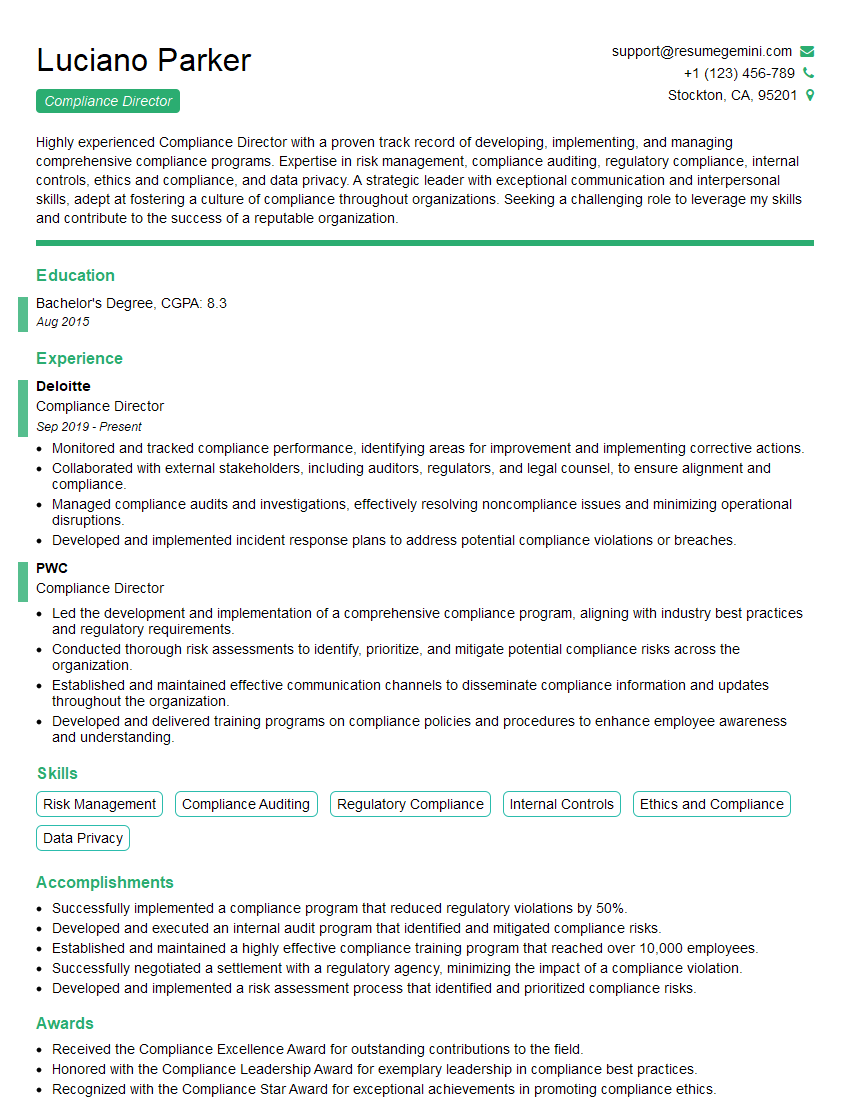
Compliance Director Resume Sample
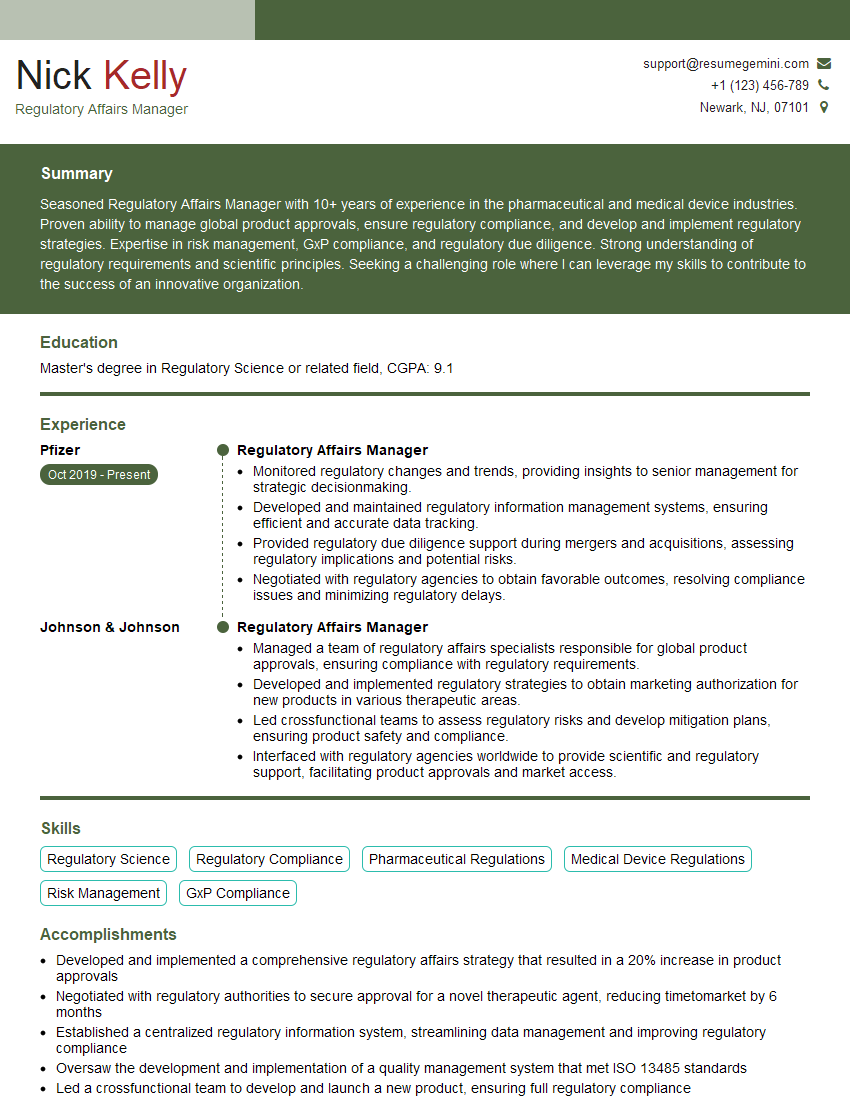
Regulatory Affairs Manager Resume Sample
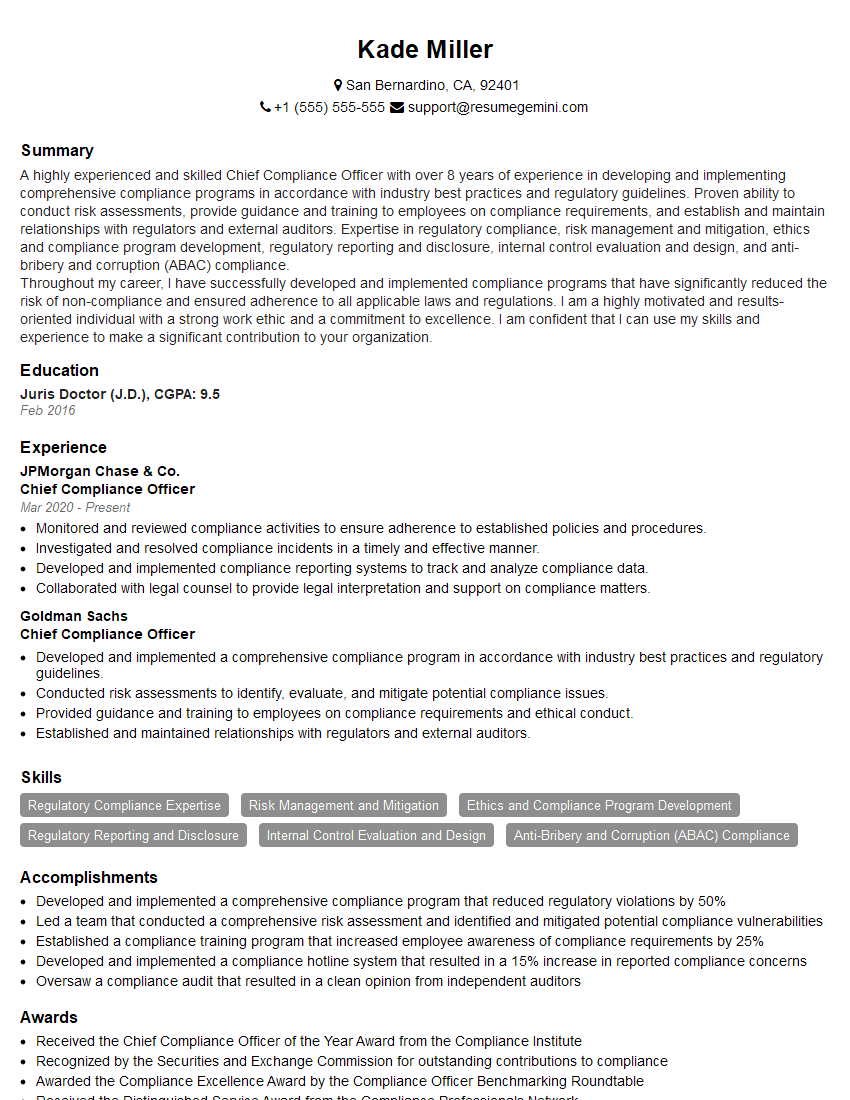
Chief Compliance Officer Resume Sample
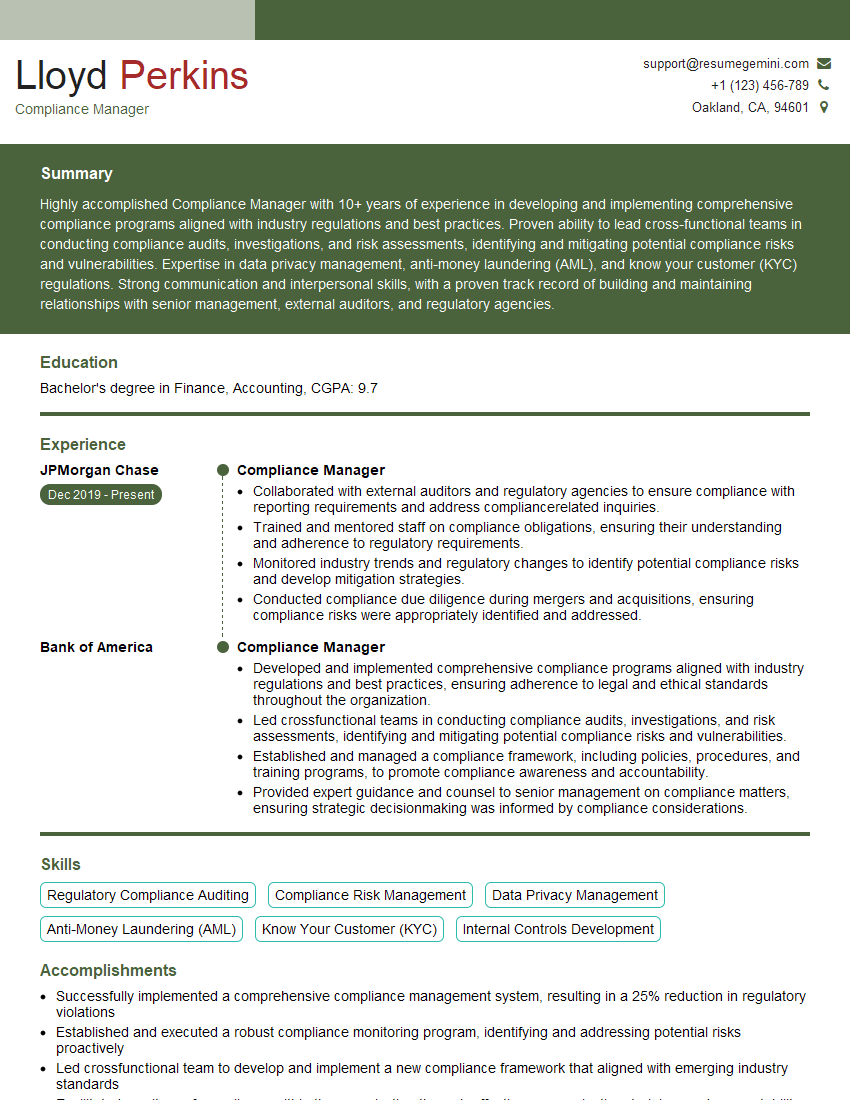
Compliance Manager Resume Sample
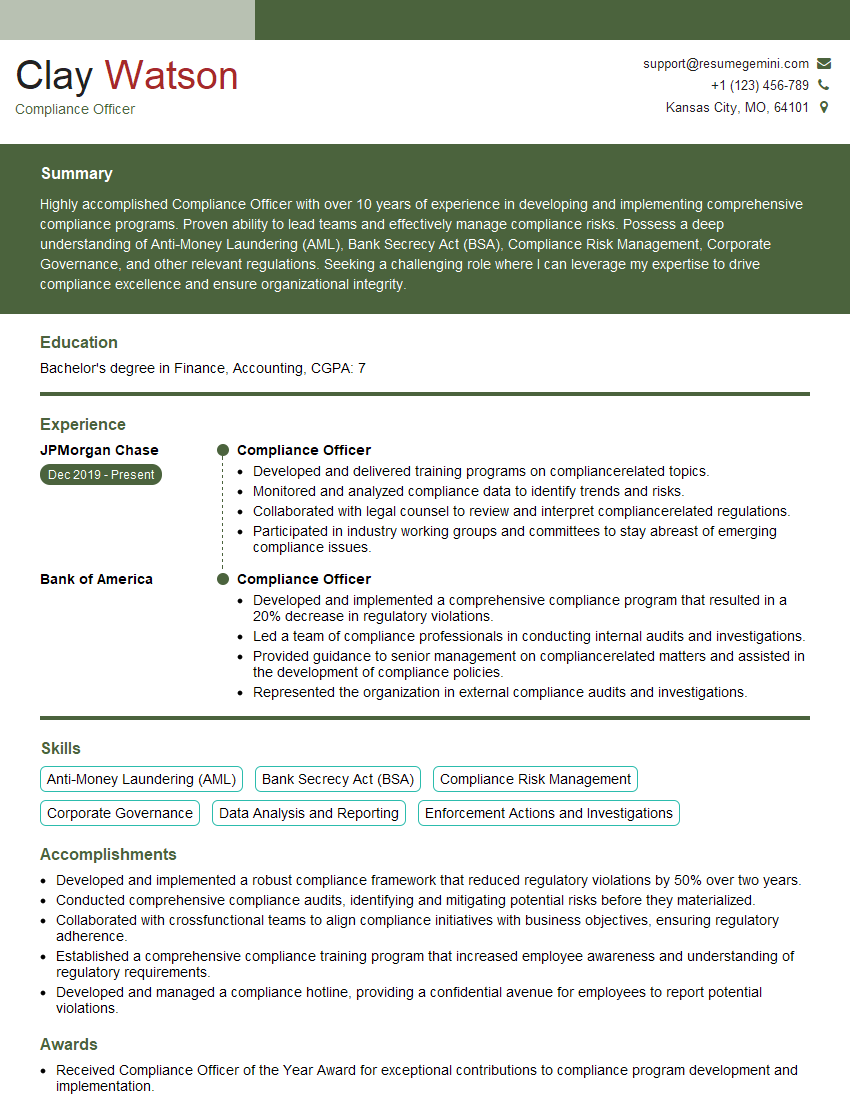
Compliance Officer Resume Sample
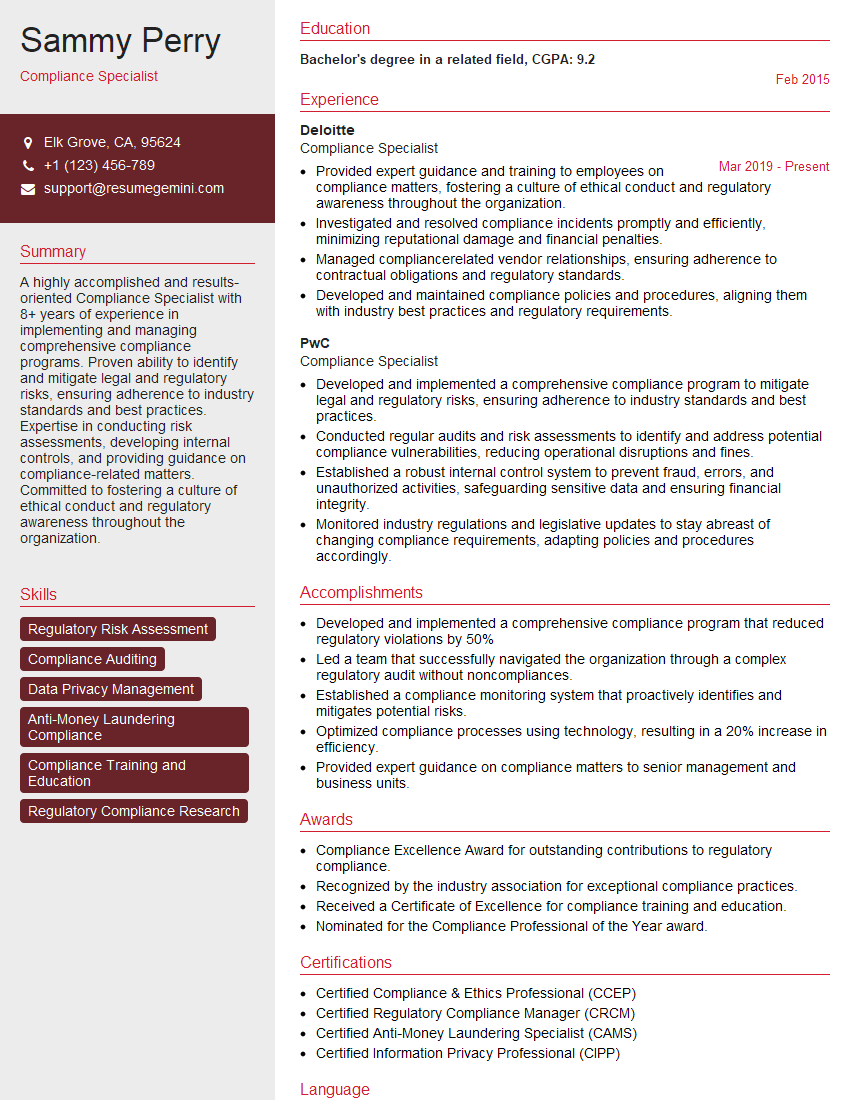
Compliance Specialist Resume Sample
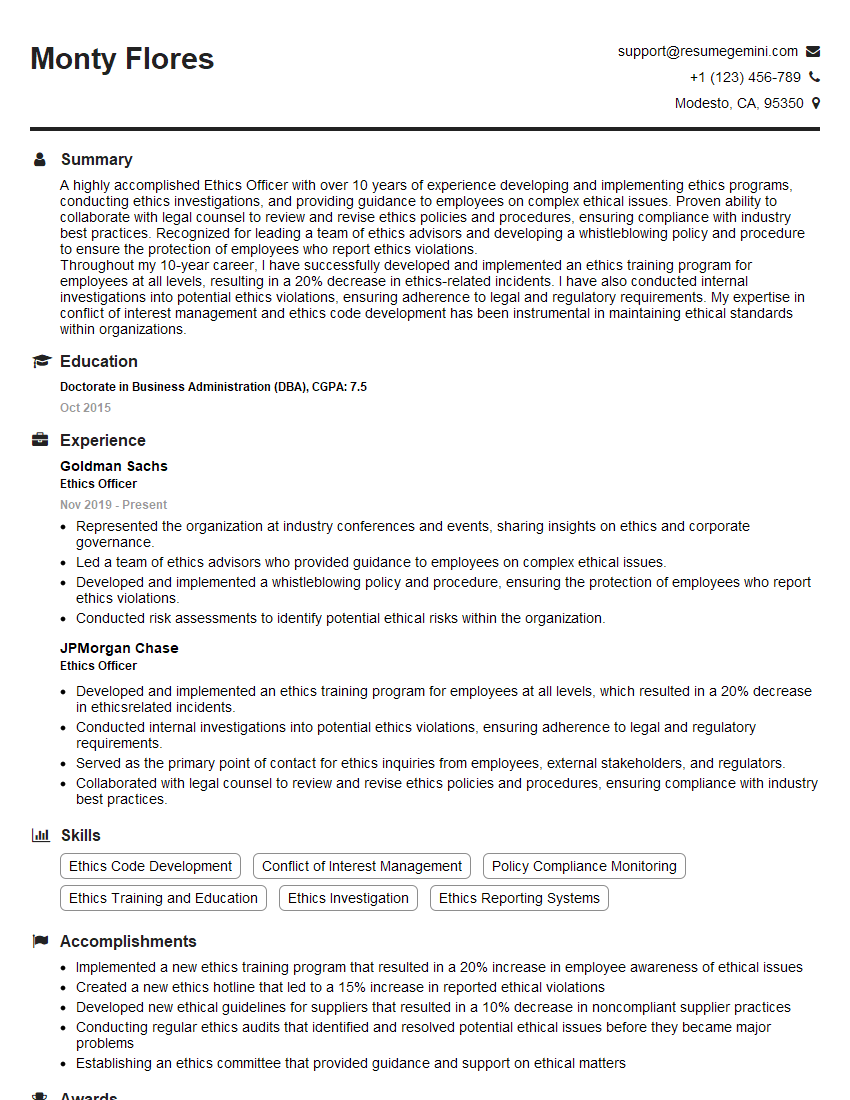
Ethics Officer Resume Sample
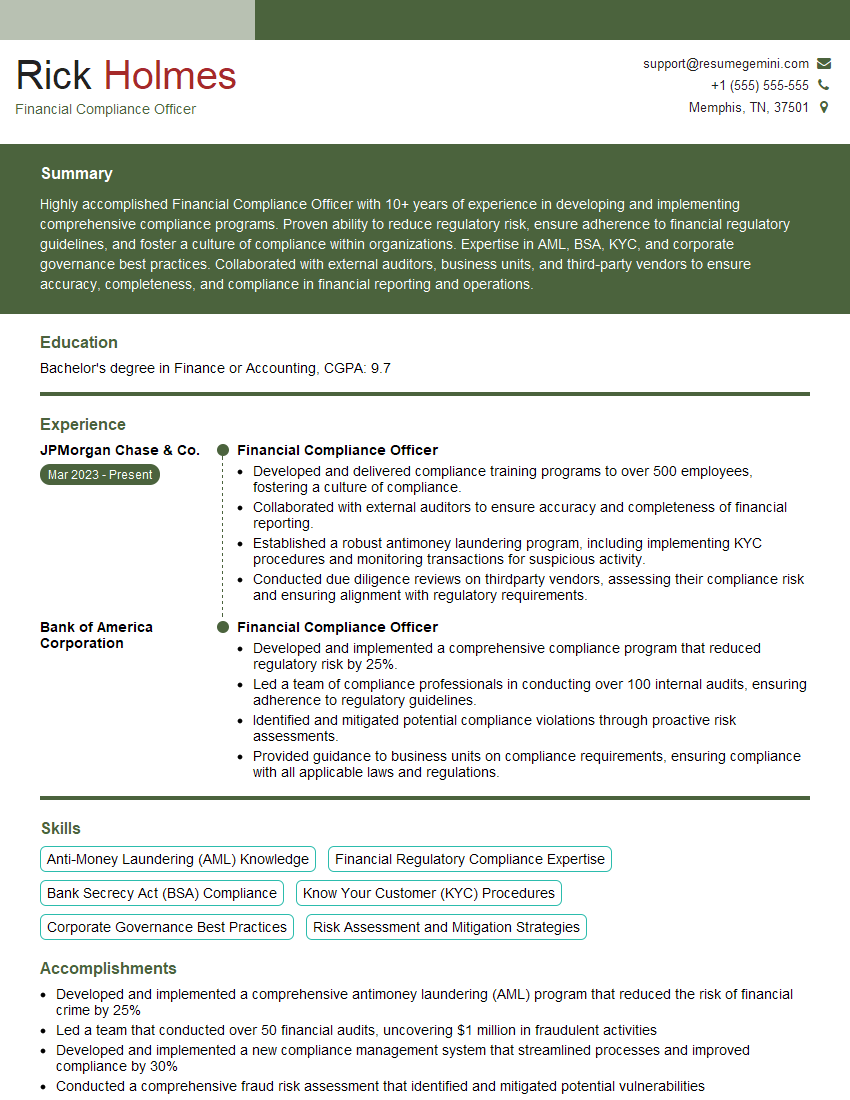
Financial Compliance Officer Resume Sample
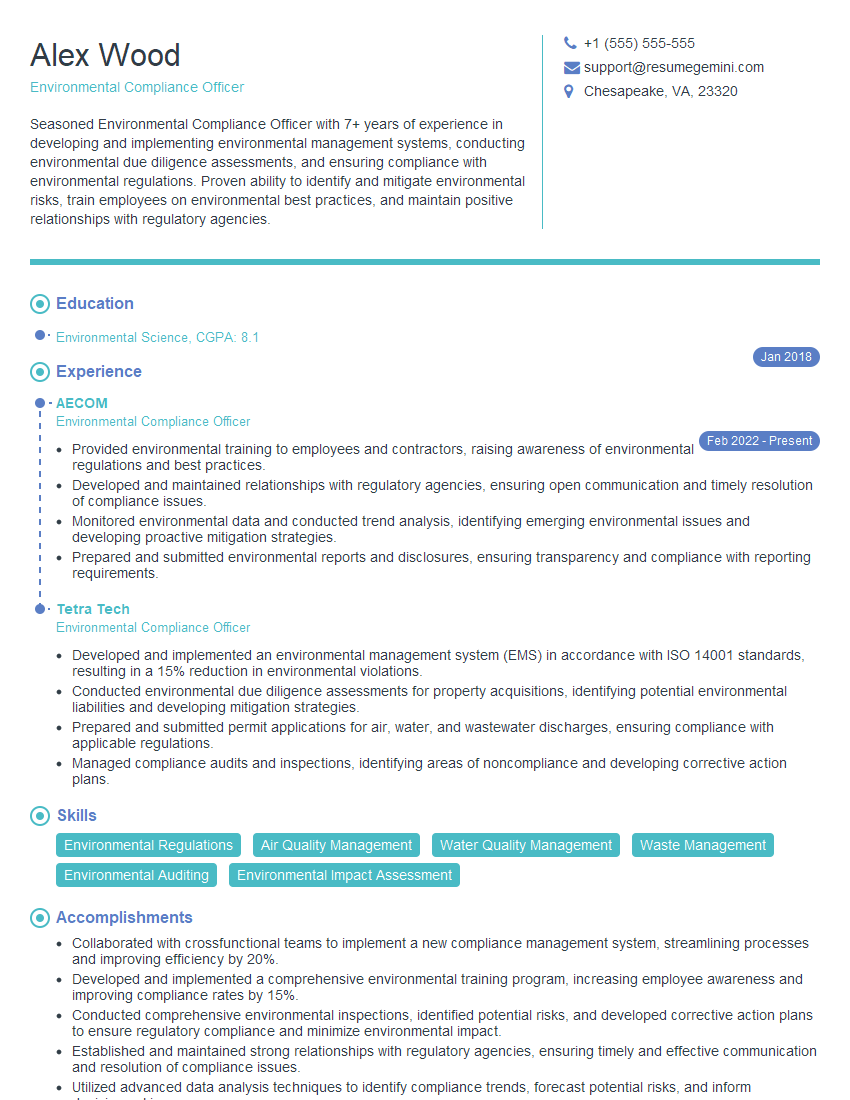
Environmental Compliance Officer Resume Sample
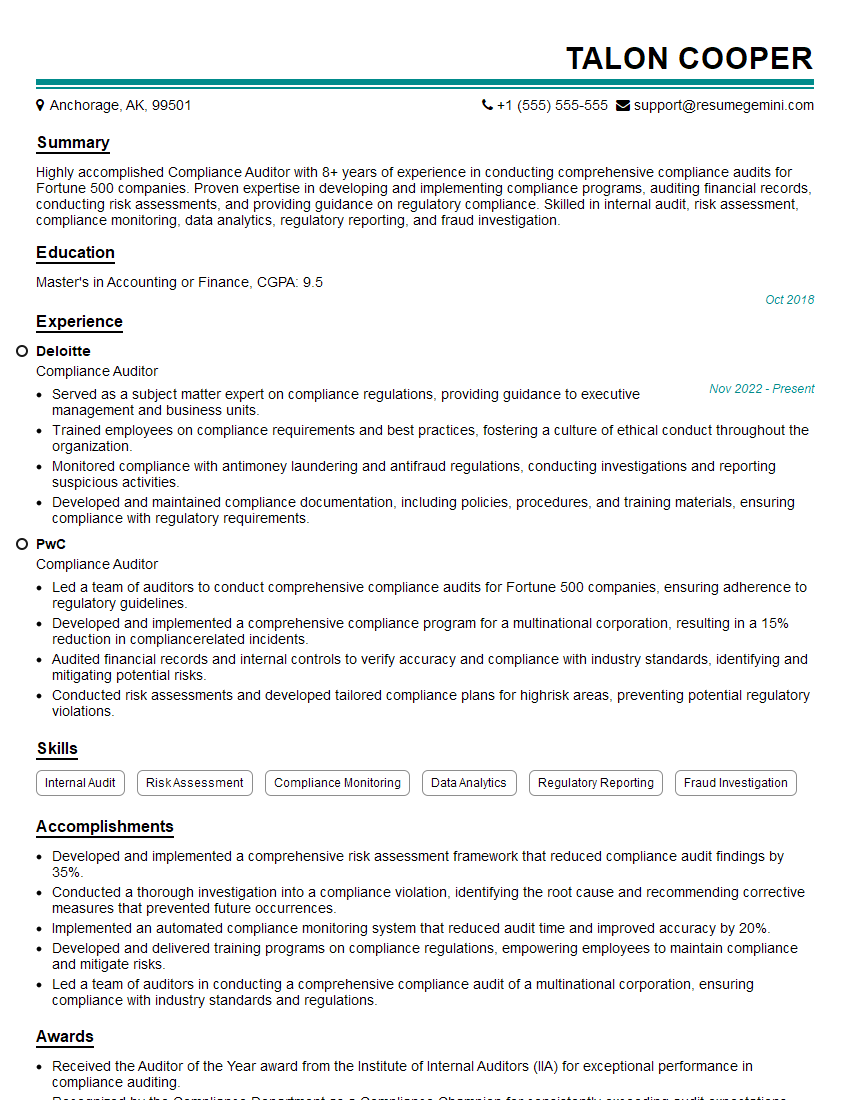
Compliance Auditor Resume Sample
Explore more articles
Users Rating of Our Blogs
Share Your Experience
We value your feedback! Please rate our content and share your thoughts (optional).
What Readers Say About Our Blog
Really detailed insights and content, thank you for writing this detailed article.
IT gave me an insight and words to use and be able to think of examples